Medesun Healthcare Solutions
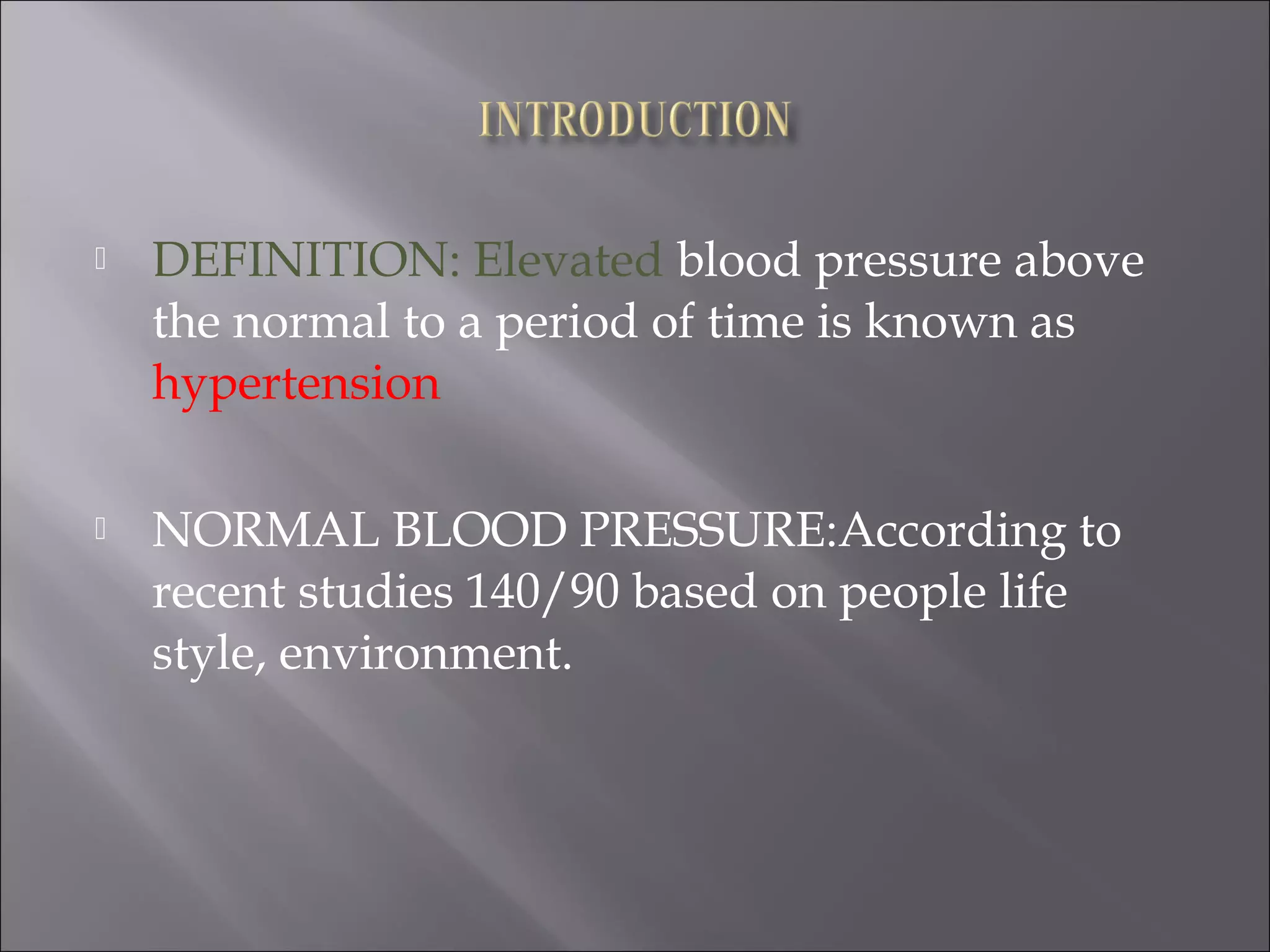
 DEFINITION: Elevated blood pressure above
the normal to a period of time is known as
hypertension
 NORMAL BLOOD PRESSURE:According to
recent studies 140/90 based on people life
style, environment.
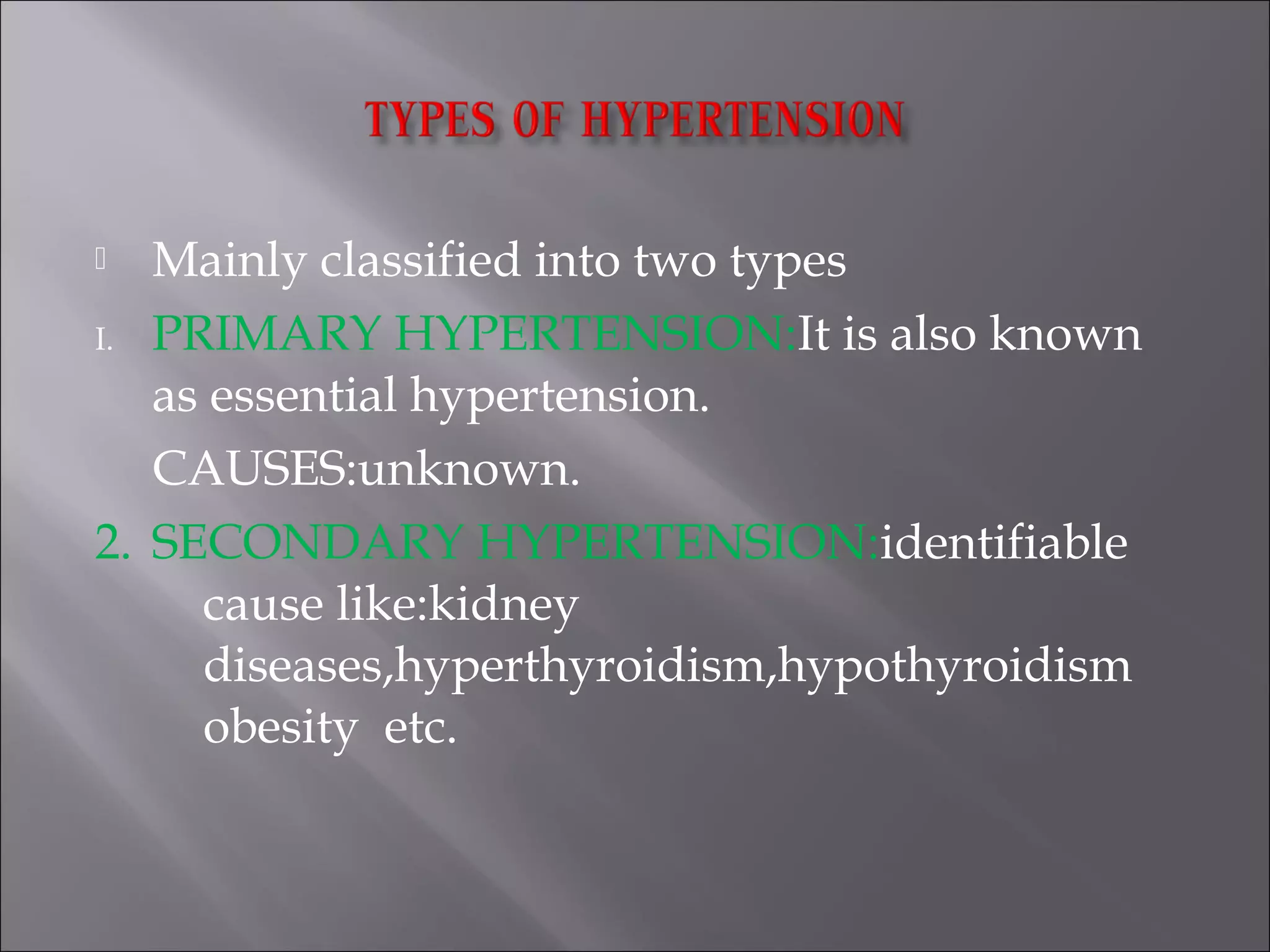
 Mainly classified into two types
I. PRIMARY HYPERTENSION:It is also known
as essential hypertension.
CAUSES:unknown.
2. SECONDARY HYPERTENSION:identifiable
cause like:kidney
diseases,hyperthyroidism,hypothyroidism
obesity etc.
1.Kideney disease
2.Hyper thyroidism
3.Hypo thyroidism
4.Alcohol consumption
5.Smoking
6.Obesity
7.High consumption of salt in food.
 ISCHEMIC HEART DISEASES
 STROKES
 PERIPHERAL VASCULAR DISEASE
 HEART FAILURE
 AORTIC ANEURYSMS
 ATEROSCLEROSIS
 PULMONARY EMBOLISM
 CKD
 PHARMACOLOGICAL TREATMENT:Examples
 CALCIUM CHANNEL BLOCKERS:
verapamil,diltiazem,cilnidipine,felodipine.
MOA:acts by inhibitng the calcium channels
 Beta-blockers:
metaprolol,propranolol,atenolol.
MOA:acts by blocking the b receptors.
 ACE INHIBITORS:examples:
captopril,enalapril.
MOA:acts by blocking angiotensin converting enzyme.
 THIAZIDE DIURETICS:examples
 Chlorthalidone,hydrochlorthiazide.
 MOA:acts by inhibiting the re absorption of
sodium and calcium.
 ANGIOTENSIN RECEPTOR BLOCKERS:
 Telmisartan, irbesartan.
 MOA:acts by blocking angiotensin receptors.
 LIFE STYLE MODIFICATION
 DIET MODIFICATION
 AVOIDING ALCOHOL CONSUMPTION
 AVOIDING SMOKING
 EXERCISE
 Hypertension: ICD-10-CM for 2017 provides
specific codes for hypertensive urgency and
emergency, which are both considered
hypertension crises. In the switch to ICD-10-
CM, hypertension stopped being classified as
malignant, benign, or unspecified, as it was in
ICD-9-CM, and the terms “emergency” and
“urgency” disappeared. The update for 2017
adds these two terms back in and goes one step
further by having specific codes for the
concepts.
 I16.0 Hypertensive urgency
 I16.1 Hypertensive emergency
 I16.9 Hypertensive crisis, unspecified
Both I16.1 (Hypertensive emergency) and I16.9
(Hypertensive crisis, unspecified) classify to a
complication or comorbidity (CC) and,
interestingly, do not have any excludes notes
for use with other codes.
 Correct coding now depends on knowing what
constitutes an urgent versus an emergent case of
hypertension:
 Hypertensive urgency is characterized by systolic
blood pressure (SBP) greater than 180 mm Hg or
diastolic blood pressure (DBP) greater than 110 mm Hg
with symptoms such as headache, dyspnea, or chest
pain but without end-organ involvement.
Hypertensive emergency is distinguished by SBP
greater than 180 mm Hg or DBP greater than 120 mm
Hg with end-organ involvement such as neurologic,
renal, or cardiac systems
 Emergency: Blood pressure reaches levels indicating impending
or progressive organ damage. Such levels usually exceed 180
systolic and 120 dystolic, but could be lower in patients without
previous high blood pressure. The patient is at risk for stroke, loss
of consciousness, memory loss, acute myocardial infarction or
angina, aortic dissection, damage to the eyes and kidneys, and
pulmonary edema. For pregnant patients, a hypertensive
emergency could lead to eclampsia.
 “urgent” (no severity impact)
 “crisis” (having severity impact)
 An additional code should be used to code an identified
hypertensive disease with the sequencing then based on the
circumstances of the admission.  
 If the provider’s documentation doesn’t specify
urgency or emergency, you’ll report the
unspecified code.
 Dr. Santosh Kumar GupthaTrainer/Author
 CCS-P, CCS , CPC, COC, CIC, CPC-P, CRC, CCC,
CPCO, CANPC, CPB, CPMA, CEMC, CEDC,
CIMC, CFPC, CUC, COBGC, CPCD, COSC, CPRC,
CPEDC, CHONC, CENTC, CRHC, CGIC, CASCC,
CGSC, CSFAC, CCVTC, RMC, RMA, CMBS,
CMRS, CSCS, CSBB, FCR, FNR, FOR, CHA, CHL7,
AHIMA Approved ICD-10 Trainer, AHIMA ICD-
10 Ambassador http://www.medesunglobal.com
 For more details of Medical Coding Training
Visit Medesun Global Website.
Hypertension Coding icd 10-cm coding medesun

Hypertension Coding icd 10-cm coding medesun

  • 1.
  • 2.
     DEFINITION: Elevatedblood pressure above the normal to a period of time is known as hypertension  NORMAL BLOOD PRESSURE:According to recent studies 140/90 based on people life style, environment.
  • 3.
     Mainly classifiedinto two types I. PRIMARY HYPERTENSION:It is also known as essential hypertension. CAUSES:unknown. 2. SECONDARY HYPERTENSION:identifiable cause like:kidney diseases,hyperthyroidism,hypothyroidism obesity etc.
  • 5.
    1.Kideney disease 2.Hyper thyroidism 3.Hypothyroidism 4.Alcohol consumption 5.Smoking 6.Obesity 7.High consumption of salt in food.
  • 6.
     ISCHEMIC HEARTDISEASES  STROKES  PERIPHERAL VASCULAR DISEASE  HEART FAILURE  AORTIC ANEURYSMS  ATEROSCLEROSIS  PULMONARY EMBOLISM  CKD
  • 7.
     PHARMACOLOGICAL TREATMENT:Examples CALCIUM CHANNEL BLOCKERS: verapamil,diltiazem,cilnidipine,felodipine. MOA:acts by inhibitng the calcium channels  Beta-blockers: metaprolol,propranolol,atenolol. MOA:acts by blocking the b receptors.  ACE INHIBITORS:examples: captopril,enalapril. MOA:acts by blocking angiotensin converting enzyme.
  • 8.
     THIAZIDE DIURETICS:examples Chlorthalidone,hydrochlorthiazide.  MOA:acts by inhibiting the re absorption of sodium and calcium.  ANGIOTENSIN RECEPTOR BLOCKERS:  Telmisartan, irbesartan.  MOA:acts by blocking angiotensin receptors.
  • 9.
     LIFE STYLEMODIFICATION  DIET MODIFICATION  AVOIDING ALCOHOL CONSUMPTION  AVOIDING SMOKING  EXERCISE
  • 10.
     Hypertension: ICD-10-CM for2017 provides specific codes for hypertensive urgency and emergency, which are both considered hypertension crises. In the switch to ICD-10- CM, hypertension stopped being classified as malignant, benign, or unspecified, as it was in ICD-9-CM, and the terms “emergency” and “urgency” disappeared. The update for 2017 adds these two terms back in and goes one step further by having specific codes for the concepts.
  • 11.
     I16.0 Hypertensiveurgency  I16.1 Hypertensive emergency  I16.9 Hypertensive crisis, unspecified Both I16.1 (Hypertensive emergency) and I16.9 (Hypertensive crisis, unspecified) classify to a complication or comorbidity (CC) and, interestingly, do not have any excludes notes for use with other codes.
  • 12.
     Correct codingnow depends on knowing what constitutes an urgent versus an emergent case of hypertension:  Hypertensive urgency is characterized by systolic blood pressure (SBP) greater than 180 mm Hg or diastolic blood pressure (DBP) greater than 110 mm Hg with symptoms such as headache, dyspnea, or chest pain but without end-organ involvement. Hypertensive emergency is distinguished by SBP greater than 180 mm Hg or DBP greater than 120 mm Hg with end-organ involvement such as neurologic, renal, or cardiac systems
  • 13.
     Emergency: Blood pressurereaches levels indicating impending or progressive organ damage. Such levels usually exceed 180 systolic and 120 dystolic, but could be lower in patients without previous high blood pressure. The patient is at risk for stroke, loss of consciousness, memory loss, acute myocardial infarction or angina, aortic dissection, damage to the eyes and kidneys, and pulmonary edema. For pregnant patients, a hypertensive emergency could lead to eclampsia.  “urgent” (no severity impact)  “crisis” (having severity impact)  An additional code should be used to code an identified hypertensive disease with the sequencing then based on the circumstances of the admission.  
  • 14.
     If theprovider’s documentation doesn’t specify urgency or emergency, you’ll report the unspecified code.  Dr. Santosh Kumar GupthaTrainer/Author  CCS-P, CCS , CPC, COC, CIC, CPC-P, CRC, CCC, CPCO, CANPC, CPB, CPMA, CEMC, CEDC, CIMC, CFPC, CUC, COBGC, CPCD, COSC, CPRC, CPEDC, CHONC, CENTC, CRHC, CGIC, CASCC, CGSC, CSFAC, CCVTC, RMC, RMA, CMBS, CMRS, CSCS, CSBB, FCR, FNR, FOR, CHA, CHL7, AHIMA Approved ICD-10 Trainer, AHIMA ICD- 10 Ambassador http://www.medesunglobal.com
  • 15.
     For moredetails of Medical Coding Training Visit Medesun Global Website.