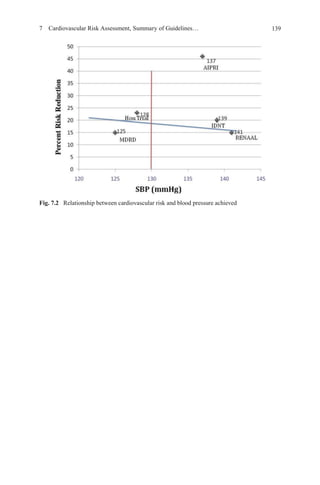
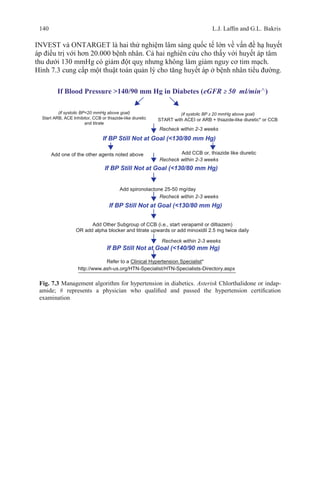
Clinical Hypertension and Vascular Diseases
Series Editor: William B. White
Phạm Ngọc Minh
TĂNG HUYẾT ÁP
VÀ ĐỘT QUỴ
BỆNH SINH VÀ XỬ TRÍ
Second Edition
Part I
huyết áp và tăng huyết áp là tiền đề của đột
quỵ
Chapter 1
Huyết áp: định nghĩa, chẩn đoán và
điều trị
Raymond R. Townsend and Susan P. Steigerwalt
Định nghĩa tăng huyết áp
Nhiều năm theo dõi trong nghiên cứu tim Framingham đã chỉ ra rằng mối quan hệ
giữa huyết áp và tổn thương cơ quan đích liên quan tới 1 điểm "ở trên điểm này là
tăng huyết áp và dưới điểm này là bình thường “. Đầu thế kỷ XX đã ước tính hợp
lý rằng 140/90 mmHg là giá trị huyết áp có nhiều nguy cơ. Các công trình kinh
điển của Perrera xuất bản trong tập đầu tiên của Tạp chí các bệnh mãn tính vào
năm 1955 xác nhận rằng khi tăng huyết áp bền vững: huyết áp tâm thu> 140
mmHg hoặc huyết áp tâm trương > 90 mmHg làm tăng nguy cơ tử vong trong
vòng 20 năm.
Mặc dù thừa nhận nhiều nguy cơ khi cao huyết áp, nhiều người nghĩ rằng tăng
huyết áp liên quan đến lão hóa là quá trình thích nghi tự nhiên để làm xơ cứng động
mạch và lập luận chống lại việc điều trị tăng huyết áp cao đến khi
R.R. Townsend, M.D.
Renal Electrolyte and Hypertension Division, University of Pennsylvania,
Philadelphia, PA, USA
S.P. Steigerwalt, M.D., F.A.S.H., F.A.C.P. (*)
Devision of Cardiovascular Medicine, University of Michigan, Ann Arbor, MI, USA
e-mail: spspnhp@med.umich.edu
© Springer International Publishing Switzerland 2016 3
V. Aiyagari, P.B. Gorelick (eds.), Hypertension and Stroke, Clinical
Hypertension and Vascular Diseases, DOI 10.1007/978-3-319-29152-9_1
4 R.R. Townsend and S.P. Steigerwalt
bước vào giai đoạn ác tính. Một khi bước vào giai đoạn ác tính, huyết áp tâm
trương thường vượt quá 140 mmHg và bệnh nhân có dấu hiệu của bệnh tim, đột
quỵ hoặc tăng ure máu, tuổi thọ bình quân giảm hơn 25% trong 1 năm
Mặc dù có những nghiên cứu như Perrera, người ta vẫn hoài nghi về giá trị của
việc điều trị huyết áp cao. cho đến khi có nghiên cứu hợp tác báo cáo về lợi ích
của việc điều trị tăng huyết áp trung bình đến nặng (giá trị huyết áp tâm trương
115-129 mmHg) đưa về giá trị 90-115 mmHg, mà học viên bắt đầu được điều trị
hạ huyết áp và thay đổi lối sống với mục đích bảo tồn chức năng cơ quan đích.
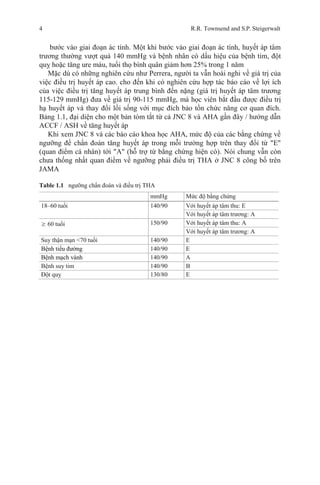
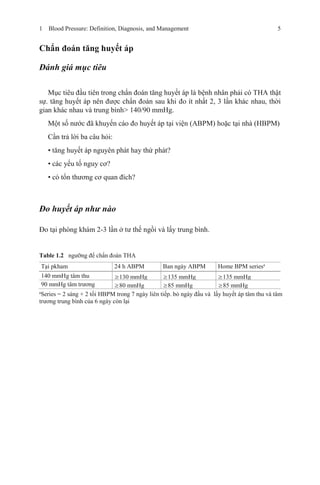
Bảng 1.1, đại diện cho một bản tóm tắt từ cả JNC 8 và AHA gần đây / hướng dẫn
ACCF / ASH về tăng huyết áp
Khi xem JNC 8 và các báo cáo khoa học AHA, mức độ của các bằng chứng về
ngưỡng để chẩn đoán tăng huyết áp trong mỗi trường hợp trên thay đổi từ "E"
(quan điểm cá nhân) tới "A" (hỗ trợ từ bằng chứng hiện có). Nói chung vẫn còn
chưa thống nhất quan điểm về ngưỡng phải điều trị THA ở JNC 8 công bố trên
JAMA
Table 1.1 ngưỡng chẩn đoán và điều trị THA
mmHg Mức độ bằng chứng
18–60 tuổi 140/90 Với huyết áp tâm thu: E
Với huyết áp tâm trương: A
≥ 60 tuổi 150/90 Với huyết áp tâm thu: A
Với huyết áp tâm trương: A
Suy thận mạn <70 tuổi 140/90 E
Bệnh tiểu đường 140/90 E
Bệnh mạch vành 140/90 A
Bệnh suy tim 140/90 B
Đột quỵ 130/80 E
1 Blood Pressure: Definition, Diagnosis, and Management 5
Chẩn đoán tăng huyết áp
Đánh giá mục tiêu
Mục tiêu đầu tiên trong chẩn đoán tăng huyết áp là bệnh nhân phải có THA thật
sự. tăng huyết áp nên được chẩn đoán sau khi đo ít nhất 2, 3 lần khác nhau, thời
gian khác nhau và trung bình> 140/90 mmHg.
Một số nước đã khuyến cáo đo huyết áp tại viện (ABPM) hoặc tại nhà (HBPM)
Cần trả lời ba câu hỏi:
• tăng huyết áp nguyên phát hay thứ phát?
• các yếu tố nguy cơ?
• có tổn thương cơ quan đích?
Đo huyết áp như nào
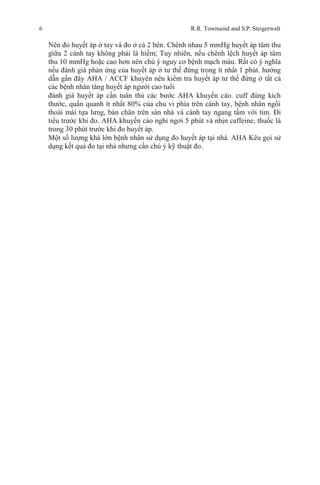
Đo tại phòng khám 2-3 lần ở tư thế ngồi và lấy trung bình.
Table 1.2 ngưỡng để chẩn đoán THA
Tại pkham 24 h ABPM Ban ngày ABPM Home BPM seriesa
140 mmHg tâm thu ≥130 mmHg ≥135 mmHg ≥135 mmHg
90 mmHg tâm trương ≥80 mmHg ≥85 mmHg ≥85 mmHg
a
Series = 2 sáng + 2 tối HBPM trong 7 ngày liên tiếp. bỏ ngày đầu và lấy huyết áp tâm thu và tâm
trương trung bình của 6 ngày còn lại
6 R.R. Townsend and S.P. Steigerwalt
Nên đo huyết áp ở tay và đo ở cả 2 bên. Chênh nhau 5 mmHg huyết áp tâm thu
giữa 2 cánh tay không phải là hiếm; Tuy nhiên, nếu chênh lệch huyết áp tâm
thu 10 mmHg hoặc cao hơn nên chú ý nguy cơ bệnh mạch máu. Rất có ý nghĩa
nếu đánh giá phản ứng của huyết áp ở tư thế đứng trong ít nhất 1 phút. hướng
dẫn gần đây AHA / ACCF khuyên nên kiểm tra huyết áp tư thế đứng ở tất cả
các bệnh nhân tăng huyết áp người cao tuổi
đánh giá huyết áp cần tuân thủ các bước AHA khuyến cáo. cuff đúng kích
thước, quấn quanh ít nhất 80% của chu vi phía trên cánh tay, bệnh nhân ngồi
thoải mái tựa lưng, bàn chân trên sàn nhà và cánh tay ngang tầm với tim. Đi
tiểu trước khi đo. AHA khuyến cáo nghỉ ngơi 5 phút và nhịn caffeine, thuốc lá
trong 30 phút trước khi đo huyết áp.
Một số lượng khá lớn bệnh nhân sử dụng đo huyết áp tại nhà. AHA Kêu gọi sử
dụng kết quả đo tại nhà nhưng cần chú ý kỹ thuật đo.
1 Blood Pressure: Definition, Diagnosis, and Management 7
Cần xác định và mức độ nghiêm trọng của các yêu tố nguy cơ vì hai lý do. Đầu tiên,
chúng ta có thể tránh sử dụng các thuốc làm trầm trọng thêm yếu tố nguy cơ (ví dụ,
việc sử dụng các thuốc beta-blocker ở những bệnh nhân có mức cholesterol HDL
thấp có thể làm giảm HDL thêm) .Thứ hai, sự xuất hiện của các yếu tố nguy cơ khác
(ví dụ, hội chứng chuyển hóa) có thể làm tăng nguy cơ tăng huyết áp
Cuối cùng, sự xuất hiện tổn thương cơ quan đích bắt buộc chúng ta phải chuyển mục
tiêu điều trị từ phòng ngừa ban đầu sang phòng ngừa thứ phát. Ví dụ, một bệnh nhân
có tiền sử đột quỵ có nguy cơ đột quỵ tiếp trong vòng 5 năm tiếp theo là 30% hoặc
cao hơn. Hướng dẫn đề nghị sử dụng lợi tiểu và ức chế ACE cho phòng ngừa đột quỵ
tái phát. Điều này sẽ được thảo luận chi tiết hơn trong chương tiếp theo của cuốn
sách này.
Nguyên tắc chung của chẩn đoán tănghuyết áp: tiền sử
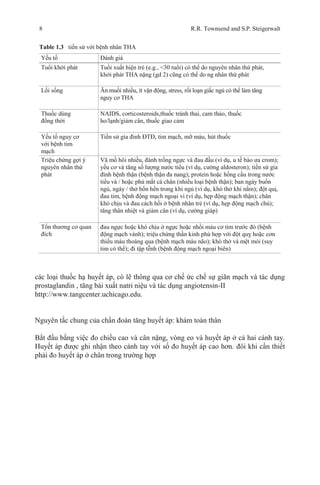
Bệnh nhân tăng huyết áp nên hỏi kĩ về tiền sử và khám toàn diện (xem Bảng 1.3 và
1.4). tiền sử nên hỏi thời gian (khi biết) và mức độ nghiêm trọng của bệnh tăng huyết
áp. Thông tin về thói quen ăn uống, uống rượu, hút thuốc lá, mức độ hoạt động thể
chất và thời gian ngủ (dự đoán cả tăng huyết áp và tai biến tim mạch). Tiền sử gia
đình THA, bệnh thận, bệnh tim mạch và bệnh đái tháo đường cần lưu ý. Rối loạn hô
hấp lúc ngủ hay gặp trong THA như buồn ngủ về ban ngày, ngáy/thở hổn hển, ngủ
thất thường, khó thở về đêm. (thang điểm Epworth Sleepiness Scale™)
Ngoài ra, cần biết thông tin chi tiết về các thuốc đang sử dụng để kiểm soát huyết áp.
Ví dụ thuốc NSAID có thể làm giảm hiệu quả của
8 R.R. Townsend and S.P. Steigerwalt
Table 1.3 tiền sử với bệnh nhân THA
Yếu tố Đánh giá
Tuổi khởi phát Tuổi xuất hiện trẻ (e.g., <30 tuổi) có thể do nguyên nhân thứ phát,
khởi phát THA nặng (gd 2) cũng có thể do ng nhân thứ phát
Lối sống Ăn muối nhiều, ít vận động, stress, rối loạn giấc ngủ có thể làm tăng
nguy cơ THA
Thuốc dùng
đồng thời
NAIDS, corticosteroids,thuốc tránh thai, cam thảo, thuốc
ho/lạnh/giảm cân, thuốc giao cảm
Yếu tố nguy cơ
với bệnh tim
mạch
Tiền sử gia đinh ĐTĐ, tim mạch, mỡ máu, hút thuốc
Triệu chứng gợi ý
nguyên nhân thứ
phát
Vã mồ hôi nhiều, đánh trống ngực và đau đầu (ví dụ, u tế bào ưa crom);
yếu cơ và tăng số lượng nước tiểu (ví dụ, cường aldosteron); tiền sử gia
đình bệnh thận (bệnh thận đa nang); protein hoặc hồng cầu trong nước
tiểu và / hoặc phù mắt cá chân (nhiều loại bệnh thận); ban ngày buồn
ngủ, ngáy / thở hổn hển trong khi ngủ (ví dụ, khó thở khi nằm); đột quị,
đau tim, bệnh động mạch ngoại vi (ví dụ, hẹp động mạch thận); chân
khó chịu và đau cách hồi ở bệnh nhân trẻ (ví dụ, hẹp động mạch chủ);
tăng thân nhiệt và giảm cân (ví dụ, cường giáp)
Tổn thương cơ quan
đích
đau ngực hoặc khó chịu ở ngực hoặc nhồi máu cơ tim trước đó (bệnh
động mạch vành); triệu chứng thần kinh phù hợp với đột quỵ hoặc cơn
thiếu máu thoáng qua (bệnh mạch máu não); khó thở và mệt mỏi (suy
tim có thể); đi tập tễnh (bệnh động mạch ngoại biên)
các loại thuốc hạ huyết áp, có lẽ thông qua cơ chế ức chế sự giãn mạch và tác dụng
prostaglandin , tăng bài xuất natri niệu và tác dụng angiotensin-II
http://www.tangcenter.uchicago.edu.
Nguyên tắc chung của chẩn đoán tăng huyết áp: khám toàn thân
Bắt đầu bằng việc đo chiều cao và cân nặng, vòng eo và huyết áp ở cả hai cánh tay.
Huyết áp được ghi nhận theo cánh tay với số đo huyết áp cao hơn. đôi khi cần thiết
phải đo huyết áp ở chân trong trường hợp
1 Blood Pressure: Definition, Diagnosis, and Management 9
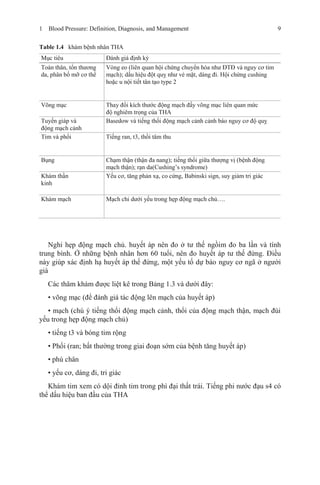
Table 1.4 khám bệnh nhân THA
Mục tiêu Đánh giá định kỳ
Toàn thân, tổn thương
da, phân bố mỡ cơ thể
Vòng eo (liên quan hội chứng chuyển hóa như ĐTĐ và nguy cơ tim
mạch); dấu hiệu đột quỵ như vẻ mặt, dáng đi. Hội chứng cushing
hoặc u nội tiết tân tạo type 2
Võng mạc Thay đổi kích thước động mạch đấy võng mạc liên quan mức
độ nghiêm trọng của THA
Tuyến giáp và
động mạch cảnh
Basedow và tiếng thổi động mạch cảnh cảnh báo nguy cơ độ quỵ
Tim và phổi Tiếng ran, t3, thồi tâm thu
Bụng Chạm thận (thận đa nang); tiếng thổi giữa thượng vị (bệnh động
mạch thận); rạn da(Cushing’s syndrome)
Khám thần
kinh
Yếu cơ, tăng phản xạ, co cứng, Babinski sign, suy giảm tri giác
Khám mạch Mạch chi dưới yếu trong hẹp động mạch chủ….
Nghi hẹp động mạch chủ. huyết áp nên đo ở tư thế ngồim đo ba lần và tính
trung bình. Ở những bệnh nhân hơn 60 tuổi, nên đo huyết áp tư thế đứng. Điều
này giúp xác định hạ huyết áp thế đứng, một yếu tố dự báo nguy cơ ngã ở người
già
Các thăm khám được liệt kê trong Bảng 1.3 và dưới đây:
• võng mạc (để đánh giá tác động lên mạch của huyết áp)
• mạch (chú ý tiếng thổi động mạch cảnh, thổi của động mạch thận, mạch đùi
yếu trong hẹp động mạch chủ)
• tiếng t3 và bóng tim rộng
• Phổi (ran; bất thường trong giai đoạn sớm của bệnh tăng huyết áp)
• phù chân
• yếu cơ, dáng đi, tri giác
Khám tim xem có dội đỉnh tim trong phì đại thất trái. Tiếng phi nước đạu s4 có
thể dấu hiệu ban đầu của THA
10 R.R. Townsend and S.P. Steigerwalt
Table 1.5 thuốc liên quan đến THA
Nhóm thuốc hoặc thuốc Cơ chế tác động
NAIDS ức chế prostaglandin gây giữ natri tại thận và
làm giảm GFR
Liều cao corticosteroids Mineralocorticoid receptor (MR) kích thích giữ
Na và ức chế bơm Na-K-atpase, gây co mạch
Uống thuốc tránh thai Cơ chế chưa rõ, làm THA
Thuốc kích thích giao cảm (Meridia™,
Ritalin, Provigil™, etc.) [42, 43]
Co mạch và giữ natri
Thuốc ức chế chọn lọc serotonin (SSRIs),
ức chế chọn lọc tái hấp thu norepinephrine
(SSNIs) [44, 45]
tăng serotonin or norepinephrine qua cơ
chế tái hấp thu
Thuốc kích thích hồng cầu [46] Co mạch
Tacrolimus, cyclosporine [47] Co mạch, giữ natri, giảm GFR
Thuốc kháng retrovirus (HAART)
[48]
Chưa rõ
Cam thảo [49] Gây giữ natri, co mạch
Cocaine, thuốc lắc, methamphetamines [50,
51]
Kích thích giao cảm, co mạch
ức chế VEGF52, 53] FLT-1
VEGF yếu tố tăng trưởng nội mô mạch máu, GFR mức lọc cầu thận
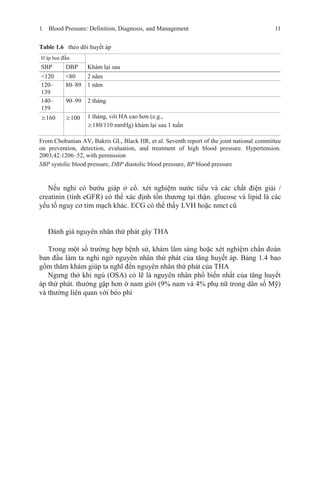
Theo dõi huyết sau khám ban đầu
Sau khi kiểm tra ban đầu, theo dõi huyết áp được khuyến cáo trong khoảng thời gian
quy định. Hướng dẫn trong bảng 1.6 [3].
Một số xét nghiệm được đề nghị đánh giá thường xuyên ở các bệnh nhân có huyết áp
cao. hemoglobin hoặc hematocrit, phân tích nước tiểu với kính hiển vi, creatinin
huyết thanh và điện giải, glucose huyết thanh, lipid lúc đói và ECG. Nghiệm khác
như nồng độ hormone tuyến giáp
1 Blood Pressure: Definition, Diagnosis, and Management 11
Table 1.6 theo dõi huyết áp
H áp ban đầu
Khám lại sauSBP DBP
<120 <80 2 năm
120–
139
80–89 1 năm
140–
159
90–99 2 tháng
≥160 ≥100 1 tháng, với HA cao hơn (e.g.,
≥180/110 mmHg) khám lại sau 1 tuần
From Chobanian AV, Bakris GL, Black HR, et al. Seventh report of the joint national committee
on prevention, detection, evaluation, and treatment of high blood pressure. Hypertension.
2003;42:1206–52, with permission
SBP systolic blood pressure, DBP diastolic blood pressure, BP blood pressure
Nếu nghi có bướu giáp ở cổ. xét nghiệm nước tiểu và các chất điện giải /
creatinin (tính eGFR) có thể xác định tổn thương tại thận. glucose và lipid là các
yếu tố nguy cơ tim mạch khác. ECG có thể thấy LVH hoặc nmct cũ
Đánh giá nguyên nhân thứ phát gây THA
Trong một số trường hợp bệnh sử, khám lâm sàng hoặc xét nghiệm chẩn đoán
ban đầu làm ta nghi ngờ nguyên nhân thứ phát của tăng huyết áp. Bảng 1.4 bao
gồm thăm khám giúp ta nghĩ đến nguyên nhân thứ phát của THA
Ngưng thở khi ngủ (OSA) có lẽ là nguyên nhân phổ biến nhất của tăng huyết
áp thứ phát. thường gặp hơn ở nam giới (9% nam và 4% phụ nữ trong dân số Mỹ)
và thường liên quan với béo phì
12 R.R. Townsend and S.P. Steigerwalt
ở những bệnh nhân THA, 30-80% có ngưng thở khi ngủ [35]. Trong các nghiên
cứu, OSA liên quan đến suy tim sung huyết, đột quỵ, bệnh động mạch vành và
ngừng tim đột ngột. ở bệnh nhân đột quỵ, 43-91% bệnh nhân có thể OSA [21, 36].
References
1. Muldoon MF, Rutan GH. Defining hypertension: never as simple as it seems. J Hypertens.
2003;21(3):473–4.
2. Fisher JW. The diagnostic value of the sphygmomanometer in examinations for life insurance.
JAMA. 1914;63:1752–4.
3. Perera GA. Hypertensive vascular disease; description and natural history. J Chronic Dis.
1955;1:33–42.
4. Goldring W, Chasis H. Antihypertensive drug therapy: an appraisal. In: Ingelfinger FJ, Relman
AS, editors. Controversies in international medicine. Philadelphia: Saunders; 1966. p. 83.
5. Keith NM, Wagener HP, Barker NW. Some different types of essential hypertension: their
course and prognosis. Am J Med Sci. 1939;197:332–43.
6. Effects of treatment on morbidity in hypertension. Results in patients with diastolic blood
pressures averaging 115 through 129 mm Hg. JAMA 1967; 202(11):1028–34.
7. Effects of treatment on morbidity in hypertension. II. Results in patients with diastolic blood
pressure averaging 90 through 114 mm Hg. JAMA 1970;213(7):1143–152.
8. James PA, Oparil S, Carter BL, Cushman WC, Dennison-Himmelfarb C, Handler J, Lackland
DT, Lefevre ML, Mackenzie TD, Ogedegbe O, Smith Jr SC, Svetkey LP, Taler SJ, Townsend
RR, Wright Jr JT, Narva AS, Ortiz E. 2014 Evidence-based guideline for the management of
high blood pressure in adults: report from the Panel Members Appointed to the Eighth Joint
National Committee (JNC 8). JAMA. 2014;311(5):507–20.
9. Chirinos JA, Segers P,Duprez DA,Brumback L, Bluemke DA, Zamani P,Kronmal R, VaidyaD,
OuyangP,TownsendRR, Jacobs DR.Late systolic centralhypertension asapredictorofincident
heart failure:the multi-ethnic studyof atherosclerosis. JAmHeartAssoc. 2015;4(3), e001335.
1 Blood Pressure: Definition, Diagnosis, and Management 13
10. Rosendorff C, Lackland DT, Allison M, Aronow WS, Black HR, Blumenthal RS, CannonCP,
de Lemos JA, Elliott WJ, Findeiss L, Gersh BJ, Gore JM, Levy D, Long JB, O’Connor CM,
O’Gara PT, Ogedegbe O, Oparil S, White WB. Treatment of hypertension in patients with
coronary artery disease: a scientific statement from the American Heart Association, American
College of Cardiology, and American Society of Hypertension. Circulation. 2015;131(19):
e435–e470.
11. Wright Jr JT, Fine LJ, Lackland DT, Ogedegbe G, Dennison Himmelfarb CR. Evidence sup-
porting a systolic blood pressure goal of less than 150 mm Hg in patients aged 60 years or
older: the minority view. Ann Intern Med. 2014;160(7):499–503.
12. Flack JM, Sica DA, Bakris G, Brown AL, Ferdinand KC, Grimm Jr RH, Hall WD, Jones WE,
Kountz DS, Lea JP, Nasser S, Nesbitt SD, Saunders E, Scisney-Matlock M, Jamerson
KA. Management of high blood pressure in Blacks: an update of the International Society on
Hypertension in Blacks consensus statement. Hypertension. 2010;56(5):780–800.
13. Hartley RM, Velez R, Morris RW, D’Souza MF, Heller RF. Confirming the diagnosis of mild
hypertension. Br Med J (Clin Res Ed). 1983;286(6361):287–9.
14. http://www.nice.org.uk/guidance/cg127. http://www.nice.org.uk/guidance/cg127.2014.
15. Cloutier L, Daskalopoulou SS, Padwal RS, Lamarre-Cliche M, Bolli P, McLean D, Milot A,
Tobe SW, Tremblay G, McKay DW, Townsend R, Campbell N, Gelfer M. A new algorithm
for the diagnosis of hypertension in Canada. Can J Cardiol. 2015;31:620–30.
16. Mosenkis A, Townsend RR. Sitting on the evidence: what is the proper patient position for the
office measurement of blood pressure? J Clin Hypertens (Greenwich). 2005;7(6):365–6.
17. Clark CE, Taylor RS, Shore AC, Ukoumunne OC, Campbell JL. Association of a difference in
systolic blood pressure between arms with vascular disease and mortality: a systematic review
and meta-analysis. Lancet. 2012;379(9819):905–14.
18. Aronow WS, Fleg JL, Pepine CJ, Artinian NT, Bakris G, Brown AS, Ferdinand KC, Ann FM,
FrishmanWH,JaigobinC,KostisJB,Mancia G,OparilS,OrtizE,ReisinE,RichMW,Schocken
DD, Weber MA, Wesley DJ. ACCF/AHA 2011 expert consensus document on hypertension in
the elderly: a report of the American College of Cardiology Foundation Task Force on Clinical
Expert Consensus documents developed in collaboration with the American Academy of
Neurology,American Geriatrics Society,American Societyfor Preventive Cardiology,American
Society of Hypertension, American Society of Nephrology,Association of Black Cardiologists,
and European Society of Hypertension. JAm Coll Cardiol. 2011;57(20):2037–114.
19. Pickering TG, Hall JE, Appel LJ, Falkner BE, Graves J, Hill MN, Jones DW, Kurtz T, Sheps
SG, Roccella EJ. Recommendations for blood pressure measurement in humans and experi-
mental animals: part 1: blood pressure measurement in humans: a statement for professionals
from the Subcommittee of Professional and Public Education of the American Heart
Association Council on High Blood Pressure Research. Circulation. 2005;111(5):697–716.
20. Pickering TG, Miller NH, Ogedegbe G, Krakoff LR, Artinian NT, Goff D. Call to action on use
and reimbursement for home blood pressure monitoring: executive summary: a joint scientific
statement from the American Heart Association, American Society of Hypertension, and
Preventive Cardiovascular Nurses Association. Hypertension. 2008;52(1):1–9.
21. Piper MA, Evans CV, Burda BU, Margolis KL, O’Connor E, Whitlock EP. Diagnostic and
predictive accuracy of blood pressure screening methods with consideration of rescreening
intervals: a systematic review for the U.S. Preventive Services Task Force. Ann Intern Med.
2015;162(3):192–204.
22. Pickering TG, James GD, Boddie C, Harshfield GA, Blank S, Laragh JH. How common is
white coat hypertension? JAMA. 1988;259:225–8.
23. Pickering TG, Davidson K, Gerin W, Schwartz JE. Masked hypertension. Hypertension.
2002;40(6):795–6.
24. Papadakis JA, Mikhailidis DP, Vrentzos GE, Kalikaki A, Kazakou I, Ganotakis ES. Effect of
antihypertensive treatment on plasma fibrinogen and serum HDL levels in patients with essen-
tial hypertension. Clin Appl Thromb Hemost. 2005;11:139–46.
14 R.R. Townsend and S.P. Steigerwalt
25. Eguchi K, Pickering TG, Schwartz JE, et al. Short sleep duration as an independent predictor
of cardiovascular events in Japanese patients with hypertension. Arch Intern Med.
2008;168:2225–31.
26. Manni R, Politini L, Ratti MT, Tartara A. Sleepiness in obstructive sleep apnea syndrome and
simple snoring evaluated by the Epworth Sleepiness Scale. J Sleep Res. 1999;8:319–20.
27. Fierro-Carrion GA, Ram CV. Nonsteroidal anti-inflammatory drugs (NSAIDs) and blood
pressure. Am J Cardiol. 1997;80:775–6.
28. The Consensus Committee of the American Autonomic Society and the American Academy of
Neurology. Consensus statement on the definition of orthostatic hypotension, pure auto-
nomic failure, and multiple system atrophy. Neurology.1996;46:1470.
29. Singh P, Aronow WS, Mellana WM, Gutwein AH. Prevalence of appropriate management of
diabetes mellitus in an academic general medicine clinic. Am J Ther.2009;17(1):42–5.
30. van der Velde M, Halbesma N, DeCharro FT, et al. Screening for albuminuria identifies indi-
viduals at increased renal risk. J Am Soc Nephrol. 2009;20:852–62.
31. Hillege HL, Fidler V, Diercks GF, et al. Urinary albumin excretion predicts cardiovascular and
noncardiovascular mortality in general population. Circulation. 2002;106:1777–82.
32. Gerstein HC, Mann JF, Yi Q, et al. Albuminuria and risk of cardiovascular events, death, and
heart failure in diabetic and nondiabetic individuals. JAMA. 2001;286:421–6.
33. Onusko E. Diagnosing secondary hypertension. Am Fam Physician. 2003;67:67–74.
34. Aurell M. Screening for secondary hypertension. Curr Hypertens Rep. 1999;1:461.
35. Fletcher EC, DeBehnke RD, Lovoi MS, Gorin AB. Undiagnosed sleep apnea in patients with
essential hypertension. Ann Intern Med. 1985;103:190–5.
36. Bassetti CL, Milanova M, Gugger M. Sleep-disordered breathing and acute ischemic stroke: diag-
nosis, risk factors, treatment, evolution, and long-term clinical outcome. Stroke. 2006;37:967–72.
37. Pepperell JC, Ramdassingh-Dow S, Crosthwaite N, et al. Ambulatory blood pressure after
therapeutic and subtherapeutic nasal continuous positive airway pressure for obstructivesleep
apnoea: a randomised parallel trial. Lancet. 2002;359:204–10.
38. Qaseem A, Dallas P,Owens DK, Starkey M, Holty JC, Shekelle P,et al. Diagnosis of obstruc-
tive sleep apnea in adults: a clinical practice guideline from the American College of
Physicians. Ann Intern Med. 2014;161:210–20. doi:10.7326/M12-3187.
39. Farkouh ME, Verheugt FW, Ruland S, et al. A comparison of the blood pressure changes of lumi-
racoxib with those of ibuprofen and naproxen. J Clin Hypertens (Greenwich).2008;10:592–602.
40. Panoulas VF, Douglas KM, Stavropoulos-KalinoglouA, et al. Long-term exposure to medium-
dose glucocorticoid therapy associates with hypertension in patients with rheumatoid arthritis.
Rheumatology (Oxford). 2008;47:72–5.
41. Shufelt CL, Bairey Merz CN. Contraceptive hormone use and cardiovascular disease. J Am
Coll Cardiol. 2009;53:221–31.
42. Taneja I, Diedrich A, Black BK, Byrne DW, Paranjape SY, Robertson D. Modafinil elicits
sympathomedullary activation. Hypertension. 2005;45:612–8.
43. Idelevich E, Kirch W, Schindler C. Current pharmacotherapeutic concepts for the treatment of
obesity in adults. Ther Adv Cardiovasc Dis. 2009;3:75–90.
44. Kisely S, Cox M, Campbell LA, Cooke C, Gardner D. An epidemiologic study of psychotropic
medication and obesity-related chronic illnesses in older psychiatric patients. Can J Psychiatry.
2009;54:269–74.
45. Johnson EM, Whyte E, Mulsant BH, et al. Cardiovascular changes associated with venlafaxine
in the treatment of late-life depression. Am J Geriatr Psychiatry. 2006;14:796–802.
46. Krapf R, Hulter HN. Arterial hypertension induced by erythropoietin and erythropoiesis-
stimulating agents (ESA). Clin J Am Soc Nephrol 2009;4(2):470–480.
47. Kramer BK, Boger C, Kruger B, et al. Cardiovascular risk estimates and risk factors in renal
transplant recipients. Transplant Proc. 2005;37:1868–70.
48. Baekken M, Os I, Sandvik L, Oektedalen O. Hypertension in an urban HIV-positive popula-
tion compared with the general population: influence of combination antiretroviral therapy.
J Hypertens. 2008;26:2126–33.
1 Blood Pressure: Definition, Diagnosis, and Management 15
49. Templin C, Westhoff-Bleck M, Ghadri JR. Hypokalemic paralysis with rhabdomyolysis and
arterial hypertension caused by liquorice ingestion. Clin Res Cardiol. 2009;98:130–2.
50. Urbina A, Jones K. Crystal methamphetamine, its analogues, and HIV infection: medical and
psychiatric aspects of a new epidemic. Clin Infect Dis. 2004;38:890–4.
51. Gahlinger PM. Club drugs: MDMA, gamma-hydroxybutyrate (GHB), Rohypnol, and ketamine.
Am Fam Physician. 2004;69:2619–26.
52. Veronese ML, Mosenkis A, Flaherty KT, et al. Mechanisms of hypertension associated with
BAY 43-9006. J Clin Oncol. 2006;24:1363–9.
53. Bono P,Elfving H, Utriainen T, et al. Hypertension and clinical benefit of bevacizumab in the
treatment of advanced renal cell carcinoma. Ann Oncol. 2009;20:393–4.
Chapter 2
Môi liên quan giữa THA và đột quỵ: tóm tắt các
nghiên cứu dịch tễ
Dilip K. Pandey, Noha Aljehani, and Youji Soga
Đột quỵ là nguyên nhân gây tàn phế hàng đầu ở Mỹ. Nó xếp thứ bảy trong số 30
bệnh hàng đầu và chấn thương gây chết sớm ở Mỹ trong năm 2010, và thứ ba
trong những bệnh gây khuyết tật[1]. Trong số các yếu tố nguy cơ có thể gây biến
chứng thiếu máu cục bộ và đột quỵ do xuất huyết, tăng huyết áp là một trong
những nguyên nhân chính bất kể độ tuổi, giới tính và chủng tộc [2, 3]. Tăng huyết
áp hiện nay rất phổ biến. Khoảng 80 triệu người Mỹ trưởng thành (một trong ba)
có THA (huyết áp tâm thu ≥140 mmHg hoặc huyết áp tâm trương ≥90 mmHg)
. Tỷ lệ tăng huyết áp tăng nhanh chóng trên tuổi 65. Tỷ lệ mắc THA theo tuổi
trong 2009-2012 là 80% đối với nữ giới và 76% nam giới trên 75 tuổi [8, 9]. Tỷ lệ
tăng huyết áp cũng thay đổi theo chủng tộc (Hình. 2.1). Nguy cơ tăng huyết áp là
90% với những người có huyết áp bình thường lúc 55 tuổi [10]. Một mô hình dự
báo gần đây cho thấy, cứ tăng 10% số bệnh nhân được kiểm soát huyết áp có thể
làm giảm 14.000 ca tử vong mỗi năm ở nhóm 25-79 tuổi [11]. Dự báo cho thấy
vào năm 2030, khoảng 41,4% người trưởng thành Mỹ sẽ có tăng huyết áp, tăng
8,4% ước tính từ năm 2012 (theo công bố chưa tính toán của AHA, dựa trên
phương pháp mô tả bởi Hiedenreich và cộng sự) [11].
D.K. Pandey, M.D., Ph.D. (*) • N. Aljehani, M.B.B.S. • Y. Soga, M.D., Ph.D.
Department of Neurology and Rehabilitation, University of Illinois College of
Medicine at Chicago, Chicago, IL, USA
e-mail: dpandey@uic.edu
© Springer International Publishing Switzerland 2016 17
V. Aiyagari, P.B. Gorelick (eds.), Hypertension and Stroke, Clinical
Hypertension and Vascular Diseases, DOI 10.1007/978-3-319-29152-9_2
18 D.K. Pandey et al.
Overall
Sex
Men
Women Age†
(years)
18-39
40-59
60 and over
Race and Hispanic origin
Non-Hispanic white
Non-Hispanic black
Non-Hispanic Asian
Hispanic
0 10 20 30 40
Percent
50 60 70
Fig. 2.1 Age-specific and age-adjusted prevalence of hypertension among adult aged 18 and over,
United States 2011–2012 (Source: CDC/NCHS, National Health and Nutrition Examination
Survey, 2011–2012.Accessed on 15April 2015 at http://www.cdc.gov/nchs/data/databriefs/db133.
pdf)
THA và nguy cơ đột quỵ
Nhiều bằng chứng thuyết phục từ nghiên cứu quan sát và can thiệp, cho thấy
tăng huyết áp là một yếu tố nguy cơ quan trọng và mạnh mẽ gây đột quỵ. Người ta
ước tính rằng khoảng 54% các cơn đột quỵ trên toàn thế giới là do tăng huyết áp
suất (BP) [12]. nghiên cứu tim mạch Framingham năm 1970 quan sát thấy quan hệ
rủi ro có ý nghĩa giữa đột quỵ và huyết áp ≥160 / 95 mmHg ở cả hai giới và ở mọi
lứa tuổi [13]. Người có huyết áp bình thường (<120/80 mmHg) có tỉ lệ đột quỵ
bằng ½ do với những người có huyết áp cao (≥140 / 90mmHg) [14]. Một phân tích
tổng hợp 12 nghiên cứu với 518.520 người tham gia thấy rằng cao huyết áp có liên
quan với đột quỵ
Nguy cơ đặc biệt ở những bệnh nhân chưa già những lại có huyết áp cao [15].
phân tích chi tiết của nghiên cứu thuần tập lớn đã chỉ ra rằng mối quan hệ giữa
THA và nguy cơ đột quỵ là liên tục, nhất quán và độc lập với các yếu tố nguy cơ
khác. nghiên cứu dịch tễ học trước đây đã dùng áp lực tâm trương để nghiên cứu
hơn là huyết áp tâm thu vì thấy nó có liên quan với nguy cơ đột quỵ [16, 17].
Trong một phân tích của chín nghiên cứu mô tả hồi cứu được công bố giữa năm
1958 và 1990, MacMahon kết luận rằng BP giảm làm giảm nguy cơ đột quỵ. giảm
huyết áp tâm trương 5, 7,5, và 10 mmHg có liên quan với giảm nguy cơ đột quỵ ít
nhất là 34, 46, và 56% tương ứng [16]. nghiên cứu thuần tập hợp tác châu Á Thái
Bình Dương (APCSC), cũng cho thấy mối quan hệ tích cực giữa tâm trương và
nguy cơ đột quỵ
29.1
29.7
28.5
7.3
32.4
65.0
28.0
1
42.1
2
24.7
2
26.0
2 The Link Between Hypertension and Stroke: Summary of Observational… 19
Bệnh nhân có tâm trương cao (DBP≥ 110) có nguy cơ đột quỵ cao hơn 13 lần so
với nhóm có mức tâm trường thấp (DBP≤ 79). Mỗi khi giảm 5 mm trong tâm
trương, nguy cơ giảm một nửa cho cả đột quỵ thiếu máu cục bộ (tỷ số chênh (OR)
0,61, 95% khoảng tin cậy (CI): 0.57- 0,66) và đột quỵ xuất huyết (OR 0,54, 95%
CI: 0,50-0,58) [18]. Huyết áp tâm thu vào những năm 1990 sau khi một số nghiên
cứu dịch tễ học cho thấy huyết áp tâm thu có thể đại diện cho một yếu tố nguy cơ
mạnh mẽ hơn cho đột quỵ so với tâm trương. Hơn nữa, huyết áp tâm thu tăng lên
cùng với tuổi tác, trong khi mức HA tâm trương tăng hơn vào khoảng tuổi 50 và
giảm sau tuổi 60. Huyết áp tâm thu đã được chứng minh là một yếu tố dự báo tốt
hơn về bệnh mạch vành sau tuổi 50 [19].
Huyết áp tâm thu tương quan mạnh mẽ hơn với nguy cơ đột quỵ sau 12 năm hơn
huyết áp theo nghiên cứu tim mạch của Framingham[20]. Ngoài ra, các nghiên
cứu tim mạch tại thành phố copenhagen cho thấy huyết áp tâm thu là yếu tố dự
báo tốt hơn so với tâm trương về nguy cơ đột quỵ [21]. Theo APCSC, phân tích 37
nghiên cứu thuần tập được tiến hành tại khu vực Châu Á Thái Bình Dương, báo
cáo có liên quan tuyến tính liên tục giữa huyết áp tâm thu và nguy cơ đột quỵ
xuống ít nhất là 115 mmHg. Sau khi chuẩn hóa theo tuổi, giảm 10 mmHg huyết áp
tâm thu (95% CI: 40-42%) làm giảm 41% nguy cơ đột quỵ ở châu Á và (95% CI:
22-37%) 30% nguy cơ đột quỵ ở Úc [22]. Trong một nghiên cứu phân tích 61
nhóm của PSC, giảm 20 mmHg huyết áp tâm thu làm giảm 1 nửa nguy cơ tử vong
ở nhóm bệnh nhân 40-69 tuổi (xem Bảng 2.1) [ 23, 24].
Một phát hiện quan trọng từ các nghiên cứu trên là mối liên hệ giữa BP và nguy
cơ đột quỵ là liên tục và tuyến tính ở tất cả các lứa tuổi, và không có bằng chứng
cho thấy BP làm giảm nguy cơ đột quỵ khi tâm thu giảm đến khoảng 115 mmHg
và 75 mmHg với tâm trương [25].
Tuổi tác là một đồng yếu tố quan trọng của mối quan hệ đột quỵ và cao huyết áp.
APCSC báo cáo rằng trong các nhóm tuổi <60, 60-69, và ≥70, giảm 10 mmHg
huyết áp tâm thu làm giảm 54, 36, và 25% nguy cơ đột quỵ, tương ứng (Bảng 2.1)
[22 ]. Kết quả tương tự trong nghiên cứu của Rochester (Hình. 2.2, Bảng 2.1) [23,
28]. Dữ liệu từ NHANES 2005-2010 cho thấy 76,5% người trưởng thành Mỹ ≥80
tuổi có tăng huyết áp. 43,9% tăng huyết áp tâm thu (ISH) và 2,0% có tăng huyết
áp tâm thu và huyết áp tâm trương [29].
Table 2.1 nguy cơ đột quỵ liên quan THA
MacMahon et al. [11] APCSC [17] PSC [18]
Rochester
Epidemiology
Project [22]
Study type Meta-analysis of 9
prospective cohort studies
published between 1963
and 1989
Meta-analysis of 37
prospective cohort
studies conducted
between 1961 and 1992
Meta-analysis of 61
prospective cohort
studies conducted
between 1958 and 1990
Nested case–control
study
Number of
participants
418,343 425,325 958,074 1862 (931 cases)
Cases of
stroke
843 strokes of all type 5178 strokes of all type 11,960 strokes of all
type
931 ischemic strokes
Age at
baseline
25–84 20–107 NR Age matched
controls
Follow-up
period
(mean)
6–25 years (10 years) 2–27 years (7 years) 4–25 years (12 years) 15 yearsa
Sex Male 96 % Male 57 % NR Sex matched
controls
Study
population
USA, Europe, Puerto Rico China, Japan, Hong
Kong, Taiwan,
Singapore, South
Korea, New Zealand,
Australia
Europe, USA, Japan,
China, Australia
USA
Results 5 mmHg ↓
DBP
34 % ↓ risk Age 10 mmHg ↓
SBP
Age 20 mmHg ↓
SBP
Age OR (cases
vs.
controls)
7.5 mmHg ↓
DBP
46 % ↓ risk <60 54 % ↓
stroke risk
40–49 64 % ↓ risk 50 4.8
10 mmHg ↓
DBP
56 % ↓ risk 60–69 36 % ↓
stroke risk
50–59 62 % ↓ risk 60 3.2
≥70 25 % ↓
stroke risk
60–69 57 % ↓ risk 70 2.2
70–79 50 % ↓ risk 80 1.5
80–89 33 % ↓ risk 90 1.0
Age 10 mmHg ↓
DBP
40–49 65 % ↓ risk
50–59 66 % ↓ risk
60–69 60 % ↓ risk
70–79 52 % ↓ risk
80–89 37 % ↓ risk
APCSC Asia Pacific Cohort Studies Collaboration, PSC Prospective Studies Collaboration, SBP systolic blood pressure,
DBP diastolic blood pressure, OR odds ratio, NR not reported
a
Ischemic strokes identified from 15 years follow-up of Rochester Epidemiology Project
2 mối liên quan giữa THA và đột quỵ: Summary of Observational… 21
Fig. 2.2 Stoke mortality rate in each decade of age vs. usual blood pressure at the start of that
decade. Rates are plotted on a floating absolute scale, and each square has area inversely propor-
tional to the effective variance of the log mortality rate (From Lewington S, Clarke R, Qizilbash
N, Peto R, Collins R, Prospective Studies C. Age-specific relevance of usual blood pressure to
vascular mortality: a meta-analysis of individual data for one million adults in 61 prospective stud-
ies. Lancet. Dec 14 2002; 360(9349):1903–1913, with permission)
sự khác biệt chủng tộc trong tăng huyết áp và nguy cơ đột quỵ đã được báo cáo từ
một số nghiên cứu quan sát tại Hoa Kỳ. nghiên cứu đột quỵ tại bắc Manhattan cho
thấy tăng huyết áp là một yếu tố nguy cơ độc lập với đột quỵ thiếu máu cục bộ ở
người da trắng (OR 1.8), người da đen (OR 2.0) và Caribbean gốc Tây Ban Nha (OR
1.2) [30]. Nghiên cứu hợp tác Baltimore-Washington về đột quỵ với (bệnh nhân tuổi
từ 18-44 tuổi), có mối liên quan giữa tăng huyết áp và nguy cơ đột quỵ thiếu máu cục
bộ ở người da trắng và người da đen ở cảm nam và nữ. ORS điều chỉnh theo tuổi
(95% CI) cho đột quỵ thiếu máu cục bộ với tiền sử tăng huyết áp ở đàn ông da trắng,
phụ nữ da trắng, đàn ông da đen và phụ nữ da đen 1,6 (0,7-3,2), 2,5 (1,1-5,9), 3,8
(1,8-7,9 ), và 4,2 (2,4-7,5) tương ứng [31]. Mức tăng HA tâm thu có liên quan với
nguy cơ đột quỵ cao hơn ở người da đen so với người da trắng [32].
Điều trị tăng huyết áp là một mục tiêu điều trị quan trọng trong việc ngăn ngừa đột
quỵ đã được hỗ trợ bởi một số nghiên cứu [34-38]. đột quỵ liên quan tới huyết áp hơn
so với bệnh mạch vành
22 D.K. Pandey et al.
[39-41]. Giảm 5-6 mmHg tâm trương sau 2-3 năm điều trị liên tục làm giảm 35-
40% đột quỵ [40].
Đột quỵ thường được phân thành hai loại chính: đột quỵ thiếu máu cục bộ và đột
quỵ xuất huyết. đột quỵ xuất huyết có thể được chia thành đột quỵ do xuất huyết
nội sọ t (ICH) hoặc xuất huyết dưới nhện (SAH) . khoảng 80% các cơn đột quỵ do
thiếu máu cục bộ, 15% là ICH, và 5% là SAH [46].
Tăng huyết áp và đột quỵ thiếu máu cục bộ
Có nhiều trường phái phân loại đột quỵ thiếu máu cục bộ thành các loại phụ theo
nguyên nhân của nó [47, 48]. Trong số các phân nhóm đột quỵ, sự khác biệt về tỷ
lệ mắc, tỷ lệ tái phát, thời gian sống và theo chủng tộc đã được báo cáo [49, 50].
Một số nghiên cứu dịch tễ học cũng đã giải quyết mối quan hệ giữa các yếu tố rủi
ro và phân nhóm đột quỵ khác nhau [51-54]. BP là một yếu tố quyết định mạnh
mẽ về nguy cơ cho cả đột quỵ thiếu máu cục bộ và xuất huyết não [55]. Trong số
5017 bệnh nhân trong nghiên cứu về đột quỵ ở Đức, tăng huyết áp hay gây tổn
thương mạch nhỏ (79,4%) hơn so với mạch lớn (70,0%) [58].
2 The Link Between Hypertension and Stroke: Summary of Observational… 23
Tuy nhiên, một số nghiên cứu xuất hiện mâu thuẫn với kết quả này. Ohira và cộng
sự báo cáo rằng tác động của tăng huyết áp gây đột quỵ thiếu máu cục bộ không
phụ thuộc vào tình trạng xơ vữa động mạch trong nghiên cứu (ARIC) [59]. Tương
tự như vậy, nghiên cứu của Lai và cộng sự cho thấy trong khi tăng huyết áp là yếu
tố nguy cơ phổ biến nhất gây đột quỵ thì tiền sử THA không lien quan về mặt
thống kê với các phân nhóm đột quỵ [60].
Đột quỵ do xuất huyết
Xuất huyết nội sọ ICH
Bằng chứng từ một số nghiên cứu dịch tễ cho thấy có mối liên quan lớn giữa ICH
và cao huyết áp [61-69]. Một nghiên cứu bệnh chứng của 331 trường hợp ICH ở
Melbourne báo cáo nguy cơ tăng gấp đôi ICH do tăng huyết áp [70]. Một nghiên
cứu bệnh chứng bởi Feldmann quan sát thấy rằng huyết áp cao là một yếu tố độc
lập đem lại nguy cơ cao gấp sáu lần (OR 5.71, 95% CI: 3,61-9,05) ICH ở nam giới
và phụ nữ tuổi từ 18-49 (Bảng 2.2) [71]. Trong nghiên cứu thuần tập, tất cả các
nghiên cứu cho thấy mối liên quan giữa tăng huyết áp và ICH, và hai nghiên cứu
cho thấy nguy cơ ngày càng tăng của ICH với t mức độ tăng huyết áp (Bảng 2.2)
[72]. tăng nguy cơ ICH với sự gia tăng mức độ tăng huyết áp này đã được nhìn
thấy trong các nghiên cứu dịch tễ học khác. Một phân tích gộp của ARIC và các
dữ liệu nghiên cứu sức khỏe tim mạch (CHS) cũng báo cáo xu hướng này. So với
bình thường, nguy cơ tương đối (RR) (95% CI) của ICH là 1,43 (0,90-2,26) cho
BP 140-159 / 90-99 mmHg, 2,71 (1,58-4,67) cho BP 160-179 / 100-109 mmHg,
và 5,55 (3,07-10,03) cho BP≥ 160/110 mmHg (Bảng 2.2) [73].
Table 2.2 nguy cơ xuất huyết nội sọ với THA
Ariesen et al. [59] Sturgeon et al. [60] Suh et al. [61] Leppälä et al. [40] Feldmann et al. [58]
Study type Systematic Review of
11 case–control and 3
cohort studies from
1966 to 2001
Pooled analysis of ARIC and
CHS
Prospective cohort
study
Prospective cohort
study
Case–control study
Number of
participants
Case–control studies 21,680 (15,792 ARIC, 5888
CHS)
114,793 28,519 636a
72–662
Cohort studies
28,519–114,793
Cases of ICH Case–control studies 135 (61 ARIC, 74 CHS) 372 112 217
24–331
Cohort studies
112–386
Study population USA South Korea Finland USA
Age Age matched on most
of case–control
studies
Mean age 54 (ARIC) 35–59 50–69 18–49
Mean age 73 (CHS)
24D.K.Pandeyetal.
Ariesen et al. [59] Sturgeon et al. [60] Suh et al. [61] Leppälä et al. [40] Feldmann et al. [58]
Sex Sex matched on most
of case–control
studies
44.8 % male (ARIC) Male only Male only 56 % male
42.4 % male (CHS)
Results Case–control studies BP RR BP RR SBP RR Adjusted OR 5.71
Overall crude OR
3.68
SBP <140/DBP< 90 1.0 SBP< 130/
DBP< 85
1.0 ≤139 1.0
Cohort studies SBP140–159/
DBP90–99
1.43 SBP130–139/
DBP85–89
2.16 140–159 2.20
Adjusted RR 1.14–33
by different levels of
blood pressure
SBP160–179/
DBP100–109
2.71 SBP140–159/
DBP90–99
5.32 ≥160 3.78
SBP≥ 160/DBP≥ 110 5.55 SBP160–179/
DBP100–109
10.44 DBP RR
BP as continuous measure SBP≥ 180/
DBP≥ 110
33.32 ≤89 1.0
10 mmHg ↑ SBP: 25 % ↑ risk 90–99 2.10
10 mmHg ↑ DBP: 47 % ↑ risk ≥100 4.17
ICH intracerebral hemorrhage, SBP systolic blood pressure, DBP diastolic blood pressure, BP blood pressure, OR odds ratio, RR relative risk, ARIC
Atherosclerosis Risk in Communities Study, CHS Cardiovascular Health Study
a
Cases and controls matched on race, age, and gender
2TheLinkBetweenHypertensionandStroke:SummaryofObservational…25
26 D.K. Pandey et al.
Các nghiên cứu đã chỉ ra rằng huyết áp tăng lên trong phạm vi bình thường cũng có
liên quan đến sự gia tăng tuyến tính với nguy cơ ICH [52]. Ngoài ra, nguy cơ ICH
tăng cùng với tăng huyết áp, người điều trị tăng huyết áp không thường xuyên, 55
tuổi hoặc trẻ hơn, hoặc người hút thuốc lá [77]. Cải thiện kiểm soát tăng huyết áp có
thể làm giảm tỷ lệ mắc ICH [78]. kiểm soát huyết áp được coi là lựa chọn chính cho
công tác phòng chống ICH [79].
Bệnh nhân đang dùng thuốc chống đông đường uống lâu dài cũng có nguy cơ gia
tăng về ICH [80]. Một số yếu tố nguy cơ chảy máu do chống đông đã được nghiên
cứu: tuổi cao, tiền sử nhồi máu cơ tim hoặc bệnh tim thiếu máu cục bộ, bệnh tiểu
đường, bệnh mạch máu não, đồng thời sử dụng thuốc kháng tiểu cầu, liều cao các
thuốc chống đông máu và tăng huyết áp [81, 82]. Một nghiên cứu hồi cứu của
Wintzen thấy rằng tăng huyết áp có dùng chống đông gặp ở 80% bệnh nhân ICH
[83]. Việc sử dụng warfarin đã tăng lên nhanh chóng trong những thập kỷ qua, các
nghiên cứu cũng đã chỉ ra tăng tỉ lệ ICH liên quan đến việc sử dụng warfarin [80,
84]. Launbjerg và cộng sự thấy rằng huyết áp cao là một yếu tố nguy cơ độc lập trong
cháy máu do chống đông trong 1 phân tích đa biến ở 551 bênhh nhân dùng chống
đông trong 10 năm theo dõi điều trị [85]. Phân tích các dữ liệu tổng hợp từ năm thử
nghiệm ngẫu nhiên cho thấy những bệnh nhân ICH khi dùng warfarin có huyết áp
tâm thu và HA tâm trương cao hơn so với những bệnh nhân được điều trị warfarin-
không bị ICH [86]. Mặt khác, một nghiên cứu bệnh chứng, so sánh 170 bệnh nhân bị
ICH trong khi điều trị warfarin và 1020 bệnh nhân dùng chống đông mà không bị
ICH, thấy không có sự khác biệt thống kê về tỷ lệ tăng huyết áp được chẩn đoán [87].
Tác động của tăng huyết áp ở bệnh nhân tử vong do ICH có dùng chống đông cũng
đã được nghiên cứu. Một nghiên cứu hồi cứu của Fric-Shamji báo cáo rằng áp lực
động mạch trung bình ban đầu cao tương quan với xu hướng khối máu tụ lan rộng
hơn so với ban đầu [87].
xuất huyết dưới màng nhện SAH
Hút thuốc, cao huyết áp và uống rượu quá mức là những yếu tố nguy cơ hay gặp nhất
gây SAH [88]. Một cái nhìn tổng quan của tất cả các nghiên cứu về yếu tố nguy cơ
cho SAH được xuất bản bằng tiếng Anh từ năm 1966 đến tháng 3 năm 2005 báo cáo
về quan hệ tích cực giữa tăng huyết áp và SAH trong cả hai nhóm (RR 2.5, 95% CI:
2,0-3,1) và nghiên cứu bệnh chứng ( OR 2.6, 95% CI: 2,0-3,1) (Bảng 2.3) [88]. Năm
1996, một đánh giá của 9 nghiên cứu theo chiều dọc và 11 nghiên cứu khác xác định
tăng huyết áp là yếu tố nguy cơ lớn với SAH OR 2,8 (đối với các nghiên cứu theo
chiều dọc; KTC 95% [CI] , 2,1-3,6) và OR 2.9 (cho các nghiên cứu bệnh chứng; 95%
CI 2,4-3,7).
2 The Link Between Hypertension and Stroke: Summary of Observational… 27
Một phân tích dữ liệu bệnh nhân trong APCSC chứng minh rằng huyết áp cao là một
yếu tố nguy cơ độc lập cho SAH (tỷ số nguy cơ (HR) 2.0, 95% CI: 1,5-2,7) (xem
Bảng 2.3). Nguy cơ SAH tăng mạnh với sự gia tăng huyết áp tâm thu [91]. Xu hướng
này cũng được nhìn thấy trong một nghiên cứu lớn giữa các nước châu Á cho cả nam
giới và phụ nữ (Bảng 2.3) [75].
vỡ phình mạch não là nguyên nhân phần lớn SAHs, nhiều nghiên cứu đã cố gắng xác
định các yếu tố nguy cơ vỡ / tăng trưởng của chứng phình mạch. Tăng huyết áp tâm
thu mạn tính đã được chứng minh là một yếu tố dự báo mạnh mẽ của vỡ phình động
mạch não. Trong một công bố mới đây của nghiên cứu Nord-Trøndelag, một nghiên
cứu trên dân số lớn ở Na Uy, tăng nhẹ (HA tâm thu 130-139 mmHg) và nặng (HA
tâm thu> 170 mmHg) HA tâm thu mạn tính có liên quan tới sự gia tăng nguy cơ
aSAH trong thời gian theo dõi 22 năm so sánh với huyết áp tâm thu dưới 130 mmHg
(tỷ số rủi ro là 2.3 và 3.3 tương ứng) [92].
Trong số những bệnh nhân bị phình động mạch nhỏ (≤7 mm), cao huyết áp, tuổi
tương đối trẻ và vị trí ở phía sau vòng tuần hoàn não là yếu tố nguy cơ đáng kể SAH
[96]. Tuy nhiên, một vài nghiên cứu, sử dụng cộng hưởng từ hoặc CT chụp động
mạch để đánh giá phình, không thấy có mối liên quan giữa mưc tiến triển phình mạch
với THA [97-99].
Tăng huyết áp và đột quỵ tái phát
tái phát đột quỵ thiếu máu cục bộ
mặc dù truyền thông rộng rãi bởi các chuyên gia trong vài thập kỷ qua, chỉ có một
phần ba số bệnh nhân tăng huyết áp có huyết áp (HA) kiểm soát ở ngưỡng<140/90
mmHg đối với huyết áp không biến chứng và <130/80 mmHg đối với bệnh nhân tiểu
đường hoặc bệnh thận. Đối với những người bị tăng huyết áp không được kiểm soát,
nguy cơ đột quỵ tăng lên đáng kể. Trong một nghiên cứu của Mỹ, ước tính rủi ro đã
tiết lộ rằng 9-16% của tất cả các trường hợp đột quỵ thiếu máu cục bộ có thể tránh
được chỉ bằng cách điều trị huyết áp [100].
Vì làm giảm huyết áp có thể làm nặng thêm tình trạng giảm tưới máu não nếu cơ chế
tự điều chỉnh rối loạn hoặc có hẹp động mạch cảnh, hạ huyết áp trong giai đoạn cấp
tính của đột quỵ thiếu máu cục bộ vẫn được tranh luận. Tuy nhiên, một vài thử
nghiệm đã xác nhận rằng sự kiểm soát HA lâu dài có thể làm giảm đột quỵ tái phát
[25, 35]. Nghiên cứu phân tích Gueyffier và cộng sự báo cáo giảm 28% nguy cơ tái
phát đột quỵ mà không có tác dụng phụ đáng kể khi điều trị bằng thuốc chống tăng
huyết áp ở bệnh nhân đột quỵ tăng huyết áp [101].
Table 2.3 Overview of risk of subarachnoid hemorrhage associated with hypertension
KMIC Study [62] Feigin et al. [77]
Asia Pacific Cohort Studies
Collaboration [78]
Study type Prospective cohort study Systematic review of 14 cohort and 23 case–control
studies published between 1966 and 2005
Meta analysis of 26 cohort studies
Cases of SAH 308 3936 (cohort 892 case–control 3044) 236
Study population South Korea Cohort studies Japan, China, Taiwan, South Korea,
Singapore, Australia, NZUSA, Japan, UK, South Korea, Finland
Case–control studies
Finland, UK, USA, NZ, Portugal, Norway, Japan,Australia,
Germany, WHO (Africa/Asia/Europe/LatinAmerica)
Results BP RR Cohort studies BP HR
Male Sex RR SBP< 140 1.0
SBP< 120/DBP< 80 1.0 Female 3.3 SBP≥ 140 2.0
SBP 120–129/DBP 80–84 1.46 Male 2.3
SBP 130–139/DBP 85–89 2.41 Total 2.5
SBP 140–159/DBP 90–99 2.92 Case–control studies
SBP 160–179/DBP 100–109 3.66 Sex OR 10-mmHg ↑ SBP: 31 % ↑ risk
SBP≥ 160/DBP≥ 110 5.12 Female 3.3
Female Male 2.1
SBP< 120/DBP< 80 1.0 Total 2.6
SBP 120–129/DBP 80–84 1.77
SBP 130–139/DBP 85–89 2.60
SBP 140–159/DBP 90–99 3.82
SBP 160–179/DBP 100–109 9.06
SBP≥ 160/DBP≥ 110 20.49
KMIC Korea Medical Insurance Corporation, SAH subarachnoid hemorrhage, SBP systolic blood pressure, DBP diastolic blood pressure, BP blood pressure, RR relative risk,
OR odds ratio, HR hazard ratio
2 The Link Between Hypertension and Stroke: Summary of Observational… 29
Mỗi khi giảm 5 mmHg huyết áp tâm trương và giảm 10 mmHg huyết áp tâm thu
làm giảm 34 và 28% nguy cơ đột quỵ tương ứng [101].
đột quỵ xuất huyết tái phát
Cả hai nghiên cứu châu Âu và châu Á đã cho rằng huyết áp cao là một yếu tố nguy
cơ tái phát của ICH [104-108]. Yên báo cáo tỷ lệ cao bệnh nhân tăng huyết áp bị
ICH tái phát ở Đài Loan (88,2%) [109].
Trong phần này, chúng tôi đã thảo luận về tăng huyết áp là một nguy cơ tái phát
đột quỵ thiếu máu cục bộ và xuất huyết đột quỵ 1 cách riêng biệt. Tuy nhiên, tăng
huyết áp cũng đã được báo cáo như là một yếu tố nguy cơ độc lập ICH ở những
bệnh nhân đột quỵ thiếu máu cục bộ (SBP≥ 140 HR 2,07, 95% CI: 1,23-3,83)
[112].
Tầm quan trọng của huyết áp tâm thu ở người cao tuổi
Lão hóa liên quan với tăng huyết áp tâm thu do đó, ISH (tâm thu BP≥ 140 mmHg
và huyết áp tâm trương BP <90 mmHg) là kiểu thường gặp nhất của tăng huyết áp
trong quần thể người già.
Sự gia tăng huyết áp tâm thu ở ISH chủ yếu là do độ đàn hồi giảm của các động
mạch lớn và không nhất thiết phải đi kèm với sự gia tăng huyết áp động mạch
trung bình hoặc kháng trở ngoại vi [114].
30 D.K. Pandey et al.
Các nghiên cứu dịch tễ học đã chỉ ra rằng ISH là một yếu tố nguy cơ độc lập
đối với đột quỵ và là mục tiêu điều trị để giảm nguy cơ bị đột quỵ. Nghiên cứu
phân tích tám thử nghiệm lâm sàng bao gồm 15.693 bệnh nhân ISH cho thấy điều
trị tích cực tăng huyết áp làm giảm tỷ lệ đột quỵ 30% [117].
2 The Link Between Hypertension and Stroke: Summary of Observational… 31
References
1. US Burden of Disease Collaborators. The State of US Health, 1990-2010. Burden of disease,
injuries, and risk factors. JAMA. 2013;310(6):519–608.
2. Dahlof B.Prevention of stroke inpatients withhypertension.AmJ Cardiol.2007;100:17J–24.
3. Sacco RL. Identifying patient populations at highrisk forstroke. Neurology.1998;51:S27–30.
4. Murray CJ, et al. Disability-adjusted life years (DALYs) for 291 diseases and injuries in 21
regions, 1990-2010: a systematic analysis for the Global Burden of Disease Study 2010.
Lancet. 2012;380:2197–223.
5. Mozaffarian D, Benjamin EJ, Go AS, Arnett DK, Blaha MJ, Cushman M, de Ferranti S,
Despres JP, Fullerton HJ, Howard VJ, Huffman MD, Judd SE, Kissela BM, Lackland DT,
Lichtman JH, Lisabeth LD, Liu S, Mackey RH, Matchar DB, McGuire DK, Mohler III ER,
Moy CS, Muntner P, Mussolino ME, Nasir K, Neumar RW, Nichol G, Palaniappan L, Pandey
DK, Reeves MJ, Rodriguez CJ, Sorlie PD, Stein J, Towfighi A, Turan TN, Virani SS, Willey
JZ, Woo D, Yeh RW, Turner MB, American Heart Association Statistics Committee, Stroke
Statistics Subcommittee. Heart disease and stroke statistics—2015 update: a report from the
American Heart Association. Circulation. 2015;131:e29–322.
6. Lloyd-Jones D, Adams R, Carnethon M, De Simone G, Ferguson TB, Flegal K, Ford E, Furie
K, Go A, Greenlund K, Haase N, Hailpern S, Ho M, Howard V, Kissela B, Kittner S,
Lackland D, Lisabeth L, Marelli A, McDermott M, Meigs J, Mozaffarian D, Nichol G,
O’Donnell C, Roger V, Rosamond W, Sacco R, Sorlie P, Stafford R, Steinberger J, Thom T,
Wasserthiel-Smoller S, Wong N, Wylie-Rosett J, Hong Y, American Heart Association
Statistics Committee, Stroke Statistics Subcommittee. Heart disease and stroke statis- tics—
2009 update: a report from the American Heart Association Statistics Committee and Stroke
Statistics Subcommittee. Circulation. 2009;119:e21–181.
7. Fields LE, Burt VL, Cutler JA, Hughes J, Roccella EJ, Sorlie P.The burden of adult hyperten-
sion in the United States 1999 to 2000: a rising tide. Hypertension. 2004;44:398–404.
8. Ervin RB. Prevalence of metabolic syndrome among adults 20 years of age and over, by sex,
age, race and ethnicity, and body mass index: United States, 2003-2006. Natl Health Stat
Rep. 2009;13:1–7.
9. Kuczmarski RJ, Ogden CL, Grummer-Strawn LM, Flegal KM, Guo SS, Wei R, Mei Z, Curtin
LR, Roche AF, Johnson CL. CDC growth charts: United States. Adv Data. 2000;314:1–27.
10. Vasan RS, Beiser A, Seshadri S, Larson MG, Kannel WB, D’Agostino RB, Levy D. Residual
lifetime risk for developing hypertension in middle-aged women and men: The Framingham
Heart Study. JAMA. 2002;287:1003–10.
11. Cook S, Auinger P,Li C, Ford ES. Metabolic syndrome rates in United States adolescents, from
the National Health and Nutrition Examination Survey, 1999-2002. J Pediatr.2008;152:165–70.
12. Krishnamoorthy S, Lip GY. Hypertension, stroke and the impact of atrial fibrillation. Expert
Rev Cardiovasc Ther. 2008;6:1287–9.
13. Kannel WB, Wolf PA, Verter J, McNamara PM. Epidemiologic assessment of the role of
blood pressure in stroke. The Framingham study. JAMA. 1970;214:301–10.
14. Seshadri S, Beiser A, Kelly-Hayes M, Kase CS, Au R, Kannel WB, Wolf PA. The lifetime
risk of stroke: estimates from the Framingham Study. Stroke. 2006;37:345–50.
15. Lee M, Saver JL, Chang B, Chang KH, Hao Q, Ovbiagele B. Presence of baseline prehyper-
tension and risk of incident stroke: a meta-analysis. Neurology.2011;77:1330–7.
16. MacMahon S, Peto R, Cutler J, Collins R, Sorlie P, Neaton J, Abbott R, Godwin J, Dyer A,
Stamler J. Blood pressure, stroke, and coronary heart disease. Part 1, Prolonged differences
in blood pressure: prospective observational studies corrected for the regression dilution bias.
Lancet. 1990;335:765–74.
17. Anonymous. Cholesterol, diastolic blood pressure, and stroke: 13,000 strokes in 450,000 peo-
ple in 45 prospective cohorts. Prospective studies collaboration. Lancet. 1995;346:1647–53.
18. Anonymous. Blood pressure, cholesterol, and stroke in eastern Asia. Eastern Stroke and
Coronary Heart Disease Collaborative Research Group. Lancet. 1998;352:1801–7.
32 D.K. Pandey et al.
19. Franklin SS, Larson MG, Khan SA, Wong ND, Leip EP, Kannel WB, Levy D. Does the rela-
tion of blood pressure to coronary heart disease risk change with aging? The Framingham
Heart Study. Circulation. 2001;103:1245–9.
20. Kannel WB,WolfPA,McGee DL, Dawber TR, McNamara P,Castelli WP.Systolic blood pres-
sure, arterial rigidity, and risk of stroke. The Framingham study.JAMA. 1981;245:1225–9.
21. Nielsen WB, Lindenstrom E, Vestbo J, Jensen GB. Is diastolic hypertension an independent
risk factor for stroke in the presence of normal systolic blood pressure in the middle-aged and
elderly? Am J Hypertens. 1997;10:634–9.
22. Lawes CM, Rodgers A, Bennett DA, Parag V, Suh I, Ueshima H, MacMahon S, Asia Pacific
Cohort Studies Collaboration. Blood pressure and cardiovascular disease in the Asia Pacific
region. J Hypertens. 2003;21:707–16.
23. Lewington S, Clarke R, Qizilbash N, Peto R, Collins R, Prospective Studies Collaboration.
Age-specific relevance of usual blood pressure to vascular mortality: a meta-analysis of indi-
vidual data for one million adults in 61 prospective studies. Lancet. 2002;360:1903–13.
24. SPS3 Study Group, Benavente OR, Coffey CS, Conwit R, Hart RG, McClure LA, Pearce LA,
Pergola PE, Szychowski JM. Blood-pressure targets in patients with recent lacunar stroke:
the SPS3 randomised trial. Lancet. 2013;382:507–15.
25. Lawes CM, Bennett DA, Feigin VL, Rodgers A. Blood pressure and stroke: an overview of
published reviews. Stroke. 2004;35:776–85.
26. D’Agostino RB, Wolf PA, Belanger AJ, Kannel WB. Stroke risk profile: adjustment for anti-
hypertensive medication. The Framingham Study. Stroke. 1994;25:40–3.
27. Wolf PA, D’Agostino RB, Belanger AJ, Kannel WB. Probability of stroke: a risk profile from
the Framingham Study. Stroke. 1991;22:312–8.
28. Whisnant JP, Wiebers DO, O’Fallon WM, Sicks JD, Frye RL. A population-based model of
risk factors for ischemic stroke: Rochester, Minnesota. Neurology. 1996;47:1420–8.
29. Chen W, Srinivasan SR, Li S, Xu J, Berenson GS. Clustering of long-term trends in metabolic
syndrome variables from childhood to adulthood in Blacks and Whites: the Bogalusa Heart
Study. Am J Epidemiol.2007;166:527–33.
30. Sacco RL, Boden-Albala B, Abel G, Lin IF, Elkind M, Hauser WA, Paik MC, Shea S. Race-
ethnic disparities in the impact of stroke risk factors: the northern Manhattan stroke study.
Stroke. 2001;32:1725–31.
31. Rohr J, Kittner S, Feeser B, Hebel JR, Whyte MG, Weinstein A, Kanarak N, Buchholz D,
Earley C, Johnson C, Macko R, Price T, Sloan M, Stern B, Wityk R, Wozniak M, Sherwin
R. Traditional risk factors and ischemic stroke in young adults: the Baltimore-Washington
Cooperative Young Stroke Study. Arch Neurol. 1996;53:603–7.
32. GoAS, Mozaffarian D, Roger VL, Benjamin EJ, Berry JD, Blaha MJ, Dai S, Ford ES, Fox CS,
Franco S, Fullerton HJ, Gillespie C, Hailpern SM, Heit JA, Howard VJ, Huffman MD, Judd
SE, Kissela BM, Kittner SJ, Lackland DT, Lichtman JH, Lisabeth LD, Mackey RH, Magid DJ,
Marcus GM, Marelli A, Matchar DB, McGuire DK, Mohler III ER, Moy CS, Mussolino ME,
Neumar RW,Nichol G, Pandey DK, Paynter NP, Reeves MJ, Sorlie PD, Stein J, Towfighi A,
Turan TN, Virani SS, Wong ND, Woo D, Turner MB, American Heart Association Statistics
Committee, Stroke Statistics Subcommittee. Heart disease and stroke statistics—2014 update:
a report from theAmerican HeartAssociation. Circulation. 2014;129:e28–292.
33. Howard G, Lackland DT, Kleindorfer DO, Kissela BM, Moy CS, Judd SE, Safford MM,
Cushman M, Glasser SP, Howard VJ. Racial differences in the impact of elevated systolic
blood pressure on stroke risk. JAMA Intern Med. 2013;173:46–51.
34. Howard G, Cushman M, Kissela BM, Kleindorfer DO, McClure LA, Safford MM, Rhodes JD,
Soliman EZ, Moy CS, Judd SE, Howard VJ, REasons for Geographic And Racial Differences
in Stroke (REGARDS) Investigators. Traditional risk factors as the underlying cause of racial
disparities in stroke: lessons from the half-full (empty?) glass. Stroke. 2011;42:3369–75.
35. Zhang H, Thijs L, Staessen JA. Blood pressure lowering for primary and secondary preven-
tion of stroke. Hypertension. 2006;48:187–95.
36. Grassi G,Arenare F,Trevano FQ, Dell’Oro R, ManciaAG. Primary and secondary prevention of
stroke by antihypertensive treatment in clinical trials. Curr Hypertens Rep.2007;9:299–304.
2 The Link Between Hypertension and Stroke: Summary of Observational… 33
37. Kubo M, Hata J, Doi Y, Tanizaki Y, Iida M, Kiyohara Y. Secular trends in the incidence of
and risk factors for ischemic stroke and its subtypes in Japanese population. Circulation.
2008;118:2672–8.
38. Campbell NR, Brant R, Johansen H, Walker RL, Wielgosz A, Onysko J, Gao RN, Sambell C,
Phillips S, McAlister FA, Canadian Hypertension Education Program Outcomes Research
Task Force. Increases in antihypertensive prescriptions and reductions in cardiovascular
events in Canada. Hypertension. 2009;53:128–34.
39. Messerli FH, Williams B, Ritz E. Essential hypertension. Lancet. 2007;370:591–603.
40. Collins R, Peto R, MacMahon S, Hebert P, Fiebach NH, Eberlein KA, Godwin J, Qizilbash
N, Taylor JO, Hennekens CH. Blood pressure, stroke, and coronary heart disease. Part 2,
Short-term reductions in blood pressure: overview of randomised drug trials in their epide-
miological context. Lancet. 1990;335:827–38.
41. James PA, Oparil S, Carter BL, Cushman WC, Dennison-Himmelfarb C, Handler J, Lackland
DT, LeFevre ML, MacKenzie TD, Ogedegbe O, Smith Jr SC, Svetkey LP, Taler SJ,
Townsend RR, Wright Jr JT, Narva AS, Ortiz E. 2014 evidence-based guideline for the man-
agement of high blood pressure in adults: report from the panel members appointed to the
Eighth Joint National Committee (JNC 8). JAMA. 2014;311:507–20.
42. Anonymous. Five-year findings of the hypertension detection and follow-up program.
III. Reduction in stroke incidence among persons with high blood pressure. Hypertension
Detection and Follow-up Program Cooperative Group. JAMA. 1982;247:633–8.
43. Anonymous. Prevention of stroke by antihypertensive drug treatment in older persons with
isolated systolic hypertension. Final results of the Systolic Hypertension in the Elderly
Program (SHEP). SHEP Cooperative Research Group. JAMA. 1991;265:3255–64.
44. Bromfield SG, Bowling CB, Tanner RM, Peralta CA, Odden MC, Oparil S, Muntner P.Trends
in hypertension prevalence, awareness, treatment, and control among US adults 80 years and
older, 1988-2010. J Clin Hypertens (Greenwich). 2014;16:270–6.
45. Beckett NS, Peters R, Fletcher AE, Staessen JA, Liu L, Dumitrascu D, Stoyanovsky V,
Antikainen RL, Nikitin Y,Anderson C, Belhani A, Forette F, Rajkumar C, Thijs L, Banya W,
Bulpitt CJ, HYVET Study Group. Treatment of hypertension in patients 80 years of age or
older. N Engl J Med. 2008;358:1887–98.
46. Warlow C, Sudlow C, Dennis M, Wardlaw J, Sandercock P.Stroke. Lancet.2003;362:1211–24.
47. Adams Jr HP, Bendixen BH, Kappelle LJ, Biller J, Love BB, Gordon DL, Marsh III
EE. Classification of subtype of acute ischemic stroke. Definitions for use in a multicenter
clinical trial. TOAST. Trial of Org 10172 in Acute Stroke Treatment. Stroke. 1993;24:35–
41.
48. Jackson C, Sudlow C. Are lacunar strokes really different? A systematic review of differences
in risk factor profiles between lacunar and nonlacunar infarcts. Stroke. 2005;36:891–901.
49. Kolominsky-Rabas PL, WeberM, Gefeller O, Neundoerfer B, Heuschmann PU. Epidemiology
of ischemic stroke subtypes according toTOASTcriteria:incidence, recurrence, andlong-term
survivalinischemic strokesubtypes:apopulation-basedstudy.Stroke. 2001;32:2735–40.
50. Markus HS, Khan U, Birns J, Evans A, Kalra L, Rudd AG, Wolfe CD, Jerrard-Dunne
P. Differences in stroke subtypes between black and white patients with stroke: the South
London Ethnicity and Stroke Study. Circulation. 2007;116:2157–64.
51. Sacco RL. Risk factors, outcomes, and stroke subtypes for ischemic stroke. Neurology.
1997;49:S39–44.
52. Leppala JM, Virtamo J, Fogelholm R, Albanes D, Heinonen OP. Different risk factors for
different stroke subtypes: association of blood pressure, cholesterol, and antioxidants. Stroke.
1999;30:2535–40.
53. Kirshner HS. Differentiating ischemic stroke subtypes: risk factors and secondary preven-
tion. J Neurol Sci. 2009;279:1–8.
54. Schulz UG, Rothwell PM. Differences in vascular risk factors between etiological subtypes
of ischemic stroke: importance of population-based studies. Stroke. 2003;34:2050–9.
34 D.K. Pandey et al.
55. White CL, Pergola PE, Szychowski JM, Talbert R, Cervantes-Arriaga A, Clark HD, Del Brutto
OH, Godoy IE, Hill MD, PelegriA, Sussman CR, TaylorAA, Valdivia J,Anderson DC, Conwit
R, Benavente OR, SPS3 Investigators. Blood pressure after recent stroke: baseline findings
from the secondary prevention of small subcortical strokes trial. Am J Hypertens.
2013;26:1114–22.
56. Mast H, Thompson JL, Lee SH, Mohr JP, Sacco RL. Hypertension and diabetes mellitus as
determinants of multiple lacunar infarcts. Stroke. 1995;26:30–3.
57. Hsu LC, Hu HH, Chang CC, Sheng WY, Wang SJ, Wong WJ. Comparison of risk factors for
lacunar infarcts and other stroke subtypes. Zhonghua Yi Xue Za Zhi (Taipei). 1997;59:225–31.
58. Grau AJ, Weimar C, Buggle F, Heinrich A, Goertler M, Neumaier S, Glahn J, Brandt T,
Hacke W, Diener HC. Risk factors, outcome, and treatment in subtypes of ischemic stroke:
the German stroke data bank. Stroke. 2001;32:2559–66.
59. Ohira T, Shahar E, Chambless LE, Rosamond WD, Mosley Jr TH, Folsom AR. Risk factors
for ischemic stroke subtypes: the Atherosclerosis Risk in Communities study. Stroke.
2006;37:2493–8.
60. Lai SL, Weng HH, Lee M, Hsiao MC, Lin LJ, Huang WY. Risk factors and subtype analysis
of acute ischemic stroke. Eur Neurol. 2008;60:230–6.
61. Abu-Zeid HA, Choi NW, Maini KK, Hsu PH, Nelson NA. Relative role of factors associated
with cerebral infarction and cerebral hemorrhage. A matched pair case-control study. Stroke.
1977;8:106–12.
62. Brott T, Thalinger K, Hertzberg V. Hypertension as a risk factor for spontaneous intracerebral
hemorrhage. Stroke. 1986;17:1078–83.
63. Calandre L, Arnal C, Ortega JF, Bermejo F, Felgeroso B, del Ser T, Vallejo A. Risk factors
for spontaneous cerebral hematomas. Case-control study. Stroke. 1986;17:1126–8.
64. Zia E, Pessah-Rasmussen H, Khan FA, Norrving B, Janzon L, Berglund G, Engstrom G. Risk
factors for primary intracerebral hemorrhage: a population-based nested case-control study.
Cerebrovasc Dis. 2006;21:18–25.
65. Giroud M, Creisson E, Fayolle H, Andre N, Becker F, Martin D, Dumas R. Risk factors for
primary cerebral hemorrhage: a population-based study—the Stroke Registry of Dijon.
Neuroepidemiology. 1995;14:20–6.
66. Juvela S, Hillbom M, Palomaki H. Risk factors for spontaneous intracerebral hemorrhage.
Stroke. 1995;26:1558–64.
67. Qureshi AI, Suri MA, Safdar K, Ottenlips JR, Janssen RS, Frankel MR. Intracerebral hemor-
rhage in blacks. Risk factors, subtypes, and outcome. Stroke. 1997;28:961–4.
68. Hanggi D, Steiger HJ. Spontaneous intracerebral haemorrhage in adults: a literature over-
view. Acta Neurochir (Wien). 2008;150:371–9, discussion 379.
69. Woo D, Sauerbeck LR, Kissela BM, Khoury JC, Szaflarski JP, Gebel J, Shukla R, Pancioli
AM, Jauch EC, Menon AG, Deka R, Carrozzella JA, Moomaw CJ, Fontaine RN, Broderick
JP. Genetic and environmental risk factors for intracerebral hemorrhage: preliminary results
of a population-based study. Stroke. 2002;33:1190–5.
70. Thrift AG, McNeil JJ, Forbes A, Donnan GA. Risk factors for cerebral hemorrhage in the era
of well-controlled hypertension. Melbourne Risk Factor Study (MERFS) Group. Stroke.
1996;27:2020–5.
71. Feldmann E, Broderick JP, Kernan WN, Viscoli CM, Brass LM, Brott T, Morgenstern LB,
Wilterdink JL, Horwitz RI. Major risk factors for intracerebral hemorrhage in the young are
modifiable. Stroke. 2005;36:1881–5.
72. Ariesen MJ, Claus SP, Rinkel GJ, Algra A. Risk factors for intracerebral hemorrhage in the
general population: a systematic review. Stroke. 2003;34:2060–5.
73. Sturgeon JD, Folsom AR, Longstreth Jr WT, Shahar E, Rosamond WD, Cushman M. Risk
factors for intracerebral hemorrhage in a pooled prospective study. Stroke. 2007;38:2718–25.
74. Suh I, Jee SH, Kim HC, Nam CM, Kim IS, Appel LJ. Low serum cholesterol and haemor-
rhagic stroke in men: Korea Medical Insurance Corporation Study. Lancet. 2001;357:922–5.
2 The Link Between Hypertension and Stroke: Summary of Observational… 35
75. Kim HC, Nam CM, Jee SH, Suh I. Comparison of blood pressure-associated risk of intrace-
rebral hemorrhage and Subarachnoid hemorrhage (SAH): Korea Medical Insurance
Corporation study. Hypertension. 2005;46:393–7.
76. Woodward M, Huxley H, Lam TH, Barzi F, Lawes CM, Ueshima H, Asia Pacific Cohort
Studies Collaboration. A comparison of the associations between risk factors and cardiovas-
cular disease in Asia and Australasia. Eur J Cardiovasc Prev Rehabil. 2005;12:484–91.
77. Thrift AG, McNeil JJ, Forbes A, Donnan GA. Three important subgroups of hypertensive
persons at greater risk of intracerebral hemorrhage. Melbourne Risk Factor Study Group.
Hypertension. 1998;31:1223–9.
78. Furlan AJ, Whisnant JP, Elveback LR. The decreasing incidence of primary intracerebral
hemorrhage: a population study. Ann Neurol. 1979;5:367–73.
79. Ikram MA, Wieberdink RG, Koudstaal PJ. International epidemiology of intracerebral hem-
orrhage. Curr Atheroscler Rep. 2012;14:300–6.
80. Flaherty ML, Kissela B, Woo D, Kleindorfer D, Alwell K, Sekar P, Moomaw CJ, Haverbusch
M, Broderick JP. The increasing incidence of anticoagulant-associated intracerebral hemor-
rhage. Neurology. 2007;68:116–21.
81. Cavallini A, Fanucchi S, Persico A. Warfarin-associated intracerebral hemorrhage. Neurol
Sci. 2008;29 Suppl 2:S266–8.
82. Hylek EM, Singer DE. Risk factors for intracranial hemorrhage in outpatients taking warfa-
rin. Ann Intern Med. 1994;120:897–902.
83. Wintzen AR, de Jonge H, Loeliger EA, Bots GT. The risk of intracerebral hemorrhage during
oral anticoagulant treatment: a population study. Ann Neurol. 1984;16:553–8.
84. Huhtakangas J, Tetri S, Juvela S, Saloheimo P, Bode MK, Hillbom M. Effect of increased
warfarin use on warfarin-related cerebral hemorrhage: a longitudinal population-based study.
Stroke. 2011;42:2431–5.
85. Launbjerg J, Egeblad H, Heaf J, Nielsen NH, Fugleholm AM, Ladefoged K. Bleeding com-
plications to oral anticoagulant therapy: multivariate analysis of 1010 treatment years in 551
outpatients. J Intern Med. 1991;229:351–5.
86. Anonymous. Risk factors for stroke and efficacy of antithrombotic therapy in atrial fibrilla-
tion. Analysis of pooled data from five randomized controlled trials. Arch Intern Med.
1994;154:1449–57.
87. Fric-Shamji EC, Shamji MF, Cole J, Benoit BG. Modifiable risk factors for intracerebral
hemorrhage: study of anticoagulated patients. Can Fam Physician. 2008;54:1138–9, 1139.
e1–4.
88. Feigin VL, Rinkel GJ, Lawes CM, Algra A, Bennett DA, van Gijn J, Anderson CS. Risk fac-
tors for Subarachnoid hemorrhage (SAH): an updated systematic review of epidemiological
studies. Stroke. 2005;36:2773–80.
89. Fogelholm RR, Turjanmaa VM, Nuutila MT, Murros KE, Sarna S. Diurnal blood pressure
variations and onset of subarachnoid haemorrhage: a population-based study. J Hypertens.
1995;13:495–8.
90. Teunissen LL, Rinkel GJ, Algra A, van Gijn J. Risk factors for Subarachnoid hemorrhage
(SAH): a systematic review. Stroke. 1996;27:544–9.
91. Feigin V, Parag V, Lawes CM, Rodgers A, Suh I, Woodward M, Jamrozik K, Ueshima H,
Asia Pacific Cohort Studies Collaboration. Smoking and elevated blood pressure are the most
important risk factors for subarachnoid hemorrhage in the Asia-Pacific region: an overview
of 26 cohorts involving 306,620 participants. Stroke. 2005;36:1360–5.
92. Sandvei MS, Romundstad PR, Muller TB, Vatten L, Vik A. Risk factors for aneurysmal sub-
arachnoid hemorrhage in a prospective population study: the HUNT study in Norway. Stroke.
2009;40:1958–62.
93. Clarke M. Systematic review of reviews of risk factors for intracranial aneurysms.
Neuroradiology. 2008;50:653–64.
94. Juvela S, Porras M, Poussa K. Natural history of unruptured intracranial aneurysms: proba-
bility of and risk factors for aneurysm rupture. J Neurosurg. 2000;93:379–87.
36 D.K. Pandey et al.
95. Morita A, Fujiwara S, Hashi K, Ohtsu H, Kirino T. Risk of rupture associated with intact
cerebral aneurysms in the Japanese population: a systematic review of the literature from
Japan. J Neurosurg. 2005;102:601–6.
96. NahedBV,DiLuna ML, MorganT,Ocal E, HawkinsAA, Ozduman K, KahleKT,Chamberlain
A, Amar AP, Gunel M. Hypertension, age, and location predict rupture of small intracranial
aneurysms. Neurosurgery. 2005;57:676–83, discussion 676–83.
97. Burns JD, Huston III J, Layton KF, Piepgras DG, Brown Jr RD. Intracranial aneurysm
enlargement on serial magnetic resonance angiography: frequency and risk factors. Stroke.
2009;40:406–11.
98. Matsubara S, Hadeishi H, Suzuki A, Yasui N, Nishimura H. Incidence and risk factors for the
growth of unruptured cerebral aneurysms: observation using serial computerized tomogra-
phy angiography. J Neurosurg. 2004;101:908–14.
99. Juvela S, Poussa K, Porras M. Factors affecting formation and growth of intracranial aneu-
rysms: a long-term follow-up study. Stroke. 2001;32:485–91.
100. Kissela BM, Khoury J, Kleindorfer D, Woo D, Schneider A, Alwell K, Miller R, Ewing I,
Moomaw CJ, Szaflarski JP, Gebel J, Shukla R, Broderick JP. Epidemiology of ischemic
stroke in patients with diabetes: the greater Cincinnati/Northern Kentucky Stroke Study.
Diabetes Care. 2005;28:355–9.
101. Rodgers A, MacMahon S, Gamble G, Slattery J, Sandercock P, Warlow C. Blood pressure
and risk of stroke in patients with cerebrovascular disease The United Kingdom Transient
Ischaemic Attack Collaborative Group. BMJ. 1996;313:147.
102. Rashid P, Leonardi-Bee J, Bath P. Blood pressure reduction and secondary prevention of
stroke and other vascular events: a systematic review. Stroke. 2003;34:2741–8.
103. PROGRESS Collaborative Group. Randomised trial of a perindopril-based blood-pressure-
lowering regimen among 6,105 individuals with previous stroke or transient ischaemic
attack. Lancet. 2001;358:1033–41.
104. Lee KS, Bae HG, Yun IG. Recurrent intracerebral hemorrhage due to hypertension.
Neurosurgery. 1990;26:586–90.
105. Buhl R, Barth H, Mehdorn HM. Risk of recurrent intracerebral hemorrhages. Neurol Res.
2003;25:853–6.
106. Neau JP, Ingrand P, Couderq C, Rosier MP, Bailbe M, Dumas P, Vandermarcq P, Gil
R. Recurrent intracerebral hemorrhage. Neurology. 1997;49:106–13.
107. Chen ST, Chiang CY, Hsu CY, Lee TH, Tang LM. Recurrent hypertensive intracerebral
hemorrhage. Acta Neurol Scand. 1995;91:128–32.
108. Gonzalez-Duarte A, Cantu C, Ruiz-Sandoval JL, Barinagarrementeria F. Recurrent primary
cerebral hemorrhage: frequency, mechanisms, and prognosis. Stroke. 1998;29:1802–5.
109. Yen CC, Lo YK, Li JY, Lin YT, Lin CH, Gau YY. Recurrent primary intracerebral hemor-
rhage: a hospital based study. Acta Neurol Taiwan. 2007;16:74–80.
110. Passero S, Burgalassi L, D’Andrea P, Battistini N. Recurrence of bleeding in patients with
primary intracerebral hemorrhage. Stroke. 1995;26:1189–92.
111. Bae H, Jeong D, Doh J, Lee K, Yun I, Byun B. Recurrence of bleeding in patients with hyper-
tensive intracerebral hemorrhage. Cerebrovasc Dis. 1999;9:102–8.
112. Ariesen MJ, Algra A, Warlow CP, Rothwell PM, Cerebrovascular Cohort Studies
Collaboration (CCSC). Predictors of risk of intracerebral haemorrhage in patients with a his-
tory of TIA or minor ischaemic stroke. J Neurol Neurosurg Psychiatr.2006;77:92–4.
113. Asmar R. Benefits of blood pressure reduction in elderly patients. J Hypertens Suppl.
2003;21:S25–30.
114. Staessen J, Amery A, Fagard R. Isolated systolic hypertension in the elderly. J Hypertens.
1990;8:393–405.
115. Petrovitch H, Curb JD, Bloom-Marcus E. Isolated systolic hypertension and risk of strokein
Japanese-American men. Stroke. 1995;26:25–9.
2 The Link Between Hypertension and Stroke: Summary of Observational… 37
116. Qureshi AI, Suri MF, Mohammad Y, Guterman LR, Hopkins LN. Isolated and borderline
isolated systolic hypertension relative to long-term risk and type of stroke: a 20-year follow-
up of the national health and nutrition survey. Stroke. 2002;33:2781–8.
117. Staessen JA, Gasowski J, Wang JG, Thijs L, Den Hond E, Boissel JP, Coope J, Ekbom T,
Gueyffier F, Liu L, Kerlikowske K, Pocock S, Fagard RH. Risks of untreated and treated
isolated systolic hypertension in the elderly: meta-analysis of outcome trials. Lancet. 2000;
355:865–72.
118. Chobanian AV, Bakris GL, Black HR, Cushman WC, Green LA, Izzo Jr JL, Jones DW,
Materson BJ, Oparil S, Wright Jr JT, Roccella EJ, Joint National Committee on Prevention,
Detection, Evaluation, and Treatment of High Blood Pressure, National Heart, Lung, and
Blood Institute, and National High Blood Pressure Education Program Coordinating
Committee. Seventh report of the Joint National Committee on Prevention, Detection,
Evaluation, and Treatment of High Blood Pressure. Hypertension. 2003;42:1206–52.
119. Mancia G, Ambrosioni E, Rosei EA, Leonetti G, Trimarco B, Volpe M, ForLife Study Group.
Blood pressure control and risk of stroke in untreated and treated hypertensive patients
screened from clinical practice: results of the ForLife study. J Hypertens. 2005;23:1575–81.
120. Lloyd-Jones D, Adams R, Carnethon M, De Simone G, Ferguson TB, Flegal K, Ford E, Furie
K, Go A, Greenlund K, Haase N, Hailpern S, Ho M, Howard V, Kissela B, Kittner S,
Lackland D, Lisabeth L, Marelli A, McDermott M, Meigs J, Mozaffarian D, Nichol G,
O’Donnell C, Roger V, Rosamond W, Sacco R, Sorlie P, Stafford R, Steinberger J, Thom T,
Wasserthiel-Smoller S, Wong N, Wylie-Rosett J, Hong Y, American Heart Association
Statistics Committee, Stroke Statistics Subcommittee. Heart disease and stroke statis- tics—
2009 update: a report from the American Heart Association Statistics Committee and Stroke
Statistics Subcommittee. Circulation. 2009;119:480–6.
121. Klungel OH, Stricker BH, Paes AH, Seidell JC, Bakker A, Voko Z, Breteler MM, de
Anthonius B. Excess stroke among hypertensive men and women attributable to undertreat-
ment of hypertension. Stroke. 1999;30:1312–8.
122. Redon J, Roca-Cusachs A, Mora-Macia J. Uncontrolled early morning blood pressure in
medicated patients: the ACAMPA study. Analysis of the control of blood pressure using
abulatory blood pressure monitoring. Blood Press Monit. 2002;7:111–6.
123. Millar-Craig MW, Bishop CN, Raftery EB. Circadian variation of blood-pressure. Lancet.
1978;1:795–7.
124. Kario K, Pickering TG, Umeda Y,Hoshide S, Hoshide Y,Morinari M, Murata M, Kuroda T,
Schwartz JE, Shimada K. Morning surge in blood pressure as a predictor of silent and clinical
cerebrovascular disease in elderly hypertensives: a prospective study. Circulation. 2003;107:
1401–6.
125. Elliott WJ. Circadian variation in the timing of stroke onset: a meta-analysis. Stroke.
1998;29:992–6.
126. Inoue R, Ohkubo T, Kikuya M, Metoki H, Asayama K, Obara T, Hirose T, Hara A, Hoshi H,
Hashimoto J, Totsune K, Satoh H, Kondo Y, Imai Y. Stroke risk in systolic and combined
systolic and diastolic hypertension determined using ambulatory blood pressure. The
Ohasama study. Am J Hypertens.2007;20:1125–31.
Chapter 3
Kiểm soát huyết áp và dự phòng đột quỵ lần
đầu: tóm tắt các thử nghiệm lâm sàng
William J. Elliott
Tăng huyết áp hoặc huyết áp cao (BP), là yếu tố nguy cơ quan trọng nhất đối với
đột quỵ [1-5], chiếm 54% nguy cơ dân số phân bổ trên toàn thế giới trong một mô
hình y tế toàn cầu gần đây [6]. Đột quỵ là nguyên nhân thứ hai dẫn đến tử vong
trên toàn thế giới (mặc dù gần đây xếp thứ 5, sau bệnh tim, ung thư, các bệnh hô
hấp dưới mạn tính và chấn thương ở Mỹ [7]) và là nguyên nhân hàng đầu gây tàn
tật ở tất cả các nước. Mục đích của chương này là xem xét các bằng chứng thử
nghiệm lâm sàng hiện có hỗ trợ việc sử dụng các loại thuốc điều trị hạ huyết áp để
ngăn ngừa đột quỵ lần đầu.
W.J. Elliott, M.D., Ph.D. (*)
Department of Biomedical Sciences, The Pacific Northwest University of Health Sciences,
Yakima, WA, USA
e-mail: wj.elliott@yahoo.com
© Springer International Publishing Switzerland 2016 39
V. Aiyagari, P.B. Gorelick (eds.), Hypertension and Stroke, Clinical
Hypertension and Vascular Diseases, DOI 10.1007/978-3-319-29152-9_3
40 W.J. Elliott
Các thử nghiệm lâm sàng
Đã có 35 nghiên cứu thấy rằng so sánh đột quỵ ở nhóm dùng giả dược (không điều trị) với nhóm có dùng hạ áp tích cực (Bảng 3.1). Nhiều nghiên cứu
được thực hiện trong thiên niên kỷ trước, khi dùng giả dược hoặc không điều trị vẫn được chấp nhận tính đạo đức trong nghiên cứu kết quả; hầu hết
các thử nghiệm gần đây đã so sánh kết quả dùng thuốc hạ áp được tăng cường bằng cách cho thêm một giả dược hoặc một hay nhiều hoạt chất chống
cao huyết áp để kiểm soát huyết áp là bắt buộc [9-12, 31-34, 36 -42, 44, 45].
Table 3.1 Placebo-controlled trials of primary stroke prevention involving antihypertensive drugs
Trial acronym, year
Years of
follow-up
Subjects with
HTN (%)
∆SBP
(mmHg)
Active arm Control arm
Comments (#
with prior
strokes)Agent
# of First
strokes/# of
subjects Agent
# of First
strokes/# of
subjects
VA I, 1967 [13] 1.5 100 30 Diuretic + others 1/73 Placebo + “rescue” 3/70 (6/5)
VA II, 1970 [14] 3.3 100 31.4 Diuretic + others 5/186 Placebo + “rescue” 20/194 (NR/NR)
USPHS, 1977 [15] 7 100 16 Diuretic + others 1/193 Placebo 6/196 (0/0)
Oslo, 1980 [16] 5.5 100 17 Diuretic 0/406 No treatment 5/379 (0/0)
ANBP-1, 1980 [17] 3 100 NR Diuretic 13/1721 Placebo 22/1706 (0/0)
Kuramoto, 1981 [18] 4 100 20 Diuretic 3/44 Placebo 4/47 (0/0)
HDFPa
, 1982 [19] 5 100 10 Diuretic 87/5364 Placebo 142/5333 (N/A)
EWPHEa
, 1985 [20] 4.6 100 21 Diuretic 16/386 Placebo 22/405 (N/A)
MRC-1, 1985 [21] 5.5 100 ~13 Diuretic or β-blocker 18/4297 Placebo 109/8654 (32 or 31/61)
~9.5 42/4203
IPPPSH, 1985 [22] 4 100 3.8 β-Blocker 45/3185 Placebo 46/3172 (0/0)
Coope & Warrendera
,
1986 [23]
4.4 100 18.0 β-Blocker 18/410 No treatment 38/460 (N/A)
SHEP Pilot, 1989 [24] 2.8 100 15 Diuretic 11/443 Placebo + “rescue” 6/108 (8)
SHEPa
, 1991 [25] 4.5 100 11.1 Diuretic 95/2314 Placebo + “rescue” 152/2338 (N/A)
STOP-1, 1991 [26] 2.1 100 19.5 Diuretic or β-blocker 28/782 Placebo 49/784 (32/36)
MRC-E, 1992 [27] 5.7 100 15 Diuretic or β-blocker 45/1081 Placebo 134/2213 (NR or NR/NR)
15 56/1102
STONE, 1996 [28] 2.5 100 9.5 CCB 16/817 Placebo 36/815 (NR/NR); Not
randomized
Syst-EUR, 1997 [29] 2.5 100 10.7 CCB + other 49/2398 Placebo + other 80/2297 (103)
(continued)
Table 3.1 (continued)
Trial acronym, year
Years of
follow-up
Subjects with
HTN (%)
∆SBP
(mmHg)
Active arm Control arm
Comments (#
with prior
strokes)Agent
# of First
strokes/# of
subjects Agent
# of First
strokes/# of
subjects
Syst-China, 1998 [30] 2.8 100 8.0 CCB + other 45/1253 Placebo + other 59/1141 (45), Not
randomized
HOPEa
, 2000 [9, 10] 4.5 46 3 Other +ACE-I 113/4188 Other + placebo 175/4190 Add-on (N/A)
PART2, 2000 [31] 4.7 ? 6.0 Other +ACE-I 7/308 Other + placebo 4/309 Add-on (34/28)
IDNT, 2001 [32] 2.6 100 3 (ARB or CCB) + other 28/579 Placebo + other 26/569 (NR/NR)
4 15/567
RENAAL, 2001 [33] 3.4 100 2 ARB + other 47/751 Placebo + other 50/762 (0/1)
EUROPA, 2003 [34] 4.2 27?
(BP> 160/95)
5.0 Other +ACE-I 98/6110 Other + placebo 102/6108 Add-on
(210/199)
HY-VET Pilot, 2003
[35]
1.1 100 23.0 ACE-I or diuretic 6/426 Placebo + Rescue 18/426 (18 or 18/22)
23.0 12/431
SCOPEa
, 2003 [11, 12] 3.5 100 3.2 ARB + other 83/2386 Placebo + other 100/2378 (N/A)
DIAB-HYCAR, 2004
[36]
3.3 55 1.3 Other +ACE-I 118/2443 Other + placebo 116/2469 Add-on
(107/100)
PEACE, 2004 [37] 4.8 45 3.0 Other +ACE-I 71/4158 Other + placebo 92/4132 Add-on
(291/248)
ACTION, 2005 [38] 4.9 100 6.6 Other + CCB 50/1975 Other + placebo 75/2002 Add-on (NR/
NR)
E-COST, 2005 [39] 3.0 100 1.7 ARB + other 47/1053 No ARB + other 77/995 (23/69)
FEVER, 2005 [40] 3.3 100 3.5 Diuretic + CCB 177/4841 Diuretic + placebo 251/4870 Second-line
(685/753)
ADVANCE, 2007 [41] 4.3 68 5.6 Other + diuretic +ACE-I 215/5569 Other + placebo 218/5571 Combination
(502/520)
Trial acronym, year
Years of
follow-up
Subjects with
HTN (%)
∆SBP
(mmHg)
Active arm Control arm
Comments (#
with prior
strokes)Agent
# of First
strokes/# of
subjects Agent
# of First
strokes/# of
subjects
Jikei, 2007 [42] 3.1 88 1.0 Other +ARB 25/1541 Other 43/1540 Add-on (NR/
NR)
HYVET, 2008 [43] 1.8 100 15.0 Diuretic 51/1933 Placebo 69/1912 (130/131)
TRANSCEND, 2008
[44]
4.7 76 4.0 Other +ARB 112/2842 Other + placebo 136/2836 Add-on
(648/654)
NAVIGATOR, 2010
[45]
5.0 78 2.8 Other +ARB 105/4631 Other + placebo 132/4675 Add-on
(143/132)
HTN hypertension, SBP systolic blood pressure
a
Denotes study for which the number of observed primary (as opposed to both primary and secondary) strokes can be calculated. (N/A) indicates that the number of subjects
with prior stroke has been reported and subtracted from the total number of subjects in the trial. VA I First VeteransAdministration Cooperative Study Group on Antihypertensive
Agents, VA II Veterans Administration Cooperative Study Group on Antihypertensive Agents, USPHS United States Public Health Service trial, ANBP-1 First Australian
National Blood Pressure trial, HDFP Hypertension Detection and Follow-up Program, EWPHE European Working Party on Hypertension in the Elderly, MRC-1 First Medical
Research Council trial (in “mild” hypertensives), IPPPSH International Prospective Primary Prevention Study in Hypertension, SHEP Systolic Hypertension in the Elderly
Program, STOP-1 First Swedish Trial in Old Patients with Hypertension, MRC-E Medical Research Council trial (in elderly hypertensives), STONE Shanghai Trial of Nifedipine
in the Elderly trial, Syst-EUR Systolic Hypertension in Europe trial, Syst-China Systolic Hypertension in China trial, HOPE Heart Outcomes Prevention Evaluation, PART2
Prevention of Atherosclerosis with Ramipril study #2, IDNT Irbesartan Diabetic Nephropathy Trial, RENAAL Reduction of Endpoints in Non-Insulin Dependent Diabetes
Mellitus with the Angiotensin II Antagonist Losartan, EUROPA EUropean trial on Reduction of cardiac events with Perindopril in patients with stable coronary Artery disease,
HYVET Hypertension in the Very Elderly Trial, SCOPE Study on Cognition and Prognosis in the Elderly trial, DIAB-HYCAR non-insulin-dependent DIABetes, HYpertension,
microalbuminuria or proteinuria, Cardiovascular events And Rampril study, PEACE Prevention of Events with Angiotensin Converting Enzyme inhibition trial, ACTION a
Coronary disease Trial Investigating Outcome with Nifedipine GITS trial, E-COST Efficacy of Candesartan on Outcome in Saitama Trial, FEVER Felodipine EVEnt Reduction
study, ADVANCE Action in Diabetes and Vascular disease: preterAx and diamicroN-MR Controlled Evaluation, TRANSCEND Telmisartan Randomised AssessmeNt Study in
ACE iNtolerant subjects with cardiovascular Disease trial, NAVIGATOR Nateglinide and Valsartan in Impaired Glucose Tolerance Outcomes Research, CCB calcium channel
blocker, ACE-I angiotensin converting-enzyme inhibitor, ARB angiotensin receptor blocker, BP blood pressure, NR not reported
44 W.J. Elliott
Fig. 3.1 Meta-analysis of placebo-controlled clinical trials of antihypertensive drugs that reported
first (or first and recurrent) strokes. The trials above the broad horizontal line include only hyper-
tensive subjects suffering a first stroke. The distinctions between groups of trials are discussed in
the text. The “boxes” (representing the point estimates of relative risk, RR) are drawn in proportion
to the number of strokes, and the horizontal lines represent the 95 % confidence intervals foreach
trial. The meta-analytic results (drawn in the figure as squares) above the dashed horizontal line
(above “HOPE”) showed no significant inhomogeneity in fixed-effects models. When trials that
3 Blood Pressure Control and Primary Prevention of Stroke: Summary of Clinical… 45
46 W.J. Elliott
25
20
15
10
5
0
–5
0 5 10 15 20 25 30 35 40
Absolute Risk of Stroke (per 1000 Subject-Years)
Fig. 3.2 Relationship of the absolute risk of stroke (calculated as strokes per 1000 subject-years
in the placebo-treated group) and the number of strokes prevented by treatment (per 1000 subject-
years). Data from individual trials are plotted as squares, with the area of each square proportional
to the number of strokes reported for each trial. The correlation coefficients for this relationship
were 0.86, P<0.001 for unweighted data, and 0.89, P<0.001 for weighted data
StrokesPrevented(per1000Subject-Years)
Table 3.2 Actively controlled trials of primary stroke prevention involving initial antihypertensive drugs
Trial acronym, year
Years of
follow-up
Subjects with
HTN (%)
∆SBP
(mmHg)
Arm 1 Arm 2 (or Arm 3)
Comments (# with
prior strokes)Agent
# of First
strokes/#
of subjects Agent
# of First
strokes/#
of subjects
MRC-1, 1985 [21] 5.5 100 4.5 Diuretic 18/4297 β-Blocker 42/4203 (32/31)
HAPPHY, 1987 [46] 3.8 100 0 Diuretic 41/3297 β-Blocker 32/3276 (0/0)
MAPHY, 1988 [47] 5.0 100 0.3 Diuretic 25/1625 β-Blocker 23/1609 (0/0)
MRC-E, 1992 [27] 5.7 100 0 Diuretic 45/1081 β-Blocker 56/1102 (NR/NR)
MIDAS, 1996 [48] 3.0 100 3.5 Diuretic 3/441 CCB 6/442 (NR/NR)
VHAS, 1997 [49] 2.0 100 1.0 Diuretic 4/707 CCB 5/707 (NR/NR)
ABCD, 1998 [50] 5.0 100 0 ACE-I 7/235 CCB 11/235 (2/3)
FACET, 1998 [51] 2.5 100 -4 ACE-I 4/189 CCB 10/191 (0/0)
UKPDS, 1998 [52] 8.4 100 -1 β-Blocker 17/358 ACE-I 21/400 (0/0)
CAPPP, 1999 [53] 6.1 100 2 β-Blocker/diuretic 148/5493 ACE-I 189/5492 (39/50)
NICH-ES, 1999 [54] 4.2 100 0 Diuretic 8/215 CCB 8/214 (0/0)
STOP-2, 1999 [55] 5.0 100 1 β-Blocker/diuretic 237/2213 ACE-I 215/2205 (86/86
1 or CCB 207/2196 or 83)
INSIGHT, 2000 [56] 3.5 100 0 Diuretic 74/3164 CCB 67/3157 (NR/NR)
NORDIL, 2000 [57] 4.5 100 -3 β-Blocker/diuretic 196/5471 CCB 159/5410 (88/74)
AASK, 2001, 2002 [58,
59]
4.4 100 0 β-Blocker 23/441 ACE-I 23/436 (NR/NR)
or 3.6 2 or CCB 9/217
IDNT, 2001 [35] 2.6 100 1 CCB 28/579 ARB 15/567 (NR/NR)
LIFE, 2002 [60] 4.7 100 -1.1 β-Blocker 309/4588 ARB 232/4605 (359/369)
ELSA, 2002 [61] 3.8 100 -0.2 β-Blocker 14/1157 CCB 9/1177 (NR/NR)
ALLHAT, 2002 [62] 4.9 100 2 Diuretic 675/15255 ACE-I 457/9054 (NR/NR
1 or CCB 377/9048 or NR)
(continued)
Table 3.2 (continued)
Trial acronym, year
Years of
follow-up
Subjects with
HTN (%)
∆SBP
(mmHg)
Arm 1 Arm 2 (or Arm 3)
Comments (# with
prior strokes)Agent
# of First
strokes/#
of subjects Agent
# of First
strokes/#
of subjects
ANBP-2, 2003 [63] 4.1 100 1 Diuretic 107/3039 ACE-I 112/3044 (~152/~122)
CONVINCE, 2003 [64] 3.0 100 0.1 Diuretic or β-blocker 58/3831 CCB 79/3986 (393/370)
60/4466 54/4393
SHELL, 2003 [65] 3.6 100 -1.6 Diuretic 38/940 CCB 37/942 (NR/NR)
INVEST, 2003 [66] 2.7 100 0.3 β-Blocker 201/11309 CCB 176/11267 (567/595)
HYVET-Pilot, 2003 [35] 1.1 100 0 Diuretic 6/426 ACE-I 12/431 (18/18)
JMIC-B, 2004 [67] 3.0 100 -2 ACE-I 16/822 CCB 16/828 (NR/NR)
VALUE, 2004 [68] 4.2 100 2.23 CCB 281/7596 ARB 322/7649 (1501/1513)
DETAIL, 2004 [69] 5.0 100 -4 ACE-I 6/130 ARB 6/120 (NR/NR)
ASCOT, 2005 [70] 5.5 100 1.6 β-Blocker 422/9618 CCB 327/9639 (1063/1050)
CASE-J, 2008 [71] 3.2 100 1.7 CCB 50/2349 ARB 61/2354 (225/248)
ONTARGET, 2008 [72] 4.7 69 0.9 ACE-I 405/8576 ARB 369/8642 (1805/1758)
ACCOMPLISH, 2008
[73]
3.0 100 0.9 ACE-I + diuretic 133/5762 ACE-I + CCB 112/5744 (736/762)
VART, 2010 [74] 3.4 100 0.0 ARB + other 10/510 CCB + other 10/511 (NR/NR)
COPE, 2011 [75] 3.2 100 −0.8 CCB +ARB 17/1110 CCB + β-blocker 27/1089
−0.7 CCB + diuretic 12/1094
Nagoya Heart Study,
2012 [76]
3.2 100 1.0 ARB 13/575 CCB 16/575 (24/30)
HTN hypertension, SBP systolic blood pressure
a
Denotes study that has reported the number of observed primary (as opposed to both primary and secondary) strokes. MRC-1 Medical Research Council trial (in “mild”
hypertensives), HAPPHY Heart Attack Primary Prevention in Hypertensives study, MAPHY Metoprolol Atherosclerosis Prevention in Hypertensives trial, NR not
reported,MRC-EMedicalResearchCounciltrial(inelderlyhypertensives),MIDASMulticenterIsradipineDiureticAtherosclerosis Study,VHASVerapamilHypertension
Atherosclerosis Study, ABCD Appropriate Blood pressure Control in Diabetes study, FACET Fosinopril Amlodipine Cardiac Events randomized Trial, UKPDS United
Kingdom Prospective Diabetes Study, CAPPP CAPtopril Primary Prevention Project, NICH-ES National Intervention Cooperative Study in Elderly Hypertensives,
STOP-2 Second Swedish Trial in Old Patients with hypertension, INSIGHT International Nifedipine GITS study: Intervention as a Goal in Hypertension Treatment,
NORDIL NORdic DILtiazem study, AASK African American Study on Kidney disease and hypertension trial, IDNT Irbesartan Diabetic Nephropathy Trial, LIFE
Losartan Intervention for Endpoint reduction trial, ELSA European Lacidipine StudyonAtherosclerosis, ALLHATAntihypertensive and Lipid-Lowering to prevent Heart
Attack Trial, ANBP-2 Second Australian National Blood Pressure trial, CONVINCE Controlled-ONset Verapamil INvestigation of Cardiovascular Endpoints trial,
SHELL Systolic Hypertension in the Elderly: Lacidipine Long-term study, INVEST INternational Verapamil-trandolapril STudy, HYVET Hypertension in the Very
Elderly trial, JMIC-B Japan Multicenter Investigation for Cardiovascular Diseases-B study, VALUE Valsartan Antihypertensive Long-term Use Evaluation, DETAIL
Diabetics Exposed toTelmisartan and enalaprILstudy, ASCOTAnglo-Scandinavian Cardiac Outcomes Trial,CASE-J CandesartanAntihypertensive Survival Evaluation
in Japan study, ONTARGET Ongoing Telmisartan Alone and in combination with Ramipril Global Endpoint Trial, ACCOMPLISH Avoiding Cardiovascular events with
COMbination therapy in People LIving with Systolic Hypertension. CCB calcium channel blocker, VARTValsartanAmlodipine Randomized Trial, COPE Combination
therapy of hypertension to Prevent cardiovascular Events, ACE-I angiotensin converting-enzyme inhibitor, ARB angiotensin receptor blocker, NR not reported
50 W.J. Elliott
Fig. 3.3 Results of network meta-analysis of 50 clinical trials in 275,103 hypertensive subjects
comparing placebo (or no treatment) and/or initial active antihypertensive drugs for prevention of
stroke. When available, the numbers of subjects at risk for and suffering first strokes were used;
otherwise the total numbers of subjects at risk for and suffering a first or recurrent stroke were
used. The “box” corresponding to the point estimate of the effect size (relative to placebo) is drawn
in proportion to the number of strokes observed with that class of antihypertensive drugs across all
trials; the horizontal lines through the “boxes” correspond to the 95 % confidence intervals for
each point estimate. Note that this model has a high degree of internal consistency (as the incoher-
ence value, ω<0.000004). CI confidence interval, CCB calcium channel blocker, ACE-I angioten-
sin converting-enzyme inhibitor, ARB angiotensin receptor blocker
3 Blood Pressure Control and Primary Prevention of Stroke: Summary of Clinical… 51
Hạ huyết áp: mối liên quan với đột quỵ lần đầu
Lý do cho việc sử dụng tâm thu, chứ không phải tâm trương vì nhiều nghiên cứu thấy
những bệnh nhân nhập viện có huyết áp tâm trương gần như bình thường, đo đó sự
khác biệt về huyết áp tâm trương không ấn tương như sự khác biệt về HA tâm thu.
Một số người cho rằng các chẹn kênh calci ngăn ngừa đột quỵ do tác dụng hạ áp của
nó.
52 W.J. Elliott
1.50
1.25
1.00
0.75
0.50
–5 0 5 10 15
Difference in Systolic Blood Pressure (mm Hg)
Fig. 3.4 Meta-regression plot of the relationship between the difference in achieved systolic
blood pressure between randomized arms vs. the odds ratio for stroke for the larger trials in
Tables 3.1 and 3.2. Note that trials with fewer than 58 strokes (5 % of those observed in the
chlorthalidone-lisinopril comparison in the Antihypertensive and Lipid-Lowering to prevent Heart
Attack Trial) are not shown, as their symbols are below the resolution of the figure. Trials involv-
ing an angiotensin receptor blocker are denoted by a triangle, calcium antagonists by squares,
ACE-inhibitors by circles, and both of the latter by an octagon. Open symbols denote placebo-
controlled trials. The area of each symbol is proportional to the number of strokes observed in each
trial. The identity of each symbol can be ascertained by reference to Tables 3.1 and 3.2. Note that
91 % of the area for all symbols falls within the dark, curved, dotted lines, representing the upper
and lower 95% confidence limits for the significant (P<0.0001) meta-regression analysis that was
based on the results of placebo-controlled trials of diuretic and/or β-blocker reported before the
year 2000. (Data from Staessen JA, Wang J-G, Thijs L. Cardiovascular prevention and blood pres-
sure reduction: A quantitative overview updated until 01 March 2003. J Hypertens.
2003;21:1055-1076)
Tuy nhiên, một phân tích 22 thử nghiệm đo những thay đổi trong độ dày động mạch cảnh liên
quan thử nghiệm dùng chẹn kênh calci thấy đièu này không đúng sự thật
Hiện cũng nhiều quan điểm cho rằng ARB có thể bảo vệ chống đột quỵ, đặc biệt là đột quỵ lần
thứ hai [39, 84, 85].
OddsRatioforStroke
3 Blood Pressure Control and Primary Prevention of Stroke: Summary of Clinical… 53
Trong phòng ngừa đột quỵ lần đầu, cho dùng Losartan để làm giảm tỷ lệ đột quỵ
[60], và các nghiên cứu khác liên quan đến ARB cho thấy không thể phòng ngừa đột
quỵ [11, 12, 44, 45]. Nhiều nghiên cứu gần đây và lớn hơn của ARB để phòng ngừa
đột quỵ lần đầu hoặc lần 2 đã không chứng minh được những quan sát trước đó [44,
68, 72, 74, 75, 86].
17.980 đối tượng tăng huyết áp trong nghiên cứu điều trị cao huyết áp tối ưu được
chọn ngẫu nhiên để huyết áp tâm trương ≤80, ≤85, hoặc ≤90 mmHg, điều trị chuyên
sâu với các phác đồ nhiều loại thuốc (thuốc đối kháng canxi ban đầu, theo sau là một
ACE-inhibitor), và sau đó theo dõi trong 3,8 năm, không có khác biệt về đột quỵ trên
ba nhóm ( P = 0,74) [87]. Mặc dù sự khác biệt thực tế trong HA tâm trương trên các
nhóm đều ít hơn nhiều so với kế hoạch ban đầu (~ 2 vs 5 mmHg), kết luận rõ ràng là
hạ huyết áp hơn những gì hiện nay đang khuyến cáo sẽ không có tác dụng hoặc đôi
khí có hại với những bệnh nhân THA [87]. Ngược lại, các nghiên cứu của HOT cho
thấy rõ khi giảm huyết áp thấp hơn bình thường ở bệnh nhân tiểu đường (tâm
trương≤ 80 mmHg) làm giảm 51% biến cố tim mạch, so với những người điều trị với
mục tiêu "thông thường" (tâm trương BP≤ 90 mmHg) [87]. kết luận tương tự cũng
được khuyến cáo để kiểm soát nguy cơ tim mạch ở bệnh nhân tiểu đường (nghiên
cứuACCORD) [88]. huyết áp tâm thu thấp hơn (< 119,3 mmHg) không khác gì so
với những người điều trị huyết áp tâm thu bình thường (tầm 133,5 mmHg) về nguy
cơ đột quỵ, nhưng giảm 12% tổng thể các biến cố tim mạch (P = 0,20). Những số liệu
này là một phần của lý do tại sao hướng dẫn tăng huyết áp gần đây [1-4] đã từ bỏ các
mục tiêu BP thấp hơn bình thường mà trước đó vẫn đề nghị cho các nhóm nguy cơ
cao (ví dụ, bệnh nhân bị bệnh tiểu đường, bệnh thận mãn tính và bệnh mạch vành).
References
1. James PA, Oparil S, Carter BL, et al. 2014 Evidence-based guidelines for the management of
high blood pressure in adults: report from the panel members appointed to the Eighth Joint
National Committee (JNC 8). JAMA. 2014;311:507–20.
2. Weber MA, Schiffrin EL, White WB, et al. Clinical practice guidelines for the management of
hypertension in the community: a statement by the American Society of Hypertension and the
International Society of Hypertension. J Clin Hypertens (Greenwich). 2014;16:14–26.
3. Mancia G, Fagard R, Narkiewicz K, et al. 2013 Practice guidelines for the management of
arterial hypertension of the European Society of Hypertension (ESH) and the European
Society of Cardiology (ESC): ESH/ESC Task Force for the management of arterial hyperten-
sion. J Hypertens. 2013;31:1925–38.
4. Meschia JF, Bushnell C, Boden-Albala B, et al. Guidelines for the primary prevention of
stroke: a guideline for healthcare professionals from the American Heart Association/
American Stroke Association. Stroke. 2014;45:3754–832.
5. Mozaffarian D, Benjamin EJ, Go AS, et al. Heart Disease and Stroke Statistics—2015 update.
A Report from the American HeartAssociation. Circulation. 2015;131:e1–295.
6. World Health Organisation. A global brief on hypertension: silent killer, global public health
crisis. Geneva: WHO; 2013. p. 40. http://www.apps.who.int/iris/bitstream/10665/79059/1/
WHO_DCO_WHD_2013.2_eng.pdf. Accessed 20 Feb 2015.
7. Kochanek KD, Murphy SL, Zu J, Arias E. Mortality in the United States, 2013. NCHS Data
Brief. 2014;178:1–8. http://www.cdc.gov/nchs/data/databriefs/db178.pdf. Accessed 16 Feb
2015.
8. Gueyffier F, Boissel JP, Boutitie F, et al. Effect of antihypertensive treatment in patients having
already suffered from stroke: gathering the evidence. The INDANA Project Collaborators.
Stroke. 1997;28:2557–62.
3 Blood Pressure Control and Primary Prevention of Stroke: Summary of Clinical… 55
9. Effects of an angiotensin-converting-enzyme inhibitor, ramipril, on death from cardiovascular
causes, myocardial infarction, and stroke in high-risk patients. The Heart Outcomes Prevention
Evaluation (HOPE) Study Investigators. N Engl J Med. 2000;342:145–53.
10. Bosch J, Yusuf S, Pogue J, et al. Use of ramipril in preventing stroke: double blind randomised
trial. BMJ. 2002;324:699–702.
11. Lithell H, Hansson L, Skoog I, et al. The Study on Cognition and Prognosis in the Elderly
(SCOPE): principal results of a randomized double-blind intervention trial. J Hypertens.
2003;21:875–86.
12. Trenkwalder P,Elmfeldt D, Hofman A, et al., for the Study on Cognition and Prognosis in the
Elderly (SCOPE) Investigators. The Study on Cognition and Prognosis in the Elderly: major
cardiovascular events and stroke in subgroups of patients. Blood Press. 2005;14:31–7.
13. Veterans Administration Cooperative Study Group on Antihypertensive Agents. Effects of
treatment on morbidity in hypertension: results in patients with diastolic blood pressure aver-
aging 115 through 129 mm Hg. JAMA. 1967;202:1028–34.
14. Veterans Administration Cooperative Study Group on Antihypertensive Agents. II. Effects of
treatment results in patients with diastolic blood pressure averaging 90 through 114 mm Hg.
JAMA. 1970;213:1143–52.
15. Smith WM. Treatment of mild hypertension: results of a ten-year intervention trial. Circ Res.
1977;40(5 Suppl 1):I98–105.
16. Helgeland A. Treatment of mild hypertension: a five-year controlled drug trial: the Oslo Study.
Am J Med. 1980;69:725–32.
17. TheAustralian Therapeutic Trial inMild Hypertension. Report by the Management Committee.
Lancet. 1980;1:1261–7.
18. Kuramoto K, Matsushita S, Kuwajima I, Murakami M. Prospective study on the treatment of
mild hypertension in the aged. Jpn Heart J. 1981;22:75–85.
19. Hypertension Detection and Follow-up Program Cooperative Group. Five-year findings of the
Hypertension Detection and Follow-up Program: III. Reduction in stroke incidence among
persons with high blood pressure. JAMA. 1982;247:633–8.
20. AmeryA, Birkenhäger W, Brixko P,et al. Mortality and morbidity from the European Working
Party on High Blood Pressure in the Elderly Trial. Lancet. 1985;1:1349–54.
21. MRC Trial of treatment of mild hypertension: principal results. Medical Research Council
Working Party. Br Med J (Clin Res).1985;291:97–104.
22. The IPPPSH Collaborative Group. Cardiovascular risk and risk factors in a randomised trial of
treatment based on the beta-blocker oxprenolol: The International Prospective Primary
Prevention Study in Hypertension (IPPPSH). J Hypertens. 1985;3:379–92.
23. Coope J, Warrender TS. Randomised trial of treatment of hypertension in elderly patients in
primary care. BMJ. 1986;293:1145–51.
24. Perry Jr HM, Smith WM, McDonald RH, et al. Morbidity and mortality in the Systolic
Hypertension in the Elderly Program (SHEP) pilot study. Stroke. 1989;20:4–13.
25. The SHEP Cooperative Study Group. Prevention of stroke by antihypertensive drug treatment
in older persons with isolated systolic hypertension. JAMA. 1991;265:3255–64.
26. Dahlöf B, Lindholm LH, Hansson L, et al. Morbidity and mortality in the Swedish Trial in Old
Patients with Hypertension (STOP-Hypertension). Lancet. 1991;338:1281–5.
27. Medical Research Council Trial of treatment of hypertension in older adults: principal results.
MRC Working Party. BMJ.1992;304:405–12.
28. Gong L, Zhang W, Zhu Y, et al. Shanghai trial of nifedipine in the elderly (STONE).
J Hypertens. 1996;14:1237–45.
29. Staessen JA, Fagard R, Thijs L, et al., for the Systolic Hypertension in Europe (Syst-EUR)
Trial Investigators. Morbidity and mortality in the placebo-controlled European Trial on
Isolated Systolic Hypertension in the Elderly. Lancet. 1997;360:757–64.
30. Liu L, Wang J, Gong L, Liu G, Staessen JA, for the Systolic Hypertension in China (Syst-
China) Collaborative Group. Comparison of active treatment and placebo in older Chinese
patients with isolated systolic hypertension. J Hypertens. 1998;16:1823–9.
56 W.J. Elliott
31. MacMahon S, Sharpe N, Gamble G, et al. Randomized, placebo-controlled trial of the
angiotensin-converting enzyme inhibitor, ramipril, in patients with coronary or other occlusive
arterial disease. J Am Coll Cardiol. 2000;36:438–43.
32. Lewis EJ, Hunsicker LG, Clarke WR, et al. Renoprotective effect of the angiotensin-receptor
antagonist irbesartan in patients with nephropathy due to Type 2 diabetes. Collaborative Study
Group. N Engl J Med. 2001;345:851–60.
33. Brenner BM, Cooper ME, de Zeeuw D, et al. Effects of losartan on renal and cardiovascular
outcomes in patients with Type 2 diabetes and nephropathy. Reduction of Endpoints in Non-
Insulin Dependent Diabetes Mellitus with the Angiotensin II Antagonist Losartan (RENAAL)
Study Group. N Engl J Med. 2001;345:861–9.
34. Fox KM, and the EUROPAinvestigators. Efficacy of perindopril in reduction of cardiovascular
events among patients with stable coronary artery disease: randomised, double-blind, placebo-
controlled, multicentre trial (The EUROPAstudy). Lancet. 2003;362:782–8.
35. Bulpitt CJ, Beckett NS, Cooke J, et al. Results of the pilot study for the Hypertension in the
Very Elderly Trial. J Hypertens. 2003;21:2409–17.
36. Marre M, Lievre M, Chatellier G, et al. Effects of low dose ramipril on cardiovascular and
renal outcomes in patients with type 2 diabetes and raised excretion of urinary albumin: ran-
domised, double blind, placebo controlled trial (The DIABHYCAR study). DIABHYCAR
Study Investigators. BMJ. 2004;328:495.
37. Braunwald E, Domanski MJ, Fowler SE, et al. Angiotensin-converting-enzyme inhibition in
stable coronary artery disease. The PEACE Trial Investigators. N Engl J Med.
2004;351:2058–68.
38. Lubsen J, Wagener G, Kirwan BA, de Brouwer S, Poole-Wilson PA. Effect of long-acting
nifedipine on mortality and cardiovascular morbidity in patients with symptomatic stable
angina and hypertension: the ACTION trial. The ACTION (A Coronary disease Trial
Investigating Outcome with Nifedipine GITS) Investigators. J Hypertens. 2005;23:641–8.
39. Suzuki H, Kanno Y,for the Efficacy of Candesartan on Outcome in Saitama Trial (E-COST)
Group. Effects of candesartan on cardiovascular outcomes in Japanese hypertensive patients.
Hypertens Res. 2005;28:307–14.
40. Liu L, Zhang Y, Liu G, et al., for the FEVER Study Group. The Felodipine Event Reduction
(FEVER) study: a randomized long-term placebo-controlled trial in Chinese hypertensive
patients. J Hypertens. 2005;23:2157–72.
41. PatelA, and theADVANCE Collaborative Group. Effects of a fixed combination of perindopril
and indapamide on macrovascular and microvascular outcomes in patients with type 2 diabetes
mellitus (theADVANCE trial): a randomised controlled trial. Lancet. 2007;370:829–40.
42. Mochizuki S, Dahlöf B, Shimizu M, et al. Valsartan in a Japanese population with hyperten-
sion and other cardiovascular disease (Jikei Heart Study): a randomised, open-label, blinded
endpoint morbidity-mortality study. Lancet. 2007;369:1431–9.
43. Beckett NS, Peters R, Fletcher AE, et al. Treatment of hypertension in patients 80 years of age
or older. N Engl J Med. 2008;358:1887–98.
44. Yusuf S, for the Telmisartan Randomised Assessment Study in ACE Intolerant Subjects with
Cardiovascular Disease (TRANSCEND) Investigators. Effects of the angiotensin-receptor
blocker telmisartan on cardiovascular events in high-risk patients intolerant to angiotensin-
converting enzyme inhibitors: a randomised controlled trial. Lancet. 2008;371:1174–83.
45. Califf RM, et al., on behalf of The NAVIGATOR Study Group. Effect of valsartan on the inci-
dence of diabetes and cardiovascular events. N Engl J Med. 2010;362:1477–90.
46. Wilhelmsen L, Berglund G, Elmfeldt D, et al. Beta-blockers versus diuretics in hypertensive
men: main result from the HAPPHY trial. J Hypertens. 1987;5:560–72.
47. Wikstrand J, Warnold I, Olsson G, et al. Primary prevention with metoprolol in patients with
hypertension. Mortality results from the MAPHY study. JAMA. 1988;259:1976–82.
48. Borhani NO, Mercuri M, Borhani PA, et al. Final outcome results of the Multicenter Isradipine
Diuretic Atherosclerosis Study (MIDAS): a randomized trial. JAMA. 1996;276:785–91.
49. Agabiti-Rosei E, Dal Palù C, Leonetti G, et al. Clinical results of the Verapamil in Hypertension
and Atherosclerosis Study. TheVHAS Investigators. J Hypertens. 1997;15:1337–44.
3 Blood Pressure Control and Primary Prevention of Stroke: Summary of Clinical… 57
50. Schrier RW, Estacio RO. Additional follow-up from the ABCD Trial in patients with Type 2
diabetes and hypertension [letter]. N Engl J Med. 2000;343:1969.
51. Tatti P, Pahor M, Byington RP, et al. Outcome results of the Fosinopril Amlodipine
Cardiovascular Events Randomized Trial (FACET) in patients with hypertension and
NIDDM. Diabetes Care. 1998;21:1779–80.
52. Efficacy of atenolol and captopril in reducing the risk of macrovascular and microvascular
complications in type 2 diabetes: UKPDS 39. UK Prospective Diabetes Study Group. BMJ.
1998;317:713–20.
53. Hansson L, Lindholm LH, Niskanen L, et al. Effect of angiotensin-converting-enzyme inhibi-
tion compared with conventional therapy on cardiovascular morbidity and mortality inhyper-
tension: the Captopril Prevention Project (CAPPP) randomised trial. Lancet. 1999;353:611–6.
54. National Intervention Cooperative Study in Elderly Hypertensives Study Group. Randomized
double-blind comparison of a calcium-antagonist and a diuretic in elderly hypertensives.
Hypertension. 1999;34:1129–33.
55. Hansson L, Lindholm LH, Ekbom T, et al. Randomised trial of old and new antihypertensive
drugs in elderly patients: cardiovascular mortality and morbidity. The Swedish Trial in Old
Patients with Hypertension-2 study. Lancet. 1999;354:1751–6.
56. Brown MJ, Palmer CR, Castaigne A, et al. Morbidity and mortality in patients randomised to
double-blind treatment with a long-acting calcium-channel blocker or diuretic in the
International Nifedipine GITS study: Intervention as a Goal in Hypertension Treatment
(INSIGHT). Lancet. 2000;356:366–72.
57. Hansson L, Hedner T, Lund-Johansen P, et al. for the NORDIL Study Group. Randomised trial
of effects of calcium antagonists compared with diuretics and β-blockers on cardiovascular
morbidity and mortality in hypertension: the Nordic Diltiazem (NORDIL) Study. Lancet.
2000;356:359–65.
58. Agodoa LY,Appel L, Bakris GL, et al. Effect of ramipril vs. amlodipine on renal outcomes in
hypertensive nephrosclerosis: a randomized controlled trial. African American Study of
Kidney Disease and Hypertension (AASK) Study Group. JAMA. 2001;285:2719–28.
59. Wright Jr JT, Bakris GL, Greene T, et al. Effect of blood pressure lowering and antihyperten-
sive drug class on progression of hypertensive kidney disease: results from the AASK Trial.
JAMA. 2002;288:2421–31.
60. Dahlöf B, Devereux RB, Kjeldsen SE, et al. for the LIFE Study group. Cardiovascular morbid-
ity and mortality in the Losartan Intervention For Endpoint reduction in hypertension study
(LIFE): a randomised trial against atenolol. Lancet. 2002;359:995–1003.
61. Zanchetti A, Bond M, Hennig M, et al. Calcium-antagonist lacidipine slows down progression
of asymptomatic carotid atherosclerosis. Circulation. 2002;106:2422–7.
62. Major outcomes in high-risk hypertensive patients randomized to angiotensin-converting
enzyme inhibitor or calcium channel blocker vs. diuretic: the Antihypertensive and Lipid
Lowering Treatment to Prevent Heart Attack Trial (ALLHAT). The ALLHAT Officers and
Coordinators for the ALLHAT Collaborative Research Group. JAMA. 2002;288:2981–97.
63. Wing LMH, Reid CM, Ryan P,et al. A comparison of outcomes with angiotensin-converting-
enzyme inhibitors and diuretics for hypertension in the elderly. Second Australian National
Blood Pressure Study Group. N Engl J Med. 2003;348:583–92.
64. Black HR, Elliott WJ, Grandits G, et al., for the CONVINCE Research Group. Principal results
of the Controlled ONset Verapamil INvestigation of Cardiovascular Endpoints (CONVINCE)
Trial.JAMA.2003;289:2073–82.
65. Malacco E, Marcia G, Rappelli A, et al. Treatment of isolated systolic hypertension: the
SHELL study results. The SHELL Investigators. Blood Press. 2003;12:160–7.
66. Pepine CJ, Handberg EM, Cooper-DeHoff RM, et al. A calcium antagonist vs. a non-calcium
antagonist hypertension treatment strategy for patients with coronary artery disease: the
International Verapamil-Trandolapril Study (INVEST): a randomized controlled trial. The
INVEST Investigators. JAMA. 2003;290:2805–16.
67. Yui Y, Sumiyoshi T, Kodama K, et al. Comparison of nifedipine retard with angiotensin con-
verting enzyme inhibitors in Japanese hypertensive patients with coronary artery disease: the
58 W.J. Elliott
Japan Multicenter Investigation for Cardiovascular Disease-B (JMIC-B) randomized trial.
Hypertens Res. 2004;27:181–91.
68. Julius S, Kjeldsen S, Weber M, et al. Outcomes in hypertensive patients at high cardiovascular
risk treated with regimens based on valsartan or amlodipine: the VALUE randomised trial.
Lancet. 2004;363:2022–31.
69. Barnett AH, Bain SC, Bouter P, et al. Angiotensin-receptor blockade versus converting-
enzyme inhibition in type 2 diabetes and nephropathy. N Engl J Med. 2004;351:1952–61.
70. Dahlöf B, Sever PS, Poulter NR, et al. Prevention of cardiovascular events with an antihyperten-
sive regimen of amlodipine adding perindopril as required versus atenolol adding bendroflume-
thiazide as required, in theAnglo-Scandinavian Cardiac Outcomes Trial-Blood Pressure Lowering
Arm (ASCOT-BPLA): a multicentre randomised controlled trial. Lancet.2005;366:895–906.
71. Ogihara T, Nakao K, Fukui T, et al., for the Candesartan Antihypertensive Survival Evaluation
in Japan Trial Group. Effects of candesartan compared with amlodipine in hypertensive
patients with high cardiovascular risks: Candesartan Antihypertensive Survival Evaluation in
Japan trial. Hypertension. 2008;51:393–8.
72. Telmisartan, ramipril or both in patients at high risk for vascular events. ONTARGET
Investigators. N Engl J Med. 2008;358:1547–9.
73. Jamerson K, Weber MA, Bakris GL, et al., for the ACCOMPLISH Trial Investigators.
Benazepril plus amlodipine or hydrochlorothiazide for hypertension in high-risk patients. N
Engl J Med. 2008;359:2417–28.
74. Narumi H, Takano H, Shindo S, et al., for the Valsartan Amlodipine Randomized Trial Study
Group. Effects of valsartan and amlodipine on cardiorenal protection in Japanese hypertensive
patients: the Valsartan Amlodipine Randomized Trial. Hypertens Res. 2011;34:62–9.
75. Matsuzaki M, Ogihara T, Umemoto S, et al., for the Combination Therapy of Hypertension to
Prevent Cardiovascular Events Trial Group. Prevention of cardiovascular events withcalcium
channel blocker-based combination therapies in patients with hypertension: a randomized con-
trolled trial. J Hypertens. 2011;29:1649–59.
76. Muramatsu T, Matsushita K, Yamashita K, et al., for the Nagoya Heart Study Investigators.
Comparison between valsartan and amlodipine regarding cardiovascular morbidity and mor-
tality in hypertensive patients with glucose intolerance: Nagoya Heart Study. Hypertension
2012;59:580–6.
77. Staessen JA, Wang J-G, Thijs L. Cardiovascular prevention and blood pressure reduction: a
quantitative overview updated until 01 March 2003. J Hypertens. 2003;21:1055–76.
78. Turnbull F, for the Blood Pressure Lowering Treatment Trialists’ Collaboration. Effects of dif-
ferent blood-pressure-lowering regimens on major cardiovascular events: results of
prospectively-designed overviews of randomised trials. Lancet. 2003;362:1527–35.
79. Verdecchia P, Reboldi G, Angeli F, et al. Angiotensin-converting enzyme inhibitors and calcium
channel blockers for coronary heart disease and stroke prevention. Hypertension. 2005;46:386–92.
80. Agabiti-Rosei E, Mancia G, O’Rourke MF, et al. Central blood pressure measurements and
antihypertensive therapy: a consensus document. Hypertension. 2007;50:154–60.
81. Williams B, Lacy PS, Thom SM, et al., for the Anglo-Scandinavian Cardiac Outcomes Trial
Investigators; CAFÉ Steering Committee and Writing Committee. Differential impact of blood
pressure-lowering drugs on central aortic pressure and clinical outcomes: principal results of the
ConduitArtery Function Evaluation (CAFE) Study. Circulation. 2005;113:1213–25.
82. Mancia G, De Backer G, Dominiczak A, et al. 2007 Guidelines for the management of arterial
hypertension: the Task Force for the Management of Arterial Hypertension of the European
Society of Hypertension (ESH) and the European Society of Cardiology (ESC). J Hypertens.
2007;25:1105–87.
83. Wang J-G, Staessen JA, Li Y, et al. Carotid intima-media thickness and antihypertensive treat-
ment: a meta-analysis of randomized controlled trials. Stroke. 2006;37:1933–40.
84. Schrader J, Luders S, Kulschewski A, et al. The ACCESS Study: evaluation of acute candes-
artan cilexetil therapy in stroke survivors. Stroke. 2003;34:1699–703.
3 Blood Pressure Control and Primary Prevention of Stroke: Summary of Clinical… 59
85. Schrader J, Luders S, Kulschewski A, et al. Morbidity and mortality after stroke, eprosartan
compared with nitrendipine for secondary prevention: principal results of a prospective ran-
domized controlled study (MOSES). Stroke. 2005;36:1218–26.
86. Yusuf S, Diener H-C, Sacco RL, et al., for the PRoFESS Study Group. Telmisartan toprevent
recurrent stroke and cardiovascular events. N Engl J Med. 2008;359:1225–37.
87. Hansson L, Zanchetti A, Carruthers SG, et al. Effects of intensive blood pressure lowering and
low-dose aspirin in patients with hypertension: principal results of the Hypertension Optimal
Treatment (HOT) randomised trial: the HOT Study Group. Lancet. 1998;351:1755–62.
88. Cushman WC, Evans GW, Byington RP, et al., for the Action to Control Cardiovascular Risk
in Diabetes Study Group. Effects of intensive blood-pressure control in type 2 diabetes melli-
tus. N Engl J Med. 2010;362:1575–85.
Part II
Cơ chế THA và môi liên
quan THA- đột quỵ
Chapter 4
Cơ chế bản chất THA: liên quan
thần kinh và không do thần kinh
Scott H. Carlson, Sean Stocker, and J. Michael Wyss
Đột quỵ là nguyên nhân đứng hàng thứ tư gây tử vong ở Mỹ và là nguyên nhân hàng
đầu gây tàn tật, thường để lại cho bệnh nhân sự suy giảm vĩnh viễn và không thể làm
việc hoặc sống một cuộc sống độc lập. Một trong những yếu tố nguy cơ hàng đầu đối
với đột quỵ là tăng huyết áp và nguy cơ đột quỵ là tỷ lệ thuận với độ tăng và thời
gian bị THA [1-3]. Hơn nữa, tăng huyết áp cũng góp phần đáng kể vào bệnh tim
mạch, mà chính nó làm tăng nguy cơ đột quỵ. gần một thế kỷ nghiên cứu, các cơ chế
cơ bản làm tăng mạn tính áp lực động mạch ở hầu hết các bệnh nhân tăng huyết áp
vẫn khó nắm bắt. bước đầu được sáng tỏ bởi Guyton và những người khác, các yếu tố
tại thận có vai trò chính gây tăng huyết áp ở nhiều bệnh nhân, nhưng số lượng ngày
càng tăng các nghiên cứu chỉ ra rằng hệ thống thần kinh giao cảm và tương tác của
nó với hormone vận mạch và các chất trong tế bào được tạo ra cũng góp phần vào
bệnh lý tăng huyết áp. Chương này xem xét các bằng chứng, cho thấy có cơ chế thần
kinh mãn tính có thể làm tăng sức cản ngoại vi và huyết áp, sự tương tác giữa hệ
thống thần kinh giao cảm và hormone (ví dụ, angiotensin và nitric oxide) phối hợp
hiệu quả để làm tăng huyết áp. Cuối cùng, nó đánh giá vai trò của gốc tự do oxy hóa
S.H. Carlson, Ph.D.
Department of Biology, Luther College, Decorah, IA, USA
e-mail: carlsosc@luther.edu
S. Stocker, Ph.D.
Departments of Cellular and Molecular Physiology and Neural and Behavioral Sciences,
Penn State College of Medicine, Hershey, PA, USA
e-mail: sstocker@hmc.psu.edu
J.M. Wyss, Ph.D. (*)
Departments of Cell Developmental and Integrative Biology and Medicine, University of
Alabama at Birmingham, Birmingham, AL, USA
e-mail: jmwyss@uab.edu
© Springer International Publishing Switzerland 2016 63
V. Aiyagari, P.B. Gorelick (eds.), Hypertension and Stroke, Clinical
Hypertension and Vascular Diseases, DOI 10.1007/978-3-319-29152-9_4
64 S.H. Carlson et al.
(ROS) trong điều hòa hoạt động giao cảm và vai trò của eicosanoid 20-
hydroxyeicosatetraenoic acid (20-HETE) điều chỉnh cơ trơn mạch máu trong
THA và co thắt mạch do đột quỵ
Hệ thống thần kinh giao cảm và tăng huyết áp
Trong 40 năm qua, các nghiên cứu lâm sàng và nghiên cứu trên động vật đã xác định
rằng hệ giao cảm góp phần vào bản chất của THA [4, 5]. Tuy nhiên, những gì dẫn
đến tăng hoạt động giao cảm cao này thì chưa rõ ràng. Tủy vùng bụng mỏ (RVLM)
là nhân chính trong não dẫn truyền xung cho tế bào thần kinh trước hạch trong tủy
sống nhân trước bên để hỗ trợ hoạt động của hệ thần kinh giao cảm. Các tế bào thần
kinh RVLM rất nhạy cảm với bộ phận nhận cảm áp phản hồi tới thần kinh trung
ương và tự điều hòa với tần số tương ứng với hoạt động của hệ thần kinh giao cảm
[6]. Các chất hóa học kích thích tế bào thần kinh RVLM làm tăng hoạt động thần
kinh giao cảm và huyết áp, nhiều nghiên cứu chỉ ra rằng tăng huyết áp do thần kinh
xuất phát từ tính chất thần kinh RVLM bị thay đổi và / hoặc tăng kích thích đầu vào
synaptdo đó làm tăng hoạt động của hệ thần kinh giao cảm, làm tăng co mạch làm
cao huyết áp (xem [5, 8];. Hình 4.1). Tăng hướng kích thích trong tăng huyết áp do
thần kinh có thể phát sinh ở một số vùng của não: các nhân ở vùng dưới đồi như
nhân cận não thất và nhân lưng, nhân đuôi ở thân não [9, 10], receptor nhận cảm hóa
học [11], natri kích thích tế bào thần kinh trong vùng AV3V của não trước [12], và
kìm hãm receptor nhận cảm áp lực ở trung ương như vùng đuôi bụng bên. Các
nghiên cứu cho thấy tăng kích thích bộ phận nhận cảm, giảm ức chế RVLM góp phần
làm THA do thần kinh [5, 6, 12-15].
Thận có chức năng ổn định nội môi, nhiều nghiên cứu đã tập trung vào các dây thần
kinh giao cảm ở thận và quá trình tăng hoạt của chúng. Cắt dây thàn kinh ở thận làm
giảm huyết áp ở một số mô hình động vật gặm nhấm [16-19] và ở những người tăng
huyết áp không đáp ứng thuốc [17, 20]. Tuy nhiên, kiểm soát giao cảm của vùng
mạch máu khác cũng có thể kiểm soát tăng huyết áp. hoạt động thần kinh nội tạng
được nâng lên để đáp ứng với quá trình tăng huyết áp của angiotensin [21], và cắt bỏ
các dây thần kinh tạng làm giảm huyết áp
4 Mechanisms Underlying Essential Hypertension: Neurogenic and Non-neurogenic… 65
Fig. 4.1 Arterial .pressure is a function of sympathetic nervous system (SNS) activity,circulating
endocrine factors, and renal function. SNS activity is regulated by the spontaneous discharge of
neurons in the rostral ventrolateral medulla (RVLM), which are regulated by baroreceptor and
chemoreceptor input to the nucleus of the solitary tract (NTS) and innervation from the caudal
pressor area of the medulla and from hypothalamic regions, e.g., the paraventricular (PVN), lateral
hypothalamic area (LHA), and anterior hypothalamic (AHN) nuclei
trong khi hoạt động thần kinh của thận giảm [24]. Những kết quả này gợi ý rằng hoạt
động của thần kinh giao cảm được phân bố không đồng đều cho tất cả các cơ quan,.
Khái niệm này được hỗ trợ bởi một số lượng ngày càng nhiều các nghiên cứu [25-27]
tăng hoạt động của hệ thần kinh giao cảm có thể là hậu quả của sự suy giảm các phản
xạ thần kinh. Có lẽ hệ thống thông tin phản hồi được nghiên cứu nhiều nhất là
receptor nhận cảm áp lực ở động mạch (nhằm đáp ứng với những thay đổi trong áp
lực động mạch), các thụ thể phổi tim mạch (trong đó phát hiện những thay đổi về thể
tích máu), và thụ thể nhận cảm hóa học (đáp ứng với những thay đổi khí máu và pH)
. Tất cả những cơ chế phản hồi phản ứng cấp tính thay đổi theo các tham số theo dõi
và làm thay đổi hoạt động của hệ thần kinh tự trị để duy trì áp lực động mạch cơ bản
(Hình. 4.1). Bristow và cộng sự [28] là những người đầu tiên đề xuất rằng sự mất cân
bằng bộ phận nhận cảm áp động mạch có thể làm thay đổi mạn tính quy định áp lực
động mạch; Tuy nhiên, nghiên cứu mở rộng của Cowley và Guyton đã chứng minh
rằng ở chó, việc loại bỏ phản xạ nhận áp lai làm tăng rối loạn nhận cảm huyết áp
nhưng không làm tăng huyết áp trung bình
66 S.H. Carlson et al.
[29]. Những nghiên cứu sau đó đã chứng minh để phản ứng lại quá trình THA
bền vững, receptor nhận cảm áp lực nhanh chóng thiết lập lại một điểm mới và sau
đó, điều chỉnh hoạt động của hệ thần kinh tự trị để bảo vệ các điểm đặt áp lực
động mạch mới. Những phát hiện này dẫn đến giả thuyết rằng receptor nhận áp chỉ
điều chỉnh ngắn hạn hoạt động tự trị và không tham gia lâu dài vào tăng huyết áp
do thần kinh (Cowley [30]).
Ngược lại thập kỷ trước đó, một số nghiên cứu gần đây cho thấy receptor nhận áp
có vai trò mãn tính hơn trong việc điều tiết hoạt động của hệ thần kinh tự động, do
đó, có thể góp phần vào làm tăng giao cảm và duy trì huyết áp ở một số cá nhân.
Các nghiên cứu của Thrasher và Lohmeier thấy receptor nhận áp mạn tính có thể
ức chế hệ thần kinh giao cảm và sự mất cân bằng trong cung phản xạ có thể dẫn
đến tăng huyết áp duy trì [31-33].
điều tiết hệ thống thần kinh chi phối huyết áp
Ngoài những thay đổi trong kiểm soát phản xạ của hoạt động tự trị, tăng hoạt động
giao cảm có thể do điều tiết trung ương với áp lực động mạch. Trong khi RVLM
đã được nghiên cứu rộng rãi bởi vì vai trò của nó như là loại thuốc giao cảm và
điều chỉnh cấp tính áp lực động mạch. Vùng dưới đồi như 1 vùng chi phối chủ yếu
của hệ thần kinh tự động (Hình. 4.1).
4 Mechanisms Underlying Essential Hypertension: Neurogenic and Non-neurogenic… 67
Quá trình deoxycorticosterone acetate steroid (quá trình khử oxy của
corticosterone acetate) và chế độ ăn nhiều muối, kích thích vùng bên và hậu đồi
làm tăng huyết áp động mạch và nhịp tim, trong khi tổn thương sau vùng dưới đồi
làm giảm áp lực động mạch [38]. Hơn nữa, khu vực bên và lưng dưới đồi đáp ứng
với nồng độ leptin có vai trò tăng hoạt động giao cảm và huyết áp, là nguyên nhân
dẫn đến tăng huyết áp kèm theo béo phì [39, 40].
Tế bào nơ ron magnocellular tổng hợp và giải phóng vasopressin vào tuần hoàn,
trong khi tế bào thần kinh parvocellular đơn hoặc đa synap kiểm soát hoạt động
tim mạch của hệ, bao gồm cả các RVLM, khu vực nhận cảm sàn não thất 4 (area
postrema), NTS và nhân sừng bên tủy sống. Thông qua sự liên quan với tế bào
parvocellular làm thay đổi chức năng tim mạch.
Vùng trước đồi có 1 số khu vực kiểm soát tim mạch như vùng trước não thất 3 góp
phần làm THA ở một số mô hình động vật. nhân trung gian trước vùng giao thoa
thị giác cũng liên quan tới 1 số tác động trên tim mạch ( [42, 43]). Nhân giao thoa
thị giác cũng điều chỉnh giải phóng vasopressin và nước, tác động gián tiếp tới bộ
phận nhận áp động mạch. Nhân trước vùng dưới đồi cùng nhân giao thoa thị giác
tác động lớn tới giao cảm.
Một số vùng vỏ não cũng ảnh hưởng tới huyết áp, đặc biệt là liên quan đến ý
thức[45] hoặc tình huống tâm lý [46]. Chúng bao gồm vùng trước vỏ thùy trán[45]
thùy đảo và hạch nhân [47]. Cho dù các khu vực này đóng góp cho tăng huyết áp
ít được biết đến.
Hệ Renin-Angiotensin và tăng huyết áp
các yếu tố nội tiết đóng góp đáng kể vào việc điều chỉnh áp lực động mạch ngoại
biên thông qua tác động trung gian và có thể là yếu tố gây bệnh trong tăng huyết
áp. Trong số này, hệ thống renin-angiotensin-aldosterone (RAAS) có lẽ được
nghiên cứu kỹ lưỡng nhất hormone, chủ yếu là do angiotensin II (AII) gây co
mạch mạnh và liên quan nhiều đến thể tích tuần hoàn
68 S.H. Carlson et al.
trong các loại thuốc hạ huyết áp hiện nay, ACEi như 1 thuốc hạ huyết áp hiệu quả
nhất với phần lớn bệnh nhân. Hơn nữa, một số mô hình động vật gặm nhấm có tăng
huyết áp liên quan chủ yếu tới AII [48]. Trong khi AII xuất hiện để tăng áp lực động
mạch trong các nghiên cứu này, ít nhất là một phần, thông qua duy trì khối lượng
tuần hoàn hoặc tăng kháng trở mạch máu do tăng hoạt động giao cảm. Điều này đã
khiến các nhà nghiên cứu đưa ra giả thuyết rằng RAAS hoạt động quá mức có thể
gây tăng huyết áp bằng cách trực tiếp làm tăng hoạt động của hệ thần kinh giao cảm.
Một tác động trung tâm mà AII có thể thay đổi điều hòa dòng máu chảy là do ức chế
chức năng bộ phận nhận cảm áp (Hình. 4.2). Một số nghiên cứu đã chứng minh rằng
kiểm soát receptor nhận áp động mạch làm giảm huyết áp đáng kể sau khi dùng ARB
AII 1 (AT1) receptor blocker [50]. Các quan sát sự lưu hành AII ức chế hoạt động
phản xạ nhận áp do AII tác động vào các vị trí ở thần kinh trung ương để gây tác
dụng . Tuy nhiên, AII không vượt qua hàng rào máu não còn nguyên vẹn, và hoạt
động bằng cách gắn vào và kích thích các thụ thể ở khu vực quanh não thất, nơi
không có hàng rào máu não
Fig. 4.2 Circulating angiotensin (AII) can bind to circumventricular organs (e.g., the area pos-
trema (AP) or subfornical organ (SFO)), increasing neuronal activity of sympathoexcitatory nuclei
or modulating baroreceptor sensitivity. Alternatively, AII stimulation can lead to activation of the
intraneuronal renin–angiotensin–aldosterone system (RAAS) and subsequent generation of AII
and related metabolites and/or generation of reactive oxygen species (ROS), both of which may
alter the neuronal firing rate of cardiovascular regulatory nuclei and increase sympathetic nervous
system activity. AII activation of receptors in the blood vessels (BVs) of the brain stem can also
alter neuronal activity in the NTS and RVLM through generation of second messengers that cross
the blood–brain barrier (e.g., NO and superoxide)
4 Mechanisms Underlying Essential Hypertension: Neurogenic and Non-neurogenic… 69
liên kết với các thụ thể cảm biến mạch máu não sau đó truyền tín hiệu đến não [56].
cần lưu ý rằng một nghiên cứu gần đây cho thấy rằng hàng rào máu não có thể trở
nên tăng tính thấm với AII trong tăng huyết áp [57]. Khu vực nền não thất là khu vực
như vậy. Nó tiếp giáp với nhân tractus solitarius, là vị trí của đầu vào bộ phận nhận
cảm áp đến vùng tủy, receptor AII [48].Một số quan sát hỗ trợ tiêm angiotensin vào
khu vực nền não thất có receptor nhận áp làm tăng huyết áp, cắt bỏ khu vực nền não
thất làm giảm huyết áp [59]. Hơn nữa, loại bỏ khu vực quanh nền não thất làm ngăn
tác động của ACEi lên huyết áp và phong tỏa bộ phận nhận cảm áp trong SHR [60].
Nghiên cứu về vai trò của RAAS trong tăng huyết áp tập trung vào các tác động
ngoại vi của AII (ví dụ, làm tăng giải phóng norepinephrine) hoặc tác động lên tuần
hoàn qua tác dụng trung gian. Tuy nhiên, trong vòng 30 năm qua, các nghiên cứu
chứng minh rằng tế bào thần kinh và các tế bào thần kinh đệm trong thần kinh trung
ương bao gồm tất cả thành phần cuả hệ RAAS, bao gồm angiotensinogen, renin, men
chuyển và tất cả các thụ thể angiotensin [48, 61]. gợi ý rằng angiotensin có thể hoạt
động như một tác nhân điều biến hoặc tiết ra như 1 chất dẫn truyền thần kinh. thụ thể
AII được phân bố ở hầu hết các nhân não liên quan tác động lên tim mạch [61], bao
gồm PVN, nhân parabrachial, RVLM và NTS [48].
Sau khi angiotensin giải phóng sẽ liên kết với các thụ thể thần kinh dẫn đến tăng sản
xuất vasopressin (từ PVN).
70 S.H. Carlson et al.
Nitric Oxide và tăng huyết áp
Nitric oxide (NO) là một thuốc thứ hai liên quan mạnh mẽ tới hoạt động của hệ
thống thần kinh giao cảm và kiểm soát huyết áp. NO, được sản xuất từ các axit
amin tiền thân arginine bởi nitric oxide (NOS), là một thuốc giãn mạch mạnh và
có xu hướng làm giảm huyết áp khi được tạo ra trong các mạch máu. ức chế NOS
bởi L-NAME gây tăng huyết áp do tăng kháng trở mạch máu ngoại vi và phản ứng
mạch máu do kích thích adrenergic [72].
Điều thú vị là, L-NAME gây tăng huyết áp liên quan đến cả hệ thống renin-
angiotensin và hệ thần kinh giao cảm[72].
Mặc dù cơ chế mà NO tác động trung tâm điều biến hoạt động thần kinh không
rõ ràng, nghiên cứu cho thấy NO có thể làm thay đổi phản ứng thần kinh ở đuôi
gai ở tế bào thần kinh và các yếu tố kích thích. Một khu vực đáng lưu ý ở đây là
NTS, đó là nơi chuyển tiếp giữa đầu vào và bộ phận nhận cảm áp RVLM. Tiêm
glutamate vào RVLM làm tăng thoáng qua áp lực động mạch. Điều này thường
gây ra phản xạ giảm nhịp tim và hoạt động thần kinh giao cảm thận làm giảm áp
lực động mạch [13]. Mifflin và các đồng nghiệp đã chỉ ra rằng tiêm đối kháng L-
NAME vào RVLM trước khi tiêm glutamate làm giảm đáng kể phản xạ của huyết
áp và nhịp tim. Những kết quả này ủng hộ giả thuyết rằng trong RVLM, NO tạo
cơ chế phản hồi với glutamine trung gian qua receptor cảm áp và thụ thể ở tim
phổi.
4 Mechanisms Underlying Essential Hypertension: Neurogenic and Non-neurogenic… 71
Phản ứng oxy hóa (ROS) và tăng huyết áp
Trong khi NO và angiotensin đóng vai trò tác động hệ thống thần kinh giao cảm
trong tăng huyết áp làm tăng huyết áp. Các nghiên cứu gần đây đã tập trung vào sự
cảm ứng với angiotensin của ROS, bao gồm các ion oxy, các gốc tự d, và peroxit, tất
cả đều là sản phẩm phụ quá trình chuyển hóa bình thường của enzyme như NADPH-
oxidase. ROS được tạo ra, chúng được chuyển đổi bởi superoxide dismutase nội bào
(SOD) thành hydro peroxide. hydrogen peroxide tự nó là một gốc tự do mạnh, nó
nhanh chóng bị phân hủy bởi các enzyme như catalase, glutathione peroxidase và
peroxiredoxins.
Các nghiên cứu gần đây chỉ ra rằng ROS có vai trò trong tăng huyết áp, ROS đã được
chứng minh góp phần tăng huyết áp do thần kinh bằng cách gây kích thích giao cảm.
ROS tăng trong SHR [75], thậm chí trước khi bắt đầu có tăng huyết áp do mạch máu
và thận, thì ROS đã được tiết ra [76, 77]. Những dữ liệu này hỗ trợ vai trò trung tâm
của ROS trong tăng huyết áp.
Cơ chế mà ROS thay đổi kiểm soát tim mạch chưa rõ ràng. Một số ảnh hưởng của
ROS xảy ra rõ ràng ở ngoại vi và thay đổi nội mô và chức năng thận. Tuy nhiên,
nghiên cứu gần đây đã chỉ ra rằng ROS làm tăng hoạt động giao cảm, dẫn đến tăng
huyết áp do thần kinh. Nhiều bằng chứng cho thấy ROS tham gia vào con đường
truyền tín hiệu nội bào, bao gồm cả con dường dẫn truyền AII. truyền tĩnh mạch AII
lăngm t áp lực động mạch và kích thích giao cảm [82]. Những kết quả này gợi ý rằng
tăng AII có thể làm tăng áp lực động mạch bằng cách tăng hệ ROS trong tế bào thần
kinh SFO, do đó làm tăng hoạt hóa của các trung tâm ở vùng dưới đồi kiểm soát hoạt
động của hệ thần kinh
20-HETE
Trong khi huyết áp có thể được điều khiển bởi các cơ chế trung ương mô tả ở trên,
các yếu tố mạch máu cũng hoạt động đồng thời làm tăng huyết áp. Một đóng góp
nghiên cứu là eicosanoid axit 20-hydroxyeicosatetraenoic (20-HETE), là một sản
phẩm phụ của quá trình chuyển hóa acid arachidonic bởi enzym cytochrome P450
72 S.H. Carlson et al.
(CYP). 20-HETE làm tăng phản ứng co mạch do kích thích giao cảm và hormone
vận mạch như angiotensin và phenylephrine [85]. Những tác động trung gian bằng
cách chặn dẫn truyền canxi qua các kênh kali (BKCa), dẫn đến quá trình khử cực và
co cơ trơn mạch máu. 20-HETE cũng làm tăng lượng canxi bằng cách mở cổng
protein kinase C-gated L-type Ca2+ [58, 85], và tăng độ nhạy canxi với myosin trong
cơ trơn mạch máu [85].
Các hoạt động vận mạch của 20-HETE chỉ ra rằng nó là 1 nguyên nhân góp phần
tăng huyết áp. Thật vậy, CYP tăng quá mức trong một số mô hình tăng huyết áp và
góp phần vào sự phát triển và duy trì huyết áp cao ở động vật. Ví dụ, những thay đổi
trong biểu hiện của CYP tương ứng với sự phát triển của bệnh cao huyết áp trong
SHRs, và mức độ tăng huyết áp có thể hãm lại bằng cách ức chế các enzym [86].
CYP quá mức cũng gặp trong angiotensin gây tăng huyết áp [87-89]. Hơn nữa, oxit
nitric có vẻ ức chế hoạt động CYP và 20-HETE [94], cho thấy khả năng tăng huyết
áp do cạn kiệt NO dẫn đến tăng sản xuất 20-HETE và góp phần làm tăng huyết áp.
Gộp chung lại, những kết quả này cho thấy sự thay đổi CYP và tương ứng với nồng
độ 20-HETE góp phần làm đa dạng bệnh lý tăng huyết áp.
Ngoài khả năng giúp làm tăng mẫn cảm với các kích thích mạch máu ngoại sinh,
nghiên cứu cho thấy 20-HETE tham gia điều chỉnh mô cơ liên quan kháng trở của
tiểu động mạch[97]. Những thay đổi trong áp lực xuyên thành của động mạch kích
thích sinh 20-HETE gây co động mạch bằng cách tăng canxi tràn qua các receptor
vận chuyển (TRP) và đóng các kênh BKCa [97, 98]. Điều này chỉ ra vai trò liên quan
tới mô cơ của 20-HETE trong nhiều loại mạch máu (ví dụ, mạc treo ruột, thận, tim)
[99-101], và phong bế 20-HETE làm giảm cơ chế tự điều chỉnh của cả hai dòng máu
tới thận và não trong cơ thể [102].
4 Mechanisms Underlying Essential Hypertension: Neurogenic and Non-neurogenic… 73
Có 1 chất là Eets kích hoạt kênh BKCa trong tế bào cơ trơn mạch máu, dẫn đến tăng
phân cực và giãn mạch máu[105]. Eets được tổng hợp bởi tế bào hình sao trong hệ
thống thần kinh trung ương, và những thay đổi trong hoạt động thần kinh dẫn đến
hình thành EET ở tế bào hình sao và giãn mạch tương ứng [104, 106]. Hiệu ứng ròng
của EET là để phù hợp với lưu lượng máu não tùy theo nhu cầu trao đổi chất từng
khu vực. mức độ thay đổi của Eets cũng liên quan đến tăng huyết áp và chức năng
của mạch; trong nhiều trường hợp tăng huyết áp, nồng độ của Eets giảm thông qua
giảm trao đổi chất và mức độ huyết áp (xem [105]). Như vậy, huyết áp có thể được
kiểm soát ở mức độ mạch máu bằng cán cân 20-HETE và EET.
Vai trò của CYP có nguồn gốc từ 20-HETE và Eets trong mạch máu não đã được
quan tâm đặc biệt trong đột quỵ. Tương tự như mạch khác, lưu lượng máu não được
tự điều chỉnh qua 2 quá trình kiểm soát này, trong điều kiện bình thường thì nó giúp
bảo trì lưu lượng máu não không đổi. Tuy nhiên, ở trạng thái bệnh lý như THA cao
có thể hạn chế quá trình tự điều chỉnh gây giảm tác động tới mạch máu và thay đổi
chức năng nội mô [85, 104]. Những rối loạn này có thể làm thay đổi cán cân 20-
HETE và EET, do đó tăng co thắt mô cơ và giảm lưu lượng máu não trong khi cũng
tăng nguy cơ đột quỵ thiếu máu cục bộ và suy giảm tri giác [104, 105]. 20-HETE
tăng trong dịch não tủy ở chuột bị đột quỵ xuất huyết, và tăng nồng độ 20-HETE góp
phần gây co thắt mạch [107]. dùng chất ức chế 20-HETE ngăn ngừa giảm thiếu máu
cục bộ dựa trên lượng máu tới tim [108] và não [109], trong khi cũng làm giảm kích
thước vùng nhồi máu. 20-HETE cũng tăng trong mạch máu não SHR [110] và đột
quỵ SHR [111], góp phần giảm oxy hóa, rối loạn chức năng nội mô và tăng tổn
thương do thiếu máu cục bộ.
74 S.H. Carlson et al.
References
1. Mvundura M, McGruder H, Khoury MJ, Valdez R, Yoon PW. Family history as a risk factor
for early-onset stroke/transient ischemic attack among adults in the United States. Public
Health Genomics. 2010;13:13–20.
2. Collins R, Peto R, Godwin J, MacMahon S. Blood pressure and coronary heart disease.
Lancet. 1990;336:370–1.
3. MacMahon S, et al. Blood pressure, stroke, and coronary heart disease. Part 1, Prolonged
differences in blood pressure: prospective observational studies corrected for the regression
dilution bias. Lancet. 1990;335:765–74.
4. Grassi G, Quarti-Trevano F, Dell’oro R, Mancia G. Essential hypertension and the sympa-
thetic nervous system. Neurol Sci. 2008;29 Suppl 1:S33–6.
5. Guyenet PG. The sympathetic control of blood pressure. Nat Rev Neurosci. 2006;7:335–46.
6. Dampney RA, et al. Medullary and supramedullary mechanisms regulating sympathetic
vasomotor tone. Acta Physiol Scand. 2003;177:209–18.
7. Kumagai H, et al. Importance of rostral ventrolateral medulla neurons in determining efferent
sympathetic nerve activity and blood pressure. Hypertens Res. 2012;35:132–41.
8. Sved AF, Ito S, Madden CJ, Stocker SD, Yajima Y. Excitatory inputs to the RVLM in the
context of the baroreceptor reflex. Ann N Y Acad Sci. 2001;940:247–58.
9. Yajima Y,et al. Enhanced response from the caudal pressor area in spontaneously hyperten-
sive rats. Brain Res. 2008;1227:89–95.
10. Potas JR, Dampney RA. Sympathoinhibitory pathway from caudal midline medulla to
RVLM is independent of baroreceptor reflex pathway. Am J Physiol Regul Integr Comp
Physiol. 2003;284:R1071–8.
11. Moreira TS, Takakura AC, Colombari E, Guyenet PG. Central chemoreceptors and sympa-
thetic vasomotor outflow. J Physiol.2006;577:369–86.
12. Simmonds SS, Lay J, Stocker SD. Dietary salt intake exaggerates sympathetic reflexes and
increases blood pressure variability in normotensive rats. Hypertension. 2014;64:583–9.
13. Dias AC, Vitela M, Colombari E, Mifflin SW. Nitric oxide modulation of glutamatergic,
baroreflex, and cardiopulmonary transmission in the nucleus of the solitary tract. Am
J Physiol Heart Circ Physiol. 2005;288:H256–62.
14. Haywood JR, et al. gamma-Aminobutyric acid (GABA)—a function and binding in the para-
ventricular nucleus of the hypothalamus in chronic renal-wrap hypertension. Hypertension.
2001;37:614–8.
15. Vitela M, Mifflin SW. gamma-Aminobutyric acid(B) receptor-mediated responses in the nucleus
tractus solitarius are altered in acute and chronic hypertension. Hypertension. 2001;37:619–22.
4 Mechanisms Underlying Essential Hypertension: Neurogenic and Non-neurogenic… 75
16. Pires NM, et al. Blood pressure decrease in spontaneously hypertensive rats following renal
denervation or dopamine beta-hydroxylase inhibition with etamicastat. Hypertens Res.
2015;38:605–12.
17. Briasoulis A, Bakris GL. A clinician’s perspective of the role of renal sympathetic nerves in
hypertension. Front Physiol. 2015;6:75.
18. Khan SA, et al. Obesity depresses baroreflex control of renal sympathetic nerve activity and heart
rate in Sprague Dawley rats: role of the renal innervation.Acta Physiol (Oxf). 2015;214:390–401.
19. Hendel MD, Collister JP. Renal denervation attenuates long-term hypertensive effects of
Angiotensin II in the rat. Clin Exp Pharmacol Physiol. 2006;33:1225–30.
20. Esler M. The sympathetic nervous system in hypertension: back to the future? Curr Hypertens
Rep. 2015;17:11.
21. Luft FC, et al. Angiotensin-induced hypertension in the rat. Sympathetic nerve activity and
prostaglandins. Hypertension. 1989;14:396–403.
22. Foss JD, Fink GD, Osborn JW. Reversal of genetic salt-sensitive hypertension by targeted
sympathetic ablation. Hypertension. 2013;61:806–11.
23. KingAJ, Osborn JW, Fink GD. Splanchnic circulation is a critical neural target in angiotensin
II salt hypertension in rats. Hypertension. 2007;50:547–56.
24. Yoshimoto M, Miki K, Fink GD, King A, Osborn JW. Chronic angiotensin II infusion causes
differential responses in regional sympathetic nerve activity in rats. Hypertension.
2010;55:644–51.
25. Ramchandra R, Barrett CJ, Guild SJ, Malpas SC. Evidence of differential control of renal and
lumbar sympathetic nerve activity in conscious rabbits. Am J Physiol Regul Integr Comp
Physiol. 2006;290:R701–8.
26. Yao Y, et al. The effect of losartan on differential reflex control of sympathetic nerve activity
in chronic kidney disease. J Hypertens. 2015;33:1249–60.
27. Shi Z, Brooks VL. Leptin differentially increases sympathetic nerve activity and its barore-
flex regulation in female rats: role of oestrogen. J Physiol. 2015;593:1633–47.
28. Bristow JD, et al. The influence of ventilation, carbon dioxide and hypoxia on the barorecep-
tor reflex in man. J Physiol. 1968;198:102; passim-103.
29. Cowley Jr AW, Liard JF, Guyton AC. Role of baroreceptor reflex in daily control of arterial
blood pressure and other variables in dogs. Circ Res. 1973;32:564–76.
30. Cowley Jr AW.Long-term control of arterial blood pressure. Physiol Rev. 1992;72:231–300.
31. Thrasher TN. Arterial baroreceptor input contributes to long-term control of blood pressure.
Curr Hypertens Rep. 2006;8:249–54.
32. Lohmeier TE, Iliescu R. The baroreflex as a long-term controller of arterial pressure.
Physiology (Bethesda). 2015;30:148–58.
33. Iliescu R, Tudorancea I, Lohmeier TE. Baroreflex activation: from mechanisms to therapy for
cardiovascular disease. Curr Hypertens Rep. 2014;16:453.
34. Barrett CJ, Guild SJ, Ramchandra R, Malpas SC. Baroreceptor denervation prevents sympa-
thoinhibition during angiotensin II-induced hypertension. Hypertension. 2005;46:168–72.
35. Lohmeier TE. The sympathetic nervous system and long-term blood pressure regulation. Am
J Hypertens. 2001;14:147S–54.
36. Kuroki MT,Guzman PA,Fink GD, Osborn JW.Time-dependent changes in autonomic control
of splanchnic vascular resistance and heart rate in ANG II-salt hypertension. Am J Physiol
Heart Circ Physiol. 2012;302:H763–9.
37. Rahman AA, Shahid IZ, Pilowsky PM. Differential cardiorespiratory and sympatheticreflex
responses to microinjection of neuromedin U in rat rostral ventrolateral medulla. J Pharmacol
Exp Ther. 2012;341:213–24.
38. Oparil S, Chen YF, Berecek K, Calhoun DA, Wyss JM. The role of the central nervous sys-
tem in hypertension. In Laragh J.H.M., Brenner, B.M. (eds.), Hypertension: pathophysiology,
diagnosis and management. 2nd ed. New York: Raven; 1995.
39. Esler M, et al. Mechanisms of sympathetic activation in obesity-related hypertension.
Hypertension. 2006;48:787–96.
40. Dampney RA. Arcuate nucleus—a gateway for insulin’s action on sympathetic activity.
J Physiol. 2011;589:2109–10.
76 S.H. Carlson et al.
41. Ferguson AV, Latchford KJ, Samson WK. The paraventricular nucleus of the hypothala-
mus—a potential target for integrative treatment of autonomic dysfunction. Expert Opin Ther
Targets. 2008;12:717–27.
42. Osborn JW, et al. Effect of subfornical organ lesion on the development of mineralocorticoid-
salt hypertension. Brain Res. 2006;1109:74–82.
43. Ployngam T, Collister JP. An intact median preoptic nucleus is necessary for chronic angio-
tensin II-induced hypertension. Brain Res. 2007;1162:69–75.
44. Wyss JM, Yang RH, Oparil S. Lesions of the anterior hypothalamic area increase arterial pres-
sure in NaCl-sensitive spontaneously hypertensive rats. JAuton Nerv Syst. 1990;31:21–9.
45. Shoemaker JK, Norton KN, Baker J, Luchyshyn T. Forebrain organization for autonomic
cardiovascular control. Auton Neurosci. 2015;188:5–9.
46. de Morree HM, Szabo BM, Rutten GJ, Kop WJ. Central nervous system involvement in the
autonomic responses to psychological distress. Neth Heart J. 2013;21:64–9.
47. Cechetto DF. Cortical control of the autonomic nervous system. ExpPhysiol. 2014;99:326–31.
48. Veerasingham SJ, Raizada MK. Brain renin-angiotensin system dysfunction in hypertension:
recent advances and perspectives. Br J Pharmacol. 2003;139:191–202.
49. Sanderford MG, Bishop VS. Central mechanisms of acute ANG II modulation of arterial
baroreflex control of renal sympathetic nerve activity. Am J Physiol Heart Circ Physiol.
2002;282:H1592–602.
50. Kawano Y,Yoshida K, Matsuoka H, Omae T. Chronic effects of central and systemic admin-
istration of losartan on blood pressure and baroreceptor reflex in spontaneously hypertensive
rats. Am J Hypertens. 1994;7:536–42.
51. Schiffer S, Pummer S, Witte K, Lemmer B. Cardiovascular regulation in TGR(mREN2)27
rats: 24h variation in plasma catecholamines, angiotensin peptides, and telemetric heart rate
variability. Chronobiol Int. 2001;18:461–74.
52. Berenguer LM, Garcia-Estan J, Ubeda M, Ortiz AJ, Quesada T. Role of renin-angiotensin
system in the impairment of baroreflex control of heart rate in renal hypertension. J Hypertens.
1991;9:1127–33.
53. Heesch CM, Crandall ME, Turbek JA. Converting enzyme inhibitors causepressure-independent
resetting of baroreflex control of sympathetic outflow.Am J Physiol. 1996;270:R728–37.
54. Lantelme P, Cerutti C, Lo M, Paultre CZ, Ducher M. Mechanisms of spontaneous baroreflex
impairment in lyon hypertensive rats. Am J Physiol. 1998;275:R920–5.
55. Baltatu O, et al. Alterations in blood pressure and heart rate variability in transgenic rats with
low brain angiotensinogen. Hypertension. 2001;37:408–13.
56. Paton JF, Waki H, Abdala AP, Dickinson J, Kasparov S. Vascular-brain signaling in hyperten-
sion: role of angiotensin II and nitric oxide. Curr Hypertens Rep. 2007;9:242–7.
57. Biancardi VC, Son SJ, Ahmadi S, Filosa JA, Stern JE. Circulating angiotensin II gains access
to the hypothalamus and brain stem during hypertension via breakdown of the blood-brain
barrier. Hypertension. 2014;63:572–9.
58. Tan PS, Killinger S, Horiuchi J, Dampney RA. Baroreceptor reflex modulation by circulating
angiotensin II is mediated by AT1 receptors in the nucleus tractus solitarius. Am J Physiol
Regul Integr Comp Physiol. 2007;293:R2267–78.
59. Fink GD, Bruner CA, Mangiapane ML. Area postrema is critical for angiotensin-induced
hypertension in rats. Hypertension. 1987;9:355–61.
60. Matsumura K, Averill DB, Ferrario CM. Role of AT1 receptors in area postrema on barore-
ceptor reflex in spontaneously hypertensive rats. Brain Res. 1999;850:166–72.
61. Parsons KK, Coffman TM. The renin-angiotensin system: it’s all in your head. J ClinInvest.
2007;117:873–6.
62. Davisson RL, et al. The brain renin-angiotensin system contributes to the hypertension in
mice containing both the human renin and human angiotensinogen transgenes. Circ Res.
1998;83:1047–58.
63. Sinnayah P, et al. Genetic ablation of angiotensinogen in the subfornical organ of the brain
prevents the central angiotensinergic pressor response. Circ Res. 2006;99:1125–31.
4 Mechanisms Underlying Essential Hypertension: Neurogenic and Non-neurogenic… 77
64. Doobay MF, et al. Differential expression of neuronal ACE2 in transgenic mice with overex-
pression of the brain renin-angiotensin system. Am J Physiol Regul Integr Comp Physiol.
2007;292:R373–81.
65. Sakai K, et al. Local production of angiotensin II in the subfornical organ causes elevated
drinking. J Clin Invest. 2007;117:1088–95.
66. Young CN, et al. ER stress in the brain subfornical organ mediates angiotensin-dependent
hypertension. J Clin Invest. 2012;122:3960–4.
67. Dai L, Smith PM, Kuksis M, Ferguson AV.Apelin acts in the subfornical organ to influence
neuronal excitability and cardiovascular function. J Physiol. 2013;591:3421–32.
68. Young CN, Morgan DA, Butler SD, Mark AL, Davisson RL. The brain subfornical organ
mediates leptin-induced increases in renal sympathetic activity but not its metabolic effects.
Hypertension. 2013;61:737–44.
69. Tagawa T, Dampney RA. AT(1) receptors mediate excitatory inputs to rostral ventrolateral
medulla pressor neurons from hypothalamus. Hypertension. 1999;34:1301–7.
70. Chen Q, Pan HL. Signaling mechanisms of angiotensin II-induced attenuation of GABAergic
input to hypothalamic presympathetic neurons. J Neurophysiol. 2007;97:3279–87.
71. Walsh T, Donnelly T, Lyons D. Impaired endothelial nitric oxide bioavailability: a common
link between aging, hypertension, and atherogenesis? J Am Geriatr Soc. 2009;57:140–5.
72. Torok J. Participation of nitric oxide in different models of experimental hypertension.
Physiol Res. 2008;57:813–25.
73. Pechanova O, Bernatova I, Pelouch V, Simko F. Protein remodelling of the heart in NO-
deficient hypertension: the effect of captopril. J Mol Cell Cardiol. 1997;29:3365–74.
74. Zicha J, Dobesova Z, Kunes J. Antihypertensive mechanisms of chronic captopril or N-
acetylcysteine treatment in L-NAME hypertensive rats. Hypertens Res. 2006;29:1021–7.
75. Kimura Y, et al. Overexpression of inducible nitric oxide synthase in rostral ventrolateral
medulla causes hypertension and sympathoexcitation via an increase in oxidative stress. Circ
Res. 2005;96:252–60.
76. Zhang F, et al. Decreased levels of cytochrome P450 2E1-derived eicosanoids sensitize renal
arteries to constrictor agonists in spontaneously hypertensive rats. Hypertension.2005;45:103–8.
77. Zalba G, et al. Vascular NADH/NADPH oxidase is involved in enhanced superoxide produc-
tion in spontaneously hypertensive rats. Hypertension. 2000;35:1055–61.
78. Callera GE, Tostes RC, Yogi A, Montezano AC, Touyz RM. Endothelin-1-induced oxidative
stress in DOCA-salt hypertension involves NADPH-oxidase-independent mechanisms. Clin
Sci (Lond). 2006;110:243–53.
79. Paravicini TM, Touyz RM. NADPH oxidases, reactive oxygen species, and hypertension:
clinical implications and therapeutic possibilities. Diabetes Care. 2008;31 Suppl 2:S170–80.
80. Hirooka Y,et al. Amlodipine-induced reduction of oxidative stress in the brain is associated
with sympatho-inhibitory effects in stroke-prone spontaneously hypertensive rats. Hypertens
Res. 2006;29:49–56.
81. Bolad I, Delafontaine P. Endothelial dysfunction: its role in hypertensive coronary disease.
Curr Opin Cardiol. 2005;20:270–4.
82. Campese VM, Shaohua Y, Huiquin Z. Oxidative stress mediates angiotensin II-dependent
stimulation of sympathetic nerve activity. Hypertension. 2005;46:533–9.
83. Zimmerman MC, et al. Superoxide mediates the actions of angiotensin II in the central ner-
vous system. Circ Res. 2002;91:1038–45.
84. Zimmerman MC, Lazartigues E, Sharma RV, Davisson RL. Hypertension caused by angio-
tensin II infusion involves increased superoxide production in the central nervous system.
Circ Res. 2004;95:210–6.
85. Hoopes SL, Garcia V, Edin ML, Schwartzman ML, Zeldin DC. Vascular actions of 20-
HETE. Prostaglandins Other Lipid Mediat. 2015;120:9–16.
86. Capdevila JH, Falck JR, Imig JD. Roles of the cytochrome P450 arachidonic acidmonooxy-
genases in the control of systemic blood pressure and experimental hypertension. Kidney Int.
2007;72:683–9.
78 S.H. Carlson et al.
87. Alonso-Galicia M, Maier KG, Greene AS, Cowley Jr AW, Roman RJ. Role of 20-
hydroxyeicosatetraenoic acid in the renal and vasoconstrictor actions of angiotensin
II. Am J Physiol Regul Integr Comp Physiol. 2002;283:R60–8.
88. Moreno C, Maier KG, Hoagland KM, Yu M, Roman RJ. Abnormal pressure-natriuresis in
hypertension: role of cytochrome P450 metabolites of arachidonic acid. Am J Hypertens.
2001;14:90S–7.
89. Muthalif MM, et al. Angiotensin II-induced hypertension: contribution of Ras GTPase/mitogen-
activated protein kinase and cytochrome P450 metabolites. Hypertension.2000;36:604–9.
90. Messer-Letienne I, Bernard N, Roman RJ, Sassard J, Benzoni D. 20-Hydroxyeicosatetraenoic
acid and renal function in Lyon hypertensive rats. Eur J Pharmacol. 1999;378:291–7.
91. Hoagland KM, Maier KG, Roman RJ. Contributions of 20-HETE to the antihypertensive
effects of Tempol in Dahl salt-sensitive rats. Hypertension. 2003;41:697–702.
92. Singh H, Schwartzman ML. Renal vascular cytochrome P450-derived eicosanoids in
androgen-induced hypertension. Pharmacol Rep. 2008;60:29–37.
93. Llinas MT, Alexander BT, Capparelli MF, Carroll MA, Granger JP. Cytochrome P-450 inhi-
bition attenuates hypertension induced by reductions in uterine perfusion pressure in preg-
nant rats. Hypertension. 2004;43:623–8.
94. Miyata N, Roman RJ. Role of 20-hydroxyeicosatetraenoic acid (20-HETE) in vascular sys-
tem. J Smooth Muscle Res. 2005;41:175–93.
95. Berezan DJ, Dunn KM, Falck JR, Davidge ST. Aging increases cytochrome P450 4A modu-
lation of alpha1-adrenergic vasoconstriction in mesenteric arteries. J Cardiovasc Pharmacol.
2008;51:327–30.
96. Berezan DJ, Xu Y, Falck JR, Kundu AP, Davidge ST. Ovariectomy, but not estrogen defi-
ciency, increases CYP4A modulation of alpha(1)-adrenergic vasoconstriction in aging
female rats. Am J Hypertens. 2008;21:685–90.
97. Bubb KJ, et al. Activation of neuronal transient receptor potential vanilloid 1 channel under-
lies 20-hydroxyeicosatetraenoic acid-induced vasoactivity: role for protein kinase
A. Hypertension. 2013;62:426–33.
98. Toth P, et al. Role of 20-HETE, TRPC channels, and BKCa in dysregulation of pressure-
induced Ca2+ signaling and myogenic constriction of cerebral arteries in aged hypertensive
mice. Am J Physiol Heart Circ Physiol. 2013;305:H1698–708.
99. Harder DR, et al. Formation and action of a P-450 4A metabolite of arachidonic acid in cat
cerebral microvessels. Am J Physiol. 1994;266:H2098–107.
100. ImigJD, ZouAP,Ortiz deMontellano PR, Sui Z, Roman RJ. Cytochrome P-450 inhibitorsalter
afferentarteriolar responses toelevations inpressure.AmJ Physiol. 1994;266:H1879–85.
101. Frisbee JC, Roman RJ, Murali Krishna U, Falck JR, Lombard JH. Altered mechanisms
underlying hypoxic dilation of skeletal muscle resistance arteries of hypertensive versus nor-
motensive Dahl rats. Microcirculation. 2001;8:115–27.
102. Gebremedhin D, et al. Production of 20-HETE and its role in autoregulation of cerebral blood
flow. Circ Res. 2000;87:60–5.
103. Gordon GR, Mulligan SJ, MacVicar BA. Astrocyte control of the cerebrovasculature. Glia.
2007;55:1214–21.
104. Imig JD, Simpkins AN, Renic M, Harder DR. Cytochrome P450 eicosanoids and cerebral
vascular function. Expert Rev Mol Med. 2011;13, e7.
105. Tacconelli S, Patrignani P.Inside epoxyeicosatrienoic acids and cardiovascular disease. Front
Pharmacol. 2014;5:239.
106. Metea MR, Newman EA. Signalling within the neurovascular unit in the mammalian retina.
Exp Physiol. 2007;92:635–40.
107. Cambj-Sapunar L, Yu M, Harder DR, Roman RJ. Contribution of 5-hydroxytryptamine1B
receptors and 20-hydroxyeiscosatetraenoic acid to fall in cerebral blood flow aftersubarach-
noid hemorrhage. Stroke. 2003;34:1269–75.
108. Yousif MH, Benter IF, Roman RJ. Cytochrome P450 metabolites of arachidonic acid play a
role in the enhanced cardiac dysfunction in diabetic rats following ischaemic reperfusion
injury. AutonAutacoid Pharmacol. 2009;29:33–41.
4 Mechanisms Underlying Essential Hypertension: Neurogenic and Non-neurogenic… 79
109. Renic M, et al. Effect of 20-HETE inhibition on infarct volume and cerebral blood flow after
transient middle cerebral artery occlusion. J Cereb Blood Flow Metab. 2009;29:629–39.
110. Toth P, et al. Treatment with the cytochrome P450 omega-hydroxylase inhibitor HET0016
attenuates cerebrovascular inflammation, oxidative stress and improves vasomotor function
in spontaneously hypertensive rats. Br J Pharmacol. 2013;168:1878–88.
111. Dunn KM, et al. Elevated production of 20-HETE in the cerebral vasculature contributes to
severity of ischemic stroke and oxidative stress in spontaneously hypertensive rats. Am
J Physiol Heart Circ Physiol. 2008;295:H2455–65.
112. Ward NC, et al. Cytochrome P450 metabolites of arachidonic acid are elevated in stroke
patients compared with healthy controls. Clin Sci (Lond). 2011;121:501–7.
113. Deng S, et al. CYP4F2 gene V433M polymorphism is associated with ischemic stroke in the
male Northern Chinese Han population. Prog Neuropsychopharmacol Biol Psychiatry.
2010;34:664–8.
Chapter 5
Ảnh hưởng của THA và đột quỵ tới
tuần hoàn mạch não
Anne M. Dorrance
lưu lượng máu não phải được điều hòa chặt chẽ để đảm bảo rằng các nhu cầu trao
đổi chất của tế bào thần kinh luôn được đáp ứng [1]. Cơ chế kiểm soát tinh tế này
được hỗ trợ bởi hai cơ chế sinh lý và cơ chế tự điều hòa của bộ đôi thần kinh-
mạch máu. Chương này sẽ thảo luận về các cơ chế này và làm thế nào mà chúng
bị rối loạn bởi THA và thiếu máu cục bộ não. sức cản động mạch cũng góp phần
vào việc điều tiết lưu lượng máu não. Tăng huyết áp gây ra thay đổi cấu trúc trong
các động mạch não làm tăng sức cản động mạch và gây ra tổn thương do thiếu
máu cục bộ não. Các cơ chế liên quan vấn đề này cũng sẽ được thảo luận. đột quỵ
thiếu máu cục bộ hay gặp nhất ; do đó ở đây sẽ nói phần lớn về kiểu đột quỵ này.
Các vấn đề kiểm soát mạch máu não phụ thuộc vào thời gian và vùng thiếu máu
cục bộ trong cơn đột quỵ, do đó cấu trúc và chức năng của chúng là yếu tố quyết
định quan trọng tới độ lớn cuối cùng của vùng nhồi máu và kết quả lâm sàng [2].
Giải phẫu động mạch não
Trước khi thảo luận về những tác động của tăng huyết áp trên động mạch não cần
tạm dừng để mô tả một số sinh lý cơ bản của tuần hoàn não. Các động mạch não
cũng có cấu trúc phù hợp để ngăn chặn suy giảm lưu lượng máu đến nhu mô trong
trường hợp đột quỵ thiếu máu cục bộ [3, 4]. vòng Willis là một vòng động mạch
có các nhánh nối tại đáy não (Hình. 5.1a). Cấu trúc này cho phép tưới máu ngang
sang bán cầu não, và lưu lượng máu trong vòng tròn của Willis có thể được đảo
ngược để
A.M. Dorrance, Ph.D. (*)
Department of Pharmacology and Toxicology, Michigan State University,
East Lansing, MI, USA
e-mail: dorranc3@msu.edu
© Springer International Publishing Switzerland 2016 81
V. Aiyagari, P.B. Gorelick (eds.), Hypertension and Stroke, Clinical
Hypertension and Vascular Diseases, DOI 10.1007/978-3-319-29152-9_5
a ACA Front b
ACA
ICA MCA
PCA
Basilar a.
ACA
Vertebral a. Back MCA
ICA
c
Glial basal lamina
Vascular
basal lamina
Perivascular space
Smooth
muscle
Astrocyte end-feet Pericyte
Endothelial
basal lamina Tight junctions
Endothelial cells
82 A.M. Dorrance
Artery Arteriole Capillary
Fig. 5.1 Cerebral blood supply. (a) Depicts the major cerebral arteries including the circle of
Willis, the middle cerebral artery, and the basilar artery. (b) Depicts the blood supply to the deep
white matter. The penetrating arterioles branch from the pial arteries and dive into the brain paren-
chyma. (c) Depicts the structure of the artery/arteriole/capillary wall. ACA anterior cerebral artery,
ICA internal carotid artery, MCA middle cerebral artery, PCA posterior cerebral artery. (From
Iadecola, C., The pathobiology of vascular dementia. Neuron, 2013. 80(4): p. 844-66, with
permission)
Cấp máu thay cho động mạch bị tắc. Các động mạch màng mềm bao phủ bề mặt của
não cũng cấp máu bảo vệ não nếu thiếu máu cục bộ. có 1 số lượng lớn các chỗ nối
kết nối các động mạch phân nhánh sau và động mạch não giữa và phía trước với
động mạch não giữa [5]. Những vòng nối này cấp máu thay thế trong trường hợp 1
động mạch nhỏ bề mặt bị tắc [6-8]. Các động mạch màng mềm được phân bố theohệ
thần kinh ngoại biên [9], và các dây thần kinh giao cảm và phó giao cảm giúp điều
chỉnh trương lực của mạch máu giúp co mạch (norepinephrine và neuropeptide Y) và
giãn mạch (acetylcholine và oxit nitric) tương ứng [9-11].
Các tiểu động mạch và tiểu động mạch từ động mạch màng mềm lại đi vào nhu mô
để điều tiết vi tuần hoàn trong nhu mô (5.1b hình.) [12].
5 The Effects of Hypertension and Stroke on the Cerebral Vasculature 83
Fig. 5.2 Illustration of the cerebral arteries and the neurovascular unit. The diagram shows the
pial arteries on the surface of the brain including the extrinsic innervation. The penetrating arteri-
oles are also depicted; these arterioles contain endothelial cells and one layer of vascular smooth
muscle cells. The penetrating arterioles are surrounded by astrocytes, neurons, and pericytes (not
illustrated here) and they receive intrinsic innervation from within the neuropil. The capillaries
consist of a layer of endothelial cells sounded by pericytes, neurons, and astrocytes. (Adapted from
Filosa, J.A., et al., Beyond neurovascular coupling, role of astrocytes in the regulation of vascular
tone. Neuroscience, 2015., doi:10.1016/j.neuroscience.2015.03.064, with permission)
Nhưng các tiểu động mạch xâm nhập vào nhu mô lại có rất ít nhánh, do đó tắc
một tiểu động mạch đi vào nhu mô có thể gây tổn thương đáng kể tới vỏ não xung
quanh [13]. Dòng chảy của tiểu động mạch chi phối bởi tế bào thần kinh neuropil
(Hình. 5.2) [9]. Hầu hết các dây thần kinh có các tế bào hình sao xung quanh động
mạch giúp truyền tín hiệu chuyển tiếp từ tế bào thần kinh sang các tiểu động mạch
để tăng tưới máu trong thời gian cần nhu cầu trao đổi chất cao [14, 15].
Một mạng lưới dày đặc các mao mạch não phát sinh từ các tiểu động mạch xâm
nhập [16], và có khả năng dự phòng quan trọng để cung cấp máu giúp bảo vệ khi
có thiếu máu cục bộ não [17]. Các mao mạch được bao quanh bởi các tế bào
quanh mạch (pericytes) giúp điều chỉnh tưới máu [18]. Tuy nhiên, nhiều nghiên
cứu gần đây cho thấy pericytes không chứa các protein alpha gây co sợi actin cơ
trơn, và chúng không điều chỉnh lưu lượng máu để đáp ứng với kích thích thần
kinh hoặc giảm tưới máu lan rộng [19]. Tuy nhiên, mật độ tế bào pericyte cao
84 A.M. Dorrance
Theo quan sát thấy các tế bào này đóng một vai trò sinh lý quan trọng trong não [20,
21]. Các pericytes là một phần của các đơn vị thần kinh mạch máu, mà cũng có chứa
các tế bào cơ trơn mạch máu, tế bào nội mô, tế bào hình sao và tế bào thần kinh
(Hình. 5.2). Các pericytes có thể hoạt động như một cầu nối để chuyển tiếp thông tin
giữa hệ thần kinh và mạch máu trong não [19].
Bộ đôi thần kinh mạch máu
Bội đôi thần kinh mạch máu đi với nhau phục vụ nhu cầu trao đổi chất của tế bào
thần kinh để tưới máu não [13]. Điều này đòi hỏi tín hiệu tích hợp nhanh chóng giữa
các tế bào thần kinh, thần kinh quanh mạch, thần kinh đệm và các tế bào trong mạch
máu [25, 26]. Các tế bào kích thích gây giãn tiểu động mạch và nhánh động mạch đi
vào nhu mô. Bộ đôi thần kinh mạch máu hoạt động nhờ ba con đường giãn mạch
chính: oxit nitric (NO) [29, 30], cyclooxygenase (COX) -2 [31], và axit
epoxyeicosatrienoic (Eets) [32]. mô tả chi tiết về các cơ chế truyền tín hiệu liên quan
đến bộ đôi thần kinh mạch máu xin vui lòng xem [25].
Ảnh hưởng của tăng huyết áp trên thần kinh - mạch máu
Các nghiên cứu về ảnh hưởng của tăng huyết áp trên thần kinh mạch máu ở người
còn hạn chế. 1 số các nghiên cứu cho thấy angiotensin II có thể có tác động trực tiếp
vào mạch máu thần kinh mà không liên quan đến sự gia tăng huyết áp.
5 The Effects of Hypertension and Stroke on the Cerebral Vasculature 85
Điều trị hạ huyết áp với losartan, chẹn thụ thể angiotensin (ARB), không có tác dụng
có lợi trên bộ đôi thần kinh mạch máu [37]. Nó cũng cho thấy hiệu quả bộ đôi thần
kinh mạch máu bị suy giảm không phụ thuộc vào huyết áp. Nghiên cứu này rõ ràng
là mâu thuẫn với các nghiên cứu trước đây đã mô tả ở những con chuột bị tăng huyết
áp phụ thuộc angiotensin II. Những con chuột được điều trị bằng losartan (30 tuần)
đã tăng huyết áp ít nhất hai phần ba cuộc đời của chúng. Do đó, có thể là thuốc không
có hiệu quả vì các tổn thương mạch máu qua tác động trung gian của tăng huyết áp
kéo dài không thể đảo ngược.
Ảnh hưởng của đột quỵ trên thần kinh mạch máu
Nghiên cứu về thần kinh mạch máu ở người sau đột quỵ đã mang lại kết quả khác
nhau. Điều thú vị là khi dùng thuốc để giãn động mạch não mạnh, acetazolamide
không làm tăng lưu lượng máu trong vỏ não cùng bên. Acetazolamide được sử dụng
để đo khả năng dự trữ mạch máu não hoặc tưới máu tối đa có thể trong não. Nghiên
cứu này cho thấy rằng thiếu máu cục bộ làm giảm khả năng dự trữ mạch máu mà
không làm suy yếu thần kinh mạch máu, do đó các cơ chế làm giãn mạch máu xuất
hiện để bù trừ giảm tưới máu não sau thiếu máu cục bộ.
Các nghiên cứu sử dụng PET và kích thích thị giác ở những bệnh nhân hẹp động
mạch cảnh
86 A.M. Dorrance
cả hai mắt thấy có tăng tưới máu cho cả vỏ não và thị giác ở tất cả các bệnh nhân.
Hầu hết bệnh nhân có giảm lưu lượng máu ở bán cầu bị tổn thương khi so với bán
cầu bên đối diện. Sự giảm lưu lượng máu trong các khu vực xung quanh vỏ não,
thị giác có thể là hậu quả của sự phân phối lại dòng máu trong não, tức là, sự gia
tăng lưu lượng máu đến vỏ não thị giác có thể ăn cắp máu từ các vùng lân cận
[39].
Các phản ứng thần kinh mạch máu bị suy giảm ở vùng nhồi máu trong cùng 1 bán
cầu. cần lưu ý rằng trong nghiên cứu chức năng của não có thể giảm sau đột quỵ vì
sử dụng glucose [40];. Ba giờ sau khi thiếu máu cục bộ gây giảm đáng kể tưới
máu não để đáp ứng với kích thích thần kinh, sự giảm tưới máu não nguy hiểm
hơn suy giảm đáp ứng thần kinh- mạch máu [43, 44].
Tự điều chỉnh mạch não
Trước khi thảo luận về ảnh hưởng của tăng huyết áp và đột quỵ với sự tự điều
chỉnh mạch não, chúng ta chú ý 2 định nghĩa quan trọng: trương lực mô cơ và
phản ứng mô cơ (myogenic). Trương lực mô cơ là khả năng nội tại của động mạch
và tiểu động mạch để duy trì một lực co bóp hoạt động trong các tế bào cơ trơn
của thành mạch máu. Trương lực cơ trơn được quy định bởi một số yếu tố như áp
lực nội mô, dẫn truyền kali, hoạt động kênh canxi và
Force-mediated dilation
Increased blood flow
Vasogenic edema
BBB breakdown
No active dilation
Artery collapse
Hypoxia/Ischemia Autoregulatory Range
Normotensive
Lower Limit Of
Autoregulation
Normotensive
Upper Limit Of
Autoregulation
5 The Effects of Hypertension and Stroke on the Cerebral Vasculature 87
Lumen Diameter
80
70
60
50
40
30
20
10
0
0 50 100
Blood Pressure (mmHg)
150 200
Fig. 5.3 Cerebral autoregulation. The lower and upper limits of autoregulation are indicated by
the dotted vertical lines. The solid line depicts normal cerebral blood flow, the dashed and dotted
lines depict two of the proposed effects of hypertension on the autoregulatory response. The red
circles at the top of the figure provide an indication of the effects of intraluminal pressure on the
lumen diameter of the cerebral arteries. The Text boxes describe the effects of intralumenal pres-
sures that rise above or fall below the limits of autoregulation
nhạy cảm của quá trình truyền tín hiệu tới canxi. Trương lực cơ trơn phụ thuộc
bởi các tế bào cơ trơn mạch máu, nhưng nội mạc có thể điều chỉnh trương lực [45,
46] thông qua việc sản xuất NO [47], prostacyclin [48], và yếu tố phân cực có
nguồn gốc nội mô (EDHF) [49]. Các phản ứng cơ trơn thể hiện khả năng đáp ứng
của động mạch, thay đổi phù hợp với những biến động trong áp lực trong lòng
mạch để duy trì không đổi lưu lượng máu. Những cơ chế của mô cơ chịu trách
nhiệm duy trì trương lực mạch máu giúp điều chỉnh kháng mạch máu não [50].
Tự điều hòa mạch não hoặc các hiệu ứng Bayliss góp phần vào khả năng điều
chỉnh của não bộ để duy trì dòng máu liên tục trong khi áp lực tưới máu đang dao
động (Hình. 5.3). động mạch não tự điều chỉnh áp lực động mạch trung bình trong
khoảng 60-150 mmHg [51]. Khi huyết áp tăng lên trong phạm vi có thể tự điều
chỉnh của động mạch não thì động mạch não co lại, khi giảm huyết áp thì động
mạch lại giãn ra. Sự co thắt và giãn nở này cho phép duy trì không đổi lượng máu
tới não [52, 53]. khi áp lực tưới máu cao có sự phản ứng của mô cơ để tự điều tuần
hoàn não, điều này đặc biệt quan trọng vì động mạch phải co lại để ngăn chặn tình
trạng chảy máu [52]. Ở áp suất trên và dưới các giới hạn của cơ chế tự điều chỉnh
dòng chảy tỷ lệ thuận với áp lực trong lòng mạch. Vượt quá giới hạn trên của cơ
chế tự điều chỉnh sẽ gây phù nề giãn mạch
CerebralBloodFlow(ml/100mhg/min)
88 A.M. Dorrance
áp lực trong động mạch giảm xuống dưới giới hạn dưới của sự tự điều chỉnh, sẽ giảm
tưới máu và tổn thương thiếu máu cục bộ xảy ra sau đó [6]. Một số yếu tố có liên
quan đến việc kiểm soát tự điều chỉnh của não do các tế bào thần kinh sản xuất NO
[51, 54-56], tự cầm máu [57], co mạch qua dẫn truyền thần kinh [58] và giãn mạch
cholinergic [59].
Ảnh hưởng của tăng huyết áp trên hệ trương lực mô cơ Myogenic (SHRSPs) tự điều
chỉnh
Các nghiên cứu về ảnh hưởng của tăng huyết áp lên sự tự điều chỉnh và phản ứng của
mô cơ trong mô hình thực nghiệm trên động vật gặm nhấm cótăng huyết áp đã mang
lại kết quả khác nhau.
Các nghiên cứu gần đây tập trung vào các tiểu động mạch xuyên tâm thây trương lực
cơ nội mô giảm khi được điều trị bằng thuốc hạ áp (hydralazine, hydrochloro thiazide
và reserpin) sau khi tăng huyết áp.
Quá nhiều tế bào mô cơ trong các động mạch não lớn có thể cản trở lưu lượng máu
não, nhưng mất hoàn toàn trương lực của chúng cũng bất lợi. Mất trương lực cơ trong
các động mạch làm các tiểu động mạch nhỏ và mao mạch có nguy cơ bị vỡ nếu huyết
áp tăng lên. SHRSPs có thể gây mất trương lực cơ trơn khi cho ăn nhiều muối [67].
SHRSP thường tiến triển sau đột quỵ xuất huyết trong vòng 10 tuần, lúc này các
động mạch não đã mất khả năng để tạo ra trương lực và tưới máu não phần lớn là do
huyết áp [68]. Điều này có thể dẫn đến tăng huyết áp ác tính trong SHRSP do ăn
muối [69, 70]. Hiện nay tăng huyết áp ác tính không kiểm soát được liên quan tới suy
giảm trương lực hệ mô cơ (cơ trơn)
Lão hóa ảnh hưởng tới các tế bào cơ trơn và phản ứng của chúng với tăng huyết áp.
5 The Effects of Hypertension and Stroke on the Cerebral Vasculature 89
Lão hóa làm mất các phản ứng co bóp để tăng áp lực lòng mạch có liên quan với
giảm sản xuất axit icosatetraenoic co mạch 20-hydroxye- (20-HETE) [71] và giảm
nhạy cảm của các tế bào cơ trơn 20-HETE [72]. Các hoạt động của các thụ thể
trên kenh (TRPC6) cũng bị giảm ở những con chuột cao huyết áp nuôi lâu năm
[71]. TRPC6 đã được công nhận như cảm biến trong động mạch não về nhận áp
và co thắt [73].
Ảnh hưởng của đột quỵ trên hệ cơ trơn và cơ chế tự điều chỉnh
Những ảnh hưởng của thiếu máu cục bộ não lên cơ chế tự điều chỉnh của động
mạch não đã được nghiên cứu [90]. thường được chấp nhận rằng chức năng của
động mạch não bị suy yếu do thiếu máu cục bộ não và điều này có thể làm tăng
tổn thương thiếu máu cục bộ ban đầu và góp phần chấn thương thứ phát như phù
và gây xuất huyết [90]. động mạch não dãn, hoặc mất trương lực mạch để đáp ứng
với tổn thương thiếu máu cục bộ; đây là hậu quả của sự tích lũy các chất chuyển
hóa vận mạch như acid lactic và carbon dioxide trong nhu mô [2]. giãn nở cơ trơn
nội mạch
90 A.M. Dorrance
Rất quan trọng sau đột quỵ. Khi có bất kỳ động mạch nào tắc làm áp lực tưới máu
trong động mạch hạ lưu bị giảm sẽ kích thích gây giãn cơ trơn. Nói chung các phản
ứng mạch máu khi có thiếu máu cục bộ / tái tưới máu là giãn mạch [91-94]; điều này
xảy ra ở hầu hết 50% số bệnh nhân đột quỵ trong vòng 3 ngày sau đột quỵ [94, 95].
Trong các nghiên cứu ở động vật, việc giãn mạch này làm tăng kich thước vùng nhồi
máu do thiếu máu cục bộ và làm xấu đi các dấu hiệu thần kinh khu trú sau đột quỵ
[97, 98]. phản ứng giãn mạch động mạch; trong tình huống này đường kính lòng
động mạch là một yếu tố quyết định quan trọng của tưới máu não. Những tác động
của tăng huyết áp trên đường kính lòng động mạch não sẽ được thảo luận nhiều hơn
ở những chương sau. Điều quan trọng cần lưu ý rằng sự giãn nở động mạch không
xảy ra nếu áp lực trong lòng mạch giảm xuống dưới giới hạn dưới của quá trình tự
điều chỉnh. Trong tình huống này, lưu lượng máu sẽ tỷ lệ thuận với áp lực lòng mạch
và trong một số trường hợp, các động mạch sẽ xẹp, làm nặng tổn thương thiếu máu
cục bộ. Ở chuột huyết áp bình thường, các chỗ nối giữa động mạch màng mềm sẽ
giãn ra một cách nhanh chóng để đáp ứng với thiếu máu cục bộ; cơ chế này suy giảm
trong SHRSP [99]. Không có khả năng làm tăng tưới máu đến vùng thiếu máu cục bộ
qua các động mạch màng mềm làm tăng tổn thương thiếu máu cục bộ quan sát thấy
trong trường hợp đột quỵ SHRSP (đột quỵ có THA) [100].
Mất trương lực và đáp ứng cơ trơn cũng góp phần gây giãn mạch sau đột quỵ. Sau 2
h thiếu máu cục bộ và sau 1 phút tái tưới trương lực cơ trơn vẫn bình thường trong
MCA, nhưng sau khi tái tưới máu kéo dài (24 h) thì trương lực và đáp ứng cơ trơn bị
suy giảm đáng kể [101]. Thời gian thiếu máu cục bộ có tác dụng tương tự trên trương
lực cơ trơn từ 6 đến 24 giờ sau tổn thương thiếu máu cục bộ ban đầu [102, 103].
MCA ở phía bên đối diện của não cũng bị suy yếu do thiếu máu cục bộ não / tái tưới
máu, cho thấy có một yếu tố được sản sinh ra sau đột quỵ có thể có những tác động
bất lợi tới toàn bộ các động mạch não để tự điều chỉnh [103]. yếu tố tuần hoàn này
tác dụng như chất oxy hóa và không thể đảo ngược tình trạng tổn thương do thiếu
máu cục bộ /tái tưới máu trên cơ trơn [98, 104]. Những nghiên cứu khác đã báo cáo
tác động tương tự của đột quỵ ở bán cầu bên đối diện. Trong một nghiên cứu trương
lực cơ trơn giảm liên quan tới co động mạch trong 1h và 15’ sau thiếu máu cục bộ
ban đầu. Các tác giả này thấy có sự liên quan giữa tăng nitrat hóa protein sau tái tưới
máu [105
Có một sự đồng thuận chung rằng thiếu máu cục bộ sau tái tưới máu gây giảm trương
lực cơ trơn ở chuột có huyết áp bình thường. ở chuột bị cao huyết áp, 2 h thiếu máu
cục bộ sau 22 h tái tưới máu không có tác dụng trên đường kính mạch do MCA tắc
thấy không ảnh hưởng tới trương lực cơ trơn [106]. Điều này phù hợp với các nghiên
cứu rằng không có hiện tượng giãn mạch màng mềm sau đột quỵ SHRSP.
5 The Effects of Hypertension and Stroke on the Cerebral Vasculature 91
có vẻ như liên quan tới quá trình mất sợi actin trong các tế bào cơ trơn mạch máu
[102].
Các nghiên cứu đã mô tả ở trên đã được tiến hành trong động mạch não giữa, và các
tiểu động mạch xuyên nhu mô sau tổn thương thiếu máu cục bộ. Các nghiên cứu gần
đây đã cố gắng để hiểu được cơ chế chịu trách nhiệm cho việc duy trì trương lực
trong các tiểu động mạch xuyên nhu mô sau đột quỵ. Nghiên cứu này cho thấy rằng
sự cân bằng giữa co mạch và giãn mạch rất quan trọng, và cả hai đều bị thay đổi
trong các tiểu động mạch xâm nhập khi tái tưới máu.
Ở người tái tưới máu có thể tự phát hoặc sau kích thích hóa học. tác nhân hóa học là
yếu tố hoạt hóa plasminogen mô (rTPA), và rTPA có tác dụng có hại cho động mạch
não. Trong động mạch não giữa đã bị thiếu máu cục bộ sau tái tưới máu, rTPA gây
giảm đáng kể trương lực cơ trơn và đáp ứng của cơ trơn. Thiếu máu cục bộ và rTPA
giảm độ giãn nở của tế bào cơ trơn. Điều thú vị là, thiếu máu cục bộ và rTPA cũng
làm giảm phản ứng co các động mạch với serotonin, mà có thể làm tăng tưới máu
não và có khả năng gây giãn mạch
92 A.M. Dorrance
Sử dụng nicardipin hoặc labetalol để giảm huyết áp. Người ta thấy trong 24 giờ đầu
sau xuất huyết não cơ chế điều chỉnh còn nguyên vẹn [117]. các giao thức điều trị
tương tự đã được sử dụng để nghiên cứu sự ảnh hưởng của thiếu máu cục bộ với cơ
chế tự điều chỉnh.
Tăng huyết áp làm giảm số lượng các mao mạch trong não [119, 120]. Trong SHR
việc giảm số lượng mao mạch phụ thuộc huyết áp;
Những tác động của tăng huyết áp trên động mạch màng mềm còn đang gây nhiều
tranh cãi.
.
5 The Effects of Hypertension and Stroke on the Cerebral Vasculature 93
Fig. 5.4 Hypertensive artery remodeling. The figure depicts most commonly observed effects of
hypertension on cerebral artery structure, a normotensive artery is shown on the left, and hyperten-
sive artery undergoing hypertrophic inward remodeling is shown on the right. The text boxes
describe some of the clinically relevant mechanisms to prevent or reverse cerebral artery
remodeling
Thích nghi của động mạch não
Phục hồi động mạch là quá trình đường kính lòng mạch giảm xuống và đường kính
bên ngoài tăng lên(Hình. 5.4)
Năm 1973 lần đầu tiên đưa ra giả thuyết rằng quá trình phục hồi động mạch là quá
trình có hại, nhưng nó là quá trình thích ứng để bảo vệ mạch nhỏ của não với huyết
áp cao, ngăn xuất huyết, phù giãn mạch [13, 136-138]. quá trình thích nghi bảo vệ
này trở nên không tốt khi tăng huyết áp được duy trì và chức năng của động mạch
não bị suy yếu. Ban đầu phục hồi động mạch bằng cách tăng kháng trở mạch máu
[33, 139]. Tuy nhiên, với bệnh nhân cao tuổicos tăng huyết áp thì quá trình phục hồi
trở thành có hại; bệnh nhân tăng huyết áp cao tuổi quá trình này làm giảm lưu
lượng máu ở vỏ não trước trán và vùng chẩm, thái dương và vùng hải mã
94 A.M. Dorrance
Lão hóa là một yếu tố nguy cơ độc lập với bệnh mạch máu não tăng huyết áp, nhưng
70% dân số cao tuổi có tăng huyết áp [142. bản thân lão hóa gây ra quá trinh thay đổi
động mạch và điều này có liên quan đến tiến triển của chứng mất trí [143, 144].
Quá trình thay đổi động mạch có liên quan tới sự tăng độ dày thành động mạch và
giảm đường kính lòng mạch [131, 147].
lão hóa có tác động đáng kể về cấu trúc động mạch ở SHRSP. các nghiên cứu cho
thấy có sự gia tăng kháng trở mạch máu trong các động mạch nhỏ khi tăng huyết áp
mạn tính [159].
5 The Effects of Hypertension and Stroke on the Cerebral Vasculature 95
Hệ Renin-Angiotensin-Aldosterone
Những loại thuốc ức chế hệ renin-angiotensin-aldosterone (RAAS) được sử dụng
rộng rãi trên lâm sàng và trở thành tâm điểm của nhiều nghiên cứu về cấu trúc động
mạch trong tăng huyết áp. Nghiên cứu so sánh hiệu quả của (ACEi) ức chế men
chuyển, ARB và β-blockers dẫn đến việc khám phá ra hạ huyết áp không thôi thì
không đủ để ngăn chặn những tác động của tăng huyết áp trên động mạch màng
mềm. Tất cả các loại thuốc hạ huyết ức chế tác động của RAAS đồng thời ngăn tăng
huyết áp trên động mạch màng mềm [163-166] phục hồi động mạch MCA [74, 167]
trong SHR hoặc SHRSP. Việc thiếu tác dụng của β-blockers đang gây ngạc nhiên vì
các thuốc này làm giảm hoạt động renin huyết tương và angiotensin II thứ phát [168].
các nghiên cứu cho thấy tưới máu não tăng khi đường kính lòng động mạch não tăng
[166, 169, 170]. Điều thú vị là một nghiên cứu gần đây đã chỉ ra rằng phục hồi động
mạch trong SHRSP có thể được cải thiện với điều trị hạ huyết áp mà không can thiệp
trực tiếp vào hệ thống RAAS [66].
Không tác động vào hệ RAAS thấy sự phục hồi động mạch sau tăng huyết áp diễn ra
khá nhanh ở chuột. Các tác giả đề xuất rằng ảnh hưởng của telmisartan (ARB) xảy ra
thông qua một cơ chế phụ thuộc peroxisome proliferator kích hoạt thụ thể γ
(PPARg). Candesartan cũng gây hạ huyết áp trong nghiên cứu này, nhưng không có
ảnh hưởng đến cấu trúc động mạch [171]. Những tác động của PPARg trên quá trình
phục hồi động mạch sẽ mô tả chi tiết hơn ở những phần sau. telmisartan không ảnh
hưởng đến cấu trúc của động mạch não giữa [172]. Điều này nói lên ảnh hưởng khác
nhau của ARB trên động mạch giữa não và động mạch màng mềm nhưng hiện này
chưa giải thích được cơ chế
Một vai trò của angiotensin II trong phục hồi động mạch được hỗ trợ bởi các nghiên
cứu trên chuột cho sản xuất angiotensinogen mà không cho sản xuất angiotensin II.
Nghiên cứu này tập trung vào các động mạch nhánh thay thế và động mạch não giữa.
Đường kính lòng mạch của các động mạch tăng. Những con chuột dùng
angiotensinogen cũng có huyết áp thấp hơn và do đó có thể có cấu trúc động mạch bị
ảnh hưởng [173]
96 A.M. Dorrance
Do đó, ACEi chỉ giúp ngăn tăng huyết áp mà không đảo ngược được quá trình phục
hồi động mạch.
Aldosterone, kích hoạt các thụ thể mineralocorticoid và ảnh hưởng của nó trên động
mạch não có thể bị ức chế với thuốc đối kháng thụ thể mineralocorticoid và
Spironolactone cũng làm giảm tổn thương do thiếu máu cục bộ não [175]. Các
nghiên cứu gần đây đã chỉ ra rằng các chất đối kháng thụ thể mineralocorticoid cải
thiện cấu trúc của các tiểu động mạch xâm nhập ở chuột bị tăng huyết áp. Eplerenone
tăng đường kính động mạch thâm nhập SHRSP [66]. kích hoạt thụ thể
Mineralocorticoid cũng liên quan đến các rối loạn chức năng nội mô xảy ra ở động
mạch não ở chuột có tăng huyết áp. Tác dụng này của aldosterone trên động mạch
thân nền dường như là hậu quả gia tăng quá trình oxy hóa [176].
Angiotensin II và aldosteron làm tăng NADPH oxidase qua các phản ứng trung gian
[177, 178]. Điều này làm tăng nồng độ superoxide và có thể điều khiển quá trình
phục hồi động mạch não. Điều trị SHRSP với tempol, một superoxide giúp ngăn sự
giảm đường kính lòng mạch MCA hay gặp trong SHRSP [179].
Thuốc kháng sinh tetracycline
Phục hồi động mạch cần có sự tham gia của matrix metalloproteinase (MMP). Quá
trình phục hồi này cho phép các tế bào cơ trơn sắp xếp lại. Ức chế MMP với
doxycycline làm giảm sự phát triển của tăng huyết áp liên quan phục hồi động mạch
MCA. Doxycycline không có ảnh hưởng trên huyết áp nhưng lại giúp ngăn chặn tái
tạo động mạch xảy ra. Điều quan trọng là những cải thiện trong cấu trúc động mạch
có liên quan với việc giảm các tổn thương gây ra do thiếu máu cục bộ và cải thiện
tưới máu động mạch màng mềm [158]. Trong nghiên cứu này
5 The Effects of Hypertension and Stroke on the Cerebral Vasculature 97
Kết quả cho thấy thuốc kháng sinh tetracycline có tác dụng có lợi sau đột quỵ cấp
[181, 182]; những tác động này dường như không tự nhiên có trong mạch máu. Điều
thú vị là tác động lên MMP được điều tiết bởi RAAS [174, 183], vì vậy điều này có
thể là một cơ chế tiềm năng cho những tác động của các thuốc ức chế men chuyển,
ARB và thuốc chẹn thụ thể mineralocorticoid.
Tác động nhanh của thụ thể γ Peroxisome và HMG-CoA reductase
Ức chế sản xuất NO dẫn đến tăng huyết áp và gây phục hồi các động mạch não lớn
(hẹp lòng mạch và tăng đường kính ngoài). Rosiglitazone, một activator PPARg, đảo
ngược quá trình phục hồi động mạch này mà không làm giảm huyết áp [184]. Nghiên
cứu lớn ở New Zealand trên chuột tăng huyết áp thấy động mạch thân nền khi dùng
pioglitazone, một activator PPARg, làm giảm độ dày thành mạch. Pioglitazone cũng
làm hạ huyết áp [185].
HMG-CoA reductase (statin) cũng cải thiện cấu trúc động mạch thân nền ở chuột
tăng huyết áp ở New Zealand bằng cách giảm độ dày thành và tăng đường kính lòng
mạch[186]. Vai trò có lợi này vẫn chưa rõ ràng bởi vì liệu pháp statin gây ra giảm
huyết áp đáng kể.
Quá trình viêm
Tăng huyết áp và bệnh tim mạch có liên quan với quá trình viêm [187-189], các tế
bào T [189-191] và đại thực bào [192-194] có liên quan tổn thương mạch máu ngoại
vi do tăng huyết áp. Các tác động của các tế bào T vào động mạch não ít được mô tả,
nhưng đại thực bào là yếu tố quan trọng quyết định quá trình phục hồi MCA trong
SHRSP. Giảm đại thực bào ngoại vi, trong khi huyết áp tăng nhanh, giảm số lượng
đại thực bào mạch máu trong não còn 50%. Đường kính lòng mạch MCA đã tăng lên
và độ dày động mạch đã giảm. suy giảm đại thực bào không ảnh hưởng đến trương
lực cơ trơn nhưng cải thiện giãn mạch trung gian qua NO. Những thay đổi này xảy ra
mà không làm giảm đáng kê huyết áp [195].
98 A.M. Dorrance
Các tác giả thấy khi có THA tiến triển, việc các đại thực bào tích tụ quanh mạch
trong não và góp phần vào quá trình tu sửa động mạch.
Các đại thực bào giải phóng cytokine như yếu tố hoại tử khối u (TNF) -α liên quan
đến tổn thương thận do tăng huyết áp [196, 197]. Etanercept, một chất ức chế TNF-α,
cải thiện cấu trúc MCA trong SHRSP. Chuột được điều trị 6-12 tuần bằng thuốc ức
chế TNF-α đã làm tăng đáng kể lòng mạch và giảm độ dày thành động mạch, cải
thiện tưới máu màng mềm [198].
Ảnh hưởng của thiếu máu cục bộ lên cấu trúc động mạch
ngày càng trở nên rõ ràng rằng thiếu máu cục bộ cũng làm thay đổi cấu trúc của các
động mạch não. Hiện chỉ có các nghiên cứu trong phòng thí nghiệm trên chuột, và tất
cả các nghiên cứu dựa trên các mô hình liên quan đến thiếu máu cục bộ sau tái tưới
máu.
Sau 24 h tái tưới máu, độ dày thành mạch tăng lên để thích nghi với quá trình này
[101]. Điều thú vị là, thiếu máu cục bộ sau 24 h tái tưới máu làm tăng độ cứng của
MCA [199].
Quá trình oxy hóa xảy ra do tổn thường thiếu máu cục bộ / tưới máu lại có thể có một
số tác động vào cấu trúc động mạch. CR-6 là một dẫn xuất của vitamin E và chất
chống oxy hóa mạnh. CR-6 được dùng cho những con chuột sau khi thiếu máu cục
bộ tại thời điểm tái tưới máu và điều này làm giảm diện tích tổn thương gây ra do
thiếu máu cục bộ. Nó cũng làm giảm quá trình dày lên của thành động mạch sau
thiếu máu cục bộ [104]. Các nghiên cứu gần đây đã xác nhận sử dụng chât một chất
oxy hóa khác, acid uric [98]. Nghiên cứu này cũng nghiên cứu những tác động sau
thiếu máu cục bộ trên cấu trúc động mạch. Như đã đề cập ở trên, 50% bệnh nhân đột
quỵ có giãn mạch sau thiếu máu cục bộ[94, 95]. Acid uric giảm kích thước vùng nhồi
máu não ở chuột có THA
5 The Effects of Hypertension and Stroke on the Cerebral Vasculature 99
; nó không có tác dụng ở những con chuột bình thường có chảy máu sau đột
quỵ. Các tác giả thấy quá trình tăng viêm gây giãn mạch vì có tăng bạch cầu đơn
nhân và đại thực bào xâm nhập vào các động mạch não
References
1. Vander AJ, Sherman JH, Luciano DS. Human physiology: the mechanisms of body function.
5th ed. New York: McGraw-Hill; 1990.
2. Hossmann KA. Pathophysiology and therapy of experimental stroke. Cell Mol Neurobiol.
2006;26(7–8):1057–83.
3. del Zoppo GJ, Hallenbeck JM. Advances in the vascular pathophysiology of ischemic stroke.
Thromb Res. 2000;98(3):73–81.
4. Hirsch S, et al. Topology and hemodynamics of the cortical cerebrovascular system. JCereb
Blood Flow Metab. 2012;32(6):952–67.
5. Coyle P.Dorsal cerebral collaterals of stroke-prone spontaneously hypertensive rats (SHRSP)
and Wistar Kyoto rats (WKY). Anat Rec.1987;218(1):40–4.
6. Cipolla MJ. The cerebral circulation. San Rafael: Morgan & Claypool Life Sciences; 2009.
7. Schaffer CB, et al. Two-photon imaging of cortical surface microvessels reveals a robust
redistribution in blood flow after vascular occlusion. PLoS Biol. 2006;4(2), e22.
100 A.M. Dorrance
8. Baran U, Li Y,Wang RK. Vasodynamics of pial and penetrating arterioles in relation to
arteriolo-arteriolar anastomosis after focal stroke. Neurophotonics. 2015;2(2):025006.
9. Hamel E. Perivascular nerves and the regulation of cerebrovascular tone. J Appl Physiol.
2006;100(3):1059–64.
10. Edvinsson L, Krause DN. Cerebral blood flow and metabolism. Philadelphia: Lippincott,
Williams & Wilkins; 2002.
11. Ayata C, et al. L-NA-sensitive rCBF augmentation during vibrissal stimulation in type III
nitric oxide synthase mutant mice. J Cereb Blood Flow Metab. 1996;16(4):539–41.
12. Nishimura N, et al. Penetrating arterioles are a bottleneck in the perfusion of neocortex. Proc
Natl Acad Sci U S A.2007;104(1):365–70.
13. Iadecola C, Davisson RL. Hypertension and cerebrovascular dysfunction. Cell Metab.
2008;7(6):476–84.
14. Cohen Z, Molinatti G, Hamel E. Astroglial and vascular interactions of noradrenaline termi-
nals in the rat cerebral cortex. J Cereb Blood Flow Metab. 1997;17(8):894–904.
15. Filosa JA, et al. Beyond neurovascular coupling, role of astrocytes in the regulation of vascu-
lar tone. Neuroscience. 2015. doi:10.1016/j.neuroscience.2015.03.064.
16. Gobel U, Theilen H, Kuschinsky W. Congruence of total and perfused capillary network in
rat brains. Circ Res. 1990;66(2):271–81.
17. Shih AY,et al. Robust and fragile aspects of cortical blood flow in relation to the underlying
angioarchitecture. Microcirculation. 2015;22:204–18.
18. Sa-Pereira I, Brites D, Brito MA. Neurovascular unit: a focus on pericytes. Mol Neurobiol.
2012;45(2):327–47.
19. Hill RA, et al. Regional blood flow in the normal and ischemic brain is controlled by arteriolar
smooth muscle cell contractility and not bycapillary pericytes. Neuron. 2015;87(1):95–110.
20. Dalkara T, Gursoy-Ozdemir Y,Yemisci M. Brain microvascular pericytes in health and dis-
ease. Acta Neuropathol. 2011;122(1):1–9.
21. Shepro D, Morel NM. Pericyte physiology. FASEB J. 1993;7(11):1031–8.
22. Dirnagl U. Pathobiology of injury after stroke: the neurovascular unit and beyond. Ann N Y
Acad Sci. 2012;1268:21–5.
23. Hawkins BT, Davis TP. The blood-brain barrier/neurovascular unit in health and disease.
Pharmacol Rev. 2005;57(2):173–85.
24. Koehler RC, Gebremedhin D, Harder DR. Role of astrocytes in cerebrovascular regulation.
J Appl Physiol (1985). 2006;100(1):307–17.
25. Dunn KM, Nelson MT. Neurovascular signaling in the brain and the pathological conse-
quences of hypertension. Am J Physiol Heart Circ Physiol. 2014;306(1):H1–14.
26. Bloch S, Obari D, Girouard H. Angiotensin and neurovascular coupling: beyond hyperten-
sion. Microcirculation. 2015;22(3):159–67.
27. Iliff JJ, et al. Epoxyeicosanoids as mediators of neurogenic vasodilation in cerebral vessels.
Am J Physiol Heart Circ Physiol. 2009;296(5):H1352–63.
28. Harder DR, et al. Functional hyperemia in the brain: hypothesis for astrocyte-derived vasodi-
lator metabolites. Stroke. 1998;29(1):229–34.
29. Dirnagl U, et al. Coupling of cerebral blood flow to neuronal activation: role of adenosine and
nitric oxide. Am J Physiol. 1994;267(1 Pt 2):H296–301.
30. Lindauer U, et al. Nitric oxide: a modulator, but not a mediator, of neurovascular coupling in
rat somatosensory cortex. Am J Physiol. 1999;277(2 Pt 2):H799–811.
31. Niwa K, et al. Cyclooxygenase-2 contributes to functional hyperemia in whisker-barrel cor-
tex. J Neurosci. 2000;20(2):763–70.
32. Roman RJ. P-450 metabolites of arachidonic acid in the control of cardiovascular function.
Physiol Rev. 2002;82(1):131–85.
33. Jennings JR, et al. Reduced cerebral blood flow response and compensation among patients
with untreated hypertension. Neurology. 2005;64(8):1358–65.
34. Kazama K, et al. Angiotensin II attenuates functional hyperemia in the mouse somatosensory
cortex. Am J Physiol Heart Circ Physiol. 2003;285(5):H1890–9.
5 The Effects of Hypertension and Stroke on the Cerebral Vasculature 101
35. Capone C, et al. The cerebrovascular dysfunction induced by slow pressor doses of angioten-
sin II precedes the development of hypertension. Am J Physiol Heart Circ Physiol.
2011;300(1):H397–407.
36. Kazama K, et al. Angiotensin II impairs neurovascular coupling in neocortex through
NADPH oxidase-derived radicals. Circ Res. 2004;95(10):1019–26.
37. Calcinaghi N, et al. Multimodal imaging in rats reveals impaired neurovascular coupling in
sustained hypertension. Stroke. 2013;44(7):1957–64.
38. Inao S, et al. Neural activation of the brain with hemodynamic insufficiency. J Cereb Blood
Flow Metab. 1998;18(9):960–7.
39. Yamauchi H, et al. Altered patterns of blood flow response during visual stimulation in
carotid artery occlusive disease. Neuroimage. 2005;25(2):554–60.
40. Ginsberg MD, et al. Acute thrombotic infarction suppresses metabolic activation of ipsilat-
eral somatosensory cortex: evidence for functional diaschisis. J Cereb Blood Flow Metab.
1989;9(3):329–41.
41. Kunz A, et al. Neurovascular protection by ischemic tolerance: role of nitric oxide and reac-
tive oxygen species. J Neurosci. 2007;27(27):7083–93.
42. Ueki M, Linn F, Hossmann KA. Functional activation of cerebral blood flow and metabolism
before and after global ischemia of rat brain. J Cereb Blood Flow Metab. 1988;8(4):486–94.
43. Baker WB, et al. Neurovascular coupling varies with level of global cerebral ischemia in a rat
model. J Cereb Blood Flow Metab. 2013;33(1):97–105.
44. Shen Q, et al. Functional, perfusion and diffusion MRI of acute focal ischemic brain injury.
J Cereb Blood Flow Metab. 2005;25(10):1265–79.
45. Geary GG, Krause DN, Duckles SP. Estrogen reduces mouse cerebral artery tone through
endothelial NOS- and cyclooxygenase-dependent mechanisms. Am J Physiol Heart Circ
Physiol. 2000;279(2):H511–9.
46. Cipolla MJ, Porter JM, Osol G. High glucose concentrations dilate cerebral arteries and
diminish myogenic tone through an endothelial mechanism. Stroke. 1997;28(2):405–10; dis-
cussion 410–1.
47. Faraci FM, Brian Jr JE. Nitric oxide and the cerebral circulation. Stroke. 1994;25(3):692–
703.
48. Malomvolgyi B, et al. Relaxation by prostacyclin (PGI2) and 7-oxo-PGI2 of isolated cere-
bral, coronary and mesenteric arteries. Acta Physiol Acad Sci Hung. 1982;60(4):251–6.
49. Gonzales RJ, Krause DN, Duckles SP. Testosterone suppresses endothelium-dependent dila-
tion of rat middle cerebral arteries. Am J Physiol Heart Circ Physiol. 2004;286(2):H552–
60.
50. Faraci FM, Baumbach GL, Heistad DD. Myogenic mechanisms in the cerebral circulation.
J Hypertens Suppl. 1989;7(4):S61–4; discussion S65.
51. Paulson OB, Strandgaard S, Edvinsson L. Cerebral autoregulation. Cerebrovasc Brain Metab
Rev. 1990;2(2):161–92.
52. Osol G, et al. Myogenic tone, reactivity, and forced dilatation: a three-phase model of in vitro
arterial myogenic behavior. Am J Physiol Heart Circ Physiol. 2002;283(6):H2260–7.
53. Bayliss WM. On the local reactions of the arterial wall to changes of internal pressure.
J Physiol. 1902;28(3):220–31.
54. Talman WT, Nitschke Dragon D. Neuronal nitric oxide mediates cerebral vasodilatation dur-
ing acute hypertension. Brain Res. 2007;1139:126–32.
55. Duchemin S, et al. The complex contribution of NOS interneurons in the physiology of cere-
brovascular regulation. Front Neural Circuits. 2012;6:51.
56. Jones SC, et al. Cortical NOS inhibition raises the lower limit of cerebral bloodflow-arterial
pressure autoregulation. Am J Physiol. 1999;276(4 Pt 2):H1253–62.
57. Koller A, Toth P. Contribution of flow-dependent vasomotor mechanisms to the autoregula-
tion of cerebral blood flow. J Vasc Res. 2012;49(5):375–89.
58. Hamner JW, et al. Sympathetic control of the cerebral vasculature in humans. Stroke.
2010;41(1):102–9.
102 A.M. Dorrance
59. Hamner JW, et al. Cholinergic control of the cerebral vasculature in humans. J Physiol.
2012;590(Pt 24):6343–52.
60. Osol G, Halpern W. Myogenic properties of cerebral blood vessels from normotensive and
hypertensive rats. Am J Physiol. 1985;249(5 Pt 2):H914–21.
61. Barry DI. Cerebral blood flow in hypertension. J Cardiovasc Pharmacol. 1985;7(2):S94–8.
62. Jarajapu YP, Knot HJ. Relative contribution of Rho kinase and protein kinase C to myogenic
tone in rat cerebral arteries in hypertension. Am J Physiol Heart Circ Physiol.
2005;289(5):H1917–22.
63. Ibrahim J, et al. Sex-specific differences in cerebral arterial myogenic tone in hypertensive
and normotensive rats. Am J Physiol Heart Circ Physiol. 2006;290(3):H1081–9.
64. Yamori Y, et al. Pathogenetic similarity of strokes in stroke-prone spontaneously hyperten-
sive rats and humans. Stroke. 1976;7(1):46–53.
65. Yamori Y, et al. Cerebral stroke and myocardial lesions in stroke-prone SHR. Jpn Heart
J. 1978;19(4):609–11.
66. Pires PW, Jackson WF, Dorrance AM. Regulation of myogenic tone and structure of paren-
chymal arterioles by hypertension and the mineralocorticoid receptor. Am J Physiol Heart
Circ Physiol. 2015;309(1):H127–36.
67. Izzard AS, et al. Myogenic and structural properties of cerebral arteries from the stroke-prone
spontaneously hypertensive rat. Am J Physiol Heart Circ Physiol. 2003;285(4):H1489–94.
68. Smeda JS, VanVliet BN, King SR. Stroke-prone spontaneously hypertensive rats lose their
ability to auto-regulate cerebral blood flow prior to stroke. J Hypertens. 1999;17(12 Pt
1):1697–705.
69. Ishizuka T, et al. Involvement of thromboxaneA2 receptor in the cerebrovascular damage of
salt-loaded, stroke-prone rats. J Hypertens. 2007;25(4):861–70.
70. Griffin KA, et al. Differential salt-sensitivity in the pathogenesis of renal damage in SHR and
stroke prone SHR. Am J Hypertens. 2001;14(4 Pt 1):311–20.
71. Toth P, et al. Age-related autoregulatory dysfunction and cerebromicrovascular injury in mice
with angiotensin II-induced hypertension. J Cereb Blood Flow Metab. 2013;33(11):1732–
42.
72. Toth P, et al. Role of 20-HETE, TRPC channels, and BKCa in dysregulation of pressure-
induced Ca2+ signaling and myogenic constriction of cerebral arteries in aged hypertensive
mice. Am J Physiol Heart Circ Physiol. 2013;305(12):H1698–708.
73. Welsh DG, et al. Transient receptor potential channels regulate myogenic tone of resistance
arteries. Circ Res. 2002;90(3):248–50.
74. Yamakawa H, et al. Normalization of endothelial and inducible nitric oxide synthase expres-
sion in brain microvessels of spontaneously hypertensive rats by angiotensin II AT1 receptor
inhibition. J Cereb Blood Flow Metab. 2003;23(3):371–80.
75. Touyz RM, Briones AM. Reactive oxygen species and vascular biology: implications in
human hypertension. Hypertens Res. 2011;34(1):5–14.
76. Paravicini TM, Sobey CG. Cerebral vascular effects of reactive oxygen species: recent evi-
dence for a role of NADPH-oxidase. Clin Exp Pharmacol Physiol. 2003;30(11):855–9.
77. Bryan Jr RM, et al. Endothelium-derived hyperpolarizing factor: a cousin to nitric oxide and
prostacyclin. Anesthesiology.2005;102(6):1261–77.
78. Stankevicius E, et al. Opening of small and intermediate calcium-activated potassium chan-
nels induces relaxation mainly mediated by nitric-oxide release in large arteries and
endothelium-derived hyperpolarizing factor in small arteries from rat. J Pharmacol Exp Ther.
2011;339(3):842–50.
79. Marrelli SP, Eckmann MS, Hunte MS. Role of endothelial intermediate conductance KCa
channels in cerebral EDHF-mediated dilations. Am J Physiol Heart Circ Physiol.
2003;285(4):H1590–9.
80. Si H, et al. Impaired endothelium-derived hyperpolarizing factor-mediated dilations and
increased blood pressure in mice deficient of the intermediate-conductance Ca2+-activated
K+ channel. Circ Res. 2006;99(5):537–44.
5 The Effects of Hypertension and Stroke on the Cerebral Vasculature 103
81. Earley S, Brayden JE. Transient receptor potential channels and vascular function. Clin Sci
(Lond). 2010;119(1):19–36.
82. Venkatachalam K, Montell C. TRP channels. Annu Rev Biochem. 2007;76:387–417.
83. Reading SA, et al. TRPC3 mediates pyrimidine receptor-induced depolarization of cerebral
arteries. Am J Physiol Heart Circ Physiol. 2005;288(5):H2055–61.
84. Noorani MM, Noel RC, Marrelli SP. Upregulated TRPC3 and downregulated TRPC1 chan-
nel expression during hypertension is associated with increased vascular contractility in Rat.
Front Physiol. 2011;2:42.
85. Earley S, et al. TRPV4 forms a novel Ca2+ signaling complex with ryanodine receptors and
BKCa channels. Circ Res. 2005;97(12):1270–9.
86. Earley S. Endothelium-dependent cerebral artery dilation mediated by transient receptor
potential and Ca2+-activated K+ channels. J Cardiovasc Pharmacol. 2011; 57(2):148–
53.
87. Dunn KM, et al. Elevated production of 20-HETE in the cerebral vasculature contributes to
severity of ischemic stroke and oxidative stress in spontaneously hypertensive rats. Am
J Physiol Heart Circ Physiol. 2008;295(6):H2455–65.
88. Dorrance AM, et al. An epoxide hydrolase inhibitor, 12-(3-adamantan-1-yl-ureido)dodeca-
noic acid (AUDA), reduces ischemic cerebral infarct size in stroke-prone spontaneously
hypertensive rats. J Cardiovasc Pharmacol. 2005;46(6):842–8.
89. Simpkins AN, et al. Soluble epoxide inhibition is protective against cerebral ischemia via
vascular and neural protection. Am J Pathol. 2009;174(6):2086–95.
90. Palomares SM, Cipolla MJ. Vascular protection following cerebral ischemia and reperfusion.
J Neurol Neurophysiol. 2011;2011:S1-004.
91. Gourley JK, Heistad DD. Characteristics of reactive hyperemia in the cerebral circulation.
Am J Physiol. 1984;246(1 Pt 2):H52–8.
92. Sundt Jr TM, Waltz AG. Cerebral ischemia and reactive hyperemia. Studies of cortical blood
flow and microcirculation before, during, and after temporary occlusion of middle cerebral
artery of squirrel monkeys. Circ Res. 1971;28(4):426–33.
93. Hayakawa T, Waltz AG, Hansen T. Relationships among intracranial pressure, blood pres-
sure, and superficial cerebral vasculature after experimental occlusion of one middle cerebral
artery. Stroke. 1977;8(4):426–32.
94. Skinhoj E, et al. Regional cerebral blood flow and its autoregulation in patients with transient
focal cerebral ischemic attacks. Neurology. 1970;20(5):485–93.
95. Olsen TS, et al. Focal cerebral hyperemia in acute stroke. Incidence, pathophysiology and
clinical significance. Stroke. 1981;12(5):598–607.
96. Macfarlane R, et al. The role of neuroeffector mechanisms in cerebral hyperperfusion syn-
dromes. J Neurosurg. 1991;75(6):845–55.
97. Perez-Asensio FJ, et al. Antioxidant CR-6 protects against reperfusion injury after a transient
episode of focal brain ischemia in rats. J Cereb Blood Flow Metab. 2010;30(3):638–52.
98. Onetti Y,et al. Middle cerebral artery remodeling following transient brain ischemia is linked
to early postischemic hyperemia: a target of uric acid treatment. Am J Physiol Heart Circ
Physiol. 2015;308(8):H862–74.
99. Coyle P, Heistad DD. Blood flow through cerebral collateral vessels in hypertensive and
normotensive rats. Hypertension. 1986;8(6 Pt 2):II67–71.
100. Coyle P,Jokelainen PT. Differential outcome to middle cerebral artery occlusion in spontane-
ously hypertensive stroke-prone rats (SHRSP) and Wistar Kyoto (WKY) rats. Stroke.
1983;14(4):605–11.
101. Cipolla MJ, et al. Reperfusion decreases myogenic reactivity and alters middle cerebral
artery function after focal cerebral ischemia in rats. Stroke. 1997;28(1):176–80.
102. Cipolla MJ, et al. Threshold duration of ischemia for myogenic tone in middle cerebral arter-
ies: effect on vascular smooth muscle actin. Stroke. 2001;32(7):1658–64.
103. Cipolla MJ, Curry AB. Middle cerebral artery function after stroke: the threshold duration of
reperfusion for myogenic activity. Stroke. 2002;33(8):2094–9.
104 A.M. Dorrance
104. Jimenez-Altayo F, et al. Participation of oxidative stress on rat middle cerebral artery
changes induced by focal cerebral ischemia: beneficial effects of 3,4-dihydro-6-hydroxy- 7-
methoxy-2,2-dimethyl-1(2H)-benzopyran (CR-6). J Pharmacol Exp Ther. 2009;
331(2):429–36.
105. Coucha M, et al. Protein nitration impairs the myogenic tone of rat middle cerebral arteries in
both ischemic and nonischemic hemispheres after ischemic stroke. Am J Physiol Heart Circ
Physiol. 2013;305(12):H1726–35.
106. Jimenez-Altayo F, et al. Transient middle cerebral artery occlusion causes different struc-
tural, mechanical, and myogenic alterations in normotensive and hypertensive rats. Am
J Physiol Heart Circ Physiol. 2007;293(1):H628–35.
107. Marrelli SP, et al. P2 purinoceptor-mediated dilations in the rat middle cerebral artery after
ischemia-reperfusion. Am J Physiol. 1999;276(1 Pt 2):H33–41.
108. Cipolla MJ, et al. SKCa and IKCa Channels, myogenic tone, and vasodilator responses in
middle cerebral arteries and parenchymal arterioles: effect of ischemia and reperfusion.
Stroke. 2009;40(4):1451–7.
109. Cipolla MJ, Bullinger LV. Reactivity of brain parenchymal arterioles after ischemia and
reperfusion. Microcirculation. 2008;15(6):495–501.
110. Cipolla MJ, Li R, Vitullo L. Perivascular innervation of penetrating brain parenchymal arte-
rioles. J Cardiovasc Pharmacol. 2004;44(1):1–8.
111. Dabertrand F, Nelson MT, Brayden JE. Acidosis dilates brain parenchymal arterioles by con-
version of calcium waves to sparks to activate BK channels. Circ Res. 2012;110(2):285–94.
112. Nishimura N, et al. Limitations of collateral flow after occlusion of a single cortical penetrat-
ing arteriole. J Cereb Blood Flow Metab. 2010;30(12):1914–27.
113. Shih AY, et al. The smallest stroke: occlusion of one penetrating vessel leads to infarction and
a cognitive deficit. Nat Neurosci. 2013;16(1):55–63.
114. Marrelli SP.Altered endothelial Ca2+ regulation after ischemia/reperfusion produces potenti-
ated endothelium-derived hyperpolarizing factor-mediated dilations. Stroke.
2002;33(9):2285–91.
115. Marrelli SP, et al. PLA2 and TRPV4 channels regulate endothelial calcium in cerebral arter-
ies. Am J Physiol Heart Circ Physiol. 2007;292(3):H1390–7.
116. Cipolla MJ, et al. Mechanisms of enhanced basal tone of brain parenchymal arterioles during
early postischemic reperfusion: role of ET-1-induced peroxynitrite generation. J Cereb Blood
Flow Metab. 2013;33(10):1486–92.
117. Powers WJ, et al. Autoregulation of cerebral blood flow surrounding acute (6 to 22 hours)
intracerebral hemorrhage. Neurology. 2001;57(1):18–24.
118. Powers WJ, et al. Autoregulation after ischaemic stroke. J Hypertens. 2009;27(11): 2218–
22.
119. Sokolova IA, et al. Rarefication of the arterioles and capillary network in the brain of rats
with different forms of hypertension. Microvasc Res. 1985;30(1):1–9.
120. Suzuki K, et al. Pathologic evidence of microvascular rarefaction in the brain of renal hyper-
tensive rats. J Stroke Cerebrovasc Dis. 2003;12(1):8–16.
121. Paiardi S, et al. Immunohistochemical evaluation of microvascular rarefaction in hyperten-
sive humans and in spontaneously hypertensive rats. Clin Hemorheol Microcirc.
2009;42(4):259–68.
122. Coyle P, Heistad DD. Blood flow through cerebral collateral vessels one month after middle
cerebral artery occlusion. Stroke. 1987;18(2):407–11.
123. Harper SL, Bohlen HG. Microvascular adaptation in the cerebral cortex of adult spontane-
ously hypertensive rats. Hypertension. 1984;6(3):408–19.
124. Werber AH, et al. No rarefaction of cerebral arterioles in hypertensive rats. Can J Physiol
Pharmacol. 1990;68(4):476–9.
125. Noon JP, et al. Impaired microvascular dilatation and capillary rarefaction in young adults
with a predisposition to high blood pressure. J Clin Invest. 1997;99(8):1873–9.
5 The Effects of Hypertension and Stroke on the Cerebral Vasculature 105
126. Serne EH, et al. Impaired skin capillary recruitment in essential hypertension is caused by
both functional and structural capillary rarefaction. Hypertension. 2001;38(2):238–42.
127. Serne EH, et al. Capillary recruitment is impaired in essential hypertension and relates to
insulin’s metabolic and vascular actions. Cardiovasc Res. 2001;49(1):161–8.
128. Nazzaro P, et al. Effect of clustering of metabolic syndrome factors on capillary and cerebro-
vascular impairment. Eur J Intern Med. 2013;24(2):183–8.
129. Mulvany MJ, et al. Vascular remodeling. Hypertension. 1996;28(3):505–6.
130. Baumbach GL, Chillon JM. Effects of angiotensin-converting enzyme inhibitors on cerebral
vascular structure in chronic hypertension. J Hypertens Suppl. 2000;18(1):S7–11.
131. HeagertyAM, et al. Small artery structure in hypertension. Dual processes of remodeling and
growth. Hypertension. 1993;21(4):391–7.
132. Heistad DD, et al. Impaired dilatation of cerebral arterioles in chronic hypertension. Blood
Vessels. 1990;27(2-5):258–62.
133. Mulvany MJ. Small artery remodelling in hypertension. Basic Clin Pharmacol Toxicol.
2012;110(1):49–55.
134. Pires PW, et al. The effects of hypertension on the cerebral circulation. Am J Physiol Heart
Circ Physiol. 2013;304(12):H1598–614.
135. Folkow B, et al. Importance of adaptive changes in vascular design for establishment of pri-
mary hypertension, studied in man and in spontaneously hypertensive rats. Circ Res.
1973;32(1):2–16.
136. Hayashi K, Naiki T. Adaptation and remodeling of vascular wall; biomechanical response to
hypertension. J Mech Behav Biomed Mater. 2009;2(1):3–19.
137. Baumbach GL, Heistad DD. Cerebral circulation in chronic arterial hypertension.
Hypertension. 1988;12(2):89–95.
138. Laurent S, Boutouyrie P, Lacolley P. Structural and genetic bases of arterial stiffness.
Hypertension. 2005;45(6):1050–5.
139. Kety SS, Hafkenschiel JH, et al. The blood flow, vascular resistance, and oxygen consump-
tion of the brain in essential hypertension. J Clin Invest. 1948;27(4):511–4.
140. Beason-Held LL, et al. Longitudinal changes in cerebral blood flow in the older hypertensive
brain. Stroke. 2007;38(6):1766–73.
141. Muller M, et al. Hypertension and longitudinal changes in cerebral blood flow: the
SMART-MR study. Ann Neurol. 2012;71(6):825–33.
142. Go AS, et al. Heart disease and stroke statistics--2014 update: a report from the American
Heart Association. Circulation. 2014;129(3):e28–292.
143. Tomonaga M, et al. Clinicopathologic study of progressive subcortical vascular encephalopa-
thy (Binswanger type) in the elderly. J Am Geriatr Soc.1982;30(8):524–9.
144. Furuta A, et al. Medullary arteries in aging and dementia. Stroke. 1991;22(4):442–6.
145. Izzard AS, et al. Small artery structure and hypertension: adaptive changes and target organ
damage. J Hypertens. 2005;23(2):247–50.
146. De Ciuceis C, et al. Structural alterations of subcutaneous small-resistance arteries may pre-
dict major cardiovascular events in patients with hypertension. Am J Hypertens.
2007;20(8):846–52.
147. Mulvany MJ. Small artery remodeling and significance in the development of hypertension.
News Physiol Sci. 2002;17:105–9.
148. Dorrance AM, et al. A high-potassium diet reduces infarct size and improves vascular struc-
ture in hypertensive rats. Am J Physiol Regul Integr Comp Physiol. 2007;292(1):R415–22.
149. Rigsby CS, Pollock DM, Dorrance AM. Spironolactone improves structure and increases
tone in the cerebral vasculature of male spontaneously hypertensive stroke-prone rats.
Microvasc Res. 2007;73(3):198–205.
150. Baumbach GL, Heistad DD. Remodeling of cerebral arterioles in chronic hypertension.
Hypertension. 1989;13(6 Pt 2):968–72.
151. Deutsch C, et al. Diet-induced obesity causes cerebral vessel remodeling and increases the
damage caused by ischemic stroke. Microvasc Res. 2009;78(1):100–6.
106 A.M. Dorrance
152. Osmond JM, et al. Obesity increases blood pressure, cerebral vascular remodeling, and sever-
ity of stroke in the Zucker rat. Hypertension. 2009;53(2):381–6.
153. Dorrance AM, Rupp NC, Nogueira EF. Mineralocorticoid receptor activation causes cerebral
vessel remodeling and exacerbates the damage caused by cerebral ischemia. Hypertension.
2006;47(3):590–5.
154. Osmond JM, Dorrance AM. 11Beta-hydroxysteroid dehydrogenase type II inhibition causes
cerebrovascular remodeling and increases infarct size after cerebral ischemia. Endocrinology.
2009;150(2):713–9.
155. Moreau P, et al. Structure and function of the rat basilar artery during chronic nitric oxide
synthase inhibition. Stroke. 1995;26(10):1922–8; discussion 1928–9.
156. Davidson AO, et al. Blood pressure in genetically hypertensive rats. Influence of the Y chro-
mosome. Hypertension. 1995;26(3):452–9.
157. Baumbach GL, et al. Mechanics of cerebral arterioles in hypertensive rats. Circ Res.
1988;62(1):56–64.
158. Pires PW, et al. Doxycycline, a matrix metalloprotease inhibitor, reduces vascular remodeling
and damage after cerebral ischemia in stroke-prone spontaneously hypertensive rats. Am
J Physiol Heart Circ Physiol. 2011;301(1):H87–97.
159. Bohlen HG. The microcirculation in hypertension. J Hypertens Suppl. 1989;7(4):S117–24.
160. Chan SL, Sweet JG, Cipolla MJ. Treatment for cerebral small vessel disease: effect of relaxin
on the function and structure of cerebral parenchymal arterioles during hypertension. FASEB
J. 2013;27(10):3917–27.
161. Arribas SM, et al. Functional reduction and associated cellular rearrangement in SHRSP rat
basilar arteries are affected by salt load and calcium antagonist treatment. J Cereb Blood
Flow Metab. 1999;19(5):517–27.
162. Arribas SM, et al. Confocal microscopic characterization of a lesion in a cerebral vessel of
the stroke-prone spontaneously hypertensive rat. Stroke. 1996;27(6):1118–22; discussion
1122–3.
163. Hajdu MA, Heistad DD, Baumbach GL. Effects of antihypertensive therapy on mechanics of
cerebral arterioles in rats. Hypertension. 1991;17(3):308–16.
164. Chillon JM, Baumbach GL. Effects of an angiotensin-converting enzyme inhibitor and a
beta-blocker on cerebral arterioles in rats. Hypertension. 1999;33(3):856–61.
165. Clozel JP, Kuhn H, Hefti F. Effects of cilazapril on the cerebral circulation in spontaneously
hypertensive rats. Hypertension. 1989;14(6):645–51.
166. Dupuis F, et al. Comparative effects of the angiotensin II receptor blocker, telmisartan, and
the angiotensin-converting enzyme inhibitor, ramipril, on cerebrovascular structure in spon-
taneously hypertensive rats. J Hypertens. 2005;23(5):1061–6.
167. Kumai Y,et al. Protective effects of angiotensin II type 1 receptor blocker on cerebral circula-
tion independent of blood pressure. Exp Neurol. 2008;210(2):441–8.
168. Blumenfeld JD, et al. Beta-adrenergic receptor blockade as a therapeutic approach for sup-
pressing the renin-angiotensin-aldosterone system in normotensive and hypertensive sub-
jects. Am J Hypertens. 1999;12(5):451–9.
169. Dupuis F, et al. Effects of suboptimal doses of the AT1 receptor blocker, telmisartan, with the
angiotensin-converting enzyme inhibitor, ramipril, on cerebral arterioles in spontaneously
hypertensive rat. J Hypertens. 2010;28(7):1566–73.
170. Dupuis F, et al. Captopril improves cerebrovascular structure and function in old hyperten-
sive rats. Br J Pharmacol. 2005;144(3):349–56.
171. Foulquier S, et al. Differential effects of short-term treatment with two AT1 receptor blockers
on diameter of pial arterioles in SHR. PLoS One. 2012;7(9), e42469.
172. Foulquier S, Lartaud I, Dupuis F. Impact of short-term treatment with Telmisartan on cerebral
arterial remodeling in SHR. PLoS One. 2014;9(10), e110766.
173. Maeda K, et al. Larger anastomoses in angiotensinogen-knockout mice attenuate early meta-
bolic disturbances after middle cerebral artery occlusion. J Cereb Blood Flow Metab.
1999;19(10):1092–8.
5 The Effects of Hypertension and Stroke on the Cerebral Vasculature 107
174. Rigsby CS, et al. Effects of spironolactone on cerebral vessel structure in rats with sustained
hypertension. Am J Hypertens. 2011;24(6):708–15.
175. Dorrance AM, et al. Spironolactone reduces cerebral infarct size and EGF-receptor mRNA in
stroke-prone rats. Am J Physiol Regul Integr Comp Physiol. 2001;281(3):R944–50.
176. Chrissobolis S, et al. Chronic aldosterone administration causes Nox2-mediated increases in
reactive oxygen species production and endothelial dysfunction in the cerebral circulation.
J Hypertens. 2014;32(9):1815–21.
177. Touyz RM, Tabet F, Schiffrin EL. Redox-dependent signalling by angiotensin II and vascular
remodelling in hypertension. Clin Exp Pharmacol Physiol. 2003;30(11):860–6.
178. Queisser N, Fazeli G, Schupp N. Superoxide anion and hydrogen peroxide-induced signal-
ing and damage in angiotensin II and aldosterone action. Biol Chem. 2010; 391(11):1265–
79.
179. Pires PW, et al. Tempol, a superoxide dismutase mimetic, prevents cerebral vessel remodel-
ing in hypertensive rats. Microvasc Res. 2010;80(3):445–52.
180. Galis ZS, Khatri JJ. Matrix metalloproteinases in vascular remodeling and atherogenesis: the
good, the bad, and the ugly. Circ Res. 2002;90(3):251–62.
181. Switzer JA, et al. Minocycline prevents IL-6 increase after acute ischemic stroke. Transl
Stroke Res. 2012;3(3):363–8.
182. Switzer JA, et al. Matrix metalloproteinase-9 in an exploratory trial of intravenous minocy-
cline for acute ischemic stroke. Stroke. 2011;42(9):2633–5.
183. Patel VB, et al. Angiotensin-converting enzyme 2 is a critical determinant of angiotensin II-
induced loss of vascular smooth muscle cells and adverse vascular remodeling.
Hypertension. 2014;64(1):157–64.
184. Cipolla MJ, et al. PPAR{gamma} activation prevents hypertensive remodeling of cerebral
arteries and improves vascular function in female rats. Stroke. 2010;41(6):1266–70.
185. Ledingham JM, Laverty R. Effects of glitazones on blood pressure and vascular structure in
mesenteric resistance arteries and basilar artery from genetically hypertensive rats. Clin Exp
Pharmacol Physiol. 2005;32(11):919–25.
186. Ledingham JM, Laverty R. Effect of simvastatin given alone and in combination with valsar-
tan or enalapril on blood pressure and the structure of mesenteric resistance arteries and the
basilar artery in the genetically hypertensive rat model. Clin Exp Pharmacol Physiol.
2005;32(1-2):76–85.
187. Schiffrin EL. Immune mechanisms in hypertension and vascular injury. Clin Sci (Lond).
2014;126(4):267–74.
188. Crowley SD. The cooperative roles of inflammation and oxidative stress in the pathogenesis
of hypertension. Antioxid Redox Signal. 2014;20(1):102–20.
189. Schiffrin EL. The immune system: role in hypertension. Can J Cardiol. 2013;29(5):543–8.
190. Kassan M, et al. CD4+CD25+Foxp3 regulatory T cells and vascular dysfunction in hyperten-
sion. J Hypertens. 2013;31(10):1939–43.
191. Schiffrin EL. Immune modulation of resistance artery remodelling. Basic Clin Pharmacol
Toxicol.2012;110(1):70–2.
192. Knorr M, Munzel T, Wenzel P. Interplay of NK cells and monocytes in vascular inflammation
and myocardial infarction. Front Physiol. 2014;5:295.
193. Shen JZ, Young MJ. Corticosteroids, heart failure, and hypertension: a role for immune
cells? Endocrinology. 2012;153(12):5692–700.
194. Luft FC, Dechend R, Muller DN. Immune mechanisms in angiotensin II-induced target-
organ damage. Ann Med. 2012;44(1):S49–54.
195. Pires PW, et al. Improvement in middle cerebral artery structure and endothelial function in
stroke-prone spontaneously hypertensive rats after macrophage depletion. Microcirculation.
2013;20(7):650–61.
196. Elmarakby AA, et al. Tumor necrosis factor alpha blockade increases renal Cyp2c23 expres-
sion and slows the progression of renal damage in salt-sensitive hypertension.Hypertension.
2006;47(3):557–62.
108 A.M. Dorrance
197. Elmarakby AA, et al. TNF-alpha inhibition reduces renal injury in DOCA-salt hypertensive
rats. Am J Physiol Regul Integr Comp Physiol. 2008;294(1):R76–83.
198. Pires PW, et al. Tumor necrosis factor-alpha inhibition attenuates middle cerebral artery
remodeling but increases cerebral ischemic damage in hypertensive rats. Am J Physiol Heart
Circ Physiol. 2014;307(5):H658–69.
199. Coulson RJ, et al. Effects of ischemia and myogenic activity on active and passive mechani-
cal properties of rat cerebral arteries. Am J Physiol Heart Circ Physiol. 2002;283(6):
H2268–75.
Chapter 6
Sinh lý bệnh và cơ chế có thể gây đột quỵ do
THA
Beom Joon Kim, Hee-Joon Bae, and Lawrence K.S. Wong
Mối liên hệ giữa tăng huyết áp và đột quỵ đã được biết đến từ thế kỷ mười
chín. Mặc dù một số yếu tố nguy cơ tim mạch cũng có liên quan, người ta ước tính
rằng 51% tử vong do đột quỵ là do tăng huyết áp. [1].
Tăng huyết áp là yếu tố nguy cơ quan trọng nhất đối với đột quỵ. tỷ lệ tăng
huyết áp ở bệnh nhân đột quỵ thiếu máu cục bộ tới 80% [2]. Các mức độ tăng
huyết áp có mối tương quan chặt chẽ với nguy cơ đột quỵ. Tăng huyết áp đóng
một vai trò quan trọng trong bệnh sinh của xơ vữa động mạch động mạch lớn, nó
sẽ gây ra đột quỵ thiếu máu cục bộ do tắc huyết khối động mạch, động mạch đến
động mạch tắc mạch hoặc một sự kết hợp của những yếu tố này. Ở cấp độ vi mô
của các động mạch nhỏ hoặc tiểu động mạch, tăng huyết áp cũng gây bệnh lý
mạch máu như vỡ mạch nhỏ trong não và gây nhồi máu lỗ khuyết. Tăng huyết áp
mạn tính có thể gây bệnh cơ tim thiếu máu cục bộ hoặc rung nhĩ, dễ tạo huyết khối
trong tim và đi vào tuần hoàn. Ngoài ra, tăng huyết áp là một yếu tố nguy cơ chính
gây xuất huyết nội sọ (ICH) và xuất huyết dưới màng nhện (SAH), hai phân nhóm
chính của đột quỵ xuất huyết.
B.J. Kim, M.D., Ph.D. • H.-J. Bae, M.D., Ph.D. (*)
Department of Neurology, Seoul National University Bundang Hospital,
Gyeonggi-do, South Korea
e-mail: braindoc@snu.ac.kr
L.K.S. Wong, M.D.
Departments of Medicine and Therapeutics, Chinese University of Hong Kong,
Hong Kong Special Administrative Region, Hong Kong, China
© Springer International Publishing Switzerland 2016
V.Aiyagari, P.B. Gorelick (eds.), Hypertension and Stroke, Clinical
Hypertension and Vascular Diseases, DOI 10.1007/978-3-319-29152-9_6
109
110 B.J. Kim et al.
Trong chương này, chúngât sẽ thảo luận về các vấn đề lâm sàng liên quan đến huyết
áp cao mãn tính liên quan đến đột quỵ thiếu máu cục bộ hoặc xuất huyết.
Cơ chế của đột quỵ thiếu máu cục bộ hoặc Tia với tăng huyết áp
Bệnh động mạch lớn
Xơ vữa động mạch có thể gặp ở nhiều động mạch của cơ thể, bao gồm động mạch
chủ, động mạch vành, mạch máu ngoại biên và mạch máu não. tổn thương xơ vữa
động mạch bắt đầu với phản ứng viêm theo sau là quá trình tăng sinh cơ trơn và dày
lên của thành động mạch. Tăng huyết áp, rối loạn chức năng nội mô, lipoprotein cao,
gốc tự do và phản ứng viêm mạn tính có liên quan chặt chẽ với quá trình xơ vữa động
mạch [6]. Các vị trí thường xơ vữa động mạch bao gồm các nhánh của động mạch
cảnh chung, phần gốc và xoang cảnh của động mạch cảnh trong (ICA), đoạn đầu tiên
của động mạch não giữa (MCA), gốc và phần xa của động mạch đốt sống, đoạn giữa
của động mạch thân nền. kết quả khám nghiệm tử thi thấy xuất huyết mảng bám tiểu
cầu, tái tạo mạch và loét là những yếu tố dẫn đến sự bất ổn của mảng bám động mạch
cảnh [7-9]. Xơ vữa động mạch MCA hay ảnh hưởng nhất ở vị trí M1, kéo dài từ gốc
động mạch tới thùy đảo. Các động mạch nhân đậu- thể vân bắt nguồn từ vị trí này và
dễ bị ảnh hưởng do sự phát triển của các mảng xơ vữa động mạch, có thể dẫn đến bị
cô lập vùng nhồi máu dưới vỏ nhỏ. Xuất huyết, loét và vôi hóa ít gặp trong mảng xơ
vữa động mạch nội sọ so với ngoài sọ. Một nghiên cứu khám nghiệm tử thi từ Hồng
Kông cho thấy hẹp lòng động mạch do mảng bám xơ vữa, tỷ trọng của lipid trong các
tổn thương và sự xuất hiện mạch tân tạo trong MCA là những yếu tố nguy cơ độc lập
cho nhồi máu MCA [10].
sự kết hợp của PET-MRI cung cấp những hiểu biết sâu sắc hơn về các đặc trưng của
mảng xơ vữa động mạch. mảng xơ vữa động mạch chủ yếu được chia thành mảng
bám ổn định hoặc dễ bị tổn thương. Tuy nhiên, các mảng bám dễ bị tổn thương, đặc
trưng bởi nắp sợi mỏng trên lõi hoại tử với mật độ cao của tình trạng viêm, có
6 Pathophysiology and Mechanisms Whereby Hypertension May Cause Stroke 111
xu hướng bị vỡ và hình thành đột ngột huyết khối lòng mạch và thuyên tắc xa
hoặc tại chỗ [11].
Tuổi tác, tăng huyết áp, đái tháo đường, hút thuốc lá, tăng lipid máu là những
yếu tố nguy cơ xơ vữa động mạch. xơ vữa động mạch động mạch lớn là loại hay
gặp nhất của bệnh lý mạch máu, trong đó mô xơ và cơ sinh sôi nảy nở dưới màng
trong của thành mạch máu, và lipid hình thành mảng bám có thể đụng chạm đến
lòng mạch. Tiểu cầu sau đó mắc ở mảng bám và hình thành huyết khối do lắng
động fibrin tạo huyết khối, cục máu đông [12]. huyết khối cấp tính bắt đầu với tình
trạng nứt của nắp xơ của mảng bám xơ vữa động mạch, và sản sinh các yếu tố
hình thành cục máu đông tiếp giáp với mảng bám. sau đó gây tắc tại chỗ làm giảm
đáng kể lưu lượng máu và giảm cung cấp oxy, có thể gây tổn thương não do thiếu
máu cục bộ.
Tính đặc thù của xơ vữa động mạch nội sọ
hẹp động mạch nội sọ là một chủ đề thú vị. bệnh nhân Châu Á và người Mỹ
gốc Phi có tỷ lệ hẹp xơ vữa động mạch nội sọ hơn dân da trắng [23-25] trong thập
niên 60 và 70, khoảng 50% bệnh nhân cao tuổi ở độ tuổi ≥80
hai đặc điểm chính phân biệt xơ vữa động mạch nội sọ và ngoài sọ là ở ngoại
sọ khởi phát muộn hơn và mảng bám ổn định hơn trong các động mạch nội sọ
[18].
112 B.J. Kim et al.
Hai đặc tính trên có thể được giải thích bởi các đặc tính riêng biệt của các động mạch
nội sọ, bao gồm (1) dày hơn; (2) các động mạch nội sọ lớn bao quanh bởi dịch não
tủy; (3) chuyển hóa thành mạch rõ rệt; (4) có mối liên quan chặt chẽ giữa các tế bào
nội mô; (5) giảm tính thấm màng trong; (6) tương đối nhạy cảm với kích thích thần
kinh giao cảm và histamine; (7) tăng cường cơ chế bảo vệ chống lại quá trình giảm
oxy hóa; và (8) đặc điểm lưu thông phụ thuốc vòng Willis [18].
vấn đề lâm sàng liên quan đến xơ vữa động mạch nội sọ có thể được tóm tắt bởi
những điểm sau đây: (1) tắc nhánh bên của các động mạch não hoặc động mạch thân
nền. đột quỵ thiếu máu cục bộ do tắc động mạch nhánh có thể xảy ra rất lâu trước khi
có sự tiến triển hẹp lòng mạch. (2) Khi vùng cắt ngang của động mạch nội sọ trở nên
nhỏ hơn, suy giảm tình trạng huyết động và biến đổi bệnh lý liên quan có thể phát
triển trước khi xuất hiện bệnh lý xơ vữa động mạch điển hình. (3) các động mạch nội
sọ liên tục gây khó khăn, tạo ra những rào cản kỹ thuật đối với các can thiệp nội
mạch
tắc động mạch - động mạch
tắc động mạch - động mạch là cơ chế đột quỵ quan trọng ở những bệnh nhân có tắc
động mạch một cơ chế đột quỵ quan trọng ở những bệnh nhân bị bệnh động mạch lớn
ngoài sọ. Thuyên tắc do cục máu đông, khối tiểu cầu hoặc bong các mảng bám từ các
mạch gần đó [27].
Tắc động mạch - động mạch cũng là một cơ chế quan trọng nhưng ít được công nhận
gây đột quỵ ở những bệnh nhân bị bệnh động mạch nội sọ. Wong và cộn sự [22] đã
báo cáo nhiều bệnh nhân đột quỵ cấp có MCA hẹp, 1 bên hay gặp nhất.
Bệnh xơ vữa động mạch
mảng bám xơ vữa động mạch, thường được gọi là xơ vữa động mạch nhỏ, có thể gây
tắc các chỗ giao nhau với động mạch đi vào nhu mô và gây tắc, nhồi máu dưới vỏ
nhỏ. Biểu hiện của xơ vữa động mạch nhỏ có thể bao gồm bóc tách nhỏ
6 Pathophysiology and Mechanisms Whereby Hypertension May Cause Stroke 113
Fig. 6.1 Classification of SSSI according to the lesion extension and the presence of PAD. (a)
Distal SSSI without PAD; (b) proximal SSSI without PAD; (c) SSSI associated with PAD. SSSI
indicates single small subcortical infarction and PAD parent artery disease. (From Nah H-W, Kang
D-W, Kwon SU, Kim JS. Diversity of Single Small Subcortical Infarctions According to Infarct
Location and Parent Artery Disease Analysis of Indicators for Small Vessel Disease and
Atherosclerosis. Stroke; a journal of cerebral circulation. 2010;41(12):2822-7, with permission)
Mảng bám xuất huyết và lắng đọng tiểu cầu, fibrin [28]. các nghiên cứu gần đây đã
chứng minh rằng ở những bệnh nhân có hẹp MCA, tắc động mạch xâm nhập hay gặp
nhất là gây nhồi máu dưới vỏ[32, 33].
114 B.J. Kim et al.
Fig. 6.2 nhồi máu ổ khuyết
mũi tên trắng là nhồi máu ổ
khuyết nhỏ bán cầu não trái
Tắc nhánh nhỏ
Ví dụ cổ điển của bệnh mạch nhỏ là tắc 1 nhánh duy nhất, gây nhồi máu lỗ
khuyết dưới vỏ nhỏ (1-20 mm đường kính) (Hình. 6.2). đó là nguyên nhân tiềm
tàng của bệnh tắc mạch máu nhỏ, ví dụ tắc mạch và co thắt mạch; Tuy nhiên, thoái
hóa lipohyalinosis và xơ vữa động mạch vẫn là hai bệnh lý lớn.
hoại tử Fibrinoid là do lắng đọng fibrin vào thành mạch hay gặp trong bệnh não
do tăng huyết áp. Các khu vực bị ảnh hưởng có nhiều bạch cầu ái toan và tổn
thương cấu trúc (Hình. 6.3). Ở những bệnh nhân tăng huyết áp, thành mạch máu
cũng có thể tăng bạch cầu eosin và mất cấu trúc do sự thoái hóa cơ và collagen
(hyalinization).
6 Pathophysiology and Mechanisms Whereby Hypertension May Cause Stroke 115
Fig. 6.3 Hyaline arteriosclerosis, roughly concentric vessel wall thickening by hyaline collagenous
material (asterisk), with occasional surviving smooth muscle cell nuclei (arrow). (From Lammie
GA. Pathology of small vessel stroke. Br Med Bull. 2000;56:296–306, with permission [39])
Fig. 6.4 Lipohyalinosis, an asymmetrically thickened, disorganized vessel wall with focal fibrosis
(asterisk) and foam cell infiltration (thick arrow). (From Lammie GA. Pathology of small vessel
stroke. Br Med Bull. 2000;56:296–306, with permission.)
116 B.J. Kim et al.
Tắc mạch tim
Trong đột quỵ do tắc tim mạch, nhồi máu thường bắt nguồn từ các van tim, màng
trong tim và tâm nhĩ hoặc tâm thất. cục máu đông khác có thể bắt nguồn từ tĩnh mạch
hệ thống, sau đó đi đến não. Rung nhĩ là thuyên tắc não do tim hay gặp nhất. Rung
nhĩ có nhiều khả năng tiến triển ở bệnh nhân tăng huyết áp có phì đại thất trái và tăng
kích thước nhĩ trái. Một nghiên cứu gần đây cũng cho thấy ở bệnh nhân phì đại thất
trái bằng điều trị hạ huyết áp làm giảm nguy cơ tiến triển thành rung nhĩ [46]. Do đó,
kiểm soát huyết áp tốt ngoài việc dùng chống đông có thể làm giảm nguy cơ đột quỵ
tắc mạch.
Đột quỵ - huyết động
suy tim và hạ huyết áp hệ thống là hai nguyên nhân chính gây giảm tưới máu. Giảm
tưới máu hệ thống hay gặp trong huyết khối động mạch não hoặc tắc mạch và thường
ảnh hưởng đến cả hai bán cầu não.
6 Pathophysiology and Mechanisms Whereby Hypertension May Cause Stroke 117
Các nghiên cứu đã chứng minh mối liên hệ giữa huyết áp và suy tim. Trong
một nghiên cứu của Mỹ trên 48.000 bệnh nhân nhập viện do suy tim cấp tính,
chúng tôi cho rằng kiểm soát tốt huyết áp có thể giảm nguy cơ phát triển suy tim
và do đó làm giảm nguy cơ hypoperfusion não.
Ngoài ra, cao huyết áp mãn tính dẫn đến xơ vữa động mạch và tăng sức đề
kháng mạch máu ngoại biên [49].
Giảm tưới máu từ tim hoặc động mạch ngoài sọ hiếm khi gây nhồi máu não
lớn. Ngược lại, giảm lưu lượng máu do tổn thương trực tiếp xuất phát từ động
mạch của mô não thường gây nhồi máu lớn. Ngoài ra, bệnh động mạch nội sọ
nặng cũng có vẻ nhiều khả năng gây ra nhồi máu não hơn so với bệnh tắc động
mạch ngoài não [50]. Trước đây, giảm tưới máu và tắc mạch được coi là cơ chế
độc lập của đột quỵ ở bệnh nhân bị bệnh tắc động mạch. Caplan đề xuất rằng
chúng thường cùng tồn tại ở những bệnh nhân bị bệnh tắc động mạch nghiêm
trọng [51, 52]. Hẹp lòng động mạch và những bất thường nội mạc thúc đẩy sự
hình thành cục máu đông và thuyên tắc tiếp đó [51, 52].
Đột quỵ và những biến đổi của huyết áp
Huyết áp có xu hướng dao động theo thời gian. biến đổi như vậy được cho là
phản ánh sinh lý bình thường của hệ thống thần kinh tự trị, chu kỳ tim và những
thay đổi trong tư thế cơ thể cũng như sự thay đổi môi trường bên ngoài, stress và
nhịp sinh học [53].
Đáng ngạc nhiên, thay đổi huyết áp biến thiên nhỏ, chủ yếu bị ảnh hưởng bởi
sự thay đổi của môi trường giữa mỗi lần đo và do tác dụng của các thuốc hạ áp
[56-58].
118 B.J. Kim et al.
1 số nghiên cứu năm 2010 đã chứng minh rằng sự thay đổi huyết áp rất quan trọng và
liên quan tới mạch máu sau đột quy. Rothwell và các đồng nghiệp chọn đột quỵ thiếu
máu cục bộ gần đây hoặc các bệnh nhân đột quỵ nhỏ đo huyết áp cho bệnh nhân tại
phòng khám trong ít nhất là 4 tháng. Họ phát hiện ra có sự khác biệt đáng kể trong
việc đo huyết áp trong thời gian dài theo dõi, và sự thay đổi huyết áp cho thấy mối
quan hệ đáng chú ý với nguy cơ đột quỵ tái phát [59]. Trong một bài báo song song,
họ thông báo rằng điều trị bằng beta-blocker tốt hơn so với nhóm điều trị bằng chẹn
kênh canxi ở bệnh nhân sau đột quỵ [56].
Cơ chế của xuất huyết nội sọ với tăng huyết áp
xuất huyết nội sọ liên quan đến nhu mô não hoặc khoang dưới nhện hoặc cả hai.
Khoảng 15% các cơn đột quỵ là do xuất huyết. Trong khi chiếm tỷ lệ nhỏ của đột
quỵ, đột quỵ xuất huyết có tỷ lệ tử vong cao hơn so với đột quỵ thiếu máu cục bộ.
Cao huyết áp và chứng phình động mạch não bị vỡ là hai nguyên nhân chính của xuất
huyết nội sọ, mà sẽ thảo luận sau đó.
6 Pathophysiology and Mechanisms Whereby Hypertension May Cause Stroke 119
Fig. 6.5 Intracerebral
hemorrhage. A small
hypertensive intracerebral
hemorrhage in left basal
ganglia
Có hai cơ chế quan trọng dẫn đến tăng huyết áp ICH: (a) vỡ động mạch xâm nhập
nhỏ do tăng huyết áp mãn tính và lão hóa và (b) tăng huyết áp dẫn đến vỡ các tiểu
động mạch và mao mạch bình thường.
Tăng huyết áp mãn tính
cao huyết áp mạn tính làm thay đổi cấu trúc động mạch như gồm hoại tử fibrinoid,
lipohyalinosis, thoái hóa trung gian và sự hình thành các phình mạch nhỏ, tất cả
đều làm mạch máu dễ bị vỡ. Các điểm vỡ thường ở gốc các động mạch xâm nhập
hoặc gần nhánh. Hậu quả của phình mạch nhỏ trong gây ra xuất huyết nội sọ
(ICH) đề xuất lần đầu tiên bởi Charcot và Bouchard vào năm 1868, nhưng đã được
tranh luận hơn một thế kỷ. Có nhiều bằng chứng chống lại lý thuyết cho rằng ICH
tự phát là do vỡ phình mạch nhỏ. Challa và cộng sự[65] không chứng minh được
vai trò của phình mạch nhỏ ở bệnh nhân tăng huyết áp có ICH tự phát. Một nghiên
cứu bằng kính hiển vi điện tử của động mạch bị vỡ trong THA gây ICH cho thấy
những thoái hóa nghiêm trọng ở 46 trong 48 động mạch bị vỡ, và vỡ phình mạch
nhỏ chỉ được tìm thấy trong hai trường hợp [66]. Những nghiên cứu chỉ ra rằng
những thay đổi thoái hóa do tuổi và cao huyết áp có thể dẫn đến ICH, nhưng
không phải chắc chắn rằng vỡ phình mạch nhỏ là nguyên nhân gây ICH
120 B.J. Kim et al.
Tăng huyết áp cấp tính
Trong thực hành lâm sàng, nhiều bệnh nhân ICH không có tiền sử tăng huyết áp.
Ngoài ra, không có bằng chứng bệnh lý của tăng huyết áp mãn tính, như phì đại thất
trái hoặc rối loạn chức năng tim thận khác. Bahemuka và cộng sự [67] thấy chỉ có
46% số ca tử vong do ICH tự phát bị tăng huyết áp mạn tính hoặc phì đại tâm thất
trái. Trong nghiên cứu này, vị trí tụ máu, tăng huyết áp lúc nhập viện, và sự vắng mặt
của các nguyên nhân khác cho rằng ICH thường được gây ra do tăng huyết áp cấp
tính. Bằng chứng cũng cho thấy sự gia tăng cấp tính áp lực và lưu lượng máu có thể
làm vỡ động mạch và mao mạch bình thường.
Sự kết hợp gia tăng đáng kể lưu lượng máu não và huyết áp cũng có thể dẫn đến ICH
sau cắt bỏ lớp áo trong mạch cảnh hoặc stent động mạch. Một đánh giá hồi cứu 4494
bệnh nhân đã cắt lớp áo trong đm cảnh hoặc đặt stent động mạch thấy có liên quan
giữa ICH và hội chứng tái tưới máu sau can thiệp [69].
ICH cũng hay gặp ở bệnh nhân lạm dụng cocaine và amphetamine, có tác dụng
cường giao cảm. tăng huyết áp do Cocaine là một yếu tố nguy cơ từ lâu được công
nhận của ICH. Một số bệnh nhân cũng xuất hiện bệnh não do tăng huyết áp có ICH
và phù nề não [71]. Cơ chế chính xác mà các thuốc này gây ra ICH là chưa rõ ràng.
Phình mạch dưới nhện xuất huyết
SAH (Hình. 6.6) xảy ra khi một mạch máu bề mặt não vỡ dẫn đến thoát máu vào
khoang dưới nhện. SAH thường do vỡ phình túi. phình túi thường gặp nhất tại ICA-
sau ngã ba động mạch, đỉnh của động mạch thân nền, và phân nhánh MCA.
6 Pathophysiology and Mechanisms Whereby Hypertension May Cause Stroke 121
Fig. 6.6 Subarachnoid
hemorrhage. Extensive
blood clots occupy basal
and perimesencephalic
cisterns and both sylvian
fissures
122 B.J. Kim et al.
Fig. 6.7 White matter
lesions. Extensive white
matter changes
(leukoaraiosis) are
observed in both
periventricular and
subcortical white matter
Áp lực trên thành mạch tăng khi bán kính của phình to ra. Bằng chứng cho thấy
phình có đường kính lớn hơn 10 mm có nhiều khả năng bị vỡ [78]. Phình động
mạch có thể vỡ bất cứ lúc nào, khi huyết áp hoặc lưu lượng máu tăng lên trong
hoạt động gắng sức.
tổn thương chất trắng (WMLs) (Hình. 6.7) WMLs thường liên quan tuổi tác.
Tuy nhiên, trong hầu hết các nghiên cứu, thay đổi chất trắng hay gặp hơn trong
tăng huyết ở những người huyết áp bình thường, đặc biệt là người trẻ. Tầm quan
trọng của WMLs là một yếu tố dự báo nguy cơ đột quỵ [79, 81] và chứng mất trí
[80] đã được chứng minh trong các nghiên cứu trước đó.
Các bệnh lý của WML không đồng nhất, bao gồm cả nhồi máu nhỏ, mất bao
myelin và dãn mạch máu [82]. Các cơ chế chính xác của WMLs chưa rõ ràng,
nhưng xơ hóa tiểu động mạch trong tăng huyết áp dường như là yếu tố gây bệnh
quan trọng nhất, và mức độ WMLs được cho là phản ánh mức độ xơ cứng tiểu
động mạch não [83].
6 Pathophysiology and Mechanisms Whereby Hypertension May Cause Stroke 123
Nhồi máu im lặng: nhồi máu ổ khuyết cũ và nhồi máu nhỏ
nhồi máu im lặng có thể được chia thành hai loại: nhồi máu ổ khuyết cũ và nhồi máu
nhỏ. nhồi máu ổ khuyết cũ được định nghĩa là tăng cường độ trên T2W, 3 mm hoặc
hơn, tương ứng với giảm cường độ trên T1W [79]. nhồi máu ổ khuyết Cũ và WMLs
được cho là có nguồn gốc mạch máu tương tự. Tuy nhiên, phần lớn các nhồi máu im
lặng là nhồi máu ổ khuyết có thể do tổn thương mạch lớn hoặc nhỏ trong khi WMLs
liên quan mạch nhỏ. Nhồi máu nhỏ thường không phát hiện trên MRI cấu trúc thông
thường [86, 87].
Xuất huyết não vi thể Microbleeds
Microbleeds (MBS) (Hình. 6.8) có hình ảnh dấu lấm chấm, đồng nhất, tròn, các tổn
thương kích thước dưới 0,5 cm, với mất tín hiệu hoặc giảm tín hiệu trên MRI echo.
Các bệnh lý của xuất huyết vi mạch nhỏ có tích tụ hemosiderin quanh mạch não
Fig. 6.8 Microbleeds. Several microbleeds are seen in both thalamus and basal ganglia. The black
arrow indicates one of them. (Sources: Figs. 5, 6, 7, and 8 from Dr Bae’scollections)
124 B.J. Kim et al.
Do đó, thuốc kháng tiểu cầu nên được sử dụng thận trọng ở những bệnh nhân
có MBS lan tỏa. Nhiều nghiên cứu đã chỉ ra rằng xuất huyết não vi thể có liên
quan với chảy máu não sau này ở những bệnh nhân bị đột quỵ thiếu máu cục bộ
bao gồm cả bệnh nhân xuất huyết cấp tính sau dùng thuôc làm tan huyết khối [93],
References
1. Gaciong Z, Siński M, Lewandowski J. Blood pressure control and primary prevention of
stroke: summary of the recent clinical trial data and meta-analyses. Curr Hypertens Rep. 2013;
15(6):559–74.
2. Kim BJ, Park JM, Kang K, Lee SJ, Ko Y, Kim JG, et al. Case characteristics, hyperacute treat-
ment, and outcome information from the clinical research center for stroke-fifth division reg-
istry in South Korea. J Stroke. 2015;17(1):38–53.
6 Pathophysiology and Mechanisms Whereby Hypertension May Cause Stroke 125
3. Kannel WB, Wolf PA, Verter J, McNamara PM. Epidemiologic assessment of the role of blood
pressure in stroke. The Framingham study. JAMA. 1970;214(2):301–10.
4. Whisnant JP. Epidemiology of stroke: emphasis on transient cerebral ischemia attacks and
hypertension. Stroke. 1974;5(1):68–70.
5. Ohkubo T, Asayama K, Kikuya M, Metoki H, Obara T, Saito S, et al. Prediction of ischaemic
and haemorrhagic stroke by self-measured blood pressure at home: the Ohasama study. Blood
Press Monit. 2004;9(6):315–20.
6. Ross R. Atherosclerosis—an inflammatory disease. N Engl J Med.1999;340(2):115–26.
7. Fisher M, Paganini-Hill A, Martin A, Cosgrove M, Toole JF, Barnett HJ, et al. Carotid plaque
pathology: thrombosis, ulceration, and stroke pathogenesis. Stroke. 2005;36(2):253–7.
8. Bornstein NM, Krajewski A, Lewis AJ, Norris JW. Clinical significance of carotid plaque
hemorrhage. Arch Neurol. 1990;47(9):958–9.
9. Bornstein NM, Norris JW. The unstable carotid plaque. Stroke. 1989;20(8):1104–6.
10. Chen XY, Wong KS, Lam WW, Zhao HL, Ng HK. Middle cerebral artery atherosclerosis:
histological comparison between plaques associated with and not associated with infarct in a
postmortem study. Cerebrovasc Dis. 2008;25(1–2):74–80.
11. Bodle JD, Feldmann E, Swartz RH, Rumboldt Z, Brown T, Turan TN. High-resolution mag-
netic resonance imaging: an emerging tool for evaluating intracranial arterial disease. Stroke.
2013;44(1):287–92.
12. Caplan LR. Basic pathology, anatomy, and pathophysiology of stroke. In: Caplan LR, editor.
Caplan’s stroke: a clinical approach. 3rd ed. Woburn: Butterworth-Heinemann; 2000. p. 17–50.
13. Wong LKS. Global burden of intracranial atherosclerosis. Int J Stroke. 2006;1:158–9.
14. Bang OY, Kim JW, Lee JH, Lee MA, Lee PH, Joo IS, et al. Association of the metabolic syn-
drome with intracranial atherosclerotic stroke. Neurology. 2005;65(2):296–8.
15. Nam HS, Han SW, Lee JY, Ahn SH, Ha JW, Rim SJ, et al. Association of aortic plaque with
intracranial atherosclerosis in patients with stroke. Neurology. 2006;67(7):1184–8.
16. Suh DC, Lee SH, Kim KR, Park ST, Lim SM, Kim SJ, et al. Pattern of atherosclerotic carotid
stenosis in Korean patients with stroke: different involvement of intracranial versus extracra-
nial vessels. AJNR Am J Neuroradiol.2003;24(2):239–44.
17. Nishimaru K, McHenry Jr LC, Toole JF. Cerebral angiographic and clinical differences in
carotid system transient ischemic attacks betweenAmerican Caucasian and Japanese patients.
Stroke. 1984;15(1):56–9.
18. Ritz K, Denswil NP, Stam O, van Lieshout JJ. Cause and mechanisms of intracranial athero-
sclerosis. Circulation. 2014;130(16):1407–14.
19. Norris JW, Zhu CZ, Bornstein NM, Chambers BR. Vascular risks of asymptomatic carotid
stenosis. Stroke. 1991;22(12):1485–90.
20. Streifler JY, Eliasziw M, Benavente OR, Harbison JW, Hachinski VC, Barnett HJ, et al. The
risk of stroke in patients with first-ever retinal vs hemispheric transient ischemic attacks and
high-grade carotid stenosis. North American Symptomatic Carotid Endarterectomy Trial.
Arch Neurol. 1995;52(3):246–9.
21. Kasner SE, Chimowitz MI, Lynn MJ, Howlett-Smith H, Stern BJ, Hertzberg VS, et al.
Predictors of ischemic stroke in the territory of a symptomatic intracranial arterial stenosis.
Circulation. 2006;113(4):555–63.
22. Wong KS, Li H, Lam WW, Chan YL, Kay R. Progression of middle cerebral artery occlusive
disease anditsrelationship withfurther vascular events afterstroke. Stroke. 2002;33(2):532–6.
23. Kieffer SA, Takeya Y, Resch JA, Amplatz K. Racial differences in cerebrovascular disease.
Angiographic evaluation of Japanese and American populations. Am J Roentgenol Radium
Ther Nucl Med. 1967;101(1):94–9.
24. Caplan LR, Gorelick PB, Hier DB. Race, sex and occlusive cerebrovascular disease: a review.
Stroke. 1986;17(4):648–55.
25. Waddy SP, Cotsonis G, Lynn MJ, Frankel MR, Chaturvedi S, Williams JE, et al. Racial differ-
ences in vascular risk factors and outcomes of patients with intracranial atherosclerotic arterial
stenosis. Stroke. 2009;40(3):719–25.
26. Hachinski V.Stroke in Korean. Stroke. 2008;39(4):1067.
126 B.J. Kim et al.
27. Fisher CM. Observations of the fundus oculi in transient monocular blindness. Neurology.
1959;9(5):333–47.
28. Lhermitte F, Gautier JC, Derouesne C. Nature of occlusions of the middle cerebral artery.
Neurology. 1970;20(1):82–8.
29. Caplan LR. Intracranial branch atheromatous disease: a neglected, understudied, and under-
used concept. Neurology. 1989;39(9):1246–50.
30. Kang SY, Kim JS. Anterior cerebral artery infarction: stroke mechanism and clinical-imaging
study in 100 patients. Neurology. 2008;70(24 Pt 2):2386–93.
31. Vemmos KN, Spengos K, Tsivgoulis G, Manios E, Zis V, Vassilopoulos D. Aetiopathogenesis
and long-term outcome of isolated pontine infarcts. J Neurol. 2005;252(2):212–7.
32. Wong KS, Gao S, Chan YL, Hansberg T, Lam WW, Droste DW, et al. Mechanisms of acute
cerebral infarctions in patients with middle cerebral artery stenosis: a diffusion-weighted
imaging and microemboli monitoring study. Ann Neurol.2002;52(1):74–81.
33. Lee DK, Kim JS, Kwon SU, Yoo SH, Kang DW. Lesion patterns and stroke mechanism in
atherosclerotic middle cerebral artery disease: early diffusion-weighted imaging study. Stroke.
2005;36(12):2583–8.
34. Nah H-W, Kang D-W, Kwon SU, Kim JS. Diversity of single small subcortical infarctions
according to infarct location and parent artery disease analysis of indicators for small vessel
disease and atherosclerosis. Stroke. 2010;41(12):2822–7.
35. Jeong H-G, Kim BJ, Yang MH, Han M-K, Bae H-J. Neuroimaging markers for early neuro-
logic deterioration in single small subcortical infarction. Stroke. 2015;46(3):687–91.
36. Rosenblum WI. Fibrinoid necrosis of small brain arteries and arterioles and miliary aneurysms as
causes of hypertensive hemorrhage: a critical reappraisal. Acta Neuropathol. 2008;116(4):361–9.
37. Amano S. Vascular changes in the brain of spontaneously hypertensive rats: hyaline and fibri-
noid degeneration. J Pathol. 1977;121(2):119–28.
38. Wiener J, Spiro D, Lattes RG. The cellular pathology of experimental hypertension.
II. Arteriolar hyalinosis and fibrinoid change. Am J Pathol. 1965;47:457–85.
39. Lammie GA. Pathology of small vessel stroke. Br Med Bull. 2000;56:296–306.
40. Marti-Vilalta JLAA, Arborix A, Mohr JP. Microangiopathies (Lacunes). In: Mohr JP, Wolf PA,
Grotta JC, Moskowitz MA, Mayberg MR, von Kummer R, editors. Stroke: pathophysiology,
diagnosis, and management. 5th ed. Philadelphia: Elsevier; 2011. p. 485–515.
41. Hanaway J, Young RR. Localization of the pyramidal tract in the internal capsule of man.
J Neurol Sci. 1977;34(1):63–70.
42. Gies J. The pathogenesis of hypertensive vascular disease. Dan Med Bull. 1967;14:259.
43. Fisher CM. Pathological observations in hypertensive cerebral hemorrhage. J Neuropathol
Exp Neurol. 1971;30(3):536–50.
44. Fisher CM. Lacunar strokes and infarcts: a review. Neurology.1982;32(8):871–6.
45. Bang OY, Heo JH, Kim JY, Park JH, Huh K. Middle cerebral artery stenosis is a major clinical
determinant in striatocapsular small, deep infarction. Arch Neurol. 2002;59(2):259–63.
46. Okin PM, Wachtell K, Devereux RB, Harris KE, Jern S, Kjeldsen SE, et al. Regression of
electrocardiographic left ventricular hypertrophy and decreased incidence of new-onset atrial
fibrillation in patients with hypertension. JAMA. 2006;296(10):1242–8.
47. Lee DS, Austin PC, Rouleau JL, Liu PP, Naimark D, Tu JV. Predicting mortality among
patients hospitalized for heart failure: derivation and validation of a clinical model. JAMA.
2003;290(19):2581–7.
48. Ingelsson E, Bjorklund-Bodegard K, Lind L, Arnlov J, Sundstrom J. Diurnal blood pressure
pattern and risk of congestive heart failure. JAMA. 2006;295(24):2859–66.
49. Johansson BB. Hypertension mechanisms causing stroke. Clin Exp Pharmacol Physiol.
1999;26(7):563–5.
50. Wong KS, Caplan LR, Kim JS. Stroke mechanisms. In: Kim JS, Caplan LR, Wong KS, editors.
Intracranial atherosclerosis. 1st ed. West Sussex: Wiley-Blackwell; 2008. p. 57–68.
51. Caplan LR, Hennerici M. Impaired clearance of emboli (washout) is an important link between
hypoperfusion, embolism, and ischemic stroke. Arch Neurol. 1998;55(11):1475–82.
52. Caplan LR, Wong KS, Gao S, Hennerici MG. Is hypoperfusion an important cause of strokes?
If so, how? Cerebrovasc Dis. 2006;21(3):145–53.
6 Pathophysiology and Mechanisms Whereby Hypertension May Cause Stroke 127
53. Nagai M, Kario K. Visit-to-visit blood pressure variability, silent cerebral injury, and risk of
stroke. Am J Hypertens. 2013;26(12):1369–76.
54. Parati G, Liu X, Ochoa JE, Bilo G. Prognostic relevance of blood pressure variability: role of
long-term and very long-term blood pressure changes. Hypertension. 2013;62(4):682–4.
55. Stolarz-Skrzypek K, Thijs L, Li Y,Hansen TW, Boggia J, Kuznetsova T, et al. Short-term blood
pressure variability in relation to outcome in the International Database of Ambulatory blood
pressure in relation to Cardiovascular Outcome (IDACO).Acta Cardiol. 2011;66(6):701–6.
56. Kannel WB, Dawber TR, Sorlie P, Wolf PA. Components of blood pressure and risk of athero-
thrombotic brain infarction: the Framingham study. Stroke. 1976;7(4):327–31.
57. Mancia G, Bombelli M, Facchetti R, Madotto F, Corrao G, Trevano FQ, et al. Long-term prog-
nostic value of blood pressure variability in the general population: results of the Pressioni
Arteriose Monitorate e Loro Associazioni Study. Hypertension. 2007;49(6):1265–70.
58. Muntner P, Shimbo D, Diaz KM, Newman J, Sloan RP, Schwartz JE. Low correlation between
visit-to-visit variability and 24-h variability of blood pressure. Hypertens Res.2013;36(11):940–6.
59. Rothwell PM, Howard SC, Dolan E, et al. Prognostic significance of visit-to-visit variability, max-
imum systolic blood pressure, and episodic hypertension. Lancet.2010;375(9718):895–905.
60. Ekbom T, Dahlöf B, Hansson L, Lindholm LH, Odén A, Scherstén B, et al. The stroke preven-
tive effect in elderly hypertensives cannot fully be explained by the reduction in office blood
pressure—insights from the Swedish Trial in Old Patients with Hypertension (STOP-
Hypertension). Blood Press. 1992;1(3):168–72.
61. Hastie CE, Jeemon P, Coleman H, McCallum L, Patel R, Dawson J, et al. Long-term and ultra
long-term blood pressure variability during follow-up and mortality in 14,522 patients with
hypertension. Hypertension. 2013;62(4):698–705.
62. Diaz KM, Tanner RM, Falzon L, Levitan EB. Visit-to-visit variability of blood pressure and
cardiovascular disease and all-cause mortality a systematic review and meta-analysis.
Hypertension. 2014;64(5):965–82.
63. Ariesen MJ, Claus SP, Rinkel GJ, Algra A. Risk factors for intracerebral hemorrhage in the
general population: a systematic review. Stroke. 2003;34(8):2060–5.
64. Broderick J, Brott T,Tomsick T, LeachA. Lobar hemorrhage in the elderly. The undiminishing
importance of hypertension. Stroke. 1993;24(1):49–51.
65. Challa VR, Moody DM, Bell MA. The Charcot-Bouchard aneurysm controversy: impact of a
new histologic technique. J Neuropathol Exp Neurol. 1992;51(3):264–71.
66. Takebayashi S, Kaneko M. Electron microscopic studies of ruptured arteries in hypertensive
intracerebral hemorrhage. Stroke. 1983;14(1):28–36.
67. Bahemuka M. Primary intracerebral hemorrhage and heart weight: a clinicopathologic case-
control review of 218 patients. Stroke. 1987;18(2):531–6.
68. Brott T, Thalinger K, Hertzberg V.Hypertension as a risk factor for spontaneous intracerebral
hemorrhage. Stroke. 1986;17(6):1078–83.
69. Ogasawara K, Sakai N, KuroiwaT,Hosoda K, Iihara K,ToyodaK, et al. Intracranial hemorrhage
associatedwithcerebralhyperperfusionsyndromefollowingcarotidendarterectomyandcarotid
artery stenting: retrospective review of 4494 patients. J Neurosurg. 2007;107(6):1130–6.
70. Abou-CheblA, Reginelli J, Bajzer CT,YadavJS. Intensive treatment of hypertension decreases
the risk of hyperperfusion and intracerebral hemorrhage following carotid artery stenting.
Catheter Cardiovasc Interv. 2007;69(5):690–6.
71. Nolte KB, Brass LM, Fletterick CF. Intracranial hemorrhage associated with cocaine abuse: a
prospective autopsy study. Neurology.1996;46(5):1291–6.
72. McEvoy AW, Kitchen ND, Thomas DG. Intracerebral haemorrhage and drug abuse in young
adults. Br J Neurosurg. 2000;14(5):449–54.
73. Manning L, Hirakawa Y, Arima H, Wang X, Chalmers J, Wang J, et al. Blood pressure vari-
ability and outcome after acute intracerebral haemorrhage: a post-hoc analysis of INTERACT2,
a randomised controlled trial. Lancet Neurol. 2014;13(4):364–73.
74. Sekhar LN, Heros RC. Origin, growth, and rupture of saccular aneurysms: a review.
Neurosurgery. 1981;8(2):248–60.
75. de Paepe A, van Landegem W, de Keyser F, de Reuck J. Association of multiple intracranial
aneurysms and collagen type III deficiency. Clin Neurol Neurosurg.1988;90(1):53–6.
128 B.J. Kim et al.
76. van Gijn J, Rinkel GJ. Subarachnoid haemorrhage: diagnosis, causes and management. Brain.
2001;124(Pt 2):249–78.
77. Chyatte D, Reilly J, Tilson MD. Morphometric analysis of reticular and elastin fibers in the
cerebral arteries of patients with intracranial aneurysms. Neurosurgery. 1990;26(6):939–43.
78. International Study of Unruptured Intracranial Aneurysms Investigators. Unruptured intracra-
nial aneurysms—risk of rupture and risks of surgical intervention. International Study of
Unruptured Intracranial Aneurysms Investigators. N Engl J Med. 1998;339(24):1725–33.
79. Vermeer SE, Hollander M, van Dijk EJ, Hofman A, Koudstaal PJ, Breteler MM, et al. Silent
brain infarcts and white matter lesions increase stroke risk in the general population: the
Rotterdam Scan Study. Stroke. 2003;34(5):1126–9.
80. de Leeuw FE, de Groot JC, Oudkerk M, Witteman JC, HofmanA, van Gijn J, et al. Hypertension
and cerebral white matter lesions in a prospective cohort study. Brain. 2002;125(Pt 4):765–72.
81. Fu JH, Lu CZ, Hong Z, Dong Q, LuoY,Wong KS. Extent of white matter lesions is related to
acute subcortical infarcts and predicts further stroke risk in patients with first ever ischaemic
stroke. J Neurol Neurosurg Psychiatr. 2005;76(6):793–6.
82. Fazekas F, Kleinert R, Offenbacher H, Schmidt R, Kleinert G, Payer F, et al. Pathologic corre-
lates of incidental MRI white matter signal hyperintensities. Neurology. 1993;43(9):1683–9.
83. vanSwietenJC, van denHout JH, vanKetel BA, HijdraA,WokkeJH, vanGijnJ.Periventricular
lesions in the white matter on magnetic resonance imaging in the elderly. A morphometric cor-
relation with arteriolosclerosis and dilated perivascular spaces. Brain. 1991;114(Pt 2):761–74.
84. Vermeer SE, Koudstaal PJ, Oudkerk M, HofmanA, Breteler MM. Prevalence and risk factors of
silent braininfarcts inthepopulation-based RotterdamScanStudy.Stroke. 2002;33(1):21–5.
85. Yamauchi H, Fukuda H, Oyanagi C. Significance of white matter high intensity lesions as a
predictor of stroke from arteriolosclerosis. J Neurol Neurosurg Psychiatr. 2002;72(5):576–82.
86. Arvanitakis Z, Leurgans SE, Barnes LL, Bennett DA, Schneider JA. Microinfarct pathology,
dementia, and cognitive systems. Stroke. 2011;42(3):722–7.
87. Smith EE, Schneider JA, Wardlaw JM, Greenberg SM. Cerebral microinfarcts: the invisible
lesions. Lancet Neurol. 2012;11(3):272–82.
88. Longstreth Jr WT, Sonnen JA, Koepsell TD, Kukull WA, Larson EB, Montine TJ. Associations
between microinfarcts and other macroscopic vascular findings on neuropathologic examina-
tion in 2 databases. Alzheimer Dis Assoc Disord. 2009;23(3):291–4.
89. Neuropathology Group Medical Research Council Cognitive Function and Aging Study.
Pathological correlates of late-onset dementia in a multicentre, community-based population
in England and Wales. Neuropathology Group of the Medical Research Council Cognitive
Function and Ageing Study (MRC CFAS). Lancet. 2001;357(9251):169–75.
90. Fan YH, Mok VC, Lam WW, Hui AC, Wong KS. Cerebral microbleeds and white matter
changes in patients hospitalized with lacunar infarcts. J Neurol. 2004;251(5):537–41.
91. Wong KS, Chan YL, Liu JY, Gao S, Lam WW. Asymptomatic microbleeds as a risk factor for
aspirin-associated intracerebral hemorrhages. Neurology. 2003;60(3):511–3.
92. Greenberg SM, Eng JA, Ning M, Smith EE, Rosand J. Hemorrhage burden predicts recurrent
intracerebral hemorrhage after lobar hemorrhage. Stroke. 2004;35(6):1415–20.
93. Kidwell CS, Saver JL, Villablanca JP, Duckwiler G, Fredieu A, Gough K, et al. Magnetic reso-
nance imaging detection of microbleeds before thrombolysis: an emerging application. Stroke.
2002;33(1):95–8.
94. Kakuda W, Thijs VN, Lansberg MG, Bammer R, Wechsler L, Kemp S, et al. Clinical impor-
tance of microbleeds in patients receiving IV thrombolysis. Neurology. 2005;65(8):1175–8.
95. Roob G, Lechner A, Schmidt R, Flooh E, Hartung HP, Fazekas F. Frequency and location of
microbleeds in patients with primary intracerebral hemorrhage. Stroke. 2000;31(11):2665–9.
96. Kinoshita T, Okudera T, Tamura H, Ogawa T, Hatazawa J. Assessment of lacunar hemorrhage
associated with hypertensive stroke by echo-planar gradient-echo T2*-weighted MRI.Stroke.
2000;31(7):1646–50.
Part III
điều trị THA trong đột quỵ lần đầu, sau
đột quỵ cấp, phòng ngừa đột quỵ tái
phát
Chapter 7
Đánh giá nguy cơ tim mạch, Tóm tắt Hướng dẫn
việc điều trị tăng huyết áp và đánh giá quan trọng
của năm 2014
Luke J. Laffin and George L. Bakris
Trên thế giới, 54% bệnh tim thiếu máu cục bộ và 47% đột quỵ là do cao huyết áp [3].
Sự gia tăng tỷ lệ tăng huyết áp là do một số yếu tố, bao gồm cả sự lão hóa của dân số,
béo phì, và giảm hoạt động thể chất. THA là một yếu tố nguy cơ độc lập đối với sự
phát triển của tất cả các biểu hiện lâm sàng của bệnh tim mạch (CVD), bao gồm bệnh
động mạch vành (CAD), bệnh động mạch ngoại biên (PAD), suy tim sung huyết
(CHF) và đột quỵ. Tại Hoa Kỳ, 69% bệnh nhân đột quỵ có nhồi máu cơ tim (MI),
77% bị đột quỵ lần đầu, và 74% có CHF với huyết áp> 140/90 mmHg [4].
L.J. Laffin, M.D. (*) • G.L. Bakris, M.D. (*)
ASH Comprehensive Hypertension Center, University of Chicago Medical Center,
Chicago, IL, USA
e-mail: luke.laffin@uchospitals.com; gbakris@gmail.com
© Springer International Publishing Switzerland 2016
V.Aiyagari, P.B. Gorelick (eds.), Hypertension and Stroke, Clinical
Hypertension and Vascular Diseases, DOI 10.1007/978-3-319-29152-9_7
131
7 Cardiovascular Risk Assessment, Summary of Guidelines… 133
1 số yếu tố nguy cơ tim mạch, trong đó có tăng huyết áp và hội chứng chuyển hóa.
Tiêu chuẩn của ATPIII thuộc chương trình giáo dục về cholesterol quốc gia của Hoa
Kỳ(NCEP- National Cholesterol Education Program) hội chứng chuyển hóa khi có sự
xuất hiện của ba hoặc hơn ba dấu hiệu: (a)huyết áp tăng (≥130 / 85 mmHg), (b) giảm
dung nạp đường huyết lúc đói (> 100 mg / dL), (c) tăng chu vi vòng eo (> 102 cm
đối với nam và 88 cm đối với nữ), (d) HDL-C thấp (<40 mg / dL), và (e) tăng
triglyceride (> 150 mg / dL) [23].
134 L.J. Laffin and G.L. Bakris
Table 7.1 Cardiovascular
risk factors
Hypertension
Diabetes mellitus
Tobacco use
Age (>55 years for men, >65 years for women)
Family history of premature cardiovascular disease
(<55 years for men, <65 years for women)
CKD
Obesity
Dyslipidemia
Physical inactivity
Target organ damage
Heart
Left ventricular hypertrophy
Angina pectoris or myocardial infarction
Coronary revascularization
Heart failure
Brain
Stroke or transient ischemic attack
Chronic kidney disease
Peripheral arterial disease
Retinopathy
Phần lớn sự gia tăng nguy cơ liên quan với hội chứng chuyển hóa xảy ra ở bệnh
nhân béo phì. Béo phì là một trong những nguyên nhân chính của bệnh cao huyết
áp, tỷ lệ đó đang gia tăng ở mức báo động. béo phì định nghĩa là khi (BMI)> 30 kg
/ m2 [4]. Béo phì dẫn đến một số thay đổi sinh lý, bao gồm tăng insulin và đề
kháng insulin, rối loạn chức năng nội mô, tăng hoạt hóa hệ thống thần kinh giao
cảm, tích tự natri và tăng nhu cầu oxy hóa. Béo phì là một trong những yếu tố
nguy cơ tim mạch chính được nhấn mạnh trong Bảng 7.1.
Song song với sự gia tăng của bệnh béo phì, cao huyết áp, bệnh thận mãn tính
(CKD) [30ư khi mức lọc cầu thận (eGFR) <60 ml / phút, là một yếu tố nguy cơ
độc lập cho biến cố tim mạch gây tử vong [31–33].
7 Cardiovascular Risk Assessment, Summary of Guidelines… 135
eGFR giảm dẫn đến nhiều nguy cơ tim mạch như tăng huyết áp không được
kiểm soát và rối loạn lipid máu. Một số nghiên cứu lớn đã chỉ ra rằng những bệnh
nhân eGFR giảm có huyết áp cao và tăng cholesterol toàn phần, giảm HDL-C, và
có nhiều khả năng bị bệnh thiếu máu cục bộ tim, phì đại thất trái, tiểu đường và
suy tim [35-37]. Kết quả là, nó đã được mặc nhiên công nhận rằng giảm eGFR có
thể là một dấu hiệu nguy cơ của bệnh tim mạch [39]. chức năng thận giảm cũng có
liên quan với một số bất thường, bao gồm tăng mức độ viêm, rối loạn đông máu,
tăng xơ cứng mạch, rối loạn chức năng nội mô …
Một ví dụ minh họa mối liên quan giữa CKD và tăng nguy cơ của bệnh tim
mạch được cung cấp trong dữ liệu từ nghiên cứu Kaiser của hơn 1 triệu người lớn.
Bệnh nhân có eGFR 40-59 mL / phút tăng 40% bệnh mạch vành hơn người có
chức năng thận bình thường. giảm eGFR, albumin niệu cao có liên quan với rối
loạn chức năng nội mô, tính thấm thành mạch, tăng tình trạng viêm và bất ổn rối
loạn đông máu (Hình. 7.1) [39]. albumin niệu cao trên 300 mg / ngày cho thấy có
biểu hiện suy thận [41]
136 L.J. Laffin and G.L. Bakris
Fig. 7.1 Interaction of microalbuminuria with other factors that affect atherosclerosis develop-
ment. NO nitric oxide, AGEs advanced glycation end products, TC triglycerides, LDL low density
lipoproteins
Hướng dẫn điều trị tăng huyết áp
Mối liên hệ giữa tăng huyết áp và các yếu tố nguy cơ tim mạch khác, chẳng hạn như
đái đường, rối loạn lipid máu, suy thận và béo phì, là cơ sở của các kiến nghị của tất
cả các hướng dẫn xử trí tăng huyết áp quốc gia và quốc tế được viết năm 2014 bởi
nhóm chuyên gia của Viện Y tế quốc gia [42], Hiệp hội THA Châu Âu - Hội tim
mạch Châu Âu (ESH-ESC) [43], thội THA Mỹ/quốc tế (ASH / ISH) [44], và NICE
[45] .
Các phân loại tăng huyết áp đã được điều chỉnh trong năm 2014 sau báo cáo từ JNC
7 trước đó [46]. Sự thay đổi trọng yếu nhất đã tăng mục tiêu chiến lược điều trị THA
ở người dưới 60 tuổi với mục tiêu <140/90 mmHg và cho người lớn hơn 60 tuổi ở
mức <150/90 mmHg. Với bệnh nhân ĐTĐ, suy thận đề nghị ở mức <140/90 mmHg.
Những chiến lược này được cập nhật cho các phân loại và điều trị mục tiêu tăng
huyết áp ở người lớn thể hiện trong Bảng 7.2.
Chỉ dùng thuốc huyết áp khi chẩn đoán xác định, ngoài ra nếu THA không biến
chứng có thể điều chỉnh lối sống trước khi dùng thuốc khi huyết áp ở mức giữa 140-
159 mmHg huyết áp tâm thu và huyết áp tâm trương 90-100. Bệnh nhân có huyết áp
cao hơn 160/100 mmHg
7 Cardiovascular Risk Assessment, Summary of Guidelines… 137
Table 7.2 Goal blood pressure by Guideline Committees (all expressed in mmHg)
Year of
publication
<60 yo no
additional
risk factors
60–79 yo no
additional
risk factors
>80 yo no
additional
risk factors
DM (any
age)
CKD (any
age)
014 Expert
Panel (JNC 8)
[38]
2014 <140/90 <150/90a
<150/90 <140/90 <140/90
ESH-ESC [39] 2013 <140/90 <140/90 <150/90 <140/90 <140/90
ISH/ASH [40] 2014 <140/90 <140/90 <150/90 <140/90 <140/90
BHS/NICE
[41]
2011 <140/90 <140/90 <150/90 <140/90 <140/90
DM diabetes mellitus, CKD chronic kidney disease, YO years old
a
If treatment leads to a blood pressure <140/<90 and is well tolerated, then treatment does not need
to be adjusted
nên được bắt đầu dùng thuốc. Điều quan trọng cần lưu ý là thay đổi lối sống kèm
theo điều trị thuốc
khi đánh giá ban đầu để xác định chẩn đoán cần chú ý loại trừ các nguyên nhân có
thể gây THA khi khám như: rối loạn giấc ngủ, ngưng thở khi ngủ và tăng huyết áp do
thuốc. Gần đây trong một tuyên bố dự thảo, tổ chức USPTF khuyến cáo rằng cần
theo dõi huyết áp 24 h tại nhà(ABPM) trước khi chẩn đoán THA. Điều này vẫn chưa
được công bố chính thức bởi USPTF, nhưng nhiều khả năng sẽ theo các hướng dẫn
năm 2011 của NICE có đề nghị tương tự [47]. Đáng chú ý, ABPM tiên lượng tốt về
tỷ lệ tử vong hơn đo huyết áp tại phòng khám [48].
Mục tiêu điều trị
hướng dẫn hiện nay nhấn mạnh rằng nguy cơ tim mạch tổng thể của bệnh nhân là cơ
sở để quyết định mục tiêu điều trị và khi nào bắt đầu bằng thuốc. Tuy nhiên, có sự
khác biệt giữa các nhóm hướng dẫn bằng văn bản đối với các nhóm bệnh nhân để bảo
đảm mục tiêu điều trị tích cực hơn.
Đối với bệnh nhân dưới 60 tuổi, năm 2014 JNC đề nghị nên bắt đầu bằng thuốc nếu
can thiệp lối sống không ổn định được THA giai đoạn 1 với mục tiêu huyết áp
<140/90 mmHg và <150/90 mmHg đối với bệnh nhân hơn 60 tuổi. sự thay đổi trọng
yếu nhất trong hướng dẫn hiện này là loại bỏ các mục tiêu huyết áp thấp hơn ở những
bệnh nhân ĐTĐ hoặc suy thận
138 L.J. Laffin and G.L. Bakris
Trước đây mục tiêu điều trị với nhóm này ≤130 / 80 mmHg; Tuy nhiên, do sự
thiếu bằng chứng cho những mục tiêu thấp hơn, khuyến nghị đã được sửa đổi. Bây
giờ mục tiêu ở bệnh nhân dưới 60 tuổi là <140/90 mmHg [42].
Sự đồng thuận từ AHA, ACC và ASH đã thấy trong hướng dẫn mới công bố
với nguy cơ CAD [49]. Điều này cập nhật các khuyến nghị thực hiện trong năm
2007 của AHA, trong đó ghi nhận các mục tiêu thấp hơn ở những bệnh nhân
CAD. những khuyến cáo hiện nay một lần nữa cho thấy rằng hầu hết các bệnh
nhân CAD nên hướng tới mục tiêu HA<140/90 mmHg, nhưng có thể cố gắng đạt
ngưỡng 130/80 mmHg ở bệnh nhân có nhiều nguy cơ tương đương CAD (bệnh
động mạch ngoại biên, bệnh động mạch cảnh, phình động mạch chủ), hoặc tiền sử
TIA, đột quỵ. [50]. Đối với những bệnh nhân bị đột quỵ, các hướng dẫn cập nhật
báo cáo rằng bắt đầu điều trị hạ huyết áp được chỉ định, nếu trước đó không điều
trị đột quỵ thiếu máu cục bộ hoặc TIA, cần điều trị khi huyết áp ≥140 / 90mmHg.
Nếu <140/90 mmHg lợi ích khi điều trị chưa rõ ràng. Nói chung, mục tiêu giữ
huyêt áp sau đột quỵ <140/90 mmHg [51]
Trong lịch sử, đã có lo ngại rằng giảm huyết áp, đặc biệt là huyết áp tâm
trương, có thể gây hại, cái gọi là giả thuyết đường cong J. Một lý do là huyết áp
tâm trương giảm sẽ gây tổn thương do giảm tưới máu vành trong thì tâm trương
dẫn đến thiếu máu cục bộ cơ tim. Dữ liệu gần đây cho thấy rằng ở những người
> 65 tuổi, những người có bệnh tiểu đường, CAD, giảm huyết áp tâm trương
<60 mmHg có liên quan với tăng nguy cơ bệnh tim mạch [52, 53]. Lưu ý rằng
áp lực tâm trương thấp dưới 60 mmHg nguy cơ cao ở bệnh nhân suy thận giai
đoạn cuối và tử vong [54].
7 Cardiovascular Risk Assessment, Summary of Guidelines… 139
Fig. 7.2 Relationship between cardiovascular risk and blood pressure achieved
140 L.J. Laffin and G.L. Bakris
INVEST và ONTARGET là hai thử nghiệm lâm sàng quốc tế lớn về vấn đề hạ huyết
áp điều trị với hơn 20.000 bệnh nhân. Cả hai nghiên cứu cho thấy với huyết áp tâm
thu dưới 130 mmHg có giảm đột quỵ nhưng không làm giảm nguy cơ tim mạch.
Hình 7.3 cung cấp một thuật toán quản lý cho tăng huyết áp ở bệnh nhân tiểu đường.
If Blood Pressure >140/90 mm Hg in Diabetes (eGFR ≥ 50 ml/min∧)
(if systolic BP<20 mmHg above goal)
Start ARB, ACE Inhibitor, CCB or thiazide-like diuretic
and titrate
(if systolic BP ≥ 20 mmHg above goal)
START with ACEI or ARB + thiazide-like diuretic* or CCB
Recheck within 2-3 weeks
If BP Still Not at Goal (<130/80 mm Hg)
Add one of the other agents noted above Add CCB or, thiazide like diuretic
Recheck within 2-3 weeks
If BP Still Not at Goal (<130/80 mm Hg)
Add spironolactone 25-50 mg/day
Recheck within 2-3 weeks
If BP Still Not at Goal (<130/80 mm Hg)
Add Other Subgroup of CCB (i.e., start verapamil or diltiazem)
OR add alpha blocker and titrate upwards or add minoxidil 2.5 mg twice daily
Recheck within 2-3 weeks
If BP Still Not at Goal (<140/90 mm Hg)
Refer to a Clinical Hypertension Specialist*
http://www.ash-us.org/HTN-Specialist/HTN-Specialists-Directory.aspx
Fig. 7.3 Management algorithm for hypertension in diabetics. Asterisk Chlorthalidone or indap-
amide; # represents a physician who qualified and passed the hypertension certification
examination
7 Cardiovascular Risk Assessment, Summary of Guidelines… 141
Đối với bệnh nhân có bệnh thận, tất cả những thử nghiệm ngẫu nhiên có thấy huyết
áp thấp không làm giảm tiến triển của bệnh [70]. Ở những bệnh nhân suy thận, năm
2014 hướng dẫn khuyến cáo nên dùng thuốc ức chế hệ thống renin-angiotensin.
Thuốc thứ 2 thêm vào để kiểm soát HA phải là một thuốc chẹn kênh canxi (CCB)
[71], tuy nhiên gần đây dữ liệu cho thấy việc bổ sung các thuốc lợi tiểu hoặc CCB là
thuốc thứ hai thích hợp.
Liệu pháp dược lý
Một nghiên cứu phân tích 29 thử nghiệm lâm sàng gồm 162.341 người tham gia.Đối
với những người huyết áp lớn hơn 20/10 mmHg trên mục tiêu điều trị của họ, tức là,
giai đoạn 2 tăng huyết áp, tất cả các hướng dẫn khuyên bạn nên bắt đầu điều trị hai
thuốc.
Điều trị lợi tiểu, thuốc lợi tiểu thiazide, không còn là thuốc đầu tiên cho tăng huyết áp
không biến chứng (JNC 7). Hướng dẫn hiện nay điều trịgiảm huyết áp <140/90
mmHg sử dụng hoặc là CCB, ACEi hoặc thuốc lợi tiểu. Beta-blockers không phải
thuốc điều trị đầu tiên với hầu hết các bệnh nhân theo JNC và các hướng dẫn gần đây
2014. Mặc dù thuốc chẹn beta dùng điều trị tốt cho các bệnh nhân có biểu hiện thiếu
máu cục bộ tim, suy tim, loạn nhịp. Ví dụ, trong nghiên cứu, losartan ARB có hiệu
quả hơn so với atenolol trong phòng đột quỵ ở bệnh nhân tăng huyết áp có điện
tâmđồ phì đại thất trái [59]. Hơn nữa, trong các đối tượng tăng huyết áp ở nghiên cứu
ASCOT chọn ngẫu nhiên thấy amlodipine (và nếu cần thiết perindopril) có tai biến
tim mạch ít hơn so với những người ngẫu nhiên dùng atenolol (và nếu cần
bendrofluazide)
142 L.J. Laffin and G.L. Bakris
Fig. 7.4 Blood pressure-lowering regimens based on different drug classes for the outcome total
major cardiovascular events and age groups <65 vs. ≥65. Negative blood pressure values indicate
lower mean follow-up blood pressure in first-listed than in second-listed groups. (From Blood
Pressure Lowering Treatment Trialists C, Turnbull F, Neal B, Ninomiya T, Algert C, Arima H,
et al. Effects of different regimens to lower blood pressure on major cardiovascular events in older
and younger adults: meta-analysis of randomised trials. BMJ. 2008;336(7653):1121, with
permission)
Một phân tích tổng hợp về điều trị chẹn beta (hầu như chỉ dùng atenolol) ở bệnh
nhân tăng huyết áp để phòng đột quỵ thấy hạn chế so với các thuốc khác [74].
Vì những dữ liệu và bằng chứng phù hợp cho thấy tăng nguy cơ mắc bệnh bệnh tiểu
khi dùng beta-blockers, đặc biệt là khi kết hợp với thuốc lợi tiểu [59, 60, 75-78],
beta-blockers không nên là thuốc điều trị đầu tiên phần lớn các bệnh nhân. Nhiều thử
nghiệm chứng minh rằng beta-blockers (chủ yếu là atenolol) và các thuốc lợi tiểu
thiazide gây khó khăn cho việc kiểm soát đường huyết ở những bệnh nhân đái tháo
đường và tăng tỷ lệ mắc bệnh tiểu đường mới khởi phát và rối loạn dung nạp đường
huyết lúc đói [76, 77, 79-81]. Ngoài ra, những nguy cơ của bệnh tiểu đường không
giảm khi một thiazide được kết hợp với một thuốc ƯCMC hoặc ARB ở bệnh nhân
béo phì có rối loạn dung nạp đường huyết lúc đói [78].
7 Cardiovascular Risk Assessment, Summary of Guidelines… 143
yếu tố quyết định giảm nguy cơ tim mạch là giảm huyết áp [73]. Trường hợp ngoại lệ
cho quy tắc này là thuốc beta-blockers mới như carvedilol, có thêm tính chất chặn
alpha-adrenergic, và NEBIVOLOL gây giãn mạch bằng tăng giải phóng oxit nitric.
Cả hai tác nhân có tác động trung lập về kiểm soát đường huyết và tăng mức độ nhạy
cảm insulin [83, 84].
Trong thử nghiệm, bệnh nhân có nguy cơ cao bị tai biến tim mạch được chọn ngẫu
nhiên dùng benazepril (ACEi) với amlodipine hoặc hydrochlorothiazide (HCTZ)
[71]. Mặc dù HA so sánh (131,6 / 73,3 với amlodipine so với 132,5 / 74,4 với
HCTZ), bệnh nhân dùng với amlodipine thấy giảm 19,6% tai biến mạch vànhvà
huyết áp có hơi thấp hơn nhóm dùng lợi tiểu. vì vậy nghiên cứu gợi ý rằng amlodipin
nên được coi như thuốc đầu tiên lựa chọn
Một nghiên cứu thứ hai là thử nghiệm ADVANCE, thêm perindopril / indapamide so
với giả dược dùng cho bệnh nhân bị bệnh tiểu đường bất kể huyết áp[85]. Những
bệnh nhân được ngẫu nhiên dùng perindopril / indapamide làm giảm 18% tỷ lệ tử
vong do nguyên nhân tim mạch, bất kể huyết áp ban đầu.
.
7 Cardiovascular Risk Assessment, Summary of Guidelines… 145
References
1. Mensah GA, Bakris G. The United Nations high level meeting addresses noncommunicable
diseases, but where is hypertension? J Clin Hypertens (Greenwich). 2011;13(11):787–90.
2. Mosley II WJ, Greenland P, Garside DB, Lloyd-Jones DM. Predictive utility of pulse
pressure and other blood pressure measures for cardiovascular outcomes. Hypertension.
2007;49(6):1256–64.
3. Lawes CM, Vander Hoorn S, Rodgers A, International Society of Hypertension. Global burden
of blood-pressure-related disease, 2001. Lancet. 2008;371(9623):1513–8.
4. Mozaffarian D, Benjamin EJ, Go AS, Arnett DK, Blaha MJ, Cushman M, et al. Heart disease
and stroke statistics—2015 update: a report from the American Heart Association. Circulation.
2015;131(4):e29–322.
5. Nwankwo T,Yoon SS, Burt V,Gu Q. Hypertension among adults in the United States: National
Health and Nutrition Examination Survey, 2011-2012. NCHS Data Brief. 2013;(133):1–8.
6. Lloyd-Jones D, Adams R, Carnethon M, De Simone G, Ferguson TB, Flegal K, et al. Heart
disease and stroke statistics—2009 update: a report from the American Heart Association
Statistics Committee and Stroke Statistics Subcommittee. Circulation. 2009;119(3):e21–181.
7. Rutan GH, Kuller LH, Neaton JD, Wentworth DN, McDonald RH, Smith WM. Mortality asso-
ciated with diastolic hypertension and isolated systolic hypertension among men screened for
the Multiple Risk Factor Intervention Trial. Circulation. 1988;77(3):504–14.
8. Kannel WB. Cardiovascular hazards of components of blood pressure. J Hypertens.
2002;20(3):395–7.
9. FranklinSS,Khan SA,WongND, LarsonMG,LevyD. Ispulsepressureusefulinpredictingrisk
for coronary heart Disease? The Framingham heart study. Circulation. 1999;100(4):354–60.
10. Franklin SS, Larson MG, Khan SA, Wong ND, Leip EP, Kannel WB, et al. Does the relation
of blood pressure to coronary heart disease risk change with aging? The Framingham Heart
Study. Circulation. 2001;103(9):1245–9.
11. Antikainen RL, Jousilahti P, Vanhanen H, Tuomilehto J. Excess mortality associated with
increased pulse pressure among middle-aged men and women is explained by high systolic
blood pressure. J Hypertens. 2000;18(4):417–23.
12. Lewington S, Clarke R, Qizilbash N, Peto R, Collins R, Prospective Studies Collaboration.
Age-specific relevance of usual blood pressure to vascular mortality: a meta-analysis of indi-
vidual data for one million adults in 61 prospective studies. Lancet. 2002;360(9349):1903–13.
13. Lloyd-Jones DM, Leip EP, Larson MG, D’Agostino RB, BeiserA, Wilson PW, et al. Prediction
of lifetime risk for cardiovascular disease by risk factor burden at 50 years of age. Circulation.
2006;113(6):791–8.
14. Franco OH, Peeters A, Bonneux L, de Laet C. Blood pressure in adulthood and life expectancy
with cardiovascular disease in men and women: life course analysis. Hypertension.
2005;46(2):280–6.
15. Miura K, Daviglus ML, Dyer AR, Liu K, Garside DB, Stamler J, et al. Relationship of blood
pressure to 25-year mortality due to coronary heart disease, cardiovascular diseases, and all
causes in young adult men: the Chicago Heart Association Detection Project in Industry. Arch
Intern Med. 2001;161(12):1501–8.
16. Yano Y, Stamler J, Garside DB, Daviglus ML, Franklin SS, Carnethon MR, et al. Isolated
systolic hypertension in young and middle-aged adults and 31-year risk for cardiovascular
mortality: the Chicago Heart Association Detection Project in Industry study. J Am Coll
Cardiol. 2015;65(4):327–35.
17. Vasan RS, Larson MG, Leip EP, Evans JC, O’Donnell CJ, Kannel WB, et al. Impact
of high-normal blood pressure on the risk of cardiovascular disease. N Engl J Med.
2001;345(18):1291–7.
18. Kannel WB. Risk stratification in hypertension: new insights from the Framingham Study. Am
J Hypertens. 2000;13(1 Pt 2):3S–10.
146 L.J. Laffin and G.L. Bakris
19. Jackson R, Lawes CM, Bennett DA, Milne RJ, Rodgers A. Treatment with drugs to lower
blood pressure and blood cholesterol based on an individual’s absolute cardiovascular risk.
Lancet. 2005;365(9457):434–41.
20. D’Agostino Sr RB, Vasan RS, Pencina MJ, Wolf PA, Cobain M, Massaro JM, et al. General
cardiovascular risk profile for use in primary care: the Framingham Heart Study. Circulation.
2008;117(6):743–53.
21. Goff Jr DC, Lloyd-Jones DM, Bennett G, Coady S, D’Agostino RB, Gibbons R, et al. 2013
ACC/AHA guideline on the assessment of cardiovascular risk: a report of the American
College of Cardiology/American Heart Association Task Force on Practice Guidelines.
Circulation. 2014;129(25 Suppl 2):S49–73.
22. DeFilippis AP, Young R, Carrubba CJ, McEvoy JW, Budoff MJ, Blumenthal RS, et al. An
analysis of calibration and discrimination among multiple cardiovascular risk scores in a mod-
ern multiethnic cohort. Ann Intern Med. 2015;162(4):266–75.
23. Alberti KG, Eckel RH, Grundy SM, Zimmet PZ, Cleeman JI, Donato KA, et al. Harmonizing
the metabolic syndrome: a joint interim statement of the International Diabetes Federation
Task Force on Epidemiology and Prevention; National Heart, Lung, and Blood Institute;
American Heart Association; World Heart Federation; International Atherosclerosis Society;
and International Association for the Study of Obesity. Circulation. 2009;120(16):1640–5.
24. Wilson PW, D’Agostino RB, Parise H, Sullivan L, Meigs JB. Metabolic syndrome as a precur-
sor of cardiovascular disease and type 2 diabetes mellitus. Circulation. 2005;112(20):3066–72.
25. Kannel WB, Wilson PW, Nam BH, D’Agostino RB. Risk stratification of obesity as a coronary
risk factor. Am J Cardiol.2002;90(7):697–701.
26. Wilson PW, D’Agostino RB, Sullivan L, Parise H, Kannel WB. Overweight and obesity as
determinants of cardiovascular risk: the Framingham experience. Arch Intern Med.
2002;162(16):1867–72.
27. Zhang C, Rexrode KM, van Dam RM, Li TY, Hu FB. Abdominal obesity and the risk of all-
cause, cardiovascular, and cancer mortality: sixteen years of follow-up in US women.
Circulation. 2008;117(13):1658–67.
28. Madala MC, Franklin BA, Chen AY, Berman AD, Roe MT, Peterson ED, et al. Obesity
and age of first non-ST-segment elevation myocardial infarction. J Am Coll Cardiol.
2008;52(12):979–85.
29. Lim SS, Vos T, Flaxman AD, Danaei G, Shibuya K, Adair-Rohani H, et al. A comparative risk
assessment of burden of disease and injury attributable to 67 risk factors and risk factor clusters
in 21 regions, 1990-2010: a systematic analysis for the Global Burden of Disease Study2010.
Lancet. 2012;380(9859):2224–60.
30. Bakris GL, Ritz E, World Kidney Day Steering Committee. The message for World Kidney
Day 2009: hypertension and kidney disease: a marriage that should be prevented. Am
J Nephrol. 2009;30(1):95–8.
31. Tonelli M, Muntner P, Lloyd A, Manns BJ, Klarenbach S, Pannu N, et al. Risk of coronary
events in people with chronic kidney disease compared with those with diabetes: a population-
level cohort study. Lancet. 2012;380(9844):807–14.
32. Fox CS, Matsushita K, Woodward M, Bilo HJ, Chalmers J, Heerspink HJ, et al. Associations
of kidney disease measures with mortality and end-stage renal disease in individuals with and
without diabetes: a meta-analysis. Lancet. 2012;380(9854):1662–73.
33. Matsushita K, Coresh J, Sang Y, Chalmers J, Fox C, Guallar E, et al. Estimated glomerular
filtration rate and albuminuria for prediction of cardiovascular outcomes: a collaborative meta-
analysis of individual participant data. Lancet Diabetes Endocrinol. 2015;3(7):514–25.
34. McCullough PA, Jurkovitz CT, Pergola PE, McGill JB, Brown WW, Collins AJ, et al.
Independent components of chronic kidney disease as a cardiovascular risk state: results from
the Kidney Early Evaluation Program (KEEP). Arch Intern Med.2007;167(11):1122–9.
35. Culleton BF, Larson MG, Wilson PW, Evans JC, Parfrey PS, Levy D. Cardiovascular disease
and mortality in a community-based cohort with mild renal insufficiency. Kidney Int.
1999;56(6):2214–9.
7 Cardiovascular Risk Assessment, Summary of Guidelines… 147
36. Manjunath G, Tighiouart H, Ibrahim H, MacLeod B, Salem DN, Griffith JL, et al. Level of
kidney function as a risk factor for atherosclerotic cardiovascular outcomes in the community.
J Am Coll Cardiol. 2003;41(1):47–55.
37. Mann JF, Gerstein HC, Pogue J, Bosch J, Yusuf S. Renal insufficiency as a predictor of cardio-
vascular outcomes and the impact of ramipril: the HOPE randomized trial. Ann Intern Med.
2001;134(8):629–36.
38. Sarnak MJ, LeveyAS, Schoolwerth AC, Coresh J, Culleton B, Hamm LL, et al. Kidney disease
as a risk factor for development of cardiovascular disease: a statement from theAmerican Heart
Association Councils on Kidney in Cardiovascular Disease, High Blood Pressure Research,
Clinical Cardiology, and Epidemiology and Prevention. Circulation. 2003;108(17):2154–69.
39. Go AS, Chertow GM, Fan D, McCulloch CE, Hsu CY. Chronic kidney disease and the risks of
death, cardiovascular events, and hospitalization. N Engl J Med. 2004;351(13):1296–305.
40. Anavekar NS, McMurray JJ, Velazquez EJ, Solomon SD, Kober L, Rouleau JL, et al. Relation
between renal dysfunction and cardiovascular outcomes after myocardial infarction. N Engl
J Med. 2004;351(13):1285–95.
41. Bakris GL, Molitch M. Microalbuminuria as a risk predictor in diabetes: the continuing saga.
Diabetes Care. 2014;37(3):867–75.
42. James PA, Oparil S, Carter BL, Cushman WC, Dennison-Himmelfarb C, Handler J, et al. 2014
evidence-based guideline for the management of high blood pressure in adults: report from the
panel members appointed to the Eighth Joint National Committee (JNC 8). JAMA.
2014;311(5):507–20.
43. Mancia G, Fagard R, Narkiewicz K, Redon J, Zanchetti A, Bohm M, et al. 2013 ESH/ESC
Guidelines for the management of arterial hypertension: the Task Force for the management of
arterial hypertension of the European Society of Hypertension (ESH) and of the European
Society of Cardiology (ESC). J Hypertens. 2013;31(7):1281–357.
44. Weber MA, Schiffrin EL, White WB, Mann S, Lindholm LH, Kenerson JG, et al. Clinical
practice guidelines for the management of hypertension in the community: a statement by the
American Society of Hypertension and the International Society of Hypertension. J Clin
Hypertens (Greenwich). 2014;16(1):14–26.
45. Hypertension: the clinical management of primary hypertension in adults: update of clinical
guidelines 18 and 34. National Institute for Health and Clinical Excellence: Guidance.
London; 2011.
46. Chobanian AV,Bakris GL, Black HR, Cushman WC, Green LA, Izzo Jr JL, et al. The Seventh
Report of the Joint National Committee on Prevention, Detection, Evaluation, and Treatment
of High Blood Pressure: the JNC 7 report. JAMA. 2003;289(19):2560–72.
47. Krause T, Lovibond K, Caulfield M, McCormack T, Williams B, Guideline Development
Group. Management of hypertension: summary of NICE guidance. BMJ. 2011;343:d4891.
48. Dolan E, Stanton A, Thijs L, Hinedi K, Atkins N, McClory S, et al. Superiority of ambulatory
over clinic blood pressure measurement in predicting mortality: the Dublin outcome study.
Hypertension. 2005;46(1):156–61.
49. Rosendorff C, Lackland DT, Allison M, Aronow WS, Black HR, Blumenthal RS, et al.
Treatment of hypertension in patients with coronary artery disease: A scientific statement from
the American Heart Association, American College of Cardiology, and American Society of
Hypertension. J Am Soc Hypertens. 2015;9(6):453–498.
50. Goldstein LB, Bushnell CD, Adams RJ, Appel LJ, Braun LT, Chaturvedi S, et al. Guidelines
for the primary prevention of stroke: a guideline for healthcare professionals from the
American Heart Association/American Stroke Association. Stroke.2011;42(2):517–84.
51. Kernan WN, Ovbiagele B, Black HR, Bravata DM, Chimowitz MI, Ezekowitz MD, et al.
Guidelines for the prevention of stroke in patients with stroke and transient ischemic attack: a
guideline for healthcare professionals from the American Heart Association/American Stroke
Association. Stroke. 2014;45(7):2160–236.
52. Messerli FH, Mancia G, Conti CR, Hewkin AC, Kupfer S, Champion A, et al. Dogma dis-
puted: can aggressively lowering blood pressure in hypertensive patients with coronary artery
disease be dangerous? Ann Intern Med. 2006;144(12):884–93.
148 L.J. Laffin and G.L. Bakris
53. Protogerou AD, Safar ME, Iaria P, Safar H, Le Dudal K, Filipovsky J, et al. Diastolic blood
pressure and mortality in the elderly with cardiovascular disease. Hypertension.
2007;50(1):172–80.
54. Peralta CA, Norris KC, Li S, Chang TI, Tamura MK, Jolly SE, et al. Blood pressure compo-
nents and end-stage renal disease in persons with chronic kidney disease: the Kidney Early
Evaluation Program (KEEP). Arch Intern Med. 2012;172(1):41–7.
55. Hansson L, Zanchetti A, Carruthers SG, Dahlof B, Elmfeldt D, Julius S, et al. Effects of inten-
sive blood-pressure lowering and low-dose aspirin in patients with hypertension: principal
results of the Hypertension Optimal Treatment (HOT) randomised trial. HOT Study Group.
Lancet. 1998;351(9118):1755–62.
56. Prevention of stroke by antihypertensive drug treatment in older persons with isolated systolic
hypertension. Final results of the Systolic Hypertension in the Elderly Program (SHEP). SHEP
Cooperative Research Group. JAMA. 1991;265(24):3255–64.
57. Tight blood pressure control and risk of macrovascular and microvascular complications in type
2 diabetes: UKPDS 38. UK Prospective Diabetes Study Group. BMJ. 1998;317(7160):703–13.
58. Brown MJ, Palmer CR, Castaigne A, de Leeuw PW, Mancia G, Rosenthal T, et al. Morbidity
and mortality in patients randomised to double-blind treatment with a long-acting calcium-
channel blocker or diuretic in the International Nifedipine GITS study: Intervention as a Goal
in Hypertension Treatment (INSIGHT). Lancet. 2000;356(9227):366–72.
59. Dahlof B, Devereux RB, Kjeldsen SE, Julius S, Beevers G, de Faire U, et al. Cardiovascular
morbidity and mortality in the Losartan Intervention For Endpoint reduction in hypertension
study (LIFE): a randomised trial against atenolol. Lancet. 2002;359(9311):995–1003.
60. Dahlof B, Sever PS, Poulter NR, Wedel H, Beevers DG, Caulfield M, et al. Prevention of
cardiovascular events with an antihypertensive regimen of amlodipine adding perindopril as
required versus atenolol adding bendroflumethiazide as required, in the Anglo-Scandinavian
Cardiac Outcomes Trial-Blood Pressure Lowering Arm (ASCOT-BPLA): a multicentre ran-
domised controlled trial. Lancet. 2005;366(9489):895–906.
61. Estacio RO, Jeffers BW, Gifford N, Schrier RW. Effect of blood pressure control on diabetic
microvascular complications in patients with hypertension and type 2 diabetes. Diabetes Care.
2000;23 Suppl 2:B54–64.
62. Hansson L, Lindholm LH, Ekbom T, Dahlof B, Lanke J, Schersten B, et al. Randomised trial of
old and new antihypertensive drugs in elderly patients: cardiovascular mortality and morbidity
the Swedish Trial in Old Patients with Hypertension-2 study. Lancet. 1999;354(9192):1751–6.
63. Hansson L, Hedner T, Lund-Johansen P, Kjeldsen SE, Lindholm LH, Syvertsen JO, et al.
Randomised trial of effects of calcium antagonists compared with diuretics and beta-blockers
on cardiovascular morbidity and mortality in hypertension: the Nordic Diltiazem (NORDIL)
study. Lancet. 2000;356(9227):359–65.
64. Staessen JA, Fagard R, Thijs L, Celis H, Arabidze GG, Birkenhager WH, et al. Randomised
double-blind comparison of placebo and active treatment for older patients with isolated sys-
tolic hypertension. The Systolic Hypertension in Europe (Syst-Eur) Trial Investigators. Lancet.
1997;350(9080):757–64.
65. Group AS, Cushman WC, Evans GW, Byington RP, Goff Jr DC, Grimm Jr RH, et al.
Effects of intensive blood-pressure control in type 2 diabetes mellitus. N Engl J Med.
2010;362(17):1575–85.
66. Emdin CA, Rahimi K, Neal B, Callender T, Perkovic V, Patel A. Blood pressure lowering in
type 2 diabetes: a systematic review and meta-analysis. JAMA. 2015;313(6):603–15.
67. Investigators O, Yusuf S, Teo KK, Pogue J, Dyal L, Copland I, et al. Telmisartan, ramipril, or
both in patients at high risk for vascular events. N Engl J Med. 2008;358(15):1547–59.
68. Cooper-DeHoff RM, Gong Y,Handberg EM, Bavry AA, Denardo SJ, Bakris GL, et al. Tight
blood pressure control and cardiovascular outcomes among hypertensive patients with diabe-
tes and coronary artery disease. JAMA. 2010;304(1):61–8.
7 Cardiovascular Risk Assessment, Summary of Guidelines… 149
69. Weber MA, Bakris GL, Jamerson K, Weir M, Kjeldsen SE, Devereux RB, et al. Cardiovascular
events during differing hypertension therapies in patients with diabetes. J Am Coll Cardiol.
2010;56(1):77–85.
70. UpadhyayA, EarleyA, Haynes SM, Uhlig K. Systematic review: blood pressure target inchronic
kidney disease and proteinuria as an effect modifier.Ann Intern Med. 2011;154(8):541–8.
71. Jamerson K, Weber MA, Bakris GL, Dahlof B, Pitt B, Shi V, et al. Benazepril plus amlo-
dipine or hydrochlorothiazide for hypertension in high-risk patients. N Engl J Med.
2008;359(23):2417–28.
72. Khosla N, Kalaitzidis R, Bakris GL. The kidney, hypertension, and remaining challenges. Med
Clin North Am. 2009;93(3):697–715.
73. Blood Pressure Lowering Treatment Trialists’ Collaboration, Turnbull F, Neal B, Ninomiya T,
Algert C, Arima H, et al. Effects of different regimens to lower blood pressure on major car-
diovascular events in older and younger adults: meta-analysis of randomised trials. BMJ.
2008;336(7653):1121–3.
74. Lindholm LH, Carlberg B, Samuelsson O. Should beta blockers remain first choice in the treat-
ment of primary hypertension? A meta-analysis. Lancet.2005;366(9496):1545–53.
75. Julius S, Kjeldsen SE, Weber M, Brunner HR, Ekman S, Hansson L, et al. Outcomes in hyper-
tensive patients at high cardiovascular risk treated with regimens based on valsartan or amlo-
dipine: the VALUE randomised trial. Lancet. 2004;363(9426):2022–31.
76. Mancia G, Grassi G, ZanchettiA. New-onset diabetes and antihypertensive drugs. J Hypertens.
2006;24(1):3–10.
77. Sarafidis PA, McFarlane SI, Bakris GL. Antihypertensive agents, insulin sensitivity, and new-
onset diabetes. Curr Diab Rep. 2007;7(3):191–9.
78. Bakris G, Molitch M, Hewkin A, Kipnes M, Sarafidis P, Fakouhi K, et al. Differences in glu-
cose tolerance between fixed-dose antihypertensive drug combinations in people with meta-
bolic syndrome. Diabetes Care. 2006;29(12):2592–7.
79. Officers A, Coordinators for the ACRGTA, Lipid-Lowering Treatment to Prevent Heart
Attack Trial. Major outcomes in high-risk hypertensive patients randomized to angiotensin-
converting enzyme inhibitor or calcium channel blocker vs diuretic: The Antihypertensive
and Lipid-Lowering Treatment to Prevent Heart Attack Trial (ALLHAT). JAMA.
2002;288(23):2981–97.
80. Elliott WJ, Meyer PM. Incident diabetes in clinical trials of antihypertensive drugs: anetwork
meta-analysis. Lancet. 2007;369(9557):201–7.
81. Whelton PK, Barzilay J, Cushman WC, Davis BR, Iiamathi E, Kostis JB, et al. Clinical out-
comes in antihypertensive treatment of type 2 diabetes, impaired fasting glucose concentra-
tion, and normoglycemia: Antihypertensive and Lipid-Lowering Treatment to Prevent Heart
Attack Trial (ALLHAT). Arch Intern Med. 2005;165(12):1401–9.
82. Kostis JB, Wilson AC, Freudenberger RS, Cosgrove NM, Pressel SL, Davis BR, et al. Long-
term effect of diuretic-based therapy on fatal outcomes in subjects with isolated systolic hyper-
tension with and without diabetes. Am J Cardiol. 2005;95(1):29–35.
83. Bakris GL, Fonseca V, Katholi RE, McGill JB, Messerli FH, Phillips RA, et al. Metabolic
effects of carvedilol vs metoprolol in patients with type 2 diabetes mellitus and hypertension:
a randomized controlled trial. JAMA. 2004;292(18):2227–36.
84. Kaiser T, Heise T, Nosek L, Eckers U, Sawicki PT. Influence of nebivolol and enalapril on
metabolic parameters and arterial stiffness in hypertensive type 2 diabetic patients. J Hypertens.
2006;24(7):1397–403.
85. Patel A, Group AC, MacMahon S, Chalmers J, Neal B, Woodward M, et al. Effects of a fixed
combination of perindopril and indapamide on macrovascular and microvascular outcomes in
patients with type 2 diabetes mellitus (the ADVANCE trial): a randomised controlled trial.
Lancet. 2007;370(9590):829–40.
150 L.J. Laffin and G.L. Bakris
86. McMurray JJ, Ostergren J, Swedberg K, Granger CB, Held P, Michelson EL, et al. Effects of
candesartan in patients with chronic heart failure and reduced left-ventricular systolic function
taking angiotensin-converting-enzyme inhibitors: the CHARM-Added trial. Lancet.
2003;362(9386):767–71.
87. Wright Jr JT, Fine LJ, Lackland DT, Ogedegbe G, Dennison Himmelfarb CR. Evidence sup-
porting a systolic blood pressure goal of less than 150 mm Hg in patients aged 60 years or
older: the minority view. Ann Intern Med. 2014;160(7):499–503.
88. Beckett NS, Peters R, Fletcher AE, Staessen JA, Liu L, Dumitrascu D, et al. Treatment of
hypertension in patients 80 years of age or older. N Engl J Med. 2008;358(18):1887–98.
Chapter 8
Xử trí THA sau đột quỵ
J. Dedrick Jordan and William J. Powers
Tăng huyết áp (HA) hay gặp kèm với cơn đột quỵ thiếu máu cục bộ cấp tính; Tuy
nhiên, việc xử trí huyết áp là vấn đề khó giải quyết. Trong khi có những lợi ích rõ ràng
cho việc giảm HA lâu dài để phòng ngừa đột quỵ thứ phát, tranh cãi vẫn tồn tại trong
giai đoạn ngay sau đột quỵ thiếu máu cục bộ. Mối quan tâm chính ở đây là hạ huyết áp
làm giảm tưới máu não xung quanh khu vực nhồi máu. Những giữ huyết áp cao sẽ làm
tăng nguy cơ dẫn đến xuất huyết và các biến chứng toàn thân. Chương này sẽ xem xét
các bằng chứng hiện tại về xử trí huyết áp trong trường hợp đột quỵ thiếu máu cục bộ
cấp tính và ảnh hưởng đến thần kinh.
Tăng huyết áp có đột quỵ thiếu máu cục bộ cấp tính
Tỷ lệ mắc
Nhiều bệnh nhân bị đột quỵ thiếu máu cục bộ cấp tính vào cấp cứu kèm theo có huyết
áp cao; Tuy nhiên, vẫn chưa rõ đây là dấu hiệu bù trừ do giảm tưới máu não hay có
liên quan đến nguyên nhân đáp ứng hệ thống [1, 2]. Một số nghiên cứu đã giúp làm
sáng tỏ những thay đổi huyết áp sau đột quỵ thiếu máu cục bộ cấp tính.
J.D. Jordan, M.D., Ph.D. (*) • W.J. Powers, M.D.
Departments of Neurology and Neurosurgery, University of North Carolina School
of Medicine, 170 Manning Drive, POB 2118, CB #7025, Chapel Hill,
NC 27599-7025, USA
e-mail: dedrick@unc.edu; powersw@neurology.unc.edu
© Springer International Publishing Switzerland 2016
V.Aiyagari, P.B. Gorelick (eds.), Hypertension and Stroke, Clinical
Hypertension and Vascular Diseases, DOI 10.1007/978-3-319-29152-9_8
151
152 J.D. Jordan and W.J. Powers
Tỷ lệ đột quỵ kèm huyết áp cao gặp ở 76,5% trong một phân tích hồi cứu lớn của
276.734 bệnh nhân đến khám tại phòng cấp cứu [3]. Điều này tiếp tục được hỗ trợ
bởi hai thử nghiệm lớn về đột quỵ thiếu máu cục bộ. nghiên cứu CAST với 21.106
bệnh nhân và nghiên cứu đột quỵ quốc tế (IST) với 19.435 bệnh nhân, được ghi nhận
là huyết áp tâm thu >140 mmHg trong 75 % và 80% bệnh nhân. Hơn nữa, THA
nghiêm trọng, như định nghĩa là huyết áp tâm thu> 180 mmHg, đã được báo cáo ở
25% bệnh nhân trong CAST và 28% bệnh nhân trong IST [4, 5].
Thông thường quá trình THA này sẽ giảm trong vài ngày tới [1, 2, 6, 7]. Một nghiên
cứu đột quỵ lớn cho thấy HA tâm thu giảm từ 20-30% kèm theo quá trình phục hồi
thần kinh [8].
Ảnh hưởng của tăng huyết áp với hậu quae quả sau đột quỵ thiếu máu cục bộ cấp tính
Các mục tiêu tối ưu cho huyết áp sau đột quỵ thiếu máu cục bộ cấp tính vẫn chưa rõ
ràng, như một số nghiên cứu đã chứng minh sự tương quan hình chữ U giữa huyết áp
và tiên lượng xấu. huyết áp rất cao hoặc rất thấp khi nhập viện đều đi kèm với tiên
lượng xấu.
Nguy cơ tương đối của tỉ lệ tử vong ở 1 tháng và 1 năm tăng với mỗi thay đổi 10
mmHg huyết áp tâm thu trên hoặc dưới 130 mmHg [10]. Dữ liệu từ IST chứng minh
rằng cả BP cao và BP thấp là chỉ số tiên lượng độc lập cho tiên lượng xấu. HA tâm
thu 140- 179 mmHg thường tiên lượng không xấu[11].
Các nghiên cứu khác đã chứng minh mối liên quan giữa huyết áp tâm thu cao hay
thấp và kết quả bệnh nhân. Một nghiên cứu như vậy cho thấy những bệnh nhân có
huyết áp tâm thu dưới 155 mmHg có nhiều khả năng sẽ chết trong vòng 90 ngày so
với những bệnh nhân có huyết áp tâm thu giữa 155 và 220 mmHg [12]. Nghiên cứu
về dùng nimodipine tĩnh mạch ở bn đột quỵ Châu Âu cho thấy huyết áp tâm thu lớn
hơn 160 mmHg, là một yếu tố dự báo tử vong hoặc tàn tật so với những bệnh nhân
lúc vào huyết áp bình thường (HA tâm thu 120-160 mmHg và huyết áp tâm trương
BP 60- 90 mmHg) [13]. phân tích VISTA xét mối quan hệ giữa các biện pháp huyết
động, biến đổi huyết áp, và sự thay đổi huyết áp trong vòng 24 giờ đầu tiên sau khi
đột quỵ thiếu máu cục bộ cấp tính. Nghiên cứu này đã chứng minh rằng huyết áp tâm
thu liên tục tăng trong 24h đầu liên quan đáng kể với tăng rối loạn thần kinh và tiên
lượng xấu. Ngoài ra, thay đổi huyết áp trong 24 h đầu tiên này có liên quan đáng kể
đến tiên lượng xấu khi giảm lớn (> 75 mmHg) hoặc tăng (> 25 mmHg) huyết áp [14
]. Phân tích đột quỵ Fukuoka đã chứng minh rằng huyết áp tâm thu (trung bình hơn
48 giờ đầu tiên) khoảng 144-153 mmHg làm giảm khả năng phục hồi thần kinh. HA
tâm thu cao cũng làm tăng nguy cơ suy giảm thần kinh và tiên lượng xấu [15].
8 Acute Blood Pressure Management After Ischemic Stroke 153
Sinh lý bệnh mạch máu não và đột quỵ thiếu máu cục bộ
Trong điều kiện sinh lý bình thường, lưu lượng máu não (CBF) được tự điều bất
chấp sự khác biệt về áp lực khu vực não được tưới máu (CPP) [17]. CPP khu vực
bằng áp lực trung bình động mạch (MAP) trừ đi áp lực nội sọ tại chỗ (ICP). Trong
trường hợp không có tắc động mạch hoặc hẹp hoặc tăng ICP, CPP tương đương
MAP. Các mạch máu não hoặc sẽ co hoặc giãn duy trì ổn định CBF trong một khu
vực có nghĩa là phạm vi của CPP 50-150 mmHg [18, 19]. Khi CPP khu vực giảm
xuống dưới giới hạn dưới của tự điều chỉnh, CBF khu vực bị giảm dẫn đến thiếu
máu cục bộ não. Ngược lại, khi CPP trên giới hạn trên của quá trình tự điều chỉnh
CBF khu vực, có thể dẫn đến phù nề hoặc xuất huyết não. Việc tự điều chỉnh của
CBF có thể bị ảnh hưởng bởi tăng huyết áp hệ thống mãn tính. Sự thay đổi này có
thể dẫn đến giảm tưới máu não ngay cả khi MAP trong phạm vi sinh lý bình
thường 50-150 mmHg. Trước khi ra đời chụp cắt lớp não hiện đại như CT, PET,
MRI, các nghiên cứu CBF ở người sử dụng kỹ thuật tiêm chất đánh dấu phóng xạ
vào động mạch cảnh để phát hiện các tinh thể lấp lánh trên da đầu cho thấy bất
thường trong những ngày đầu tiên sau đột quỵ thiếu máu cục bộ.; Tuy nhiên, nó
không thể xác định những thay đổi ở mô nhồi máu, vùng ven vùng nhồi máu hoặc
mô không thiếu máu cục bộ [20-22]. Những nghiên cứu này đã dẫn đến quan điểm
rằng áp lực tưới máu não CBF đáp ứng với những thay đổi trong huyết áp hệ
thống bị suy giảm trong đột quỵ thiếu máu cục bộ cấp tính. Nhiều dữ liệu gần đây
sử dụng kỹ thuật tạo ảnh để đo CBF có độ phân giải không gian tốt hơn đã cho ra
kết quả khác nhau từ các nghiên cứu trước đó. Trong ba nghiên cứu sử dụng các
thuốc truyền tĩnh mạch để giảm nhanh chóng sau đó ổn định huyết áp, không có
quá trình tự điều chỉnh vùng ven nhồi máu để giảm MAP ở những bệnh nhân được
nghiên cứu trong vòng 6 giờ hoặc 1-11 ngày sau khi khởi phát đột quỵ [23-25].
Hai nghiên cứu bổ sung sử dụng thuốc uống để giảm huyết áp hơn 6-8 h cũng
không chứng minh được quá trình tự điều chỉnh tưới máu não sau 2-8 ngày kể từ
khi khởi phát đột quỵ. Những nghiên cứu này đã không giải quyết được vấn đề
nhồi máu phù nề lớn gây tăng áp lực nội sọ hoặc những người có tắc động mạch
lớn kéo dài gây giảm tưới máu MAP. Trong những tình huống, khi CPP khu vực
thấp hơn MAP hệ thống, giảm MAP hệ thống trong phạm vi 50-150 mmHg có thể
gây ra giảm CPP khu vực dưới giới hạn tự điều chỉnh và giảm CBF dù quá trình tự
điều chỉnh của mạch máu não là bình thường.
154 J.D. Jordan and W.J. Powers
Xử trí cấp tính huyết áp sau đột quỵ thiếu máu cục bộ
Table 8.1 Studies evaluating the effect of blood pressure control after acute ischemic stroke
Trial Design Study arms/cohort
Number
of patients
Time from
onset to
presentation
(h) Results
CHHIPS [29] Randomized, double-blinded,
prospective
Labetalol vs. lisinopril vs.
placebo
179 <36 No difference in death or dependency at
2 weeks
Reduced 3 month mortality in treatment
arm
SCAST [30] Randomized, double-blinded,
prospective
Candesartan vs. placebo 2004 <30 Trend toward increased risk of poor
functional outcome at 6 months in
treatment group
CATIS [31] Randomized, single-blind,
blinded endpoint, prospective
Antihypertensive treatment
vs. discontinue all
antihypertensive medications
4071 <48 No difference in death or major disability at
hospital discharge or at 2 weeks or 3 months
COSSACS [32] Open, blinded-endpoint,
prospective
Continue vs. discontinue
preexisting antihypertensive
drug
763 <48 No difference in death or dependency at
2 weeks
ENOS [33] Randomized, single-blinded,
blinded-outcome, prospective
Glyceryl trinitrate vs. no
treatment; subset of patients
taking antihypertensive agents
on admission randomized to
continue or stop these
medications
4011 <48 No difference in modified Rankin Score at
90 days in either treatment comparison
Patients continued on antihypertensive
agents had increased risk of hospital death
or have been discharged to an institution,
and be dead or disabled
VENTURE [34] Randomized, blinded-end-
point, open-label, prospective
Valsartan vs. no treatment 393 <24 No reduction in death or dependency and
major vascular events at 90 days
Increased risk of early neurological
deterioration
8AcuteBloodPressureManagementAfterIschemicStroke155
156 J.D. Jordan and W.J. Powers
thuốc hạ áp với mục tiêu để giảm huyết áp tâm thu 10-25% trong vòng 24 h và
huyết áp dưới 140/90 mmHg trong vòng 7 ngày. Tiêu chí chính là giảm tỷ lệ tử
vong và tàn tật sau 14 ngày hoặc khi xuất viện.
vẫn có tranh luận có nên tiếp tục hay ngừng thuốc hạ huyết áp mà bệnh nhân đã
dùng trước khi nhập viện vì cơn đột quỵ thiếu máu cục bộ cấp tính. Nghiên cứu
(COSSACS) đánh giá hiệu quả và tính an toàn của việc tiếp tục hay dừng thuốc hạ
áp ở những bệnh nhân có đột quỵ cấp. Bệnh nhân được chọn ngẫu nhiên để tiếp tục
(n = 379; 67% đột quỵ thiếu máu cục bộ) hoặc dừng (n = 384; 58% đột quỵ thiếu
máu cục bộ) thuốc chống tăng huyết áp dùng từ trước của họ trong vòng 48 giờ sau
khi khởi phát. BP trong nhóm thuốc tiếp tục dùng thấp hơn đáng kể sau 2 tuần giảm
13/8 mmHg; Tuy nhiên không có sự khác biệt trong kết quả ban đầu về tỷ lệ tử
vong trong 2 tuần. Cuộc thử nghiệm này cung cấp dữ liệu chỉ ra rằng tiếp tục dùng
thuốc hạ áp trước đó là an toàn;
Tính hiệu quả của Nitric Oxide trong thử nghiệm đột quỵ (Enos) ngẫu nhiên ở bệnh
nhân đột quỵ cấp tính, khoảng 85% bệnh nhân thiếu máu cục bộ và 15% xuất huyết
có tăng huyết áp tâm thu dùng miếng dán thẩm thấu qua da glyceryl trinitrate hoặc
không dùng trinitrate glyceryl, vẫn dùng hạ áp trước khi vào viện trong vòng 48 giờ
sau khởi phát đột quỵ. Trong khi có một sự giảm đáng kể huyết áp trong 24 h ở
những người dùng glyceryl trinitrate cũng như những người tiếp tục dùng thuốc hạ
áp trước đây của họ. Người ta thấy với bệnh nhân tiếp tục dùng thuốc hạ huyết áp
trước vào viện có nguy cơ tử vong cao hơn (trong vòng 90 ngày) so với những
người ngừng thuốc huyết áp đang dùng khi nhập viện. Hơn nữa, về tri giác những
người tiếp tục dùng thuốc giảm hơn và tăng nguy cơ mắc bệnh viêm phổi [33].).
Trong thử nghiệm ngẫu nhiên, với 393 bệnh nhân bị đột quỵ thiếu máu cục bộ cấp
tính và tăng huyết áp hoặc dùng valsartan hoặc không dùng. Trong khi HA tâm thu
không khác biệt giữa hai nhóm, HA tâm trương (huyết áp tâm trương) thấp hơn
đáng kể trong thời gian 7 ngày khoảng 2 mmHg ở nhóm điều trị valsartan. Nhóm
dùng valsartan không giảm nguy cơ tử vong hoặc giảm các biến cố mạch máu lớn
trong 90 ngày, tuy nhiên làm tăng suy giảm thần kinh sớm [34].
8 Acute Blood Pressure Management After Ischemic Stroke 157
chúng tôi tiếp tục dùng thuốc hạ huyết áp sau khi nhập viện hoặc bằng miệng hoặc
qua sonde dạ dày. Chúng tôi ban đầu thường giảm liều một loại thuốc duy nhất hoặc
giảm số lượng thuốc chống làm tụt nhanh huyết áp trong trường hợp bệnh nhân
không tuân thủ điều trị ngoại trú. Sau 3 hoặc 4 ngày, chúng tôi sẽ bắt đầu thêm thuốc
trở lại. Đối với bệnh nhân tăng huyết áp mới được chẩn đoán hoặc tăng huyết áp
được biết đến trước đó nhưng không được điều trị, chúng tôi bắt đầu một loại thuốc
hạ huyết áp duy nhất sau 3-4 ngày theo JNC 8 [35]. chúng tôi muốn tránh việc sử
dụng các thuốc hạ huyết áp tĩnh mạch để kiểm soát huyết áp, trừ khi có biểu hiện cấp
tính như suy tim hoặc thiếu máu cục bộ cơ tim.
Xử trí huyết áp ở bệnh nhân hội đủ điều kiện dùng liệu pháp tiêu huyết khối
Trong khi xử trí THA ở những bệnh nhân bị đột quỵ thiếu máu cục bộ cấp tính đã
được thảo luận, hạ áp cho bệnh nhân có huyết áp> 185/110 mmHg được khuyến cáo
cho bệnh nhân hội đủ điều kiện để điều trị tiêu huyết khối.
Một nghiên cứu đánh giá các yếu tố liên quan đến xuất huyết nội sọ (ICH) sau khi sử
dụng liệu pháp tan huyết khối phát hiện ra rằng nguy cơ ICH kết hợp với tăng huyết
áp tâm trương [36]. Do đó, cần kiểm soát HA <185/110 mmHg và duy trì trong 24 h
với mục tiêu BP <180/105 mmHg [37 ].
Tiên lượng tốt nhất ở những bệnh nhân có giá trị huyết áp tâm thu giữa 141 và 150
mmHg đến 24 h sau liệu pháp tiêu huyết khối [40].
158 J.D. Jordan and W.J. Powers
Hướng dẫn xử trí huyết áp ở bệnh nhân đột quỵ thiếu máu cục bộ
(AHA) / (ASA) hướng dẫn xử trí thận trọng huyết áp ở bệnh nhân sau đột quỵ
thiếu máu cục bộ cấp tính. Đối với những bệnh nhân dùng thuốc làm tan huyết
khối, BP nên giảm xuống dưới 185/110 mmHg trước khi bắt đầu điều trị và nên
được duy trì ở mức dưới 180/105 mmHg trong 24 giờ sau khi điều trị. Việc sử
dụng labetalol truyền tĩnh mạch và nicardipin được khuyến cáo như là thuốc đầu
tiên mặc dù có rất ít thông tin để hỗ trợ khuyến cáo này. Đối với bệnh nhân không
dùng tiêu huyết khối hướng dẫn chưa nên dùng thuốc gì trừ khi huyết áp tâm thu
lớn hơn 220 mmHg hoặc huyết áp tâm trương lớn hơn 120 mmHg. Khuyến nghị
này là một ý kiến thống nhất tuy nhiên không dựa trên các nghiên cứu ngẫu nhiên
[26].
Tổ chức đột quỵ châu Âu đề nghị hướng dẫn tương tự cho những người điều trị
với tiêu huyết khối. Đối với các bệnh nhân không dùng tiêu huyết khối, họ khuyên
không nên dùng thuốc trừ khí huyết áp trên 220/120 mmHg hoặc có bằng chứng
rối loạn cơ quan đích [41]. (AHA) / (ASA) 2013 đề nghị không điều trị hạ huyết
trong tuần đầu tiên sau khi đột quỵ cấp tính "bất kể mức huyết áp, mặc dù đánh
giá lâm sàng nên được sử dụng khi đối mặt với các giá trị huyết áp tâm thu rất cao
"[42].
lựa chọn thuốc hạ huyết áp trong đột quỵ thiếu máu cục bộ
Hai nghiên cứu so sánh đánh giá đáp ứng điều trị và khả năng dung nạp của
labetalol và nicardipin sau đột quỵ cấp [43, 44]. Cả hai thử nghiệm được đánh giá
theo hướng dẫn của AHA và ASA liên quan đến điều trị BP sau đột quỵ thiếu máu
cục bộ hoặc xuất huyết cấp tính và bệnh nhân được đánh giá trong 24 giờ đầu tiên.
Nghiên cứu đầu tiên là một nghiên cứu hồi cứu không ngẫu nhiên đánh giá giảm
BP giữa labetalol và nicardipin. Bệnh nhân dùng nicardipin đạt mục tiêu HA sau
1h tốt hơn so với dùng labetalol. Hơn nữa, bệnh nhân được điều trị với nicardipin
cần điều chỉnh liều ít hơn hoặc phải phối hợp thuốc hạ áp khác so với khi dùng
labetalol.
Một nghiên cứu hồi cứu 54 bệnh nhân đột quỵ thiếu máu cục bộ hoặc xuất
huyết cấp với cao huyết áp. Các bệnh nhân được dùng labetalol hoặc nicardipin
trong 24 giờ đầu tiên sau khi nhập viện. Bệnh nhân được điều trị với nicardipin đạt
mục tiêu huyết áp trong vòng 60 phút khi bắt đầu thuốc, duy trì huyết áp tốt
hơn.Không có bệnh nhân nào cần phối hợp thêm thuốc khi dùng nicardipin trong
khi 72,7% số người được chọn ngẫu nhiên để dùng labetalol cần một thuốc khác
để đạt mục tiêu BP [44]. Bảng 8.2 tóm tắt các thuốc hạ áp ưa thích dùng trong
điều trị tăng huyết áp – đột quỵ thiếu máu cục bộ cấp tính.
8 Acute Blood Pressure Management After Ischemic Stroke 159
Table 8.2 Rapidly acting antihypertensive agents for the treatment of hypertension immediately
after acute ischemic stroke
Thuốc Cơ chế Liều tĩnh mạch
Time
to
onset
(min) Cân nhắc
Nicardipine Dihydropyridine
calcium channel blocker
Infusion at
5–15 mg/h
5–10 Liều chuẩn
Không cần theo dõi
HA xâm nhập
Thuốc đầu tay
Labetalol Mixed α- and β-receptor
antagonist
10–40 mg bolus
every 15 min;
max of 300 mg
5–10 Có thể nhịp chậm
Không tác động
mạch não
Infusion at
0.5–2 mg/min
Thuốc lựa chọn thứ 2
Hydralazine Vasodilator 5–10 mg bolus 5–10 Có thể tăng áp nội
sọ
Enalaprilat ACE inhibitor 0.625–1.25 mg
bolus every 6 h
15 Chỉnh liều theo chức
năng thận
Thời gian tác
dụng 4–6 h
Data from [26, 40, 42]
ACE angiotensin converting enzyme
.
References
1. Wallace JD, Levy LL. Blood pressure after stroke. JAMA. 1981;246:2177–80.
2. Britton M, Carlsson A, de Faire U. Blood pressure course in patients with acute stroke and
matched controls. Stroke. 1986;17:861–4.
3. Qureshi AI, Ezzeddine MA, Nasar A, Suri MFK, Kirmani JF, Hussein HM, Divani AA, Reddi
AS. Prevalence of elevated blood pressure in 563,704 adult patients with stroke presenting to
the ED in the United States. Am J Emerg Med. 2007;25:32–8.
4. CAST: randomised placebo-controlled trial of early aspirin use in 20,000 patients with acute
ischaemic stroke. CAST (Chinese Acute Stroke Trial) Collaborative Group. Lancet
1997;349:1641–49.
5. The International Stroke Trial (IST): a randomised trial of aspirin, subcutaneous heparin, both,
or neither among 19435 patients with acute ischaemic stroke. International Stroke Trial
Collaborative Group. Lancet 1997;349:1569–81.
160 J.D. Jordan and W.J. Powers
6. Harper G, Castleden CM, Potter JF. Factors affecting changes in blood pressure after acute
stroke. Stroke. 1994;25:1726–9.
7. Broderick J, Brott T, Barsan W, Haley EC, Levy D, Marler J, Sheppard G, Blum C. Blood pres-
sure during the first minutes of focal cerebral ischemia. Ann Emerg Med. 1993;22:1438–43.
8. Chamorro A, Vila N, Ascaso C, Elices E, Schonewille W, Blanc R. Blood pressure and func-
tional recovery in acute ischemic stroke. Stroke. 1998;29:1850–3.
9. Mattle HP, Kappeler L, Arnold M, Fischer U, Nedeltchev K, Remonda L, Jakob SM, Schroth
G. Blood pressure and vessel recanalization in the first hours after ischemic stroke. Stroke.
2005;36:264–8.
10. Vemmos KN, Tsivgoulis G, Spengos K, Zakopoulos N, SynetosA, Manios E, Konstantopoulou
P, Mavrikakis M. U-shaped relationship between mortality and admission blood pressure in
patients with acute stroke. J Intern Med. 2004;255:257–65.
11. Leonardi-Bee J, Bath PMW, Phillips SJ, Sandercock PAG, IST Collaborative Group. Blood
pressure and clinical outcomes in the International Stroke Trial. Stroke. 2002;33:1315–20.
12. Stead LG, Gilmore RM, Vedula KC, Weaver AL, Decker WW, Brown RD. Impact of acute
blood pressure variability on ischemic stroke outcome. Neurology. 2006;66:1878–81.
13. Ahmed N, Wahlgren G. High initial blood pressure after acute stroke is associated with poor
functional outcome. J Intern Med. 2001;249:467–73.
14. Sare GM, Ali M, Shuaib A, Bath PMW, for the VISTA Collaboration. Relationship between
hyperacute blood pressure and outcome after ischemic stroke: data from the VISTA collabora-
tion. Stroke. 2009;40:2098–103.
15. Ishitsuka K, Kamouchi M, Hata J, Fukuda K, Matsuo R, Kuroda J,Ago T, Kuwashiro T, Sugimori
H, Nakane H, Kitazono T, Investigators FSR. High blood pressure after acute ischemic stroke is
associated with poor clinical outcomes: Fukuoka Stroke Registry. Hypertension. 2014;63:54–60.
16. Jensen MB, Yoo B, Clarke WR, Davis PH, Adams HR. Blood pressure as an independent
prognostic factor in acute ischemic stroke. Can J Neurol Sci. 2006;33:34–8.
17. Strandgaard S, Paulson OB. Cerebral autoregulation. Stroke. 1984;15:413–6.
18. Paulson OB, Strandgaard S, Edvinsson L. Cerebral autoregulation. Cerebrovasc Brain Metab
Rev. 1990;2:161–92.
19. Lang EW, Lagopoulos J, Griffith J, Yip K, Yam A, Mudaliar Y, Mehdorn HM, Dorsch
NWC. Cerebral vasomotor reactivity testing in head injury: the link between pressure and
flow. J Neurol Neurosurg Psychiatr.2003;74:1053–9.
20. Agnoli A, Fieschi C, Bozzao L, Battistini N, Prencipe M. Autoregulation of cerebral blood
flow. Studies during drug-induced hypertension in normal subjects and in patients with cere-
bral vascular diseases. Circulation. 1968;38:800–12.
21. Paulson OB, Lassen NA, Skinhoj E. Regional cerebral blood flow in apoplexy without arterial
occlusion. Neurology. 1970;20:125–38.
22. Paulson OB. Regional cerebral blood flow in apoplexy due to occlusion of the middle cerebral
artery. Neurology.1970;20:63–77.
23. Pozzilli C, Di Piero V, Pantano P, Rasura M, Lenzi GL. Influence of nimodipine on cerebral
blood flow in human cerebral ischaemia. J Neurol. 1989;236:199–202.
24. Vorstrup S, AndersenA, Blegvad N, Paulson OB. Calcium antagonist (PY 108-068) treatment may
further decrease flow in ischemic areas in acute stroke. J Cereb Blood Flow Metab. 1986;6:222–9.
25. Powers WJ, Videen TO, Diringer MN, Aiyagari V, Zazulia AR. Autoregulation after ischaemic
stroke. J Hypertens. 2009;27:2218–22.
26. Jauch EC, Saver JL, Adams HP, Bruno A, Connors JJB, Demaerschalk BM, Khatri P,
McMullan PW, Qureshi AI, Rosenfield K, Scott PA, Summers DR, Wang DZ, WintermarkM,
Yonas H, Council AHAS, Council on Cardiovascular Nursing, Council on Peripheral Vascular
Disease, Council on Clinical Cardiology. Guidelines for the early management of patients with
acute ischemic stroke: a guideline for healthcare professionals from the American Heart
Association/American Stroke Association. Stroke. 2013;44:870–947.
27. Hornig CR, Dorndorf W, Agnoli AL. Hemorrhagic cerebral infarction—a prospective study.
Stroke. 1986;17:179–85.
8 Acute Blood Pressure Management After Ischemic Stroke 161
28. Geeganage C, Bath PMW (2008) Interventions for deliberately altering blood pressure in acute
stroke. Cochrane Database Syst Rev. CD000039
29. Potter JF, Robinson TG, Ford GA, Mistri A, James M, Chernova J, Jagger C. Controlling
hypertension and hypotension immediately post-stroke (CHHIPS): a randomised, placebo-
controlled, double-blind pilot trial. Lancet Neurol. 2009;8:48–56.
30. Sandset EC, Bath PMW, Boysen G, Jatuzis D, Kõrv J, Lüders S, Murray GD, Richter PS,
Roine RO, Terént A, Thijs V, Berge E, SCAST Study Group. The angiotensin-receptor blocker
candesartan for treatment of acute stroke (SCAST): a randomised, placebo-controlled, double-
blind trial. Lancet. 2011;377:741–50.
31. He J, Zhang Y, Xu T, Zhao Q, Wang D, Chen C-S, Tong W, Liu C, Xu T, Ju Z, Peng Y, Peng
H, Li Q, Geng D, Zhang J, Li D, Zhang F, Guo L, Sun Y, Wang X, Cui Y, Li Y, Ma D, Yang
G, Gao Y, Yuan X, Bazzano LA, Chen J. Effects of immediate blood pressure reduction on
death and major disability in patients with acute ischemic stroke. JAMA. 2014;311:479–89.
32. Robinson TG, Potter JF, Ford GA, Bulpitt CJ, Chernova J, Jagger C, James MA, Knight J, Markus
HS, MistriAK, Poulter NR, Investigators OBOTC. Effects of antihypertensive treatment after acute
stroke in the Continue or Stop Post-Stroke Antihypertensives Collaborative Study (COSSACS): a
prospective, randomised, open, blinded-endpoint trial. Lancet Neurol. 2010;9:767–75.
33. Investigators TET. Efficacy of nitric oxide, with or without continuing antihypertensive treat-
ment, for management of high blood pressure in acute stroke (ENOS): a partial-factorial ran-
domised controlled trial. Lancet. 2015;385:617–28.
34. Oh MS, Yu K-H, Hong K-S, Kang D-W, Park J-M, Bae H-J, Koo J, Lee J, Lee B-C. Valsartan
efficacy oN modesT blood pressUre REduction in acute ischemic stroke (VENTURE) study group.
Modest blood pressure reduction with valsartan in acute ischemic stroke: a prospective, random-
ized, open-label, blinded-end-point trial. Int J Stroke. 2015;10(5):745–51. doi:10.1111/ijs.12446.
35. James PA, Oparil S, Carter BL, Cushman WC, Dennison-Himmelfarb C, Handler J, Lackland
DT, LeFevre ML, MacKenzie TD, Ogedegbe O, Smith Jr SC, Svetkey LP, Taler SJ, Townsend
RR, Wright Jr JT, Narva AS, Ortiz E. 2014 evidence-based guideline for the management of
high blood pressure in adults. JAMA. 2014;311:507–14.
36. Levy DE, Brott TG, Haley EC, Marler JR, Sheppard GL, Barsan W, Broderick JP. Factors
related to intracranial hematoma formation in patients receiving tissue-type plasminogen acti-
vator for acute ischemic stroke. Stroke. 1994;25:291–7.
37. Tissue plasminogen activator for acute ischemic stroke. The National Institute of Neurological
Disorders and Stroke rt-PA Stroke Study Group. N Engl J Med. 1995;333:1581–87.
38. Wityk RJ, Lewin JJ. Blood pressure management during acute ischaemic stroke. Expert Opin
Pharmacother. 2006;7:247–58.
39. Lopez-Yunez AM, Bruno A, Williams LS, Yilmaz E, Zurru C, Biller J. Protocol violations in
community-based rTPA stroke treatment are associated with symptomatic intracerebral hem-
orrhage. Stroke. 2001;32:12–6.
40. Ahmed N, Wahlgren N, Brainin M, Castillo J, Ford GA, Kaste M, Lees KR, Toni D,
Investigators SITS. Relationship of blood pressure, antihypertensive therapy, and outcome in
ischemic stroke treated with intravenous thrombolysis: retrospective analysis from Safe
Implementation of Thrombolysis in Stroke-International Stroke Thrombolysis Register (SITS-
ISTR). Stroke. 2009;40:2442–9.
41. European Stroke Organisation (ESO) Executive Committee, ESO Writing Committee.
Guidelines for management of ischaemic stroke and transient ischaemic attack 2008.
Cerebrovasc Dis. 2008;25:457–507.
42. Authors/Task Force M, Mancia G, Fagard R, Narkiewicz K, Redon J, Zanchetti A, Bohm M,
Christiaens T, Cifkova R, De Backer G, DominiczakA, Galderisi M, Grobbee DE, Jaarsma T,
Kirchhof P, Kjeldsen SE, Laurent S, Manolis AJ, Nilsson PM, Ruilope LM, Schmieder RE,
Sirnes PA, Sleight P, Viigimaa M, Waeber B, Zannad F, Scientific Council ESH, Redon J,
DominiczakA, Narkiewicz K, Nilsson PM, Burnier M,Viigimaa M,Ambrosioni E, Caufield M,
Coca A, Olsen MH, Schmieder RE, Tsioufis C, van de Borne P, ESC Committee for Practice
Guidelines (CPG), Zamorano JL, Achenbach S, Baumgartner H, Bax JJ, Bueno H, Dean V,
162 J.D. Jordan and W.J. Powers
Deaton C, Erol C, Fagard R, Ferrari R, Hasdai D, Hoes AW, Kirchhof P, Knuuti J, Kolh P,
Lancellotti P,LinhartA, Nihoyannopoulos P,Piepoli MF,Ponikowski P,Sirnes PA,TamargoJL,
TenderaM, TorbickiA, WijnsW,Windecker S, Document R, Clement DL, CocaA, Gillebert TC,
TenderaM,RoseiEA,AmbrosioniE,AnkerSD,BauersachsJ,HitijJB,CaulfieldM,DeBuyzere
M, De Geest S, Derumeaux GA, Erdine S, Farsang C, Funck-Brentano C, Gerc V, Germano G,
Gielen S, Haller H, Hoes AW, Jordan JD, Kahan T, Komajda M, Lovic D, Mahrholdt H, Olsen
MH, OstergrenJ, Parati G, Perk J, Polonia J, Popescu BA, Reiner Z, RydenL, SirenkoY,Stanton
A, Struijker-Boudier H, Tsioufis C, van de Borne P,Vlachopoulos C, Volpe M, Wood DA. 2013
ESH/ESC Guidelines for the management of arterial hypertension: The Task Force for the man-
agement of arterial hypertension of the European Society of Hypertension (ESH) and of the
EuropeanSocietyof Cardiology(ESC). Eur Heart J.2013;34:2159–219.
43. Liu-DeRyke X, Janisse J, Coplin WM, Parker Jr D, Norris G, Rhoney DH. A comparison of
nicardipine and labetalol for acute hypertension management following stroke. Neurocrit
Care. 2008;9:167–76.
44. Liu-DeRyke X, Levy PD, Parker D, Coplin W, Rhoney DH. A prospective evaluation of labet-
alol versus nicardipine for blood pressure management in patients with acute stroke. Neurocrit
Care. 2013;19:41–7.
Hypertension and stroke

Hypertension and stroke

  • 1.
    Clinical Hypertension andVascular Diseases Series Editor: William B. White Phạm Ngọc Minh TĂNG HUYẾT ÁP VÀ ĐỘT QUỴ BỆNH SINH VÀ XỬ TRÍ Second Edition
  • 2.
    Part I huyết ápvà tăng huyết áp là tiền đề của đột quỵ
  • 3.
    Chapter 1 Huyết áp:định nghĩa, chẩn đoán và điều trị Raymond R. Townsend and Susan P. Steigerwalt Định nghĩa tăng huyết áp Nhiều năm theo dõi trong nghiên cứu tim Framingham đã chỉ ra rằng mối quan hệ giữa huyết áp và tổn thương cơ quan đích liên quan tới 1 điểm "ở trên điểm này là tăng huyết áp và dưới điểm này là bình thường “. Đầu thế kỷ XX đã ước tính hợp lý rằng 140/90 mmHg là giá trị huyết áp có nhiều nguy cơ. Các công trình kinh điển của Perrera xuất bản trong tập đầu tiên của Tạp chí các bệnh mãn tính vào năm 1955 xác nhận rằng khi tăng huyết áp bền vững: huyết áp tâm thu> 140 mmHg hoặc huyết áp tâm trương > 90 mmHg làm tăng nguy cơ tử vong trong vòng 20 năm. Mặc dù thừa nhận nhiều nguy cơ khi cao huyết áp, nhiều người nghĩ rằng tăng huyết áp liên quan đến lão hóa là quá trình thích nghi tự nhiên để làm xơ cứng động mạch và lập luận chống lại việc điều trị tăng huyết áp cao đến khi R.R. Townsend, M.D. Renal Electrolyte and Hypertension Division, University of Pennsylvania, Philadelphia, PA, USA S.P. Steigerwalt, M.D., F.A.S.H., F.A.C.P. (*) Devision of Cardiovascular Medicine, University of Michigan, Ann Arbor, MI, USA e-mail: spspnhp@med.umich.edu © Springer International Publishing Switzerland 2016 3 V. Aiyagari, P.B. Gorelick (eds.), Hypertension and Stroke, Clinical Hypertension and Vascular Diseases, DOI 10.1007/978-3-319-29152-9_1
  • 4.
    4 R.R. Townsendand S.P. Steigerwalt bước vào giai đoạn ác tính. Một khi bước vào giai đoạn ác tính, huyết áp tâm trương thường vượt quá 140 mmHg và bệnh nhân có dấu hiệu của bệnh tim, đột quỵ hoặc tăng ure máu, tuổi thọ bình quân giảm hơn 25% trong 1 năm Mặc dù có những nghiên cứu như Perrera, người ta vẫn hoài nghi về giá trị của việc điều trị huyết áp cao. cho đến khi có nghiên cứu hợp tác báo cáo về lợi ích của việc điều trị tăng huyết áp trung bình đến nặng (giá trị huyết áp tâm trương 115-129 mmHg) đưa về giá trị 90-115 mmHg, mà học viên bắt đầu được điều trị hạ huyết áp và thay đổi lối sống với mục đích bảo tồn chức năng cơ quan đích. Bảng 1.1, đại diện cho một bản tóm tắt từ cả JNC 8 và AHA gần đây / hướng dẫn ACCF / ASH về tăng huyết áp Khi xem JNC 8 và các báo cáo khoa học AHA, mức độ của các bằng chứng về ngưỡng để chẩn đoán tăng huyết áp trong mỗi trường hợp trên thay đổi từ "E" (quan điểm cá nhân) tới "A" (hỗ trợ từ bằng chứng hiện có). Nói chung vẫn còn chưa thống nhất quan điểm về ngưỡng phải điều trị THA ở JNC 8 công bố trên JAMA Table 1.1 ngưỡng chẩn đoán và điều trị THA mmHg Mức độ bằng chứng 18–60 tuổi 140/90 Với huyết áp tâm thu: E Với huyết áp tâm trương: A ≥ 60 tuổi 150/90 Với huyết áp tâm thu: A Với huyết áp tâm trương: A Suy thận mạn <70 tuổi 140/90 E Bệnh tiểu đường 140/90 E Bệnh mạch vành 140/90 A Bệnh suy tim 140/90 B Đột quỵ 130/80 E
  • 5.
    1 Blood Pressure:Definition, Diagnosis, and Management 5 Chẩn đoán tăng huyết áp Đánh giá mục tiêu Mục tiêu đầu tiên trong chẩn đoán tăng huyết áp là bệnh nhân phải có THA thật sự. tăng huyết áp nên được chẩn đoán sau khi đo ít nhất 2, 3 lần khác nhau, thời gian khác nhau và trung bình> 140/90 mmHg. Một số nước đã khuyến cáo đo huyết áp tại viện (ABPM) hoặc tại nhà (HBPM) Cần trả lời ba câu hỏi: • tăng huyết áp nguyên phát hay thứ phát? • các yếu tố nguy cơ? • có tổn thương cơ quan đích? Đo huyết áp như nào Đo tại phòng khám 2-3 lần ở tư thế ngồi và lấy trung bình. Table 1.2 ngưỡng để chẩn đoán THA Tại pkham 24 h ABPM Ban ngày ABPM Home BPM seriesa 140 mmHg tâm thu ≥130 mmHg ≥135 mmHg ≥135 mmHg 90 mmHg tâm trương ≥80 mmHg ≥85 mmHg ≥85 mmHg a Series = 2 sáng + 2 tối HBPM trong 7 ngày liên tiếp. bỏ ngày đầu và lấy huyết áp tâm thu và tâm trương trung bình của 6 ngày còn lại
  • 6.
    6 R.R. Townsendand S.P. Steigerwalt Nên đo huyết áp ở tay và đo ở cả 2 bên. Chênh nhau 5 mmHg huyết áp tâm thu giữa 2 cánh tay không phải là hiếm; Tuy nhiên, nếu chênh lệch huyết áp tâm thu 10 mmHg hoặc cao hơn nên chú ý nguy cơ bệnh mạch máu. Rất có ý nghĩa nếu đánh giá phản ứng của huyết áp ở tư thế đứng trong ít nhất 1 phút. hướng dẫn gần đây AHA / ACCF khuyên nên kiểm tra huyết áp tư thế đứng ở tất cả các bệnh nhân tăng huyết áp người cao tuổi đánh giá huyết áp cần tuân thủ các bước AHA khuyến cáo. cuff đúng kích thước, quấn quanh ít nhất 80% của chu vi phía trên cánh tay, bệnh nhân ngồi thoải mái tựa lưng, bàn chân trên sàn nhà và cánh tay ngang tầm với tim. Đi tiểu trước khi đo. AHA khuyến cáo nghỉ ngơi 5 phút và nhịn caffeine, thuốc lá trong 30 phút trước khi đo huyết áp. Một số lượng khá lớn bệnh nhân sử dụng đo huyết áp tại nhà. AHA Kêu gọi sử dụng kết quả đo tại nhà nhưng cần chú ý kỹ thuật đo.
  • 7.
    1 Blood Pressure:Definition, Diagnosis, and Management 7 Cần xác định và mức độ nghiêm trọng của các yêu tố nguy cơ vì hai lý do. Đầu tiên, chúng ta có thể tránh sử dụng các thuốc làm trầm trọng thêm yếu tố nguy cơ (ví dụ, việc sử dụng các thuốc beta-blocker ở những bệnh nhân có mức cholesterol HDL thấp có thể làm giảm HDL thêm) .Thứ hai, sự xuất hiện của các yếu tố nguy cơ khác (ví dụ, hội chứng chuyển hóa) có thể làm tăng nguy cơ tăng huyết áp Cuối cùng, sự xuất hiện tổn thương cơ quan đích bắt buộc chúng ta phải chuyển mục tiêu điều trị từ phòng ngừa ban đầu sang phòng ngừa thứ phát. Ví dụ, một bệnh nhân có tiền sử đột quỵ có nguy cơ đột quỵ tiếp trong vòng 5 năm tiếp theo là 30% hoặc cao hơn. Hướng dẫn đề nghị sử dụng lợi tiểu và ức chế ACE cho phòng ngừa đột quỵ tái phát. Điều này sẽ được thảo luận chi tiết hơn trong chương tiếp theo của cuốn sách này. Nguyên tắc chung của chẩn đoán tănghuyết áp: tiền sử Bệnh nhân tăng huyết áp nên hỏi kĩ về tiền sử và khám toàn diện (xem Bảng 1.3 và 1.4). tiền sử nên hỏi thời gian (khi biết) và mức độ nghiêm trọng của bệnh tăng huyết áp. Thông tin về thói quen ăn uống, uống rượu, hút thuốc lá, mức độ hoạt động thể chất và thời gian ngủ (dự đoán cả tăng huyết áp và tai biến tim mạch). Tiền sử gia đình THA, bệnh thận, bệnh tim mạch và bệnh đái tháo đường cần lưu ý. Rối loạn hô hấp lúc ngủ hay gặp trong THA như buồn ngủ về ban ngày, ngáy/thở hổn hển, ngủ thất thường, khó thở về đêm. (thang điểm Epworth Sleepiness Scale™) Ngoài ra, cần biết thông tin chi tiết về các thuốc đang sử dụng để kiểm soát huyết áp. Ví dụ thuốc NSAID có thể làm giảm hiệu quả của
  • 8.
    8 R.R. Townsendand S.P. Steigerwalt Table 1.3 tiền sử với bệnh nhân THA Yếu tố Đánh giá Tuổi khởi phát Tuổi xuất hiện trẻ (e.g., <30 tuổi) có thể do nguyên nhân thứ phát, khởi phát THA nặng (gd 2) cũng có thể do ng nhân thứ phát Lối sống Ăn muối nhiều, ít vận động, stress, rối loạn giấc ngủ có thể làm tăng nguy cơ THA Thuốc dùng đồng thời NAIDS, corticosteroids,thuốc tránh thai, cam thảo, thuốc ho/lạnh/giảm cân, thuốc giao cảm Yếu tố nguy cơ với bệnh tim mạch Tiền sử gia đinh ĐTĐ, tim mạch, mỡ máu, hút thuốc Triệu chứng gợi ý nguyên nhân thứ phát Vã mồ hôi nhiều, đánh trống ngực và đau đầu (ví dụ, u tế bào ưa crom); yếu cơ và tăng số lượng nước tiểu (ví dụ, cường aldosteron); tiền sử gia đình bệnh thận (bệnh thận đa nang); protein hoặc hồng cầu trong nước tiểu và / hoặc phù mắt cá chân (nhiều loại bệnh thận); ban ngày buồn ngủ, ngáy / thở hổn hển trong khi ngủ (ví dụ, khó thở khi nằm); đột quị, đau tim, bệnh động mạch ngoại vi (ví dụ, hẹp động mạch thận); chân khó chịu và đau cách hồi ở bệnh nhân trẻ (ví dụ, hẹp động mạch chủ); tăng thân nhiệt và giảm cân (ví dụ, cường giáp) Tổn thương cơ quan đích đau ngực hoặc khó chịu ở ngực hoặc nhồi máu cơ tim trước đó (bệnh động mạch vành); triệu chứng thần kinh phù hợp với đột quỵ hoặc cơn thiếu máu thoáng qua (bệnh mạch máu não); khó thở và mệt mỏi (suy tim có thể); đi tập tễnh (bệnh động mạch ngoại biên) các loại thuốc hạ huyết áp, có lẽ thông qua cơ chế ức chế sự giãn mạch và tác dụng prostaglandin , tăng bài xuất natri niệu và tác dụng angiotensin-II http://www.tangcenter.uchicago.edu. Nguyên tắc chung của chẩn đoán tăng huyết áp: khám toàn thân Bắt đầu bằng việc đo chiều cao và cân nặng, vòng eo và huyết áp ở cả hai cánh tay. Huyết áp được ghi nhận theo cánh tay với số đo huyết áp cao hơn. đôi khi cần thiết phải đo huyết áp ở chân trong trường hợp
  • 9.
    1 Blood Pressure:Definition, Diagnosis, and Management 9 Table 1.4 khám bệnh nhân THA Mục tiêu Đánh giá định kỳ Toàn thân, tổn thương da, phân bố mỡ cơ thể Vòng eo (liên quan hội chứng chuyển hóa như ĐTĐ và nguy cơ tim mạch); dấu hiệu đột quỵ như vẻ mặt, dáng đi. Hội chứng cushing hoặc u nội tiết tân tạo type 2 Võng mạc Thay đổi kích thước động mạch đấy võng mạc liên quan mức độ nghiêm trọng của THA Tuyến giáp và động mạch cảnh Basedow và tiếng thổi động mạch cảnh cảnh báo nguy cơ độ quỵ Tim và phổi Tiếng ran, t3, thồi tâm thu Bụng Chạm thận (thận đa nang); tiếng thổi giữa thượng vị (bệnh động mạch thận); rạn da(Cushing’s syndrome) Khám thần kinh Yếu cơ, tăng phản xạ, co cứng, Babinski sign, suy giảm tri giác Khám mạch Mạch chi dưới yếu trong hẹp động mạch chủ…. Nghi hẹp động mạch chủ. huyết áp nên đo ở tư thế ngồim đo ba lần và tính trung bình. Ở những bệnh nhân hơn 60 tuổi, nên đo huyết áp tư thế đứng. Điều này giúp xác định hạ huyết áp thế đứng, một yếu tố dự báo nguy cơ ngã ở người già Các thăm khám được liệt kê trong Bảng 1.3 và dưới đây: • võng mạc (để đánh giá tác động lên mạch của huyết áp) • mạch (chú ý tiếng thổi động mạch cảnh, thổi của động mạch thận, mạch đùi yếu trong hẹp động mạch chủ) • tiếng t3 và bóng tim rộng • Phổi (ran; bất thường trong giai đoạn sớm của bệnh tăng huyết áp) • phù chân • yếu cơ, dáng đi, tri giác Khám tim xem có dội đỉnh tim trong phì đại thất trái. Tiếng phi nước đạu s4 có thể dấu hiệu ban đầu của THA
  • 10.
    10 R.R. Townsendand S.P. Steigerwalt Table 1.5 thuốc liên quan đến THA Nhóm thuốc hoặc thuốc Cơ chế tác động NAIDS ức chế prostaglandin gây giữ natri tại thận và làm giảm GFR Liều cao corticosteroids Mineralocorticoid receptor (MR) kích thích giữ Na và ức chế bơm Na-K-atpase, gây co mạch Uống thuốc tránh thai Cơ chế chưa rõ, làm THA Thuốc kích thích giao cảm (Meridia™, Ritalin, Provigil™, etc.) [42, 43] Co mạch và giữ natri Thuốc ức chế chọn lọc serotonin (SSRIs), ức chế chọn lọc tái hấp thu norepinephrine (SSNIs) [44, 45] tăng serotonin or norepinephrine qua cơ chế tái hấp thu Thuốc kích thích hồng cầu [46] Co mạch Tacrolimus, cyclosporine [47] Co mạch, giữ natri, giảm GFR Thuốc kháng retrovirus (HAART) [48] Chưa rõ Cam thảo [49] Gây giữ natri, co mạch Cocaine, thuốc lắc, methamphetamines [50, 51] Kích thích giao cảm, co mạch ức chế VEGF52, 53] FLT-1 VEGF yếu tố tăng trưởng nội mô mạch máu, GFR mức lọc cầu thận Theo dõi huyết sau khám ban đầu Sau khi kiểm tra ban đầu, theo dõi huyết áp được khuyến cáo trong khoảng thời gian quy định. Hướng dẫn trong bảng 1.6 [3]. Một số xét nghiệm được đề nghị đánh giá thường xuyên ở các bệnh nhân có huyết áp cao. hemoglobin hoặc hematocrit, phân tích nước tiểu với kính hiển vi, creatinin huyết thanh và điện giải, glucose huyết thanh, lipid lúc đói và ECG. Nghiệm khác như nồng độ hormone tuyến giáp
  • 11.
    1 Blood Pressure:Definition, Diagnosis, and Management 11 Table 1.6 theo dõi huyết áp H áp ban đầu Khám lại sauSBP DBP <120 <80 2 năm 120– 139 80–89 1 năm 140– 159 90–99 2 tháng ≥160 ≥100 1 tháng, với HA cao hơn (e.g., ≥180/110 mmHg) khám lại sau 1 tuần From Chobanian AV, Bakris GL, Black HR, et al. Seventh report of the joint national committee on prevention, detection, evaluation, and treatment of high blood pressure. Hypertension. 2003;42:1206–52, with permission SBP systolic blood pressure, DBP diastolic blood pressure, BP blood pressure Nếu nghi có bướu giáp ở cổ. xét nghiệm nước tiểu và các chất điện giải / creatinin (tính eGFR) có thể xác định tổn thương tại thận. glucose và lipid là các yếu tố nguy cơ tim mạch khác. ECG có thể thấy LVH hoặc nmct cũ Đánh giá nguyên nhân thứ phát gây THA Trong một số trường hợp bệnh sử, khám lâm sàng hoặc xét nghiệm chẩn đoán ban đầu làm ta nghi ngờ nguyên nhân thứ phát của tăng huyết áp. Bảng 1.4 bao gồm thăm khám giúp ta nghĩ đến nguyên nhân thứ phát của THA Ngưng thở khi ngủ (OSA) có lẽ là nguyên nhân phổ biến nhất của tăng huyết áp thứ phát. thường gặp hơn ở nam giới (9% nam và 4% phụ nữ trong dân số Mỹ) và thường liên quan với béo phì
  • 12.
    12 R.R. Townsendand S.P. Steigerwalt ở những bệnh nhân THA, 30-80% có ngưng thở khi ngủ [35]. Trong các nghiên cứu, OSA liên quan đến suy tim sung huyết, đột quỵ, bệnh động mạch vành và ngừng tim đột ngột. ở bệnh nhân đột quỵ, 43-91% bệnh nhân có thể OSA [21, 36]. References 1. Muldoon MF, Rutan GH. Defining hypertension: never as simple as it seems. J Hypertens. 2003;21(3):473–4. 2. Fisher JW. The diagnostic value of the sphygmomanometer in examinations for life insurance. JAMA. 1914;63:1752–4. 3. Perera GA. Hypertensive vascular disease; description and natural history. J Chronic Dis. 1955;1:33–42. 4. Goldring W, Chasis H. Antihypertensive drug therapy: an appraisal. In: Ingelfinger FJ, Relman AS, editors. Controversies in international medicine. Philadelphia: Saunders; 1966. p. 83. 5. Keith NM, Wagener HP, Barker NW. Some different types of essential hypertension: their course and prognosis. Am J Med Sci. 1939;197:332–43. 6. Effects of treatment on morbidity in hypertension. Results in patients with diastolic blood pressures averaging 115 through 129 mm Hg. JAMA 1967; 202(11):1028–34. 7. Effects of treatment on morbidity in hypertension. II. Results in patients with diastolic blood pressure averaging 90 through 114 mm Hg. JAMA 1970;213(7):1143–152. 8. James PA, Oparil S, Carter BL, Cushman WC, Dennison-Himmelfarb C, Handler J, Lackland DT, Lefevre ML, Mackenzie TD, Ogedegbe O, Smith Jr SC, Svetkey LP, Taler SJ, Townsend RR, Wright Jr JT, Narva AS, Ortiz E. 2014 Evidence-based guideline for the management of high blood pressure in adults: report from the Panel Members Appointed to the Eighth Joint National Committee (JNC 8). JAMA. 2014;311(5):507–20. 9. Chirinos JA, Segers P,Duprez DA,Brumback L, Bluemke DA, Zamani P,Kronmal R, VaidyaD, OuyangP,TownsendRR, Jacobs DR.Late systolic centralhypertension asapredictorofincident heart failure:the multi-ethnic studyof atherosclerosis. JAmHeartAssoc. 2015;4(3), e001335.
  • 13.
    1 Blood Pressure:Definition, Diagnosis, and Management 13 10. Rosendorff C, Lackland DT, Allison M, Aronow WS, Black HR, Blumenthal RS, CannonCP, de Lemos JA, Elliott WJ, Findeiss L, Gersh BJ, Gore JM, Levy D, Long JB, O’Connor CM, O’Gara PT, Ogedegbe O, Oparil S, White WB. Treatment of hypertension in patients with coronary artery disease: a scientific statement from the American Heart Association, American College of Cardiology, and American Society of Hypertension. Circulation. 2015;131(19): e435–e470. 11. Wright Jr JT, Fine LJ, Lackland DT, Ogedegbe G, Dennison Himmelfarb CR. Evidence sup- porting a systolic blood pressure goal of less than 150 mm Hg in patients aged 60 years or older: the minority view. Ann Intern Med. 2014;160(7):499–503. 12. Flack JM, Sica DA, Bakris G, Brown AL, Ferdinand KC, Grimm Jr RH, Hall WD, Jones WE, Kountz DS, Lea JP, Nasser S, Nesbitt SD, Saunders E, Scisney-Matlock M, Jamerson KA. Management of high blood pressure in Blacks: an update of the International Society on Hypertension in Blacks consensus statement. Hypertension. 2010;56(5):780–800. 13. Hartley RM, Velez R, Morris RW, D’Souza MF, Heller RF. Confirming the diagnosis of mild hypertension. Br Med J (Clin Res Ed). 1983;286(6361):287–9. 14. http://www.nice.org.uk/guidance/cg127. http://www.nice.org.uk/guidance/cg127.2014. 15. Cloutier L, Daskalopoulou SS, Padwal RS, Lamarre-Cliche M, Bolli P, McLean D, Milot A, Tobe SW, Tremblay G, McKay DW, Townsend R, Campbell N, Gelfer M. A new algorithm for the diagnosis of hypertension in Canada. Can J Cardiol. 2015;31:620–30. 16. Mosenkis A, Townsend RR. Sitting on the evidence: what is the proper patient position for the office measurement of blood pressure? J Clin Hypertens (Greenwich). 2005;7(6):365–6. 17. Clark CE, Taylor RS, Shore AC, Ukoumunne OC, Campbell JL. Association of a difference in systolic blood pressure between arms with vascular disease and mortality: a systematic review and meta-analysis. Lancet. 2012;379(9819):905–14. 18. Aronow WS, Fleg JL, Pepine CJ, Artinian NT, Bakris G, Brown AS, Ferdinand KC, Ann FM, FrishmanWH,JaigobinC,KostisJB,Mancia G,OparilS,OrtizE,ReisinE,RichMW,Schocken DD, Weber MA, Wesley DJ. ACCF/AHA 2011 expert consensus document on hypertension in the elderly: a report of the American College of Cardiology Foundation Task Force on Clinical Expert Consensus documents developed in collaboration with the American Academy of Neurology,American Geriatrics Society,American Societyfor Preventive Cardiology,American Society of Hypertension, American Society of Nephrology,Association of Black Cardiologists, and European Society of Hypertension. JAm Coll Cardiol. 2011;57(20):2037–114. 19. Pickering TG, Hall JE, Appel LJ, Falkner BE, Graves J, Hill MN, Jones DW, Kurtz T, Sheps SG, Roccella EJ. Recommendations for blood pressure measurement in humans and experi- mental animals: part 1: blood pressure measurement in humans: a statement for professionals from the Subcommittee of Professional and Public Education of the American Heart Association Council on High Blood Pressure Research. Circulation. 2005;111(5):697–716. 20. Pickering TG, Miller NH, Ogedegbe G, Krakoff LR, Artinian NT, Goff D. Call to action on use and reimbursement for home blood pressure monitoring: executive summary: a joint scientific statement from the American Heart Association, American Society of Hypertension, and Preventive Cardiovascular Nurses Association. Hypertension. 2008;52(1):1–9. 21. Piper MA, Evans CV, Burda BU, Margolis KL, O’Connor E, Whitlock EP. Diagnostic and predictive accuracy of blood pressure screening methods with consideration of rescreening intervals: a systematic review for the U.S. Preventive Services Task Force. Ann Intern Med. 2015;162(3):192–204. 22. Pickering TG, James GD, Boddie C, Harshfield GA, Blank S, Laragh JH. How common is white coat hypertension? JAMA. 1988;259:225–8. 23. Pickering TG, Davidson K, Gerin W, Schwartz JE. Masked hypertension. Hypertension. 2002;40(6):795–6. 24. Papadakis JA, Mikhailidis DP, Vrentzos GE, Kalikaki A, Kazakou I, Ganotakis ES. Effect of antihypertensive treatment on plasma fibrinogen and serum HDL levels in patients with essen- tial hypertension. Clin Appl Thromb Hemost. 2005;11:139–46.
  • 14.
    14 R.R. Townsendand S.P. Steigerwalt 25. Eguchi K, Pickering TG, Schwartz JE, et al. Short sleep duration as an independent predictor of cardiovascular events in Japanese patients with hypertension. Arch Intern Med. 2008;168:2225–31. 26. Manni R, Politini L, Ratti MT, Tartara A. Sleepiness in obstructive sleep apnea syndrome and simple snoring evaluated by the Epworth Sleepiness Scale. J Sleep Res. 1999;8:319–20. 27. Fierro-Carrion GA, Ram CV. Nonsteroidal anti-inflammatory drugs (NSAIDs) and blood pressure. Am J Cardiol. 1997;80:775–6. 28. The Consensus Committee of the American Autonomic Society and the American Academy of Neurology. Consensus statement on the definition of orthostatic hypotension, pure auto- nomic failure, and multiple system atrophy. Neurology.1996;46:1470. 29. Singh P, Aronow WS, Mellana WM, Gutwein AH. Prevalence of appropriate management of diabetes mellitus in an academic general medicine clinic. Am J Ther.2009;17(1):42–5. 30. van der Velde M, Halbesma N, DeCharro FT, et al. Screening for albuminuria identifies indi- viduals at increased renal risk. J Am Soc Nephrol. 2009;20:852–62. 31. Hillege HL, Fidler V, Diercks GF, et al. Urinary albumin excretion predicts cardiovascular and noncardiovascular mortality in general population. Circulation. 2002;106:1777–82. 32. Gerstein HC, Mann JF, Yi Q, et al. Albuminuria and risk of cardiovascular events, death, and heart failure in diabetic and nondiabetic individuals. JAMA. 2001;286:421–6. 33. Onusko E. Diagnosing secondary hypertension. Am Fam Physician. 2003;67:67–74. 34. Aurell M. Screening for secondary hypertension. Curr Hypertens Rep. 1999;1:461. 35. Fletcher EC, DeBehnke RD, Lovoi MS, Gorin AB. Undiagnosed sleep apnea in patients with essential hypertension. Ann Intern Med. 1985;103:190–5. 36. Bassetti CL, Milanova M, Gugger M. Sleep-disordered breathing and acute ischemic stroke: diag- nosis, risk factors, treatment, evolution, and long-term clinical outcome. Stroke. 2006;37:967–72. 37. Pepperell JC, Ramdassingh-Dow S, Crosthwaite N, et al. Ambulatory blood pressure after therapeutic and subtherapeutic nasal continuous positive airway pressure for obstructivesleep apnoea: a randomised parallel trial. Lancet. 2002;359:204–10. 38. Qaseem A, Dallas P,Owens DK, Starkey M, Holty JC, Shekelle P,et al. Diagnosis of obstruc- tive sleep apnea in adults: a clinical practice guideline from the American College of Physicians. Ann Intern Med. 2014;161:210–20. doi:10.7326/M12-3187. 39. Farkouh ME, Verheugt FW, Ruland S, et al. A comparison of the blood pressure changes of lumi- racoxib with those of ibuprofen and naproxen. J Clin Hypertens (Greenwich).2008;10:592–602. 40. Panoulas VF, Douglas KM, Stavropoulos-KalinoglouA, et al. Long-term exposure to medium- dose glucocorticoid therapy associates with hypertension in patients with rheumatoid arthritis. Rheumatology (Oxford). 2008;47:72–5. 41. Shufelt CL, Bairey Merz CN. Contraceptive hormone use and cardiovascular disease. J Am Coll Cardiol. 2009;53:221–31. 42. Taneja I, Diedrich A, Black BK, Byrne DW, Paranjape SY, Robertson D. Modafinil elicits sympathomedullary activation. Hypertension. 2005;45:612–8. 43. Idelevich E, Kirch W, Schindler C. Current pharmacotherapeutic concepts for the treatment of obesity in adults. Ther Adv Cardiovasc Dis. 2009;3:75–90. 44. Kisely S, Cox M, Campbell LA, Cooke C, Gardner D. An epidemiologic study of psychotropic medication and obesity-related chronic illnesses in older psychiatric patients. Can J Psychiatry. 2009;54:269–74. 45. Johnson EM, Whyte E, Mulsant BH, et al. Cardiovascular changes associated with venlafaxine in the treatment of late-life depression. Am J Geriatr Psychiatry. 2006;14:796–802. 46. Krapf R, Hulter HN. Arterial hypertension induced by erythropoietin and erythropoiesis- stimulating agents (ESA). Clin J Am Soc Nephrol 2009;4(2):470–480. 47. Kramer BK, Boger C, Kruger B, et al. Cardiovascular risk estimates and risk factors in renal transplant recipients. Transplant Proc. 2005;37:1868–70. 48. Baekken M, Os I, Sandvik L, Oektedalen O. Hypertension in an urban HIV-positive popula- tion compared with the general population: influence of combination antiretroviral therapy. J Hypertens. 2008;26:2126–33.
  • 15.
    1 Blood Pressure:Definition, Diagnosis, and Management 15 49. Templin C, Westhoff-Bleck M, Ghadri JR. Hypokalemic paralysis with rhabdomyolysis and arterial hypertension caused by liquorice ingestion. Clin Res Cardiol. 2009;98:130–2. 50. Urbina A, Jones K. Crystal methamphetamine, its analogues, and HIV infection: medical and psychiatric aspects of a new epidemic. Clin Infect Dis. 2004;38:890–4. 51. Gahlinger PM. Club drugs: MDMA, gamma-hydroxybutyrate (GHB), Rohypnol, and ketamine. Am Fam Physician. 2004;69:2619–26. 52. Veronese ML, Mosenkis A, Flaherty KT, et al. Mechanisms of hypertension associated with BAY 43-9006. J Clin Oncol. 2006;24:1363–9. 53. Bono P,Elfving H, Utriainen T, et al. Hypertension and clinical benefit of bevacizumab in the treatment of advanced renal cell carcinoma. Ann Oncol. 2009;20:393–4.
  • 16.
    Chapter 2 Môi liênquan giữa THA và đột quỵ: tóm tắt các nghiên cứu dịch tễ Dilip K. Pandey, Noha Aljehani, and Youji Soga Đột quỵ là nguyên nhân gây tàn phế hàng đầu ở Mỹ. Nó xếp thứ bảy trong số 30 bệnh hàng đầu và chấn thương gây chết sớm ở Mỹ trong năm 2010, và thứ ba trong những bệnh gây khuyết tật[1]. Trong số các yếu tố nguy cơ có thể gây biến chứng thiếu máu cục bộ và đột quỵ do xuất huyết, tăng huyết áp là một trong những nguyên nhân chính bất kể độ tuổi, giới tính và chủng tộc [2, 3]. Tăng huyết áp hiện nay rất phổ biến. Khoảng 80 triệu người Mỹ trưởng thành (một trong ba) có THA (huyết áp tâm thu ≥140 mmHg hoặc huyết áp tâm trương ≥90 mmHg) . Tỷ lệ tăng huyết áp tăng nhanh chóng trên tuổi 65. Tỷ lệ mắc THA theo tuổi trong 2009-2012 là 80% đối với nữ giới và 76% nam giới trên 75 tuổi [8, 9]. Tỷ lệ tăng huyết áp cũng thay đổi theo chủng tộc (Hình. 2.1). Nguy cơ tăng huyết áp là 90% với những người có huyết áp bình thường lúc 55 tuổi [10]. Một mô hình dự báo gần đây cho thấy, cứ tăng 10% số bệnh nhân được kiểm soát huyết áp có thể làm giảm 14.000 ca tử vong mỗi năm ở nhóm 25-79 tuổi [11]. Dự báo cho thấy vào năm 2030, khoảng 41,4% người trưởng thành Mỹ sẽ có tăng huyết áp, tăng 8,4% ước tính từ năm 2012 (theo công bố chưa tính toán của AHA, dựa trên phương pháp mô tả bởi Hiedenreich và cộng sự) [11]. D.K. Pandey, M.D., Ph.D. (*) • N. Aljehani, M.B.B.S. • Y. Soga, M.D., Ph.D. Department of Neurology and Rehabilitation, University of Illinois College of Medicine at Chicago, Chicago, IL, USA e-mail: dpandey@uic.edu © Springer International Publishing Switzerland 2016 17 V. Aiyagari, P.B. Gorelick (eds.), Hypertension and Stroke, Clinical Hypertension and Vascular Diseases, DOI 10.1007/978-3-319-29152-9_2
  • 17.
    18 D.K. Pandeyet al. Overall Sex Men Women Age† (years) 18-39 40-59 60 and over Race and Hispanic origin Non-Hispanic white Non-Hispanic black Non-Hispanic Asian Hispanic 0 10 20 30 40 Percent 50 60 70 Fig. 2.1 Age-specific and age-adjusted prevalence of hypertension among adult aged 18 and over, United States 2011–2012 (Source: CDC/NCHS, National Health and Nutrition Examination Survey, 2011–2012.Accessed on 15April 2015 at http://www.cdc.gov/nchs/data/databriefs/db133. pdf) THA và nguy cơ đột quỵ Nhiều bằng chứng thuyết phục từ nghiên cứu quan sát và can thiệp, cho thấy tăng huyết áp là một yếu tố nguy cơ quan trọng và mạnh mẽ gây đột quỵ. Người ta ước tính rằng khoảng 54% các cơn đột quỵ trên toàn thế giới là do tăng huyết áp suất (BP) [12]. nghiên cứu tim mạch Framingham năm 1970 quan sát thấy quan hệ rủi ro có ý nghĩa giữa đột quỵ và huyết áp ≥160 / 95 mmHg ở cả hai giới và ở mọi lứa tuổi [13]. Người có huyết áp bình thường (<120/80 mmHg) có tỉ lệ đột quỵ bằng ½ do với những người có huyết áp cao (≥140 / 90mmHg) [14]. Một phân tích tổng hợp 12 nghiên cứu với 518.520 người tham gia thấy rằng cao huyết áp có liên quan với đột quỵ Nguy cơ đặc biệt ở những bệnh nhân chưa già những lại có huyết áp cao [15]. phân tích chi tiết của nghiên cứu thuần tập lớn đã chỉ ra rằng mối quan hệ giữa THA và nguy cơ đột quỵ là liên tục, nhất quán và độc lập với các yếu tố nguy cơ khác. nghiên cứu dịch tễ học trước đây đã dùng áp lực tâm trương để nghiên cứu hơn là huyết áp tâm thu vì thấy nó có liên quan với nguy cơ đột quỵ [16, 17]. Trong một phân tích của chín nghiên cứu mô tả hồi cứu được công bố giữa năm 1958 và 1990, MacMahon kết luận rằng BP giảm làm giảm nguy cơ đột quỵ. giảm huyết áp tâm trương 5, 7,5, và 10 mmHg có liên quan với giảm nguy cơ đột quỵ ít nhất là 34, 46, và 56% tương ứng [16]. nghiên cứu thuần tập hợp tác châu Á Thái Bình Dương (APCSC), cũng cho thấy mối quan hệ tích cực giữa tâm trương và nguy cơ đột quỵ 29.1 29.7 28.5 7.3 32.4 65.0 28.0 1 42.1 2 24.7 2 26.0
  • 18.
    2 The LinkBetween Hypertension and Stroke: Summary of Observational… 19 Bệnh nhân có tâm trương cao (DBP≥ 110) có nguy cơ đột quỵ cao hơn 13 lần so với nhóm có mức tâm trường thấp (DBP≤ 79). Mỗi khi giảm 5 mm trong tâm trương, nguy cơ giảm một nửa cho cả đột quỵ thiếu máu cục bộ (tỷ số chênh (OR) 0,61, 95% khoảng tin cậy (CI): 0.57- 0,66) và đột quỵ xuất huyết (OR 0,54, 95% CI: 0,50-0,58) [18]. Huyết áp tâm thu vào những năm 1990 sau khi một số nghiên cứu dịch tễ học cho thấy huyết áp tâm thu có thể đại diện cho một yếu tố nguy cơ mạnh mẽ hơn cho đột quỵ so với tâm trương. Hơn nữa, huyết áp tâm thu tăng lên cùng với tuổi tác, trong khi mức HA tâm trương tăng hơn vào khoảng tuổi 50 và giảm sau tuổi 60. Huyết áp tâm thu đã được chứng minh là một yếu tố dự báo tốt hơn về bệnh mạch vành sau tuổi 50 [19]. Huyết áp tâm thu tương quan mạnh mẽ hơn với nguy cơ đột quỵ sau 12 năm hơn huyết áp theo nghiên cứu tim mạch của Framingham[20]. Ngoài ra, các nghiên cứu tim mạch tại thành phố copenhagen cho thấy huyết áp tâm thu là yếu tố dự báo tốt hơn so với tâm trương về nguy cơ đột quỵ [21]. Theo APCSC, phân tích 37 nghiên cứu thuần tập được tiến hành tại khu vực Châu Á Thái Bình Dương, báo cáo có liên quan tuyến tính liên tục giữa huyết áp tâm thu và nguy cơ đột quỵ xuống ít nhất là 115 mmHg. Sau khi chuẩn hóa theo tuổi, giảm 10 mmHg huyết áp tâm thu (95% CI: 40-42%) làm giảm 41% nguy cơ đột quỵ ở châu Á và (95% CI: 22-37%) 30% nguy cơ đột quỵ ở Úc [22]. Trong một nghiên cứu phân tích 61 nhóm của PSC, giảm 20 mmHg huyết áp tâm thu làm giảm 1 nửa nguy cơ tử vong ở nhóm bệnh nhân 40-69 tuổi (xem Bảng 2.1) [ 23, 24]. Một phát hiện quan trọng từ các nghiên cứu trên là mối liên hệ giữa BP và nguy cơ đột quỵ là liên tục và tuyến tính ở tất cả các lứa tuổi, và không có bằng chứng cho thấy BP làm giảm nguy cơ đột quỵ khi tâm thu giảm đến khoảng 115 mmHg và 75 mmHg với tâm trương [25]. Tuổi tác là một đồng yếu tố quan trọng của mối quan hệ đột quỵ và cao huyết áp. APCSC báo cáo rằng trong các nhóm tuổi <60, 60-69, và ≥70, giảm 10 mmHg huyết áp tâm thu làm giảm 54, 36, và 25% nguy cơ đột quỵ, tương ứng (Bảng 2.1) [22 ]. Kết quả tương tự trong nghiên cứu của Rochester (Hình. 2.2, Bảng 2.1) [23, 28]. Dữ liệu từ NHANES 2005-2010 cho thấy 76,5% người trưởng thành Mỹ ≥80 tuổi có tăng huyết áp. 43,9% tăng huyết áp tâm thu (ISH) và 2,0% có tăng huyết áp tâm thu và huyết áp tâm trương [29].
  • 19.
    Table 2.1 nguycơ đột quỵ liên quan THA MacMahon et al. [11] APCSC [17] PSC [18] Rochester Epidemiology Project [22] Study type Meta-analysis of 9 prospective cohort studies published between 1963 and 1989 Meta-analysis of 37 prospective cohort studies conducted between 1961 and 1992 Meta-analysis of 61 prospective cohort studies conducted between 1958 and 1990 Nested case–control study Number of participants 418,343 425,325 958,074 1862 (931 cases) Cases of stroke 843 strokes of all type 5178 strokes of all type 11,960 strokes of all type 931 ischemic strokes Age at baseline 25–84 20–107 NR Age matched controls Follow-up period (mean) 6–25 years (10 years) 2–27 years (7 years) 4–25 years (12 years) 15 yearsa Sex Male 96 % Male 57 % NR Sex matched controls Study population USA, Europe, Puerto Rico China, Japan, Hong Kong, Taiwan, Singapore, South Korea, New Zealand, Australia Europe, USA, Japan, China, Australia USA Results 5 mmHg ↓ DBP 34 % ↓ risk Age 10 mmHg ↓ SBP Age 20 mmHg ↓ SBP Age OR (cases vs. controls) 7.5 mmHg ↓ DBP 46 % ↓ risk <60 54 % ↓ stroke risk 40–49 64 % ↓ risk 50 4.8 10 mmHg ↓ DBP 56 % ↓ risk 60–69 36 % ↓ stroke risk 50–59 62 % ↓ risk 60 3.2 ≥70 25 % ↓ stroke risk 60–69 57 % ↓ risk 70 2.2 70–79 50 % ↓ risk 80 1.5 80–89 33 % ↓ risk 90 1.0 Age 10 mmHg ↓ DBP 40–49 65 % ↓ risk 50–59 66 % ↓ risk 60–69 60 % ↓ risk 70–79 52 % ↓ risk 80–89 37 % ↓ risk APCSC Asia Pacific Cohort Studies Collaboration, PSC Prospective Studies Collaboration, SBP systolic blood pressure, DBP diastolic blood pressure, OR odds ratio, NR not reported a Ischemic strokes identified from 15 years follow-up of Rochester Epidemiology Project
  • 20.
    2 mối liênquan giữa THA và đột quỵ: Summary of Observational… 21 Fig. 2.2 Stoke mortality rate in each decade of age vs. usual blood pressure at the start of that decade. Rates are plotted on a floating absolute scale, and each square has area inversely propor- tional to the effective variance of the log mortality rate (From Lewington S, Clarke R, Qizilbash N, Peto R, Collins R, Prospective Studies C. Age-specific relevance of usual blood pressure to vascular mortality: a meta-analysis of individual data for one million adults in 61 prospective stud- ies. Lancet. Dec 14 2002; 360(9349):1903–1913, with permission) sự khác biệt chủng tộc trong tăng huyết áp và nguy cơ đột quỵ đã được báo cáo từ một số nghiên cứu quan sát tại Hoa Kỳ. nghiên cứu đột quỵ tại bắc Manhattan cho thấy tăng huyết áp là một yếu tố nguy cơ độc lập với đột quỵ thiếu máu cục bộ ở người da trắng (OR 1.8), người da đen (OR 2.0) và Caribbean gốc Tây Ban Nha (OR 1.2) [30]. Nghiên cứu hợp tác Baltimore-Washington về đột quỵ với (bệnh nhân tuổi từ 18-44 tuổi), có mối liên quan giữa tăng huyết áp và nguy cơ đột quỵ thiếu máu cục bộ ở người da trắng và người da đen ở cảm nam và nữ. ORS điều chỉnh theo tuổi (95% CI) cho đột quỵ thiếu máu cục bộ với tiền sử tăng huyết áp ở đàn ông da trắng, phụ nữ da trắng, đàn ông da đen và phụ nữ da đen 1,6 (0,7-3,2), 2,5 (1,1-5,9), 3,8 (1,8-7,9 ), và 4,2 (2,4-7,5) tương ứng [31]. Mức tăng HA tâm thu có liên quan với nguy cơ đột quỵ cao hơn ở người da đen so với người da trắng [32]. Điều trị tăng huyết áp là một mục tiêu điều trị quan trọng trong việc ngăn ngừa đột quỵ đã được hỗ trợ bởi một số nghiên cứu [34-38]. đột quỵ liên quan tới huyết áp hơn so với bệnh mạch vành
  • 21.
    22 D.K. Pandeyet al. [39-41]. Giảm 5-6 mmHg tâm trương sau 2-3 năm điều trị liên tục làm giảm 35- 40% đột quỵ [40]. Đột quỵ thường được phân thành hai loại chính: đột quỵ thiếu máu cục bộ và đột quỵ xuất huyết. đột quỵ xuất huyết có thể được chia thành đột quỵ do xuất huyết nội sọ t (ICH) hoặc xuất huyết dưới nhện (SAH) . khoảng 80% các cơn đột quỵ do thiếu máu cục bộ, 15% là ICH, và 5% là SAH [46]. Tăng huyết áp và đột quỵ thiếu máu cục bộ Có nhiều trường phái phân loại đột quỵ thiếu máu cục bộ thành các loại phụ theo nguyên nhân của nó [47, 48]. Trong số các phân nhóm đột quỵ, sự khác biệt về tỷ lệ mắc, tỷ lệ tái phát, thời gian sống và theo chủng tộc đã được báo cáo [49, 50]. Một số nghiên cứu dịch tễ học cũng đã giải quyết mối quan hệ giữa các yếu tố rủi ro và phân nhóm đột quỵ khác nhau [51-54]. BP là một yếu tố quyết định mạnh mẽ về nguy cơ cho cả đột quỵ thiếu máu cục bộ và xuất huyết não [55]. Trong số 5017 bệnh nhân trong nghiên cứu về đột quỵ ở Đức, tăng huyết áp hay gây tổn thương mạch nhỏ (79,4%) hơn so với mạch lớn (70,0%) [58].
  • 22.
    2 The LinkBetween Hypertension and Stroke: Summary of Observational… 23 Tuy nhiên, một số nghiên cứu xuất hiện mâu thuẫn với kết quả này. Ohira và cộng sự báo cáo rằng tác động của tăng huyết áp gây đột quỵ thiếu máu cục bộ không phụ thuộc vào tình trạng xơ vữa động mạch trong nghiên cứu (ARIC) [59]. Tương tự như vậy, nghiên cứu của Lai và cộng sự cho thấy trong khi tăng huyết áp là yếu tố nguy cơ phổ biến nhất gây đột quỵ thì tiền sử THA không lien quan về mặt thống kê với các phân nhóm đột quỵ [60]. Đột quỵ do xuất huyết Xuất huyết nội sọ ICH Bằng chứng từ một số nghiên cứu dịch tễ cho thấy có mối liên quan lớn giữa ICH và cao huyết áp [61-69]. Một nghiên cứu bệnh chứng của 331 trường hợp ICH ở Melbourne báo cáo nguy cơ tăng gấp đôi ICH do tăng huyết áp [70]. Một nghiên cứu bệnh chứng bởi Feldmann quan sát thấy rằng huyết áp cao là một yếu tố độc lập đem lại nguy cơ cao gấp sáu lần (OR 5.71, 95% CI: 3,61-9,05) ICH ở nam giới và phụ nữ tuổi từ 18-49 (Bảng 2.2) [71]. Trong nghiên cứu thuần tập, tất cả các nghiên cứu cho thấy mối liên quan giữa tăng huyết áp và ICH, và hai nghiên cứu cho thấy nguy cơ ngày càng tăng của ICH với t mức độ tăng huyết áp (Bảng 2.2) [72]. tăng nguy cơ ICH với sự gia tăng mức độ tăng huyết áp này đã được nhìn thấy trong các nghiên cứu dịch tễ học khác. Một phân tích gộp của ARIC và các dữ liệu nghiên cứu sức khỏe tim mạch (CHS) cũng báo cáo xu hướng này. So với bình thường, nguy cơ tương đối (RR) (95% CI) của ICH là 1,43 (0,90-2,26) cho BP 140-159 / 90-99 mmHg, 2,71 (1,58-4,67) cho BP 160-179 / 100-109 mmHg, và 5,55 (3,07-10,03) cho BP≥ 160/110 mmHg (Bảng 2.2) [73].
  • 23.
    Table 2.2 nguycơ xuất huyết nội sọ với THA Ariesen et al. [59] Sturgeon et al. [60] Suh et al. [61] Leppälä et al. [40] Feldmann et al. [58] Study type Systematic Review of 11 case–control and 3 cohort studies from 1966 to 2001 Pooled analysis of ARIC and CHS Prospective cohort study Prospective cohort study Case–control study Number of participants Case–control studies 21,680 (15,792 ARIC, 5888 CHS) 114,793 28,519 636a 72–662 Cohort studies 28,519–114,793 Cases of ICH Case–control studies 135 (61 ARIC, 74 CHS) 372 112 217 24–331 Cohort studies 112–386 Study population USA South Korea Finland USA Age Age matched on most of case–control studies Mean age 54 (ARIC) 35–59 50–69 18–49 Mean age 73 (CHS) 24D.K.Pandeyetal.
  • 24.
    Ariesen et al.[59] Sturgeon et al. [60] Suh et al. [61] Leppälä et al. [40] Feldmann et al. [58] Sex Sex matched on most of case–control studies 44.8 % male (ARIC) Male only Male only 56 % male 42.4 % male (CHS) Results Case–control studies BP RR BP RR SBP RR Adjusted OR 5.71 Overall crude OR 3.68 SBP <140/DBP< 90 1.0 SBP< 130/ DBP< 85 1.0 ≤139 1.0 Cohort studies SBP140–159/ DBP90–99 1.43 SBP130–139/ DBP85–89 2.16 140–159 2.20 Adjusted RR 1.14–33 by different levels of blood pressure SBP160–179/ DBP100–109 2.71 SBP140–159/ DBP90–99 5.32 ≥160 3.78 SBP≥ 160/DBP≥ 110 5.55 SBP160–179/ DBP100–109 10.44 DBP RR BP as continuous measure SBP≥ 180/ DBP≥ 110 33.32 ≤89 1.0 10 mmHg ↑ SBP: 25 % ↑ risk 90–99 2.10 10 mmHg ↑ DBP: 47 % ↑ risk ≥100 4.17 ICH intracerebral hemorrhage, SBP systolic blood pressure, DBP diastolic blood pressure, BP blood pressure, OR odds ratio, RR relative risk, ARIC Atherosclerosis Risk in Communities Study, CHS Cardiovascular Health Study a Cases and controls matched on race, age, and gender 2TheLinkBetweenHypertensionandStroke:SummaryofObservational…25
  • 25.
    26 D.K. Pandeyet al. Các nghiên cứu đã chỉ ra rằng huyết áp tăng lên trong phạm vi bình thường cũng có liên quan đến sự gia tăng tuyến tính với nguy cơ ICH [52]. Ngoài ra, nguy cơ ICH tăng cùng với tăng huyết áp, người điều trị tăng huyết áp không thường xuyên, 55 tuổi hoặc trẻ hơn, hoặc người hút thuốc lá [77]. Cải thiện kiểm soát tăng huyết áp có thể làm giảm tỷ lệ mắc ICH [78]. kiểm soát huyết áp được coi là lựa chọn chính cho công tác phòng chống ICH [79]. Bệnh nhân đang dùng thuốc chống đông đường uống lâu dài cũng có nguy cơ gia tăng về ICH [80]. Một số yếu tố nguy cơ chảy máu do chống đông đã được nghiên cứu: tuổi cao, tiền sử nhồi máu cơ tim hoặc bệnh tim thiếu máu cục bộ, bệnh tiểu đường, bệnh mạch máu não, đồng thời sử dụng thuốc kháng tiểu cầu, liều cao các thuốc chống đông máu và tăng huyết áp [81, 82]. Một nghiên cứu hồi cứu của Wintzen thấy rằng tăng huyết áp có dùng chống đông gặp ở 80% bệnh nhân ICH [83]. Việc sử dụng warfarin đã tăng lên nhanh chóng trong những thập kỷ qua, các nghiên cứu cũng đã chỉ ra tăng tỉ lệ ICH liên quan đến việc sử dụng warfarin [80, 84]. Launbjerg và cộng sự thấy rằng huyết áp cao là một yếu tố nguy cơ độc lập trong cháy máu do chống đông trong 1 phân tích đa biến ở 551 bênhh nhân dùng chống đông trong 10 năm theo dõi điều trị [85]. Phân tích các dữ liệu tổng hợp từ năm thử nghiệm ngẫu nhiên cho thấy những bệnh nhân ICH khi dùng warfarin có huyết áp tâm thu và HA tâm trương cao hơn so với những bệnh nhân được điều trị warfarin- không bị ICH [86]. Mặt khác, một nghiên cứu bệnh chứng, so sánh 170 bệnh nhân bị ICH trong khi điều trị warfarin và 1020 bệnh nhân dùng chống đông mà không bị ICH, thấy không có sự khác biệt thống kê về tỷ lệ tăng huyết áp được chẩn đoán [87]. Tác động của tăng huyết áp ở bệnh nhân tử vong do ICH có dùng chống đông cũng đã được nghiên cứu. Một nghiên cứu hồi cứu của Fric-Shamji báo cáo rằng áp lực động mạch trung bình ban đầu cao tương quan với xu hướng khối máu tụ lan rộng hơn so với ban đầu [87]. xuất huyết dưới màng nhện SAH Hút thuốc, cao huyết áp và uống rượu quá mức là những yếu tố nguy cơ hay gặp nhất gây SAH [88]. Một cái nhìn tổng quan của tất cả các nghiên cứu về yếu tố nguy cơ cho SAH được xuất bản bằng tiếng Anh từ năm 1966 đến tháng 3 năm 2005 báo cáo về quan hệ tích cực giữa tăng huyết áp và SAH trong cả hai nhóm (RR 2.5, 95% CI: 2,0-3,1) và nghiên cứu bệnh chứng ( OR 2.6, 95% CI: 2,0-3,1) (Bảng 2.3) [88]. Năm 1996, một đánh giá của 9 nghiên cứu theo chiều dọc và 11 nghiên cứu khác xác định tăng huyết áp là yếu tố nguy cơ lớn với SAH OR 2,8 (đối với các nghiên cứu theo chiều dọc; KTC 95% [CI] , 2,1-3,6) và OR 2.9 (cho các nghiên cứu bệnh chứng; 95% CI 2,4-3,7).
  • 26.
    2 The LinkBetween Hypertension and Stroke: Summary of Observational… 27 Một phân tích dữ liệu bệnh nhân trong APCSC chứng minh rằng huyết áp cao là một yếu tố nguy cơ độc lập cho SAH (tỷ số nguy cơ (HR) 2.0, 95% CI: 1,5-2,7) (xem Bảng 2.3). Nguy cơ SAH tăng mạnh với sự gia tăng huyết áp tâm thu [91]. Xu hướng này cũng được nhìn thấy trong một nghiên cứu lớn giữa các nước châu Á cho cả nam giới và phụ nữ (Bảng 2.3) [75]. vỡ phình mạch não là nguyên nhân phần lớn SAHs, nhiều nghiên cứu đã cố gắng xác định các yếu tố nguy cơ vỡ / tăng trưởng của chứng phình mạch. Tăng huyết áp tâm thu mạn tính đã được chứng minh là một yếu tố dự báo mạnh mẽ của vỡ phình động mạch não. Trong một công bố mới đây của nghiên cứu Nord-Trøndelag, một nghiên cứu trên dân số lớn ở Na Uy, tăng nhẹ (HA tâm thu 130-139 mmHg) và nặng (HA tâm thu> 170 mmHg) HA tâm thu mạn tính có liên quan tới sự gia tăng nguy cơ aSAH trong thời gian theo dõi 22 năm so sánh với huyết áp tâm thu dưới 130 mmHg (tỷ số rủi ro là 2.3 và 3.3 tương ứng) [92]. Trong số những bệnh nhân bị phình động mạch nhỏ (≤7 mm), cao huyết áp, tuổi tương đối trẻ và vị trí ở phía sau vòng tuần hoàn não là yếu tố nguy cơ đáng kể SAH [96]. Tuy nhiên, một vài nghiên cứu, sử dụng cộng hưởng từ hoặc CT chụp động mạch để đánh giá phình, không thấy có mối liên quan giữa mưc tiến triển phình mạch với THA [97-99]. Tăng huyết áp và đột quỵ tái phát tái phát đột quỵ thiếu máu cục bộ mặc dù truyền thông rộng rãi bởi các chuyên gia trong vài thập kỷ qua, chỉ có một phần ba số bệnh nhân tăng huyết áp có huyết áp (HA) kiểm soát ở ngưỡng<140/90 mmHg đối với huyết áp không biến chứng và <130/80 mmHg đối với bệnh nhân tiểu đường hoặc bệnh thận. Đối với những người bị tăng huyết áp không được kiểm soát, nguy cơ đột quỵ tăng lên đáng kể. Trong một nghiên cứu của Mỹ, ước tính rủi ro đã tiết lộ rằng 9-16% của tất cả các trường hợp đột quỵ thiếu máu cục bộ có thể tránh được chỉ bằng cách điều trị huyết áp [100]. Vì làm giảm huyết áp có thể làm nặng thêm tình trạng giảm tưới máu não nếu cơ chế tự điều chỉnh rối loạn hoặc có hẹp động mạch cảnh, hạ huyết áp trong giai đoạn cấp tính của đột quỵ thiếu máu cục bộ vẫn được tranh luận. Tuy nhiên, một vài thử nghiệm đã xác nhận rằng sự kiểm soát HA lâu dài có thể làm giảm đột quỵ tái phát [25, 35]. Nghiên cứu phân tích Gueyffier và cộng sự báo cáo giảm 28% nguy cơ tái phát đột quỵ mà không có tác dụng phụ đáng kể khi điều trị bằng thuốc chống tăng huyết áp ở bệnh nhân đột quỵ tăng huyết áp [101].
  • 27.
    Table 2.3 Overviewof risk of subarachnoid hemorrhage associated with hypertension KMIC Study [62] Feigin et al. [77] Asia Pacific Cohort Studies Collaboration [78] Study type Prospective cohort study Systematic review of 14 cohort and 23 case–control studies published between 1966 and 2005 Meta analysis of 26 cohort studies Cases of SAH 308 3936 (cohort 892 case–control 3044) 236 Study population South Korea Cohort studies Japan, China, Taiwan, South Korea, Singapore, Australia, NZUSA, Japan, UK, South Korea, Finland Case–control studies Finland, UK, USA, NZ, Portugal, Norway, Japan,Australia, Germany, WHO (Africa/Asia/Europe/LatinAmerica) Results BP RR Cohort studies BP HR Male Sex RR SBP< 140 1.0 SBP< 120/DBP< 80 1.0 Female 3.3 SBP≥ 140 2.0 SBP 120–129/DBP 80–84 1.46 Male 2.3 SBP 130–139/DBP 85–89 2.41 Total 2.5 SBP 140–159/DBP 90–99 2.92 Case–control studies SBP 160–179/DBP 100–109 3.66 Sex OR 10-mmHg ↑ SBP: 31 % ↑ risk SBP≥ 160/DBP≥ 110 5.12 Female 3.3 Female Male 2.1 SBP< 120/DBP< 80 1.0 Total 2.6 SBP 120–129/DBP 80–84 1.77 SBP 130–139/DBP 85–89 2.60 SBP 140–159/DBP 90–99 3.82 SBP 160–179/DBP 100–109 9.06 SBP≥ 160/DBP≥ 110 20.49 KMIC Korea Medical Insurance Corporation, SAH subarachnoid hemorrhage, SBP systolic blood pressure, DBP diastolic blood pressure, BP blood pressure, RR relative risk, OR odds ratio, HR hazard ratio
  • 28.
    2 The LinkBetween Hypertension and Stroke: Summary of Observational… 29 Mỗi khi giảm 5 mmHg huyết áp tâm trương và giảm 10 mmHg huyết áp tâm thu làm giảm 34 và 28% nguy cơ đột quỵ tương ứng [101]. đột quỵ xuất huyết tái phát Cả hai nghiên cứu châu Âu và châu Á đã cho rằng huyết áp cao là một yếu tố nguy cơ tái phát của ICH [104-108]. Yên báo cáo tỷ lệ cao bệnh nhân tăng huyết áp bị ICH tái phát ở Đài Loan (88,2%) [109]. Trong phần này, chúng tôi đã thảo luận về tăng huyết áp là một nguy cơ tái phát đột quỵ thiếu máu cục bộ và xuất huyết đột quỵ 1 cách riêng biệt. Tuy nhiên, tăng huyết áp cũng đã được báo cáo như là một yếu tố nguy cơ độc lập ICH ở những bệnh nhân đột quỵ thiếu máu cục bộ (SBP≥ 140 HR 2,07, 95% CI: 1,23-3,83) [112]. Tầm quan trọng của huyết áp tâm thu ở người cao tuổi Lão hóa liên quan với tăng huyết áp tâm thu do đó, ISH (tâm thu BP≥ 140 mmHg và huyết áp tâm trương BP <90 mmHg) là kiểu thường gặp nhất của tăng huyết áp trong quần thể người già. Sự gia tăng huyết áp tâm thu ở ISH chủ yếu là do độ đàn hồi giảm của các động mạch lớn và không nhất thiết phải đi kèm với sự gia tăng huyết áp động mạch trung bình hoặc kháng trở ngoại vi [114].
  • 29.
    30 D.K. Pandeyet al. Các nghiên cứu dịch tễ học đã chỉ ra rằng ISH là một yếu tố nguy cơ độc lập đối với đột quỵ và là mục tiêu điều trị để giảm nguy cơ bị đột quỵ. Nghiên cứu phân tích tám thử nghiệm lâm sàng bao gồm 15.693 bệnh nhân ISH cho thấy điều trị tích cực tăng huyết áp làm giảm tỷ lệ đột quỵ 30% [117].
  • 30.
    2 The LinkBetween Hypertension and Stroke: Summary of Observational… 31 References 1. US Burden of Disease Collaborators. The State of US Health, 1990-2010. Burden of disease, injuries, and risk factors. JAMA. 2013;310(6):519–608. 2. Dahlof B.Prevention of stroke inpatients withhypertension.AmJ Cardiol.2007;100:17J–24. 3. Sacco RL. Identifying patient populations at highrisk forstroke. Neurology.1998;51:S27–30. 4. Murray CJ, et al. Disability-adjusted life years (DALYs) for 291 diseases and injuries in 21 regions, 1990-2010: a systematic analysis for the Global Burden of Disease Study 2010. Lancet. 2012;380:2197–223. 5. Mozaffarian D, Benjamin EJ, Go AS, Arnett DK, Blaha MJ, Cushman M, de Ferranti S, Despres JP, Fullerton HJ, Howard VJ, Huffman MD, Judd SE, Kissela BM, Lackland DT, Lichtman JH, Lisabeth LD, Liu S, Mackey RH, Matchar DB, McGuire DK, Mohler III ER, Moy CS, Muntner P, Mussolino ME, Nasir K, Neumar RW, Nichol G, Palaniappan L, Pandey DK, Reeves MJ, Rodriguez CJ, Sorlie PD, Stein J, Towfighi A, Turan TN, Virani SS, Willey JZ, Woo D, Yeh RW, Turner MB, American Heart Association Statistics Committee, Stroke Statistics Subcommittee. Heart disease and stroke statistics—2015 update: a report from the American Heart Association. Circulation. 2015;131:e29–322. 6. Lloyd-Jones D, Adams R, Carnethon M, De Simone G, Ferguson TB, Flegal K, Ford E, Furie K, Go A, Greenlund K, Haase N, Hailpern S, Ho M, Howard V, Kissela B, Kittner S, Lackland D, Lisabeth L, Marelli A, McDermott M, Meigs J, Mozaffarian D, Nichol G, O’Donnell C, Roger V, Rosamond W, Sacco R, Sorlie P, Stafford R, Steinberger J, Thom T, Wasserthiel-Smoller S, Wong N, Wylie-Rosett J, Hong Y, American Heart Association Statistics Committee, Stroke Statistics Subcommittee. Heart disease and stroke statis- tics— 2009 update: a report from the American Heart Association Statistics Committee and Stroke Statistics Subcommittee. Circulation. 2009;119:e21–181. 7. Fields LE, Burt VL, Cutler JA, Hughes J, Roccella EJ, Sorlie P.The burden of adult hyperten- sion in the United States 1999 to 2000: a rising tide. Hypertension. 2004;44:398–404. 8. Ervin RB. Prevalence of metabolic syndrome among adults 20 years of age and over, by sex, age, race and ethnicity, and body mass index: United States, 2003-2006. Natl Health Stat Rep. 2009;13:1–7. 9. Kuczmarski RJ, Ogden CL, Grummer-Strawn LM, Flegal KM, Guo SS, Wei R, Mei Z, Curtin LR, Roche AF, Johnson CL. CDC growth charts: United States. Adv Data. 2000;314:1–27. 10. Vasan RS, Beiser A, Seshadri S, Larson MG, Kannel WB, D’Agostino RB, Levy D. Residual lifetime risk for developing hypertension in middle-aged women and men: The Framingham Heart Study. JAMA. 2002;287:1003–10. 11. Cook S, Auinger P,Li C, Ford ES. Metabolic syndrome rates in United States adolescents, from the National Health and Nutrition Examination Survey, 1999-2002. J Pediatr.2008;152:165–70. 12. Krishnamoorthy S, Lip GY. Hypertension, stroke and the impact of atrial fibrillation. Expert Rev Cardiovasc Ther. 2008;6:1287–9. 13. Kannel WB, Wolf PA, Verter J, McNamara PM. Epidemiologic assessment of the role of blood pressure in stroke. The Framingham study. JAMA. 1970;214:301–10. 14. Seshadri S, Beiser A, Kelly-Hayes M, Kase CS, Au R, Kannel WB, Wolf PA. The lifetime risk of stroke: estimates from the Framingham Study. Stroke. 2006;37:345–50. 15. Lee M, Saver JL, Chang B, Chang KH, Hao Q, Ovbiagele B. Presence of baseline prehyper- tension and risk of incident stroke: a meta-analysis. Neurology.2011;77:1330–7. 16. MacMahon S, Peto R, Cutler J, Collins R, Sorlie P, Neaton J, Abbott R, Godwin J, Dyer A, Stamler J. Blood pressure, stroke, and coronary heart disease. Part 1, Prolonged differences in blood pressure: prospective observational studies corrected for the regression dilution bias. Lancet. 1990;335:765–74. 17. Anonymous. Cholesterol, diastolic blood pressure, and stroke: 13,000 strokes in 450,000 peo- ple in 45 prospective cohorts. Prospective studies collaboration. Lancet. 1995;346:1647–53. 18. Anonymous. Blood pressure, cholesterol, and stroke in eastern Asia. Eastern Stroke and Coronary Heart Disease Collaborative Research Group. Lancet. 1998;352:1801–7.
  • 31.
    32 D.K. Pandeyet al. 19. Franklin SS, Larson MG, Khan SA, Wong ND, Leip EP, Kannel WB, Levy D. Does the rela- tion of blood pressure to coronary heart disease risk change with aging? The Framingham Heart Study. Circulation. 2001;103:1245–9. 20. Kannel WB,WolfPA,McGee DL, Dawber TR, McNamara P,Castelli WP.Systolic blood pres- sure, arterial rigidity, and risk of stroke. The Framingham study.JAMA. 1981;245:1225–9. 21. Nielsen WB, Lindenstrom E, Vestbo J, Jensen GB. Is diastolic hypertension an independent risk factor for stroke in the presence of normal systolic blood pressure in the middle-aged and elderly? Am J Hypertens. 1997;10:634–9. 22. Lawes CM, Rodgers A, Bennett DA, Parag V, Suh I, Ueshima H, MacMahon S, Asia Pacific Cohort Studies Collaboration. Blood pressure and cardiovascular disease in the Asia Pacific region. J Hypertens. 2003;21:707–16. 23. Lewington S, Clarke R, Qizilbash N, Peto R, Collins R, Prospective Studies Collaboration. Age-specific relevance of usual blood pressure to vascular mortality: a meta-analysis of indi- vidual data for one million adults in 61 prospective studies. Lancet. 2002;360:1903–13. 24. SPS3 Study Group, Benavente OR, Coffey CS, Conwit R, Hart RG, McClure LA, Pearce LA, Pergola PE, Szychowski JM. Blood-pressure targets in patients with recent lacunar stroke: the SPS3 randomised trial. Lancet. 2013;382:507–15. 25. Lawes CM, Bennett DA, Feigin VL, Rodgers A. Blood pressure and stroke: an overview of published reviews. Stroke. 2004;35:776–85. 26. D’Agostino RB, Wolf PA, Belanger AJ, Kannel WB. Stroke risk profile: adjustment for anti- hypertensive medication. The Framingham Study. Stroke. 1994;25:40–3. 27. Wolf PA, D’Agostino RB, Belanger AJ, Kannel WB. Probability of stroke: a risk profile from the Framingham Study. Stroke. 1991;22:312–8. 28. Whisnant JP, Wiebers DO, O’Fallon WM, Sicks JD, Frye RL. A population-based model of risk factors for ischemic stroke: Rochester, Minnesota. Neurology. 1996;47:1420–8. 29. Chen W, Srinivasan SR, Li S, Xu J, Berenson GS. Clustering of long-term trends in metabolic syndrome variables from childhood to adulthood in Blacks and Whites: the Bogalusa Heart Study. Am J Epidemiol.2007;166:527–33. 30. Sacco RL, Boden-Albala B, Abel G, Lin IF, Elkind M, Hauser WA, Paik MC, Shea S. Race- ethnic disparities in the impact of stroke risk factors: the northern Manhattan stroke study. Stroke. 2001;32:1725–31. 31. Rohr J, Kittner S, Feeser B, Hebel JR, Whyte MG, Weinstein A, Kanarak N, Buchholz D, Earley C, Johnson C, Macko R, Price T, Sloan M, Stern B, Wityk R, Wozniak M, Sherwin R. Traditional risk factors and ischemic stroke in young adults: the Baltimore-Washington Cooperative Young Stroke Study. Arch Neurol. 1996;53:603–7. 32. GoAS, Mozaffarian D, Roger VL, Benjamin EJ, Berry JD, Blaha MJ, Dai S, Ford ES, Fox CS, Franco S, Fullerton HJ, Gillespie C, Hailpern SM, Heit JA, Howard VJ, Huffman MD, Judd SE, Kissela BM, Kittner SJ, Lackland DT, Lichtman JH, Lisabeth LD, Mackey RH, Magid DJ, Marcus GM, Marelli A, Matchar DB, McGuire DK, Mohler III ER, Moy CS, Mussolino ME, Neumar RW,Nichol G, Pandey DK, Paynter NP, Reeves MJ, Sorlie PD, Stein J, Towfighi A, Turan TN, Virani SS, Wong ND, Woo D, Turner MB, American Heart Association Statistics Committee, Stroke Statistics Subcommittee. Heart disease and stroke statistics—2014 update: a report from theAmerican HeartAssociation. Circulation. 2014;129:e28–292. 33. Howard G, Lackland DT, Kleindorfer DO, Kissela BM, Moy CS, Judd SE, Safford MM, Cushman M, Glasser SP, Howard VJ. Racial differences in the impact of elevated systolic blood pressure on stroke risk. JAMA Intern Med. 2013;173:46–51. 34. Howard G, Cushman M, Kissela BM, Kleindorfer DO, McClure LA, Safford MM, Rhodes JD, Soliman EZ, Moy CS, Judd SE, Howard VJ, REasons for Geographic And Racial Differences in Stroke (REGARDS) Investigators. Traditional risk factors as the underlying cause of racial disparities in stroke: lessons from the half-full (empty?) glass. Stroke. 2011;42:3369–75. 35. Zhang H, Thijs L, Staessen JA. Blood pressure lowering for primary and secondary preven- tion of stroke. Hypertension. 2006;48:187–95. 36. Grassi G,Arenare F,Trevano FQ, Dell’Oro R, ManciaAG. Primary and secondary prevention of stroke by antihypertensive treatment in clinical trials. Curr Hypertens Rep.2007;9:299–304.
  • 32.
    2 The LinkBetween Hypertension and Stroke: Summary of Observational… 33 37. Kubo M, Hata J, Doi Y, Tanizaki Y, Iida M, Kiyohara Y. Secular trends in the incidence of and risk factors for ischemic stroke and its subtypes in Japanese population. Circulation. 2008;118:2672–8. 38. Campbell NR, Brant R, Johansen H, Walker RL, Wielgosz A, Onysko J, Gao RN, Sambell C, Phillips S, McAlister FA, Canadian Hypertension Education Program Outcomes Research Task Force. Increases in antihypertensive prescriptions and reductions in cardiovascular events in Canada. Hypertension. 2009;53:128–34. 39. Messerli FH, Williams B, Ritz E. Essential hypertension. Lancet. 2007;370:591–603. 40. Collins R, Peto R, MacMahon S, Hebert P, Fiebach NH, Eberlein KA, Godwin J, Qizilbash N, Taylor JO, Hennekens CH. Blood pressure, stroke, and coronary heart disease. Part 2, Short-term reductions in blood pressure: overview of randomised drug trials in their epide- miological context. Lancet. 1990;335:827–38. 41. James PA, Oparil S, Carter BL, Cushman WC, Dennison-Himmelfarb C, Handler J, Lackland DT, LeFevre ML, MacKenzie TD, Ogedegbe O, Smith Jr SC, Svetkey LP, Taler SJ, Townsend RR, Wright Jr JT, Narva AS, Ortiz E. 2014 evidence-based guideline for the man- agement of high blood pressure in adults: report from the panel members appointed to the Eighth Joint National Committee (JNC 8). JAMA. 2014;311:507–20. 42. Anonymous. Five-year findings of the hypertension detection and follow-up program. III. Reduction in stroke incidence among persons with high blood pressure. Hypertension Detection and Follow-up Program Cooperative Group. JAMA. 1982;247:633–8. 43. Anonymous. Prevention of stroke by antihypertensive drug treatment in older persons with isolated systolic hypertension. Final results of the Systolic Hypertension in the Elderly Program (SHEP). SHEP Cooperative Research Group. JAMA. 1991;265:3255–64. 44. Bromfield SG, Bowling CB, Tanner RM, Peralta CA, Odden MC, Oparil S, Muntner P.Trends in hypertension prevalence, awareness, treatment, and control among US adults 80 years and older, 1988-2010. J Clin Hypertens (Greenwich). 2014;16:270–6. 45. Beckett NS, Peters R, Fletcher AE, Staessen JA, Liu L, Dumitrascu D, Stoyanovsky V, Antikainen RL, Nikitin Y,Anderson C, Belhani A, Forette F, Rajkumar C, Thijs L, Banya W, Bulpitt CJ, HYVET Study Group. Treatment of hypertension in patients 80 years of age or older. N Engl J Med. 2008;358:1887–98. 46. Warlow C, Sudlow C, Dennis M, Wardlaw J, Sandercock P.Stroke. Lancet.2003;362:1211–24. 47. Adams Jr HP, Bendixen BH, Kappelle LJ, Biller J, Love BB, Gordon DL, Marsh III EE. Classification of subtype of acute ischemic stroke. Definitions for use in a multicenter clinical trial. TOAST. Trial of Org 10172 in Acute Stroke Treatment. Stroke. 1993;24:35– 41. 48. Jackson C, Sudlow C. Are lacunar strokes really different? A systematic review of differences in risk factor profiles between lacunar and nonlacunar infarcts. Stroke. 2005;36:891–901. 49. Kolominsky-Rabas PL, WeberM, Gefeller O, Neundoerfer B, Heuschmann PU. Epidemiology of ischemic stroke subtypes according toTOASTcriteria:incidence, recurrence, andlong-term survivalinischemic strokesubtypes:apopulation-basedstudy.Stroke. 2001;32:2735–40. 50. Markus HS, Khan U, Birns J, Evans A, Kalra L, Rudd AG, Wolfe CD, Jerrard-Dunne P. Differences in stroke subtypes between black and white patients with stroke: the South London Ethnicity and Stroke Study. Circulation. 2007;116:2157–64. 51. Sacco RL. Risk factors, outcomes, and stroke subtypes for ischemic stroke. Neurology. 1997;49:S39–44. 52. Leppala JM, Virtamo J, Fogelholm R, Albanes D, Heinonen OP. Different risk factors for different stroke subtypes: association of blood pressure, cholesterol, and antioxidants. Stroke. 1999;30:2535–40. 53. Kirshner HS. Differentiating ischemic stroke subtypes: risk factors and secondary preven- tion. J Neurol Sci. 2009;279:1–8. 54. Schulz UG, Rothwell PM. Differences in vascular risk factors between etiological subtypes of ischemic stroke: importance of population-based studies. Stroke. 2003;34:2050–9.
  • 33.
    34 D.K. Pandeyet al. 55. White CL, Pergola PE, Szychowski JM, Talbert R, Cervantes-Arriaga A, Clark HD, Del Brutto OH, Godoy IE, Hill MD, PelegriA, Sussman CR, TaylorAA, Valdivia J,Anderson DC, Conwit R, Benavente OR, SPS3 Investigators. Blood pressure after recent stroke: baseline findings from the secondary prevention of small subcortical strokes trial. Am J Hypertens. 2013;26:1114–22. 56. Mast H, Thompson JL, Lee SH, Mohr JP, Sacco RL. Hypertension and diabetes mellitus as determinants of multiple lacunar infarcts. Stroke. 1995;26:30–3. 57. Hsu LC, Hu HH, Chang CC, Sheng WY, Wang SJ, Wong WJ. Comparison of risk factors for lacunar infarcts and other stroke subtypes. Zhonghua Yi Xue Za Zhi (Taipei). 1997;59:225–31. 58. Grau AJ, Weimar C, Buggle F, Heinrich A, Goertler M, Neumaier S, Glahn J, Brandt T, Hacke W, Diener HC. Risk factors, outcome, and treatment in subtypes of ischemic stroke: the German stroke data bank. Stroke. 2001;32:2559–66. 59. Ohira T, Shahar E, Chambless LE, Rosamond WD, Mosley Jr TH, Folsom AR. Risk factors for ischemic stroke subtypes: the Atherosclerosis Risk in Communities study. Stroke. 2006;37:2493–8. 60. Lai SL, Weng HH, Lee M, Hsiao MC, Lin LJ, Huang WY. Risk factors and subtype analysis of acute ischemic stroke. Eur Neurol. 2008;60:230–6. 61. Abu-Zeid HA, Choi NW, Maini KK, Hsu PH, Nelson NA. Relative role of factors associated with cerebral infarction and cerebral hemorrhage. A matched pair case-control study. Stroke. 1977;8:106–12. 62. Brott T, Thalinger K, Hertzberg V. Hypertension as a risk factor for spontaneous intracerebral hemorrhage. Stroke. 1986;17:1078–83. 63. Calandre L, Arnal C, Ortega JF, Bermejo F, Felgeroso B, del Ser T, Vallejo A. Risk factors for spontaneous cerebral hematomas. Case-control study. Stroke. 1986;17:1126–8. 64. Zia E, Pessah-Rasmussen H, Khan FA, Norrving B, Janzon L, Berglund G, Engstrom G. Risk factors for primary intracerebral hemorrhage: a population-based nested case-control study. Cerebrovasc Dis. 2006;21:18–25. 65. Giroud M, Creisson E, Fayolle H, Andre N, Becker F, Martin D, Dumas R. Risk factors for primary cerebral hemorrhage: a population-based study—the Stroke Registry of Dijon. Neuroepidemiology. 1995;14:20–6. 66. Juvela S, Hillbom M, Palomaki H. Risk factors for spontaneous intracerebral hemorrhage. Stroke. 1995;26:1558–64. 67. Qureshi AI, Suri MA, Safdar K, Ottenlips JR, Janssen RS, Frankel MR. Intracerebral hemor- rhage in blacks. Risk factors, subtypes, and outcome. Stroke. 1997;28:961–4. 68. Hanggi D, Steiger HJ. Spontaneous intracerebral haemorrhage in adults: a literature over- view. Acta Neurochir (Wien). 2008;150:371–9, discussion 379. 69. Woo D, Sauerbeck LR, Kissela BM, Khoury JC, Szaflarski JP, Gebel J, Shukla R, Pancioli AM, Jauch EC, Menon AG, Deka R, Carrozzella JA, Moomaw CJ, Fontaine RN, Broderick JP. Genetic and environmental risk factors for intracerebral hemorrhage: preliminary results of a population-based study. Stroke. 2002;33:1190–5. 70. Thrift AG, McNeil JJ, Forbes A, Donnan GA. Risk factors for cerebral hemorrhage in the era of well-controlled hypertension. Melbourne Risk Factor Study (MERFS) Group. Stroke. 1996;27:2020–5. 71. Feldmann E, Broderick JP, Kernan WN, Viscoli CM, Brass LM, Brott T, Morgenstern LB, Wilterdink JL, Horwitz RI. Major risk factors for intracerebral hemorrhage in the young are modifiable. Stroke. 2005;36:1881–5. 72. Ariesen MJ, Claus SP, Rinkel GJ, Algra A. Risk factors for intracerebral hemorrhage in the general population: a systematic review. Stroke. 2003;34:2060–5. 73. Sturgeon JD, Folsom AR, Longstreth Jr WT, Shahar E, Rosamond WD, Cushman M. Risk factors for intracerebral hemorrhage in a pooled prospective study. Stroke. 2007;38:2718–25. 74. Suh I, Jee SH, Kim HC, Nam CM, Kim IS, Appel LJ. Low serum cholesterol and haemor- rhagic stroke in men: Korea Medical Insurance Corporation Study. Lancet. 2001;357:922–5.
  • 34.
    2 The LinkBetween Hypertension and Stroke: Summary of Observational… 35 75. Kim HC, Nam CM, Jee SH, Suh I. Comparison of blood pressure-associated risk of intrace- rebral hemorrhage and Subarachnoid hemorrhage (SAH): Korea Medical Insurance Corporation study. Hypertension. 2005;46:393–7. 76. Woodward M, Huxley H, Lam TH, Barzi F, Lawes CM, Ueshima H, Asia Pacific Cohort Studies Collaboration. A comparison of the associations between risk factors and cardiovas- cular disease in Asia and Australasia. Eur J Cardiovasc Prev Rehabil. 2005;12:484–91. 77. Thrift AG, McNeil JJ, Forbes A, Donnan GA. Three important subgroups of hypertensive persons at greater risk of intracerebral hemorrhage. Melbourne Risk Factor Study Group. Hypertension. 1998;31:1223–9. 78. Furlan AJ, Whisnant JP, Elveback LR. The decreasing incidence of primary intracerebral hemorrhage: a population study. Ann Neurol. 1979;5:367–73. 79. Ikram MA, Wieberdink RG, Koudstaal PJ. International epidemiology of intracerebral hem- orrhage. Curr Atheroscler Rep. 2012;14:300–6. 80. Flaherty ML, Kissela B, Woo D, Kleindorfer D, Alwell K, Sekar P, Moomaw CJ, Haverbusch M, Broderick JP. The increasing incidence of anticoagulant-associated intracerebral hemor- rhage. Neurology. 2007;68:116–21. 81. Cavallini A, Fanucchi S, Persico A. Warfarin-associated intracerebral hemorrhage. Neurol Sci. 2008;29 Suppl 2:S266–8. 82. Hylek EM, Singer DE. Risk factors for intracranial hemorrhage in outpatients taking warfa- rin. Ann Intern Med. 1994;120:897–902. 83. Wintzen AR, de Jonge H, Loeliger EA, Bots GT. The risk of intracerebral hemorrhage during oral anticoagulant treatment: a population study. Ann Neurol. 1984;16:553–8. 84. Huhtakangas J, Tetri S, Juvela S, Saloheimo P, Bode MK, Hillbom M. Effect of increased warfarin use on warfarin-related cerebral hemorrhage: a longitudinal population-based study. Stroke. 2011;42:2431–5. 85. Launbjerg J, Egeblad H, Heaf J, Nielsen NH, Fugleholm AM, Ladefoged K. Bleeding com- plications to oral anticoagulant therapy: multivariate analysis of 1010 treatment years in 551 outpatients. J Intern Med. 1991;229:351–5. 86. Anonymous. Risk factors for stroke and efficacy of antithrombotic therapy in atrial fibrilla- tion. Analysis of pooled data from five randomized controlled trials. Arch Intern Med. 1994;154:1449–57. 87. Fric-Shamji EC, Shamji MF, Cole J, Benoit BG. Modifiable risk factors for intracerebral hemorrhage: study of anticoagulated patients. Can Fam Physician. 2008;54:1138–9, 1139. e1–4. 88. Feigin VL, Rinkel GJ, Lawes CM, Algra A, Bennett DA, van Gijn J, Anderson CS. Risk fac- tors for Subarachnoid hemorrhage (SAH): an updated systematic review of epidemiological studies. Stroke. 2005;36:2773–80. 89. Fogelholm RR, Turjanmaa VM, Nuutila MT, Murros KE, Sarna S. Diurnal blood pressure variations and onset of subarachnoid haemorrhage: a population-based study. J Hypertens. 1995;13:495–8. 90. Teunissen LL, Rinkel GJ, Algra A, van Gijn J. Risk factors for Subarachnoid hemorrhage (SAH): a systematic review. Stroke. 1996;27:544–9. 91. Feigin V, Parag V, Lawes CM, Rodgers A, Suh I, Woodward M, Jamrozik K, Ueshima H, Asia Pacific Cohort Studies Collaboration. Smoking and elevated blood pressure are the most important risk factors for subarachnoid hemorrhage in the Asia-Pacific region: an overview of 26 cohorts involving 306,620 participants. Stroke. 2005;36:1360–5. 92. Sandvei MS, Romundstad PR, Muller TB, Vatten L, Vik A. Risk factors for aneurysmal sub- arachnoid hemorrhage in a prospective population study: the HUNT study in Norway. Stroke. 2009;40:1958–62. 93. Clarke M. Systematic review of reviews of risk factors for intracranial aneurysms. Neuroradiology. 2008;50:653–64. 94. Juvela S, Porras M, Poussa K. Natural history of unruptured intracranial aneurysms: proba- bility of and risk factors for aneurysm rupture. J Neurosurg. 2000;93:379–87.
  • 35.
    36 D.K. Pandeyet al. 95. Morita A, Fujiwara S, Hashi K, Ohtsu H, Kirino T. Risk of rupture associated with intact cerebral aneurysms in the Japanese population: a systematic review of the literature from Japan. J Neurosurg. 2005;102:601–6. 96. NahedBV,DiLuna ML, MorganT,Ocal E, HawkinsAA, Ozduman K, KahleKT,Chamberlain A, Amar AP, Gunel M. Hypertension, age, and location predict rupture of small intracranial aneurysms. Neurosurgery. 2005;57:676–83, discussion 676–83. 97. Burns JD, Huston III J, Layton KF, Piepgras DG, Brown Jr RD. Intracranial aneurysm enlargement on serial magnetic resonance angiography: frequency and risk factors. Stroke. 2009;40:406–11. 98. Matsubara S, Hadeishi H, Suzuki A, Yasui N, Nishimura H. Incidence and risk factors for the growth of unruptured cerebral aneurysms: observation using serial computerized tomogra- phy angiography. J Neurosurg. 2004;101:908–14. 99. Juvela S, Poussa K, Porras M. Factors affecting formation and growth of intracranial aneu- rysms: a long-term follow-up study. Stroke. 2001;32:485–91. 100. Kissela BM, Khoury J, Kleindorfer D, Woo D, Schneider A, Alwell K, Miller R, Ewing I, Moomaw CJ, Szaflarski JP, Gebel J, Shukla R, Broderick JP. Epidemiology of ischemic stroke in patients with diabetes: the greater Cincinnati/Northern Kentucky Stroke Study. Diabetes Care. 2005;28:355–9. 101. Rodgers A, MacMahon S, Gamble G, Slattery J, Sandercock P, Warlow C. Blood pressure and risk of stroke in patients with cerebrovascular disease The United Kingdom Transient Ischaemic Attack Collaborative Group. BMJ. 1996;313:147. 102. Rashid P, Leonardi-Bee J, Bath P. Blood pressure reduction and secondary prevention of stroke and other vascular events: a systematic review. Stroke. 2003;34:2741–8. 103. PROGRESS Collaborative Group. Randomised trial of a perindopril-based blood-pressure- lowering regimen among 6,105 individuals with previous stroke or transient ischaemic attack. Lancet. 2001;358:1033–41. 104. Lee KS, Bae HG, Yun IG. Recurrent intracerebral hemorrhage due to hypertension. Neurosurgery. 1990;26:586–90. 105. Buhl R, Barth H, Mehdorn HM. Risk of recurrent intracerebral hemorrhages. Neurol Res. 2003;25:853–6. 106. Neau JP, Ingrand P, Couderq C, Rosier MP, Bailbe M, Dumas P, Vandermarcq P, Gil R. Recurrent intracerebral hemorrhage. Neurology. 1997;49:106–13. 107. Chen ST, Chiang CY, Hsu CY, Lee TH, Tang LM. Recurrent hypertensive intracerebral hemorrhage. Acta Neurol Scand. 1995;91:128–32. 108. Gonzalez-Duarte A, Cantu C, Ruiz-Sandoval JL, Barinagarrementeria F. Recurrent primary cerebral hemorrhage: frequency, mechanisms, and prognosis. Stroke. 1998;29:1802–5. 109. Yen CC, Lo YK, Li JY, Lin YT, Lin CH, Gau YY. Recurrent primary intracerebral hemor- rhage: a hospital based study. Acta Neurol Taiwan. 2007;16:74–80. 110. Passero S, Burgalassi L, D’Andrea P, Battistini N. Recurrence of bleeding in patients with primary intracerebral hemorrhage. Stroke. 1995;26:1189–92. 111. Bae H, Jeong D, Doh J, Lee K, Yun I, Byun B. Recurrence of bleeding in patients with hyper- tensive intracerebral hemorrhage. Cerebrovasc Dis. 1999;9:102–8. 112. Ariesen MJ, Algra A, Warlow CP, Rothwell PM, Cerebrovascular Cohort Studies Collaboration (CCSC). Predictors of risk of intracerebral haemorrhage in patients with a his- tory of TIA or minor ischaemic stroke. J Neurol Neurosurg Psychiatr.2006;77:92–4. 113. Asmar R. Benefits of blood pressure reduction in elderly patients. J Hypertens Suppl. 2003;21:S25–30. 114. Staessen J, Amery A, Fagard R. Isolated systolic hypertension in the elderly. J Hypertens. 1990;8:393–405. 115. Petrovitch H, Curb JD, Bloom-Marcus E. Isolated systolic hypertension and risk of strokein Japanese-American men. Stroke. 1995;26:25–9.
  • 36.
    2 The LinkBetween Hypertension and Stroke: Summary of Observational… 37 116. Qureshi AI, Suri MF, Mohammad Y, Guterman LR, Hopkins LN. Isolated and borderline isolated systolic hypertension relative to long-term risk and type of stroke: a 20-year follow- up of the national health and nutrition survey. Stroke. 2002;33:2781–8. 117. Staessen JA, Gasowski J, Wang JG, Thijs L, Den Hond E, Boissel JP, Coope J, Ekbom T, Gueyffier F, Liu L, Kerlikowske K, Pocock S, Fagard RH. Risks of untreated and treated isolated systolic hypertension in the elderly: meta-analysis of outcome trials. Lancet. 2000; 355:865–72. 118. Chobanian AV, Bakris GL, Black HR, Cushman WC, Green LA, Izzo Jr JL, Jones DW, Materson BJ, Oparil S, Wright Jr JT, Roccella EJ, Joint National Committee on Prevention, Detection, Evaluation, and Treatment of High Blood Pressure, National Heart, Lung, and Blood Institute, and National High Blood Pressure Education Program Coordinating Committee. Seventh report of the Joint National Committee on Prevention, Detection, Evaluation, and Treatment of High Blood Pressure. Hypertension. 2003;42:1206–52. 119. Mancia G, Ambrosioni E, Rosei EA, Leonetti G, Trimarco B, Volpe M, ForLife Study Group. Blood pressure control and risk of stroke in untreated and treated hypertensive patients screened from clinical practice: results of the ForLife study. J Hypertens. 2005;23:1575–81. 120. Lloyd-Jones D, Adams R, Carnethon M, De Simone G, Ferguson TB, Flegal K, Ford E, Furie K, Go A, Greenlund K, Haase N, Hailpern S, Ho M, Howard V, Kissela B, Kittner S, Lackland D, Lisabeth L, Marelli A, McDermott M, Meigs J, Mozaffarian D, Nichol G, O’Donnell C, Roger V, Rosamond W, Sacco R, Sorlie P, Stafford R, Steinberger J, Thom T, Wasserthiel-Smoller S, Wong N, Wylie-Rosett J, Hong Y, American Heart Association Statistics Committee, Stroke Statistics Subcommittee. Heart disease and stroke statis- tics— 2009 update: a report from the American Heart Association Statistics Committee and Stroke Statistics Subcommittee. Circulation. 2009;119:480–6. 121. Klungel OH, Stricker BH, Paes AH, Seidell JC, Bakker A, Voko Z, Breteler MM, de Anthonius B. Excess stroke among hypertensive men and women attributable to undertreat- ment of hypertension. Stroke. 1999;30:1312–8. 122. Redon J, Roca-Cusachs A, Mora-Macia J. Uncontrolled early morning blood pressure in medicated patients: the ACAMPA study. Analysis of the control of blood pressure using abulatory blood pressure monitoring. Blood Press Monit. 2002;7:111–6. 123. Millar-Craig MW, Bishop CN, Raftery EB. Circadian variation of blood-pressure. Lancet. 1978;1:795–7. 124. Kario K, Pickering TG, Umeda Y,Hoshide S, Hoshide Y,Morinari M, Murata M, Kuroda T, Schwartz JE, Shimada K. Morning surge in blood pressure as a predictor of silent and clinical cerebrovascular disease in elderly hypertensives: a prospective study. Circulation. 2003;107: 1401–6. 125. Elliott WJ. Circadian variation in the timing of stroke onset: a meta-analysis. Stroke. 1998;29:992–6. 126. Inoue R, Ohkubo T, Kikuya M, Metoki H, Asayama K, Obara T, Hirose T, Hara A, Hoshi H, Hashimoto J, Totsune K, Satoh H, Kondo Y, Imai Y. Stroke risk in systolic and combined systolic and diastolic hypertension determined using ambulatory blood pressure. The Ohasama study. Am J Hypertens.2007;20:1125–31.
  • 37.
    Chapter 3 Kiểm soáthuyết áp và dự phòng đột quỵ lần đầu: tóm tắt các thử nghiệm lâm sàng William J. Elliott Tăng huyết áp hoặc huyết áp cao (BP), là yếu tố nguy cơ quan trọng nhất đối với đột quỵ [1-5], chiếm 54% nguy cơ dân số phân bổ trên toàn thế giới trong một mô hình y tế toàn cầu gần đây [6]. Đột quỵ là nguyên nhân thứ hai dẫn đến tử vong trên toàn thế giới (mặc dù gần đây xếp thứ 5, sau bệnh tim, ung thư, các bệnh hô hấp dưới mạn tính và chấn thương ở Mỹ [7]) và là nguyên nhân hàng đầu gây tàn tật ở tất cả các nước. Mục đích của chương này là xem xét các bằng chứng thử nghiệm lâm sàng hiện có hỗ trợ việc sử dụng các loại thuốc điều trị hạ huyết áp để ngăn ngừa đột quỵ lần đầu. W.J. Elliott, M.D., Ph.D. (*) Department of Biomedical Sciences, The Pacific Northwest University of Health Sciences, Yakima, WA, USA e-mail: wj.elliott@yahoo.com © Springer International Publishing Switzerland 2016 39 V. Aiyagari, P.B. Gorelick (eds.), Hypertension and Stroke, Clinical Hypertension and Vascular Diseases, DOI 10.1007/978-3-319-29152-9_3
  • 38.
    40 W.J. Elliott Cácthử nghiệm lâm sàng Đã có 35 nghiên cứu thấy rằng so sánh đột quỵ ở nhóm dùng giả dược (không điều trị) với nhóm có dùng hạ áp tích cực (Bảng 3.1). Nhiều nghiên cứu được thực hiện trong thiên niên kỷ trước, khi dùng giả dược hoặc không điều trị vẫn được chấp nhận tính đạo đức trong nghiên cứu kết quả; hầu hết các thử nghiệm gần đây đã so sánh kết quả dùng thuốc hạ áp được tăng cường bằng cách cho thêm một giả dược hoặc một hay nhiều hoạt chất chống cao huyết áp để kiểm soát huyết áp là bắt buộc [9-12, 31-34, 36 -42, 44, 45].
  • 39.
    Table 3.1 Placebo-controlledtrials of primary stroke prevention involving antihypertensive drugs Trial acronym, year Years of follow-up Subjects with HTN (%) ∆SBP (mmHg) Active arm Control arm Comments (# with prior strokes)Agent # of First strokes/# of subjects Agent # of First strokes/# of subjects VA I, 1967 [13] 1.5 100 30 Diuretic + others 1/73 Placebo + “rescue” 3/70 (6/5) VA II, 1970 [14] 3.3 100 31.4 Diuretic + others 5/186 Placebo + “rescue” 20/194 (NR/NR) USPHS, 1977 [15] 7 100 16 Diuretic + others 1/193 Placebo 6/196 (0/0) Oslo, 1980 [16] 5.5 100 17 Diuretic 0/406 No treatment 5/379 (0/0) ANBP-1, 1980 [17] 3 100 NR Diuretic 13/1721 Placebo 22/1706 (0/0) Kuramoto, 1981 [18] 4 100 20 Diuretic 3/44 Placebo 4/47 (0/0) HDFPa , 1982 [19] 5 100 10 Diuretic 87/5364 Placebo 142/5333 (N/A) EWPHEa , 1985 [20] 4.6 100 21 Diuretic 16/386 Placebo 22/405 (N/A) MRC-1, 1985 [21] 5.5 100 ~13 Diuretic or β-blocker 18/4297 Placebo 109/8654 (32 or 31/61) ~9.5 42/4203 IPPPSH, 1985 [22] 4 100 3.8 β-Blocker 45/3185 Placebo 46/3172 (0/0) Coope & Warrendera , 1986 [23] 4.4 100 18.0 β-Blocker 18/410 No treatment 38/460 (N/A) SHEP Pilot, 1989 [24] 2.8 100 15 Diuretic 11/443 Placebo + “rescue” 6/108 (8) SHEPa , 1991 [25] 4.5 100 11.1 Diuretic 95/2314 Placebo + “rescue” 152/2338 (N/A) STOP-1, 1991 [26] 2.1 100 19.5 Diuretic or β-blocker 28/782 Placebo 49/784 (32/36) MRC-E, 1992 [27] 5.7 100 15 Diuretic or β-blocker 45/1081 Placebo 134/2213 (NR or NR/NR) 15 56/1102 STONE, 1996 [28] 2.5 100 9.5 CCB 16/817 Placebo 36/815 (NR/NR); Not randomized Syst-EUR, 1997 [29] 2.5 100 10.7 CCB + other 49/2398 Placebo + other 80/2297 (103) (continued)
  • 40.
    Table 3.1 (continued) Trialacronym, year Years of follow-up Subjects with HTN (%) ∆SBP (mmHg) Active arm Control arm Comments (# with prior strokes)Agent # of First strokes/# of subjects Agent # of First strokes/# of subjects Syst-China, 1998 [30] 2.8 100 8.0 CCB + other 45/1253 Placebo + other 59/1141 (45), Not randomized HOPEa , 2000 [9, 10] 4.5 46 3 Other +ACE-I 113/4188 Other + placebo 175/4190 Add-on (N/A) PART2, 2000 [31] 4.7 ? 6.0 Other +ACE-I 7/308 Other + placebo 4/309 Add-on (34/28) IDNT, 2001 [32] 2.6 100 3 (ARB or CCB) + other 28/579 Placebo + other 26/569 (NR/NR) 4 15/567 RENAAL, 2001 [33] 3.4 100 2 ARB + other 47/751 Placebo + other 50/762 (0/1) EUROPA, 2003 [34] 4.2 27? (BP> 160/95) 5.0 Other +ACE-I 98/6110 Other + placebo 102/6108 Add-on (210/199) HY-VET Pilot, 2003 [35] 1.1 100 23.0 ACE-I or diuretic 6/426 Placebo + Rescue 18/426 (18 or 18/22) 23.0 12/431 SCOPEa , 2003 [11, 12] 3.5 100 3.2 ARB + other 83/2386 Placebo + other 100/2378 (N/A) DIAB-HYCAR, 2004 [36] 3.3 55 1.3 Other +ACE-I 118/2443 Other + placebo 116/2469 Add-on (107/100) PEACE, 2004 [37] 4.8 45 3.0 Other +ACE-I 71/4158 Other + placebo 92/4132 Add-on (291/248) ACTION, 2005 [38] 4.9 100 6.6 Other + CCB 50/1975 Other + placebo 75/2002 Add-on (NR/ NR) E-COST, 2005 [39] 3.0 100 1.7 ARB + other 47/1053 No ARB + other 77/995 (23/69) FEVER, 2005 [40] 3.3 100 3.5 Diuretic + CCB 177/4841 Diuretic + placebo 251/4870 Second-line (685/753) ADVANCE, 2007 [41] 4.3 68 5.6 Other + diuretic +ACE-I 215/5569 Other + placebo 218/5571 Combination (502/520)
  • 41.
    Trial acronym, year Yearsof follow-up Subjects with HTN (%) ∆SBP (mmHg) Active arm Control arm Comments (# with prior strokes)Agent # of First strokes/# of subjects Agent # of First strokes/# of subjects Jikei, 2007 [42] 3.1 88 1.0 Other +ARB 25/1541 Other 43/1540 Add-on (NR/ NR) HYVET, 2008 [43] 1.8 100 15.0 Diuretic 51/1933 Placebo 69/1912 (130/131) TRANSCEND, 2008 [44] 4.7 76 4.0 Other +ARB 112/2842 Other + placebo 136/2836 Add-on (648/654) NAVIGATOR, 2010 [45] 5.0 78 2.8 Other +ARB 105/4631 Other + placebo 132/4675 Add-on (143/132) HTN hypertension, SBP systolic blood pressure a Denotes study for which the number of observed primary (as opposed to both primary and secondary) strokes can be calculated. (N/A) indicates that the number of subjects with prior stroke has been reported and subtracted from the total number of subjects in the trial. VA I First VeteransAdministration Cooperative Study Group on Antihypertensive Agents, VA II Veterans Administration Cooperative Study Group on Antihypertensive Agents, USPHS United States Public Health Service trial, ANBP-1 First Australian National Blood Pressure trial, HDFP Hypertension Detection and Follow-up Program, EWPHE European Working Party on Hypertension in the Elderly, MRC-1 First Medical Research Council trial (in “mild” hypertensives), IPPPSH International Prospective Primary Prevention Study in Hypertension, SHEP Systolic Hypertension in the Elderly Program, STOP-1 First Swedish Trial in Old Patients with Hypertension, MRC-E Medical Research Council trial (in elderly hypertensives), STONE Shanghai Trial of Nifedipine in the Elderly trial, Syst-EUR Systolic Hypertension in Europe trial, Syst-China Systolic Hypertension in China trial, HOPE Heart Outcomes Prevention Evaluation, PART2 Prevention of Atherosclerosis with Ramipril study #2, IDNT Irbesartan Diabetic Nephropathy Trial, RENAAL Reduction of Endpoints in Non-Insulin Dependent Diabetes Mellitus with the Angiotensin II Antagonist Losartan, EUROPA EUropean trial on Reduction of cardiac events with Perindopril in patients with stable coronary Artery disease, HYVET Hypertension in the Very Elderly Trial, SCOPE Study on Cognition and Prognosis in the Elderly trial, DIAB-HYCAR non-insulin-dependent DIABetes, HYpertension, microalbuminuria or proteinuria, Cardiovascular events And Rampril study, PEACE Prevention of Events with Angiotensin Converting Enzyme inhibition trial, ACTION a Coronary disease Trial Investigating Outcome with Nifedipine GITS trial, E-COST Efficacy of Candesartan on Outcome in Saitama Trial, FEVER Felodipine EVEnt Reduction study, ADVANCE Action in Diabetes and Vascular disease: preterAx and diamicroN-MR Controlled Evaluation, TRANSCEND Telmisartan Randomised AssessmeNt Study in ACE iNtolerant subjects with cardiovascular Disease trial, NAVIGATOR Nateglinide and Valsartan in Impaired Glucose Tolerance Outcomes Research, CCB calcium channel blocker, ACE-I angiotensin converting-enzyme inhibitor, ARB angiotensin receptor blocker, BP blood pressure, NR not reported
  • 42.
    44 W.J. Elliott Fig.3.1 Meta-analysis of placebo-controlled clinical trials of antihypertensive drugs that reported first (or first and recurrent) strokes. The trials above the broad horizontal line include only hyper- tensive subjects suffering a first stroke. The distinctions between groups of trials are discussed in the text. The “boxes” (representing the point estimates of relative risk, RR) are drawn in proportion to the number of strokes, and the horizontal lines represent the 95 % confidence intervals foreach trial. The meta-analytic results (drawn in the figure as squares) above the dashed horizontal line (above “HOPE”) showed no significant inhomogeneity in fixed-effects models. When trials that
  • 43.
    3 Blood PressureControl and Primary Prevention of Stroke: Summary of Clinical… 45 46 W.J. Elliott 25 20 15 10 5 0 –5 0 5 10 15 20 25 30 35 40 Absolute Risk of Stroke (per 1000 Subject-Years) Fig. 3.2 Relationship of the absolute risk of stroke (calculated as strokes per 1000 subject-years in the placebo-treated group) and the number of strokes prevented by treatment (per 1000 subject- years). Data from individual trials are plotted as squares, with the area of each square proportional to the number of strokes reported for each trial. The correlation coefficients for this relationship were 0.86, P<0.001 for unweighted data, and 0.89, P<0.001 for weighted data StrokesPrevented(per1000Subject-Years)
  • 44.
    Table 3.2 Activelycontrolled trials of primary stroke prevention involving initial antihypertensive drugs Trial acronym, year Years of follow-up Subjects with HTN (%) ∆SBP (mmHg) Arm 1 Arm 2 (or Arm 3) Comments (# with prior strokes)Agent # of First strokes/# of subjects Agent # of First strokes/# of subjects MRC-1, 1985 [21] 5.5 100 4.5 Diuretic 18/4297 β-Blocker 42/4203 (32/31) HAPPHY, 1987 [46] 3.8 100 0 Diuretic 41/3297 β-Blocker 32/3276 (0/0) MAPHY, 1988 [47] 5.0 100 0.3 Diuretic 25/1625 β-Blocker 23/1609 (0/0) MRC-E, 1992 [27] 5.7 100 0 Diuretic 45/1081 β-Blocker 56/1102 (NR/NR) MIDAS, 1996 [48] 3.0 100 3.5 Diuretic 3/441 CCB 6/442 (NR/NR) VHAS, 1997 [49] 2.0 100 1.0 Diuretic 4/707 CCB 5/707 (NR/NR) ABCD, 1998 [50] 5.0 100 0 ACE-I 7/235 CCB 11/235 (2/3) FACET, 1998 [51] 2.5 100 -4 ACE-I 4/189 CCB 10/191 (0/0) UKPDS, 1998 [52] 8.4 100 -1 β-Blocker 17/358 ACE-I 21/400 (0/0) CAPPP, 1999 [53] 6.1 100 2 β-Blocker/diuretic 148/5493 ACE-I 189/5492 (39/50) NICH-ES, 1999 [54] 4.2 100 0 Diuretic 8/215 CCB 8/214 (0/0) STOP-2, 1999 [55] 5.0 100 1 β-Blocker/diuretic 237/2213 ACE-I 215/2205 (86/86 1 or CCB 207/2196 or 83) INSIGHT, 2000 [56] 3.5 100 0 Diuretic 74/3164 CCB 67/3157 (NR/NR) NORDIL, 2000 [57] 4.5 100 -3 β-Blocker/diuretic 196/5471 CCB 159/5410 (88/74) AASK, 2001, 2002 [58, 59] 4.4 100 0 β-Blocker 23/441 ACE-I 23/436 (NR/NR) or 3.6 2 or CCB 9/217 IDNT, 2001 [35] 2.6 100 1 CCB 28/579 ARB 15/567 (NR/NR) LIFE, 2002 [60] 4.7 100 -1.1 β-Blocker 309/4588 ARB 232/4605 (359/369) ELSA, 2002 [61] 3.8 100 -0.2 β-Blocker 14/1157 CCB 9/1177 (NR/NR) ALLHAT, 2002 [62] 4.9 100 2 Diuretic 675/15255 ACE-I 457/9054 (NR/NR 1 or CCB 377/9048 or NR) (continued)
  • 45.
    Table 3.2 (continued) Trialacronym, year Years of follow-up Subjects with HTN (%) ∆SBP (mmHg) Arm 1 Arm 2 (or Arm 3) Comments (# with prior strokes)Agent # of First strokes/# of subjects Agent # of First strokes/# of subjects ANBP-2, 2003 [63] 4.1 100 1 Diuretic 107/3039 ACE-I 112/3044 (~152/~122) CONVINCE, 2003 [64] 3.0 100 0.1 Diuretic or β-blocker 58/3831 CCB 79/3986 (393/370) 60/4466 54/4393 SHELL, 2003 [65] 3.6 100 -1.6 Diuretic 38/940 CCB 37/942 (NR/NR) INVEST, 2003 [66] 2.7 100 0.3 β-Blocker 201/11309 CCB 176/11267 (567/595) HYVET-Pilot, 2003 [35] 1.1 100 0 Diuretic 6/426 ACE-I 12/431 (18/18) JMIC-B, 2004 [67] 3.0 100 -2 ACE-I 16/822 CCB 16/828 (NR/NR) VALUE, 2004 [68] 4.2 100 2.23 CCB 281/7596 ARB 322/7649 (1501/1513) DETAIL, 2004 [69] 5.0 100 -4 ACE-I 6/130 ARB 6/120 (NR/NR) ASCOT, 2005 [70] 5.5 100 1.6 β-Blocker 422/9618 CCB 327/9639 (1063/1050) CASE-J, 2008 [71] 3.2 100 1.7 CCB 50/2349 ARB 61/2354 (225/248) ONTARGET, 2008 [72] 4.7 69 0.9 ACE-I 405/8576 ARB 369/8642 (1805/1758) ACCOMPLISH, 2008 [73] 3.0 100 0.9 ACE-I + diuretic 133/5762 ACE-I + CCB 112/5744 (736/762) VART, 2010 [74] 3.4 100 0.0 ARB + other 10/510 CCB + other 10/511 (NR/NR) COPE, 2011 [75] 3.2 100 −0.8 CCB +ARB 17/1110 CCB + β-blocker 27/1089 −0.7 CCB + diuretic 12/1094 Nagoya Heart Study, 2012 [76] 3.2 100 1.0 ARB 13/575 CCB 16/575 (24/30) HTN hypertension, SBP systolic blood pressure a Denotes study that has reported the number of observed primary (as opposed to both primary and secondary) strokes. MRC-1 Medical Research Council trial (in “mild” hypertensives), HAPPHY Heart Attack Primary Prevention in Hypertensives study, MAPHY Metoprolol Atherosclerosis Prevention in Hypertensives trial, NR not reported,MRC-EMedicalResearchCounciltrial(inelderlyhypertensives),MIDASMulticenterIsradipineDiureticAtherosclerosis Study,VHASVerapamilHypertension Atherosclerosis Study, ABCD Appropriate Blood pressure Control in Diabetes study, FACET Fosinopril Amlodipine Cardiac Events randomized Trial, UKPDS United
  • 46.
    Kingdom Prospective DiabetesStudy, CAPPP CAPtopril Primary Prevention Project, NICH-ES National Intervention Cooperative Study in Elderly Hypertensives, STOP-2 Second Swedish Trial in Old Patients with hypertension, INSIGHT International Nifedipine GITS study: Intervention as a Goal in Hypertension Treatment, NORDIL NORdic DILtiazem study, AASK African American Study on Kidney disease and hypertension trial, IDNT Irbesartan Diabetic Nephropathy Trial, LIFE Losartan Intervention for Endpoint reduction trial, ELSA European Lacidipine StudyonAtherosclerosis, ALLHATAntihypertensive and Lipid-Lowering to prevent Heart Attack Trial, ANBP-2 Second Australian National Blood Pressure trial, CONVINCE Controlled-ONset Verapamil INvestigation of Cardiovascular Endpoints trial, SHELL Systolic Hypertension in the Elderly: Lacidipine Long-term study, INVEST INternational Verapamil-trandolapril STudy, HYVET Hypertension in the Very Elderly trial, JMIC-B Japan Multicenter Investigation for Cardiovascular Diseases-B study, VALUE Valsartan Antihypertensive Long-term Use Evaluation, DETAIL Diabetics Exposed toTelmisartan and enalaprILstudy, ASCOTAnglo-Scandinavian Cardiac Outcomes Trial,CASE-J CandesartanAntihypertensive Survival Evaluation in Japan study, ONTARGET Ongoing Telmisartan Alone and in combination with Ramipril Global Endpoint Trial, ACCOMPLISH Avoiding Cardiovascular events with COMbination therapy in People LIving with Systolic Hypertension. CCB calcium channel blocker, VARTValsartanAmlodipine Randomized Trial, COPE Combination therapy of hypertension to Prevent cardiovascular Events, ACE-I angiotensin converting-enzyme inhibitor, ARB angiotensin receptor blocker, NR not reported
  • 47.
    50 W.J. Elliott Fig.3.3 Results of network meta-analysis of 50 clinical trials in 275,103 hypertensive subjects comparing placebo (or no treatment) and/or initial active antihypertensive drugs for prevention of stroke. When available, the numbers of subjects at risk for and suffering first strokes were used; otherwise the total numbers of subjects at risk for and suffering a first or recurrent stroke were used. The “box” corresponding to the point estimate of the effect size (relative to placebo) is drawn in proportion to the number of strokes observed with that class of antihypertensive drugs across all trials; the horizontal lines through the “boxes” correspond to the 95 % confidence intervals for each point estimate. Note that this model has a high degree of internal consistency (as the incoher- ence value, ω<0.000004). CI confidence interval, CCB calcium channel blocker, ACE-I angioten- sin converting-enzyme inhibitor, ARB angiotensin receptor blocker
  • 48.
    3 Blood PressureControl and Primary Prevention of Stroke: Summary of Clinical… 51 Hạ huyết áp: mối liên quan với đột quỵ lần đầu Lý do cho việc sử dụng tâm thu, chứ không phải tâm trương vì nhiều nghiên cứu thấy những bệnh nhân nhập viện có huyết áp tâm trương gần như bình thường, đo đó sự khác biệt về huyết áp tâm trương không ấn tương như sự khác biệt về HA tâm thu. Một số người cho rằng các chẹn kênh calci ngăn ngừa đột quỵ do tác dụng hạ áp của nó.
  • 49.
    52 W.J. Elliott 1.50 1.25 1.00 0.75 0.50 –50 5 10 15 Difference in Systolic Blood Pressure (mm Hg) Fig. 3.4 Meta-regression plot of the relationship between the difference in achieved systolic blood pressure between randomized arms vs. the odds ratio for stroke for the larger trials in Tables 3.1 and 3.2. Note that trials with fewer than 58 strokes (5 % of those observed in the chlorthalidone-lisinopril comparison in the Antihypertensive and Lipid-Lowering to prevent Heart Attack Trial) are not shown, as their symbols are below the resolution of the figure. Trials involv- ing an angiotensin receptor blocker are denoted by a triangle, calcium antagonists by squares, ACE-inhibitors by circles, and both of the latter by an octagon. Open symbols denote placebo- controlled trials. The area of each symbol is proportional to the number of strokes observed in each trial. The identity of each symbol can be ascertained by reference to Tables 3.1 and 3.2. Note that 91 % of the area for all symbols falls within the dark, curved, dotted lines, representing the upper and lower 95% confidence limits for the significant (P<0.0001) meta-regression analysis that was based on the results of placebo-controlled trials of diuretic and/or β-blocker reported before the year 2000. (Data from Staessen JA, Wang J-G, Thijs L. Cardiovascular prevention and blood pres- sure reduction: A quantitative overview updated until 01 March 2003. J Hypertens. 2003;21:1055-1076) Tuy nhiên, một phân tích 22 thử nghiệm đo những thay đổi trong độ dày động mạch cảnh liên quan thử nghiệm dùng chẹn kênh calci thấy đièu này không đúng sự thật Hiện cũng nhiều quan điểm cho rằng ARB có thể bảo vệ chống đột quỵ, đặc biệt là đột quỵ lần thứ hai [39, 84, 85]. OddsRatioforStroke
  • 50.
    3 Blood PressureControl and Primary Prevention of Stroke: Summary of Clinical… 53 Trong phòng ngừa đột quỵ lần đầu, cho dùng Losartan để làm giảm tỷ lệ đột quỵ [60], và các nghiên cứu khác liên quan đến ARB cho thấy không thể phòng ngừa đột quỵ [11, 12, 44, 45]. Nhiều nghiên cứu gần đây và lớn hơn của ARB để phòng ngừa đột quỵ lần đầu hoặc lần 2 đã không chứng minh được những quan sát trước đó [44, 68, 72, 74, 75, 86]. 17.980 đối tượng tăng huyết áp trong nghiên cứu điều trị cao huyết áp tối ưu được chọn ngẫu nhiên để huyết áp tâm trương ≤80, ≤85, hoặc ≤90 mmHg, điều trị chuyên sâu với các phác đồ nhiều loại thuốc (thuốc đối kháng canxi ban đầu, theo sau là một ACE-inhibitor), và sau đó theo dõi trong 3,8 năm, không có khác biệt về đột quỵ trên ba nhóm ( P = 0,74) [87]. Mặc dù sự khác biệt thực tế trong HA tâm trương trên các nhóm đều ít hơn nhiều so với kế hoạch ban đầu (~ 2 vs 5 mmHg), kết luận rõ ràng là hạ huyết áp hơn những gì hiện nay đang khuyến cáo sẽ không có tác dụng hoặc đôi khí có hại với những bệnh nhân THA [87]. Ngược lại, các nghiên cứu của HOT cho thấy rõ khi giảm huyết áp thấp hơn bình thường ở bệnh nhân tiểu đường (tâm trương≤ 80 mmHg) làm giảm 51% biến cố tim mạch, so với những người điều trị với mục tiêu "thông thường" (tâm trương BP≤ 90 mmHg) [87]. kết luận tương tự cũng được khuyến cáo để kiểm soát nguy cơ tim mạch ở bệnh nhân tiểu đường (nghiên cứuACCORD) [88]. huyết áp tâm thu thấp hơn (< 119,3 mmHg) không khác gì so với những người điều trị huyết áp tâm thu bình thường (tầm 133,5 mmHg) về nguy cơ đột quỵ, nhưng giảm 12% tổng thể các biến cố tim mạch (P = 0,20). Những số liệu này là một phần của lý do tại sao hướng dẫn tăng huyết áp gần đây [1-4] đã từ bỏ các mục tiêu BP thấp hơn bình thường mà trước đó vẫn đề nghị cho các nhóm nguy cơ cao (ví dụ, bệnh nhân bị bệnh tiểu đường, bệnh thận mãn tính và bệnh mạch vành).
  • 51.
    References 1. James PA,Oparil S, Carter BL, et al. 2014 Evidence-based guidelines for the management of high blood pressure in adults: report from the panel members appointed to the Eighth Joint National Committee (JNC 8). JAMA. 2014;311:507–20. 2. Weber MA, Schiffrin EL, White WB, et al. Clinical practice guidelines for the management of hypertension in the community: a statement by the American Society of Hypertension and the International Society of Hypertension. J Clin Hypertens (Greenwich). 2014;16:14–26. 3. Mancia G, Fagard R, Narkiewicz K, et al. 2013 Practice guidelines for the management of arterial hypertension of the European Society of Hypertension (ESH) and the European Society of Cardiology (ESC): ESH/ESC Task Force for the management of arterial hyperten- sion. J Hypertens. 2013;31:1925–38. 4. Meschia JF, Bushnell C, Boden-Albala B, et al. Guidelines for the primary prevention of stroke: a guideline for healthcare professionals from the American Heart Association/ American Stroke Association. Stroke. 2014;45:3754–832. 5. Mozaffarian D, Benjamin EJ, Go AS, et al. Heart Disease and Stroke Statistics—2015 update. A Report from the American HeartAssociation. Circulation. 2015;131:e1–295. 6. World Health Organisation. A global brief on hypertension: silent killer, global public health crisis. Geneva: WHO; 2013. p. 40. http://www.apps.who.int/iris/bitstream/10665/79059/1/ WHO_DCO_WHD_2013.2_eng.pdf. Accessed 20 Feb 2015. 7. Kochanek KD, Murphy SL, Zu J, Arias E. Mortality in the United States, 2013. NCHS Data Brief. 2014;178:1–8. http://www.cdc.gov/nchs/data/databriefs/db178.pdf. Accessed 16 Feb 2015. 8. Gueyffier F, Boissel JP, Boutitie F, et al. Effect of antihypertensive treatment in patients having already suffered from stroke: gathering the evidence. The INDANA Project Collaborators. Stroke. 1997;28:2557–62.
  • 52.
    3 Blood PressureControl and Primary Prevention of Stroke: Summary of Clinical… 55 9. Effects of an angiotensin-converting-enzyme inhibitor, ramipril, on death from cardiovascular causes, myocardial infarction, and stroke in high-risk patients. The Heart Outcomes Prevention Evaluation (HOPE) Study Investigators. N Engl J Med. 2000;342:145–53. 10. Bosch J, Yusuf S, Pogue J, et al. Use of ramipril in preventing stroke: double blind randomised trial. BMJ. 2002;324:699–702. 11. Lithell H, Hansson L, Skoog I, et al. The Study on Cognition and Prognosis in the Elderly (SCOPE): principal results of a randomized double-blind intervention trial. J Hypertens. 2003;21:875–86. 12. Trenkwalder P,Elmfeldt D, Hofman A, et al., for the Study on Cognition and Prognosis in the Elderly (SCOPE) Investigators. The Study on Cognition and Prognosis in the Elderly: major cardiovascular events and stroke in subgroups of patients. Blood Press. 2005;14:31–7. 13. Veterans Administration Cooperative Study Group on Antihypertensive Agents. Effects of treatment on morbidity in hypertension: results in patients with diastolic blood pressure aver- aging 115 through 129 mm Hg. JAMA. 1967;202:1028–34. 14. Veterans Administration Cooperative Study Group on Antihypertensive Agents. II. Effects of treatment results in patients with diastolic blood pressure averaging 90 through 114 mm Hg. JAMA. 1970;213:1143–52. 15. Smith WM. Treatment of mild hypertension: results of a ten-year intervention trial. Circ Res. 1977;40(5 Suppl 1):I98–105. 16. Helgeland A. Treatment of mild hypertension: a five-year controlled drug trial: the Oslo Study. Am J Med. 1980;69:725–32. 17. TheAustralian Therapeutic Trial inMild Hypertension. Report by the Management Committee. Lancet. 1980;1:1261–7. 18. Kuramoto K, Matsushita S, Kuwajima I, Murakami M. Prospective study on the treatment of mild hypertension in the aged. Jpn Heart J. 1981;22:75–85. 19. Hypertension Detection and Follow-up Program Cooperative Group. Five-year findings of the Hypertension Detection and Follow-up Program: III. Reduction in stroke incidence among persons with high blood pressure. JAMA. 1982;247:633–8. 20. AmeryA, Birkenhäger W, Brixko P,et al. Mortality and morbidity from the European Working Party on High Blood Pressure in the Elderly Trial. Lancet. 1985;1:1349–54. 21. MRC Trial of treatment of mild hypertension: principal results. Medical Research Council Working Party. Br Med J (Clin Res).1985;291:97–104. 22. The IPPPSH Collaborative Group. Cardiovascular risk and risk factors in a randomised trial of treatment based on the beta-blocker oxprenolol: The International Prospective Primary Prevention Study in Hypertension (IPPPSH). J Hypertens. 1985;3:379–92. 23. Coope J, Warrender TS. Randomised trial of treatment of hypertension in elderly patients in primary care. BMJ. 1986;293:1145–51. 24. Perry Jr HM, Smith WM, McDonald RH, et al. Morbidity and mortality in the Systolic Hypertension in the Elderly Program (SHEP) pilot study. Stroke. 1989;20:4–13. 25. The SHEP Cooperative Study Group. Prevention of stroke by antihypertensive drug treatment in older persons with isolated systolic hypertension. JAMA. 1991;265:3255–64. 26. Dahlöf B, Lindholm LH, Hansson L, et al. Morbidity and mortality in the Swedish Trial in Old Patients with Hypertension (STOP-Hypertension). Lancet. 1991;338:1281–5. 27. Medical Research Council Trial of treatment of hypertension in older adults: principal results. MRC Working Party. BMJ.1992;304:405–12. 28. Gong L, Zhang W, Zhu Y, et al. Shanghai trial of nifedipine in the elderly (STONE). J Hypertens. 1996;14:1237–45. 29. Staessen JA, Fagard R, Thijs L, et al., for the Systolic Hypertension in Europe (Syst-EUR) Trial Investigators. Morbidity and mortality in the placebo-controlled European Trial on Isolated Systolic Hypertension in the Elderly. Lancet. 1997;360:757–64. 30. Liu L, Wang J, Gong L, Liu G, Staessen JA, for the Systolic Hypertension in China (Syst- China) Collaborative Group. Comparison of active treatment and placebo in older Chinese patients with isolated systolic hypertension. J Hypertens. 1998;16:1823–9.
  • 53.
    56 W.J. Elliott 31.MacMahon S, Sharpe N, Gamble G, et al. Randomized, placebo-controlled trial of the angiotensin-converting enzyme inhibitor, ramipril, in patients with coronary or other occlusive arterial disease. J Am Coll Cardiol. 2000;36:438–43. 32. Lewis EJ, Hunsicker LG, Clarke WR, et al. Renoprotective effect of the angiotensin-receptor antagonist irbesartan in patients with nephropathy due to Type 2 diabetes. Collaborative Study Group. N Engl J Med. 2001;345:851–60. 33. Brenner BM, Cooper ME, de Zeeuw D, et al. Effects of losartan on renal and cardiovascular outcomes in patients with Type 2 diabetes and nephropathy. Reduction of Endpoints in Non- Insulin Dependent Diabetes Mellitus with the Angiotensin II Antagonist Losartan (RENAAL) Study Group. N Engl J Med. 2001;345:861–9. 34. Fox KM, and the EUROPAinvestigators. Efficacy of perindopril in reduction of cardiovascular events among patients with stable coronary artery disease: randomised, double-blind, placebo- controlled, multicentre trial (The EUROPAstudy). Lancet. 2003;362:782–8. 35. Bulpitt CJ, Beckett NS, Cooke J, et al. Results of the pilot study for the Hypertension in the Very Elderly Trial. J Hypertens. 2003;21:2409–17. 36. Marre M, Lievre M, Chatellier G, et al. Effects of low dose ramipril on cardiovascular and renal outcomes in patients with type 2 diabetes and raised excretion of urinary albumin: ran- domised, double blind, placebo controlled trial (The DIABHYCAR study). DIABHYCAR Study Investigators. BMJ. 2004;328:495. 37. Braunwald E, Domanski MJ, Fowler SE, et al. Angiotensin-converting-enzyme inhibition in stable coronary artery disease. The PEACE Trial Investigators. N Engl J Med. 2004;351:2058–68. 38. Lubsen J, Wagener G, Kirwan BA, de Brouwer S, Poole-Wilson PA. Effect of long-acting nifedipine on mortality and cardiovascular morbidity in patients with symptomatic stable angina and hypertension: the ACTION trial. The ACTION (A Coronary disease Trial Investigating Outcome with Nifedipine GITS) Investigators. J Hypertens. 2005;23:641–8. 39. Suzuki H, Kanno Y,for the Efficacy of Candesartan on Outcome in Saitama Trial (E-COST) Group. Effects of candesartan on cardiovascular outcomes in Japanese hypertensive patients. Hypertens Res. 2005;28:307–14. 40. Liu L, Zhang Y, Liu G, et al., for the FEVER Study Group. The Felodipine Event Reduction (FEVER) study: a randomized long-term placebo-controlled trial in Chinese hypertensive patients. J Hypertens. 2005;23:2157–72. 41. PatelA, and theADVANCE Collaborative Group. Effects of a fixed combination of perindopril and indapamide on macrovascular and microvascular outcomes in patients with type 2 diabetes mellitus (theADVANCE trial): a randomised controlled trial. Lancet. 2007;370:829–40. 42. Mochizuki S, Dahlöf B, Shimizu M, et al. Valsartan in a Japanese population with hyperten- sion and other cardiovascular disease (Jikei Heart Study): a randomised, open-label, blinded endpoint morbidity-mortality study. Lancet. 2007;369:1431–9. 43. Beckett NS, Peters R, Fletcher AE, et al. Treatment of hypertension in patients 80 years of age or older. N Engl J Med. 2008;358:1887–98. 44. Yusuf S, for the Telmisartan Randomised Assessment Study in ACE Intolerant Subjects with Cardiovascular Disease (TRANSCEND) Investigators. Effects of the angiotensin-receptor blocker telmisartan on cardiovascular events in high-risk patients intolerant to angiotensin- converting enzyme inhibitors: a randomised controlled trial. Lancet. 2008;371:1174–83. 45. Califf RM, et al., on behalf of The NAVIGATOR Study Group. Effect of valsartan on the inci- dence of diabetes and cardiovascular events. N Engl J Med. 2010;362:1477–90. 46. Wilhelmsen L, Berglund G, Elmfeldt D, et al. Beta-blockers versus diuretics in hypertensive men: main result from the HAPPHY trial. J Hypertens. 1987;5:560–72. 47. Wikstrand J, Warnold I, Olsson G, et al. Primary prevention with metoprolol in patients with hypertension. Mortality results from the MAPHY study. JAMA. 1988;259:1976–82. 48. Borhani NO, Mercuri M, Borhani PA, et al. Final outcome results of the Multicenter Isradipine Diuretic Atherosclerosis Study (MIDAS): a randomized trial. JAMA. 1996;276:785–91. 49. Agabiti-Rosei E, Dal Palù C, Leonetti G, et al. Clinical results of the Verapamil in Hypertension and Atherosclerosis Study. TheVHAS Investigators. J Hypertens. 1997;15:1337–44.
  • 54.
    3 Blood PressureControl and Primary Prevention of Stroke: Summary of Clinical… 57 50. Schrier RW, Estacio RO. Additional follow-up from the ABCD Trial in patients with Type 2 diabetes and hypertension [letter]. N Engl J Med. 2000;343:1969. 51. Tatti P, Pahor M, Byington RP, et al. Outcome results of the Fosinopril Amlodipine Cardiovascular Events Randomized Trial (FACET) in patients with hypertension and NIDDM. Diabetes Care. 1998;21:1779–80. 52. Efficacy of atenolol and captopril in reducing the risk of macrovascular and microvascular complications in type 2 diabetes: UKPDS 39. UK Prospective Diabetes Study Group. BMJ. 1998;317:713–20. 53. Hansson L, Lindholm LH, Niskanen L, et al. Effect of angiotensin-converting-enzyme inhibi- tion compared with conventional therapy on cardiovascular morbidity and mortality inhyper- tension: the Captopril Prevention Project (CAPPP) randomised trial. Lancet. 1999;353:611–6. 54. National Intervention Cooperative Study in Elderly Hypertensives Study Group. Randomized double-blind comparison of a calcium-antagonist and a diuretic in elderly hypertensives. Hypertension. 1999;34:1129–33. 55. Hansson L, Lindholm LH, Ekbom T, et al. Randomised trial of old and new antihypertensive drugs in elderly patients: cardiovascular mortality and morbidity. The Swedish Trial in Old Patients with Hypertension-2 study. Lancet. 1999;354:1751–6. 56. Brown MJ, Palmer CR, Castaigne A, et al. Morbidity and mortality in patients randomised to double-blind treatment with a long-acting calcium-channel blocker or diuretic in the International Nifedipine GITS study: Intervention as a Goal in Hypertension Treatment (INSIGHT). Lancet. 2000;356:366–72. 57. Hansson L, Hedner T, Lund-Johansen P, et al. for the NORDIL Study Group. Randomised trial of effects of calcium antagonists compared with diuretics and β-blockers on cardiovascular morbidity and mortality in hypertension: the Nordic Diltiazem (NORDIL) Study. Lancet. 2000;356:359–65. 58. Agodoa LY,Appel L, Bakris GL, et al. Effect of ramipril vs. amlodipine on renal outcomes in hypertensive nephrosclerosis: a randomized controlled trial. African American Study of Kidney Disease and Hypertension (AASK) Study Group. JAMA. 2001;285:2719–28. 59. Wright Jr JT, Bakris GL, Greene T, et al. Effect of blood pressure lowering and antihyperten- sive drug class on progression of hypertensive kidney disease: results from the AASK Trial. JAMA. 2002;288:2421–31. 60. Dahlöf B, Devereux RB, Kjeldsen SE, et al. for the LIFE Study group. Cardiovascular morbid- ity and mortality in the Losartan Intervention For Endpoint reduction in hypertension study (LIFE): a randomised trial against atenolol. Lancet. 2002;359:995–1003. 61. Zanchetti A, Bond M, Hennig M, et al. Calcium-antagonist lacidipine slows down progression of asymptomatic carotid atherosclerosis. Circulation. 2002;106:2422–7. 62. Major outcomes in high-risk hypertensive patients randomized to angiotensin-converting enzyme inhibitor or calcium channel blocker vs. diuretic: the Antihypertensive and Lipid Lowering Treatment to Prevent Heart Attack Trial (ALLHAT). The ALLHAT Officers and Coordinators for the ALLHAT Collaborative Research Group. JAMA. 2002;288:2981–97. 63. Wing LMH, Reid CM, Ryan P,et al. A comparison of outcomes with angiotensin-converting- enzyme inhibitors and diuretics for hypertension in the elderly. Second Australian National Blood Pressure Study Group. N Engl J Med. 2003;348:583–92. 64. Black HR, Elliott WJ, Grandits G, et al., for the CONVINCE Research Group. Principal results of the Controlled ONset Verapamil INvestigation of Cardiovascular Endpoints (CONVINCE) Trial.JAMA.2003;289:2073–82. 65. Malacco E, Marcia G, Rappelli A, et al. Treatment of isolated systolic hypertension: the SHELL study results. The SHELL Investigators. Blood Press. 2003;12:160–7. 66. Pepine CJ, Handberg EM, Cooper-DeHoff RM, et al. A calcium antagonist vs. a non-calcium antagonist hypertension treatment strategy for patients with coronary artery disease: the International Verapamil-Trandolapril Study (INVEST): a randomized controlled trial. The INVEST Investigators. JAMA. 2003;290:2805–16. 67. Yui Y, Sumiyoshi T, Kodama K, et al. Comparison of nifedipine retard with angiotensin con- verting enzyme inhibitors in Japanese hypertensive patients with coronary artery disease: the
  • 55.
    58 W.J. Elliott JapanMulticenter Investigation for Cardiovascular Disease-B (JMIC-B) randomized trial. Hypertens Res. 2004;27:181–91. 68. Julius S, Kjeldsen S, Weber M, et al. Outcomes in hypertensive patients at high cardiovascular risk treated with regimens based on valsartan or amlodipine: the VALUE randomised trial. Lancet. 2004;363:2022–31. 69. Barnett AH, Bain SC, Bouter P, et al. Angiotensin-receptor blockade versus converting- enzyme inhibition in type 2 diabetes and nephropathy. N Engl J Med. 2004;351:1952–61. 70. Dahlöf B, Sever PS, Poulter NR, et al. Prevention of cardiovascular events with an antihyperten- sive regimen of amlodipine adding perindopril as required versus atenolol adding bendroflume- thiazide as required, in theAnglo-Scandinavian Cardiac Outcomes Trial-Blood Pressure Lowering Arm (ASCOT-BPLA): a multicentre randomised controlled trial. Lancet.2005;366:895–906. 71. Ogihara T, Nakao K, Fukui T, et al., for the Candesartan Antihypertensive Survival Evaluation in Japan Trial Group. Effects of candesartan compared with amlodipine in hypertensive patients with high cardiovascular risks: Candesartan Antihypertensive Survival Evaluation in Japan trial. Hypertension. 2008;51:393–8. 72. Telmisartan, ramipril or both in patients at high risk for vascular events. ONTARGET Investigators. N Engl J Med. 2008;358:1547–9. 73. Jamerson K, Weber MA, Bakris GL, et al., for the ACCOMPLISH Trial Investigators. Benazepril plus amlodipine or hydrochlorothiazide for hypertension in high-risk patients. N Engl J Med. 2008;359:2417–28. 74. Narumi H, Takano H, Shindo S, et al., for the Valsartan Amlodipine Randomized Trial Study Group. Effects of valsartan and amlodipine on cardiorenal protection in Japanese hypertensive patients: the Valsartan Amlodipine Randomized Trial. Hypertens Res. 2011;34:62–9. 75. Matsuzaki M, Ogihara T, Umemoto S, et al., for the Combination Therapy of Hypertension to Prevent Cardiovascular Events Trial Group. Prevention of cardiovascular events withcalcium channel blocker-based combination therapies in patients with hypertension: a randomized con- trolled trial. J Hypertens. 2011;29:1649–59. 76. Muramatsu T, Matsushita K, Yamashita K, et al., for the Nagoya Heart Study Investigators. Comparison between valsartan and amlodipine regarding cardiovascular morbidity and mor- tality in hypertensive patients with glucose intolerance: Nagoya Heart Study. Hypertension 2012;59:580–6. 77. Staessen JA, Wang J-G, Thijs L. Cardiovascular prevention and blood pressure reduction: a quantitative overview updated until 01 March 2003. J Hypertens. 2003;21:1055–76. 78. Turnbull F, for the Blood Pressure Lowering Treatment Trialists’ Collaboration. Effects of dif- ferent blood-pressure-lowering regimens on major cardiovascular events: results of prospectively-designed overviews of randomised trials. Lancet. 2003;362:1527–35. 79. Verdecchia P, Reboldi G, Angeli F, et al. Angiotensin-converting enzyme inhibitors and calcium channel blockers for coronary heart disease and stroke prevention. Hypertension. 2005;46:386–92. 80. Agabiti-Rosei E, Mancia G, O’Rourke MF, et al. Central blood pressure measurements and antihypertensive therapy: a consensus document. Hypertension. 2007;50:154–60. 81. Williams B, Lacy PS, Thom SM, et al., for the Anglo-Scandinavian Cardiac Outcomes Trial Investigators; CAFÉ Steering Committee and Writing Committee. Differential impact of blood pressure-lowering drugs on central aortic pressure and clinical outcomes: principal results of the ConduitArtery Function Evaluation (CAFE) Study. Circulation. 2005;113:1213–25. 82. Mancia G, De Backer G, Dominiczak A, et al. 2007 Guidelines for the management of arterial hypertension: the Task Force for the Management of Arterial Hypertension of the European Society of Hypertension (ESH) and the European Society of Cardiology (ESC). J Hypertens. 2007;25:1105–87. 83. Wang J-G, Staessen JA, Li Y, et al. Carotid intima-media thickness and antihypertensive treat- ment: a meta-analysis of randomized controlled trials. Stroke. 2006;37:1933–40. 84. Schrader J, Luders S, Kulschewski A, et al. The ACCESS Study: evaluation of acute candes- artan cilexetil therapy in stroke survivors. Stroke. 2003;34:1699–703.
  • 56.
    3 Blood PressureControl and Primary Prevention of Stroke: Summary of Clinical… 59 85. Schrader J, Luders S, Kulschewski A, et al. Morbidity and mortality after stroke, eprosartan compared with nitrendipine for secondary prevention: principal results of a prospective ran- domized controlled study (MOSES). Stroke. 2005;36:1218–26. 86. Yusuf S, Diener H-C, Sacco RL, et al., for the PRoFESS Study Group. Telmisartan toprevent recurrent stroke and cardiovascular events. N Engl J Med. 2008;359:1225–37. 87. Hansson L, Zanchetti A, Carruthers SG, et al. Effects of intensive blood pressure lowering and low-dose aspirin in patients with hypertension: principal results of the Hypertension Optimal Treatment (HOT) randomised trial: the HOT Study Group. Lancet. 1998;351:1755–62. 88. Cushman WC, Evans GW, Byington RP, et al., for the Action to Control Cardiovascular Risk in Diabetes Study Group. Effects of intensive blood-pressure control in type 2 diabetes melli- tus. N Engl J Med. 2010;362:1575–85.
  • 57.
    Part II Cơ chếTHA và môi liên quan THA- đột quỵ
  • 58.
    Chapter 4 Cơ chếbản chất THA: liên quan thần kinh và không do thần kinh Scott H. Carlson, Sean Stocker, and J. Michael Wyss Đột quỵ là nguyên nhân đứng hàng thứ tư gây tử vong ở Mỹ và là nguyên nhân hàng đầu gây tàn tật, thường để lại cho bệnh nhân sự suy giảm vĩnh viễn và không thể làm việc hoặc sống một cuộc sống độc lập. Một trong những yếu tố nguy cơ hàng đầu đối với đột quỵ là tăng huyết áp và nguy cơ đột quỵ là tỷ lệ thuận với độ tăng và thời gian bị THA [1-3]. Hơn nữa, tăng huyết áp cũng góp phần đáng kể vào bệnh tim mạch, mà chính nó làm tăng nguy cơ đột quỵ. gần một thế kỷ nghiên cứu, các cơ chế cơ bản làm tăng mạn tính áp lực động mạch ở hầu hết các bệnh nhân tăng huyết áp vẫn khó nắm bắt. bước đầu được sáng tỏ bởi Guyton và những người khác, các yếu tố tại thận có vai trò chính gây tăng huyết áp ở nhiều bệnh nhân, nhưng số lượng ngày càng tăng các nghiên cứu chỉ ra rằng hệ thống thần kinh giao cảm và tương tác của nó với hormone vận mạch và các chất trong tế bào được tạo ra cũng góp phần vào bệnh lý tăng huyết áp. Chương này xem xét các bằng chứng, cho thấy có cơ chế thần kinh mãn tính có thể làm tăng sức cản ngoại vi và huyết áp, sự tương tác giữa hệ thống thần kinh giao cảm và hormone (ví dụ, angiotensin và nitric oxide) phối hợp hiệu quả để làm tăng huyết áp. Cuối cùng, nó đánh giá vai trò của gốc tự do oxy hóa S.H. Carlson, Ph.D. Department of Biology, Luther College, Decorah, IA, USA e-mail: carlsosc@luther.edu S. Stocker, Ph.D. Departments of Cellular and Molecular Physiology and Neural and Behavioral Sciences, Penn State College of Medicine, Hershey, PA, USA e-mail: sstocker@hmc.psu.edu J.M. Wyss, Ph.D. (*) Departments of Cell Developmental and Integrative Biology and Medicine, University of Alabama at Birmingham, Birmingham, AL, USA e-mail: jmwyss@uab.edu © Springer International Publishing Switzerland 2016 63 V. Aiyagari, P.B. Gorelick (eds.), Hypertension and Stroke, Clinical Hypertension and Vascular Diseases, DOI 10.1007/978-3-319-29152-9_4
  • 59.
    64 S.H. Carlsonet al. (ROS) trong điều hòa hoạt động giao cảm và vai trò của eicosanoid 20- hydroxyeicosatetraenoic acid (20-HETE) điều chỉnh cơ trơn mạch máu trong THA và co thắt mạch do đột quỵ Hệ thống thần kinh giao cảm và tăng huyết áp Trong 40 năm qua, các nghiên cứu lâm sàng và nghiên cứu trên động vật đã xác định rằng hệ giao cảm góp phần vào bản chất của THA [4, 5]. Tuy nhiên, những gì dẫn đến tăng hoạt động giao cảm cao này thì chưa rõ ràng. Tủy vùng bụng mỏ (RVLM) là nhân chính trong não dẫn truyền xung cho tế bào thần kinh trước hạch trong tủy sống nhân trước bên để hỗ trợ hoạt động của hệ thần kinh giao cảm. Các tế bào thần kinh RVLM rất nhạy cảm với bộ phận nhận cảm áp phản hồi tới thần kinh trung ương và tự điều hòa với tần số tương ứng với hoạt động của hệ thần kinh giao cảm [6]. Các chất hóa học kích thích tế bào thần kinh RVLM làm tăng hoạt động thần kinh giao cảm và huyết áp, nhiều nghiên cứu chỉ ra rằng tăng huyết áp do thần kinh xuất phát từ tính chất thần kinh RVLM bị thay đổi và / hoặc tăng kích thích đầu vào synaptdo đó làm tăng hoạt động của hệ thần kinh giao cảm, làm tăng co mạch làm cao huyết áp (xem [5, 8];. Hình 4.1). Tăng hướng kích thích trong tăng huyết áp do thần kinh có thể phát sinh ở một số vùng của não: các nhân ở vùng dưới đồi như nhân cận não thất và nhân lưng, nhân đuôi ở thân não [9, 10], receptor nhận cảm hóa học [11], natri kích thích tế bào thần kinh trong vùng AV3V của não trước [12], và kìm hãm receptor nhận cảm áp lực ở trung ương như vùng đuôi bụng bên. Các nghiên cứu cho thấy tăng kích thích bộ phận nhận cảm, giảm ức chế RVLM góp phần làm THA do thần kinh [5, 6, 12-15]. Thận có chức năng ổn định nội môi, nhiều nghiên cứu đã tập trung vào các dây thần kinh giao cảm ở thận và quá trình tăng hoạt của chúng. Cắt dây thàn kinh ở thận làm giảm huyết áp ở một số mô hình động vật gặm nhấm [16-19] và ở những người tăng huyết áp không đáp ứng thuốc [17, 20]. Tuy nhiên, kiểm soát giao cảm của vùng mạch máu khác cũng có thể kiểm soát tăng huyết áp. hoạt động thần kinh nội tạng được nâng lên để đáp ứng với quá trình tăng huyết áp của angiotensin [21], và cắt bỏ các dây thần kinh tạng làm giảm huyết áp
  • 60.
    4 Mechanisms UnderlyingEssential Hypertension: Neurogenic and Non-neurogenic… 65 Fig. 4.1 Arterial .pressure is a function of sympathetic nervous system (SNS) activity,circulating endocrine factors, and renal function. SNS activity is regulated by the spontaneous discharge of neurons in the rostral ventrolateral medulla (RVLM), which are regulated by baroreceptor and chemoreceptor input to the nucleus of the solitary tract (NTS) and innervation from the caudal pressor area of the medulla and from hypothalamic regions, e.g., the paraventricular (PVN), lateral hypothalamic area (LHA), and anterior hypothalamic (AHN) nuclei trong khi hoạt động thần kinh của thận giảm [24]. Những kết quả này gợi ý rằng hoạt động của thần kinh giao cảm được phân bố không đồng đều cho tất cả các cơ quan,. Khái niệm này được hỗ trợ bởi một số lượng ngày càng nhiều các nghiên cứu [25-27] tăng hoạt động của hệ thần kinh giao cảm có thể là hậu quả của sự suy giảm các phản xạ thần kinh. Có lẽ hệ thống thông tin phản hồi được nghiên cứu nhiều nhất là receptor nhận cảm áp lực ở động mạch (nhằm đáp ứng với những thay đổi trong áp lực động mạch), các thụ thể phổi tim mạch (trong đó phát hiện những thay đổi về thể tích máu), và thụ thể nhận cảm hóa học (đáp ứng với những thay đổi khí máu và pH) . Tất cả những cơ chế phản hồi phản ứng cấp tính thay đổi theo các tham số theo dõi và làm thay đổi hoạt động của hệ thần kinh tự trị để duy trì áp lực động mạch cơ bản (Hình. 4.1). Bristow và cộng sự [28] là những người đầu tiên đề xuất rằng sự mất cân bằng bộ phận nhận cảm áp động mạch có thể làm thay đổi mạn tính quy định áp lực động mạch; Tuy nhiên, nghiên cứu mở rộng của Cowley và Guyton đã chứng minh rằng ở chó, việc loại bỏ phản xạ nhận áp lai làm tăng rối loạn nhận cảm huyết áp nhưng không làm tăng huyết áp trung bình
  • 61.
    66 S.H. Carlsonet al. [29]. Những nghiên cứu sau đó đã chứng minh để phản ứng lại quá trình THA bền vững, receptor nhận cảm áp lực nhanh chóng thiết lập lại một điểm mới và sau đó, điều chỉnh hoạt động của hệ thần kinh tự trị để bảo vệ các điểm đặt áp lực động mạch mới. Những phát hiện này dẫn đến giả thuyết rằng receptor nhận áp chỉ điều chỉnh ngắn hạn hoạt động tự trị và không tham gia lâu dài vào tăng huyết áp do thần kinh (Cowley [30]). Ngược lại thập kỷ trước đó, một số nghiên cứu gần đây cho thấy receptor nhận áp có vai trò mãn tính hơn trong việc điều tiết hoạt động của hệ thần kinh tự động, do đó, có thể góp phần vào làm tăng giao cảm và duy trì huyết áp ở một số cá nhân. Các nghiên cứu của Thrasher và Lohmeier thấy receptor nhận áp mạn tính có thể ức chế hệ thần kinh giao cảm và sự mất cân bằng trong cung phản xạ có thể dẫn đến tăng huyết áp duy trì [31-33]. điều tiết hệ thống thần kinh chi phối huyết áp Ngoài những thay đổi trong kiểm soát phản xạ của hoạt động tự trị, tăng hoạt động giao cảm có thể do điều tiết trung ương với áp lực động mạch. Trong khi RVLM đã được nghiên cứu rộng rãi bởi vì vai trò của nó như là loại thuốc giao cảm và điều chỉnh cấp tính áp lực động mạch. Vùng dưới đồi như 1 vùng chi phối chủ yếu của hệ thần kinh tự động (Hình. 4.1).
  • 62.
    4 Mechanisms UnderlyingEssential Hypertension: Neurogenic and Non-neurogenic… 67 Quá trình deoxycorticosterone acetate steroid (quá trình khử oxy của corticosterone acetate) và chế độ ăn nhiều muối, kích thích vùng bên và hậu đồi làm tăng huyết áp động mạch và nhịp tim, trong khi tổn thương sau vùng dưới đồi làm giảm áp lực động mạch [38]. Hơn nữa, khu vực bên và lưng dưới đồi đáp ứng với nồng độ leptin có vai trò tăng hoạt động giao cảm và huyết áp, là nguyên nhân dẫn đến tăng huyết áp kèm theo béo phì [39, 40]. Tế bào nơ ron magnocellular tổng hợp và giải phóng vasopressin vào tuần hoàn, trong khi tế bào thần kinh parvocellular đơn hoặc đa synap kiểm soát hoạt động tim mạch của hệ, bao gồm cả các RVLM, khu vực nhận cảm sàn não thất 4 (area postrema), NTS và nhân sừng bên tủy sống. Thông qua sự liên quan với tế bào parvocellular làm thay đổi chức năng tim mạch. Vùng trước đồi có 1 số khu vực kiểm soát tim mạch như vùng trước não thất 3 góp phần làm THA ở một số mô hình động vật. nhân trung gian trước vùng giao thoa thị giác cũng liên quan tới 1 số tác động trên tim mạch ( [42, 43]). Nhân giao thoa thị giác cũng điều chỉnh giải phóng vasopressin và nước, tác động gián tiếp tới bộ phận nhận áp động mạch. Nhân trước vùng dưới đồi cùng nhân giao thoa thị giác tác động lớn tới giao cảm. Một số vùng vỏ não cũng ảnh hưởng tới huyết áp, đặc biệt là liên quan đến ý thức[45] hoặc tình huống tâm lý [46]. Chúng bao gồm vùng trước vỏ thùy trán[45] thùy đảo và hạch nhân [47]. Cho dù các khu vực này đóng góp cho tăng huyết áp ít được biết đến. Hệ Renin-Angiotensin và tăng huyết áp các yếu tố nội tiết đóng góp đáng kể vào việc điều chỉnh áp lực động mạch ngoại biên thông qua tác động trung gian và có thể là yếu tố gây bệnh trong tăng huyết áp. Trong số này, hệ thống renin-angiotensin-aldosterone (RAAS) có lẽ được nghiên cứu kỹ lưỡng nhất hormone, chủ yếu là do angiotensin II (AII) gây co mạch mạnh và liên quan nhiều đến thể tích tuần hoàn
  • 63.
    68 S.H. Carlsonet al. trong các loại thuốc hạ huyết áp hiện nay, ACEi như 1 thuốc hạ huyết áp hiệu quả nhất với phần lớn bệnh nhân. Hơn nữa, một số mô hình động vật gặm nhấm có tăng huyết áp liên quan chủ yếu tới AII [48]. Trong khi AII xuất hiện để tăng áp lực động mạch trong các nghiên cứu này, ít nhất là một phần, thông qua duy trì khối lượng tuần hoàn hoặc tăng kháng trở mạch máu do tăng hoạt động giao cảm. Điều này đã khiến các nhà nghiên cứu đưa ra giả thuyết rằng RAAS hoạt động quá mức có thể gây tăng huyết áp bằng cách trực tiếp làm tăng hoạt động của hệ thần kinh giao cảm. Một tác động trung tâm mà AII có thể thay đổi điều hòa dòng máu chảy là do ức chế chức năng bộ phận nhận cảm áp (Hình. 4.2). Một số nghiên cứu đã chứng minh rằng kiểm soát receptor nhận áp động mạch làm giảm huyết áp đáng kể sau khi dùng ARB AII 1 (AT1) receptor blocker [50]. Các quan sát sự lưu hành AII ức chế hoạt động phản xạ nhận áp do AII tác động vào các vị trí ở thần kinh trung ương để gây tác dụng . Tuy nhiên, AII không vượt qua hàng rào máu não còn nguyên vẹn, và hoạt động bằng cách gắn vào và kích thích các thụ thể ở khu vực quanh não thất, nơi không có hàng rào máu não Fig. 4.2 Circulating angiotensin (AII) can bind to circumventricular organs (e.g., the area pos- trema (AP) or subfornical organ (SFO)), increasing neuronal activity of sympathoexcitatory nuclei or modulating baroreceptor sensitivity. Alternatively, AII stimulation can lead to activation of the intraneuronal renin–angiotensin–aldosterone system (RAAS) and subsequent generation of AII and related metabolites and/or generation of reactive oxygen species (ROS), both of which may alter the neuronal firing rate of cardiovascular regulatory nuclei and increase sympathetic nervous system activity. AII activation of receptors in the blood vessels (BVs) of the brain stem can also alter neuronal activity in the NTS and RVLM through generation of second messengers that cross the blood–brain barrier (e.g., NO and superoxide)
  • 64.
    4 Mechanisms UnderlyingEssential Hypertension: Neurogenic and Non-neurogenic… 69 liên kết với các thụ thể cảm biến mạch máu não sau đó truyền tín hiệu đến não [56]. cần lưu ý rằng một nghiên cứu gần đây cho thấy rằng hàng rào máu não có thể trở nên tăng tính thấm với AII trong tăng huyết áp [57]. Khu vực nền não thất là khu vực như vậy. Nó tiếp giáp với nhân tractus solitarius, là vị trí của đầu vào bộ phận nhận cảm áp đến vùng tủy, receptor AII [48].Một số quan sát hỗ trợ tiêm angiotensin vào khu vực nền não thất có receptor nhận áp làm tăng huyết áp, cắt bỏ khu vực nền não thất làm giảm huyết áp [59]. Hơn nữa, loại bỏ khu vực quanh nền não thất làm ngăn tác động của ACEi lên huyết áp và phong tỏa bộ phận nhận cảm áp trong SHR [60]. Nghiên cứu về vai trò của RAAS trong tăng huyết áp tập trung vào các tác động ngoại vi của AII (ví dụ, làm tăng giải phóng norepinephrine) hoặc tác động lên tuần hoàn qua tác dụng trung gian. Tuy nhiên, trong vòng 30 năm qua, các nghiên cứu chứng minh rằng tế bào thần kinh và các tế bào thần kinh đệm trong thần kinh trung ương bao gồm tất cả thành phần cuả hệ RAAS, bao gồm angiotensinogen, renin, men chuyển và tất cả các thụ thể angiotensin [48, 61]. gợi ý rằng angiotensin có thể hoạt động như một tác nhân điều biến hoặc tiết ra như 1 chất dẫn truyền thần kinh. thụ thể AII được phân bố ở hầu hết các nhân não liên quan tác động lên tim mạch [61], bao gồm PVN, nhân parabrachial, RVLM và NTS [48]. Sau khi angiotensin giải phóng sẽ liên kết với các thụ thể thần kinh dẫn đến tăng sản xuất vasopressin (từ PVN).
  • 65.
    70 S.H. Carlsonet al. Nitric Oxide và tăng huyết áp Nitric oxide (NO) là một thuốc thứ hai liên quan mạnh mẽ tới hoạt động của hệ thống thần kinh giao cảm và kiểm soát huyết áp. NO, được sản xuất từ các axit amin tiền thân arginine bởi nitric oxide (NOS), là một thuốc giãn mạch mạnh và có xu hướng làm giảm huyết áp khi được tạo ra trong các mạch máu. ức chế NOS bởi L-NAME gây tăng huyết áp do tăng kháng trở mạch máu ngoại vi và phản ứng mạch máu do kích thích adrenergic [72]. Điều thú vị là, L-NAME gây tăng huyết áp liên quan đến cả hệ thống renin- angiotensin và hệ thần kinh giao cảm[72]. Mặc dù cơ chế mà NO tác động trung tâm điều biến hoạt động thần kinh không rõ ràng, nghiên cứu cho thấy NO có thể làm thay đổi phản ứng thần kinh ở đuôi gai ở tế bào thần kinh và các yếu tố kích thích. Một khu vực đáng lưu ý ở đây là NTS, đó là nơi chuyển tiếp giữa đầu vào và bộ phận nhận cảm áp RVLM. Tiêm glutamate vào RVLM làm tăng thoáng qua áp lực động mạch. Điều này thường gây ra phản xạ giảm nhịp tim và hoạt động thần kinh giao cảm thận làm giảm áp lực động mạch [13]. Mifflin và các đồng nghiệp đã chỉ ra rằng tiêm đối kháng L- NAME vào RVLM trước khi tiêm glutamate làm giảm đáng kể phản xạ của huyết áp và nhịp tim. Những kết quả này ủng hộ giả thuyết rằng trong RVLM, NO tạo cơ chế phản hồi với glutamine trung gian qua receptor cảm áp và thụ thể ở tim phổi.
  • 66.
    4 Mechanisms UnderlyingEssential Hypertension: Neurogenic and Non-neurogenic… 71 Phản ứng oxy hóa (ROS) và tăng huyết áp Trong khi NO và angiotensin đóng vai trò tác động hệ thống thần kinh giao cảm trong tăng huyết áp làm tăng huyết áp. Các nghiên cứu gần đây đã tập trung vào sự cảm ứng với angiotensin của ROS, bao gồm các ion oxy, các gốc tự d, và peroxit, tất cả đều là sản phẩm phụ quá trình chuyển hóa bình thường của enzyme như NADPH- oxidase. ROS được tạo ra, chúng được chuyển đổi bởi superoxide dismutase nội bào (SOD) thành hydro peroxide. hydrogen peroxide tự nó là một gốc tự do mạnh, nó nhanh chóng bị phân hủy bởi các enzyme như catalase, glutathione peroxidase và peroxiredoxins. Các nghiên cứu gần đây chỉ ra rằng ROS có vai trò trong tăng huyết áp, ROS đã được chứng minh góp phần tăng huyết áp do thần kinh bằng cách gây kích thích giao cảm. ROS tăng trong SHR [75], thậm chí trước khi bắt đầu có tăng huyết áp do mạch máu và thận, thì ROS đã được tiết ra [76, 77]. Những dữ liệu này hỗ trợ vai trò trung tâm của ROS trong tăng huyết áp. Cơ chế mà ROS thay đổi kiểm soát tim mạch chưa rõ ràng. Một số ảnh hưởng của ROS xảy ra rõ ràng ở ngoại vi và thay đổi nội mô và chức năng thận. Tuy nhiên, nghiên cứu gần đây đã chỉ ra rằng ROS làm tăng hoạt động giao cảm, dẫn đến tăng huyết áp do thần kinh. Nhiều bằng chứng cho thấy ROS tham gia vào con đường truyền tín hiệu nội bào, bao gồm cả con dường dẫn truyền AII. truyền tĩnh mạch AII lăngm t áp lực động mạch và kích thích giao cảm [82]. Những kết quả này gợi ý rằng tăng AII có thể làm tăng áp lực động mạch bằng cách tăng hệ ROS trong tế bào thần kinh SFO, do đó làm tăng hoạt hóa của các trung tâm ở vùng dưới đồi kiểm soát hoạt động của hệ thần kinh 20-HETE Trong khi huyết áp có thể được điều khiển bởi các cơ chế trung ương mô tả ở trên, các yếu tố mạch máu cũng hoạt động đồng thời làm tăng huyết áp. Một đóng góp nghiên cứu là eicosanoid axit 20-hydroxyeicosatetraenoic (20-HETE), là một sản phẩm phụ của quá trình chuyển hóa acid arachidonic bởi enzym cytochrome P450
  • 67.
    72 S.H. Carlsonet al. (CYP). 20-HETE làm tăng phản ứng co mạch do kích thích giao cảm và hormone vận mạch như angiotensin và phenylephrine [85]. Những tác động trung gian bằng cách chặn dẫn truyền canxi qua các kênh kali (BKCa), dẫn đến quá trình khử cực và co cơ trơn mạch máu. 20-HETE cũng làm tăng lượng canxi bằng cách mở cổng protein kinase C-gated L-type Ca2+ [58, 85], và tăng độ nhạy canxi với myosin trong cơ trơn mạch máu [85]. Các hoạt động vận mạch của 20-HETE chỉ ra rằng nó là 1 nguyên nhân góp phần tăng huyết áp. Thật vậy, CYP tăng quá mức trong một số mô hình tăng huyết áp và góp phần vào sự phát triển và duy trì huyết áp cao ở động vật. Ví dụ, những thay đổi trong biểu hiện của CYP tương ứng với sự phát triển của bệnh cao huyết áp trong SHRs, và mức độ tăng huyết áp có thể hãm lại bằng cách ức chế các enzym [86]. CYP quá mức cũng gặp trong angiotensin gây tăng huyết áp [87-89]. Hơn nữa, oxit nitric có vẻ ức chế hoạt động CYP và 20-HETE [94], cho thấy khả năng tăng huyết áp do cạn kiệt NO dẫn đến tăng sản xuất 20-HETE và góp phần làm tăng huyết áp. Gộp chung lại, những kết quả này cho thấy sự thay đổi CYP và tương ứng với nồng độ 20-HETE góp phần làm đa dạng bệnh lý tăng huyết áp. Ngoài khả năng giúp làm tăng mẫn cảm với các kích thích mạch máu ngoại sinh, nghiên cứu cho thấy 20-HETE tham gia điều chỉnh mô cơ liên quan kháng trở của tiểu động mạch[97]. Những thay đổi trong áp lực xuyên thành của động mạch kích thích sinh 20-HETE gây co động mạch bằng cách tăng canxi tràn qua các receptor vận chuyển (TRP) và đóng các kênh BKCa [97, 98]. Điều này chỉ ra vai trò liên quan tới mô cơ của 20-HETE trong nhiều loại mạch máu (ví dụ, mạc treo ruột, thận, tim) [99-101], và phong bế 20-HETE làm giảm cơ chế tự điều chỉnh của cả hai dòng máu tới thận và não trong cơ thể [102].
  • 68.
    4 Mechanisms UnderlyingEssential Hypertension: Neurogenic and Non-neurogenic… 73 Có 1 chất là Eets kích hoạt kênh BKCa trong tế bào cơ trơn mạch máu, dẫn đến tăng phân cực và giãn mạch máu[105]. Eets được tổng hợp bởi tế bào hình sao trong hệ thống thần kinh trung ương, và những thay đổi trong hoạt động thần kinh dẫn đến hình thành EET ở tế bào hình sao và giãn mạch tương ứng [104, 106]. Hiệu ứng ròng của EET là để phù hợp với lưu lượng máu não tùy theo nhu cầu trao đổi chất từng khu vực. mức độ thay đổi của Eets cũng liên quan đến tăng huyết áp và chức năng của mạch; trong nhiều trường hợp tăng huyết áp, nồng độ của Eets giảm thông qua giảm trao đổi chất và mức độ huyết áp (xem [105]). Như vậy, huyết áp có thể được kiểm soát ở mức độ mạch máu bằng cán cân 20-HETE và EET. Vai trò của CYP có nguồn gốc từ 20-HETE và Eets trong mạch máu não đã được quan tâm đặc biệt trong đột quỵ. Tương tự như mạch khác, lưu lượng máu não được tự điều chỉnh qua 2 quá trình kiểm soát này, trong điều kiện bình thường thì nó giúp bảo trì lưu lượng máu não không đổi. Tuy nhiên, ở trạng thái bệnh lý như THA cao có thể hạn chế quá trình tự điều chỉnh gây giảm tác động tới mạch máu và thay đổi chức năng nội mô [85, 104]. Những rối loạn này có thể làm thay đổi cán cân 20- HETE và EET, do đó tăng co thắt mô cơ và giảm lưu lượng máu não trong khi cũng tăng nguy cơ đột quỵ thiếu máu cục bộ và suy giảm tri giác [104, 105]. 20-HETE tăng trong dịch não tủy ở chuột bị đột quỵ xuất huyết, và tăng nồng độ 20-HETE góp phần gây co thắt mạch [107]. dùng chất ức chế 20-HETE ngăn ngừa giảm thiếu máu cục bộ dựa trên lượng máu tới tim [108] và não [109], trong khi cũng làm giảm kích thước vùng nhồi máu. 20-HETE cũng tăng trong mạch máu não SHR [110] và đột quỵ SHR [111], góp phần giảm oxy hóa, rối loạn chức năng nội mô và tăng tổn thương do thiếu máu cục bộ.
  • 69.
    74 S.H. Carlsonet al. References 1. Mvundura M, McGruder H, Khoury MJ, Valdez R, Yoon PW. Family history as a risk factor for early-onset stroke/transient ischemic attack among adults in the United States. Public Health Genomics. 2010;13:13–20. 2. Collins R, Peto R, Godwin J, MacMahon S. Blood pressure and coronary heart disease. Lancet. 1990;336:370–1. 3. MacMahon S, et al. Blood pressure, stroke, and coronary heart disease. Part 1, Prolonged differences in blood pressure: prospective observational studies corrected for the regression dilution bias. Lancet. 1990;335:765–74. 4. Grassi G, Quarti-Trevano F, Dell’oro R, Mancia G. Essential hypertension and the sympa- thetic nervous system. Neurol Sci. 2008;29 Suppl 1:S33–6. 5. Guyenet PG. The sympathetic control of blood pressure. Nat Rev Neurosci. 2006;7:335–46. 6. Dampney RA, et al. Medullary and supramedullary mechanisms regulating sympathetic vasomotor tone. Acta Physiol Scand. 2003;177:209–18. 7. Kumagai H, et al. Importance of rostral ventrolateral medulla neurons in determining efferent sympathetic nerve activity and blood pressure. Hypertens Res. 2012;35:132–41. 8. Sved AF, Ito S, Madden CJ, Stocker SD, Yajima Y. Excitatory inputs to the RVLM in the context of the baroreceptor reflex. Ann N Y Acad Sci. 2001;940:247–58. 9. Yajima Y,et al. Enhanced response from the caudal pressor area in spontaneously hyperten- sive rats. Brain Res. 2008;1227:89–95. 10. Potas JR, Dampney RA. Sympathoinhibitory pathway from caudal midline medulla to RVLM is independent of baroreceptor reflex pathway. Am J Physiol Regul Integr Comp Physiol. 2003;284:R1071–8. 11. Moreira TS, Takakura AC, Colombari E, Guyenet PG. Central chemoreceptors and sympa- thetic vasomotor outflow. J Physiol.2006;577:369–86. 12. Simmonds SS, Lay J, Stocker SD. Dietary salt intake exaggerates sympathetic reflexes and increases blood pressure variability in normotensive rats. Hypertension. 2014;64:583–9. 13. Dias AC, Vitela M, Colombari E, Mifflin SW. Nitric oxide modulation of glutamatergic, baroreflex, and cardiopulmonary transmission in the nucleus of the solitary tract. Am J Physiol Heart Circ Physiol. 2005;288:H256–62. 14. Haywood JR, et al. gamma-Aminobutyric acid (GABA)—a function and binding in the para- ventricular nucleus of the hypothalamus in chronic renal-wrap hypertension. Hypertension. 2001;37:614–8. 15. Vitela M, Mifflin SW. gamma-Aminobutyric acid(B) receptor-mediated responses in the nucleus tractus solitarius are altered in acute and chronic hypertension. Hypertension. 2001;37:619–22.
  • 70.
    4 Mechanisms UnderlyingEssential Hypertension: Neurogenic and Non-neurogenic… 75 16. Pires NM, et al. Blood pressure decrease in spontaneously hypertensive rats following renal denervation or dopamine beta-hydroxylase inhibition with etamicastat. Hypertens Res. 2015;38:605–12. 17. Briasoulis A, Bakris GL. A clinician’s perspective of the role of renal sympathetic nerves in hypertension. Front Physiol. 2015;6:75. 18. Khan SA, et al. Obesity depresses baroreflex control of renal sympathetic nerve activity and heart rate in Sprague Dawley rats: role of the renal innervation.Acta Physiol (Oxf). 2015;214:390–401. 19. Hendel MD, Collister JP. Renal denervation attenuates long-term hypertensive effects of Angiotensin II in the rat. Clin Exp Pharmacol Physiol. 2006;33:1225–30. 20. Esler M. The sympathetic nervous system in hypertension: back to the future? Curr Hypertens Rep. 2015;17:11. 21. Luft FC, et al. Angiotensin-induced hypertension in the rat. Sympathetic nerve activity and prostaglandins. Hypertension. 1989;14:396–403. 22. Foss JD, Fink GD, Osborn JW. Reversal of genetic salt-sensitive hypertension by targeted sympathetic ablation. Hypertension. 2013;61:806–11. 23. KingAJ, Osborn JW, Fink GD. Splanchnic circulation is a critical neural target in angiotensin II salt hypertension in rats. Hypertension. 2007;50:547–56. 24. Yoshimoto M, Miki K, Fink GD, King A, Osborn JW. Chronic angiotensin II infusion causes differential responses in regional sympathetic nerve activity in rats. Hypertension. 2010;55:644–51. 25. Ramchandra R, Barrett CJ, Guild SJ, Malpas SC. Evidence of differential control of renal and lumbar sympathetic nerve activity in conscious rabbits. Am J Physiol Regul Integr Comp Physiol. 2006;290:R701–8. 26. Yao Y, et al. The effect of losartan on differential reflex control of sympathetic nerve activity in chronic kidney disease. J Hypertens. 2015;33:1249–60. 27. Shi Z, Brooks VL. Leptin differentially increases sympathetic nerve activity and its barore- flex regulation in female rats: role of oestrogen. J Physiol. 2015;593:1633–47. 28. Bristow JD, et al. The influence of ventilation, carbon dioxide and hypoxia on the barorecep- tor reflex in man. J Physiol. 1968;198:102; passim-103. 29. Cowley Jr AW, Liard JF, Guyton AC. Role of baroreceptor reflex in daily control of arterial blood pressure and other variables in dogs. Circ Res. 1973;32:564–76. 30. Cowley Jr AW.Long-term control of arterial blood pressure. Physiol Rev. 1992;72:231–300. 31. Thrasher TN. Arterial baroreceptor input contributes to long-term control of blood pressure. Curr Hypertens Rep. 2006;8:249–54. 32. Lohmeier TE, Iliescu R. The baroreflex as a long-term controller of arterial pressure. Physiology (Bethesda). 2015;30:148–58. 33. Iliescu R, Tudorancea I, Lohmeier TE. Baroreflex activation: from mechanisms to therapy for cardiovascular disease. Curr Hypertens Rep. 2014;16:453. 34. Barrett CJ, Guild SJ, Ramchandra R, Malpas SC. Baroreceptor denervation prevents sympa- thoinhibition during angiotensin II-induced hypertension. Hypertension. 2005;46:168–72. 35. Lohmeier TE. The sympathetic nervous system and long-term blood pressure regulation. Am J Hypertens. 2001;14:147S–54. 36. Kuroki MT,Guzman PA,Fink GD, Osborn JW.Time-dependent changes in autonomic control of splanchnic vascular resistance and heart rate in ANG II-salt hypertension. Am J Physiol Heart Circ Physiol. 2012;302:H763–9. 37. Rahman AA, Shahid IZ, Pilowsky PM. Differential cardiorespiratory and sympatheticreflex responses to microinjection of neuromedin U in rat rostral ventrolateral medulla. J Pharmacol Exp Ther. 2012;341:213–24. 38. Oparil S, Chen YF, Berecek K, Calhoun DA, Wyss JM. The role of the central nervous sys- tem in hypertension. In Laragh J.H.M., Brenner, B.M. (eds.), Hypertension: pathophysiology, diagnosis and management. 2nd ed. New York: Raven; 1995. 39. Esler M, et al. Mechanisms of sympathetic activation in obesity-related hypertension. Hypertension. 2006;48:787–96. 40. Dampney RA. Arcuate nucleus—a gateway for insulin’s action on sympathetic activity. J Physiol. 2011;589:2109–10.
  • 71.
    76 S.H. Carlsonet al. 41. Ferguson AV, Latchford KJ, Samson WK. The paraventricular nucleus of the hypothala- mus—a potential target for integrative treatment of autonomic dysfunction. Expert Opin Ther Targets. 2008;12:717–27. 42. Osborn JW, et al. Effect of subfornical organ lesion on the development of mineralocorticoid- salt hypertension. Brain Res. 2006;1109:74–82. 43. Ployngam T, Collister JP. An intact median preoptic nucleus is necessary for chronic angio- tensin II-induced hypertension. Brain Res. 2007;1162:69–75. 44. Wyss JM, Yang RH, Oparil S. Lesions of the anterior hypothalamic area increase arterial pres- sure in NaCl-sensitive spontaneously hypertensive rats. JAuton Nerv Syst. 1990;31:21–9. 45. Shoemaker JK, Norton KN, Baker J, Luchyshyn T. Forebrain organization for autonomic cardiovascular control. Auton Neurosci. 2015;188:5–9. 46. de Morree HM, Szabo BM, Rutten GJ, Kop WJ. Central nervous system involvement in the autonomic responses to psychological distress. Neth Heart J. 2013;21:64–9. 47. Cechetto DF. Cortical control of the autonomic nervous system. ExpPhysiol. 2014;99:326–31. 48. Veerasingham SJ, Raizada MK. Brain renin-angiotensin system dysfunction in hypertension: recent advances and perspectives. Br J Pharmacol. 2003;139:191–202. 49. Sanderford MG, Bishop VS. Central mechanisms of acute ANG II modulation of arterial baroreflex control of renal sympathetic nerve activity. Am J Physiol Heart Circ Physiol. 2002;282:H1592–602. 50. Kawano Y,Yoshida K, Matsuoka H, Omae T. Chronic effects of central and systemic admin- istration of losartan on blood pressure and baroreceptor reflex in spontaneously hypertensive rats. Am J Hypertens. 1994;7:536–42. 51. Schiffer S, Pummer S, Witte K, Lemmer B. Cardiovascular regulation in TGR(mREN2)27 rats: 24h variation in plasma catecholamines, angiotensin peptides, and telemetric heart rate variability. Chronobiol Int. 2001;18:461–74. 52. Berenguer LM, Garcia-Estan J, Ubeda M, Ortiz AJ, Quesada T. Role of renin-angiotensin system in the impairment of baroreflex control of heart rate in renal hypertension. J Hypertens. 1991;9:1127–33. 53. Heesch CM, Crandall ME, Turbek JA. Converting enzyme inhibitors causepressure-independent resetting of baroreflex control of sympathetic outflow.Am J Physiol. 1996;270:R728–37. 54. Lantelme P, Cerutti C, Lo M, Paultre CZ, Ducher M. Mechanisms of spontaneous baroreflex impairment in lyon hypertensive rats. Am J Physiol. 1998;275:R920–5. 55. Baltatu O, et al. Alterations in blood pressure and heart rate variability in transgenic rats with low brain angiotensinogen. Hypertension. 2001;37:408–13. 56. Paton JF, Waki H, Abdala AP, Dickinson J, Kasparov S. Vascular-brain signaling in hyperten- sion: role of angiotensin II and nitric oxide. Curr Hypertens Rep. 2007;9:242–7. 57. Biancardi VC, Son SJ, Ahmadi S, Filosa JA, Stern JE. Circulating angiotensin II gains access to the hypothalamus and brain stem during hypertension via breakdown of the blood-brain barrier. Hypertension. 2014;63:572–9. 58. Tan PS, Killinger S, Horiuchi J, Dampney RA. Baroreceptor reflex modulation by circulating angiotensin II is mediated by AT1 receptors in the nucleus tractus solitarius. Am J Physiol Regul Integr Comp Physiol. 2007;293:R2267–78. 59. Fink GD, Bruner CA, Mangiapane ML. Area postrema is critical for angiotensin-induced hypertension in rats. Hypertension. 1987;9:355–61. 60. Matsumura K, Averill DB, Ferrario CM. Role of AT1 receptors in area postrema on barore- ceptor reflex in spontaneously hypertensive rats. Brain Res. 1999;850:166–72. 61. Parsons KK, Coffman TM. The renin-angiotensin system: it’s all in your head. J ClinInvest. 2007;117:873–6. 62. Davisson RL, et al. The brain renin-angiotensin system contributes to the hypertension in mice containing both the human renin and human angiotensinogen transgenes. Circ Res. 1998;83:1047–58. 63. Sinnayah P, et al. Genetic ablation of angiotensinogen in the subfornical organ of the brain prevents the central angiotensinergic pressor response. Circ Res. 2006;99:1125–31.
  • 72.
    4 Mechanisms UnderlyingEssential Hypertension: Neurogenic and Non-neurogenic… 77 64. Doobay MF, et al. Differential expression of neuronal ACE2 in transgenic mice with overex- pression of the brain renin-angiotensin system. Am J Physiol Regul Integr Comp Physiol. 2007;292:R373–81. 65. Sakai K, et al. Local production of angiotensin II in the subfornical organ causes elevated drinking. J Clin Invest. 2007;117:1088–95. 66. Young CN, et al. ER stress in the brain subfornical organ mediates angiotensin-dependent hypertension. J Clin Invest. 2012;122:3960–4. 67. Dai L, Smith PM, Kuksis M, Ferguson AV.Apelin acts in the subfornical organ to influence neuronal excitability and cardiovascular function. J Physiol. 2013;591:3421–32. 68. Young CN, Morgan DA, Butler SD, Mark AL, Davisson RL. The brain subfornical organ mediates leptin-induced increases in renal sympathetic activity but not its metabolic effects. Hypertension. 2013;61:737–44. 69. Tagawa T, Dampney RA. AT(1) receptors mediate excitatory inputs to rostral ventrolateral medulla pressor neurons from hypothalamus. Hypertension. 1999;34:1301–7. 70. Chen Q, Pan HL. Signaling mechanisms of angiotensin II-induced attenuation of GABAergic input to hypothalamic presympathetic neurons. J Neurophysiol. 2007;97:3279–87. 71. Walsh T, Donnelly T, Lyons D. Impaired endothelial nitric oxide bioavailability: a common link between aging, hypertension, and atherogenesis? J Am Geriatr Soc. 2009;57:140–5. 72. Torok J. Participation of nitric oxide in different models of experimental hypertension. Physiol Res. 2008;57:813–25. 73. Pechanova O, Bernatova I, Pelouch V, Simko F. Protein remodelling of the heart in NO- deficient hypertension: the effect of captopril. J Mol Cell Cardiol. 1997;29:3365–74. 74. Zicha J, Dobesova Z, Kunes J. Antihypertensive mechanisms of chronic captopril or N- acetylcysteine treatment in L-NAME hypertensive rats. Hypertens Res. 2006;29:1021–7. 75. Kimura Y, et al. Overexpression of inducible nitric oxide synthase in rostral ventrolateral medulla causes hypertension and sympathoexcitation via an increase in oxidative stress. Circ Res. 2005;96:252–60. 76. Zhang F, et al. Decreased levels of cytochrome P450 2E1-derived eicosanoids sensitize renal arteries to constrictor agonists in spontaneously hypertensive rats. Hypertension.2005;45:103–8. 77. Zalba G, et al. Vascular NADH/NADPH oxidase is involved in enhanced superoxide produc- tion in spontaneously hypertensive rats. Hypertension. 2000;35:1055–61. 78. Callera GE, Tostes RC, Yogi A, Montezano AC, Touyz RM. Endothelin-1-induced oxidative stress in DOCA-salt hypertension involves NADPH-oxidase-independent mechanisms. Clin Sci (Lond). 2006;110:243–53. 79. Paravicini TM, Touyz RM. NADPH oxidases, reactive oxygen species, and hypertension: clinical implications and therapeutic possibilities. Diabetes Care. 2008;31 Suppl 2:S170–80. 80. Hirooka Y,et al. Amlodipine-induced reduction of oxidative stress in the brain is associated with sympatho-inhibitory effects in stroke-prone spontaneously hypertensive rats. Hypertens Res. 2006;29:49–56. 81. Bolad I, Delafontaine P. Endothelial dysfunction: its role in hypertensive coronary disease. Curr Opin Cardiol. 2005;20:270–4. 82. Campese VM, Shaohua Y, Huiquin Z. Oxidative stress mediates angiotensin II-dependent stimulation of sympathetic nerve activity. Hypertension. 2005;46:533–9. 83. Zimmerman MC, et al. Superoxide mediates the actions of angiotensin II in the central ner- vous system. Circ Res. 2002;91:1038–45. 84. Zimmerman MC, Lazartigues E, Sharma RV, Davisson RL. Hypertension caused by angio- tensin II infusion involves increased superoxide production in the central nervous system. Circ Res. 2004;95:210–6. 85. Hoopes SL, Garcia V, Edin ML, Schwartzman ML, Zeldin DC. Vascular actions of 20- HETE. Prostaglandins Other Lipid Mediat. 2015;120:9–16. 86. Capdevila JH, Falck JR, Imig JD. Roles of the cytochrome P450 arachidonic acidmonooxy- genases in the control of systemic blood pressure and experimental hypertension. Kidney Int. 2007;72:683–9.
  • 73.
    78 S.H. Carlsonet al. 87. Alonso-Galicia M, Maier KG, Greene AS, Cowley Jr AW, Roman RJ. Role of 20- hydroxyeicosatetraenoic acid in the renal and vasoconstrictor actions of angiotensin II. Am J Physiol Regul Integr Comp Physiol. 2002;283:R60–8. 88. Moreno C, Maier KG, Hoagland KM, Yu M, Roman RJ. Abnormal pressure-natriuresis in hypertension: role of cytochrome P450 metabolites of arachidonic acid. Am J Hypertens. 2001;14:90S–7. 89. Muthalif MM, et al. Angiotensin II-induced hypertension: contribution of Ras GTPase/mitogen- activated protein kinase and cytochrome P450 metabolites. Hypertension.2000;36:604–9. 90. Messer-Letienne I, Bernard N, Roman RJ, Sassard J, Benzoni D. 20-Hydroxyeicosatetraenoic acid and renal function in Lyon hypertensive rats. Eur J Pharmacol. 1999;378:291–7. 91. Hoagland KM, Maier KG, Roman RJ. Contributions of 20-HETE to the antihypertensive effects of Tempol in Dahl salt-sensitive rats. Hypertension. 2003;41:697–702. 92. Singh H, Schwartzman ML. Renal vascular cytochrome P450-derived eicosanoids in androgen-induced hypertension. Pharmacol Rep. 2008;60:29–37. 93. Llinas MT, Alexander BT, Capparelli MF, Carroll MA, Granger JP. Cytochrome P-450 inhi- bition attenuates hypertension induced by reductions in uterine perfusion pressure in preg- nant rats. Hypertension. 2004;43:623–8. 94. Miyata N, Roman RJ. Role of 20-hydroxyeicosatetraenoic acid (20-HETE) in vascular sys- tem. J Smooth Muscle Res. 2005;41:175–93. 95. Berezan DJ, Dunn KM, Falck JR, Davidge ST. Aging increases cytochrome P450 4A modu- lation of alpha1-adrenergic vasoconstriction in mesenteric arteries. J Cardiovasc Pharmacol. 2008;51:327–30. 96. Berezan DJ, Xu Y, Falck JR, Kundu AP, Davidge ST. Ovariectomy, but not estrogen defi- ciency, increases CYP4A modulation of alpha(1)-adrenergic vasoconstriction in aging female rats. Am J Hypertens. 2008;21:685–90. 97. Bubb KJ, et al. Activation of neuronal transient receptor potential vanilloid 1 channel under- lies 20-hydroxyeicosatetraenoic acid-induced vasoactivity: role for protein kinase A. Hypertension. 2013;62:426–33. 98. Toth P, et al. Role of 20-HETE, TRPC channels, and BKCa in dysregulation of pressure- induced Ca2+ signaling and myogenic constriction of cerebral arteries in aged hypertensive mice. Am J Physiol Heart Circ Physiol. 2013;305:H1698–708. 99. Harder DR, et al. Formation and action of a P-450 4A metabolite of arachidonic acid in cat cerebral microvessels. Am J Physiol. 1994;266:H2098–107. 100. ImigJD, ZouAP,Ortiz deMontellano PR, Sui Z, Roman RJ. Cytochrome P-450 inhibitorsalter afferentarteriolar responses toelevations inpressure.AmJ Physiol. 1994;266:H1879–85. 101. Frisbee JC, Roman RJ, Murali Krishna U, Falck JR, Lombard JH. Altered mechanisms underlying hypoxic dilation of skeletal muscle resistance arteries of hypertensive versus nor- motensive Dahl rats. Microcirculation. 2001;8:115–27. 102. Gebremedhin D, et al. Production of 20-HETE and its role in autoregulation of cerebral blood flow. Circ Res. 2000;87:60–5. 103. Gordon GR, Mulligan SJ, MacVicar BA. Astrocyte control of the cerebrovasculature. Glia. 2007;55:1214–21. 104. Imig JD, Simpkins AN, Renic M, Harder DR. Cytochrome P450 eicosanoids and cerebral vascular function. Expert Rev Mol Med. 2011;13, e7. 105. Tacconelli S, Patrignani P.Inside epoxyeicosatrienoic acids and cardiovascular disease. Front Pharmacol. 2014;5:239. 106. Metea MR, Newman EA. Signalling within the neurovascular unit in the mammalian retina. Exp Physiol. 2007;92:635–40. 107. Cambj-Sapunar L, Yu M, Harder DR, Roman RJ. Contribution of 5-hydroxytryptamine1B receptors and 20-hydroxyeiscosatetraenoic acid to fall in cerebral blood flow aftersubarach- noid hemorrhage. Stroke. 2003;34:1269–75. 108. Yousif MH, Benter IF, Roman RJ. Cytochrome P450 metabolites of arachidonic acid play a role in the enhanced cardiac dysfunction in diabetic rats following ischaemic reperfusion injury. AutonAutacoid Pharmacol. 2009;29:33–41.
  • 74.
    4 Mechanisms UnderlyingEssential Hypertension: Neurogenic and Non-neurogenic… 79 109. Renic M, et al. Effect of 20-HETE inhibition on infarct volume and cerebral blood flow after transient middle cerebral artery occlusion. J Cereb Blood Flow Metab. 2009;29:629–39. 110. Toth P, et al. Treatment with the cytochrome P450 omega-hydroxylase inhibitor HET0016 attenuates cerebrovascular inflammation, oxidative stress and improves vasomotor function in spontaneously hypertensive rats. Br J Pharmacol. 2013;168:1878–88. 111. Dunn KM, et al. Elevated production of 20-HETE in the cerebral vasculature contributes to severity of ischemic stroke and oxidative stress in spontaneously hypertensive rats. Am J Physiol Heart Circ Physiol. 2008;295:H2455–65. 112. Ward NC, et al. Cytochrome P450 metabolites of arachidonic acid are elevated in stroke patients compared with healthy controls. Clin Sci (Lond). 2011;121:501–7. 113. Deng S, et al. CYP4F2 gene V433M polymorphism is associated with ischemic stroke in the male Northern Chinese Han population. Prog Neuropsychopharmacol Biol Psychiatry. 2010;34:664–8.
  • 75.
    Chapter 5 Ảnh hưởngcủa THA và đột quỵ tới tuần hoàn mạch não Anne M. Dorrance lưu lượng máu não phải được điều hòa chặt chẽ để đảm bảo rằng các nhu cầu trao đổi chất của tế bào thần kinh luôn được đáp ứng [1]. Cơ chế kiểm soát tinh tế này được hỗ trợ bởi hai cơ chế sinh lý và cơ chế tự điều hòa của bộ đôi thần kinh- mạch máu. Chương này sẽ thảo luận về các cơ chế này và làm thế nào mà chúng bị rối loạn bởi THA và thiếu máu cục bộ não. sức cản động mạch cũng góp phần vào việc điều tiết lưu lượng máu não. Tăng huyết áp gây ra thay đổi cấu trúc trong các động mạch não làm tăng sức cản động mạch và gây ra tổn thương do thiếu máu cục bộ não. Các cơ chế liên quan vấn đề này cũng sẽ được thảo luận. đột quỵ thiếu máu cục bộ hay gặp nhất ; do đó ở đây sẽ nói phần lớn về kiểu đột quỵ này. Các vấn đề kiểm soát mạch máu não phụ thuộc vào thời gian và vùng thiếu máu cục bộ trong cơn đột quỵ, do đó cấu trúc và chức năng của chúng là yếu tố quyết định quan trọng tới độ lớn cuối cùng của vùng nhồi máu và kết quả lâm sàng [2]. Giải phẫu động mạch não Trước khi thảo luận về những tác động của tăng huyết áp trên động mạch não cần tạm dừng để mô tả một số sinh lý cơ bản của tuần hoàn não. Các động mạch não cũng có cấu trúc phù hợp để ngăn chặn suy giảm lưu lượng máu đến nhu mô trong trường hợp đột quỵ thiếu máu cục bộ [3, 4]. vòng Willis là một vòng động mạch có các nhánh nối tại đáy não (Hình. 5.1a). Cấu trúc này cho phép tưới máu ngang sang bán cầu não, và lưu lượng máu trong vòng tròn của Willis có thể được đảo ngược để A.M. Dorrance, Ph.D. (*) Department of Pharmacology and Toxicology, Michigan State University, East Lansing, MI, USA e-mail: dorranc3@msu.edu © Springer International Publishing Switzerland 2016 81 V. Aiyagari, P.B. Gorelick (eds.), Hypertension and Stroke, Clinical Hypertension and Vascular Diseases, DOI 10.1007/978-3-319-29152-9_5
  • 76.
    a ACA Frontb ACA ICA MCA PCA Basilar a. ACA Vertebral a. Back MCA ICA c Glial basal lamina Vascular basal lamina Perivascular space Smooth muscle Astrocyte end-feet Pericyte Endothelial basal lamina Tight junctions Endothelial cells 82 A.M. Dorrance Artery Arteriole Capillary Fig. 5.1 Cerebral blood supply. (a) Depicts the major cerebral arteries including the circle of Willis, the middle cerebral artery, and the basilar artery. (b) Depicts the blood supply to the deep white matter. The penetrating arterioles branch from the pial arteries and dive into the brain paren- chyma. (c) Depicts the structure of the artery/arteriole/capillary wall. ACA anterior cerebral artery, ICA internal carotid artery, MCA middle cerebral artery, PCA posterior cerebral artery. (From Iadecola, C., The pathobiology of vascular dementia. Neuron, 2013. 80(4): p. 844-66, with permission) Cấp máu thay cho động mạch bị tắc. Các động mạch màng mềm bao phủ bề mặt của não cũng cấp máu bảo vệ não nếu thiếu máu cục bộ. có 1 số lượng lớn các chỗ nối kết nối các động mạch phân nhánh sau và động mạch não giữa và phía trước với động mạch não giữa [5]. Những vòng nối này cấp máu thay thế trong trường hợp 1 động mạch nhỏ bề mặt bị tắc [6-8]. Các động mạch màng mềm được phân bố theohệ thần kinh ngoại biên [9], và các dây thần kinh giao cảm và phó giao cảm giúp điều chỉnh trương lực của mạch máu giúp co mạch (norepinephrine và neuropeptide Y) và giãn mạch (acetylcholine và oxit nitric) tương ứng [9-11]. Các tiểu động mạch và tiểu động mạch từ động mạch màng mềm lại đi vào nhu mô để điều tiết vi tuần hoàn trong nhu mô (5.1b hình.) [12].
  • 77.
    5 The Effectsof Hypertension and Stroke on the Cerebral Vasculature 83 Fig. 5.2 Illustration of the cerebral arteries and the neurovascular unit. The diagram shows the pial arteries on the surface of the brain including the extrinsic innervation. The penetrating arteri- oles are also depicted; these arterioles contain endothelial cells and one layer of vascular smooth muscle cells. The penetrating arterioles are surrounded by astrocytes, neurons, and pericytes (not illustrated here) and they receive intrinsic innervation from within the neuropil. The capillaries consist of a layer of endothelial cells sounded by pericytes, neurons, and astrocytes. (Adapted from Filosa, J.A., et al., Beyond neurovascular coupling, role of astrocytes in the regulation of vascular tone. Neuroscience, 2015., doi:10.1016/j.neuroscience.2015.03.064, with permission) Nhưng các tiểu động mạch xâm nhập vào nhu mô lại có rất ít nhánh, do đó tắc một tiểu động mạch đi vào nhu mô có thể gây tổn thương đáng kể tới vỏ não xung quanh [13]. Dòng chảy của tiểu động mạch chi phối bởi tế bào thần kinh neuropil (Hình. 5.2) [9]. Hầu hết các dây thần kinh có các tế bào hình sao xung quanh động mạch giúp truyền tín hiệu chuyển tiếp từ tế bào thần kinh sang các tiểu động mạch để tăng tưới máu trong thời gian cần nhu cầu trao đổi chất cao [14, 15]. Một mạng lưới dày đặc các mao mạch não phát sinh từ các tiểu động mạch xâm nhập [16], và có khả năng dự phòng quan trọng để cung cấp máu giúp bảo vệ khi có thiếu máu cục bộ não [17]. Các mao mạch được bao quanh bởi các tế bào quanh mạch (pericytes) giúp điều chỉnh tưới máu [18]. Tuy nhiên, nhiều nghiên cứu gần đây cho thấy pericytes không chứa các protein alpha gây co sợi actin cơ trơn, và chúng không điều chỉnh lưu lượng máu để đáp ứng với kích thích thần kinh hoặc giảm tưới máu lan rộng [19]. Tuy nhiên, mật độ tế bào pericyte cao
  • 78.
    84 A.M. Dorrance Theoquan sát thấy các tế bào này đóng một vai trò sinh lý quan trọng trong não [20, 21]. Các pericytes là một phần của các đơn vị thần kinh mạch máu, mà cũng có chứa các tế bào cơ trơn mạch máu, tế bào nội mô, tế bào hình sao và tế bào thần kinh (Hình. 5.2). Các pericytes có thể hoạt động như một cầu nối để chuyển tiếp thông tin giữa hệ thần kinh và mạch máu trong não [19]. Bộ đôi thần kinh mạch máu Bội đôi thần kinh mạch máu đi với nhau phục vụ nhu cầu trao đổi chất của tế bào thần kinh để tưới máu não [13]. Điều này đòi hỏi tín hiệu tích hợp nhanh chóng giữa các tế bào thần kinh, thần kinh quanh mạch, thần kinh đệm và các tế bào trong mạch máu [25, 26]. Các tế bào kích thích gây giãn tiểu động mạch và nhánh động mạch đi vào nhu mô. Bộ đôi thần kinh mạch máu hoạt động nhờ ba con đường giãn mạch chính: oxit nitric (NO) [29, 30], cyclooxygenase (COX) -2 [31], và axit epoxyeicosatrienoic (Eets) [32]. mô tả chi tiết về các cơ chế truyền tín hiệu liên quan đến bộ đôi thần kinh mạch máu xin vui lòng xem [25]. Ảnh hưởng của tăng huyết áp trên thần kinh - mạch máu Các nghiên cứu về ảnh hưởng của tăng huyết áp trên thần kinh mạch máu ở người còn hạn chế. 1 số các nghiên cứu cho thấy angiotensin II có thể có tác động trực tiếp vào mạch máu thần kinh mà không liên quan đến sự gia tăng huyết áp.
  • 79.
    5 The Effectsof Hypertension and Stroke on the Cerebral Vasculature 85 Điều trị hạ huyết áp với losartan, chẹn thụ thể angiotensin (ARB), không có tác dụng có lợi trên bộ đôi thần kinh mạch máu [37]. Nó cũng cho thấy hiệu quả bộ đôi thần kinh mạch máu bị suy giảm không phụ thuộc vào huyết áp. Nghiên cứu này rõ ràng là mâu thuẫn với các nghiên cứu trước đây đã mô tả ở những con chuột bị tăng huyết áp phụ thuộc angiotensin II. Những con chuột được điều trị bằng losartan (30 tuần) đã tăng huyết áp ít nhất hai phần ba cuộc đời của chúng. Do đó, có thể là thuốc không có hiệu quả vì các tổn thương mạch máu qua tác động trung gian của tăng huyết áp kéo dài không thể đảo ngược. Ảnh hưởng của đột quỵ trên thần kinh mạch máu Nghiên cứu về thần kinh mạch máu ở người sau đột quỵ đã mang lại kết quả khác nhau. Điều thú vị là khi dùng thuốc để giãn động mạch não mạnh, acetazolamide không làm tăng lưu lượng máu trong vỏ não cùng bên. Acetazolamide được sử dụng để đo khả năng dự trữ mạch máu não hoặc tưới máu tối đa có thể trong não. Nghiên cứu này cho thấy rằng thiếu máu cục bộ làm giảm khả năng dự trữ mạch máu mà không làm suy yếu thần kinh mạch máu, do đó các cơ chế làm giãn mạch máu xuất hiện để bù trừ giảm tưới máu não sau thiếu máu cục bộ. Các nghiên cứu sử dụng PET và kích thích thị giác ở những bệnh nhân hẹp động mạch cảnh
  • 80.
    86 A.M. Dorrance cảhai mắt thấy có tăng tưới máu cho cả vỏ não và thị giác ở tất cả các bệnh nhân. Hầu hết bệnh nhân có giảm lưu lượng máu ở bán cầu bị tổn thương khi so với bán cầu bên đối diện. Sự giảm lưu lượng máu trong các khu vực xung quanh vỏ não, thị giác có thể là hậu quả của sự phân phối lại dòng máu trong não, tức là, sự gia tăng lưu lượng máu đến vỏ não thị giác có thể ăn cắp máu từ các vùng lân cận [39]. Các phản ứng thần kinh mạch máu bị suy giảm ở vùng nhồi máu trong cùng 1 bán cầu. cần lưu ý rằng trong nghiên cứu chức năng của não có thể giảm sau đột quỵ vì sử dụng glucose [40];. Ba giờ sau khi thiếu máu cục bộ gây giảm đáng kể tưới máu não để đáp ứng với kích thích thần kinh, sự giảm tưới máu não nguy hiểm hơn suy giảm đáp ứng thần kinh- mạch máu [43, 44]. Tự điều chỉnh mạch não Trước khi thảo luận về ảnh hưởng của tăng huyết áp và đột quỵ với sự tự điều chỉnh mạch não, chúng ta chú ý 2 định nghĩa quan trọng: trương lực mô cơ và phản ứng mô cơ (myogenic). Trương lực mô cơ là khả năng nội tại của động mạch và tiểu động mạch để duy trì một lực co bóp hoạt động trong các tế bào cơ trơn của thành mạch máu. Trương lực cơ trơn được quy định bởi một số yếu tố như áp lực nội mô, dẫn truyền kali, hoạt động kênh canxi và
  • 81.
    Force-mediated dilation Increased bloodflow Vasogenic edema BBB breakdown No active dilation Artery collapse Hypoxia/Ischemia Autoregulatory Range Normotensive Lower Limit Of Autoregulation Normotensive Upper Limit Of Autoregulation 5 The Effects of Hypertension and Stroke on the Cerebral Vasculature 87 Lumen Diameter 80 70 60 50 40 30 20 10 0 0 50 100 Blood Pressure (mmHg) 150 200 Fig. 5.3 Cerebral autoregulation. The lower and upper limits of autoregulation are indicated by the dotted vertical lines. The solid line depicts normal cerebral blood flow, the dashed and dotted lines depict two of the proposed effects of hypertension on the autoregulatory response. The red circles at the top of the figure provide an indication of the effects of intraluminal pressure on the lumen diameter of the cerebral arteries. The Text boxes describe the effects of intralumenal pres- sures that rise above or fall below the limits of autoregulation nhạy cảm của quá trình truyền tín hiệu tới canxi. Trương lực cơ trơn phụ thuộc bởi các tế bào cơ trơn mạch máu, nhưng nội mạc có thể điều chỉnh trương lực [45, 46] thông qua việc sản xuất NO [47], prostacyclin [48], và yếu tố phân cực có nguồn gốc nội mô (EDHF) [49]. Các phản ứng cơ trơn thể hiện khả năng đáp ứng của động mạch, thay đổi phù hợp với những biến động trong áp lực trong lòng mạch để duy trì không đổi lưu lượng máu. Những cơ chế của mô cơ chịu trách nhiệm duy trì trương lực mạch máu giúp điều chỉnh kháng mạch máu não [50]. Tự điều hòa mạch não hoặc các hiệu ứng Bayliss góp phần vào khả năng điều chỉnh của não bộ để duy trì dòng máu liên tục trong khi áp lực tưới máu đang dao động (Hình. 5.3). động mạch não tự điều chỉnh áp lực động mạch trung bình trong khoảng 60-150 mmHg [51]. Khi huyết áp tăng lên trong phạm vi có thể tự điều chỉnh của động mạch não thì động mạch não co lại, khi giảm huyết áp thì động mạch lại giãn ra. Sự co thắt và giãn nở này cho phép duy trì không đổi lượng máu tới não [52, 53]. khi áp lực tưới máu cao có sự phản ứng của mô cơ để tự điều tuần hoàn não, điều này đặc biệt quan trọng vì động mạch phải co lại để ngăn chặn tình trạng chảy máu [52]. Ở áp suất trên và dưới các giới hạn của cơ chế tự điều chỉnh dòng chảy tỷ lệ thuận với áp lực trong lòng mạch. Vượt quá giới hạn trên của cơ chế tự điều chỉnh sẽ gây phù nề giãn mạch CerebralBloodFlow(ml/100mhg/min)
  • 82.
    88 A.M. Dorrance áplực trong động mạch giảm xuống dưới giới hạn dưới của sự tự điều chỉnh, sẽ giảm tưới máu và tổn thương thiếu máu cục bộ xảy ra sau đó [6]. Một số yếu tố có liên quan đến việc kiểm soát tự điều chỉnh của não do các tế bào thần kinh sản xuất NO [51, 54-56], tự cầm máu [57], co mạch qua dẫn truyền thần kinh [58] và giãn mạch cholinergic [59]. Ảnh hưởng của tăng huyết áp trên hệ trương lực mô cơ Myogenic (SHRSPs) tự điều chỉnh Các nghiên cứu về ảnh hưởng của tăng huyết áp lên sự tự điều chỉnh và phản ứng của mô cơ trong mô hình thực nghiệm trên động vật gặm nhấm cótăng huyết áp đã mang lại kết quả khác nhau. Các nghiên cứu gần đây tập trung vào các tiểu động mạch xuyên tâm thây trương lực cơ nội mô giảm khi được điều trị bằng thuốc hạ áp (hydralazine, hydrochloro thiazide và reserpin) sau khi tăng huyết áp. Quá nhiều tế bào mô cơ trong các động mạch não lớn có thể cản trở lưu lượng máu não, nhưng mất hoàn toàn trương lực của chúng cũng bất lợi. Mất trương lực cơ trong các động mạch làm các tiểu động mạch nhỏ và mao mạch có nguy cơ bị vỡ nếu huyết áp tăng lên. SHRSPs có thể gây mất trương lực cơ trơn khi cho ăn nhiều muối [67]. SHRSP thường tiến triển sau đột quỵ xuất huyết trong vòng 10 tuần, lúc này các động mạch não đã mất khả năng để tạo ra trương lực và tưới máu não phần lớn là do huyết áp [68]. Điều này có thể dẫn đến tăng huyết áp ác tính trong SHRSP do ăn muối [69, 70]. Hiện nay tăng huyết áp ác tính không kiểm soát được liên quan tới suy giảm trương lực hệ mô cơ (cơ trơn) Lão hóa ảnh hưởng tới các tế bào cơ trơn và phản ứng của chúng với tăng huyết áp.
  • 83.
    5 The Effectsof Hypertension and Stroke on the Cerebral Vasculature 89 Lão hóa làm mất các phản ứng co bóp để tăng áp lực lòng mạch có liên quan với giảm sản xuất axit icosatetraenoic co mạch 20-hydroxye- (20-HETE) [71] và giảm nhạy cảm của các tế bào cơ trơn 20-HETE [72]. Các hoạt động của các thụ thể trên kenh (TRPC6) cũng bị giảm ở những con chuột cao huyết áp nuôi lâu năm [71]. TRPC6 đã được công nhận như cảm biến trong động mạch não về nhận áp và co thắt [73]. Ảnh hưởng của đột quỵ trên hệ cơ trơn và cơ chế tự điều chỉnh Những ảnh hưởng của thiếu máu cục bộ não lên cơ chế tự điều chỉnh của động mạch não đã được nghiên cứu [90]. thường được chấp nhận rằng chức năng của động mạch não bị suy yếu do thiếu máu cục bộ não và điều này có thể làm tăng tổn thương thiếu máu cục bộ ban đầu và góp phần chấn thương thứ phát như phù và gây xuất huyết [90]. động mạch não dãn, hoặc mất trương lực mạch để đáp ứng với tổn thương thiếu máu cục bộ; đây là hậu quả của sự tích lũy các chất chuyển hóa vận mạch như acid lactic và carbon dioxide trong nhu mô [2]. giãn nở cơ trơn nội mạch
  • 84.
    90 A.M. Dorrance Rấtquan trọng sau đột quỵ. Khi có bất kỳ động mạch nào tắc làm áp lực tưới máu trong động mạch hạ lưu bị giảm sẽ kích thích gây giãn cơ trơn. Nói chung các phản ứng mạch máu khi có thiếu máu cục bộ / tái tưới máu là giãn mạch [91-94]; điều này xảy ra ở hầu hết 50% số bệnh nhân đột quỵ trong vòng 3 ngày sau đột quỵ [94, 95]. Trong các nghiên cứu ở động vật, việc giãn mạch này làm tăng kich thước vùng nhồi máu do thiếu máu cục bộ và làm xấu đi các dấu hiệu thần kinh khu trú sau đột quỵ [97, 98]. phản ứng giãn mạch động mạch; trong tình huống này đường kính lòng động mạch là một yếu tố quyết định quan trọng của tưới máu não. Những tác động của tăng huyết áp trên đường kính lòng động mạch não sẽ được thảo luận nhiều hơn ở những chương sau. Điều quan trọng cần lưu ý rằng sự giãn nở động mạch không xảy ra nếu áp lực trong lòng mạch giảm xuống dưới giới hạn dưới của quá trình tự điều chỉnh. Trong tình huống này, lưu lượng máu sẽ tỷ lệ thuận với áp lực lòng mạch và trong một số trường hợp, các động mạch sẽ xẹp, làm nặng tổn thương thiếu máu cục bộ. Ở chuột huyết áp bình thường, các chỗ nối giữa động mạch màng mềm sẽ giãn ra một cách nhanh chóng để đáp ứng với thiếu máu cục bộ; cơ chế này suy giảm trong SHRSP [99]. Không có khả năng làm tăng tưới máu đến vùng thiếu máu cục bộ qua các động mạch màng mềm làm tăng tổn thương thiếu máu cục bộ quan sát thấy trong trường hợp đột quỵ SHRSP (đột quỵ có THA) [100]. Mất trương lực và đáp ứng cơ trơn cũng góp phần gây giãn mạch sau đột quỵ. Sau 2 h thiếu máu cục bộ và sau 1 phút tái tưới trương lực cơ trơn vẫn bình thường trong MCA, nhưng sau khi tái tưới máu kéo dài (24 h) thì trương lực và đáp ứng cơ trơn bị suy giảm đáng kể [101]. Thời gian thiếu máu cục bộ có tác dụng tương tự trên trương lực cơ trơn từ 6 đến 24 giờ sau tổn thương thiếu máu cục bộ ban đầu [102, 103]. MCA ở phía bên đối diện của não cũng bị suy yếu do thiếu máu cục bộ não / tái tưới máu, cho thấy có một yếu tố được sản sinh ra sau đột quỵ có thể có những tác động bất lợi tới toàn bộ các động mạch não để tự điều chỉnh [103]. yếu tố tuần hoàn này tác dụng như chất oxy hóa và không thể đảo ngược tình trạng tổn thương do thiếu máu cục bộ /tái tưới máu trên cơ trơn [98, 104]. Những nghiên cứu khác đã báo cáo tác động tương tự của đột quỵ ở bán cầu bên đối diện. Trong một nghiên cứu trương lực cơ trơn giảm liên quan tới co động mạch trong 1h và 15’ sau thiếu máu cục bộ ban đầu. Các tác giả này thấy có sự liên quan giữa tăng nitrat hóa protein sau tái tưới máu [105 Có một sự đồng thuận chung rằng thiếu máu cục bộ sau tái tưới máu gây giảm trương lực cơ trơn ở chuột có huyết áp bình thường. ở chuột bị cao huyết áp, 2 h thiếu máu cục bộ sau 22 h tái tưới máu không có tác dụng trên đường kính mạch do MCA tắc thấy không ảnh hưởng tới trương lực cơ trơn [106]. Điều này phù hợp với các nghiên cứu rằng không có hiện tượng giãn mạch màng mềm sau đột quỵ SHRSP.
  • 85.
    5 The Effectsof Hypertension and Stroke on the Cerebral Vasculature 91 có vẻ như liên quan tới quá trình mất sợi actin trong các tế bào cơ trơn mạch máu [102]. Các nghiên cứu đã mô tả ở trên đã được tiến hành trong động mạch não giữa, và các tiểu động mạch xuyên nhu mô sau tổn thương thiếu máu cục bộ. Các nghiên cứu gần đây đã cố gắng để hiểu được cơ chế chịu trách nhiệm cho việc duy trì trương lực trong các tiểu động mạch xuyên nhu mô sau đột quỵ. Nghiên cứu này cho thấy rằng sự cân bằng giữa co mạch và giãn mạch rất quan trọng, và cả hai đều bị thay đổi trong các tiểu động mạch xâm nhập khi tái tưới máu. Ở người tái tưới máu có thể tự phát hoặc sau kích thích hóa học. tác nhân hóa học là yếu tố hoạt hóa plasminogen mô (rTPA), và rTPA có tác dụng có hại cho động mạch não. Trong động mạch não giữa đã bị thiếu máu cục bộ sau tái tưới máu, rTPA gây giảm đáng kể trương lực cơ trơn và đáp ứng của cơ trơn. Thiếu máu cục bộ và rTPA giảm độ giãn nở của tế bào cơ trơn. Điều thú vị là, thiếu máu cục bộ và rTPA cũng làm giảm phản ứng co các động mạch với serotonin, mà có thể làm tăng tưới máu não và có khả năng gây giãn mạch
  • 86.
    92 A.M. Dorrance Sửdụng nicardipin hoặc labetalol để giảm huyết áp. Người ta thấy trong 24 giờ đầu sau xuất huyết não cơ chế điều chỉnh còn nguyên vẹn [117]. các giao thức điều trị tương tự đã được sử dụng để nghiên cứu sự ảnh hưởng của thiếu máu cục bộ với cơ chế tự điều chỉnh. Tăng huyết áp làm giảm số lượng các mao mạch trong não [119, 120]. Trong SHR việc giảm số lượng mao mạch phụ thuộc huyết áp; Những tác động của tăng huyết áp trên động mạch màng mềm còn đang gây nhiều tranh cãi. .
  • 87.
    5 The Effectsof Hypertension and Stroke on the Cerebral Vasculature 93 Fig. 5.4 Hypertensive artery remodeling. The figure depicts most commonly observed effects of hypertension on cerebral artery structure, a normotensive artery is shown on the left, and hyperten- sive artery undergoing hypertrophic inward remodeling is shown on the right. The text boxes describe some of the clinically relevant mechanisms to prevent or reverse cerebral artery remodeling Thích nghi của động mạch não Phục hồi động mạch là quá trình đường kính lòng mạch giảm xuống và đường kính bên ngoài tăng lên(Hình. 5.4) Năm 1973 lần đầu tiên đưa ra giả thuyết rằng quá trình phục hồi động mạch là quá trình có hại, nhưng nó là quá trình thích ứng để bảo vệ mạch nhỏ của não với huyết áp cao, ngăn xuất huyết, phù giãn mạch [13, 136-138]. quá trình thích nghi bảo vệ này trở nên không tốt khi tăng huyết áp được duy trì và chức năng của động mạch não bị suy yếu. Ban đầu phục hồi động mạch bằng cách tăng kháng trở mạch máu [33, 139]. Tuy nhiên, với bệnh nhân cao tuổicos tăng huyết áp thì quá trình phục hồi trở thành có hại; bệnh nhân tăng huyết áp cao tuổi quá trình này làm giảm lưu lượng máu ở vỏ não trước trán và vùng chẩm, thái dương và vùng hải mã
  • 88.
    94 A.M. Dorrance Lãohóa là một yếu tố nguy cơ độc lập với bệnh mạch máu não tăng huyết áp, nhưng 70% dân số cao tuổi có tăng huyết áp [142. bản thân lão hóa gây ra quá trinh thay đổi động mạch và điều này có liên quan đến tiến triển của chứng mất trí [143, 144]. Quá trình thay đổi động mạch có liên quan tới sự tăng độ dày thành động mạch và giảm đường kính lòng mạch [131, 147]. lão hóa có tác động đáng kể về cấu trúc động mạch ở SHRSP. các nghiên cứu cho thấy có sự gia tăng kháng trở mạch máu trong các động mạch nhỏ khi tăng huyết áp mạn tính [159].
  • 89.
    5 The Effectsof Hypertension and Stroke on the Cerebral Vasculature 95 Hệ Renin-Angiotensin-Aldosterone Những loại thuốc ức chế hệ renin-angiotensin-aldosterone (RAAS) được sử dụng rộng rãi trên lâm sàng và trở thành tâm điểm của nhiều nghiên cứu về cấu trúc động mạch trong tăng huyết áp. Nghiên cứu so sánh hiệu quả của (ACEi) ức chế men chuyển, ARB và β-blockers dẫn đến việc khám phá ra hạ huyết áp không thôi thì không đủ để ngăn chặn những tác động của tăng huyết áp trên động mạch màng mềm. Tất cả các loại thuốc hạ huyết ức chế tác động của RAAS đồng thời ngăn tăng huyết áp trên động mạch màng mềm [163-166] phục hồi động mạch MCA [74, 167] trong SHR hoặc SHRSP. Việc thiếu tác dụng của β-blockers đang gây ngạc nhiên vì các thuốc này làm giảm hoạt động renin huyết tương và angiotensin II thứ phát [168]. các nghiên cứu cho thấy tưới máu não tăng khi đường kính lòng động mạch não tăng [166, 169, 170]. Điều thú vị là một nghiên cứu gần đây đã chỉ ra rằng phục hồi động mạch trong SHRSP có thể được cải thiện với điều trị hạ huyết áp mà không can thiệp trực tiếp vào hệ thống RAAS [66]. Không tác động vào hệ RAAS thấy sự phục hồi động mạch sau tăng huyết áp diễn ra khá nhanh ở chuột. Các tác giả đề xuất rằng ảnh hưởng của telmisartan (ARB) xảy ra thông qua một cơ chế phụ thuộc peroxisome proliferator kích hoạt thụ thể γ (PPARg). Candesartan cũng gây hạ huyết áp trong nghiên cứu này, nhưng không có ảnh hưởng đến cấu trúc động mạch [171]. Những tác động của PPARg trên quá trình phục hồi động mạch sẽ mô tả chi tiết hơn ở những phần sau. telmisartan không ảnh hưởng đến cấu trúc của động mạch não giữa [172]. Điều này nói lên ảnh hưởng khác nhau của ARB trên động mạch giữa não và động mạch màng mềm nhưng hiện này chưa giải thích được cơ chế Một vai trò của angiotensin II trong phục hồi động mạch được hỗ trợ bởi các nghiên cứu trên chuột cho sản xuất angiotensinogen mà không cho sản xuất angiotensin II. Nghiên cứu này tập trung vào các động mạch nhánh thay thế và động mạch não giữa. Đường kính lòng mạch của các động mạch tăng. Những con chuột dùng angiotensinogen cũng có huyết áp thấp hơn và do đó có thể có cấu trúc động mạch bị ảnh hưởng [173]
  • 90.
    96 A.M. Dorrance Dođó, ACEi chỉ giúp ngăn tăng huyết áp mà không đảo ngược được quá trình phục hồi động mạch. Aldosterone, kích hoạt các thụ thể mineralocorticoid và ảnh hưởng của nó trên động mạch não có thể bị ức chế với thuốc đối kháng thụ thể mineralocorticoid và Spironolactone cũng làm giảm tổn thương do thiếu máu cục bộ não [175]. Các nghiên cứu gần đây đã chỉ ra rằng các chất đối kháng thụ thể mineralocorticoid cải thiện cấu trúc của các tiểu động mạch xâm nhập ở chuột bị tăng huyết áp. Eplerenone tăng đường kính động mạch thâm nhập SHRSP [66]. kích hoạt thụ thể Mineralocorticoid cũng liên quan đến các rối loạn chức năng nội mô xảy ra ở động mạch não ở chuột có tăng huyết áp. Tác dụng này của aldosterone trên động mạch thân nền dường như là hậu quả gia tăng quá trình oxy hóa [176]. Angiotensin II và aldosteron làm tăng NADPH oxidase qua các phản ứng trung gian [177, 178]. Điều này làm tăng nồng độ superoxide và có thể điều khiển quá trình phục hồi động mạch não. Điều trị SHRSP với tempol, một superoxide giúp ngăn sự giảm đường kính lòng mạch MCA hay gặp trong SHRSP [179]. Thuốc kháng sinh tetracycline Phục hồi động mạch cần có sự tham gia của matrix metalloproteinase (MMP). Quá trình phục hồi này cho phép các tế bào cơ trơn sắp xếp lại. Ức chế MMP với doxycycline làm giảm sự phát triển của tăng huyết áp liên quan phục hồi động mạch MCA. Doxycycline không có ảnh hưởng trên huyết áp nhưng lại giúp ngăn chặn tái tạo động mạch xảy ra. Điều quan trọng là những cải thiện trong cấu trúc động mạch có liên quan với việc giảm các tổn thương gây ra do thiếu máu cục bộ và cải thiện tưới máu động mạch màng mềm [158]. Trong nghiên cứu này
  • 91.
    5 The Effectsof Hypertension and Stroke on the Cerebral Vasculature 97 Kết quả cho thấy thuốc kháng sinh tetracycline có tác dụng có lợi sau đột quỵ cấp [181, 182]; những tác động này dường như không tự nhiên có trong mạch máu. Điều thú vị là tác động lên MMP được điều tiết bởi RAAS [174, 183], vì vậy điều này có thể là một cơ chế tiềm năng cho những tác động của các thuốc ức chế men chuyển, ARB và thuốc chẹn thụ thể mineralocorticoid. Tác động nhanh của thụ thể γ Peroxisome và HMG-CoA reductase Ức chế sản xuất NO dẫn đến tăng huyết áp và gây phục hồi các động mạch não lớn (hẹp lòng mạch và tăng đường kính ngoài). Rosiglitazone, một activator PPARg, đảo ngược quá trình phục hồi động mạch này mà không làm giảm huyết áp [184]. Nghiên cứu lớn ở New Zealand trên chuột tăng huyết áp thấy động mạch thân nền khi dùng pioglitazone, một activator PPARg, làm giảm độ dày thành mạch. Pioglitazone cũng làm hạ huyết áp [185]. HMG-CoA reductase (statin) cũng cải thiện cấu trúc động mạch thân nền ở chuột tăng huyết áp ở New Zealand bằng cách giảm độ dày thành và tăng đường kính lòng mạch[186]. Vai trò có lợi này vẫn chưa rõ ràng bởi vì liệu pháp statin gây ra giảm huyết áp đáng kể. Quá trình viêm Tăng huyết áp và bệnh tim mạch có liên quan với quá trình viêm [187-189], các tế bào T [189-191] và đại thực bào [192-194] có liên quan tổn thương mạch máu ngoại vi do tăng huyết áp. Các tác động của các tế bào T vào động mạch não ít được mô tả, nhưng đại thực bào là yếu tố quan trọng quyết định quá trình phục hồi MCA trong SHRSP. Giảm đại thực bào ngoại vi, trong khi huyết áp tăng nhanh, giảm số lượng đại thực bào mạch máu trong não còn 50%. Đường kính lòng mạch MCA đã tăng lên và độ dày động mạch đã giảm. suy giảm đại thực bào không ảnh hưởng đến trương lực cơ trơn nhưng cải thiện giãn mạch trung gian qua NO. Những thay đổi này xảy ra mà không làm giảm đáng kê huyết áp [195].
  • 92.
    98 A.M. Dorrance Cáctác giả thấy khi có THA tiến triển, việc các đại thực bào tích tụ quanh mạch trong não và góp phần vào quá trình tu sửa động mạch. Các đại thực bào giải phóng cytokine như yếu tố hoại tử khối u (TNF) -α liên quan đến tổn thương thận do tăng huyết áp [196, 197]. Etanercept, một chất ức chế TNF-α, cải thiện cấu trúc MCA trong SHRSP. Chuột được điều trị 6-12 tuần bằng thuốc ức chế TNF-α đã làm tăng đáng kể lòng mạch và giảm độ dày thành động mạch, cải thiện tưới máu màng mềm [198]. Ảnh hưởng của thiếu máu cục bộ lên cấu trúc động mạch ngày càng trở nên rõ ràng rằng thiếu máu cục bộ cũng làm thay đổi cấu trúc của các động mạch não. Hiện chỉ có các nghiên cứu trong phòng thí nghiệm trên chuột, và tất cả các nghiên cứu dựa trên các mô hình liên quan đến thiếu máu cục bộ sau tái tưới máu. Sau 24 h tái tưới máu, độ dày thành mạch tăng lên để thích nghi với quá trình này [101]. Điều thú vị là, thiếu máu cục bộ sau 24 h tái tưới máu làm tăng độ cứng của MCA [199]. Quá trình oxy hóa xảy ra do tổn thường thiếu máu cục bộ / tưới máu lại có thể có một số tác động vào cấu trúc động mạch. CR-6 là một dẫn xuất của vitamin E và chất chống oxy hóa mạnh. CR-6 được dùng cho những con chuột sau khi thiếu máu cục bộ tại thời điểm tái tưới máu và điều này làm giảm diện tích tổn thương gây ra do thiếu máu cục bộ. Nó cũng làm giảm quá trình dày lên của thành động mạch sau thiếu máu cục bộ [104]. Các nghiên cứu gần đây đã xác nhận sử dụng chât một chất oxy hóa khác, acid uric [98]. Nghiên cứu này cũng nghiên cứu những tác động sau thiếu máu cục bộ trên cấu trúc động mạch. Như đã đề cập ở trên, 50% bệnh nhân đột quỵ có giãn mạch sau thiếu máu cục bộ[94, 95]. Acid uric giảm kích thước vùng nhồi máu não ở chuột có THA
  • 93.
    5 The Effectsof Hypertension and Stroke on the Cerebral Vasculature 99 ; nó không có tác dụng ở những con chuột bình thường có chảy máu sau đột quỵ. Các tác giả thấy quá trình tăng viêm gây giãn mạch vì có tăng bạch cầu đơn nhân và đại thực bào xâm nhập vào các động mạch não References 1. Vander AJ, Sherman JH, Luciano DS. Human physiology: the mechanisms of body function. 5th ed. New York: McGraw-Hill; 1990. 2. Hossmann KA. Pathophysiology and therapy of experimental stroke. Cell Mol Neurobiol. 2006;26(7–8):1057–83. 3. del Zoppo GJ, Hallenbeck JM. Advances in the vascular pathophysiology of ischemic stroke. Thromb Res. 2000;98(3):73–81. 4. Hirsch S, et al. Topology and hemodynamics of the cortical cerebrovascular system. JCereb Blood Flow Metab. 2012;32(6):952–67. 5. Coyle P.Dorsal cerebral collaterals of stroke-prone spontaneously hypertensive rats (SHRSP) and Wistar Kyoto rats (WKY). Anat Rec.1987;218(1):40–4. 6. Cipolla MJ. The cerebral circulation. San Rafael: Morgan & Claypool Life Sciences; 2009. 7. Schaffer CB, et al. Two-photon imaging of cortical surface microvessels reveals a robust redistribution in blood flow after vascular occlusion. PLoS Biol. 2006;4(2), e22.
  • 94.
    100 A.M. Dorrance 8.Baran U, Li Y,Wang RK. Vasodynamics of pial and penetrating arterioles in relation to arteriolo-arteriolar anastomosis after focal stroke. Neurophotonics. 2015;2(2):025006. 9. Hamel E. Perivascular nerves and the regulation of cerebrovascular tone. J Appl Physiol. 2006;100(3):1059–64. 10. Edvinsson L, Krause DN. Cerebral blood flow and metabolism. Philadelphia: Lippincott, Williams & Wilkins; 2002. 11. Ayata C, et al. L-NA-sensitive rCBF augmentation during vibrissal stimulation in type III nitric oxide synthase mutant mice. J Cereb Blood Flow Metab. 1996;16(4):539–41. 12. Nishimura N, et al. Penetrating arterioles are a bottleneck in the perfusion of neocortex. Proc Natl Acad Sci U S A.2007;104(1):365–70. 13. Iadecola C, Davisson RL. Hypertension and cerebrovascular dysfunction. Cell Metab. 2008;7(6):476–84. 14. Cohen Z, Molinatti G, Hamel E. Astroglial and vascular interactions of noradrenaline termi- nals in the rat cerebral cortex. J Cereb Blood Flow Metab. 1997;17(8):894–904. 15. Filosa JA, et al. Beyond neurovascular coupling, role of astrocytes in the regulation of vascu- lar tone. Neuroscience. 2015. doi:10.1016/j.neuroscience.2015.03.064. 16. Gobel U, Theilen H, Kuschinsky W. Congruence of total and perfused capillary network in rat brains. Circ Res. 1990;66(2):271–81. 17. Shih AY,et al. Robust and fragile aspects of cortical blood flow in relation to the underlying angioarchitecture. Microcirculation. 2015;22:204–18. 18. Sa-Pereira I, Brites D, Brito MA. Neurovascular unit: a focus on pericytes. Mol Neurobiol. 2012;45(2):327–47. 19. Hill RA, et al. Regional blood flow in the normal and ischemic brain is controlled by arteriolar smooth muscle cell contractility and not bycapillary pericytes. Neuron. 2015;87(1):95–110. 20. Dalkara T, Gursoy-Ozdemir Y,Yemisci M. Brain microvascular pericytes in health and dis- ease. Acta Neuropathol. 2011;122(1):1–9. 21. Shepro D, Morel NM. Pericyte physiology. FASEB J. 1993;7(11):1031–8. 22. Dirnagl U. Pathobiology of injury after stroke: the neurovascular unit and beyond. Ann N Y Acad Sci. 2012;1268:21–5. 23. Hawkins BT, Davis TP. The blood-brain barrier/neurovascular unit in health and disease. Pharmacol Rev. 2005;57(2):173–85. 24. Koehler RC, Gebremedhin D, Harder DR. Role of astrocytes in cerebrovascular regulation. J Appl Physiol (1985). 2006;100(1):307–17. 25. Dunn KM, Nelson MT. Neurovascular signaling in the brain and the pathological conse- quences of hypertension. Am J Physiol Heart Circ Physiol. 2014;306(1):H1–14. 26. Bloch S, Obari D, Girouard H. Angiotensin and neurovascular coupling: beyond hyperten- sion. Microcirculation. 2015;22(3):159–67. 27. Iliff JJ, et al. Epoxyeicosanoids as mediators of neurogenic vasodilation in cerebral vessels. Am J Physiol Heart Circ Physiol. 2009;296(5):H1352–63. 28. Harder DR, et al. Functional hyperemia in the brain: hypothesis for astrocyte-derived vasodi- lator metabolites. Stroke. 1998;29(1):229–34. 29. Dirnagl U, et al. Coupling of cerebral blood flow to neuronal activation: role of adenosine and nitric oxide. Am J Physiol. 1994;267(1 Pt 2):H296–301. 30. Lindauer U, et al. Nitric oxide: a modulator, but not a mediator, of neurovascular coupling in rat somatosensory cortex. Am J Physiol. 1999;277(2 Pt 2):H799–811. 31. Niwa K, et al. Cyclooxygenase-2 contributes to functional hyperemia in whisker-barrel cor- tex. J Neurosci. 2000;20(2):763–70. 32. Roman RJ. P-450 metabolites of arachidonic acid in the control of cardiovascular function. Physiol Rev. 2002;82(1):131–85. 33. Jennings JR, et al. Reduced cerebral blood flow response and compensation among patients with untreated hypertension. Neurology. 2005;64(8):1358–65. 34. Kazama K, et al. Angiotensin II attenuates functional hyperemia in the mouse somatosensory cortex. Am J Physiol Heart Circ Physiol. 2003;285(5):H1890–9.
  • 95.
    5 The Effectsof Hypertension and Stroke on the Cerebral Vasculature 101 35. Capone C, et al. The cerebrovascular dysfunction induced by slow pressor doses of angioten- sin II precedes the development of hypertension. Am J Physiol Heart Circ Physiol. 2011;300(1):H397–407. 36. Kazama K, et al. Angiotensin II impairs neurovascular coupling in neocortex through NADPH oxidase-derived radicals. Circ Res. 2004;95(10):1019–26. 37. Calcinaghi N, et al. Multimodal imaging in rats reveals impaired neurovascular coupling in sustained hypertension. Stroke. 2013;44(7):1957–64. 38. Inao S, et al. Neural activation of the brain with hemodynamic insufficiency. J Cereb Blood Flow Metab. 1998;18(9):960–7. 39. Yamauchi H, et al. Altered patterns of blood flow response during visual stimulation in carotid artery occlusive disease. Neuroimage. 2005;25(2):554–60. 40. Ginsberg MD, et al. Acute thrombotic infarction suppresses metabolic activation of ipsilat- eral somatosensory cortex: evidence for functional diaschisis. J Cereb Blood Flow Metab. 1989;9(3):329–41. 41. Kunz A, et al. Neurovascular protection by ischemic tolerance: role of nitric oxide and reac- tive oxygen species. J Neurosci. 2007;27(27):7083–93. 42. Ueki M, Linn F, Hossmann KA. Functional activation of cerebral blood flow and metabolism before and after global ischemia of rat brain. J Cereb Blood Flow Metab. 1988;8(4):486–94. 43. Baker WB, et al. Neurovascular coupling varies with level of global cerebral ischemia in a rat model. J Cereb Blood Flow Metab. 2013;33(1):97–105. 44. Shen Q, et al. Functional, perfusion and diffusion MRI of acute focal ischemic brain injury. J Cereb Blood Flow Metab. 2005;25(10):1265–79. 45. Geary GG, Krause DN, Duckles SP. Estrogen reduces mouse cerebral artery tone through endothelial NOS- and cyclooxygenase-dependent mechanisms. Am J Physiol Heart Circ Physiol. 2000;279(2):H511–9. 46. Cipolla MJ, Porter JM, Osol G. High glucose concentrations dilate cerebral arteries and diminish myogenic tone through an endothelial mechanism. Stroke. 1997;28(2):405–10; dis- cussion 410–1. 47. Faraci FM, Brian Jr JE. Nitric oxide and the cerebral circulation. Stroke. 1994;25(3):692– 703. 48. Malomvolgyi B, et al. Relaxation by prostacyclin (PGI2) and 7-oxo-PGI2 of isolated cere- bral, coronary and mesenteric arteries. Acta Physiol Acad Sci Hung. 1982;60(4):251–6. 49. Gonzales RJ, Krause DN, Duckles SP. Testosterone suppresses endothelium-dependent dila- tion of rat middle cerebral arteries. Am J Physiol Heart Circ Physiol. 2004;286(2):H552– 60. 50. Faraci FM, Baumbach GL, Heistad DD. Myogenic mechanisms in the cerebral circulation. J Hypertens Suppl. 1989;7(4):S61–4; discussion S65. 51. Paulson OB, Strandgaard S, Edvinsson L. Cerebral autoregulation. Cerebrovasc Brain Metab Rev. 1990;2(2):161–92. 52. Osol G, et al. Myogenic tone, reactivity, and forced dilatation: a three-phase model of in vitro arterial myogenic behavior. Am J Physiol Heart Circ Physiol. 2002;283(6):H2260–7. 53. Bayliss WM. On the local reactions of the arterial wall to changes of internal pressure. J Physiol. 1902;28(3):220–31. 54. Talman WT, Nitschke Dragon D. Neuronal nitric oxide mediates cerebral vasodilatation dur- ing acute hypertension. Brain Res. 2007;1139:126–32. 55. Duchemin S, et al. The complex contribution of NOS interneurons in the physiology of cere- brovascular regulation. Front Neural Circuits. 2012;6:51. 56. Jones SC, et al. Cortical NOS inhibition raises the lower limit of cerebral bloodflow-arterial pressure autoregulation. Am J Physiol. 1999;276(4 Pt 2):H1253–62. 57. Koller A, Toth P. Contribution of flow-dependent vasomotor mechanisms to the autoregula- tion of cerebral blood flow. J Vasc Res. 2012;49(5):375–89. 58. Hamner JW, et al. Sympathetic control of the cerebral vasculature in humans. Stroke. 2010;41(1):102–9.
  • 96.
    102 A.M. Dorrance 59.Hamner JW, et al. Cholinergic control of the cerebral vasculature in humans. J Physiol. 2012;590(Pt 24):6343–52. 60. Osol G, Halpern W. Myogenic properties of cerebral blood vessels from normotensive and hypertensive rats. Am J Physiol. 1985;249(5 Pt 2):H914–21. 61. Barry DI. Cerebral blood flow in hypertension. J Cardiovasc Pharmacol. 1985;7(2):S94–8. 62. Jarajapu YP, Knot HJ. Relative contribution of Rho kinase and protein kinase C to myogenic tone in rat cerebral arteries in hypertension. Am J Physiol Heart Circ Physiol. 2005;289(5):H1917–22. 63. Ibrahim J, et al. Sex-specific differences in cerebral arterial myogenic tone in hypertensive and normotensive rats. Am J Physiol Heart Circ Physiol. 2006;290(3):H1081–9. 64. Yamori Y, et al. Pathogenetic similarity of strokes in stroke-prone spontaneously hyperten- sive rats and humans. Stroke. 1976;7(1):46–53. 65. Yamori Y, et al. Cerebral stroke and myocardial lesions in stroke-prone SHR. Jpn Heart J. 1978;19(4):609–11. 66. Pires PW, Jackson WF, Dorrance AM. Regulation of myogenic tone and structure of paren- chymal arterioles by hypertension and the mineralocorticoid receptor. Am J Physiol Heart Circ Physiol. 2015;309(1):H127–36. 67. Izzard AS, et al. Myogenic and structural properties of cerebral arteries from the stroke-prone spontaneously hypertensive rat. Am J Physiol Heart Circ Physiol. 2003;285(4):H1489–94. 68. Smeda JS, VanVliet BN, King SR. Stroke-prone spontaneously hypertensive rats lose their ability to auto-regulate cerebral blood flow prior to stroke. J Hypertens. 1999;17(12 Pt 1):1697–705. 69. Ishizuka T, et al. Involvement of thromboxaneA2 receptor in the cerebrovascular damage of salt-loaded, stroke-prone rats. J Hypertens. 2007;25(4):861–70. 70. Griffin KA, et al. Differential salt-sensitivity in the pathogenesis of renal damage in SHR and stroke prone SHR. Am J Hypertens. 2001;14(4 Pt 1):311–20. 71. Toth P, et al. Age-related autoregulatory dysfunction and cerebromicrovascular injury in mice with angiotensin II-induced hypertension. J Cereb Blood Flow Metab. 2013;33(11):1732– 42. 72. Toth P, et al. Role of 20-HETE, TRPC channels, and BKCa in dysregulation of pressure- induced Ca2+ signaling and myogenic constriction of cerebral arteries in aged hypertensive mice. Am J Physiol Heart Circ Physiol. 2013;305(12):H1698–708. 73. Welsh DG, et al. Transient receptor potential channels regulate myogenic tone of resistance arteries. Circ Res. 2002;90(3):248–50. 74. Yamakawa H, et al. Normalization of endothelial and inducible nitric oxide synthase expres- sion in brain microvessels of spontaneously hypertensive rats by angiotensin II AT1 receptor inhibition. J Cereb Blood Flow Metab. 2003;23(3):371–80. 75. Touyz RM, Briones AM. Reactive oxygen species and vascular biology: implications in human hypertension. Hypertens Res. 2011;34(1):5–14. 76. Paravicini TM, Sobey CG. Cerebral vascular effects of reactive oxygen species: recent evi- dence for a role of NADPH-oxidase. Clin Exp Pharmacol Physiol. 2003;30(11):855–9. 77. Bryan Jr RM, et al. Endothelium-derived hyperpolarizing factor: a cousin to nitric oxide and prostacyclin. Anesthesiology.2005;102(6):1261–77. 78. Stankevicius E, et al. Opening of small and intermediate calcium-activated potassium chan- nels induces relaxation mainly mediated by nitric-oxide release in large arteries and endothelium-derived hyperpolarizing factor in small arteries from rat. J Pharmacol Exp Ther. 2011;339(3):842–50. 79. Marrelli SP, Eckmann MS, Hunte MS. Role of endothelial intermediate conductance KCa channels in cerebral EDHF-mediated dilations. Am J Physiol Heart Circ Physiol. 2003;285(4):H1590–9. 80. Si H, et al. Impaired endothelium-derived hyperpolarizing factor-mediated dilations and increased blood pressure in mice deficient of the intermediate-conductance Ca2+-activated K+ channel. Circ Res. 2006;99(5):537–44.
  • 97.
    5 The Effectsof Hypertension and Stroke on the Cerebral Vasculature 103 81. Earley S, Brayden JE. Transient receptor potential channels and vascular function. Clin Sci (Lond). 2010;119(1):19–36. 82. Venkatachalam K, Montell C. TRP channels. Annu Rev Biochem. 2007;76:387–417. 83. Reading SA, et al. TRPC3 mediates pyrimidine receptor-induced depolarization of cerebral arteries. Am J Physiol Heart Circ Physiol. 2005;288(5):H2055–61. 84. Noorani MM, Noel RC, Marrelli SP. Upregulated TRPC3 and downregulated TRPC1 chan- nel expression during hypertension is associated with increased vascular contractility in Rat. Front Physiol. 2011;2:42. 85. Earley S, et al. TRPV4 forms a novel Ca2+ signaling complex with ryanodine receptors and BKCa channels. Circ Res. 2005;97(12):1270–9. 86. Earley S. Endothelium-dependent cerebral artery dilation mediated by transient receptor potential and Ca2+-activated K+ channels. J Cardiovasc Pharmacol. 2011; 57(2):148– 53. 87. Dunn KM, et al. Elevated production of 20-HETE in the cerebral vasculature contributes to severity of ischemic stroke and oxidative stress in spontaneously hypertensive rats. Am J Physiol Heart Circ Physiol. 2008;295(6):H2455–65. 88. Dorrance AM, et al. An epoxide hydrolase inhibitor, 12-(3-adamantan-1-yl-ureido)dodeca- noic acid (AUDA), reduces ischemic cerebral infarct size in stroke-prone spontaneously hypertensive rats. J Cardiovasc Pharmacol. 2005;46(6):842–8. 89. Simpkins AN, et al. Soluble epoxide inhibition is protective against cerebral ischemia via vascular and neural protection. Am J Pathol. 2009;174(6):2086–95. 90. Palomares SM, Cipolla MJ. Vascular protection following cerebral ischemia and reperfusion. J Neurol Neurophysiol. 2011;2011:S1-004. 91. Gourley JK, Heistad DD. Characteristics of reactive hyperemia in the cerebral circulation. Am J Physiol. 1984;246(1 Pt 2):H52–8. 92. Sundt Jr TM, Waltz AG. Cerebral ischemia and reactive hyperemia. Studies of cortical blood flow and microcirculation before, during, and after temporary occlusion of middle cerebral artery of squirrel monkeys. Circ Res. 1971;28(4):426–33. 93. Hayakawa T, Waltz AG, Hansen T. Relationships among intracranial pressure, blood pres- sure, and superficial cerebral vasculature after experimental occlusion of one middle cerebral artery. Stroke. 1977;8(4):426–32. 94. Skinhoj E, et al. Regional cerebral blood flow and its autoregulation in patients with transient focal cerebral ischemic attacks. Neurology. 1970;20(5):485–93. 95. Olsen TS, et al. Focal cerebral hyperemia in acute stroke. Incidence, pathophysiology and clinical significance. Stroke. 1981;12(5):598–607. 96. Macfarlane R, et al. The role of neuroeffector mechanisms in cerebral hyperperfusion syn- dromes. J Neurosurg. 1991;75(6):845–55. 97. Perez-Asensio FJ, et al. Antioxidant CR-6 protects against reperfusion injury after a transient episode of focal brain ischemia in rats. J Cereb Blood Flow Metab. 2010;30(3):638–52. 98. Onetti Y,et al. Middle cerebral artery remodeling following transient brain ischemia is linked to early postischemic hyperemia: a target of uric acid treatment. Am J Physiol Heart Circ Physiol. 2015;308(8):H862–74. 99. Coyle P, Heistad DD. Blood flow through cerebral collateral vessels in hypertensive and normotensive rats. Hypertension. 1986;8(6 Pt 2):II67–71. 100. Coyle P,Jokelainen PT. Differential outcome to middle cerebral artery occlusion in spontane- ously hypertensive stroke-prone rats (SHRSP) and Wistar Kyoto (WKY) rats. Stroke. 1983;14(4):605–11. 101. Cipolla MJ, et al. Reperfusion decreases myogenic reactivity and alters middle cerebral artery function after focal cerebral ischemia in rats. Stroke. 1997;28(1):176–80. 102. Cipolla MJ, et al. Threshold duration of ischemia for myogenic tone in middle cerebral arter- ies: effect on vascular smooth muscle actin. Stroke. 2001;32(7):1658–64. 103. Cipolla MJ, Curry AB. Middle cerebral artery function after stroke: the threshold duration of reperfusion for myogenic activity. Stroke. 2002;33(8):2094–9.
  • 98.
    104 A.M. Dorrance 104.Jimenez-Altayo F, et al. Participation of oxidative stress on rat middle cerebral artery changes induced by focal cerebral ischemia: beneficial effects of 3,4-dihydro-6-hydroxy- 7- methoxy-2,2-dimethyl-1(2H)-benzopyran (CR-6). J Pharmacol Exp Ther. 2009; 331(2):429–36. 105. Coucha M, et al. Protein nitration impairs the myogenic tone of rat middle cerebral arteries in both ischemic and nonischemic hemispheres after ischemic stroke. Am J Physiol Heart Circ Physiol. 2013;305(12):H1726–35. 106. Jimenez-Altayo F, et al. Transient middle cerebral artery occlusion causes different struc- tural, mechanical, and myogenic alterations in normotensive and hypertensive rats. Am J Physiol Heart Circ Physiol. 2007;293(1):H628–35. 107. Marrelli SP, et al. P2 purinoceptor-mediated dilations in the rat middle cerebral artery after ischemia-reperfusion. Am J Physiol. 1999;276(1 Pt 2):H33–41. 108. Cipolla MJ, et al. SKCa and IKCa Channels, myogenic tone, and vasodilator responses in middle cerebral arteries and parenchymal arterioles: effect of ischemia and reperfusion. Stroke. 2009;40(4):1451–7. 109. Cipolla MJ, Bullinger LV. Reactivity of brain parenchymal arterioles after ischemia and reperfusion. Microcirculation. 2008;15(6):495–501. 110. Cipolla MJ, Li R, Vitullo L. Perivascular innervation of penetrating brain parenchymal arte- rioles. J Cardiovasc Pharmacol. 2004;44(1):1–8. 111. Dabertrand F, Nelson MT, Brayden JE. Acidosis dilates brain parenchymal arterioles by con- version of calcium waves to sparks to activate BK channels. Circ Res. 2012;110(2):285–94. 112. Nishimura N, et al. Limitations of collateral flow after occlusion of a single cortical penetrat- ing arteriole. J Cereb Blood Flow Metab. 2010;30(12):1914–27. 113. Shih AY, et al. The smallest stroke: occlusion of one penetrating vessel leads to infarction and a cognitive deficit. Nat Neurosci. 2013;16(1):55–63. 114. Marrelli SP.Altered endothelial Ca2+ regulation after ischemia/reperfusion produces potenti- ated endothelium-derived hyperpolarizing factor-mediated dilations. Stroke. 2002;33(9):2285–91. 115. Marrelli SP, et al. PLA2 and TRPV4 channels regulate endothelial calcium in cerebral arter- ies. Am J Physiol Heart Circ Physiol. 2007;292(3):H1390–7. 116. Cipolla MJ, et al. Mechanisms of enhanced basal tone of brain parenchymal arterioles during early postischemic reperfusion: role of ET-1-induced peroxynitrite generation. J Cereb Blood Flow Metab. 2013;33(10):1486–92. 117. Powers WJ, et al. Autoregulation of cerebral blood flow surrounding acute (6 to 22 hours) intracerebral hemorrhage. Neurology. 2001;57(1):18–24. 118. Powers WJ, et al. Autoregulation after ischaemic stroke. J Hypertens. 2009;27(11): 2218– 22. 119. Sokolova IA, et al. Rarefication of the arterioles and capillary network in the brain of rats with different forms of hypertension. Microvasc Res. 1985;30(1):1–9. 120. Suzuki K, et al. Pathologic evidence of microvascular rarefaction in the brain of renal hyper- tensive rats. J Stroke Cerebrovasc Dis. 2003;12(1):8–16. 121. Paiardi S, et al. Immunohistochemical evaluation of microvascular rarefaction in hyperten- sive humans and in spontaneously hypertensive rats. Clin Hemorheol Microcirc. 2009;42(4):259–68. 122. Coyle P, Heistad DD. Blood flow through cerebral collateral vessels one month after middle cerebral artery occlusion. Stroke. 1987;18(2):407–11. 123. Harper SL, Bohlen HG. Microvascular adaptation in the cerebral cortex of adult spontane- ously hypertensive rats. Hypertension. 1984;6(3):408–19. 124. Werber AH, et al. No rarefaction of cerebral arterioles in hypertensive rats. Can J Physiol Pharmacol. 1990;68(4):476–9. 125. Noon JP, et al. Impaired microvascular dilatation and capillary rarefaction in young adults with a predisposition to high blood pressure. J Clin Invest. 1997;99(8):1873–9.
  • 99.
    5 The Effectsof Hypertension and Stroke on the Cerebral Vasculature 105 126. Serne EH, et al. Impaired skin capillary recruitment in essential hypertension is caused by both functional and structural capillary rarefaction. Hypertension. 2001;38(2):238–42. 127. Serne EH, et al. Capillary recruitment is impaired in essential hypertension and relates to insulin’s metabolic and vascular actions. Cardiovasc Res. 2001;49(1):161–8. 128. Nazzaro P, et al. Effect of clustering of metabolic syndrome factors on capillary and cerebro- vascular impairment. Eur J Intern Med. 2013;24(2):183–8. 129. Mulvany MJ, et al. Vascular remodeling. Hypertension. 1996;28(3):505–6. 130. Baumbach GL, Chillon JM. Effects of angiotensin-converting enzyme inhibitors on cerebral vascular structure in chronic hypertension. J Hypertens Suppl. 2000;18(1):S7–11. 131. HeagertyAM, et al. Small artery structure in hypertension. Dual processes of remodeling and growth. Hypertension. 1993;21(4):391–7. 132. Heistad DD, et al. Impaired dilatation of cerebral arterioles in chronic hypertension. Blood Vessels. 1990;27(2-5):258–62. 133. Mulvany MJ. Small artery remodelling in hypertension. Basic Clin Pharmacol Toxicol. 2012;110(1):49–55. 134. Pires PW, et al. The effects of hypertension on the cerebral circulation. Am J Physiol Heart Circ Physiol. 2013;304(12):H1598–614. 135. Folkow B, et al. Importance of adaptive changes in vascular design for establishment of pri- mary hypertension, studied in man and in spontaneously hypertensive rats. Circ Res. 1973;32(1):2–16. 136. Hayashi K, Naiki T. Adaptation and remodeling of vascular wall; biomechanical response to hypertension. J Mech Behav Biomed Mater. 2009;2(1):3–19. 137. Baumbach GL, Heistad DD. Cerebral circulation in chronic arterial hypertension. Hypertension. 1988;12(2):89–95. 138. Laurent S, Boutouyrie P, Lacolley P. Structural and genetic bases of arterial stiffness. Hypertension. 2005;45(6):1050–5. 139. Kety SS, Hafkenschiel JH, et al. The blood flow, vascular resistance, and oxygen consump- tion of the brain in essential hypertension. J Clin Invest. 1948;27(4):511–4. 140. Beason-Held LL, et al. Longitudinal changes in cerebral blood flow in the older hypertensive brain. Stroke. 2007;38(6):1766–73. 141. Muller M, et al. Hypertension and longitudinal changes in cerebral blood flow: the SMART-MR study. Ann Neurol. 2012;71(6):825–33. 142. Go AS, et al. Heart disease and stroke statistics--2014 update: a report from the American Heart Association. Circulation. 2014;129(3):e28–292. 143. Tomonaga M, et al. Clinicopathologic study of progressive subcortical vascular encephalopa- thy (Binswanger type) in the elderly. J Am Geriatr Soc.1982;30(8):524–9. 144. Furuta A, et al. Medullary arteries in aging and dementia. Stroke. 1991;22(4):442–6. 145. Izzard AS, et al. Small artery structure and hypertension: adaptive changes and target organ damage. J Hypertens. 2005;23(2):247–50. 146. De Ciuceis C, et al. Structural alterations of subcutaneous small-resistance arteries may pre- dict major cardiovascular events in patients with hypertension. Am J Hypertens. 2007;20(8):846–52. 147. Mulvany MJ. Small artery remodeling and significance in the development of hypertension. News Physiol Sci. 2002;17:105–9. 148. Dorrance AM, et al. A high-potassium diet reduces infarct size and improves vascular struc- ture in hypertensive rats. Am J Physiol Regul Integr Comp Physiol. 2007;292(1):R415–22. 149. Rigsby CS, Pollock DM, Dorrance AM. Spironolactone improves structure and increases tone in the cerebral vasculature of male spontaneously hypertensive stroke-prone rats. Microvasc Res. 2007;73(3):198–205. 150. Baumbach GL, Heistad DD. Remodeling of cerebral arterioles in chronic hypertension. Hypertension. 1989;13(6 Pt 2):968–72. 151. Deutsch C, et al. Diet-induced obesity causes cerebral vessel remodeling and increases the damage caused by ischemic stroke. Microvasc Res. 2009;78(1):100–6.
  • 100.
    106 A.M. Dorrance 152.Osmond JM, et al. Obesity increases blood pressure, cerebral vascular remodeling, and sever- ity of stroke in the Zucker rat. Hypertension. 2009;53(2):381–6. 153. Dorrance AM, Rupp NC, Nogueira EF. Mineralocorticoid receptor activation causes cerebral vessel remodeling and exacerbates the damage caused by cerebral ischemia. Hypertension. 2006;47(3):590–5. 154. Osmond JM, Dorrance AM. 11Beta-hydroxysteroid dehydrogenase type II inhibition causes cerebrovascular remodeling and increases infarct size after cerebral ischemia. Endocrinology. 2009;150(2):713–9. 155. Moreau P, et al. Structure and function of the rat basilar artery during chronic nitric oxide synthase inhibition. Stroke. 1995;26(10):1922–8; discussion 1928–9. 156. Davidson AO, et al. Blood pressure in genetically hypertensive rats. Influence of the Y chro- mosome. Hypertension. 1995;26(3):452–9. 157. Baumbach GL, et al. Mechanics of cerebral arterioles in hypertensive rats. Circ Res. 1988;62(1):56–64. 158. Pires PW, et al. Doxycycline, a matrix metalloprotease inhibitor, reduces vascular remodeling and damage after cerebral ischemia in stroke-prone spontaneously hypertensive rats. Am J Physiol Heart Circ Physiol. 2011;301(1):H87–97. 159. Bohlen HG. The microcirculation in hypertension. J Hypertens Suppl. 1989;7(4):S117–24. 160. Chan SL, Sweet JG, Cipolla MJ. Treatment for cerebral small vessel disease: effect of relaxin on the function and structure of cerebral parenchymal arterioles during hypertension. FASEB J. 2013;27(10):3917–27. 161. Arribas SM, et al. Functional reduction and associated cellular rearrangement in SHRSP rat basilar arteries are affected by salt load and calcium antagonist treatment. J Cereb Blood Flow Metab. 1999;19(5):517–27. 162. Arribas SM, et al. Confocal microscopic characterization of a lesion in a cerebral vessel of the stroke-prone spontaneously hypertensive rat. Stroke. 1996;27(6):1118–22; discussion 1122–3. 163. Hajdu MA, Heistad DD, Baumbach GL. Effects of antihypertensive therapy on mechanics of cerebral arterioles in rats. Hypertension. 1991;17(3):308–16. 164. Chillon JM, Baumbach GL. Effects of an angiotensin-converting enzyme inhibitor and a beta-blocker on cerebral arterioles in rats. Hypertension. 1999;33(3):856–61. 165. Clozel JP, Kuhn H, Hefti F. Effects of cilazapril on the cerebral circulation in spontaneously hypertensive rats. Hypertension. 1989;14(6):645–51. 166. Dupuis F, et al. Comparative effects of the angiotensin II receptor blocker, telmisartan, and the angiotensin-converting enzyme inhibitor, ramipril, on cerebrovascular structure in spon- taneously hypertensive rats. J Hypertens. 2005;23(5):1061–6. 167. Kumai Y,et al. Protective effects of angiotensin II type 1 receptor blocker on cerebral circula- tion independent of blood pressure. Exp Neurol. 2008;210(2):441–8. 168. Blumenfeld JD, et al. Beta-adrenergic receptor blockade as a therapeutic approach for sup- pressing the renin-angiotensin-aldosterone system in normotensive and hypertensive sub- jects. Am J Hypertens. 1999;12(5):451–9. 169. Dupuis F, et al. Effects of suboptimal doses of the AT1 receptor blocker, telmisartan, with the angiotensin-converting enzyme inhibitor, ramipril, on cerebral arterioles in spontaneously hypertensive rat. J Hypertens. 2010;28(7):1566–73. 170. Dupuis F, et al. Captopril improves cerebrovascular structure and function in old hyperten- sive rats. Br J Pharmacol. 2005;144(3):349–56. 171. Foulquier S, et al. Differential effects of short-term treatment with two AT1 receptor blockers on diameter of pial arterioles in SHR. PLoS One. 2012;7(9), e42469. 172. Foulquier S, Lartaud I, Dupuis F. Impact of short-term treatment with Telmisartan on cerebral arterial remodeling in SHR. PLoS One. 2014;9(10), e110766. 173. Maeda K, et al. Larger anastomoses in angiotensinogen-knockout mice attenuate early meta- bolic disturbances after middle cerebral artery occlusion. J Cereb Blood Flow Metab. 1999;19(10):1092–8.
  • 101.
    5 The Effectsof Hypertension and Stroke on the Cerebral Vasculature 107 174. Rigsby CS, et al. Effects of spironolactone on cerebral vessel structure in rats with sustained hypertension. Am J Hypertens. 2011;24(6):708–15. 175. Dorrance AM, et al. Spironolactone reduces cerebral infarct size and EGF-receptor mRNA in stroke-prone rats. Am J Physiol Regul Integr Comp Physiol. 2001;281(3):R944–50. 176. Chrissobolis S, et al. Chronic aldosterone administration causes Nox2-mediated increases in reactive oxygen species production and endothelial dysfunction in the cerebral circulation. J Hypertens. 2014;32(9):1815–21. 177. Touyz RM, Tabet F, Schiffrin EL. Redox-dependent signalling by angiotensin II and vascular remodelling in hypertension. Clin Exp Pharmacol Physiol. 2003;30(11):860–6. 178. Queisser N, Fazeli G, Schupp N. Superoxide anion and hydrogen peroxide-induced signal- ing and damage in angiotensin II and aldosterone action. Biol Chem. 2010; 391(11):1265– 79. 179. Pires PW, et al. Tempol, a superoxide dismutase mimetic, prevents cerebral vessel remodel- ing in hypertensive rats. Microvasc Res. 2010;80(3):445–52. 180. Galis ZS, Khatri JJ. Matrix metalloproteinases in vascular remodeling and atherogenesis: the good, the bad, and the ugly. Circ Res. 2002;90(3):251–62. 181. Switzer JA, et al. Minocycline prevents IL-6 increase after acute ischemic stroke. Transl Stroke Res. 2012;3(3):363–8. 182. Switzer JA, et al. Matrix metalloproteinase-9 in an exploratory trial of intravenous minocy- cline for acute ischemic stroke. Stroke. 2011;42(9):2633–5. 183. Patel VB, et al. Angiotensin-converting enzyme 2 is a critical determinant of angiotensin II- induced loss of vascular smooth muscle cells and adverse vascular remodeling. Hypertension. 2014;64(1):157–64. 184. Cipolla MJ, et al. PPAR{gamma} activation prevents hypertensive remodeling of cerebral arteries and improves vascular function in female rats. Stroke. 2010;41(6):1266–70. 185. Ledingham JM, Laverty R. Effects of glitazones on blood pressure and vascular structure in mesenteric resistance arteries and basilar artery from genetically hypertensive rats. Clin Exp Pharmacol Physiol. 2005;32(11):919–25. 186. Ledingham JM, Laverty R. Effect of simvastatin given alone and in combination with valsar- tan or enalapril on blood pressure and the structure of mesenteric resistance arteries and the basilar artery in the genetically hypertensive rat model. Clin Exp Pharmacol Physiol. 2005;32(1-2):76–85. 187. Schiffrin EL. Immune mechanisms in hypertension and vascular injury. Clin Sci (Lond). 2014;126(4):267–74. 188. Crowley SD. The cooperative roles of inflammation and oxidative stress in the pathogenesis of hypertension. Antioxid Redox Signal. 2014;20(1):102–20. 189. Schiffrin EL. The immune system: role in hypertension. Can J Cardiol. 2013;29(5):543–8. 190. Kassan M, et al. CD4+CD25+Foxp3 regulatory T cells and vascular dysfunction in hyperten- sion. J Hypertens. 2013;31(10):1939–43. 191. Schiffrin EL. Immune modulation of resistance artery remodelling. Basic Clin Pharmacol Toxicol.2012;110(1):70–2. 192. Knorr M, Munzel T, Wenzel P. Interplay of NK cells and monocytes in vascular inflammation and myocardial infarction. Front Physiol. 2014;5:295. 193. Shen JZ, Young MJ. Corticosteroids, heart failure, and hypertension: a role for immune cells? Endocrinology. 2012;153(12):5692–700. 194. Luft FC, Dechend R, Muller DN. Immune mechanisms in angiotensin II-induced target- organ damage. Ann Med. 2012;44(1):S49–54. 195. Pires PW, et al. Improvement in middle cerebral artery structure and endothelial function in stroke-prone spontaneously hypertensive rats after macrophage depletion. Microcirculation. 2013;20(7):650–61. 196. Elmarakby AA, et al. Tumor necrosis factor alpha blockade increases renal Cyp2c23 expres- sion and slows the progression of renal damage in salt-sensitive hypertension.Hypertension. 2006;47(3):557–62.
  • 102.
    108 A.M. Dorrance 197.Elmarakby AA, et al. TNF-alpha inhibition reduces renal injury in DOCA-salt hypertensive rats. Am J Physiol Regul Integr Comp Physiol. 2008;294(1):R76–83. 198. Pires PW, et al. Tumor necrosis factor-alpha inhibition attenuates middle cerebral artery remodeling but increases cerebral ischemic damage in hypertensive rats. Am J Physiol Heart Circ Physiol. 2014;307(5):H658–69. 199. Coulson RJ, et al. Effects of ischemia and myogenic activity on active and passive mechani- cal properties of rat cerebral arteries. Am J Physiol Heart Circ Physiol. 2002;283(6): H2268–75.
  • 103.
    Chapter 6 Sinh lýbệnh và cơ chế có thể gây đột quỵ do THA Beom Joon Kim, Hee-Joon Bae, and Lawrence K.S. Wong Mối liên hệ giữa tăng huyết áp và đột quỵ đã được biết đến từ thế kỷ mười chín. Mặc dù một số yếu tố nguy cơ tim mạch cũng có liên quan, người ta ước tính rằng 51% tử vong do đột quỵ là do tăng huyết áp. [1]. Tăng huyết áp là yếu tố nguy cơ quan trọng nhất đối với đột quỵ. tỷ lệ tăng huyết áp ở bệnh nhân đột quỵ thiếu máu cục bộ tới 80% [2]. Các mức độ tăng huyết áp có mối tương quan chặt chẽ với nguy cơ đột quỵ. Tăng huyết áp đóng một vai trò quan trọng trong bệnh sinh của xơ vữa động mạch động mạch lớn, nó sẽ gây ra đột quỵ thiếu máu cục bộ do tắc huyết khối động mạch, động mạch đến động mạch tắc mạch hoặc một sự kết hợp của những yếu tố này. Ở cấp độ vi mô của các động mạch nhỏ hoặc tiểu động mạch, tăng huyết áp cũng gây bệnh lý mạch máu như vỡ mạch nhỏ trong não và gây nhồi máu lỗ khuyết. Tăng huyết áp mạn tính có thể gây bệnh cơ tim thiếu máu cục bộ hoặc rung nhĩ, dễ tạo huyết khối trong tim và đi vào tuần hoàn. Ngoài ra, tăng huyết áp là một yếu tố nguy cơ chính gây xuất huyết nội sọ (ICH) và xuất huyết dưới màng nhện (SAH), hai phân nhóm chính của đột quỵ xuất huyết. B.J. Kim, M.D., Ph.D. • H.-J. Bae, M.D., Ph.D. (*) Department of Neurology, Seoul National University Bundang Hospital, Gyeonggi-do, South Korea e-mail: braindoc@snu.ac.kr L.K.S. Wong, M.D. Departments of Medicine and Therapeutics, Chinese University of Hong Kong, Hong Kong Special Administrative Region, Hong Kong, China © Springer International Publishing Switzerland 2016 V.Aiyagari, P.B. Gorelick (eds.), Hypertension and Stroke, Clinical Hypertension and Vascular Diseases, DOI 10.1007/978-3-319-29152-9_6 109
  • 104.
    110 B.J. Kimet al. Trong chương này, chúngât sẽ thảo luận về các vấn đề lâm sàng liên quan đến huyết áp cao mãn tính liên quan đến đột quỵ thiếu máu cục bộ hoặc xuất huyết. Cơ chế của đột quỵ thiếu máu cục bộ hoặc Tia với tăng huyết áp Bệnh động mạch lớn Xơ vữa động mạch có thể gặp ở nhiều động mạch của cơ thể, bao gồm động mạch chủ, động mạch vành, mạch máu ngoại biên và mạch máu não. tổn thương xơ vữa động mạch bắt đầu với phản ứng viêm theo sau là quá trình tăng sinh cơ trơn và dày lên của thành động mạch. Tăng huyết áp, rối loạn chức năng nội mô, lipoprotein cao, gốc tự do và phản ứng viêm mạn tính có liên quan chặt chẽ với quá trình xơ vữa động mạch [6]. Các vị trí thường xơ vữa động mạch bao gồm các nhánh của động mạch cảnh chung, phần gốc và xoang cảnh của động mạch cảnh trong (ICA), đoạn đầu tiên của động mạch não giữa (MCA), gốc và phần xa của động mạch đốt sống, đoạn giữa của động mạch thân nền. kết quả khám nghiệm tử thi thấy xuất huyết mảng bám tiểu cầu, tái tạo mạch và loét là những yếu tố dẫn đến sự bất ổn của mảng bám động mạch cảnh [7-9]. Xơ vữa động mạch MCA hay ảnh hưởng nhất ở vị trí M1, kéo dài từ gốc động mạch tới thùy đảo. Các động mạch nhân đậu- thể vân bắt nguồn từ vị trí này và dễ bị ảnh hưởng do sự phát triển của các mảng xơ vữa động mạch, có thể dẫn đến bị cô lập vùng nhồi máu dưới vỏ nhỏ. Xuất huyết, loét và vôi hóa ít gặp trong mảng xơ vữa động mạch nội sọ so với ngoài sọ. Một nghiên cứu khám nghiệm tử thi từ Hồng Kông cho thấy hẹp lòng động mạch do mảng bám xơ vữa, tỷ trọng của lipid trong các tổn thương và sự xuất hiện mạch tân tạo trong MCA là những yếu tố nguy cơ độc lập cho nhồi máu MCA [10]. sự kết hợp của PET-MRI cung cấp những hiểu biết sâu sắc hơn về các đặc trưng của mảng xơ vữa động mạch. mảng xơ vữa động mạch chủ yếu được chia thành mảng bám ổn định hoặc dễ bị tổn thương. Tuy nhiên, các mảng bám dễ bị tổn thương, đặc trưng bởi nắp sợi mỏng trên lõi hoại tử với mật độ cao của tình trạng viêm, có
  • 105.
    6 Pathophysiology andMechanisms Whereby Hypertension May Cause Stroke 111 xu hướng bị vỡ và hình thành đột ngột huyết khối lòng mạch và thuyên tắc xa hoặc tại chỗ [11]. Tuổi tác, tăng huyết áp, đái tháo đường, hút thuốc lá, tăng lipid máu là những yếu tố nguy cơ xơ vữa động mạch. xơ vữa động mạch động mạch lớn là loại hay gặp nhất của bệnh lý mạch máu, trong đó mô xơ và cơ sinh sôi nảy nở dưới màng trong của thành mạch máu, và lipid hình thành mảng bám có thể đụng chạm đến lòng mạch. Tiểu cầu sau đó mắc ở mảng bám và hình thành huyết khối do lắng động fibrin tạo huyết khối, cục máu đông [12]. huyết khối cấp tính bắt đầu với tình trạng nứt của nắp xơ của mảng bám xơ vữa động mạch, và sản sinh các yếu tố hình thành cục máu đông tiếp giáp với mảng bám. sau đó gây tắc tại chỗ làm giảm đáng kể lưu lượng máu và giảm cung cấp oxy, có thể gây tổn thương não do thiếu máu cục bộ. Tính đặc thù của xơ vữa động mạch nội sọ hẹp động mạch nội sọ là một chủ đề thú vị. bệnh nhân Châu Á và người Mỹ gốc Phi có tỷ lệ hẹp xơ vữa động mạch nội sọ hơn dân da trắng [23-25] trong thập niên 60 và 70, khoảng 50% bệnh nhân cao tuổi ở độ tuổi ≥80 hai đặc điểm chính phân biệt xơ vữa động mạch nội sọ và ngoài sọ là ở ngoại sọ khởi phát muộn hơn và mảng bám ổn định hơn trong các động mạch nội sọ [18].
  • 106.
    112 B.J. Kimet al. Hai đặc tính trên có thể được giải thích bởi các đặc tính riêng biệt của các động mạch nội sọ, bao gồm (1) dày hơn; (2) các động mạch nội sọ lớn bao quanh bởi dịch não tủy; (3) chuyển hóa thành mạch rõ rệt; (4) có mối liên quan chặt chẽ giữa các tế bào nội mô; (5) giảm tính thấm màng trong; (6) tương đối nhạy cảm với kích thích thần kinh giao cảm và histamine; (7) tăng cường cơ chế bảo vệ chống lại quá trình giảm oxy hóa; và (8) đặc điểm lưu thông phụ thuốc vòng Willis [18]. vấn đề lâm sàng liên quan đến xơ vữa động mạch nội sọ có thể được tóm tắt bởi những điểm sau đây: (1) tắc nhánh bên của các động mạch não hoặc động mạch thân nền. đột quỵ thiếu máu cục bộ do tắc động mạch nhánh có thể xảy ra rất lâu trước khi có sự tiến triển hẹp lòng mạch. (2) Khi vùng cắt ngang của động mạch nội sọ trở nên nhỏ hơn, suy giảm tình trạng huyết động và biến đổi bệnh lý liên quan có thể phát triển trước khi xuất hiện bệnh lý xơ vữa động mạch điển hình. (3) các động mạch nội sọ liên tục gây khó khăn, tạo ra những rào cản kỹ thuật đối với các can thiệp nội mạch tắc động mạch - động mạch tắc động mạch - động mạch là cơ chế đột quỵ quan trọng ở những bệnh nhân có tắc động mạch một cơ chế đột quỵ quan trọng ở những bệnh nhân bị bệnh động mạch lớn ngoài sọ. Thuyên tắc do cục máu đông, khối tiểu cầu hoặc bong các mảng bám từ các mạch gần đó [27]. Tắc động mạch - động mạch cũng là một cơ chế quan trọng nhưng ít được công nhận gây đột quỵ ở những bệnh nhân bị bệnh động mạch nội sọ. Wong và cộn sự [22] đã báo cáo nhiều bệnh nhân đột quỵ cấp có MCA hẹp, 1 bên hay gặp nhất. Bệnh xơ vữa động mạch mảng bám xơ vữa động mạch, thường được gọi là xơ vữa động mạch nhỏ, có thể gây tắc các chỗ giao nhau với động mạch đi vào nhu mô và gây tắc, nhồi máu dưới vỏ nhỏ. Biểu hiện của xơ vữa động mạch nhỏ có thể bao gồm bóc tách nhỏ
  • 107.
    6 Pathophysiology andMechanisms Whereby Hypertension May Cause Stroke 113 Fig. 6.1 Classification of SSSI according to the lesion extension and the presence of PAD. (a) Distal SSSI without PAD; (b) proximal SSSI without PAD; (c) SSSI associated with PAD. SSSI indicates single small subcortical infarction and PAD parent artery disease. (From Nah H-W, Kang D-W, Kwon SU, Kim JS. Diversity of Single Small Subcortical Infarctions According to Infarct Location and Parent Artery Disease Analysis of Indicators for Small Vessel Disease and Atherosclerosis. Stroke; a journal of cerebral circulation. 2010;41(12):2822-7, with permission) Mảng bám xuất huyết và lắng đọng tiểu cầu, fibrin [28]. các nghiên cứu gần đây đã chứng minh rằng ở những bệnh nhân có hẹp MCA, tắc động mạch xâm nhập hay gặp nhất là gây nhồi máu dưới vỏ[32, 33].
  • 108.
    114 B.J. Kimet al. Fig. 6.2 nhồi máu ổ khuyết mũi tên trắng là nhồi máu ổ khuyết nhỏ bán cầu não trái Tắc nhánh nhỏ Ví dụ cổ điển của bệnh mạch nhỏ là tắc 1 nhánh duy nhất, gây nhồi máu lỗ khuyết dưới vỏ nhỏ (1-20 mm đường kính) (Hình. 6.2). đó là nguyên nhân tiềm tàng của bệnh tắc mạch máu nhỏ, ví dụ tắc mạch và co thắt mạch; Tuy nhiên, thoái hóa lipohyalinosis và xơ vữa động mạch vẫn là hai bệnh lý lớn. hoại tử Fibrinoid là do lắng đọng fibrin vào thành mạch hay gặp trong bệnh não do tăng huyết áp. Các khu vực bị ảnh hưởng có nhiều bạch cầu ái toan và tổn thương cấu trúc (Hình. 6.3). Ở những bệnh nhân tăng huyết áp, thành mạch máu cũng có thể tăng bạch cầu eosin và mất cấu trúc do sự thoái hóa cơ và collagen (hyalinization).
  • 109.
    6 Pathophysiology andMechanisms Whereby Hypertension May Cause Stroke 115 Fig. 6.3 Hyaline arteriosclerosis, roughly concentric vessel wall thickening by hyaline collagenous material (asterisk), with occasional surviving smooth muscle cell nuclei (arrow). (From Lammie GA. Pathology of small vessel stroke. Br Med Bull. 2000;56:296–306, with permission [39]) Fig. 6.4 Lipohyalinosis, an asymmetrically thickened, disorganized vessel wall with focal fibrosis (asterisk) and foam cell infiltration (thick arrow). (From Lammie GA. Pathology of small vessel stroke. Br Med Bull. 2000;56:296–306, with permission.)
  • 110.
    116 B.J. Kimet al. Tắc mạch tim Trong đột quỵ do tắc tim mạch, nhồi máu thường bắt nguồn từ các van tim, màng trong tim và tâm nhĩ hoặc tâm thất. cục máu đông khác có thể bắt nguồn từ tĩnh mạch hệ thống, sau đó đi đến não. Rung nhĩ là thuyên tắc não do tim hay gặp nhất. Rung nhĩ có nhiều khả năng tiến triển ở bệnh nhân tăng huyết áp có phì đại thất trái và tăng kích thước nhĩ trái. Một nghiên cứu gần đây cũng cho thấy ở bệnh nhân phì đại thất trái bằng điều trị hạ huyết áp làm giảm nguy cơ tiến triển thành rung nhĩ [46]. Do đó, kiểm soát huyết áp tốt ngoài việc dùng chống đông có thể làm giảm nguy cơ đột quỵ tắc mạch. Đột quỵ - huyết động suy tim và hạ huyết áp hệ thống là hai nguyên nhân chính gây giảm tưới máu. Giảm tưới máu hệ thống hay gặp trong huyết khối động mạch não hoặc tắc mạch và thường ảnh hưởng đến cả hai bán cầu não.
  • 111.
    6 Pathophysiology andMechanisms Whereby Hypertension May Cause Stroke 117 Các nghiên cứu đã chứng minh mối liên hệ giữa huyết áp và suy tim. Trong một nghiên cứu của Mỹ trên 48.000 bệnh nhân nhập viện do suy tim cấp tính, chúng tôi cho rằng kiểm soát tốt huyết áp có thể giảm nguy cơ phát triển suy tim và do đó làm giảm nguy cơ hypoperfusion não. Ngoài ra, cao huyết áp mãn tính dẫn đến xơ vữa động mạch và tăng sức đề kháng mạch máu ngoại biên [49]. Giảm tưới máu từ tim hoặc động mạch ngoài sọ hiếm khi gây nhồi máu não lớn. Ngược lại, giảm lưu lượng máu do tổn thương trực tiếp xuất phát từ động mạch của mô não thường gây nhồi máu lớn. Ngoài ra, bệnh động mạch nội sọ nặng cũng có vẻ nhiều khả năng gây ra nhồi máu não hơn so với bệnh tắc động mạch ngoài não [50]. Trước đây, giảm tưới máu và tắc mạch được coi là cơ chế độc lập của đột quỵ ở bệnh nhân bị bệnh tắc động mạch. Caplan đề xuất rằng chúng thường cùng tồn tại ở những bệnh nhân bị bệnh tắc động mạch nghiêm trọng [51, 52]. Hẹp lòng động mạch và những bất thường nội mạc thúc đẩy sự hình thành cục máu đông và thuyên tắc tiếp đó [51, 52]. Đột quỵ và những biến đổi của huyết áp Huyết áp có xu hướng dao động theo thời gian. biến đổi như vậy được cho là phản ánh sinh lý bình thường của hệ thống thần kinh tự trị, chu kỳ tim và những thay đổi trong tư thế cơ thể cũng như sự thay đổi môi trường bên ngoài, stress và nhịp sinh học [53]. Đáng ngạc nhiên, thay đổi huyết áp biến thiên nhỏ, chủ yếu bị ảnh hưởng bởi sự thay đổi của môi trường giữa mỗi lần đo và do tác dụng của các thuốc hạ áp [56-58].
  • 112.
    118 B.J. Kimet al. 1 số nghiên cứu năm 2010 đã chứng minh rằng sự thay đổi huyết áp rất quan trọng và liên quan tới mạch máu sau đột quy. Rothwell và các đồng nghiệp chọn đột quỵ thiếu máu cục bộ gần đây hoặc các bệnh nhân đột quỵ nhỏ đo huyết áp cho bệnh nhân tại phòng khám trong ít nhất là 4 tháng. Họ phát hiện ra có sự khác biệt đáng kể trong việc đo huyết áp trong thời gian dài theo dõi, và sự thay đổi huyết áp cho thấy mối quan hệ đáng chú ý với nguy cơ đột quỵ tái phát [59]. Trong một bài báo song song, họ thông báo rằng điều trị bằng beta-blocker tốt hơn so với nhóm điều trị bằng chẹn kênh canxi ở bệnh nhân sau đột quỵ [56]. Cơ chế của xuất huyết nội sọ với tăng huyết áp xuất huyết nội sọ liên quan đến nhu mô não hoặc khoang dưới nhện hoặc cả hai. Khoảng 15% các cơn đột quỵ là do xuất huyết. Trong khi chiếm tỷ lệ nhỏ của đột quỵ, đột quỵ xuất huyết có tỷ lệ tử vong cao hơn so với đột quỵ thiếu máu cục bộ. Cao huyết áp và chứng phình động mạch não bị vỡ là hai nguyên nhân chính của xuất huyết nội sọ, mà sẽ thảo luận sau đó.
  • 113.
    6 Pathophysiology andMechanisms Whereby Hypertension May Cause Stroke 119 Fig. 6.5 Intracerebral hemorrhage. A small hypertensive intracerebral hemorrhage in left basal ganglia Có hai cơ chế quan trọng dẫn đến tăng huyết áp ICH: (a) vỡ động mạch xâm nhập nhỏ do tăng huyết áp mãn tính và lão hóa và (b) tăng huyết áp dẫn đến vỡ các tiểu động mạch và mao mạch bình thường. Tăng huyết áp mãn tính cao huyết áp mạn tính làm thay đổi cấu trúc động mạch như gồm hoại tử fibrinoid, lipohyalinosis, thoái hóa trung gian và sự hình thành các phình mạch nhỏ, tất cả đều làm mạch máu dễ bị vỡ. Các điểm vỡ thường ở gốc các động mạch xâm nhập hoặc gần nhánh. Hậu quả của phình mạch nhỏ trong gây ra xuất huyết nội sọ (ICH) đề xuất lần đầu tiên bởi Charcot và Bouchard vào năm 1868, nhưng đã được tranh luận hơn một thế kỷ. Có nhiều bằng chứng chống lại lý thuyết cho rằng ICH tự phát là do vỡ phình mạch nhỏ. Challa và cộng sự[65] không chứng minh được vai trò của phình mạch nhỏ ở bệnh nhân tăng huyết áp có ICH tự phát. Một nghiên cứu bằng kính hiển vi điện tử của động mạch bị vỡ trong THA gây ICH cho thấy những thoái hóa nghiêm trọng ở 46 trong 48 động mạch bị vỡ, và vỡ phình mạch nhỏ chỉ được tìm thấy trong hai trường hợp [66]. Những nghiên cứu chỉ ra rằng những thay đổi thoái hóa do tuổi và cao huyết áp có thể dẫn đến ICH, nhưng không phải chắc chắn rằng vỡ phình mạch nhỏ là nguyên nhân gây ICH
  • 114.
    120 B.J. Kimet al. Tăng huyết áp cấp tính Trong thực hành lâm sàng, nhiều bệnh nhân ICH không có tiền sử tăng huyết áp. Ngoài ra, không có bằng chứng bệnh lý của tăng huyết áp mãn tính, như phì đại thất trái hoặc rối loạn chức năng tim thận khác. Bahemuka và cộng sự [67] thấy chỉ có 46% số ca tử vong do ICH tự phát bị tăng huyết áp mạn tính hoặc phì đại tâm thất trái. Trong nghiên cứu này, vị trí tụ máu, tăng huyết áp lúc nhập viện, và sự vắng mặt của các nguyên nhân khác cho rằng ICH thường được gây ra do tăng huyết áp cấp tính. Bằng chứng cũng cho thấy sự gia tăng cấp tính áp lực và lưu lượng máu có thể làm vỡ động mạch và mao mạch bình thường. Sự kết hợp gia tăng đáng kể lưu lượng máu não và huyết áp cũng có thể dẫn đến ICH sau cắt bỏ lớp áo trong mạch cảnh hoặc stent động mạch. Một đánh giá hồi cứu 4494 bệnh nhân đã cắt lớp áo trong đm cảnh hoặc đặt stent động mạch thấy có liên quan giữa ICH và hội chứng tái tưới máu sau can thiệp [69]. ICH cũng hay gặp ở bệnh nhân lạm dụng cocaine và amphetamine, có tác dụng cường giao cảm. tăng huyết áp do Cocaine là một yếu tố nguy cơ từ lâu được công nhận của ICH. Một số bệnh nhân cũng xuất hiện bệnh não do tăng huyết áp có ICH và phù nề não [71]. Cơ chế chính xác mà các thuốc này gây ra ICH là chưa rõ ràng. Phình mạch dưới nhện xuất huyết SAH (Hình. 6.6) xảy ra khi một mạch máu bề mặt não vỡ dẫn đến thoát máu vào khoang dưới nhện. SAH thường do vỡ phình túi. phình túi thường gặp nhất tại ICA- sau ngã ba động mạch, đỉnh của động mạch thân nền, và phân nhánh MCA.
  • 115.
    6 Pathophysiology andMechanisms Whereby Hypertension May Cause Stroke 121 Fig. 6.6 Subarachnoid hemorrhage. Extensive blood clots occupy basal and perimesencephalic cisterns and both sylvian fissures
  • 116.
    122 B.J. Kimet al. Fig. 6.7 White matter lesions. Extensive white matter changes (leukoaraiosis) are observed in both periventricular and subcortical white matter Áp lực trên thành mạch tăng khi bán kính của phình to ra. Bằng chứng cho thấy phình có đường kính lớn hơn 10 mm có nhiều khả năng bị vỡ [78]. Phình động mạch có thể vỡ bất cứ lúc nào, khi huyết áp hoặc lưu lượng máu tăng lên trong hoạt động gắng sức. tổn thương chất trắng (WMLs) (Hình. 6.7) WMLs thường liên quan tuổi tác. Tuy nhiên, trong hầu hết các nghiên cứu, thay đổi chất trắng hay gặp hơn trong tăng huyết ở những người huyết áp bình thường, đặc biệt là người trẻ. Tầm quan trọng của WMLs là một yếu tố dự báo nguy cơ đột quỵ [79, 81] và chứng mất trí [80] đã được chứng minh trong các nghiên cứu trước đó. Các bệnh lý của WML không đồng nhất, bao gồm cả nhồi máu nhỏ, mất bao myelin và dãn mạch máu [82]. Các cơ chế chính xác của WMLs chưa rõ ràng, nhưng xơ hóa tiểu động mạch trong tăng huyết áp dường như là yếu tố gây bệnh quan trọng nhất, và mức độ WMLs được cho là phản ánh mức độ xơ cứng tiểu động mạch não [83].
  • 117.
    6 Pathophysiology andMechanisms Whereby Hypertension May Cause Stroke 123 Nhồi máu im lặng: nhồi máu ổ khuyết cũ và nhồi máu nhỏ nhồi máu im lặng có thể được chia thành hai loại: nhồi máu ổ khuyết cũ và nhồi máu nhỏ. nhồi máu ổ khuyết cũ được định nghĩa là tăng cường độ trên T2W, 3 mm hoặc hơn, tương ứng với giảm cường độ trên T1W [79]. nhồi máu ổ khuyết Cũ và WMLs được cho là có nguồn gốc mạch máu tương tự. Tuy nhiên, phần lớn các nhồi máu im lặng là nhồi máu ổ khuyết có thể do tổn thương mạch lớn hoặc nhỏ trong khi WMLs liên quan mạch nhỏ. Nhồi máu nhỏ thường không phát hiện trên MRI cấu trúc thông thường [86, 87]. Xuất huyết não vi thể Microbleeds Microbleeds (MBS) (Hình. 6.8) có hình ảnh dấu lấm chấm, đồng nhất, tròn, các tổn thương kích thước dưới 0,5 cm, với mất tín hiệu hoặc giảm tín hiệu trên MRI echo. Các bệnh lý của xuất huyết vi mạch nhỏ có tích tụ hemosiderin quanh mạch não Fig. 6.8 Microbleeds. Several microbleeds are seen in both thalamus and basal ganglia. The black arrow indicates one of them. (Sources: Figs. 5, 6, 7, and 8 from Dr Bae’scollections)
  • 118.
    124 B.J. Kimet al. Do đó, thuốc kháng tiểu cầu nên được sử dụng thận trọng ở những bệnh nhân có MBS lan tỏa. Nhiều nghiên cứu đã chỉ ra rằng xuất huyết não vi thể có liên quan với chảy máu não sau này ở những bệnh nhân bị đột quỵ thiếu máu cục bộ bao gồm cả bệnh nhân xuất huyết cấp tính sau dùng thuôc làm tan huyết khối [93], References 1. Gaciong Z, Siński M, Lewandowski J. Blood pressure control and primary prevention of stroke: summary of the recent clinical trial data and meta-analyses. Curr Hypertens Rep. 2013; 15(6):559–74. 2. Kim BJ, Park JM, Kang K, Lee SJ, Ko Y, Kim JG, et al. Case characteristics, hyperacute treat- ment, and outcome information from the clinical research center for stroke-fifth division reg- istry in South Korea. J Stroke. 2015;17(1):38–53.
  • 119.
    6 Pathophysiology andMechanisms Whereby Hypertension May Cause Stroke 125 3. Kannel WB, Wolf PA, Verter J, McNamara PM. Epidemiologic assessment of the role of blood pressure in stroke. The Framingham study. JAMA. 1970;214(2):301–10. 4. Whisnant JP. Epidemiology of stroke: emphasis on transient cerebral ischemia attacks and hypertension. Stroke. 1974;5(1):68–70. 5. Ohkubo T, Asayama K, Kikuya M, Metoki H, Obara T, Saito S, et al. Prediction of ischaemic and haemorrhagic stroke by self-measured blood pressure at home: the Ohasama study. Blood Press Monit. 2004;9(6):315–20. 6. Ross R. Atherosclerosis—an inflammatory disease. N Engl J Med.1999;340(2):115–26. 7. Fisher M, Paganini-Hill A, Martin A, Cosgrove M, Toole JF, Barnett HJ, et al. Carotid plaque pathology: thrombosis, ulceration, and stroke pathogenesis. Stroke. 2005;36(2):253–7. 8. Bornstein NM, Krajewski A, Lewis AJ, Norris JW. Clinical significance of carotid plaque hemorrhage. Arch Neurol. 1990;47(9):958–9. 9. Bornstein NM, Norris JW. The unstable carotid plaque. Stroke. 1989;20(8):1104–6. 10. Chen XY, Wong KS, Lam WW, Zhao HL, Ng HK. Middle cerebral artery atherosclerosis: histological comparison between plaques associated with and not associated with infarct in a postmortem study. Cerebrovasc Dis. 2008;25(1–2):74–80. 11. Bodle JD, Feldmann E, Swartz RH, Rumboldt Z, Brown T, Turan TN. High-resolution mag- netic resonance imaging: an emerging tool for evaluating intracranial arterial disease. Stroke. 2013;44(1):287–92. 12. Caplan LR. Basic pathology, anatomy, and pathophysiology of stroke. In: Caplan LR, editor. Caplan’s stroke: a clinical approach. 3rd ed. Woburn: Butterworth-Heinemann; 2000. p. 17–50. 13. Wong LKS. Global burden of intracranial atherosclerosis. Int J Stroke. 2006;1:158–9. 14. Bang OY, Kim JW, Lee JH, Lee MA, Lee PH, Joo IS, et al. Association of the metabolic syn- drome with intracranial atherosclerotic stroke. Neurology. 2005;65(2):296–8. 15. Nam HS, Han SW, Lee JY, Ahn SH, Ha JW, Rim SJ, et al. Association of aortic plaque with intracranial atherosclerosis in patients with stroke. Neurology. 2006;67(7):1184–8. 16. Suh DC, Lee SH, Kim KR, Park ST, Lim SM, Kim SJ, et al. Pattern of atherosclerotic carotid stenosis in Korean patients with stroke: different involvement of intracranial versus extracra- nial vessels. AJNR Am J Neuroradiol.2003;24(2):239–44. 17. Nishimaru K, McHenry Jr LC, Toole JF. Cerebral angiographic and clinical differences in carotid system transient ischemic attacks betweenAmerican Caucasian and Japanese patients. Stroke. 1984;15(1):56–9. 18. Ritz K, Denswil NP, Stam O, van Lieshout JJ. Cause and mechanisms of intracranial athero- sclerosis. Circulation. 2014;130(16):1407–14. 19. Norris JW, Zhu CZ, Bornstein NM, Chambers BR. Vascular risks of asymptomatic carotid stenosis. Stroke. 1991;22(12):1485–90. 20. Streifler JY, Eliasziw M, Benavente OR, Harbison JW, Hachinski VC, Barnett HJ, et al. The risk of stroke in patients with first-ever retinal vs hemispheric transient ischemic attacks and high-grade carotid stenosis. North American Symptomatic Carotid Endarterectomy Trial. Arch Neurol. 1995;52(3):246–9. 21. Kasner SE, Chimowitz MI, Lynn MJ, Howlett-Smith H, Stern BJ, Hertzberg VS, et al. Predictors of ischemic stroke in the territory of a symptomatic intracranial arterial stenosis. Circulation. 2006;113(4):555–63. 22. Wong KS, Li H, Lam WW, Chan YL, Kay R. Progression of middle cerebral artery occlusive disease anditsrelationship withfurther vascular events afterstroke. Stroke. 2002;33(2):532–6. 23. Kieffer SA, Takeya Y, Resch JA, Amplatz K. Racial differences in cerebrovascular disease. Angiographic evaluation of Japanese and American populations. Am J Roentgenol Radium Ther Nucl Med. 1967;101(1):94–9. 24. Caplan LR, Gorelick PB, Hier DB. Race, sex and occlusive cerebrovascular disease: a review. Stroke. 1986;17(4):648–55. 25. Waddy SP, Cotsonis G, Lynn MJ, Frankel MR, Chaturvedi S, Williams JE, et al. Racial differ- ences in vascular risk factors and outcomes of patients with intracranial atherosclerotic arterial stenosis. Stroke. 2009;40(3):719–25. 26. Hachinski V.Stroke in Korean. Stroke. 2008;39(4):1067.
  • 120.
    126 B.J. Kimet al. 27. Fisher CM. Observations of the fundus oculi in transient monocular blindness. Neurology. 1959;9(5):333–47. 28. Lhermitte F, Gautier JC, Derouesne C. Nature of occlusions of the middle cerebral artery. Neurology. 1970;20(1):82–8. 29. Caplan LR. Intracranial branch atheromatous disease: a neglected, understudied, and under- used concept. Neurology. 1989;39(9):1246–50. 30. Kang SY, Kim JS. Anterior cerebral artery infarction: stroke mechanism and clinical-imaging study in 100 patients. Neurology. 2008;70(24 Pt 2):2386–93. 31. Vemmos KN, Spengos K, Tsivgoulis G, Manios E, Zis V, Vassilopoulos D. Aetiopathogenesis and long-term outcome of isolated pontine infarcts. J Neurol. 2005;252(2):212–7. 32. Wong KS, Gao S, Chan YL, Hansberg T, Lam WW, Droste DW, et al. Mechanisms of acute cerebral infarctions in patients with middle cerebral artery stenosis: a diffusion-weighted imaging and microemboli monitoring study. Ann Neurol.2002;52(1):74–81. 33. Lee DK, Kim JS, Kwon SU, Yoo SH, Kang DW. Lesion patterns and stroke mechanism in atherosclerotic middle cerebral artery disease: early diffusion-weighted imaging study. Stroke. 2005;36(12):2583–8. 34. Nah H-W, Kang D-W, Kwon SU, Kim JS. Diversity of single small subcortical infarctions according to infarct location and parent artery disease analysis of indicators for small vessel disease and atherosclerosis. Stroke. 2010;41(12):2822–7. 35. Jeong H-G, Kim BJ, Yang MH, Han M-K, Bae H-J. Neuroimaging markers for early neuro- logic deterioration in single small subcortical infarction. Stroke. 2015;46(3):687–91. 36. Rosenblum WI. Fibrinoid necrosis of small brain arteries and arterioles and miliary aneurysms as causes of hypertensive hemorrhage: a critical reappraisal. Acta Neuropathol. 2008;116(4):361–9. 37. Amano S. Vascular changes in the brain of spontaneously hypertensive rats: hyaline and fibri- noid degeneration. J Pathol. 1977;121(2):119–28. 38. Wiener J, Spiro D, Lattes RG. The cellular pathology of experimental hypertension. II. Arteriolar hyalinosis and fibrinoid change. Am J Pathol. 1965;47:457–85. 39. Lammie GA. Pathology of small vessel stroke. Br Med Bull. 2000;56:296–306. 40. Marti-Vilalta JLAA, Arborix A, Mohr JP. Microangiopathies (Lacunes). In: Mohr JP, Wolf PA, Grotta JC, Moskowitz MA, Mayberg MR, von Kummer R, editors. Stroke: pathophysiology, diagnosis, and management. 5th ed. Philadelphia: Elsevier; 2011. p. 485–515. 41. Hanaway J, Young RR. Localization of the pyramidal tract in the internal capsule of man. J Neurol Sci. 1977;34(1):63–70. 42. Gies J. The pathogenesis of hypertensive vascular disease. Dan Med Bull. 1967;14:259. 43. Fisher CM. Pathological observations in hypertensive cerebral hemorrhage. J Neuropathol Exp Neurol. 1971;30(3):536–50. 44. Fisher CM. Lacunar strokes and infarcts: a review. Neurology.1982;32(8):871–6. 45. Bang OY, Heo JH, Kim JY, Park JH, Huh K. Middle cerebral artery stenosis is a major clinical determinant in striatocapsular small, deep infarction. Arch Neurol. 2002;59(2):259–63. 46. Okin PM, Wachtell K, Devereux RB, Harris KE, Jern S, Kjeldsen SE, et al. Regression of electrocardiographic left ventricular hypertrophy and decreased incidence of new-onset atrial fibrillation in patients with hypertension. JAMA. 2006;296(10):1242–8. 47. Lee DS, Austin PC, Rouleau JL, Liu PP, Naimark D, Tu JV. Predicting mortality among patients hospitalized for heart failure: derivation and validation of a clinical model. JAMA. 2003;290(19):2581–7. 48. Ingelsson E, Bjorklund-Bodegard K, Lind L, Arnlov J, Sundstrom J. Diurnal blood pressure pattern and risk of congestive heart failure. JAMA. 2006;295(24):2859–66. 49. Johansson BB. Hypertension mechanisms causing stroke. Clin Exp Pharmacol Physiol. 1999;26(7):563–5. 50. Wong KS, Caplan LR, Kim JS. Stroke mechanisms. In: Kim JS, Caplan LR, Wong KS, editors. Intracranial atherosclerosis. 1st ed. West Sussex: Wiley-Blackwell; 2008. p. 57–68. 51. Caplan LR, Hennerici M. Impaired clearance of emboli (washout) is an important link between hypoperfusion, embolism, and ischemic stroke. Arch Neurol. 1998;55(11):1475–82. 52. Caplan LR, Wong KS, Gao S, Hennerici MG. Is hypoperfusion an important cause of strokes? If so, how? Cerebrovasc Dis. 2006;21(3):145–53.
  • 121.
    6 Pathophysiology andMechanisms Whereby Hypertension May Cause Stroke 127 53. Nagai M, Kario K. Visit-to-visit blood pressure variability, silent cerebral injury, and risk of stroke. Am J Hypertens. 2013;26(12):1369–76. 54. Parati G, Liu X, Ochoa JE, Bilo G. Prognostic relevance of blood pressure variability: role of long-term and very long-term blood pressure changes. Hypertension. 2013;62(4):682–4. 55. Stolarz-Skrzypek K, Thijs L, Li Y,Hansen TW, Boggia J, Kuznetsova T, et al. Short-term blood pressure variability in relation to outcome in the International Database of Ambulatory blood pressure in relation to Cardiovascular Outcome (IDACO).Acta Cardiol. 2011;66(6):701–6. 56. Kannel WB, Dawber TR, Sorlie P, Wolf PA. Components of blood pressure and risk of athero- thrombotic brain infarction: the Framingham study. Stroke. 1976;7(4):327–31. 57. Mancia G, Bombelli M, Facchetti R, Madotto F, Corrao G, Trevano FQ, et al. Long-term prog- nostic value of blood pressure variability in the general population: results of the Pressioni Arteriose Monitorate e Loro Associazioni Study. Hypertension. 2007;49(6):1265–70. 58. Muntner P, Shimbo D, Diaz KM, Newman J, Sloan RP, Schwartz JE. Low correlation between visit-to-visit variability and 24-h variability of blood pressure. Hypertens Res.2013;36(11):940–6. 59. Rothwell PM, Howard SC, Dolan E, et al. Prognostic significance of visit-to-visit variability, max- imum systolic blood pressure, and episodic hypertension. Lancet.2010;375(9718):895–905. 60. Ekbom T, Dahlöf B, Hansson L, Lindholm LH, Odén A, Scherstén B, et al. The stroke preven- tive effect in elderly hypertensives cannot fully be explained by the reduction in office blood pressure—insights from the Swedish Trial in Old Patients with Hypertension (STOP- Hypertension). Blood Press. 1992;1(3):168–72. 61. Hastie CE, Jeemon P, Coleman H, McCallum L, Patel R, Dawson J, et al. Long-term and ultra long-term blood pressure variability during follow-up and mortality in 14,522 patients with hypertension. Hypertension. 2013;62(4):698–705. 62. Diaz KM, Tanner RM, Falzon L, Levitan EB. Visit-to-visit variability of blood pressure and cardiovascular disease and all-cause mortality a systematic review and meta-analysis. Hypertension. 2014;64(5):965–82. 63. Ariesen MJ, Claus SP, Rinkel GJ, Algra A. Risk factors for intracerebral hemorrhage in the general population: a systematic review. Stroke. 2003;34(8):2060–5. 64. Broderick J, Brott T,Tomsick T, LeachA. Lobar hemorrhage in the elderly. The undiminishing importance of hypertension. Stroke. 1993;24(1):49–51. 65. Challa VR, Moody DM, Bell MA. The Charcot-Bouchard aneurysm controversy: impact of a new histologic technique. J Neuropathol Exp Neurol. 1992;51(3):264–71. 66. Takebayashi S, Kaneko M. Electron microscopic studies of ruptured arteries in hypertensive intracerebral hemorrhage. Stroke. 1983;14(1):28–36. 67. Bahemuka M. Primary intracerebral hemorrhage and heart weight: a clinicopathologic case- control review of 218 patients. Stroke. 1987;18(2):531–6. 68. Brott T, Thalinger K, Hertzberg V.Hypertension as a risk factor for spontaneous intracerebral hemorrhage. Stroke. 1986;17(6):1078–83. 69. Ogasawara K, Sakai N, KuroiwaT,Hosoda K, Iihara K,ToyodaK, et al. Intracranial hemorrhage associatedwithcerebralhyperperfusionsyndromefollowingcarotidendarterectomyandcarotid artery stenting: retrospective review of 4494 patients. J Neurosurg. 2007;107(6):1130–6. 70. Abou-CheblA, Reginelli J, Bajzer CT,YadavJS. Intensive treatment of hypertension decreases the risk of hyperperfusion and intracerebral hemorrhage following carotid artery stenting. Catheter Cardiovasc Interv. 2007;69(5):690–6. 71. Nolte KB, Brass LM, Fletterick CF. Intracranial hemorrhage associated with cocaine abuse: a prospective autopsy study. Neurology.1996;46(5):1291–6. 72. McEvoy AW, Kitchen ND, Thomas DG. Intracerebral haemorrhage and drug abuse in young adults. Br J Neurosurg. 2000;14(5):449–54. 73. Manning L, Hirakawa Y, Arima H, Wang X, Chalmers J, Wang J, et al. Blood pressure vari- ability and outcome after acute intracerebral haemorrhage: a post-hoc analysis of INTERACT2, a randomised controlled trial. Lancet Neurol. 2014;13(4):364–73. 74. Sekhar LN, Heros RC. Origin, growth, and rupture of saccular aneurysms: a review. Neurosurgery. 1981;8(2):248–60. 75. de Paepe A, van Landegem W, de Keyser F, de Reuck J. Association of multiple intracranial aneurysms and collagen type III deficiency. Clin Neurol Neurosurg.1988;90(1):53–6.
  • 122.
    128 B.J. Kimet al. 76. van Gijn J, Rinkel GJ. Subarachnoid haemorrhage: diagnosis, causes and management. Brain. 2001;124(Pt 2):249–78. 77. Chyatte D, Reilly J, Tilson MD. Morphometric analysis of reticular and elastin fibers in the cerebral arteries of patients with intracranial aneurysms. Neurosurgery. 1990;26(6):939–43. 78. International Study of Unruptured Intracranial Aneurysms Investigators. Unruptured intracra- nial aneurysms—risk of rupture and risks of surgical intervention. International Study of Unruptured Intracranial Aneurysms Investigators. N Engl J Med. 1998;339(24):1725–33. 79. Vermeer SE, Hollander M, van Dijk EJ, Hofman A, Koudstaal PJ, Breteler MM, et al. Silent brain infarcts and white matter lesions increase stroke risk in the general population: the Rotterdam Scan Study. Stroke. 2003;34(5):1126–9. 80. de Leeuw FE, de Groot JC, Oudkerk M, Witteman JC, HofmanA, van Gijn J, et al. Hypertension and cerebral white matter lesions in a prospective cohort study. Brain. 2002;125(Pt 4):765–72. 81. Fu JH, Lu CZ, Hong Z, Dong Q, LuoY,Wong KS. Extent of white matter lesions is related to acute subcortical infarcts and predicts further stroke risk in patients with first ever ischaemic stroke. J Neurol Neurosurg Psychiatr. 2005;76(6):793–6. 82. Fazekas F, Kleinert R, Offenbacher H, Schmidt R, Kleinert G, Payer F, et al. Pathologic corre- lates of incidental MRI white matter signal hyperintensities. Neurology. 1993;43(9):1683–9. 83. vanSwietenJC, van denHout JH, vanKetel BA, HijdraA,WokkeJH, vanGijnJ.Periventricular lesions in the white matter on magnetic resonance imaging in the elderly. A morphometric cor- relation with arteriolosclerosis and dilated perivascular spaces. Brain. 1991;114(Pt 2):761–74. 84. Vermeer SE, Koudstaal PJ, Oudkerk M, HofmanA, Breteler MM. Prevalence and risk factors of silent braininfarcts inthepopulation-based RotterdamScanStudy.Stroke. 2002;33(1):21–5. 85. Yamauchi H, Fukuda H, Oyanagi C. Significance of white matter high intensity lesions as a predictor of stroke from arteriolosclerosis. J Neurol Neurosurg Psychiatr. 2002;72(5):576–82. 86. Arvanitakis Z, Leurgans SE, Barnes LL, Bennett DA, Schneider JA. Microinfarct pathology, dementia, and cognitive systems. Stroke. 2011;42(3):722–7. 87. Smith EE, Schneider JA, Wardlaw JM, Greenberg SM. Cerebral microinfarcts: the invisible lesions. Lancet Neurol. 2012;11(3):272–82. 88. Longstreth Jr WT, Sonnen JA, Koepsell TD, Kukull WA, Larson EB, Montine TJ. Associations between microinfarcts and other macroscopic vascular findings on neuropathologic examina- tion in 2 databases. Alzheimer Dis Assoc Disord. 2009;23(3):291–4. 89. Neuropathology Group Medical Research Council Cognitive Function and Aging Study. Pathological correlates of late-onset dementia in a multicentre, community-based population in England and Wales. Neuropathology Group of the Medical Research Council Cognitive Function and Ageing Study (MRC CFAS). Lancet. 2001;357(9251):169–75. 90. Fan YH, Mok VC, Lam WW, Hui AC, Wong KS. Cerebral microbleeds and white matter changes in patients hospitalized with lacunar infarcts. J Neurol. 2004;251(5):537–41. 91. Wong KS, Chan YL, Liu JY, Gao S, Lam WW. Asymptomatic microbleeds as a risk factor for aspirin-associated intracerebral hemorrhages. Neurology. 2003;60(3):511–3. 92. Greenberg SM, Eng JA, Ning M, Smith EE, Rosand J. Hemorrhage burden predicts recurrent intracerebral hemorrhage after lobar hemorrhage. Stroke. 2004;35(6):1415–20. 93. Kidwell CS, Saver JL, Villablanca JP, Duckwiler G, Fredieu A, Gough K, et al. Magnetic reso- nance imaging detection of microbleeds before thrombolysis: an emerging application. Stroke. 2002;33(1):95–8. 94. Kakuda W, Thijs VN, Lansberg MG, Bammer R, Wechsler L, Kemp S, et al. Clinical impor- tance of microbleeds in patients receiving IV thrombolysis. Neurology. 2005;65(8):1175–8. 95. Roob G, Lechner A, Schmidt R, Flooh E, Hartung HP, Fazekas F. Frequency and location of microbleeds in patients with primary intracerebral hemorrhage. Stroke. 2000;31(11):2665–9. 96. Kinoshita T, Okudera T, Tamura H, Ogawa T, Hatazawa J. Assessment of lacunar hemorrhage associated with hypertensive stroke by echo-planar gradient-echo T2*-weighted MRI.Stroke. 2000;31(7):1646–50.
  • 123.
    Part III điều trịTHA trong đột quỵ lần đầu, sau đột quỵ cấp, phòng ngừa đột quỵ tái phát
  • 124.
    Chapter 7 Đánh giánguy cơ tim mạch, Tóm tắt Hướng dẫn việc điều trị tăng huyết áp và đánh giá quan trọng của năm 2014 Luke J. Laffin and George L. Bakris Trên thế giới, 54% bệnh tim thiếu máu cục bộ và 47% đột quỵ là do cao huyết áp [3]. Sự gia tăng tỷ lệ tăng huyết áp là do một số yếu tố, bao gồm cả sự lão hóa của dân số, béo phì, và giảm hoạt động thể chất. THA là một yếu tố nguy cơ độc lập đối với sự phát triển của tất cả các biểu hiện lâm sàng của bệnh tim mạch (CVD), bao gồm bệnh động mạch vành (CAD), bệnh động mạch ngoại biên (PAD), suy tim sung huyết (CHF) và đột quỵ. Tại Hoa Kỳ, 69% bệnh nhân đột quỵ có nhồi máu cơ tim (MI), 77% bị đột quỵ lần đầu, và 74% có CHF với huyết áp> 140/90 mmHg [4]. L.J. Laffin, M.D. (*) • G.L. Bakris, M.D. (*) ASH Comprehensive Hypertension Center, University of Chicago Medical Center, Chicago, IL, USA e-mail: luke.laffin@uchospitals.com; gbakris@gmail.com © Springer International Publishing Switzerland 2016 V.Aiyagari, P.B. Gorelick (eds.), Hypertension and Stroke, Clinical Hypertension and Vascular Diseases, DOI 10.1007/978-3-319-29152-9_7 131
  • 125.
    7 Cardiovascular RiskAssessment, Summary of Guidelines… 133 1 số yếu tố nguy cơ tim mạch, trong đó có tăng huyết áp và hội chứng chuyển hóa. Tiêu chuẩn của ATPIII thuộc chương trình giáo dục về cholesterol quốc gia của Hoa Kỳ(NCEP- National Cholesterol Education Program) hội chứng chuyển hóa khi có sự xuất hiện của ba hoặc hơn ba dấu hiệu: (a)huyết áp tăng (≥130 / 85 mmHg), (b) giảm dung nạp đường huyết lúc đói (> 100 mg / dL), (c) tăng chu vi vòng eo (> 102 cm đối với nam và 88 cm đối với nữ), (d) HDL-C thấp (<40 mg / dL), và (e) tăng triglyceride (> 150 mg / dL) [23].
  • 126.
    134 L.J. Laffinand G.L. Bakris Table 7.1 Cardiovascular risk factors Hypertension Diabetes mellitus Tobacco use Age (>55 years for men, >65 years for women) Family history of premature cardiovascular disease (<55 years for men, <65 years for women) CKD Obesity Dyslipidemia Physical inactivity Target organ damage Heart Left ventricular hypertrophy Angina pectoris or myocardial infarction Coronary revascularization Heart failure Brain Stroke or transient ischemic attack Chronic kidney disease Peripheral arterial disease Retinopathy Phần lớn sự gia tăng nguy cơ liên quan với hội chứng chuyển hóa xảy ra ở bệnh nhân béo phì. Béo phì là một trong những nguyên nhân chính của bệnh cao huyết áp, tỷ lệ đó đang gia tăng ở mức báo động. béo phì định nghĩa là khi (BMI)> 30 kg / m2 [4]. Béo phì dẫn đến một số thay đổi sinh lý, bao gồm tăng insulin và đề kháng insulin, rối loạn chức năng nội mô, tăng hoạt hóa hệ thống thần kinh giao cảm, tích tự natri và tăng nhu cầu oxy hóa. Béo phì là một trong những yếu tố nguy cơ tim mạch chính được nhấn mạnh trong Bảng 7.1. Song song với sự gia tăng của bệnh béo phì, cao huyết áp, bệnh thận mãn tính (CKD) [30ư khi mức lọc cầu thận (eGFR) <60 ml / phút, là một yếu tố nguy cơ độc lập cho biến cố tim mạch gây tử vong [31–33].
  • 127.
    7 Cardiovascular RiskAssessment, Summary of Guidelines… 135 eGFR giảm dẫn đến nhiều nguy cơ tim mạch như tăng huyết áp không được kiểm soát và rối loạn lipid máu. Một số nghiên cứu lớn đã chỉ ra rằng những bệnh nhân eGFR giảm có huyết áp cao và tăng cholesterol toàn phần, giảm HDL-C, và có nhiều khả năng bị bệnh thiếu máu cục bộ tim, phì đại thất trái, tiểu đường và suy tim [35-37]. Kết quả là, nó đã được mặc nhiên công nhận rằng giảm eGFR có thể là một dấu hiệu nguy cơ của bệnh tim mạch [39]. chức năng thận giảm cũng có liên quan với một số bất thường, bao gồm tăng mức độ viêm, rối loạn đông máu, tăng xơ cứng mạch, rối loạn chức năng nội mô … Một ví dụ minh họa mối liên quan giữa CKD và tăng nguy cơ của bệnh tim mạch được cung cấp trong dữ liệu từ nghiên cứu Kaiser của hơn 1 triệu người lớn. Bệnh nhân có eGFR 40-59 mL / phút tăng 40% bệnh mạch vành hơn người có chức năng thận bình thường. giảm eGFR, albumin niệu cao có liên quan với rối loạn chức năng nội mô, tính thấm thành mạch, tăng tình trạng viêm và bất ổn rối loạn đông máu (Hình. 7.1) [39]. albumin niệu cao trên 300 mg / ngày cho thấy có biểu hiện suy thận [41]
  • 128.
    136 L.J. Laffinand G.L. Bakris Fig. 7.1 Interaction of microalbuminuria with other factors that affect atherosclerosis develop- ment. NO nitric oxide, AGEs advanced glycation end products, TC triglycerides, LDL low density lipoproteins Hướng dẫn điều trị tăng huyết áp Mối liên hệ giữa tăng huyết áp và các yếu tố nguy cơ tim mạch khác, chẳng hạn như đái đường, rối loạn lipid máu, suy thận và béo phì, là cơ sở của các kiến nghị của tất cả các hướng dẫn xử trí tăng huyết áp quốc gia và quốc tế được viết năm 2014 bởi nhóm chuyên gia của Viện Y tế quốc gia [42], Hiệp hội THA Châu Âu - Hội tim mạch Châu Âu (ESH-ESC) [43], thội THA Mỹ/quốc tế (ASH / ISH) [44], và NICE [45] . Các phân loại tăng huyết áp đã được điều chỉnh trong năm 2014 sau báo cáo từ JNC 7 trước đó [46]. Sự thay đổi trọng yếu nhất đã tăng mục tiêu chiến lược điều trị THA ở người dưới 60 tuổi với mục tiêu <140/90 mmHg và cho người lớn hơn 60 tuổi ở mức <150/90 mmHg. Với bệnh nhân ĐTĐ, suy thận đề nghị ở mức <140/90 mmHg. Những chiến lược này được cập nhật cho các phân loại và điều trị mục tiêu tăng huyết áp ở người lớn thể hiện trong Bảng 7.2. Chỉ dùng thuốc huyết áp khi chẩn đoán xác định, ngoài ra nếu THA không biến chứng có thể điều chỉnh lối sống trước khi dùng thuốc khi huyết áp ở mức giữa 140- 159 mmHg huyết áp tâm thu và huyết áp tâm trương 90-100. Bệnh nhân có huyết áp cao hơn 160/100 mmHg
  • 129.
    7 Cardiovascular RiskAssessment, Summary of Guidelines… 137 Table 7.2 Goal blood pressure by Guideline Committees (all expressed in mmHg) Year of publication <60 yo no additional risk factors 60–79 yo no additional risk factors >80 yo no additional risk factors DM (any age) CKD (any age) 014 Expert Panel (JNC 8) [38] 2014 <140/90 <150/90a <150/90 <140/90 <140/90 ESH-ESC [39] 2013 <140/90 <140/90 <150/90 <140/90 <140/90 ISH/ASH [40] 2014 <140/90 <140/90 <150/90 <140/90 <140/90 BHS/NICE [41] 2011 <140/90 <140/90 <150/90 <140/90 <140/90 DM diabetes mellitus, CKD chronic kidney disease, YO years old a If treatment leads to a blood pressure <140/<90 and is well tolerated, then treatment does not need to be adjusted nên được bắt đầu dùng thuốc. Điều quan trọng cần lưu ý là thay đổi lối sống kèm theo điều trị thuốc khi đánh giá ban đầu để xác định chẩn đoán cần chú ý loại trừ các nguyên nhân có thể gây THA khi khám như: rối loạn giấc ngủ, ngưng thở khi ngủ và tăng huyết áp do thuốc. Gần đây trong một tuyên bố dự thảo, tổ chức USPTF khuyến cáo rằng cần theo dõi huyết áp 24 h tại nhà(ABPM) trước khi chẩn đoán THA. Điều này vẫn chưa được công bố chính thức bởi USPTF, nhưng nhiều khả năng sẽ theo các hướng dẫn năm 2011 của NICE có đề nghị tương tự [47]. Đáng chú ý, ABPM tiên lượng tốt về tỷ lệ tử vong hơn đo huyết áp tại phòng khám [48]. Mục tiêu điều trị hướng dẫn hiện nay nhấn mạnh rằng nguy cơ tim mạch tổng thể của bệnh nhân là cơ sở để quyết định mục tiêu điều trị và khi nào bắt đầu bằng thuốc. Tuy nhiên, có sự khác biệt giữa các nhóm hướng dẫn bằng văn bản đối với các nhóm bệnh nhân để bảo đảm mục tiêu điều trị tích cực hơn. Đối với bệnh nhân dưới 60 tuổi, năm 2014 JNC đề nghị nên bắt đầu bằng thuốc nếu can thiệp lối sống không ổn định được THA giai đoạn 1 với mục tiêu huyết áp <140/90 mmHg và <150/90 mmHg đối với bệnh nhân hơn 60 tuổi. sự thay đổi trọng yếu nhất trong hướng dẫn hiện này là loại bỏ các mục tiêu huyết áp thấp hơn ở những bệnh nhân ĐTĐ hoặc suy thận
  • 130.
    138 L.J. Laffinand G.L. Bakris Trước đây mục tiêu điều trị với nhóm này ≤130 / 80 mmHg; Tuy nhiên, do sự thiếu bằng chứng cho những mục tiêu thấp hơn, khuyến nghị đã được sửa đổi. Bây giờ mục tiêu ở bệnh nhân dưới 60 tuổi là <140/90 mmHg [42]. Sự đồng thuận từ AHA, ACC và ASH đã thấy trong hướng dẫn mới công bố với nguy cơ CAD [49]. Điều này cập nhật các khuyến nghị thực hiện trong năm 2007 của AHA, trong đó ghi nhận các mục tiêu thấp hơn ở những bệnh nhân CAD. những khuyến cáo hiện nay một lần nữa cho thấy rằng hầu hết các bệnh nhân CAD nên hướng tới mục tiêu HA<140/90 mmHg, nhưng có thể cố gắng đạt ngưỡng 130/80 mmHg ở bệnh nhân có nhiều nguy cơ tương đương CAD (bệnh động mạch ngoại biên, bệnh động mạch cảnh, phình động mạch chủ), hoặc tiền sử TIA, đột quỵ. [50]. Đối với những bệnh nhân bị đột quỵ, các hướng dẫn cập nhật báo cáo rằng bắt đầu điều trị hạ huyết áp được chỉ định, nếu trước đó không điều trị đột quỵ thiếu máu cục bộ hoặc TIA, cần điều trị khi huyết áp ≥140 / 90mmHg. Nếu <140/90 mmHg lợi ích khi điều trị chưa rõ ràng. Nói chung, mục tiêu giữ huyêt áp sau đột quỵ <140/90 mmHg [51] Trong lịch sử, đã có lo ngại rằng giảm huyết áp, đặc biệt là huyết áp tâm trương, có thể gây hại, cái gọi là giả thuyết đường cong J. Một lý do là huyết áp tâm trương giảm sẽ gây tổn thương do giảm tưới máu vành trong thì tâm trương dẫn đến thiếu máu cục bộ cơ tim. Dữ liệu gần đây cho thấy rằng ở những người > 65 tuổi, những người có bệnh tiểu đường, CAD, giảm huyết áp tâm trương <60 mmHg có liên quan với tăng nguy cơ bệnh tim mạch [52, 53]. Lưu ý rằng áp lực tâm trương thấp dưới 60 mmHg nguy cơ cao ở bệnh nhân suy thận giai đoạn cuối và tử vong [54].
  • 131.
    7 Cardiovascular RiskAssessment, Summary of Guidelines… 139 Fig. 7.2 Relationship between cardiovascular risk and blood pressure achieved
  • 132.
    140 L.J. Laffinand G.L. Bakris INVEST và ONTARGET là hai thử nghiệm lâm sàng quốc tế lớn về vấn đề hạ huyết áp điều trị với hơn 20.000 bệnh nhân. Cả hai nghiên cứu cho thấy với huyết áp tâm thu dưới 130 mmHg có giảm đột quỵ nhưng không làm giảm nguy cơ tim mạch. Hình 7.3 cung cấp một thuật toán quản lý cho tăng huyết áp ở bệnh nhân tiểu đường. If Blood Pressure >140/90 mm Hg in Diabetes (eGFR ≥ 50 ml/min∧) (if systolic BP<20 mmHg above goal) Start ARB, ACE Inhibitor, CCB or thiazide-like diuretic and titrate (if systolic BP ≥ 20 mmHg above goal) START with ACEI or ARB + thiazide-like diuretic* or CCB Recheck within 2-3 weeks If BP Still Not at Goal (<130/80 mm Hg) Add one of the other agents noted above Add CCB or, thiazide like diuretic Recheck within 2-3 weeks If BP Still Not at Goal (<130/80 mm Hg) Add spironolactone 25-50 mg/day Recheck within 2-3 weeks If BP Still Not at Goal (<130/80 mm Hg) Add Other Subgroup of CCB (i.e., start verapamil or diltiazem) OR add alpha blocker and titrate upwards or add minoxidil 2.5 mg twice daily Recheck within 2-3 weeks If BP Still Not at Goal (<140/90 mm Hg) Refer to a Clinical Hypertension Specialist* http://www.ash-us.org/HTN-Specialist/HTN-Specialists-Directory.aspx Fig. 7.3 Management algorithm for hypertension in diabetics. Asterisk Chlorthalidone or indap- amide; # represents a physician who qualified and passed the hypertension certification examination
  • 133.
    7 Cardiovascular RiskAssessment, Summary of Guidelines… 141 Đối với bệnh nhân có bệnh thận, tất cả những thử nghiệm ngẫu nhiên có thấy huyết áp thấp không làm giảm tiến triển của bệnh [70]. Ở những bệnh nhân suy thận, năm 2014 hướng dẫn khuyến cáo nên dùng thuốc ức chế hệ thống renin-angiotensin. Thuốc thứ 2 thêm vào để kiểm soát HA phải là một thuốc chẹn kênh canxi (CCB) [71], tuy nhiên gần đây dữ liệu cho thấy việc bổ sung các thuốc lợi tiểu hoặc CCB là thuốc thứ hai thích hợp. Liệu pháp dược lý Một nghiên cứu phân tích 29 thử nghiệm lâm sàng gồm 162.341 người tham gia.Đối với những người huyết áp lớn hơn 20/10 mmHg trên mục tiêu điều trị của họ, tức là, giai đoạn 2 tăng huyết áp, tất cả các hướng dẫn khuyên bạn nên bắt đầu điều trị hai thuốc. Điều trị lợi tiểu, thuốc lợi tiểu thiazide, không còn là thuốc đầu tiên cho tăng huyết áp không biến chứng (JNC 7). Hướng dẫn hiện nay điều trịgiảm huyết áp <140/90 mmHg sử dụng hoặc là CCB, ACEi hoặc thuốc lợi tiểu. Beta-blockers không phải thuốc điều trị đầu tiên với hầu hết các bệnh nhân theo JNC và các hướng dẫn gần đây 2014. Mặc dù thuốc chẹn beta dùng điều trị tốt cho các bệnh nhân có biểu hiện thiếu máu cục bộ tim, suy tim, loạn nhịp. Ví dụ, trong nghiên cứu, losartan ARB có hiệu quả hơn so với atenolol trong phòng đột quỵ ở bệnh nhân tăng huyết áp có điện tâmđồ phì đại thất trái [59]. Hơn nữa, trong các đối tượng tăng huyết áp ở nghiên cứu ASCOT chọn ngẫu nhiên thấy amlodipine (và nếu cần thiết perindopril) có tai biến tim mạch ít hơn so với những người ngẫu nhiên dùng atenolol (và nếu cần bendrofluazide)
  • 134.
    142 L.J. Laffinand G.L. Bakris Fig. 7.4 Blood pressure-lowering regimens based on different drug classes for the outcome total major cardiovascular events and age groups <65 vs. ≥65. Negative blood pressure values indicate lower mean follow-up blood pressure in first-listed than in second-listed groups. (From Blood Pressure Lowering Treatment Trialists C, Turnbull F, Neal B, Ninomiya T, Algert C, Arima H, et al. Effects of different regimens to lower blood pressure on major cardiovascular events in older and younger adults: meta-analysis of randomised trials. BMJ. 2008;336(7653):1121, with permission) Một phân tích tổng hợp về điều trị chẹn beta (hầu như chỉ dùng atenolol) ở bệnh nhân tăng huyết áp để phòng đột quỵ thấy hạn chế so với các thuốc khác [74]. Vì những dữ liệu và bằng chứng phù hợp cho thấy tăng nguy cơ mắc bệnh bệnh tiểu khi dùng beta-blockers, đặc biệt là khi kết hợp với thuốc lợi tiểu [59, 60, 75-78], beta-blockers không nên là thuốc điều trị đầu tiên phần lớn các bệnh nhân. Nhiều thử nghiệm chứng minh rằng beta-blockers (chủ yếu là atenolol) và các thuốc lợi tiểu thiazide gây khó khăn cho việc kiểm soát đường huyết ở những bệnh nhân đái tháo đường và tăng tỷ lệ mắc bệnh tiểu đường mới khởi phát và rối loạn dung nạp đường huyết lúc đói [76, 77, 79-81]. Ngoài ra, những nguy cơ của bệnh tiểu đường không giảm khi một thiazide được kết hợp với một thuốc ƯCMC hoặc ARB ở bệnh nhân béo phì có rối loạn dung nạp đường huyết lúc đói [78].
  • 135.
    7 Cardiovascular RiskAssessment, Summary of Guidelines… 143 yếu tố quyết định giảm nguy cơ tim mạch là giảm huyết áp [73]. Trường hợp ngoại lệ cho quy tắc này là thuốc beta-blockers mới như carvedilol, có thêm tính chất chặn alpha-adrenergic, và NEBIVOLOL gây giãn mạch bằng tăng giải phóng oxit nitric. Cả hai tác nhân có tác động trung lập về kiểm soát đường huyết và tăng mức độ nhạy cảm insulin [83, 84]. Trong thử nghiệm, bệnh nhân có nguy cơ cao bị tai biến tim mạch được chọn ngẫu nhiên dùng benazepril (ACEi) với amlodipine hoặc hydrochlorothiazide (HCTZ) [71]. Mặc dù HA so sánh (131,6 / 73,3 với amlodipine so với 132,5 / 74,4 với HCTZ), bệnh nhân dùng với amlodipine thấy giảm 19,6% tai biến mạch vànhvà huyết áp có hơi thấp hơn nhóm dùng lợi tiểu. vì vậy nghiên cứu gợi ý rằng amlodipin nên được coi như thuốc đầu tiên lựa chọn Một nghiên cứu thứ hai là thử nghiệm ADVANCE, thêm perindopril / indapamide so với giả dược dùng cho bệnh nhân bị bệnh tiểu đường bất kể huyết áp[85]. Những bệnh nhân được ngẫu nhiên dùng perindopril / indapamide làm giảm 18% tỷ lệ tử vong do nguyên nhân tim mạch, bất kể huyết áp ban đầu. .
  • 136.
    7 Cardiovascular RiskAssessment, Summary of Guidelines… 145 References 1. Mensah GA, Bakris G. The United Nations high level meeting addresses noncommunicable diseases, but where is hypertension? J Clin Hypertens (Greenwich). 2011;13(11):787–90. 2. Mosley II WJ, Greenland P, Garside DB, Lloyd-Jones DM. Predictive utility of pulse pressure and other blood pressure measures for cardiovascular outcomes. Hypertension. 2007;49(6):1256–64. 3. Lawes CM, Vander Hoorn S, Rodgers A, International Society of Hypertension. Global burden of blood-pressure-related disease, 2001. Lancet. 2008;371(9623):1513–8. 4. Mozaffarian D, Benjamin EJ, Go AS, Arnett DK, Blaha MJ, Cushman M, et al. Heart disease and stroke statistics—2015 update: a report from the American Heart Association. Circulation. 2015;131(4):e29–322. 5. Nwankwo T,Yoon SS, Burt V,Gu Q. Hypertension among adults in the United States: National Health and Nutrition Examination Survey, 2011-2012. NCHS Data Brief. 2013;(133):1–8. 6. Lloyd-Jones D, Adams R, Carnethon M, De Simone G, Ferguson TB, Flegal K, et al. Heart disease and stroke statistics—2009 update: a report from the American Heart Association Statistics Committee and Stroke Statistics Subcommittee. Circulation. 2009;119(3):e21–181. 7. Rutan GH, Kuller LH, Neaton JD, Wentworth DN, McDonald RH, Smith WM. Mortality asso- ciated with diastolic hypertension and isolated systolic hypertension among men screened for the Multiple Risk Factor Intervention Trial. Circulation. 1988;77(3):504–14. 8. Kannel WB. Cardiovascular hazards of components of blood pressure. J Hypertens. 2002;20(3):395–7. 9. FranklinSS,Khan SA,WongND, LarsonMG,LevyD. Ispulsepressureusefulinpredictingrisk for coronary heart Disease? The Framingham heart study. Circulation. 1999;100(4):354–60. 10. Franklin SS, Larson MG, Khan SA, Wong ND, Leip EP, Kannel WB, et al. Does the relation of blood pressure to coronary heart disease risk change with aging? The Framingham Heart Study. Circulation. 2001;103(9):1245–9. 11. Antikainen RL, Jousilahti P, Vanhanen H, Tuomilehto J. Excess mortality associated with increased pulse pressure among middle-aged men and women is explained by high systolic blood pressure. J Hypertens. 2000;18(4):417–23. 12. Lewington S, Clarke R, Qizilbash N, Peto R, Collins R, Prospective Studies Collaboration. Age-specific relevance of usual blood pressure to vascular mortality: a meta-analysis of indi- vidual data for one million adults in 61 prospective studies. Lancet. 2002;360(9349):1903–13. 13. Lloyd-Jones DM, Leip EP, Larson MG, D’Agostino RB, BeiserA, Wilson PW, et al. Prediction of lifetime risk for cardiovascular disease by risk factor burden at 50 years of age. Circulation. 2006;113(6):791–8. 14. Franco OH, Peeters A, Bonneux L, de Laet C. Blood pressure in adulthood and life expectancy with cardiovascular disease in men and women: life course analysis. Hypertension. 2005;46(2):280–6. 15. Miura K, Daviglus ML, Dyer AR, Liu K, Garside DB, Stamler J, et al. Relationship of blood pressure to 25-year mortality due to coronary heart disease, cardiovascular diseases, and all causes in young adult men: the Chicago Heart Association Detection Project in Industry. Arch Intern Med. 2001;161(12):1501–8. 16. Yano Y, Stamler J, Garside DB, Daviglus ML, Franklin SS, Carnethon MR, et al. Isolated systolic hypertension in young and middle-aged adults and 31-year risk for cardiovascular mortality: the Chicago Heart Association Detection Project in Industry study. J Am Coll Cardiol. 2015;65(4):327–35. 17. Vasan RS, Larson MG, Leip EP, Evans JC, O’Donnell CJ, Kannel WB, et al. Impact of high-normal blood pressure on the risk of cardiovascular disease. N Engl J Med. 2001;345(18):1291–7. 18. Kannel WB. Risk stratification in hypertension: new insights from the Framingham Study. Am J Hypertens. 2000;13(1 Pt 2):3S–10.
  • 137.
    146 L.J. Laffinand G.L. Bakris 19. Jackson R, Lawes CM, Bennett DA, Milne RJ, Rodgers A. Treatment with drugs to lower blood pressure and blood cholesterol based on an individual’s absolute cardiovascular risk. Lancet. 2005;365(9457):434–41. 20. D’Agostino Sr RB, Vasan RS, Pencina MJ, Wolf PA, Cobain M, Massaro JM, et al. General cardiovascular risk profile for use in primary care: the Framingham Heart Study. Circulation. 2008;117(6):743–53. 21. Goff Jr DC, Lloyd-Jones DM, Bennett G, Coady S, D’Agostino RB, Gibbons R, et al. 2013 ACC/AHA guideline on the assessment of cardiovascular risk: a report of the American College of Cardiology/American Heart Association Task Force on Practice Guidelines. Circulation. 2014;129(25 Suppl 2):S49–73. 22. DeFilippis AP, Young R, Carrubba CJ, McEvoy JW, Budoff MJ, Blumenthal RS, et al. An analysis of calibration and discrimination among multiple cardiovascular risk scores in a mod- ern multiethnic cohort. Ann Intern Med. 2015;162(4):266–75. 23. Alberti KG, Eckel RH, Grundy SM, Zimmet PZ, Cleeman JI, Donato KA, et al. Harmonizing the metabolic syndrome: a joint interim statement of the International Diabetes Federation Task Force on Epidemiology and Prevention; National Heart, Lung, and Blood Institute; American Heart Association; World Heart Federation; International Atherosclerosis Society; and International Association for the Study of Obesity. Circulation. 2009;120(16):1640–5. 24. Wilson PW, D’Agostino RB, Parise H, Sullivan L, Meigs JB. Metabolic syndrome as a precur- sor of cardiovascular disease and type 2 diabetes mellitus. Circulation. 2005;112(20):3066–72. 25. Kannel WB, Wilson PW, Nam BH, D’Agostino RB. Risk stratification of obesity as a coronary risk factor. Am J Cardiol.2002;90(7):697–701. 26. Wilson PW, D’Agostino RB, Sullivan L, Parise H, Kannel WB. Overweight and obesity as determinants of cardiovascular risk: the Framingham experience. Arch Intern Med. 2002;162(16):1867–72. 27. Zhang C, Rexrode KM, van Dam RM, Li TY, Hu FB. Abdominal obesity and the risk of all- cause, cardiovascular, and cancer mortality: sixteen years of follow-up in US women. Circulation. 2008;117(13):1658–67. 28. Madala MC, Franklin BA, Chen AY, Berman AD, Roe MT, Peterson ED, et al. Obesity and age of first non-ST-segment elevation myocardial infarction. J Am Coll Cardiol. 2008;52(12):979–85. 29. Lim SS, Vos T, Flaxman AD, Danaei G, Shibuya K, Adair-Rohani H, et al. A comparative risk assessment of burden of disease and injury attributable to 67 risk factors and risk factor clusters in 21 regions, 1990-2010: a systematic analysis for the Global Burden of Disease Study2010. Lancet. 2012;380(9859):2224–60. 30. Bakris GL, Ritz E, World Kidney Day Steering Committee. The message for World Kidney Day 2009: hypertension and kidney disease: a marriage that should be prevented. Am J Nephrol. 2009;30(1):95–8. 31. Tonelli M, Muntner P, Lloyd A, Manns BJ, Klarenbach S, Pannu N, et al. Risk of coronary events in people with chronic kidney disease compared with those with diabetes: a population- level cohort study. Lancet. 2012;380(9844):807–14. 32. Fox CS, Matsushita K, Woodward M, Bilo HJ, Chalmers J, Heerspink HJ, et al. Associations of kidney disease measures with mortality and end-stage renal disease in individuals with and without diabetes: a meta-analysis. Lancet. 2012;380(9854):1662–73. 33. Matsushita K, Coresh J, Sang Y, Chalmers J, Fox C, Guallar E, et al. Estimated glomerular filtration rate and albuminuria for prediction of cardiovascular outcomes: a collaborative meta- analysis of individual participant data. Lancet Diabetes Endocrinol. 2015;3(7):514–25. 34. McCullough PA, Jurkovitz CT, Pergola PE, McGill JB, Brown WW, Collins AJ, et al. Independent components of chronic kidney disease as a cardiovascular risk state: results from the Kidney Early Evaluation Program (KEEP). Arch Intern Med.2007;167(11):1122–9. 35. Culleton BF, Larson MG, Wilson PW, Evans JC, Parfrey PS, Levy D. Cardiovascular disease and mortality in a community-based cohort with mild renal insufficiency. Kidney Int. 1999;56(6):2214–9.
  • 138.
    7 Cardiovascular RiskAssessment, Summary of Guidelines… 147 36. Manjunath G, Tighiouart H, Ibrahim H, MacLeod B, Salem DN, Griffith JL, et al. Level of kidney function as a risk factor for atherosclerotic cardiovascular outcomes in the community. J Am Coll Cardiol. 2003;41(1):47–55. 37. Mann JF, Gerstein HC, Pogue J, Bosch J, Yusuf S. Renal insufficiency as a predictor of cardio- vascular outcomes and the impact of ramipril: the HOPE randomized trial. Ann Intern Med. 2001;134(8):629–36. 38. Sarnak MJ, LeveyAS, Schoolwerth AC, Coresh J, Culleton B, Hamm LL, et al. Kidney disease as a risk factor for development of cardiovascular disease: a statement from theAmerican Heart Association Councils on Kidney in Cardiovascular Disease, High Blood Pressure Research, Clinical Cardiology, and Epidemiology and Prevention. Circulation. 2003;108(17):2154–69. 39. Go AS, Chertow GM, Fan D, McCulloch CE, Hsu CY. Chronic kidney disease and the risks of death, cardiovascular events, and hospitalization. N Engl J Med. 2004;351(13):1296–305. 40. Anavekar NS, McMurray JJ, Velazquez EJ, Solomon SD, Kober L, Rouleau JL, et al. Relation between renal dysfunction and cardiovascular outcomes after myocardial infarction. N Engl J Med. 2004;351(13):1285–95. 41. Bakris GL, Molitch M. Microalbuminuria as a risk predictor in diabetes: the continuing saga. Diabetes Care. 2014;37(3):867–75. 42. James PA, Oparil S, Carter BL, Cushman WC, Dennison-Himmelfarb C, Handler J, et al. 2014 evidence-based guideline for the management of high blood pressure in adults: report from the panel members appointed to the Eighth Joint National Committee (JNC 8). JAMA. 2014;311(5):507–20. 43. Mancia G, Fagard R, Narkiewicz K, Redon J, Zanchetti A, Bohm M, et al. 2013 ESH/ESC Guidelines for the management of arterial hypertension: the Task Force for the management of arterial hypertension of the European Society of Hypertension (ESH) and of the European Society of Cardiology (ESC). J Hypertens. 2013;31(7):1281–357. 44. Weber MA, Schiffrin EL, White WB, Mann S, Lindholm LH, Kenerson JG, et al. Clinical practice guidelines for the management of hypertension in the community: a statement by the American Society of Hypertension and the International Society of Hypertension. J Clin Hypertens (Greenwich). 2014;16(1):14–26. 45. Hypertension: the clinical management of primary hypertension in adults: update of clinical guidelines 18 and 34. National Institute for Health and Clinical Excellence: Guidance. London; 2011. 46. Chobanian AV,Bakris GL, Black HR, Cushman WC, Green LA, Izzo Jr JL, et al. The Seventh Report of the Joint National Committee on Prevention, Detection, Evaluation, and Treatment of High Blood Pressure: the JNC 7 report. JAMA. 2003;289(19):2560–72. 47. Krause T, Lovibond K, Caulfield M, McCormack T, Williams B, Guideline Development Group. Management of hypertension: summary of NICE guidance. BMJ. 2011;343:d4891. 48. Dolan E, Stanton A, Thijs L, Hinedi K, Atkins N, McClory S, et al. Superiority of ambulatory over clinic blood pressure measurement in predicting mortality: the Dublin outcome study. Hypertension. 2005;46(1):156–61. 49. Rosendorff C, Lackland DT, Allison M, Aronow WS, Black HR, Blumenthal RS, et al. Treatment of hypertension in patients with coronary artery disease: A scientific statement from the American Heart Association, American College of Cardiology, and American Society of Hypertension. J Am Soc Hypertens. 2015;9(6):453–498. 50. Goldstein LB, Bushnell CD, Adams RJ, Appel LJ, Braun LT, Chaturvedi S, et al. Guidelines for the primary prevention of stroke: a guideline for healthcare professionals from the American Heart Association/American Stroke Association. Stroke.2011;42(2):517–84. 51. Kernan WN, Ovbiagele B, Black HR, Bravata DM, Chimowitz MI, Ezekowitz MD, et al. Guidelines for the prevention of stroke in patients with stroke and transient ischemic attack: a guideline for healthcare professionals from the American Heart Association/American Stroke Association. Stroke. 2014;45(7):2160–236. 52. Messerli FH, Mancia G, Conti CR, Hewkin AC, Kupfer S, Champion A, et al. Dogma dis- puted: can aggressively lowering blood pressure in hypertensive patients with coronary artery disease be dangerous? Ann Intern Med. 2006;144(12):884–93.
  • 139.
    148 L.J. Laffinand G.L. Bakris 53. Protogerou AD, Safar ME, Iaria P, Safar H, Le Dudal K, Filipovsky J, et al. Diastolic blood pressure and mortality in the elderly with cardiovascular disease. Hypertension. 2007;50(1):172–80. 54. Peralta CA, Norris KC, Li S, Chang TI, Tamura MK, Jolly SE, et al. Blood pressure compo- nents and end-stage renal disease in persons with chronic kidney disease: the Kidney Early Evaluation Program (KEEP). Arch Intern Med. 2012;172(1):41–7. 55. Hansson L, Zanchetti A, Carruthers SG, Dahlof B, Elmfeldt D, Julius S, et al. Effects of inten- sive blood-pressure lowering and low-dose aspirin in patients with hypertension: principal results of the Hypertension Optimal Treatment (HOT) randomised trial. HOT Study Group. Lancet. 1998;351(9118):1755–62. 56. Prevention of stroke by antihypertensive drug treatment in older persons with isolated systolic hypertension. Final results of the Systolic Hypertension in the Elderly Program (SHEP). SHEP Cooperative Research Group. JAMA. 1991;265(24):3255–64. 57. Tight blood pressure control and risk of macrovascular and microvascular complications in type 2 diabetes: UKPDS 38. UK Prospective Diabetes Study Group. BMJ. 1998;317(7160):703–13. 58. Brown MJ, Palmer CR, Castaigne A, de Leeuw PW, Mancia G, Rosenthal T, et al. Morbidity and mortality in patients randomised to double-blind treatment with a long-acting calcium- channel blocker or diuretic in the International Nifedipine GITS study: Intervention as a Goal in Hypertension Treatment (INSIGHT). Lancet. 2000;356(9227):366–72. 59. Dahlof B, Devereux RB, Kjeldsen SE, Julius S, Beevers G, de Faire U, et al. Cardiovascular morbidity and mortality in the Losartan Intervention For Endpoint reduction in hypertension study (LIFE): a randomised trial against atenolol. Lancet. 2002;359(9311):995–1003. 60. Dahlof B, Sever PS, Poulter NR, Wedel H, Beevers DG, Caulfield M, et al. Prevention of cardiovascular events with an antihypertensive regimen of amlodipine adding perindopril as required versus atenolol adding bendroflumethiazide as required, in the Anglo-Scandinavian Cardiac Outcomes Trial-Blood Pressure Lowering Arm (ASCOT-BPLA): a multicentre ran- domised controlled trial. Lancet. 2005;366(9489):895–906. 61. Estacio RO, Jeffers BW, Gifford N, Schrier RW. Effect of blood pressure control on diabetic microvascular complications in patients with hypertension and type 2 diabetes. Diabetes Care. 2000;23 Suppl 2:B54–64. 62. Hansson L, Lindholm LH, Ekbom T, Dahlof B, Lanke J, Schersten B, et al. Randomised trial of old and new antihypertensive drugs in elderly patients: cardiovascular mortality and morbidity the Swedish Trial in Old Patients with Hypertension-2 study. Lancet. 1999;354(9192):1751–6. 63. Hansson L, Hedner T, Lund-Johansen P, Kjeldsen SE, Lindholm LH, Syvertsen JO, et al. Randomised trial of effects of calcium antagonists compared with diuretics and beta-blockers on cardiovascular morbidity and mortality in hypertension: the Nordic Diltiazem (NORDIL) study. Lancet. 2000;356(9227):359–65. 64. Staessen JA, Fagard R, Thijs L, Celis H, Arabidze GG, Birkenhager WH, et al. Randomised double-blind comparison of placebo and active treatment for older patients with isolated sys- tolic hypertension. The Systolic Hypertension in Europe (Syst-Eur) Trial Investigators. Lancet. 1997;350(9080):757–64. 65. Group AS, Cushman WC, Evans GW, Byington RP, Goff Jr DC, Grimm Jr RH, et al. Effects of intensive blood-pressure control in type 2 diabetes mellitus. N Engl J Med. 2010;362(17):1575–85. 66. Emdin CA, Rahimi K, Neal B, Callender T, Perkovic V, Patel A. Blood pressure lowering in type 2 diabetes: a systematic review and meta-analysis. JAMA. 2015;313(6):603–15. 67. Investigators O, Yusuf S, Teo KK, Pogue J, Dyal L, Copland I, et al. Telmisartan, ramipril, or both in patients at high risk for vascular events. N Engl J Med. 2008;358(15):1547–59. 68. Cooper-DeHoff RM, Gong Y,Handberg EM, Bavry AA, Denardo SJ, Bakris GL, et al. Tight blood pressure control and cardiovascular outcomes among hypertensive patients with diabe- tes and coronary artery disease. JAMA. 2010;304(1):61–8.
  • 140.
    7 Cardiovascular RiskAssessment, Summary of Guidelines… 149 69. Weber MA, Bakris GL, Jamerson K, Weir M, Kjeldsen SE, Devereux RB, et al. Cardiovascular events during differing hypertension therapies in patients with diabetes. J Am Coll Cardiol. 2010;56(1):77–85. 70. UpadhyayA, EarleyA, Haynes SM, Uhlig K. Systematic review: blood pressure target inchronic kidney disease and proteinuria as an effect modifier.Ann Intern Med. 2011;154(8):541–8. 71. Jamerson K, Weber MA, Bakris GL, Dahlof B, Pitt B, Shi V, et al. Benazepril plus amlo- dipine or hydrochlorothiazide for hypertension in high-risk patients. N Engl J Med. 2008;359(23):2417–28. 72. Khosla N, Kalaitzidis R, Bakris GL. The kidney, hypertension, and remaining challenges. Med Clin North Am. 2009;93(3):697–715. 73. Blood Pressure Lowering Treatment Trialists’ Collaboration, Turnbull F, Neal B, Ninomiya T, Algert C, Arima H, et al. Effects of different regimens to lower blood pressure on major car- diovascular events in older and younger adults: meta-analysis of randomised trials. BMJ. 2008;336(7653):1121–3. 74. Lindholm LH, Carlberg B, Samuelsson O. Should beta blockers remain first choice in the treat- ment of primary hypertension? A meta-analysis. Lancet.2005;366(9496):1545–53. 75. Julius S, Kjeldsen SE, Weber M, Brunner HR, Ekman S, Hansson L, et al. Outcomes in hyper- tensive patients at high cardiovascular risk treated with regimens based on valsartan or amlo- dipine: the VALUE randomised trial. Lancet. 2004;363(9426):2022–31. 76. Mancia G, Grassi G, ZanchettiA. New-onset diabetes and antihypertensive drugs. J Hypertens. 2006;24(1):3–10. 77. Sarafidis PA, McFarlane SI, Bakris GL. Antihypertensive agents, insulin sensitivity, and new- onset diabetes. Curr Diab Rep. 2007;7(3):191–9. 78. Bakris G, Molitch M, Hewkin A, Kipnes M, Sarafidis P, Fakouhi K, et al. Differences in glu- cose tolerance between fixed-dose antihypertensive drug combinations in people with meta- bolic syndrome. Diabetes Care. 2006;29(12):2592–7. 79. Officers A, Coordinators for the ACRGTA, Lipid-Lowering Treatment to Prevent Heart Attack Trial. Major outcomes in high-risk hypertensive patients randomized to angiotensin- converting enzyme inhibitor or calcium channel blocker vs diuretic: The Antihypertensive and Lipid-Lowering Treatment to Prevent Heart Attack Trial (ALLHAT). JAMA. 2002;288(23):2981–97. 80. Elliott WJ, Meyer PM. Incident diabetes in clinical trials of antihypertensive drugs: anetwork meta-analysis. Lancet. 2007;369(9557):201–7. 81. Whelton PK, Barzilay J, Cushman WC, Davis BR, Iiamathi E, Kostis JB, et al. Clinical out- comes in antihypertensive treatment of type 2 diabetes, impaired fasting glucose concentra- tion, and normoglycemia: Antihypertensive and Lipid-Lowering Treatment to Prevent Heart Attack Trial (ALLHAT). Arch Intern Med. 2005;165(12):1401–9. 82. Kostis JB, Wilson AC, Freudenberger RS, Cosgrove NM, Pressel SL, Davis BR, et al. Long- term effect of diuretic-based therapy on fatal outcomes in subjects with isolated systolic hyper- tension with and without diabetes. Am J Cardiol. 2005;95(1):29–35. 83. Bakris GL, Fonseca V, Katholi RE, McGill JB, Messerli FH, Phillips RA, et al. Metabolic effects of carvedilol vs metoprolol in patients with type 2 diabetes mellitus and hypertension: a randomized controlled trial. JAMA. 2004;292(18):2227–36. 84. Kaiser T, Heise T, Nosek L, Eckers U, Sawicki PT. Influence of nebivolol and enalapril on metabolic parameters and arterial stiffness in hypertensive type 2 diabetic patients. J Hypertens. 2006;24(7):1397–403. 85. Patel A, Group AC, MacMahon S, Chalmers J, Neal B, Woodward M, et al. Effects of a fixed combination of perindopril and indapamide on macrovascular and microvascular outcomes in patients with type 2 diabetes mellitus (the ADVANCE trial): a randomised controlled trial. Lancet. 2007;370(9590):829–40.
  • 141.
    150 L.J. Laffinand G.L. Bakris 86. McMurray JJ, Ostergren J, Swedberg K, Granger CB, Held P, Michelson EL, et al. Effects of candesartan in patients with chronic heart failure and reduced left-ventricular systolic function taking angiotensin-converting-enzyme inhibitors: the CHARM-Added trial. Lancet. 2003;362(9386):767–71. 87. Wright Jr JT, Fine LJ, Lackland DT, Ogedegbe G, Dennison Himmelfarb CR. Evidence sup- porting a systolic blood pressure goal of less than 150 mm Hg in patients aged 60 years or older: the minority view. Ann Intern Med. 2014;160(7):499–503. 88. Beckett NS, Peters R, Fletcher AE, Staessen JA, Liu L, Dumitrascu D, et al. Treatment of hypertension in patients 80 years of age or older. N Engl J Med. 2008;358(18):1887–98.
  • 142.
    Chapter 8 Xử tríTHA sau đột quỵ J. Dedrick Jordan and William J. Powers Tăng huyết áp (HA) hay gặp kèm với cơn đột quỵ thiếu máu cục bộ cấp tính; Tuy nhiên, việc xử trí huyết áp là vấn đề khó giải quyết. Trong khi có những lợi ích rõ ràng cho việc giảm HA lâu dài để phòng ngừa đột quỵ thứ phát, tranh cãi vẫn tồn tại trong giai đoạn ngay sau đột quỵ thiếu máu cục bộ. Mối quan tâm chính ở đây là hạ huyết áp làm giảm tưới máu não xung quanh khu vực nhồi máu. Những giữ huyết áp cao sẽ làm tăng nguy cơ dẫn đến xuất huyết và các biến chứng toàn thân. Chương này sẽ xem xét các bằng chứng hiện tại về xử trí huyết áp trong trường hợp đột quỵ thiếu máu cục bộ cấp tính và ảnh hưởng đến thần kinh. Tăng huyết áp có đột quỵ thiếu máu cục bộ cấp tính Tỷ lệ mắc Nhiều bệnh nhân bị đột quỵ thiếu máu cục bộ cấp tính vào cấp cứu kèm theo có huyết áp cao; Tuy nhiên, vẫn chưa rõ đây là dấu hiệu bù trừ do giảm tưới máu não hay có liên quan đến nguyên nhân đáp ứng hệ thống [1, 2]. Một số nghiên cứu đã giúp làm sáng tỏ những thay đổi huyết áp sau đột quỵ thiếu máu cục bộ cấp tính. J.D. Jordan, M.D., Ph.D. (*) • W.J. Powers, M.D. Departments of Neurology and Neurosurgery, University of North Carolina School of Medicine, 170 Manning Drive, POB 2118, CB #7025, Chapel Hill, NC 27599-7025, USA e-mail: dedrick@unc.edu; powersw@neurology.unc.edu © Springer International Publishing Switzerland 2016 V.Aiyagari, P.B. Gorelick (eds.), Hypertension and Stroke, Clinical Hypertension and Vascular Diseases, DOI 10.1007/978-3-319-29152-9_8 151
  • 143.
    152 J.D. Jordanand W.J. Powers Tỷ lệ đột quỵ kèm huyết áp cao gặp ở 76,5% trong một phân tích hồi cứu lớn của 276.734 bệnh nhân đến khám tại phòng cấp cứu [3]. Điều này tiếp tục được hỗ trợ bởi hai thử nghiệm lớn về đột quỵ thiếu máu cục bộ. nghiên cứu CAST với 21.106 bệnh nhân và nghiên cứu đột quỵ quốc tế (IST) với 19.435 bệnh nhân, được ghi nhận là huyết áp tâm thu >140 mmHg trong 75 % và 80% bệnh nhân. Hơn nữa, THA nghiêm trọng, như định nghĩa là huyết áp tâm thu> 180 mmHg, đã được báo cáo ở 25% bệnh nhân trong CAST và 28% bệnh nhân trong IST [4, 5]. Thông thường quá trình THA này sẽ giảm trong vài ngày tới [1, 2, 6, 7]. Một nghiên cứu đột quỵ lớn cho thấy HA tâm thu giảm từ 20-30% kèm theo quá trình phục hồi thần kinh [8]. Ảnh hưởng của tăng huyết áp với hậu quae quả sau đột quỵ thiếu máu cục bộ cấp tính Các mục tiêu tối ưu cho huyết áp sau đột quỵ thiếu máu cục bộ cấp tính vẫn chưa rõ ràng, như một số nghiên cứu đã chứng minh sự tương quan hình chữ U giữa huyết áp và tiên lượng xấu. huyết áp rất cao hoặc rất thấp khi nhập viện đều đi kèm với tiên lượng xấu. Nguy cơ tương đối của tỉ lệ tử vong ở 1 tháng và 1 năm tăng với mỗi thay đổi 10 mmHg huyết áp tâm thu trên hoặc dưới 130 mmHg [10]. Dữ liệu từ IST chứng minh rằng cả BP cao và BP thấp là chỉ số tiên lượng độc lập cho tiên lượng xấu. HA tâm thu 140- 179 mmHg thường tiên lượng không xấu[11]. Các nghiên cứu khác đã chứng minh mối liên quan giữa huyết áp tâm thu cao hay thấp và kết quả bệnh nhân. Một nghiên cứu như vậy cho thấy những bệnh nhân có huyết áp tâm thu dưới 155 mmHg có nhiều khả năng sẽ chết trong vòng 90 ngày so với những bệnh nhân có huyết áp tâm thu giữa 155 và 220 mmHg [12]. Nghiên cứu về dùng nimodipine tĩnh mạch ở bn đột quỵ Châu Âu cho thấy huyết áp tâm thu lớn hơn 160 mmHg, là một yếu tố dự báo tử vong hoặc tàn tật so với những bệnh nhân lúc vào huyết áp bình thường (HA tâm thu 120-160 mmHg và huyết áp tâm trương BP 60- 90 mmHg) [13]. phân tích VISTA xét mối quan hệ giữa các biện pháp huyết động, biến đổi huyết áp, và sự thay đổi huyết áp trong vòng 24 giờ đầu tiên sau khi đột quỵ thiếu máu cục bộ cấp tính. Nghiên cứu này đã chứng minh rằng huyết áp tâm thu liên tục tăng trong 24h đầu liên quan đáng kể với tăng rối loạn thần kinh và tiên lượng xấu. Ngoài ra, thay đổi huyết áp trong 24 h đầu tiên này có liên quan đáng kể đến tiên lượng xấu khi giảm lớn (> 75 mmHg) hoặc tăng (> 25 mmHg) huyết áp [14 ]. Phân tích đột quỵ Fukuoka đã chứng minh rằng huyết áp tâm thu (trung bình hơn 48 giờ đầu tiên) khoảng 144-153 mmHg làm giảm khả năng phục hồi thần kinh. HA tâm thu cao cũng làm tăng nguy cơ suy giảm thần kinh và tiên lượng xấu [15].
  • 144.
    8 Acute BloodPressure Management After Ischemic Stroke 153 Sinh lý bệnh mạch máu não và đột quỵ thiếu máu cục bộ Trong điều kiện sinh lý bình thường, lưu lượng máu não (CBF) được tự điều bất chấp sự khác biệt về áp lực khu vực não được tưới máu (CPP) [17]. CPP khu vực bằng áp lực trung bình động mạch (MAP) trừ đi áp lực nội sọ tại chỗ (ICP). Trong trường hợp không có tắc động mạch hoặc hẹp hoặc tăng ICP, CPP tương đương MAP. Các mạch máu não hoặc sẽ co hoặc giãn duy trì ổn định CBF trong một khu vực có nghĩa là phạm vi của CPP 50-150 mmHg [18, 19]. Khi CPP khu vực giảm xuống dưới giới hạn dưới của tự điều chỉnh, CBF khu vực bị giảm dẫn đến thiếu máu cục bộ não. Ngược lại, khi CPP trên giới hạn trên của quá trình tự điều chỉnh CBF khu vực, có thể dẫn đến phù nề hoặc xuất huyết não. Việc tự điều chỉnh của CBF có thể bị ảnh hưởng bởi tăng huyết áp hệ thống mãn tính. Sự thay đổi này có thể dẫn đến giảm tưới máu não ngay cả khi MAP trong phạm vi sinh lý bình thường 50-150 mmHg. Trước khi ra đời chụp cắt lớp não hiện đại như CT, PET, MRI, các nghiên cứu CBF ở người sử dụng kỹ thuật tiêm chất đánh dấu phóng xạ vào động mạch cảnh để phát hiện các tinh thể lấp lánh trên da đầu cho thấy bất thường trong những ngày đầu tiên sau đột quỵ thiếu máu cục bộ.; Tuy nhiên, nó không thể xác định những thay đổi ở mô nhồi máu, vùng ven vùng nhồi máu hoặc mô không thiếu máu cục bộ [20-22]. Những nghiên cứu này đã dẫn đến quan điểm rằng áp lực tưới máu não CBF đáp ứng với những thay đổi trong huyết áp hệ thống bị suy giảm trong đột quỵ thiếu máu cục bộ cấp tính. Nhiều dữ liệu gần đây sử dụng kỹ thuật tạo ảnh để đo CBF có độ phân giải không gian tốt hơn đã cho ra kết quả khác nhau từ các nghiên cứu trước đó. Trong ba nghiên cứu sử dụng các thuốc truyền tĩnh mạch để giảm nhanh chóng sau đó ổn định huyết áp, không có quá trình tự điều chỉnh vùng ven nhồi máu để giảm MAP ở những bệnh nhân được nghiên cứu trong vòng 6 giờ hoặc 1-11 ngày sau khi khởi phát đột quỵ [23-25]. Hai nghiên cứu bổ sung sử dụng thuốc uống để giảm huyết áp hơn 6-8 h cũng không chứng minh được quá trình tự điều chỉnh tưới máu não sau 2-8 ngày kể từ khi khởi phát đột quỵ. Những nghiên cứu này đã không giải quyết được vấn đề nhồi máu phù nề lớn gây tăng áp lực nội sọ hoặc những người có tắc động mạch lớn kéo dài gây giảm tưới máu MAP. Trong những tình huống, khi CPP khu vực thấp hơn MAP hệ thống, giảm MAP hệ thống trong phạm vi 50-150 mmHg có thể gây ra giảm CPP khu vực dưới giới hạn tự điều chỉnh và giảm CBF dù quá trình tự điều chỉnh của mạch máu não là bình thường.
  • 145.
    154 J.D. Jordanand W.J. Powers Xử trí cấp tính huyết áp sau đột quỵ thiếu máu cục bộ Table 8.1 Studies evaluating the effect of blood pressure control after acute ischemic stroke Trial Design Study arms/cohort Number of patients Time from onset to presentation (h) Results CHHIPS [29] Randomized, double-blinded, prospective Labetalol vs. lisinopril vs. placebo 179 <36 No difference in death or dependency at 2 weeks Reduced 3 month mortality in treatment arm SCAST [30] Randomized, double-blinded, prospective Candesartan vs. placebo 2004 <30 Trend toward increased risk of poor functional outcome at 6 months in treatment group CATIS [31] Randomized, single-blind, blinded endpoint, prospective Antihypertensive treatment vs. discontinue all antihypertensive medications 4071 <48 No difference in death or major disability at hospital discharge or at 2 weeks or 3 months COSSACS [32] Open, blinded-endpoint, prospective Continue vs. discontinue preexisting antihypertensive drug 763 <48 No difference in death or dependency at 2 weeks ENOS [33] Randomized, single-blinded, blinded-outcome, prospective Glyceryl trinitrate vs. no treatment; subset of patients taking antihypertensive agents on admission randomized to continue or stop these medications 4011 <48 No difference in modified Rankin Score at 90 days in either treatment comparison Patients continued on antihypertensive agents had increased risk of hospital death or have been discharged to an institution, and be dead or disabled VENTURE [34] Randomized, blinded-end- point, open-label, prospective Valsartan vs. no treatment 393 <24 No reduction in death or dependency and major vascular events at 90 days Increased risk of early neurological deterioration 8AcuteBloodPressureManagementAfterIschemicStroke155
  • 146.
    156 J.D. Jordanand W.J. Powers thuốc hạ áp với mục tiêu để giảm huyết áp tâm thu 10-25% trong vòng 24 h và huyết áp dưới 140/90 mmHg trong vòng 7 ngày. Tiêu chí chính là giảm tỷ lệ tử vong và tàn tật sau 14 ngày hoặc khi xuất viện. vẫn có tranh luận có nên tiếp tục hay ngừng thuốc hạ huyết áp mà bệnh nhân đã dùng trước khi nhập viện vì cơn đột quỵ thiếu máu cục bộ cấp tính. Nghiên cứu (COSSACS) đánh giá hiệu quả và tính an toàn của việc tiếp tục hay dừng thuốc hạ áp ở những bệnh nhân có đột quỵ cấp. Bệnh nhân được chọn ngẫu nhiên để tiếp tục (n = 379; 67% đột quỵ thiếu máu cục bộ) hoặc dừng (n = 384; 58% đột quỵ thiếu máu cục bộ) thuốc chống tăng huyết áp dùng từ trước của họ trong vòng 48 giờ sau khi khởi phát. BP trong nhóm thuốc tiếp tục dùng thấp hơn đáng kể sau 2 tuần giảm 13/8 mmHg; Tuy nhiên không có sự khác biệt trong kết quả ban đầu về tỷ lệ tử vong trong 2 tuần. Cuộc thử nghiệm này cung cấp dữ liệu chỉ ra rằng tiếp tục dùng thuốc hạ áp trước đó là an toàn; Tính hiệu quả của Nitric Oxide trong thử nghiệm đột quỵ (Enos) ngẫu nhiên ở bệnh nhân đột quỵ cấp tính, khoảng 85% bệnh nhân thiếu máu cục bộ và 15% xuất huyết có tăng huyết áp tâm thu dùng miếng dán thẩm thấu qua da glyceryl trinitrate hoặc không dùng trinitrate glyceryl, vẫn dùng hạ áp trước khi vào viện trong vòng 48 giờ sau khởi phát đột quỵ. Trong khi có một sự giảm đáng kể huyết áp trong 24 h ở những người dùng glyceryl trinitrate cũng như những người tiếp tục dùng thuốc hạ áp trước đây của họ. Người ta thấy với bệnh nhân tiếp tục dùng thuốc hạ huyết áp trước vào viện có nguy cơ tử vong cao hơn (trong vòng 90 ngày) so với những người ngừng thuốc huyết áp đang dùng khi nhập viện. Hơn nữa, về tri giác những người tiếp tục dùng thuốc giảm hơn và tăng nguy cơ mắc bệnh viêm phổi [33].). Trong thử nghiệm ngẫu nhiên, với 393 bệnh nhân bị đột quỵ thiếu máu cục bộ cấp tính và tăng huyết áp hoặc dùng valsartan hoặc không dùng. Trong khi HA tâm thu không khác biệt giữa hai nhóm, HA tâm trương (huyết áp tâm trương) thấp hơn đáng kể trong thời gian 7 ngày khoảng 2 mmHg ở nhóm điều trị valsartan. Nhóm dùng valsartan không giảm nguy cơ tử vong hoặc giảm các biến cố mạch máu lớn trong 90 ngày, tuy nhiên làm tăng suy giảm thần kinh sớm [34].
  • 147.
    8 Acute BloodPressure Management After Ischemic Stroke 157 chúng tôi tiếp tục dùng thuốc hạ huyết áp sau khi nhập viện hoặc bằng miệng hoặc qua sonde dạ dày. Chúng tôi ban đầu thường giảm liều một loại thuốc duy nhất hoặc giảm số lượng thuốc chống làm tụt nhanh huyết áp trong trường hợp bệnh nhân không tuân thủ điều trị ngoại trú. Sau 3 hoặc 4 ngày, chúng tôi sẽ bắt đầu thêm thuốc trở lại. Đối với bệnh nhân tăng huyết áp mới được chẩn đoán hoặc tăng huyết áp được biết đến trước đó nhưng không được điều trị, chúng tôi bắt đầu một loại thuốc hạ huyết áp duy nhất sau 3-4 ngày theo JNC 8 [35]. chúng tôi muốn tránh việc sử dụng các thuốc hạ huyết áp tĩnh mạch để kiểm soát huyết áp, trừ khi có biểu hiện cấp tính như suy tim hoặc thiếu máu cục bộ cơ tim. Xử trí huyết áp ở bệnh nhân hội đủ điều kiện dùng liệu pháp tiêu huyết khối Trong khi xử trí THA ở những bệnh nhân bị đột quỵ thiếu máu cục bộ cấp tính đã được thảo luận, hạ áp cho bệnh nhân có huyết áp> 185/110 mmHg được khuyến cáo cho bệnh nhân hội đủ điều kiện để điều trị tiêu huyết khối. Một nghiên cứu đánh giá các yếu tố liên quan đến xuất huyết nội sọ (ICH) sau khi sử dụng liệu pháp tan huyết khối phát hiện ra rằng nguy cơ ICH kết hợp với tăng huyết áp tâm trương [36]. Do đó, cần kiểm soát HA <185/110 mmHg và duy trì trong 24 h với mục tiêu BP <180/105 mmHg [37 ]. Tiên lượng tốt nhất ở những bệnh nhân có giá trị huyết áp tâm thu giữa 141 và 150 mmHg đến 24 h sau liệu pháp tiêu huyết khối [40].
  • 148.
    158 J.D. Jordanand W.J. Powers Hướng dẫn xử trí huyết áp ở bệnh nhân đột quỵ thiếu máu cục bộ (AHA) / (ASA) hướng dẫn xử trí thận trọng huyết áp ở bệnh nhân sau đột quỵ thiếu máu cục bộ cấp tính. Đối với những bệnh nhân dùng thuốc làm tan huyết khối, BP nên giảm xuống dưới 185/110 mmHg trước khi bắt đầu điều trị và nên được duy trì ở mức dưới 180/105 mmHg trong 24 giờ sau khi điều trị. Việc sử dụng labetalol truyền tĩnh mạch và nicardipin được khuyến cáo như là thuốc đầu tiên mặc dù có rất ít thông tin để hỗ trợ khuyến cáo này. Đối với bệnh nhân không dùng tiêu huyết khối hướng dẫn chưa nên dùng thuốc gì trừ khi huyết áp tâm thu lớn hơn 220 mmHg hoặc huyết áp tâm trương lớn hơn 120 mmHg. Khuyến nghị này là một ý kiến thống nhất tuy nhiên không dựa trên các nghiên cứu ngẫu nhiên [26]. Tổ chức đột quỵ châu Âu đề nghị hướng dẫn tương tự cho những người điều trị với tiêu huyết khối. Đối với các bệnh nhân không dùng tiêu huyết khối, họ khuyên không nên dùng thuốc trừ khí huyết áp trên 220/120 mmHg hoặc có bằng chứng rối loạn cơ quan đích [41]. (AHA) / (ASA) 2013 đề nghị không điều trị hạ huyết trong tuần đầu tiên sau khi đột quỵ cấp tính "bất kể mức huyết áp, mặc dù đánh giá lâm sàng nên được sử dụng khi đối mặt với các giá trị huyết áp tâm thu rất cao "[42]. lựa chọn thuốc hạ huyết áp trong đột quỵ thiếu máu cục bộ Hai nghiên cứu so sánh đánh giá đáp ứng điều trị và khả năng dung nạp của labetalol và nicardipin sau đột quỵ cấp [43, 44]. Cả hai thử nghiệm được đánh giá theo hướng dẫn của AHA và ASA liên quan đến điều trị BP sau đột quỵ thiếu máu cục bộ hoặc xuất huyết cấp tính và bệnh nhân được đánh giá trong 24 giờ đầu tiên. Nghiên cứu đầu tiên là một nghiên cứu hồi cứu không ngẫu nhiên đánh giá giảm BP giữa labetalol và nicardipin. Bệnh nhân dùng nicardipin đạt mục tiêu HA sau 1h tốt hơn so với dùng labetalol. Hơn nữa, bệnh nhân được điều trị với nicardipin cần điều chỉnh liều ít hơn hoặc phải phối hợp thuốc hạ áp khác so với khi dùng labetalol. Một nghiên cứu hồi cứu 54 bệnh nhân đột quỵ thiếu máu cục bộ hoặc xuất huyết cấp với cao huyết áp. Các bệnh nhân được dùng labetalol hoặc nicardipin trong 24 giờ đầu tiên sau khi nhập viện. Bệnh nhân được điều trị với nicardipin đạt mục tiêu huyết áp trong vòng 60 phút khi bắt đầu thuốc, duy trì huyết áp tốt hơn.Không có bệnh nhân nào cần phối hợp thêm thuốc khi dùng nicardipin trong khi 72,7% số người được chọn ngẫu nhiên để dùng labetalol cần một thuốc khác để đạt mục tiêu BP [44]. Bảng 8.2 tóm tắt các thuốc hạ áp ưa thích dùng trong điều trị tăng huyết áp – đột quỵ thiếu máu cục bộ cấp tính.
  • 149.
    8 Acute BloodPressure Management After Ischemic Stroke 159 Table 8.2 Rapidly acting antihypertensive agents for the treatment of hypertension immediately after acute ischemic stroke Thuốc Cơ chế Liều tĩnh mạch Time to onset (min) Cân nhắc Nicardipine Dihydropyridine calcium channel blocker Infusion at 5–15 mg/h 5–10 Liều chuẩn Không cần theo dõi HA xâm nhập Thuốc đầu tay Labetalol Mixed α- and β-receptor antagonist 10–40 mg bolus every 15 min; max of 300 mg 5–10 Có thể nhịp chậm Không tác động mạch não Infusion at 0.5–2 mg/min Thuốc lựa chọn thứ 2 Hydralazine Vasodilator 5–10 mg bolus 5–10 Có thể tăng áp nội sọ Enalaprilat ACE inhibitor 0.625–1.25 mg bolus every 6 h 15 Chỉnh liều theo chức năng thận Thời gian tác dụng 4–6 h Data from [26, 40, 42] ACE angiotensin converting enzyme . References 1. Wallace JD, Levy LL. Blood pressure after stroke. JAMA. 1981;246:2177–80. 2. Britton M, Carlsson A, de Faire U. Blood pressure course in patients with acute stroke and matched controls. Stroke. 1986;17:861–4. 3. Qureshi AI, Ezzeddine MA, Nasar A, Suri MFK, Kirmani JF, Hussein HM, Divani AA, Reddi AS. Prevalence of elevated blood pressure in 563,704 adult patients with stroke presenting to the ED in the United States. Am J Emerg Med. 2007;25:32–8. 4. CAST: randomised placebo-controlled trial of early aspirin use in 20,000 patients with acute ischaemic stroke. CAST (Chinese Acute Stroke Trial) Collaborative Group. Lancet 1997;349:1641–49. 5. The International Stroke Trial (IST): a randomised trial of aspirin, subcutaneous heparin, both, or neither among 19435 patients with acute ischaemic stroke. International Stroke Trial Collaborative Group. Lancet 1997;349:1569–81.
  • 150.
    160 J.D. Jordanand W.J. Powers 6. Harper G, Castleden CM, Potter JF. Factors affecting changes in blood pressure after acute stroke. Stroke. 1994;25:1726–9. 7. Broderick J, Brott T, Barsan W, Haley EC, Levy D, Marler J, Sheppard G, Blum C. Blood pres- sure during the first minutes of focal cerebral ischemia. Ann Emerg Med. 1993;22:1438–43. 8. Chamorro A, Vila N, Ascaso C, Elices E, Schonewille W, Blanc R. Blood pressure and func- tional recovery in acute ischemic stroke. Stroke. 1998;29:1850–3. 9. Mattle HP, Kappeler L, Arnold M, Fischer U, Nedeltchev K, Remonda L, Jakob SM, Schroth G. Blood pressure and vessel recanalization in the first hours after ischemic stroke. Stroke. 2005;36:264–8. 10. Vemmos KN, Tsivgoulis G, Spengos K, Zakopoulos N, SynetosA, Manios E, Konstantopoulou P, Mavrikakis M. U-shaped relationship between mortality and admission blood pressure in patients with acute stroke. J Intern Med. 2004;255:257–65. 11. Leonardi-Bee J, Bath PMW, Phillips SJ, Sandercock PAG, IST Collaborative Group. Blood pressure and clinical outcomes in the International Stroke Trial. Stroke. 2002;33:1315–20. 12. Stead LG, Gilmore RM, Vedula KC, Weaver AL, Decker WW, Brown RD. Impact of acute blood pressure variability on ischemic stroke outcome. Neurology. 2006;66:1878–81. 13. Ahmed N, Wahlgren G. High initial blood pressure after acute stroke is associated with poor functional outcome. J Intern Med. 2001;249:467–73. 14. Sare GM, Ali M, Shuaib A, Bath PMW, for the VISTA Collaboration. Relationship between hyperacute blood pressure and outcome after ischemic stroke: data from the VISTA collabora- tion. Stroke. 2009;40:2098–103. 15. Ishitsuka K, Kamouchi M, Hata J, Fukuda K, Matsuo R, Kuroda J,Ago T, Kuwashiro T, Sugimori H, Nakane H, Kitazono T, Investigators FSR. High blood pressure after acute ischemic stroke is associated with poor clinical outcomes: Fukuoka Stroke Registry. Hypertension. 2014;63:54–60. 16. Jensen MB, Yoo B, Clarke WR, Davis PH, Adams HR. Blood pressure as an independent prognostic factor in acute ischemic stroke. Can J Neurol Sci. 2006;33:34–8. 17. Strandgaard S, Paulson OB. Cerebral autoregulation. Stroke. 1984;15:413–6. 18. Paulson OB, Strandgaard S, Edvinsson L. Cerebral autoregulation. Cerebrovasc Brain Metab Rev. 1990;2:161–92. 19. Lang EW, Lagopoulos J, Griffith J, Yip K, Yam A, Mudaliar Y, Mehdorn HM, Dorsch NWC. Cerebral vasomotor reactivity testing in head injury: the link between pressure and flow. J Neurol Neurosurg Psychiatr.2003;74:1053–9. 20. Agnoli A, Fieschi C, Bozzao L, Battistini N, Prencipe M. Autoregulation of cerebral blood flow. Studies during drug-induced hypertension in normal subjects and in patients with cere- bral vascular diseases. Circulation. 1968;38:800–12. 21. Paulson OB, Lassen NA, Skinhoj E. Regional cerebral blood flow in apoplexy without arterial occlusion. Neurology. 1970;20:125–38. 22. Paulson OB. Regional cerebral blood flow in apoplexy due to occlusion of the middle cerebral artery. Neurology.1970;20:63–77. 23. Pozzilli C, Di Piero V, Pantano P, Rasura M, Lenzi GL. Influence of nimodipine on cerebral blood flow in human cerebral ischaemia. J Neurol. 1989;236:199–202. 24. Vorstrup S, AndersenA, Blegvad N, Paulson OB. Calcium antagonist (PY 108-068) treatment may further decrease flow in ischemic areas in acute stroke. J Cereb Blood Flow Metab. 1986;6:222–9. 25. Powers WJ, Videen TO, Diringer MN, Aiyagari V, Zazulia AR. Autoregulation after ischaemic stroke. J Hypertens. 2009;27:2218–22. 26. Jauch EC, Saver JL, Adams HP, Bruno A, Connors JJB, Demaerschalk BM, Khatri P, McMullan PW, Qureshi AI, Rosenfield K, Scott PA, Summers DR, Wang DZ, WintermarkM, Yonas H, Council AHAS, Council on Cardiovascular Nursing, Council on Peripheral Vascular Disease, Council on Clinical Cardiology. Guidelines for the early management of patients with acute ischemic stroke: a guideline for healthcare professionals from the American Heart Association/American Stroke Association. Stroke. 2013;44:870–947. 27. Hornig CR, Dorndorf W, Agnoli AL. Hemorrhagic cerebral infarction—a prospective study. Stroke. 1986;17:179–85.
  • 151.
    8 Acute BloodPressure Management After Ischemic Stroke 161 28. Geeganage C, Bath PMW (2008) Interventions for deliberately altering blood pressure in acute stroke. Cochrane Database Syst Rev. CD000039 29. Potter JF, Robinson TG, Ford GA, Mistri A, James M, Chernova J, Jagger C. Controlling hypertension and hypotension immediately post-stroke (CHHIPS): a randomised, placebo- controlled, double-blind pilot trial. Lancet Neurol. 2009;8:48–56. 30. Sandset EC, Bath PMW, Boysen G, Jatuzis D, Kõrv J, Lüders S, Murray GD, Richter PS, Roine RO, Terént A, Thijs V, Berge E, SCAST Study Group. The angiotensin-receptor blocker candesartan for treatment of acute stroke (SCAST): a randomised, placebo-controlled, double- blind trial. Lancet. 2011;377:741–50. 31. He J, Zhang Y, Xu T, Zhao Q, Wang D, Chen C-S, Tong W, Liu C, Xu T, Ju Z, Peng Y, Peng H, Li Q, Geng D, Zhang J, Li D, Zhang F, Guo L, Sun Y, Wang X, Cui Y, Li Y, Ma D, Yang G, Gao Y, Yuan X, Bazzano LA, Chen J. Effects of immediate blood pressure reduction on death and major disability in patients with acute ischemic stroke. JAMA. 2014;311:479–89. 32. Robinson TG, Potter JF, Ford GA, Bulpitt CJ, Chernova J, Jagger C, James MA, Knight J, Markus HS, MistriAK, Poulter NR, Investigators OBOTC. Effects of antihypertensive treatment after acute stroke in the Continue or Stop Post-Stroke Antihypertensives Collaborative Study (COSSACS): a prospective, randomised, open, blinded-endpoint trial. Lancet Neurol. 2010;9:767–75. 33. Investigators TET. Efficacy of nitric oxide, with or without continuing antihypertensive treat- ment, for management of high blood pressure in acute stroke (ENOS): a partial-factorial ran- domised controlled trial. Lancet. 2015;385:617–28. 34. Oh MS, Yu K-H, Hong K-S, Kang D-W, Park J-M, Bae H-J, Koo J, Lee J, Lee B-C. Valsartan efficacy oN modesT blood pressUre REduction in acute ischemic stroke (VENTURE) study group. Modest blood pressure reduction with valsartan in acute ischemic stroke: a prospective, random- ized, open-label, blinded-end-point trial. Int J Stroke. 2015;10(5):745–51. doi:10.1111/ijs.12446. 35. James PA, Oparil S, Carter BL, Cushman WC, Dennison-Himmelfarb C, Handler J, Lackland DT, LeFevre ML, MacKenzie TD, Ogedegbe O, Smith Jr SC, Svetkey LP, Taler SJ, Townsend RR, Wright Jr JT, Narva AS, Ortiz E. 2014 evidence-based guideline for the management of high blood pressure in adults. JAMA. 2014;311:507–14. 36. Levy DE, Brott TG, Haley EC, Marler JR, Sheppard GL, Barsan W, Broderick JP. Factors related to intracranial hematoma formation in patients receiving tissue-type plasminogen acti- vator for acute ischemic stroke. Stroke. 1994;25:291–7. 37. Tissue plasminogen activator for acute ischemic stroke. The National Institute of Neurological Disorders and Stroke rt-PA Stroke Study Group. N Engl J Med. 1995;333:1581–87. 38. Wityk RJ, Lewin JJ. Blood pressure management during acute ischaemic stroke. Expert Opin Pharmacother. 2006;7:247–58. 39. Lopez-Yunez AM, Bruno A, Williams LS, Yilmaz E, Zurru C, Biller J. Protocol violations in community-based rTPA stroke treatment are associated with symptomatic intracerebral hem- orrhage. Stroke. 2001;32:12–6. 40. Ahmed N, Wahlgren N, Brainin M, Castillo J, Ford GA, Kaste M, Lees KR, Toni D, Investigators SITS. Relationship of blood pressure, antihypertensive therapy, and outcome in ischemic stroke treated with intravenous thrombolysis: retrospective analysis from Safe Implementation of Thrombolysis in Stroke-International Stroke Thrombolysis Register (SITS- ISTR). Stroke. 2009;40:2442–9. 41. European Stroke Organisation (ESO) Executive Committee, ESO Writing Committee. Guidelines for management of ischaemic stroke and transient ischaemic attack 2008. Cerebrovasc Dis. 2008;25:457–507. 42. Authors/Task Force M, Mancia G, Fagard R, Narkiewicz K, Redon J, Zanchetti A, Bohm M, Christiaens T, Cifkova R, De Backer G, DominiczakA, Galderisi M, Grobbee DE, Jaarsma T, Kirchhof P, Kjeldsen SE, Laurent S, Manolis AJ, Nilsson PM, Ruilope LM, Schmieder RE, Sirnes PA, Sleight P, Viigimaa M, Waeber B, Zannad F, Scientific Council ESH, Redon J, DominiczakA, Narkiewicz K, Nilsson PM, Burnier M,Viigimaa M,Ambrosioni E, Caufield M, Coca A, Olsen MH, Schmieder RE, Tsioufis C, van de Borne P, ESC Committee for Practice Guidelines (CPG), Zamorano JL, Achenbach S, Baumgartner H, Bax JJ, Bueno H, Dean V,
  • 152.
    162 J.D. Jordanand W.J. Powers Deaton C, Erol C, Fagard R, Ferrari R, Hasdai D, Hoes AW, Kirchhof P, Knuuti J, Kolh P, Lancellotti P,LinhartA, Nihoyannopoulos P,Piepoli MF,Ponikowski P,Sirnes PA,TamargoJL, TenderaM, TorbickiA, WijnsW,Windecker S, Document R, Clement DL, CocaA, Gillebert TC, TenderaM,RoseiEA,AmbrosioniE,AnkerSD,BauersachsJ,HitijJB,CaulfieldM,DeBuyzere M, De Geest S, Derumeaux GA, Erdine S, Farsang C, Funck-Brentano C, Gerc V, Germano G, Gielen S, Haller H, Hoes AW, Jordan JD, Kahan T, Komajda M, Lovic D, Mahrholdt H, Olsen MH, OstergrenJ, Parati G, Perk J, Polonia J, Popescu BA, Reiner Z, RydenL, SirenkoY,Stanton A, Struijker-Boudier H, Tsioufis C, van de Borne P,Vlachopoulos C, Volpe M, Wood DA. 2013 ESH/ESC Guidelines for the management of arterial hypertension: The Task Force for the man- agement of arterial hypertension of the European Society of Hypertension (ESH) and of the EuropeanSocietyof Cardiology(ESC). Eur Heart J.2013;34:2159–219. 43. Liu-DeRyke X, Janisse J, Coplin WM, Parker Jr D, Norris G, Rhoney DH. A comparison of nicardipine and labetalol for acute hypertension management following stroke. Neurocrit Care. 2008;9:167–76. 44. Liu-DeRyke X, Levy PD, Parker D, Coplin W, Rhoney DH. A prospective evaluation of labet- alol versus nicardipine for blood pressure management in patients with acute stroke. Neurocrit Care. 2013;19:41–7.