Hyperspectral Remote Sensing: Theory and Applications Prem Chandra Pandey
Hyperspectral Remote Sensing: Theory and Applications Prem Chandra Pandey
Hyperspectral Remote Sensing: Theory and Applications Prem Chandra Pandey
Hyperspectral Remote Sensing: Theory and Applications Prem Chandra Pandey
Hyperspectral Remote Sensing: Theory and Applications Prem Chandra Pandey
1.
Download the fullversion and explore a variety of ebooks
or textbooks at https://ebookmass.com
Hyperspectral Remote Sensing: Theory and
Applications Prem Chandra Pandey
_____ Tap the link below to start your download _____
https://ebookmass.com/product/hyperspectral-remote-sensing-
theory-and-applications-prem-chandra-pandey/
Find ebooks or textbooks at ebookmass.com today!
2.
Here are somerecommended products for you. Click the link to
download, or explore more at ebookmass.com
Advances in Remote Sensing for Forest Monitoring Prem C.
Pandey
https://ebookmass.com/product/advances-in-remote-sensing-for-forest-
monitoring-prem-c-pandey/
Advances in Remote Sensing Technology and the Three Poles
1st Edition Manish Pandey
https://ebookmass.com/product/advances-in-remote-sensing-technology-
and-the-three-poles-1st-edition-manish-pandey/
Atmospheric Remote Sensing: Principles and Applications
Abhay Kumar Singh
https://ebookmass.com/product/atmospheric-remote-sensing-principles-
and-applications-abhay-kumar-singh/
Advanced remote sensing terrestrial information extraction
and applications Second Edition Liang
https://ebookmass.com/product/advanced-remote-sensing-terrestrial-
information-extraction-and-applications-second-edition-liang/
3.
Introduction to SatelliteRemote Sensing. Atmosphere,
Ocean, Land and Cryosphere Applications Adriano Camps
https://ebookmass.com/product/introduction-to-satellite-remote-
sensing-atmosphere-ocean-land-and-cryosphere-applications-adriano-
camps/
Atmospheric Remote Sensing Abhay Kumar Singh
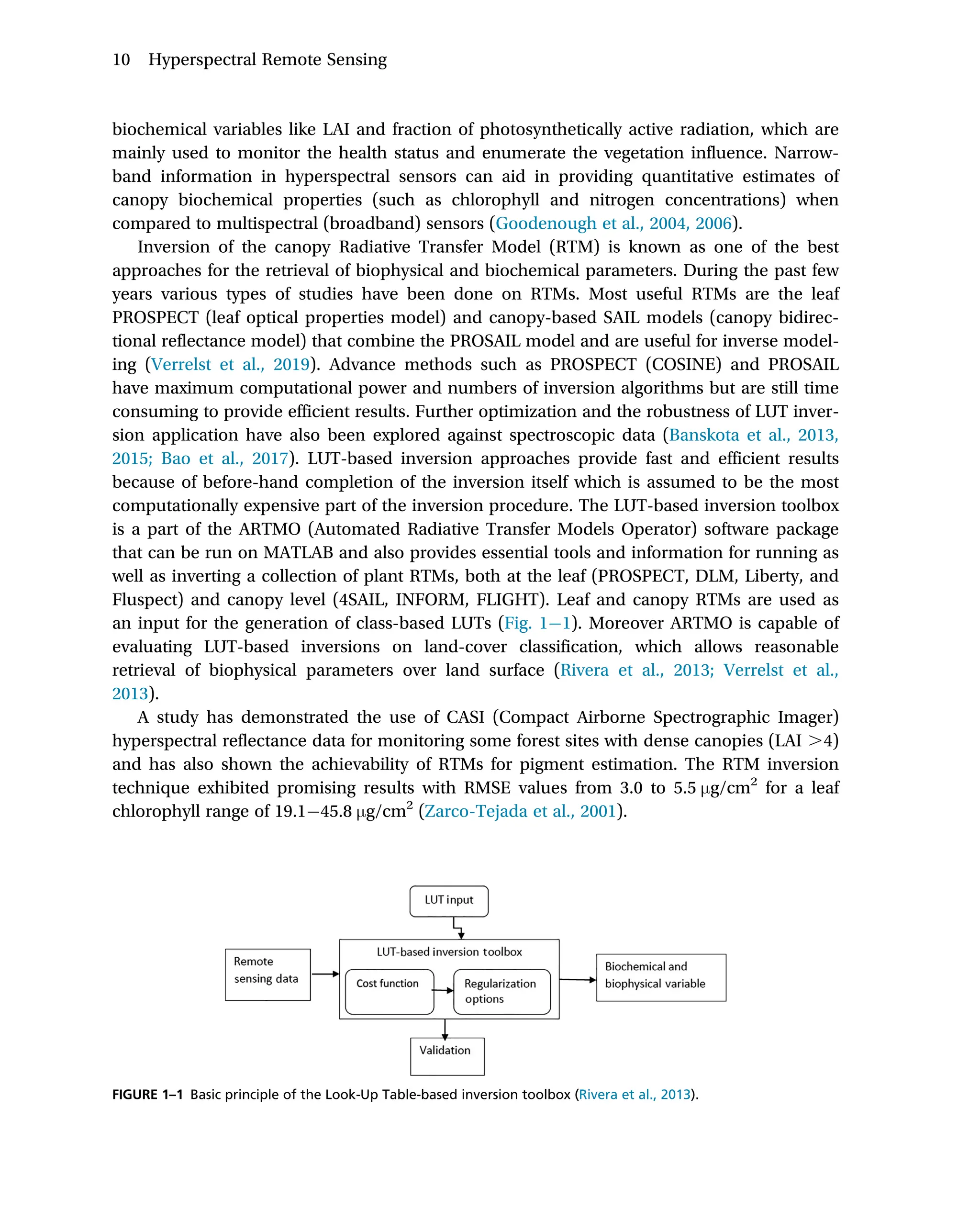
https://ebookmass.com/product/atmospheric-remote-sensing-abhay-kumar-
singh/
Techniques and methods in urban remote sensing Weng
https://ebookmass.com/product/techniques-and-methods-in-urban-remote-
sensing-weng/
Thermal and Optical Remote Sensing John O Odindi
https://ebookmass.com/product/thermal-and-optical-remote-sensing-john-
o-odindi/
Remote Sensing of Ocean and Coastal Environments Meenu
Rani
https://ebookmass.com/product/remote-sensing-of-ocean-and-coastal-
environments-meenu-rani/
Hyperspectral Remote
Sensing
Theory andApplications
Edited by
Prem Chandra Pandey
Center for Environmental Sciences & Engineering, School of Natural Sciences,
Shiv Nadar University, Greater Noida, India
Prashant K. Srivastava
Remote Sensing Laboratory,
Institute of Environment and Sustainable Development,
Banaras Hindu University, Varanasi, India
Heiko Balzter
University of Leicester, Leicester, United Kingdom
Bimal Bhattacharya
Space Applications Centre, Indian Space Research Organization,
Ahmedabad, India
George P. Petropoulos
Department of Geography, Harokopio University of Athens, Athens, Greece
8.
Contents
List of contributorsxvii
Biography xxiii
Foreword xxvii
Preface xxix
Section I Introduction to Hyperspectral Remote
Sensing and Principles of Theory
and Data Processing 1
1. Revisiting hyperspectral remote sensing: origin,
processing, applications and way forward 3
PRASHANT K. SRIVASTAVA, RAMANDEEP KAUR M. MALHI,
PREM CHANDRA PANDEY, AKASH ANAND, PRACHI SINGH,
MANISH KUMAR PANDEY AND AYUSHI GUPTA
1.1 Introduction 3
1.2 Origin of hyperspectral remote sensing 4
1.3 Atmospheric correction: a primary step in preprocessing
hyperspectral images 5
1.4 Empirical and radiative transfer models 9
1.5 Applications of hyperspectral remote sensing 11
1.6 Way forward 15
Acknowledgment 15
References 16
v
9.
2. Spectral smilecorrection for airborne
imaging spectrometers 23
K. KOLONIATIS, V. ANDRONIS AND V. KARATHANASSI
2.1 Introduction 23
2.2 Illumination effects on the spectral smile of airborne
hyperspectral images 26
2.3 The modified trend line smile correction method 31
2.4 Implementation and results 33
2.5 Evaluation and discussion 38
2.6 Conclusion 43
List of abbreviations 43
References 43
3. Anomaly detection in hyperspectral remote
sensing images 45
PRZEMYSŁAW GŁOMB AND MICHAŁ ROMASZEWSKI
3.1 Introduction 45
3.2 Methods 50
3.3 Experiments 56
3.4 Conclusion 62
Acknowledgment 63
List of abbreviations 63
References 64
4. Atmospheric parameter retrieval and correction
using hyperspectral data 67
MANOJ K. MISHRA AND BIMAL BHATTACHARYA
4.1 Introduction 67
4.2 Atmospheric correction techniques 69
4.3 Aerosol retrieval method 72
4.4 Water vapor and other trace gas retrieval 74
4.5 Atmospheric correction results and discussion 77
vi Contents
10.
4.6 Conclusion 78
Listof abbreviations 78
References 79
5. Hyperspectral image classifications and feature selection 81
MAHESH PAL
5.1 Introduction 81
5.2 Modified radial basis function neural network 84
5.3 Bayesian framework for feature selection 86
5.4 Study area and data sources 87
5.5 Results 87
5.6 Conclusion 89
List of abbreviations 89
Acknowledgment 89
References 90
Section II Hyperspectral Remote Sensing
Application in Vegetation 93
6. Identification of functionally distinct plants using
linear spectral mixture analysis 95
RAMANDEEP KAUR M. MALHI, PRASHANT K. SRIVASTAVA
AND G. SANDHYA KIRAN
6.1 Introduction 95
6.2 Plant functional traits 95
6.3 Plant functional types 96
6.4 Remote sensing in identification of plant functional
types or functionally distinct plants 97
6.5 Hyperspectral remote sensing in plant functional
types identification 97
6.6 Spectral mixture analysis 98
6.7 Study site 98
6.8 Materials and methodology 99
Contents vii
11.
6.9 Satellite dataand their analysis 100
6.10 Results and discussion 101
6.11 Conclusion 102
Acknowledgments 103
List of Abbreviation 103
References 103
7. Estimation of chengal trees relative abundance
using coarse spatial resolution hyperspectral systems 107
NOORDYANA HASSAN, MAZLAN HASHIM, SHINYA NUMATA
AND MOHAMAD ZAKRI TARMIDI
7.1 Introduction 107
7.2 Materials and methodology 109
7.3 Results and analysis 116
7.4 Discussion 117
7.5 Conclusion 118
List of abbreviations 118
References 119
8. Hyperspectral remote sensing in precision agriculture:
present status, challenges, and future trends 121
PRACHI SINGH, PREM CHANDRA PANDEY, GEORGE P. PETROPOULOS,
ANDREW PAVLIDES, PRASHANT K. SRIVASTAVA, NIKOS KOUTSIAS,
KHIDIR ABDALA KWAL DENG AND YANGSON BAO
8.1 Introduction 121
8.2 Multispectral remote sensing in precision agriculture 123
8.3 Hyperspectral sensors: present status 128
8.4 Hyperspectral data in agriculture 129
8.5 Hyperspectral sensors: future missions 138
8.6 Conclusion 139
Acknowledgments 140
List of abbreviations 140
References 141
viii Contents
12.
9. Discriminating tropicalgrasses grown under different
nitrogen fertilizer regimes in KwaZulu-Natal, South
Africa 147
ROWAN NAICKER, ONISIMO MUTANGA, MBULISI SIBANDA
AND KABIR PEERBHAY
9.1 Introduction 147
9.2 Materials and methods 149
9.3 Results 153
9.4 Discussion 154
9.5 Conclusion 158
Acknowledgment 158
List of abbreviations 159
References 159
Section III Hyperspectral Remote Sensing
Application in Water, Snow,
Urban Research 165
10. Effect of contamination and adjacency factors on
snow using spectroradiometer and hyperspectral images 167
P.K. GARG
10.1 Remote sensing of snow 167
10.2 Snow spectra 168
10.3 Hyperspectral remote sensing 168
10.4 The experimental sites 170
10.5 Data used 170
10.6 Methodology used 170
10.7 Contamination in snow 179
10.8 Adjacent objects and their effects on snow reflectance 189
10.9 Spectral unmixing methods for satellite image classification 190
10.10 Conclusion 192
Contents ix
13.
List of abbreviations193
References 194
11. Remote sensing of inland water quality:
a hyperspectral perspective 197
SHARD CHANDER, ASHWIN GUJRATI, ASWATHY V. KRISHNA,
ARVIND SAHAY AND R.P. SINGH
11.1 Introduction 197
11.2 Hyperspectral remote sensing 199
11.3 Methodology: field and satellite measurements 200
11.4 Interpretation of the spectral signatures 205
11.5 Conclusion 214
Acknowledgments 214
List of abbreviations 215
References 216
12. Efficacy of hyperspectral data for monitoring and
assessment of wetland ecosystem 221
L.K. SHARMA, RAJASHREE NAIK AND PREM CHANDRA PANDEY
12.1 Introduction 221
12.2 Monitoring and assessment of wetlands with
multispectral remote sensing 226
12.3 Monitoring and assessment of wetlands with
hyperspectral remote sensing 227
12.4 Details of hyperspectral images for wetland monitoring 230
12.5 Application of hyperspectral images for wetland
ecosystems 231
12.6 Future scope and challenges of hyperspectral remote
sensing for wetland ecosystem 235
12.7 Applicability of hyperion image for Sambhar Salt Lake,
a saline wetland 236
Acknowledgments 239
List of abbreviations 239
References 240
x Contents
14.
Section IV HyperspectralRemote Sensing Application
in Soil and Mineral Exploration 247
13. Spectroradiometry as a tool for monitoring soil
contamination by heavy metals in a floodplain site 249
SALIM LAMINE, MANISH KUMAR PANDEY, GEORGE P. PETROPOULOS,
PAUL A. BREWER, PRASHANT K. SRIVASTAVA, KIRIL MANEVSKI,
LEONIDAS TOULIOS, NOUR-EL-ISLAM BACHARI
AND MARK G. MACKLIN
13.1 Introduction 250
13.2 Distribution and vulnerabilities of heavy metals in
the United Kingdom 251
13.3 Materials and methods 252
13.4 Results and discussion 256
13.5 Conclusion 262
Acknowledgments 263
List of abbreviations 263
References 264
Further reading 268
14. Hyperspectral remote sensing applications in soil:
a review 269
HUAN YU, BO KONG, QING WANG, XIAN LIU AND XIANGMENG LIU
14.1 Introduction 269
14.2 Hyperspectral remote sensing application in soil mineral
identification 270
14.3 Hyperspectral remote sensing application in soil nutrient
prediction 272
14.4 Hyperspectral remote sensing application in soil
organic carbon estimation 273
14.5 Hyperspectral remote sensing application in soil moisture
retrieval 275
Contents xi
15.
14.6 Hyperspectral remotesensing application in soil salinity
detection 275
14.7 Hyperspectral remote sensing application in soil texture
acquisition 278
14.8 Opportunities and challenges 280
Acknowledgments 284
List of abbreviations 284
References 284
15. Mineral exploration using hyperspectral data 293
ARINDAM GUHA
15.1 Introduction 293
15.2 Spectroscopy of rocks and minerals 294
15.3 Hyperspectral sensors suitable for mineral exploration 300
15.4 Broad overview of hyperspectral data processing steps for
geological exploration 300
15.5 Application of hyperspectral remote sensing in mineral
exploration 304
15.6 Requirement and future research focus 311
List of abbreviations 314
References 315
Further reading 317
16. Metrological hyperspectral image analysis through
spectral differences 319
HILDA DEBORAH, NOËL RICHARD, JON YNGVE HARDEBERG
AND JON ATLI BENEDIKTSSON
16.1 Introduction 319
16.2 Is metrology justified for remote sensing? 320
16.3 Towards a metrological spectral difference function 322
16.4 Assessing the nonuniformity of the spectral world 330
xii Contents
16.
16.5 Application inforest mapping 334
16.6 Conclusion 337
List of abbreviations 337
References 338
Section V Hyperspectral Remote Sensing:
Multi-sensor, Fusion and Indices
applications for Pollution Detection
and Other Applications 341
17. Improving the detection of cocoa bean
fermentation-related changes using image fusion 343
RONALD CRIOLLO, OSWALDO BAYONA, DANIEL OCHOA,
JUAN CEVALLOS-CEVALLOS AND WENZHI LIAO
17.1 Introduction 343
17.2 Methodology 345
17.3 Experiments 348
17.4 Discussion 353
Acknowledgments 354
References 355
18. Noninvasive detection of plant parasitic
nematodes using hyperspectral and other remote
sensing systems 357
UROŠ ŽIBRAT, SAŠA ŠIRCA, NIK SUSIČ, MATEJ KNAPIČ,
BARBARA GERIČ STARE AND GREGOR UREK
18.1 Introduction to noninvasive detection 357
18.2 Introduction to plant parasitic nematodes 359
18.3 Examples of noninvasive detection of plant parasitic
nematodes 362
Contents xiii
17.
18.4 Patents inthe field of remote sensing of nematode
infestations 367
18.5 Conclusion 369
Acknowledgments 370
List of abbreviation 370
References 371
19. Evaluating the performance of vegetation indices for
detecting oil pollution effects on vegetation using
hyperspectral (Hyperion EO-1) and multispectral
(Sentinel-2A) data in the Niger Delta 377
NKEIRUKA N. ONYIA, HEIKO BALZTER AND JUAN CARLOS BERRÍO
19.1 Introduction 377
19.2 Materials and methods 379
19.3 Results 387
19.4 Discussion 393
19.5 Conclusion 396
Acknowledgments 396
References 397
20. Hyperspectral vegetation indices to detect
hydrocarbon pollution 401
PAUL ARELLANO AND DIMITRIS STRATOULIAS
20.1 Introduction 401
20.2 Materials and methods 404
20.3 Discussion 419
20.4 Conclusion 421
List of abbreviations 422
References 423
xiv Contents
18.
Section VI HyperspectralRemote Sensing:
Challenges, Future Pathway for
Research & Emerging Applications 427
21. Future perspectives and challenges in hyperspectral
remote sensing 429
PREM CHANDRA PANDEY, HEIKO BALZTER,
PRASHANT K. SRIVASTAVA, GEORGE P. PETROPOULOS AND
BIMAL BHATTACHARYA
21.1 Introduction 429
21.2 Challenges of hyperspectral imaging systems 431
21.3 Conclusion 434
Acknowledgments 436
List of abbreviations 436
References 436
Author Index 441
Subject Index 455
Contents xv
List of contributors
AkashAnand Remote Sensing Laboratory, Institute of Environment and
Sustainable Development, Banaras Hindu University, Varanasi, India
V. Andronis Laboratory of Remote Sensing, National Technical University of
Athens, Athens, Greece
Paul Arellano School of Earth Sciences, Energy and Environment—Center of Earth
Observation, Yachay Tech University, Urcuqui, Ecuador; Department of Postgraduate
Studies, Faculty of Biological Sciences, Central University of Ecuador,
Quito, Ecuador
Nour-El-Islam Bachari Faculty of Biological Sciences, University of Sciences
and Technology Houari Boumediene, Bab Ezzouar, Algeria
Heiko Balzter Centre for Landscape and Climate Research, School of
Geography, Geology and the Environment, University of Leicester, Leicester,
United Kingdom; National Centre for Earth Observation, University of Leicester,
Leicester, United Kingdom
Yangson Bao Collaborative Innovation Center on Forecast and Evaluation of
Meteorological Disasters, Nanjing, University of Information Science &
Technology, Nanjing, P.R. China
Oswaldo Bayona Escuela Superior Politécnica del Litoral, ESPOL, Guayaquil,
Ecuador
Jon Atli Benediktsson Department of Electrical and Computer Engineering,
University of Iceland, Reykjavík, Iceland
Juan Carlos Berrío School of Geography, Geology and Environment,
University of Leicester, Leicester, United Kingdom
Bimal Bhattacharya Space Applications Centre, Indian Space Research
Organization, Ahmedabad, India
Paul A. Brewer Department of Geography and Earth Sciences, University of
Aberystwyth, Ceredigion, United Kingdom
xvii
21.
Juan Cevallos-Cevallos EscuelaSuperior Politécnica del Litoral, ESPOL,
Guayaquil, Ecuador
Shard Chander Space Applications Centre, Ahmedabad, India
Ronald Criollo Escuela Superior Politécnica del Litoral, ESPOL, Guayaquil,
Ecuador
Hilda Deborah Department of Computer Science, Norwegian University of
Science and Technology, Gjøvik, Norway
Khidir Abdala Kwal Deng Collaborative Innovation Center on Forecast and
Evaluation of Meteorological Disasters, Nanjing, University of Information
Science & Technology, Nanjing, P.R. China
P.K. Garg Civil Engineering Department, Indian Institute of Technology,
Roorkee, India
Barbara Gerič Stare Agricultural Institute of Slovenia, Plant Protection
Department, Ljubljana, Slovenia
Przemysław Głomb Institute of Theoretical and Applied Informatics, Polish
Academy of Sciences, Gliwice, Poland
Arindam Guha Geosciences Group, National Remote Sensing Centre, Indian
Space Research Organization, Hyderabad, India
Ashwin Gujrati Space Applications Centre, Ahmedabad, India
Ayushi Gupta Remote Sensing Laboratory, Institute of Environment and
Sustainable Development, Banaras Hindu University, Varanasi, India
Jon Yngve Hardeberg Department of Computer Science, Norwegian
University of Science and Technology, Gjøvik, Norway
Mazlan Hashim Geoscience and Digital Earth Centre (INSTeG), Research
Institute of Sustainable Environment, Universiti Teknologi Malaysia, UTM
Johor, Johor, Malaysia; Department of Geoinformatics, Faculty of Built
Environment and Surveying, Universiti Teknologi Malaysia, UTM Johor, Johor,
Malaysia
Noordyana Hassan Geoscience and Digital Earth Centre (INSTeG), Research
Institute of Sustainable Environment, Universiti Teknologi Malaysia, UTM
Johor, Johor, Malaysia; Department of Geoinformatics, Faculty of Built
Environment and Surveying, Universiti Teknologi Malaysia, UTM Johor, Johor,
Malaysia
xviii List of contributors
22.
V. Karathanassi Laboratoryof Remote Sensing, National Technical University
of Athens, Athens, Greece
G. Sandhya Kiran The Maharaja Sayajirao University of Baroda, Vadodara,
India
Matej Knapič Agricultural Institute of Slovenia, Plant Protection Department,
Ljubljana, Slovenia
K. Koloniatis Laboratory of Remote Sensing, National Technical University of
Athens, Athens, Greece
Bo Kong Institute of Mountain Hazards and Environment, Chinese Academy
of Sciences, Chengdu, P.R. China
Nikos Koutsias Department of Environmental Engineering, University of
Patras, Agrinio, Greece
Aswathy V. Krishna Space Applications Centre, Ahmedabad, India
Salim Lamine Faculty of Natural Sciences and Life and Earth Sciences,
University Akli Mohand Oulhadj of Bouira, Bouira, Algeria; Department of
Geography and Earth Sciences, University of Aberystwyth, Ceredigion, United
Kingdom
Wenzhi Liao Sustainable Materials Management, Flemish Institute for
Technological Research (VITO), Antwerp, Belgium; IPI-TELIN, Ghent University,
Ghent, Belgium
Xian Liu Department of Plant Biology, Southern Illinois University,
Carbondale, IL, United States
Xiangmeng Liu College of Earth Sciences, Chengdu University of Technology,
Chengdu, P.R. China
Mark G. Macklin School of Geography, College of Science, University of
Lincoln, Lincoln, United Kingdom
Ramandeep Kaur M. Malhi Remote Sensing Laboratory, Institute of
Environment and Sustainable Development, Banaras Hindu University,
Varanasi, India
Kiril Manevski Department of Agroecology, Aarhus University, Tjele,
Denmark; Sino-Danish Center for Education and Research, Eastern Yanqihu
Campus, Beijing, P.R. China
List of contributors xix
23.
Manoj K. MishraSpace Applications Centre, Indian Space Research
Organization, Ahmedabad, India
Onisimo Mutanga Department of Geography, School of Agricultural, Earth
and Environmental Science, University of KwaZulu-Natal, Pietermaritzburg,
South Africa
Rowan Naicker Department of Geography, School of Agricultural, Earth and
Environmental Science, University of KwaZulu-Natal, Pietermaritzburg, South
Africa
Rajashree Naik Department of Environmental Science, School of Earth
Sciences, Central University of Rajasthan, Ajmer, India
Shinya Numata Department of Tourism Science, Graduate School of Urban
Environmental Sciences, Tokyo Metropolitan University, Minami-Osawa 1-1,
Hachiouji, Tokyo, Japan
Daniel Ochoa Escuela Superior Politécnica del Litoral, ESPOL, Guayaquil,
Ecuador
Nkeiruka N. Onyia Centre for Landscape and Climate Research, School of
Geography, Geology and the Environment, University of Leicester, Leicester,
United Kingdom
Mahesh Pal Department of Civil Engineering, National Institute of
Technology, Kurukshetra, India
Manish Kumar Pandey Remote Sensing Laboratory, Institute of Environment
and Sustainable Development, Banaras Hindu University, Varanasi, India
Prem Chandra Pandey Center for Environmental Sciences & Engineering,
School of Natural Sciences, Shiv Nadar University, Greater, Noida, India
Andrew Pavlides School of Mineral Resources Engineering, Technical
University of Crete, Chania, Greece
Kabir Peerbhay Department of Geography, School of Agricultural, Earth and
Environmental Science, University of KwaZulu-Natal, Pietermaritzburg, South
Africa
George P. Petropoulos Department of Geography, Harokopio University of
Athens, Athens, Greece
xx List of contributors
24.
Noël Richard LaboratoryXLIM, UMR CNRS 7252, University of Poitiers,
Poitiers, France
Michał Romaszewski Institute of Theoretical and Applied Informatics, Polish
Academy of Sciences, Gliwice, Poland
Arvind Sahay Space Applications Centre, Ahmedabad, India
L.K. Sharma Department of Environmental Science, School of Earth Sciences,
Central University of Rajasthan, Ajmer, India
Mbulisi Sibanda Department of Geography, School of Agricultural, Earth and
Environmental Science, University of KwaZulu-Natal, Pietermaritzburg, South
Africa
Prachi Singh Remote Sensing Laboratory, Institute of Environment and
Sustainable Development, Banaras Hindu University, Varanasi, India
R.P. Singh Space Applications Centre, Ahmedabad, India
Saša Širca Agricultural Institute of Slovenia, Plant Protection Department,
Ljubljana, Slovenia
Prashant K. Srivastava Remote Sensing Laboratory, Institute of Environment
and Sustainable Development, Banaras Hindu University, Varanasi, India; DST-
Mahamana Centre for Excellence in Climate Change Research, Banaras Hindu
University, Varanasi, India
Dimitris Stratoulias Department for Management of Science and Technology
Development, Ton Duc Thang University, Ho Chi Minh City, Vietnam; Faculty of
Applied Sciences, Ton Duc Thang University, Ho Chi Minh City, Vietnam
Nik Susič Agricultural Institute of Slovenia, Plant Protection Department,
Ljubljana, Slovenia
Mohamad Zakri Tarmidi Geoscience and Digital Earth Centre (INSTeG),
Research Institute of Sustainable Environment, Universiti Teknologi Malaysia,
UTM Johor, Johor, Malaysia; Department of Geoinformatics, Faculty of Built
Environment and Surveying, Universiti Teknologi Malaysia, UTM Johor, Johor,
Malaysia
Leonidas Toulios Department of Soil Water Resources, Institute of Industrial
& Forage Crops, Hellenic Agricultural Organization (HAO) “Demeter” (former
NAGREF), Directorate General of Agricultural Research, Larissa, Greece
List of contributors xxi
25.
Gregor Urek AgriculturalInstitute of Slovenia, Plant Protection Department,
Ljubljana, Slovenia
Qing Wang Department of Geography and Environmental Resources,
Southern Illinois University, Carbondale, IL, United States
Huan Yu College of Earth Sciences, Chengdu University of Technology,
Chengdu, P.R. China
Uroš Žibrat Agricultural Institute of Slovenia, Plant Protection Department,
Ljubljana, Slovenia
xxii List of contributors
26.
Biography
Dr. Prem ChandraPandey received his Ph.D. (2015) from Centre
for Landscape and Climate Research (CLCR), Department of
Geography, University of Leicester, Leicester, United Kingdom,
under the Commonwealth Scholarship and Fellowship Plan (CSFP).
He received his B.Sc. in Botany (Hons.) from Institute of Sciences,
Banaras Hindu University, M.Sc. in Environmental Sciences from
Institute of Sciences, BHU, and M.Tech. in Remote Sensing from
Birla Institute of Technology (BIT) Mesra, Ranchi, India. He is cur-
rently working as Assistant Professor in Center for Environmental
Sciences & Engineering, Shiv Nadar University, Greater Noida, India.
He did his postdoctoral with the Department of Geography and
Human Environment, Faculty of Exact Sciences, Tel Aviv University Israel. He has worked as
a National Postdoctoral Fellow with Remote Sensing Laboratory, Institute of Environment
and Sustainable Development (IESD), Banaras Hindu University (BHU), Varanasi. He worked
on remote sensing applications as professional research fellow in National Urban
Information System (NUIS) funded by National Remote Sensing Centre (NRSC) Government
of India at BIT Mesra, Ranchi. He has been a recipient of several prestigious International
and National awards including Commonwealth Fellowship, United Kingdom, INSPIRE
Fellowship, Ministry of Human Resource and Development (MHRD), Government of India,
University Grant Commission (UGC) Fellowships, Science and Engineering Research Board
(SERB)-NPDF, and IT Merit awards from the Government of India. He has authored more
than 35+ research articles published in international peer-reviewed journal articles, edited
three books, contributed chapters to nine books, and presented his work in several confer-
ences. Additionally, he is also a member of Indian Society of Geomatics (ISG), Indian Society
of Remote Sensing (ISRS), SPIE, and Association of American Geographers (AAG). His
research interests include forestry, environmental pollutant modeling, urban studies, and
agricultural studies.
xxiii
27.
Dr. Prashant K.Srivastava received his Ph.D. from Department of
Civil Engineering, University of Bristol, Bristol, United Kingdom,
sponsored by British High Commission, United Kingdom under the
Commonwealth Scholarship and Fellowship Plan (CSFP) and
MHRD, GOI. He received his B.Sc. in Agriculture Sciences from the
Institute of Agricultural Sciences, Banaras Hindu University (BHU),
and his M.Sc. in Environmental Sciences from School of
Environmental Sciences (SES), Jawaharlal Nehru University (JNU),
India. Currently he is working as an Assistant Professor at the
Institute of Environment and Sustainable Development, Banaras
Hindu University, Varanasi, India. He has worked as a Research
Scientist with NASA Goddard Space Flight Center, Hydrological Sciences Branch on SMAP
satellite soil moisture retrieval algorithm development, instrumentation and its applications.
He is the recipient of several awards such as NASA Fellowship, United States of America;
University of Maryland Fellowship, United States of America; Commonwealth Fellowship,
United Kingdom, and received JRF-NET fellowships from Council of Scientific and Industrial
Research and University Grant Commission, Government of India. He is leading many
national and international projects funded by reputed agencies. He has published over 140
peer-reviewed journal papers, seven books, many book chapters, and has presented his work
in several conferences. Currently, he is also serving as Associate editor of many scientific
peer reviewed journals. He is also a member of European Geosciences Union (EGU), Indian
Society of Geomatics, Indian Society of Remote Sensing, Indian Association of Hydrologists
(IAH), and International Society for Agro-meteorology (INSAM), International Association for
Hydro-Environment Engineering and Research (IAHR), and International Association of
Hydrological Sciences (IAHS).
Prof. Heiko Balzter received his Dipl. -Ing. Agr. (equivalent to M.
Sc.) and Dr. Agr. (Ph.D.) from Justus-Liebig-University, Giessen,
Germany, in 1994 and 1998, respectively. He is a research professor
and the director of the Centre for Landscape and Climate Research
at the University of Leicester, United Kingdom, and Official
Development Assistance (ODA) Programme Leader in the NERC
National Centre for Earth Observation. Before joining the University
of Leicester he was Head of the Section for Earth Observation at the
Centre for Ecology and Hydrology, Monks Wood, United Kingdom,
where he worked from 1998 to 2006. His research interests include
interactions of the water cycle with ecosystems across multiple spa-
tial and temporal scales, pressures from climate change and land use change on ecosystem
services, and the effects of spatial patterns and processes on biological populations in evolv-
ing 3D landscapes. He holds the Royal Society Wolfson Research Merit Award (2011) and the
xxiv Biography
28.
Royal Geographical Society’sCuthbert Peek Award “for advancing geographical knowledge
of human impact through Earth Observation” (2015). He received the President’s Cup for the
Best Paper Annual Remote Sensing and Photogrammetry Society Conference (2009). He
chairs the BESS-EO working group on biodiversity, ecosystem services and Earth
Observation, is a member of the NERC Future Landscapes Scoping Group, and UK represen-
tative on the Group on Earth Observations (GEO) Programme Board. He is leading the
Copernicus Land Monitoring Service for the United Kingdom, which produces the CORINE
land cover map. In the Forests 2020 project he is leading the Forest Cover Change Detection
task. In GLOBBIOMASS, he is in charge of the regional case studies work package. He is
Principal Investigator of the European Centre of Excellence in Earth Observation Research
Training GIONET (h3.5m). He is a fellow of the Higher Education Academy, the Royal
Statistical Society, a member of the American Geophysical Union, British Ecological Society,
Fellow of the Royal Geographical Society, and member of the Remote Sensing and
Photogrammetry Society as well as the Chartered Management Institute. He serves on the
International Geosphere/Biosphere Program, UK National Committee, the European Space
Sciences Committee of the European Science Foundation, the LULUCF Scientific Steering
Committee for the Department for Energy and Climate Change, the AATSR Science Advisory
Group to Department for Environment, Food and Rural Affairs, and the Natural
Environment Research Council Peer Review College. His research interests focus on Earth
Observation applications to advance the quantitative understanding of climate change and
land use change impacts on ecosystem services, and the effects of spatial-temporal patterns
and processes. He has extensive expertise in Earth observation and remote sensing of forests,
land cover, and lakes.
Dr. Bimal Bhattacharya is associated with SAC ISRO Ahmedabad
as Scientist SG. He received his Ph.D. (Agriculture Physics) in 1995
from Indian Agricultural Research Institute, New Delhi, India. He
received his M.Sc. (Agriculture Physics) from Indian Agricultural
Research Institute, New Delhi, India in 1991. He served as a scientist
in Indian Council of Agricultural research (ICAR) from 1995 to 2000.
He is involved in developing satellite-based agro-met products and
their utilization in National Agro-met Advisory Services in India. He
led the development of satellite-based surface energy balance
modeling over Indian terrestrial ecosystems especially with remote
sensing data from a suite (INSAT VHRR, 3A CCD, 3D Imager) of
Indian geostationary sensors. He led an ISRO-Geosphere-Biosphere Programme (GBP)
National-Scale Science Project on Energy and Mass Exchange in Vegetative Systems. He is
also the Principal Investigator on the Land Surface Processes in the ISRO-CNES MEGHA-
TROPIQUE Mission and Science Member of MoES-NERC Indo-UK Monsoon Project called
INCOMPASS. He is the science leader of the AVIRIS-NG Airborne Hyperspectral Mission in
Indian and also the Science Co-Chair of ISRO-CNES (Indo-French) Thermal Infrared
Biography xxv
29.
Mission. He iscurrently ISRO representative in CEOS for land surface imaging. He is the
recipient of the P.R. Pisharoty award from Indian Society of Remote Sensing and young sci-
entist award from AsiaFlux, Japan sponsored by Japanese Space Agency, JAXA. He also
received the ISRO team member award. He is the teaching faculty in UN-sponsored course
on “Satellite Meteorology and Global Climate” under Centre for Space Science Technology
and Education for Asia-Pacific (CSSTEAP). He has published more than 50 research papers
in peer-reviewed international and national journals.
Dr. George P. Petropoulos is an Assistant Professor in
Geoinformation at Harokopio University of Athens, Greece. He
received his Ph.D. (2008) from King’s College London, his M.Sc. in
Remote Sensing (2003) from University College London (UCL), and
his B.Sc. in Natural Resources Development and Agricultural
Engineering (1999) from the Agricultural University of Athens,
Greece. His research focuses on the use of EO alone or synergisti-
cally with land surface process models in deriving key state variables
of the Earth’s energy balance and water budget. He also has strong
interests in the development of EO and GIS geospatial analysis tech-
niques in geohazards (mainly floods, wildfires, and frost) and in quantifying land use/cover
and its changes using technologically advanced EO sensing systems and synergistic multisen-
sor modeling techniques. He also contributes to the development of open source software
tools in EO modeling and on the benchmarking of EO operational algorithms/products and
surface process models. Dr. Petropoulos currently serves as a council member of the Remote
Sensing and Photogrammetric Society (RSPSoC). He is the editor of SENSED (the RSPSoc
Newsletter), associate editor or editorial board member of several international scientific
journals in EO and environmental modeling. He has edited six books and has coauthored
more than 80 research articles in international peer-reviewed journals.
xxvi Biography
30.
Foreword
Remote sensing technologiesin general and hyperspectral remote sensing technology in par-
ticular have emerged as an important new source of data for environmental applications
over the past few years. Hyperspectral remote sensing applications have gained significant
momentum. From early multispectral sensors flown in the 1960s by NASA which gave birth
to many other remote sensing satellites, including hyperspectral satellites such as Hyperion,
PRISMA, HySI, and others by United States of America, Italy, and India, among others. This
unparalleled rapid progress in sensors and their platforms has provided a major impetus for
the use of hyperspectral applications in many fields such as, but not limited to, geology, agri-
culture, water quality, forestry, urban, biodiversity, and so forth. The results of these applica-
tions have been spectacular as many researchers have made interesting observations about
environmental phenomena, and decision makers have considered these data for sustainable
environmental management.
Over 30 years ago, I stated in one of my early research papers that “remote sensing has
added a new dimension to the analysis and studies of environmental processes, issues and
decision-making.” This statement is still true today as evidenced by the content of Hyperspectral
Remote Sensing: Theory and Applications edited by Dr. Prem Chandra Pandey, Dr. Prashant K.
Srivastava, Prof. Heiko Balzter, Dr. Bimal Bhattacharya, and Dr. George P. Petropoulos. This
book is a welcome, significant, and timely contribution to the growing field of hyperspectral
remote sensing.
This book provides an excellent compilation of several methods, techniques, and applica-
tions as well as illustrative examples of advancements of hyperspectral remote sensing. The
contributors have covered a wide variety of theoretical background, algorithms, applications,
and discussed a set of new approaches for hyperspectral data analysis and algorithm devel-
opment. In addition, an informed view of the future challenges of hyperspectral remote sens-
ing will offer food for thought.
The editors are expert researchers in environmental applications of hyperspectral sensors
data. They have skillfully presented this detailed and technical content in a user-friendly and
coherent format. I am confident that the readers of this book will quickly appreciate the
rapid advancements being made in this field. I am positive that researchers and students
alike will gain insights into the novel dimensions of applying hyperspectral remote sensing
to environmental analysis and understanding. I wish the editors and publishers of this
important volume great success.
Kamlesh Lulla
Houston, TX, United States
Dr. Kamlesh Lulla served as Chief Scientist for Earth Observations and Chief,
Earth Science Branch at NASA Johnson Space Center in Houston, TX, United States.
xxvii
31.
Preface
This book aimsto provide an all-inclusive overview of state-of-the-art hyperspectral remote
sensing and its applications in different research areas. The book is designed in such a way
that it will be used by the people in their respective research domains who will realize that
hyperspectral technology may offer a solution to their application area. Readers will have a
better understanding of how to incorporate and evaluate different approaches to hyperspec-
tral analyses, as well as which approaches may or may not work for the applications of inter-
est. Hyperspectral Remote Sensing: Theory and applications is the first volume of the “Series
of Earth Observation” by Elsevier. The purpose of this book is not to provide a tutorial in
hyperspectral remote sensing; rather, its aim is to provide an illustration of the potential
applications and analysis techniques that can be used, addressing the unique challenge in
different applications across the globe.
The aim of the book is to make researchers aware of and enrich their understanding of
the concept of hyperspectral data processing. This book has 21 chapters addressing the prin-
ciples, techniques, and applications of hyperspectral remote sensing under different research
themes with field spectroscopy and airborne and spaceborne imaging spectroscopy.
The first section of the book explains the basic concept and underlying principles of
errors and their correction methods. This covers all the major aspects of hyperspectral data,
source of errors, types of errors, and their correction methods. Advanced classification tech-
niques such as radial basis function neural network (RBFN) and Support Vector Machine
(SVM) for feature selection are also provided.
Further sections of book will take readers through all the major applications of hyper-
spectral remote sensing in vegetation, water, soil, and minerals, as well as pollution detec-
tion. Data fusion with other remote sensor images and utilization of spectral indices for
different applications are also presented. This section will also demonstrate narrow band
and selected bands of hyperspectral data to detect and interpret the level of hydrocarbon
pollution in water resources as well as in forest regions. The book describes case studies that
have applied this information to the use of hyperspectral remote sensing in forestry, agricul-
ture, water, soil, and mineral applications. The final chapter deals with the future perspective
and challenges in hyperspectral remote sensing community.
The case studies in each chapter illustrate how hyperspectral remote sensing is being
used to solve many of the disturbing environmental issues of our society. These include
identification of functionally distinct plants, chengal tree abundance, precision agriculture,
tropical grassland discrimination under different inorganic fertilizers, snow, inland water and
wetland mapping, meteorological studies, soil contamination and hydrocarbon pollution
detection, and monitoring, detection of crop parasites, and image fusion for cocoa bean fer-
mentation analysis. For water application, topics include snow mapping and parameter
xxix
32.
retrieval (such assnow grain size, contamination), inland water quality mapping and a case
study on a wetlands ecosystem. For soil and land applications, topics include heavy-metal
contamination in soil, soil parameters, soil properties presenting the efficacy of hyperspectral
data and multiimage fusion datasets.
We are grateful to the reviewers who made the time to review the chapter manuscripts
and Elsevier editorial acquisition members including Morse Redding, Marisa Lafleur, Honest
Joy, Robertson Naomi for their constant support and help. Last but not the least, the editors
thank the publisher for providing the opportunity to set down the thoughts of several contri-
butors to produce this book.
I hope Hyperspectral Remote Sensing will provide insight into the breadth of the hyper-
spectral application-related topics. Users of this book are encouraged to adapt it and use it
the way it best fits their own needs that would help them in understanding the capabilities
and potentials of hyperspectral remote sensing and applications.
Editors
Prem Chandra Pandey, Greater Noida, India
Prashant K. Srivastava, Varanasi, India
Heiko Balzter, Leicester, United Kingdom
Bimal Bhattacharya, Ahmedabad, India
George P. Petropoulos, Athens, Greece
xxx Preface
1.2 Origin ofhyperspectral remote sensing
A landmark step was achieved in 1979 when hybrid array detectors, mercury cadmium tellu-
ride on silicon charge-coupled devices was made available for the first time leading to the con-
struction of an imaging spectrometer that operated at wavelengths beyond 1.0 of μm. The
airborne imaging spectrometer (AIS) was developed at the National Aeronautics and Space
Administration (NASA) Jet Propulsion Laboratory (JPL) in 1983 and operated at wavelengths
between 0.8 and 2.5 μm. AIS was replaced by the airborne visible/infrared imaging spectrome-
ter (AVIRIS) in the early 1990s that covered the entire spectrum from 0.4 μm to 2.45 μm at a
high spectral rate plus high spatial resolution over an 11 km swath. The primary objectives of
these missions were identifying and assessing the characteristics of surface materials. It was
with AVIRIS data that the first vegetation analysis was carried out through near-infrared spec-
troscopy (NIRS) analysis by John Aber and Mary Martin of the University of New Hampshire.
Although AVIRIS has offered the bulk of high-quality hyperspectral data, it lacks regularity.
With known multispectral specifications and properties, one wants to gain information
from spectral information, and there must be several narrow spectral channels in the same
electromagnetic spectrum (400 2500 nm) compared to a few broad spectral channels in
multispectral images (Pandey et al., 2019b). Thus the idea behind hyperspectral imaging sys-
tems is straightforward, while offering even more information to understand our environ-
ment better. This led to further innovations and advancement in hyperspectral imaging
systems in the early 1980s. Hyperspectral remote sensing or imaging spectrometry has
evolved from ERTS-1 [1] (Earth Resources Technology Satellite)-1 (Landsat-1) 4-band
images, to AIS, AVIRIS. AVIRIS was the first hyperspectral imaging system developed at
NASA JPL in the United States as a result of innovations in spectrometers technologies, then
AVIRIS-NG (Airborne Visible Infrared Imaging Spectrometer-Next Generation) and HyspIRI
(Hyperspectral Infrared Imager) were introduced.
The first hyperspectral mission Earth Observation-1 (EO-1) Hyperion sensor was
launched by NASA’s Earth Observing-1 satellite in November 2000. This space-borne mission
brought significant and dramatic changes in the applications on forestry, agriculture, mineral
identifications and land-use or land-cover classifications (Pandey et al., 2018, 2019a).
Enhanced spectral resolution in the 400 2500 nm range was extensively and widely used by
researchers, and provided more reliable and accurate results (Kramer, 2002). In order to
achieve high spectral resolution, multispectral sensors were effectively enhanced in their
image acquisition in the spectral range, reduction in the spectral sampling rate, and several
contiguous spectral channels. Later on, the Compact High-Resolution Imaging Spectrometer
(CHRIS) for the European Space Agency (ESA) Project for On-Board Autonomy-1 (PROBA-1)
in 2001 was launched by ESA for the global mapping of natural resources. Hyperion has
been decommissioned and CHRIS is currently working and operating in the orbit. It has
been designed for a life operational time period of a one year only and has 62 contiguous
channels with a spatial resolution of 17 m.
These hyperspectral imaging satellites are accompanied by several other missions later
on (Puschell, 2000). The information on current and future space-borne hyperspectral
4 Hyperspectral Remote Sensing
35.
missions were compiledwith references to several published articles (Nieke et al., 1997;
Puschell, 2000; Kramer, 2002; Staenz and Held, 2012). There is a focus to dramatically
increase contiguous spectral bands in upcoming space-based hyperspectral imaging systems
(Nieke et al., 1997). A medium spectral resolution hyperspectral imaging system called
PRecursore IperSpettrale della Missione Applicativa (PRISMA) was launched by Italy’s ASI
on March 22, 2019 (Longo, 2020). PRISMA’s hyperspectral sensors will be capable to acquire
images in B235 contiguous spectral channels in visible (VIS) near-infrared (NIR) short-
wave infrared (SWIR) ranges. The Environmental Mapping and Analysis Program (EnMAP)
for hyperspectral sensors was launched by Deutsche Zentrum für Luft-and Raumfahrt (DLR)
(The German Aerospace Center) the German Research Centre for Geosciences
[GeoForschungsZentrum (GFZ)] in 2015 to acquire images in over 200 narrow contiguous
bands. In the meantime, NASA has scheduled the HyspIRI mission launch for 2022, which
will acquire images with 237 spectral bands with 60 m spatial resolution. Detailed informa-
tion on present and future hyperspectral missions are presented in Table 1 1. This also pre-
sents the major space-borne missions launched or planned by several countries or space
agencies. Apart from those listed in Table 1 1, there are HISUI (The Japanese Hyperspectral
Imager Suite) onboard the Advanced Land Observing Satellite-3 (ALOS-3), and the French
HYPXIM hyperspectral missions (Briottet et al., 2011; Matsunaga et al., 2013) were also in
orbit. HISUI is a space-borne instrument suite designed to work both as hyperspectral as
well as multispectral imagers. Therefore the importance of these planned hyperspectral mis-
sions or initiatives should be understood to ensure guaranteed, uninterrupted hyperspectral
image acquisition and coverage beyond 2020.
The focus of the HyspIRI mission will be on the world’s ecosystem studies offering infor-
mation on future ecosystems, disasters, and the carbon cycle. This mission will offer
VIS NIR and SWIR hyperspectral data and multispectral thermal data regularly. The combi-
nation of spatiotemporal and spectral data will offer a challenge to researchers.
1.3 Atmospheric correction: a primary step in preprocessing
hyperspectral images
Passive remote sensing is basically the study of interaction between light source and Earth
surface features, in which every feature has an unique spectral response. The spectral resolu-
tion and continuous wavelength range of an image play an important role in distinguishing
the feature; the higher the spectral resolution the higher will be its feature-detection capabil-
ity (Okada and Iwashita, 1992; Clark, 1999). Hyperspectral imaging holds the potential to dis-
tinguish surface features more precisely because of its high-spectral resolution and narrow
bandwidths. Hyperspectral images have numerous narrow bands covering ultra-violet,
VIS NIR, and SWIR regions of the electromagnetic spectrum, which makes it more suscepti-
ble to atmospheric distortions. Atmospheric gases and aerosols absorb and transmit the
incoming light in regards to its wavelength and this causes distortions in the image.
Therefore atmospheric correction is required in all hyperspectral data in which the raw
Chapter 1 • Revisiting hyperspectral remote sensing: origin, processing 5
36.
Table 1–1 Majorearth observation hyperspectral missions (launched or planned future missions).
Sensors Platform Spectral range
Spatial resolution/
spectral resolution Channels Revisit time
Organization/
Nation
Launch
year
01 Hyperion EO-1 400 2500 nm 30 m/10 nm 220 200 days NASA November
2000
02 CHRIS PROBA 400 1050 nm 18 36 m/(1.25 11 nm)
62 spectral to provide
34 m
150 2 (mid-latitudes) ESA-UK October
2001
03 EnMap BVNIR (420 1000 nm)
BSWIR I
(900 1390 nm)
BSWIR II
(1480 1760 nm)
BSWIR III
(1950 2450 nm)
30 m at Nadir
Spectral sampling
VNIR: 5 10 nm (6.5 nm
average)
SWIR: 10 nm (average)
92B420 1030
108
B950 2450
23 days and 4 days
(across track 6 30
)
DLR Germany/GFZ 2015
04 HyspIRId
Hyperspectral imaging
B400 2500 nm
Multispectral IR at
8 12 μm
60 m at 150 km Swath
(after 2013-30 m)
217 VSWIR—19 days (after
2013- 16 days)
TIR—5 daysf
NASA—United
States
2022
05 HySIS 400 1200 nm 30 m/B10 nm 55 5/19 days ISRO India November
2018
06 SHALOM MBT Space 400 2500 nm 10 m 241 2 days ISA—Israel June 2019a
07 PRISMAe
AVIO Italian
launcher
400 2500 nm 20 30 m 240 , 29 days
Relook day
,7 days
Italy Space
Agency and
VEGA
March
2019a
08 FLEX Earth explorer 300 m 28 days ESA 2022a
09 HySI Chandrayaan-1 400 950 nm (15 nm) 80 m 32 B ISRO India 2008
10 HJ-1A CAST a
WVC—0.43 0.90 μm 30 m 4 4 days China September
2008
b
HSI—0.45 0.95 μm 100 m/5 nm 115 4 31 days (side look
6 30
)
HJ-1B WVC—approximately
0.43 0.90 μm
30 m 4 4 days
c
IRMSS—approximately
0.75 1.10 μm
1.55 1.75 μm
3.50 3.90 μm
10.5 12.5 μm
150 m
150 m
150 m
300 m
4 4 days
37.
11 Hero (CASI)400 2500 nm 30 m/B10 nm .200 3 Canada
12 VENUS 415 910 nm 5.3 m 12 2 CNES/Israel 2016
13 SumbandilaSat/
MSI
440—2350 nm 15 m/5.7 nm 200 — South Africa September
2009
14 HICI 350 1081 nm 90 m/B5.7 nm 128 — NASA United
States
2009
15 MSMI Sunspaceg
440 2350 nm 15 m/B10 nm 200 — South Africa March
2010
16 HISUI ALOS-3 400 2500 nm 30 m/B10 nm VNIR
and 12.5 SWIR
185 (VNIR-57,
SWIR128)
Japan 2015
5 m (for multispectral
part)
4 bands
17 HYPXIM-CA 400 2500 nm 15 m # 14 VIS
and # 10 NIR/SWIR
.200 France—CNES 2019
a
Wide View CCD Cameras (WVC).
b
Hyperspectral Imager (HSI).
c
Infrared Multispectral Scanner (IRMSS).
d
https://hyspiri.jpl.nasa.gov/.
e
https://www.unoosa.org/documents/pdf/copuos/2019/copuos2019tech11E.pdf.
f
TIR measures both day and night data with 1 daytime image and 1 night-time image every 5 days.
g
After launch, mission control was handed over from SunSpace to SAC (Satellite Applications Centre) at Hartebeetshoek near Pretoria in South Africa.
38.
radiance image isconverted to a reflectance image considering all spectra is shifted to a
similar albedo.
The techniques for accurate removal of atmospheric absorption and scattering from a
hyperspectral image is mainly divided into two categories, namely relative and absolute (also
termed as empirical) atmospheric corrections (San and Suzen, 2010). Further the technique
of relative atmospheric correction is subdivided into three methods: (1) Internal average
reflectance correction (Kruse, 1988; Ben-Dor and Kruse, 1994), (2) flat field correction (Gao
et al., 2009), and (3) empirical line correction (Gao et al., 2009). In the relative atmospheric
correction technique there is no need of providing a priori information about surface or
atmosphere as it uses the data statistics and runs mathematical operations to correct the
image. On the other hand absolute atmospheric correction techniques take a priori informa-
tion such as water vapor, atmospheric gas content, and topography effects into consideration
to run radiative transfer codes. On a per-pixel basis, the difference between radiation leaving
Earth and received at the sensor along with the a priori inputs are used by the radiative
transfer codes to correct the atmospheric distortions. Absolute atmospheric correction has
been proven to be the better technique over the relative correction technique because it con-
siders the local geographical and atmospheric a priori inputs for correcting the data
(Nikolakopoulos et al., 2002).
Several radiative transfer codes have been introduced by researchers over the past
decades for atmospheric corrections. Many of these codes are developed for a satellite
specific imaging system and for a specific spectral and spatial range. Some of these radia-
tive transfer codes include, Atmospheric Correction Now (ACORN) that is based on
MODerate resolution atmospheric TRANsmission-4 (MODTRAN-4) (Miller, 2002).
Atmospheric Correction (ATCOR) is also a MODTRAN-4 based code and is integrated
with ERDAS Imagine (Earth Resource Development Assessment System) software (Adler-
Golden et al., 1999), Atmospheric Removal (ATREM) (Gao et al., 1993), High Accuracy
Atmospheric Correction for Hyperspectral data (HATCH) (Qu et al., 2003) which is an
improved version of ATREM, and Fast Line-of-sight Atmospheric Analysis of Spectral
Hypercube (FLAASH) (Cooley et al., 2002) which is integrated in ENVI (Environment for
Visualizing Images) software. The major drawbacks of these radiative transfer codes are
their complex algorithms, precalculated lookup tables, inputs based on interpolation, and
the requirement of a priori data related to pixel-wise atmospheric and topographic
information.
Radiative transfer codes based on atmospheric correction was introduced by Gao et al.
(1992, 1993) in the 1990s and is termed ATREM. Using this algorithm, from AVIRIS data
scaled surface reflectance is retrieved assuming a horizontal surface having Lambertian
reflectance. The ATREM radiative transfer code is formulated by deriving the pixel-wise
water vapor absorption bands at 0.94 and 1.4 μm, the incoming solar radiation, azimuth
angle, and narrow bandwidth. Accordingly the transmission spectrum of atmospheric gases
namely, carbon dioxide (CO2), carbon monoxide (CO), methane (CH4), nitrogen oxide (NO2)
and oxygen (O2) is simulated. The scattering effect caused by suspended atmospheric mole-
cules and aerosols is modeled using the Simulation of the Satellite Signal in Solar Spectrum
8 Hyperspectral Remote Sensing
39.
(5S) model (Tanréet al., 1990). In early 2000 a line-by-line atmospheric transmittance model
(Gao and Davis, 1997) was introduced into ATREM code which uses 6S module (Vermote
et al., 1994) that included the effect of NO2 in the 0.4 0.8 μm spectral range. Several other
radiative transfer codes having advanced features like topographic corrections, spectral
smoothing, and feature adjacency correction such as ACRON, FLAASH, and HATCH have
recently been introduced.
Taking into consideration the advancements in atmospheric correction techniques used
for hyperspectral images, FLAASH is one of the most accurate and easy to use radiative
transfer model. FLAASH is a software package introduced by Air Force Research Laboratory,
Space Vehicles Directorate (AFRL/VS) and is currently integrated with ENVI software for
commercial use. FLAASH is able to more accurately analyze the VIS to SWIR region of the
electromagnetic spectrum. FLAASH is a MODTRAN-4 based model with physics-based deri-
vations of different atmospheric interaction properties that include atmospheric pressure,
water vapor column, and aerosol and cloud cover, which is further used as a priori informa-
tion for converting radiance to reflectance (Berk et al., 1998, 2000). Hyperspectral data, its
sensor type, and metadata (including sensor altitude, viewing, and solar angle) is used as
input for FLAASH to retrieve preliminary water vapor column data at a per-pixel basis. Then
a water vapor Look-Up Table (LUT) is generated using MODTRAN simulation to retrieve
reflectance from radiance. FLAASH also generates a cloud mask to classify the pixels having
cloud cover and flag those pixels to be removed before calculation. Considering the variables
are all wavelength dependent, image polishing and renormalization is performed last to gen-
erate a new reflectance cube (Boardman, 1998).
Despite these atmospheric correction models, there are still possibilities for further
improvement in radiative transfer codes. The built-in smoothing modules need improvement
in order to identify any artificial broad absorption features in the retrieved reflectance spec-
tra. A hybrid approach using image-based empirical methods and radiative transfer codes
can increase the retrieval accuracy and lower the computational complexities.
1.4 Empirical and radiative transfer models
Inverse modeling plays a vital role for quantitative remote sensing, which mainly uses physi-
cal- or empirical-based models to estimate unknown parameters (Wang, 2012). Over the past
few years various types of models have been developed related to atmosphere, vegetation,
and radiation and a model-based inverse problem was also introduced. The introduction of
multispectral and hyperspectral remote sensors with greater spectral and spatial information
came into the account to solve model-based inverse problems (Liang, 2005; Wang et al.,
2009). Inverse modeling is mainly useful to retrieve various types of vegetation parameters
using physical or empirical models. These models also can be used in direct (forward) mode
to compute canopy-reflectance values after providing leaf and canopy traits [chlorophyll con-
tent, water content, Leaf Area Index (LAI)]. Moreover, such physical-based radiative transfer
models can be inverted from reflectance or EO data for retrieval of biophysical and
Chapter 1 • Revisiting hyperspectral remote sensing: origin, processing 9
40.
biochemical variables likeLAI and fraction of photosynthetically active radiation, which are
mainly used to monitor the health status and enumerate the vegetation influence. Narrow-
band information in hyperspectral sensors can aid in providing quantitative estimates of
canopy biochemical properties (such as chlorophyll and nitrogen concentrations) when
compared to multispectral (broadband) sensors (Goodenough et al., 2004, 2006).
Inversion of the canopy Radiative Transfer Model (RTM) is known as one of the best
approaches for the retrieval of biophysical and biochemical parameters. During the past few
years various types of studies have been done on RTMs. Most useful RTMs are the leaf
PROSPECT (leaf optical properties model) and canopy-based SAIL models (canopy bidirec-
tional reflectance model) that combine the PROSAIL model and are useful for inverse model-
ing (Verrelst et al., 2019). Advance methods such as PROSPECT (COSINE) and PROSAIL
have maximum computational power and numbers of inversion algorithms but are still time
consuming to provide efficient results. Further optimization and the robustness of LUT inver-
sion application have also been explored against spectroscopic data (Banskota et al., 2013,
2015; Bao et al., 2017). LUT-based inversion approaches provide fast and efficient results
because of before-hand completion of the inversion itself which is assumed to be the most
computationally expensive part of the inversion procedure. The LUT-based inversion toolbox
is a part of the ARTMO (Automated Radiative Transfer Models Operator) software package
that can be run on MATLAB and also provides essential tools and information for running as
well as inverting a collection of plant RTMs, both at the leaf (PROSPECT, DLM, Liberty, and
Fluspect) and canopy level (4SAIL, INFORM, FLIGHT). Leaf and canopy RTMs are used as
an input for the generation of class-based LUTs (Fig. 1 1). Moreover ARTMO is capable of
evaluating LUT-based inversions on land-cover classification, which allows reasonable
retrieval of biophysical parameters over land surface (Rivera et al., 2013; Verrelst et al.,
2013).
A study has demonstrated the use of CASI (Compact Airborne Spectrographic Imager)
hyperspectral reflectance data for monitoring some forest sites with dense canopies (LAI .4)
and has also shown the achievability of RTMs for pigment estimation. The RTM inversion
technique exhibited promising results with RMSE values from 3.0 to 5.5 μg/cm2
for a leaf
chlorophyll range of 19.1 45.8 μg/cm2
(Zarco-Tejada et al., 2001).
FIGURE 1–1 Basic principle of the Look-Up Table-based inversion toolbox (Rivera et al., 2013).
10 Hyperspectral Remote Sensing
41.
This study hasconfirmed that the success of LUT-based inversion strongly depends on
the retrieval parameters and applied regularization options. Performance of LUT-based
inversion is directly related to the used-cost functions (Verrelst et al., 2013). LUT-based
inversion on other types of hyperspectral sensors such as AVIRIS and Hyperion are also use-
ful to retrieve vegetation parameters and pigments for the reorganization of the plant and
crop species.
1.5 Applications of hyperspectral remote sensing
There are a plethora of applications possible using hyperspectral remote sensing, but herein
only a number of important areas such as vegetation, urban, mineral, water and agriculture
are provided with respect to hyperspectral applications.
1.5.1 Vegetation analysis
Terrestrial vegetation is considered as one of the Earth’s most significant natural resources
and is spread over a large surface. It encompasses different landscapes namely forest, agri-
culture, rangeland, wetland, and urban vegetation (Jensen, 2009). Monitoring terrestrial veg-
etation at spatio-temporal scale is crucial for studying different terrestrial resource
management applications. Field measurements of foliar and canopy vegetation’s biophysical
and biochemical parameters are the best employed approaches for its monitoring (Mutanga
et al., 2004; Chmura et al., 2007; Tilling et al., 2007). Conventional field estimations of these
parameters involve time, money, and labor and it cannot be easily extended to big geograph-
ical areas.
Hyperspectral remote sensing is the most appropriate alternative technique for retrieving
vegetation biophysical and biochemical parameters since narrow-band measurements of
spectral reflectance in hyperspectral remote sensing allow finer determination of the changes
in vegetation’s biophysical and biochemical parameters. Numerous authors have explored
the capability of hyperspectral remote sensing in providing valuable information on these
parameters. Both ground-level hyperspectral data acquired using hand-held spectroradi-
ometers as well airborne or spaceborne hyperspectral instruments have been widely used in
ample vegetation studies. Available airborne hyperspectral instruments include AVIRIS,
AVIRIS-NG, and HyMap; whereas spaceborne hyperspectral instruments are Hyperion,
CHRIS, EnMAP, and the HJ-1A hyperspectral imager product.
Additionally other vegetation analyses including diversity parameters such as species
diversity (Peng et al., 2018; Malhi et al., 2020) and species richness (Psomas et al., 2011;
Peng et al., 2019) are also successfully retrieved using this advanced remote sensing tech-
nique. A large number of narrow bands of hyperspectral data also encourages the classifi-
cation and mapping of different vegetation types at varied taxonomic scales, mostly down
to the species level. For example, species-level classification with high accuracy is achieved
for grapevine varieties (Fernandes et al., 2015) using hyperspectral data (Clark et al., 2005).
Classification using hyperspectral data was successfully carried out for different vegetation
Chapter 1 • Revisiting hyperspectral remote sensing: origin, processing 11
42.
types such asannual gramineous weeds (Deng et al., 2016), food crops (Mariotto et al.,
2013), shrubs of arid zones (Lewis, 2002), and montane or subalpine trees (Sommer et al.,
2016) and forest tree species (Hycza et al., 2018). The hyperspectral technique is also
used to determine different plant functional types that are functionally similar plant
species in terms of resource utility, ecosystem function, and response to environment con-
ditions. Such classification is carried out using methods like spectral mixture analysis
(Schaaf et al., 2011). Studies were also performed where hyperspectral remote sensing
was used in the detection and classification of the early onset of plant disease and stress
(Lowe et al., 2017).
1.5.2 Urban analysis
The world’s population is continuously shifting toward urban centers resulting in the regular
modification in the landscape at regional level. The densification of urban areas is making
the urban fabric (such as buildings, roads, etc.) more complex and it is also leading to the
generation of urban-heat islands (Weber et al., 2018). Hence there is a great need to under-
stand the relation between urban systems with respect to biotic and abiotic components. To
understand the dynamics of the urban system, the identification of building materials,
impervious surfaces, mineral composition, water quality, vegetation, and fallow lands at very
fine spectral resolution is crucial, and can be archived by hyperspectral data. Hyperspectral
data provides a very fine spectral resolution that helps in the identification of building and
road materials, microclimate model development, vegetation health monitoring, pollution
monitoring, water quality assessment, and so forth, because all the elements have a unique
absorption feature in their reflectance spectra. There are several studies that have been done
using hyperspectral data to enhance the urban management system, including the study
done by Karoui et al. (2018) in which they used the hyperspectral data to identify photovol-
taic panels within the region using the spectral unmixing technique. Roof-top mapping is a
common application of hyperspectral data in urban studies (Chisense et al., 2012) where the
endmembers of rooftop materials were generated and classification on HyMap hyperspectral
data was performed to identify the rooftop materials. This study is also crucial in urban man-
agement as it can help in the identification of buildings that are the major source of urban
heat islands. Urban Land Use Land Cover (ULULC) mapping is one of the most important
applications of hyperspectral data. Again a large number of spectral bands provides better
feature detection capability with respect to multispectral data. There are several classification
techniques such as Support Vector Machine (Tratt et al., 2016), Artificial Neural networks
(Goel et al., 2003), K-means (Filho et al., 2003; Licciardi et al., 2011), and Principle
Component Analysis (PCA) (Licciardi et al., 2011) and Segmented PCA (Pandey et al., 2014)
that are commonly used for hyperspectral data. The NIR, thermal and SWIR regions of elec-
tromagnetic spectrum in hyperspectral data are sensitive to different gases. This aids in iden-
tifying and tracking gaseous emission from compact sources present in urban-industrial
areas (Tratt et al., 2016). Hyperspectral data also has a major role in water-quality mapping
(Olmanson et al., 2013), identifying soil properties (Hively et al., 2011), and pest detection
12 Hyperspectral Remote Sensing
43.
(Glaser et al.,2009). Apart from the different applications of hyperspectral data for urban
studies, there are certain limitations also, including the data complexity and lack of spatio-
temporal hyperspectral data as there are limited spaceborne hyperspectral sensors.
1.5.3 Mineral identification
Hyperspectral remote sensing can identify minerals precisely compared to conventional
remote sensing techniques. This is again because of the high number of contiguous bands
that help to construct a complete reflectance spectrum of every pixel in the scene. Studies by
Ting-ting and Fei (2012) take porphyry copper deposit as an example to demonstrate the
usefulness of hyperspectral remote sensing in this mineral deposit exploration. The power of
hyperspectral remote sensing can also be used for detection of hydrothermal alteration or
alteration mineral zones related to different types of mineralization systems (Carrino et al.,
2018). In one case study, the mineral assemblies containing high sulfidation epithermal tar-
gets was mapped using the HyMap images combined with petrography, magnetic data and
X-ray diffraction (XRD) (Carrino et al., 2018). In another study, an integrated approach was
performed using hyperspectral data and geochemical properties to identify limestone and
siliciclastic rocks, argillization and pyrite oxidation in the callville limestone and is well
related to gold mineralization (Sun et al., 2019). Hyperspectral remote sensing has huge
potential in the mining industry as a fast and noninvasive analytical approach for mineralogi-
cal characterization (Tuşa et al., 2020). The mineral target can be identified using the princi-
pal components and also through broadband spectral analysis. Some focused algorithms
such as the Spectral Angle Mapper and Mixture Tuned Matched Filtering techniques can be
used for discrimination and mapping in detail. Therefore, hyperspectral remote sensing is
found to be very feasible and advantageous for mineral exploration in remote areas where
primary information is limited (Bishop et al., 2011).
1.5.4 Water quality
Monitoring water quality is very important for maintaining ecosystem health and the liveli-
hood of the population. It reflects the health of surface water bodies as a snapshot in time
(weeks, months, and years). Therefore, best practices and efforts are needed to monitor and
improve water quality. As hyperspectral remote sensing can capture water quality para-
meters, it could be viable solution for water quality management. For example, Zhang et al.
(2020) in their study, provided a self-adapting selection method in integration of artificial
neural networks to quantitatively predict water quality parameters such as phosphorus,
nitrogen, biochemical oxygen demand, chemical oxygen demand and chlorophyll a.
Similarly for lake water quality, specific heavy metals were detected and predicted using
portable FieldSpec_3 ASD spectroradiometer and various spectra were taken in the labora-
tory (Rostom et al., 2017). Studies by Shafique et al. (2003) used the hand-held spectrometer
data and collected water spectrum from rivers directly. They established and used correla-
tions between the ground-truth data and spectrum for developing spectral indices to esti-
mate chlorophyll a, turbidity, and phosphorus. In other study (Sailaja et al., 2017), five water
Chapter 1 • Revisiting hyperspectral remote sensing: origin, processing 13
44.
quality parameters (i.e.chlorophyll, turbidity, Secchi depth, total phosphorus, and total
suspended solids) were estimated through regression models. They took field spectroradi-
ometer and hyperion reflectance values and related these with in situ ground data.
Wang and Yang (2019) provided a quantitative systematic review to identify existing chal-
lenges and future directions. Their review identified that the semiempirical method was used
by most of the researchers and is the most frequently used inversion method. They con-
cluded that the ground object spectrometer is a highly applied data source and most of the
study provided estimates of chlorophyll, suspended solid, and so forth, but rarely considered
the human induced factors which is a drawback of the model’s robustness.
1.5.5 Agricultural applications
Hyperspectral remote sensing or imaging spectroscopy shows great potential in agriculture
applications. High-resolution spectral data has the advantage of discriminating crop types
and species (Sahoo et al., 2015) as well as biophysical and biochemical parameters.
Various crop parameters that are possible to retrieve are LAI (Gong et al., 2003; Asano
et al., 2009; Ke et al., 2016; Din et al., 2017; Li et al., 2017; Zhang et al., 2017), leaf pigments
like chlorophyll, carotenoids, xanthophylls, and anthocyanins (Qian et al., 2003; Wang
et al., 2014; Sonobe et al., 2018; Zarco-Tejada et al., 2019; Amirruddin et al., 2020), nitrogen
content (Blackburn, 2007; Knyazikhin et al., 2013), biomass (Psomas et al., 2011; Bratsch
et al., 2017), height (Xavier et al., 2006) and others. These parameters are retrieved from
hyperspectral remote sensing by mainly employing three approaches. The first approach is
based on statistical models wherein empirical relationships between spectral parameters
and biophysical or biochemical parameters can be established (Gupta et al., 2014).
Parametric regression uses vegetation indices, shape indices, and spectral transformation,
while nonparametric regression uses linear and nonlinear machine learning regression
algorithms. Conventional multivariate regression tends to raise the issue of multicollinear-
ity and overfitting because of the high correlation among spectral bands (Kumar, 1975;
Hawkins, 2004) that can be overcome using partial least square regression (Li et al., 2014;
Yu et al., 2015; Ryan and Ali, 2016) and are thus highly used in hyperspectral remote sens-
ing field. Different machine learning regression algorithms such as the Gaussian process,
Artificial Neural Network (Srivastava et al., 2020), and support vector regression have also
been extensively used (Halme et al., 2019). The second approach utilizes the physical mod-
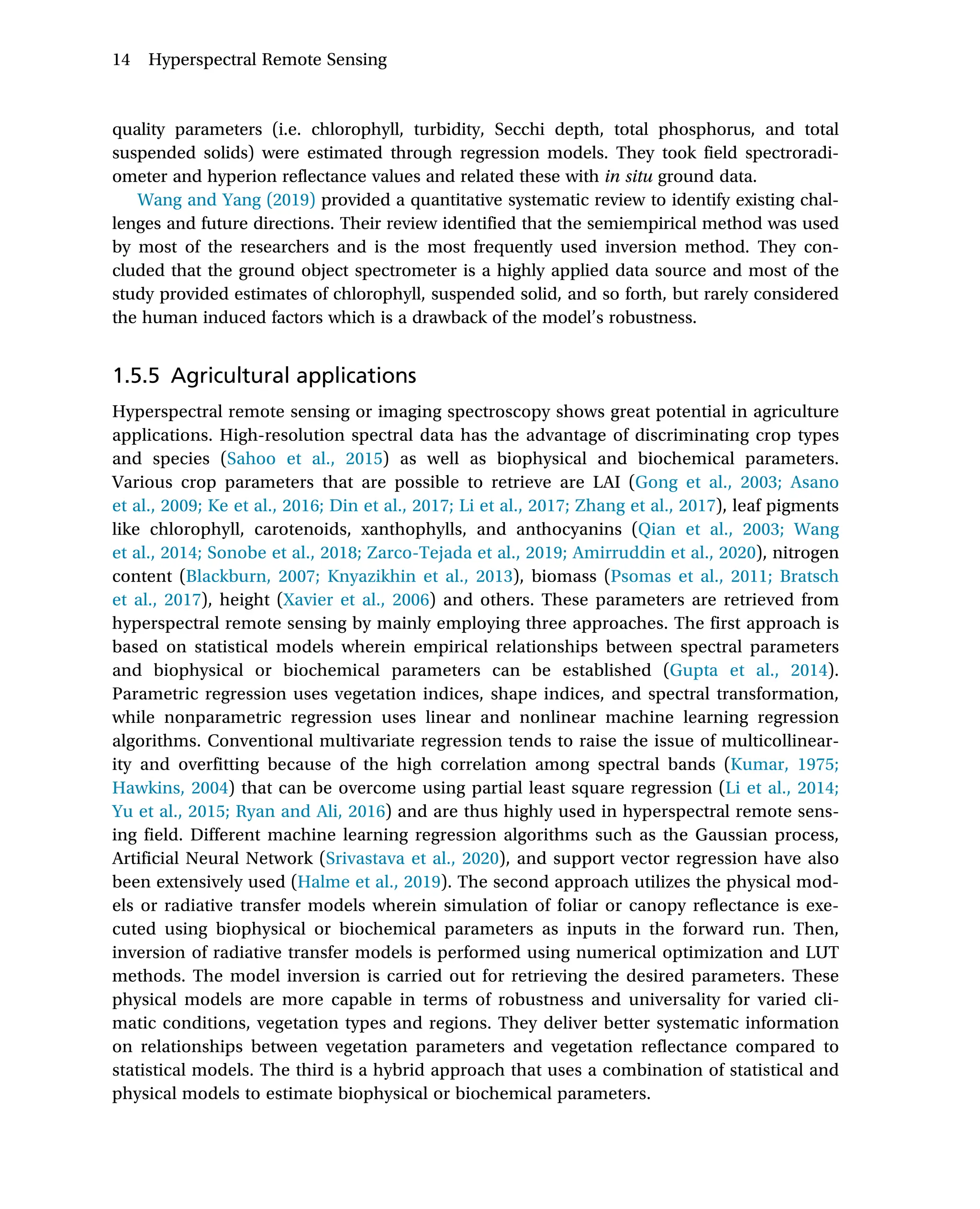
els or radiative transfer models wherein simulation of foliar or canopy reflectance is exe-
cuted using biophysical or biochemical parameters as inputs in the forward run. Then,
inversion of radiative transfer models is performed using numerical optimization and LUT
methods. The model inversion is carried out for retrieving the desired parameters. These
physical models are more capable in terms of robustness and universality for varied cli-
matic conditions, vegetation types and regions. They deliver better systematic information
on relationships between vegetation parameters and vegetation reflectance compared to
statistical models. The third is a hybrid approach that uses a combination of statistical and
physical models to estimate biophysical or biochemical parameters.
14 Hyperspectral Remote Sensing
45.
1.6 Way forward
High-dimensionalhyperspectral remote sensing data makes the task of information extrac-
tion a tough one as traditional techniques used with broadband sensors are of limited use.
Small satellites can be the future of the remote sensing community as less powerful vehicles
are needed for their launch, thus offering significant cost savings for the future missions.
Less-powerful vehicles are less expensive compared to powerful vehicles, and constitute a
significant reduction of the total cost of missions, which can be diverted to other purposeful
research work. Therefore, the fundamental idea behind small satellites is cost savings,
including a lighter payload in launch vehicles (i.e. below 100 kg). The utmost requirement in
small hyperspectral satellites is the sensor's size, mass, its output, data downlink, and trans-
mission to ensure a successful mission. It is crucial to have images in the VIS NIR spectral
ranges with the best permissible spectral resolutions; however it is constrained by the micro-
satellite size and mass parameters (approximately ,100 kg and 0.5 min any direction) (Levi
and Washabaugh, 2001; Gerber et al., 2005; Hartley et al., 2005).
In future, ultraspectral imaging systems will overtake the hyperspectral missions.
Ultraspectral sensors have more than B300 narrow contiguous spectral channels with very
narrow spectral sampling (,1 nm) for each individual pixel (Cutter, 2005). The concept
behind the ultraspectral channels will enable scientists for physical analysis of gas absorption
characterizing atmospheric temperature and structures. To accomplish the aim, sensors such
as the Atmospheric InfraRed Sounder (AIRS), the Michelson Interferometer for Passive
Atmospheric Sounding (MIPAS)‘8, the Crosstrack Infrared Sounder (CrIS), and Geostationary
Imaging Fourier Transform Spectrometer (GIFTS) are made operational as ultraspectral
imaging systems. CrIS is a part of the National Polar-orbiting Operational Environmental
Satellite System of NASA. AIRS is advanced with 2378 spectral channels and having cutting-
edge infrared technology to create 3-D maps of air and surface temperature, water vapor,
and cloud properties (https://airs.jpl.nasa.gov/). Details are listed in Table 1 2. GIFTS can
be optimized to function in different modes such as multispectral, hyperspectral, or ultra-
spectral modes, thus is unique to any other satellite sensors working in a single mode.
Acknowledgment
The authors thank the National Mission on Himalayan Studies, G.B. Pant National Institute of Himalayan
Environment (NIHE), Almora, Uttarakhand for funding this work.
Table 1–2 Ultraspectral missions.
Ultraspectral sensors Platform Agency/country
01 AIRS Aqua satellite NASA
02 MIPAS ‘8 ENVISAT-1 ESA
03 CrIS
Up to 2378 spectral channels
As part of the National Polar-Orbiting Operational
Environmental Satellite System
NASA
04 GIFTS” Earth Observing-3 (EQ-3) mission NASA
Chapter 1 • Revisiting hyperspectral remote sensing: origin, processing 15
46.
References
Adler-Golden, S.M., Matthew,M.W., Bernstein, L.S., Levine, R.Y., Berk, A., Richtsmeier, S.C., et al., 1999.
Atmospheric correction for shortwave spectral imagery based on MODTRAN4. Imaging Spectrometry V.
International Society for Optics and Photonics, pp. 61 69.
Amirruddin, A.D., Muharam, F.M., Ismail, M.H., Ismail, M.F., Tan, N.P., Karam, D.S., 2020. Hyperspectral
remote sensing for assessment of chlorophyll sufficiency levels in mature oil palm (Elaeis guineensis)
based on frond numbers: analysis of decision tree and random forest. Comput. Electron. Agric. 169,
105221.
Asano, T., Kosugi, Y., Uto, K., Kosaka, N., Odagawa, S., Oda, K., 2009. Leaf area index estimation from
hyperspectral data using group division method. In: 2009 IEEE International Geoscience and Remote
Sensing Symposium. IEEE, pp. IV-817 IV-820.
Banskota, A., Serbin, S.P., Wynne, R.H., Thomas, V.A., Falkowski, M.J., Kayastha, N., et al., 2015. An LUT-
based inversion of DART model to estimate forest LAI from hyperspectral data. IEEE J. Sel. Top. Appl.
Earth Observ. Remote Sens. 8, 3147 3160.
Banskota, A., Wynne, R.H., Thomas, V.A., Serbin, S.P., Kayastha, N., Gastellu-Etchegorry, J.P., et al., 2013.
Investigating the utility of wavelet transforms for inverting a 3-D radiative transfer model using hyperspec-
tral data to retrieve forest LAI. Remote Sens. 5, 2639 2659.
Bao, S., Cao, C., Chen, W., Tian, H., 2017. Spectral features and separability of alpine wetland grass species.
Spectrosc. Lett. 50, 245 256.
Ben-Dor, E., Kruse, F., 1994. The relationship between the size of spatial subsets of GER 63 channel scanner
data and the quality of the Internal Average Relative Reflectance (IARR) atmospheric correction tech-
nique. Remote Sens. 15, 683 690.
Berk, A., Bernstein, L., Anderson, G., Acharya, P., Robertson, D., Chetwynd, J., et al., 1998. MODTRAN cloud
and multiple scattering upgrades with application to AVIRIS. Remote Sens. Environ. 65, 367 375.
Berk, A., Acharya, P.K., Bernstein, L.S., Anderson, G.P., Chetwynd Jr, J.H., Hoke, M.L., 2000. Reformulation of
the MODTRAN band model for higher spectral resolution. Algorithms Multispectral, Hyperspectral,
Ultraspectral Imagery VI. International Society for Optics and Photonics, pp. 190 198.
Bishop, C.A., Liu, J.G., Mason, P.J., 2011. Hyperspectral remote sensing for mineral exploration in Pulang,
Yunnan Province, China. Int. J. Remote Sens. 32, 2409 2426.
Blackburn, G.A., 2007. Hyperspectral remote sensing of plant pigments. J. Exp. Bot. 58, 855 867.
Boardman, J.W., 1998. Post-ATREM polishing of AVIRIS apparent reflectance data using EFFORT: a lesson in
accuracy versus precision. In: Summaries of the Seventh JPL Airborne Earth Science Workshop. Jet
Propul. Lab. Pasadena, CA, p. 53.
Bratsch, S., Epstein, H., Buchhorn, M., Walker, D., Landes, H., 2017. Relationships between hyperspectral
data and components of vegetation biomass in Low Arctic tundra communities at Ivotuk, Alaska. Environ.
Res. Lett. 12, 025003.
Briottet, X., Marion, R., Carrere, V., Jacquemoud, S., Chevrel, S., Prastault, P., et al., 2011. HYPXIM: a new
hyperspectral sensor combining science/defence applications. In: 2011 3rd Workshop on Hyperspectral
Image and Signal Processing: Evolution in Remote Sensing (WHISPERS). IEEE, pp. 1 4.
Carrino, T.A., Crósta, A.P., Toledo, C.L.B., Silva, A.M., 2018. Hyperspectral remote sensing applied to mineral
exploration in southern Peru: a multiple data integration approach in the Chapi Chiara gold prospect. Int.
J. Appl. Earth Observ. Geoinf. 64, 287 300.
Chisense, C., Hahn, M., Engels, J., 2012. Classification of roof materials using hyperspectral data. Int. Arch.
Photogramm. Remote Sens. Spat. Inf. Sci. 39, 103.
Chmura, D.J., Rahman, M.S., Tjoelker, M.G., 2007. Crown structure and biomass allocation patterns modulate
aboveground productivity in young loblolly pine and slash pine. For. Ecol. Manag. 243, 219 230.
16 Hyperspectral Remote Sensing
47.
Clark, R.N., 1999.Spectroscopy of rocks and minerals, and principles of spectroscopy. Man. Remote Sens. 3, 2 2.
Clark, M.L., Roberts, D.A., Clark, D.B., 2005. Hyperspectral discrimination of tropical rain forest tree species
at leaf to crown scales. Remote Sens. Environ. 96, 375 398.
Cooley, T., Anderson, G.P., Felde, G.W., Hoke, M.L., Ratkowski, A.J., Chetwynd, J.H., et al., 2002. FLAASH, a
MODTRAN4-based atmospheric correction algorithm, its application and validation. In: IEEE
International Geoscience and Remote Sensing Symposium. IEEE, pp. 1414 1418.
Cutter, M., 2005. Review of a small satellite hyper-spectral mission. Proceedings of the AIAA/USU Conference
on Small Satellites, 19th Annual AIAA/USU, The Year in Retrospect, SSC05-IV-2. 1-4.
Deng, W., Huang, Y., Zhao, C., Chen, L., Wang, X., 2016. Bayesian discriminant analysis of plant leaf hyper-
spectral reflectance for identification of weeds from cabbages. Afr. J. Agric. Res. 11, 551 562.
Din, M., Zheng, W., Rashid, M., Wang, S., Shi, Z., 2017. Evaluating hyperspectral vegetation indices for leaf
area index estimation of Oryza sativa L. at diverse phenological stages. Front. Plant Sci. 8, 820.
Fernandes, A.M., Melo-Pinto, P., Millan, B., Tardáguila, J., Diago, M.P., 2015. Automatic discrimination of
grapevine (Vitis vinifera L.) clones using leaf hyperspectral imaging and partial least squares. J. Agric. Sci.
153, 455 465.
Filho, S., Frery, A.G., de Araujo, A.C., Alice, C.C., Cerqueira, H., Loureiro, J., et al., 2003. Hyperspectral images
clustering on reconfigurable hardware using the k-means algorithm. In: Proceedings of 16th Symposium
on Integrated Circuits and Systems Design, 2003. SBCCI 2003. IEEE, pp. 99 104.
Gao, B.-C., Davis, C.O., 1997. Development of a line-by-line-based atmosphere removal algorithm for air-
borne and spaceborne imaging spectrometers. Imaging Spectrometry III. International Society for Optics
and Photonics, pp. 132 141.
Gao, B., Heidebrecht, K., Goetz, A., 1992. Atmospheric Removal Program (ATREM) User’s Guide. Center for
the Study of Earth from Space, Cooperative Institute for Research in Environmental Sciences, University
of Colorado, Boulder.
Gao, B.-C., Montes, M.J., Davis, C.O., Goetz, A.F., 2009. Atmospheric correction algorithms for hyperspectral
remote sensing data of land and ocean. Remote Sens. Environ. 113, S17 S24.
Gao, B.-C., Heidebrecht, K.B., Goetz, A.F., 1993. Derivation of scaled surface reflectances from AVIRIS data.
Remote Sens. Environ. 44, 165 178.
Gerber, A., Lemmerman, L., Hartley, J., 2005. Advanced Instruments and Their Impact on Earth Science
Missions (II). In: 5th IAA Symposium on Small Satellites for Earth Observations.
Glaser, J., Casas, J., Copenhaver, K., Mueller, S., 2009. Development of a broad landscape monitoring system
using hyperspectral imagery to detect pest infestation. In: 2009 First Workshop on Hyperspectral Image
and Signal Processing: Evolution in Remote Sensing. IEEE, pp. 1 4.
Goel, P.K., Prasher, S.O., Patel, R.M., Landry, J.-A., Bonnell, R., Viau, A.A., 2003. Classification of hyperspectral
data by decision trees and artificial neural networks to identify weed stress and nitrogen status of corn.
Comput. Electron Agric. 39, 67 93.
Gong, P., Pu, R., Biging, G.S., Larrieu, M.R., 2003. Estimation of forest leaf area index using vegetation indices
derived from Hyperion hyperspectral data. IEEE Trans. Geosci. Remote Sens. 41, 1355 1362.
Goodenough, D.G., Pearlman, J., Chen, H., Dyk, A., Han, T., Li, J., et al., 2004. Forest information from hyper-
spectral sensing. In: IGARSS 2004. 2004 IEEE International Geoscience and Remote Sensing Symposium.
IEEE, pp. 2585 2589.
Goodenough, D., Li, J., Asner, G., Schaepman, M., Ustin, S., Dyk, A., 2006. Combining hyperspectral remote
sensing and physical modeling for applications in land ecosystems. In: 2006 IEEE International
Symposium on Geoscience and Remote Sensing. IEEE, pp. 2000 2004.
Gupta, M., Srivastava, P.K., Mukherjee, S., Sandhya Kiranet, G., 2014. Chlorophyll retrieval using ground
based hyperspectral data from a tropical area of India using regression algorithms. Remote Sens. Appl.
Environ. Res. 177 194.
Chapter 1 • Revisiting hyperspectral remote sensing: origin, processing 17
48.
Halme, E., Pellikka,P., Mõttus, M., 2019. Utility of hyperspectral compared to multispectral remote sensing
data in estimating forest biomass and structure variables in Finnish boreal forest. Int. J. Appl. Earth
Observ. Geoinf. 83, 101942.
Hartley, J., Komar, G., Lemmerman, L., Gerber, A., 2005. Advanced Instruments and Their Impact on Earth
Science Missions (I). In: Hans-Peter Röser, Rainer San (Eds.), Small Satellites for Earth Observation:
Selected Proceedings of the 5th International Symposium of the International Academy of Astronautics
Berlin, April 4 8, 2005, Session 7-Instruments.
Hawkins, D.M., 2004. The problem of overfitting. J. Chem. Inf. Comput. Sci. 44, 1 12.
Hively, W.D., McCarty, G.W., Reeves, J.B., Lang, M.W., Oesterling, R.A., Delwiche, S.R., 2011. Use of airborne
hyperspectral imagery to map soil properties in tilled agricultural fields. Appl. Environ. Soil. Sci. 2011.
Hycza, T., Stereńczak, K., Bałazy, R., 2018. Potential use of hyperspectral data to classify forest tree species.
N. Zealand J. Forest. Sci. 48, 18.
Jensen, J.R., 2009. Remote Sensing of the Environment: An Earth Resource Perspective 2/e. Pearson
Education, India.
Karoui, M.S., Zohra Benhalouche, F., Deville, Y., Djerriri, K., Briottet, X., Le Bris, A., 2018. Detection and area
estimation for photovoltaic panels in urban hyperspectral remote sensing data by an original NMF-based
unmixing method. In: IGARSS 2018—2018 IEEE International Geoscience and Remote Sensing
Symposium. IEEE, pp. 1640 1643.
Ke, L., Zhou, Q.-b, Wu, W.-B., Tian, X., Tang, H.-J., 2016. Estimating the crop leaf area index using hyperspec-
tral remote sensing. J. Integr. Agricul. 15, 475 491.
Knyazikhin, Y., Schull, M.A., Stenberg, P., Mõttus, M., Rautiainen, M., Yang, Y., et al., 2013. Hyperspectral
remote sensing of foliar nitrogen content. Proc. Natl Acad. Sci. USA 110, E185 E192.
Kramer, H.J., 2002. Observation of the Earth and its Environment: Survey of Missions and Sensors. Springer
Science Business Media.
Kruse, F.A., 1988. Use of airborne imaging spectrometer data to map minerals associated with hydrothermally
altered rocks in the northern grapevine mountains, Nevada, and California. Remote Sens. Environ. 24, 31 51.
Kumar, T.K., 1975. Multicollinearity in regression analysis. Rev. Econ. Stat. 57, 365 366.
Levi, J., Washabaugh, P., 2001. A Feasibility Study of Micro-Satellites for Earth Observation. Proceedings of
the AIAA/USU Conference on Small Satellites, 15th Annual conference, SSC01-IV-1, Bold New Missions
Using Cutting Edge Technologies, pp. 1 13.
Lewis, M., 2002. Spectral characterization of Australian arid zone plants. Can. J. Remote Sens. 28, 219 230.
Li, X., Zhang, Y., Bao, Y., Luo, J., Jin, X., Xu, X., et al., 2014. Exploring the best hyperspectral features for LAI
estimation using partial least squares regression. Remote Sens. 6, 6221 6241.
Li, G., Wang, C., Feng, M., Yang, W., Li, F., Feng, R., 2017. Hyperspectral prediction of leaf area index of win-
ter wheat in irrigated and rainfed fields. PLoS ONE 12.
Liang, S., 2005. Quantitative Remote Sensing of Land Surfaces. John Wiley Sons.
Licciardi, G., Marpu, P.R., Chanussot, J., Benediktsson, J.A., 2011. Linear versus nonlinear PCA for the classifi-
cation of hyperspectral data based on the extended morphological profiles. IEEE Geosci. Remote Sens.
Lett. 9, 447 451.
Longo, F., 2020. PRISMA, The Italian Hyperspectral Mission. Italy Space Agency, Italy.
Lowe, A., Harrison, N., French, A.P., 2017. Hyperspectral image analysis techniques for the detection and
classification of the early onset of plant disease and stress. Plant. Methods 13, 80.
Malhi, R.K.M., Anand, A., Mudaliar, A.N., Pandey, P.C., Srivastava, P.K., Sandhya Kiran, G., 2020. Synergetic
use of in situ and hyperspectral data for mapping species diversity and above ground biomass in
Shoolpaneshwar Wildlife Sanctuary, Gujarat. Trop. Ecol. 61, 106 115. https://doi.org/10.1007/s42965-
020-00068-8.
18 Hyperspectral Remote Sensing
49.
Mariotto, I., Thenkabail,P.S., Huete, A., Slonecker, E.T., Platonov, A., 2013. Hyperspectral versus multispectral
crop-productivity modeling and type discrimination for the HyspIRI mission. Remote Sens. Environ. 139,
291 305.
Matsunaga, T., Iwasaki, A., Tsuchida, S., Tanii, J., Kashimura, O., Nakamura, R., et al., 2013. Current status of
hyperspectral imager suite (HISUI). In: 2013 IEEE International Geoscience and Remote Sensing
Symposium-IGARSS. IEEE, pp. 3510 3513.
Miller, C.J., 2002. Performance assessment of ACORN atmospheric correction algorithm. Algorithms and
Technologies for Multispectral, Hyperspectral, and Ultraspectral Imagery VIII. International Society for
Optics and Photonics, pp. 438 449.
Mutanga, O., Skidmore, A.K., Prins, H., 2004. Predicting in situ pasture quality in the Kruger National Park,
South Africa, using continuum-removed absorption features. Remote Sens. Environ. 89, 393 408.
Nieke, J., Schwarzer, H.H., Neumann, A., Zimmermann, G., 1997. Imaging spaceborne and airborne sensor
systems in the beginning of the next century. Sensors, Systems, and Next-Generation Satellites.
International Society for Optics and Photonics, pp. 581 592.
Nikolakopoulos, K.G., Vaiopoulos, D.A., Georgios, A., 2002. A comparative study of different atmospheric
correction algorithms over an area with complex geomorphology in Western Peloponnese, Greece. In:
IEEE International Geoscience and Remote Sensing Symposium. IEEE, pp. 2492 2494.
Okada, K., Iwashita, A., 1992. Hyper-multispectral image analysis based on waveform characteristics of spec-
tral curve. Adv. Space Res. 12, 433 442.
Olmanson, L.G., Brezonik, P.L., Bauer, M.E., 2013. Airborne hyperspectral remote sensing to assess spatial
distribution of water quality characteristics in large rivers: the Mississippi River and its tributaries in
Minnesota. Remote Sens. Environ. 130, 254 265.
Pandey, P.C., Tate, N.J., Balzter, H., 2014. Mapping tree species in coastal portugal using statistically seg-
mented principal component analysis and other methods. IEEE Sens. J. 14, 4434 4441.
Pandey, P., Manevski, K., Srivastava, P.K., Petropoulos, G.P., 2018. The use of hyperspectral earth observation
data for land use/cover classification: present status, challenges and future outlook. In: Thenkabail, P.
(Ed.), Hyperspectral Remote Sensing of Vegetation, first ed. pp. 147 173.
Pandey, P.C., Anand, A., Srivastava, P.K., 2019a. Spatial distribution of Mangrove Forest species and biomass
assessment using field inventory and Earth Observation hyperspectral data. Biodiversity and
Conservation, 28. Springer, pp. 2143 2162.
Pandey, P.C., Koutsias, N., Petropoulos, G.P., Srivastava, P.K., Ben Dor, E., 2019b. Land use/land cover in
view of earth observation: data sources, input dimensions, and classifiers—a review of the state of the art.
Geocarto Int. 1 32.
Peng, Y., Fan, M., Song, J., Cui, T., Li, R., 2018. Assessment of plant species diversity based on hyperspectral
indices at a fine scale. Sci. Rep. 8, 1 11.
Peng, Y., Fan, M., Bai, L., Sang, W., Feng, J., Zhao, Z., et al., 2019. Identification of the best hyperspectral indi-
ces in estimating plant species richness in Sandy Grasslands. Remote Sens. 11, 588.
Psomas, A., Kneubühler, M., Huber, S., Itten, K., Zimmermann, N., 2011. Hyperspectral remote sensing for
estimating aboveground biomass and for exploring species richness patterns of grassland habitats. Int. J.
Remote Sens. 32, 9007 9031.
Puschell, J.J., 2000. Hyperspectral imagers for current and future missions. Visual Information Processing IX.
International Society for Optics and Photonics, pp. 121 132.
Qian, C., Jing-feng, H., Xiu-zhen, W., Ren-chao, W., 2003. In situ hyperspectral data analysis for pigment
content estimation of rice leaves. J. Zhejiang Univ.-Sci. A 4, 727 733.
Qu, Z., Kindel, B.C., Goetz, A.F., 2003. The high accuracy atmospheric correction for hyperspectral data
(HATCH) model. IEEE Trans. Geosci. Remote Sens. 41, 1223 1231.
Chapter 1 • Revisiting hyperspectral remote sensing: origin, processing 19
triumphant from thegrave but in sight of the garden of his sorrow,
the rock of his crucifixion, and the mount of his ascension?
The Via Dolorosa is a lane-like street, narrow and crooked, leading
from St. Stephen’s Gate to the Church of the Holy Sepulchre, and its
dolorous name is no less significant of the tragical events which,
according to tradition, occurred along its course, than of its
forbidding and gloomy aspect. Like the “street which is called
straight” in Damascus, and the Via Sacra in ancient Rome, the Via
Dolorosa has a world-wide renown. Its windings, its rough
pavement, its prison-like walls—penetrated with low doorways and
grated windows—its rude arcade, excluding the sunlight and casting
a deeper gloom within, sadden the mind, and are in keeping with
the monkish legends that have given to it universal notoriety. Along
this dreary walk, amid its shadows and solemn memories, a
wounded spirit finds companionship. As the industrious shrine-
makers of this and of other ages, the monks have consecrated eight
stations in this narrow street, commemorative of as many events in
our Lord’s journey from the dungeons of Antonia to the site of
Calvary. In the northern wall of the Temple area are the two arches,
now walled up, where stood Pilate’s staircase, down which our Lord
descended after his sentence was pronounced, and directly opposite
is the Church of Flagellation, marking the place where he was
scourged. Not many paces to the west is the Ecce Homo arch, where
Pilate exclaimed to the infuriated mob, “Behold the man!” At the
bottom of a gentle descent the lane turns to the left, and then to the
right. Beyond this angle is shown a deep impression in the solid
stone wall, made by the shoulder of Jesus when he leaned against it
at the time he fainted. Near it is the house of St. Veronica, the
illustrious woman who presented the Savior with a handkerchief to
wipe his bleeding brow. From her residence to the terminus of the
street the gloom and silence are painful; and at well-apportioned
intervals are indicated, by broken columns, the places where Simon
was compelled to bear the Redeemer’s cross, where Jesus addressed
the weeping daughters of Jerusalem, and where his tragical death
occurred.
52.
VIA DOLOROSA ANDTHE ARCH OF THE ECCE HOMO.
Throughout Good Friday groups of pious pilgrims were threading
the Via Dolorosa and offering their prayers at its legendary shrines.
That night the Latin monks dramatized the crucifixion of Christ in the
Church of the Holy Sepulchre. At an early hour the venerable Church
of St. Helena was thronged with natives and strangers, consisting of
Greeks, Latins, Copts, Armenians, Turks, and Franks. To prevent a
disturbance, the military governor of the city had ordered a
detachment of Turkish soldiers to be present. Among the dignitaries
in attendance to witness the fictitious tragedy were foreign consuls
attended by liveried cawasses, a hundred French officers, with their
orderlies, who had that day arrived from Beîrut, and prominent
among the distinguished persons was Lessep, the famous canal-
digger, who had ascended from Egypt in an improvised chariot
drawn by a pair of the noblest camels, and was the first who had
crossed that ancient road since the day of Roman chariots.
It was past eight o’clock when the solemn drama was opened with
the recitation of prayers in the sacristy of the Latin chapel. The light
of a hundred gold and silver lamps, fed by olive-oil, scarcely
dispelled the darkness of the hour. At 9 P.M. the pageant was fully
commenced, and the long procession began its march, each person
53.
bearing a waxtaper that shone dimly on the air of night. First came
Augustine friars, attired in brown cowls and cassocks; then followed
a stalwart monk, bearing an immense cross of light-colored wood,
curiously figured. On the cross was nailed the carved figure of a
man, covered with thorns, from whose side the life-blood was
flowing, and around whose loins was drawn a white linen cloth.
Behind the crucifix came two choirs of monks and catechumens
robed in white, chanting a funeral dirge, with responsive chorus;
following the singers was Rome’s eminent prelate, the patriarchal
Bishop of Jerusalem, crowned with a gold mitre, wearing a black
velvet cloak richly trimmed with gold lace, and bearing in his right
hand a gold crucifix adorned with jewels; following in his train were
priests of lesser rank in dark robes, and barefooted friars with
shaven heads, to imitate the crown of thorns, and nuns in blue and
black garments and white linen bonnets; and next came the French
consul, the military officers, the common soldiers, poor pilgrims, and
strangers from all nations, whose devotion or curiosity prompted
them to join the imposing procession.
Within the church are lateral chapels, regarded as shrines by the
pious, such as the prison of Christ, the chapel where he was bound,
where he was mocked, and where his vestments were divided by the
Roman soldiers. At the chapels the procession halted to listen to
sermons preached in the Italian, French, German, Arabic, and
English languages. It was near midnight when the procession
reached the foot of Calvary. Slowly ascending the rude steps cut in
the solid rock, the heavy cross was set in its original resting-place on
the summit. In imitation of the supernatural darkness, every light
was extinguished. At that moment a tumult occurred. The rough
voice of derision rose above the universal clamor, and echoed
through the aisles and arches of that ancient building, as the Turkish
soldiers charged upon the people. Enraged at the insult offered to
his religion, the French consul drew his sword, threatening death to
Turk or Christian who should crowd upon him. In a moment quiet
was restored and the scene went on. Accident gave the charm of
reality to the occasion. There stood the captain of the guard, with
54.
the smile ofscorn upon his attractive though stern features; around
him were his troops, and near them were fanatical Moslems reviling
the spectacle; standing afar off were Christian women, robed in
white sheets, concealing their person except their soft dark eyes,
which peered out above their veils; and surging to and fro, like
mighty waves, was a motley throng eager to behold the drama.
Amid the solemnities human nature was revealed. A magnificent
French priest, who had been appointed to preach at the cross of the
unrepentant thief, so far forgot his duty as to pronounce a glowing
eulogium upon France, and the part she had taken in supporting the
Catholic faith in the East. His commanding eloquence touched alike
the pride and vanity of the French, and the otherwise decorous
officers, forgetting the time and place, applauded the time-serving
priest.
The three sermons at the several crosses ended, the lights burn
dimly again. And now began the descent from the cross, after the
style of Rubens’s great picture. Three venerable monks,
impersonating Joseph of Arimathea, Nicodemus, and St. John the
Evangelist, approached the cross to take the body down. One,
climbing up behind the cross, and throwing a sheet around the body
and under the arms of the image, held it fast, while another tenderly
drew out the nails, kissing each one in turn as he laid them upon a
silver plate; then receiving the body into his arms, with the head
resting on his shoulder, wrapped it in fine linen, placed it upon a bier,
and to the chant of another dirge the procession descended to the
pavement of the church, where the image was placed upon the
stone of unction for anointing, and hence borne to the tomb of
Joseph, to await the joyous notes of Easter Sunday.
Such is a brief description of a scene which annually occurs in
Jerusalem; and though producing a transient impression on the
common mind, darkened by error and deluded by superstition, the
sublime farce is as irreverent as it is offensive to the enlightened
Christian. Debased must be the intellect and vitiated the moral
sensibilities of a people who delight in such mournful tragedies, and
55.
corrupt must bethe church which sanctions ceremonies so
degrading to earth and repugnant to heaven. With equal propriety,
the murder scene of a beloved friend might be yearly re-enacted,
harrowing the soul with the bloody memories of the past, and
imitating in fiction the ghastly deeds of veritable murderers. Who
could be induced to witness a sight so mournful? The last request of
the Redeemer to his people was to remember his death, and not to
re-enact it; to cherish his memory, and not perpetuate the triumph
of his foes. Devotion attains its greatest purity, and piety its highest
form of spirituality, as pompous ceremonials are displaced by the
simple aspirations of the heart for God, and by the practical
embodiment of faith, hope, and charity.
For fifteen hundred years the Church of the Holy Sepulchre has
been the shrine of devout worshipers from all lands, and the
antiquity of its traditions, together with the profound reverence in
which it is held by the Christian world, render it an object worthy of
consideration. Whether considered as a work of art, or as a historic
site around which cluster the most sacred legends of the Eastern
churches, it awakens a thrilling interest in the thoughtful and
intelligent mind. Such are the number and complications of the
added apartments, a delineation of the structure is as tedious as it is
difficult. Though, as a whole, the architecture is of the Romanesque
order, yet in its different parts it combines a greater variety of styles
than any other edifice of equal notoriety extant. Standing on the
eastern slope of Mount Akra, in the most populous part of the Holy
City, its approaches are from the east and west through low, narrow
doorways leading into a spacious court ninety feet long and seventy
wide, formed laterally by the two projecting wings of the church, by
the façade of the basilica on the north, and by a stone wall on the
south, inclosing the green plateau once adorned by the palace of the
Knights of St. John. A more novel sight is not to be seen on earth
than is daily presented in this stone court-yard during Passion Week.
Lining three of its sides, with now and then one in the centre, sit the
hucksters of pious wares, recalling the money-changers in the court
of Solomon’s Temple. It is the great religious mart for holy trinkets in
56.
Jerusalem, and themost auspicious place for the ethnologist to
study human varieties, for the costumer to examine diversities of
dress, for the traveler to witness the manners of many nations, and
for the artist to sketch the most picturesque of living scenes. There
are Turks, with lofty turbans and flowing robes; wild Bedouins of the
Desert, clad in capotes of camel’s hair, and girt about the loins with
leathern girdles, or attired in their gay, fantastic riding costume,
brandishing the polished spear; Franciscan friars in coarse brown
cowls, and ivory crucifix dangling at their side; Greek monks in long
black flowing garments, high square hats, with magnificent beards,
and hair long as a woman’s, twirling a rosary of mother-of-pearl or
of beautiful agate; French and Italian nuns in black, with white linen
bonnets, and rosary and crucifix falling from their waist; beggars in
rags, the lame with crutches, the blind protected by a dog, invoking
the charities of the rich; and pilgrims from every nation—Syrians,
Turks, Arabs, Nubians, Egyptians, Algerines, Armenians, Copts,
Greeks, Jews, Italians, French, Russians, Germans, English, and the
ubiquitous American. Passing through this motley throng, beggars
implore your charities and the venders of pious wares solicit your
patronage. Here are for sale sandal-wood beads from Mecca, bowls
of bitumen from the shores of the Dead Sea, glass rings and
bracelets from Hebron, olive-wood rosaries from Olivet, crosses of
mother-of-pearl from Bethlehem, and shells on which are rudely
carved representations of the birth and resurrection of Jesus, small
tin cans in which water from the Jordan is carried to the ends of the
earth, wax tapers to be lit at the sacred tomb, and shrouds of cotton
cloth or fine linen to be laid in consecration on the Holy Sepulchre,
and then borne to the uttermost parts of the earth by the faithful, to
be wrapped in in death as a pledge of their resurrection.
57.
CHURCH OF THEHOLY SEPULCHRE—FRONT VIEW.
Around the court are the ruins of antique and nobler edifices.
Along the southern side are the broken bases of a colonnade once
supporting a cloister or arcade. Running along the western side is an
immense stone structure, from the northern end of which rises the
grand unfinished tower of the Basilica of St. Helen; and on the
opposite end stands a solitary column, crowned with a beautiful
Corinthian capital, supporting the foot of a broken arch. Within this
projecting structure are two Greek chapels, older than the days of
the Crusaders; one dedicated to St. James, the other to the blessed
Trinity. On the opposite side of the court is a plain stone building,
the Greek Monastery of Abraham, through which entrance is had to
the Armenian Church of St. John, to the Coptic Convent, and to the
Chapel of St. Michael. Along the base of the building is a stone
bench, where monks and priests spend their idle hours playing with
their rosaries.
The best view of the face of the Church of the Holy Sepulchre is to
be had from this court. It is the chief entrance to the interior, and
consists of the southern end of the transept, presenting to the eye a
grand old façade of Romanesque composition, now dingy with the
dust of ages and the wear of time. It is divided into two stories. In
58.
the upper oneare two corresponding windows, arched and slightly
pointed, massive in mouldings and rich in sculpture. In the lower
story is a double portal, surmounted by noble arches, supported by
clustered columns, formed of layers of stone resting on heavy bases,
and over the doorway are richly-sculptured architraves, representing
our Lord’s triumphant entry into Jerusalem. Only the western section
of the portal is now open, the other having been walled up since the
reign of the Crusaders. On the right of the façade are the remains of
that grand tower, once consisting of five stories, only three of which
remain. In each of the three sides of the second story is a massive
pointed window, and in the third, rising proudly above the domes of
the church, are plain and arched windows. Though conjointly owned
by the Greeks and Latins, the Armenians and Copts, the church is
now subject to the control of the Turkish governor of the city, who
holds the keys, and levies a heavy tax upon the rival sects
worshiping at its sacred shrines. On the left in entering this ancient
edifice, the traveler’s attention is attracted by the lordly Turkish
guard and his friends, lounging on softly-cushioned divans, where
the hours are idly spent drinking Mocha coffee and whiffing the best
Stamboul from chibouks of elegant construction.
Except St. Peter’s in Rome, there is no religious edifice now
standing more imposing than the Church of the Holy Sepulchre.
Owing to the addition of chapels and the numerous partitions within
for the accommodation of the several sects, it is not easy to give the
dimensions and form of the interior. It may be said, however, to
consist of a nave 300 feet in length east and west, and of a transept
extending north and south 180 feet. The ceiling is eighty feet high.
Excepting the rotunda, the nave contains the magnificent chapel of
the Greeks, measuring ninety-eight feet in length and forty in width,
which is a church within a church. The walls are of wood, carved and
gilded, reaching to the lofty ceiling above. The entrance is in the
western end, beneath a pointed arch, now filled with a heavy
screen, serving as a massive door. From four large piers within, fifty-
two feet high, spring noble arches, supporting the central dome. In
the eastern end is the gorgeous high altar, the throne of the Greek
59.
patriarchs, and oneither side are stalls for the choral singers. Behind
the throne, formed by a wooden screen, is the robing-room for the
priests, those ecclesiastical actors of a corrupted Christianity.
Nothing can excel the gorgeous decorations of the interior, which is
adorned according to the barbaric taste of the Greeks. The sides of
their chapel are elaborately carved and gilded; from column and
ceiling depend lamps and chandeliers of gold, and ostrich eggs
curiously ornamented; while on pier and screen are rude pictures of
the Byzantine style. Rising from the marble floor, in the very centre
of the chapel, is a marble column, inclosed with an iron railing,
marking the centre of the earth, and the identical spot from which
was taken the red clay for the formation of Adam’s body.
At the western end of this chapel is the great rotunda of the
church, measuring ninety-nine feet in diameter, encircled by
eighteen colossal piers, supporting a clere-story pierced with
windows, above which is the majestic dome, a hundred feet from
the pavement below, with a circular opening in the top for light and
ventilation, similar to the aperture in the dome of the Pantheon in
Rome. In the very centre of this rotunda, and directly beneath the
dome, is the reputed sepulchre of our Lord. In form it is not unlike a
miniature temple, ten feet in breadth, twenty in length, and of equal
height. The exterior is ornamented with semi-columns and pilasters,
with rich cornices and mouldings; with a dome resembling an
imperial crown, and with a thousand lamps of gold and silver,
interspersed with wax tapers and vases of flowers. The entrance is
on the east, through a small inclosed area, along which are rows of
candles perpetually burning. Over the portal floats the banner of the
Cross, and beneath its silken folds is a magnificent picture of Christ’s
resurrection. It is the most spirited representation of that grandest
of all events ever thrown upon the canvas. The Redeemer’s form is
drawn with all the harmony of parts and the grace of action of an
Apollo Belvidere. With one foot resting on the tomb, he is leaving the
sepulchre with an air of triumph as majestic as it is natural.
60.
VIEW OF THEHOLY SEPULCHRE.
The interior is divided into two small chapels; the first is where the
angel was seen, and contains the throne on which he sat, and in the
second is the Holy Sepulchre. The vault is seven feet long and six
wide, surmounted with a small dome. The tomb occupies the whole
length of the north side of the chamber, incased with marble, and is
three feet above the floor; the upper slab is cracked through the
centre, and its edges are worn smooth by the kisses of pilgrim lips.
Forty-two gold lamps burn continually before the tomb, and from a
golden censer clouds of incense ascend as a memorial offering.
Whether accepting or rejecting its traditional identity with the
sepulchre of Joseph of Arimathea, no one can approach this revered
shrine without profound emotions. For fifteen centuries Christians
have guarded it with a solicitude no less tender than constant. To
rescue it from the hands of infidel Moslems, Peter the Hermit and
the Pontiff Urban roused all Europe to war against the Turk; to
restore it to the Church, kings and princes, bishops and nobles, gave
their treasure, and the millions of Christendom flew to arms to
perish in the daring crusade; to it longing eyes in all lands turn, and
he whose lips have pressed its cold marble in devotion is esteemed a
saint with a charmed life. Such is the religious reverence with which
it is held, that none are allowed to approach it till hat and shoes
61.
have been removed,while the more devout drag themselves along
the marble floor and fondly kiss the unconscious stone. Impelled by
a superstitious faith and a tender affection for their offspring,
mothers come from afar to lay their children on the tomb, and many
an invalid is only too happy if he may be laid beside his Master’s
sepulchre.
On leaving the tomb I fortunately met a young Irish monk whose
acquaintance I had previously formed, and who on this occasion
kindly offered to be my guide in the more thorough exploration of
this renowned church. With singular infatuation for holy places, the
shrine-makers both of the Greek and Latin Churches have identified
within this venerable building the sites of nearly all those solemn
events attending the death and resurrection of our Lord. In the
northern end of the transept is the Latin chapel, which has been in
the possession of the Franciscans since 1257 A.D.; though
unpretending both in its proportions and ornaments, it traditionally
marks the spot where Christ appeared to Mary, and bears the name
of the Chapel of the Apparition. Passing down the dark northern
aisle, we lingered for a moment in the legendary prison of Jesus, at
the altar of Longinus, the repentant soldier who had pierced the
Savior’s side, and in the Chapel of the Division of the Vestments.
A few feet beyond, we descended a flight of twenty-nine steps
leading into the crypt or Chapel of St. Helena, containing the marble
chair she occupied while superintending the search for the Holy
Cross. A descent of twelve steps more leads to the cavern where the
mother of Constantine found the three crosses, with the title Pilate
wrote detached. From the sides of the rock drops of water were
dripping down which had percolated the surface above, but which
the young monk assured me were holy tears, the rocks still weeping
for the dead. Ascending to the floor of the church, and threading the
southern aisle, we came to the foot of the traditional Calvary—a
natural rock thirty feet long, fifteen high, and as many wide, reached
by eighteen steps cut in the living rock. The summit is reached by
two flights of steps, one used exclusively by the Greeks and the
other by the Latins, for, like the Jews and Samaritans, the former
62.
have no dealingswith the latter. On the summit is the Chapel of the
Elevation of the Cross, measuring forty-five feet in length, the floor
of which is paved with marble, the walls draped with silken velvet,
and from the ceiling gold lamps depend, dimly burning. At the
eastern end is a raised platform ten feet long, two high, and six
wide, supporting an altar; and directly before it is a hole in the rock,
two feet deep by one and a half square, in which once rested the
foot of the Redeemer’s cross. On either side is a similar hole for the
crosses of the two thieves, and near them is the rent in the rock
caused by the earthquake at the moment the Lord expired.
Reverently regarding it as real, the Christians of the East approach
this shrine upon their knees, fondly kissing what they believe to be
the summit of Golgotha. Covered as it is with a marble floor, it is
impossible to determine whether the elevation is masonry or living
rock; if the latter, it is remarkable that such a rocky eminence should
be left in this portion of the city; and if a natural rock, its sides and
top should be exposed to view. Descending the Greek staircase and
turning to the right, we came to a gloomy vault called the Tomb of
Adam, near where once stood the tombs of the chivalrous Godfrey
and the heroic Baldwin. Returning to the transept, we passed a
yellow marble slab, inclosed with a low railing which pilgrims fondly
kiss, and over which lamps burn continually. It is the legendary
Stone of Unction, on which the body of Jesus was anointed for his
burial. Passing through the rotunda, we descended into the tombs of
Nicodemus and Joseph of Arimathea, together with two others,
excavated in the living rock, and which, if ancient, are the most
remarkable antiquities within the Church of the Holy Sepulchre.
Returning again to the rotunda, my good Franciscan gave me his
benediction, and, parting from me, left me to the reflections of the
hour.
Whether this church covers the Golgotha of the crucifixion and the
place of our Lord’s sepulture remains an open question. No subject
within the range of sacred archæology presents greater difficulties,
and none has been contested with a more brilliant display of acute
argumentation and varied learning. Pre-eminently it is a question of
63.
two sides, andthe contest is sometimes so evenly balanced that an
assumed victory by the advocates of either theory is one of doubtful
certainty. To argue against the supposition, one is forced to reason
against his inclination to stand on the site of the Redeemer’s death
and sit within the shadow of his tomb; to reject it is to leave the
world without a substitute, and consign the remembrance of those
grand events which it commemorates to the memory of man,
without a knowledge of the scene of their occurrence; to deny the
identity of the spot is to call in question the traditions of fifteen
centuries, to which the Christians of Europe and of the East have
fondly clung, and for which the brave have died; to accept it is to
argue against the unbroken silence of three hundred years—against
equivocal history—against topography—against analogy—against
eminent scholarship—against the Bible. The argument for it is
tradition and history; the proof against it is the Bible and
topography.
Traditionally considered, the argument in its favor runs thus: Such
was the popularity of Jesus, and such the publicity of his death,
burial, and resurrection, as to stamp the place of their occurrence
with imperishable memory; that the descent of the Holy Ghost, the
conversion of three thousand, the early founding of his Church in the
city of his rejection, and the maintenance of its unity for thirty-seven
years, combined to cherish in the public mind the recollection of the
place; that though, just previous to the siege of the Holy City by
Titus, his followers fled to Pella, beyond the Jordan, it was but a
temporary departure, and that, after the storm of war had spent its
fury, they returned to the city of their choice; that the desolation of
seventy years which followed the conquest of the Romans was
partial, and that, while the more wealthy of the population were sold
into captivity, many of the common people retained their humbler
homes; that, from the year 130 A.D. to the present time, Jerusalem
has been an inhabited city, and that the Emperor Hadrian rebuilt the
city, and, to dishonor alike the Jew and Christian, he reared a fane in
honor of Jupiter on the site of Solomon’s Temple, and covered the
tomb of Jesus with a temple to Venus; and that this temple to Venus
64.
remained standing fortwo hundred years after its erection, and was
seen by Eusebius in the year 326 A.D.
GROUND PLAN OF THE CHURCH OF THE HOLY SEPULCHRE.
Such is the evidence for the identity of the Holy Sepulchre as the
tomb of Jesus, from his resurrection down to the commencement of
authentic history. It is unwritten tradition, and, at best, presumptive
proof. Extending through a period of three hundred years of wars,
revolutions, and desolations, it is the most unreliable period of all
the centuries subsequent to the Christian era. Whatever may have
been the temporary interest attached to Golgotha and to the tomb
of Joseph to the idle and curious, to the friend and foe of Jesus, it is
evident, from their inspired narrative, that the sacred writers neither
shared the excitement, nor considered it incumbent on them to
describe with minuteness the scene of their Master’s death and
burial. They were too much absorbed in recording the stupendous
facts of our Lord’s expiatory sufferings, and the glory of his
resurrection, to entertain their readers with an accurate account of
the rock on which he expired, and of the sepulchre from which he
arose triumphant. The place is forgotten in the significance of the
event; the actor, and not the stage, is the burden of their history.
65.
Their simple storyis, They led him away to crucify him;229 When
they came to the place which is called Calvary, there they crucified
him;230
The place where Jesus was crucified was nigh to the city;231
Now in the place where he was crucified there was a garden, and in
the garden a new sepulchre, wherein was never man yet laid.232
This is the sum of their record. They must have been familiar both
with the place of execution and of interment, but, from Matthew to
Revelation, the apostles are silent to indifference as to the one and
the other. Had they deemed it important, they might have intimated
out of which gate the mournful procession passed, and on which
side of the city the Son of God was slain; but, regarding such
information as unworthy their sublime narrative, or fearing our
idolatry, they leave us to the uncertainty of conjecture. The invitation
of the angels to the devoted Marys, Come, see the place where the
Lord lay, was not to enshrine the tomb, but to unshrine it, by
convincing them by their own sight that he is not here, for he is
risen, as he said; and, dear as the spot might be, they were not to
linger, but to go quickly, and tell his disciples that he is risen from
the dead.233 We never read of their return to that tomb. Convinced
of his resurrection, they sought him among the living and not among
the dead. From the summit of Olivet they watched his ascending
form, till a cloud received him out of their sight, and then returned
with great joy, not to the tomb, but to an “upper room,” waiting the
“promise of the Father.”234
In his wondrous sermon on the day of
Pentecost, St. Peter declared the resurrection of Christ, but made no
allusion to his tomb, while he reminded his hearers that David’s
sepulchre is with us unto this day.235 In all the subsequent apostolic
letters, neither the zealous Peter, nor the beloved John, nor St. Paul,
that devoted worshiper of our Lord, ever alluded to those
memorable places.
History is comparatively silent as to the return of the Christians
from Pella. Many of the first followers of Christ were strangers in
Jerusalem, who had come to the Holy City from distant countries to
celebrate the annual festivals of their nation. Such must have been
66.
most of thethree thousand converted on the day of Pentecost, who,
returning to their far-off homes, spread the glad tidings of a risen
Savior as they went.236 And although all who “believed were
together and had all things common, and sold their possessions and
goods, and parted them to all men as every man had need, and
continued daily with one accord in the Temple, and breaking bread
from house to house,”237
yet in a brief time thereafter St. Stephen
was martyred, “and at that time there was a great persecution
against the church which was in Jerusalem, and they were all
scattered abroad throughout the regions of Judea and Samaria,
except the apostles.”238 The number who fled to Pella, which was
but a small town on the eastern bank of the Jordan, must have been
exceedingly small. Those who found refuge there remained for
seventy years, during which time Jerusalem was a desolation; and,
excepting the military towers on Mount Zion, “the rest of the wall
was so entirely thrown down even with the ground by those who
digged it up to the very foundation, that there was left nothing to
make those who came thither believe it had ever been inhabited.”239
By some this account is regarded as exaggerated, and at most it can
only refer to the walls of the city. Granting the correctness of such a
supposition, and that some of the poorer inhabitants clung to the
ruins of the capital, yet historians agree that the Christians did not
return to Jerusalem till about the year 130 A.D., which was after the
town had been rebuilt by the Emperor Adrian, and by him called
Ælia Capitolina. And, at best, only the descendants of those who had
fled returned, as during the lapse of seventy years most of the
fugitives had ascended to their reward. It is also difficult to conceive
how those who had never visited Jerusalem before, and especially
after it had been rebuilt by the Romans, could have identified an
obscure tomb which had remained unmarked by any enduring
monument.
The historic accounts which have come down to us that Adrian
desecrated the tomb of Jesus by erecting over it an idol monument,
are as contradictory as they are inconsistent. As the emperor was
67.
the enemy ofthe Jew rather than of the Christian, it is impossible to
conceive what motive impelled him to dishonor an humble shrine
held sacred by a handful of harmless religionists. The erection of a
proud fane on the site of Solomon’s Temple is in keeping with the
character of the man and his hatred for the Jews, but the
desecration of Golgotha and of the Holy Sepulchre is inconsistent
with his reign in the East, and with the admission of the Christians to
his new colony and city. But the early Church historians are not
agreed as to the name and character of this idol monument. Writing
after the death of Constantine, Eusebius speaks of a temple to
Venus covering the Holy Sepulchre, ascribing its erection to impious
men; writing sixty years later than Eusebius, Jerome ascribes it to
the Emperor Adrian. Eusebius declares it was a temple, Jerome
affirms it was a statue; Eusebius asserts it was in honor of Venus,
Jerome informs us it was dedicated to Jupiter.
There are similar discrepancies in the writings of these fathers as
to the discovery of the Holy Sepulchre, and as to the founder of the
first Christian church reared in honor of our Lord’s resurrection.
According to Eusebius, “impious men, or rather the whole race of
demons through the agency of impious men, had labored to deliver
over that illustrious monument of immortality to darkness and
oblivion. They had covered the cave (or tomb) with earth brought
from other quarters, and then erected over it a sanctuary to Venus,
in which to celebrate the impure rites and worship of that goddess.
Moved by a divine intimation made by the Spirit of the Savior
himself, the Emperor Constantine ordered the obstructions removed,
the holy tomb purified, and a magnificent church to be erected in
commemoration of the event.” In this miraculous interposition to
discover the veritable tomb of Christ, Eusebius concedes that there
was no existing tradition identifying its locality. Either the place of
our Lord’s burial was known to Eusebius, or it was not. If it was
certainly known to him by a pagan temple standing on the spot, no
miracle was necessary for its recognition; if it was not known to him,
then there was no unbroken tradition extending through a period of
three centuries, and the question turns upon the credibility of the
68.
pretended miracle. The“Father of History” can only be saved from
palpable contradiction by supposing that after the tomb had been
supernaturally discovered he found over it a pagan temple. But what
proof have we that such a miracle was wrought? What good to
mankind has resulted from such an interposition? In all Bible
miracles, the great moral purposes to be attained justified the
departure from the established course of nature. The history of this
church, from Constantine to our own times, has been a series of
religious rivalries, of bitter contentions between opposing sects, of
wars between Christians and Turks, of weary and inefficacious
pilgrimages from the snows of Russia and the sands of Africa, of
useless expenditures of treasure, of relic worship, and of the utter
absence of moral influence on Moslem and Jew.
Such a miraculous intimation given to the apostles would have
been more appropriate than to a warrior whose piety is as
questionable as the results of his conversion have proved disastrous
to mankind. To an enlightened Christian mind it would afford a
melancholy pleasure to stand on Calvary and sit in the Savior’s tomb,
but the temptation to idolatry would be too strong for the common
mind to brook. Duped by a mercenary priesthood for fifteen
centuries, millions of Greek and Latin pilgrims have bowed in
idolatrous veneration before the reputed tomb of Jesus; and for a
boon so humble, immense donations have been demanded for the
support of ecclesiastical establishments. The genuineness of this
divine intimation is affected by the character of the age of
Constantine. It was the age of pious frauds. Monkery had existed for
two centuries; heresies had taken deep root; saints were worshiped,
martyrs canonized, relics adored; and, sanctioned by imperial
example, the people were ripe for any deception. Either the theory
of an unbroken tradition coming down from the apostolic age to the
time of Eusebius, and the existence of a pagan temple upon the
well-known tomb must be abandoned, or the pretended miracle for
its recognition must be relinquished, as the one supersedes the
necessity of the other. Both can not co-exist; one or the other is
without foundation in truth.
69.
Jerome and hiscontemporaries, together with his successors, give
a different version of the identification of the Holy Sepulchre and of
the founder of the first church over the consecrated spot; and, what
must appear as a little remarkable to every intelligent mind, these
later historians, who wrote in succeeding centuries, are far more full
and minute in their details than Eusebius, who was an eyewitness of
what he wrote. According to them, the Empress Helena, the mother
of Constantine, moved by a pious desire to worship at those shrines
sacred to the memory of our Lord, visited Palestine in the year
326 A.D., at the advanced age of eighty. Having identified the sites
of the principal events connected with our Lord’s history, she
determined to rescue them from oblivion by the erection of enduring
monuments, no less expressive of her own gratitude than for the
guidance of those devout pilgrims whose devotions might lead them
in future years to the Holy Land. Discovering to her satisfaction the
stable and manger of the nativity at Bethlehem, and the exact spot
of the ascension on Olivet, she ordered the erection of monumental
structures on the site of such extraordinary events, at once worthy
the Redeemer’s glory and the magnificent reign of her imperial son.
Naturally desiring to supply the intermediate link, and perpetuate the
memory of the Savior’s death and resurrection, she earnestly sought
for Calvary and the reputed tomb of Joseph. Whether the
recollection of these most sacred places had been lost, or whether to
confirm her faith in the traditional sites, she diligently inquired of the
oldest Jewish and Christian inhabitants of the city as to their
location, who pointed her to the area at present inclosed within the
Church of the Holy Sepulchre. But the accumulation of rubbish
during the lapse of so many years rendered the search difficult and
uncertain. Intent, however, on the consummation of an object so
laudable, and guided by a divine intimation, she at length came to
the sepulchre of Jesus, and near it discovered the three crosses,
with Pilate’s tablet, still bearing his superscription. The joy
experienced by the unexpected discovery of the crosses was
lessened by the tablet being detached from its original cross,
precluding the possibility of determining to which of the three it had
belonged. Ever fruitful in expedients, Macarius, then Bishop of
70.
Jerusalem, suggested thehappy thought that the three crosses
should be presented in succession to the person of a noble lady at
that moment afflicted with an incurable disease, and the one which
should impart healing virtue should be regarded as the cross on
which the Lord of life and glory suffered. Singly each cross was
presented, the first and second, however, without effect, but on the
touch of the third she immediately recovered. Content with the
accomplishment of a work so grand, and sincerely grateful for the
honor Heaven had conferred upon her, she ordered the erection of a
magnificent basilica over the Redeemer’s tomb, and, full of holy joy,
the venerable Helena returned to Constantinople, where she expired
in her eighty-second year. Nine years subsequent to her visit, and
seven years after her demise, the Church of the Holy Sepulchre was
completed, and with unrivaled pomp dedicated to Jesus in the year
335 A.D. With these additional facts and palpable discrepancies, it is
impossible to determine to which belongs the honor of the work—to
the Emperor of the West or to his imperial mother. In both accounts
there is the incompatible mingling of tradition and miracle, mutually
destroying the force of each other. An intelligent Christian, visiting
Jerusalem for the first time, and remembering his Lord expired and
was interred “nigh unto the city,” would not be a little surprised to
find Golgotha and the tomb of Joseph in the heart of the modern
town. At the time of those great events the city was encompassed
on the north with two walls. The first, beginning at the Tower of
Hippicus on Mount Zion, ran along its northern brow, and, crossing
the Tyropean Valley, terminated at the western wall of the Temple
inclosure, a distance of 630 yards. As the third wall was not built till
after the Crucifixion, a description of it is not material to the
argument; but on the direction of the second wall hangs the decision
of this long-contested question. According to Josephus, the second
wall commenced at the Gennath Gate, which signifies “garden,” and
was used as a means of ingress either to a royal garden on Mount
Zion, or of egress to the gardens in the Valley of Hinnom. In either
case the gate would have been located near the western wall of the
city, at which point the second wall commenced, and, running
northward over the level portion of Mount Akra to the Damascus
71.
Gate, and thencecoming down over Mount Bezetha, terminated at
the northwest corner of the Tower of Antonia, including in its course
the traditional Golgotha. To the most unpracticed eye such a line of
wall would be in harmony with good sense, with correct civil
engineering, and with the approved principles of military defensive
works. To locate the Gennath Gate at the north base of Mount Zion,
and run the second wall along Bazar Street up to the Damascus Gate
and thence back to the Tower of Antonia, would certainly exclude
the present site of the Holy Sepulchre, but would also exclude the
large Pool of Hezekiah, give but a narrow space to the “Lower City”
of ancient Jerusalem, and leave the whole of Mount Akra uninclosed.
Such a line of wall would have left a large part, and the weakest
portion, of the northern wall of Zion unprotected, and skirting, as it
must have done, the steep sides of Akra, been entirely unavailing as
a defensive structure. No sane engineer would have constructed a
wall so as to expose to the use of an attacking enemy the large
fountain of Hezekiah; and, if the second wall did not run north and
south, it is impossible to understand Josephus, who informs us that,
in his assault upon this part of the city, Titus stationed troops in
towers along the southern part, and dispatched others to throw
down the northern portion.
The remains at the Damascus Gate of an ancient gateway with
towers, the masonry of which is of equal antiquity with that in the
northeast corner of the Temple area, are no doubt the ruins of the
northern gate of the second wall; and the traces of an ancient wall
between the old gateway and the Latin convent clearly indicate that
the second wall inclosed Mount Akra on the west, and therefore
included the Calvary and Holy Sepulchre of the monks.
Though the legendary claims of this renowned church are
rejected, and its pretended rights to the affections of mankind
denied, yet the antiquity of its origin and the romance of its history
can not fail to awaken a momentary veneration in the most
indifferent spectator. Dedicated to Jesus in the year 335 A.D., it
remained standing in all its primal grandeur for two hundred and
72.
seventy-nine years, when,in 614 A.D., it was ruthlessly destroyed by
the Persian, Chosroes II., who, after the capture of the city,
massacred thousands of the citizens, including many monks and
nuns, and, as the crowning act of his vengeance, carried the
Patriarch of Jerusalem, together with the “true cross,” into captivity.
Sixteen years later the church was rebuilt, under the
superintendence of Modestus, superior of the convent of
Theodosius, and the exiled patriarch returned, entering the city in
triumph with the “cross” on his shoulder. Destined to the most
remarkable vicissitudes, it was again destroyed in 969 A.D. by the
Fatimites, who, in the madness of their retaliation, committed the
aged patriarch to the flames of the burning building. Remaining a
heap of ruins for more than forty years, the revengeful Khalif el-
Hâkim, the spiritual and fanatical Prince of the Druses, caused it to
be entirely demolished, plowing up its very foundations, and
attempting the utter destruction of the tomb itself. With an energy
as untiring as their gifts were munificent, the Christians rebuilt their
favorite sanctuary within thirty-eight years after their cruel
persecution by El-Hâkim, and it remained standing till 1099 A.D.,
when the Crusaders captured Jerusalem; the church was enlarged
and beautified by them; and during the lapse of more than seven
centuries it continued unimpaired till the year 1808 A.D., when, on
the night of the 12th of October, a fire, originating in the Armenian
chapel, consumed the noble pile. So intense was the heat that the
massive walls suffered immensely; the cupola was rent in two; the
roof of the nave and of the triforium gallery, together with all the
altars, images, and pictures, were consumed; the marble piers in the
rotunda were calcined, and the lofty dome above fell in with a
tremendous crash upon the Holy Sepulchre. Inheriting the zeal and
benevolence of an earlier age, the Christians of our own century
determined to reconstruct their holiest of shrines, and selecting
Commones, a Greek of the island of Mitylene, for the architect, the
Church of the Holy Sepulchre was rebuilt in the year 1810 A.D., and
remains standing to this day, the pride of the East and the most
imposing of Christian monuments.240
73.
CHAPTER VI.
Forty Daysand forty Nights in the Holy City.—
Inside View of Jerusalem.—
Streets.—
Buildings.—
Commerce.—
A Cosmopolitan City.—
Government Officials.—
Taxation.
—
Population.—
Turks.—
Dervishes.—
Fast of Ramadan.—
Feast of Beiram.—
Moslem
Sects.—
Their Creeds.—
Quarter of the Jews.—
Their wretched Condition.—
Their
Nationalities.—
Pensioners.—
Jewish Passover.—
Ceremonies witnessed.—
Jewish
Sabbath in Jerusalem.—
Synagogue.—
Education.—
Mr. Touro and Sir Moses
Montefiore.—
Religious and Industrial Institutions.—
Christian Sects in the Holy
City.—
Armenians.—
Their Wealth.—
Greeks.—
Their Influence.—
Latins.—
Their
Edifices.—
Monastic Quarrels.—
Curious Scene.—
Rivalry between France and
Russia.—
Russian Gold.—
Protestant Christianity in Jerusalem.—
English Church.—
House of Charity.—
The two Slave Girls.
Forty days and forty nights in the Holy City gave me ample time to
thread its streets, examine its architecture, study its politics,
consider its religion, and form an opinion of the social customs of its
citizens. The attritions of time and the physical changes incident to
war have marred the beauty of this once imperial city, and the
Jerusalem of to-day holds no comparison in wealth and elegance
with the Jerusalem of Solomon or of Herod the Great. Less than
twelve feet wide, the streets are paved with small flag-stones, and,
being without side-walks, are the thoroughfares for man and beast.
Excepting the mosques and churches, the buildings are constructed
in accordance with cheapness and convenience rather than in
harmony with a costly and elegant architecture. They range in size
74.
from a one-storybazar-shop to a three-story dwelling. Wood being
scarce and expensive, they are built of the common gray limestone
of Palestine; the windows are small and barred with iron; in the
centre of the edifice is an open court; and the flat roof of each is
adorned with a small dome, adding not a little to the general
appearance of the structure and to the comfort of the inmates. The
arrangement of the interior depends upon the nationality, taste, and
wealth of the occupant. Usually the furniture is of the simplest kind,
consisting of low stools for tables, on which the food is placed, and a
series of divans encircling the room, which are used for seats in the
daytime and for beds at night. The floor, walls, and ceiling are of
stone, and are whitewashed as a substitute for carpets, paint, and
paper. The bazars are in the most frequented streets, and are in
either a small building or on the ground floor of a dwelling. The
articles for sale are displayed on a shelf in front of the shop, or
around the casement of the door. In addition to the more common
necessaries of life, the principal commodities of traffic are the
several kinds of Persian and Turkish tobacco, the fruits of the
country, some rude silk and cotton fabrics manufactured in the city,
together with beads, trinkets, and jewelry, of which the ladies are
very fond. The commerce of the modern town is not equal to that of
the ancient capital, when the merchants were princes, and when the
caravans of the East brought to her gates the fine linen of Egypt, the
steeds of Arabia, the carpets of Persia, the shawls of Cashmere, and
the marvels of Bagdad.
75.
VIEW OF MODERNJERUSALEM FROM THE MOUNT OF OLIVES.
Jerusalem is a cosmopolitan city, where the representatives from
all nations congregate and live. Amounting to 20,000 souls, the
present population is divided into classes according to their religious
opinions, and each sect occupies a separate portion of the town
called “Quarters.” The Turk is now in power, swaying his iron sceptre,
which he has held for more than six hundred years. The city having
been elevated to the dignity of a distinct pashalic, the Pasha is
appointed by the Sultan, and comes from Constantinople. The
municipal government is civil and military. The civil governor is
assisted by a delegated council of Moslems, of which one Jew and
one Christian are members by sufferance, to represent the interests
of their respective churches. Criminal and civil justice is administered
by a city judge, called the “Cadi,” who is judge and jury, and whose
decisions are law, whether the dictates of an impartial judgment or
the sentence of a bribed magistrate. The military department is
under Bim-Pasha, the most dreaded of all the government officials.
His troops perform the double duty of garrison and police, guarding
the gates during the day and patroling the streets at night. Destitute
of courtesy and the finer feelings of our humanity, they are the most
brutal class of men on the globe, who are respected because they
are dreaded, and feared because they are vindictive. The palaces of
76.
Welcome to ourwebsite – the perfect destination for book lovers and
knowledge seekers. We believe that every book holds a new world,
offering opportunities for learning, discovery, and personal growth.
That’s why we are dedicated to bringing you a diverse collection of
books, ranging from classic literature and specialized publications to
self-development guides and children's books.
More than just a book-buying platform, we strive to be a bridge
connecting you with timeless cultural and intellectual values. With an
elegant, user-friendly interface and a smart search system, you can
quickly find the books that best suit your interests. Additionally,
our special promotions and home delivery services help you save time
and fully enjoy the joy of reading.
Join us on a journey of knowledge exploration, passion nurturing, and
personal growth every day!
ebookmasss.com




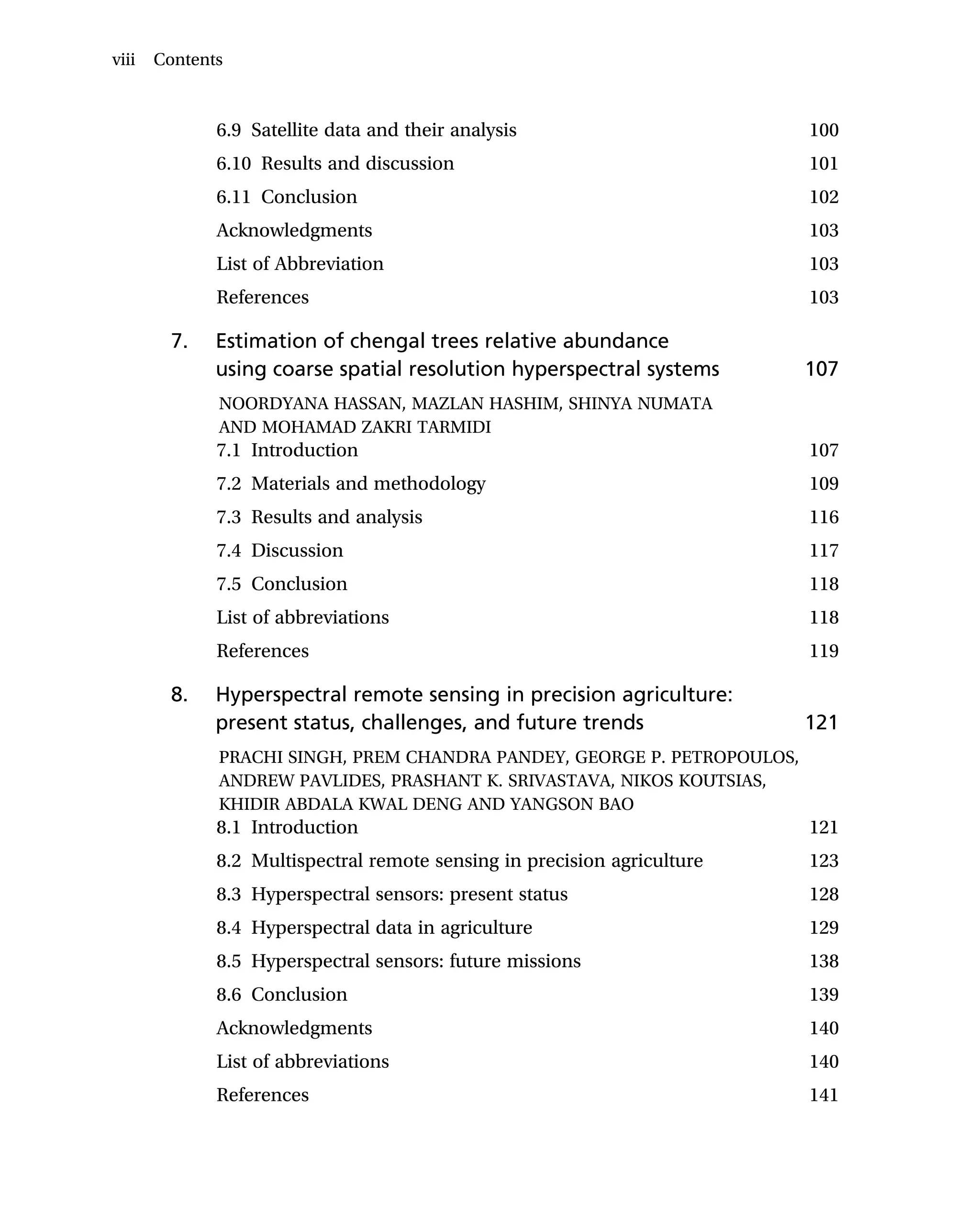
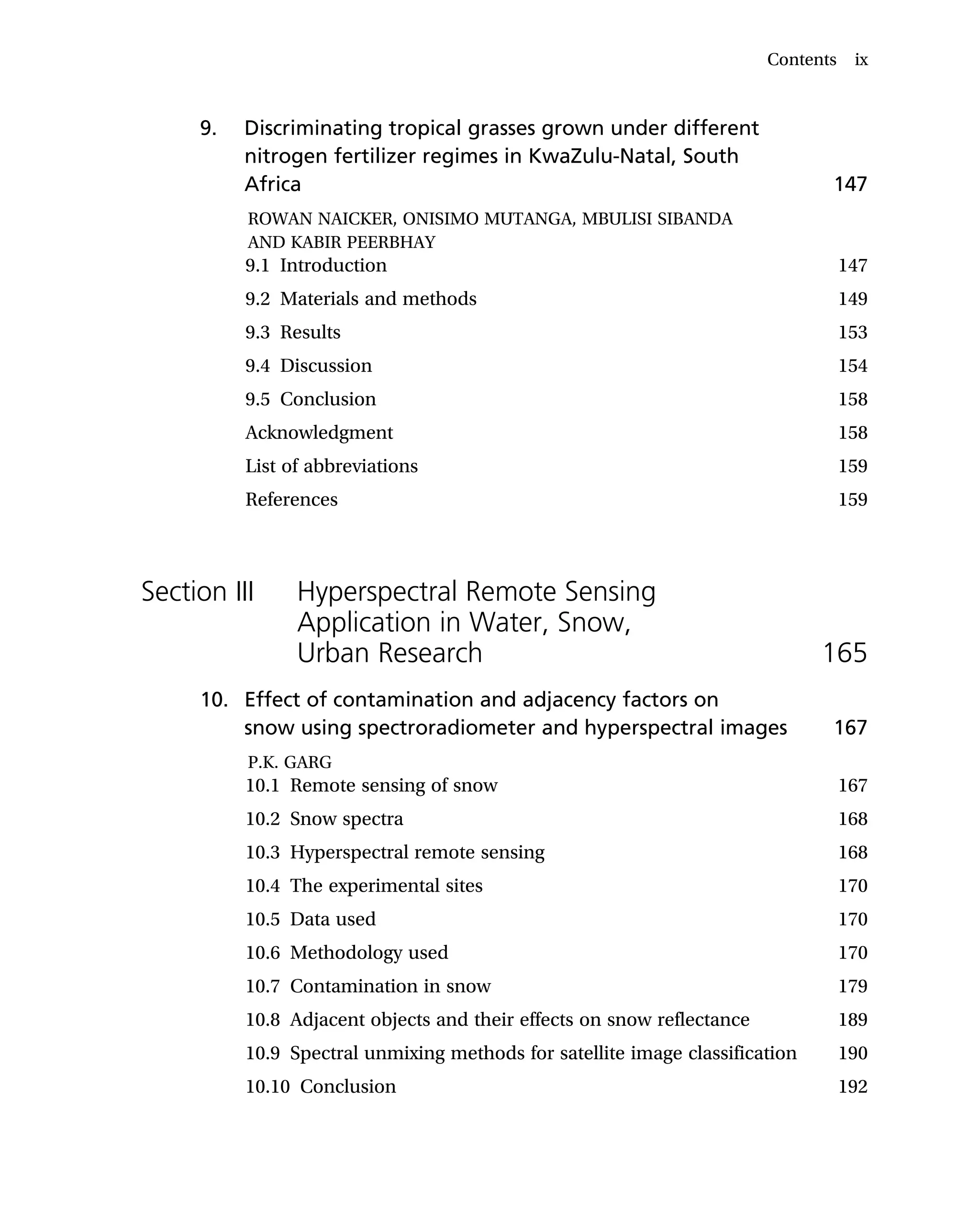
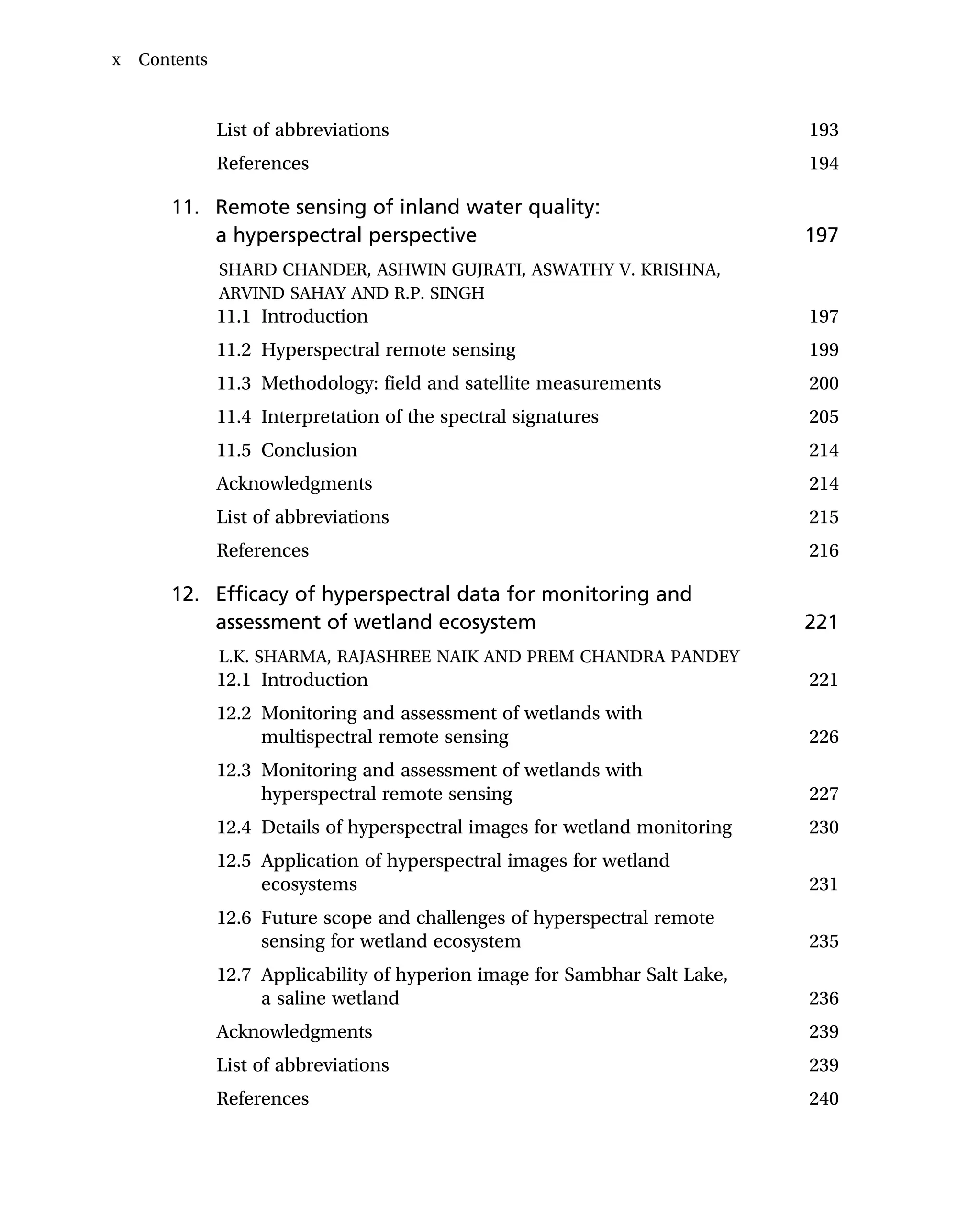
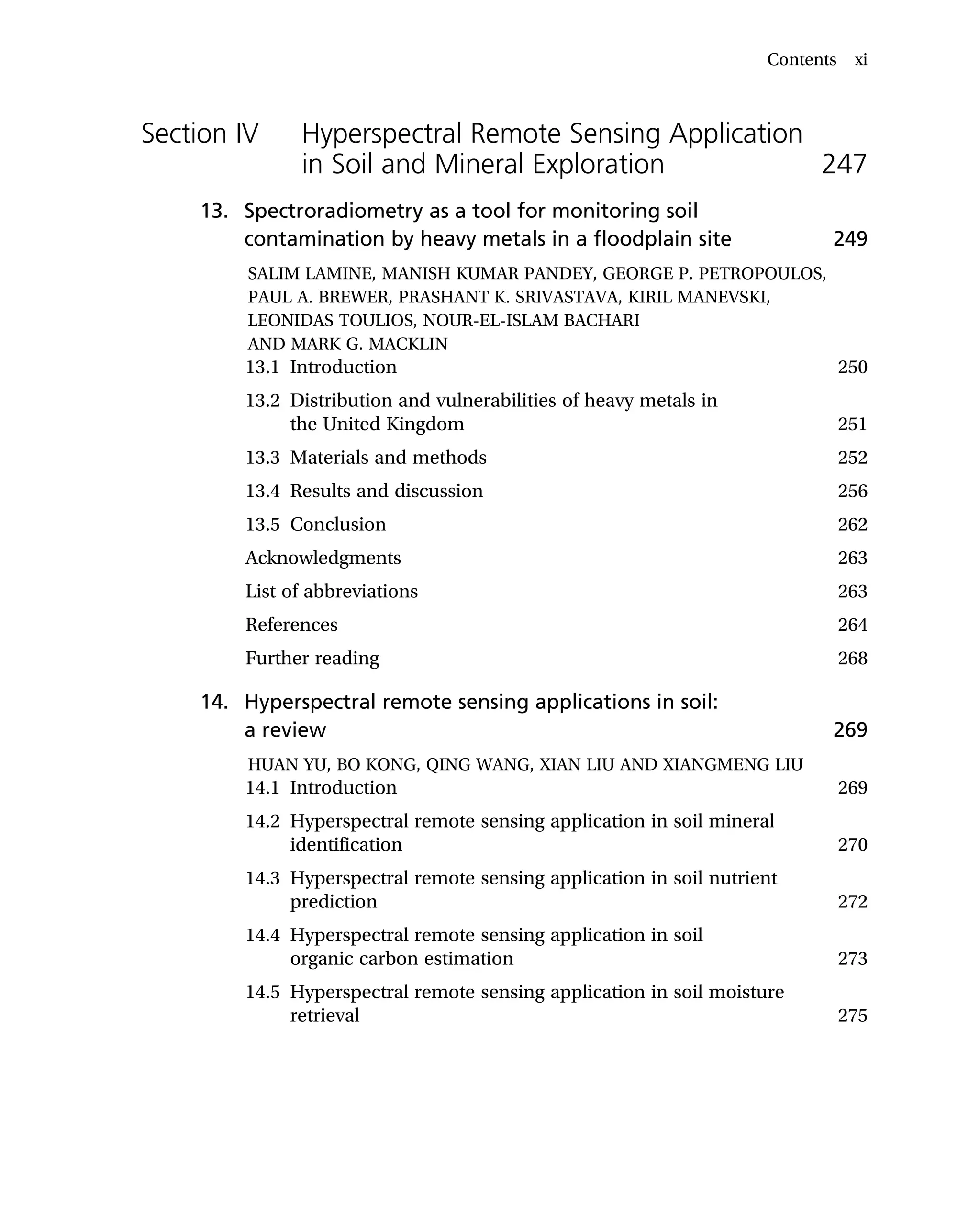
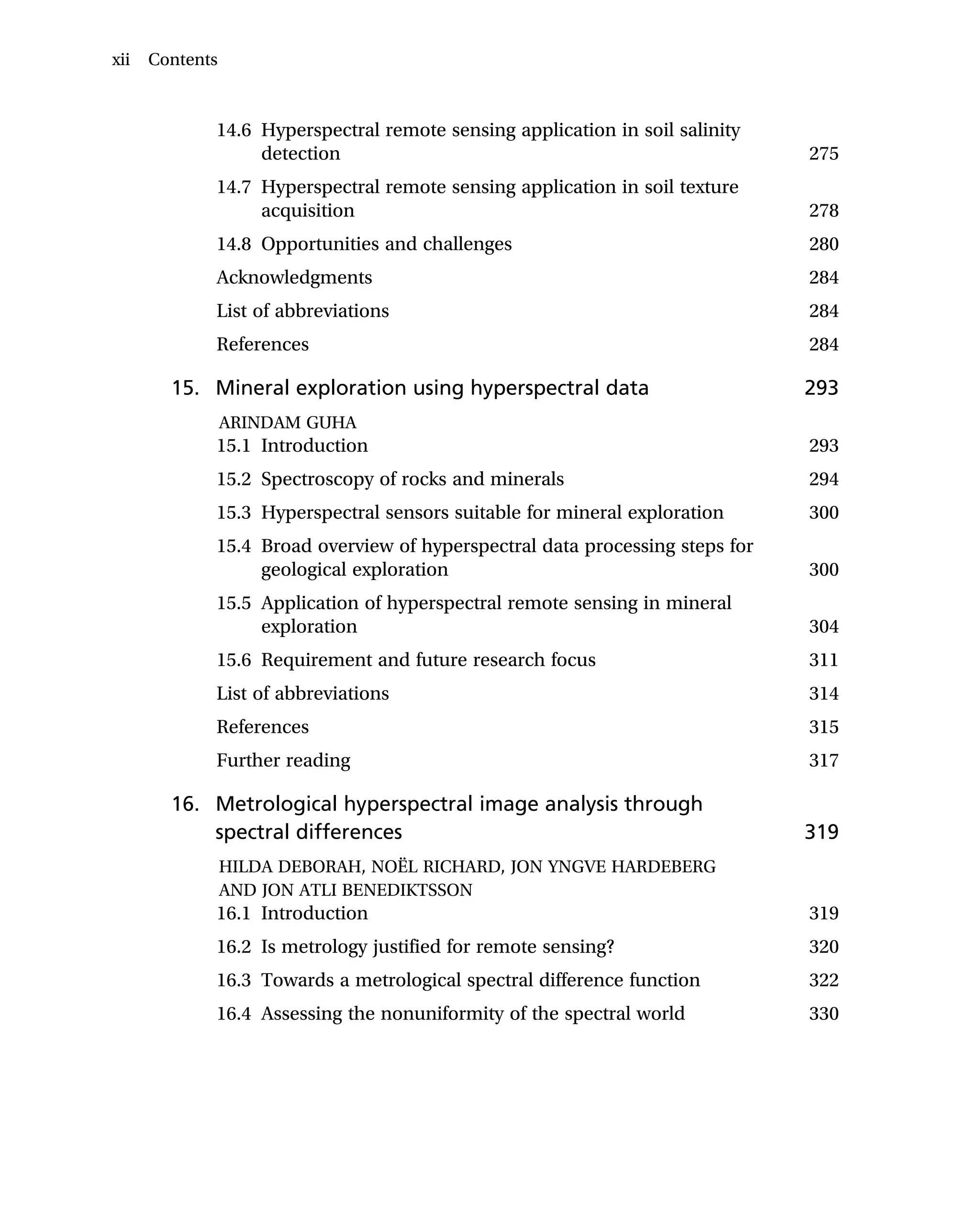
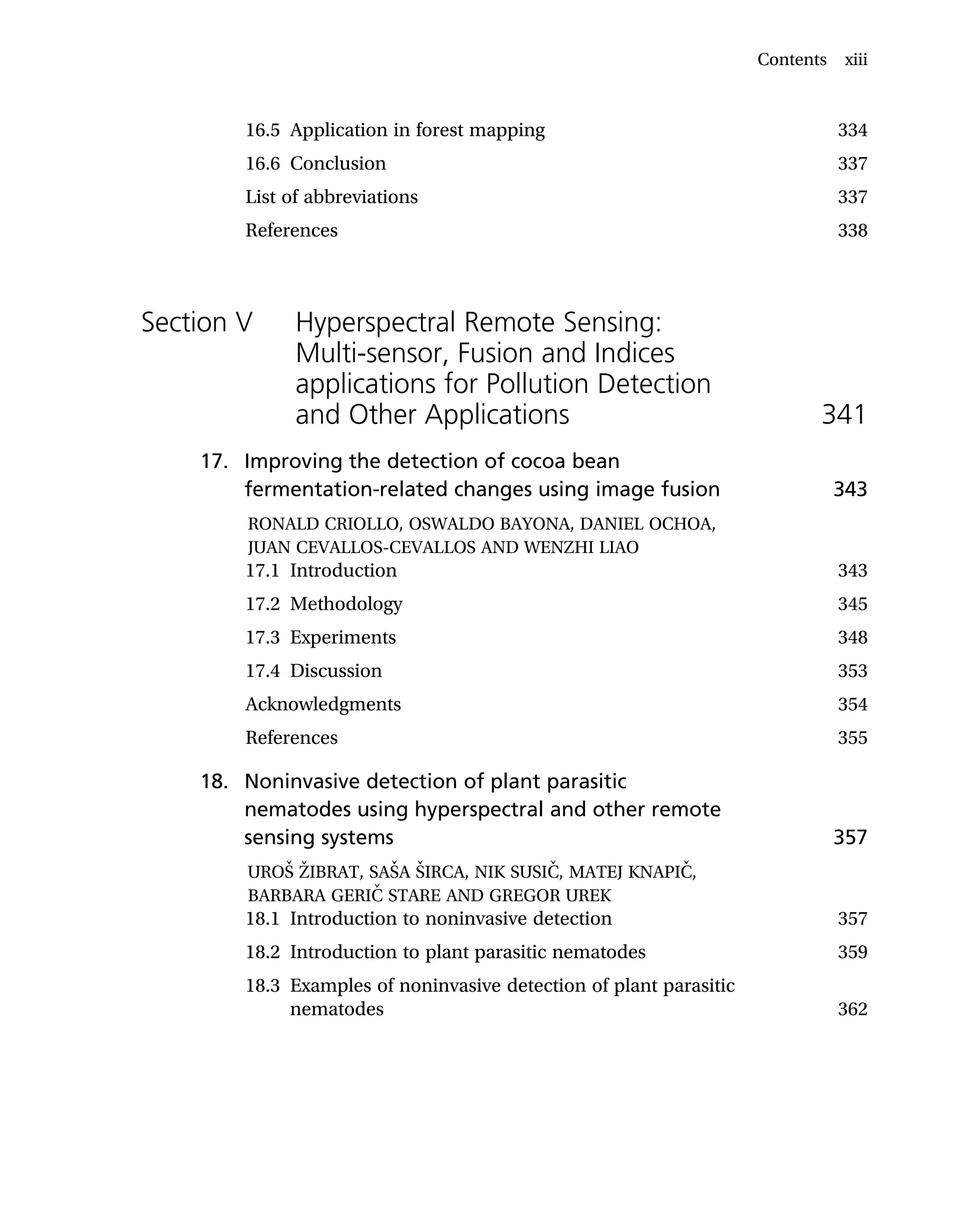
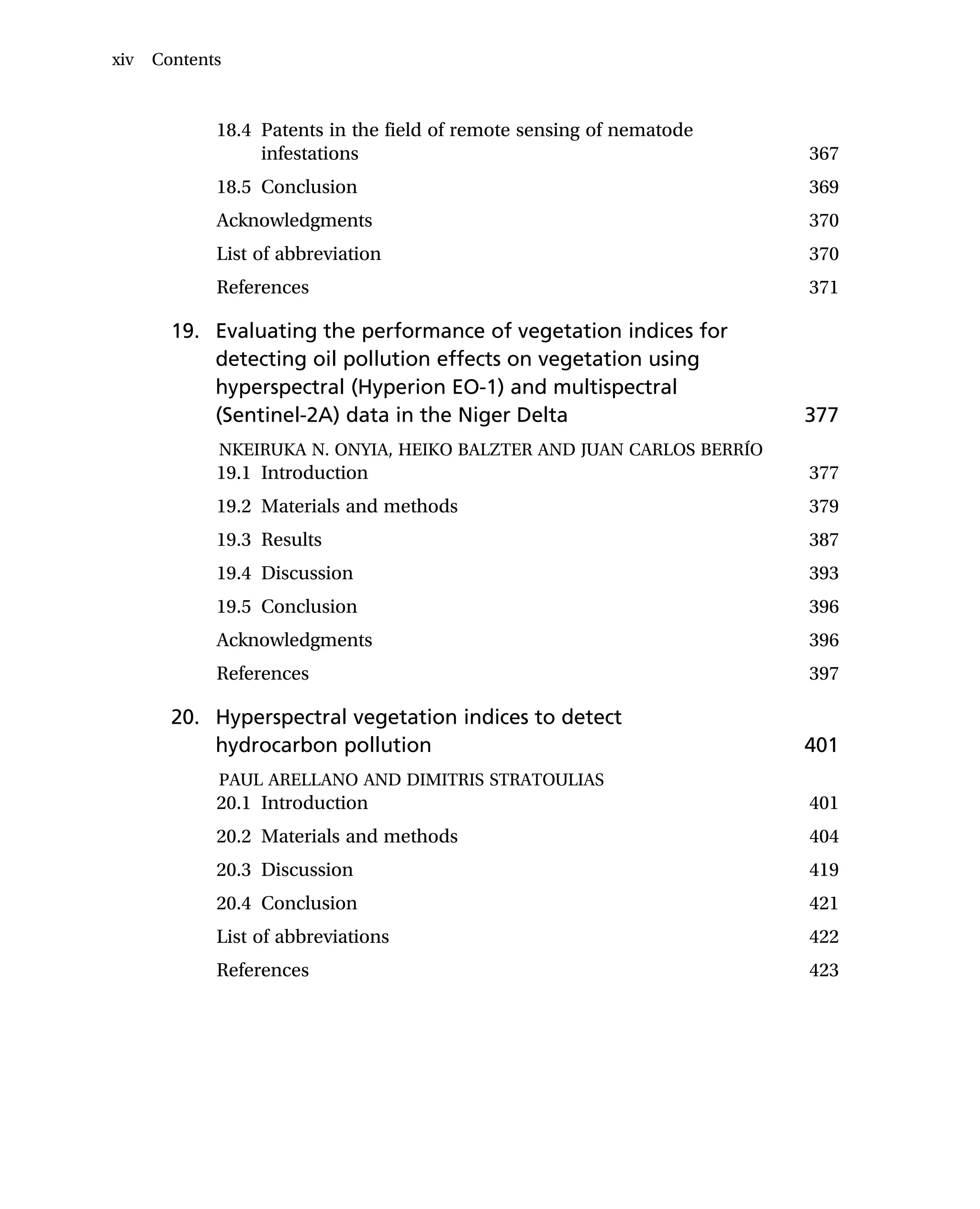


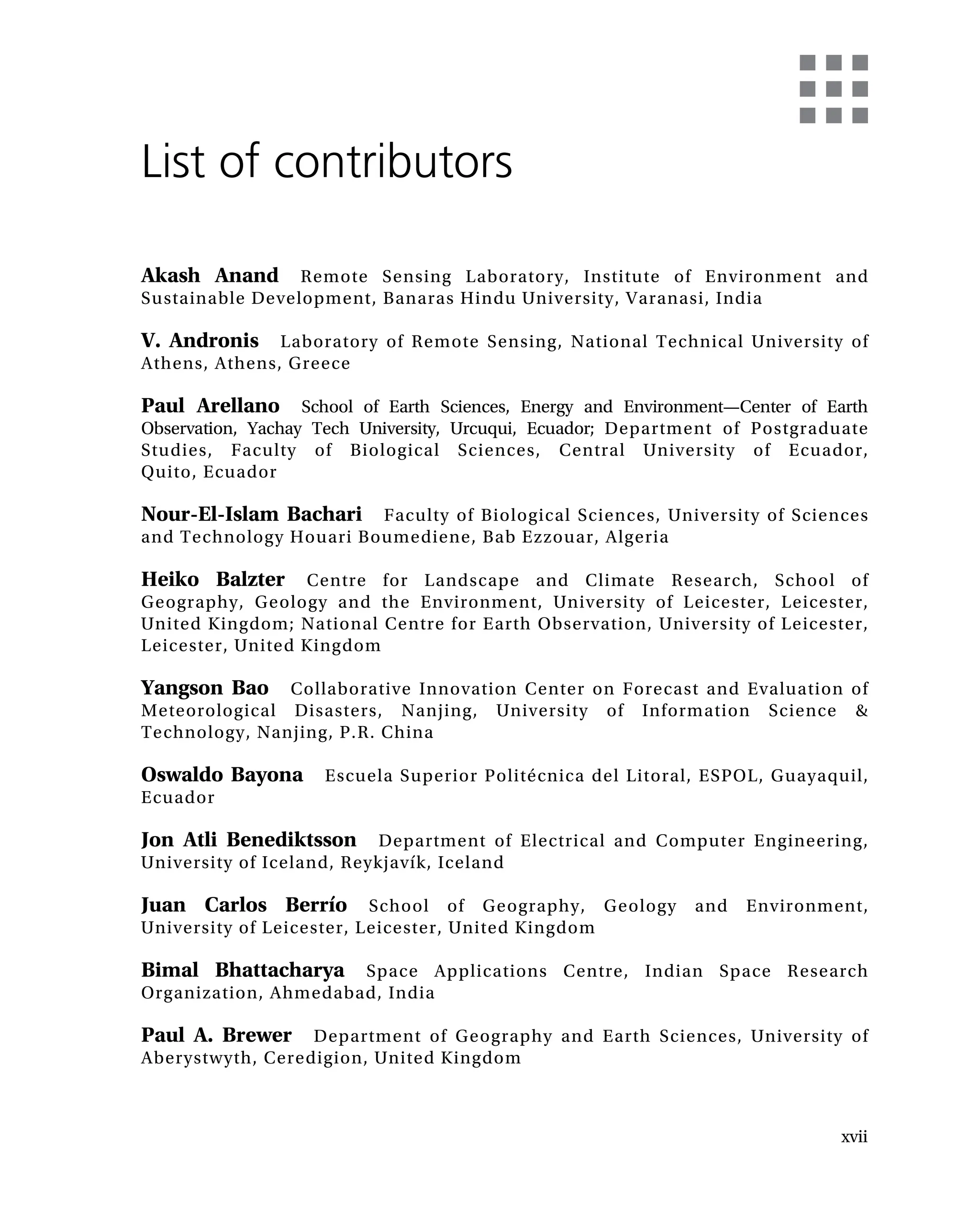

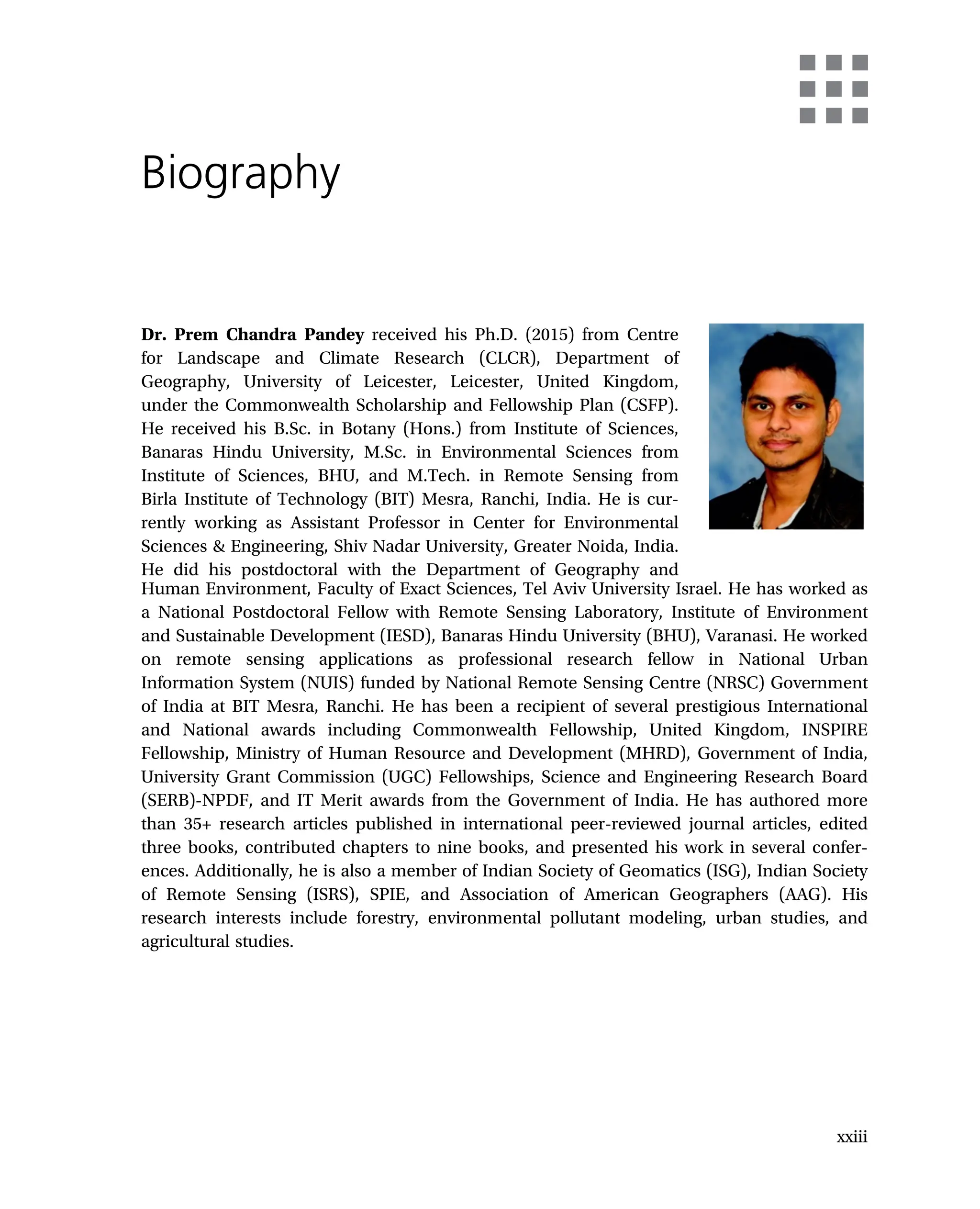
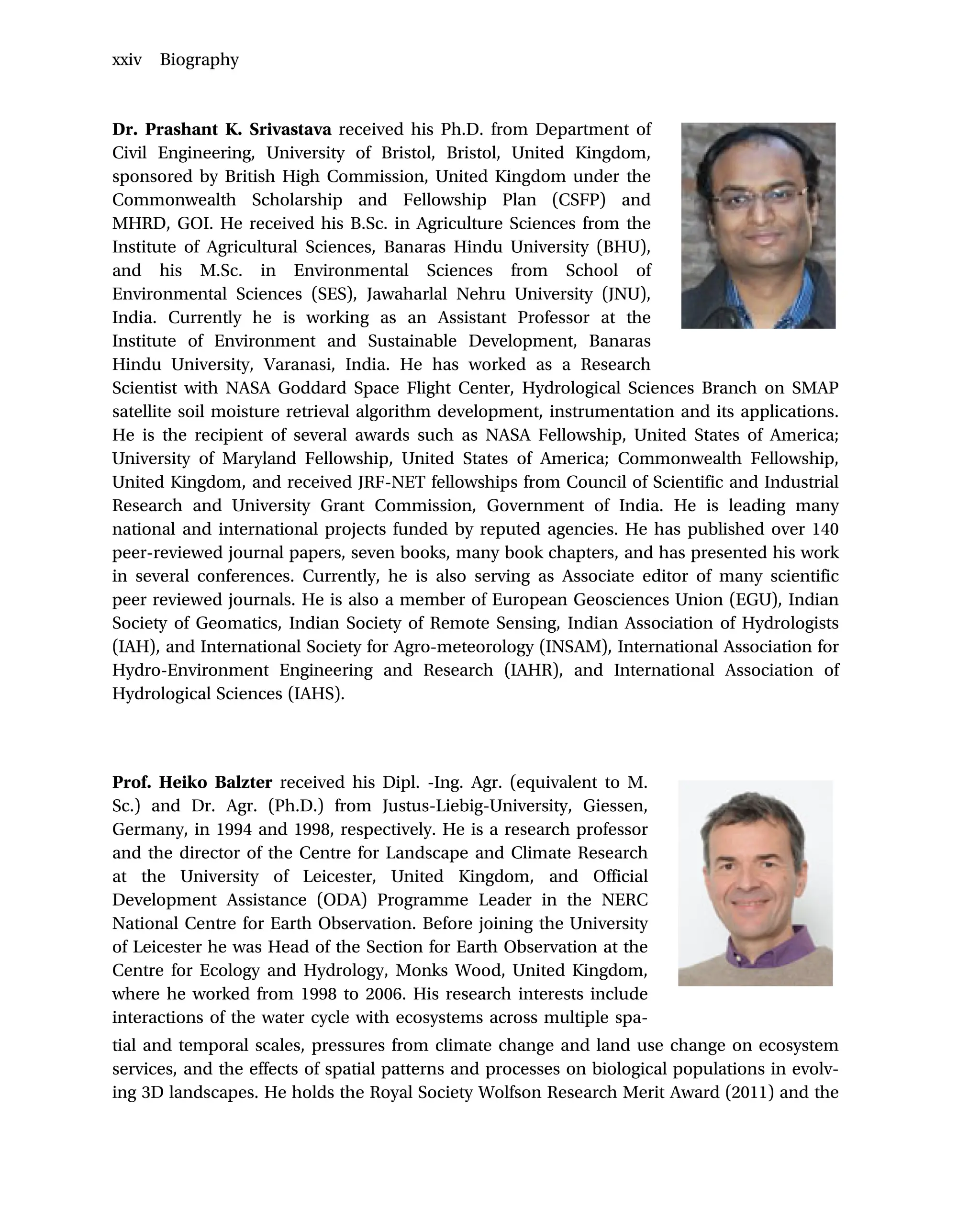
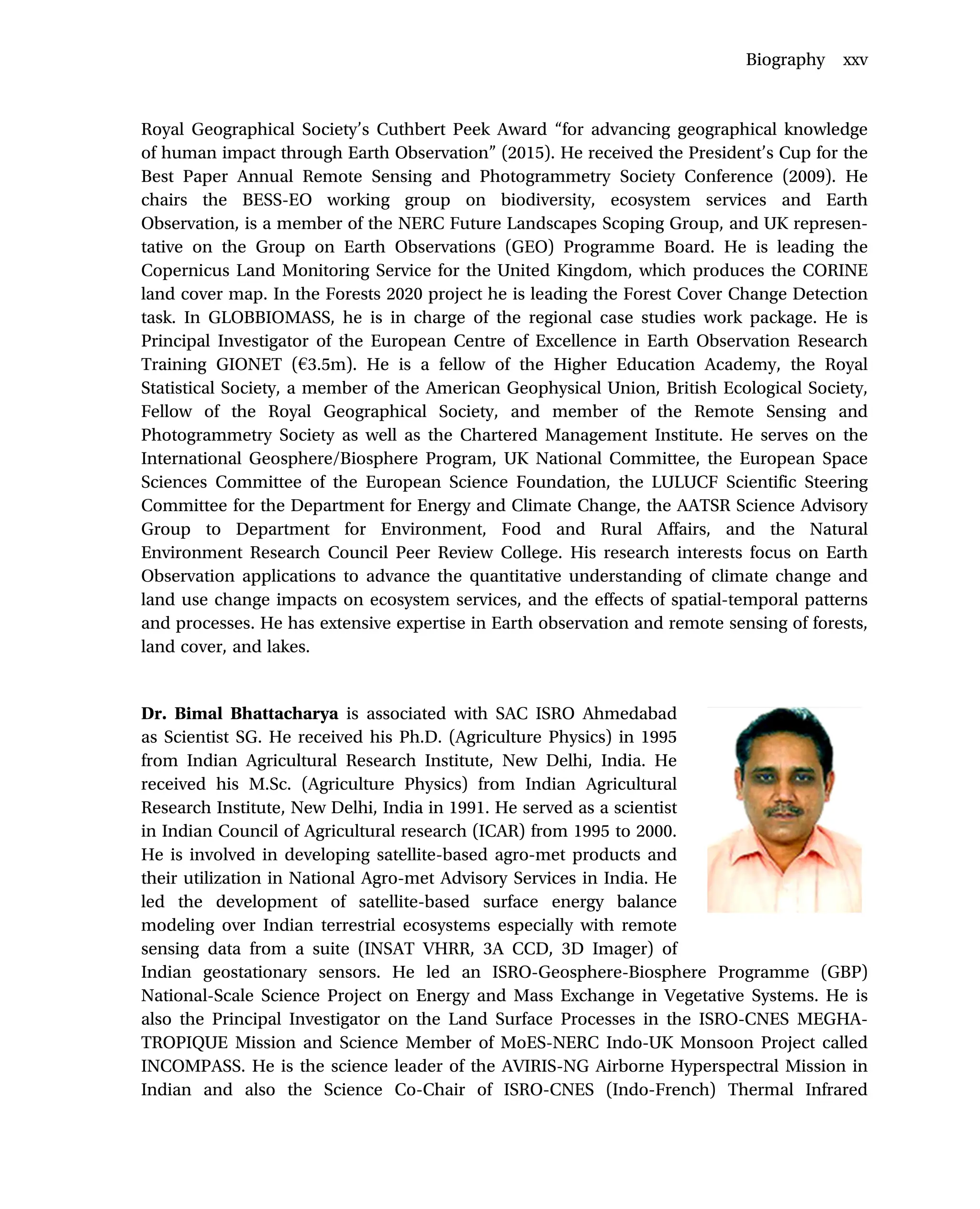

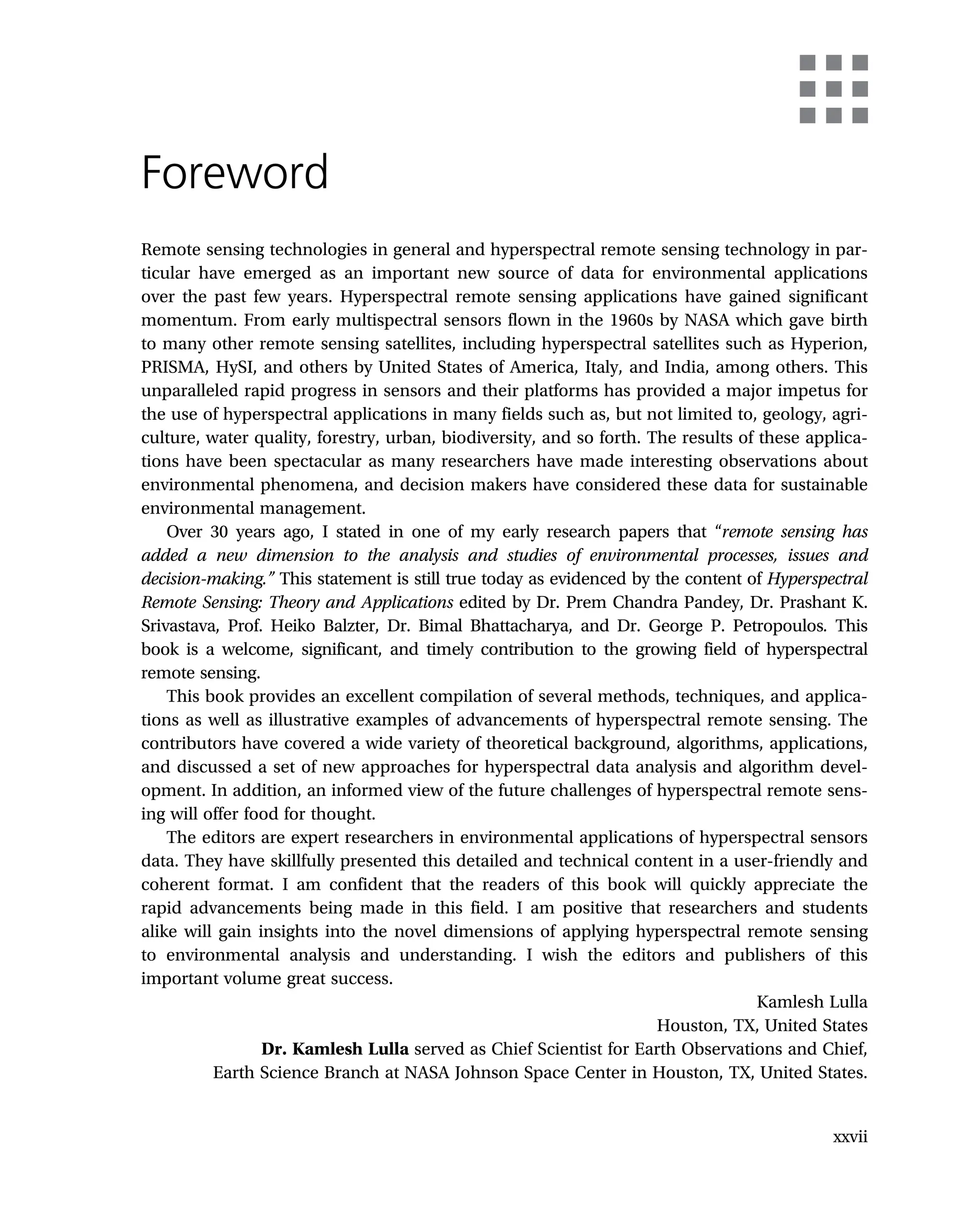
![1.2 Origin of hyperspectral remote sensing
A landmark step was achieved in 1979 when hybrid array detectors, mercury cadmium tellu-
ride on silicon charge-coupled devices was made available for the first time leading to the con-
struction of an imaging spectrometer that operated at wavelengths beyond 1.0 of μm. The
airborne imaging spectrometer (AIS) was developed at the National Aeronautics and Space
Administration (NASA) Jet Propulsion Laboratory (JPL) in 1983 and operated at wavelengths
between 0.8 and 2.5 μm. AIS was replaced by the airborne visible/infrared imaging spectrome-
ter (AVIRIS) in the early 1990s that covered the entire spectrum from 0.4 μm to 2.45 μm at a
high spectral rate plus high spatial resolution over an 11 km swath. The primary objectives of
these missions were identifying and assessing the characteristics of surface materials. It was
with AVIRIS data that the first vegetation analysis was carried out through near-infrared spec-
troscopy (NIRS) analysis by John Aber and Mary Martin of the University of New Hampshire.
Although AVIRIS has offered the bulk of high-quality hyperspectral data, it lacks regularity.
With known multispectral specifications and properties, one wants to gain information
from spectral information, and there must be several narrow spectral channels in the same
electromagnetic spectrum (400 2500 nm) compared to a few broad spectral channels in
multispectral images (Pandey et al., 2019b). Thus the idea behind hyperspectral imaging sys-
tems is straightforward, while offering even more information to understand our environ-
ment better. This led to further innovations and advancement in hyperspectral imaging
systems in the early 1980s. Hyperspectral remote sensing or imaging spectrometry has
evolved from ERTS-1 [1] (Earth Resources Technology Satellite)-1 (Landsat-1) 4-band
images, to AIS, AVIRIS. AVIRIS was the first hyperspectral imaging system developed at
NASA JPL in the United States as a result of innovations in spectrometers technologies, then
AVIRIS-NG (Airborne Visible Infrared Imaging Spectrometer-Next Generation) and HyspIRI
(Hyperspectral Infrared Imager) were introduced.
The first hyperspectral mission Earth Observation-1 (EO-1) Hyperion sensor was
launched by NASA’s Earth Observing-1 satellite in November 2000. This space-borne mission
brought significant and dramatic changes in the applications on forestry, agriculture, mineral
identifications and land-use or land-cover classifications (Pandey et al., 2018, 2019a).
Enhanced spectral resolution in the 400 2500 nm range was extensively and widely used by
researchers, and provided more reliable and accurate results (Kramer, 2002). In order to
achieve high spectral resolution, multispectral sensors were effectively enhanced in their
image acquisition in the spectral range, reduction in the spectral sampling rate, and several
contiguous spectral channels. Later on, the Compact High-Resolution Imaging Spectrometer
(CHRIS) for the European Space Agency (ESA) Project for On-Board Autonomy-1 (PROBA-1)
in 2001 was launched by ESA for the global mapping of natural resources. Hyperion has
been decommissioned and CHRIS is currently working and operating in the orbit. It has
been designed for a life operational time period of a one year only and has 62 contiguous
channels with a spatial resolution of 17 m.
These hyperspectral imaging satellites are accompanied by several other missions later
on (Puschell, 2000). The information on current and future space-borne hyperspectral
4 Hyperspectral Remote Sensing](https://image.slidesharecdn.com/33666-250403111335-8474f919/75/Hyperspectral-Remote-Sensing-Theory-and-Applications-Prem-Chandra-Pandey-34-2048.jpg)
![missions were compiled with references to several published articles (Nieke et al., 1997;
Puschell, 2000; Kramer, 2002; Staenz and Held, 2012). There is a focus to dramatically
increase contiguous spectral bands in upcoming space-based hyperspectral imaging systems
(Nieke et al., 1997). A medium spectral resolution hyperspectral imaging system called
PRecursore IperSpettrale della Missione Applicativa (PRISMA) was launched by Italy’s ASI
on March 22, 2019 (Longo, 2020). PRISMA’s hyperspectral sensors will be capable to acquire
images in B235 contiguous spectral channels in visible (VIS) near-infrared (NIR) short-
wave infrared (SWIR) ranges. The Environmental Mapping and Analysis Program (EnMAP)
for hyperspectral sensors was launched by Deutsche Zentrum für Luft-and Raumfahrt (DLR)
(The German Aerospace Center) the German Research Centre for Geosciences
[GeoForschungsZentrum (GFZ)] in 2015 to acquire images in over 200 narrow contiguous
bands. In the meantime, NASA has scheduled the HyspIRI mission launch for 2022, which
will acquire images with 237 spectral bands with 60 m spatial resolution. Detailed informa-
tion on present and future hyperspectral missions are presented in Table 1 1. This also pre-
sents the major space-borne missions launched or planned by several countries or space
agencies. Apart from those listed in Table 1 1, there are HISUI (The Japanese Hyperspectral
Imager Suite) onboard the Advanced Land Observing Satellite-3 (ALOS-3), and the French
HYPXIM hyperspectral missions (Briottet et al., 2011; Matsunaga et al., 2013) were also in
orbit. HISUI is a space-borne instrument suite designed to work both as hyperspectral as
well as multispectral imagers. Therefore the importance of these planned hyperspectral mis-
sions or initiatives should be understood to ensure guaranteed, uninterrupted hyperspectral
image acquisition and coverage beyond 2020.
The focus of the HyspIRI mission will be on the world’s ecosystem studies offering infor-
mation on future ecosystems, disasters, and the carbon cycle. This mission will offer
VIS NIR and SWIR hyperspectral data and multispectral thermal data regularly. The combi-
nation of spatiotemporal and spectral data will offer a challenge to researchers.
1.3 Atmospheric correction: a primary step in preprocessing
hyperspectral images
Passive remote sensing is basically the study of interaction between light source and Earth
surface features, in which every feature has an unique spectral response. The spectral resolu-
tion and continuous wavelength range of an image play an important role in distinguishing
the feature; the higher the spectral resolution the higher will be its feature-detection capabil-
ity (Okada and Iwashita, 1992; Clark, 1999). Hyperspectral imaging holds the potential to dis-
tinguish surface features more precisely because of its high-spectral resolution and narrow
bandwidths. Hyperspectral images have numerous narrow bands covering ultra-violet,
VIS NIR, and SWIR regions of the electromagnetic spectrum, which makes it more suscepti-
ble to atmospheric distortions. Atmospheric gases and aerosols absorb and transmit the
incoming light in regards to its wavelength and this causes distortions in the image.
Therefore atmospheric correction is required in all hyperspectral data in which the raw
Chapter 1 • Revisiting hyperspectral remote sensing: origin, processing 5](https://image.slidesharecdn.com/33666-250403111335-8474f919/75/Hyperspectral-Remote-Sensing-Theory-and-Applications-Prem-Chandra-Pandey-35-2048.jpg)
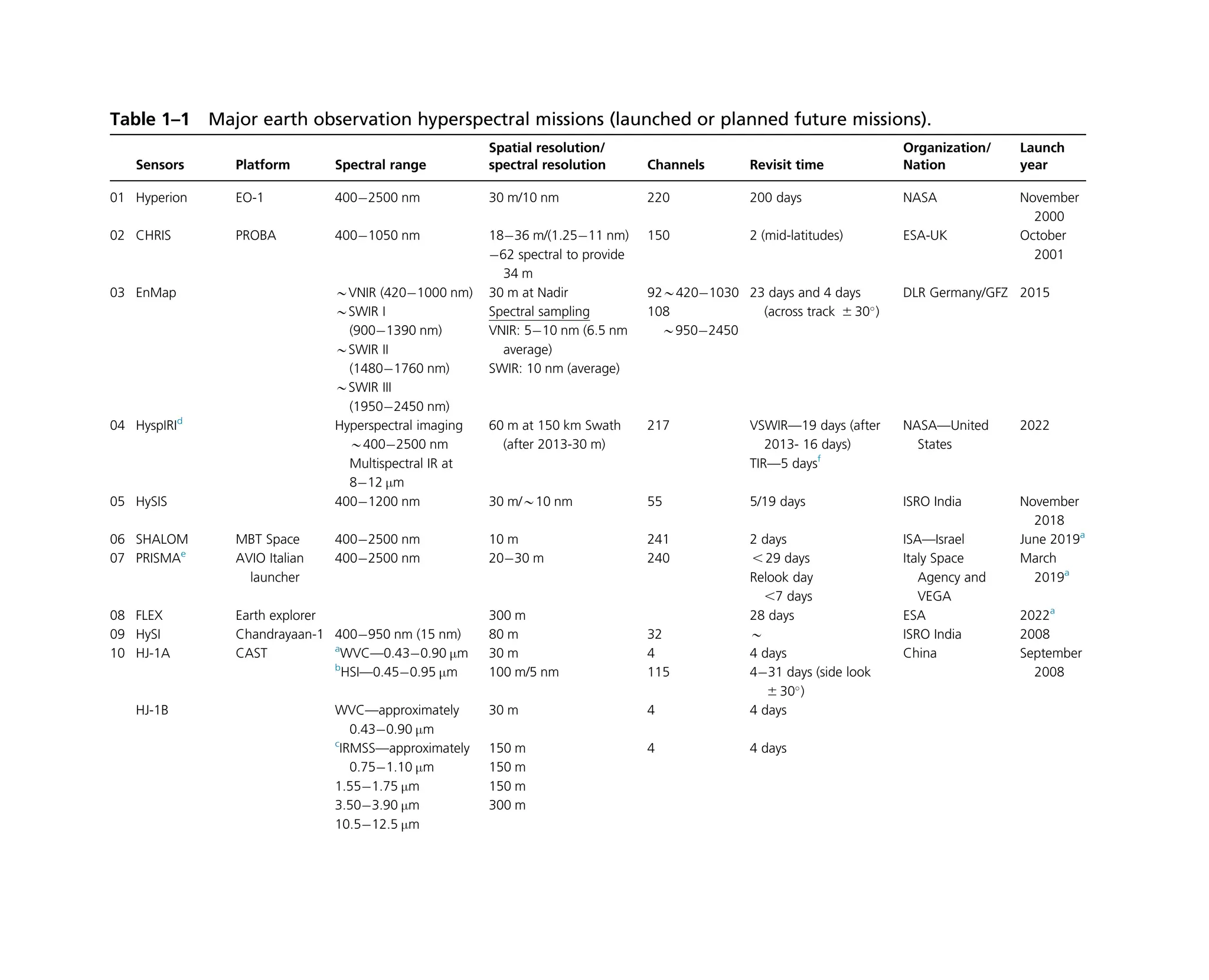

![(5S) model (Tanré et al., 1990). In early 2000 a line-by-line atmospheric transmittance model
(Gao and Davis, 1997) was introduced into ATREM code which uses 6S module (Vermote
et al., 1994) that included the effect of NO2 in the 0.4 0.8 μm spectral range. Several other
radiative transfer codes having advanced features like topographic corrections, spectral
smoothing, and feature adjacency correction such as ACRON, FLAASH, and HATCH have
recently been introduced.
Taking into consideration the advancements in atmospheric correction techniques used
for hyperspectral images, FLAASH is one of the most accurate and easy to use radiative
transfer model. FLAASH is a software package introduced by Air Force Research Laboratory,
Space Vehicles Directorate (AFRL/VS) and is currently integrated with ENVI software for
commercial use. FLAASH is able to more accurately analyze the VIS to SWIR region of the
electromagnetic spectrum. FLAASH is a MODTRAN-4 based model with physics-based deri-
vations of different atmospheric interaction properties that include atmospheric pressure,
water vapor column, and aerosol and cloud cover, which is further used as a priori informa-
tion for converting radiance to reflectance (Berk et al., 1998, 2000). Hyperspectral data, its
sensor type, and metadata (including sensor altitude, viewing, and solar angle) is used as
input for FLAASH to retrieve preliminary water vapor column data at a per-pixel basis. Then
a water vapor Look-Up Table (LUT) is generated using MODTRAN simulation to retrieve
reflectance from radiance. FLAASH also generates a cloud mask to classify the pixels having
cloud cover and flag those pixels to be removed before calculation. Considering the variables
are all wavelength dependent, image polishing and renormalization is performed last to gen-
erate a new reflectance cube (Boardman, 1998).
Despite these atmospheric correction models, there are still possibilities for further
improvement in radiative transfer codes. The built-in smoothing modules need improvement
in order to identify any artificial broad absorption features in the retrieved reflectance spec-
tra. A hybrid approach using image-based empirical methods and radiative transfer codes
can increase the retrieval accuracy and lower the computational complexities.
1.4 Empirical and radiative transfer models
Inverse modeling plays a vital role for quantitative remote sensing, which mainly uses physi-
cal- or empirical-based models to estimate unknown parameters (Wang, 2012). Over the past
few years various types of models have been developed related to atmosphere, vegetation,
and radiation and a model-based inverse problem was also introduced. The introduction of
multispectral and hyperspectral remote sensors with greater spectral and spatial information
came into the account to solve model-based inverse problems (Liang, 2005; Wang et al.,
2009). Inverse modeling is mainly useful to retrieve various types of vegetation parameters
using physical or empirical models. These models also can be used in direct (forward) mode
to compute canopy-reflectance values after providing leaf and canopy traits [chlorophyll con-
tent, water content, Leaf Area Index (LAI)]. Moreover, such physical-based radiative transfer
models can be inverted from reflectance or EO data for retrieval of biophysical and
Chapter 1 • Revisiting hyperspectral remote sensing: origin, processing 9](https://image.slidesharecdn.com/33666-250403111335-8474f919/75/Hyperspectral-Remote-Sensing-Theory-and-Applications-Prem-Chandra-Pandey-39-2048.jpg)