Hyperphosphatemia
ICONM
GBScN
Group Members
Uzma Aftab
Nimra
Tabita
Fehmida
Farhana
Prepared by Uzma Aftab
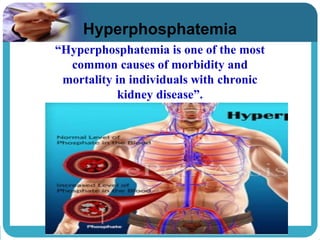
Hyperphosphatemia
โ€œHyperphosphatemia is one of the most
common causes of morbidity and
mortality in individuals with chronic
kidney diseaseโ€.
Causes
๏ƒ˜Acute OR chronic renal failure.
๏ƒ˜Long term use of phosphate
containing products.
๏ƒ˜Chemotherapy that releases
phosphate into blood.
๏ƒ˜Cows milk feeding in infants.
๏ƒ˜Retained phosphorus enemas.
๏ƒ˜Hormonal
insufficiency(hypoparathyroidism).
Signs & Symptoms
๏ƒ˜Most patients with hyperphosphatemia are
asympyomatic they occasionally report
hypocalcemic symptoms.
๏ƒ˜Muscle cramps
๏ƒ˜Tetany
๏ƒ˜ Joint pain
๏ƒ˜Renal failure
๏ƒ˜Anuria
๏ƒ˜Hypertension
๏ƒ˜Edema
๏ƒ˜Cardiac arrest
Dietary Intervention
๏ƒผIf hyperphosphatemia is present
restrict dietary phosphate.
๏ƒผA ketogenic diet may be helpful
but difficult to maintain.
๏ƒผDialysis
๏ƒผGlucose and insulin infusions
(seldom necessary).
๏ƒผCa supplements.
Conclusion
๏ถPoor nutrition is common in CKD &
DH patients and has adverse risk factor.
๏ถNutritional counseling โ€“ part of
approach to CKD and dialysis patients.
๏ถRoutine nutritional screening and
assessment should be done for CKD and
dialysis patients.
๏ถQualified renal dietitian must be
included in the staff of every dialysis
unit.
Hyperphosphatemia

Hyperphosphatemia

  • 1.
  • 2.
    Hyperphosphatemia โ€œHyperphosphatemia is oneof the most common causes of morbidity and mortality in individuals with chronic kidney diseaseโ€.
  • 3.
    Causes ๏ƒ˜Acute OR chronicrenal failure. ๏ƒ˜Long term use of phosphate containing products. ๏ƒ˜Chemotherapy that releases phosphate into blood. ๏ƒ˜Cows milk feeding in infants. ๏ƒ˜Retained phosphorus enemas. ๏ƒ˜Hormonal insufficiency(hypoparathyroidism).
  • 4.
    Signs & Symptoms ๏ƒ˜Mostpatients with hyperphosphatemia are asympyomatic they occasionally report hypocalcemic symptoms. ๏ƒ˜Muscle cramps ๏ƒ˜Tetany ๏ƒ˜ Joint pain ๏ƒ˜Renal failure ๏ƒ˜Anuria ๏ƒ˜Hypertension ๏ƒ˜Edema ๏ƒ˜Cardiac arrest
  • 5.
    Dietary Intervention ๏ƒผIf hyperphosphatemiais present restrict dietary phosphate. ๏ƒผA ketogenic diet may be helpful but difficult to maintain. ๏ƒผDialysis ๏ƒผGlucose and insulin infusions (seldom necessary). ๏ƒผCa supplements.
  • 6.
    Conclusion ๏ถPoor nutrition iscommon in CKD & DH patients and has adverse risk factor. ๏ถNutritional counseling โ€“ part of approach to CKD and dialysis patients. ๏ถRoutine nutritional screening and assessment should be done for CKD and dialysis patients. ๏ถQualified renal dietitian must be included in the staff of every dialysis unit.

Editor's Notes