How water turbines can be used to produce electricity
                                            (energy)
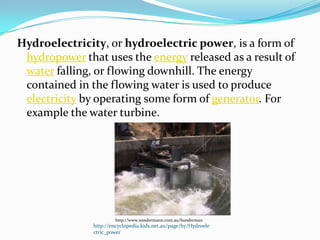
Hydroelectricity, or hydroelectric power, is a form of
 hydropower that uses the energy released as a result of
 water falling, or flowing downhill. The energy
 contained in the flowing water is used to produce
 electricity by operating some form of generator. For
 example the water turbine.


                        http://www.sundermann.com.au/Sunderman
               http://encyclopedia.kids.net.au/page/hy/Hydroele
               ctric_power
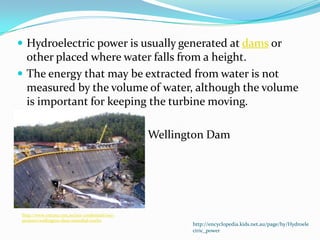
 Hydroelectric power is usually generated at dams or
  other placed where water falls from a height.
 The energy that may be extracted from water is not
  measured by the volume of water, although the volume
  is important for keeping the turbine moving.

                                                Wellington Dam


 http://www.entura.com.au/our-credentials/our-
 projects/wellington-dam-remedial-works
                                                        http://encyclopedia.kids.net.au/page/hy/Hydroele
                                                        ctric_power
 Around 19% of the world electricity is generated this
  way and in 2005, accounted for more than 63% of the
  total electricity generated from renewable sources.

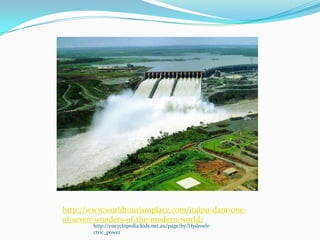
 Currently the largest hydro electric project in the
  world is the Itaipu Dam with total capacity of 12,600
  megawatts on the border of Brazil and Paraguay.
  However, on completion, China's massive "Three
  Gorges Dam" will be the largest.


               http://encyclopedia.kids.net.au/page/hy/Hydroele
               ctric_power
http://www.worldtourismplace.com/itaipu-dam-one-
of-seven-wonders-of-the-modern-world/
        http://encyclopedia.kids.net.au/page/hy/Hydroele
        ctric_power
 A typical hydro-electric scheme consists of a dam
 behind which a reservoir of water is held. When
 electricity is in demand, valves will be
 released, allowing the water to flow downhill to a
 power station where turbines will be made to turn by
 the force of the water flow. Connected to
 generators, electricity can be produced. The water is
 then allowed to return to the original riverbed or a
 nearby river.


              http://encyclopedia.kids.net.au/page/hy/Hydroele
              ctric_power

Hydropower

  • 1.
    How water turbinescan be used to produce electricity (energy)
  • 2.
    Hydroelectricity, or hydroelectricpower, is a form of hydropower that uses the energy released as a result of water falling, or flowing downhill. The energy contained in the flowing water is used to produce electricity by operating some form of generator. For example the water turbine. http://www.sundermann.com.au/Sunderman http://encyclopedia.kids.net.au/page/hy/Hydroele ctric_power
  • 3.
     Hydroelectric poweris usually generated at dams or other placed where water falls from a height.  The energy that may be extracted from water is not measured by the volume of water, although the volume is important for keeping the turbine moving.  Wellington Dam http://www.entura.com.au/our-credentials/our- projects/wellington-dam-remedial-works http://encyclopedia.kids.net.au/page/hy/Hydroele ctric_power
  • 4.
     Around 19%of the world electricity is generated this way and in 2005, accounted for more than 63% of the total electricity generated from renewable sources.  Currently the largest hydro electric project in the world is the Itaipu Dam with total capacity of 12,600 megawatts on the border of Brazil and Paraguay. However, on completion, China's massive "Three Gorges Dam" will be the largest. http://encyclopedia.kids.net.au/page/hy/Hydroele ctric_power
  • 5.
    http://www.worldtourismplace.com/itaipu-dam-one- of-seven-wonders-of-the-modern-world/ http://encyclopedia.kids.net.au/page/hy/Hydroele ctric_power
  • 6.
     A typicalhydro-electric scheme consists of a dam behind which a reservoir of water is held. When electricity is in demand, valves will be released, allowing the water to flow downhill to a power station where turbines will be made to turn by the force of the water flow. Connected to generators, electricity can be produced. The water is then allowed to return to the original riverbed or a nearby river. http://encyclopedia.kids.net.au/page/hy/Hydroele ctric_power