A PAVAN REDDY
 What is fuel cell?
 How does fuel cell works?
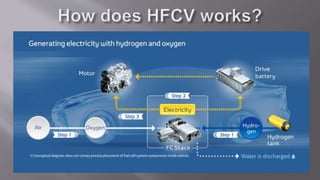
 How does HFCV works?
 Advantages of Fuel cell
 Difficulties of Fuel cell
 Scope in HFCV
What is Fuel Cell?
A fuel cell is an electrochemical device in which the
chemical energy of hydrogen and oxygen is
converted into electrical energy.
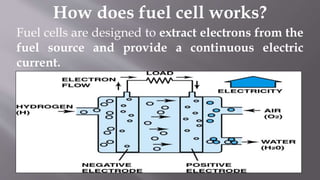
How does fuel cell works?
Fuel cells are designed to extract electrons from the
fuel source and provide a continuous electric
current.
Let us see how HFCV works
 Use less fuel than the ICE
 Emit less gases than the ICE
 Fuel efficiency increases
 Lower emissions and better mileage
 Low maintenance
 Doesn’t pollute environment
 High initial cost.
 Expensive to repair.
 Batteries are of limited life.
 More weight due to battery packs.
 Department of science and technology,
government of India formulated all automakers
to convert the existing ICE to FCV.
 Under "Make in India" digital project Govt. of
India providing financial aid i.e. 50% the total
project cost.
 Knowing what’s under the hood of hybrid
electric vehicles will help you evaluate the
available choices in the market. Enjoy driving
into the future.
Hybrid fuel cell vehicle

Hybrid fuel cell vehicle

  • 1.
  • 2.
     What isfuel cell?  How does fuel cell works?  How does HFCV works?  Advantages of Fuel cell  Difficulties of Fuel cell  Scope in HFCV
  • 3.
    What is FuelCell? A fuel cell is an electrochemical device in which the chemical energy of hydrogen and oxygen is converted into electrical energy.
  • 4.
    How does fuelcell works? Fuel cells are designed to extract electrons from the fuel source and provide a continuous electric current.
  • 6.
    Let us seehow HFCV works
  • 7.
     Use lessfuel than the ICE  Emit less gases than the ICE  Fuel efficiency increases  Lower emissions and better mileage  Low maintenance  Doesn’t pollute environment
  • 8.
     High initialcost.  Expensive to repair.  Batteries are of limited life.  More weight due to battery packs.
  • 9.
     Department ofscience and technology, government of India formulated all automakers to convert the existing ICE to FCV.  Under "Make in India" digital project Govt. of India providing financial aid i.e. 50% the total project cost.
  • 10.
     Knowing what’sunder the hood of hybrid electric vehicles will help you evaluate the available choices in the market. Enjoy driving into the future.