INTRODUCTION TO HUMAN
RESOURCE DEVELOPMENT
Werner & DeSimone (2006)

1

Chapter 1
PRIMARY FUNCTIONS OF HRM
Human resource planning
 Equal employment opportunity
 Staffing (recruitment and selection)
 Compensation and benefits
 Employee and labor relations
 Health, safety, and security
 Human resource development


Werner & DeSimone (2006)

2
SECONDARY HRM FUNCTIONS
Organization

Werner & DeSimone (2006)

and job design
Performance management/
performance appraisal systems
Research and information
systems

3
LIMITS OF AUTHORITY
HRM & HRD units have staff authority (Overhead
function)
 Line authority takes precedence
 Scope of authority – how far (how much) can you
authorize?


Werner & DeSimone (2006)

4
HRD FUNCTIONS
 Training

Werner & DeSimone (2006)

and development (T&D)
 Organizational development
 Career development

5
TRAINING AND DEVELOPMENT (T&D)
– improving the knowledge, skills
and attitudes of employees for the shortterm, particular to a specific job or task –
e.g.,

 Training

Werner & DeSimone (2006)

Employee orientation
 Skills & technical training
 Coaching
 Counseling


6
TRAINING AND DEVELOPMENT (T&D)

– preparing for future
responsibilities, while increasing the
capacity to perform at a current job

 Development

Werner & DeSimone (2006)

Management training
 Supervisor development


7
ORGANIZATIONAL DEVELOPMENT
 The

Werner & DeSimone (2006)

process of improving an organization’s
effectiveness and member’s well-being
through the application of behavioral
science concepts
 Focuses on both macro- and micro-levels
 HRD plays the role of a change agent

8
CAREER DEVELOPMENT
 Ongoing



Career planning



Werner & DeSimone (2006)

process by which individuals
progress through series of changes until
they achieve their personal level of
maximum achievement.
Career management

9
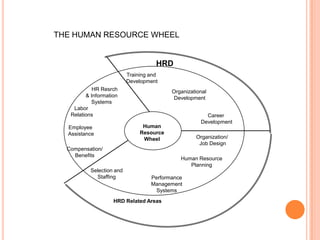
THE HUMAN RESOURCE WHEEL

HRD
Training and
Development
HR Resrch
& Information
Systems
Labor
Relations

Organizational
Development
Career
Development

Human
Resource
Wheel

Employee
Assistance
Compensation/
Benefits

Organization/
Job Design
Human Resource
Planning

Selection and
Staffing

Performance
Management
Systems

HRD Related Areas
HRD is the integrated use of training and
development, organization development, and career
development, to improve individual, group and
organizational effectiveness. Those three areas use
development as their primary process.
CRITICAL HRD ISSUES
Strategic management and HRD
 The supervisor’s role in HRD
 Organizational structure of HRD


Werner & DeSimone (2006)

12
STRATEGIC MANAGEMENT & HRD
Strategic management aims to ensure
organizational effectiveness for the foreseeable
future – e.g., maximizing profits in the next 3 to 5
years
 HRD aims to get managers and workers ready for
new products, procedures, and materials


Werner & DeSimone (2006)

13
SUPERVISOR’S ROLE IN HRD
Implements HRD programs and procedures
 On-the-job training (OJT)
 Coaching/mentoring/counseling
 Career and employee development
 A “front-line participant” in HRD


Werner & DeSimone (2006)

14
SUMMARY
HRD is too important to be left to amateurs
 HRD should be a revenue producer, not a revenue
user
 HRD should be a central part of company
 You need to be able to talk MONEY


Werner & DeSimone (2006)

15
GROUP WORK






Identify an organization with at least 7 employees, which you feel
does not have an existing HRD. Examples: Internet shop, Minirestaurants, Photocopy centers, Convenient stores
Interview employees/employer. Enumerate common feelings of
employees (rate satisfaction on the job, and factors which affect job
satisfaction)
List responses and from the point of view of a Human Resource
Analyst, discuss the responses with you groupmates and submit an
essay of your case study by using the following format: (short
bondpaper, 1.5 line spacing, Font Arial 12)
Introduction
 Problems encountered
 Possible causes to problems encountered
 Recommended solutions to problems




Spelling and grammar is important. Your grade will be lowered if your
English is poor. Write complete sentences and paragraphs.

Humres infosheet2

  • 1.
    INTRODUCTION TO HUMAN RESOURCEDEVELOPMENT Werner & DeSimone (2006) 1 Chapter 1
  • 2.
    PRIMARY FUNCTIONS OFHRM Human resource planning  Equal employment opportunity  Staffing (recruitment and selection)  Compensation and benefits  Employee and labor relations  Health, safety, and security  Human resource development  Werner & DeSimone (2006) 2
  • 3.
    SECONDARY HRM FUNCTIONS Organization Werner& DeSimone (2006) and job design Performance management/ performance appraisal systems Research and information systems 3
  • 4.
    LIMITS OF AUTHORITY HRM& HRD units have staff authority (Overhead function)  Line authority takes precedence  Scope of authority – how far (how much) can you authorize?  Werner & DeSimone (2006) 4
  • 5.
    HRD FUNCTIONS  Training Werner& DeSimone (2006) and development (T&D)  Organizational development  Career development 5
  • 6.
    TRAINING AND DEVELOPMENT(T&D) – improving the knowledge, skills and attitudes of employees for the shortterm, particular to a specific job or task – e.g.,  Training Werner & DeSimone (2006) Employee orientation  Skills & technical training  Coaching  Counseling  6
  • 7.
    TRAINING AND DEVELOPMENT(T&D) – preparing for future responsibilities, while increasing the capacity to perform at a current job  Development Werner & DeSimone (2006) Management training  Supervisor development  7
  • 8.
    ORGANIZATIONAL DEVELOPMENT  The Werner& DeSimone (2006) process of improving an organization’s effectiveness and member’s well-being through the application of behavioral science concepts  Focuses on both macro- and micro-levels  HRD plays the role of a change agent 8
  • 9.
    CAREER DEVELOPMENT  Ongoing  Careerplanning  Werner & DeSimone (2006) process by which individuals progress through series of changes until they achieve their personal level of maximum achievement. Career management 9
  • 10.
    THE HUMAN RESOURCEWHEEL HRD Training and Development HR Resrch & Information Systems Labor Relations Organizational Development Career Development Human Resource Wheel Employee Assistance Compensation/ Benefits Organization/ Job Design Human Resource Planning Selection and Staffing Performance Management Systems HRD Related Areas
  • 11.
    HRD is theintegrated use of training and development, organization development, and career development, to improve individual, group and organizational effectiveness. Those three areas use development as their primary process.
  • 12.
    CRITICAL HRD ISSUES Strategicmanagement and HRD  The supervisor’s role in HRD  Organizational structure of HRD  Werner & DeSimone (2006) 12
  • 13.
    STRATEGIC MANAGEMENT &HRD Strategic management aims to ensure organizational effectiveness for the foreseeable future – e.g., maximizing profits in the next 3 to 5 years  HRD aims to get managers and workers ready for new products, procedures, and materials  Werner & DeSimone (2006) 13
  • 14.
    SUPERVISOR’S ROLE INHRD Implements HRD programs and procedures  On-the-job training (OJT)  Coaching/mentoring/counseling  Career and employee development  A “front-line participant” in HRD  Werner & DeSimone (2006) 14
  • 15.
    SUMMARY HRD is tooimportant to be left to amateurs  HRD should be a revenue producer, not a revenue user  HRD should be a central part of company  You need to be able to talk MONEY  Werner & DeSimone (2006) 15
  • 16.
    GROUP WORK    Identify anorganization with at least 7 employees, which you feel does not have an existing HRD. Examples: Internet shop, Minirestaurants, Photocopy centers, Convenient stores Interview employees/employer. Enumerate common feelings of employees (rate satisfaction on the job, and factors which affect job satisfaction) List responses and from the point of view of a Human Resource Analyst, discuss the responses with you groupmates and submit an essay of your case study by using the following format: (short bondpaper, 1.5 line spacing, Font Arial 12) Introduction  Problems encountered  Possible causes to problems encountered  Recommended solutions to problems   Spelling and grammar is important. Your grade will be lowered if your English is poor. Write complete sentences and paragraphs.