1
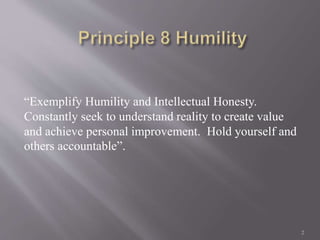
“Exemplify Humility and Intellectual Honesty.
Constantly seek to understand reality to create value
and achieve personal improvement. Hold yourself and
others accountable”.
2
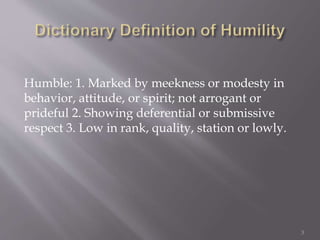
Humble: 1. Marked by meekness or modesty in
behavior, attitude, or spirit; not arrogant or
prideful 2. Showing deferential or submissive
respect 3. Low in rank, quality, station or lowly.
3
4
5
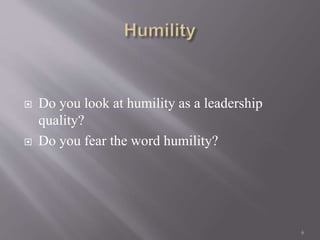
 Do you look at humility as a leadership
quality?
 Do you fear the word humility?
6
“Exemplify humility and intellectual honesty.”
7
“To be worthy of serving as an example.”
8
 Being humble is not being a timid individual
or lack of confidence.
 Humility is having true knowledge of
yourself as you are, both strengths and
weaknesses.
 It means admitting what you don’t know and
to realize that you may not have all of the
answers.
 Take responsibility for your own actions.
 Not blaming others. 9
 Intellectual honesty: Is “being truthful to your
self, even if painful.”
 Intellectual honesty: Is a “genuine desire to
understand reality.”
 Intellectual curiosity is an “observable
indication of intellectual honesty.”
10
“ See things as they are and not as we want them
to be.”
“ Actions and behaviors that are not based on
reality are counter productive and may be
dangerous."
“Ignoring a problem does not make it go away,
it can lead to failure.”
11
“Nobody is perfect; therefore, we all have the
opportunity to improve our knowledge, skills
and effectiveness. Without humility and
intellectual honesty we will not improve.”
12
“It takes humility and intellectual honesty to hold
yourself accountable.”
“Holding others accountable requires intellectual
honesty and courage, especially when dealing
with unpleasant behavior and performance
issues.”
13
What do you think our employees know of humility?
14
“To work as a team player. Not to act like a
know it all. Be humble enough to understand
and accept when one is wrong and not to take
constructive criticism as a negative. Learn from
my mistakes and apply knowledge learned to
create value.”
15
“Taking roles and responsibilities seriously in a
changing environment. Encourage each other to
succeed and to maintain good working habits
for long term success no matter how difficult
things become.”
16
“Humility comes in different forms. What
offends some people may not others. Therefore,
you must exemplify humility in different forms.
Sometimes you must explain your actions so an
individual does not feel humiliated. When
coaching a group, you could humiliate some
people in the group so always be aware of this for
your own personal improvement. Always try to
explain your constructive criticism when
possible.”
17
“Treat others like you would want to be
treated. It may be them you are asking for
help or to save your life the very next
moment”.
18
“If everyone looked at life and work as equals,
with humility, we would change a lot quicker.
We are all in the same boat, management, hourly,
contractor. Instead it seems like we are here and
others are on the other side of the fence”.
19
“Humility means not regarding ourselves as more
important than other people, including those who have
achieved less than we have. It implies judging
ourselves not in comparison with other people, but in
light of or capabilities. Humility is not hospitality,
courtesy or a kind of friendly demeanor. Humility has
nothing to do with being meek, weak or indecisive.
Understand your weakness's, be passionate about
seeking out knowledge even if you are an expert in the
same area…you may be surprised”.
20
Describe a situation where you may or may not
have demonstrated humility. How did it turn
out?
21
 Humility is necessary for employees to engage
in dialog that is not threatening and allows
creativity.
 Humility is required to set aside ego so
employees can focus on the long term goals of
the company
 Humility is being confident with who you are
as an individual and knowing others may be
able to help you in your area of expertise.
22
 Know that coaching is as much about listening
as it is telling.
 Ask for help and seek advice when necessary.
 Be able to say “You are right”or “Your are
wrong” It takes intellectual honesty to be
capable of doing so.
 Attempt to see things as they really are and not
through the filter of our own experiences only.
23
 Show recognition, give praise to others and
accept accountability for your own decisions.
 Know your abilities and limitations. Work to
close the gaps in your knowledge and abilities.
 Hold yourself, peers and fellow co-workers to
the same standards.
 Know that you are being watched, your words
and actions need to be aligned.
24
 Insist on Cooperation between your employees.
Set clear expectations so employees must work
together to accomplish the work.
 Give people your attention, nothing says I am
not interested if your distracted while you are
listening to your employees.
 Look for humility in your employees and
acknowledge them when they demonstrate the
behavior.
25
3 American Heritage Dictionary; Houghton Mifflin Company, Third
edition Pg880.
4 http://en.wikipedia.org/wiki/Mother_Teresa
5
14
7,8,9,11,12,13, Taken from the key concepts learning tools for Guiding Principles.
17,18,19,20,21,22 Random employee survey of employee responses to the question
what is humility?
http//2.bp.blogspot.com/-j6mvsGPn1vw/UKpaunnRR-
I/AAAAAAAADjI/-H4j7pOJB_M/s1600/Yelling-with-anger.png
https://encrypted-tbn
2.gstatic.com/images?q=tbn:ANd9GcRl7SmVAa7f
26

Humility presentation

  • 1.
  • 2.
    “Exemplify Humility andIntellectual Honesty. Constantly seek to understand reality to create value and achieve personal improvement. Hold yourself and others accountable”. 2
  • 3.
    Humble: 1. Markedby meekness or modesty in behavior, attitude, or spirit; not arrogant or prideful 2. Showing deferential or submissive respect 3. Low in rank, quality, station or lowly. 3
  • 4.
  • 5.
  • 6.
     Do youlook at humility as a leadership quality?  Do you fear the word humility? 6
  • 7.
    “Exemplify humility andintellectual honesty.” 7
  • 8.
    “To be worthyof serving as an example.” 8
  • 9.
     Being humbleis not being a timid individual or lack of confidence.  Humility is having true knowledge of yourself as you are, both strengths and weaknesses.  It means admitting what you don’t know and to realize that you may not have all of the answers.  Take responsibility for your own actions.  Not blaming others. 9
  • 10.
     Intellectual honesty:Is “being truthful to your self, even if painful.”  Intellectual honesty: Is a “genuine desire to understand reality.”  Intellectual curiosity is an “observable indication of intellectual honesty.” 10
  • 11.
    “ See thingsas they are and not as we want them to be.” “ Actions and behaviors that are not based on reality are counter productive and may be dangerous." “Ignoring a problem does not make it go away, it can lead to failure.” 11
  • 12.
    “Nobody is perfect;therefore, we all have the opportunity to improve our knowledge, skills and effectiveness. Without humility and intellectual honesty we will not improve.” 12
  • 13.
    “It takes humilityand intellectual honesty to hold yourself accountable.” “Holding others accountable requires intellectual honesty and courage, especially when dealing with unpleasant behavior and performance issues.” 13
  • 14.
    What do youthink our employees know of humility? 14
  • 15.
    “To work asa team player. Not to act like a know it all. Be humble enough to understand and accept when one is wrong and not to take constructive criticism as a negative. Learn from my mistakes and apply knowledge learned to create value.” 15
  • 16.
    “Taking roles andresponsibilities seriously in a changing environment. Encourage each other to succeed and to maintain good working habits for long term success no matter how difficult things become.” 16
  • 17.
    “Humility comes indifferent forms. What offends some people may not others. Therefore, you must exemplify humility in different forms. Sometimes you must explain your actions so an individual does not feel humiliated. When coaching a group, you could humiliate some people in the group so always be aware of this for your own personal improvement. Always try to explain your constructive criticism when possible.” 17
  • 18.
    “Treat others likeyou would want to be treated. It may be them you are asking for help or to save your life the very next moment”. 18
  • 19.
    “If everyone lookedat life and work as equals, with humility, we would change a lot quicker. We are all in the same boat, management, hourly, contractor. Instead it seems like we are here and others are on the other side of the fence”. 19
  • 20.
    “Humility means notregarding ourselves as more important than other people, including those who have achieved less than we have. It implies judging ourselves not in comparison with other people, but in light of or capabilities. Humility is not hospitality, courtesy or a kind of friendly demeanor. Humility has nothing to do with being meek, weak or indecisive. Understand your weakness's, be passionate about seeking out knowledge even if you are an expert in the same area…you may be surprised”. 20
  • 21.
    Describe a situationwhere you may or may not have demonstrated humility. How did it turn out? 21
  • 22.
     Humility isnecessary for employees to engage in dialog that is not threatening and allows creativity.  Humility is required to set aside ego so employees can focus on the long term goals of the company  Humility is being confident with who you are as an individual and knowing others may be able to help you in your area of expertise. 22
  • 23.
     Know thatcoaching is as much about listening as it is telling.  Ask for help and seek advice when necessary.  Be able to say “You are right”or “Your are wrong” It takes intellectual honesty to be capable of doing so.  Attempt to see things as they really are and not through the filter of our own experiences only. 23
  • 24.
     Show recognition,give praise to others and accept accountability for your own decisions.  Know your abilities and limitations. Work to close the gaps in your knowledge and abilities.  Hold yourself, peers and fellow co-workers to the same standards.  Know that you are being watched, your words and actions need to be aligned. 24
  • 25.
     Insist onCooperation between your employees. Set clear expectations so employees must work together to accomplish the work.  Give people your attention, nothing says I am not interested if your distracted while you are listening to your employees.  Look for humility in your employees and acknowledge them when they demonstrate the behavior. 25
  • 26.
    3 American HeritageDictionary; Houghton Mifflin Company, Third edition Pg880. 4 http://en.wikipedia.org/wiki/Mother_Teresa 5 14 7,8,9,11,12,13, Taken from the key concepts learning tools for Guiding Principles. 17,18,19,20,21,22 Random employee survey of employee responses to the question what is humility? http//2.bp.blogspot.com/-j6mvsGPn1vw/UKpaunnRR- I/AAAAAAAADjI/-H4j7pOJB_M/s1600/Yelling-with-anger.png https://encrypted-tbn 2.gstatic.com/images?q=tbn:ANd9GcRl7SmVAa7f 26