Human 
Development 
Embryo to Newborn
Human Development 
GSE: Humans are similar to many species 
in many ways, yet unique among Earth’s 
life forms. 
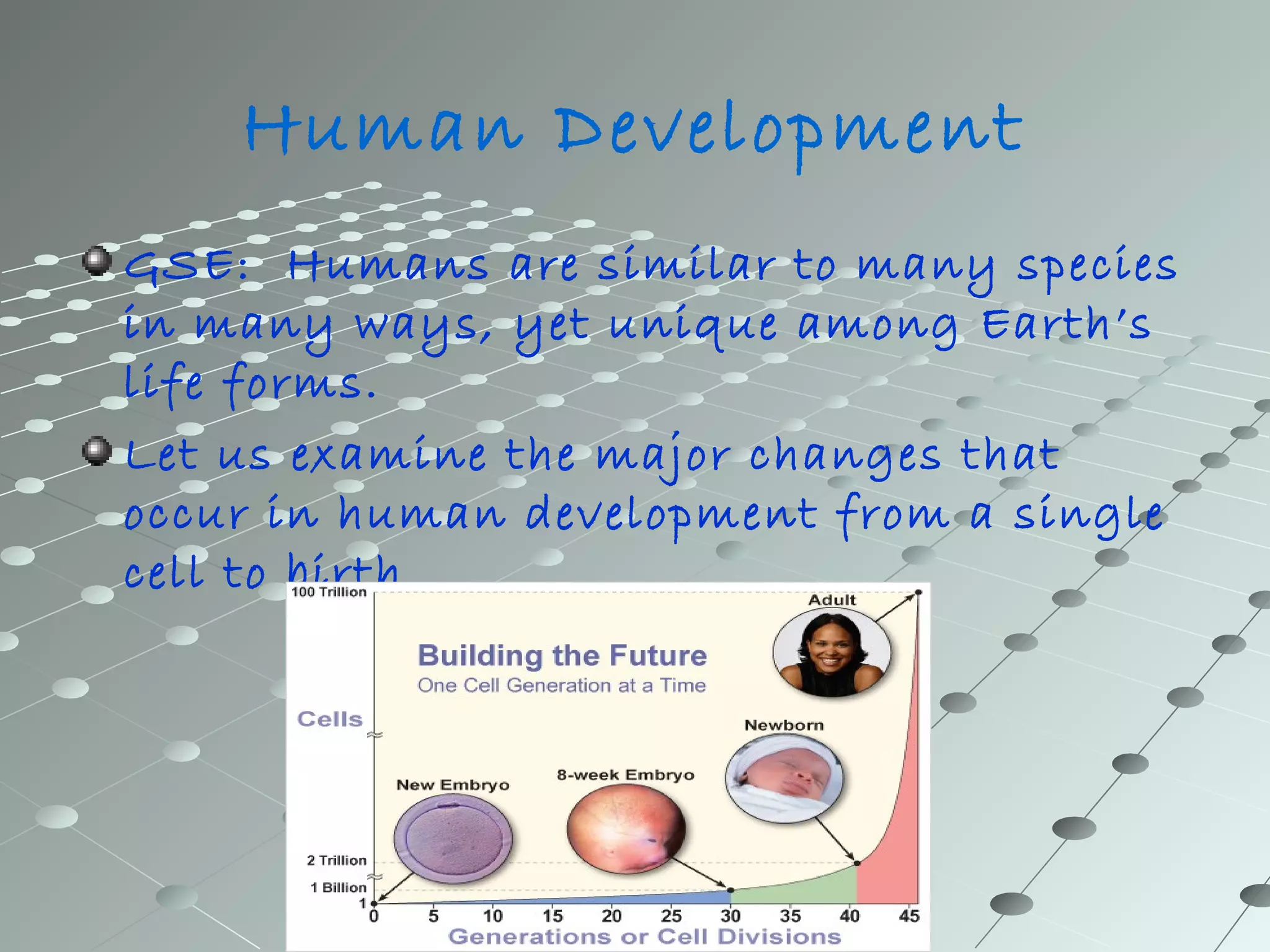
Let us examine the major changes that 
occur in human development from a single 
cell to birth
First Trimester 
(months 1 - 3) 
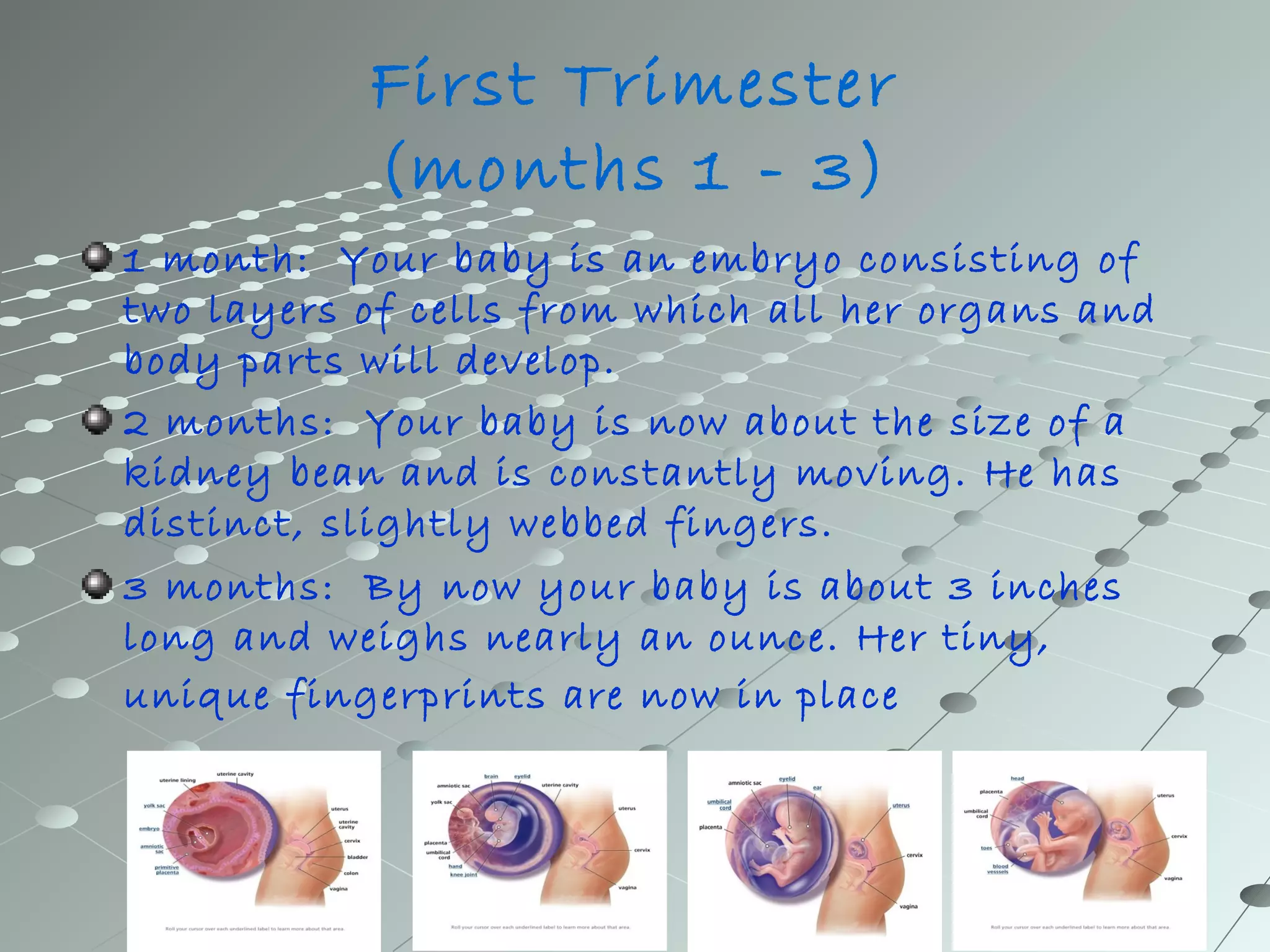
1 month: Your baby is an embryo consisting of 
two layers of cells from which all her organs and 
body parts will develop. 
2 months: Your baby is now about the size of a 
kidney bean and is constantly moving. He has 
distinct, slightly webbed fingers. 
3 months: By now your baby is about 3 inches 
long and weighs nearly an ounce. Her tiny, 
unique fingerprints are now in place
2nd Trimester 
(months 4 - 6) 
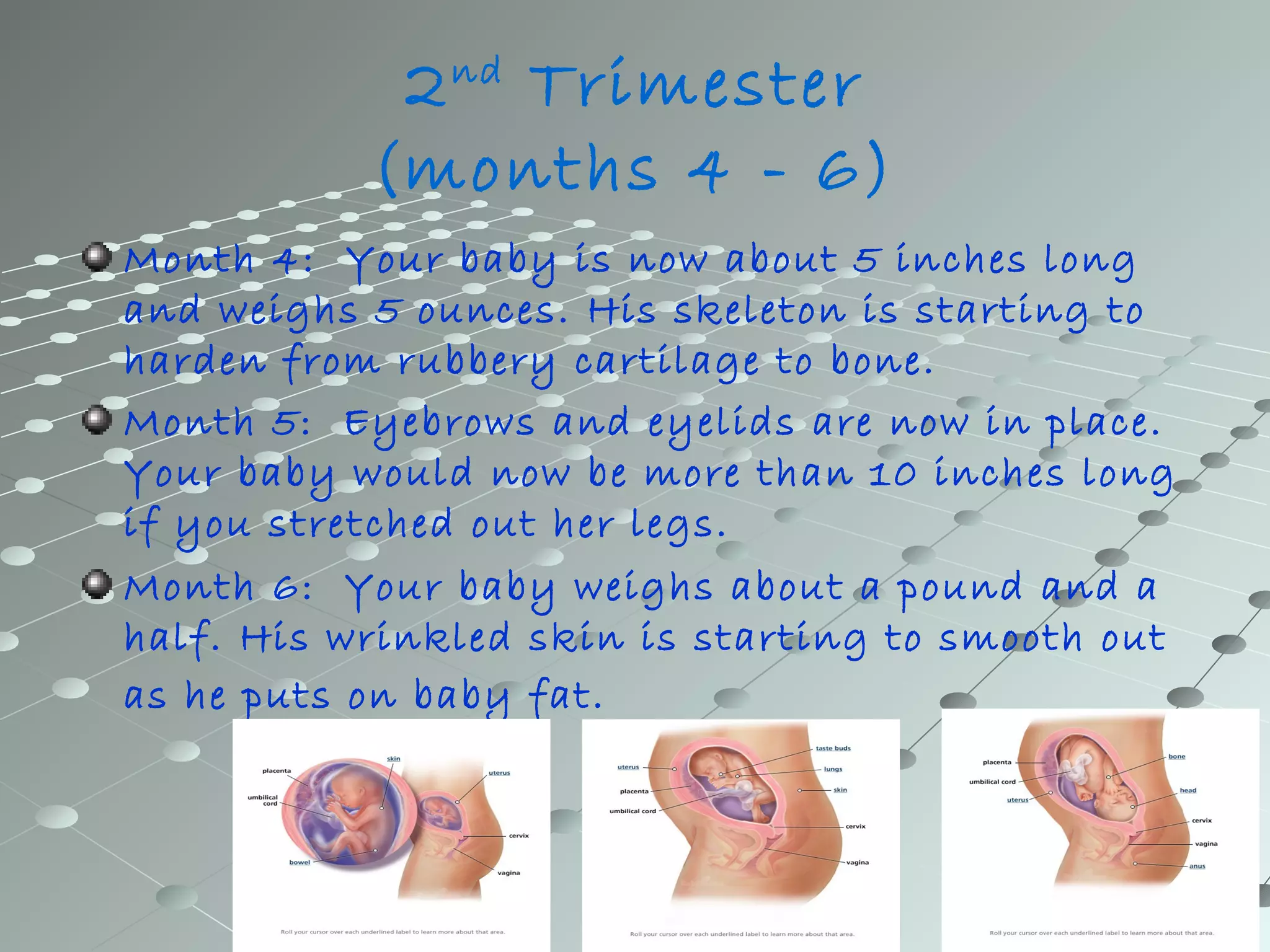
Month 4: Your baby is now about 5 inches long 
and weighs 5 ounces. His skeleton is starting to 
harden from rubbery cartilage to bone. 
Month 5: Eyebrows and eyelids are now in place. 
Your baby would now be more than 10 inches long 
if you stretched out her legs. 
Month 6: Your baby weighs about a pound and a 
half. His wrinkled skin is starting to smooth out 
as he puts on baby fat.
3rd Trimester 
(months 7 - 9) 
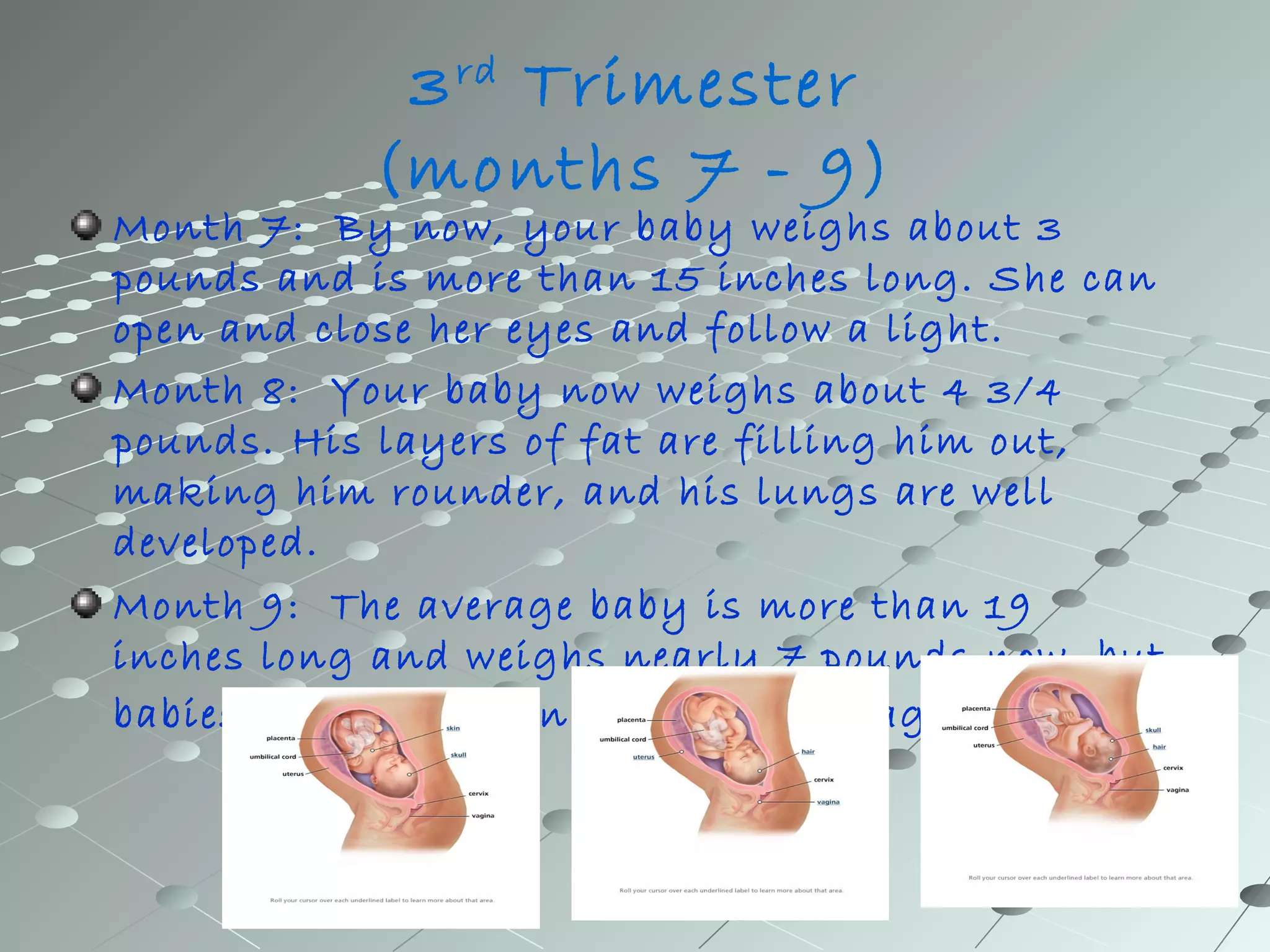
Month 7: By now, your baby weighs about 3 
pounds and is more than 15 inches long. She can 
open and close her eyes and follow a light. 
Month 8: Your baby now weighs about 4 3/4 
pounds. His layers of fat are filling him out, 
making him rounder, and his lungs are well 
developed. 
Month 9: The average baby is more than 19 
inches long and weighs nearly 7 pounds now, but 
babies vary widely in size at this stage
Comparative Embryology 
Let’s compare and contrast human 
development to the development of other 
animals 
The earliest phase of embryonic 
development is when the fertilized egg 
undergoes rapid cell division 
After early cell division, the embryo 
separates into three layers, which will 
become all of the parts of the animal's 
body.
Comparative Embryology 
Compare and Contrast human development to the 
development of other animals 
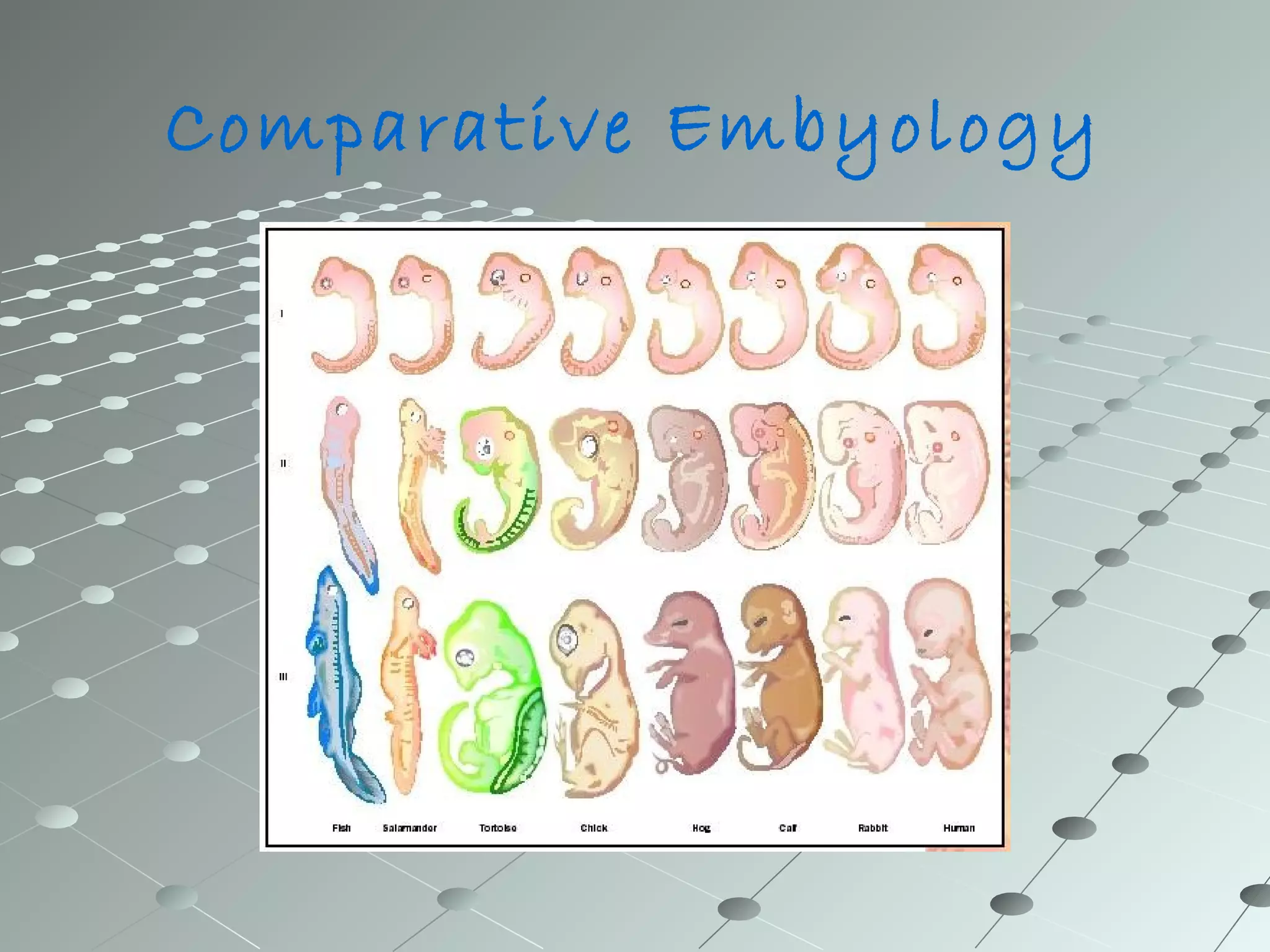
After the layers have completely formed, the 
embryo starts developing organs. Often organs 
will grow and then disappear, such as the tail of a 
human embryo. Also, animals will differ in terms 
of what organs they will form because not all 
animals have the same structures. Some, for 
instance, will develop wings. 
The beginnings of embryonic development may 
occur inside the mother's body or in eggs which 
she has laid outside her body to be fertilized, 
depending on the species. Embryonic development 
ends when the organism transforms into a fetus 
or larvae, after the basic organs are formed. 
All embryonic development is controlled by genes 
inherited from the parents.
Comparative Embyology
Human+development pvms

Human+development pvms

  • 1.
  • 2.
    Human Development GSE:Humans are similar to many species in many ways, yet unique among Earth’s life forms. Let us examine the major changes that occur in human development from a single cell to birth
  • 3.
    First Trimester (months1 - 3) 1 month: Your baby is an embryo consisting of two layers of cells from which all her organs and body parts will develop. 2 months: Your baby is now about the size of a kidney bean and is constantly moving. He has distinct, slightly webbed fingers. 3 months: By now your baby is about 3 inches long and weighs nearly an ounce. Her tiny, unique fingerprints are now in place
  • 4.
    2nd Trimester (months4 - 6) Month 4: Your baby is now about 5 inches long and weighs 5 ounces. His skeleton is starting to harden from rubbery cartilage to bone. Month 5: Eyebrows and eyelids are now in place. Your baby would now be more than 10 inches long if you stretched out her legs. Month 6: Your baby weighs about a pound and a half. His wrinkled skin is starting to smooth out as he puts on baby fat.
  • 5.
    3rd Trimester (months7 - 9) Month 7: By now, your baby weighs about 3 pounds and is more than 15 inches long. She can open and close her eyes and follow a light. Month 8: Your baby now weighs about 4 3/4 pounds. His layers of fat are filling him out, making him rounder, and his lungs are well developed. Month 9: The average baby is more than 19 inches long and weighs nearly 7 pounds now, but babies vary widely in size at this stage
  • 6.
    Comparative Embryology Let’scompare and contrast human development to the development of other animals The earliest phase of embryonic development is when the fertilized egg undergoes rapid cell division After early cell division, the embryo separates into three layers, which will become all of the parts of the animal's body.
  • 7.
    Comparative Embryology Compareand Contrast human development to the development of other animals After the layers have completely formed, the embryo starts developing organs. Often organs will grow and then disappear, such as the tail of a human embryo. Also, animals will differ in terms of what organs they will form because not all animals have the same structures. Some, for instance, will develop wings. The beginnings of embryonic development may occur inside the mother's body or in eggs which she has laid outside her body to be fertilized, depending on the species. Embryonic development ends when the organism transforms into a fetus or larvae, after the basic organs are formed. All embryonic development is controlled by genes inherited from the parents.
  • 8.