Human Resource Management
Chapter 11
Pay Structure Decisions
1
+First
Gusti Ray Kamandanu
1711011012
+Second +Third
Ardian Fauzan
1711011106
Arpan Maulana
1711011056
Our Team
2
+Second
DR.Nova Mardiana,S.E.,M.M.
Our Lecture
3
Learning Objectives
4
1. List major decision areas & concepts in employee
compensation management.
2. Describe major administrative tools used to manage
employee compensation.
3. Explain importance of competitive labor-market and
product-market forces in compensation decisions.
4. Discuss the significance of process issues such as
communication in compensation management.
5. Describe new developments in pay structure designs.
6. Explain where U.S. stands on pay issues from an
international perspective.
7. Explain reasons for executive pay controversy.
8. Describe regulatory framework for employee
compensation.
Introduction
Employer’s View:
Pay is critical in attaining strategic goals.
Pay impacts employee attitudes & behaviors.
Employee compensation is significant organizational cost.
5
Employee’s View:
Policies regarding wages, salaries & other earnings affect their overall
income and standard of living.
Both level of pay & fairness compared with others’ pay are important
Pay structure - relative pay of different
jobs (job structure) & how much they
are paid (pay level).
Pay level - average pay, including
wages, salaries & bonuses.
Job structure - relative pay of jobs
(range of pay often expressed by
salary grades).
Pay policies are attached to jobs, not
individuals.
Developing Pay
Levels
6
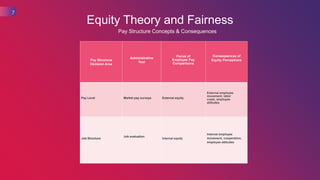
Equity Theory and Fairness
Pay Structure Concepts & Consequences
7
Pay Structure
Decision Area
Administrative
Tool
Focus of
Employee Pay
Comparisons
Consequences of
Equity Perceptions
Pay Level Market pay surveys External equity
External employee
movement, labor
costs, employee
attitudes
Job Structure
Job evaluation
Internal equity
Internal employee
movement, cooperation,
employee attitudes
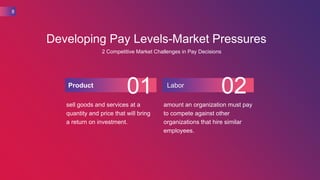
Developing Pay Levels-Market Pressures
sell goods and services at a
quantity and price that will bring
a return on investment.
amount an organization must pay
to compete against other
organizations that hire similar
employees.
Product
01 Labor
02
2 Competitive Market Challenges in Pay Decisions
8
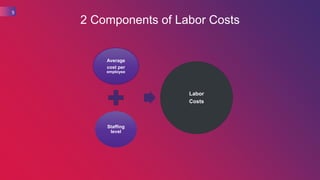
2 Components of Labor Costs
9
Average
cost per
employee
Staffing
level
Labor
Costs
Employees as a
Resource
10
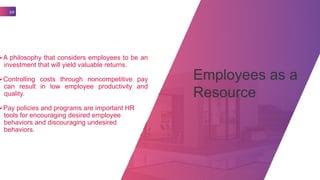
A philosophy that considers employees to be an
investment that will yield valuable returns.
Controlling costs through noncompetitive pay
can result in low employee productivity and
quality.
Pay policies and programs are important HR
tools for encouraging desired employee
behaviors and discouraging undesired
behaviors.
Deciding What to Pay
Deciding pay levels is discretionary and
is based on a broad range.
The organization has to decide whether
to pay at, below, or above the market
average.
Efficiency wage theory - wages
influence worker productivity.
11
Market Pay Surveys
Benchmarking - procedure by which an
organization compares its own practices
against the competition.
3 issues to consider before using pay surveys:
1. Which employers should be included in
the survey?
2. Which jobs are included in the survey?
3. If multiple surveys are used, how are all
rates of pay weighted and combined?
.
FID MORE
12
Developing a Job
Structure
13
Job structure - relative worth of various jobs in based
on internal comparisons.
Job evaluation - administrative procedure used to
measure internal job worth.
The evaluation process is composed of
compensable factors, which are characteristics of
jobs that an organization values and chooses to pay.
Job evaluators often apply a weighting scheme to
account for differing importance of compensable
factors to the organization.
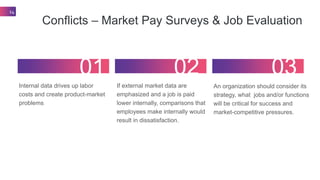
Conflicts – Market Pay Surveys & Job Evaluation
Internal data drives up labor
costs and create product-market
problems
If external market data are
emphasized and a job is paid
lower internally, comparisons that
employees make internally would
result in dissatisfaction.
An organization should consider its
strategy, what jobs and/or functions
will be critical for success and
market-competitive pressures.
01 02 03
14
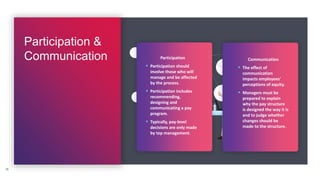
Participation &
Communication
15
Participation
 Participation should
involve those who will
manage and be affected
by the process.
 Participation includes
recommending,
designing and
communicating a pay
program.
 Typically, pay-level
decisions are only made
by top management.
Communication
 The effect of
communication
impacts employees'
perceptions of equity.
 Managers must be
prepared to explain
why the pay structure
is designed the way it is
and to judge whether
changes should be
made to the structure.
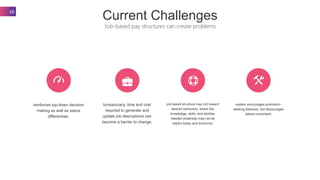
reinforces top-down decision
making as well as status
differentials.
bureaucracy, time and cost
required to generate and
update job descriptions can
become a barrier to change.
job-based structure may not reward
desired behaviors, where the
knowledge, skills, and abilities
needed yesterday may not be
helpful today and tomorrow.
system encourages promotion-
seeking behavior, but discourages
lateral movement.
Current Challenges
Job-based pay structures can create problems
16
Responses To Problems With
Job-Based Pay Structures
Delayering and Banding
01
Skills Based
Competency Based
02
03
17
Nonlabor
considerations
Instability of
Country
Differences
In Labor Costs
Productivity
Unit Labor Costs
& G.D.P.
Skill levels
.
4 Factors In Deciding Where to Locate Production
Can the U.S. Labor Force Compete?
18
 Executives have a
disproportionate ability to
influence organizational
performance.
 Issues include not only how
much executives are paid but
how they are paid
Executive Pay
19
Executive pay accounts for a small
proportion of labor costs
Thank you
20

Human resource management chapter 11 ( Pay Structure Decision )

  • 1.
    Human Resource Management Chapter11 Pay Structure Decisions 1
  • 2.
    +First Gusti Ray Kamandanu 1711011012 +Second+Third Ardian Fauzan 1711011106 Arpan Maulana 1711011056 Our Team 2
  • 3.
  • 4.
    Learning Objectives 4 1. Listmajor decision areas & concepts in employee compensation management. 2. Describe major administrative tools used to manage employee compensation. 3. Explain importance of competitive labor-market and product-market forces in compensation decisions. 4. Discuss the significance of process issues such as communication in compensation management. 5. Describe new developments in pay structure designs. 6. Explain where U.S. stands on pay issues from an international perspective. 7. Explain reasons for executive pay controversy. 8. Describe regulatory framework for employee compensation.


  • 5.
    Introduction Employer’s View: Pay iscritical in attaining strategic goals. Pay impacts employee attitudes & behaviors. Employee compensation is significant organizational cost. 5 Employee’s View: Policies regarding wages, salaries & other earnings affect their overall income and standard of living. Both level of pay & fairness compared with others’ pay are important
  • 6.
    Pay structure -relative pay of different jobs (job structure) & how much they are paid (pay level). Pay level - average pay, including wages, salaries & bonuses. Job structure - relative pay of jobs (range of pay often expressed by salary grades). Pay policies are attached to jobs, not individuals. Developing Pay Levels 6
  • 7.
    Equity Theory andFairness Pay Structure Concepts & Consequences 7 Pay Structure Decision Area Administrative Tool Focus of Employee Pay Comparisons Consequences of Equity Perceptions Pay Level Market pay surveys External equity External employee movement, labor costs, employee attitudes Job Structure Job evaluation Internal equity Internal employee movement, cooperation, employee attitudes
  • 8.
    Developing Pay Levels-MarketPressures sell goods and services at a quantity and price that will bring a return on investment. amount an organization must pay to compete against other organizations that hire similar employees. Product 01 Labor 02 2 Competitive Market Challenges in Pay Decisions 8
  • 9.
    2 Components ofLabor Costs 9 Average cost per employee Staffing level Labor Costs
  • 10.
    Employees as a Resource 10 Aphilosophy that considers employees to be an investment that will yield valuable returns. Controlling costs through noncompetitive pay can result in low employee productivity and quality. Pay policies and programs are important HR tools for encouraging desired employee behaviors and discouraging undesired behaviors.
  • 11.
    Deciding What toPay Deciding pay levels is discretionary and is based on a broad range. The organization has to decide whether to pay at, below, or above the market average. Efficiency wage theory - wages influence worker productivity. 11
  • 12.
    Market Pay Surveys Benchmarking- procedure by which an organization compares its own practices against the competition. 3 issues to consider before using pay surveys: 1. Which employers should be included in the survey? 2. Which jobs are included in the survey? 3. If multiple surveys are used, how are all rates of pay weighted and combined? . FID MORE 12
  • 13.
    Developing a Job Structure 13 Jobstructure - relative worth of various jobs in based on internal comparisons. Job evaluation - administrative procedure used to measure internal job worth. The evaluation process is composed of compensable factors, which are characteristics of jobs that an organization values and chooses to pay. Job evaluators often apply a weighting scheme to account for differing importance of compensable factors to the organization.
  • 14.
    Conflicts – MarketPay Surveys & Job Evaluation Internal data drives up labor costs and create product-market problems If external market data are emphasized and a job is paid lower internally, comparisons that employees make internally would result in dissatisfaction. An organization should consider its strategy, what jobs and/or functions will be critical for success and market-competitive pressures. 01 02 03 14
  • 15.
    Participation & Communication 15 Participation  Participationshould involve those who will manage and be affected by the process.  Participation includes recommending, designing and communicating a pay program.  Typically, pay-level decisions are only made by top management. Communication  The effect of communication impacts employees' perceptions of equity.  Managers must be prepared to explain why the pay structure is designed the way it is and to judge whether changes should be made to the structure.
  • 16.
    reinforces top-down decision makingas well as status differentials. bureaucracy, time and cost required to generate and update job descriptions can become a barrier to change. job-based structure may not reward desired behaviors, where the knowledge, skills, and abilities needed yesterday may not be helpful today and tomorrow. system encourages promotion- seeking behavior, but discourages lateral movement. Current Challenges Job-based pay structures can create problems 16
  • 17.
    Responses To ProblemsWith Job-Based Pay Structures Delayering and Banding 01 Skills Based Competency Based 02 03 17
  • 18.
    Nonlabor considerations Instability of Country Differences In LaborCosts Productivity Unit Labor Costs & G.D.P. Skill levels . 4 Factors In Deciding Where to Locate Production Can the U.S. Labor Force Compete? 18
  • 19.
     Executives havea disproportionate ability to influence organizational performance.  Issues include not only how much executives are paid but how they are paid Executive Pay 19 Executive pay accounts for a small proportion of labor costs
  • 20.