BY
YOGESH MISHRA
M.com 2nd
sem
meaning of Human Resource Managementmeaning of Human Resource Management
HRM refers to that part of management which
manages the people at work. HRM is a process wich
coordinates people with organizational and helps
both people and organization to achieve to each
other goal
1. What is human resource management?1. What is human resource management?
Definition of HRM:
Human resource management is to make the most
productive use of human resource to the greatest
benefits of the organization and individuals.
Organization: profits and social commitments.
Individuals: development and achievement.
Natute of HRM
It concerned with manpower and managment
Its continuous process
It’s a pervasive function
Its based on humanitarian approach
it is a forward looking function
Objectives of HRM
To procure right personnel for right job and the right time
To ensure training and development of employees
To utilise of human resources effectively
To motivate the workforce by developing effective
reward
To Ensure welfare of employees
To keep the moral high
to peaceful relation
to evaluate the cost of HR
to planning of human resourses
Conti……Conti……
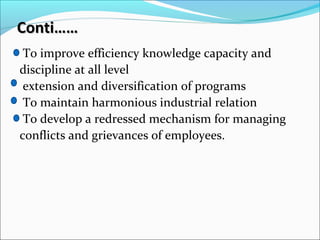
To improve efficiency knowledge capacity and
discipline at all level
extension and diversification of programs
To maintain harmonious industrial relation
To develop a redressed mechanism for managing
conflicts and grievances of employees.
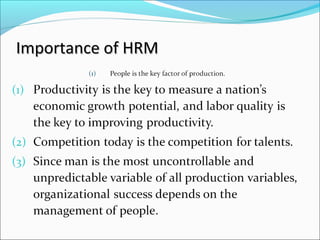
Importance of HRMImportance of HRM
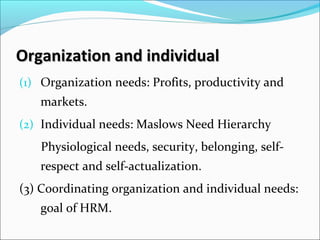
Organization and individualOrganization and individual
(1) Organization needs: Profits, productivity and
markets.
(2) Individual needs: Maslows Need Hierarchy
Physiological needs, security, belonging, self-
respect and self-actualization.
(3) Coordinating organization and individual needs:
goal of HRM.
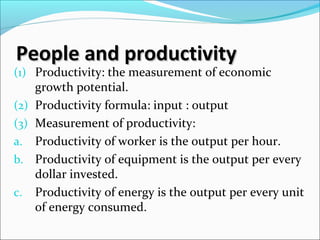
People and productivityPeople and productivity
(1) Productivity: the measurement of economic
growth potential.
(2) Productivity formula: input : output
(3) Measurement of productivity:
a. Productivity of worker is the output per hour.
b. Productivity of equipment is the output per every
dollar invested.
c. Productivity of energy is the output per every unit
of energy consumed.
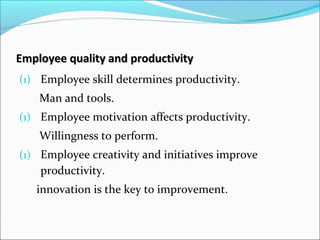
Employee quality and productivityEmployee quality and productivity
(1) Employee skill determines productivity.
Man and tools.
(1) Employee motivation affects productivity.
Willingness to perform.
(1) Employee creativity and initiatives improve
productivity.
innovation is the key to improvement.
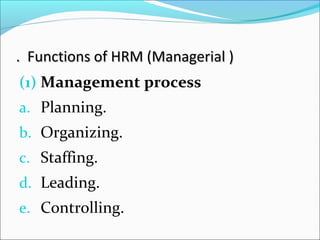
. Functions of HRM (Managerial ). Functions of HRM (Managerial )
(1) Management process
a. Planning.
b. Organizing.
c. Staffing.
d. Leading.
e. Controlling.
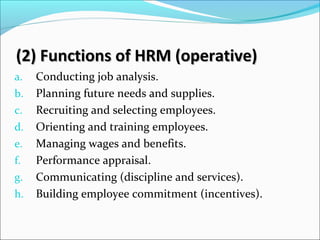
(2) Functions of HRM (operative)(2) Functions of HRM (operative)
a. Conducting job analysis.
b. Planning future needs and supplies.
c. Recruiting and selecting employees.
d. Orienting and training employees.
e. Managing wages and benefits.
f. Performance appraisal.
g. Communicating (discipline and services).
h. Building employee commitment (incentives).
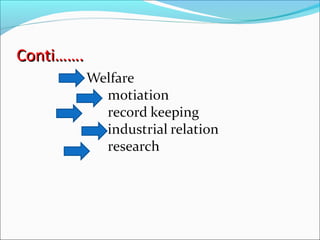
Conti…….Conti…….
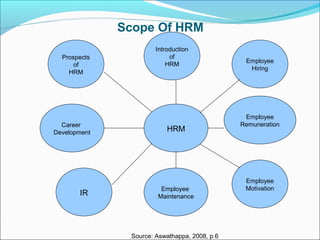
Scope Of HRM
HRM
Prospects
of
HRM
IR
Career
Development
Introduction
of
HRM
Employee
Hiring
Employee
Remuneration
Employee
MotivationEmployee
Maintenance
Source: Aswathappa, 2008, p.6
Har har mahadevv……..
THANK
YOU

HUMAN RESOURCE MANAGEMENT

  • 1.
  • 2.
    meaning of HumanResource Managementmeaning of Human Resource Management HRM refers to that part of management which manages the people at work. HRM is a process wich coordinates people with organizational and helps both people and organization to achieve to each other goal
  • 3.
    1. What ishuman resource management?1. What is human resource management? Definition of HRM: Human resource management is to make the most productive use of human resource to the greatest benefits of the organization and individuals. Organization: profits and social commitments. Individuals: development and achievement.
  • 4.
    Natute of HRM Itconcerned with manpower and managment Its continuous process It’s a pervasive function Its based on humanitarian approach it is a forward looking function
  • 5.
    Objectives of HRM Toprocure right personnel for right job and the right time To ensure training and development of employees To utilise of human resources effectively To motivate the workforce by developing effective reward To Ensure welfare of employees To keep the moral high to peaceful relation to evaluate the cost of HR to planning of human resourses
  • 6.
    Conti……Conti…… To improve efficiencyknowledge capacity and discipline at all level extension and diversification of programs To maintain harmonious industrial relation To develop a redressed mechanism for managing conflicts and grievances of employees.
  • 7.
  • 8.
    Organization and individualOrganizationand individual (1) Organization needs: Profits, productivity and markets. (2) Individual needs: Maslows Need Hierarchy Physiological needs, security, belonging, self- respect and self-actualization. (3) Coordinating organization and individual needs: goal of HRM.
  • 9.
    People and productivityPeopleand productivity (1) Productivity: the measurement of economic growth potential. (2) Productivity formula: input : output (3) Measurement of productivity: a. Productivity of worker is the output per hour. b. Productivity of equipment is the output per every dollar invested. c. Productivity of energy is the output per every unit of energy consumed.
  • 10.
    Employee quality andproductivityEmployee quality and productivity (1) Employee skill determines productivity. Man and tools. (1) Employee motivation affects productivity. Willingness to perform. (1) Employee creativity and initiatives improve productivity. innovation is the key to improvement.
  • 11.
    . Functions ofHRM (Managerial ). Functions of HRM (Managerial ) (1) Management process a. Planning. b. Organizing. c. Staffing. d. Leading. e. Controlling.
  • 12.
    (2) Functions ofHRM (operative)(2) Functions of HRM (operative) a. Conducting job analysis. b. Planning future needs and supplies. c. Recruiting and selecting employees. d. Orienting and training employees. e. Managing wages and benefits. f. Performance appraisal. g. Communicating (discipline and services). h. Building employee commitment (incentives).
  • 13.
  • 14.
  • 15.