WORLD WIDE PROBLEMS OF
ENVIRONMENTAL POLLUTION
Shevchuk Nadia
33
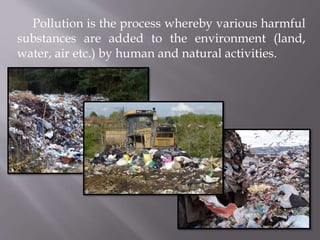
Pollution is the process whereby various harmful
substances are added to the environment (land,
water, air etc.) by human and natural activities.
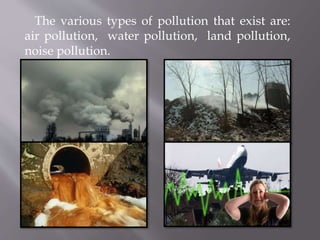
The various types of pollution that exist are:
air pollution, water pollution, land pollution,
noise pollution.
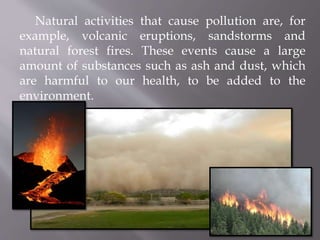
Natural activities that cause pollution are, for
example, volcanic eruptions, sandstorms and
natural forest fires. These events cause a large
amount of substances such as ash and dust, which
are harmful to our health, to be added to the
environment.
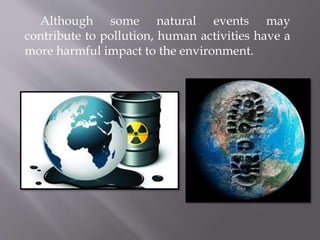
Although some natural events may
contribute to pollution, human activities have a
more harmful impact to the environment.
How do humans
contribute to pollution?
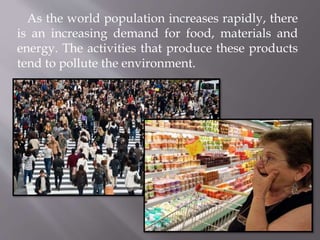
As the world population increases rapidly, there
is an increasing demand for food, materials and
energy. The activities that produce these products
tend to pollute the environment.
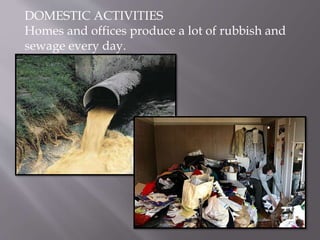
DOMESTIC ACTIVITIES
Homes and offices produce a lot of rubbish and
sewage every day.
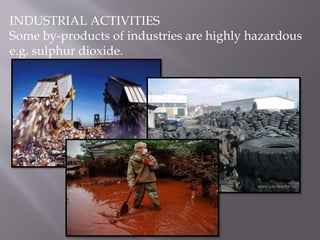
INDUSTRIAL ACTIVITIES
Some by-products of industries are highly hazardous
e.g. sulphur dioxide.
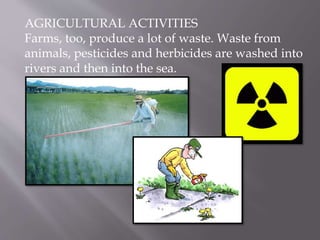
AGRICULTURAL ACTIVITIES
Farms, too, produce a lot of waste. Waste from
animals, pesticides and herbicides are washed into
rivers and then into the sea.
How does pollution affect
our environment?
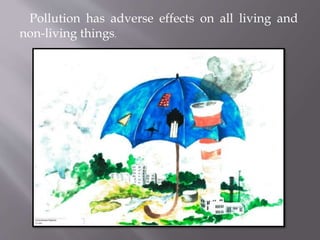
Pollution has adverse effects on all living and
non-living things.
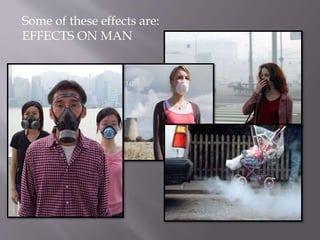
Some of these effects are:
EFFECTS ON MAN
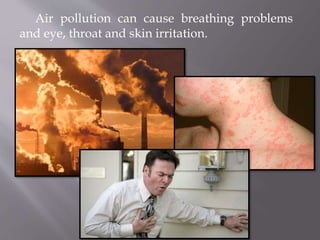
Air pollution can cause breathing problems
and eye, throat and skin irritation.
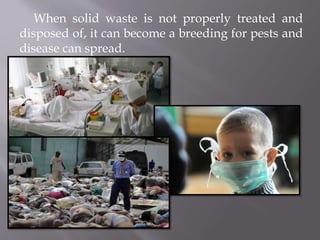
When solid waste is not properly treated and
disposed of, it can become a breeding for pests and
disease can spread.
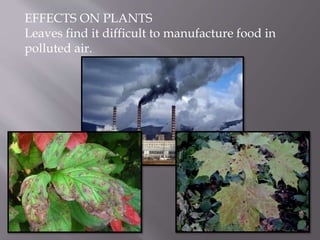
EFFECTS ON PLANTS
Leaves find it difficult to manufacture food in
polluted air.
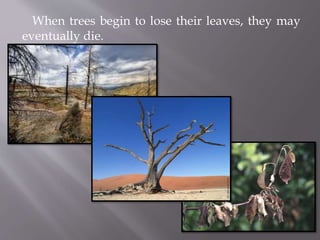
When trees begin to lose their leaves, they may
eventually die.
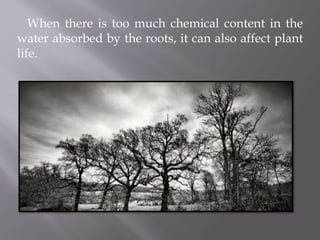
When there is too much chemical content in the
water absorbed by the roots, it can also affect plant
life.
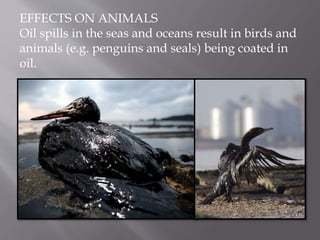
EFFECTS ON ANIMALS
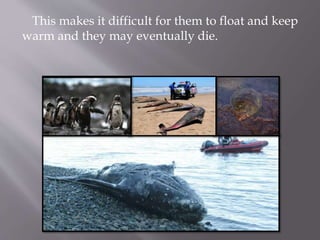
Oil spills in the seas and oceans result in birds and
animals (e.g. penguins and seals) being coated in
oil.
This makes it difficult for them to float and keep
warm and they may eventually die.
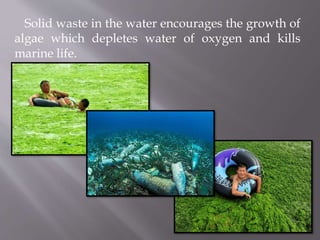
Solid waste in the water encourages the growth of
algae which depletes water of oxygen and kills
marine life.
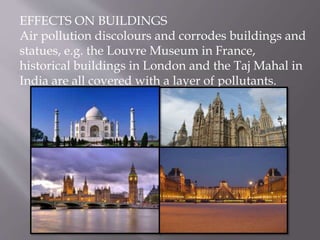
EFFECTS ON BUILDINGS
Air pollution discolours and corrodes buildings and
statues, e.g. the Louvre Museum in France,
historical buildings in London and the Taj Mahal in
India are all covered with a layer of pollutants.

World wide problems of environmental pollution

  • 1.
    WORLD WIDE PROBLEMSOF ENVIRONMENTAL POLLUTION Shevchuk Nadia 33
  • 2.
    Pollution is theprocess whereby various harmful substances are added to the environment (land, water, air etc.) by human and natural activities.
  • 3.
    The various typesof pollution that exist are: air pollution, water pollution, land pollution, noise pollution.
  • 4.
    Natural activities thatcause pollution are, for example, volcanic eruptions, sandstorms and natural forest fires. These events cause a large amount of substances such as ash and dust, which are harmful to our health, to be added to the environment.
  • 5.
    Although some naturalevents may contribute to pollution, human activities have a more harmful impact to the environment.
  • 6.
  • 7.
    As the worldpopulation increases rapidly, there is an increasing demand for food, materials and energy. The activities that produce these products tend to pollute the environment.
  • 8.
    DOMESTIC ACTIVITIES Homes andoffices produce a lot of rubbish and sewage every day.
  • 9.
    INDUSTRIAL ACTIVITIES Some by-productsof industries are highly hazardous e.g. sulphur dioxide.
  • 10.
    AGRICULTURAL ACTIVITIES Farms, too,produce a lot of waste. Waste from animals, pesticides and herbicides are washed into rivers and then into the sea.
  • 11.
    How does pollutionaffect our environment?
  • 12.
    Pollution has adverseeffects on all living and non-living things.
  • 13.
    Some of theseeffects are: EFFECTS ON MAN
  • 14.
    Air pollution cancause breathing problems and eye, throat and skin irritation.
  • 15.
    When solid wasteis not properly treated and disposed of, it can become a breeding for pests and disease can spread.
  • 16.
    EFFECTS ON PLANTS Leavesfind it difficult to manufacture food in polluted air.
  • 17.
    When trees beginto lose their leaves, they may eventually die.
  • 18.
    When there istoo much chemical content in the water absorbed by the roots, it can also affect plant life.
  • 19.
    EFFECTS ON ANIMALS Oilspills in the seas and oceans result in birds and animals (e.g. penguins and seals) being coated in oil.
  • 20.
    This makes itdifficult for them to float and keep warm and they may eventually die.
  • 21.
    Solid waste inthe water encourages the growth of algae which depletes water of oxygen and kills marine life.
  • 22.
    EFFECTS ON BUILDINGS Airpollution discolours and corrodes buildings and statues, e.g. the Louvre Museum in France, historical buildings in London and the Taj Mahal in India are all covered with a layer of pollutants.