HUMAN RESOURCE
MANAGEMENT
CHAPTER 1:
INTRODUCTION TO HUMAN RESOURCE
MANAGEMENT
1. Explain what human resource management is and
how it relates to the management process.
2. Show with examples why human resource management
is important to all managers.
3. Illustrate the human resources responsibilities of line
and staff (HR) managers.
4. Outline the plan of this book.
LEARNING OUTCOMES
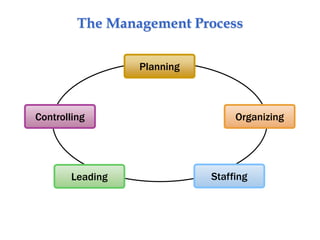
The Management Process
Planning
Organizing
Leading Staffing
Controlling
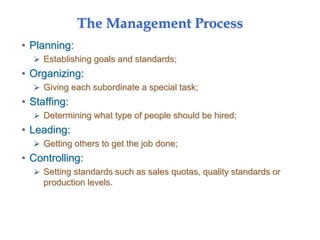
The Management Process
• Planning:
 Establishing goals and standards;
• Organizing:
 Giving each subordinate a special task;
• Staffing:
 Determining what type of people should be hired;
• Leading:
 Getting others to get the job done;
• Controlling:
 Setting standards such as sales quotas, quality standards or
production levels.
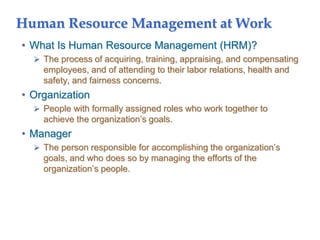
Human Resource Management at Work
• What Is Human Resource Management (HRM)?
 The process of acquiring, training, appraising, and compensating
employees, and of attending to their labor relations, health and
safety, and fairness concerns.
• Organization
 People with formally assigned roles who work together to
achieve the organization’s goals.
• Manager
 The person responsible for accomplishing the organization’s
goals, and who does so by managing the efforts of the
organization’s people.
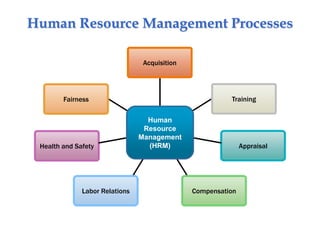
Human Resource Management Processes
Acquisition
Training
Appraisal
CompensationLabor Relations
Health and Safety
Fairness
Human
Resource
Management
(HRM)
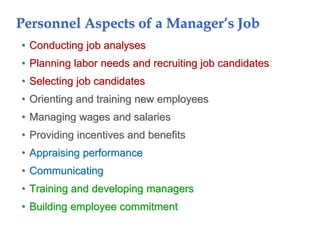
Personnel Aspects of a Manager’s Job
• Conducting job analyses
• Planning labor needs and recruiting job candidates
• Selecting job candidates
• Orienting and training new employees
• Managing wages and salaries
• Providing incentives and benefits
• Appraising performance
• Communicating
• Training and developing managers
• Building employee commitment
What a manager should know about:
• Equal opportunity and affirmative action
• Employee health and safety
• Handling grievances and labor relations
Why is Human Resource Management
Important to All Managers?
• Perhaps it’s easier to answer this by listing some of the
personnel mistakes you don’t want to make while
managing.
• Hire the wrong person for the job
• Experience high turnover
• Have your people not doing their best
• Waste time with useless interviews
• Have your firm in court because of discriminatory actions
• Have some employees think their salaries are unfair and
inequitable relative to others in the organization
• Allow a lack of training to undermine your department’s
effectiveness
• Commit any unfair labor practices
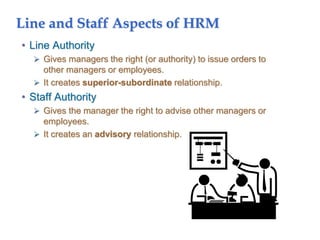
Line and Staff Aspects of HRM
• Line Authority
 Gives managers the right (or authority) to issue orders to
other managers or employees.
 It creates superior-subordinate relationship.
• Staff Authority
 Gives the manager the right to advise other managers or
employees.
 It creates an advisory relationship.
Line and Staff Aspects of HRM
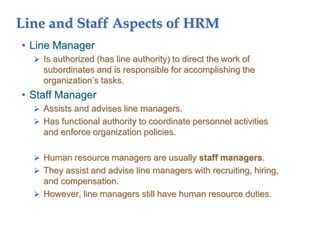
• Line Manager
 Is authorized (has line authority) to direct the work of
subordinates and is responsible for accomplishing the
organization’s tasks.
• Staff Manager
 Assists and advises line managers.
 Has functional authority to coordinate personnel activities
and enforce organization policies.
 Human resource managers are usually staff managers.
 They assist and advise line managers with recruiting, hiring,
and compensation.
 However, line managers still have human resource duties.
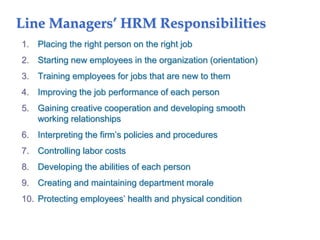
Line Managers’ HRM Responsibilities
1. Placing the right person on the right job
2. Starting new employees in the organization (orientation)
3. Training employees for jobs that are new to them
4. Improving the job performance of each person
5. Gaining creative cooperation and developing smooth
working relationships
6. Interpreting the firm’s policies and procedures
7. Controlling labor costs
8. Developing the abilities of each person
9. Creating and maintaining department morale
10. Protecting employees’ health and physical condition
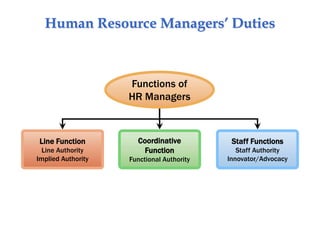
Human Resource Managers’ Duties
Line Function
Line Authority
Implied Authority
Staff Functions
Staff Authority
Innovator/Advocacy
Functions of
HR Managers
Coordinative
Function
Functional Authority
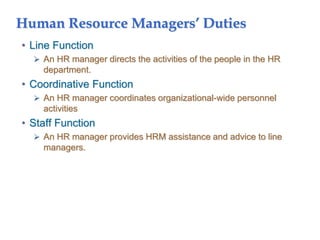
Human Resource Managers’ Duties
• Line Function
 An HR manager directs the activities of the people in the HR
department.
• Coordinative Function
 An HR manager coordinates organizational-wide personnel
activities
• Staff Function
 An HR manager provides HRM assistance and advice to line
managers.
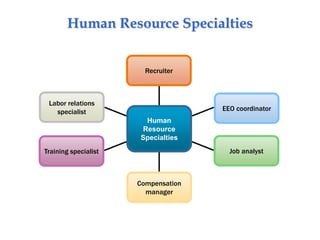
Human Resource Specialties
Recruiter
EEO coordinator
Labor relations
specialist
Training specialist Job analyst
Compensation
manager
Human
Resource
Specialties
Human Resource Specialties
• Recruiters search for qualified job applicants.
• Equal employment opportunity (EEO) coordinators
investigate and resolve EEO grievances; examine
organizational practices for potential violations; and compile
and submit EEO reports.
• Job analysts collect and examine information about jobs to
prepare job descriptions.
• Compensation managers develop compensation plans and
handle the employee benefits program.
• Training specialists plan, organize, and direct training
activities.
• Labor relations specialists advise management on all aspects
of union–management relations.
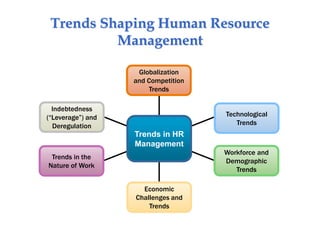
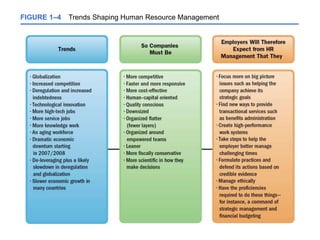
Trends Shaping Human Resource
Management
Globalization
and Competition
Trends
Technological
Trends
Indebtedness
(“Leverage”) and
Deregulation
Trends in the
Nature of Work
Workforce and
Demographic
Trends
Economic
Challenges and
Trends
Trends in HR
Management
FIGURE 1–4 Trends Shaping Human Resource Management
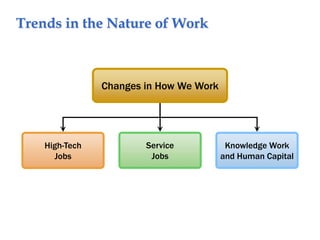
Trends in the Nature of Work
High-Tech
Jobs
Service
Jobs
Changes in How We Work
Knowledge Work
and Human Capital
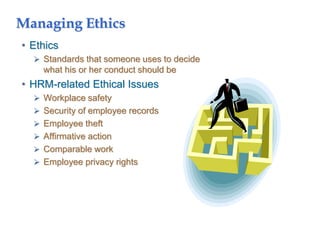
Managing Ethics
• Ethics
 Standards that someone uses to decide
what his or her conduct should be
• HRM-related Ethical Issues
 Workplace safety
 Security of employee records
 Employee theft
 Affirmative action
 Comparable work
 Employee privacy rights
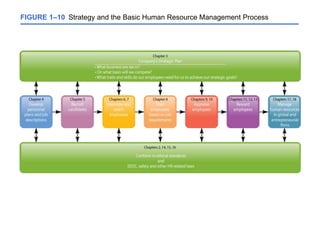
FIGURE 1–10 Strategy and the Basic Human Resource Management Process
K E Y T E R M S
organization
manager
management process
human resource management (HRM)
authority
line authority
staff authority
line manager
staff manager
functional authority
globalization
human capital

Hrm CHp 1

  • 1.
  • 2.
    1. Explain whathuman resource management is and how it relates to the management process. 2. Show with examples why human resource management is important to all managers. 3. Illustrate the human resources responsibilities of line and staff (HR) managers. 4. Outline the plan of this book. LEARNING OUTCOMES
  • 3.
  • 4.
    The Management Process •Planning:  Establishing goals and standards; • Organizing:  Giving each subordinate a special task; • Staffing:  Determining what type of people should be hired; • Leading:  Getting others to get the job done; • Controlling:  Setting standards such as sales quotas, quality standards or production levels.
  • 5.
    Human Resource Managementat Work • What Is Human Resource Management (HRM)?  The process of acquiring, training, appraising, and compensating employees, and of attending to their labor relations, health and safety, and fairness concerns. • Organization  People with formally assigned roles who work together to achieve the organization’s goals. • Manager  The person responsible for accomplishing the organization’s goals, and who does so by managing the efforts of the organization’s people.
  • 6.
    Human Resource ManagementProcesses Acquisition Training Appraisal CompensationLabor Relations Health and Safety Fairness Human Resource Management (HRM)
  • 7.
    Personnel Aspects ofa Manager’s Job • Conducting job analyses • Planning labor needs and recruiting job candidates • Selecting job candidates • Orienting and training new employees • Managing wages and salaries • Providing incentives and benefits • Appraising performance • Communicating • Training and developing managers • Building employee commitment
  • 8.
    What a managershould know about: • Equal opportunity and affirmative action • Employee health and safety • Handling grievances and labor relations
  • 9.
    Why is HumanResource Management Important to All Managers? • Perhaps it’s easier to answer this by listing some of the personnel mistakes you don’t want to make while managing.
  • 10.
    • Hire thewrong person for the job • Experience high turnover • Have your people not doing their best • Waste time with useless interviews • Have your firm in court because of discriminatory actions • Have some employees think their salaries are unfair and inequitable relative to others in the organization • Allow a lack of training to undermine your department’s effectiveness • Commit any unfair labor practices
  • 11.
    Line and StaffAspects of HRM • Line Authority  Gives managers the right (or authority) to issue orders to other managers or employees.  It creates superior-subordinate relationship. • Staff Authority  Gives the manager the right to advise other managers or employees.  It creates an advisory relationship.
  • 12.
    Line and StaffAspects of HRM
  • 13.
    Line and StaffAspects of HRM • Line Manager  Is authorized (has line authority) to direct the work of subordinates and is responsible for accomplishing the organization’s tasks. • Staff Manager  Assists and advises line managers.  Has functional authority to coordinate personnel activities and enforce organization policies.  Human resource managers are usually staff managers.  They assist and advise line managers with recruiting, hiring, and compensation.  However, line managers still have human resource duties.
  • 14.
    Line Managers’ HRMResponsibilities 1. Placing the right person on the right job 2. Starting new employees in the organization (orientation) 3. Training employees for jobs that are new to them 4. Improving the job performance of each person 5. Gaining creative cooperation and developing smooth working relationships 6. Interpreting the firm’s policies and procedures 7. Controlling labor costs 8. Developing the abilities of each person 9. Creating and maintaining department morale 10. Protecting employees’ health and physical condition
  • 15.
    Human Resource Managers’Duties Line Function Line Authority Implied Authority Staff Functions Staff Authority Innovator/Advocacy Functions of HR Managers Coordinative Function Functional Authority
  • 16.
    Human Resource Managers’Duties • Line Function  An HR manager directs the activities of the people in the HR department. • Coordinative Function  An HR manager coordinates organizational-wide personnel activities • Staff Function  An HR manager provides HRM assistance and advice to line managers.
  • 17.
    Human Resource Specialties Recruiter EEOcoordinator Labor relations specialist Training specialist Job analyst Compensation manager Human Resource Specialties
  • 18.
    Human Resource Specialties •Recruiters search for qualified job applicants. • Equal employment opportunity (EEO) coordinators investigate and resolve EEO grievances; examine organizational practices for potential violations; and compile and submit EEO reports. • Job analysts collect and examine information about jobs to prepare job descriptions. • Compensation managers develop compensation plans and handle the employee benefits program. • Training specialists plan, organize, and direct training activities. • Labor relations specialists advise management on all aspects of union–management relations.
  • 19.
    Trends Shaping HumanResource Management Globalization and Competition Trends Technological Trends Indebtedness (“Leverage”) and Deregulation Trends in the Nature of Work Workforce and Demographic Trends Economic Challenges and Trends Trends in HR Management
  • 20.
    FIGURE 1–4 TrendsShaping Human Resource Management
  • 21.
    Trends in theNature of Work High-Tech Jobs Service Jobs Changes in How We Work Knowledge Work and Human Capital
  • 22.
    Managing Ethics • Ethics Standards that someone uses to decide what his or her conduct should be • HRM-related Ethical Issues  Workplace safety  Security of employee records  Employee theft  Affirmative action  Comparable work  Employee privacy rights
  • 23.
    FIGURE 1–10 Strategyand the Basic Human Resource Management Process
  • 24.
    K E YT E R M S organization manager management process human resource management (HRM) authority line authority staff authority line manager staff manager functional authority globalization human capital

Editor's Notes

  • #3 Copyright © 2011 Pearson Education, Inc. publishing as Prentice Hall
  • #4 Copyright © 2011 Pearson Education, Inc. publishing as Prentice Hall
  • #6 Copyright © 2011 Pearson Education, Inc. publishing as Prentice Hall
  • #7 Copyright © 2011 Pearson Education, Inc. publishing as Prentice Hall
  • #8 Copyright © 2011 Pearson Education, Inc. publishing as Prentice Hall
  • #9 Copyright © 2011 Pearson Education, Inc. publishing as Prentice Hall
  • #10 Copyright © 2011 Pearson Education, Inc. publishing as Prentice Hall
  • #11 Copyright © 2011 Pearson Education, Inc. publishing as Prentice Hall
  • #12 Copyright © 2011 Pearson Education, Inc. publishing as Prentice Hall
  • #14 Copyright © 2011 Pearson Education, Inc. publishing as Prentice Hall
  • #15 Copyright © 2011 Pearson Education, Inc. publishing as Prentice Hall
  • #16 Copyright © 2011 Pearson Education, Inc. publishing as Prentice Hall
  • #17 Copyright © 2011 Pearson Education, Inc. publishing as Prentice Hall
  • #18 Copyright © 2011 Pearson Education, Inc. publishing as Prentice Hall
  • #19 Copyright © 2011 Pearson Education, Inc. publishing as Prentice Hall
  • #20 Copyright © 2011 Pearson Education, Inc. publishing as Prentice Hall
  • #21 Copyright © 2011 Pearson Education, Inc. publishing as Prentice Hall
  • #22 Copyright © 2011 Pearson Education, Inc. publishing as Prentice Hall
  • #23 Copyright © 2011 Pearson Education, Inc. publishing as Prentice Hall
  • #24 Copyright © 2011 Pearson Education, Inc. publishing as Prentice Hall
  • #25 Copyright © 2011 Pearson Education, Inc. publishing as Prentice Hall