1–1
Introduction to Human Resource Management
Presented By:
Under The Guidance Of :
Ma’am Ambreen Zaineb
Zain-ul Hassan
Abdul Samad
Waqas Hussain
Human Resource Management at Work
• What Is Human Resource Management (HRM)?
➢ The process of acquiring, training, appraising, and compensating
employees, and of attending to their labor relations, health and
safety, and fairness concerns.
• Organization
➢ People with formally assigned roles who work together to
achieve the organization’s goals.
• Manager
➢ The person responsible for accomplishing the organization’s
goals, and who does so by managing the efforts of the
organization’s people.
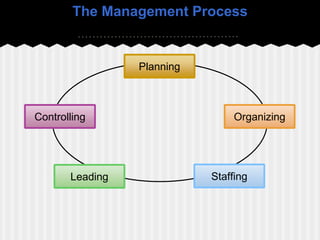
The Management Process
Planning
Organizing
Leading Staffing
Controlling
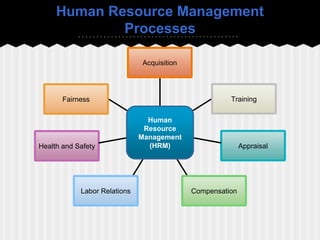
Human Resource Management
Processes
Acquisition
Training
Appraisal
CompensationLabor Relations
Health and Safety
Fairness
Human
Resource
Management
(HRM)
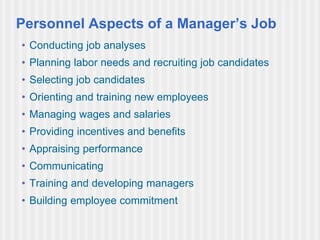
Personnel Aspects of a Manager’s Job
• Conducting job analyses
• Planning labor needs and recruiting job candidates
• Selecting job candidates
• Orienting and training new employees
• Managing wages and salaries
• Providing incentives and benefits
• Appraising performance
• Communicating
• Training and developing managers
• Building employee commitment
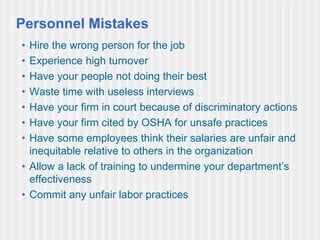
Personnel Mistakes
• Hire the wrong person for the job
• Experience high turnover
• Have your people not doing their best
• Waste time with useless interviews
• Have your firm in court because of discriminatory actions
• Have your firm cited by OSHA for unsafe practices
• Have some employees think their salaries are unfair and
inequitable relative to others in the organization
• Allow a lack of training to undermine your department’s
effectiveness
• Commit any unfair labor practices
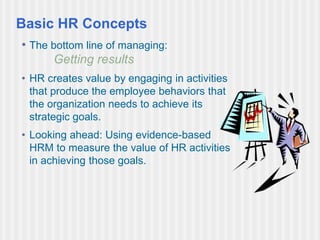
Basic HR Concepts
• The bottom line of managing:
Getting results
• HR creates value by engaging in activities
that produce the employee behaviors that
the organization needs to achieve its
strategic goals.
• Looking ahead: Using evidence-based
HRM to measure the value of HR activities
in achieving those goals.
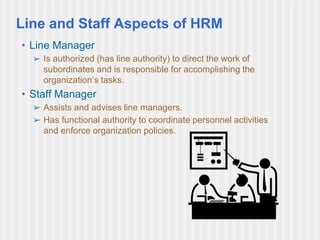
Line and Staff Aspects of HRM
• Line Manager
➢ Is authorized (has line authority) to direct the work of
subordinates and is responsible for accomplishing the
organization’s tasks.
• Staff Manager
➢ Assists and advises line managers.
➢ Has functional authority to coordinate personnel activities
and enforce organization policies.
Line Managers’ HRM Responsibilities
1. Placing the right person on the right job
2. Starting new employees in the organization (orientation)
3. Training employees for jobs that are new to them
4. Improving the job performance of each person
5. Gaining creative cooperation and developing smooth
working relationships
6. Interpreting the firm’s policies and procedures
7. Controlling labor costs
8. Developing the abilities of each person
9. Creating and maintaining department morale
10. Protecting employees’ health and physical condition
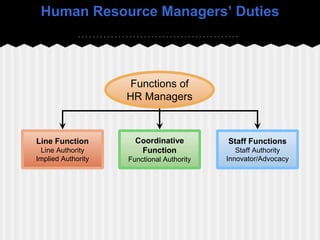
Human Resource Managers’ Duties
Line Function
Line Authority
Implied Authority
Staff Functions
Staff Authority
Innovator/Advocacy
Functions of
HR Managers
Coordinative
Function
Functional Authority
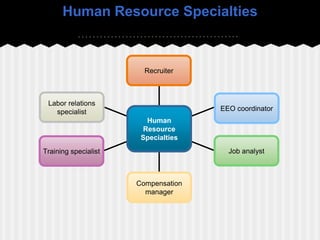
Human Resource Specialties
Recruiter
EEO coordinator
Labor relations
specialist
Training specialist Job analyst
Compensation
manager
Human
Resource
Specialties
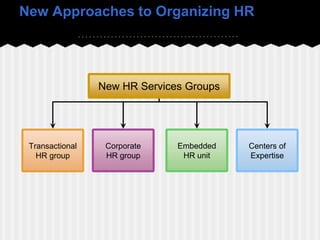
New Approaches to Organizing HR
Transactional
HR group
Corporate
HR group
Embedded
HR unit
New HR Services Groups
Centers of
Expertise
14

Introduction to Human Resource Management

  • 1.
  • 2.
    Introduction to HumanResource Management Presented By: Under The Guidance Of : Ma’am Ambreen Zaineb Zain-ul Hassan Abdul Samad Waqas Hussain
  • 3.
    Human Resource Managementat Work • What Is Human Resource Management (HRM)? ➢ The process of acquiring, training, appraising, and compensating employees, and of attending to their labor relations, health and safety, and fairness concerns. • Organization ➢ People with formally assigned roles who work together to achieve the organization’s goals. • Manager ➢ The person responsible for accomplishing the organization’s goals, and who does so by managing the efforts of the organization’s people.
  • 4.
  • 5.
    Human Resource Management Processes Acquisition Training Appraisal CompensationLaborRelations Health and Safety Fairness Human Resource Management (HRM)
  • 6.
    Personnel Aspects ofa Manager’s Job • Conducting job analyses • Planning labor needs and recruiting job candidates • Selecting job candidates • Orienting and training new employees • Managing wages and salaries • Providing incentives and benefits • Appraising performance • Communicating • Training and developing managers • Building employee commitment
  • 7.
    Personnel Mistakes • Hirethe wrong person for the job • Experience high turnover • Have your people not doing their best • Waste time with useless interviews • Have your firm in court because of discriminatory actions • Have your firm cited by OSHA for unsafe practices • Have some employees think their salaries are unfair and inequitable relative to others in the organization • Allow a lack of training to undermine your department’s effectiveness • Commit any unfair labor practices
  • 8.
    Basic HR Concepts •The bottom line of managing: Getting results • HR creates value by engaging in activities that produce the employee behaviors that the organization needs to achieve its strategic goals. • Looking ahead: Using evidence-based HRM to measure the value of HR activities in achieving those goals.
  • 9.
    Line and StaffAspects of HRM • Line Manager ➢ Is authorized (has line authority) to direct the work of subordinates and is responsible for accomplishing the organization’s tasks. • Staff Manager ➢ Assists and advises line managers. ➢ Has functional authority to coordinate personnel activities and enforce organization policies.
  • 10.
    Line Managers’ HRMResponsibilities 1. Placing the right person on the right job 2. Starting new employees in the organization (orientation) 3. Training employees for jobs that are new to them 4. Improving the job performance of each person 5. Gaining creative cooperation and developing smooth working relationships 6. Interpreting the firm’s policies and procedures 7. Controlling labor costs 8. Developing the abilities of each person 9. Creating and maintaining department morale 10. Protecting employees’ health and physical condition
  • 11.
    Human Resource Managers’Duties Line Function Line Authority Implied Authority Staff Functions Staff Authority Innovator/Advocacy Functions of HR Managers Coordinative Function Functional Authority
  • 12.
    Human Resource Specialties Recruiter EEOcoordinator Labor relations specialist Training specialist Job analyst Compensation manager Human Resource Specialties
  • 13.
    New Approaches toOrganizing HR Transactional HR group Corporate HR group Embedded HR unit New HR Services Groups Centers of Expertise
  • 14.

Editor's Notes

  • #4 Copyright © 2011 Pearson Education, Inc. publishing as Prentice Hall
  • #5 Copyright © 2011 Pearson Education, Inc. publishing as Prentice Hall
  • #6 Copyright © 2011 Pearson Education, Inc. publishing as Prentice Hall
  • #7 Copyright © 2011 Pearson Education, Inc. publishing as Prentice Hall
  • #8 Copyright © 2011 Pearson Education, Inc. publishing as Prentice Hall
  • #9 Copyright © 2011 Pearson Education, Inc. publishing as Prentice Hall
  • #10 Copyright © 2011 Pearson Education, Inc. publishing as Prentice Hall
  • #11 Copyright © 2011 Pearson Education, Inc. publishing as Prentice Hall
  • #12 Copyright © 2011 Pearson Education, Inc. publishing as Prentice Hall
  • #13 Copyright © 2011 Pearson Education, Inc. publishing as Prentice Hall
  • #14 Copyright © 2011 Pearson Education, Inc. publishing as Prentice Hall