




How do you write a
good research paper
for a publication? Tips
and Guidelines
‫الدكتور‬ ‫االستاذ‬/‫حسنين‬ ‫عطيفى‬ ‫ابوالعال‬
‫المصرية‬ ‫البحثية‬ ‫العلمية‬ ‫المدرسة‬ ‫ورئيس‬ ‫مؤسس‬
‫المعلومات‬ ‫وتكنولوجيا‬ ‫االتصاالت‬ ‫مجلس‬ ‫مقرر‬–‫العلمى‬ ‫البحث‬ ‫أكاديمية‬-‫والذكاء‬ ‫الحاسبات‬ ‫بكلية‬ ‫واألستاذ‬
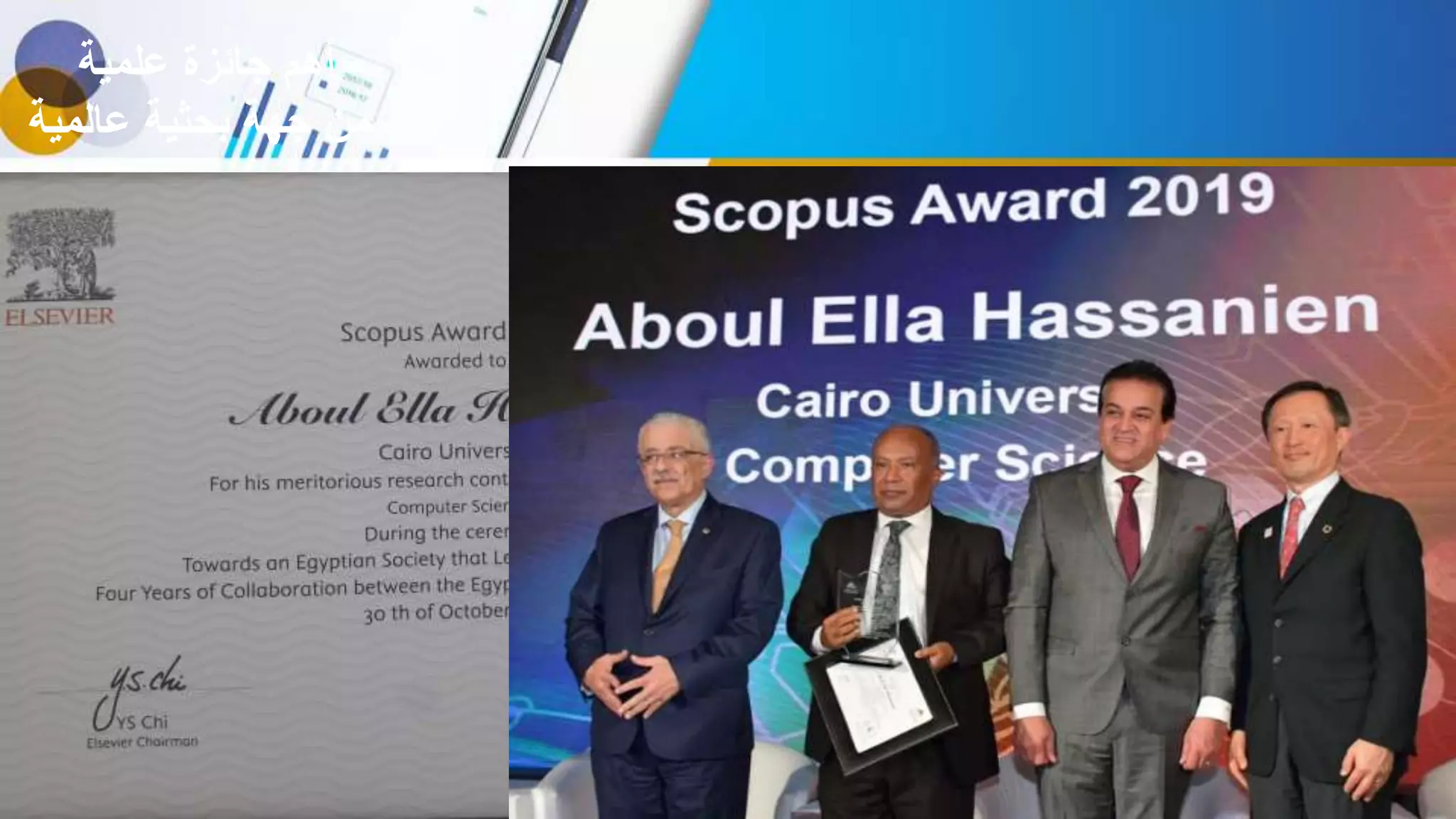
‫اإلصطناعى‬–‫القاهرة‬ ‫جامعة‬-‫العلمى‬ ‫للبحث‬ ‫العالمية‬ ‫سكوبس‬ ‫جائزة‬ ‫على‬ ‫الحاصل‬2019‫الدول‬ ‫منظمة‬ ‫وجائزة‬
‫والثقافة‬ ‫للعلوم‬ ‫االسالمية‬(‫اإليسيسكو‬)–‫عبد‬ ‫وجائزة‬‫والفن‬ ‫العلوم‬ ‫ووسام‬ ‫العرب‬ ‫للباحثين‬ ‫شومان‬ ‫الحميد‬‫الطبقة‬ ‫من‬ ‫ون‬
‫و‬ ‫االولى‬...
Agenda
• Science and Publications Aims
• Part (1) The Structure of a Research
Paper
• Part (2) Paper Sections tips
– Title
– Keywords
– Introduction
– Methods
– Results
– Conclusion
– References
• Last words
Beingatpeacewithmyself
Happinessisbalance,love,family,
friends,andchallenge
Successfulpublicationsthat
contributestothehappinessof
students,editors,reviewers, readers,
andpubliccommunity
Happiness in doing research
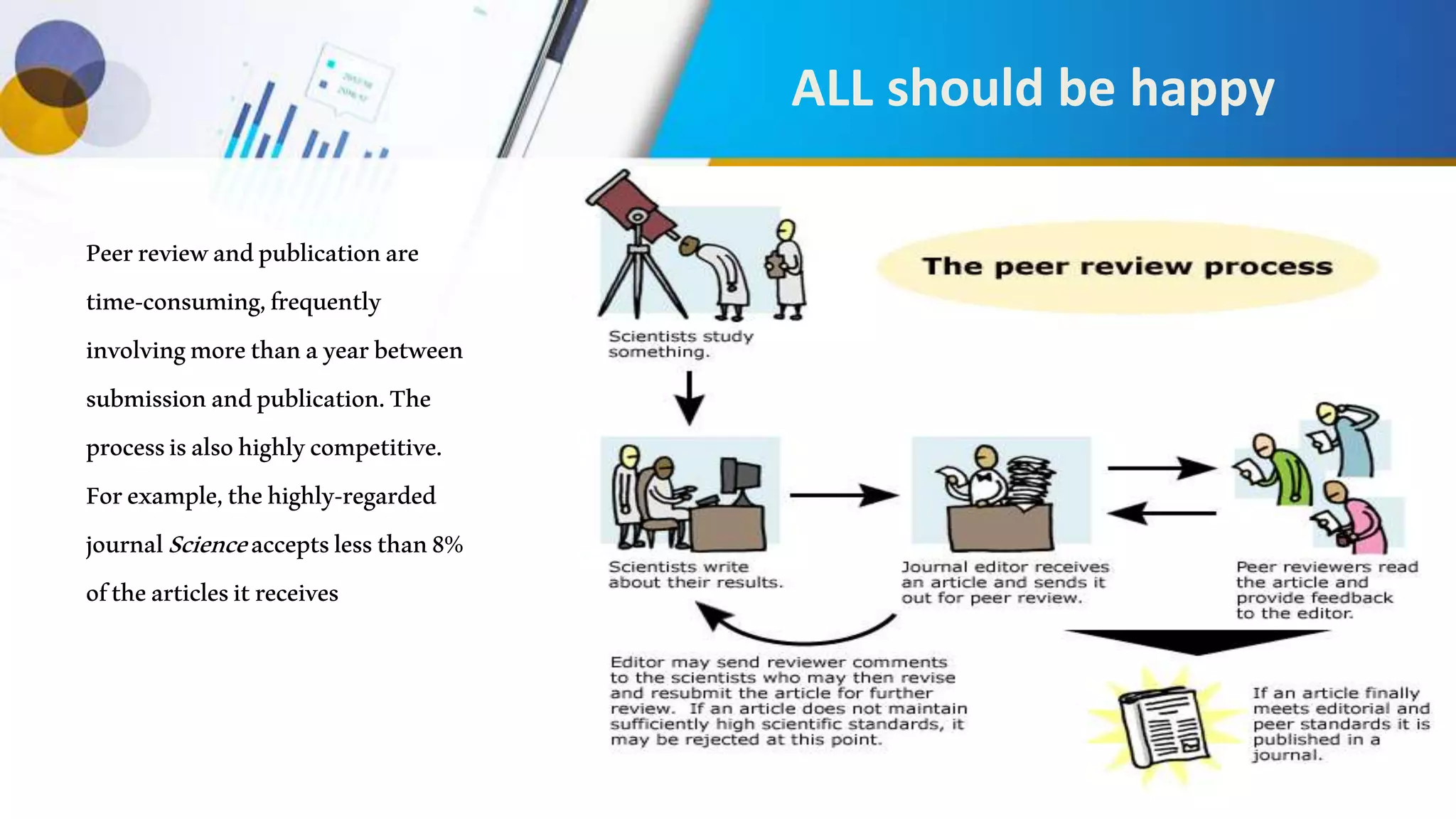
ALL should be happy
Peerreviewandpublicationare
time-consuming,frequently
involvingmorethanayearbetween
submissionandpublication.The
processisalsohighlycompetitive.
Forexample,thehighly-regarded
journalScienceacceptslessthan8%
ofthearticlesitreceives
Knowledge: Share
& publish
• Sharetheknowledgeyouhavegained aboutaspecificareaof
studywithotherresearchers
• Showhowyourstudyfitsintocurrentscience.
• Informthepublicaboutimportantscientific activity.
• ExplainclearlyandBrieflythecontextofyourstudy,including
relevantliterature(Introduction),themethodsusedfor
researchandanalysis(Methods),thefindingsofyourstudy
(Results),andtheimplicationsfortheseresultsandfurther
researchthatmightbeneeded (DiscussionandConclusion).
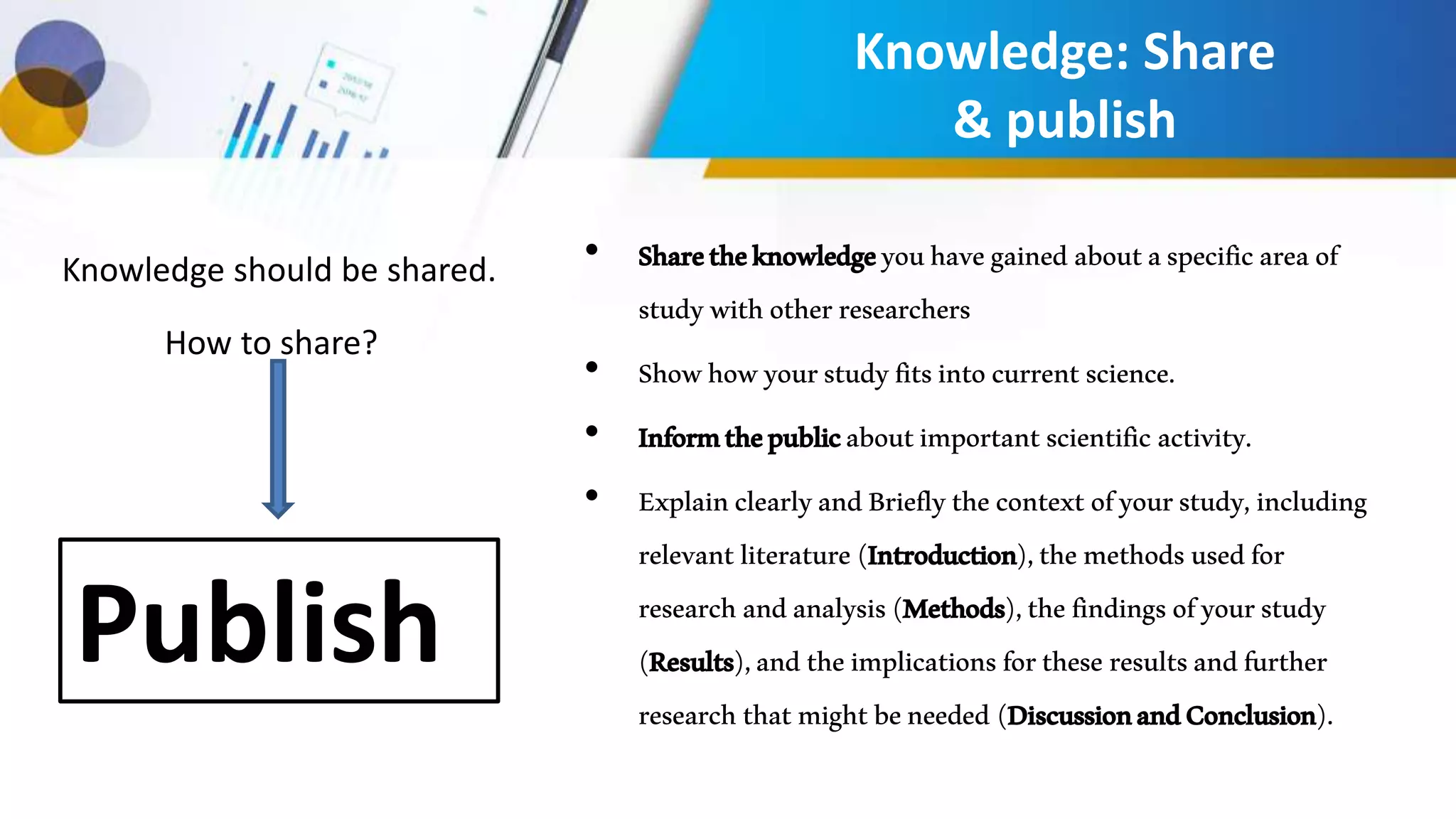
Knowledge should be shared.
How to share?
Publish
Publish
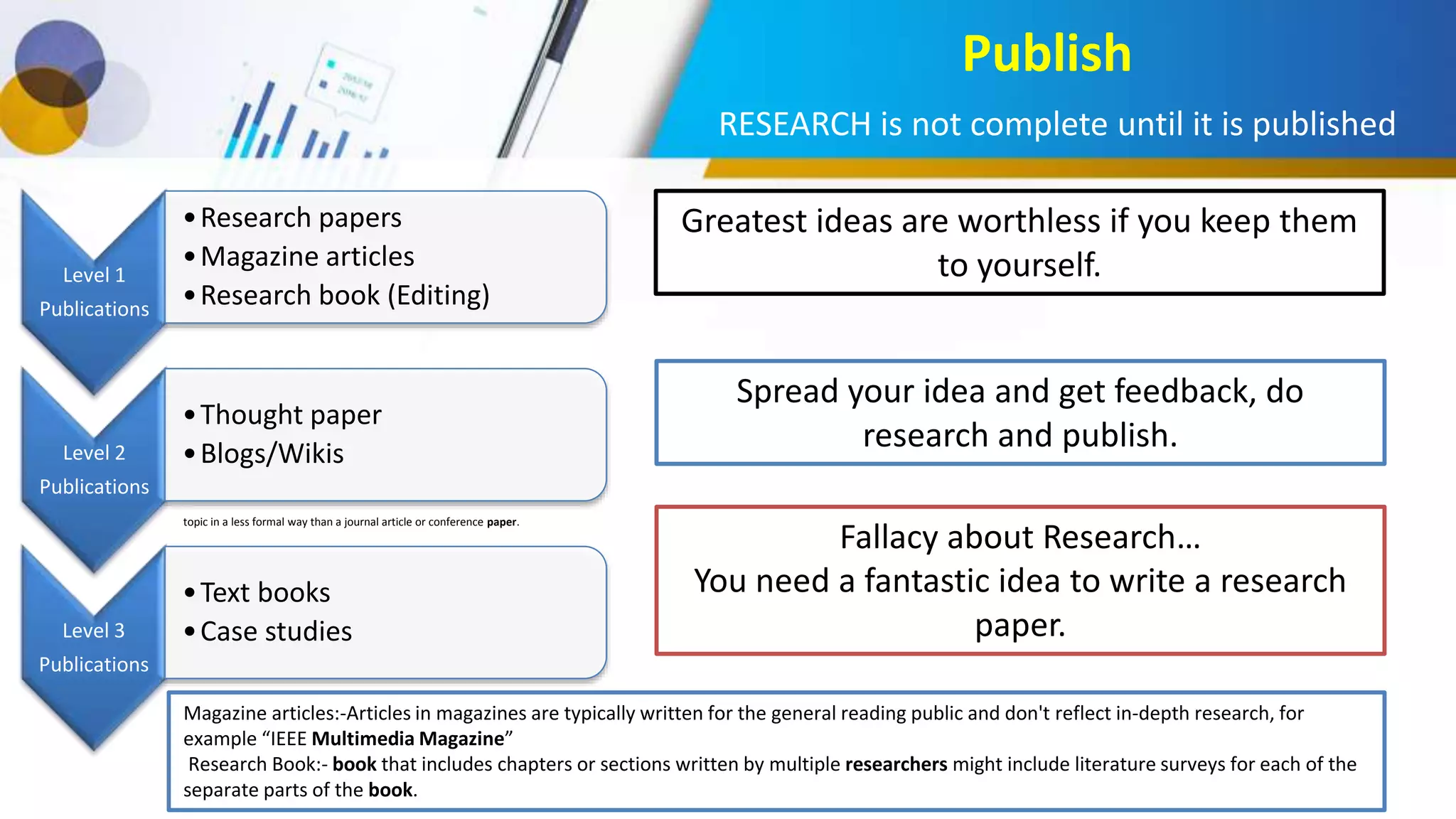
Greatest ideas are worthless if you keep them
to yourself.
Spread your idea and get feedback, do
research and publish.
Fallacy about Research…
You need a fantastic idea to write a research
paper.
Level 1
Publications
•Research papers
•Magazine articles
•Research book (Editing)
Level 2
Publications
•Thought paper
•Blogs/Wikis
Level 3
Publications
•Text books
•Case studies
Magazine articles:-Articles in magazines are typically written for the general reading public and don't reflect in-depth research, for
example “IEEE Multimedia Magazine”
Research Book:- book that includes chapters or sections written by multiple researchers might include literature surveys for each of the
separate parts of the book.
topic in a less formal way than a journal article or conference paper.
RESEARCH is not complete until it is published
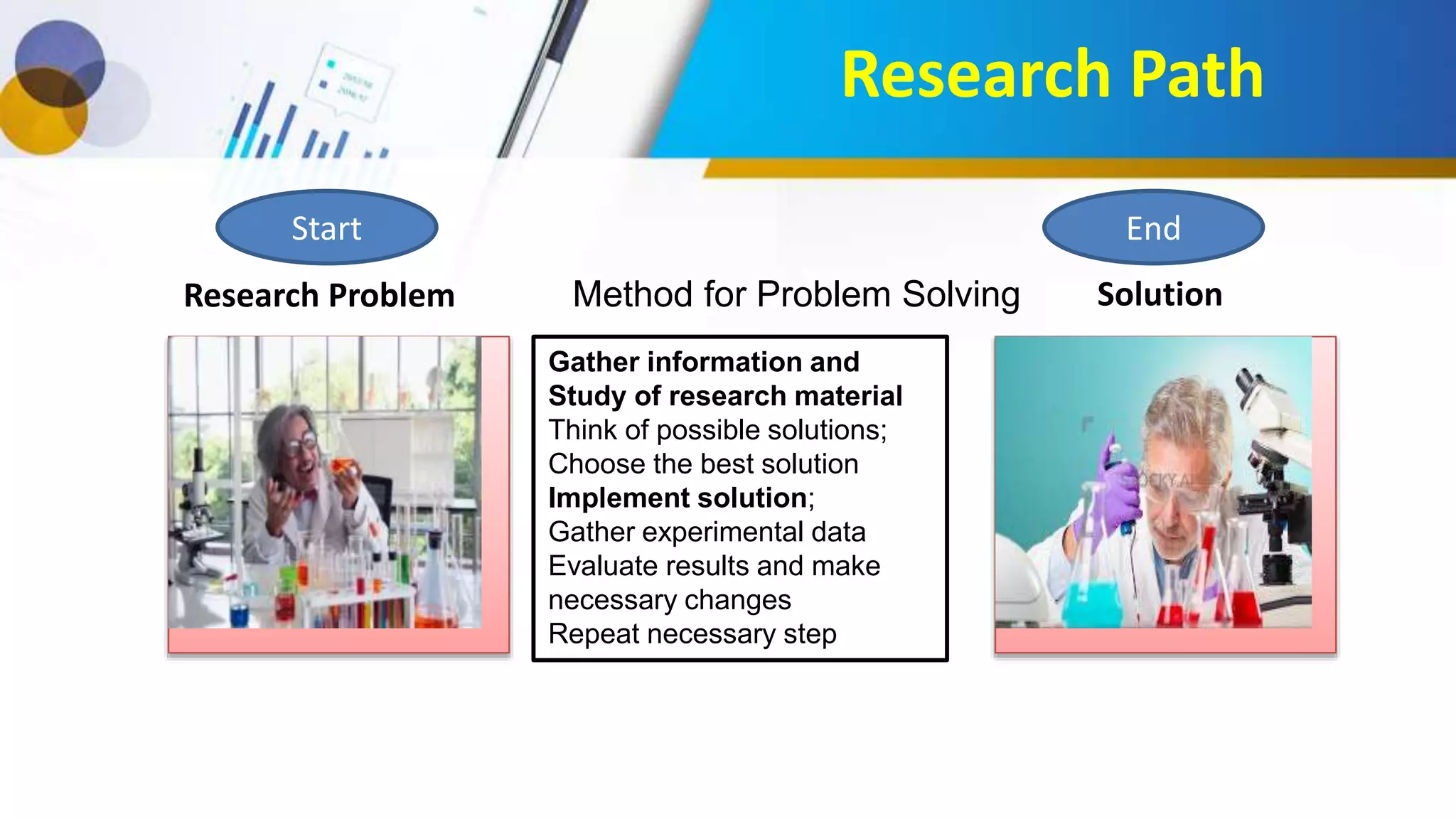
Gather information and
Study of research material
Think of possible solutions;
Choose the best solution
Implement solution;
Gather experimental data
Evaluate results and make
necessary changes
Repeat necessary step
Method for Problem SolvingResearch Problem Solution
Start End
Research Path
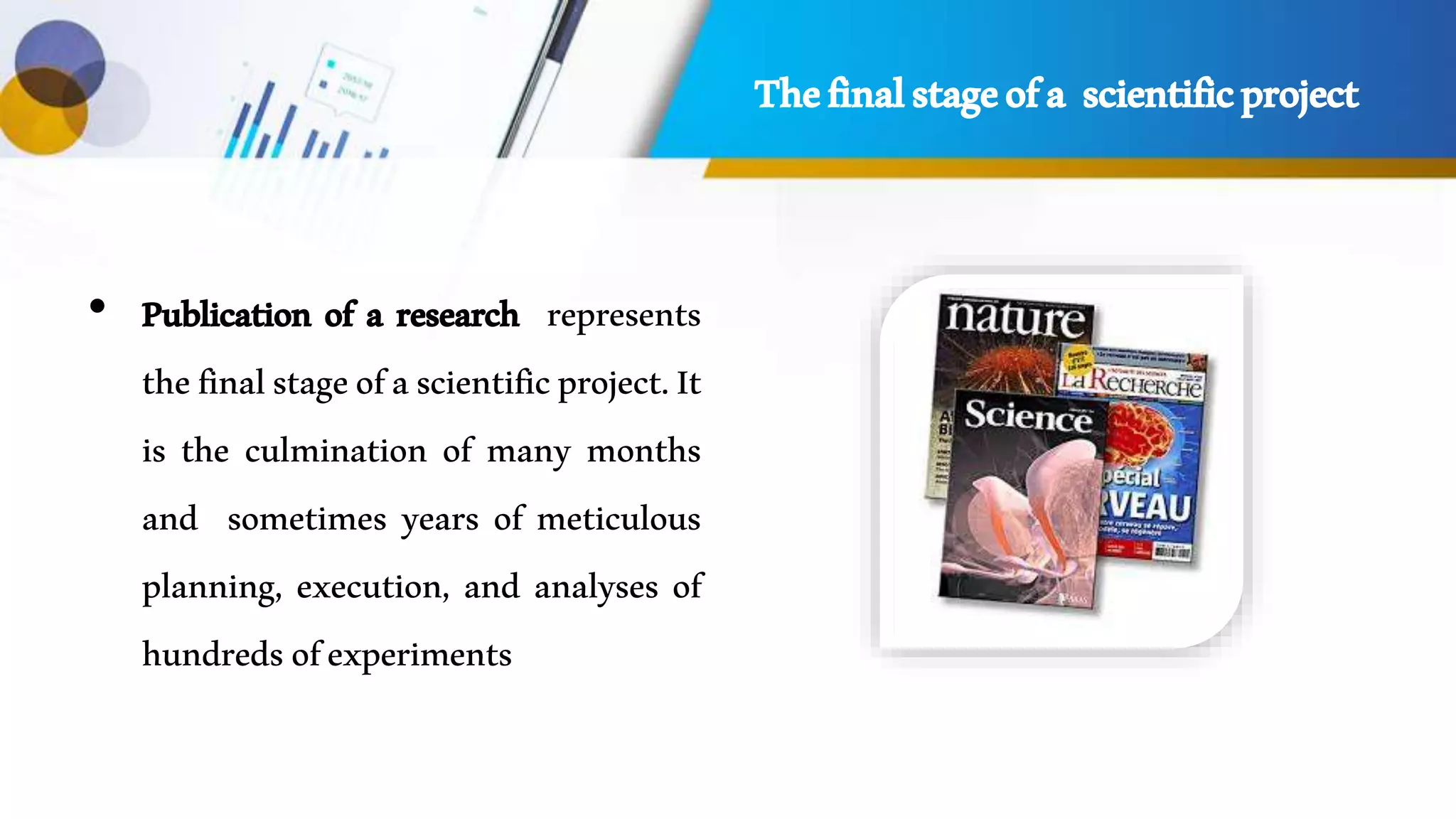
Thefinalstageofa scientificproject
• Publication of a research represents
thefinalstageofascientificproject.It
is the culmination of many months
and sometimes years of meticulous
planning, execution, and analyses of
hundredsofexperiments
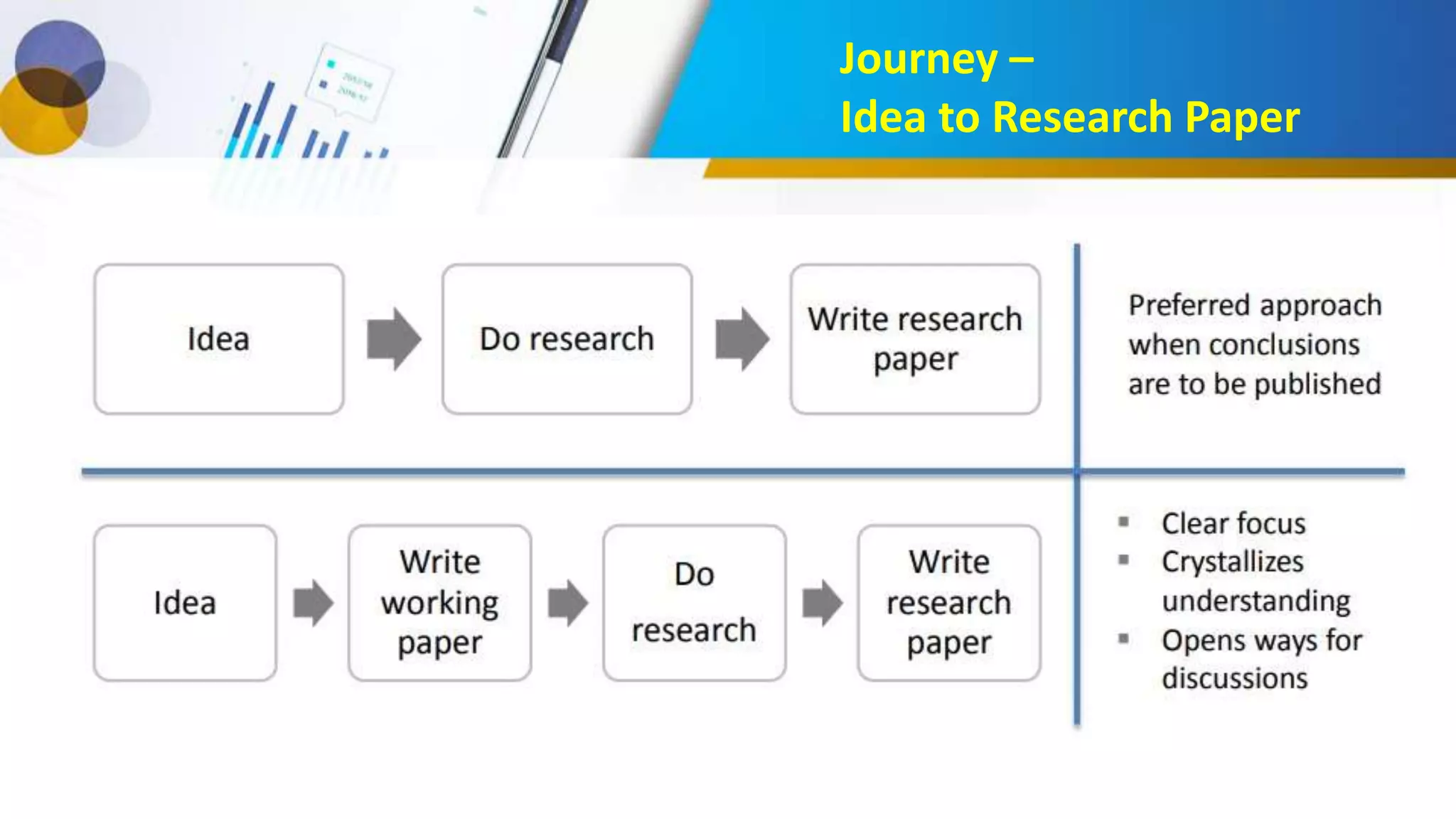
Journey –
Idea to Research Paper
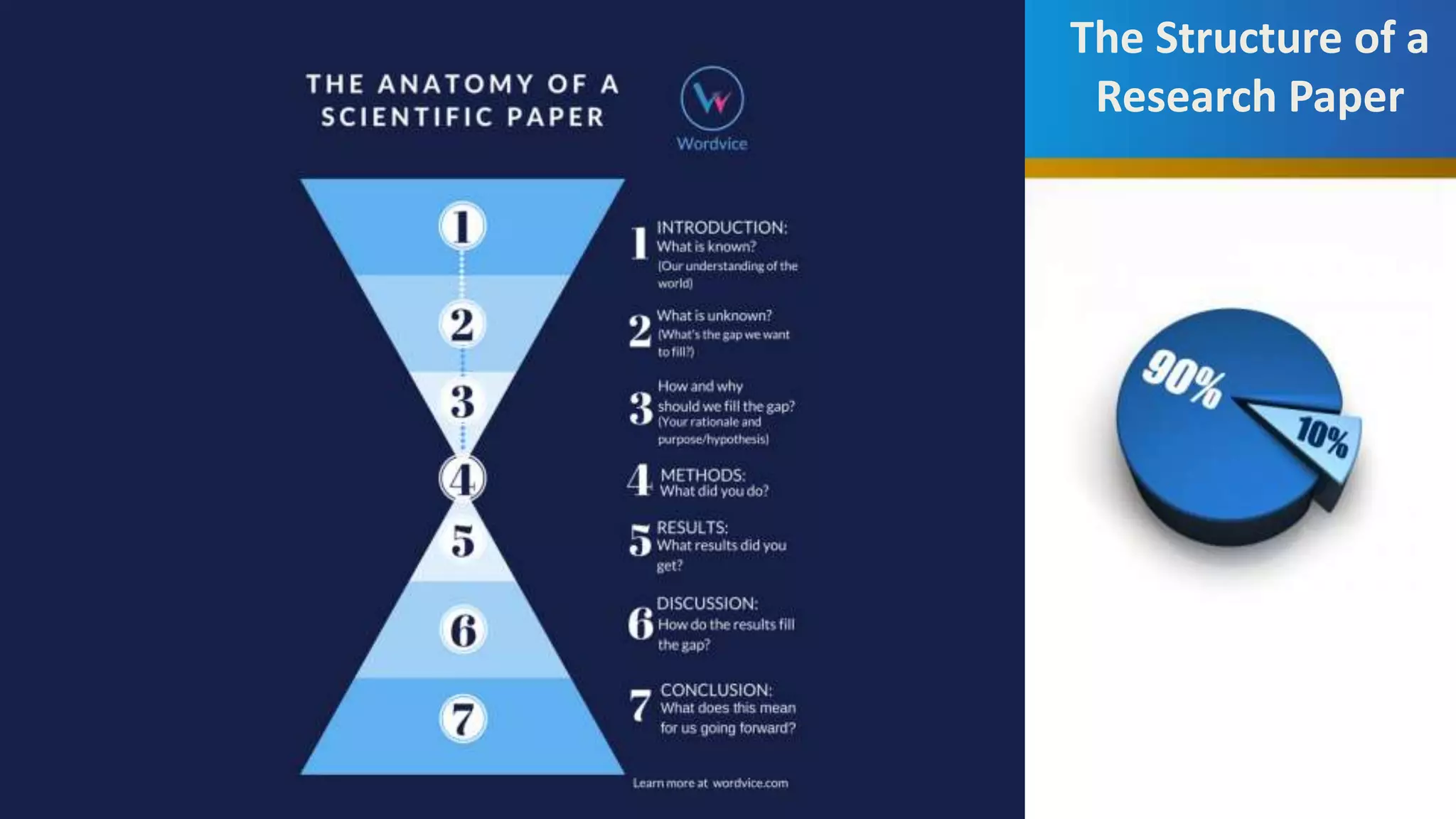
THE STRUCTURE OF A RESEARCH PAPER
Part (I)
The Structure of a
Research Paper
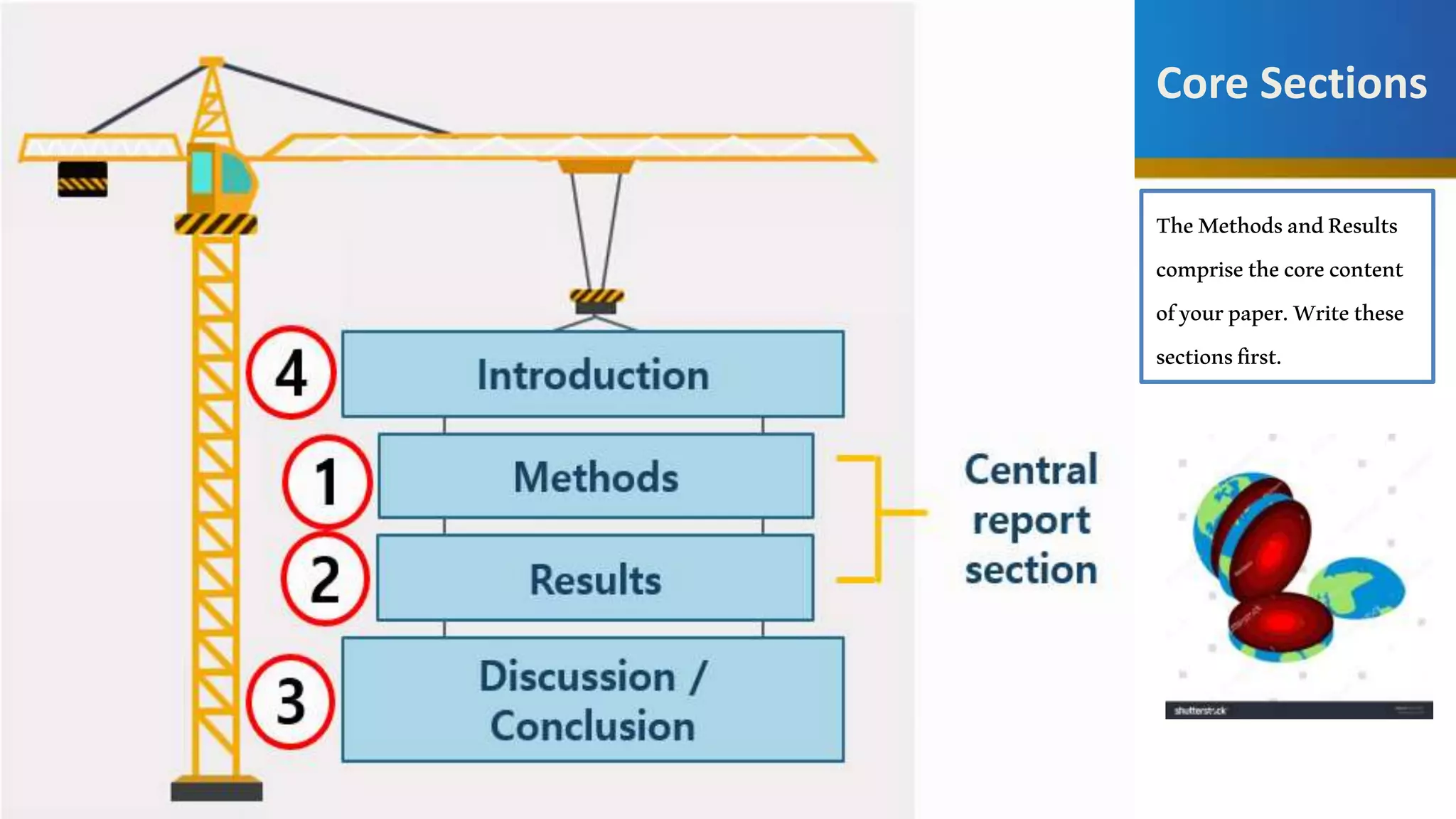
TheMethodsandResults
comprisethecorecontent
ofyourpaper.Writethese
sectionsfirst.
Core Sections
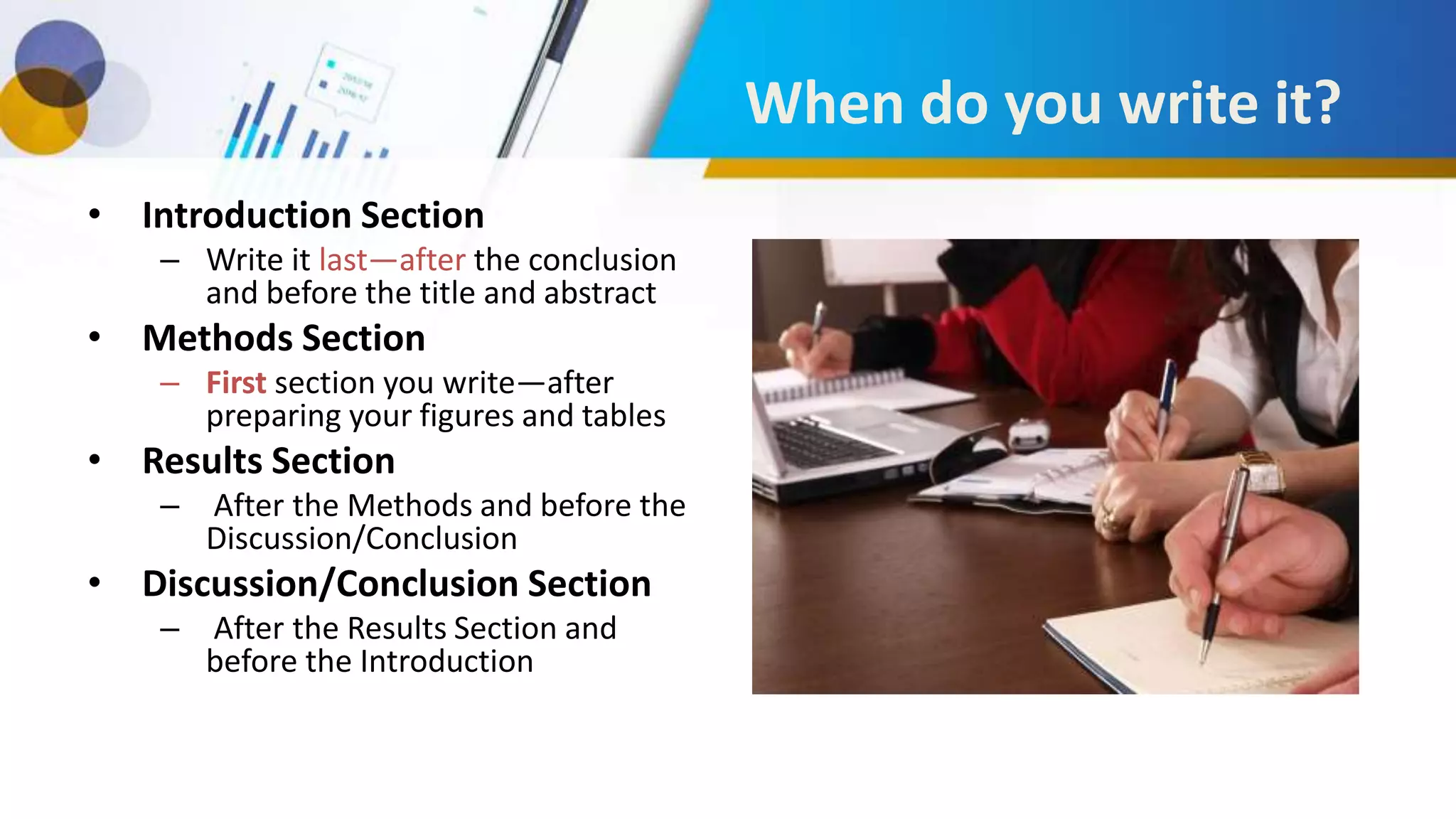
When do you write it?
• Introduction Section
– Write it last—after the conclusion
and before the title and abstract
• Methods Section
– First section you write—after
preparing your figures and tables
• Results Section
– After the Methods and before the
Discussion/Conclusion
• Discussion/Conclusion Section
– After the Results Section and
before the Introduction
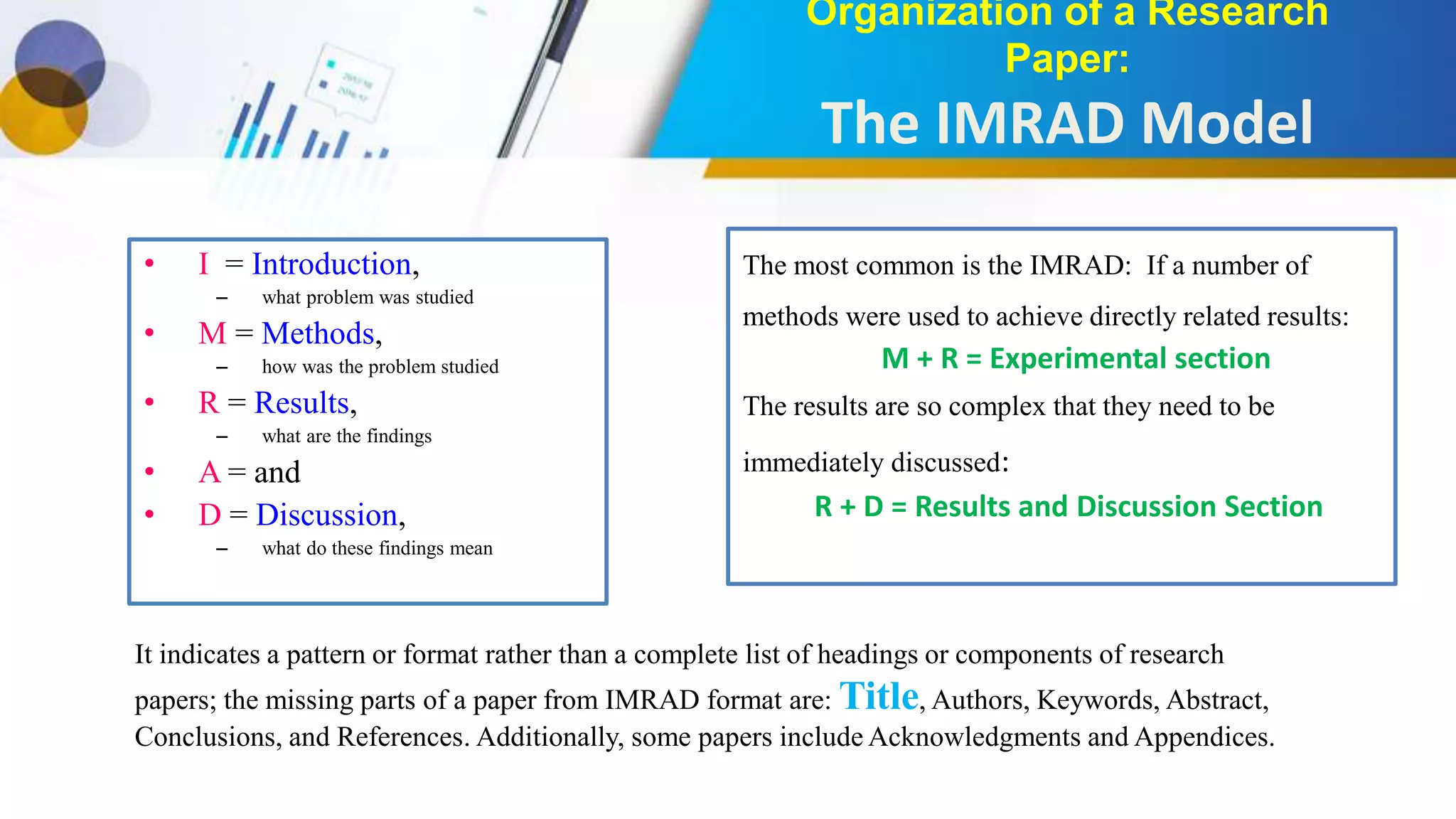
• I = Introduction,
– what problem was studied
• M = Methods,
– how was the problem studied
• R = Results,
– what are the findings
• A = and
• D = Discussion,
– what do these findings mean
Organization of a Research
Paper:
The IMRAD Model
The most common is the IMRAD: If a number of
methods were used to achieve directly related results:
M + R = Experimental section
The results are so complex that they need to be
immediately discussed:
R + D = Results and Discussion Section
It indicates a pattern or format rather than a complete list of headings or components of research
papers; the missing parts of a paper from IMRAD format are: Title, Authors, Keywords, Abstract,
Conclusions, and References. Additionally, some papers include Acknowledgments and Appendices.
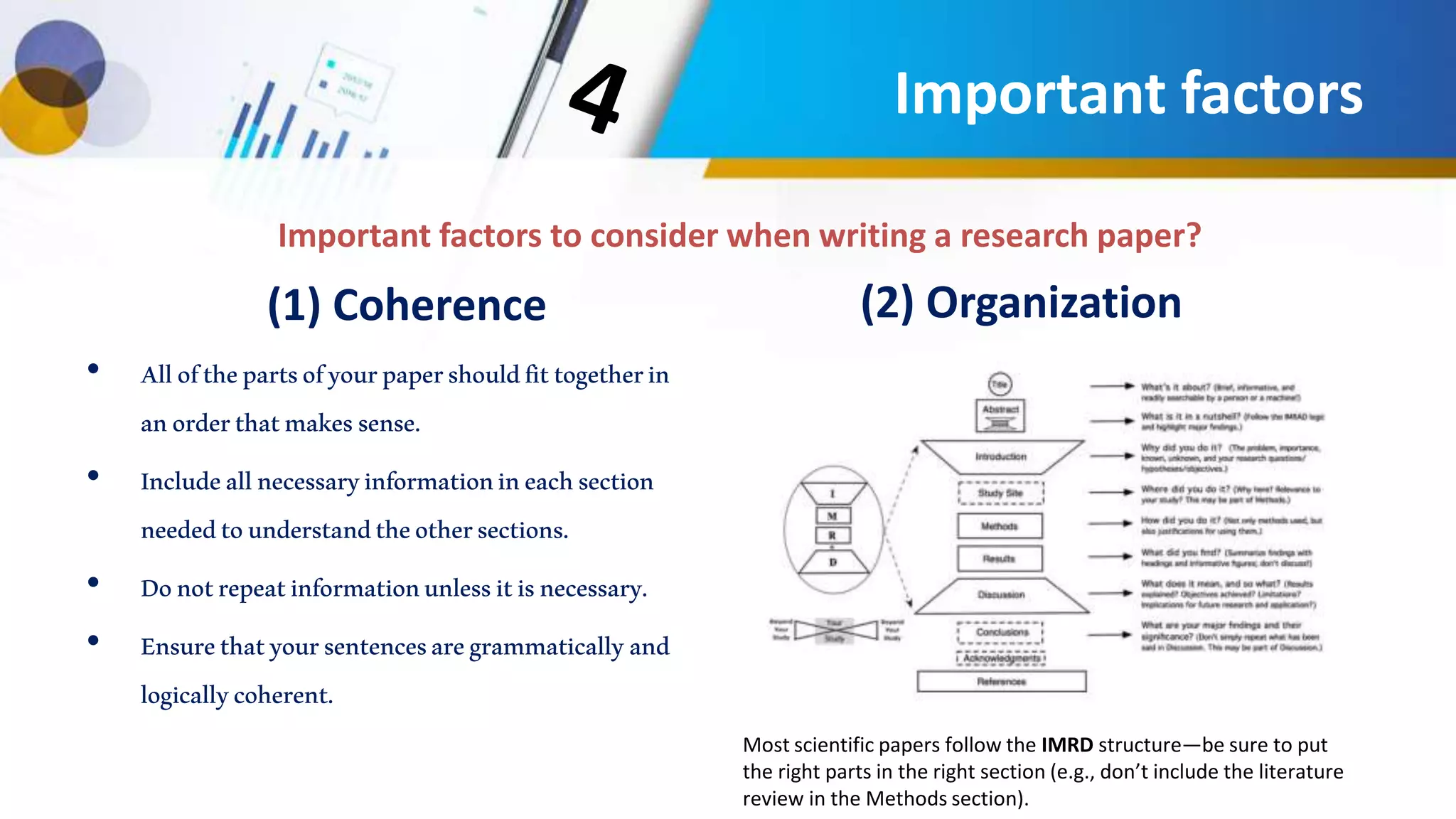
(1) Coherence
• Allofthepartsofyourpapershouldfittogetherin
anorderthatmakessense.
• Includeallnecessaryinformationineachsection
neededtounderstandtheothersections.
• Donotrepeatinformationunlessitisnecessary.
• Ensurethatyoursentencesaregrammaticallyand
logicallycoherent.
(2) Organization
Most scientific papers follow the IMRD structure—be sure to put
the right parts in the right section (e.g., don’t include the literature
review in the Methods section).
Important factors
Important factors to consider when writing a research paper?
(3) Relevance
• As you do research you will notice that there are a great
many pieces of information and data you COULD include in
your paper. However, you need to conform to length
guidelines and keep your paper focused. Therefore, you
should be sure that you are choosing a proper number of
items to focus on for each section.
– For example, if your study has 10 results but your paper can only be 4,000
words, you might want to narrow down these results to only those that
support your hypothesis, perhaps the 3-5 most important results.
• The same applies to the Introduction, where you must choose what
background, context, and relevant literature to include. Be sure to
only include information that gives readers a focused and relevant
understanding of your area of study.
(4) Clarity
Readable
• It means ensuring that each
paragraph and sentence in your
paper is natural and easy to read and
understand: proper grammar,
phrasing, and style are key to writing
a paper that is readable and
comprehensible to both experts and
possibly non-experts, depending on
your target audience.
GUIDE FOR AUTHORS
• Perhaps the most important rule is
to conform to the formatting
guidelines and other style
conventions of the journal to which
you are submitting. Check the
“GUIDE FOR AUTHORS” section of the
journal or conference, or if the paper
is for a class, ensure that you are
using the proper formatting
requirements.
PART (2) PAPER
SECTIONS TIPS
READ ARTICLES FROM TARGET JOURNAL
General tips
A good research paper
title
• Condensesthepaper’scontent
inafewwords
• Capturesthereaders’attention
• Differentiatesthepaperfrom
otherpapersofthesamesubject
area
Paper title
Paper title
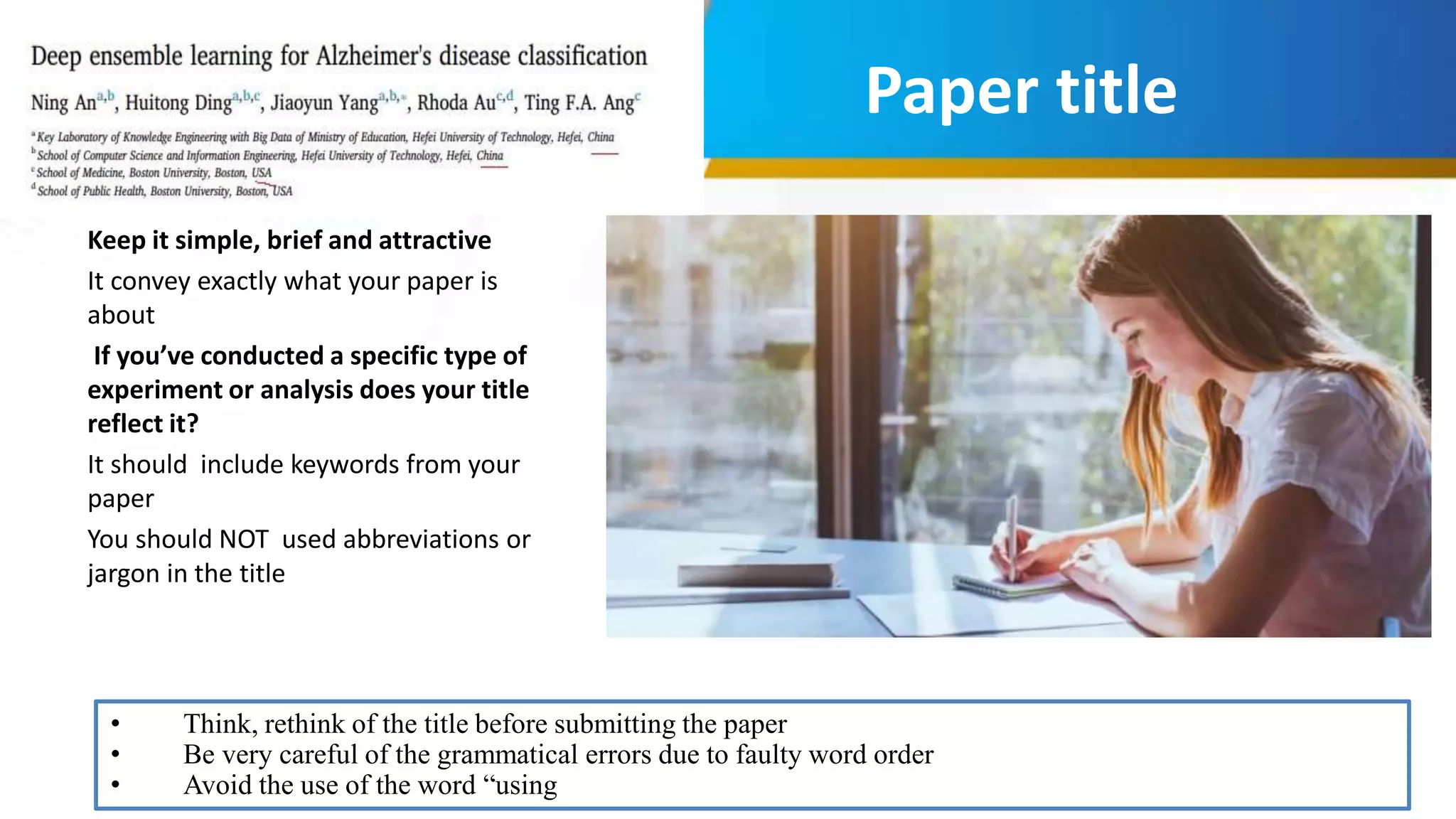
Keep it simple, brief and attractive
It convey exactly what your paper is
about
If you’ve conducted a specific type of
experiment or analysis does your title
reflect it?
It should include keywords from your
paper
You should NOT used abbreviations or
jargon in the title
• Think, rethink of the title before submitting the paper
• Be very careful of the grammatical errors due to faulty word order
• Avoid the use of the word “using
Abstract
• Ashort,self-contained,powerfulsummary
ofanarticle,paperorthesis;
• Length:between150and250words;
• Layout:usuallyonesingleparagraph;font
sizeisdifferentfromthemaintext;
• Position:usuallyatthebeginning ofthe
paper
• Anabstractisashortsummaryofa
longer.Theabstractconciselyreports
theaimsandoutcomesofyour
researchsothatreadersknowexactly
whatthepaperisabout.
• Writetheabstractattheveryend,
whenyou’vecompletedtherestofthe
text.
GUIDLINES
Abstract and Tips
Main parts
• Yourresearchproblem andobjectives
• Yourmethods
• Yourkeyresultsorarguments
• Yourconclusion
What not to include
• Informationnotcontainedintheoriginalwork;
• Referencestootherwork;
• Quotationsfromtheoriginalwork/otherworks;
• Lengthyexplanationsofwordsandconcepts;
• Unexplainedacronymsorabbreviations
• Tables,Figures andmapsandEquations
Tips: Key words and draft highlights
Tips: Read other abstracts
Tips: Avoid discussion of others’ work,
Tips: Always stick to the word limit.
Creating keywords
Keywordsarewordsthatcapturetheessenceofyourpaper.
Keywordsmakeyourpapersearchableandensurethatyouget
morecitations.Therefore,itisimportanttoincludethemost
relevantkeywordsthatwillhelpotherauthorsfindyourpaper.
4-5 keywords
Tips: Think from the point of view of the reader.
What keywords would the reader search for that
would help retrieve your article?
Tips: The full forms of shortened words or acronyms
and abbreviations should be included as well.
Tips: Do not use words or phrases from the title as
keywords.
Introduction
• Backgroundinformation
• Motivations
• Keyprimaryliterature
• Researchprobleminvestigated
• Approaches
What is the problem to be solved?
(background and problem)
What do we know about this problem?
(literature)
Are there any existing solutions? (literature)
What are the limitations or gaps in
knowledge of existing solutions?
What do you hope to achieve with this
study? (statement of purpose)
Blockchain in agriculture
CS viewagriculture view
• Keepyourfirstsentenceshort.
• Don’trepeatthetitle.
• Keeptheintroductionbrief.
• Startbroadlyandthennarrowdown
• Show sentencestoexplainwhatthearticlecovers.
• showwhythetopicisimportant.
• Refertoaconcernorproblemyourreadersmighthave.
• But...becarefultellingstories.
• Avoidgivingtoomanycitationsforonepoint
• Donotincludefigures,Equations,Tables
• Donotdivideditintosubsections
Introduction :. Tips
Methods
• ListtheMethodsinthesameorderasthey
willappearintheResultssection.
• Materialshouldbeorganizedbytopicfrom
mosttoleastimportant.
• Headingscanbeusedtoseparateddifferent
results;paragraphsareoftenusedinstead.
Structure the section so that it
tells the story of your research
Tips: Visual presentation: To help the readers follow
the study design or methodology better, visual
elements like the schematic diagram,
The Results section should
include: ( Organization of
Results)
• FindingspresentedinthesameorderasintheMethods
section
• Datapresentedintables,charts,graphs,andotherfigures
(placedamongresearchtextoronaseparatepage)
• Reportsondatacollection,recruitment,and/or
participants
• Datathatcorrespondstothecentralresearch
question(s)Secondaryfindings(secondaryoutcomes,
subgroupanalyses,etc.)
Write the Results in the same
order as you wrote your
Methods. One trusted method of
writing the results is addressing
specific research questions
presented in the figures. Within
each research question, present
the type of data that addresses
that research question.
Results section
Results
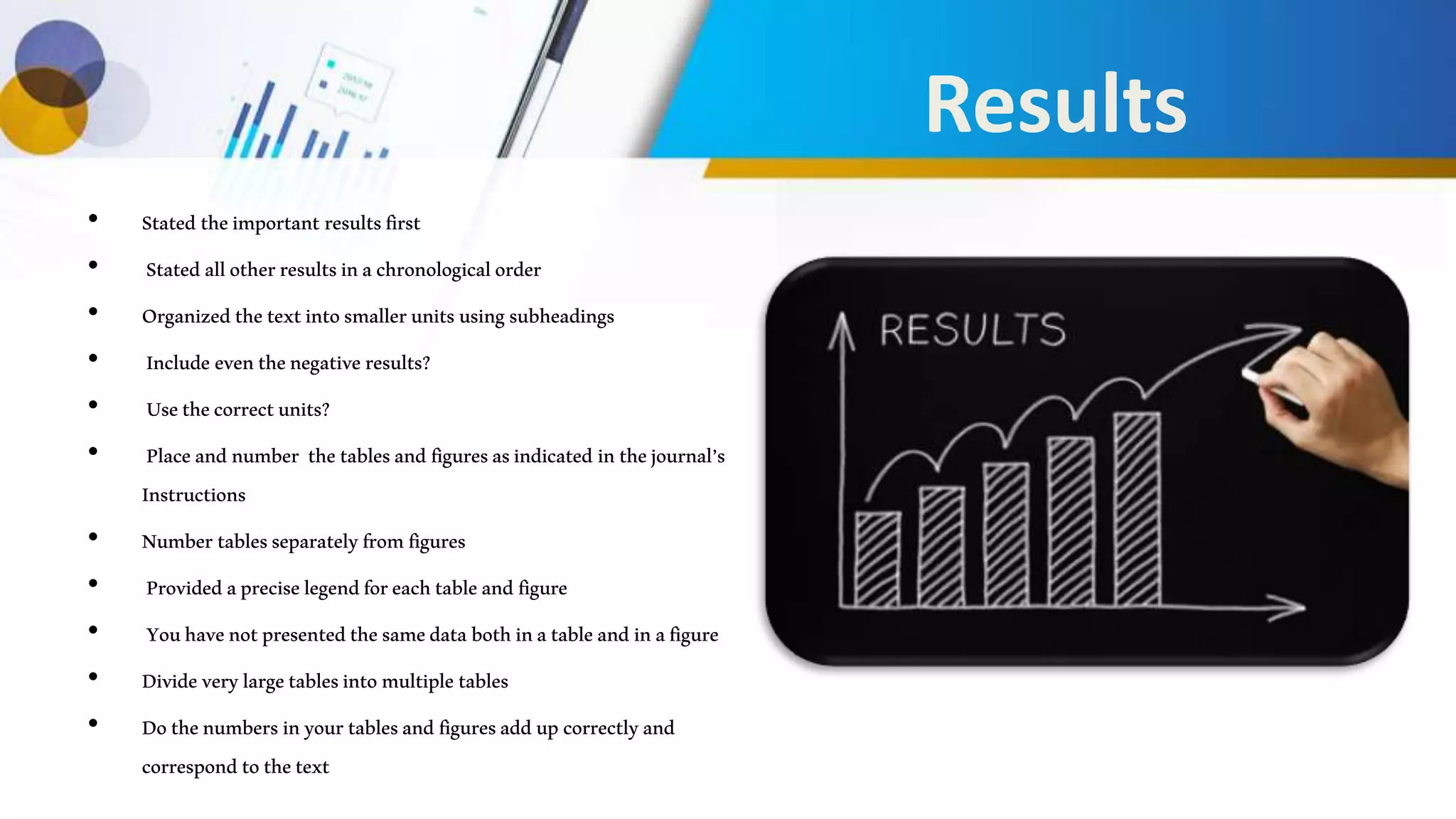
• Statedtheimportant resultsfirst
• Statedallotherresultsinachronologicalorder
• Organizedthetextintosmallerunitsusingsubheadings
• Include eventhenegativeresults?
• Usethecorrectunits?
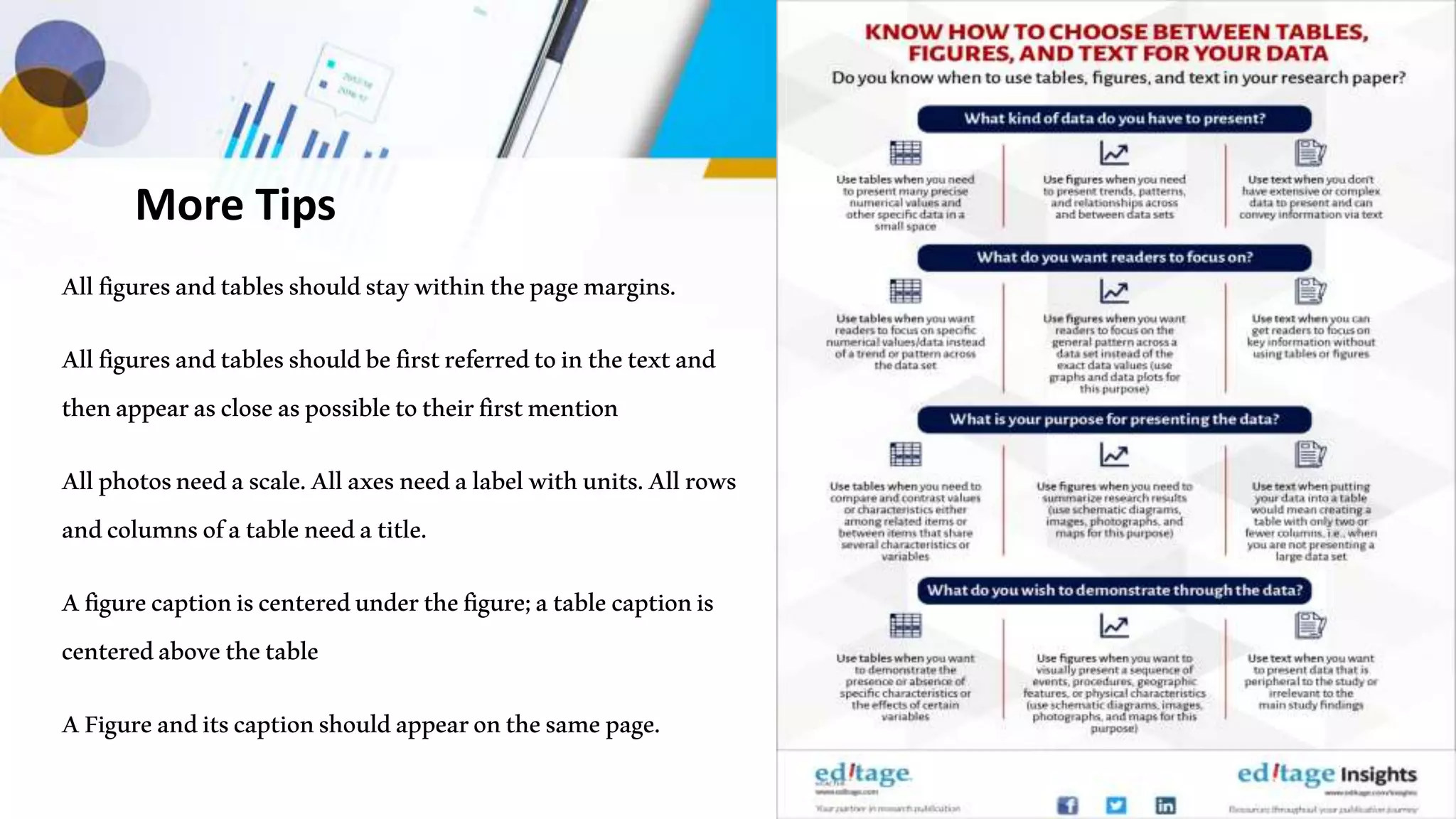
• Placeandnumber thetablesandfiguresasindicated inthejournal’s
Instructions
• Numbertablesseparatelyfromfigures
• Providedapreciselegendforeachtableandfigure
• Youhavenotpresentedthesamedatabothinatableandinafigure
• Divideverylargetablesintomultipletables
• Dothenumbersinyourtablesandfiguresaddupcorrectlyand
correspondtothetext
Tips on effective use of tables and figures in
research papers
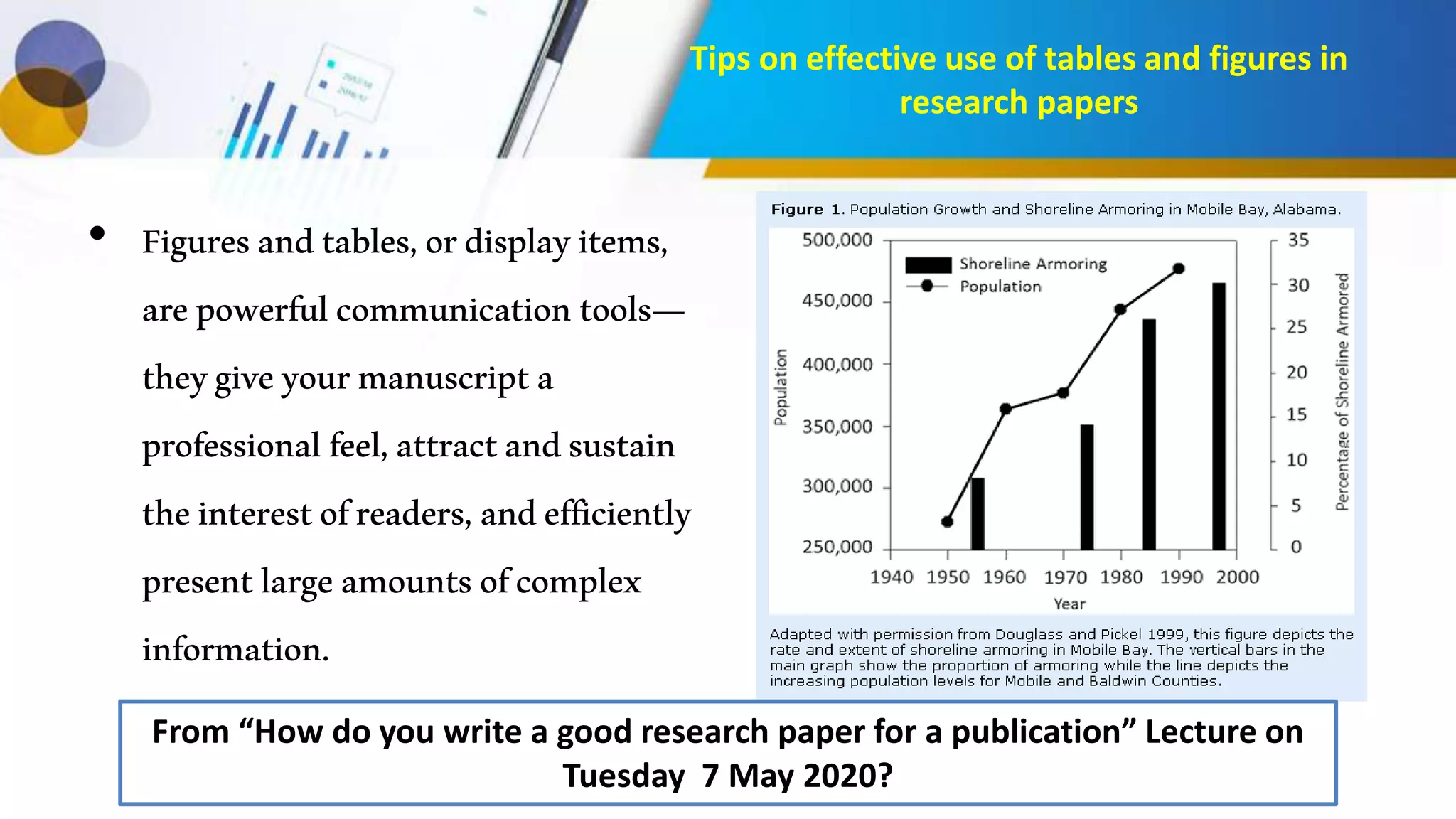
• Figuresandtables,ordisplayitems,
arepowerfulcommunicationtools—
theygiveyourmanuscripta
professionalfeel,attractandsustain
theinterestofreaders,andefficiently
presentlargeamountsofcomplex
information.
From “How do you write a good research paper for a publication” Lecture on
Tuesday 7 May 2020?
Tips on effective use of tables
and figures in research papers
• Ensurethatthetablesandfiguresinyourresearch
manuscriptareself-explanatoryandcanbeunderstood
independentoftext.
• Donotrepeatthecontentsofyourtablesandfigures
withinthetext.Instead,usethetexttofocusonthe
significanceorkeypointsofyourtablesandfigures.
• Writeclear,informativetitlesforyourtablesandfigures,
andlabelcolumnheads,axislabels,figurelabels
• Followyourtargetjournal’sinstructionsforpreparing
tablesandfigures,particularlywithregardtoaspectssuch
asthenumberoftablesandfiguresyoucaninclude,
numberingstyle,titles,imageresolution,fileformats,etc.
If you are including a table or figure that has already been published, ensure that you seek
permission from the copyright holder (usually the publisher) and acknowledge the source
Allfiguresandtablesshouldstaywithinthepagemargins.
Allfiguresandtablesshouldbefirstreferredtointhetextand
thenappearascloseaspossibletotheirfirstmention
Allphotosneedascale.Allaxesneedalabelwithunits.Allrows
andcolumnsofatableneedatitle.
Afigurecaptioniscenteredunderthefigure;atablecaptionis
centeredabovethetable
AFigureanditscaptionshouldappearonthesamepage.
More Tips
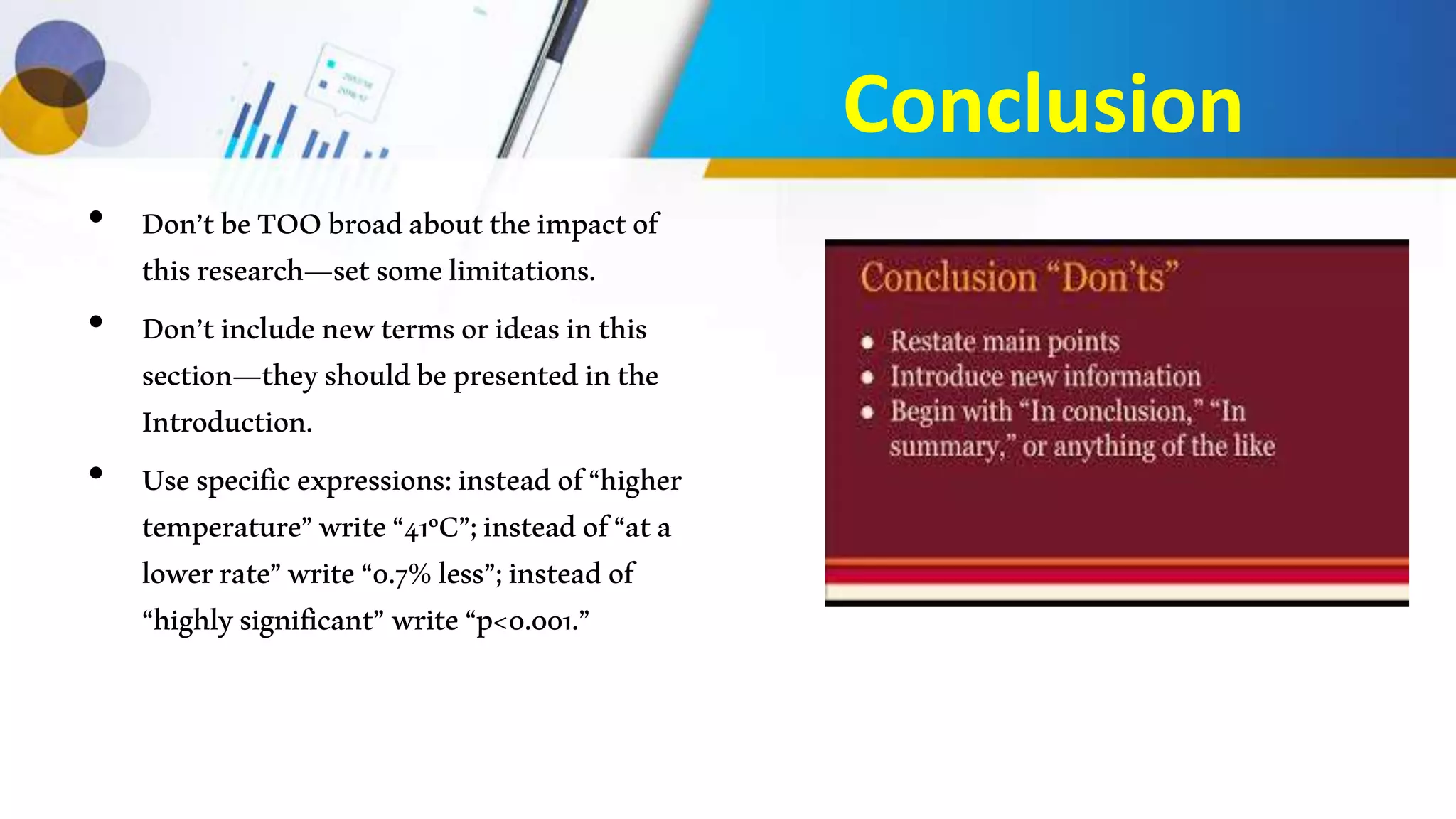
Conclusion
• Don’tbeTOObroadabouttheimpactof
thisresearch—setsomelimitations.
• Don’tincludenewtermsorideasinthis
section—theyshouldbepresentedinthe
Introduction.
• Usespecificexpressions:insteadof“higher
temperature”write“41ºC”;insteadof“ata
lowerrate”write“0.7%less”;insteadof
“highlysignificant”write“p<0.001.”
References
It'simportanttocitesourcesyou
usedinyourresearchforseveral
reasons:
Toshowyourreaderyou'vedone
properresearchbylistingsources
youusedtogetyourinformation.
Tobearesponsiblescholarby
givingcredittootherresearchers
andacknowledgingtheirideas.
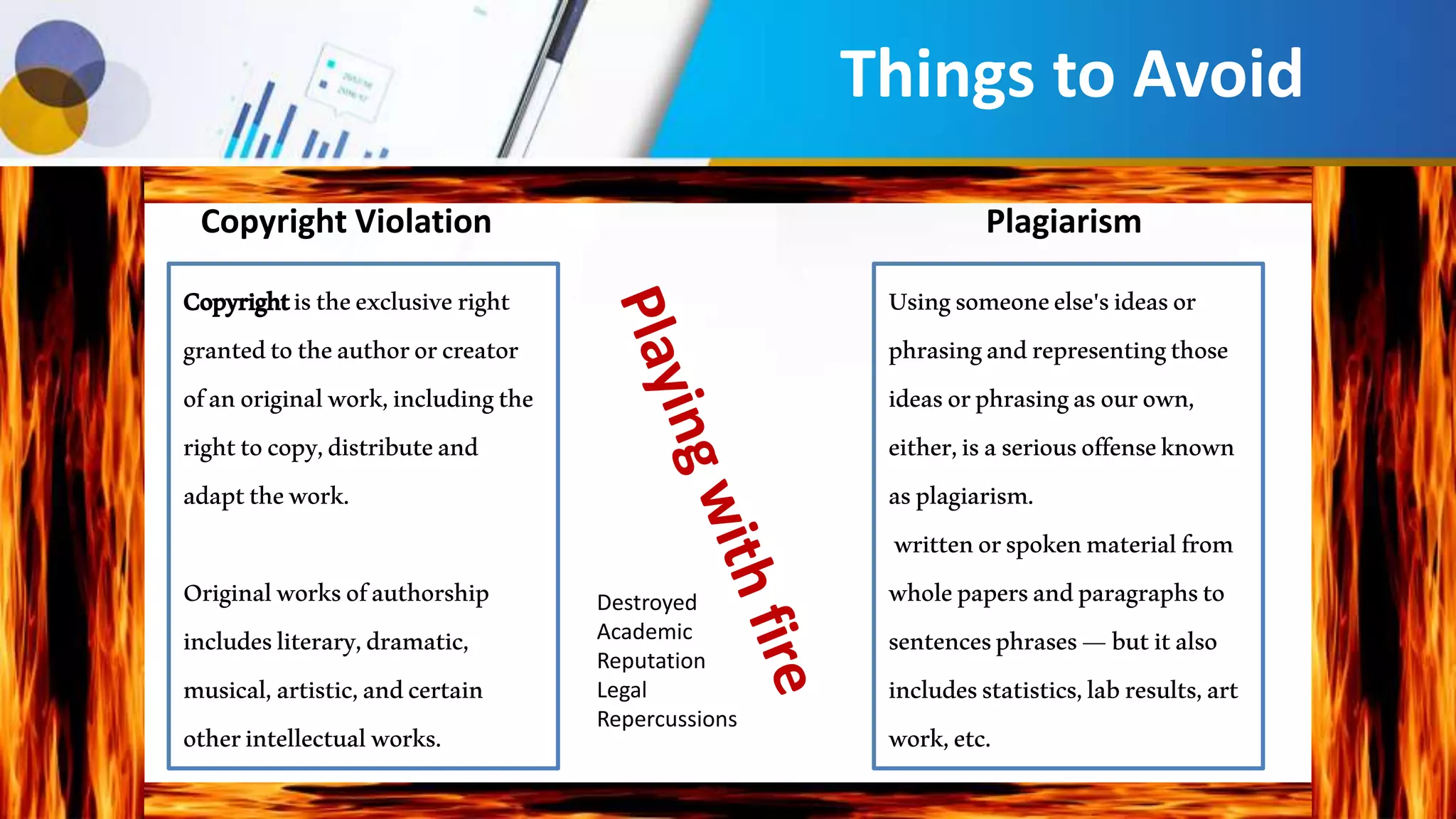
Things to Avoid
Copyright Violation Plagiarism
Copyrightistheexclusiveright
grantedtotheauthororcreator
ofanoriginalwork,includingthe
righttocopy,distributeand
adaptthework.
Originalworksofauthorship
includesliterary,dramatic,
musical,artistic,andcertain
otherintellectualworks.
Usingsomeoneelse'sideasor
phrasingandrepresentingthose
ideasorphrasingasourown,
either,isaseriousoffenseknown
asplagiarism.
writtenorspokenmaterialfrom
wholepapersandparagraphsto
sentencesphrases—butitalso
includesstatistics,labresults,art
work,etc.
Destroyed
Academic
Reputation
Legal
Repercussions
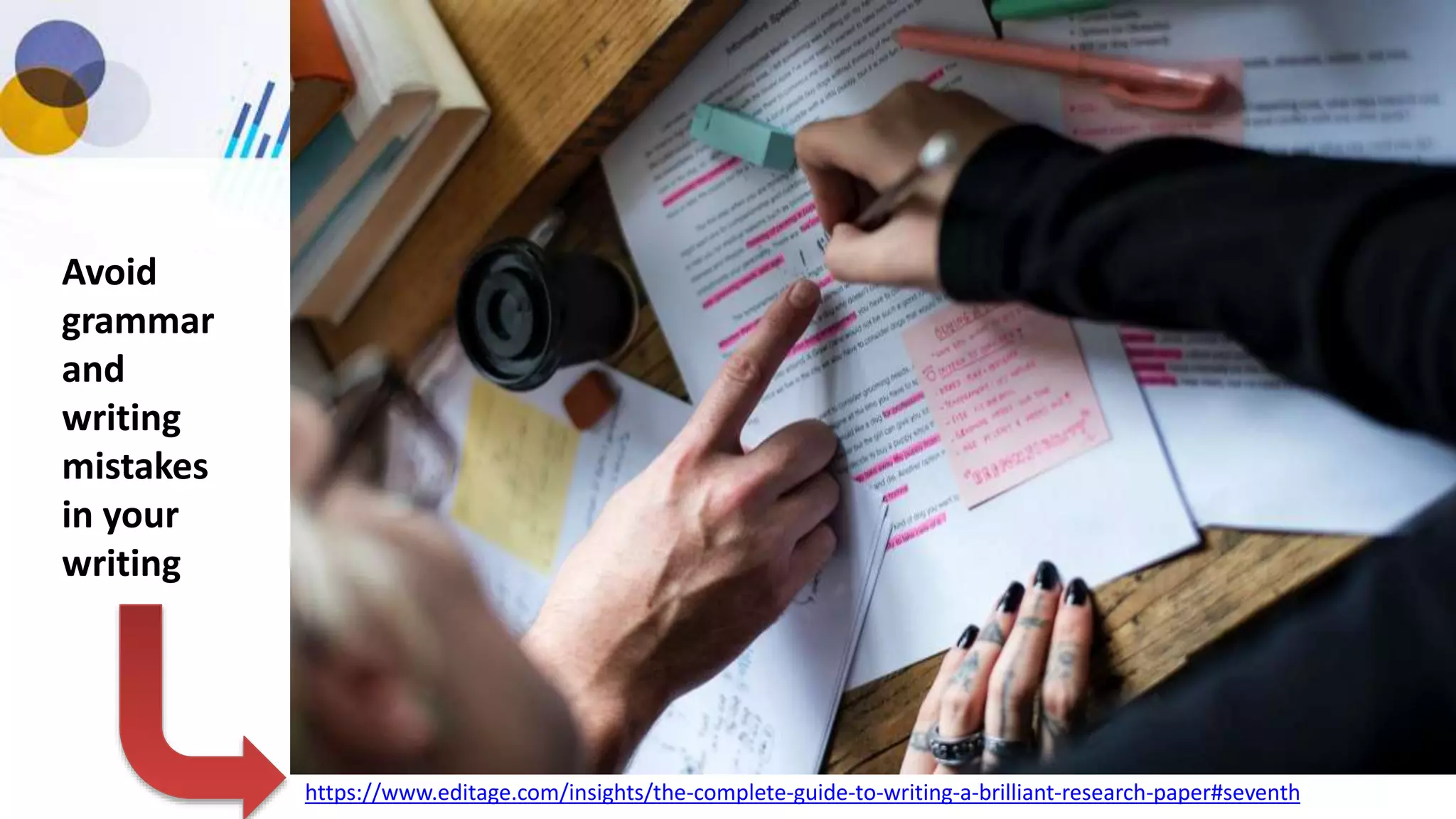
Avoid
grammar
and
writing
mistakes
in your
writing
https://www.editage.com/insights/the-complete-guide-to-writing-a-brilliant-research-paper#seventh
researcher mind…
THE PROBLEM
THE SOLUTION
VALIDATE RESULTS
PUBLISH
Final Words
Q: Can we present the same results
both in a figure and a table within
the manuscript?
Homework
HOW TO CHOOSE KEYWORDS FOR
MY MANUSCRIPT?
Should the keywords of the
manuscript not overlap with the
words used in the title?
Homework
‫علمية‬ ‫جائزة‬ ‫أهم‬
‫عالمية‬ ‫بحثية‬ ‫جهة‬ ‫من‬
ACKNOWLEDGMENT
The essential mission of SRGE toward the research
and education in Egypt is to foster learning and
promoting research integrity in the current and next
generation of researchers in Egypt. SRGE is
rededicating itself to this fundamental purpose.
**Slides are adapted from several presentations, papers, and notes on the internet
as well as Elsevier and Springer ethic, COPE,.. In addition, experiences **
Time: May 7, 2020 22:00 Egypt (10 pm)
Join Zoom Meeting
https://iauvle.zoom.us/j/97880536603
Meeting ID: 978 8053 6603
Top tips for
researchers on
how to avoid
grant proposal
rejection
Next Lecture

How to write a good reserach paper: Guidelines and Tips

  • 1.
    How do youwrite a good research paper for a publication? Tips and Guidelines ‫الدكتور‬ ‫االستاذ‬/‫حسنين‬ ‫عطيفى‬ ‫ابوالعال‬ ‫المصرية‬ ‫البحثية‬ ‫العلمية‬ ‫المدرسة‬ ‫ورئيس‬ ‫مؤسس‬ ‫المعلومات‬ ‫وتكنولوجيا‬ ‫االتصاالت‬ ‫مجلس‬ ‫مقرر‬–‫العلمى‬ ‫البحث‬ ‫أكاديمية‬-‫والذكاء‬ ‫الحاسبات‬ ‫بكلية‬ ‫واألستاذ‬ ‫اإلصطناعى‬–‫القاهرة‬ ‫جامعة‬-‫العلمى‬ ‫للبحث‬ ‫العالمية‬ ‫سكوبس‬ ‫جائزة‬ ‫على‬ ‫الحاصل‬2019‫الدول‬ ‫منظمة‬ ‫وجائزة‬ ‫والثقافة‬ ‫للعلوم‬ ‫االسالمية‬(‫اإليسيسكو‬)–‫عبد‬ ‫وجائزة‬‫والفن‬ ‫العلوم‬ ‫ووسام‬ ‫العرب‬ ‫للباحثين‬ ‫شومان‬ ‫الحميد‬‫الطبقة‬ ‫من‬ ‫ون‬ ‫و‬ ‫االولى‬...
  • 2.
    Agenda • Science andPublications Aims • Part (1) The Structure of a Research Paper • Part (2) Paper Sections tips – Title – Keywords – Introduction – Methods – Results – Conclusion – References • Last words
  • 3.
  • 4.
    ALL should behappy Peerreviewandpublicationare time-consuming,frequently involvingmorethanayearbetween submissionandpublication.The processisalsohighlycompetitive. Forexample,thehighly-regarded journalScienceacceptslessthan8% ofthearticlesitreceives
  • 5.
    Knowledge: Share & publish •Sharetheknowledgeyouhavegained aboutaspecificareaof studywithotherresearchers • Showhowyourstudyfitsintocurrentscience. • Informthepublicaboutimportantscientific activity. • ExplainclearlyandBrieflythecontextofyourstudy,including relevantliterature(Introduction),themethodsusedfor researchandanalysis(Methods),thefindingsofyourstudy (Results),andtheimplicationsfortheseresultsandfurther researchthatmightbeneeded (DiscussionandConclusion). Knowledge should be shared. How to share? Publish
  • 6.
    Publish Greatest ideas areworthless if you keep them to yourself. Spread your idea and get feedback, do research and publish. Fallacy about Research… You need a fantastic idea to write a research paper. Level 1 Publications •Research papers •Magazine articles •Research book (Editing) Level 2 Publications •Thought paper •Blogs/Wikis Level 3 Publications •Text books •Case studies Magazine articles:-Articles in magazines are typically written for the general reading public and don't reflect in-depth research, for example “IEEE Multimedia Magazine” Research Book:- book that includes chapters or sections written by multiple researchers might include literature surveys for each of the separate parts of the book. topic in a less formal way than a journal article or conference paper. RESEARCH is not complete until it is published
  • 7.
    Gather information and Studyof research material Think of possible solutions; Choose the best solution Implement solution; Gather experimental data Evaluate results and make necessary changes Repeat necessary step Method for Problem SolvingResearch Problem Solution Start End Research Path
  • 8.
    Thefinalstageofa scientificproject • Publicationof a research represents thefinalstageofascientificproject.It is the culmination of many months and sometimes years of meticulous planning, execution, and analyses of hundredsofexperiments
  • 9.
    Journey – Idea toResearch Paper
  • 10.
    THE STRUCTURE OFA RESEARCH PAPER Part (I)
  • 11.
    The Structure ofa Research Paper
  • 12.
  • 13.
    When do youwrite it? • Introduction Section – Write it last—after the conclusion and before the title and abstract • Methods Section – First section you write—after preparing your figures and tables • Results Section – After the Methods and before the Discussion/Conclusion • Discussion/Conclusion Section – After the Results Section and before the Introduction
  • 14.
    • I =Introduction, – what problem was studied • M = Methods, – how was the problem studied • R = Results, – what are the findings • A = and • D = Discussion, – what do these findings mean Organization of a Research Paper: The IMRAD Model The most common is the IMRAD: If a number of methods were used to achieve directly related results: M + R = Experimental section The results are so complex that they need to be immediately discussed: R + D = Results and Discussion Section It indicates a pattern or format rather than a complete list of headings or components of research papers; the missing parts of a paper from IMRAD format are: Title, Authors, Keywords, Abstract, Conclusions, and References. Additionally, some papers include Acknowledgments and Appendices.
  • 15.
    (1) Coherence • Allofthepartsofyourpapershouldfittogetherin anorderthatmakessense. •Includeallnecessaryinformationineachsection neededtounderstandtheothersections. • Donotrepeatinformationunlessitisnecessary. • Ensurethatyoursentencesaregrammaticallyand logicallycoherent. (2) Organization Most scientific papers follow the IMRD structure—be sure to put the right parts in the right section (e.g., don’t include the literature review in the Methods section). Important factors Important factors to consider when writing a research paper?
  • 16.
    (3) Relevance • Asyou do research you will notice that there are a great many pieces of information and data you COULD include in your paper. However, you need to conform to length guidelines and keep your paper focused. Therefore, you should be sure that you are choosing a proper number of items to focus on for each section. – For example, if your study has 10 results but your paper can only be 4,000 words, you might want to narrow down these results to only those that support your hypothesis, perhaps the 3-5 most important results. • The same applies to the Introduction, where you must choose what background, context, and relevant literature to include. Be sure to only include information that gives readers a focused and relevant understanding of your area of study.
  • 17.
    (4) Clarity Readable • Itmeans ensuring that each paragraph and sentence in your paper is natural and easy to read and understand: proper grammar, phrasing, and style are key to writing a paper that is readable and comprehensible to both experts and possibly non-experts, depending on your target audience. GUIDE FOR AUTHORS • Perhaps the most important rule is to conform to the formatting guidelines and other style conventions of the journal to which you are submitting. Check the “GUIDE FOR AUTHORS” section of the journal or conference, or if the paper is for a class, ensure that you are using the proper formatting requirements.
  • 18.
  • 19.
    READ ARTICLES FROMTARGET JOURNAL General tips
  • 20.
    A good researchpaper title • Condensesthepaper’scontent inafewwords • Capturesthereaders’attention • Differentiatesthepaperfrom otherpapersofthesamesubject area Paper title
  • 21.
    Paper title Keep itsimple, brief and attractive It convey exactly what your paper is about If you’ve conducted a specific type of experiment or analysis does your title reflect it? It should include keywords from your paper You should NOT used abbreviations or jargon in the title • Think, rethink of the title before submitting the paper • Be very careful of the grammatical errors due to faulty word order • Avoid the use of the word “using
  • 22.
    Abstract • Ashort,self-contained,powerfulsummary ofanarticle,paperorthesis; • Length:between150and250words; •Layout:usuallyonesingleparagraph;font sizeisdifferentfromthemaintext; • Position:usuallyatthebeginning ofthe paper • Anabstractisashortsummaryofa longer.Theabstractconciselyreports theaimsandoutcomesofyour researchsothatreadersknowexactly whatthepaperisabout. • Writetheabstractattheveryend, whenyou’vecompletedtherestofthe text. GUIDLINES
  • 23.
    Abstract and Tips Mainparts • Yourresearchproblem andobjectives • Yourmethods • Yourkeyresultsorarguments • Yourconclusion What not to include • Informationnotcontainedintheoriginalwork; • Referencestootherwork; • Quotationsfromtheoriginalwork/otherworks; • Lengthyexplanationsofwordsandconcepts; • Unexplainedacronymsorabbreviations • Tables,Figures andmapsandEquations Tips: Key words and draft highlights Tips: Read other abstracts Tips: Avoid discussion of others’ work, Tips: Always stick to the word limit.
  • 24.
    Creating keywords Keywordsarewordsthatcapturetheessenceofyourpaper. Keywordsmakeyourpapersearchableandensurethatyouget morecitations.Therefore,itisimportanttoincludethemost relevantkeywordsthatwillhelpotherauthorsfindyourpaper. 4-5 keywords Tips:Think from the point of view of the reader. What keywords would the reader search for that would help retrieve your article? Tips: The full forms of shortened words or acronyms and abbreviations should be included as well. Tips: Do not use words or phrases from the title as keywords.
  • 25.
    Introduction • Backgroundinformation • Motivations •Keyprimaryliterature • Researchprobleminvestigated • Approaches What is the problem to be solved? (background and problem) What do we know about this problem? (literature) Are there any existing solutions? (literature) What are the limitations or gaps in knowledge of existing solutions? What do you hope to achieve with this study? (statement of purpose) Blockchain in agriculture CS viewagriculture view
  • 26.
    • Keepyourfirstsentenceshort. • Don’trepeatthetitle. •Keeptheintroductionbrief. • Startbroadlyandthennarrowdown • Show sentencestoexplainwhatthearticlecovers. • showwhythetopicisimportant. • Refertoaconcernorproblemyourreadersmighthave. • But...becarefultellingstories. • Avoidgivingtoomanycitationsforonepoint • Donotincludefigures,Equations,Tables • Donotdivideditintosubsections Introduction :. Tips
  • 27.
    Methods • ListtheMethodsinthesameorderasthey willappearintheResultssection. • Materialshouldbeorganizedbytopicfrom mosttoleastimportant. •Headingscanbeusedtoseparateddifferent results;paragraphsareoftenusedinstead. Structure the section so that it tells the story of your research Tips: Visual presentation: To help the readers follow the study design or methodology better, visual elements like the schematic diagram,
  • 28.
    The Results sectionshould include: ( Organization of Results) • FindingspresentedinthesameorderasintheMethods section • Datapresentedintables,charts,graphs,andotherfigures (placedamongresearchtextoronaseparatepage) • Reportsondatacollection,recruitment,and/or participants • Datathatcorrespondstothecentralresearch question(s)Secondaryfindings(secondaryoutcomes, subgroupanalyses,etc.) Write the Results in the same order as you wrote your Methods. One trusted method of writing the results is addressing specific research questions presented in the figures. Within each research question, present the type of data that addresses that research question. Results section
  • 29.
    Results • Statedtheimportant resultsfirst •Statedallotherresultsinachronologicalorder • Organizedthetextintosmallerunitsusingsubheadings • Include eventhenegativeresults? • Usethecorrectunits? • Placeandnumber thetablesandfiguresasindicated inthejournal’s Instructions • Numbertablesseparatelyfromfigures • Providedapreciselegendforeachtableandfigure • Youhavenotpresentedthesamedatabothinatableandinafigure • Divideverylargetablesintomultipletables • Dothenumbersinyourtablesandfiguresaddupcorrectlyand correspondtothetext
  • 30.
    Tips on effectiveuse of tables and figures in research papers • Figuresandtables,ordisplayitems, arepowerfulcommunicationtools— theygiveyourmanuscripta professionalfeel,attractandsustain theinterestofreaders,andefficiently presentlargeamountsofcomplex information. From “How do you write a good research paper for a publication” Lecture on Tuesday 7 May 2020?
  • 31.
    Tips on effectiveuse of tables and figures in research papers • Ensurethatthetablesandfiguresinyourresearch manuscriptareself-explanatoryandcanbeunderstood independentoftext. • Donotrepeatthecontentsofyourtablesandfigures withinthetext.Instead,usethetexttofocusonthe significanceorkeypointsofyourtablesandfigures. • Writeclear,informativetitlesforyourtablesandfigures, andlabelcolumnheads,axislabels,figurelabels • Followyourtargetjournal’sinstructionsforpreparing tablesandfigures,particularlywithregardtoaspectssuch asthenumberoftablesandfiguresyoucaninclude, numberingstyle,titles,imageresolution,fileformats,etc. If you are including a table or figure that has already been published, ensure that you seek permission from the copyright holder (usually the publisher) and acknowledge the source
  • 32.
  • 33.
    Conclusion • Don’tbeTOObroadabouttheimpactof thisresearch—setsomelimitations. • Don’tincludenewtermsorideasinthis section—theyshouldbepresentedinthe Introduction. •Usespecificexpressions:insteadof“higher temperature”write“41ºC”;insteadof“ata lowerrate”write“0.7%less”;insteadof “highlysignificant”write“p<0.001.”
  • 34.
  • 35.
    Things to Avoid CopyrightViolation Plagiarism Copyrightistheexclusiveright grantedtotheauthororcreator ofanoriginalwork,includingthe righttocopy,distributeand adaptthework. Originalworksofauthorship includesliterary,dramatic, musical,artistic,andcertain otherintellectualworks. Usingsomeoneelse'sideasor phrasingandrepresentingthose ideasorphrasingasourown, either,isaseriousoffenseknown asplagiarism. writtenorspokenmaterialfrom wholepapersandparagraphsto sentencesphrases—butitalso includesstatistics,labresults,art work,etc. Destroyed Academic Reputation Legal Repercussions
  • 36.
  • 37.
    researcher mind… THE PROBLEM THESOLUTION VALIDATE RESULTS PUBLISH Final Words
  • 38.
    Q: Can wepresent the same results both in a figure and a table within the manuscript? Homework
  • 39.
    HOW TO CHOOSEKEYWORDS FOR MY MANUSCRIPT? Should the keywords of the manuscript not overlap with the words used in the title? Homework
  • 40.
  • 41.
    ACKNOWLEDGMENT The essential missionof SRGE toward the research and education in Egypt is to foster learning and promoting research integrity in the current and next generation of researchers in Egypt. SRGE is rededicating itself to this fundamental purpose. **Slides are adapted from several presentations, papers, and notes on the internet as well as Elsevier and Springer ethic, COPE,.. In addition, experiences ** Time: May 7, 2020 22:00 Egypt (10 pm) Join Zoom Meeting https://iauvle.zoom.us/j/97880536603 Meeting ID: 978 8053 6603
  • 42.
    Top tips for researcherson how to avoid grant proposal rejection Next Lecture

Editor's Notes

  • #16 Important factors to consider when writing a research paper?
  • #26 What is the problem to be solved? (background and problem)What do we know about this problem? (literature)Are there any existing solutions? (literature)What are the limitations or gaps in knowledge of existing solutions?What do you hope to achieve with this study? (hypothesis/statement of purpose)
  • #40 How to choose keywords for my manuscript?