How do I prevent myself
from getting cancer?
How do I prevent myself from
getting cancer?
Dr. ASHOK UTTAM CHANDANI
DIVISION OF ONCOLOGY
MAFRAQ HOSPITAL
ABU DHABI
Factors
Factors that may affect the risk of cancer
• Diet
• Alcohol
• Physical Activity
• Obesity
• Environmental Risk Factors
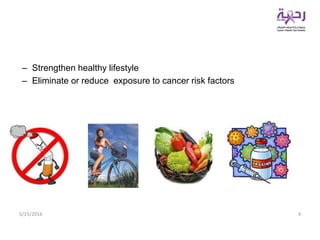
– Strengthen healthy lifestyle
– Eliminate or reduce exposure to cancer risk factors
5/15/2016 4
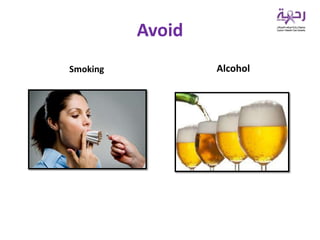
Avoid
Smoking Alcohol
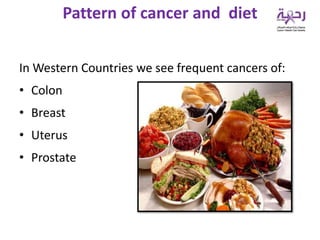
Pattern of cancer and diet
In Western Countries we see frequent cancers of:
• Colon
• Breast
• Uterus
• Prostate
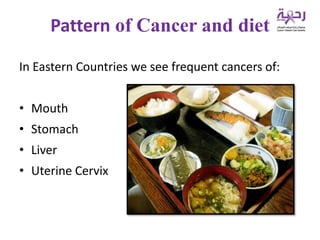
Pattern of Cancer and diet
In Eastern Countries we see frequent cancers of:
• Mouth
• Stomach
• Liver
• Uterine Cervix
Fruits & vegetables
Diet high in plant food including vegetables & fruits are
associated with
• Low occurrence of CAD
• Cancer of lung, colon, esophagus & stomach
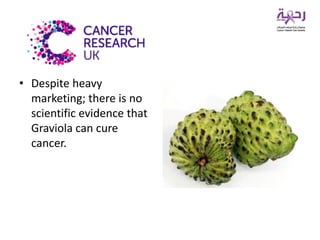
• Despite heavy
marketing; there is no
scientific evidence that
Graviola can cure
cancer.
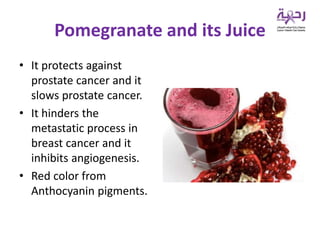
Pomegranate and its Juice
• It protects against
prostate cancer and it
slows prostate cancer.
• It hinders the
metastatic process in
breast cancer and it
inhibits angiogenesis.
• Red color from
Anthocyanin pigments.
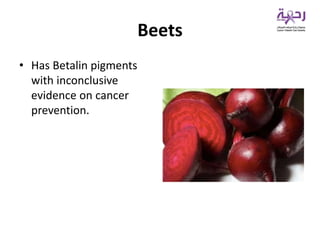
Beets
• Has Betalin pigments
with inconclusive
evidence on cancer
prevention.
Don’t mix Pomegrante juice with
Beets juice:
• Adding anthocyanin pigments with betalain
pigmentd neutralizes the potential anti-cancer
activity.
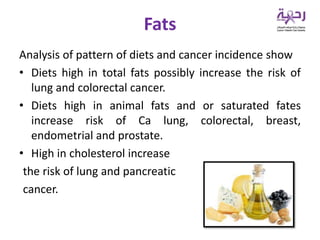
Fats
Analysis of pattern of diets and cancer incidence show
• Diets high in total fats possibly increase the risk of
lung and colorectal cancer.
• Diets high in animal fats and or saturated fates
increase risk of Ca lung, colorectal, breast,
endometrial and prostate.
• High in cholesterol increase
the risk of lung and pancreatic
cancer.
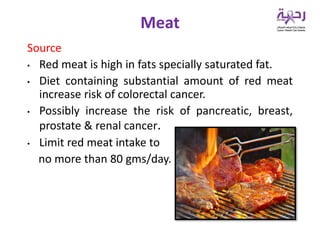
Source
• Red meat is high in fats specially saturated fat.
• Diet containing substantial amount of red meat
increase risk of colorectal cancer.
• Possibly increase the risk of pancreatic, breast,
prostate & renal cancer.
• Limit red meat intake to
no more than 80 gms/day.
Meat
• Neal Freedman, Ph.D., Division of Cancer Epidemiology,
NCI, examined the association between coffee drinking
and risk of death. Coffee drinking was not associated with
cancer mortality among women, but there was a slight
and only marginally statistically significant association of
heavier coffee intake with increased risk of cancer death
among men.
• This rise was in bladder and lung cancer, may be because
they smoke with coffee.
Coffee
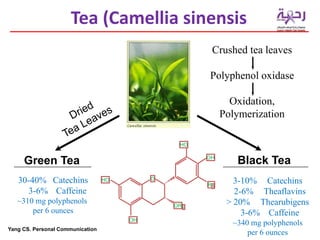
Green Tea Black Tea
30-40% Catechins
3-6% Caffeine
~310 mg polyphenols
per 6 ounces
3-10% Catechins
2-6% Theaflavins
> 20% Thearubigens
3-6% Caffeine
~340 mg polyphenols
per 6 ounces
Crushed tea leaves
Polyphenol oxidase
Oxidation,
Polymerization
O
OR2
HO
OH
OH
R1
HO
Yang CS. Personal Communication
Tea (Camellia sinensis
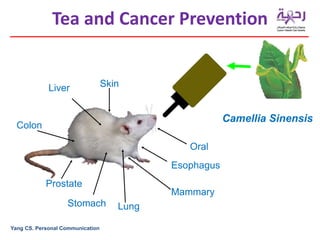
Tea and Cancer Prevention
Camellia Sinensis
Yang CS. Personal Communication
SkinLiver
Colon
Oral
Esophagus
LungStomach
Prostate
Mammary
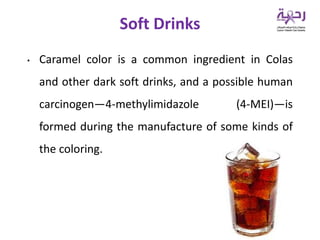
• Caramel color is a common ingredient in Colas
and other dark soft drinks, and a possible human
carcinogen—4-methylimidazole (4-MEI)—is
formed during the manufacture of some kinds of
the coloring.
Soft Drinks
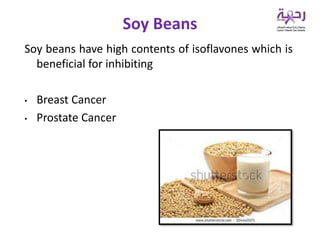
Soy beans have high contents of isoflavones which is
beneficial for inhibiting
• Breast Cancer
• Prostate Cancer
Soy Beans
• Salt increases risk of stomach cancer.
Salt
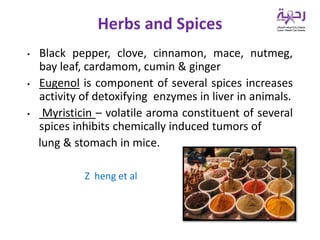
• Black pepper, clove, cinnamon, mace, nutmeg,
bay leaf, cardamom, cumin & ginger
• Eugenol is component of several spices increases
activity of detoxifying enzymes in liver in animals.
• Myristicin – volatile aroma constituent of several
spices inhibits chemically induced tumors of
lung & stomach in mice.
Z heng et al
Herbs and Spices
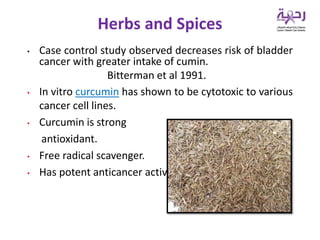
• Case control study observed decreases risk of bladder
cancer with greater intake of cumin.
Bitterman et al 1991.
• In vitro curcumin has shown to be cytotoxic to various
cancer cell lines.
• Curcumin is strong
antioxidant.
• Free radical scavenger.
• Has potent anticancer activity.
Herbs and Spices
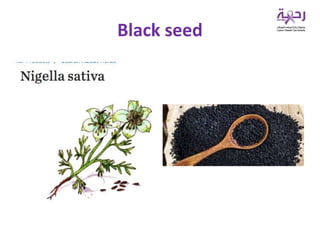
Black seed
• Evidence suggests that N. sativa has anticancer
properties. Thymoquinone and other constituents of
the seeds reduced the growth and size of tumors in
rats.
• Thymoquinone also enhanced the anticancer effects
of doxorubicin in certain cancer cell lines.
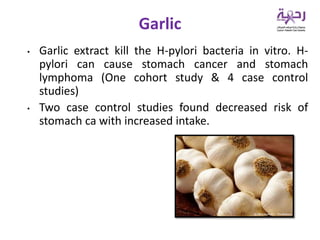
• Garlic extract kill the H-pylori bacteria in vitro. H-
pylori can cause stomach cancer and stomach
lymphoma (One cohort study & 4 case control
studies)
• Two case control studies found decreased risk of
stomach ca with increased intake.
Garlic
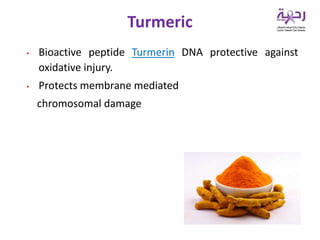
• Bioactive peptide Turmerin DNA protective against
oxidative injury.
• Protects membrane mediated
chromosomal damage
Turmeric
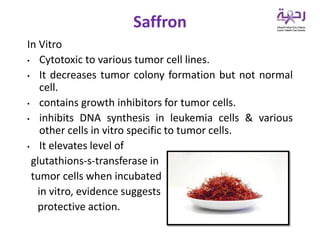
In Vitro
• Cytotoxic to various tumor cell lines.
• It decreases tumor colony formation but not normal
cell.
• contains growth inhibitors for tumor cells.
• inhibits DNA synthesis in leukemia cells & various
other cells in vitro specific to tumor cells.
• It elevates level of
glutathions-s-transferase in
tumor cells when incubated
in vitro, evidence suggests
protective action.
Saffron
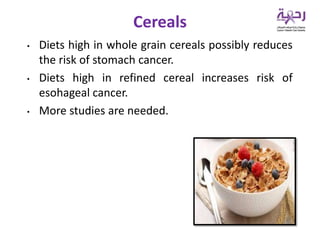
• Diets high in whole grain cereals possibly reduces
the risk of stomach cancer.
• Diets high in refined cereal increases risk of
esohageal cancer.
• More studies are needed.
Cereals
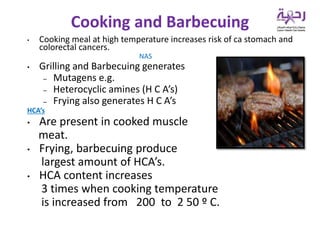
• Cooking meal at high temperature increases risk of ca stomach and
colorectal cancers.

NAS
• Grilling and Barbecuing generates
– Mutagens e.g.
– Heterocyclic amines (H C A’s)
– Frying also generates H C A’s
HCA’s
• Are present in cooked muscle
meat.
• Frying, barbecuing produce
largest amount of HCA’s.
• HCA content increases
3 times when cooking temperature
is increased from 200 to 2 50 º C.
Cooking and Barbecuing
What should we do?
• Limit consumption of fatty foods particularly
those of animal origin.
• Choose modest amount of vegetable oils.
• Limit consumption of salted foods.
• Limit use of salt in cooking & table salt
• Preferable to eat fresh food.
• Food stored at room temperature for prolonged
period should be avoided (due to fungal
contamination).
• Maintaining Healthy Body Weight
• Daily Physical Exercise.
Recommendations
• Use refrigeration rather than salting/curing.
• Reduced charred foods.
• Burning of meat & fish juices should be avoided.
• Reduce eating fish & meat grilled in direct flame.
• Reduce consuming smoked & cured meat.
Dietary supplements
• If above recommendations are followed, no
supplementation is needed.
Recommendations
DISCLAIMER: The information contained in this presentation is for general
information purposes intended for cancer patients, caregivers, and community.
The images and information are provided by Cancer Patient Care Society (CPCS) -
Rahma from various websites and resources. We endeavour to keep the
information up to date and correct, we make no representations or warranties of
any kind, express or implied, about the completeness, accuracy, reliability,
suitability or availability with respect to the source, contents or related graphics in
this presentation.
How to prevent myself from getting cancer ?

How to prevent myself from getting cancer ?

  • 1.
    How do Iprevent myself from getting cancer?
  • 2.
    How do Iprevent myself from getting cancer? Dr. ASHOK UTTAM CHANDANI DIVISION OF ONCOLOGY MAFRAQ HOSPITAL ABU DHABI
  • 3.
    Factors Factors that mayaffect the risk of cancer • Diet • Alcohol • Physical Activity • Obesity • Environmental Risk Factors
  • 4.
    – Strengthen healthylifestyle – Eliminate or reduce exposure to cancer risk factors 5/15/2016 4
  • 5.
  • 6.
    Pattern of cancerand diet In Western Countries we see frequent cancers of: • Colon • Breast • Uterus • Prostate
  • 7.
    Pattern of Cancerand diet In Eastern Countries we see frequent cancers of: • Mouth • Stomach • Liver • Uterine Cervix
  • 9.
    Fruits & vegetables Diethigh in plant food including vegetables & fruits are associated with • Low occurrence of CAD • Cancer of lung, colon, esophagus & stomach
  • 10.
    • Despite heavy marketing;there is no scientific evidence that Graviola can cure cancer.
  • 12.
    Pomegranate and itsJuice • It protects against prostate cancer and it slows prostate cancer. • It hinders the metastatic process in breast cancer and it inhibits angiogenesis. • Red color from Anthocyanin pigments.
  • 13.
    Beets • Has Betalinpigments with inconclusive evidence on cancer prevention.
  • 14.
    Don’t mix Pomegrantejuice with Beets juice: • Adding anthocyanin pigments with betalain pigmentd neutralizes the potential anti-cancer activity.
  • 15.
    Fats Analysis of patternof diets and cancer incidence show • Diets high in total fats possibly increase the risk of lung and colorectal cancer. • Diets high in animal fats and or saturated fates increase risk of Ca lung, colorectal, breast, endometrial and prostate. • High in cholesterol increase the risk of lung and pancreatic cancer.
  • 16.
    Source • Red meatis high in fats specially saturated fat. • Diet containing substantial amount of red meat increase risk of colorectal cancer. • Possibly increase the risk of pancreatic, breast, prostate & renal cancer. • Limit red meat intake to no more than 80 gms/day. Meat
  • 17.
    • Neal Freedman,Ph.D., Division of Cancer Epidemiology, NCI, examined the association between coffee drinking and risk of death. Coffee drinking was not associated with cancer mortality among women, but there was a slight and only marginally statistically significant association of heavier coffee intake with increased risk of cancer death among men. • This rise was in bladder and lung cancer, may be because they smoke with coffee. Coffee
  • 18.
    Green Tea BlackTea 30-40% Catechins 3-6% Caffeine ~310 mg polyphenols per 6 ounces 3-10% Catechins 2-6% Theaflavins > 20% Thearubigens 3-6% Caffeine ~340 mg polyphenols per 6 ounces Crushed tea leaves Polyphenol oxidase Oxidation, Polymerization O OR2 HO OH OH R1 HO Yang CS. Personal Communication Tea (Camellia sinensis
  • 19.
    Tea and CancerPrevention Camellia Sinensis Yang CS. Personal Communication SkinLiver Colon Oral Esophagus LungStomach Prostate Mammary
  • 20.
    • Caramel coloris a common ingredient in Colas and other dark soft drinks, and a possible human carcinogen—4-methylimidazole (4-MEI)—is formed during the manufacture of some kinds of the coloring. Soft Drinks
  • 21.
    Soy beans havehigh contents of isoflavones which is beneficial for inhibiting • Breast Cancer • Prostate Cancer Soy Beans
  • 22.
    • Salt increasesrisk of stomach cancer. Salt
  • 23.
    • Black pepper,clove, cinnamon, mace, nutmeg, bay leaf, cardamom, cumin & ginger • Eugenol is component of several spices increases activity of detoxifying enzymes in liver in animals. • Myristicin – volatile aroma constituent of several spices inhibits chemically induced tumors of lung & stomach in mice. Z heng et al Herbs and Spices
  • 24.
    • Case controlstudy observed decreases risk of bladder cancer with greater intake of cumin. Bitterman et al 1991. • In vitro curcumin has shown to be cytotoxic to various cancer cell lines. • Curcumin is strong antioxidant. • Free radical scavenger. • Has potent anticancer activity. Herbs and Spices
  • 25.
  • 26.
    • Evidence suggeststhat N. sativa has anticancer properties. Thymoquinone and other constituents of the seeds reduced the growth and size of tumors in rats. • Thymoquinone also enhanced the anticancer effects of doxorubicin in certain cancer cell lines.
  • 27.
    • Garlic extractkill the H-pylori bacteria in vitro. H- pylori can cause stomach cancer and stomach lymphoma (One cohort study & 4 case control studies) • Two case control studies found decreased risk of stomach ca with increased intake. Garlic
  • 28.
    • Bioactive peptideTurmerin DNA protective against oxidative injury. • Protects membrane mediated chromosomal damage Turmeric
  • 29.
    In Vitro • Cytotoxicto various tumor cell lines. • It decreases tumor colony formation but not normal cell. • contains growth inhibitors for tumor cells. • inhibits DNA synthesis in leukemia cells & various other cells in vitro specific to tumor cells. • It elevates level of glutathions-s-transferase in tumor cells when incubated in vitro, evidence suggests protective action. Saffron
  • 30.
    • Diets highin whole grain cereals possibly reduces the risk of stomach cancer. • Diets high in refined cereal increases risk of esohageal cancer. • More studies are needed. Cereals
  • 31.
    • Cooking mealat high temperature increases risk of ca stomach and colorectal cancers. NAS • Grilling and Barbecuing generates – Mutagens e.g. – Heterocyclic amines (H C A’s) – Frying also generates H C A’s HCA’s • Are present in cooked muscle meat. • Frying, barbecuing produce largest amount of HCA’s. • HCA content increases 3 times when cooking temperature is increased from 200 to 2 50 º C. Cooking and Barbecuing
  • 32.
  • 33.
    • Limit consumptionof fatty foods particularly those of animal origin. • Choose modest amount of vegetable oils. • Limit consumption of salted foods. • Limit use of salt in cooking & table salt • Preferable to eat fresh food. • Food stored at room temperature for prolonged period should be avoided (due to fungal contamination). • Maintaining Healthy Body Weight • Daily Physical Exercise. Recommendations
  • 34.
    • Use refrigerationrather than salting/curing. • Reduced charred foods. • Burning of meat & fish juices should be avoided. • Reduce eating fish & meat grilled in direct flame. • Reduce consuming smoked & cured meat. Dietary supplements • If above recommendations are followed, no supplementation is needed. Recommendations
  • 35.
    DISCLAIMER: The informationcontained in this presentation is for general information purposes intended for cancer patients, caregivers, and community. The images and information are provided by Cancer Patient Care Society (CPCS) - Rahma from various websites and resources. We endeavour to keep the information up to date and correct, we make no representations or warranties of any kind, express or implied, about the completeness, accuracy, reliability, suitability or availability with respect to the source, contents or related graphics in this presentation.