Creating a Web Site


Image from: http://ataconsultingllc.com/
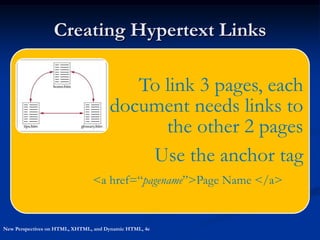
Creating Hypertext Links

                                         To link 3 pages, each
                                      document needs links to
                                            the other 2 pages
                                          Use the anchor tag
                                <a href=“pagename”>Page Name </a>


New Perspectives on HTML, XHTML, and Dynamic HTML, 4e
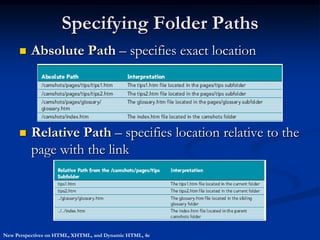
Specifying Folder Paths
         Absolute Path – specifies exact location


         Relative Path – specifies location relative to the
          page with the link


New Perspectives on HTML, XHTML, and Dynamic HTML, 4e
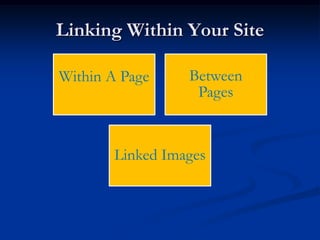
Linking Within Your Site

Within A Page    Between
                  Pages


       Linked Images
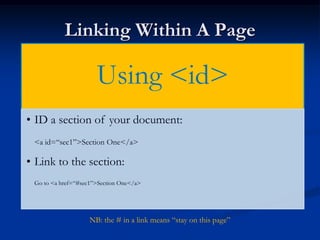
Linking Within A Page

                      Using <id>
• ID a section of your document:
 <a id=“sec1”>Section One</a>

• Link to the section:
 Go to <a href=“#sec1”>Section One</a>


                    NB: the # in a link means “stay on this page”
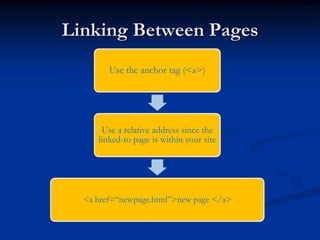
Linking Between Pages
        Use the anchor tag (<a>)


      Use a relative address since the
     linked-to page is within your site


  <a href=“newpage.html”>new page </a>
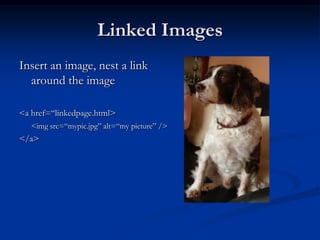
Linked Images
Insert an image, nest a link
  around the image

<a href=“linkedpage.html>
   <img src=“mypic.jpg” alt=“my picture” />
</a>
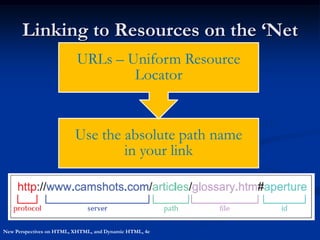
Linking to Resources on the „Net
                          URLs – Uniform Resource
                                  Locator


                         Use the absolute path name
                                 in your link


New Perspectives on HTML, XHTML, and Dynamic HTML, 4e
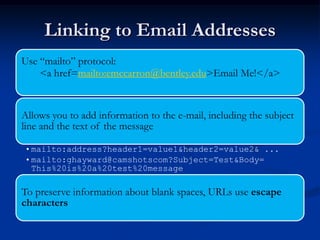
Linking to Email Addresses
Use “mailto” protocol:
    <a href=mailto:emccarron@bentley.edu>Email Me!</a>


Allows you to add information to the e-mail, including the subject
line and the text of the message

• mailto:address?header1=value1&header2=value2& ...
• mailto:ghayward@camshotscom?Subject=Test&Body=
  This%20is%20a%20test%20message

To preserve information about blank spaces, URLs use escape
characters
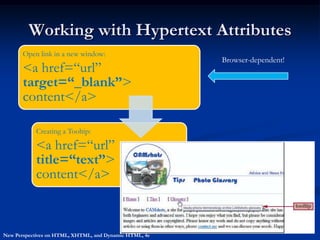
Working with Hypertext Attributes
       Open link in a new window:
                                                        Browser-dependent!
       <a href=“url”
       target=“_blank”>
       content</a>

           Creating a Tooltip:

           <a href=“url”
           title=“text”>
           content</a>


New Perspectives on HTML, XHTML, and Dynamic HTML, 4e
1. Inline Styles
Applied directly to an element using the style
attribute

Easy to interpret because they apply directly to
elements they affect

Cumbersome, have to make changes on lots of
pages if something like font face changes

   <p style="color:sienna;margin-left:20px">This is a
                     paragraph </p>
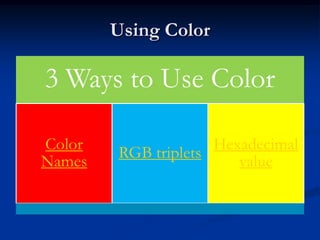
Using Color

3 Ways to Use Color

Color                Hexadecimal
        RGB triplets
Names                   value

How to make a website

  • 1.
    Creating a WebSite Image from: http://ataconsultingllc.com/
  • 2.
    Creating Hypertext Links To link 3 pages, each document needs links to the other 2 pages Use the anchor tag <a href=“pagename”>Page Name </a> New Perspectives on HTML, XHTML, and Dynamic HTML, 4e
  • 3.
    Specifying Folder Paths  Absolute Path – specifies exact location  Relative Path – specifies location relative to the page with the link New Perspectives on HTML, XHTML, and Dynamic HTML, 4e
  • 4.
    Linking Within YourSite Within A Page Between Pages Linked Images
  • 5.
    Linking Within APage Using <id> • ID a section of your document: <a id=“sec1”>Section One</a> • Link to the section: Go to <a href=“#sec1”>Section One</a> NB: the # in a link means “stay on this page”
  • 6.
    Linking Between Pages Use the anchor tag (<a>) Use a relative address since the linked-to page is within your site <a href=“newpage.html”>new page </a>
  • 7.
    Linked Images Insert animage, nest a link around the image <a href=“linkedpage.html> <img src=“mypic.jpg” alt=“my picture” /> </a>
  • 8.
    Linking to Resourceson the „Net URLs – Uniform Resource Locator Use the absolute path name in your link New Perspectives on HTML, XHTML, and Dynamic HTML, 4e
  • 9.
    Linking to EmailAddresses Use “mailto” protocol: <a href=mailto:emccarron@bentley.edu>Email Me!</a> Allows you to add information to the e-mail, including the subject line and the text of the message • mailto:address?header1=value1&header2=value2& ... • mailto:ghayward@camshotscom?Subject=Test&Body= This%20is%20a%20test%20message To preserve information about blank spaces, URLs use escape characters
  • 10.
    Working with HypertextAttributes Open link in a new window: Browser-dependent! <a href=“url” target=“_blank”> content</a> Creating a Tooltip: <a href=“url” title=“text”> content</a> New Perspectives on HTML, XHTML, and Dynamic HTML, 4e
  • 11.
    1. Inline Styles Applieddirectly to an element using the style attribute Easy to interpret because they apply directly to elements they affect Cumbersome, have to make changes on lots of pages if something like font face changes <p style="color:sienna;margin-left:20px">This is a paragraph </p>
  • 12.
    Using Color 3 Waysto Use Color Color Hexadecimal RGB triplets Names value