Stuffyoulook.blogspot.com 
By Bhanu Chander V
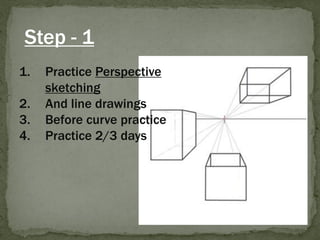
Step - 1 
1.Practice Perspective sketching 
2.And line drawings 
3.Before curve practice 
4.Practice 2/3 days
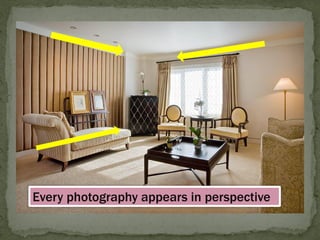
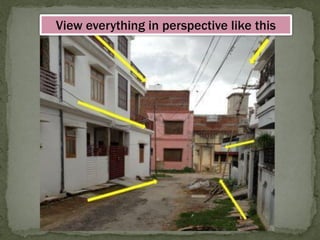
Every photography appears in perspective
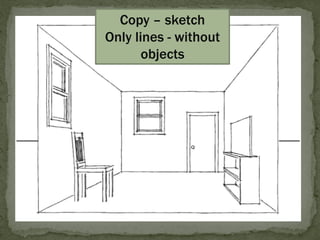
Copy – sketch Only lines - without objects
View everything in perspective like this
Step - 2 
1.Practice Perspective but with objects included 
2.Copy paste work 
3.No shadings ! 
4.Learn straight line drawing 
5.Curves comes in later steps 
6.Practice 3/4 days
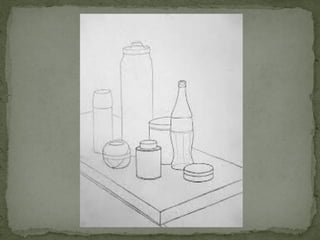
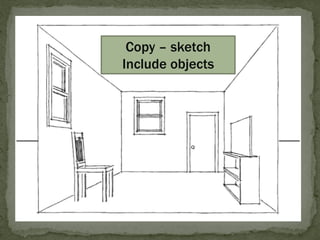
Copy – sketch Include objects
Step - 3 
1.Practice Perspective In reality 
2.Look around and sketch 
3.Example – sketch the view of your own room from one corner in perspective 
4.Practice for 5 days 
5.continue doing this till all the steps !
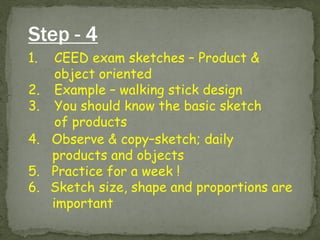
Step - 4 
1.CEED exam sketches – Product & object oriented 
2.Example – walking stick design 
3.You should know the basic sketch of products 
4. Observe & copy–sketch; daily products and objects 5. Practice for a week ! 
6. Sketch size, shape and proportions are important
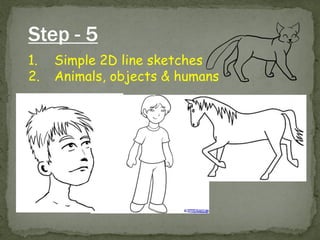
Step - 5 
1.Simple 2D line sketches 
2.Animals, objects & humans
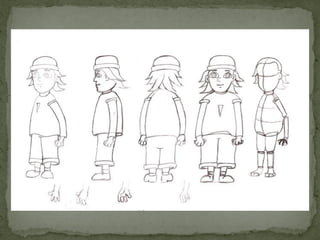
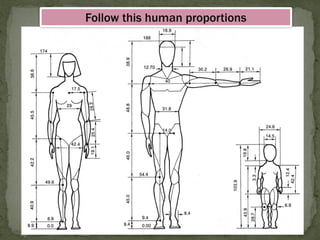
Follow this human proportions
Step - 6 
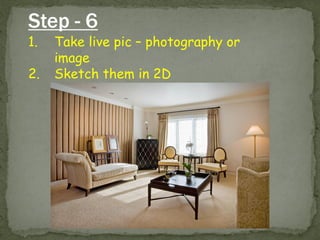
1.Take live pic – photography or image 
2.Sketch them in 2D
Step - 7 
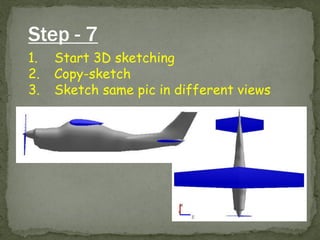
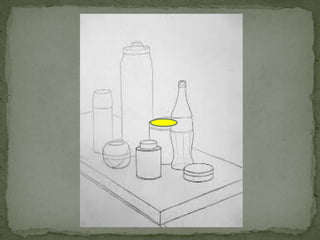
1.Start 3D sketching 
2.Copy-sketch 
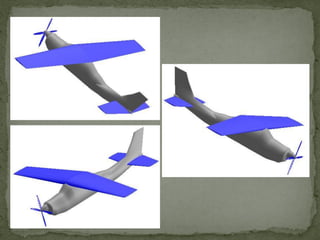
3.Sketch same pic in different views
Observe, analyze and understand 
1.perspective in it, 
2.How things are oriented/arranged, 
3.How size varies 
4.How edges/lines converge 
5.What shape things assume 
6.How shapes assume once it gets transformed or once you change your view point
Step - 8 
1.Start sketching whatever you see 
2.Sit in different angles 
3.Sketch the same object in other views, angles and from diff. directions as shown in next example 
4.Improves imagination
1.Many can imagine but don’t know how to put that in paper, just coz they don’t know how to sketch in different angles ! 
2.Consumes times – if not practiced 
3.Take diff. scenario's and sketch 
4.Practice for a week !
Step - 9 
1.Imagine a desktop instead of laptop for the earlier example 
2.Imagine different things & sketch 
3.Your creativity starts here 
4.This step ease you with how to imagine and sketch fast 
5.That is required for CEED exam
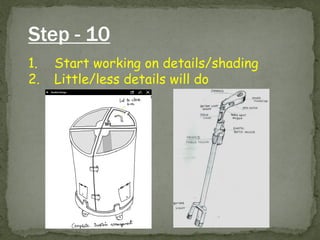
Step - 10 
1.Start working on details/shading 
2.Little/less details will do
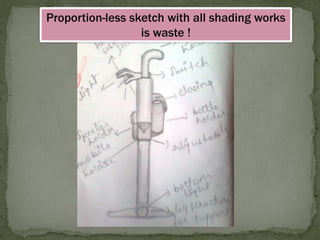
Proportion-less sketch with all shading works is waste !
Step - 11 
1.Step further 
2.Frame a new scenario 
3.Imagine same desktop but at different location 
4.Mind line quality, size, shape and proportions 
5.Add details/shades to your work !
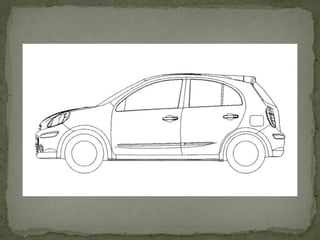
Portrait & Car sketches ? 
1.Time consuming 
2.No productive use 
3.Difficult to master in less time 
4.Bother for product and other sketch first – next only portraits (only for CEED design exam !)
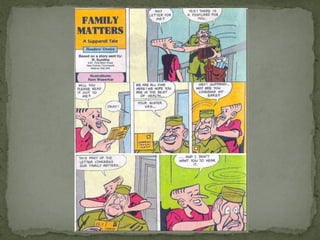
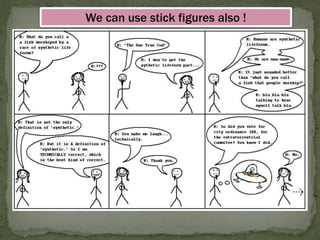
Comic strips & story board 
1.Work parallel 
2.No much details required 
3.Not even bother for size/proportions 
4.Characterization is imp. 
5.Stick to same character – tone, view, looks, hair styles, dressing etc.
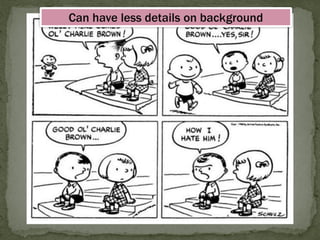
Can have less details on background
We can use stick figures also !
Thumb rules 
© Stuffyoulook.blogspot.com
© Stuffyoulook.blogspot.com 
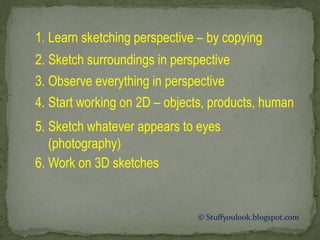
1. Learn sketching perspective – by copying 
2. Sketch surroundings in perspective 
3. Observe everything in perspective 
4. Start working on 2D – objects, products, human 
5. Sketch whatever appears to eyes (photography) 
6. Work on 3D sketches
© Stuffyoulook.blogspot.com 
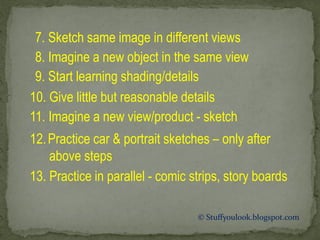
7. Sketch same image in different views 
9. Start learning shading/details 
10. Give little but reasonable details 
11. Imagine a new view/product - sketch 
8. Imagine a new object in the same view 
12.Practice car & portrait sketches – only after above steps 
13. Practice in parallel - comic strips, story boards
Stuffyoulook.blogspot.com 
Get more . . . . . 
1.Resources 
2.Suggestions – tips 
3.Solutions to CEED papers 
4.M.Des, Design streams overview 
5.Design mistakes 
6.Creativity development 
7.Ideas !

How to learn sketching and drawing step-by-step for beginners

  • 1.
  • 2.
    Step - 1 1.Practice Perspective sketching 2.And line drawings 3.Before curve practice 4.Practice 2/3 days
  • 3.
  • 5.
    Copy – sketchOnly lines - without objects
  • 6.
    View everything inperspective like this
  • 7.
    Step - 2 1.Practice Perspective but with objects included 2.Copy paste work 3.No shadings ! 4.Learn straight line drawing 5.Curves comes in later steps 6.Practice 3/4 days
  • 8.
    Copy – sketchInclude objects
  • 9.
    Step - 3 1.Practice Perspective In reality 2.Look around and sketch 3.Example – sketch the view of your own room from one corner in perspective 4.Practice for 5 days 5.continue doing this till all the steps !
  • 10.
    Step - 4 1.CEED exam sketches – Product & object oriented 2.Example – walking stick design 3.You should know the basic sketch of products 4. Observe & copy–sketch; daily products and objects 5. Practice for a week ! 6. Sketch size, shape and proportions are important
  • 11.
    Step - 5 1.Simple 2D line sketches 2.Animals, objects & humans
  • 14.
    Follow this humanproportions
  • 15.
    Step - 6 1.Take live pic – photography or image 2.Sketch them in 2D
  • 16.
    Step - 7 1.Start 3D sketching 2.Copy-sketch 3.Sketch same pic in different views
  • 18.
    Observe, analyze andunderstand 1.perspective in it, 2.How things are oriented/arranged, 3.How size varies 4.How edges/lines converge 5.What shape things assume 6.How shapes assume once it gets transformed or once you change your view point
  • 20.
    Step - 8 1.Start sketching whatever you see 2.Sit in different angles 3.Sketch the same object in other views, angles and from diff. directions as shown in next example 4.Improves imagination
  • 22.
    1.Many can imaginebut don’t know how to put that in paper, just coz they don’t know how to sketch in different angles ! 2.Consumes times – if not practiced 3.Take diff. scenario's and sketch 4.Practice for a week !
  • 23.
    Step - 9 1.Imagine a desktop instead of laptop for the earlier example 2.Imagine different things & sketch 3.Your creativity starts here 4.This step ease you with how to imagine and sketch fast 5.That is required for CEED exam
  • 24.
    Step - 10 1.Start working on details/shading 2.Little/less details will do
  • 25.
    Proportion-less sketch withall shading works is waste !
  • 26.
    Step - 11 1.Step further 2.Frame a new scenario 3.Imagine same desktop but at different location 4.Mind line quality, size, shape and proportions 5.Add details/shades to your work !
  • 27.
    Portrait & Carsketches ? 1.Time consuming 2.No productive use 3.Difficult to master in less time 4.Bother for product and other sketch first – next only portraits (only for CEED design exam !)
  • 28.
    Comic strips &story board 1.Work parallel 2.No much details required 3.Not even bother for size/proportions 4.Characterization is imp. 5.Stick to same character – tone, view, looks, hair styles, dressing etc.
  • 30.
    Can have lessdetails on background
  • 31.
    We can usestick figures also !
  • 32.
    Thumb rules ©Stuffyoulook.blogspot.com
  • 33.
    © Stuffyoulook.blogspot.com 1.Learn sketching perspective – by copying 2. Sketch surroundings in perspective 3. Observe everything in perspective 4. Start working on 2D – objects, products, human 5. Sketch whatever appears to eyes (photography) 6. Work on 3D sketches
  • 34.
    © Stuffyoulook.blogspot.com 7.Sketch same image in different views 9. Start learning shading/details 10. Give little but reasonable details 11. Imagine a new view/product - sketch 8. Imagine a new object in the same view 12.Practice car & portrait sketches – only after above steps 13. Practice in parallel - comic strips, story boards
  • 35.
    Stuffyoulook.blogspot.com Get more. . . . . 1.Resources 2.Suggestions – tips 3.Solutions to CEED papers 4.M.Des, Design streams overview 5.Design mistakes 6.Creativity development 7.Ideas !