Upeksha Bandara
How to do a strategic marketing plan
for assignments
Contents Executive Summary
 Company Overview
 Situational Analysis
Existing product Mix
Market size and segment growth, Market Share
Michal Porters’ 5Force Analysis
Competitor Analysis
Consumer Analysis
 PESTEL & SWOT Analysis
 Marketing Objectives
 Segmentation, Targeting Positioning
GE Matrix, Positioning Map, Positioning Statement
Strategic Direction and Strategy for growth; Ansoff Matrix
 Marketing Mix Strategy
 Innovation Plan
 Marketing Budget
 P&L
 References
 Conclusion
Company Overview
• Introduction
• KPIs
• Vision
• Mission
• Existing product Mix
Situational Analysis
Total Market Share %,
Market Value
Product 1 Product 2
Poduct
3
Product
4
Product
5
Product
6
• Market size and segment growth
• Market share by volume
• Market share by value
Economy
Mid
Range
premium
Michal Porters’ 5Force Analysis
Bargaining
Power of
Customers – High
Large number of
customers. No
switching cost.
Several buyer
choices.
Threat of
Substitutes -
Moderate
Few substitutes but
relatively strong
hold
Bargaining Power
of Suppliers – Low
Low cost of
switching suppliers.
High competition
among suppliers.
Threat of New
Entrance – Low
High capital
requirement for
mass production.
Strong brand name
& distribution
network required.
Existing Rivalry –
High
Many competitors
Competitor Analysis
• Product portfolio of different Brands
• Volume by category
• Volume by brand
• Market share by brand
• Price points of different brands
Consumer Analysis
• Sources of awareness; TV, magazines, dealers, newspaper, radio
• Brand decision making ; Influenced by spouse, advertising, ect.
• Factors consider; price, safety, taste, ect.
• Consumer value proposition
0
5
10
15
20
25
30
35
40
Price
Service
DurabilityPerformance
Style
Consumer Analysis
PESTEL Analysis SWOT Analysis
Opened opportunities are
the most vital, if you don’t
target the opportunities
your competitor will do.
Drivers Impact
Political Moderate
Economical Negative
Social Positive
Technological Positive
Environmental Positive
Legal Negative
Strengths Weaknesses
Opportunities Threats
Strategy - STP
Geographic segmentation
Geo-Demographic segmentation
Demographic segmentation
Behavioural segmentation
Psychographic segmentation
Segmenting Targeting Positioning
Segment Geographic Demographic Behavioural
Region ect,. Age ect. User status ect.
S1
S2
S3
S4
S5
ect.
GE Matrix
S1,S2,S3 S6,S7,S8 S14,S15
S4,S5 S11,S12 S13
S9,S10 S16,S17 S18,S19,S20
SegmentAttractiveness
Business Strength
High Medium Low
LowMediumHigh
should focus to
serve target
segments
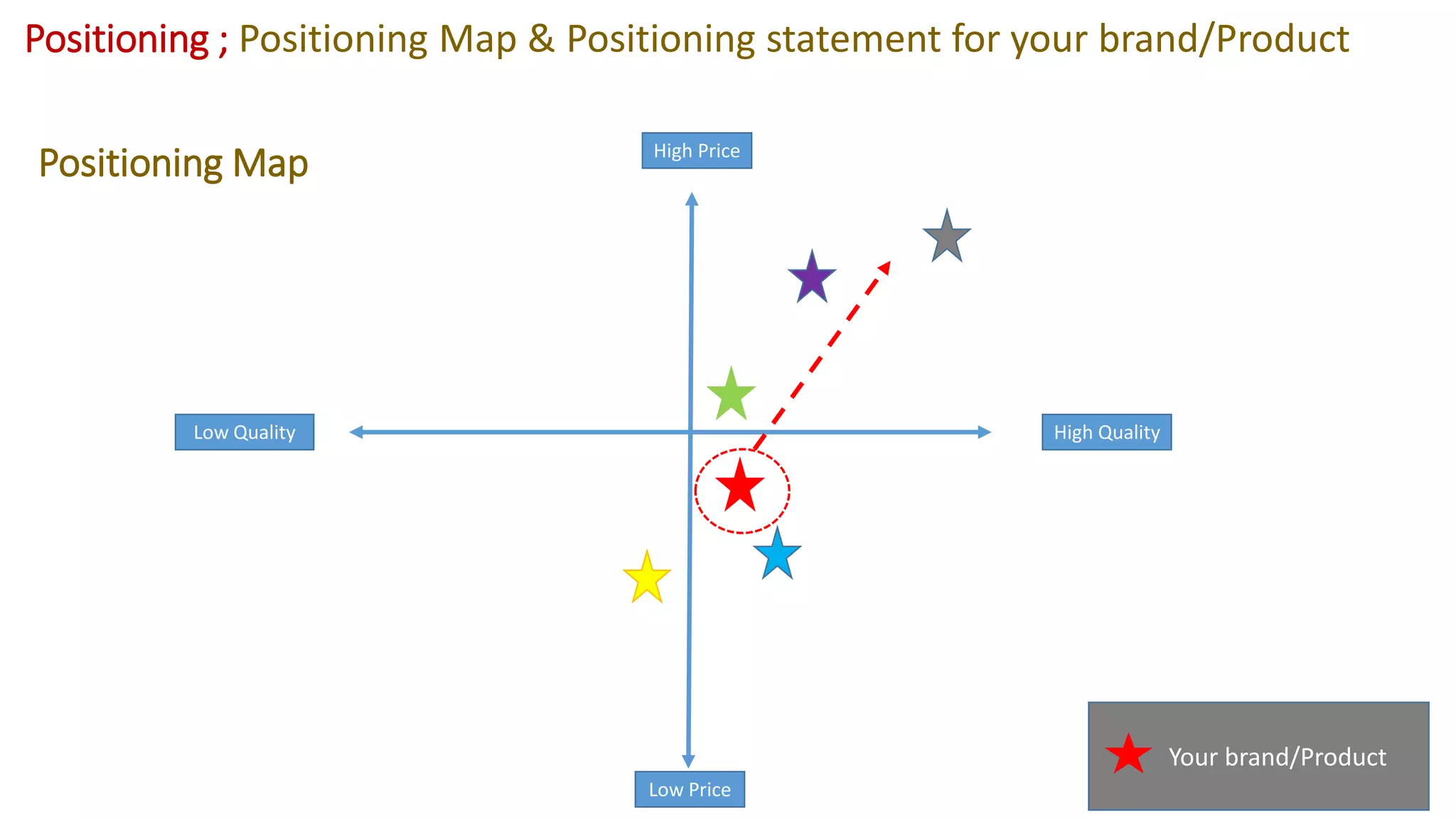
Positioning ; Positioning Map & Positioning statement for your brand/Product
Low Quality High Quality
High Price
Low Price
Your brand/Product
Positioning Map
Strategy for growth
• Ansoff matrix
Existing Products New Products
Existing Markets Market penetration Product Development
New Markets Market Development Diversification
Strategic Direction and Strategy for growth
Strategic Direction – mass player , nish player
Strategic Direction and Strategy for growth
Unique selling proposition
Marketing Mix Strategy
• CCDVTP
C - “Create value” is all about product management
C - “Communicate value” is all about brand management
D - “Deliver value”, which is customer management
V - should provide value to their target market, should provide a unique value proposition
T - should Target the correct Market
P - All the above should done at a Profit to the company
Product development strategies/Marketing mix Strategies
4Ps/7Ps
Execution plan
Marketing Budget
Review and Control and KPIs
Projected P&L
Innovation Plan
Activity Y1 Y2
Q1 Q2 Q3 Q4 Q1 Q2 Q3 Q4
Launch product 1
Launch product 2
Sponsoring
Sampling
ect.
Marketing Budget
Cost Elements Y1 (Rs. 000) Y2 (Rs. 000)
Promotional Activities
Brand Incentives
Seasonal tie ups
Sampling
Sponsoring
Event Launch
Total Consumer Promotional Expenses
Advertising -Press
Advertising –Newspaper and Radio
Advertising -TV
Advertising-Social Media
Total Advertising Expense
New Product Implementation
Packaging
Display Units & POSM
Market Research
Total Other Expenses
Total Marketing Expense
Marketing Expense to Revenue Ratio
Revenue (Rs. 000)
Projected P&L
Base Year
Y1
Rs. (000)
Y2
Rs. (000)
Total Revenue
Cost of sales
Gross profit xxx xxx xxxx
Gross Profit Margin % % % %
Marketing Expense
Trade Expense
Overheads
Total Operating Expense xx xx xx
Profit before tax xx xx xxx
Tax
Net Profit xx xx xxx
Net Profit Margin% % % %
How to do a stratergic marketing plan

How to do a stratergic marketing plan

  • 1.
    Upeksha Bandara How todo a strategic marketing plan for assignments
  • 2.
    Contents Executive Summary Company Overview  Situational Analysis Existing product Mix Market size and segment growth, Market Share Michal Porters’ 5Force Analysis Competitor Analysis Consumer Analysis  PESTEL & SWOT Analysis  Marketing Objectives  Segmentation, Targeting Positioning GE Matrix, Positioning Map, Positioning Statement Strategic Direction and Strategy for growth; Ansoff Matrix  Marketing Mix Strategy  Innovation Plan  Marketing Budget  P&L  References  Conclusion
  • 3.
    Company Overview • Introduction •KPIs • Vision • Mission
  • 4.
    • Existing productMix Situational Analysis Total Market Share %, Market Value Product 1 Product 2 Poduct 3 Product 4 Product 5 Product 6 • Market size and segment growth • Market share by volume • Market share by value Economy Mid Range premium
  • 5.
    Michal Porters’ 5ForceAnalysis Bargaining Power of Customers – High Large number of customers. No switching cost. Several buyer choices. Threat of Substitutes - Moderate Few substitutes but relatively strong hold Bargaining Power of Suppliers – Low Low cost of switching suppliers. High competition among suppliers. Threat of New Entrance – Low High capital requirement for mass production. Strong brand name & distribution network required. Existing Rivalry – High Many competitors
  • 6.
    Competitor Analysis • Productportfolio of different Brands • Volume by category • Volume by brand • Market share by brand • Price points of different brands
  • 7.
    Consumer Analysis • Sourcesof awareness; TV, magazines, dealers, newspaper, radio • Brand decision making ; Influenced by spouse, advertising, ect. • Factors consider; price, safety, taste, ect. • Consumer value proposition 0 5 10 15 20 25 30 35 40 Price Service DurabilityPerformance Style Consumer Analysis
  • 8.
    PESTEL Analysis SWOTAnalysis Opened opportunities are the most vital, if you don’t target the opportunities your competitor will do. Drivers Impact Political Moderate Economical Negative Social Positive Technological Positive Environmental Positive Legal Negative Strengths Weaknesses Opportunities Threats
  • 9.
    Strategy - STP Geographicsegmentation Geo-Demographic segmentation Demographic segmentation Behavioural segmentation Psychographic segmentation Segmenting Targeting Positioning Segment Geographic Demographic Behavioural Region ect,. Age ect. User status ect. S1 S2 S3 S4 S5 ect.
  • 10.
    GE Matrix S1,S2,S3 S6,S7,S8S14,S15 S4,S5 S11,S12 S13 S9,S10 S16,S17 S18,S19,S20 SegmentAttractiveness Business Strength High Medium Low LowMediumHigh should focus to serve target segments
  • 11.
    Positioning ; PositioningMap & Positioning statement for your brand/Product Low Quality High Quality High Price Low Price Your brand/Product Positioning Map
  • 12.
    Strategy for growth •Ansoff matrix Existing Products New Products Existing Markets Market penetration Product Development New Markets Market Development Diversification Strategic Direction and Strategy for growth Strategic Direction – mass player , nish player
  • 13.
    Strategic Direction andStrategy for growth Unique selling proposition Marketing Mix Strategy • CCDVTP C - “Create value” is all about product management C - “Communicate value” is all about brand management D - “Deliver value”, which is customer management V - should provide value to their target market, should provide a unique value proposition T - should Target the correct Market P - All the above should done at a Profit to the company Product development strategies/Marketing mix Strategies 4Ps/7Ps
  • 14.
    Execution plan Marketing Budget Reviewand Control and KPIs Projected P&L
  • 15.
    Innovation Plan Activity Y1Y2 Q1 Q2 Q3 Q4 Q1 Q2 Q3 Q4 Launch product 1 Launch product 2 Sponsoring Sampling ect.
  • 16.
    Marketing Budget Cost ElementsY1 (Rs. 000) Y2 (Rs. 000) Promotional Activities Brand Incentives Seasonal tie ups Sampling Sponsoring Event Launch Total Consumer Promotional Expenses Advertising -Press Advertising –Newspaper and Radio Advertising -TV Advertising-Social Media Total Advertising Expense New Product Implementation Packaging Display Units & POSM Market Research Total Other Expenses Total Marketing Expense Marketing Expense to Revenue Ratio Revenue (Rs. 000)
  • 17.
    Projected P&L Base Year Y1 Rs.(000) Y2 Rs. (000) Total Revenue Cost of sales Gross profit xxx xxx xxxx Gross Profit Margin % % % % Marketing Expense Trade Expense Overheads Total Operating Expense xx xx xx Profit before tax xx xx xxx Tax Net Profit xx xx xxx Net Profit Margin% % % %