How to be Successful
@ School as well as in Life
Narasimha Bharathi
What are the key factors required
to be successful at School
Do You Know ?
• 75% of Engineering
Graduates in our Country
are unfit for employment
• 90% of General
Graduates are
unemployable (National
Employability Report
2013)
“ 3 million students
graduate every year in
India”
“ they just don't have
industry-ready talent.
In other words, they
lack the skills required
for the jobs that are
available to them”
By 2020 India will be the Youngest Country in the world with a median age of 29 Years
Incase this Youth Bulge is not provided with employment Opp, could turn into a
Demographic Liability would result in a Political and economic instability
(3Ds success mantra for ‘Make in India’)- ‘demographic dividend, democracy and demand’)
“Employability refers to a person's capability for gaining and maintaining employment”
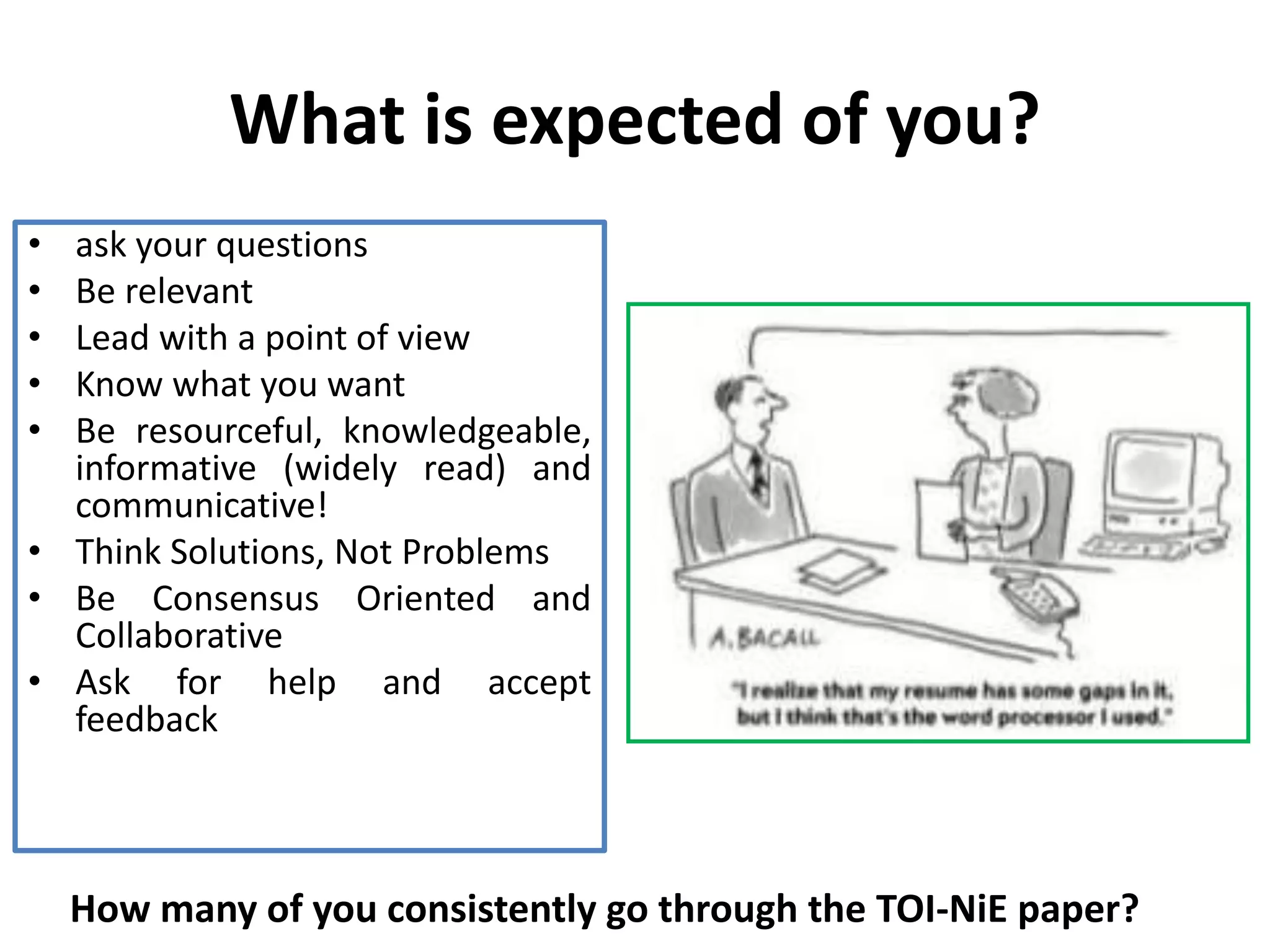
What is expected of you?
• ask your questions
• Be relevant
• Lead with a point of view
• Know what you want
• Be resourceful, knowledgeable,
informative (widely read) and
communicative!
• Think Solutions, Not Problems
• Be Consensus Oriented and
Collaborative
• Ask for help and accept
feedback
How many of you consistently go through the TOI-NiE paper?
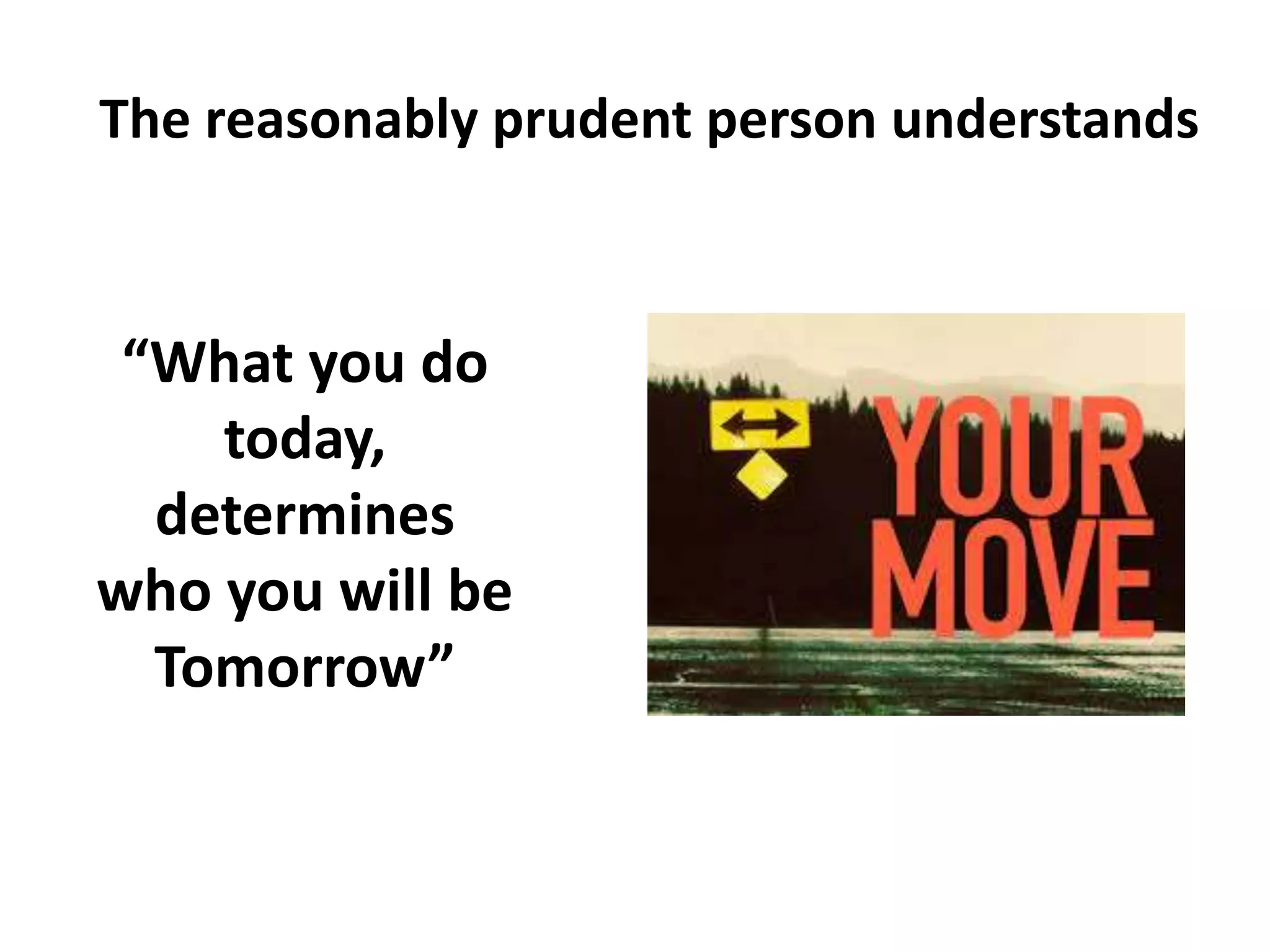
The reasonably prudent person understands
“What you do
today,
determines
who you will be
Tomorrow”
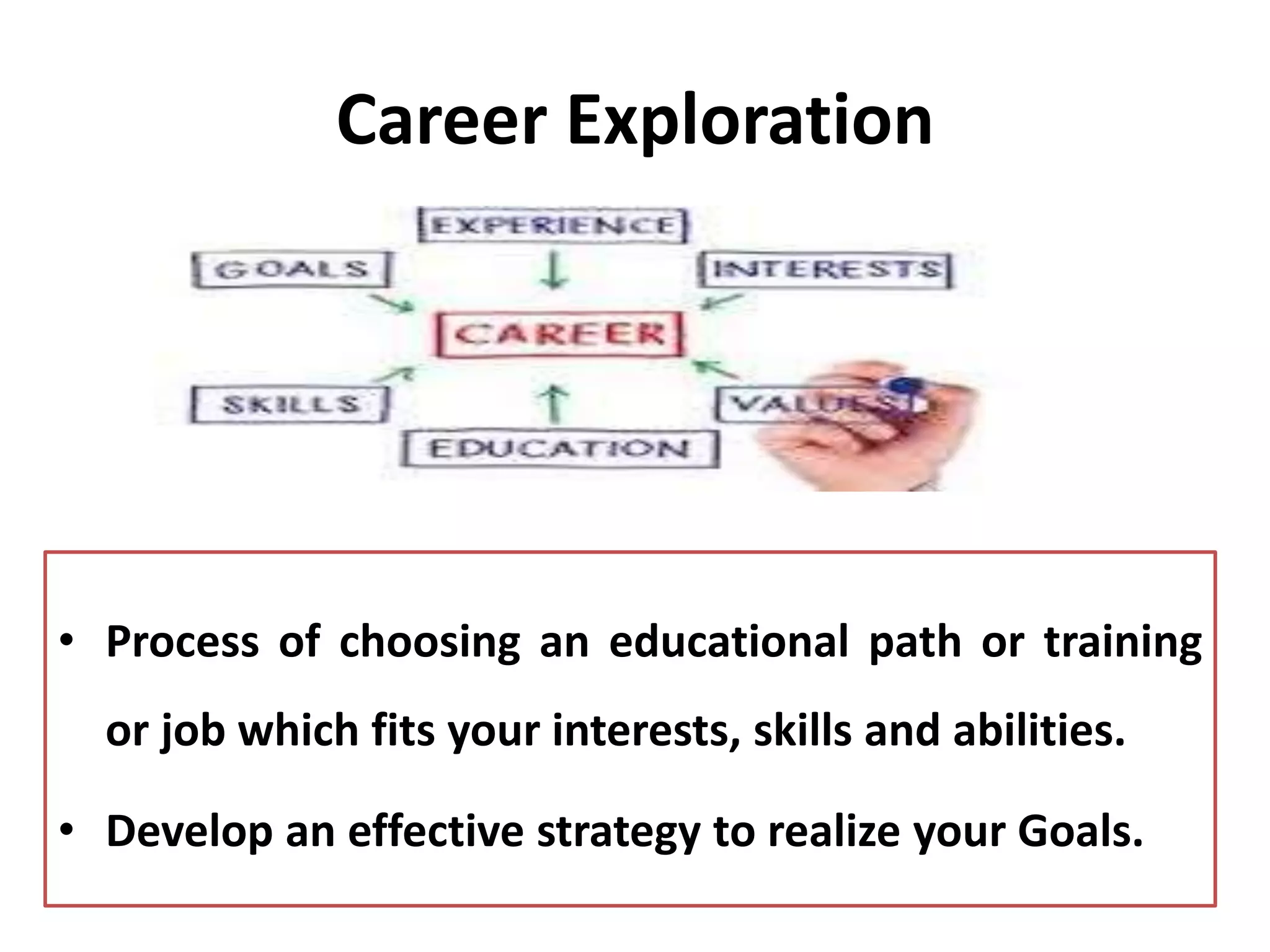
Career Exploration
• Process of choosing an educational path or training
or job which fits your interests, skills and abilities.
• Develop an effective strategy to realize your Goals.
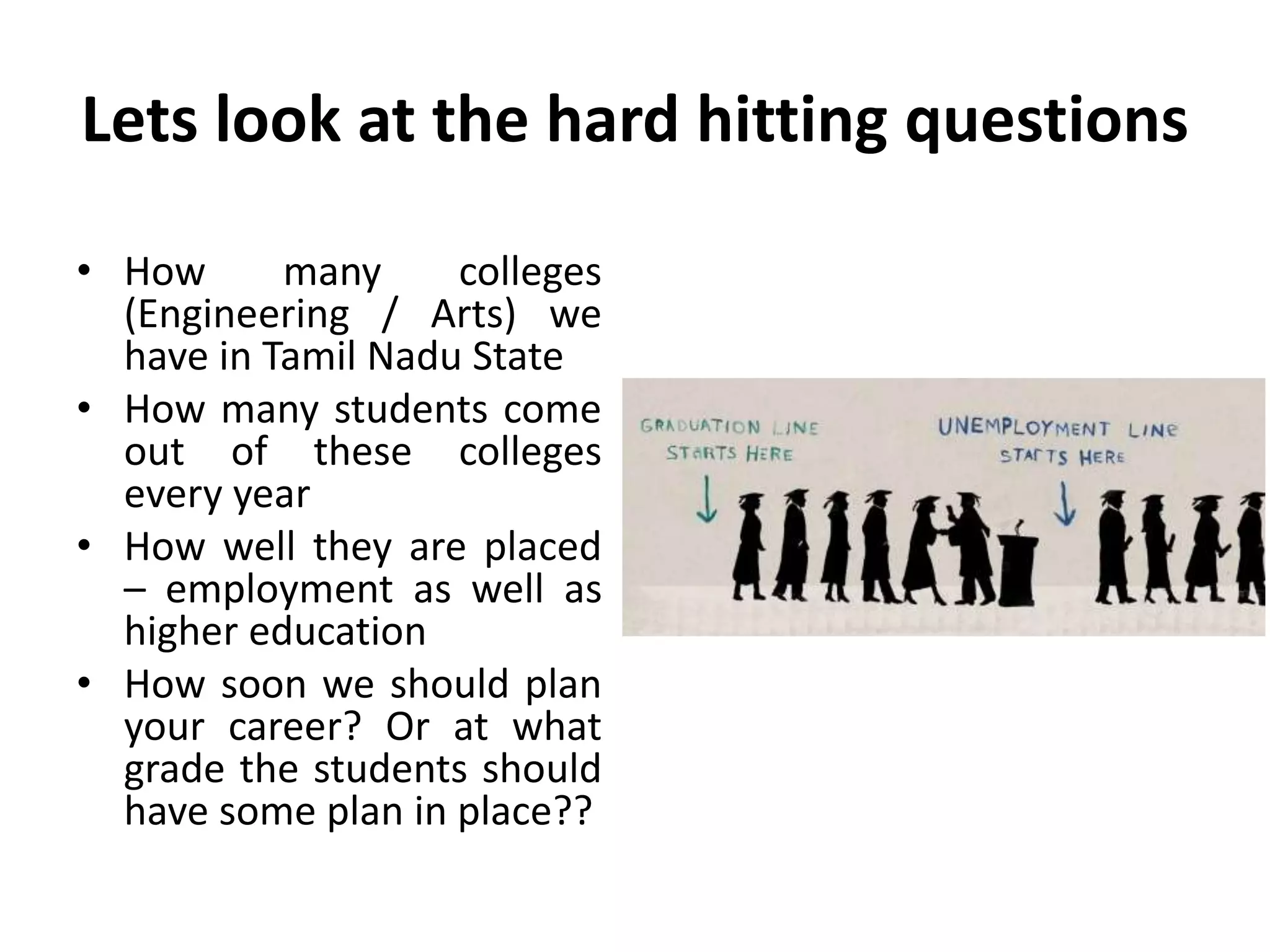
Lets look at the hard hitting questions
• How many colleges
(Engineering / Arts) we
have in Tamil Nadu State
• How many students come
out of these colleges
every year
• How well they are placed
– employment as well as
higher education
• How soon we should plan
your career? Or at what
grade the students should
have some plan in place??
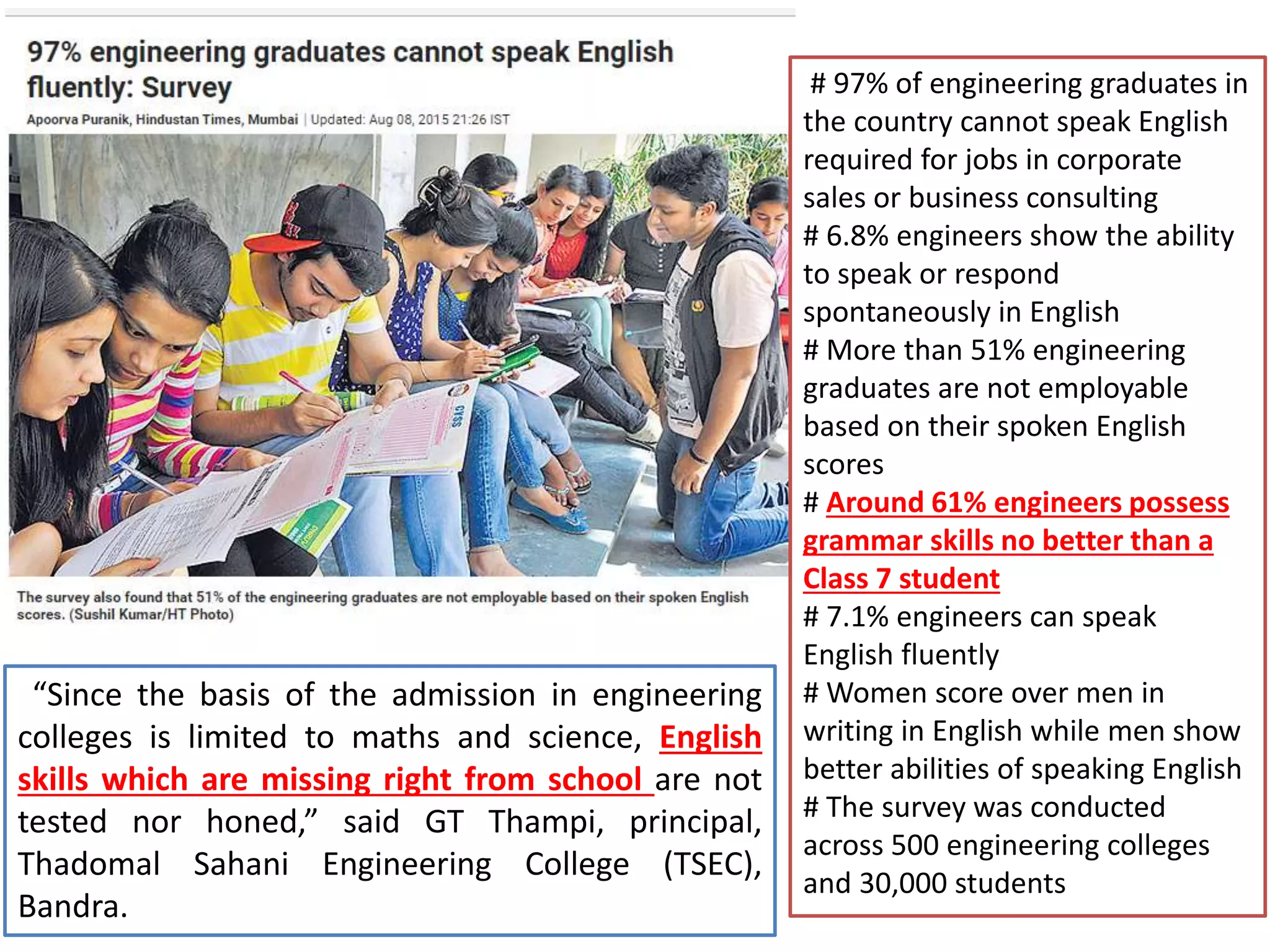
# 97% of engineering graduates in
the country cannot speak English
required for jobs in corporate
sales or business consulting
# 6.8% engineers show the ability
to speak or respond
spontaneously in English
# More than 51% engineering
graduates are not employable
based on their spoken English
scores
# Around 61% engineers possess
grammar skills no better than a
Class 7 student
# 7.1% engineers can speak
English fluently
# Women score over men in
writing in English while men show
better abilities of speaking English
# The survey was conducted
across 500 engineering colleges
and 30,000 students
“Since the basis of the admission in engineering
colleges is limited to maths and science, English
skills which are missing right from school are not
tested nor honed,” said GT Thampi, principal,
Thadomal Sahani Engineering College (TSEC),
Bandra.
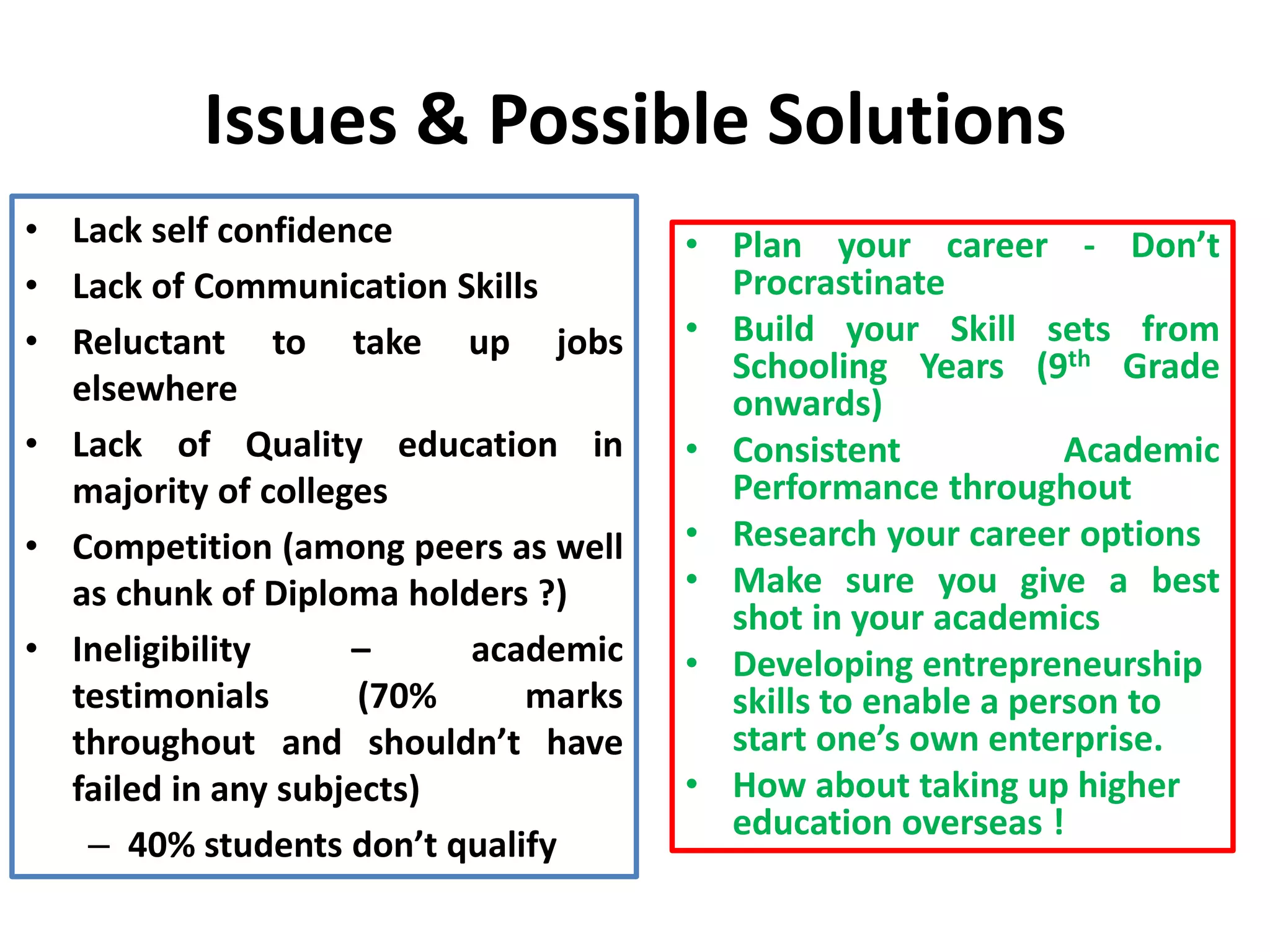
Issues & Possible Solutions
• Lack self confidence
• Lack of Communication Skills
• Reluctant to take up jobs
elsewhere
• Lack of Quality education in
majority of colleges
• Competition (among peers as well
as chunk of Diploma holders ?)
• Ineligibility – academic
testimonials (70% marks
throughout and shouldn’t have
failed in any subjects)
– 40% students don’t qualify
• Plan your career - Don’t
Procrastinate
• Build your Skill sets from
Schooling Years (9th Grade
onwards)
• Consistent Academic
Performance throughout
• Research your career options
• Make sure you give a best
shot in your academics
• Developing entrepreneurship
skills to enable a person to
start one’s own enterprise.
• How about taking up higher
education overseas !
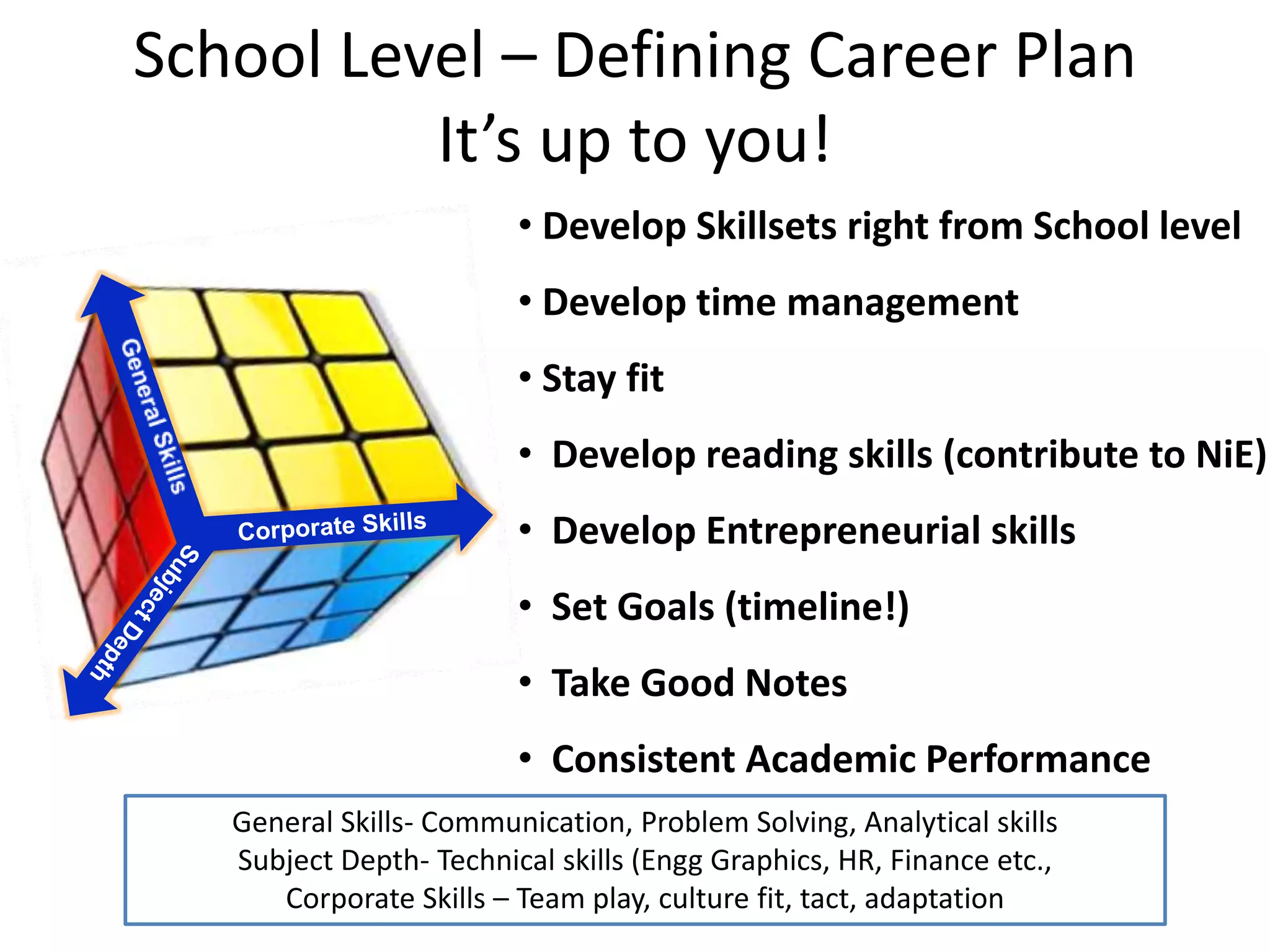
School Level – Defining Career Plan
It’s up to you!
General Skills- Communication, Problem Solving, Analytical skills
Subject Depth- Technical skills (Engg Graphics, HR, Finance etc.,
Corporate Skills – Team play, culture fit, tact, adaptation
• Develop Skillsets right from School level
• Develop time management
• Stay fit
• Develop reading skills (contribute to NiE)
• Develop Entrepreneurial skills
• Set Goals (timeline!)
• Take Good Notes
• Consistent Academic Performance
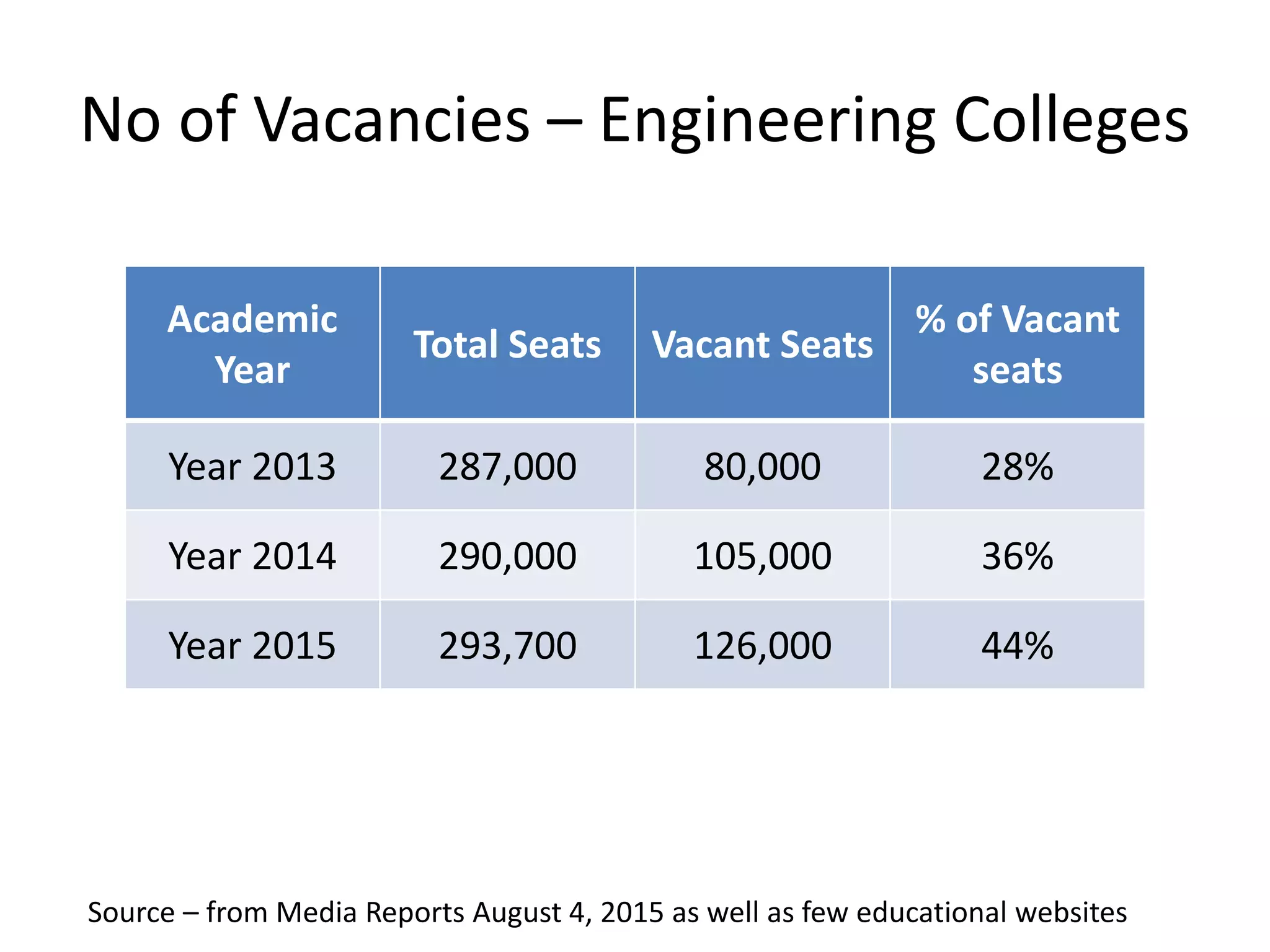
No of Vacancies – Engineering Colleges
Academic
Year
Total Seats Vacant Seats
% of Vacant
seats
Year 2013 287,000 80,000 28%
Year 2014 290,000 105,000 36%
Year 2015 293,700 126,000 44%
Source – from Media Reports August 4, 2015 as well as few educational websites
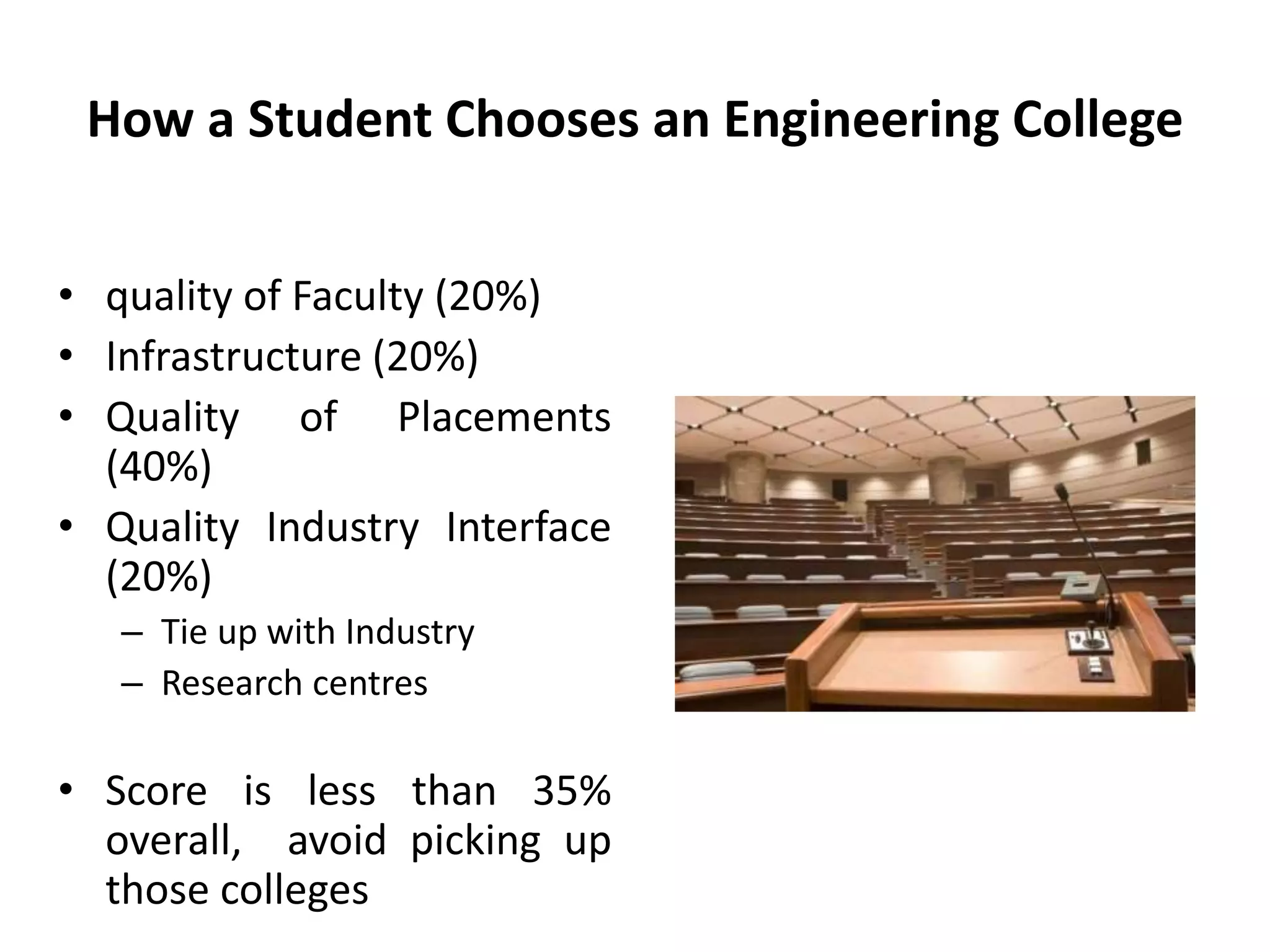
How a Student Chooses an Engineering College
• quality of Faculty (20%)
• Infrastructure (20%)
• Quality of Placements
(40%)
• Quality Industry Interface
(20%)
– Tie up with Industry
– Research centres
• Score is less than 35%
overall, avoid picking up
those colleges
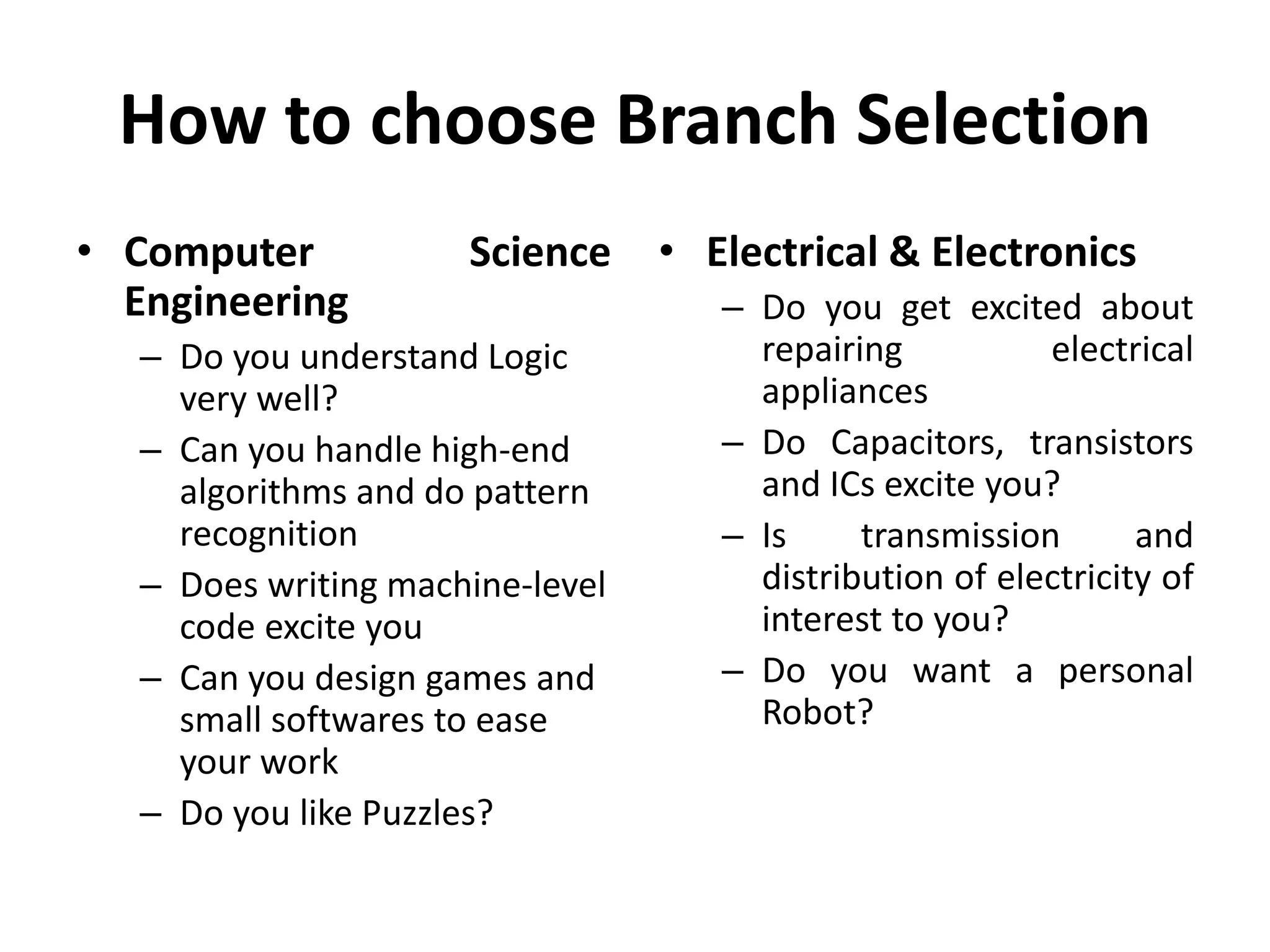
How to choose Branch Selection
• Computer Science
Engineering
– Do you understand Logic
very well?
– Can you handle high-end
algorithms and do pattern
recognition
– Does writing machine-level
code excite you
– Can you design games and
small softwares to ease
your work
– Do you like Puzzles?
• Electrical & Electronics
– Do you get excited about
repairing electrical
appliances
– Do Capacitors, transistors
and ICs excite you?
– Is transmission and
distribution of electricity of
interest to you?
– Do you want a personal
Robot?
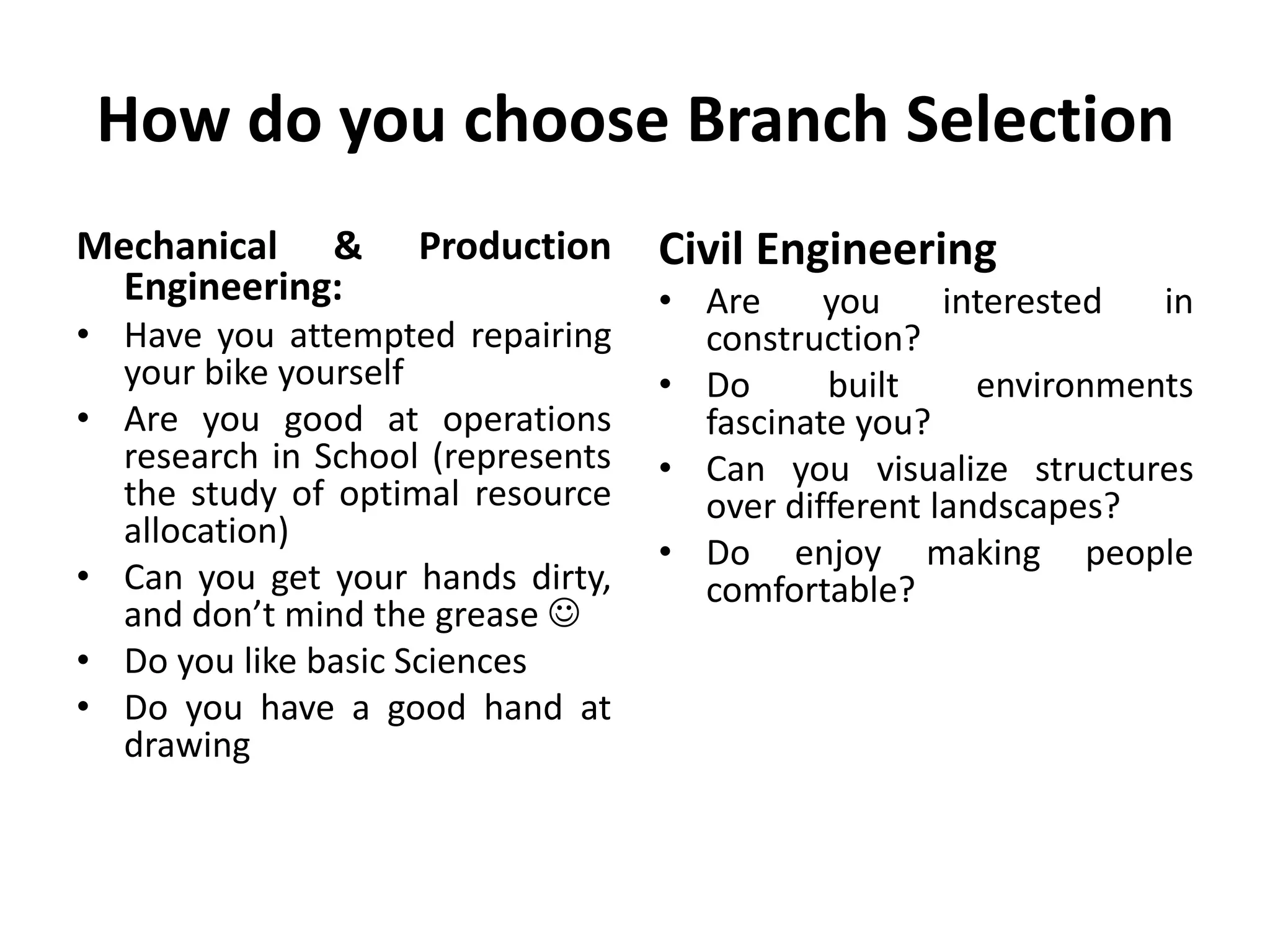
How do you choose Branch Selection
Mechanical & Production
Engineering:
• Have you attempted repairing
your bike yourself
• Are you good at operations
research in School (represents
the study of optimal resource
allocation)
• Can you get your hands dirty,
and don’t mind the grease 
• Do you like basic Sciences
• Do you have a good hand at
drawing
Civil Engineering
• Are you interested in
construction?
• Do built environments
fascinate you?
• Can you visualize structures
over different landscapes?
• Do enjoy making people
comfortable?
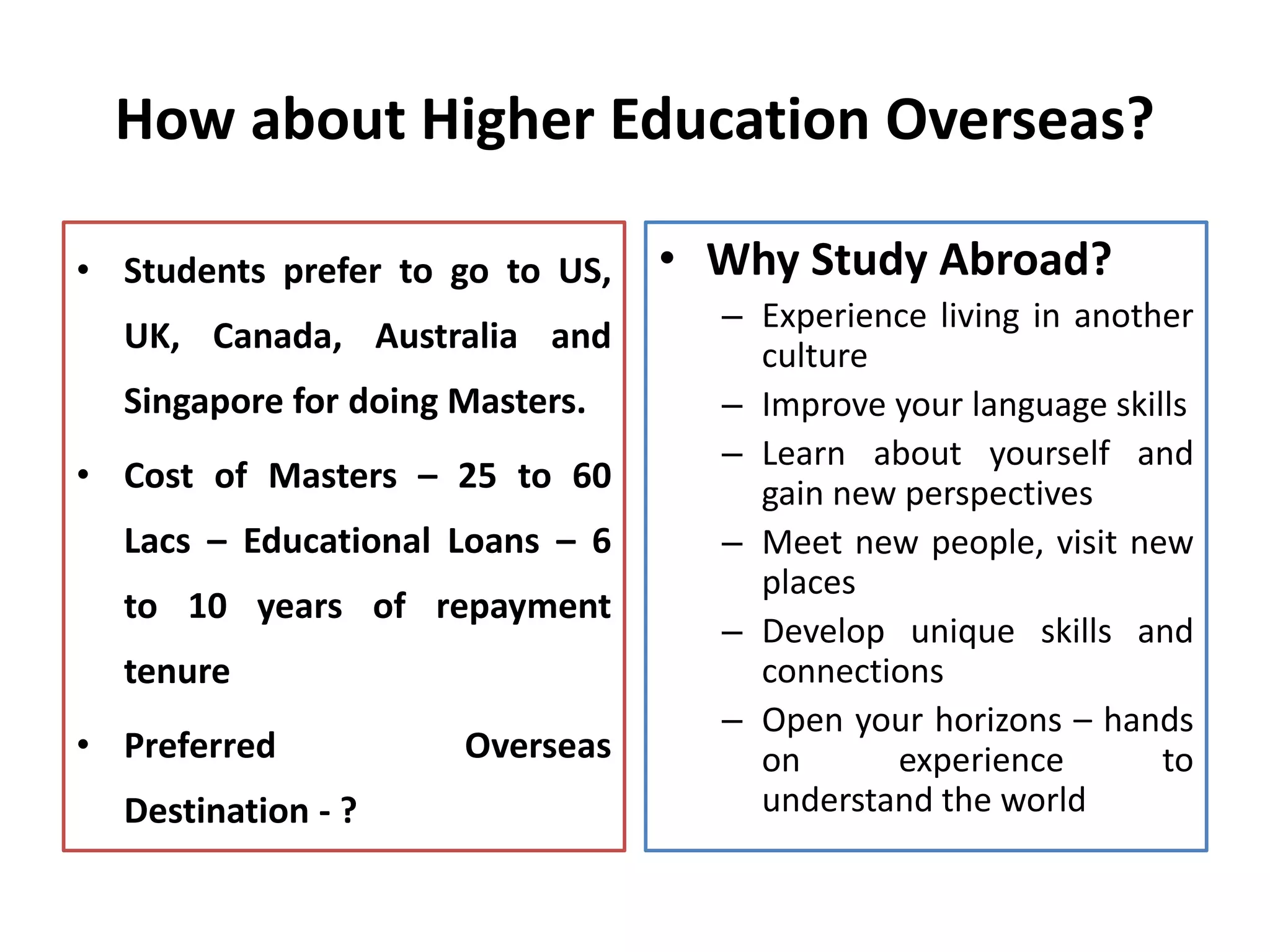
How about Higher Education Overseas?
• Students prefer to go to US,
UK, Canada, Australia and
Singapore for doing Masters.
• Cost of Masters – 25 to 60
Lacs – Educational Loans – 6
to 10 years of repayment
tenure
• Preferred Overseas
Destination - ?
• Why Study Abroad?
– Experience living in another
culture
– Improve your language skills
– Learn about yourself and
gain new perspectives
– Meet new people, visit new
places
– Develop unique skills and
connections
– Open your horizons – hands
on experience to
understand the world
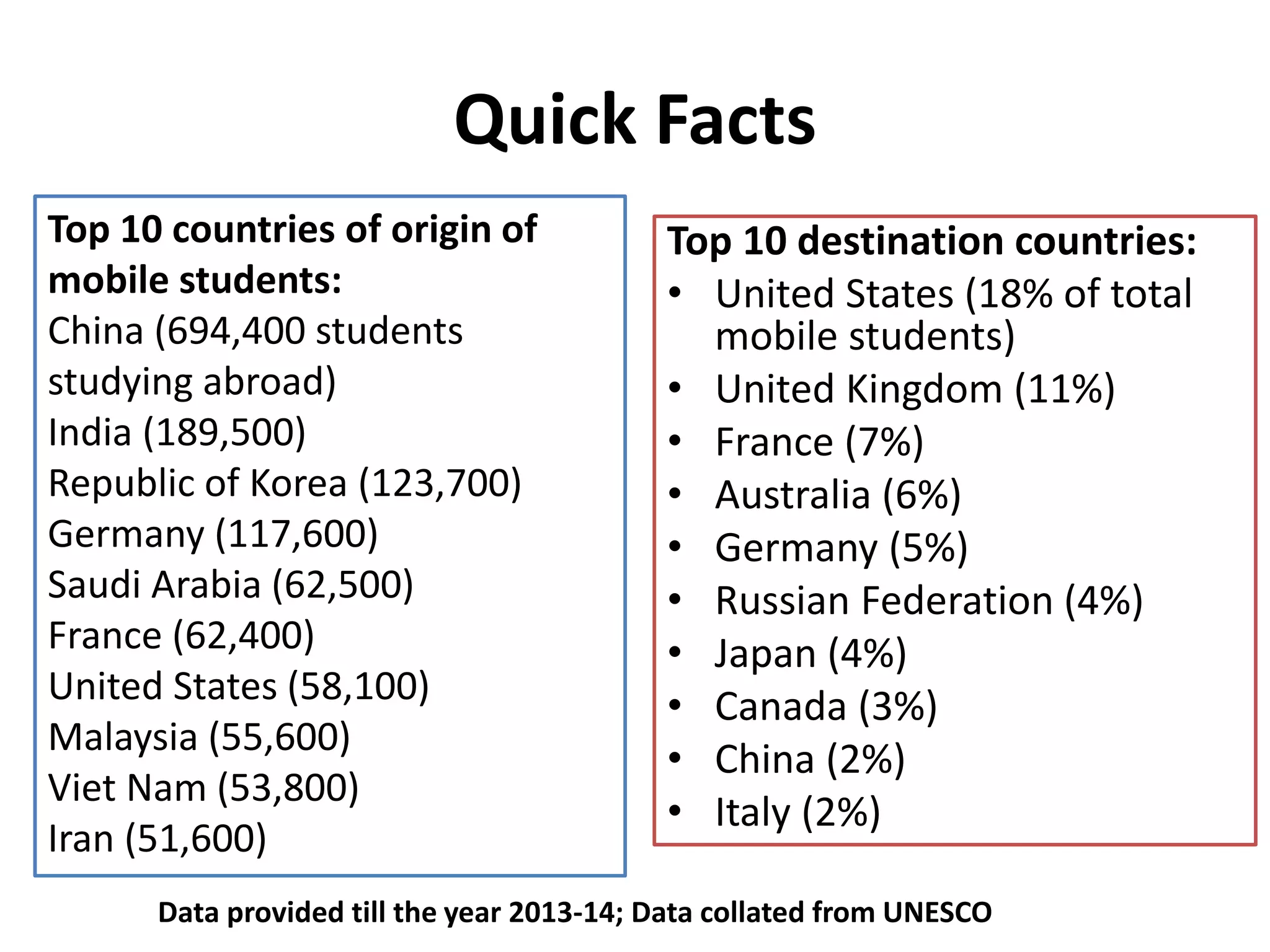
Quick Facts
Top 10 destination countries:
• United States (18% of total
mobile students)
• United Kingdom (11%)
• France (7%)
• Australia (6%)
• Germany (5%)
• Russian Federation (4%)
• Japan (4%)
• Canada (3%)
• China (2%)
• Italy (2%)
Top 10 countries of origin of
mobile students:
China (694,400 students
studying abroad)
India (189,500)
Republic of Korea (123,700)
Germany (117,600)
Saudi Arabia (62,500)
France (62,400)
United States (58,100)
Malaysia (55,600)
Viet Nam (53,800)
Iran (51,600)
Data provided till the year 2013-14; Data collated from UNESCO
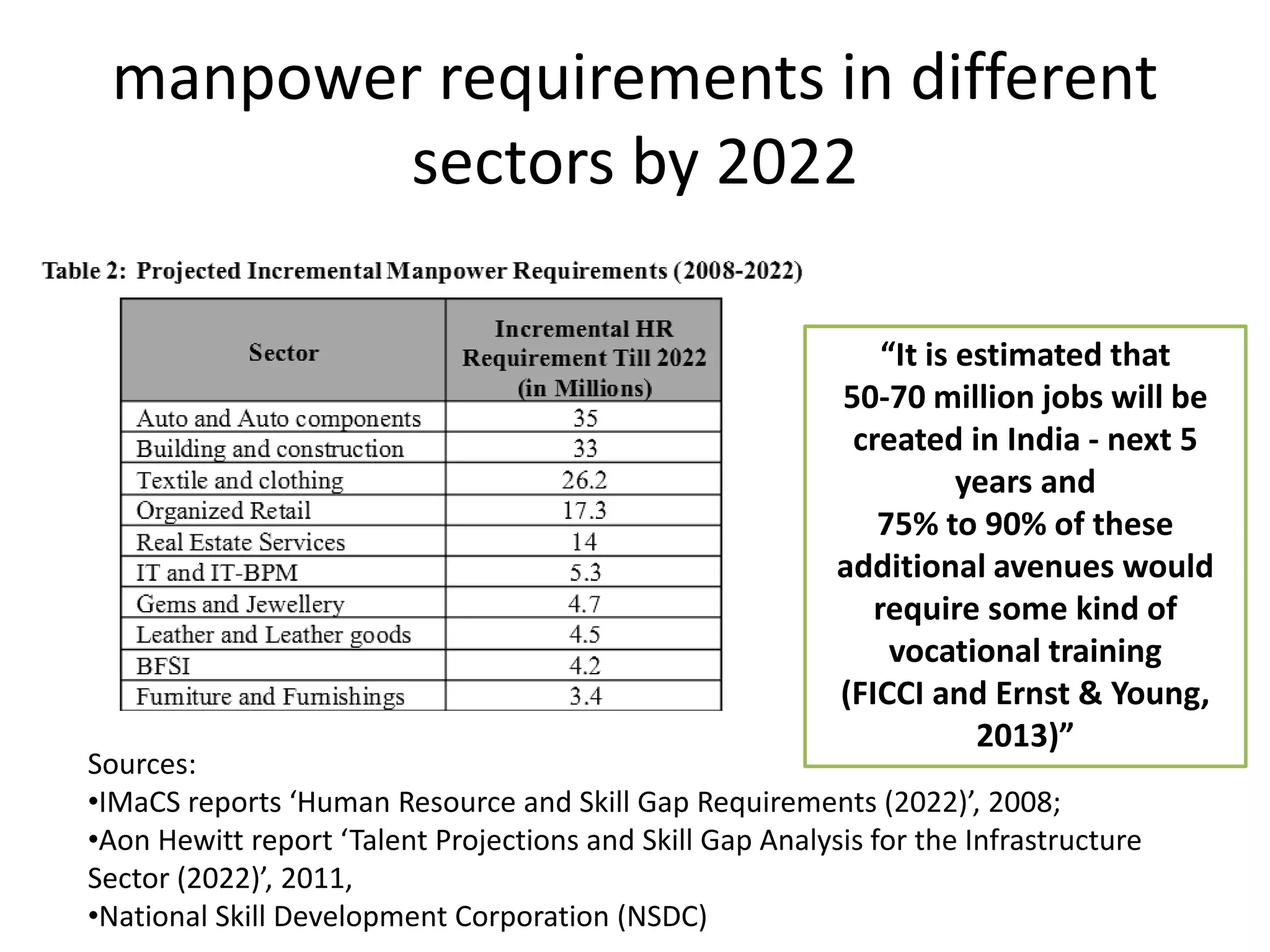
manpower requirements in different
sectors by 2022
Sources:
•IMaCS reports ‘Human Resource and Skill Gap Requirements (2022)’, 2008;
•Aon Hewitt report ‘Talent Projections and Skill Gap Analysis for the Infrastructure
Sector (2022)’, 2011,
•National Skill Development Corporation (NSDC)
“It is estimated that
50-70 million jobs will be
created in India - next 5
years and
75% to 90% of these
additional avenues would
require some kind of
vocational training
(FICCI and Ernst & Young,
2013)”
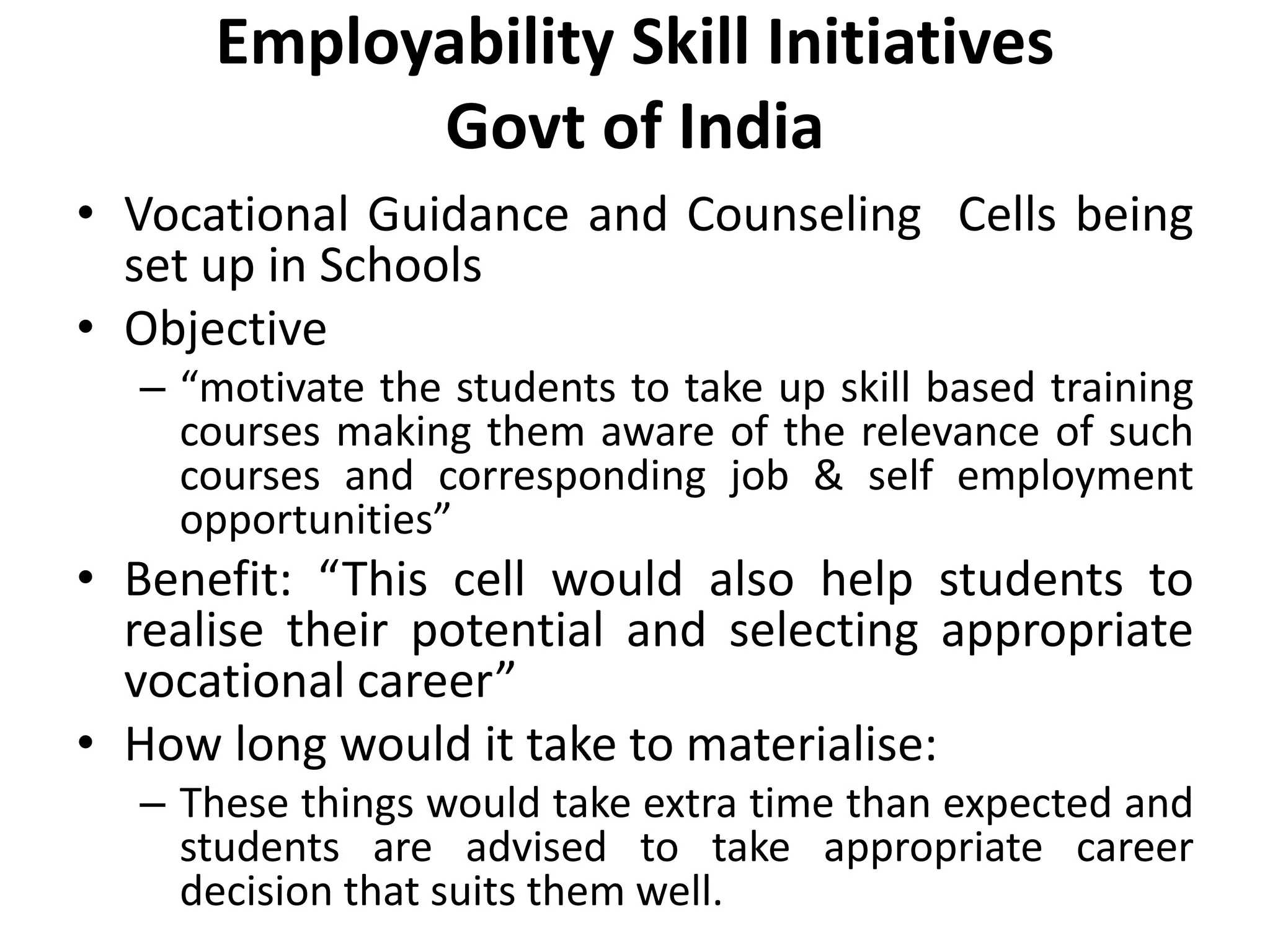
Employability Skill Initiatives
Govt of India
• Vocational Guidance and Counseling Cells being
set up in Schools
• Objective
– “motivate the students to take up skill based training
courses making them aware of the relevance of such
courses and corresponding job & self employment
opportunities”
• Benefit: “This cell would also help students to
realise their potential and selecting appropriate
vocational career”
• How long would it take to materialise:
– These things would take extra time than expected and
students are advised to take appropriate career
decision that suits them well.
What are the Next Steps
Thank You
Narasimha Bharathi
bnbpower@yahoo.com
10 Things for High-School
Students to Remember
• Believe it or not, if you're in high school right
now, you're at a great point in your life.
• You have your whole life in front of you.
• And now is a good time to start thinking about
your future, to make some initial plans;
– just remember that plans can be easily changed.
1. Take time to think about what you like
to do; dream and imagine ideal careers.
• Many Opportunities, different type of jobs
and careers
• Explore all your options
– Examine your likes and dislikes
– Take a few career assessment tests
– Expand your vision of potential majors and career
paths
2. Challenge yourself in high school, but
don't overwhelm yourself.
• If you have a passion for something, such as
photography, find a way to schedule a
photography course along with your other
tougher college-prep courses.
• Obviously, you need to stay focused on getting
good grades, but don't overload your schedule
-- or yourself -- so that it makes you sick or
burnt out.
3. Work, volunteer, or otherwise
gain some experience.
• There are even a growing number of
internship opportunities for high-school
students.
• Just remember that school and grades have to
come first, so only work if you can balance
your schedule, manage your time.
4. Get as much education as you can.
• Take advantage of all educational
opportunities that come your way, such as
summer educational opportunities and
educational trips abroad.
• If you have a passion for science or math,
instead of spending a summer goofing around
the community pool, consider a summer math
enrichment program or a space-agency
program.
5. Talk with as many adults as possible
about careers and colleges
• ask people -- family, neighbors, friends,
teachers, counselors -- to tell you about their
career and college experiences.
• begin to build a network of adults who know
you and are willing to assist you in your
educational and career endeavors.
6. Remember that everyone must
follow his or her own path in life.
• And don't worry if you leave high school with
no clear career path -- that's partly what
college is all about, discovering who you are
and what you want to do in life
• don't feel the need to rush to make a decision
now... but don't use the fact that you have
plenty of time to make a decision as an excuse
7. People change; don't feel locked
into any college or career now. I
• It's great to have an ideal plan for your life,
but remember that things happen, and your
plans may need to change... so keep an open
mind -- and keep your options open.
8. Don't let anyone control your
dreams and ambitions.
• Students often feel pressure to follow in an
adult family member's career path, especially
if s/he is footing the bill for college, but the
worst thing you can do is choose a career to
please someone else.
9. It's never too early nor too late to get
organized and begin making plans.
• Research your options for after graduation --
technical schools, community colleges, four-
year universities, etc. Start or continue your
preparation for the various standardized tests
• Finally, make plans to fill any gaps in your
plans -- such as striving for better grades,
taking tougher courses, gaining experience, or
earning community-service hours.
10. Never stop learning... read,
grow, and expand your mind.
• Have fun, but get the best education you can
so that you are positioned to take advantage
of further educational opportunities... and no
matter where you go after high school, never
stop learning and growing.

How to be successful at school and life.ppt

  • 1.
    How to beSuccessful @ School as well as in Life Narasimha Bharathi
  • 2.
    What are thekey factors required to be successful at School
  • 3.
    Do You Know? • 75% of Engineering Graduates in our Country are unfit for employment • 90% of General Graduates are unemployable (National Employability Report 2013) “ 3 million students graduate every year in India” “ they just don't have industry-ready talent. In other words, they lack the skills required for the jobs that are available to them” By 2020 India will be the Youngest Country in the world with a median age of 29 Years Incase this Youth Bulge is not provided with employment Opp, could turn into a Demographic Liability would result in a Political and economic instability (3Ds success mantra for ‘Make in India’)- ‘demographic dividend, democracy and demand’) “Employability refers to a person's capability for gaining and maintaining employment”
  • 4.
    What is expectedof you? • ask your questions • Be relevant • Lead with a point of view • Know what you want • Be resourceful, knowledgeable, informative (widely read) and communicative! • Think Solutions, Not Problems • Be Consensus Oriented and Collaborative • Ask for help and accept feedback How many of you consistently go through the TOI-NiE paper?
  • 5.
    The reasonably prudentperson understands “What you do today, determines who you will be Tomorrow”
  • 6.
    Career Exploration • Processof choosing an educational path or training or job which fits your interests, skills and abilities. • Develop an effective strategy to realize your Goals.
  • 7.
    Lets look atthe hard hitting questions • How many colleges (Engineering / Arts) we have in Tamil Nadu State • How many students come out of these colleges every year • How well they are placed – employment as well as higher education • How soon we should plan your career? Or at what grade the students should have some plan in place??
  • 8.
    # 97% ofengineering graduates in the country cannot speak English required for jobs in corporate sales or business consulting # 6.8% engineers show the ability to speak or respond spontaneously in English # More than 51% engineering graduates are not employable based on their spoken English scores # Around 61% engineers possess grammar skills no better than a Class 7 student # 7.1% engineers can speak English fluently # Women score over men in writing in English while men show better abilities of speaking English # The survey was conducted across 500 engineering colleges and 30,000 students “Since the basis of the admission in engineering colleges is limited to maths and science, English skills which are missing right from school are not tested nor honed,” said GT Thampi, principal, Thadomal Sahani Engineering College (TSEC), Bandra.
  • 9.
    Issues & PossibleSolutions • Lack self confidence • Lack of Communication Skills • Reluctant to take up jobs elsewhere • Lack of Quality education in majority of colleges • Competition (among peers as well as chunk of Diploma holders ?) • Ineligibility – academic testimonials (70% marks throughout and shouldn’t have failed in any subjects) – 40% students don’t qualify • Plan your career - Don’t Procrastinate • Build your Skill sets from Schooling Years (9th Grade onwards) • Consistent Academic Performance throughout • Research your career options • Make sure you give a best shot in your academics • Developing entrepreneurship skills to enable a person to start one’s own enterprise. • How about taking up higher education overseas !
  • 10.
    School Level –Defining Career Plan It’s up to you! General Skills- Communication, Problem Solving, Analytical skills Subject Depth- Technical skills (Engg Graphics, HR, Finance etc., Corporate Skills – Team play, culture fit, tact, adaptation • Develop Skillsets right from School level • Develop time management • Stay fit • Develop reading skills (contribute to NiE) • Develop Entrepreneurial skills • Set Goals (timeline!) • Take Good Notes • Consistent Academic Performance
  • 11.
    No of Vacancies– Engineering Colleges Academic Year Total Seats Vacant Seats % of Vacant seats Year 2013 287,000 80,000 28% Year 2014 290,000 105,000 36% Year 2015 293,700 126,000 44% Source – from Media Reports August 4, 2015 as well as few educational websites
  • 12.
    How a StudentChooses an Engineering College • quality of Faculty (20%) • Infrastructure (20%) • Quality of Placements (40%) • Quality Industry Interface (20%) – Tie up with Industry – Research centres • Score is less than 35% overall, avoid picking up those colleges
  • 13.
    How to chooseBranch Selection • Computer Science Engineering – Do you understand Logic very well? – Can you handle high-end algorithms and do pattern recognition – Does writing machine-level code excite you – Can you design games and small softwares to ease your work – Do you like Puzzles? • Electrical & Electronics – Do you get excited about repairing electrical appliances – Do Capacitors, transistors and ICs excite you? – Is transmission and distribution of electricity of interest to you? – Do you want a personal Robot?
  • 14.
    How do youchoose Branch Selection Mechanical & Production Engineering: • Have you attempted repairing your bike yourself • Are you good at operations research in School (represents the study of optimal resource allocation) • Can you get your hands dirty, and don’t mind the grease  • Do you like basic Sciences • Do you have a good hand at drawing Civil Engineering • Are you interested in construction? • Do built environments fascinate you? • Can you visualize structures over different landscapes? • Do enjoy making people comfortable?
  • 15.
    How about HigherEducation Overseas? • Students prefer to go to US, UK, Canada, Australia and Singapore for doing Masters. • Cost of Masters – 25 to 60 Lacs – Educational Loans – 6 to 10 years of repayment tenure • Preferred Overseas Destination - ? • Why Study Abroad? – Experience living in another culture – Improve your language skills – Learn about yourself and gain new perspectives – Meet new people, visit new places – Develop unique skills and connections – Open your horizons – hands on experience to understand the world
  • 16.
    Quick Facts Top 10destination countries: • United States (18% of total mobile students) • United Kingdom (11%) • France (7%) • Australia (6%) • Germany (5%) • Russian Federation (4%) • Japan (4%) • Canada (3%) • China (2%) • Italy (2%) Top 10 countries of origin of mobile students: China (694,400 students studying abroad) India (189,500) Republic of Korea (123,700) Germany (117,600) Saudi Arabia (62,500) France (62,400) United States (58,100) Malaysia (55,600) Viet Nam (53,800) Iran (51,600) Data provided till the year 2013-14; Data collated from UNESCO
  • 17.
    manpower requirements indifferent sectors by 2022 Sources: •IMaCS reports ‘Human Resource and Skill Gap Requirements (2022)’, 2008; •Aon Hewitt report ‘Talent Projections and Skill Gap Analysis for the Infrastructure Sector (2022)’, 2011, •National Skill Development Corporation (NSDC) “It is estimated that 50-70 million jobs will be created in India - next 5 years and 75% to 90% of these additional avenues would require some kind of vocational training (FICCI and Ernst & Young, 2013)”
  • 18.
    Employability Skill Initiatives Govtof India • Vocational Guidance and Counseling Cells being set up in Schools • Objective – “motivate the students to take up skill based training courses making them aware of the relevance of such courses and corresponding job & self employment opportunities” • Benefit: “This cell would also help students to realise their potential and selecting appropriate vocational career” • How long would it take to materialise: – These things would take extra time than expected and students are advised to take appropriate career decision that suits them well.
  • 19.
    What are theNext Steps
  • 20.
  • 21.
    10 Things forHigh-School Students to Remember • Believe it or not, if you're in high school right now, you're at a great point in your life. • You have your whole life in front of you. • And now is a good time to start thinking about your future, to make some initial plans; – just remember that plans can be easily changed.
  • 22.
    1. Take timeto think about what you like to do; dream and imagine ideal careers. • Many Opportunities, different type of jobs and careers • Explore all your options – Examine your likes and dislikes – Take a few career assessment tests – Expand your vision of potential majors and career paths
  • 23.
    2. Challenge yourselfin high school, but don't overwhelm yourself. • If you have a passion for something, such as photography, find a way to schedule a photography course along with your other tougher college-prep courses. • Obviously, you need to stay focused on getting good grades, but don't overload your schedule -- or yourself -- so that it makes you sick or burnt out.
  • 24.
    3. Work, volunteer,or otherwise gain some experience. • There are even a growing number of internship opportunities for high-school students. • Just remember that school and grades have to come first, so only work if you can balance your schedule, manage your time.
  • 25.
    4. Get asmuch education as you can. • Take advantage of all educational opportunities that come your way, such as summer educational opportunities and educational trips abroad. • If you have a passion for science or math, instead of spending a summer goofing around the community pool, consider a summer math enrichment program or a space-agency program.
  • 26.
    5. Talk withas many adults as possible about careers and colleges • ask people -- family, neighbors, friends, teachers, counselors -- to tell you about their career and college experiences. • begin to build a network of adults who know you and are willing to assist you in your educational and career endeavors.
  • 27.
    6. Remember thateveryone must follow his or her own path in life. • And don't worry if you leave high school with no clear career path -- that's partly what college is all about, discovering who you are and what you want to do in life • don't feel the need to rush to make a decision now... but don't use the fact that you have plenty of time to make a decision as an excuse
  • 28.
    7. People change;don't feel locked into any college or career now. I • It's great to have an ideal plan for your life, but remember that things happen, and your plans may need to change... so keep an open mind -- and keep your options open.
  • 29.
    8. Don't letanyone control your dreams and ambitions. • Students often feel pressure to follow in an adult family member's career path, especially if s/he is footing the bill for college, but the worst thing you can do is choose a career to please someone else.
  • 30.
    9. It's nevertoo early nor too late to get organized and begin making plans. • Research your options for after graduation -- technical schools, community colleges, four- year universities, etc. Start or continue your preparation for the various standardized tests • Finally, make plans to fill any gaps in your plans -- such as striving for better grades, taking tougher courses, gaining experience, or earning community-service hours.
  • 31.
    10. Never stoplearning... read, grow, and expand your mind. • Have fun, but get the best education you can so that you are positioned to take advantage of further educational opportunities... and no matter where you go after high school, never stop learning and growing.

Editor's Notes

  • #8 No of universities in India- 642; TN-59. No of colleges in India- 37,840. TN-2381 Average strength per college- 705 8 Lacs all india – Engineering
  • #10 The liberal arts degree (i.e. English, History, Humanities, and Social Science) has a broad scope, highlighting study in the humanities, theoretical and general knowledge in an academic discipline, and interdisciplinary inquiry. Students in these degree programs are prepared for the work world by gaining more exposure to in - depth writing, thinking, questioning, and analytical skills, so they can remain highly flexible in their career pathways. The science degree (i.e. Nursing and Psychology) is more of a focused approach with a science or applied science base and at the Bachelor’ s level to include: a balance of General Education, Technologic al knowledge, math and computer -oriented skills, and practical skills needed for a Particular profession within the field. Advanced major courses allow for a deeper as well as a broad understanding of the particular field— for example, the Nurse as Leader or Theories of Personality
  • #11 The ability to do something well: expertise – train to do a particular task