
Takayuki Shimizukawa
@shimizukawa (清水川)
 BeProud co, ltd.
 Sphinx committer
 一般社団法人PyCon JP理事
Board member of PyCon JP committee
おまえ誰よ / Who are you
22017/9/8
[AD] Python オンライン学習サービス PyQ
機械学習コンテンツをリリース
https://pyq.jp/
NEW!
32017/9/8
42017/9/8
The person who think …
以下のように思っている方
 I got into Python, but it doesn’t come nicely..
Pythonは入門したが、なんだかしっくりこない..
 Why len is a function?
なんでlenは関数なんだろう
 Python is not object-oriented as len() function
len()関数だなんてPythonはオブジェクト指向じゃないな
Target attendees
52017/9/8
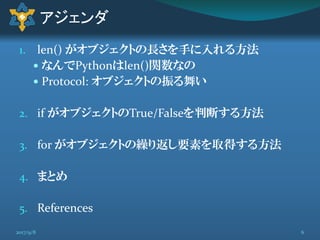
1. len() がオブジェクトの長さを手に入れる方法
 なんでPythonはlen()関数なの
 Protocol: オブジェクトの振る舞い
2. if がオブジェクトのTrue/Falseを判断する方法
3. for がオブジェクトの繰り返し要素を取得する方法
4. まとめ
5. References
アジェンダ
2017/9/8 6
72017/9/8
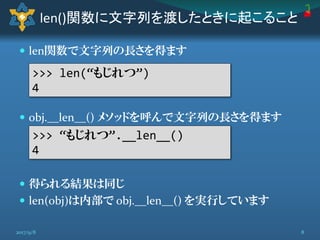
 len関数で文字列の長さを得ます
 obj.__len__() メソッドを呼んで文字列の長さを得ます
 得られる結果は同じ
 len(obj)は内部で obj.__len__() を実行しています
len()関数に文字列を渡したときに起こること
>>> len(“もじれつ”)
4
>>> “もじれつ”.__len__()
4
82017/9/8
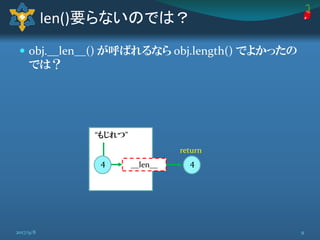
 obj.__len__() が呼ばれるなら obj.length() でよかったの
では?
len()要らないのでは?
“もじれつ”
__len__4 4
return
92017/9/8
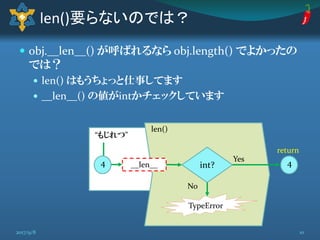
 obj.__len__() が呼ばれるなら obj.length() でよかったの
では?
 len() はもうちょっと仕事してます
 __len__() の値がintかチェックしています
len()要らないのでは?
“もじれつ”
len()
__len__4 int?
TypeError
4
return
Yes
No
102017/9/8
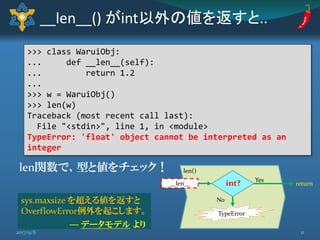
len関数で、型と値をチェック!
__len__() がint以外の値を返すと..
>>> class WaruiObj:
... def __len__(self):
... return 1.2
...
>>> w = WaruiObj()
>>> len(w)
Traceback (most recent call last):
File "<stdin>", line 1, in <module>
TypeError: 'float' object cannot be interpreted as an
integer
__len__
TypeError
return
Yes
No
int?
len()
sys.maxsize を超える値を返すと
OverflowError例外を起こします。
― データモデル より
112017/9/8
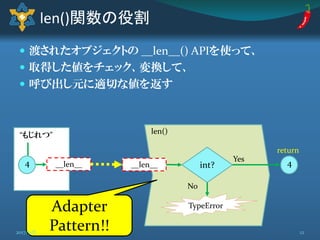
 渡されたオブジェクトの __len__() APIを使って、
 取得した値をチェック、変換して、
 呼び出し元に適切な値を返す
“もじれつ” len()
int?
TypeError
Yes
No
len()関数の役割
__len____len__4 4
return
Adapter
Pattern!! 122017/9/8
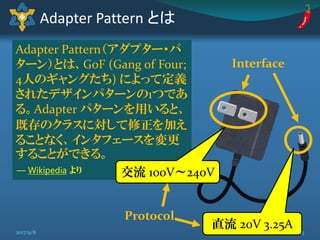
Adapter Pattern(アダプター・パ
ターン)とは、GoF (Gang of Four;
4人のギャングたち) によって定義
されたデザインパターンの1つであ
る。Adapter パターンを用いると、
既存のクラスに対して修正を加え
ることなく、インタフェースを変更
することができる。
Adapter Pattern とは
Interface
交流 100V~240V
直流 20V 3.25A
Protocol
― Wikipedia より
132017/9/8
参考: 実践Python3 もオススメ
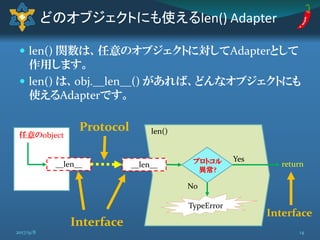
 len() 関数は、任意のオブジェクトに対してAdapterとして
作用します。
 len() は、obj.__len__() があれば、どんなオブジェクトにも
使えるAdapterです。
どのオブジェクトにも使えるlen() Adapter
任意のobject len()
__len__
TypeError
return
Yes
No
__len__
Interface
Interface
Protocol
プロトコル
異常?
142017/9/8
 list.__len__() は中に持っている要素数を返します。
 要素数はlist自身が知っています
listに len() Adapter
list:
[2, None, ‘Yo’]
len()
__len__3 int?
TypeError
3
return
Yes
No
__len__
152017/9/8
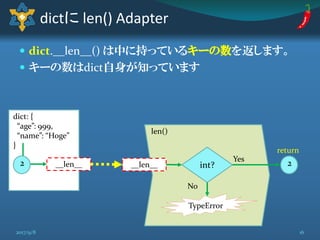
 dict.__len__() は中に持っているキーの数を返します。
 キーの数はdict自身が知っています
dictに len() Adapter
dict: {
“age”: 999,
“name”: “Hoge”
}
len()
__len__2 int?
TypeError
2
return
Yes
No
__len__
162017/9/8
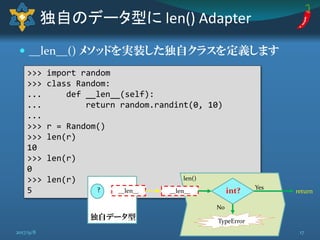
 __len__() メソッドを実装した独自クラスを定義します
独自のデータ型に len() Adapter
>>> import random
>>> class Random:
... def __len__(self):
... return random.randint(0, 10)
...
>>> r = Random()
>>> len(r)
10
>>> len(r)
0
>>> len(r)
5 __len__
TypeError
return
Yes
No
int?
len()
? __len__
独自データ型
172017/9/8
任意のobject
len()
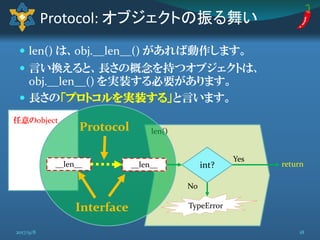
 len() は、obj.__len__() があれば動作します。
 言い換えると、長さの概念を持つオブジェクトは、
obj.__len__() を実装する必要があります。
 長さの「プロトコルを実装する」と言います。
Protocol: オブジェクトの振る舞い
__len__ int?
TypeError
return
Yes
No
__len__
Interface
Protocol
182017/9/8
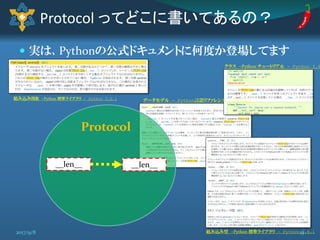
 実は、Pythonの公式ドキュメントに何度か登場してます
Protocol ってどこに書いてあるの?
データモデル ― Python言語リファレンス - Python
3.6.1
組み込み型 -Python 標準ライブラリ - Python 3.6.1
組み込み関数 -Python 標準ライブラリ - Python 3.6.1
クラス -Python チュートリアル - Python 3.6
__len____len__
Protocol
192017/9/8
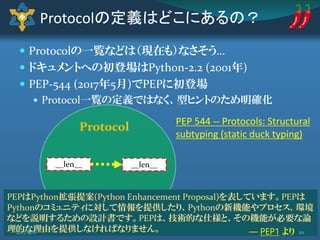
 Protocolの一覧などは(現在も)なさそう…
 ドキュメントへの初登場はPython-2.2 (2001年)
 PEP-544 (2017年5月)でPEPに初登場
 Protocol一覧の定義ではなく、型ヒントのため明確化
Protocolの定義はどこにあるの?
__len____len__
Protocol PEP 544 -- Protocols: Structural
subtyping (static duck typing)
PEPはPython拡張提案(Python Enhancement Proposal)を表しています。PEPは
Pythonのコミュニティに対して情報を提供したり、Pythonの新機能やプロセス、環境
などを説明するための設計書です。PEPは、技術的な仕様と、その機能が必要な論
理的な理由を提供しなければなりません。 ― PEP1 より 202017/9/8
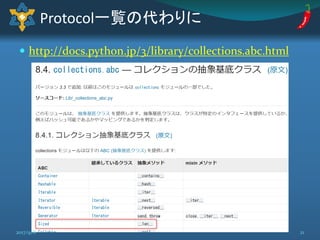
 http://docs.python.jp/3/library/collections.abc.html
Protocol一覧の代わりに
212017/9/8
len() は Adapter
オブジェクトとAdapterが
通信する規約がプロトコル
ここまでのまとめ
222017/9/8
len()
int?
TypeError
Yes
No
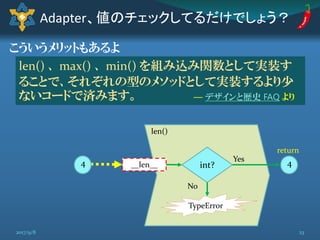
Adapter、値のチェックしてるだけでしょう?
__len__4 4
return
len() 、 max() 、 min() を組み込み関数として実装す
ることで、それぞれの型のメソッドとして実装するより少
ないコードで済みます。 ― デザインと歴史 FAQ より
こういうメリットもあるよ
232017/9/8
次はもうちょっと複雑な例
(´・ω・`)ノ
242017/9/8
252017/9/8
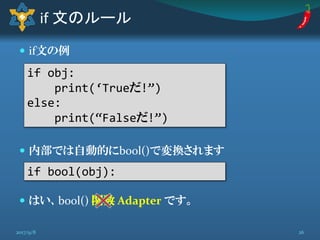
 if文の例
 内部では自動的にbool()で変換されます
 はい、bool() 関数 Adapter です。
if 文のルール
if obj:
print(“Trueだ!”)
else:
print(“Falseだ!”)
if bool(obj):
262017/9/8
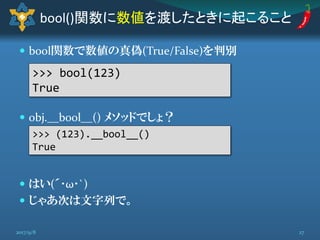
 bool関数で数値の真偽(True/False)を判別
 obj.__bool__() メソッドでしょ?
 はい(´・ω・`)
 じゃあ次は文字列で。
bool()関数に数値を渡したときに起こること
>>> bool(123)
True
>>> (123).__bool__()
True
272017/9/8
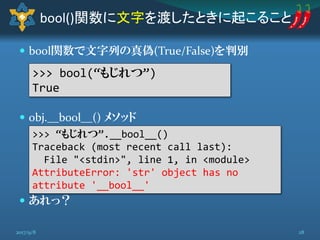
 bool関数で文字列の真偽(True/False)を判別
 obj.__bool__() メソッド
 あれっ?
bool()関数に文字を渡したときに起こること
>>> bool(“もじれつ”)
True
>>> “もじれつ”.__bool__()
Traceback (most recent call last):
File "<stdin>", line 1, in <module>
AttributeError: 'str' object has no
attribute '__bool__'
282017/9/8
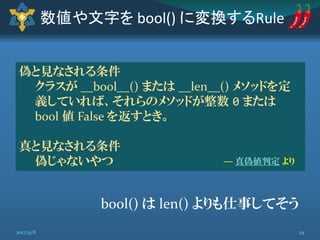
数値や文字を bool() に変換するRule
偽と見なされる条件
クラスが __bool__() または __len__() メソッドを定
義していれば、それらのメソッドが整数 0 または
bool 値 False を返すとき。
真と見なされる条件
偽じゃないやつ ― 真偽値判定 より
bool() は len() よりも仕事してそう
292017/9/8
任意のobject
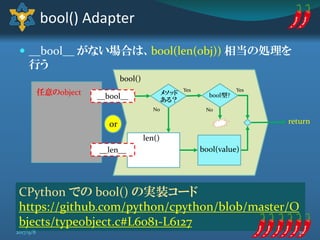
 __bool__ がない場合は、bool(len(obj)) 相当の処理を
行う
len()
bool()
Yes
bool() Adapter
__bool__
return
__len__
メソッド
ある?
No
Yes
bool型?
No
bool(value)
or
CPython での bool() の実装コード
https://github.com/python/cpython/blob/master/O
bjects/typeobject.c#L6081-L6127
302017/9/8
TypeError
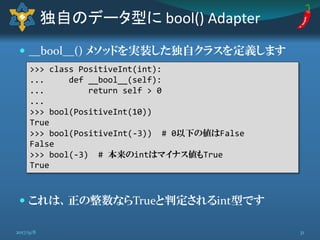
 __bool__() メソッドを実装した独自クラスを定義します
 これは、正の整数ならTrueと判定されるint型です
独自のデータ型に bool() Adapter
>>> class PositiveInt(int):
... def __bool__(self):
... return self > 0
...
>>> bool(PositiveInt(10))
True
>>> bool(PositiveInt(-3)) # 0以下の値はFalse
False
>>> bool(-3) # 本来のintはマイナス値もTrue
True
312017/9/8
さらにレベル上げていくよー
(`・ω・´)
322017/9/8
332017/9/8
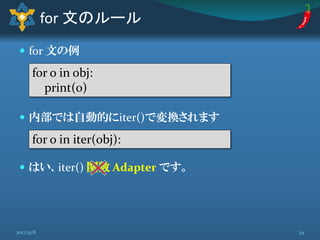
 for 文の例
 内部では自動的にiter()で変換されます
 はい、iter() 関数 Adapter です。
for 文のルール
for o in obj:
print(o)
for o in iter(obj):
342017/9/8
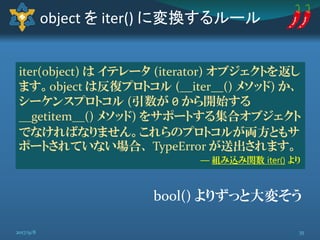
object を iter() に変換するルール
iter(object) は イテレータ (iterator) オブジェクトを返し
ます。object は反復プロトコル (__iter__() メソッド) か、
シーケンスプロトコル (引数が 0 から開始する
__getitem__() メソッド) をサポートする集合オブジェクト
でなければなりません。これらのプロトコルが両方ともサ
ポートされていない場合、 TypeError が送出されます。
― 組み込み関数 iter() より
bool() よりずっと大変そう
352017/9/8
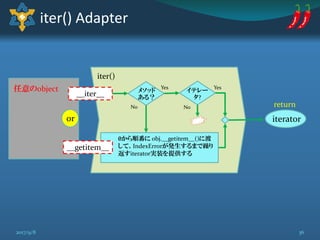
任意のobject
iter() Adapter
iter()
Yes
__iter__
return
メソッド
ある?
No
Yes
No
イテレー
タ?
__getitem__
0から順番に obj.__getitem__()に渡
して、IndexErrorが発生するまで繰り
返すiterator実装を提供する
iteratoror
362017/9/8
Iterator
Pattern!!参考: 実践Python3
参考: Wikipedia
TypeError
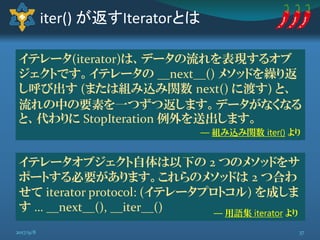
iter() が返すIteratorとは
イテレータ(iterator)は、データの流れを表現するオブ
ジェクトです。イテレータの __next__() メソッドを繰り返
し呼び出す (または組み込み関数 next() に渡す) と、
流れの中の要素を一つずつ返します。データがなくなる
と、代わりに StopIteration 例外を送出します。
― 組み込み関数 iter() より
イテレータオブジェクト自体は以下の 2 つのメソッドをサ
ポートする必要があります。これらのメソッドは 2 つ合わ
せて iterator protocol: (イテレータプロトコル) を成しま
す … __next__(), __iter__() ― 用語集 iterator より
372017/9/8
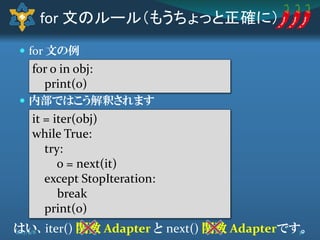
 for 文の例
 内部ではこう解釈されます
for 文のルール(もうちょっと正確に)
for o in obj:
print(o)
it = iter(obj)
while True:
try:
o = next(it)
except StopIteration:
break
print(o)
はい、iter() 関数 Adapter と next() 関数 Adapterです。382017/9/8
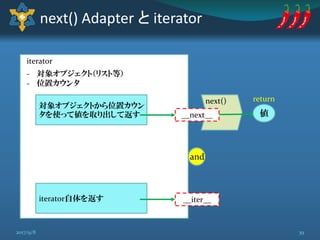
next() Adapter と iterator
iterator
- 対象オブジェクト(リスト等)
- 位置カウンタ
対象オブジェクトから位置カウン
タを使って値を取り出して返す
iterator自体を返す
next() return
値__next__
__iter__
and
392017/9/8
class MyIterator:
def __init__(self, obj):
self.obj = obj
self.c = 0
def __next__(self):
try:
r = self.obj[self.c]
self.c += 1
return r
except IndexError:
raise StopIteration
def __iter__(self):
return self
next() return
値
iteratorの実装例
__next__
__iter__
and
402017/9/8
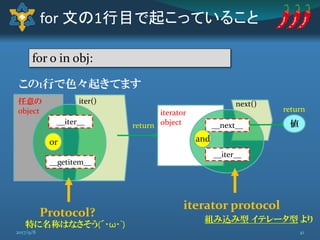
任意の
object
この1行で色々起きてます
for 文の1行目で起こっていること
__iter__
__getitem__
or
next()
return
値__next__
__iter__
iter()
and
iterator
objectreturn
for o in obj:
iterator protocol
組み込み型 イテレータ型 より
Protocol?
特に名称はなさそう(´・ω・`)
412017/9/8
 __iter__() メソッドを実装した独自クラスを定義します
 このコンテナをforに与えると、辞書のキーのアルファベッ
ト順に、そのキーの値が繰り返されます
独自のデータ型に iter(), next() Adapter
class MyContainer:
def __init__(self, mapping):
self.keys = sorted(mapping) # ソートして保持
self.mapping = mapping # 値返し用
def __iter__(self): # for文で呼ばれる
return MyIterator(self)
def __getitem__(self, idx): # MyIteratorから呼ばれる
return self.mapping[self.keys[idx]]
>>> list(MyContainer({'foo': 1, 'bar': 2, 'poke': 3, 'ah': 4}))
[4, 2, 1, 3] 422017/9/8
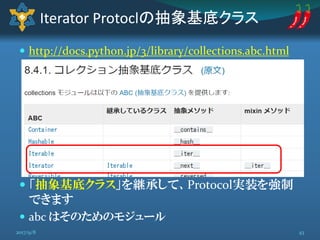
 http://docs.python.jp/3/library/collections.abc.html
 「抽象基底クラス」を継承して、Protocol実装を強制
できます
 abc はそのためのモジュール
Iterator Protoclの抽象基底クラス
432017/9/8
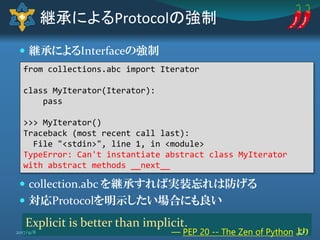
 継承によるInterfaceの強制
 collection.abc を継承すれば実装忘れは防げる
 対応Protocolを明示したい場合にも良い
継承によるProtocolの強制
from collections.abc import Iterator
class MyIterator(Iterator):
pass
>>> MyIterator()
Traceback (most recent call last):
File "<stdin>", line 1, in <module>
TypeError: Can't instantiate abstract class MyIterator
with abstract methods __next__
Explicit is better than implicit.
― PEP 20 -- The Zen of Python より442017/9/8
(´・ω・)おつかれさま(・ω・`)
452017/9/8
462017/9/8
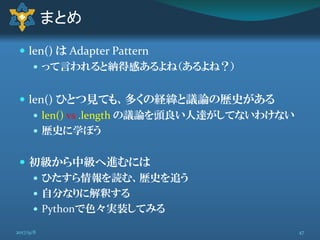
 len() は Adapter Pattern
 って言われると納得感あるよね(あるよね?)
 len() ひとつ見ても、多くの経緯と議論の歴史がある
 len() vs .length の議論を頭良い人達がしてないわけない
 歴史に学ぼう
 初級から中級へ進むには
 ひたすら情報を読む、歴史を追う
 自分なりに解釈する
 Pythonで色々実装してみる
まとめ
472017/9/8
公式リファレンスに
多くの情報が載っている
原典を調べよう
PEPを読んでみよう
482017/9/8
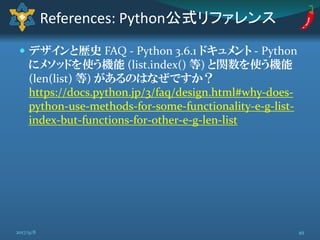
 デザインと歴史 FAQ - Python 3.6.1 ドキュメント - Python
にメソッドを使う機能 (list.index() 等) と関数を使う機能
(len(list) 等) があるのはなぜですか?
https://docs.python.jp/3/faq/design.html#why-does-
python-use-methods-for-some-functionality-e-g-list-
index-but-functions-for-other-e-g-len-list
References: Python公式リファレンス
492017/9/8
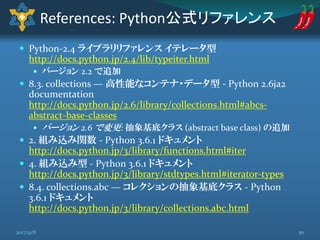
 Python-2.4 ライブラリリファレンス イテレータ型
http://docs.python.jp/2.4/lib/typeiter.html
 バージョン 2.2 で追加
 8.3. collections — 高性能なコンテナ・データ型 - Python 2.6ja2
documentation
http://docs.python.jp/2.6/library/collections.html#abcs-
abstract-base-classes
 バージョン 2.6 で変更: 抽象基底クラス (abstract base class) の追加
 2. 組み込み関数 - Python 3.6.1 ドキュメント
http://docs.python.jp/3/library/functions.html#iter
 4. 組み込み型 - Python 3.6.1 ドキュメント
http://docs.python.jp/3/library/stdtypes.html#iterator-types
 8.4. collections.abc — コレクションの抽象基底クラス - Python
3.6.1 ドキュメント
http://docs.python.jp/3/library/collections.abc.html
References: Python公式リファレンス
502017/9/8
 PEP 1 -- PEP Purpose and Guidelines | Python.org
http://sphinx-users.jp/articles/pep1.html (和訳)
https://www.python.org/dev/peps/pep-0001
 PEP 3119 -- Introducing Abstract Base Classes | Python.org
https://www.python.org/dev/peps/pep-3119/
 PEP 544 -- Protocols: Structural subtyping (static duck typing) |
Python.org
https://www.python.org/dev/peps/pep-0544/
 PEP 20 -- The Zen of Python
http://d.hatena.ne.jp/nishiohirokazu/20120317/1331989155 (和訳)
https://www.python.org/dev/peps/pep-0020/
References: PEP
512017/9/8
 len が関数になっている理由 - methaneのブログ
http://methane.hatenablog.jp/entry/20090702/1246556675
 len が py3k でも 関数のままである理由 - methaneのブログ
http://methane.hatenablog.jp/entry/20090721/1248195293
 Solid Snakes or: How to Take 5 Weeks of Vacation - Hynek Schlawack
https://hynek.me/talks/reliability/
 オブジェクト指向と20年戦ってわかったこと – Qiita
http://qiita.com/shibukawa/items/2698b980933367ad93b4
 新人プログラマに知っておいてもらいたい人類がオブジェクト指向を手に入れるま
での軌跡 – Qiita
http://qiita.com/hirokidaichi/items/591ad96ab12938878fe1
 Python を支える技術 ディスクリプタ編 #pyconjp – Qiita
http://qiita.com/knzm/items/a8a0fead6e1706663c22
 The History of Python.jp: ユーザ定義クラスのサポートの追加
http://python-history-jp.blogspot.jp/2009/04/blog-post_30.html
 仮想継承とsingledispatch – atsuoishimoto’s diary
http://atsuoishimoto.hatenablog.com/entry/2016/08/04/095641
 The Zen of Python 解題 - 前編 – atsuoishimoto’s diary
http://atsuoishimoto.hatenablog.com/entry/20100920/1284986066
References: blog等
522017/9/8
 bool()実装
https://github.com/python/cpython/blob/1f06a680d/
Objects/typeobject.c#L6081-L6127
 真偽判定実装
https://github.com/python/cpython/blob/1f06a680d/
Objects/object.c#L1314-L1336
 len()実装
https://github.com/python/cpython/blob/1f06a680d/
Objects/typeobject.c#L5920-L5944
 len()のint値判定で呼ばれる実装
https://github.com/python/cpython/blob/1f06a680d/
Objects/abstract.c#L1238-L1275
References: CPython code
532017/9/8
 実践 Python3
http://amzn.to/2vK2uHl
 Adapter Pattern, Iterator Pattern, Protocol, …
 結城浩にインタビュー Java言語で学ぶデザインパターン
入門
http://www.hyuki.com/dp/interview.html
 かわいいフリー素材集 いらすとや
http://www.irasutoya.com/
References: その他
542017/9/8
Questions?
@shimizukawa
Grab me anytime :)
Break, Party, Sprint
2017/9/8 55
Thanks :)
2017/9/8 56

Pythonはどうやってlen関数で長さを手にいれているの?