How do our ears work?
Lesson 12
Parts of our Ears
The three main parts :
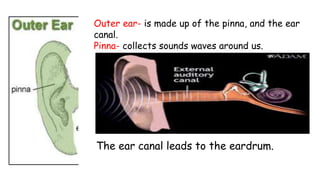
Outer ear- is made up of the pinna, and the ear
canal.
Pinna- collects sounds waves around us.
The ear canal leads to the eardrum.
Eardrum- connects the outer ear
with the middle ear. There are three
tiny bones in the middle in the ear.
They are called :
Hammer
Anvil
Stirrup
Fast movement of these bones send
sound to the inner ear.
Semicircular canals- they entry
the sound causes the fluid of
the cochlea to move.
Auditory nerve- sends sound
messages to the brain for
interpretation.
Eustachian tube- is a narrow
passageway that connects the middle
ear to the back of the throat.
Small amounts of air are released
through the tube to balance the
pressure in the ear and throat. To
much pressure might burst the
eardrum.
How the ears work?
Common
ear
problems
Ear infections- caused by germs that enter the
ear. They often affect the outer ear, making it
feel itchy and painful.
If a boil or pus (nana) develops, the outer ear
becomes reddish and swollen. )
Infections due to colds may also cause ear
discharge. That is a yellowish fluid flows out of the
ear. Fever or earache may occur.
Earache may caused by an infection in the middle
ear. Germs from the throat reach the middle ear
through the Eustachian tube. Such infection causes
ringing in the ears and severe pain. It may also
cause fever or deafness.
Ear infection may result to earache, fever or
yellowish discharge. In these cases, consult a
doctor immediately.
Hearing disorders and even hearing loss may be
due to impacted ear wax. This waxy substance is
produced by the skin glands of the outer ear
canal. It normally moves out of the ear gently.
When wax is produced too fast, is builds up. It
completely fills up the outer ear canal. The
impacted earwax blocks sound waves from
reaching the eardrum.
How do our ears work

How do our ears work

  • 1.
    How do ourears work? Lesson 12
  • 2.
    Parts of ourEars The three main parts :
  • 3.
    Outer ear- ismade up of the pinna, and the ear canal. Pinna- collects sounds waves around us. The ear canal leads to the eardrum.
  • 4.
    Eardrum- connects theouter ear with the middle ear. There are three tiny bones in the middle in the ear. They are called : Hammer Anvil Stirrup Fast movement of these bones send sound to the inner ear.
  • 5.
    Semicircular canals- theyentry the sound causes the fluid of the cochlea to move. Auditory nerve- sends sound messages to the brain for interpretation.
  • 6.
    Eustachian tube- isa narrow passageway that connects the middle ear to the back of the throat. Small amounts of air are released through the tube to balance the pressure in the ear and throat. To much pressure might burst the eardrum.
  • 7.
  • 9.
    Common ear problems Ear infections- causedby germs that enter the ear. They often affect the outer ear, making it feel itchy and painful. If a boil or pus (nana) develops, the outer ear becomes reddish and swollen. )
  • 10.
    Infections due tocolds may also cause ear discharge. That is a yellowish fluid flows out of the ear. Fever or earache may occur. Earache may caused by an infection in the middle ear. Germs from the throat reach the middle ear through the Eustachian tube. Such infection causes ringing in the ears and severe pain. It may also cause fever or deafness. Ear infection may result to earache, fever or yellowish discharge. In these cases, consult a doctor immediately.
  • 11.
    Hearing disorders andeven hearing loss may be due to impacted ear wax. This waxy substance is produced by the skin glands of the outer ear canal. It normally moves out of the ear gently. When wax is produced too fast, is builds up. It completely fills up the outer ear canal. The impacted earwax blocks sound waves from reaching the eardrum.