HOUSE STYLE
WHAT IS HOUSE
STYLE?
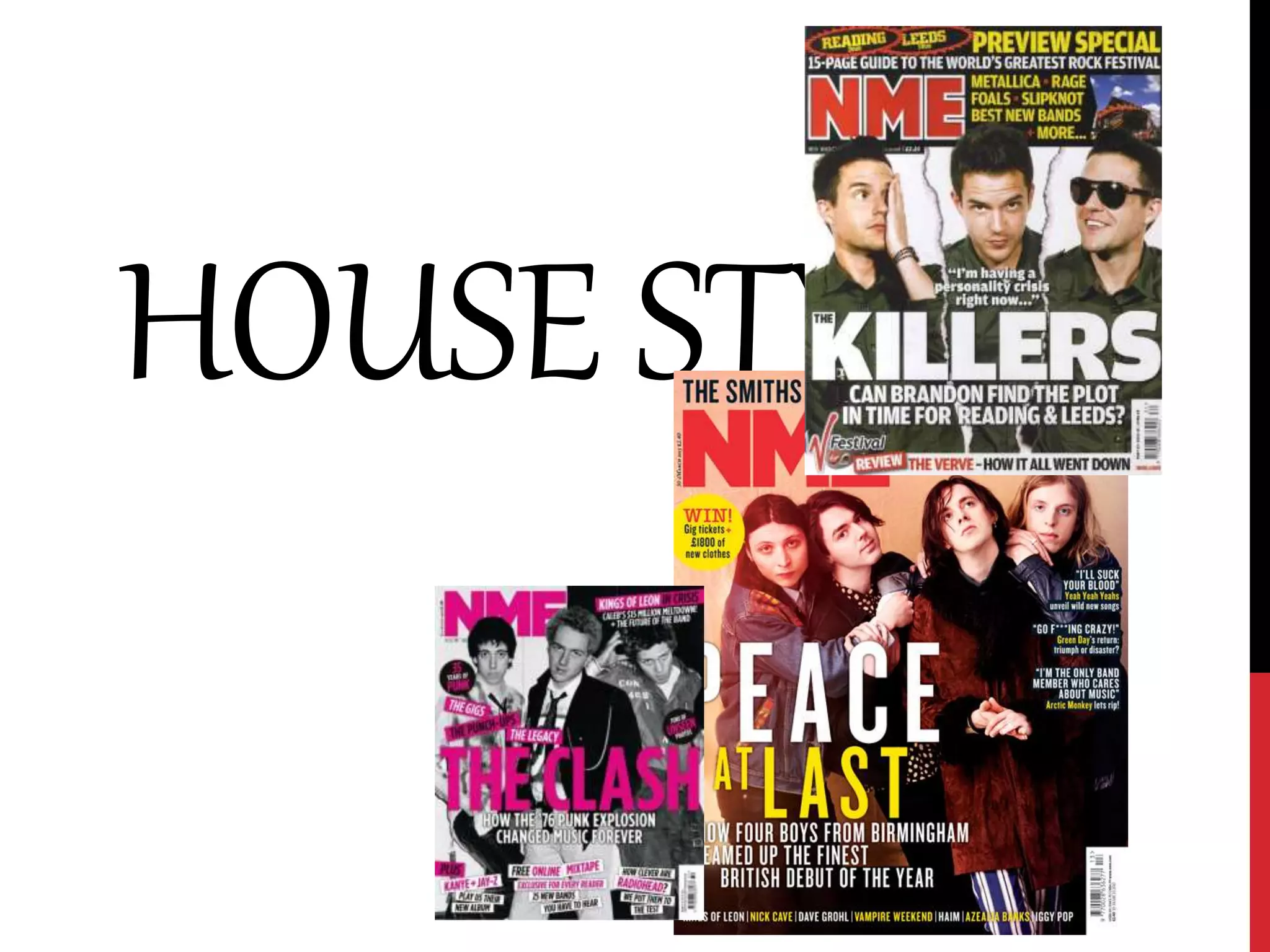
A magazine possess a certain style, layout and structure. The
position, colour and font of the masthead, logo, cover lines and
main image all contribute to the style of the magazine, the
House Style. House style is used by almost every magazine in
the media, to give each magazine an individual look and flair.
A house style is used so the reader is able to recognise the
magazine they are buying, because of the certain style and flair.
The audience then becomes familiar with the house style of the
magazine, and they are able to recognise future issues by the
typical house style and structure.
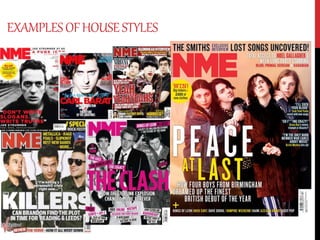
However in each new issue, the house style of a magazine will
alter slightly, but still possess a similar style so it is appealing
and new to the audience, however the audience are still able to
identify the original style of the magazine.
EXAMPLESOFHOUSESTYLES
NME –HOUSESTYLE
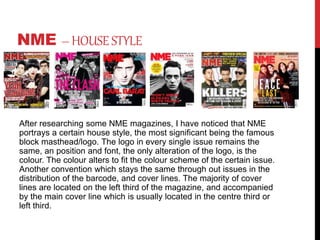
After researching some NME magazines, I have noticed that NME
portrays a certain house style, the most significant being the famous
block masthead/logo. The logo in every single issue remains the
same, an position and font, the only alteration of the logo, is the
colour. The colour alters to fit the colour scheme of the certain issue.
Another convention which stays the same through out issues in the
distribution of the barcode, and cover lines. The majority of cover
lines are located on the left third of the magazine, and accompanied
by the main cover line which is usually located in the centre third or
left third.
REFLEKTORHOUSESTYLE
I have come to a conclusion that my magazine will posses a
curtain house style and structure, as I feel that a house style
helps a magazine company to sell effectively. I will be looking
into different types of logos and font to follow a similar
structure and style for my magazine ‘Reflektor’. I have
already established that my magazine will follow a simple
colour scheme, using monochrome colours with other
pigmented colours such as dark blue, red and dark green, to
create a contrast.

House style

  • 1.
  • 2.
    WHAT IS HOUSE STYLE? Amagazine possess a certain style, layout and structure. The position, colour and font of the masthead, logo, cover lines and main image all contribute to the style of the magazine, the House Style. House style is used by almost every magazine in the media, to give each magazine an individual look and flair. A house style is used so the reader is able to recognise the magazine they are buying, because of the certain style and flair. The audience then becomes familiar with the house style of the magazine, and they are able to recognise future issues by the typical house style and structure. However in each new issue, the house style of a magazine will alter slightly, but still possess a similar style so it is appealing and new to the audience, however the audience are still able to identify the original style of the magazine.
  • 3.
  • 4.
    NME –HOUSESTYLE After researchingsome NME magazines, I have noticed that NME portrays a certain house style, the most significant being the famous block masthead/logo. The logo in every single issue remains the same, an position and font, the only alteration of the logo, is the colour. The colour alters to fit the colour scheme of the certain issue. Another convention which stays the same through out issues in the distribution of the barcode, and cover lines. The majority of cover lines are located on the left third of the magazine, and accompanied by the main cover line which is usually located in the centre third or left third.
  • 5.
    REFLEKTORHOUSESTYLE I have cometo a conclusion that my magazine will posses a curtain house style and structure, as I feel that a house style helps a magazine company to sell effectively. I will be looking into different types of logos and font to follow a similar structure and style for my magazine ‘Reflektor’. I have already established that my magazine will follow a simple colour scheme, using monochrome colours with other pigmented colours such as dark blue, red and dark green, to create a contrast.