Host range
determination of
lytic phage
Welcome to a journey into the fascinating world of lytic phages.
In this presentation, we will explore the definition, characteristics,
and important role of host range determination in the study of
lytic phages.
by Satish K Sharma
Introduction to lytic phage
Lytic phages are viruses that specifically infect and kill bacteria. Their unique abilities have made them valuable
tools in various research fields, including phage therapy and biotechnology.
Definition and characteristics of
lytic phage
1 Definition 🦠
Lytic phages are bacteriophages
that possess the ability to infect
bacteria and ultimately cause
their lysis or destruction.
2 Specificity 🔬
Lytic phages exhibit high
specificity towards particular
bacterial strains due to their
receptor recognition
mechanisms.
3 Reproduction cycle 🔄
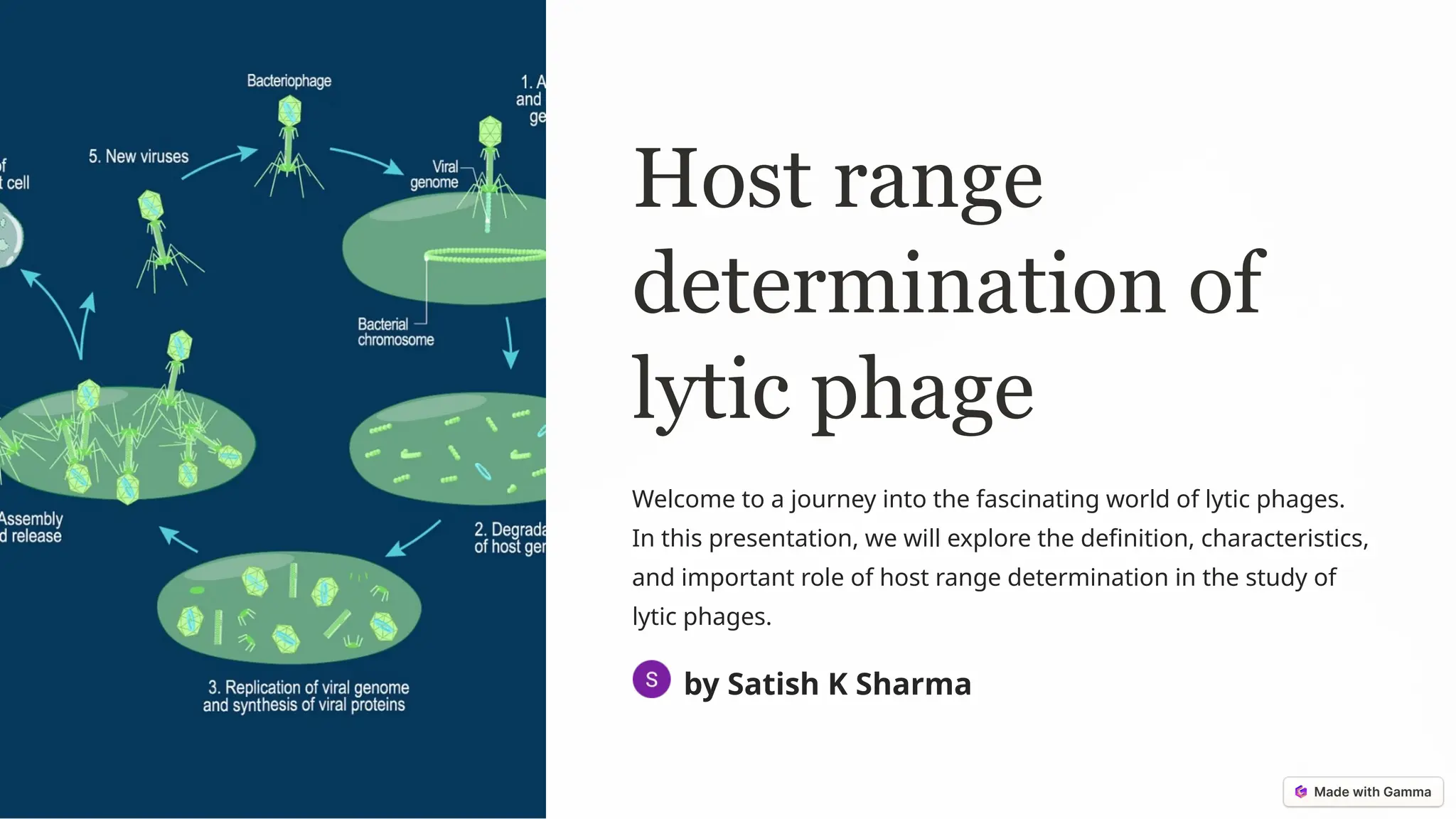
They follow a lytic lifecycle, which involves phage attachment, penetration,
replication, assembly, and release of progeny virions.
Importance of host range determination
Phage selection 🎯
Host range determination allows
researchers to identify phages
with high infectivity against
specific bacterial strains, enabling
precise targeting and potential
therapeutic applications.
Bacteriophage
ecology 🌍
Understanding the host range
helps elucidate the dynamic
interactions between phages and
bacteria in diverse environments,
contributing to our knowledge of
microbial ecosystems.
Biotechnological
applications 🧪
Knowledge of host range helps in
the development of phage-based
detection methods, biocontrol
agents, and as tools in genetic
engineering and bioremediation.
Methods for determining the host
range of lytic phage
1 Bacterial susceptibility testing
Simple method involving the exposure of various bacterial strains to the
phage and monitoring for lytic activity.
2 Spot assays
Used for assessing the ability of a phage to lyse bacterial lawns by observing
distinct zones of clearing.
3 Plaque assays
Quantitative approach that allows determination of phage infectivity and
visualization of individual plaques.
Factors influencing host range
Bacterial receptor availability
The presence of specific receptors
on the bacterial surface determines
phage binding and subsequent
infection.
Phage receptor recognition
Phages possess receptor-binding
proteins that match the receptors
on bacterial cells, enabling
successful attachment and
infection.
Host defense mechanisms
Bacterial defense systems, such as
CRISPR-Cas, can act as barriers and
limit phage infection within certain
bacterial strains.
Applications and implications of host range
determination
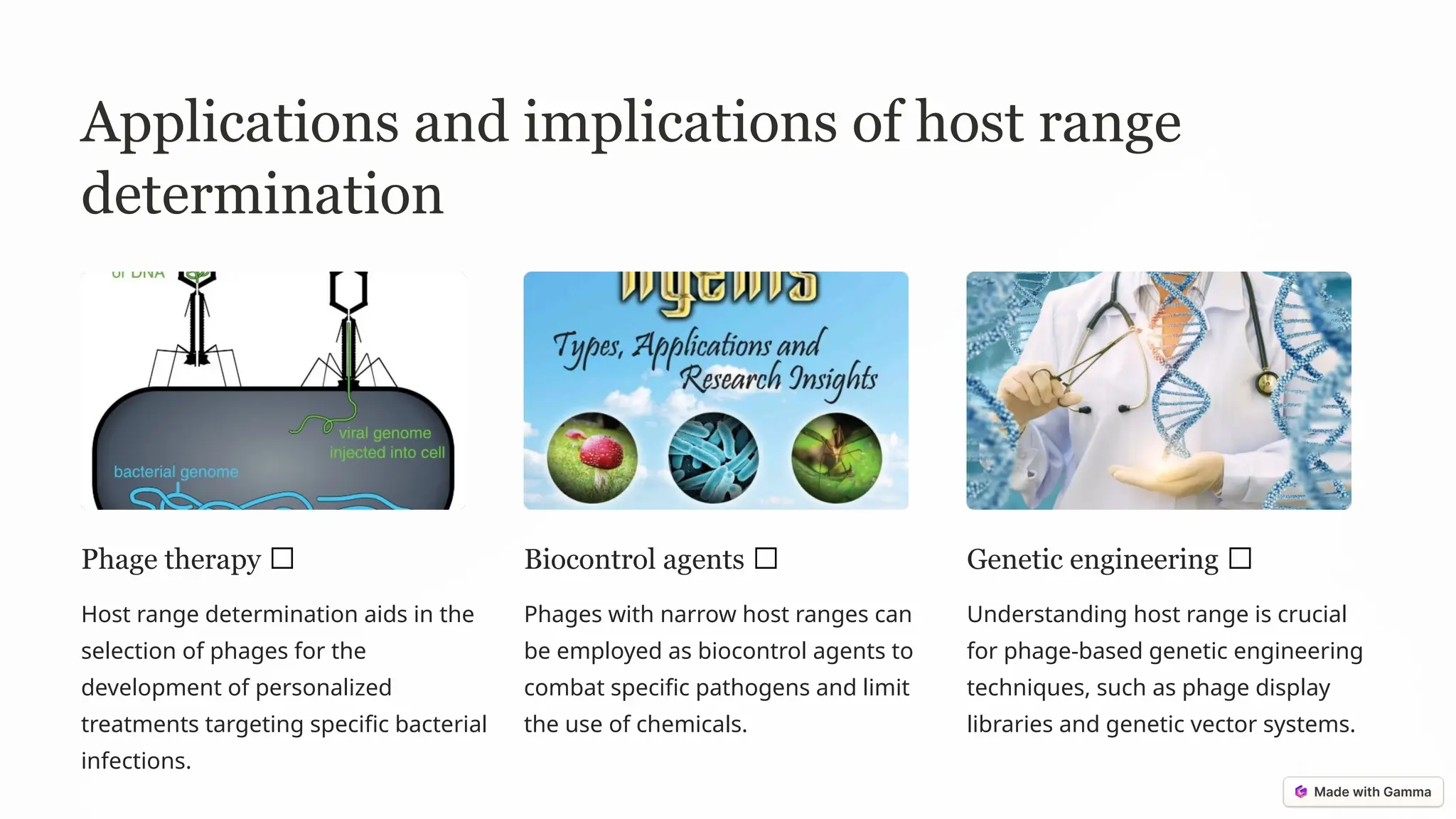
Phage therapy 💉
Host range determination aids in the
selection of phages for the
development of personalized
treatments targeting specific bacterial
infections.
Biocontrol agents 🌱
Phages with narrow host ranges can
be employed as biocontrol agents to
combat specific pathogens and limit
the use of chemicals.
Genetic engineering 🧬
Understanding host range is crucial
for phage-based genetic engineering
techniques, such as phage display
libraries and genetic vector systems.
Conclusion and future research directions
The study of lytic phage host range determination continues to uncover new insights into their biology and
potential applications. Further research focusing on host-pathogen interactions and the role of phage receptors
will contribute to advancements in phage therapy and biotechnology.

Host-range-determination-of-lytic-phage.pptx

  • 1.
    Host range determination of lyticphage Welcome to a journey into the fascinating world of lytic phages. In this presentation, we will explore the definition, characteristics, and important role of host range determination in the study of lytic phages. by Satish K Sharma
  • 2.
    Introduction to lyticphage Lytic phages are viruses that specifically infect and kill bacteria. Their unique abilities have made them valuable tools in various research fields, including phage therapy and biotechnology.
  • 3.
    Definition and characteristicsof lytic phage 1 Definition 🦠 Lytic phages are bacteriophages that possess the ability to infect bacteria and ultimately cause their lysis or destruction. 2 Specificity 🔬 Lytic phages exhibit high specificity towards particular bacterial strains due to their receptor recognition mechanisms. 3 Reproduction cycle 🔄 They follow a lytic lifecycle, which involves phage attachment, penetration, replication, assembly, and release of progeny virions.
  • 4.
    Importance of hostrange determination Phage selection 🎯 Host range determination allows researchers to identify phages with high infectivity against specific bacterial strains, enabling precise targeting and potential therapeutic applications. Bacteriophage ecology 🌍 Understanding the host range helps elucidate the dynamic interactions between phages and bacteria in diverse environments, contributing to our knowledge of microbial ecosystems. Biotechnological applications 🧪 Knowledge of host range helps in the development of phage-based detection methods, biocontrol agents, and as tools in genetic engineering and bioremediation.
  • 5.
    Methods for determiningthe host range of lytic phage 1 Bacterial susceptibility testing Simple method involving the exposure of various bacterial strains to the phage and monitoring for lytic activity. 2 Spot assays Used for assessing the ability of a phage to lyse bacterial lawns by observing distinct zones of clearing. 3 Plaque assays Quantitative approach that allows determination of phage infectivity and visualization of individual plaques.
  • 6.
    Factors influencing hostrange Bacterial receptor availability The presence of specific receptors on the bacterial surface determines phage binding and subsequent infection. Phage receptor recognition Phages possess receptor-binding proteins that match the receptors on bacterial cells, enabling successful attachment and infection. Host defense mechanisms Bacterial defense systems, such as CRISPR-Cas, can act as barriers and limit phage infection within certain bacterial strains.
  • 7.
    Applications and implicationsof host range determination Phage therapy 💉 Host range determination aids in the selection of phages for the development of personalized treatments targeting specific bacterial infections. Biocontrol agents 🌱 Phages with narrow host ranges can be employed as biocontrol agents to combat specific pathogens and limit the use of chemicals. Genetic engineering 🧬 Understanding host range is crucial for phage-based genetic engineering techniques, such as phage display libraries and genetic vector systems.
  • 8.
    Conclusion and futureresearch directions The study of lytic phage host range determination continues to uncover new insights into their biology and potential applications. Further research focusing on host-pathogen interactions and the role of phage receptors will contribute to advancements in phage therapy and biotechnology.