Marine Discovery Center
Horseshoe Crab
Medical Wonder
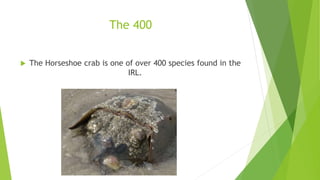
The 400
 The Horseshoe crab is one of over 400 species found in the
IRL.
Bacteria are everywhere in our
environment.
 What does this have to do with us and The
horseshoe crab?
 Certainly not the prettiest but the most
important.
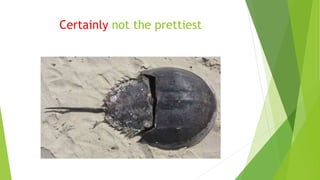
Certainly not the prettiest
But
 One of the most vital to all of us
 AND
 They are not even true crabs
NOT EVEN CLOSE
There is no other species in North
America closely related to them. A
class by themselves…………..
In more ways than one, as we will
see.
About them
They hang around in the mud
They eat worms and shell fish
HOWEVER
Their health and survival is
vital to as all!
Especially my family
WHY??
Anyone care to guess why
they are so important to us.
HINT
CHAD ALREADY TOLD US!
http://www.horseshoecrab.org/med/me
d.html
How does the horseshoe crab protect the
public health?
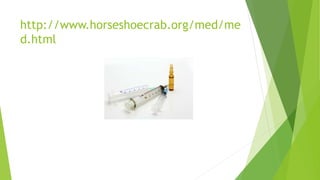
 The horseshoe crab plays a vital role in injectable
medication.
 An extract of the horseshoe crab's blood is used by the
pharmaceutical and medical device industries to ensure
that their products, e.g., intravenous drugs, vaccines, and
medical devices, are free of bacterial contamination.
ENDOTOXINS
No other test works as easily
or reliably for this purpose.
Bacteria around us can cause disease
 Salmonella
 Cholera
 Tetanus
 Lyme Disease
ENDOTOXINS
 The bacterial toxin of greatest concern is
termed endotoxin, and
it is able to withstand steam
sterilization.
http://www.horseshoecrab.org/med/me
d.html
 There is class of bacteria of most concern is known as
Gram-negative, for their characteristic of being easily
decolorized during the Gram staining procedure.
 Surprisingly, it is the non-pathogenic members of the
Gram-negative group, those that love aquatic
environments, which cause the most problems for the
pharmaceutical industry.
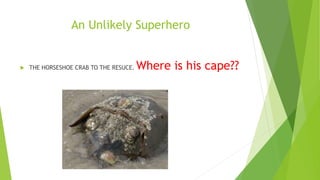
An Unlikely Superhero
 THE HORSESHOE CRAB TO THE RESUCE. Where is his cape??
DISCOVERY 1960
 when common marine bacteria were
injected into the bloodstream of the North
American horseshoe crab,
 massive clotting occurred.
 , these investigators were able to localize
the clotting phenomenon to the blood cells,
amebocytes, of the horseshoe crab
 Thus, the horseshoe crab is constantly threatened with
infection due to its environment. The horseshoe crab lacks
an immune system; It does contain a number of
compounds that will bind to and inactivate bacteria,
fungi, and viruses.
 It is one of the marvels of evolution that the horseshoe
crab uses endotoxin as a signal for wound occurrence and
as an extremely effective defense against infection.
The blood….
 …..forms a physical barrier against additional
bacterial entry and infection and creates a
physical barrier against additional bacterial entry
and infection.
How is this done?
 Horseshoe crabs are collected by hand and are not injured during this
process.
 Once the crabs are caught, they are transported to the laboratory from the
fishing pier by truck. During the bleeding process, up to 30% of the animal's
blood is removed. Research has shown that once returned to the water, the
horseshoe crab's blood volume rebounds in about a week.
 The Associates of Cape Cod and other LAL manufacturers have studied
horseshoe crab mortality following the bleeding procedure and have found it
to be quite low, less than 3% when compared to controls handled similarly but
not bled. There are no records of a horseshoe crab dying during the bleeding
process itself. Other studies conducted by government agencies and
universities indicate a mortality of 10-15%. However, the horseshoe crabs in
these studies were not handled as carefully as those collected by the LAL
industry.

Horseshoe crab

  • 1.
  • 2.
    The 400  TheHorseshoe crab is one of over 400 species found in the IRL.
  • 3.
    Bacteria are everywherein our environment.  What does this have to do with us and The horseshoe crab?  Certainly not the prettiest but the most important.
  • 4.
  • 5.
    But  One ofthe most vital to all of us  AND  They are not even true crabs
  • 6.
    NOT EVEN CLOSE Thereis no other species in North America closely related to them. A class by themselves………….. In more ways than one, as we will see.
  • 7.
    About them They hangaround in the mud They eat worms and shell fish
  • 8.
    HOWEVER Their health andsurvival is vital to as all! Especially my family
  • 9.
    WHY?? Anyone care toguess why they are so important to us.
  • 10.
  • 11.
  • 12.
    How does thehorseshoe crab protect the public health?  The horseshoe crab plays a vital role in injectable medication.  An extract of the horseshoe crab's blood is used by the pharmaceutical and medical device industries to ensure that their products, e.g., intravenous drugs, vaccines, and medical devices, are free of bacterial contamination.
  • 13.
    ENDOTOXINS No other testworks as easily or reliably for this purpose.
  • 14.
    Bacteria around uscan cause disease  Salmonella  Cholera  Tetanus  Lyme Disease
  • 15.
    ENDOTOXINS  The bacterialtoxin of greatest concern is termed endotoxin, and it is able to withstand steam sterilization.
  • 16.
    http://www.horseshoecrab.org/med/me d.html  There isclass of bacteria of most concern is known as Gram-negative, for their characteristic of being easily decolorized during the Gram staining procedure.  Surprisingly, it is the non-pathogenic members of the Gram-negative group, those that love aquatic environments, which cause the most problems for the pharmaceutical industry.
  • 17.
    An Unlikely Superhero THE HORSESHOE CRAB TO THE RESUCE. Where is his cape??
  • 18.
    DISCOVERY 1960  whencommon marine bacteria were injected into the bloodstream of the North American horseshoe crab,  massive clotting occurred.
  • 19.
     , theseinvestigators were able to localize the clotting phenomenon to the blood cells, amebocytes, of the horseshoe crab
  • 20.
     Thus, thehorseshoe crab is constantly threatened with infection due to its environment. The horseshoe crab lacks an immune system; It does contain a number of compounds that will bind to and inactivate bacteria, fungi, and viruses.  It is one of the marvels of evolution that the horseshoe crab uses endotoxin as a signal for wound occurrence and as an extremely effective defense against infection.
  • 21.
    The blood….  …..formsa physical barrier against additional bacterial entry and infection and creates a physical barrier against additional bacterial entry and infection.
  • 22.
    How is thisdone?  Horseshoe crabs are collected by hand and are not injured during this process.  Once the crabs are caught, they are transported to the laboratory from the fishing pier by truck. During the bleeding process, up to 30% of the animal's blood is removed. Research has shown that once returned to the water, the horseshoe crab's blood volume rebounds in about a week.  The Associates of Cape Cod and other LAL manufacturers have studied horseshoe crab mortality following the bleeding procedure and have found it to be quite low, less than 3% when compared to controls handled similarly but not bled. There are no records of a horseshoe crab dying during the bleeding process itself. Other studies conducted by government agencies and universities indicate a mortality of 10-15%. However, the horseshoe crabs in these studies were not handled as carefully as those collected by the LAL industry.