Hong Kong Design Book Club #6
6th May 2016
What I want is
A small book club
with design enthusiasts
who are also love reading
and enjoying life
Books we covered
Dec 2015 Jan 2016 Feb 2016 Mar 2016 Apr 2016
Books we will cover
Jun 2016 Jul 2016 Aug 2016 Sep 2016 Act 2016
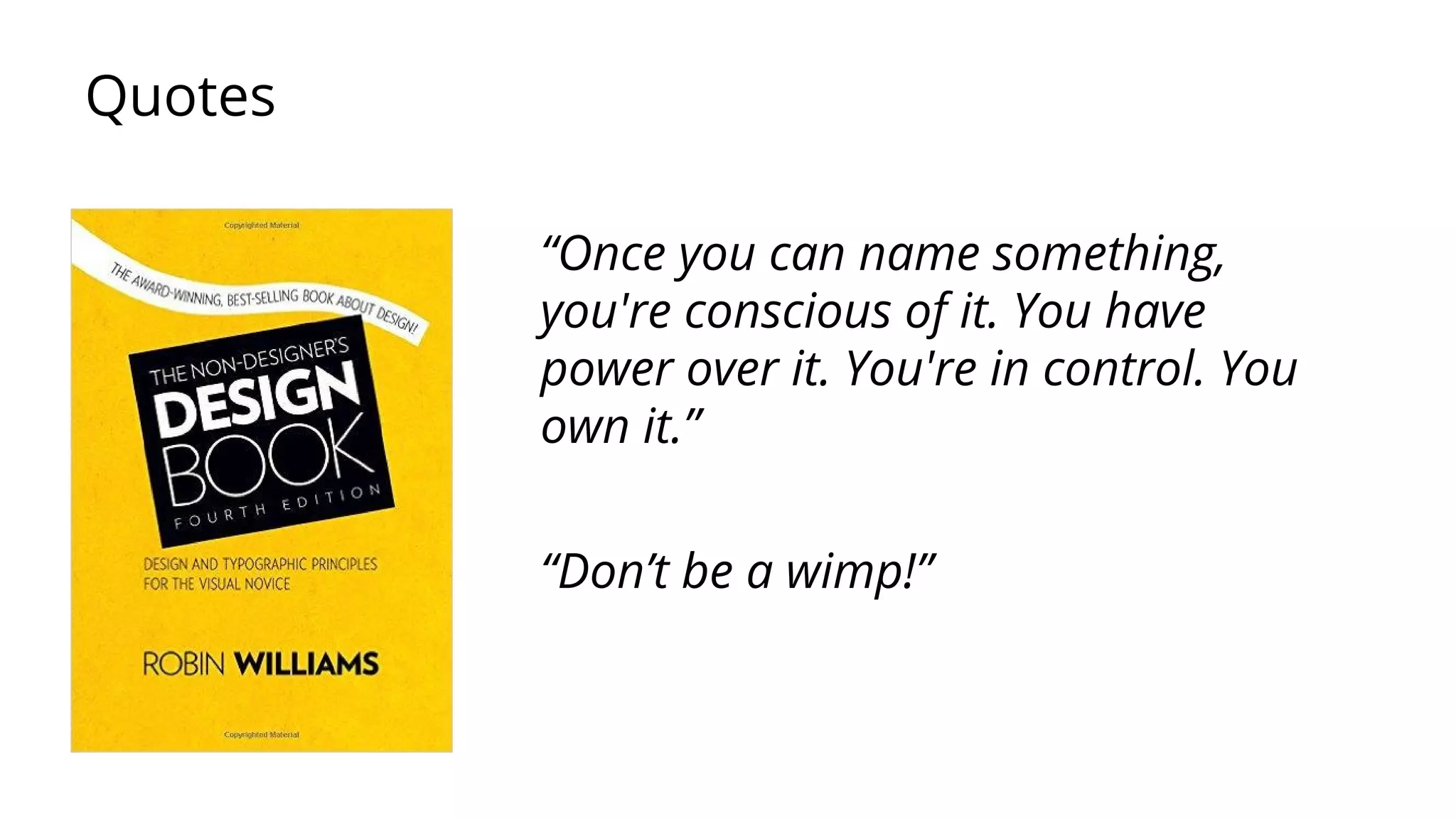
The Non-Designer's Design Book
By Robin Williams
● Originally published in 1994
● Introducing 4 design principles (C.R.A.P) and how
to design with color and font type
● Could be tremendous help for non-designers
attempting to design/great review for trained
designers
The book of this month
“Don’t be a wimp!”
“Once you can name something,
you're conscious of it. You have
power over it. You're in control. You
own it.”
Quotes
http://www.ratz.com/robin/toc.html
Robin Williams
● Published many
popular computer
related books
● Studies William
Shakespeare and
also published a
book about him
● Bake pies on
Sunday, love dogs,
collect hats, and
has a mermaid
tattoo
Design principles
1. Contrast
2. Repetition
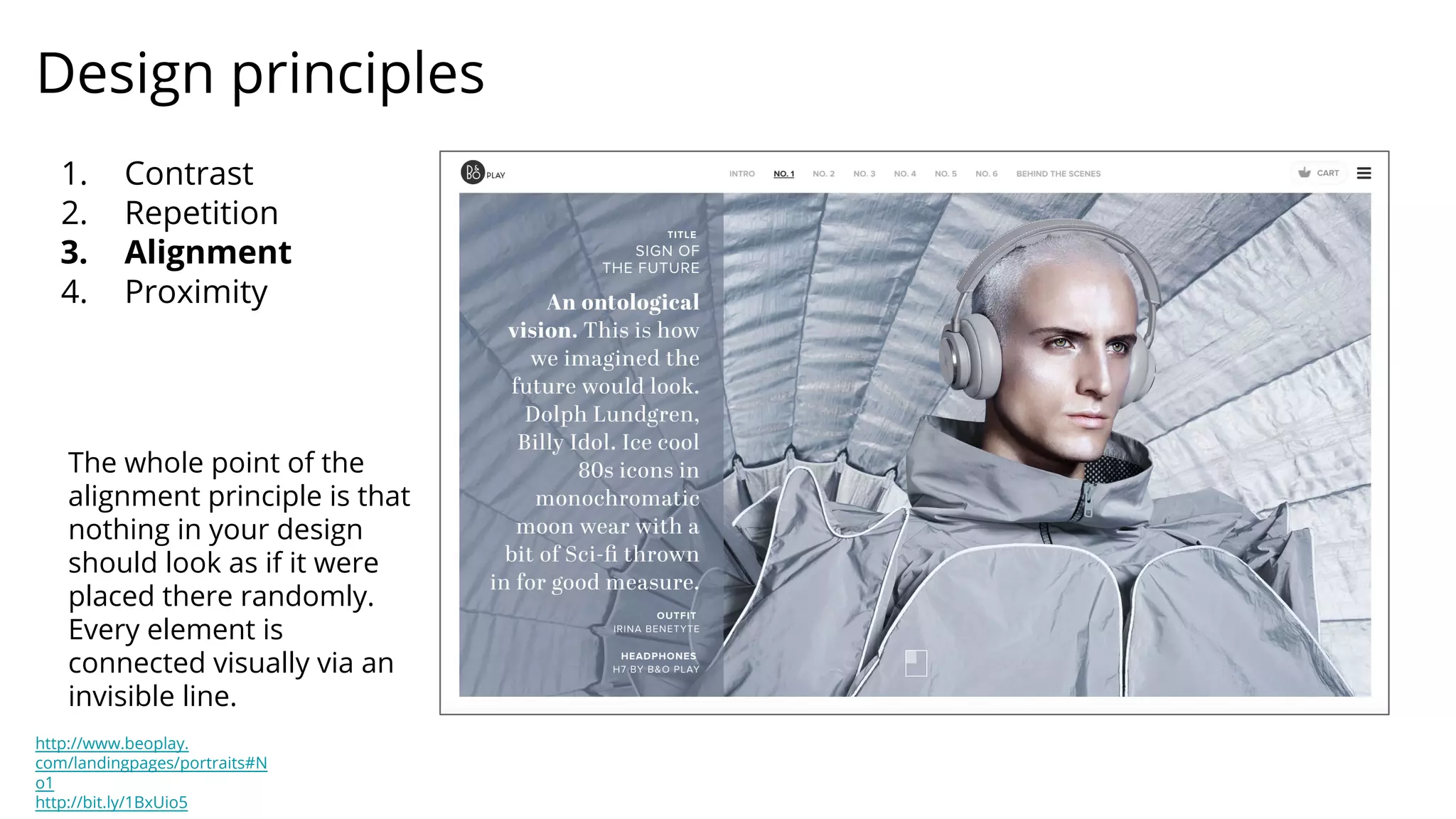
3. Alignment
4. Proximity
http://www.moxhe.com.au/menu
http://bit.ly/1BxUio5
Making use of contrast
can help you create a
design in which one item
is clearly dominant. This
helps the viewer “get” the
point of your design
quickly.
Design principles
1. Contrast
2. Repetition
3. Alignment
4. Proximity
https://obeygiant.com/
http://bit.ly/1BxUio5
Repetition of certain
design elements will bring
a clear sense of unity,
consistency, and
cohesiveness.
Design principles
1. Contrast
2. Repetition
3. Alignment
4. Proximity
http://www.beoplay.
com/landingpages/portraits#N
o1
http://bit.ly/1BxUio5
The whole point of the
alignment principle is that
nothing in your design
should look as if it were
placed there randomly.
Every element is
connected visually via an
invisible line.
Design principles
1. Contrast
2. Repetition
3. Alignment
4. Proximity
https://yourkarma.com/
http://bit.ly/1T4e1uP
Designers can assist
users by placing items
that should be seen as
grouped in close
proximity, whilst
separating items that
should not be grouped.
Colors
http://bit.ly/1Speo0Q
Tint
Shade
http://www.mariecatribs.com/
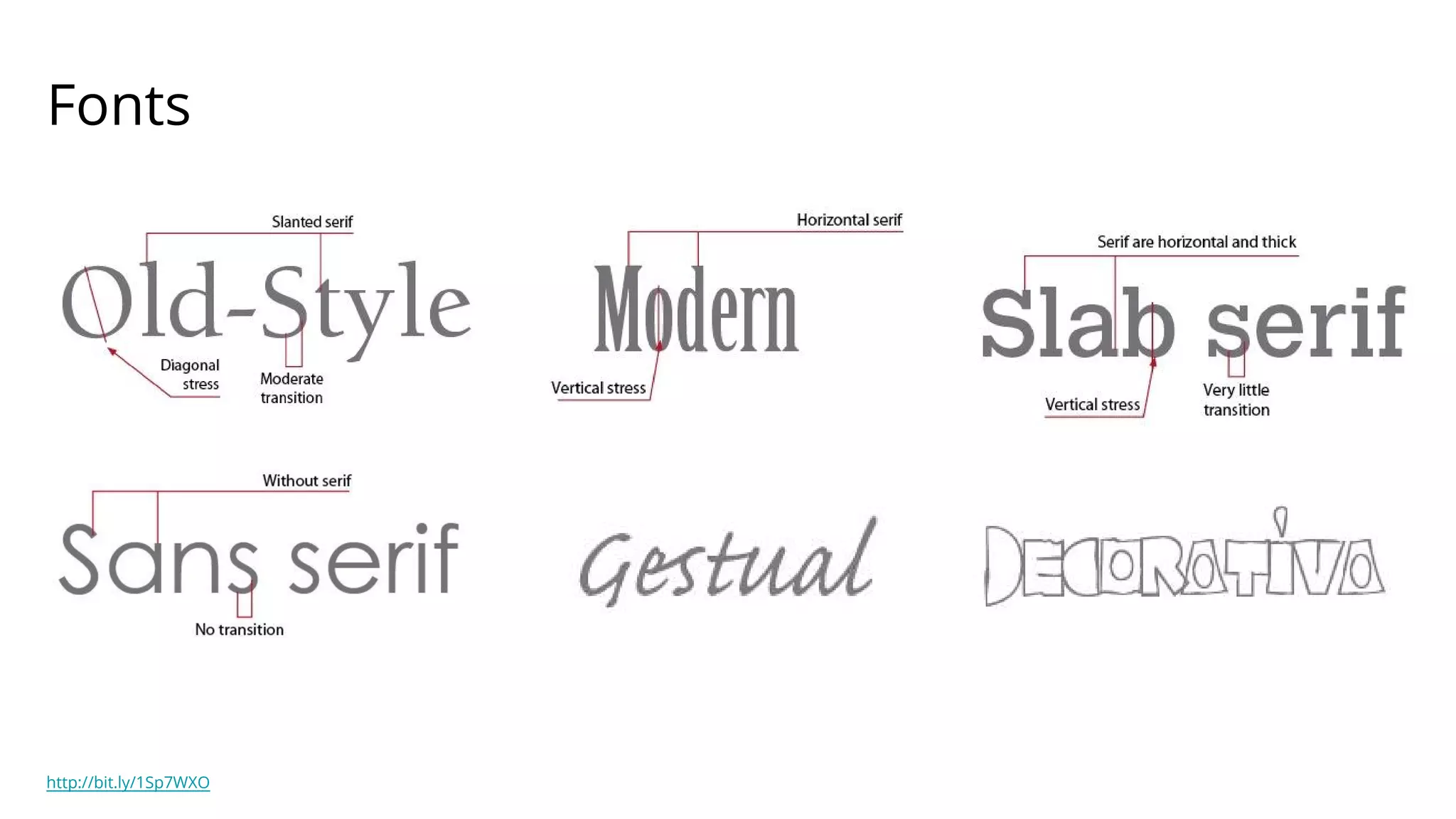
Fonts
http://bit.ly/1Sp7WXO
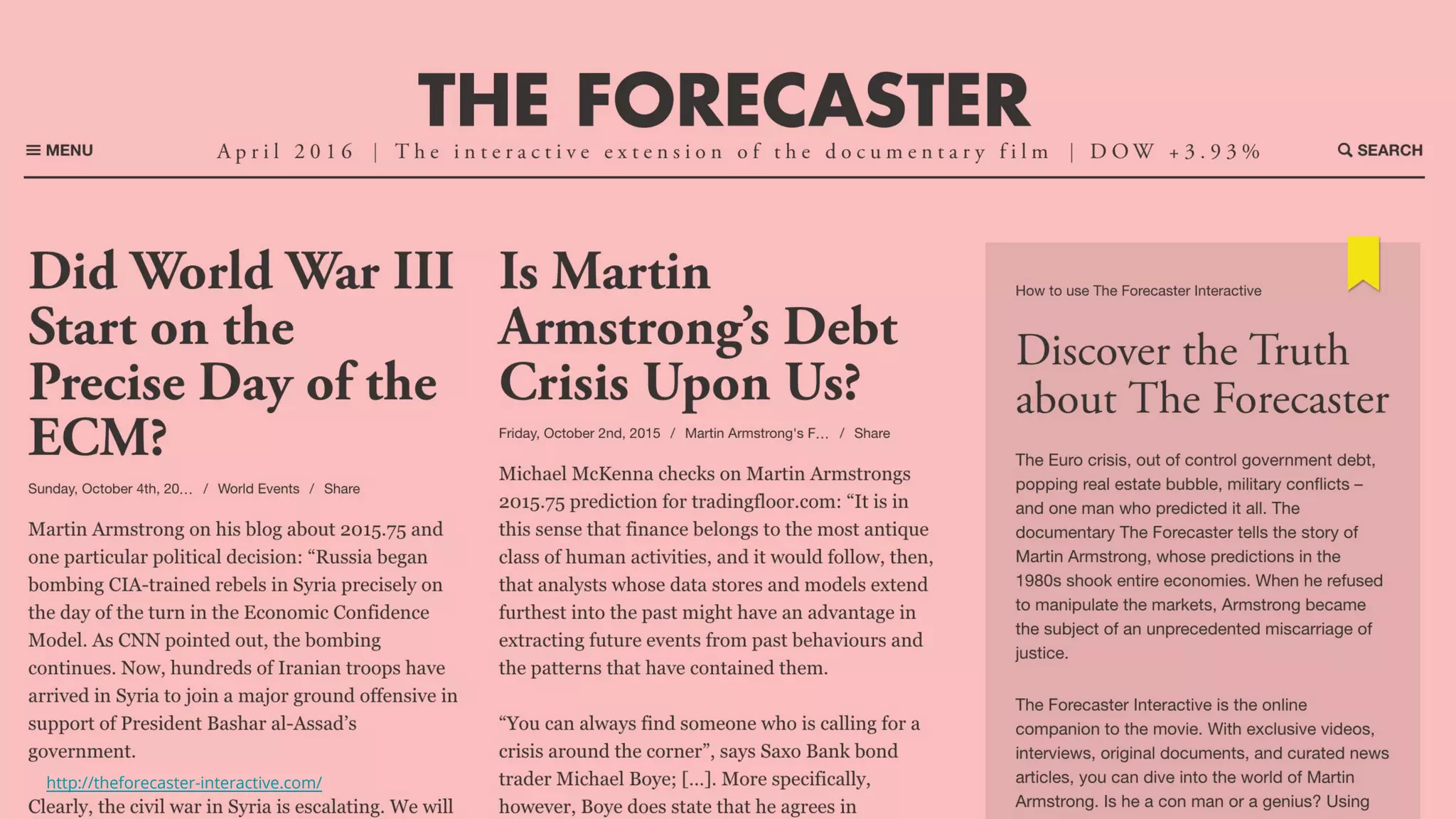
http://theforecaster-interactive.com/
Questions
1. How can these principles affect your work/life?
2. What is your biggest takeaway from the book?
Thank you
JOIN US

Hong Kong Design Book Club #6

  • 1.
    Hong Kong DesignBook Club #6 6th May 2016
  • 2.
    What I wantis A small book club with design enthusiasts who are also love reading and enjoying life
  • 3.
    Books we covered Dec2015 Jan 2016 Feb 2016 Mar 2016 Apr 2016
  • 4.
    Books we willcover Jun 2016 Jul 2016 Aug 2016 Sep 2016 Act 2016
  • 5.
    The Non-Designer's DesignBook By Robin Williams ● Originally published in 1994 ● Introducing 4 design principles (C.R.A.P) and how to design with color and font type ● Could be tremendous help for non-designers attempting to design/great review for trained designers The book of this month
  • 6.
    “Don’t be awimp!” “Once you can name something, you're conscious of it. You have power over it. You're in control. You own it.” Quotes
  • 7.
    http://www.ratz.com/robin/toc.html Robin Williams ● Publishedmany popular computer related books ● Studies William Shakespeare and also published a book about him ● Bake pies on Sunday, love dogs, collect hats, and has a mermaid tattoo
  • 8.
    Design principles 1. Contrast 2.Repetition 3. Alignment 4. Proximity http://www.moxhe.com.au/menu http://bit.ly/1BxUio5 Making use of contrast can help you create a design in which one item is clearly dominant. This helps the viewer “get” the point of your design quickly.
  • 9.
    Design principles 1. Contrast 2.Repetition 3. Alignment 4. Proximity https://obeygiant.com/ http://bit.ly/1BxUio5 Repetition of certain design elements will bring a clear sense of unity, consistency, and cohesiveness.
  • 10.
    Design principles 1. Contrast 2.Repetition 3. Alignment 4. Proximity http://www.beoplay. com/landingpages/portraits#N o1 http://bit.ly/1BxUio5 The whole point of the alignment principle is that nothing in your design should look as if it were placed there randomly. Every element is connected visually via an invisible line.
  • 11.
    Design principles 1. Contrast 2.Repetition 3. Alignment 4. Proximity https://yourkarma.com/ http://bit.ly/1T4e1uP Designers can assist users by placing items that should be seen as grouped in close proximity, whilst separating items that should not be grouped.
  • 12.
  • 13.
  • 14.
  • 15.
  • 16.
    Questions 1. How canthese principles affect your work/life? 2. What is your biggest takeaway from the book?
  • 17.