Media Literacy,  Artistic Expression and Copyright This project is supported by a grant from the John D. and Catherine T. MacArthur Foundation.  Renee Hobbs Temple University 2008 American Library Association Conference  Anaheim CA June 29, 2008
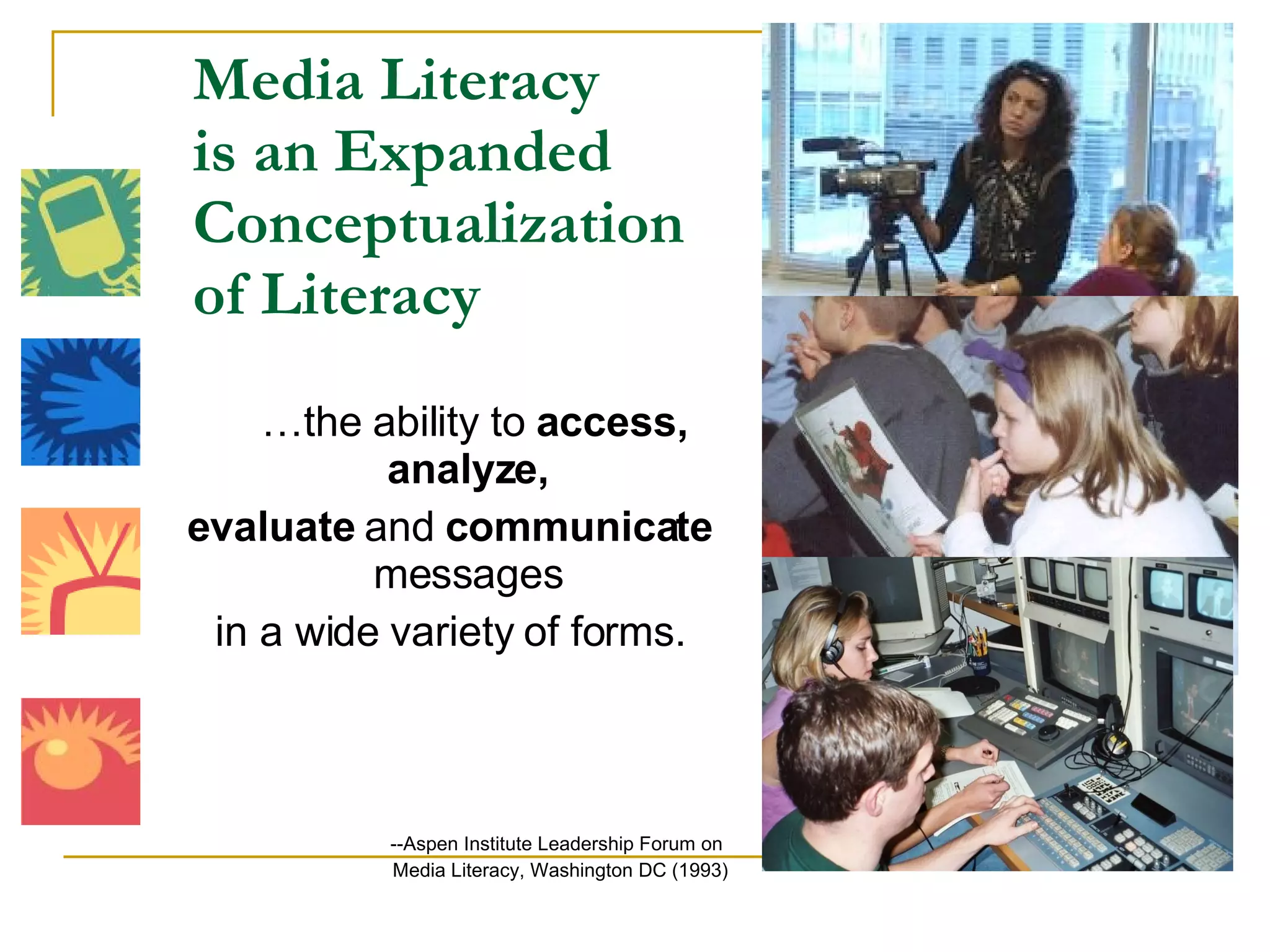
Media Literacy  is an Expanded Conceptualization of Literacy … the ability to  access,   analyze,  evaluate  and  communicate  messages  in a wide variety of forms. --Aspen Institute Leadership Forum on  Media Literacy, Washington DC (1993)
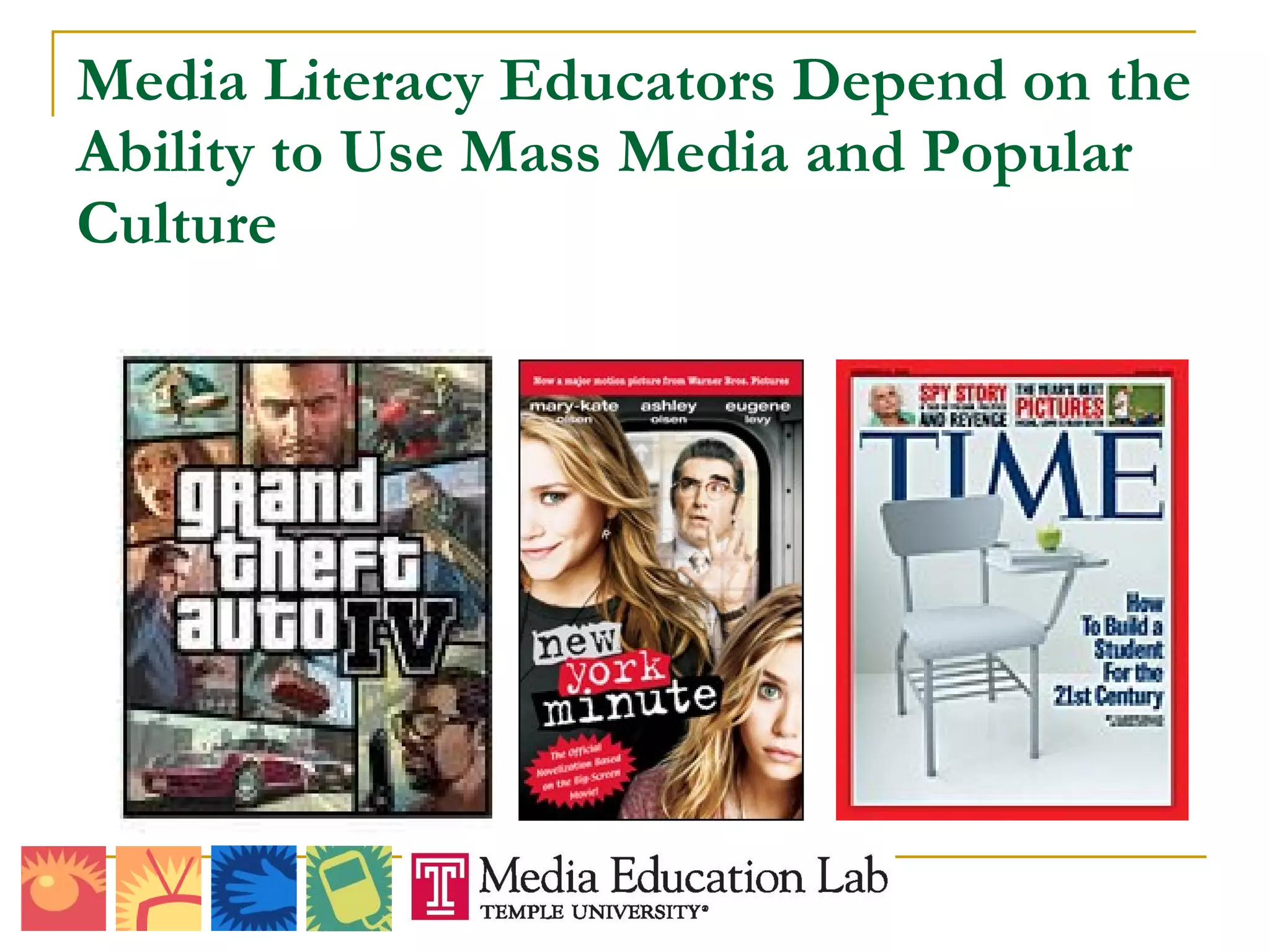
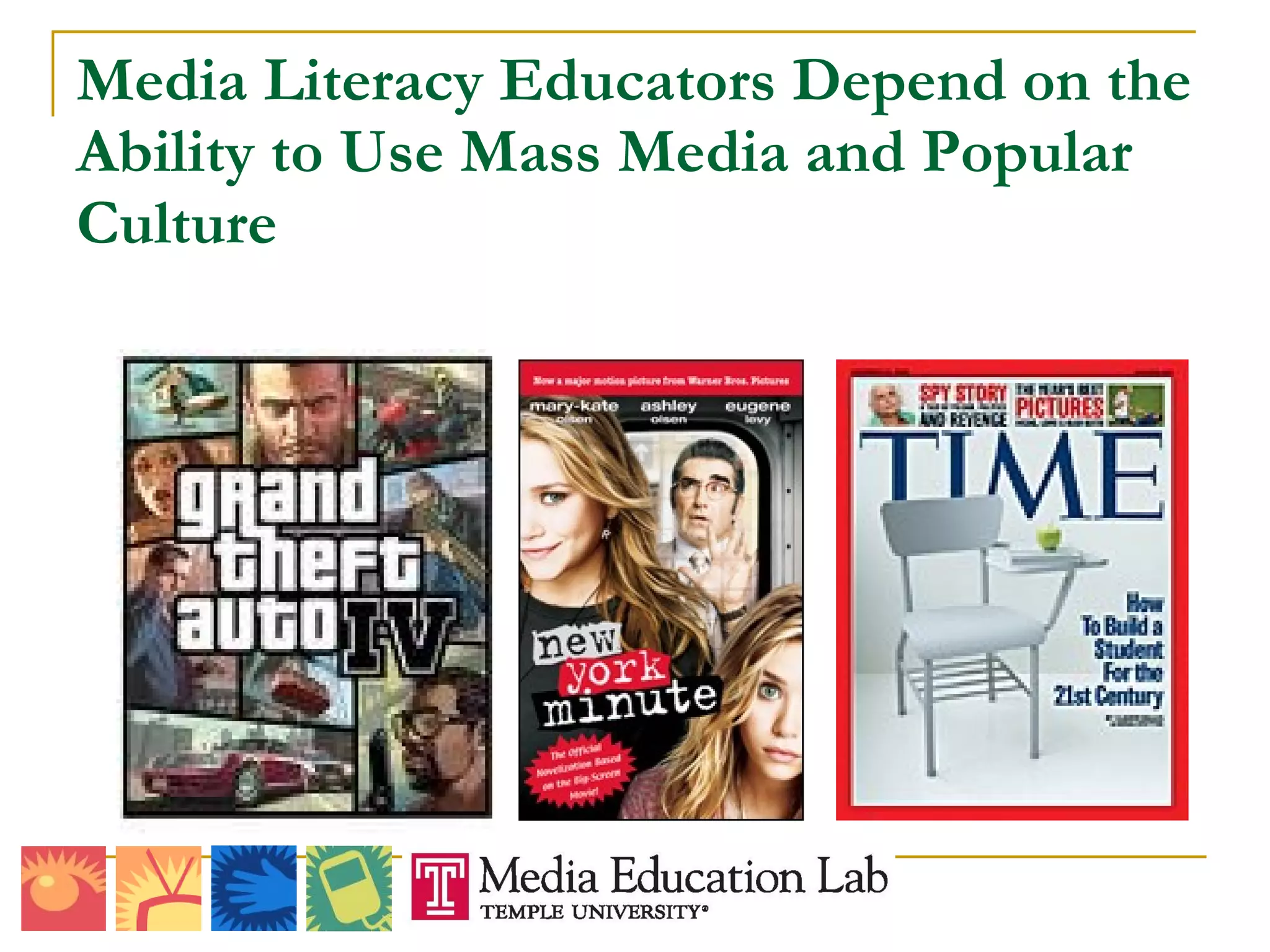
Media Literacy Educators Depend on the Ability to Use Mass Media and Popular Culture
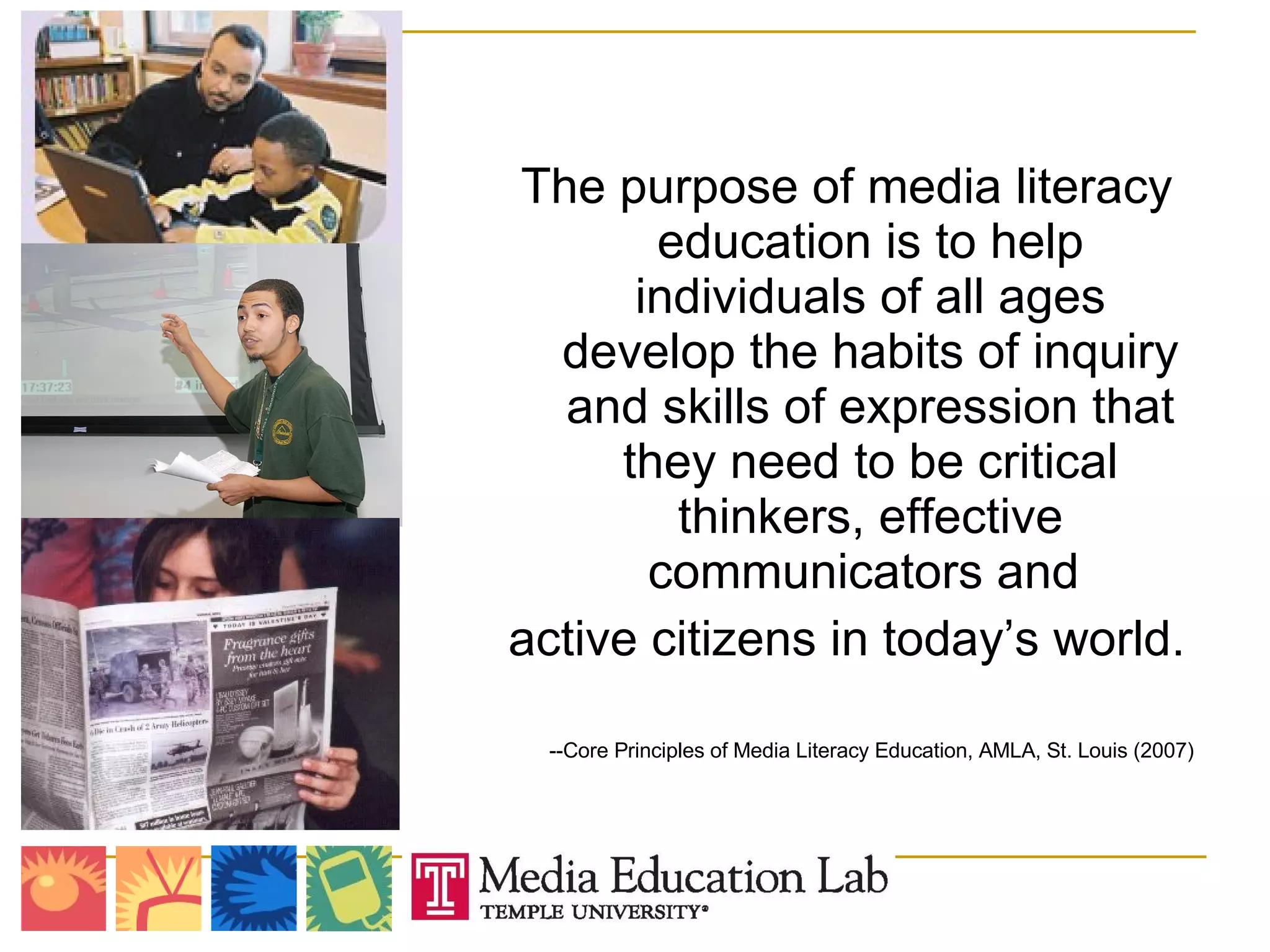
The purpose of media literacy education is to help individuals of all ages develop the habits of inquiry and skills of expression that they need to be critical thinkers, effective communicators and  active citizens in today’s world. --Core Principles of Media Literacy Education, AMLA, St. Louis (2007)
Media Literacy is Literacy for the Information Age  Listening  -- Speaking  Reading  -- Writing Critical Viewing – Creating Messages Literacy is the sharing of meaning  through symbolic forms
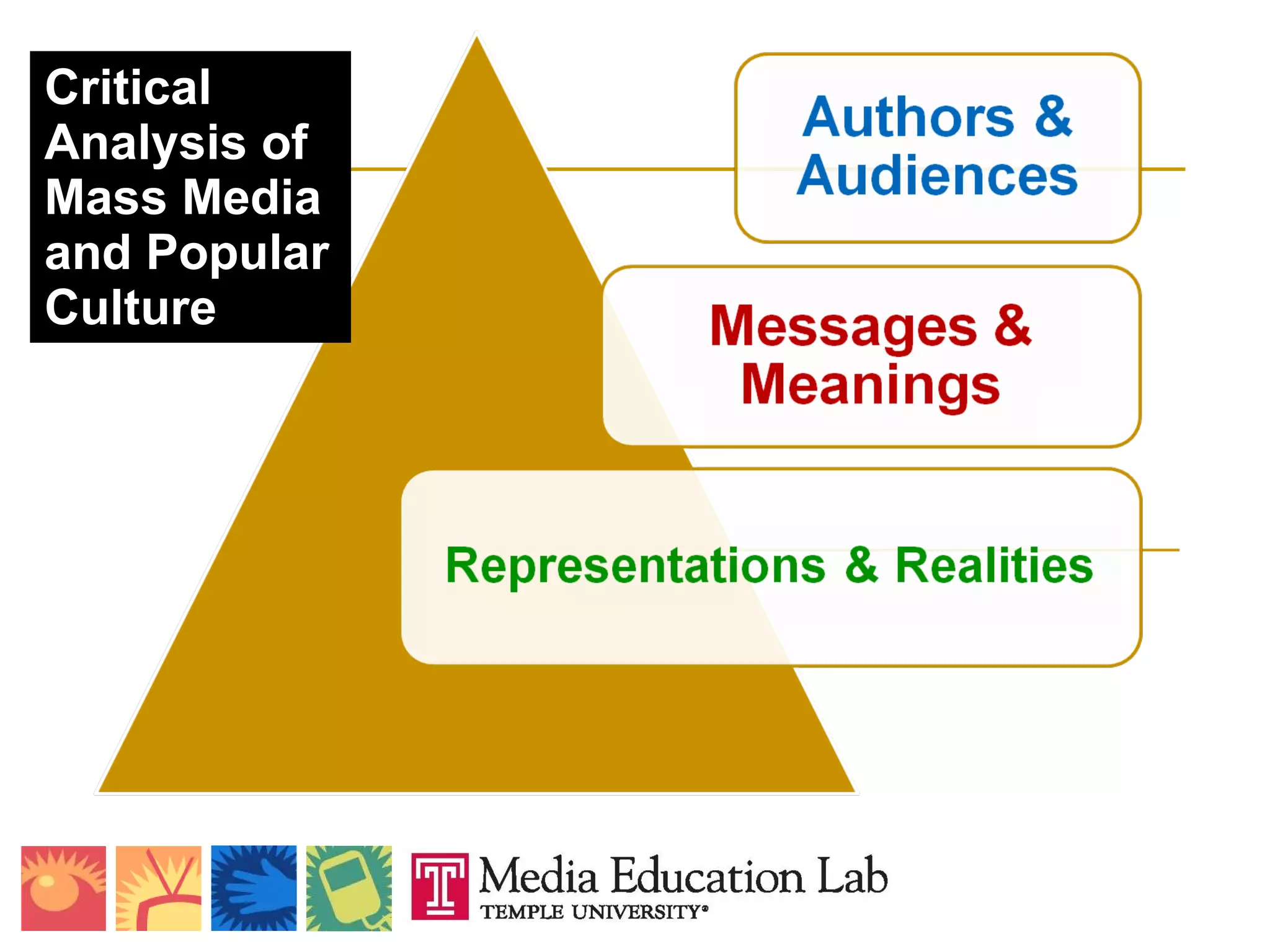
Critical Analysis of Mass Media and Popular Culture
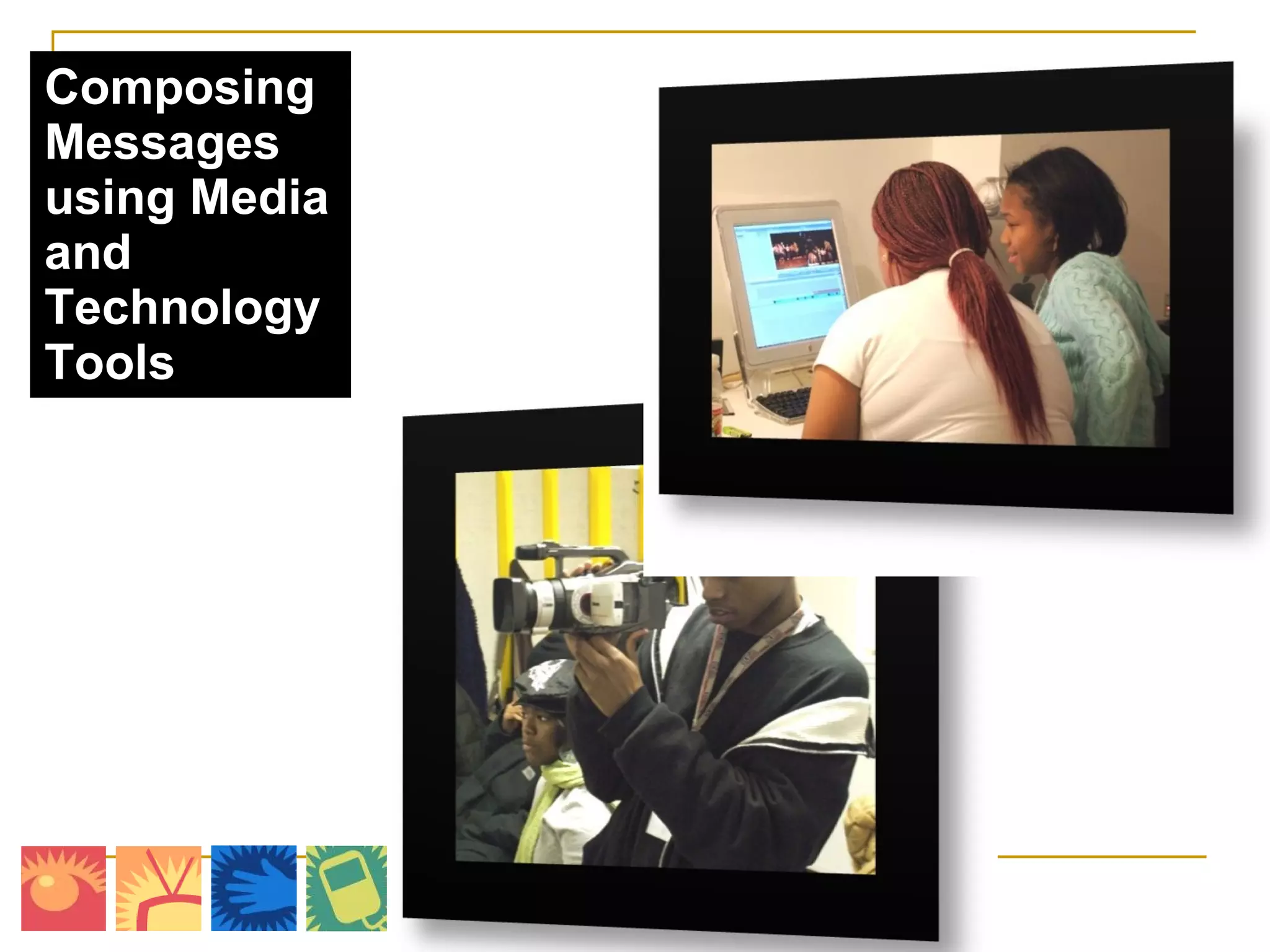
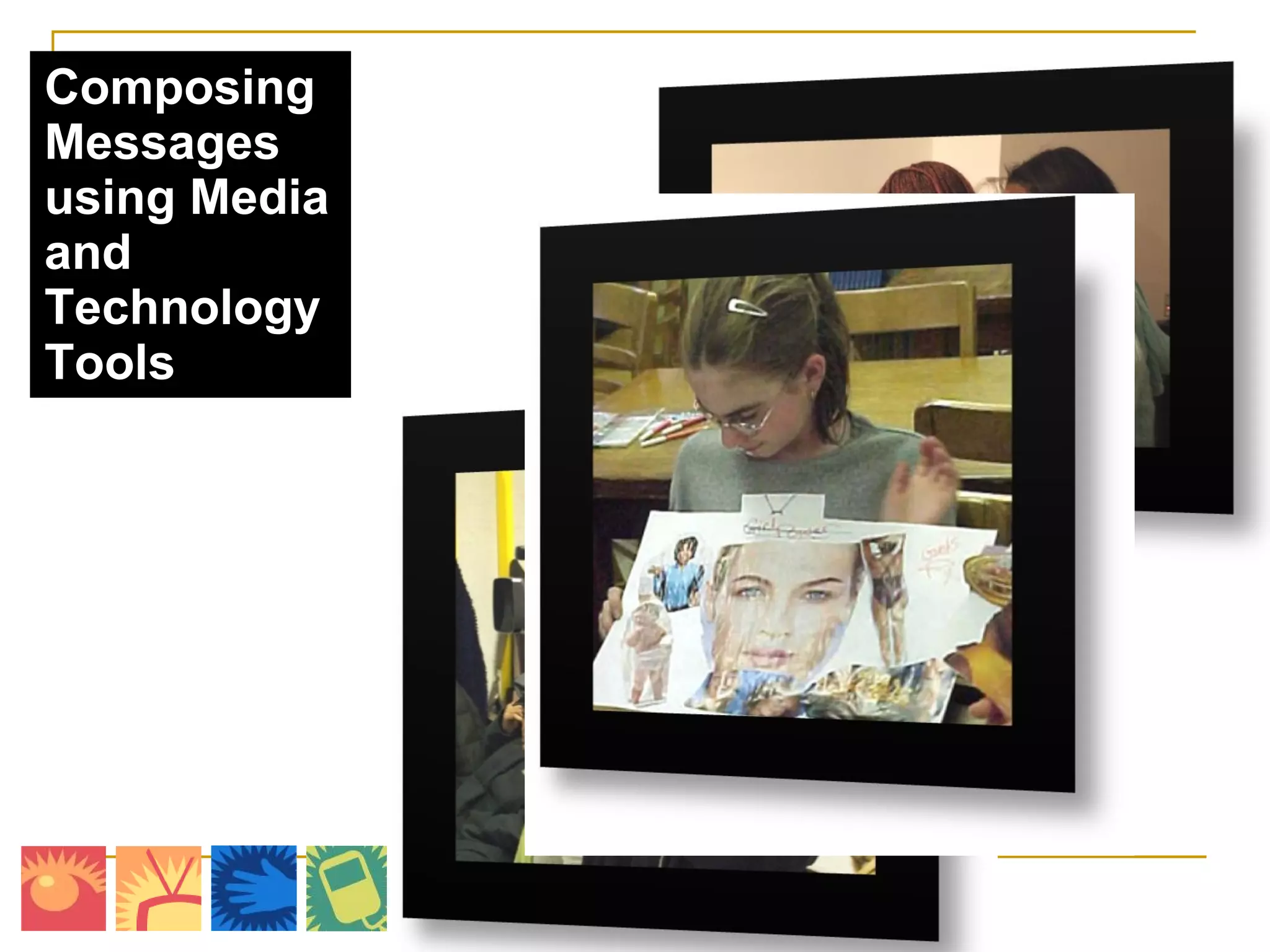
Composing Messages using Media and Technology Tools
Media Literacy Educators Depend on the Ability to Use Mass Media and Popular Culture
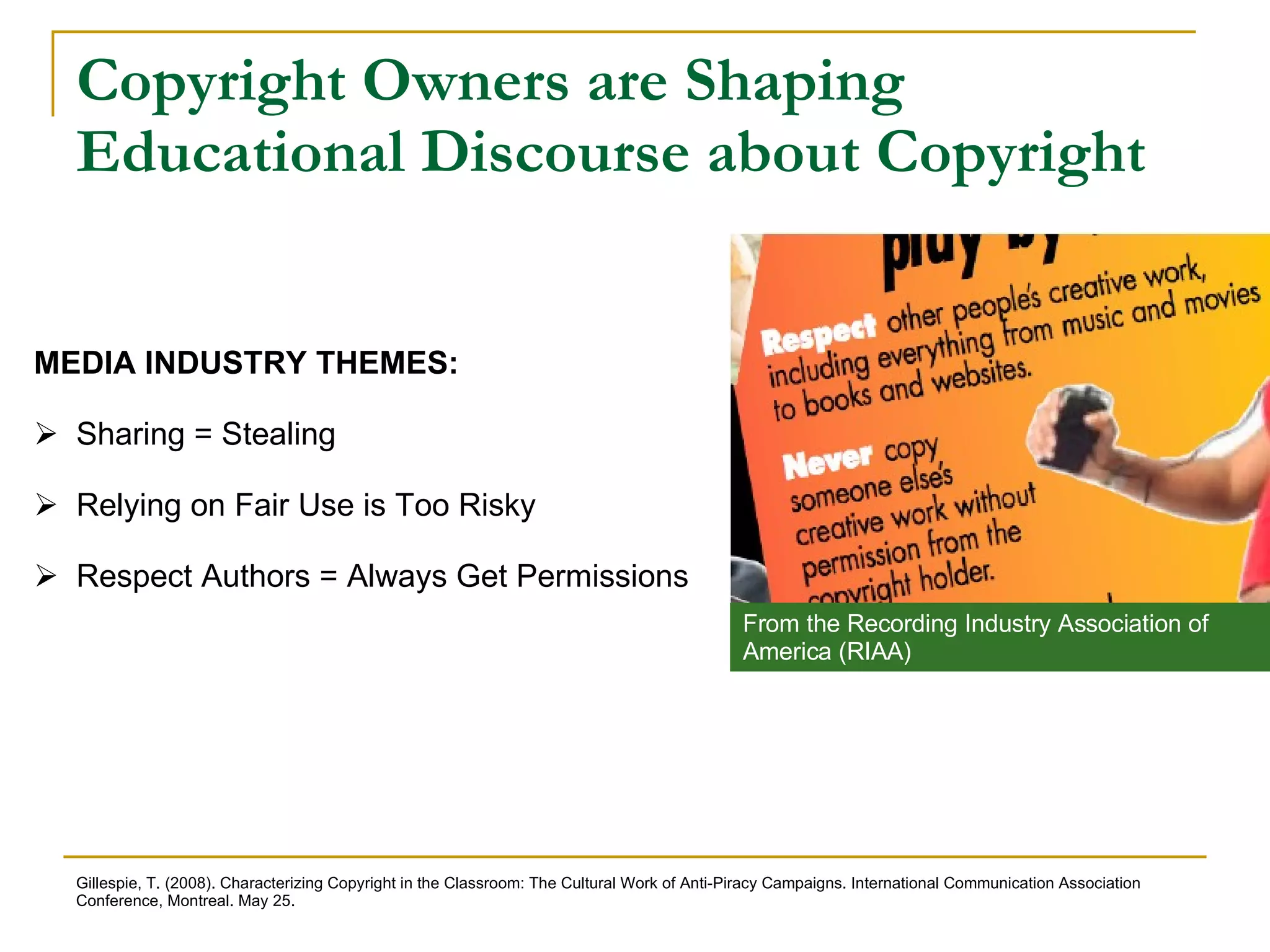
Copyright Owners are Shaping Educational Discourse about Copyright MEDIA INDUSTRY THEMES:  Sharing = Stealing Relying on Fair Use is Too Risky Respect Authors = Always Get Permissions Gillespie, T. (2008). Characterizing Copyright in the Classroom: The Cultural Work of Anti-Piracy Campaigns. International Communication Association Conference, Montreal. May 25.  From the Recording Industry Association of America (RIAA)
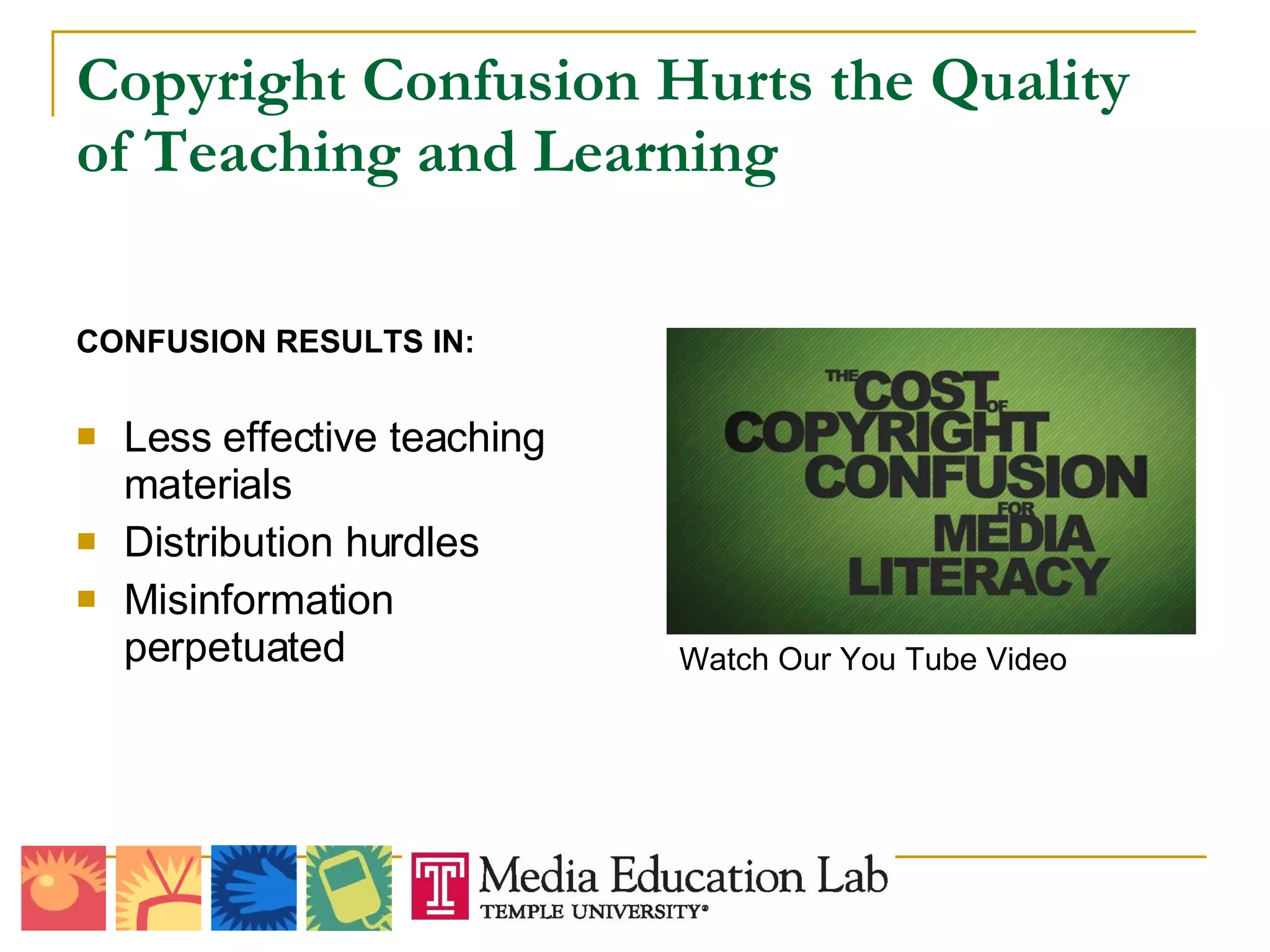
Copyright Confusion Hurts the Quality of Teaching and Learning CONFUSION RESULTS IN: Less effective teaching materials Distribution hurdles Misinformation perpetuated Watch Our You Tube Video
The Purpose of Copyright Copyright law  is designed to  balance rights of users with the rights of owners  by encouraging widespread and flexible use of cultural products  for the purposes of education and the advancement of knowledge .
Our Goal: Identify Fair Use Norms within the Practice Community Intensive interviews with 63 educators Half-day meetings with 150 educators in  10 cities nationwide K-12 communication, journalism, English and social studies teachers K-12 and college library media specialists and technology integration specialists College faculty in media studies and education Youth media practitioners in non-profit organizations
Process: Finding Consensus about What’s Fair Discussion of scenarios of common educational practices: Teachers’ use of copyrighted materials for teaching media literacy Use of copyrighted materials in research, curriculum and multimedia materials development Students’ use of copyrighted materials in  media production and creative composition activities
The Results: Fair Use Applies to Core Instructional Practices EMPLOYING COPYRIGHTED MATERIAL TO ILLUSTRATE MEDIA EDUCATION LESSONS IN TEACHING SITUATIONS EMPLOYING COPYRIGHTED MATERIAL IN DEVELOPING CURRICULUM MATERIALS FOR MEDIA EDUCATION  SHARING EDUCATORS’ MEDIA LITERACY CURRICULUM MATERIALS ENCOURAGING LEARNERS TO CREATE MESSAGES THAT INCORPORATE, MODIFY AND REPRESENT COPYRIGHTED MATERIALS IN TRANSFORMATIVE WAYS DEVELOPING AUDIENCE FOR LEARNER WORK
Fair Use: Transformative Use Adds value to the copyrighted material Employs it for a purpose different from that for which it was originally intended Can involve modifying material or putting material into a new context
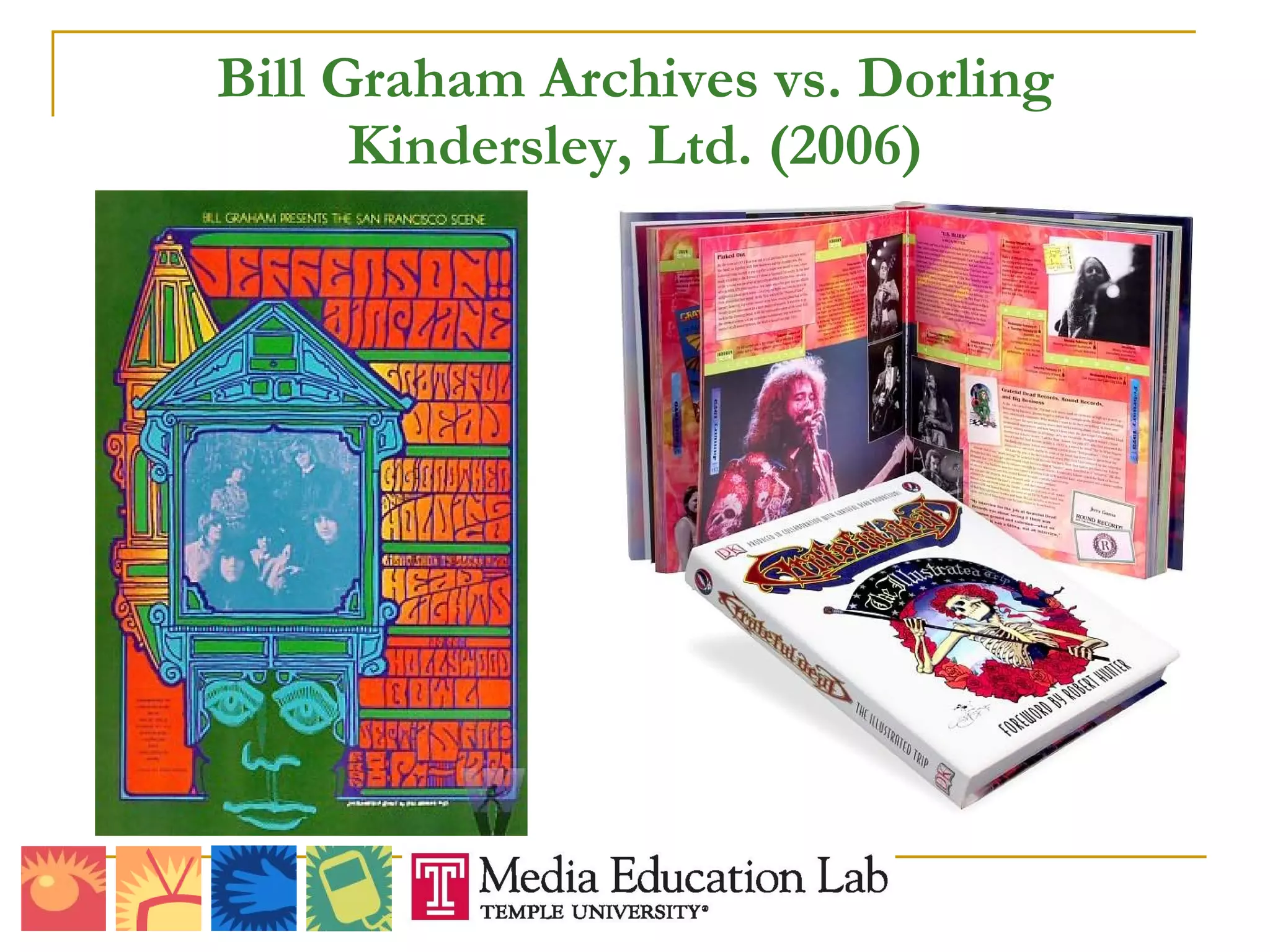
Bill Graham Archives vs. Dorling Kindersley, Ltd. (2006)
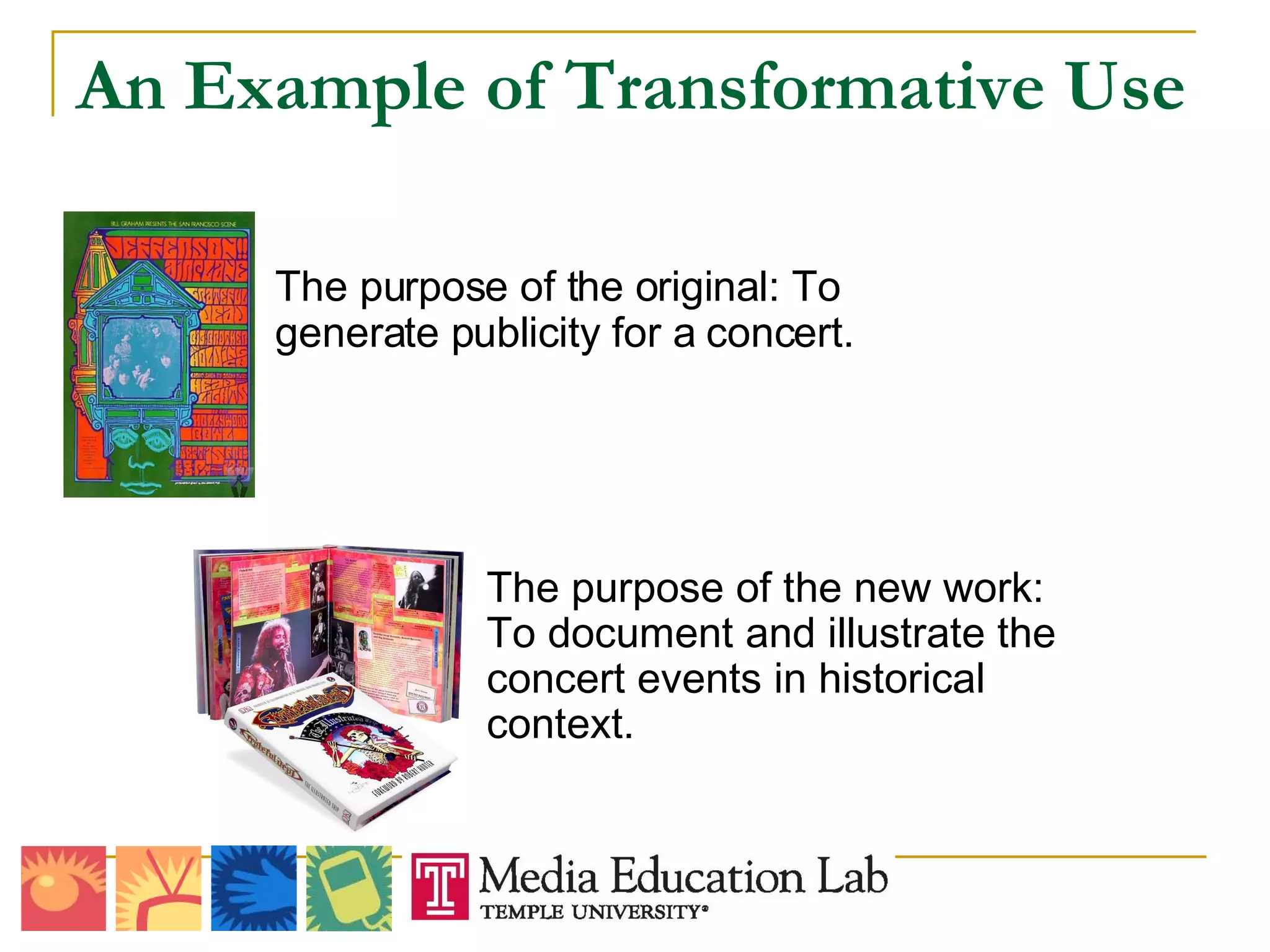
An Example of Transformative Use The purpose of the original: To generate publicity for a concert.   The purpose of the new work: To document and illustrate the concert events in historical context.
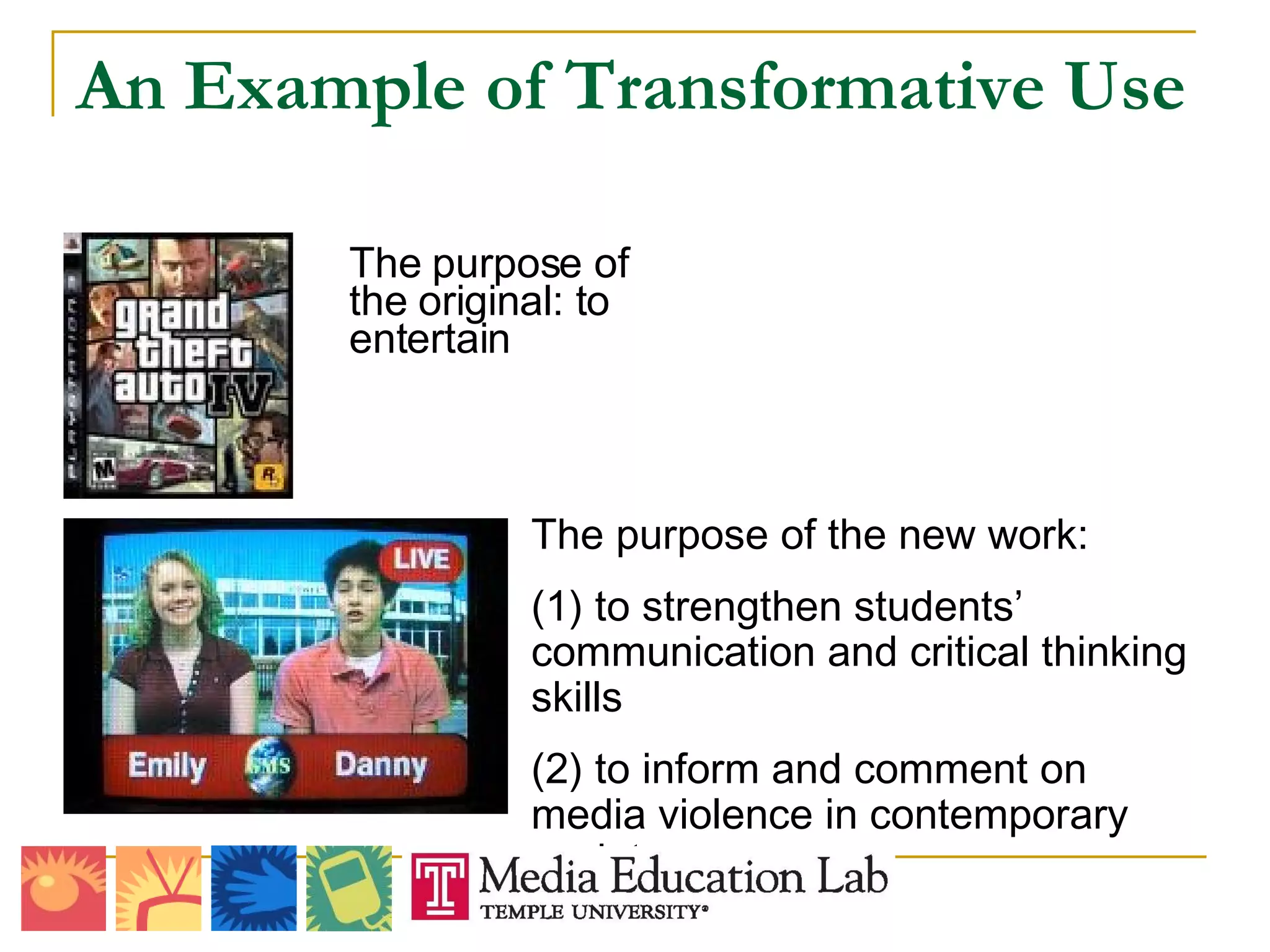
An Example of Transformative Use The purpose of the original: to entertain The purpose of the new work:  (1) to strengthen students’ communication and critical thinking skills (2) to inform and comment on media violence in contemporary society
Statement of Best Practices  for Fair Use in Media Education POTENTIAL SIGNATORIES: National Association for Media Literacy Education (formerly AMLA) National Council of Teachers of English (NCTE) Media Commission Student Television Network (STN) International Communication Association (ICA) Visual Communication Division Action Coalition for Media Education International Visual Literacy Association ALA, ACRL, AASL, others?
Why a Statement can Make A Difference Teaching Tool.  Developing consensus about the application of fair use within a practice community can reduce copyright confusion. Norm Defining.  A Statement of Best Practices will be important to the courts in the event of a legal challenge to the practice of media literacy education. Advocacy.  Media educators can play an important role in expanding the concept of user rights, including helping to improve school district policies about copyright and fair use.
“ Only people can make the necessary sophisticated judgment when determining fair use.  Fair use was designed to be ambiguous and flexible… Use it or lose it!”  --Carrie Russell Complete Copyright (2004) Office for Information Technology Policy American Library Association
For More Information: Renee Hobbs Media Education Lab Temple University School of Communications and Theater [email_address] On the Web: Center for Social Media www.centerforsocialmedia.org/medialiteracy www.mediaeducationlab.com

Hobbs, Media Literacy, Artistic Expression And Copyright Ala

  • 1.
    Media Literacy, Artistic Expression and Copyright This project is supported by a grant from the John D. and Catherine T. MacArthur Foundation. Renee Hobbs Temple University 2008 American Library Association Conference Anaheim CA June 29, 2008
  • 2.
    Media Literacy is an Expanded Conceptualization of Literacy … the ability to access, analyze, evaluate and communicate messages in a wide variety of forms. --Aspen Institute Leadership Forum on Media Literacy, Washington DC (1993)
  • 3.
    Media Literacy EducatorsDepend on the Ability to Use Mass Media and Popular Culture
  • 4.
    The purpose ofmedia literacy education is to help individuals of all ages develop the habits of inquiry and skills of expression that they need to be critical thinkers, effective communicators and active citizens in today’s world. --Core Principles of Media Literacy Education, AMLA, St. Louis (2007)
  • 5.
    Media Literacy isLiteracy for the Information Age Listening -- Speaking Reading -- Writing Critical Viewing – Creating Messages Literacy is the sharing of meaning through symbolic forms
  • 6.
    Critical Analysis ofMass Media and Popular Culture
  • 7.
    Composing Messages usingMedia and Technology Tools
  • 8.
    Composing Messages usingMedia and Technology Tools
  • 9.
    Media Literacy EducatorsDepend on the Ability to Use Mass Media and Popular Culture
  • 10.
    Copyright Owners areShaping Educational Discourse about Copyright MEDIA INDUSTRY THEMES: Sharing = Stealing Relying on Fair Use is Too Risky Respect Authors = Always Get Permissions Gillespie, T. (2008). Characterizing Copyright in the Classroom: The Cultural Work of Anti-Piracy Campaigns. International Communication Association Conference, Montreal. May 25. From the Recording Industry Association of America (RIAA)
  • 11.
    Copyright Confusion Hurtsthe Quality of Teaching and Learning CONFUSION RESULTS IN: Less effective teaching materials Distribution hurdles Misinformation perpetuated Watch Our You Tube Video
  • 12.
    The Purpose ofCopyright Copyright law is designed to balance rights of users with the rights of owners by encouraging widespread and flexible use of cultural products for the purposes of education and the advancement of knowledge .
  • 13.
    Our Goal: IdentifyFair Use Norms within the Practice Community Intensive interviews with 63 educators Half-day meetings with 150 educators in 10 cities nationwide K-12 communication, journalism, English and social studies teachers K-12 and college library media specialists and technology integration specialists College faculty in media studies and education Youth media practitioners in non-profit organizations
  • 14.
    Process: Finding Consensusabout What’s Fair Discussion of scenarios of common educational practices: Teachers’ use of copyrighted materials for teaching media literacy Use of copyrighted materials in research, curriculum and multimedia materials development Students’ use of copyrighted materials in media production and creative composition activities
  • 15.
    The Results: FairUse Applies to Core Instructional Practices EMPLOYING COPYRIGHTED MATERIAL TO ILLUSTRATE MEDIA EDUCATION LESSONS IN TEACHING SITUATIONS EMPLOYING COPYRIGHTED MATERIAL IN DEVELOPING CURRICULUM MATERIALS FOR MEDIA EDUCATION SHARING EDUCATORS’ MEDIA LITERACY CURRICULUM MATERIALS ENCOURAGING LEARNERS TO CREATE MESSAGES THAT INCORPORATE, MODIFY AND REPRESENT COPYRIGHTED MATERIALS IN TRANSFORMATIVE WAYS DEVELOPING AUDIENCE FOR LEARNER WORK
  • 16.
    Fair Use: TransformativeUse Adds value to the copyrighted material Employs it for a purpose different from that for which it was originally intended Can involve modifying material or putting material into a new context
  • 17.
    Bill Graham Archivesvs. Dorling Kindersley, Ltd. (2006)
  • 18.
    An Example ofTransformative Use The purpose of the original: To generate publicity for a concert. The purpose of the new work: To document and illustrate the concert events in historical context.
  • 19.
    An Example ofTransformative Use The purpose of the original: to entertain The purpose of the new work: (1) to strengthen students’ communication and critical thinking skills (2) to inform and comment on media violence in contemporary society
  • 20.
    Statement of BestPractices for Fair Use in Media Education POTENTIAL SIGNATORIES: National Association for Media Literacy Education (formerly AMLA) National Council of Teachers of English (NCTE) Media Commission Student Television Network (STN) International Communication Association (ICA) Visual Communication Division Action Coalition for Media Education International Visual Literacy Association ALA, ACRL, AASL, others?
  • 21.
    Why a Statementcan Make A Difference Teaching Tool. Developing consensus about the application of fair use within a practice community can reduce copyright confusion. Norm Defining. A Statement of Best Practices will be important to the courts in the event of a legal challenge to the practice of media literacy education. Advocacy. Media educators can play an important role in expanding the concept of user rights, including helping to improve school district policies about copyright and fair use.
  • 22.
    “ Only peoplecan make the necessary sophisticated judgment when determining fair use. Fair use was designed to be ambiguous and flexible… Use it or lose it!” --Carrie Russell Complete Copyright (2004) Office for Information Technology Policy American Library Association
  • 23.
    For More Information:Renee Hobbs Media Education Lab Temple University School of Communications and Theater [email_address] On the Web: Center for Social Media www.centerforsocialmedia.org/medialiteracy www.mediaeducationlab.com