P.G STUDENT
CONTENT
• INTRODUCTION
• DEFINITIONS
• HISTORY
• PATHOGENESIS OF PERIODONTITIS AND THE HOST RESPONSE
.
• AGENTS USED IN HOST MODULATION
• - NSAIDS
• - ANTI- PROTEINASE BLOCKING OF MMPS
• - BISPHOSPHONATES
• - ANTI CYTOKINE THERAPY
• - AGENTS CAUSING DISRUPTION OF CELL SIGNALING PATHWAYS
• - COMBINATIONS
• CONCLUSION
• REFERENCE
INTRODUCTION
• Periodontitis is a complex infection initiated by bacteria –tissue destruction.
• In the past, the understanding of the etiology and the pathogenesis of the periodontal disease
focused on the microbial aspect of the diseases -- therapeutic efforts focused on the mechanical
removal.
• Recently, --recognized -- host response to bacterial infection which causes greater destruction of the
connective tissue elements, periodontal ligament and alveolar bone -- therapeutic efforts focus on
altering (modulating) the host response -- various host modulating approaches.
DEFINITIONS
Host: the organism from which a parasite
obtains its nourishment/ an individual who
receives a graft.
Modulation: the alteration of function or
status of something in response to a stimulus or
an altered physical or chemical environment.
Treatment concept that aims to reduce the tissue destruction and
stabilize or even regenerate the periodontium by modifying or
down regulating destructive aspects of the host response and up
regulating protective or regenerative responses.
HOST MODULATION THERAPY (HMT)-
RATIONALE
• offer the oppurtunity for modulating or reducing destruction by treating chronic
inflammatory response.
• Used as an adjuncts to conventional PD treatments (SRP & Surgery)
• HMTs do not “switch off” normal defense mechanisms or inflammation; instead they
ameliorate excessive or pathologically elevated inflammatory processes to enhance the
wound healing and periodontal stability.
HISTORY
• (1973) Socransky, -- sites of advanced bone loss harbored an anaerobic microaerophilic Gram-
negative flora that was totally different from the primarily facultative Gram-positive organisms found
at adjacent healthy sites.
• Klein and Raisz -- prostaglandins -- potent stimulators of bone resorption in tissue culture.
• Paul Goldhaber and Max Goodson (1970) -- arachidonic acid metabolites as important
inflammatory mediators of the bone loss in periodontitis.
• Concept of Host Modulation - William and Golub (1990)
• Various agents modulate specific component of disease pathogenesis which includes
regulation of arachidonic acid metabolites, excessive production of matrix
metalloproteinases (MMPs), immune and inflammatory responses and bone
metabolism.
PATHOGENESIS OF PERIODONTITIS
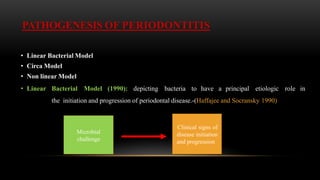
• Linear Bacterial Model
• Circa Model
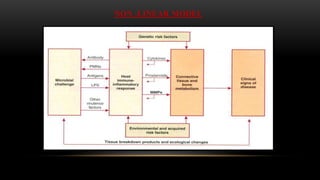
• Non linear Model
• Linear Bacterial Model (1990): depicting bacteria to have a principal etiologic role in
the initiation and progression of periodontal disease.-(Haffajee and Socransky 1990)
Microbial
challenge
Clinical signs of
disease initiation
and progression
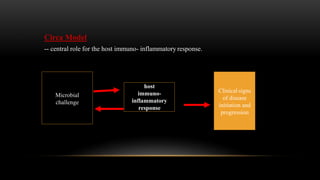
. Circa Model
-- central role for the host immuno- inflammatory response.
Microbial
challenge
Clinical signs
of disease
initiation and
progression
host
immuno-
inflammatory
response
NON -LINEAR MODEL
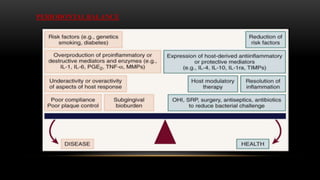
PERIODONTAL BALANCE
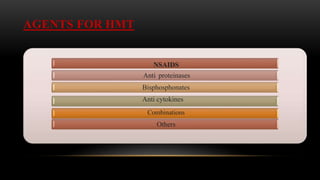
AGENTS FOR HMT
NSAIDS
Anti proteinases
Bisphosphonates
Anti cytokines
Combinations
Others
NSAIDS
• NSAIDs inhibit the formation of prostaglandins, including prostaglandin E2 (PGE2) (Grenier et
al 2002).
– Produced in response to lipopolysaccaride(LPS)-
• Upregulates bone resorption by osteoclasts;(Heasman PAand Collins JP1993)
• Levels of PGE2 are elevated in pts with periodontitis ( Plamondon and sorsa jp 2002)
• Inhibits fibroblasts function and has inhibitory effects on the immune response (Grossi and
Genco Ann Periodontics 1997).
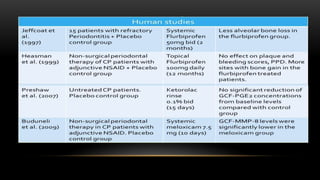
• Studies have shown that systemic flurbiprofen, indomethacin, naproxen,
administered daily for periods of up to 3 years, significantly slowed the rate of
alveolar bone loss.
• Vane(1971) -- aspirin and aspirin-like drugs inhibited the production of prostaglandins by
inhibiting the COX enzyme.
• Goldhaber et al. (1973) added indomethacin, a known inhibitor of COX, to the culture media,
observing a decrease in bone resorption of up to 50%.
• Nyman et al (1979)… animal study… systemic doses of indomethacin… delayed the onset
and suppressed the magnitude of the acute inflammatory response and decreased the amount
of alveolar bone resorption.
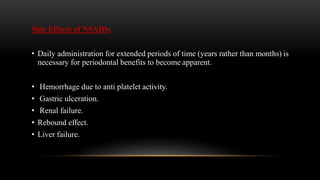
Side Effects of NSAIDs
• Daily administration for extended periods of time (years rather than months) is
necessary for periodontal benefits to become apparent.
• Hemorrhage due to anti platelet activity.
• Gastric ulceration.
• Renal failure.
• Rebound effect.
• Liver failure.
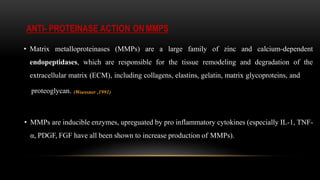
ANTI- PROTEINASE ACTION ON MMPS
• Matrix metalloproteinases (MMPs) are a large family of zinc and calcium-dependent
endopeptidases, which are responsible for the tissue remodeling and degradation of the
extracellular matrix (ECM), including collagens, elastins, gelatin, matrix glycoproteins, and
proteoglycan. (Woessner ,1991)
• MMPs are inducible enzymes, upreguated by pro inflammatory cytokines (especially IL-1, TNF-
α, PDGF, FGF have all been shown to increase production of MMPs).
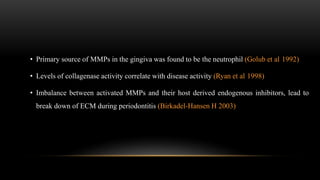
• Primary source of MMPs in the gingiva was found to be the neutrophil (Golub et al 1992)
• Levels of collagenase activity correlate with disease activity (Ryan et al 1998)
• Imbalance between activated MMPs and their host derived endogenous inhibitors, lead to
break down of ECM during periodontitis (Birkadel-Hansen H 2003)
• Matrix metalloproteinases play key roles in the degradation of the extracellular
matrix,
basement membrane as well as in the modification of cytokine action and activation of
osteoclasts.
• The expression and activity of MMPs in non- inflamed periodontium is low
but is drastically enhanced in the inflammatory conditions.
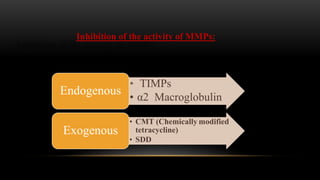
Inhibition of the activity of MMPs:
• TIMPs
• α2 Macroglobulin
Endogenous
• CMT (Chemically modified
tetracycline)
• SDD
Exogenous
Endogenous inhibitors of MMP-- fibroblasts, keratinocytes, monocytes/ macrophages, and endothelial
cells.
• Four TIMPs (TIMP 1–4) are known: TIMP-1 ,TIMP-2 , TIMP-3 and TIMP-4.
• TIMPs appear to regulate matrix degradation both by proteinase inhibition and by blockage of autolytic
MMP activation. (DeClerck,1991).
• Other functions-cell differentiation, growth and migration, tumour growth inhibition.
TISSUE INHIBITORY METALLO PROTEINASES (TIMP)
• The first TIMP -- 1975 as a protein, in culture medium of human fibroblasts and in human
serum, which was able to inhibit collagenase activity.
• TIMP-2 regulates the activation of pro-MMP-2 by binding to its c-terminal region.( Ward et al,
1991)
• TIMP-3 Prevents the activation of pro MMP -2 by MT1-MMP.
• It has an affinity for components of the ECM.
• TIMP-4- MMP-14, MMP-2.
ALPHA-2 MACROGLOBULINS (Α 2 M)
• Protein present in blood- - antiprotease.
• synthesized -- in liver, macrophages, fibroblasts, and adrenocortical cells.
• It functions as an inhibitor of MMPs(2, 9).– form complexes.
• Inhibitor of blood coagulation.
• Carrier protein -- binds to numerous growth factors and cytokines, such as
platelet-derived growth factor, basic fibroblast growth factor, TGF-β, insulin, and IL-1β.
TETRACYCLINE
Capability of inhibiting the activities of neutrophils, osteoclasts, and matrix
metalloproteinases
(specifically MMP-8), thereby working as an anti-inflammatory agent that inhibits bone destruction.
Prevent CT breakdown via-
1. Mediated by extracellular mechanisms
2. Mediated by cellular regulation
3. Mediated by pro anabolic effects
Golub in 1983 administered minocycline and fall in collagenase level was noted.
Entire tetracycline group of family exhibit anti collagenase effect.
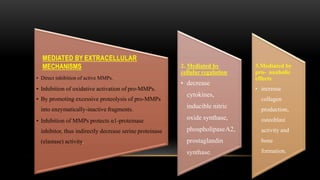
MEDIATED BY EXTRACELLULAR
MECHANISMS
• Direct inhibition of active MMPs.
• Inhibition of oxidative activation of pro-MMPs.
• By promoting excessive proteolysis of pro-MMPs
into enzymatically-inactive fragments.
• Inhibition of MMPs protects α1-proteinase
inhibitor, thus indirectly decrease serine proteinase
(elastase) activity.
2. Mediated by
cellular regulation
• decrease
cytokines,
inducible nitric
oxide synthase,
phospholipaseA2,
prostaglandin
synthase.
3.Mediated by
pro- anabolic
effects
• increase
collagen
production,
osteoblast
activity and
bone
formation.
• Golub et al. (1987) -- antimicrobial and anti collagenase properties of tetracyclines resided in
different parts of four ringed structures.
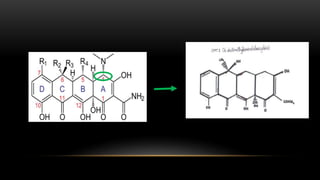
• Carbon -4 position side chain was responsible for the antimicrobial activity of tetracyclines --
altered the structure of tetracyclines -- development of CMTs.
• They were produced by removing the dimethylamino group from the carbon-4 position of the A
ring of the four ringed (A,B,C,D) structure.
CHEMICALLY MODIFIED
TETRACYCLINE (CMT)
• The resulting compound, 4- de dimethyl amino tetracycline (CMT-1) did not have
antimicrobial property but the anticollagenase activity was retained both in vitro and in vivo.
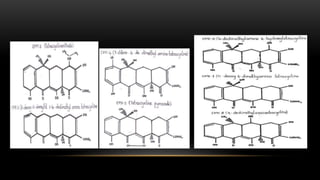
• Further modifications in the central structure of tetracyclines by addition or deletion of
functional groups resulted in the formation of eight CMTs.
• Ca and Zn binding sites at the carbonyl oxygen and the hydroxyl groups of carbon-11 and
carbon-12 positions are responsible for the anti-collagenase action of the CMTs.
• inhibition of mammalian collagenase,
• inhibition of neutrophil chemotaxis;
• Increased fibroblast attachment to the root
surface.
• anti-inflammatory effects due to the inhibition of
prostaglandin synthesis (high doses)
• inhibition of bone resorption and
enhancement of collagen synthesis
The non-anti-
microbial CMTs-
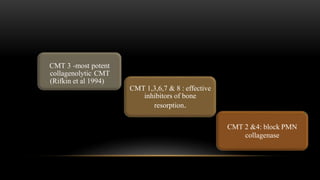
CMT 3 -most potent
collagenolytic CMT
(Rifkin et al 1994)
CMT 1,3,6,7 & 8 : effective
inhibitors of bone
resorption.
CMT 2 &4: block PMN
collagenase
• Photosensitising property
• Neurotoxicity
• Cytotoxic effects at higher concentrations
ADVERSE EFFECTS
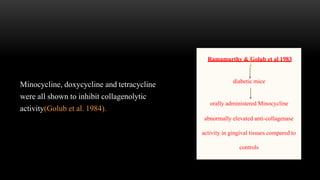
Minocycline, doxycycline and tetracycline
were all shown to inhibit collagenolytic
activity(Golub et al. 1984).
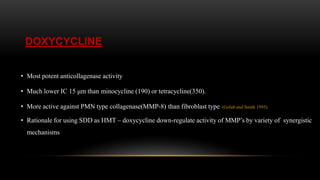
Ramamurthy & Golub et al 1983
diabetic mice
orally administered Minocycline
abnormally elevated anti-collagenase
activity in gingival tissues compared to
controls
DOXYCYCLINE
• Most potent anticollagenase activity
• Much lower IC 15 μm than minocycline (190) or tetracycline(350).
• More active against PMN type collagenase(MMP-8) than fibroblast type. (Golub and Smith 1995).
• Rationale for using SDD as HMT – doxycycline down-regulate activity of MMP’s by variety of synergistic
mechanisms
• Doxycycline tends to be highly concentrated in GCF at levels 5-10 times greater than serum and show
substantivity as they bind to the tooth structure & are slowly released as still active agents (Pascale et
al 1986)
• The first clinical study prescribing SDD as an adjunct to mechanical debridement showed statistically
significant reductions in GCF concentrations of MMP-8 and MMP-13 compared with placebo.
(Golub et al. 1997)
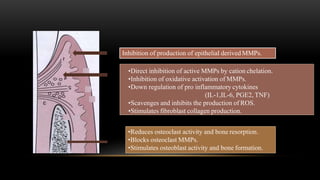
Inhibition of production of epithelial derived MMPs.
•Direct inhibition of active MMPs by cation chelation.
•Inhibition of oxidative activation of MMPs.
•Down regulation of pro inflammatory cytokines
(IL-1,IL-6, PGE2, TNF)
•Scavenges and inhibits the production of ROS.
•Stimulates fibroblast collagen production.
•Reduces osteoclast activity and bone resorption.
•Blocks osteoclast MMPs.
•Stimulates osteoblast activity and bone formation.
DEVELOPMENT OF SDD
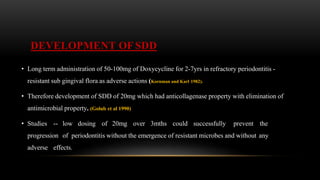
• Long term administration of 50-100mg of Doxycycline for 2-7yrs in refractory periodontitis -
resistant sub gingival flora as adverse actions (Kornman and Karl 1982).
• Therefore development of SDD of 20mg which had anticollagenase property with elimination of
antimicrobial property. (Golub et al 1990)
• Studies -- low dosing of 20mg over 3mths could successfully prevent the
progression of periodontitis without the emergence of resistant microbes and without any
adverse effects.
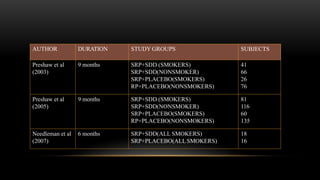
AUTHOR DURATION STUDY GROUPS SUBJECTS
Preshaw et al
(2003)
9 months SRP+SDD (SMOKERS)
SRP+SDD(NONSMOKER)
SRP+PLACEBO(SMOKERS)
RP+PLACEBO(NONSMOKERS)
41
66
26
76
Preshaw et al
(2005)
9 months SRP+SDD (SMOKERS)
SRP+SDD(NONSMOKER)
SRP+PLACEBO(SMOKERS)
RP+PLACEBO(NONSMOKERS)
81
116
60
135
Needleman et al
(2007)
6 months SRP+SDD(ALL SMOKERS)
SRP+PLACEBO(ALLSMOKERS)
18
16
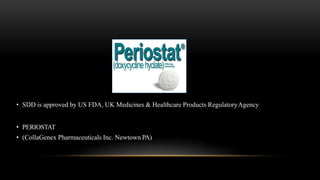
• SDD is approved by US FDA, UK Medicines & Healthcare Products RegulatoryAgency
• PERIOSTAT
• (CollaGenex Pharmaceuticals Inc. Newtown PA)
INDICATIONS
Motivated
patients
Chronic and
aggressive
periodontitis
patients
treatedtreated
non surgically.
(Caton J et al,
2000,Preshaw et al
2005)
Patients
traditionally
considered
resistant to
periodontal
treatment
(smokers).
Cases
considered
refractory to
treatment and
those with risk
factors like
diabetes and
smoking.
Patients with
the periodontitis
associated
genotype (PAG)
have specific
variations in the
gene that
regulates IL-1.
History of
allergy or
hypersensitivity Pregnant and
lactating
women or
children less
than 12 yrs of
age
conditions like
gingivitis and
periodontal
abscess or when
an antibiotic
regimen is
necessary.
May reduce the
effectiveness of
oral
contraceptives
CONTRAINDICATIONS:
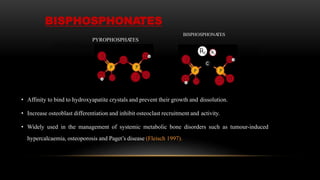
BISPHOSPHONATES
PYROPHOSPHA
TES
BISPHOSPHONA
TES
• Affinity to bind to hydroxyapatite crystals and prevent their growth and dissolution.
• Increase osteoblast differentiation and inhibit osteoclast recruitment and activity.
• Widely used in the management of systemic metabolic bone disorders such as tumour-induced
hypercalcaemia, osteoporosis and Paget’s disease (Fleisch 1997).
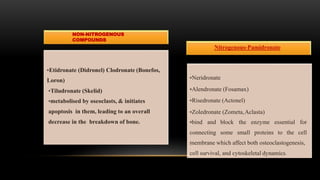
NON-NITROGENOUS
COMPOUNDS
•Etidronate (Didronel) Clodronate (Bonefos,
Loron)
•Tiludronate (Skelid)
•metabolised by oseoclasts, & initiates
apoptosis in them, leading to an overall
decrease in the breakdown of bone.
Nitrogenous-Pamidronate
•Neridronate
•Alendronate (Fosamax)
•Risedronate (Actonel)
•Zoledronate (Zometa,Aclasta)
•bind and block the
connecting some small
enzyme essential for
proteins to the cell
membrane which affect both osteoclastogenesis,
cell survival, and cytoskeletal dynamics.
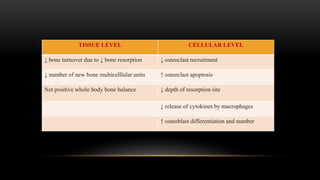
TISSUE LEVEL CELLULAR LEVEL
↓ bone turnover due to ↓ bone resorption ↓ osteoclast recruitment
↓ number of new bone multicelllular units ↑ osteoclast apoptosis
Net positive whole body bone balance ↓ depth of resorption site
↓ release of cytokines by macrophages
↑ osteoblast differentiation and number
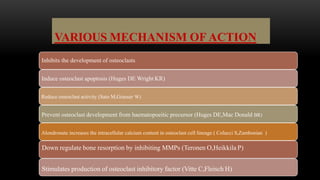
VARIOUS MECHANISM OF ACTION
Inhibits the development of osteoclasts
Induce osteoclast apoptosis (Huges DE Wright KR)
Reduce osteoclast activity (Sato M,Grasser W)
Prevent osteoclast development from haematopoeitic precursor (Huges DE,Mac Donald BR)
Alondronate increases the intracellular calcium content in osteoclast cell lineage ( Colucci S,Zambonian )
Down regulate bone resorption by inhibiting MMPs (Teronen O,Heikkila P)
Stimulates production of osteoclast inhibitory factor (Vitte C,Fleisch H)
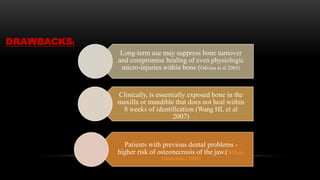
Long-term use may suppress bone turnover
and compromise healing of even physiologic
micro-injuries within bone (Odvina et al 2005)
Clinically, is essentially exposed bone in the
maxilla or mandible that does not heal within
8 weeks of identification (Wang HL et al
2007)
Patients with previous dental problems -
higher risk of osteonecrosis of the jaw.(William
Giannobile (2008)
DRAWBACKS:
ANTI-CYTOKINE THERAPY
• Cytokines -- regulatory proteins controlling the survival, growth, differentiation and functions of
cells.
• Produced transiently at generally low concentrations, act and are degraded in a local environment.
• Cytokine-producing cells are often physically located immediately adjacent to the responding cells.
• Increased expression of IL-1 and TNF in inflamed gingival and high levels in the GCF of
periodontitis patients, several studies -- increased production of these cytokines may play an
important role in periodontal tissue destruction.
ANTI- CYTOKINE
THERAPY –AIMEDAT-
• Antagonising pro-inflammatory cytokines
• Disrupting cell signaling pathways
• Recombinant anti inflammatory cytokines
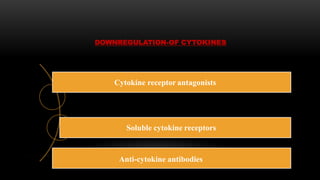
Cytokine receptor antagonists
Soluble cytokine receptors
Anti-cytokine antibodies
DOWNREGULATION-OF CYTOKINES
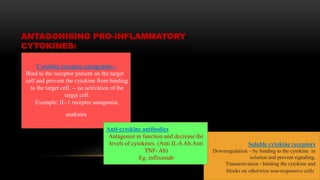
ANTAGONISING PRO-INFLAMMATORY
CYTOKINES:
Cytokine receptor antagonists –
Bind to the receptor present on the target
cell and prevent the cytokine from binding
to the target cell. -- no activation of the
target cell.
Example: IL-1 receptor antagonist,
anakinra
Soluble cytokine receptors
Downregulation – by binding to the cytokine in
solution and prevent signaling.
Transactivation - binding the cytokine and
blocks on otherwise non-responsive cells.
Anti-cytokine antibodies
Antagonist in function and decrease the
levels of cytokines. (Anti IL-6 Ab,Anti
TNF-Ab)
Eg. infliximab
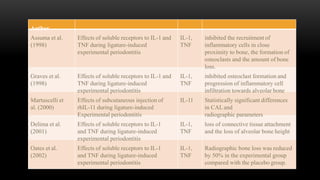
Author
Assuma et al.
(1998)
Effects of soluble receptors to IL-1 and
TNF during ligature-induced
experimental periodontitis
IL-1,
TNF
inhibited the recruitment of
inflammatory cells in close
proximity to bone, the formation of
osteoclasts and the amount of bone
loss.
Graves et al.
(1998)
Effects of soluble receptors to IL-1 and
TNF during ligature-induced
experimental periodontitis
IL-1,
TNF
inhibited osteoclast formation and
progression of inflammatory cell
infiltration towards alveolar bone
Martuscelli et
al. (2000)
Effects of subcutaneous injection of
rhIL-11 during ligature-induced
Experimental periodontitis
IL-11 Statistically significant differences
in CAL and
radiographic parameters
Delima et al.
(2001)
Effects of soluble receptors to IL-1
and TNF during ligature-induced
experimental periodontitis
IL-1,
TNF
loss of connective tissue attachment
and the loss of alveolar bone height
Oates et al.
(2002)
Effects of soluble receptors to IL-1
and TNF during ligature-induced
experimental periodontitis
IL-1,
TNF
Radiographic bone loss was reduced
by 50% in the experimental group
compared with the placebo group.
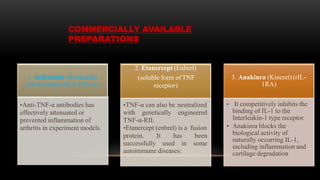
1. Infliximab (Remicade)
(Monoclonal Ab toTNF-α)
•Anti-TNF-α antibodies has
effectively attenuated or
prevented inflammation of
arthritis in experiment models.
2. Etanercept (Enbrel)
(soluble form of TNF
receptor)
•TNF-α can also be neutralized
with genetically engineered
TNF-α-RII.
•Etanercept (enbrel) is a fusion
protein. It has
successfully used in
been
some
autoimmune diseases:
3. Anakinra (Kineret) (rIL-
1RA)
• It competitively inhibits the
binding of IL-1 to the
Interleukin-1 type receptor.
• Anakinra blocks the
biological activity of
naturally occurring IL-1,
including inflammation and
cartilage degradation
COMMERCIALLY AVAILABLE
PREPARATIONS
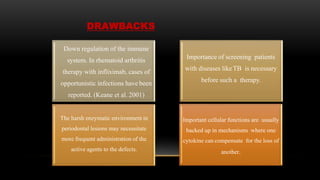
Down regulation of the immune
system. In rhematoid arthritis
therapy with infliximab, cases of
opportunistic infections have been
reported. (Keane et al. 2001)
Importance of screening patients
with diseases likeTB is necessary
before such a therapy.
The harsh enzymatic environment in
periodontal lesions may necessitate
more frequent administration of the
active agents to the defects.
Important cellular functions are usually
backed up in mechanisms where one
cytokine can compensate for the loss of
another.
DRAWBACKS
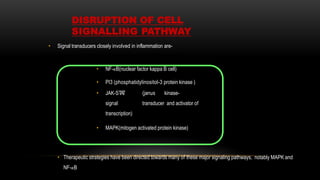
DISRUPTION OF CELL
SIGNALLING PATHWAY
• Signal transducers closely involved in inflammation are-
• NF-κB(nuclear factor kappa B cell)
• PI3 (phosphatidylinositol-3 protein kinase )
• JAK-STA
T (janus kinase-
signal transducer and activator of
transcription)
• MAPK(mitogen activated protein kinase)
• Therapeutic strategies have been directed towards many of these major signaling pathways, notably MAPK and
NF-κB
NF-ΚB
• A protein complex found in the cytoplasm of most human cells, that controls the
transcription of
DNA.
• Involved in cellular responses to stimuli such as stress, cytokines, free
radicals, ultraviolet
irradiation, oxidized LDL, and bacterial or viral antigens.
• key role in regulating the immune response to infection.
• Incorrect regulation of NF-κB has been linked to cancer, inflammatory and autoimmune
diseases, septic shock, viral infection, and improper immune development.
• In vitro studies have established that both P
.gingivalis and other periopathogenic bacteria can
activate NF-κB in periodontal tissues (Sugita et al 1998)
• An increased expression of NF-κB (p50/p65) at sites of periodontal inflammation
compared with healthy sites in human periodontitis (Ambili et al 2005)
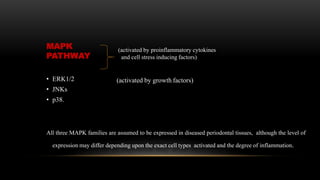
MAPK
PATHWAY
(activated by growth factors)
• ERK1/2
• JNKs
• p38.
All three MAPK families are assumed to be expressed in diseased periodontal tissues, although the level of
expression may differ depending upon the exact cell types activated and the degree of inflammation.
(activated by proinflammatory cytokines
and cell stress inducing factors)
MAPK
• Induces synthesis of pro-inflammatory cytokines, such as TNF, IL-1, IL-6, IL-8 and controls the
synthesis of other compounds, including chemokines, MMPs and PGs.
• Several imidazole compounds capable of inhibiting it. These are cytokine-suppressive anti-
inflammatory drugs (CSAIDs) responsible for in vitro and in vivo inhibition of lipopolysaccharide-
induced TNF-α expression.
• CSAIDs were initially shown to inhibit various inflammatory cytokines before the p38 MAPK was
actually discovered. Thus, this class of agents defined the role of p38 well before the activation,
regulation and substrates of p38 MAPK were identified.
IL-11 has been shown to inhibit the production of IL-1β , TNF-α,IL-12 and nitric oxide (NO) in a
variety of inflammatory conditions.
Martuscelli et al. (2000,2006) investigated the ability of recombinant IL-11 (rhIL-11) to reduce periodontal
disease progression in dogs with ligature induced periodontitis, significant reduction in the rate of clinical
attachment and radiographic bone loss were observed after an 8- week period of rhIL-11 administration,
twice a week.
RECOMBINANT ANTI
INFLAMMATORY CYTOKINES
COMBINATIONS
• Subantimicrobial dose doxycycline (20 mg twice daily), flurbiprofen (50 mg four times per day), or
a combination of the two drugs, for 3 weeks.
• Gingival biopsies were obtained from the planned surgery sites before and after drug therapy.
• Three weeks of SDD alone-- significant reduction in host-derived neutral proteinases,
- flurbiprofen alone -- no reduction.
• The combination therapy -- statistically significant synergistic reduction of collagenase, gelatinase and
serpinolytic activities and a lesser reduction of elastase activity. Lee HM et al.(2004)
• A similar effect -- when chemically modified tetracyclines are administered together with flurbiprofen in
arthritic rats. (Leung M et al. 1995)
• CMT-8, has been combined with a Bisphosphonate (clodronate) in rats with experimental
periodontitis. (Llavaneras A et al.2001)
• Subantimicrobial dose doxycycline has also been combined with the locally delivered doxycycline gel (10%;
Atridox). The combination therapy resulted in greater probing depth reductions. (Novak M et al. 2008)
CONCLUSION
• Plaque bacteria are essential for periodontitis to occur but are insufficient by themselves to
cause the disease. For periodontitis to develop, a susceptible host is also required.
• As we know the majority of periodontal destruction is caused by host immuno-inflammatory
response, various advanced treatment modalities have been introduced in the recent years including
HMT.
• Though various agents are there to modulate host response, only few have shown successful
result in humans. So the further research is needed.
REFERENCES
• Newman M, Takei H, Klokkevold P, Carranza F. “Clinical Periodontology”,10,11th, Edition.
Saunders, Elsevier. Preshaw PM. Host response modulation in periodontics. Periodontol 2000. 2008;48:92-110.
Review.
• D W Paquette & R C. Williams. Modulation of host inflammatory mediators as a treatment strategy for
periodontal diseases.
• Minkle Gulati, Vishal Anand, Vivek Govila, and Nikil Jain. Host modulation therapy:An
indispensable part of perioceutics. JIndian Soc Periodontol. 2014 MayJun;18(3): 282–288.
• Bartold P,Cantley & Haynes D, Mechanisms and control of pathologic bone loss in periodontitis.
Periodontol 2000, 2010, 55–69
• Preshaw P et al. Subantimicrobial dose doxycycline as adjunctive treatment for periodontitis. A review. J Clin Periodontol
2004; 31: 697–707
• Serhan C and Chiang N. Endogenous pro-resolving and anti-inflammatory lipid mediators: a new
pharmacologic genus. British Journal of Pharmacology (2008) 153, 200-215
.

Hmt ppt

  • 1.
  • 2.
    CONTENT • INTRODUCTION • DEFINITIONS •HISTORY • PATHOGENESIS OF PERIODONTITIS AND THE HOST RESPONSE
  • 3.
    . • AGENTS USEDIN HOST MODULATION • - NSAIDS • - ANTI- PROTEINASE BLOCKING OF MMPS • - BISPHOSPHONATES • - ANTI CYTOKINE THERAPY • - AGENTS CAUSING DISRUPTION OF CELL SIGNALING PATHWAYS • - COMBINATIONS • CONCLUSION • REFERENCE
  • 4.
    INTRODUCTION • Periodontitis isa complex infection initiated by bacteria –tissue destruction. • In the past, the understanding of the etiology and the pathogenesis of the periodontal disease focused on the microbial aspect of the diseases -- therapeutic efforts focused on the mechanical removal. • Recently, --recognized -- host response to bacterial infection which causes greater destruction of the connective tissue elements, periodontal ligament and alveolar bone -- therapeutic efforts focus on altering (modulating) the host response -- various host modulating approaches.
  • 5.
    DEFINITIONS Host: the organismfrom which a parasite obtains its nourishment/ an individual who receives a graft. Modulation: the alteration of function or status of something in response to a stimulus or an altered physical or chemical environment.
  • 6.
    Treatment concept thataims to reduce the tissue destruction and stabilize or even regenerate the periodontium by modifying or down regulating destructive aspects of the host response and up regulating protective or regenerative responses. HOST MODULATION THERAPY (HMT)-
  • 7.
    RATIONALE • offer theoppurtunity for modulating or reducing destruction by treating chronic inflammatory response. • Used as an adjuncts to conventional PD treatments (SRP & Surgery) • HMTs do not “switch off” normal defense mechanisms or inflammation; instead they ameliorate excessive or pathologically elevated inflammatory processes to enhance the wound healing and periodontal stability.
  • 8.
    HISTORY • (1973) Socransky,-- sites of advanced bone loss harbored an anaerobic microaerophilic Gram- negative flora that was totally different from the primarily facultative Gram-positive organisms found at adjacent healthy sites. • Klein and Raisz -- prostaglandins -- potent stimulators of bone resorption in tissue culture. • Paul Goldhaber and Max Goodson (1970) -- arachidonic acid metabolites as important inflammatory mediators of the bone loss in periodontitis.
  • 9.
    • Concept ofHost Modulation - William and Golub (1990) • Various agents modulate specific component of disease pathogenesis which includes regulation of arachidonic acid metabolites, excessive production of matrix metalloproteinases (MMPs), immune and inflammatory responses and bone metabolism.
  • 10.
    PATHOGENESIS OF PERIODONTITIS •Linear Bacterial Model • Circa Model • Non linear Model • Linear Bacterial Model (1990): depicting bacteria to have a principal etiologic role in the initiation and progression of periodontal disease.-(Haffajee and Socransky 1990) Microbial challenge Clinical signs of disease initiation and progression
  • 11.
    . Circa Model --central role for the host immuno- inflammatory response. Microbial challenge Clinical signs of disease initiation and progression host immuno- inflammatory response
  • 12.
  • 13.
  • 14.
    AGENTS FOR HMT NSAIDS Antiproteinases Bisphosphonates Anti cytokines Combinations Others
  • 15.
    NSAIDS • NSAIDs inhibitthe formation of prostaglandins, including prostaglandin E2 (PGE2) (Grenier et al 2002). – Produced in response to lipopolysaccaride(LPS)- • Upregulates bone resorption by osteoclasts;(Heasman PAand Collins JP1993) • Levels of PGE2 are elevated in pts with periodontitis ( Plamondon and sorsa jp 2002) • Inhibits fibroblasts function and has inhibitory effects on the immune response (Grossi and Genco Ann Periodontics 1997).
  • 16.
    • Studies haveshown that systemic flurbiprofen, indomethacin, naproxen, administered daily for periods of up to 3 years, significantly slowed the rate of alveolar bone loss.
  • 17.
    • Vane(1971) --aspirin and aspirin-like drugs inhibited the production of prostaglandins by inhibiting the COX enzyme. • Goldhaber et al. (1973) added indomethacin, a known inhibitor of COX, to the culture media, observing a decrease in bone resorption of up to 50%. • Nyman et al (1979)… animal study… systemic doses of indomethacin… delayed the onset and suppressed the magnitude of the acute inflammatory response and decreased the amount of alveolar bone resorption.
  • 19.
    Side Effects ofNSAIDs • Daily administration for extended periods of time (years rather than months) is necessary for periodontal benefits to become apparent. • Hemorrhage due to anti platelet activity. • Gastric ulceration. • Renal failure. • Rebound effect. • Liver failure.
  • 20.
    ANTI- PROTEINASE ACTIONON MMPS • Matrix metalloproteinases (MMPs) are a large family of zinc and calcium-dependent endopeptidases, which are responsible for the tissue remodeling and degradation of the extracellular matrix (ECM), including collagens, elastins, gelatin, matrix glycoproteins, and proteoglycan. (Woessner ,1991) • MMPs are inducible enzymes, upreguated by pro inflammatory cytokines (especially IL-1, TNF- α, PDGF, FGF have all been shown to increase production of MMPs).
  • 21.
    • Primary sourceof MMPs in the gingiva was found to be the neutrophil (Golub et al 1992) • Levels of collagenase activity correlate with disease activity (Ryan et al 1998) • Imbalance between activated MMPs and their host derived endogenous inhibitors, lead to break down of ECM during periodontitis (Birkadel-Hansen H 2003)
  • 22.
    • Matrix metalloproteinasesplay key roles in the degradation of the extracellular matrix, basement membrane as well as in the modification of cytokine action and activation of osteoclasts. • The expression and activity of MMPs in non- inflamed periodontium is low but is drastically enhanced in the inflammatory conditions.
  • 23.
    Inhibition of theactivity of MMPs: • TIMPs • α2 Macroglobulin Endogenous • CMT (Chemically modified tetracycline) • SDD Exogenous
  • 24.
    Endogenous inhibitors ofMMP-- fibroblasts, keratinocytes, monocytes/ macrophages, and endothelial cells. • Four TIMPs (TIMP 1–4) are known: TIMP-1 ,TIMP-2 , TIMP-3 and TIMP-4. • TIMPs appear to regulate matrix degradation both by proteinase inhibition and by blockage of autolytic MMP activation. (DeClerck,1991). • Other functions-cell differentiation, growth and migration, tumour growth inhibition. TISSUE INHIBITORY METALLO PROTEINASES (TIMP)
  • 25.
    • The firstTIMP -- 1975 as a protein, in culture medium of human fibroblasts and in human serum, which was able to inhibit collagenase activity. • TIMP-2 regulates the activation of pro-MMP-2 by binding to its c-terminal region.( Ward et al, 1991) • TIMP-3 Prevents the activation of pro MMP -2 by MT1-MMP. • It has an affinity for components of the ECM. • TIMP-4- MMP-14, MMP-2.
  • 26.
    ALPHA-2 MACROGLOBULINS (Α2 M) • Protein present in blood- - antiprotease. • synthesized -- in liver, macrophages, fibroblasts, and adrenocortical cells. • It functions as an inhibitor of MMPs(2, 9).– form complexes. • Inhibitor of blood coagulation. • Carrier protein -- binds to numerous growth factors and cytokines, such as platelet-derived growth factor, basic fibroblast growth factor, TGF-β, insulin, and IL-1β.
  • 27.
    TETRACYCLINE Capability of inhibitingthe activities of neutrophils, osteoclasts, and matrix metalloproteinases (specifically MMP-8), thereby working as an anti-inflammatory agent that inhibits bone destruction. Prevent CT breakdown via- 1. Mediated by extracellular mechanisms 2. Mediated by cellular regulation 3. Mediated by pro anabolic effects Golub in 1983 administered minocycline and fall in collagenase level was noted. Entire tetracycline group of family exhibit anti collagenase effect.
  • 28.
    MEDIATED BY EXTRACELLULAR MECHANISMS •Direct inhibition of active MMPs. • Inhibition of oxidative activation of pro-MMPs. • By promoting excessive proteolysis of pro-MMPs into enzymatically-inactive fragments. • Inhibition of MMPs protects α1-proteinase inhibitor, thus indirectly decrease serine proteinase (elastase) activity. 2. Mediated by cellular regulation • decrease cytokines, inducible nitric oxide synthase, phospholipaseA2, prostaglandin synthase. 3.Mediated by pro- anabolic effects • increase collagen production, osteoblast activity and bone formation.
  • 29.
    • Golub etal. (1987) -- antimicrobial and anti collagenase properties of tetracyclines resided in different parts of four ringed structures. • Carbon -4 position side chain was responsible for the antimicrobial activity of tetracyclines -- altered the structure of tetracyclines -- development of CMTs. • They were produced by removing the dimethylamino group from the carbon-4 position of the A ring of the four ringed (A,B,C,D) structure. CHEMICALLY MODIFIED TETRACYCLINE (CMT)
  • 31.
    • The resultingcompound, 4- de dimethyl amino tetracycline (CMT-1) did not have antimicrobial property but the anticollagenase activity was retained both in vitro and in vivo. • Further modifications in the central structure of tetracyclines by addition or deletion of functional groups resulted in the formation of eight CMTs. • Ca and Zn binding sites at the carbonyl oxygen and the hydroxyl groups of carbon-11 and carbon-12 positions are responsible for the anti-collagenase action of the CMTs.
  • 33.
    • inhibition ofmammalian collagenase, • inhibition of neutrophil chemotaxis; • Increased fibroblast attachment to the root surface. • anti-inflammatory effects due to the inhibition of prostaglandin synthesis (high doses) • inhibition of bone resorption and enhancement of collagen synthesis The non-anti- microbial CMTs-
  • 34.
    CMT 3 -mostpotent collagenolytic CMT (Rifkin et al 1994) CMT 1,3,6,7 & 8 : effective inhibitors of bone resorption. CMT 2 &4: block PMN collagenase
  • 35.
    • Photosensitising property •Neurotoxicity • Cytotoxic effects at higher concentrations ADVERSE EFFECTS
  • 36.
    Minocycline, doxycycline andtetracycline were all shown to inhibit collagenolytic activity(Golub et al. 1984). Ramamurthy & Golub et al 1983 diabetic mice orally administered Minocycline abnormally elevated anti-collagenase activity in gingival tissues compared to controls
  • 37.
    DOXYCYCLINE • Most potentanticollagenase activity • Much lower IC 15 μm than minocycline (190) or tetracycline(350). • More active against PMN type collagenase(MMP-8) than fibroblast type. (Golub and Smith 1995). • Rationale for using SDD as HMT – doxycycline down-regulate activity of MMP’s by variety of synergistic mechanisms
  • 38.
    • Doxycycline tendsto be highly concentrated in GCF at levels 5-10 times greater than serum and show substantivity as they bind to the tooth structure & are slowly released as still active agents (Pascale et al 1986) • The first clinical study prescribing SDD as an adjunct to mechanical debridement showed statistically significant reductions in GCF concentrations of MMP-8 and MMP-13 compared with placebo. (Golub et al. 1997)
  • 39.
    Inhibition of productionof epithelial derived MMPs. •Direct inhibition of active MMPs by cation chelation. •Inhibition of oxidative activation of MMPs. •Down regulation of pro inflammatory cytokines (IL-1,IL-6, PGE2, TNF) •Scavenges and inhibits the production of ROS. •Stimulates fibroblast collagen production. •Reduces osteoclast activity and bone resorption. •Blocks osteoclast MMPs. •Stimulates osteoblast activity and bone formation.
  • 40.
    DEVELOPMENT OF SDD •Long term administration of 50-100mg of Doxycycline for 2-7yrs in refractory periodontitis - resistant sub gingival flora as adverse actions (Kornman and Karl 1982). • Therefore development of SDD of 20mg which had anticollagenase property with elimination of antimicrobial property. (Golub et al 1990) • Studies -- low dosing of 20mg over 3mths could successfully prevent the progression of periodontitis without the emergence of resistant microbes and without any adverse effects.
  • 41.
    AUTHOR DURATION STUDYGROUPS SUBJECTS Preshaw et al (2003) 9 months SRP+SDD (SMOKERS) SRP+SDD(NONSMOKER) SRP+PLACEBO(SMOKERS) RP+PLACEBO(NONSMOKERS) 41 66 26 76 Preshaw et al (2005) 9 months SRP+SDD (SMOKERS) SRP+SDD(NONSMOKER) SRP+PLACEBO(SMOKERS) RP+PLACEBO(NONSMOKERS) 81 116 60 135 Needleman et al (2007) 6 months SRP+SDD(ALL SMOKERS) SRP+PLACEBO(ALLSMOKERS) 18 16
  • 42.
    • SDD isapproved by US FDA, UK Medicines & Healthcare Products RegulatoryAgency • PERIOSTAT • (CollaGenex Pharmaceuticals Inc. Newtown PA)
  • 43.
    INDICATIONS Motivated patients Chronic and aggressive periodontitis patients treatedtreated non surgically. (CatonJ et al, 2000,Preshaw et al 2005) Patients traditionally considered resistant to periodontal treatment (smokers). Cases considered refractory to treatment and those with risk factors like diabetes and smoking. Patients with the periodontitis associated genotype (PAG) have specific variations in the gene that regulates IL-1.
  • 44.
    History of allergy or hypersensitivityPregnant and lactating women or children less than 12 yrs of age conditions like gingivitis and periodontal abscess or when an antibiotic regimen is necessary. May reduce the effectiveness of oral contraceptives CONTRAINDICATIONS:
  • 45.
    BISPHOSPHONATES PYROPHOSPHA TES BISPHOSPHONA TES • Affinity tobind to hydroxyapatite crystals and prevent their growth and dissolution. • Increase osteoblast differentiation and inhibit osteoclast recruitment and activity. • Widely used in the management of systemic metabolic bone disorders such as tumour-induced hypercalcaemia, osteoporosis and Paget’s disease (Fleisch 1997).
  • 46.
    NON-NITROGENOUS COMPOUNDS •Etidronate (Didronel) Clodronate(Bonefos, Loron) •Tiludronate (Skelid) •metabolised by oseoclasts, & initiates apoptosis in them, leading to an overall decrease in the breakdown of bone. Nitrogenous-Pamidronate •Neridronate •Alendronate (Fosamax) •Risedronate (Actonel) •Zoledronate (Zometa,Aclasta) •bind and block the connecting some small enzyme essential for proteins to the cell membrane which affect both osteoclastogenesis, cell survival, and cytoskeletal dynamics.
  • 47.
    TISSUE LEVEL CELLULARLEVEL ↓ bone turnover due to ↓ bone resorption ↓ osteoclast recruitment ↓ number of new bone multicelllular units ↑ osteoclast apoptosis Net positive whole body bone balance ↓ depth of resorption site ↓ release of cytokines by macrophages ↑ osteoblast differentiation and number
  • 48.
    VARIOUS MECHANISM OFACTION Inhibits the development of osteoclasts Induce osteoclast apoptosis (Huges DE Wright KR) Reduce osteoclast activity (Sato M,Grasser W) Prevent osteoclast development from haematopoeitic precursor (Huges DE,Mac Donald BR) Alondronate increases the intracellular calcium content in osteoclast cell lineage ( Colucci S,Zambonian ) Down regulate bone resorption by inhibiting MMPs (Teronen O,Heikkila P) Stimulates production of osteoclast inhibitory factor (Vitte C,Fleisch H)
  • 49.
    Long-term use maysuppress bone turnover and compromise healing of even physiologic micro-injuries within bone (Odvina et al 2005) Clinically, is essentially exposed bone in the maxilla or mandible that does not heal within 8 weeks of identification (Wang HL et al 2007) Patients with previous dental problems - higher risk of osteonecrosis of the jaw.(William Giannobile (2008) DRAWBACKS:
  • 50.
    ANTI-CYTOKINE THERAPY • Cytokines-- regulatory proteins controlling the survival, growth, differentiation and functions of cells. • Produced transiently at generally low concentrations, act and are degraded in a local environment. • Cytokine-producing cells are often physically located immediately adjacent to the responding cells. • Increased expression of IL-1 and TNF in inflamed gingival and high levels in the GCF of periodontitis patients, several studies -- increased production of these cytokines may play an important role in periodontal tissue destruction.
  • 51.
    ANTI- CYTOKINE THERAPY –AIMEDAT- •Antagonising pro-inflammatory cytokines • Disrupting cell signaling pathways • Recombinant anti inflammatory cytokines
  • 52.
    Cytokine receptor antagonists Solublecytokine receptors Anti-cytokine antibodies DOWNREGULATION-OF CYTOKINES
  • 53.
    ANTAGONISING PRO-INFLAMMATORY CYTOKINES: Cytokine receptorantagonists – Bind to the receptor present on the target cell and prevent the cytokine from binding to the target cell. -- no activation of the target cell. Example: IL-1 receptor antagonist, anakinra Soluble cytokine receptors Downregulation – by binding to the cytokine in solution and prevent signaling. Transactivation - binding the cytokine and blocks on otherwise non-responsive cells. Anti-cytokine antibodies Antagonist in function and decrease the levels of cytokines. (Anti IL-6 Ab,Anti TNF-Ab) Eg. infliximab
  • 54.
    Author Assuma et al. (1998) Effectsof soluble receptors to IL-1 and TNF during ligature-induced experimental periodontitis IL-1, TNF inhibited the recruitment of inflammatory cells in close proximity to bone, the formation of osteoclasts and the amount of bone loss. Graves et al. (1998) Effects of soluble receptors to IL-1 and TNF during ligature-induced experimental periodontitis IL-1, TNF inhibited osteoclast formation and progression of inflammatory cell infiltration towards alveolar bone Martuscelli et al. (2000) Effects of subcutaneous injection of rhIL-11 during ligature-induced Experimental periodontitis IL-11 Statistically significant differences in CAL and radiographic parameters Delima et al. (2001) Effects of soluble receptors to IL-1 and TNF during ligature-induced experimental periodontitis IL-1, TNF loss of connective tissue attachment and the loss of alveolar bone height Oates et al. (2002) Effects of soluble receptors to IL-1 and TNF during ligature-induced experimental periodontitis IL-1, TNF Radiographic bone loss was reduced by 50% in the experimental group compared with the placebo group.
  • 55.
    1. Infliximab (Remicade) (MonoclonalAb toTNF-α) •Anti-TNF-α antibodies has effectively attenuated or prevented inflammation of arthritis in experiment models. 2. Etanercept (Enbrel) (soluble form of TNF receptor) •TNF-α can also be neutralized with genetically engineered TNF-α-RII. •Etanercept (enbrel) is a fusion protein. It has successfully used in been some autoimmune diseases: 3. Anakinra (Kineret) (rIL- 1RA) • It competitively inhibits the binding of IL-1 to the Interleukin-1 type receptor. • Anakinra blocks the biological activity of naturally occurring IL-1, including inflammation and cartilage degradation COMMERCIALLY AVAILABLE PREPARATIONS
  • 56.
    Down regulation ofthe immune system. In rhematoid arthritis therapy with infliximab, cases of opportunistic infections have been reported. (Keane et al. 2001) Importance of screening patients with diseases likeTB is necessary before such a therapy. The harsh enzymatic environment in periodontal lesions may necessitate more frequent administration of the active agents to the defects. Important cellular functions are usually backed up in mechanisms where one cytokine can compensate for the loss of another. DRAWBACKS
  • 57.
    DISRUPTION OF CELL SIGNALLINGPATHWAY • Signal transducers closely involved in inflammation are- • NF-κB(nuclear factor kappa B cell) • PI3 (phosphatidylinositol-3 protein kinase ) • JAK-STA T (janus kinase- signal transducer and activator of transcription) • MAPK(mitogen activated protein kinase) • Therapeutic strategies have been directed towards many of these major signaling pathways, notably MAPK and NF-κB
  • 58.
    NF-ΚB • A proteincomplex found in the cytoplasm of most human cells, that controls the transcription of DNA. • Involved in cellular responses to stimuli such as stress, cytokines, free radicals, ultraviolet irradiation, oxidized LDL, and bacterial or viral antigens. • key role in regulating the immune response to infection. • Incorrect regulation of NF-κB has been linked to cancer, inflammatory and autoimmune diseases, septic shock, viral infection, and improper immune development.
  • 59.
    • In vitrostudies have established that both P .gingivalis and other periopathogenic bacteria can activate NF-κB in periodontal tissues (Sugita et al 1998) • An increased expression of NF-κB (p50/p65) at sites of periodontal inflammation compared with healthy sites in human periodontitis (Ambili et al 2005)
  • 60.
    MAPK PATHWAY (activated by growthfactors) • ERK1/2 • JNKs • p38. All three MAPK families are assumed to be expressed in diseased periodontal tissues, although the level of expression may differ depending upon the exact cell types activated and the degree of inflammation. (activated by proinflammatory cytokines and cell stress inducing factors)
  • 61.
    MAPK • Induces synthesisof pro-inflammatory cytokines, such as TNF, IL-1, IL-6, IL-8 and controls the synthesis of other compounds, including chemokines, MMPs and PGs. • Several imidazole compounds capable of inhibiting it. These are cytokine-suppressive anti- inflammatory drugs (CSAIDs) responsible for in vitro and in vivo inhibition of lipopolysaccharide- induced TNF-α expression. • CSAIDs were initially shown to inhibit various inflammatory cytokines before the p38 MAPK was actually discovered. Thus, this class of agents defined the role of p38 well before the activation, regulation and substrates of p38 MAPK were identified.
  • 62.
    IL-11 has beenshown to inhibit the production of IL-1β , TNF-α,IL-12 and nitric oxide (NO) in a variety of inflammatory conditions. Martuscelli et al. (2000,2006) investigated the ability of recombinant IL-11 (rhIL-11) to reduce periodontal disease progression in dogs with ligature induced periodontitis, significant reduction in the rate of clinical attachment and radiographic bone loss were observed after an 8- week period of rhIL-11 administration, twice a week. RECOMBINANT ANTI INFLAMMATORY CYTOKINES
  • 63.
    COMBINATIONS • Subantimicrobial dosedoxycycline (20 mg twice daily), flurbiprofen (50 mg four times per day), or a combination of the two drugs, for 3 weeks. • Gingival biopsies were obtained from the planned surgery sites before and after drug therapy. • Three weeks of SDD alone-- significant reduction in host-derived neutral proteinases, - flurbiprofen alone -- no reduction. • The combination therapy -- statistically significant synergistic reduction of collagenase, gelatinase and serpinolytic activities and a lesser reduction of elastase activity. Lee HM et al.(2004)
  • 64.
    • A similareffect -- when chemically modified tetracyclines are administered together with flurbiprofen in arthritic rats. (Leung M et al. 1995) • CMT-8, has been combined with a Bisphosphonate (clodronate) in rats with experimental periodontitis. (Llavaneras A et al.2001) • Subantimicrobial dose doxycycline has also been combined with the locally delivered doxycycline gel (10%; Atridox). The combination therapy resulted in greater probing depth reductions. (Novak M et al. 2008)
  • 65.
    CONCLUSION • Plaque bacteriaare essential for periodontitis to occur but are insufficient by themselves to cause the disease. For periodontitis to develop, a susceptible host is also required. • As we know the majority of periodontal destruction is caused by host immuno-inflammatory response, various advanced treatment modalities have been introduced in the recent years including HMT. • Though various agents are there to modulate host response, only few have shown successful result in humans. So the further research is needed.
  • 66.
    REFERENCES • Newman M,Takei H, Klokkevold P, Carranza F. “Clinical Periodontology”,10,11th, Edition. Saunders, Elsevier. Preshaw PM. Host response modulation in periodontics. Periodontol 2000. 2008;48:92-110. Review. • D W Paquette & R C. Williams. Modulation of host inflammatory mediators as a treatment strategy for periodontal diseases. • Minkle Gulati, Vishal Anand, Vivek Govila, and Nikil Jain. Host modulation therapy:An indispensable part of perioceutics. JIndian Soc Periodontol. 2014 MayJun;18(3): 282–288.
  • 67.
    • Bartold P,Cantley& Haynes D, Mechanisms and control of pathologic bone loss in periodontitis. Periodontol 2000, 2010, 55–69 • Preshaw P et al. Subantimicrobial dose doxycycline as adjunctive treatment for periodontitis. A review. J Clin Periodontol 2004; 31: 697–707 • Serhan C and Chiang N. Endogenous pro-resolving and anti-inflammatory lipid mediators: a new pharmacologic genus. British Journal of Pharmacology (2008) 153, 200-215
  • 68.