Psychiatry History Taking
           and Examination

                            By
                Soheir H. ElGhonemy
              Assistant Professor of Psychiatry,
       MD in Psychiatry, Arab Board in Psychiatry
Member of International Society of Addiction Medicine (ISAM)
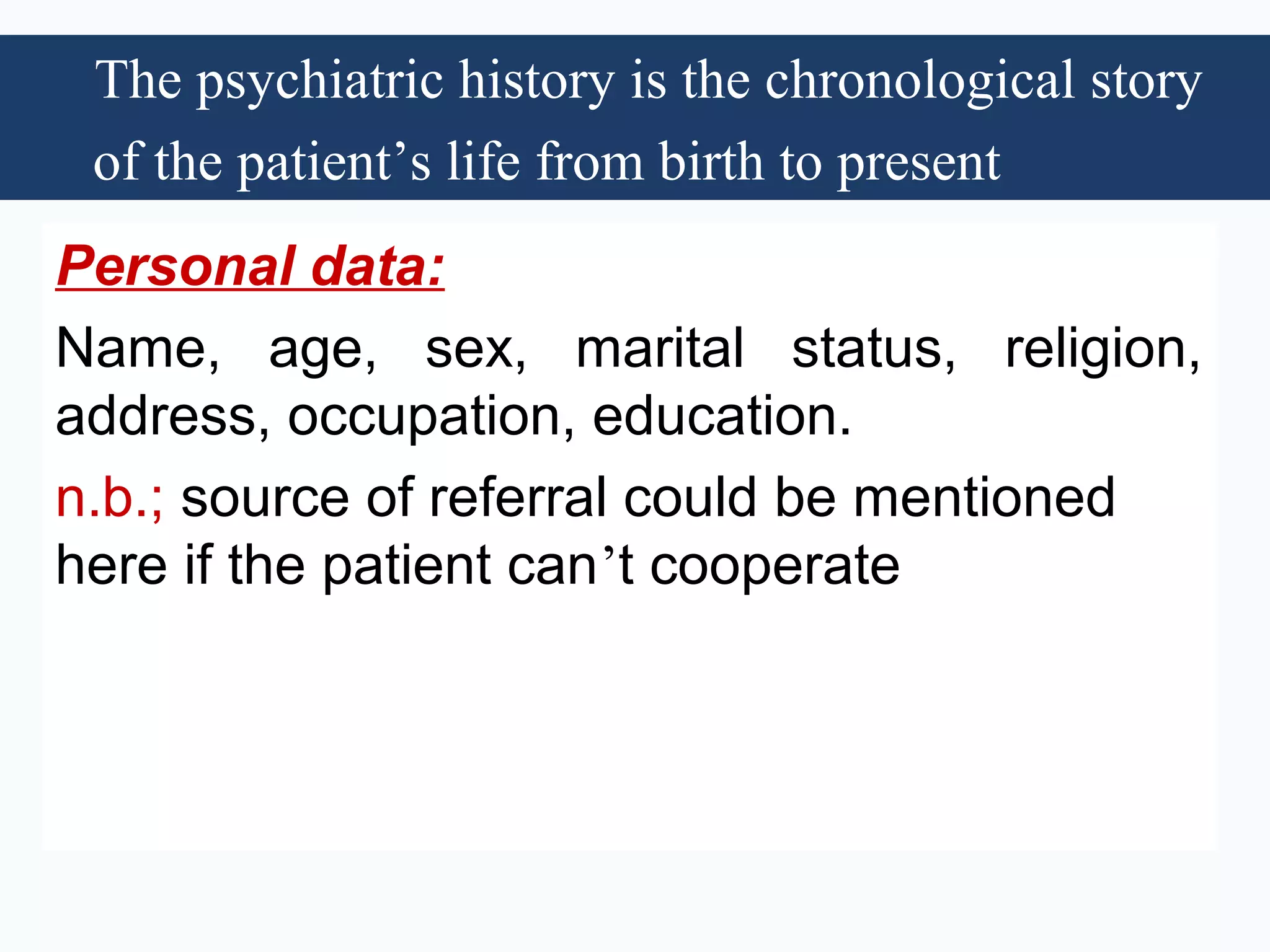
The psychiatric history is the chronological story
 of the patient’s life from birth to present
Personal data:
Name, age, sex, marital status, religion,
address, occupation, education.
n.b.; source of referral could be mentioned
here if the patient can’t cooperate
Complaint:
In the patients own words.
Informant complaint; ( reliable informant)
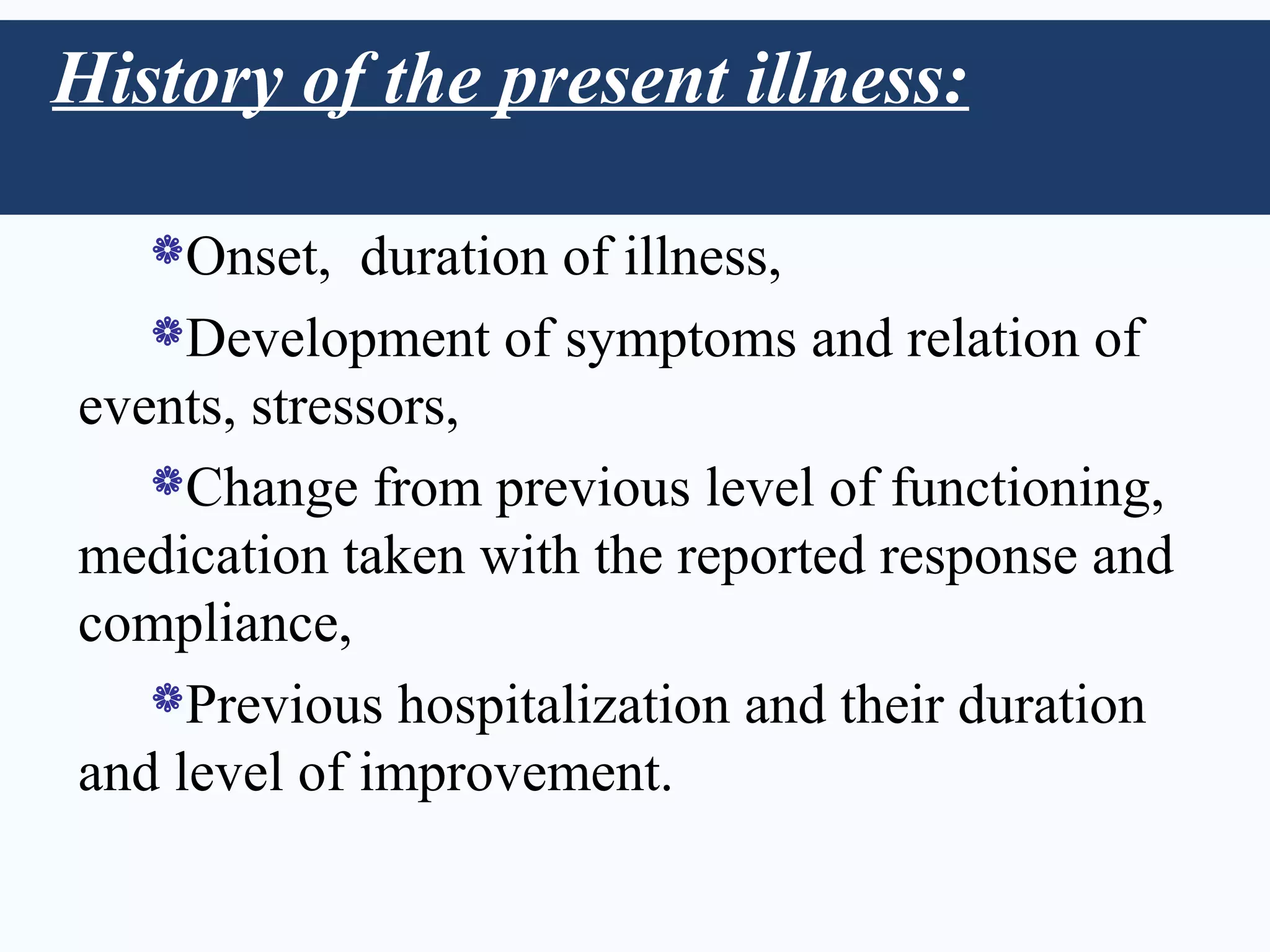
History of the present illness:

   Onset,   duration of illness,
   Development of symptoms and relation of
events, stressors,
   Change from previous level of functioning,
medication taken with the reported response and
compliance,
   Previous hospitalization and their duration
and level of improvement.
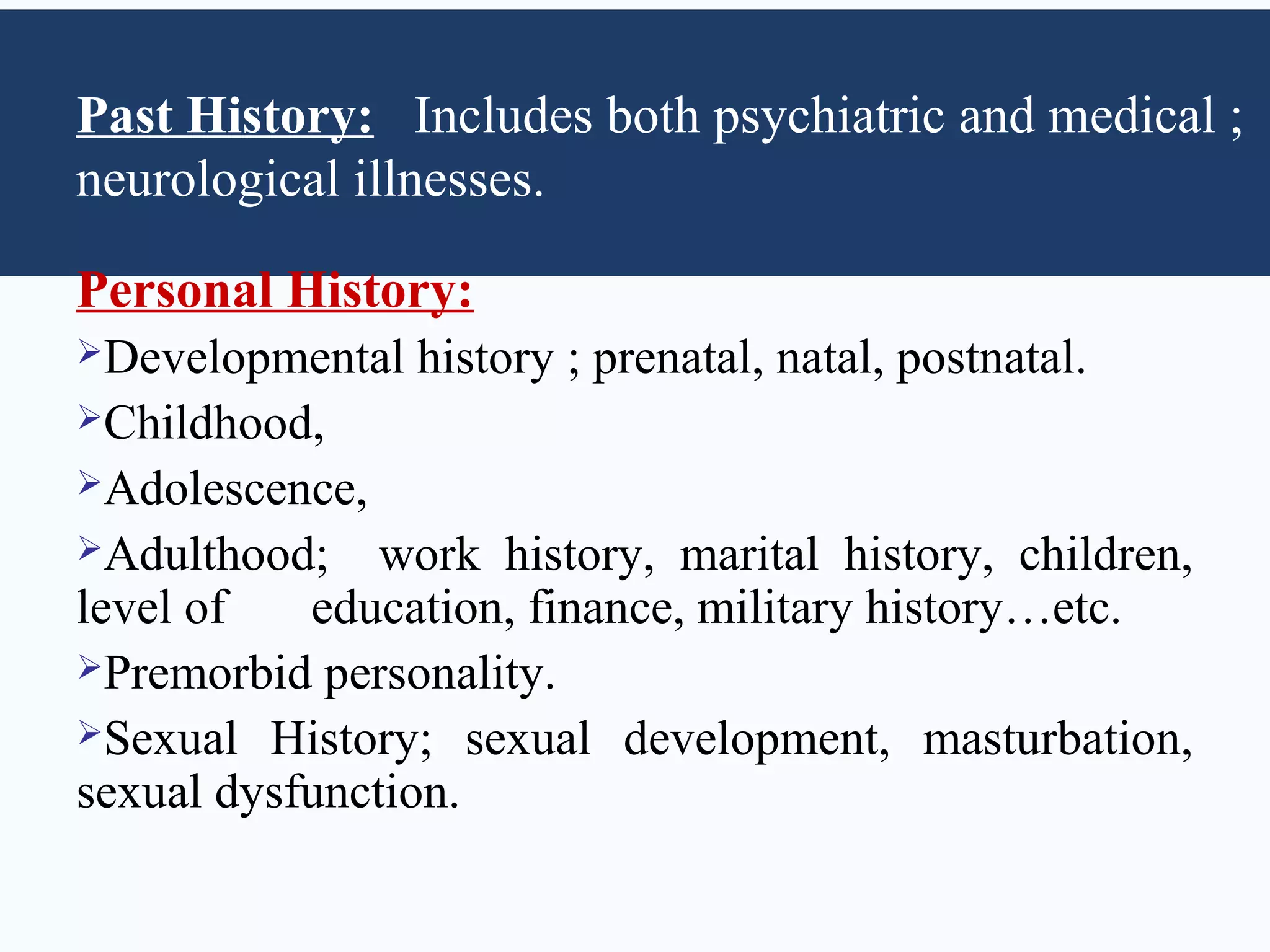
Past History: Includes both psychiatric and medical ;
neurological illnesses.

Personal History:
Developmental   history ; prenatal, natal, postnatal.
Childhood,
Adolescence,
Adulthood;    work history, marital history, children,
level of   education, finance, military history…etc.
Premorbid personality.
Sexual History; sexual development, masturbation,
sexual dysfunction.
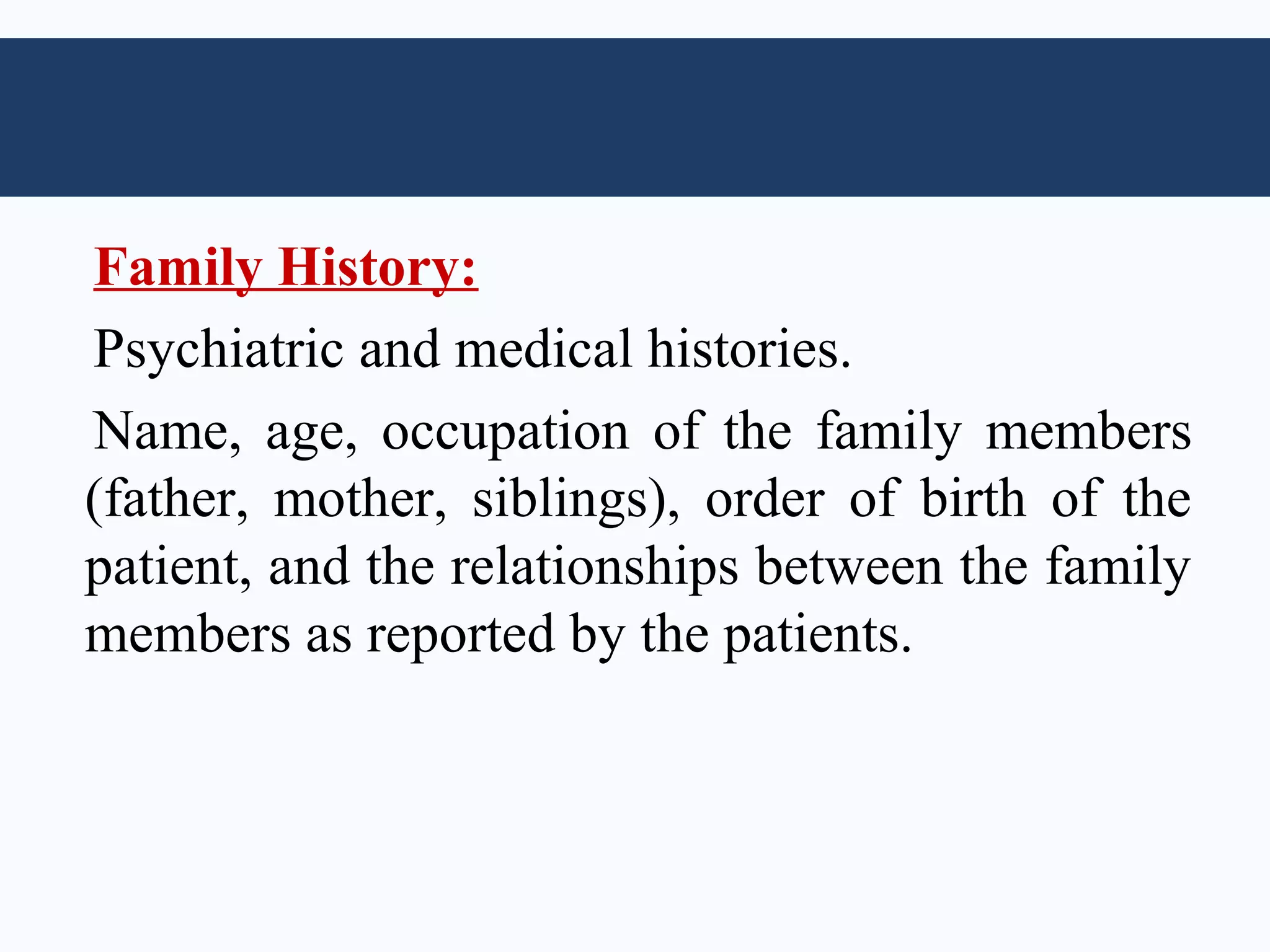
Family History:
Psychiatric and medical histories.
Name, age, occupation of the family members
(father, mother, siblings), order of birth of the
patient, and the relationships between the family
members as reported by the patients.
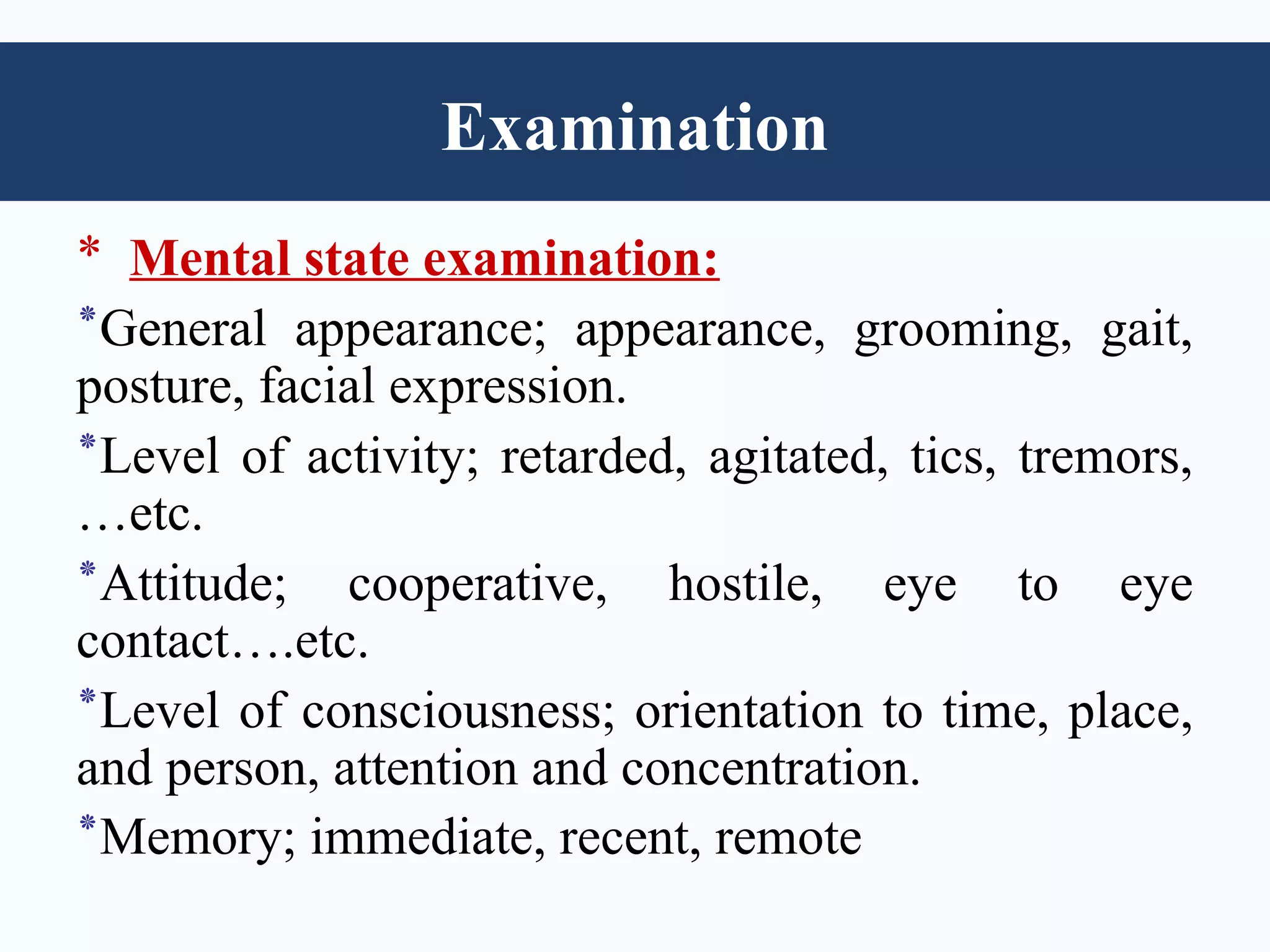
Examination
* Mental state examination:
‫٭‬General appearance; appearance, grooming, gait,
posture, facial expression.
‫٭‬Level of activity; retarded, agitated, tics, tremors,
…etc.
‫٭‬Attitude; cooperative, hostile, eye to eye
contact….etc.
‫٭‬Level of consciousness; orientation to time, place,
and person, attention and concentration.
‫٭‬Memory; immediate, recent, remote
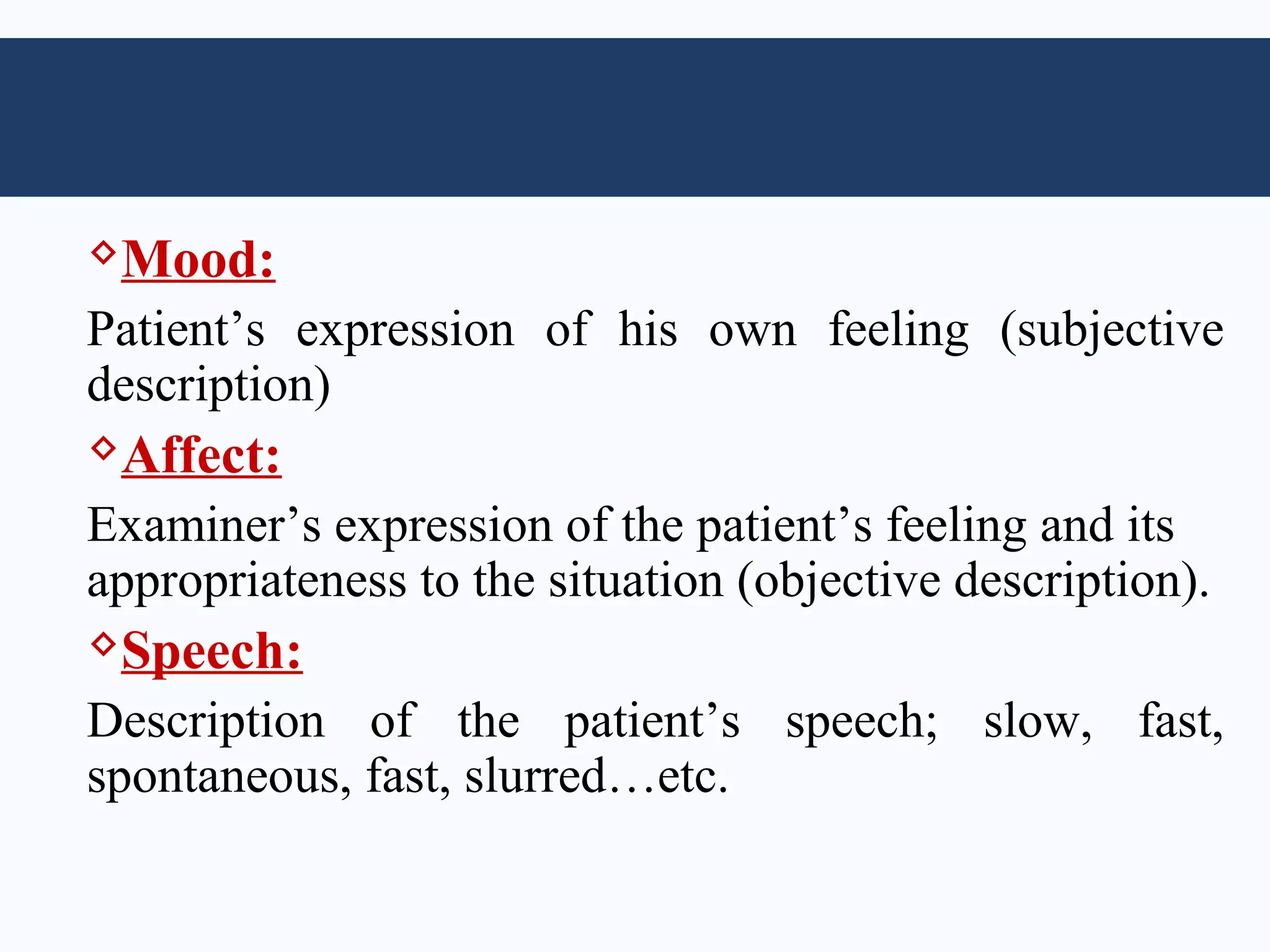
Mood:

Patient’s expression of his own feeling (subjective
description)
Affect:

Examiner’s expression of the patient’s feeling and its
appropriateness to the situation (objective description).
Speech:

Description of the patient’s speech; slow, fast,
spontaneous, fast, slurred…etc.
* Thought Examination:
*Form; off pointing, thought block, tangential,
circumstantial, loose association, neologism,
incoherence.
*Stream; fast, pressure of thoughts, flights…etc.
*Content; delusions, obsessions, phobias…etc.
*Control; broadcasting, insertion, withdrawal,
reading.
*Abstraction and judgment.
   Perceptual Examination:
Illusions; misinterpretation of stimulus.
Hallucination; perception with No stimulus
Examine : type (visual, gastatory, olfactory, tactile or
auditory), timing, content, frequency and reaction of
the patient
    Insight; for illness, symptoms, need for
treatment and compliance.
Good luck

History taking

  • 1.
    Psychiatry History Taking and Examination By Soheir H. ElGhonemy Assistant Professor of Psychiatry, MD in Psychiatry, Arab Board in Psychiatry Member of International Society of Addiction Medicine (ISAM)
  • 2.
    The psychiatric historyis the chronological story of the patient’s life from birth to present Personal data: Name, age, sex, marital status, religion, address, occupation, education. n.b.; source of referral could be mentioned here if the patient can’t cooperate
  • 3.
    Complaint: In the patientsown words. Informant complaint; ( reliable informant)
  • 4.
    History of thepresent illness: Onset, duration of illness, Development of symptoms and relation of events, stressors, Change from previous level of functioning, medication taken with the reported response and compliance, Previous hospitalization and their duration and level of improvement.
  • 5.
    Past History: Includesboth psychiatric and medical ; neurological illnesses. Personal History: Developmental history ; prenatal, natal, postnatal. Childhood, Adolescence, Adulthood; work history, marital history, children, level of education, finance, military history…etc. Premorbid personality. Sexual History; sexual development, masturbation, sexual dysfunction.
  • 6.
    Family History: Psychiatric andmedical histories. Name, age, occupation of the family members (father, mother, siblings), order of birth of the patient, and the relationships between the family members as reported by the patients.
  • 7.
    Examination * Mental stateexamination: ‫٭‬General appearance; appearance, grooming, gait, posture, facial expression. ‫٭‬Level of activity; retarded, agitated, tics, tremors, …etc. ‫٭‬Attitude; cooperative, hostile, eye to eye contact….etc. ‫٭‬Level of consciousness; orientation to time, place, and person, attention and concentration. ‫٭‬Memory; immediate, recent, remote
  • 8.
    Mood: Patient’s expression ofhis own feeling (subjective description) Affect: Examiner’s expression of the patient’s feeling and its appropriateness to the situation (objective description). Speech: Description of the patient’s speech; slow, fast, spontaneous, fast, slurred…etc.
  • 9.
    * Thought Examination: *Form;off pointing, thought block, tangential, circumstantial, loose association, neologism, incoherence. *Stream; fast, pressure of thoughts, flights…etc. *Content; delusions, obsessions, phobias…etc. *Control; broadcasting, insertion, withdrawal, reading. *Abstraction and judgment.
  • 10.
    Perceptual Examination: Illusions; misinterpretation of stimulus. Hallucination; perception with No stimulus Examine : type (visual, gastatory, olfactory, tactile or auditory), timing, content, frequency and reaction of the patient  Insight; for illness, symptoms, need for treatment and compliance.
  • 11.