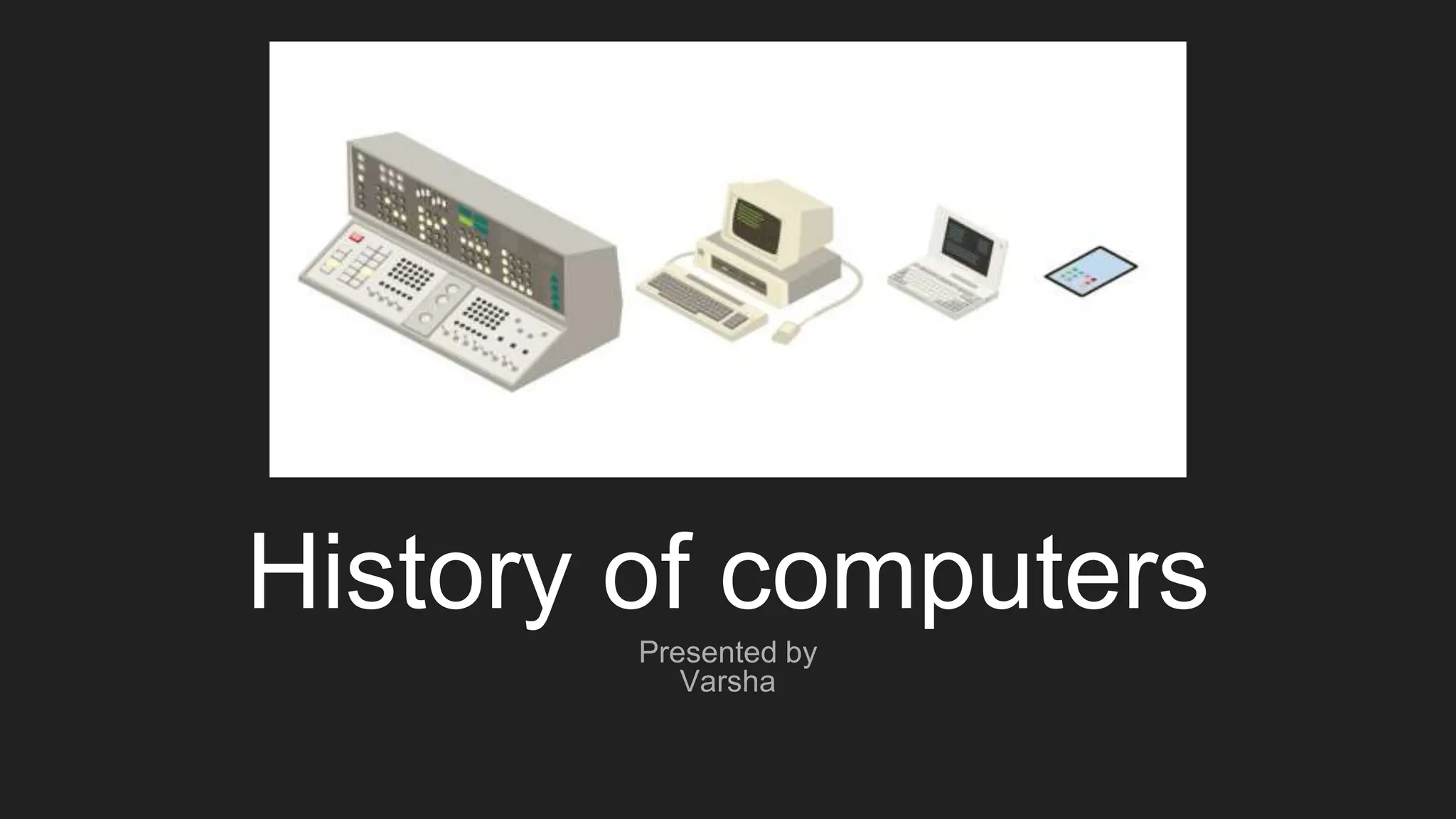
History of computers
Presented by
Varsha
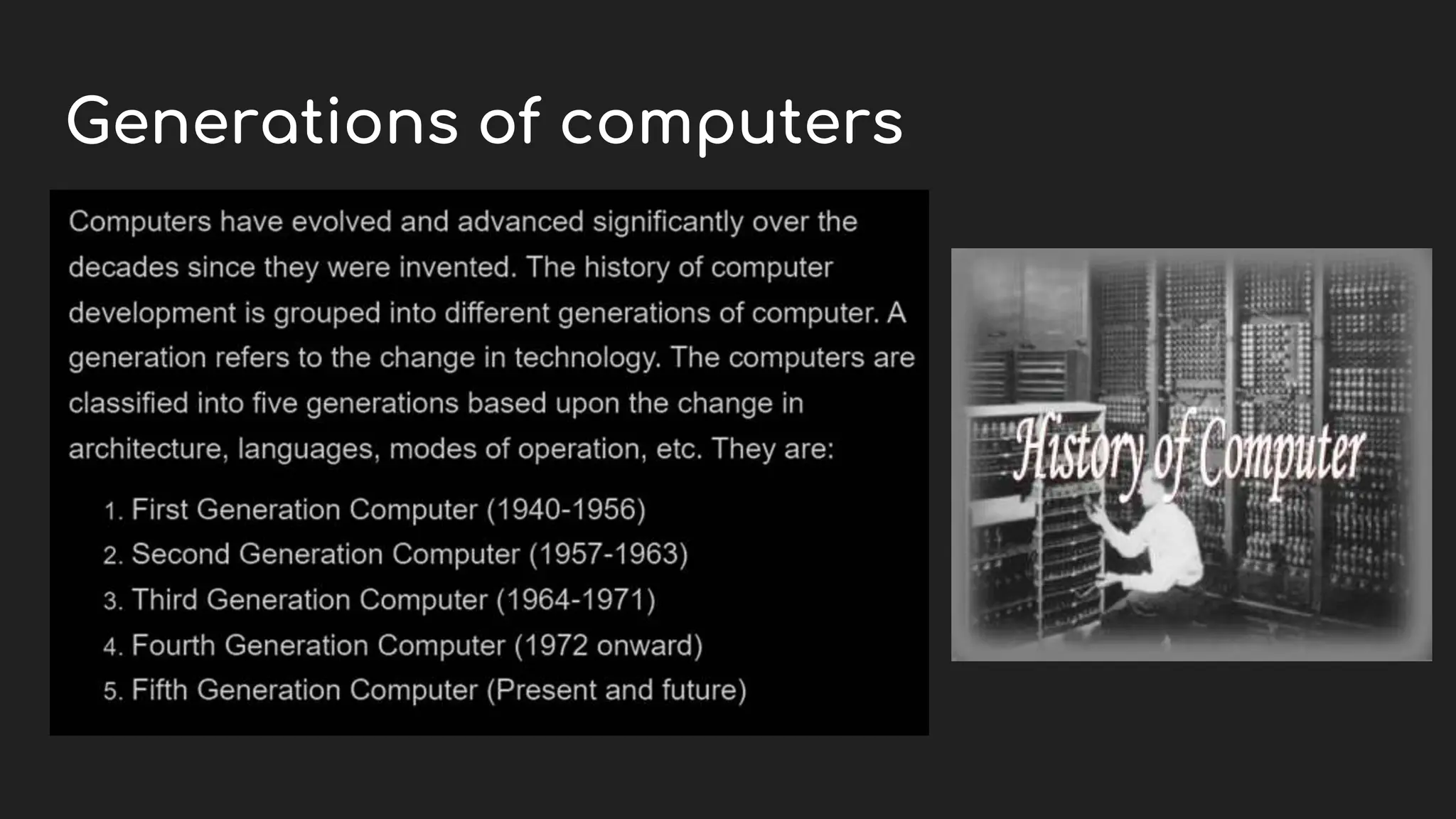
Generations of computers
History of computers:
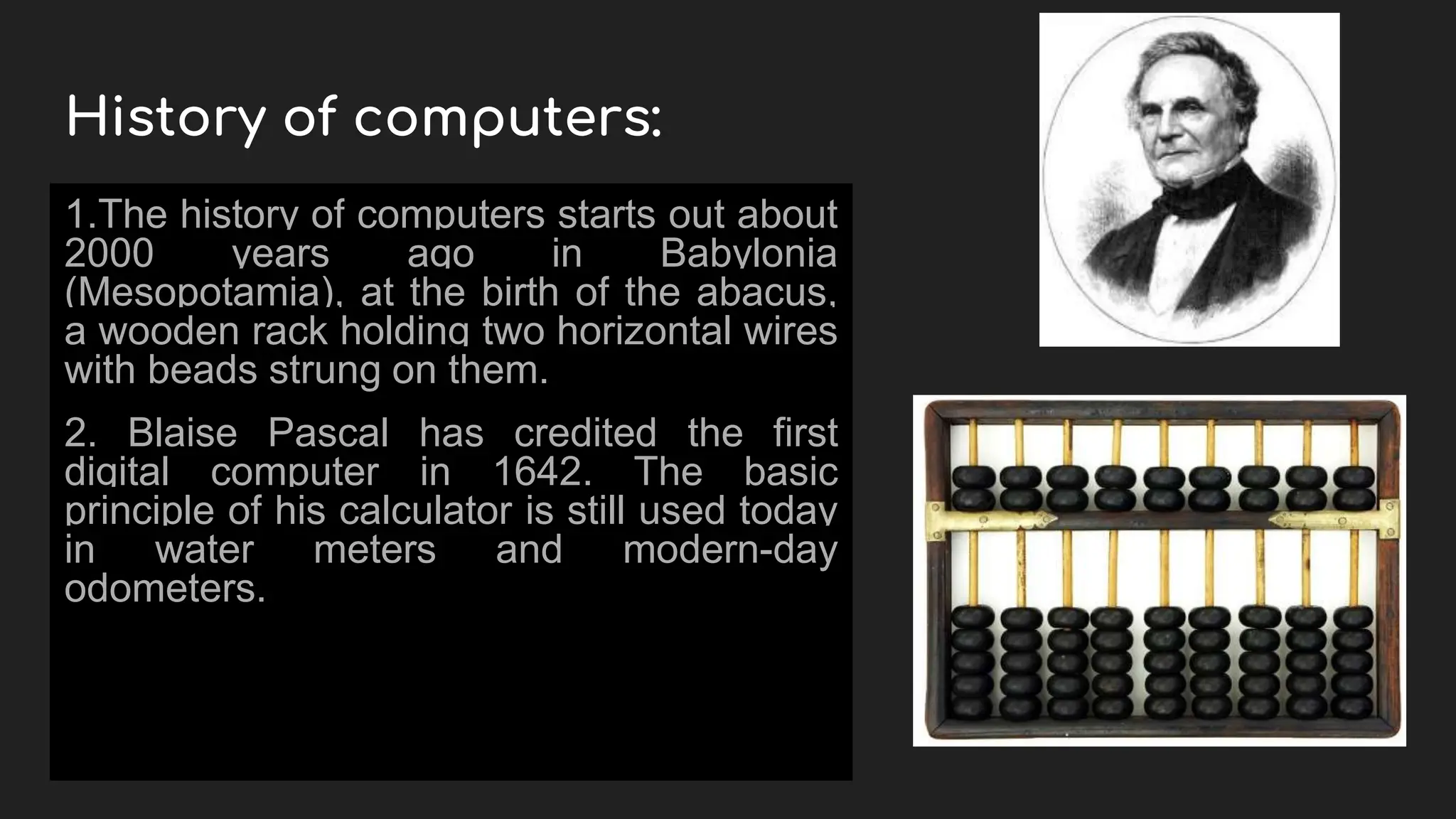
1.The history of computers starts out about
2000 years ago in Babylonia
(Mesopotamia), at the birth of the abacus,
a wooden rack holding two horizontal wires
with beads strung on them.
2. Blaise Pascal has credited the first
digital computer in 1642. The basic
principle of his calculator is still used today
in water meters and modern-day
odometers.
Punched Cards:
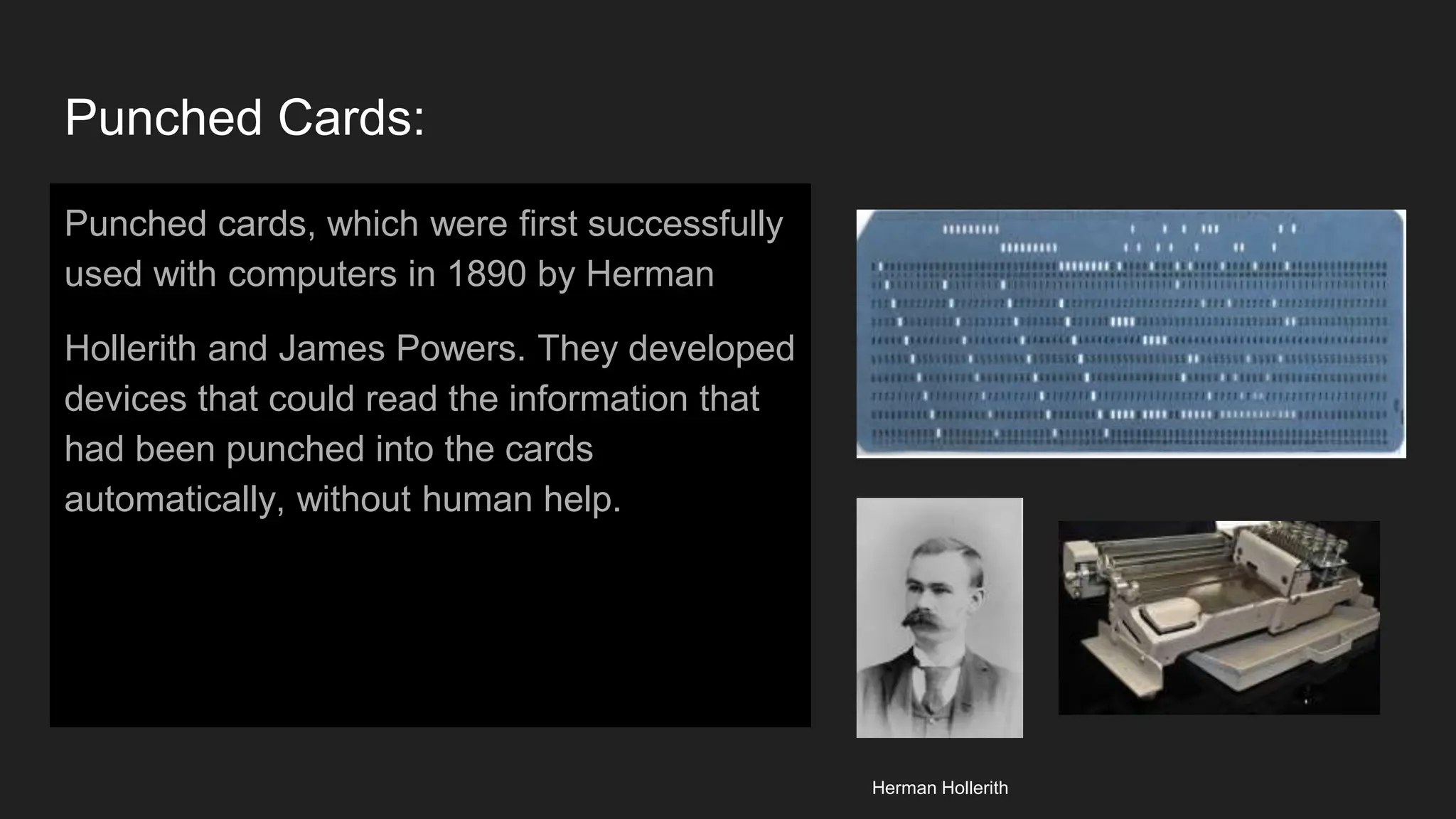
Punched cards, which were first successfully
used with computers in 1890 by Herman
Hollerith and James Powers. They developed
devices that could read the information that
had been punched into the cards
automatically, without human help.
Herman Hollerith
IBM Punched Cards:
Punch-card using computers created by
International Business Machines (IBM), Remington,
Burroughs. These computers used
electromechanical devices in which electrical
power provided mechanical motion -- like turning
the wheels of an adding machine. Such systems
included features to:
o feed in a specified number of cards automatically
o add, multiply, and sort
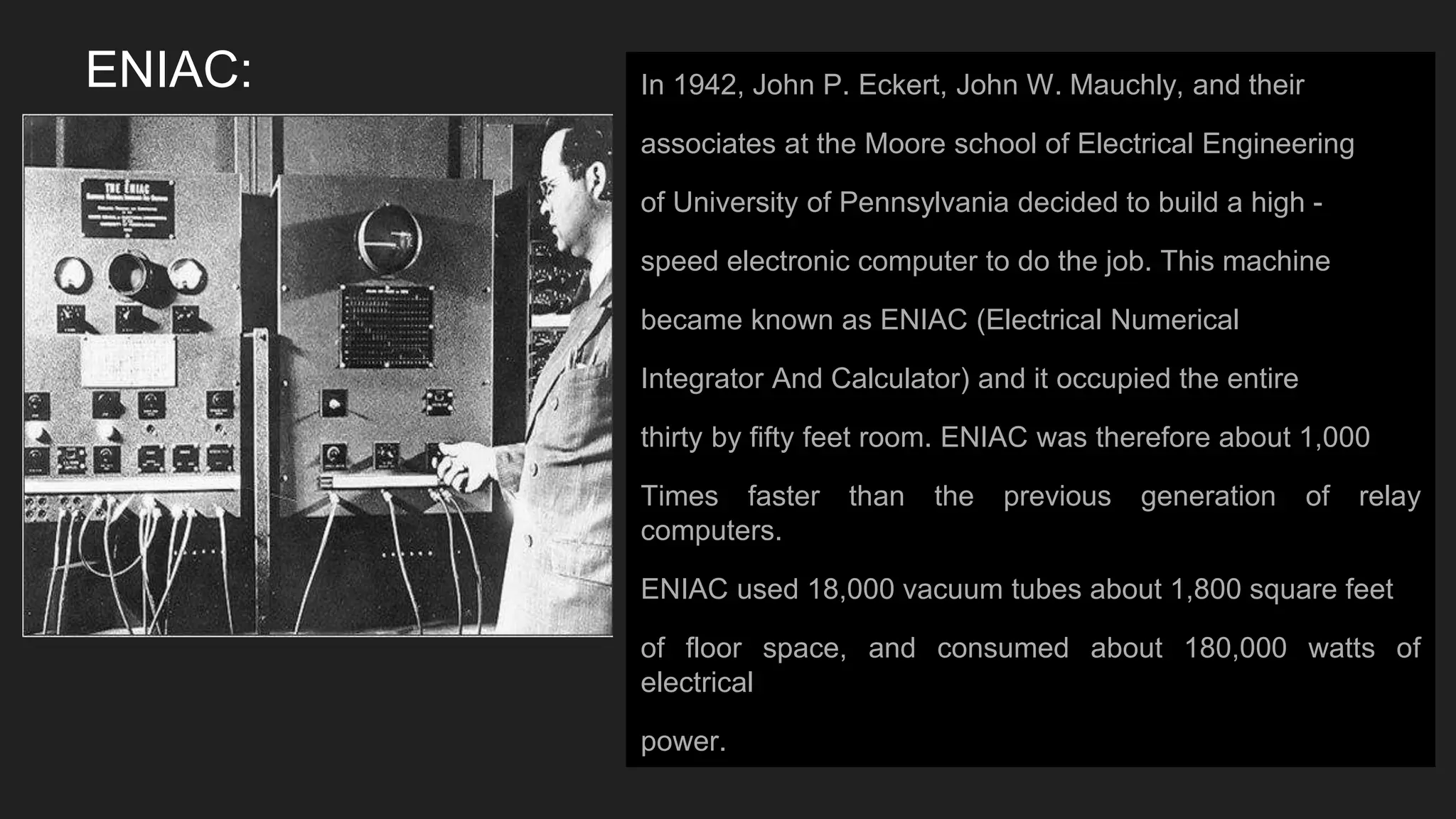
ENIAC: In 1942, John P. Eckert, John W. Mauchly, and their
associates at the Moore school of Electrical Engineering
of University of Pennsylvania decided to build a high -
speed electronic computer to do the job. This machine
became known as ENIAC (Electrical Numerical
Integrator And Calculator) and it occupied the entire
thirty by fifty feet room. ENIAC was therefore about 1,000
Times faster than the previous generation of relay
computers.
ENIAC used 18,000 vacuum tubes about 1,800 square feet
of floor space, and consumed about 180,000 watts of
electrical
power.
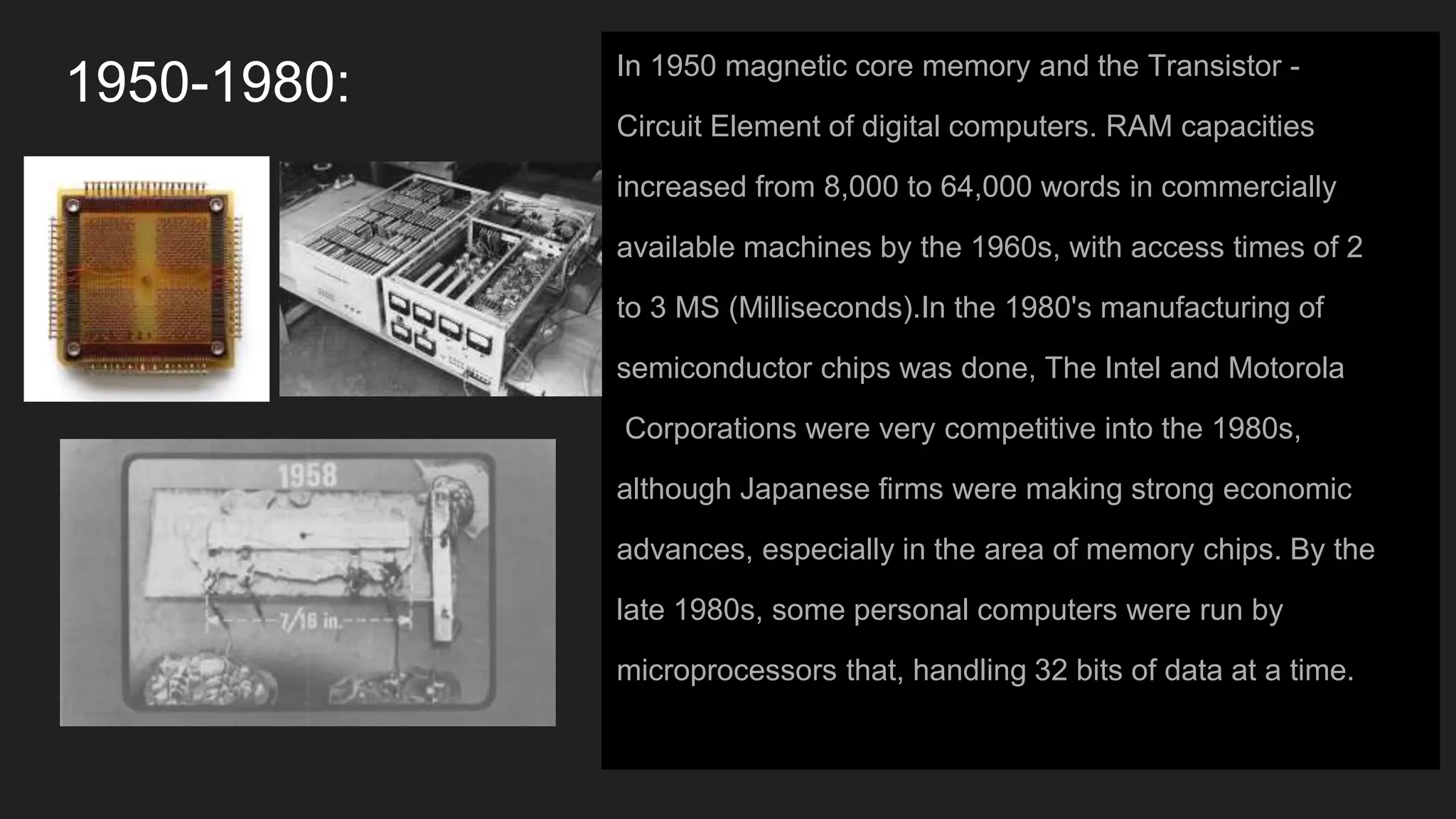
1950-1980: In 1950 magnetic core memory and the Transistor -
Circuit Element of digital computers. RAM capacities
increased from 8,000 to 64,000 words in commercially
available machines by the 1960s, with access times of 2
to 3 MS (Milliseconds).In the 1980's manufacturing of
semiconductor chips was done, The Intel and Motorola
Corporations were very competitive into the 1980s,
although Japanese firms were making strong economic
advances, especially in the area of memory chips. By the
late 1980s, some personal computers were run by
microprocessors that, handling 32 bits of data at a time.
history of computers.pptx

history of computers.pptx

  • 1.
  • 2.
  • 3.
    History of computers: 1.Thehistory of computers starts out about 2000 years ago in Babylonia (Mesopotamia), at the birth of the abacus, a wooden rack holding two horizontal wires with beads strung on them. 2. Blaise Pascal has credited the first digital computer in 1642. The basic principle of his calculator is still used today in water meters and modern-day odometers.
  • 4.
    Punched Cards: Punched cards,which were first successfully used with computers in 1890 by Herman Hollerith and James Powers. They developed devices that could read the information that had been punched into the cards automatically, without human help. Herman Hollerith
  • 5.
    IBM Punched Cards: Punch-cardusing computers created by International Business Machines (IBM), Remington, Burroughs. These computers used electromechanical devices in which electrical power provided mechanical motion -- like turning the wheels of an adding machine. Such systems included features to: o feed in a specified number of cards automatically o add, multiply, and sort
  • 6.
    ENIAC: In 1942,John P. Eckert, John W. Mauchly, and their associates at the Moore school of Electrical Engineering of University of Pennsylvania decided to build a high - speed electronic computer to do the job. This machine became known as ENIAC (Electrical Numerical Integrator And Calculator) and it occupied the entire thirty by fifty feet room. ENIAC was therefore about 1,000 Times faster than the previous generation of relay computers. ENIAC used 18,000 vacuum tubes about 1,800 square feet of floor space, and consumed about 180,000 watts of electrical power.
  • 7.
    1950-1980: In 1950magnetic core memory and the Transistor - Circuit Element of digital computers. RAM capacities increased from 8,000 to 64,000 words in commercially available machines by the 1960s, with access times of 2 to 3 MS (Milliseconds).In the 1980's manufacturing of semiconductor chips was done, The Intel and Motorola Corporations were very competitive into the 1980s, although Japanese firms were making strong economic advances, especially in the area of memory chips. By the late 1980s, some personal computers were run by microprocessors that, handling 32 bits of data at a time.