Downloaded 84 times

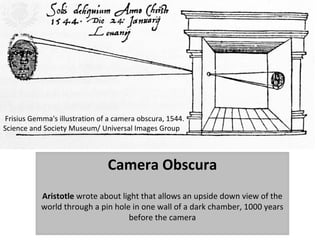
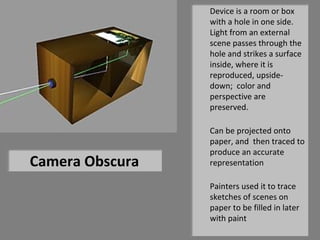
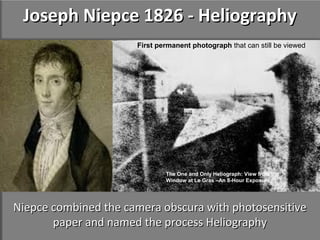

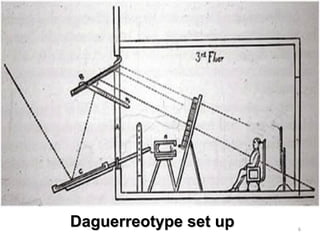

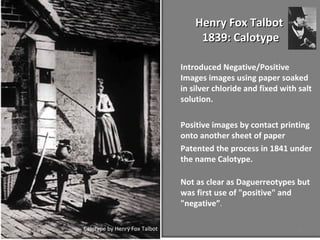
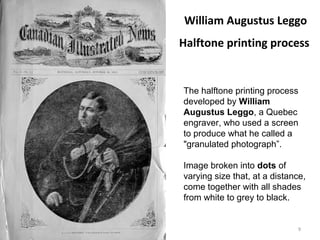

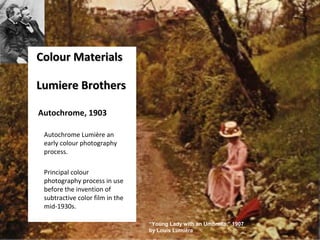

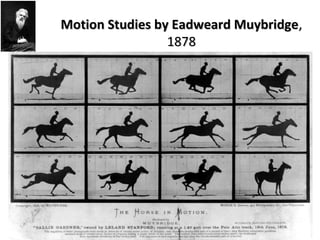
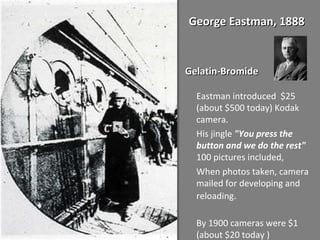


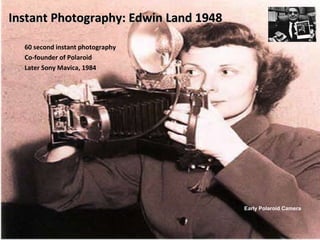
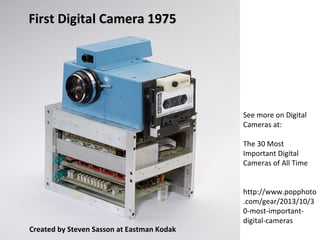
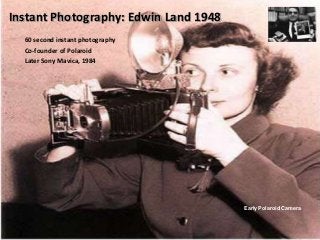
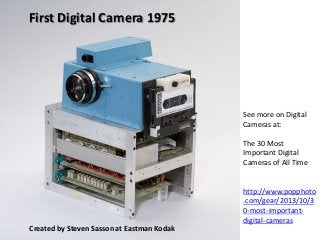

The document summarizes the history of photography from its origins using the camera obscura to trace scenes, through early experiments and developments that led to the first permanent photograph by Niepce in 1826. It then covers major innovations like Daguerre's daguerreotype process in 1839, Talbot's invention of the negative-positive process with calotypes, Archer's wet collodion process that improved resolution, and Brady's use of wet collodion in Civil War photography. Later developments discussed include halftone printing techniques, early color photography methods, motion picture film, gelatin dry plates, instant photography, and the digital camera.


