By:
• Adrianna G
• Kamila D
• Adeola A
• Sharon E
m
• Who?
• Why?
• Relevance?
m
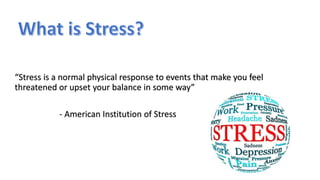
“Stress is a normal physical response to events that make you feel
threatened or upset your balance in some way”
- American Institution of Stress
M
• Acute
• Episodic
• Chronic
m
• Most common type of stress
• Associated with everyday life
• Comes from demands and pressures
M
• Occurs when one takes on too many tasks
• Struggle to deal with pressure
• One can feel overworked
• Can be health damaging
m
• Response to emotional difficulties
• Suffered for prolonged period
• Individual perceives that they have no control
• Involves Endocrine system response
• Cause major damage to our health
• Change our mood and lowers productivity
• Destroy relationships and quality of life
• Exposure to new people
• Being away from home
• Great academic demands
• Too many responsibilities
• Exams
• Preparing for life after graduation
• College money
• Health
• Family arguments
• Relationship difficulties
• Moving to a new place
m
• Response is a way of protecting us
• Helps in emergency situations
• Helps to rise and meet challenges
Perceived
Threat
Behavioural
Response
Fight
Flight
Freeze
• Fight response
• One is heated and overly emotional
• Unable to stay still
• Feelings of anger or rage
• Flight response – withdrawn/depressed
• Anxiety and shallow breathing
• Running away from danger
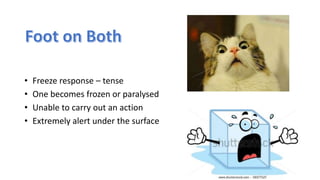
• Freeze response – tense
• One becomes frozen or paralysed
• Unable to carry out an action
• Extremely alert under the surface
“It is a feeling of worry,
nervousness, or unease about
something with an uncertain
outcome”
- Oxford Dictionary
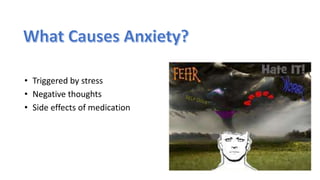
• Triggered by stress
• Negative thoughts
• Side effects of medication
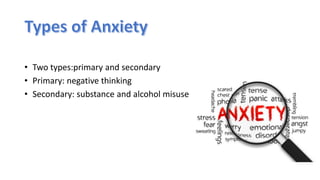
• Two types:primary and secondary
• Primary: negative thinking
• Secondary: substance and alcohol misuse
• Most common mental health
problems in Europe
• Estimated that 1 in 9 individuals
will suffer
• Few will receive treatment
• Negative self labelling
• Mind reading
• Excessive need for approval
• Catastrophizing
Able to jump to the
worst conclusion in a
single bound!
ANXIETY GIRL!
• Causes mental illnesses
• Phobia e.g. OCD and Eating
disorders e.g. Bulimia
• Can be an obstacle to self-
change
• What is cognitive behaviour
• It is highly effective
• Supported by mediational strategies
• Sufferers achieve greater confidence
• Very effective in treating anxiety disorders
• Completed in short period of time
• Changes behaviour and thinking of sufferer
• Sufferer needs to commit to process
• Not suitable for complex mental illnesses
• Not a talking therapy
m
• Everyone responds and deals differently.
• No “one size fits all” solution
• Four A’s of stress management
m
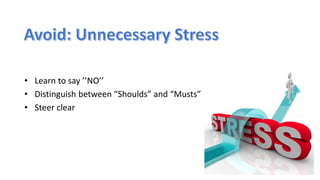
• Learn to say ’’NO’’
• Distinguish between “Shoulds” and “Musts”
• Steer clear
M
• Can’t avoid? Alter
• Be assertive
• Don’t bottle feelings
• Compromise
m
• Can’t change stressor? Change yourself
• Focus on positives in your life
• Always look at the big picture
m
• There will always be stressors
• Learn to accept the inevitable
• Opportunity for learning or personal growth
• Accept that no one is perfect
m
m
m
• Releasing endorphins
• Natural painkiller
• Improves study performance
m
• Reduce caffeine and sugar intake
• Reduce alcohol and nicotine intake
• Eat nutritious meals
m
• Can reduce the perception of stress
• Can decrease levels of cortisol
• Scented candles, essential oils, bath salts
m
m
Stress Presentation
Stress Presentation

Stress Presentation

  • 1.
    By: • Adrianna G •Kamila D • Adeola A • Sharon E
  • 2.
  • 3.
    m “Stress is anormal physical response to events that make you feel threatened or upset your balance in some way” - American Institution of Stress
  • 4.
  • 5.
    m • Most commontype of stress • Associated with everyday life • Comes from demands and pressures
  • 6.
    M • Occurs whenone takes on too many tasks • Struggle to deal with pressure • One can feel overworked • Can be health damaging
  • 7.
    m • Response toemotional difficulties • Suffered for prolonged period • Individual perceives that they have no control • Involves Endocrine system response
  • 9.
    • Cause majordamage to our health • Change our mood and lowers productivity • Destroy relationships and quality of life
  • 12.
    • Exposure tonew people • Being away from home • Great academic demands • Too many responsibilities
  • 13.
    • Exams • Preparingfor life after graduation • College money
  • 16.
    • Health • Familyarguments • Relationship difficulties • Moving to a new place
  • 19.
    m • Response isa way of protecting us • Helps in emergency situations • Helps to rise and meet challenges
  • 20.
  • 21.
    • Fight response •One is heated and overly emotional • Unable to stay still • Feelings of anger or rage
  • 22.
    • Flight response– withdrawn/depressed • Anxiety and shallow breathing • Running away from danger
  • 23.
    • Freeze response– tense • One becomes frozen or paralysed • Unable to carry out an action • Extremely alert under the surface
  • 25.
    “It is afeeling of worry, nervousness, or unease about something with an uncertain outcome” - Oxford Dictionary
  • 26.
    • Triggered bystress • Negative thoughts • Side effects of medication
  • 27.
    • Two types:primaryand secondary • Primary: negative thinking • Secondary: substance and alcohol misuse
  • 28.
    • Most commonmental health problems in Europe • Estimated that 1 in 9 individuals will suffer • Few will receive treatment
  • 29.
    • Negative selflabelling • Mind reading • Excessive need for approval • Catastrophizing Able to jump to the worst conclusion in a single bound! ANXIETY GIRL!
  • 30.
    • Causes mentalillnesses • Phobia e.g. OCD and Eating disorders e.g. Bulimia • Can be an obstacle to self- change
  • 31.
    • What iscognitive behaviour • It is highly effective • Supported by mediational strategies • Sufferers achieve greater confidence
  • 32.
    • Very effectivein treating anxiety disorders • Completed in short period of time • Changes behaviour and thinking of sufferer
  • 33.
    • Sufferer needsto commit to process • Not suitable for complex mental illnesses • Not a talking therapy
  • 34.
    m • Everyone respondsand deals differently. • No “one size fits all” solution • Four A’s of stress management
  • 35.
    m • Learn tosay ’’NO’’ • Distinguish between “Shoulds” and “Musts” • Steer clear
  • 36.
    M • Can’t avoid?Alter • Be assertive • Don’t bottle feelings • Compromise
  • 37.
    m • Can’t changestressor? Change yourself • Focus on positives in your life • Always look at the big picture
  • 38.
    m • There willalways be stressors • Learn to accept the inevitable • Opportunity for learning or personal growth • Accept that no one is perfect
  • 39.
  • 40.
  • 41.
    m • Releasing endorphins •Natural painkiller • Improves study performance
  • 42.
    m • Reduce caffeineand sugar intake • Reduce alcohol and nicotine intake • Eat nutritious meals
  • 43.
    m • Can reducethe perception of stress • Can decrease levels of cortisol • Scented candles, essential oils, bath salts
  • 44.
  • 45.