Startup Hiring Like A Boss
(“How to Hire Great People!”)
Rev. 10/2/17
Agenda
1. Things To Know About Hiring
2. A Sample Hiring Process
3. Further Reading
4. Q&A
Things To Know
About Hiring
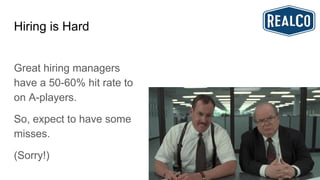
Hiring is Hard
Great hiring managers
have a 50-60% hit rate to
on A-players.
So, expect to have some
misses.
(Sorry!)
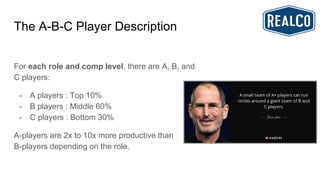
The A-B-C Player Description
For each role and comp level, there are A, B, and
C players:
- A players : Top 10%
- B players : Middle 60%
- C players : Bottom 30%
A-players are 2x to 10x more productive than
B-players depending on the role.
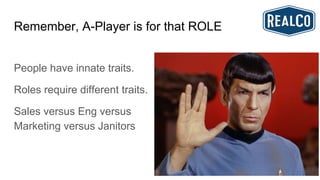
Remember, A-Player is for that ROLE
People have innate traits.
Roles require different traits.
Sales versus Eng versus
Marketing versus Janitors
Resumes Suck
Resumes are great at glossing
over bad things in employee
resumes.
More than half include LIES and
FALSEHOODS.
Too free form.
Predicting Success in a Role?
A-players have a track
record of success.
Predicting Success in a Role?
T.O.R.C. = Threat of Reference Check
A-players are excited to have you speak to their references.
B-players and C-players disappear.
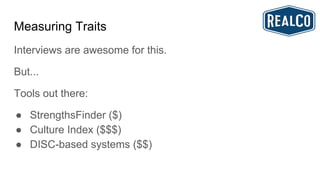
Measuring Traits
Interviews are awesome for this.
But...
Tools out there:
● StrengthsFinder ($)
● Culture Index ($$$)
● DISC-based systems ($$)
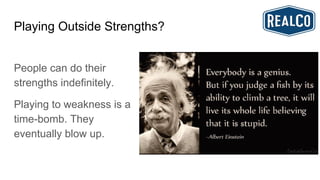
Playing Outside Strengths?
People can do their
strengths indefinitely.
Playing to weakness is a
time-bomb. They
eventually blow up.
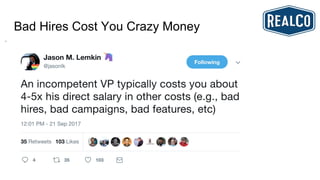
Bad Hires Cost You Crazy Money
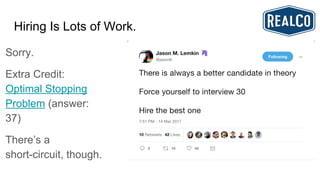
Hiring Is Lots of Work.
Sorry.
Extra Credit:
Optimal Stopping
Problem (answer:
37)
There’s a
short-circuit, though.
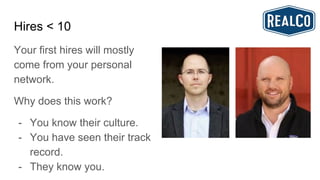
Hires < 10
Your first hires will mostly
come from your personal
network.
Why does this work?
- You know their culture.
- You have seen their track
record.
- They know you.
Hires < 10
Early startup hires are different than Big Company people.
Big Company has defined roles and it’s all figured out.
Startup hires have to be flexible. Thrive in chaos. Be OK with
change. Solve without complete data. Shoot, then aim.
Big Company people can work in Startups but usually don’t.
Low Risk-Reward Hack
Some hires are low Risk-Reward.
Example: Sales. Hire 3. 1 makes quota. Rest don’t.
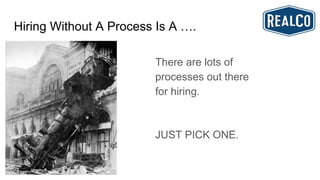
Hiring Without A Process Is A ….
There are lots of
processes out there
for hiring.
JUST PICK ONE.
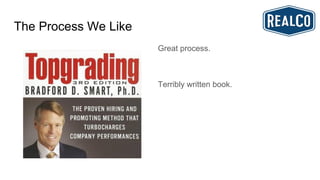
The Process We Like
Great process.
Terribly written book.
An Example
Process
(Customize 4 U!)
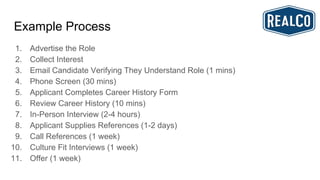
Example Process
1. Advertise the Role
2. Collect Interest
3. Email Candidate Verifying They Understand Role (1 mins)
4. Phone Screen (30 mins)
5. Applicant Completes Career History Form
6. Review Career History (10 mins)
7. In-Person Interview (2-4 hours)
8. Applicant Supplies References (1-2 days)
9. Call References (1 week)
10. Culture Fit Interviews (1 week)
11. Offer (1 week)
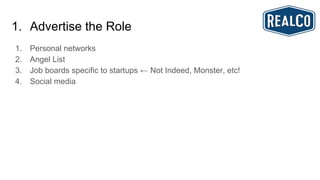
1. Advertise the Role
1. Personal networks
2. Angel List
3. Job boards specific to startups ← Not Indeed, Monster, etc!
4. Social media
2. Collect Interest
I like to have to have people email me their resumes.
Old School, baby.
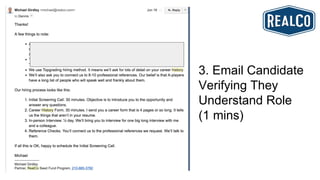
3. Email Candidate
Verifying They
Understand Role
(1 mins)
4. Phone Screen (30 mins)
Depending on how hard role is to fill, you may have to spend
this call recruiting/selling.
Get the candidate talking. Many will fail basic understanding
of role/not culture fit/etc.
Get them excited enough to complete your Career History
Form.
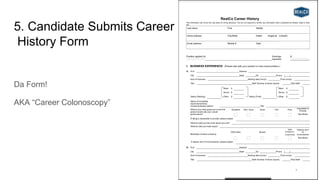
5. Candidate Submits Career
History Form
Da Form!
AKA “Career Colonoscopy”
6. Review Form -> Yes/No
1) Did they put in effort for the form?
2) What is the trajectory of their career?
3) Why did they leave their jobs?
4) Who were their bosses?
5) Why did they choose their jobs?
6) What did they accomplish?
7) How much were they paid?
Just win, baby.
7. In-person Interview (2-4 hours)
Two-person interview. One lead, one sidekick.
Lead asks most Q’s. Sidekick takes notes and observes.
Start from beginning to BUILD A NARRATIVE of the candidate’s
life.
WHY did they do things?
Do they have good judgment?
Who are key people in the narrative with insights into them?
8. Applicant Supplies References
From 7, give applicant names of references you learned during the
interview.
You tell them who you want to speak to.
Applicant opens door for you to speak with their references.
9. Applicant Supplies References
GREAT applicants have a trail of happy peers and bosses.
Split them up between Lead and Sidekick.
Call them.
Compare notes.
9.5 Write Memo of Learnings
Used for two reasons:
1) Gets Your Thinking Straight
2) Helps others for Culture Fit / Skill Fit interviews
10. Culture Fit / Skill Fit Interviews
Culture:
Do people want to work with this person? Do they have the same
values as we do?
Skill:
Can they do the job? Best way is to ask them to do the work ahead
of time to PROVE they can do it.
11. Offer
In writing.
Details everything.
They sign it.
You sign it.
YOU WIN.
(example offer letter here)
FURTHER
READING
Q&A TIME!

Hiring like a boss - RealCo

  • 1.
    Startup Hiring LikeA Boss (“How to Hire Great People!”) Rev. 10/2/17
  • 2.
    Agenda 1. Things ToKnow About Hiring 2. A Sample Hiring Process 3. Further Reading 4. Q&A
  • 3.
  • 4.
    Hiring is Hard Greathiring managers have a 50-60% hit rate to on A-players. So, expect to have some misses. (Sorry!)
  • 5.
    The A-B-C PlayerDescription For each role and comp level, there are A, B, and C players: - A players : Top 10% - B players : Middle 60% - C players : Bottom 30% A-players are 2x to 10x more productive than B-players depending on the role.
  • 6.
    Remember, A-Player isfor that ROLE People have innate traits. Roles require different traits. Sales versus Eng versus Marketing versus Janitors
  • 7.
    Resumes Suck Resumes aregreat at glossing over bad things in employee resumes. More than half include LIES and FALSEHOODS. Too free form.
  • 8.
    Predicting Success ina Role? A-players have a track record of success.
  • 9.
    Predicting Success ina Role? T.O.R.C. = Threat of Reference Check A-players are excited to have you speak to their references. B-players and C-players disappear.
  • 10.
    Measuring Traits Interviews areawesome for this. But... Tools out there: ● StrengthsFinder ($) ● Culture Index ($$$) ● DISC-based systems ($$)
  • 11.
    Playing Outside Strengths? Peoplecan do their strengths indefinitely. Playing to weakness is a time-bomb. They eventually blow up.
  • 12.
    Bad Hires CostYou Crazy Money
  • 13.
    Hiring Is Lotsof Work. Sorry. Extra Credit: Optimal Stopping Problem (answer: 37) There’s a short-circuit, though.
  • 14.
    Hires < 10 Yourfirst hires will mostly come from your personal network. Why does this work? - You know their culture. - You have seen their track record. - They know you.
  • 15.
    Hires < 10 Earlystartup hires are different than Big Company people. Big Company has defined roles and it’s all figured out. Startup hires have to be flexible. Thrive in chaos. Be OK with change. Solve without complete data. Shoot, then aim. Big Company people can work in Startups but usually don’t.
  • 16.
    Low Risk-Reward Hack Somehires are low Risk-Reward. Example: Sales. Hire 3. 1 makes quota. Rest don’t.
  • 17.
    Hiring Without AProcess Is A …. There are lots of processes out there for hiring. JUST PICK ONE.
  • 18.
    The Process WeLike Great process. Terribly written book.
  • 19.
  • 20.
    Example Process 1. Advertisethe Role 2. Collect Interest 3. Email Candidate Verifying They Understand Role (1 mins) 4. Phone Screen (30 mins) 5. Applicant Completes Career History Form 6. Review Career History (10 mins) 7. In-Person Interview (2-4 hours) 8. Applicant Supplies References (1-2 days) 9. Call References (1 week) 10. Culture Fit Interviews (1 week) 11. Offer (1 week)
  • 21.
    1. Advertise theRole 1. Personal networks 2. Angel List 3. Job boards specific to startups ← Not Indeed, Monster, etc! 4. Social media
  • 22.
    2. Collect Interest Ilike to have to have people email me their resumes. Old School, baby.
  • 23.
    3. Email Candidate VerifyingThey Understand Role (1 mins)
  • 24.
    4. Phone Screen(30 mins) Depending on how hard role is to fill, you may have to spend this call recruiting/selling. Get the candidate talking. Many will fail basic understanding of role/not culture fit/etc. Get them excited enough to complete your Career History Form.
  • 25.
    5. Candidate SubmitsCareer History Form Da Form! AKA “Career Colonoscopy”
  • 26.
    6. Review Form-> Yes/No 1) Did they put in effort for the form? 2) What is the trajectory of their career? 3) Why did they leave their jobs? 4) Who were their bosses? 5) Why did they choose their jobs? 6) What did they accomplish? 7) How much were they paid? Just win, baby.
  • 27.
    7. In-person Interview(2-4 hours) Two-person interview. One lead, one sidekick. Lead asks most Q’s. Sidekick takes notes and observes. Start from beginning to BUILD A NARRATIVE of the candidate’s life. WHY did they do things? Do they have good judgment? Who are key people in the narrative with insights into them?
  • 28.
    8. Applicant SuppliesReferences From 7, give applicant names of references you learned during the interview. You tell them who you want to speak to. Applicant opens door for you to speak with their references.
  • 29.
    9. Applicant SuppliesReferences GREAT applicants have a trail of happy peers and bosses. Split them up between Lead and Sidekick. Call them. Compare notes.
  • 30.
    9.5 Write Memoof Learnings Used for two reasons: 1) Gets Your Thinking Straight 2) Helps others for Culture Fit / Skill Fit interviews
  • 31.
    10. Culture Fit/ Skill Fit Interviews Culture: Do people want to work with this person? Do they have the same values as we do? Skill: Can they do the job? Best way is to ask them to do the work ahead of time to PROVE they can do it.
  • 32.
    11. Offer In writing. Detailseverything. They sign it. You sign it. YOU WIN. (example offer letter here)
  • 33.
  • 35.