Muscles of the Hip Joint
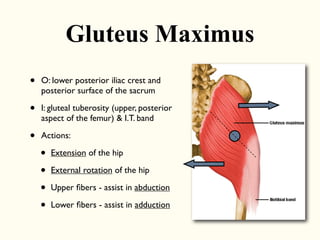
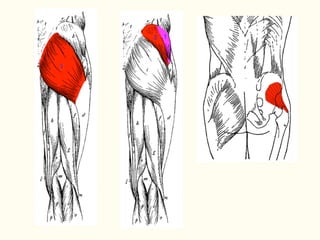
• O: lower posterior iliac crest and
posterior surface of the sacrum
• I: gluteal tuberosity (upper, posterior
aspect of the femur) & I.T. band
• Actions:
• Extension of the hip
• External rotation of the hip
• Upper fibers - assist in abduction
• Lower fibers - assist in adduction
Gluteus Maximus
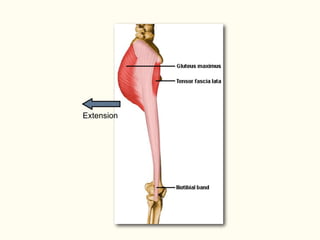
Extension
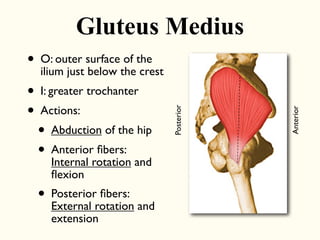
• O: outer surface of the
ilium just below the crest
• I: greater trochanter
• Actions:
• Abduction of the hip
• Anterior fibers:
Internal rotation and
flexion
• Posterior fibers:
External rotation and
extension
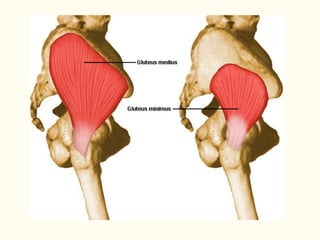
Gluteus Medius
Posterior
Anterior
• O: outer surface of the ilium
beneath the gluteus medius
• I: greater trochanter of the
femur
• Actions
• Abduction of the hip
• Internal rotation
• Flexion of the hip
Gluteus Minimus
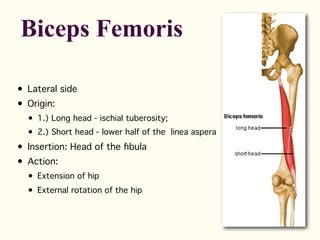
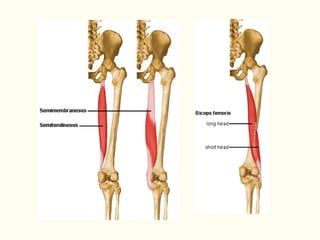
• Lateral side
• Origin:
• 1.) Long head - ischial tuberosity;
• 2.) Short head - lower half of the linea aspera
• Insertion: Head of the fibula
• Action:
• Extension of hip
• External rotation of the hip
Biceps Femoris
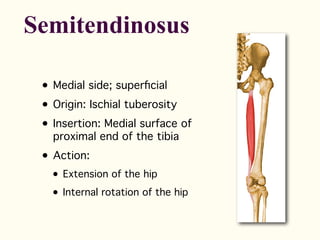
• Medial side; superficial
• Origin: Ischial tuberosity
• Insertion: Medial surface of
proximal end of the tibia
• Action:
• Extension of the hip
• Internal rotation of the hip
Semitendinosus
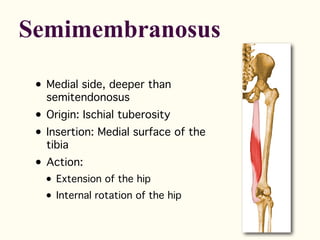
• Medial side, deeper than
semitendonosus
• Origin: Ischial tuberosity
• Insertion: Medial surface of the
tibia
• Action:
• Extension of the hip
• Internal rotation of the hip
Semimembranosus
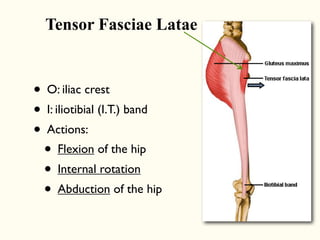
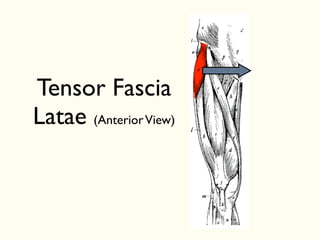
• O: iliac crest
• I: iliotibial (I.T.) band
• Actions:
• Flexion of the hip
• Internal rotation
• Abduction of the hip
Tensor Fasciae Latae
Tensor Fascia
Latae (AnteriorView)
• Origins:
• iliac fossa
• vertebral bodies of the last
thorasic and lumbar
vertebrae
• I: lesser trochanter of the
femur
• Actions:
• Flexion of the hip
• External rotation
Iliopsoas
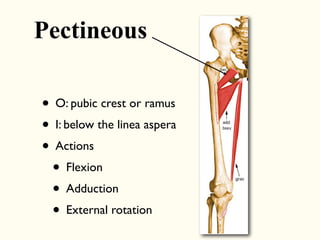
• O: pubic crest or ramus
• I: below the linea aspera
• Actions
• Flexion
• Adduction
• External rotation
Pectineous
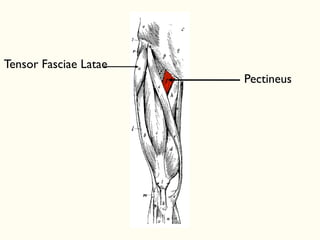
Tensor Fasciae Latae
Pectineus
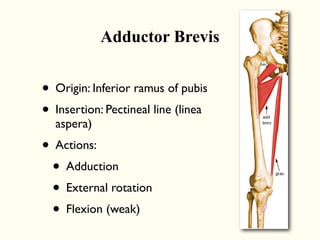
• Origin: Inferior ramus of pubis
• Insertion: Pectineal line (linea
aspera)
• Actions:
• Adduction
• External rotation
• Flexion (weak)
Adductor Brevis
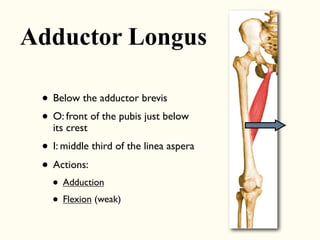
• Below the adductor brevis
• O: front of the pubis just below
its crest
• I: middle third of the linea aspera
• Actions:
• Adduction
• Flexion (weak)
Adductor Longus
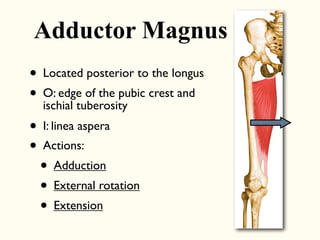
• Located posterior to the longus
• O: edge of the pubic crest and
ischial tuberosity
• I: linea aspera
• Actions:
• Adduction
• External rotation
• Extension
Adductor Magnus
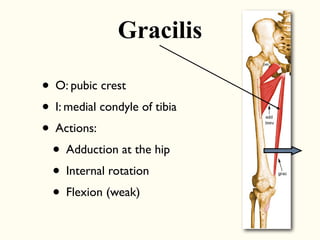
• O: pubic crest
• I: medial condyle of tibia
• Actions:
• Adduction at the hip
• Internal rotation
• Flexion (weak)
Gracilis
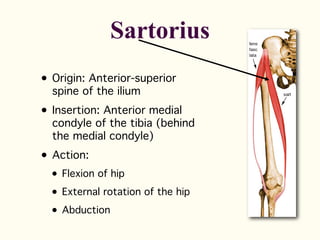
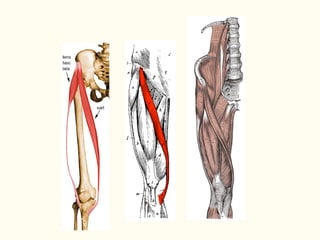
• Origin: Anterior-superior
spine of the ilium
• Insertion: Anterior medial
condyle of the tibia (behind
the medial condyle)
• Action:
• Flexion of hip
• External rotation of the hip
• Abduction
Sartorius
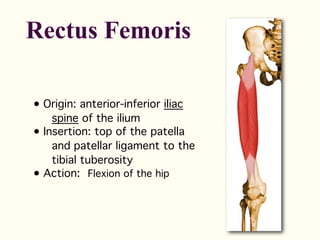
• Origin: anterior-inferior iliac
spine of the ilium
• Insertion: top of the patella
and patellar ligament to the
tibial tuberosity
• Action: Flexion of the hip
Rectus Femoris
Posterior Anterior
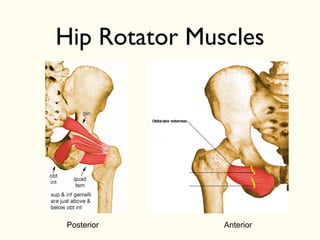
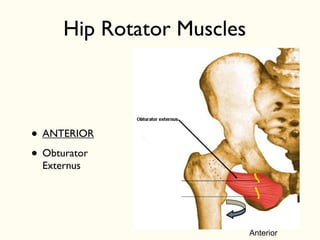
Hip Rotator Muscles
• ANTERIOR
• Obturator
Externus
Anterior
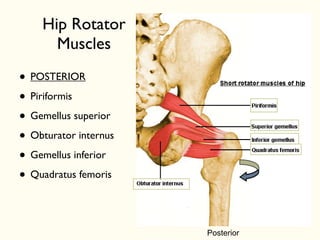
Hip Rotator Muscles
• POSTERIOR
• Piriformis
• Gemellus superior
• Obturator internus
• Gemellus inferior
• Quadratus femoris
Posterior
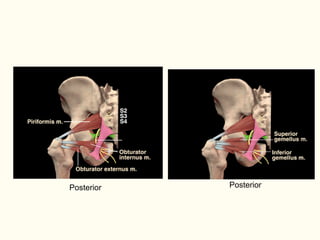
Hip Rotator
Muscles
Posterior Posterior
• Common action is External Rotation
• Powerful external rotation of the hip is
required to throw a baseball, swing a bat or
golf club.
• The sciatic nerve passes just inferior to the
piriformis therefore a tight piriformis muscle
my contribute to compression on the sciatic
nerve.
Six Hip Rotator Muscles

Hip-muscles.pdf BY : HARSHIT VERMA

  • 1.
    Muscles of theHip Joint
  • 2.
    • O: lowerposterior iliac crest and posterior surface of the sacrum • I: gluteal tuberosity (upper, posterior aspect of the femur) & I.T. band • Actions: • Extension of the hip • External rotation of the hip • Upper fibers - assist in abduction • Lower fibers - assist in adduction Gluteus Maximus
  • 3.
  • 4.
    • O: outersurface of the ilium just below the crest • I: greater trochanter • Actions: • Abduction of the hip • Anterior fibers: Internal rotation and flexion • Posterior fibers: External rotation and extension Gluteus Medius Posterior Anterior
  • 5.
    • O: outersurface of the ilium beneath the gluteus medius • I: greater trochanter of the femur • Actions • Abduction of the hip • Internal rotation • Flexion of the hip Gluteus Minimus
  • 9.
    • Lateral side •Origin: • 1.) Long head - ischial tuberosity; • 2.) Short head - lower half of the linea aspera • Insertion: Head of the fibula • Action: • Extension of hip • External rotation of the hip Biceps Femoris
  • 10.
    • Medial side;superficial • Origin: Ischial tuberosity • Insertion: Medial surface of proximal end of the tibia • Action: • Extension of the hip • Internal rotation of the hip Semitendinosus
  • 11.
    • Medial side,deeper than semitendonosus • Origin: Ischial tuberosity • Insertion: Medial surface of the tibia • Action: • Extension of the hip • Internal rotation of the hip Semimembranosus
  • 14.
    • O: iliaccrest • I: iliotibial (I.T.) band • Actions: • Flexion of the hip • Internal rotation • Abduction of the hip Tensor Fasciae Latae
  • 15.
  • 16.
    • Origins: • iliacfossa • vertebral bodies of the last thorasic and lumbar vertebrae • I: lesser trochanter of the femur • Actions: • Flexion of the hip • External rotation Iliopsoas
  • 17.
    • O: pubiccrest or ramus • I: below the linea aspera • Actions • Flexion • Adduction • External rotation Pectineous
  • 18.
  • 19.
    • Origin: Inferiorramus of pubis • Insertion: Pectineal line (linea aspera) • Actions: • Adduction • External rotation • Flexion (weak) Adductor Brevis
  • 21.
    • Below theadductor brevis • O: front of the pubis just below its crest • I: middle third of the linea aspera • Actions: • Adduction • Flexion (weak) Adductor Longus
  • 22.
    • Located posteriorto the longus • O: edge of the pubic crest and ischial tuberosity • I: linea aspera • Actions: • Adduction • External rotation • Extension Adductor Magnus
  • 23.
    • O: pubiccrest • I: medial condyle of tibia • Actions: • Adduction at the hip • Internal rotation • Flexion (weak) Gracilis
  • 24.
    • Origin: Anterior-superior spineof the ilium • Insertion: Anterior medial condyle of the tibia (behind the medial condyle) • Action: • Flexion of hip • External rotation of the hip • Abduction Sartorius
  • 26.
    • Origin: anterior-inferioriliac spine of the ilium • Insertion: top of the patella and patellar ligament to the tibial tuberosity • Action: Flexion of the hip Rectus Femoris
  • 27.
  • 28.
  • 29.
    • POSTERIOR • Piriformis •Gemellus superior • Obturator internus • Gemellus inferior • Quadratus femoris Posterior Hip Rotator Muscles
  • 30.
  • 31.
    • Common actionis External Rotation • Powerful external rotation of the hip is required to throw a baseball, swing a bat or golf club. • The sciatic nerve passes just inferior to the piriformis therefore a tight piriformis muscle my contribute to compression on the sciatic nerve. Six Hip Rotator Muscles