Presented by
K.PRAVEEN
 Introduction of high voltage transformers.
 Types of testing of transformers .
 Explanation of each type .
 Advantages of HV testing of transformer.
 Disadvantages of HV testing of transformer.
 Conclusion.
 High voltage transformers convert voltages
from one level or phase configuration to
another ,usually from higher to lower.
 They can include features for electrical isolation
power distribution ,and control and
instrumentation application.
 These transformers usually depend on the
principle of magnetic induction between coils
to convert voltage and current levels.
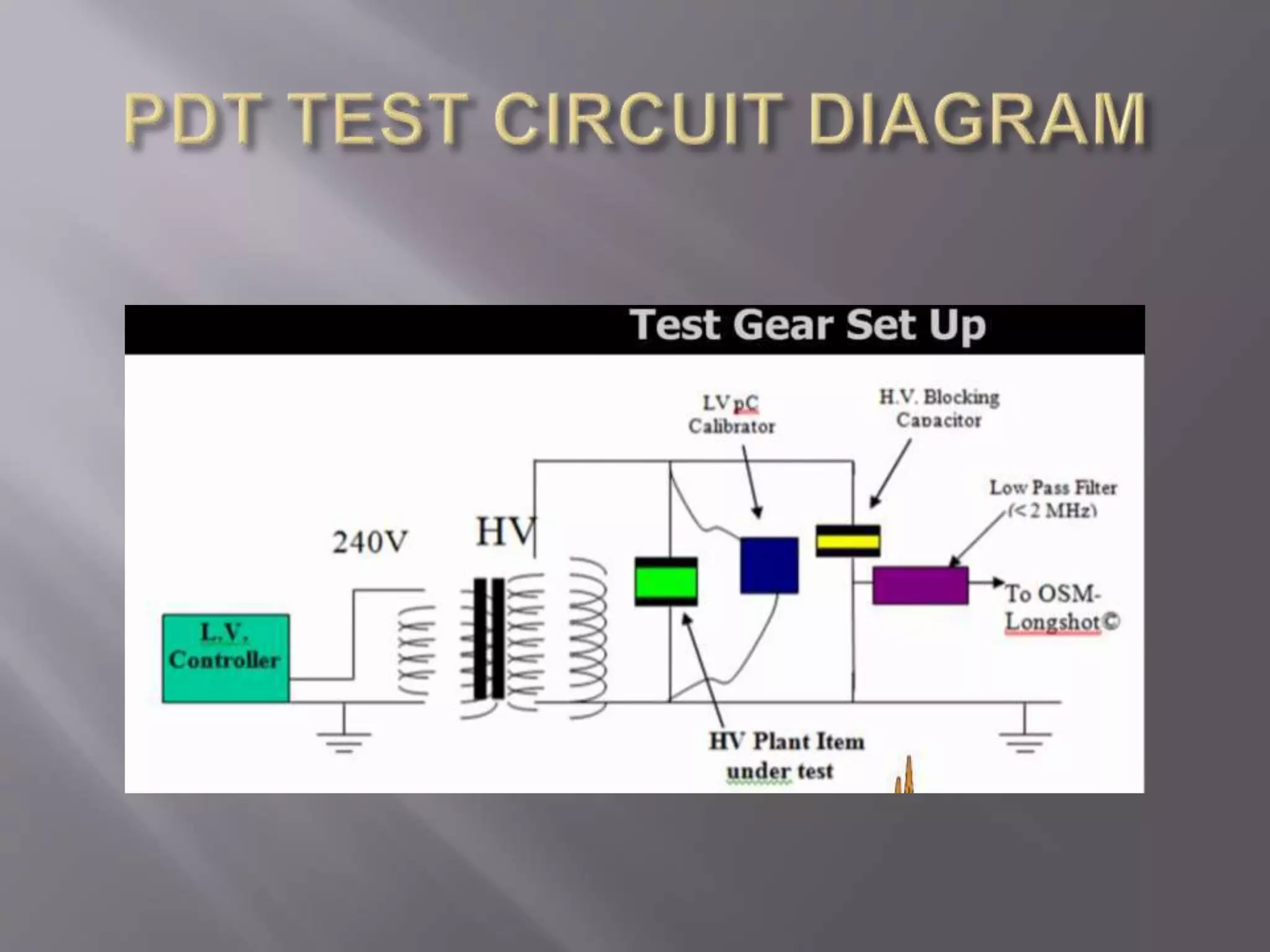
 Partial discharge test.
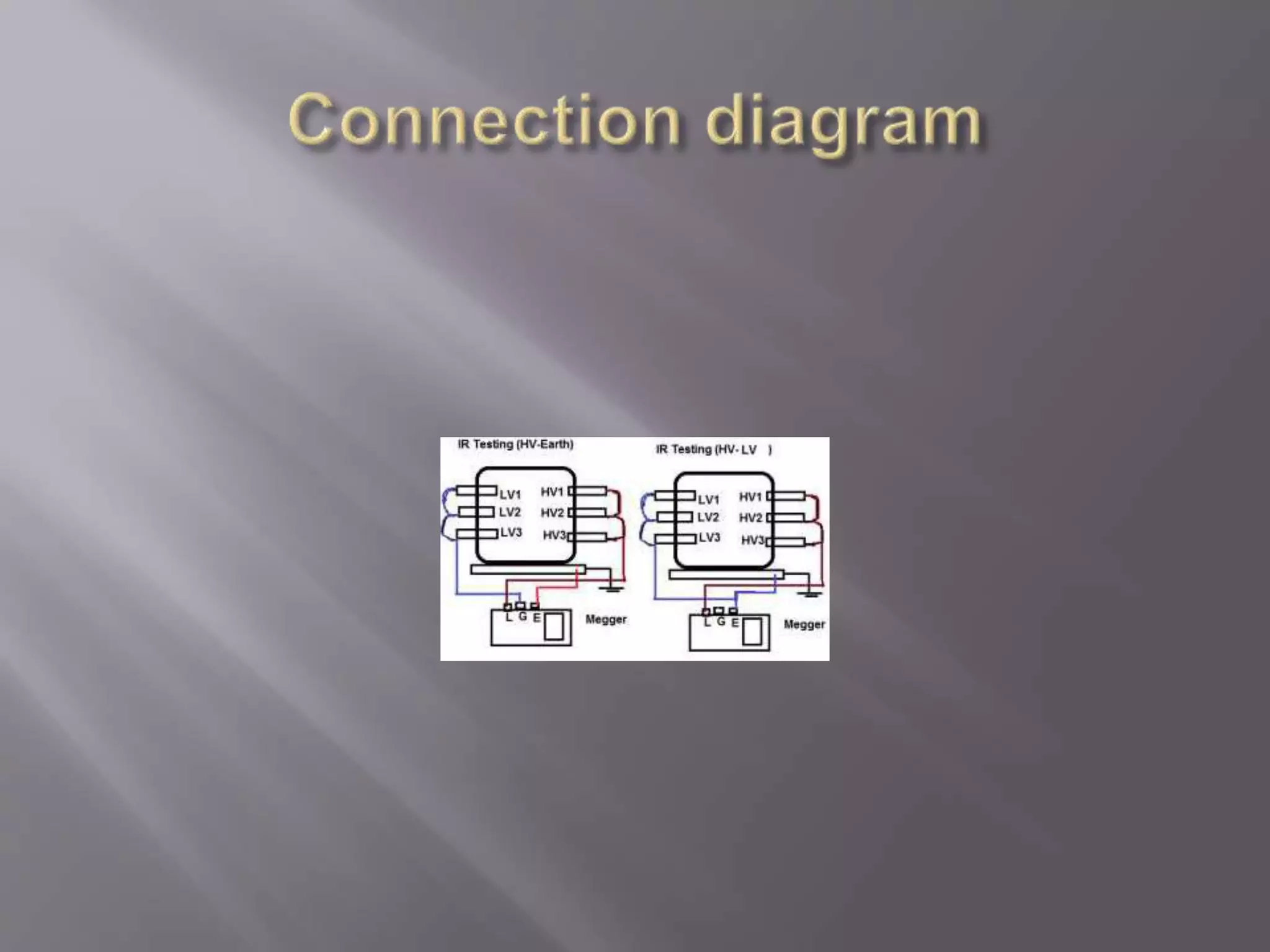
 Insulation resistance test.
 Routine test.
 Partial discharge is a small localised dielectric
breakdown of an electrical insulation system
under high voltage stress.
 Each discrete partial discharge is the result of
an electrical breakdown of an air pocket within
the insulation.
 These discharges erode insulation and
eventually result in insulation failure.
 Insulation ages and deteriorates because of
moisture, dust and electrostatic stress .
Insulation should be monitored continually to
avoid sudden failure of equipment.
 An insulation resistance test detects insulation
quality within the transformer.
 It is mainly for confirming operational
performance of individual unit .
 All transformers are subjected to following routine
tests:
1. Insulation resistance test.
2. Winding resistance test.
3. Turns/voltage ratio test.
4. Open and short circuit test.
5. Continuity test.
6. Partial discharge test.
7. High voltage test.
 Pure conductivity by IR value test.
 Removing of discrete waveform by PDT.
 Terminals connected correctly by transformers
turns ratio test.
 Units measured correctly and manufacturing
defect check by routine test.
 Insufficient oil level .
 Faulty operation of tap changer switch.
 Lack of installation checks.
 Prolonged over loading.
 By conducting this HV test gives the solution of
the most adjustment transformer in respect of
parameters and prices.
 These are main advantages of safety, higher
efficiency , lower cost , savings of energy,
avoiding of failures , failure detection , quality
assurance.

High voltage testing of electrical transformer

  • 1.
  • 2.
     Introduction ofhigh voltage transformers.  Types of testing of transformers .  Explanation of each type .  Advantages of HV testing of transformer.  Disadvantages of HV testing of transformer.  Conclusion.
  • 3.
     High voltagetransformers convert voltages from one level or phase configuration to another ,usually from higher to lower.  They can include features for electrical isolation power distribution ,and control and instrumentation application.  These transformers usually depend on the principle of magnetic induction between coils to convert voltage and current levels.
  • 4.
     Partial dischargetest.  Insulation resistance test.  Routine test.
  • 5.
     Partial dischargeis a small localised dielectric breakdown of an electrical insulation system under high voltage stress.  Each discrete partial discharge is the result of an electrical breakdown of an air pocket within the insulation.  These discharges erode insulation and eventually result in insulation failure.
  • 7.
     Insulation agesand deteriorates because of moisture, dust and electrostatic stress . Insulation should be monitored continually to avoid sudden failure of equipment.  An insulation resistance test detects insulation quality within the transformer.
  • 9.
     It ismainly for confirming operational performance of individual unit .  All transformers are subjected to following routine tests: 1. Insulation resistance test. 2. Winding resistance test. 3. Turns/voltage ratio test. 4. Open and short circuit test. 5. Continuity test. 6. Partial discharge test. 7. High voltage test.
  • 10.
     Pure conductivityby IR value test.  Removing of discrete waveform by PDT.  Terminals connected correctly by transformers turns ratio test.  Units measured correctly and manufacturing defect check by routine test.
  • 11.
     Insufficient oillevel .  Faulty operation of tap changer switch.  Lack of installation checks.  Prolonged over loading.
  • 12.
     By conductingthis HV test gives the solution of the most adjustment transformer in respect of parameters and prices.  These are main advantages of safety, higher efficiency , lower cost , savings of energy, avoiding of failures , failure detection , quality assurance.