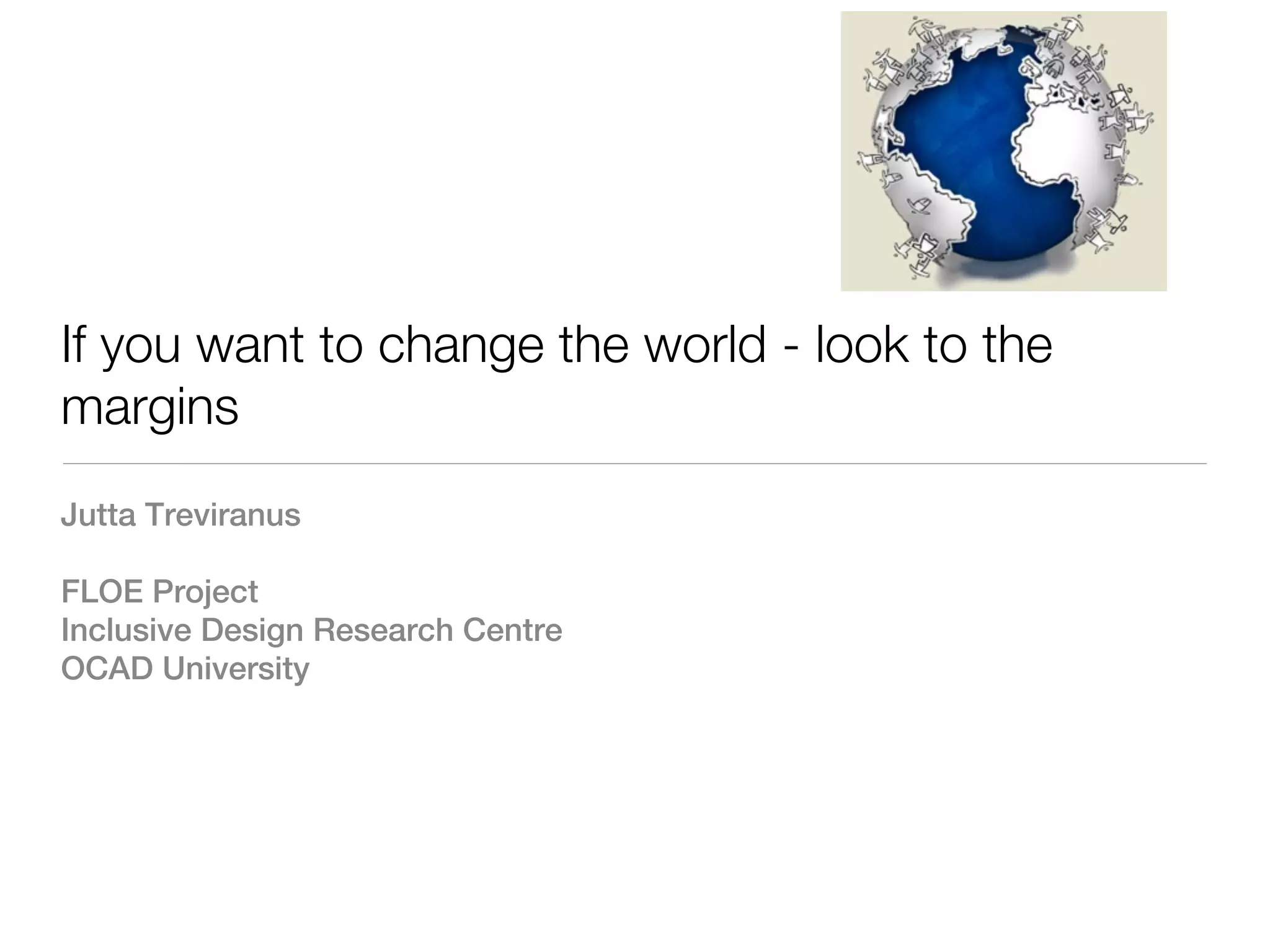
If you want to change the world - look to the
margins
Jutta Treviranus

FLOE Project
Inclusive Design Research Centre
OCAD University
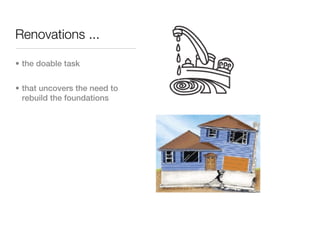
Renovations ...

• the doable task


• that uncovers the need to
  rebuild the foundations
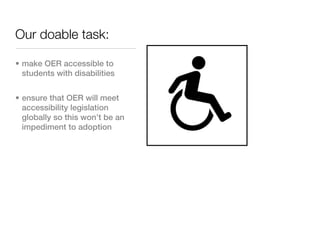
Our doable task:

• make OER accessible to
  students with disabilities


• ensure that OER will meet
  accessibility legislation
  globally so this won’t be an
  impediment to adoption
Straightforward
approach:

• fix all the resources


• but....


• how many resources are
  there?


• how many can be fixed?


• is fixing them a good thing?


• will this serve the learners?
This is not just about
OER

 Connected to:


• how digital technologies are
  designed


• accessibility legislation and policy


• special service delivery processes
  globally
How digital technologies
are developed

• standard digital technology design goes
  as far as the typical or average user

• assistive technologies are meant to bridge
  the gap

• but assistive technology is crumbling

   • not technically viable

   • not a viable business model

   • cannot keep up with development

• cost, availability, functionality, reliability
Legislation and Policy

• accessibility interpreted as an
  absolute binary issue


• “one-size-fits-all”
  requirements


• laws are an inflexible and blunt
  instrument for a complex
  domain


• hard to update and keep
  current


• constraining innovation in
  curriculum and delivery
Special Service
Delivery
• Spending more on excluding
  individuals from service and
  policing service than on
  service delivery


• Only eligible individuals for
  only authorized resources


• Criteria tightened to contain
  costs- then squeezed-out
  group advocates for new
  eligibility categories


• even fewer funds to deliver
  service
But this is not a
renovation nightmare
story.....
There is a bright side.
The bright side...

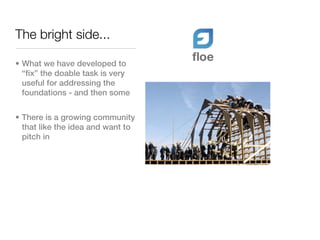
• What we have developed to
  “fix” the doable task is very
  useful for addressing the
  foundations - and then some


• There is a growing community
  that like the idea and want to
  pitch in
• every learner learns differently


• digital resources and delivery
  mechanisms can be easily
  reconfigured


• we all learn better if the
  education environment and
  content matches our individual
  needs


• disability is relative


• we can deliver “one-size-fits-
  one” learning
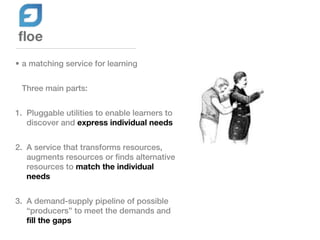
• a matching service for learning


 Three main parts:


1. Pluggable utilities to enable learners to
   discover and express individual needs


2. A service that transforms resources,
   augments resources or finds alternative
   resources to match the individual
   needs


3. A demand-supply pipeline of possible
   “producers” to meet the demands and
   fill the gaps
In our toolkit ..

• An extensible, common, machine-
  readable language for expressing
  learner needs and preferences


• A system for cumulatively labelling
  resources with information about
  what needs are met by the resource


• Supports for creating flexible,
  reconfigurable resources


• Supports for translating resources -
  to other modes and languages
Powered by ...

• Expanded, diverse community
  of producers


• Peer producers


• Derivatives, reuse and sharing
Why does it
resonate...

• completely in line with OER
  principles and goals


• encourages innovation and
  diversification of OER


• learners don’t need to qualify
  for special services, fit into
  categories, or compromise
  their learning needs


• invites broader, more diverse
  engagement in OER
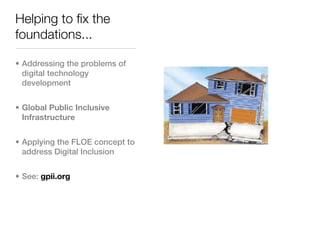
Helping to fix the
foundations...

• Addressing the problems of
  digital technology
  development


• Global Public Inclusive
  Infrastructure


• Applying the FLOE concept to
  address Digital Inclusion


• See: gpii.org
Good for inclusive prosperity and
sustainable economic growth..

• We are in an extreme push
  market


• Large barrier to entry for any
  new idea


• Must focus on selling, not
  producing or innovating


• Provide a direct pipeline
  between diverse demand and
  diverse supply


• Supports inclusive prosperity
The margins are not
marginal...

They encompass
everything we do.
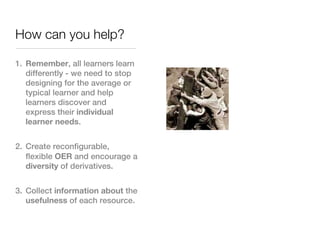
How can you help?

1. Remember, all learners learn
   differently - we need to stop
   designing for the average or
   typical learner and help
   learners discover and
   express their individual
   learner needs.


2. Create reconfigurable,
   flexible OER and encourage a
   diversity of derivatives.


3. Collect information about the
   usefulness of each resource.
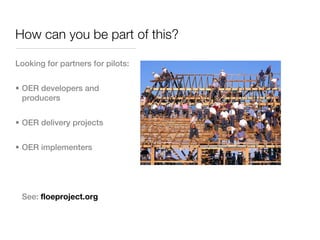
How can you be part of this?

Looking for partners for pilots:


• OER developers and
  producers


• OER delivery projects


• OER implementers


 See: floeproject.org

Hewlett presentation OER 2011

  • 1.
    If you wantto change the world - look to the margins Jutta Treviranus FLOE Project Inclusive Design Research Centre OCAD University
  • 2.
    Renovations ... • thedoable task • that uncovers the need to rebuild the foundations
  • 3.
    Our doable task: •make OER accessible to students with disabilities • ensure that OER will meet accessibility legislation globally so this won’t be an impediment to adoption
  • 4.
    Straightforward approach: • fix allthe resources • but.... • how many resources are there? • how many can be fixed? • is fixing them a good thing? • will this serve the learners?
  • 5.
    This is notjust about OER Connected to: • how digital technologies are designed • accessibility legislation and policy • special service delivery processes globally
  • 6.
    How digital technologies aredeveloped • standard digital technology design goes as far as the typical or average user • assistive technologies are meant to bridge the gap • but assistive technology is crumbling • not technically viable • not a viable business model • cannot keep up with development • cost, availability, functionality, reliability
  • 7.
    Legislation and Policy •accessibility interpreted as an absolute binary issue • “one-size-fits-all” requirements • laws are an inflexible and blunt instrument for a complex domain • hard to update and keep current • constraining innovation in curriculum and delivery
  • 8.
    Special Service Delivery • Spendingmore on excluding individuals from service and policing service than on service delivery • Only eligible individuals for only authorized resources • Criteria tightened to contain costs- then squeezed-out group advocates for new eligibility categories • even fewer funds to deliver service
  • 9.
    But this isnot a renovation nightmare story..... There is a bright side.
  • 10.
    The bright side... •What we have developed to “fix” the doable task is very useful for addressing the foundations - and then some • There is a growing community that like the idea and want to pitch in
  • 11.
    • every learnerlearns differently • digital resources and delivery mechanisms can be easily reconfigured • we all learn better if the education environment and content matches our individual needs • disability is relative • we can deliver “one-size-fits- one” learning
  • 12.
    • a matchingservice for learning Three main parts: 1. Pluggable utilities to enable learners to discover and express individual needs 2. A service that transforms resources, augments resources or finds alternative resources to match the individual needs 3. A demand-supply pipeline of possible “producers” to meet the demands and fill the gaps
  • 13.
    In our toolkit.. • An extensible, common, machine- readable language for expressing learner needs and preferences • A system for cumulatively labelling resources with information about what needs are met by the resource • Supports for creating flexible, reconfigurable resources • Supports for translating resources - to other modes and languages
  • 14.
    Powered by ... •Expanded, diverse community of producers • Peer producers • Derivatives, reuse and sharing
  • 15.
    Why does it resonate... •completely in line with OER principles and goals • encourages innovation and diversification of OER • learners don’t need to qualify for special services, fit into categories, or compromise their learning needs • invites broader, more diverse engagement in OER
  • 16.
    Helping to fixthe foundations... • Addressing the problems of digital technology development • Global Public Inclusive Infrastructure • Applying the FLOE concept to address Digital Inclusion • See: gpii.org
  • 18.
    Good for inclusiveprosperity and sustainable economic growth.. • We are in an extreme push market • Large barrier to entry for any new idea • Must focus on selling, not producing or innovating • Provide a direct pipeline between diverse demand and diverse supply • Supports inclusive prosperity
  • 19.
    The margins arenot marginal... They encompass everything we do.
  • 20.
    How can youhelp? 1. Remember, all learners learn differently - we need to stop designing for the average or typical learner and help learners discover and express their individual learner needs. 2. Create reconfigurable, flexible OER and encourage a diversity of derivatives. 3. Collect information about the usefulness of each resource.
  • 21.
    How can yoube part of this? Looking for partners for pilots: • OER developers and producers • OER delivery projects • OER implementers See: floeproject.org