Tannesha Simpson-Solan
Shanae Wilmot
Terri-ann Tucker
Shemonon Stone
Oushane Morris
Herpes is a skin infection caused by a virus. It is
characterized by the presence of small vesicles
against a background of reddened skin.
It may be quit painful and is usually associated
with fever and inflammation of the
neighbouring lymphatic glands. It is frequently
observed inside the mouth and around the lips,
and on the male or female genitals.
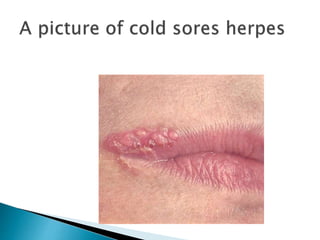
 Type 1 herpes Simplex (Cold sores)
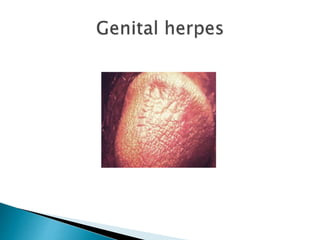
 Type 2 herpes Genital
 It is the most common type of herpes which
affects the lips and the mouth. It causing
reddening , swelling and blistering.
Genital herpes is a common sexually transmitted
infection that affects men and women.
Features of genital herpes include pain, itching
and sores in your genital area. But you may
have no signs or symptoms of genital herpes.
If infected, you can be contagious even if you
have no visible sores.
According to United States National library of
Medicine, herpes is a virus known as HSV 1 or
HSV 2. Herpes simplex, HSV 1, is a
contagious virus that can be transferred from
one person to another through direct contact.
This transfer can take place through general
interaction which includes sharing eating
utensils, lip balm, or by kissing.
Other Causes include:
 Sharing tooth brushing
 Having oral sex
 Unprotected sex
 Multiple sex partner
 Interaction with an infected
person
Symptoms are usually noticed in few days to a
couple of weeks after the initial contact
There might not have an initial outbreak of
symptoms until months or even years after
becoming infected. When symptoms occur
soon after a person is infected, they tend to be
simple.
 They may start as small blisters that eventually
break open and produce raw, painful sores that
scab and heal over within a few weeks. The
blisters and sores may be accompanied by flu-
like symptoms with fever.
 Cracked, raw, or red areas around the genitals
area without pain, itching, or tingling
 Itching or tingling around the genitals area or
the anal region
 Small blisters that break open and cause
painful sores. These may be on or around the
genitals (penis or vagina) or on your buttocks,
thighs, or rectal area. More rarely, blisters may
occur inside the urethra -- the tube urine passes
through on its way out of the body.
 Pain from urine passing over the sores -- this is
especially a problem in women.
 Headaches
 Backaches
 Flu-like symptoms, including fever, swollen
lymph nodes, and fatigue
 Genital herpes is not the only condition that
can produce these symptoms. Sometimes,
HSV is mistaken for vaginal yeast infections,
bacterial infections, or bladder infections. The
only way to know whether they are the result
of HSV or another condition is to be checked
by a health care provider.
If transmitted from mother to baby during
childbirth, herpes is serious and can be deadly
to the baby. In addition, having herpes can
make it easier for you to get HIV.
 Many person with herpes, especially soon after
being diagnosed, feel shame and embarrassed.
 They feel fear of telling anyone.
 Guilty and full of self blame thinking that they
brought it on themselves
 Some feel they are being punished by God for their
sexual activities.
 Fall into depression and suffer from low self
esteem.
 It leave some to wonder if they would have date or
sexual engagement with anyone else again.
 The major reason seems to be the fact that
genital herpes is sexually transmitted. Growing
up in our society, most of us come to view a
sexually transmitted disease as a fate that
befalls only those who have done something
wrong. In addition, many people lose
perspective about the medical implications of
herpes. Leave love one in depression
 There are signs as well that on a personal level
we are becoming somewhat more open about
topics such as sexual orientation and sexual
function. With herpes there’s a similar trend to
more awareness and openness. Surveys show
that the public is more educated on the subject
than ever before. Perhaps the day will come
when even the idea of social stigma will be a
distant memory.
 Medication can reduce the duration
and frequency of herpes breakouts.
The medication can prevent the
transmission of the virus to a
susceptible partner. Treatment with
antiviral drugs can help people who
are bothered by genital herpes
outbreaks stay symptom-free longer.
 These drugs therapy is not a cure, but it can
make living with the condition easier.
There are formulas which are applied to the
surface of the kin but they provide little
benefit so doctors rarely recommend them.
There are three major drugs commonly
used to treat genital herpes symptoms:
acyclovir (Zovirax), famciclovir (Famvir), and
valacyclovir (Valtrex). These are all taken in
pill form. Severe cases may be treated with
the intravenous (IV) drug acyclovir.
 If you have symptoms such as sores when
you're first diagnosed with genital herpes, your
doctor will usually give you a brief course
(seven to 10 days) of antiviral therapy to
relieve them or prevent them from getting
worse. Your doctor may keep you on the drugs
longer if the sores don't heal in that time.
 United States National library of Medicine
 Galbes Herminia September 2006 4th edition Encyclopida
of Health and Family from the universities of France.
WebMD Medical
 Reviewed by Nivin Todd, MD, FACOG on December 24,
2013
© 2013 WebMD, LLC. All rights reserved.

Herpes

  • 1.
    Tannesha Simpson-Solan Shanae Wilmot Terri-annTucker Shemonon Stone Oushane Morris
  • 2.
    Herpes is askin infection caused by a virus. It is characterized by the presence of small vesicles against a background of reddened skin. It may be quit painful and is usually associated with fever and inflammation of the neighbouring lymphatic glands. It is frequently observed inside the mouth and around the lips, and on the male or female genitals.
  • 3.
     Type 1herpes Simplex (Cold sores)  Type 2 herpes Genital
  • 4.
     It isthe most common type of herpes which affects the lips and the mouth. It causing reddening , swelling and blistering.
  • 6.
    Genital herpes isa common sexually transmitted infection that affects men and women. Features of genital herpes include pain, itching and sores in your genital area. But you may have no signs or symptoms of genital herpes. If infected, you can be contagious even if you have no visible sores.
  • 8.
    According to UnitedStates National library of Medicine, herpes is a virus known as HSV 1 or HSV 2. Herpes simplex, HSV 1, is a contagious virus that can be transferred from one person to another through direct contact. This transfer can take place through general interaction which includes sharing eating utensils, lip balm, or by kissing.
  • 9.
    Other Causes include: Sharing tooth brushing  Having oral sex  Unprotected sex  Multiple sex partner  Interaction with an infected person
  • 10.
    Symptoms are usuallynoticed in few days to a couple of weeks after the initial contact There might not have an initial outbreak of symptoms until months or even years after becoming infected. When symptoms occur soon after a person is infected, they tend to be simple.
  • 11.
     They maystart as small blisters that eventually break open and produce raw, painful sores that scab and heal over within a few weeks. The blisters and sores may be accompanied by flu- like symptoms with fever.  Cracked, raw, or red areas around the genitals area without pain, itching, or tingling
  • 12.
     Itching ortingling around the genitals area or the anal region  Small blisters that break open and cause painful sores. These may be on or around the genitals (penis or vagina) or on your buttocks, thighs, or rectal area. More rarely, blisters may occur inside the urethra -- the tube urine passes through on its way out of the body.
  • 13.
     Pain fromurine passing over the sores -- this is especially a problem in women.  Headaches  Backaches
  • 14.
     Flu-like symptoms,including fever, swollen lymph nodes, and fatigue  Genital herpes is not the only condition that can produce these symptoms. Sometimes, HSV is mistaken for vaginal yeast infections, bacterial infections, or bladder infections. The only way to know whether they are the result of HSV or another condition is to be checked by a health care provider.
  • 15.
    If transmitted frommother to baby during childbirth, herpes is serious and can be deadly to the baby. In addition, having herpes can make it easier for you to get HIV.
  • 16.
     Many personwith herpes, especially soon after being diagnosed, feel shame and embarrassed.  They feel fear of telling anyone.  Guilty and full of self blame thinking that they brought it on themselves  Some feel they are being punished by God for their sexual activities.  Fall into depression and suffer from low self esteem.  It leave some to wonder if they would have date or sexual engagement with anyone else again.
  • 17.
     The majorreason seems to be the fact that genital herpes is sexually transmitted. Growing up in our society, most of us come to view a sexually transmitted disease as a fate that befalls only those who have done something wrong. In addition, many people lose perspective about the medical implications of herpes. Leave love one in depression
  • 18.
     There aresigns as well that on a personal level we are becoming somewhat more open about topics such as sexual orientation and sexual function. With herpes there’s a similar trend to more awareness and openness. Surveys show that the public is more educated on the subject than ever before. Perhaps the day will come when even the idea of social stigma will be a distant memory.
  • 19.
     Medication canreduce the duration and frequency of herpes breakouts. The medication can prevent the transmission of the virus to a susceptible partner. Treatment with antiviral drugs can help people who are bothered by genital herpes outbreaks stay symptom-free longer.
  • 20.
     These drugstherapy is not a cure, but it can make living with the condition easier. There are formulas which are applied to the surface of the kin but they provide little benefit so doctors rarely recommend them. There are three major drugs commonly used to treat genital herpes symptoms: acyclovir (Zovirax), famciclovir (Famvir), and valacyclovir (Valtrex). These are all taken in pill form. Severe cases may be treated with the intravenous (IV) drug acyclovir.
  • 21.
     If youhave symptoms such as sores when you're first diagnosed with genital herpes, your doctor will usually give you a brief course (seven to 10 days) of antiviral therapy to relieve them or prevent them from getting worse. Your doctor may keep you on the drugs longer if the sores don't heal in that time.
  • 22.
     United StatesNational library of Medicine  Galbes Herminia September 2006 4th edition Encyclopida of Health and Family from the universities of France. WebMD Medical  Reviewed by Nivin Todd, MD, FACOG on December 24, 2013 © 2013 WebMD, LLC. All rights reserved.