HEREDITY
AND
VARIATION
HERDIT
Y
HEREDITY
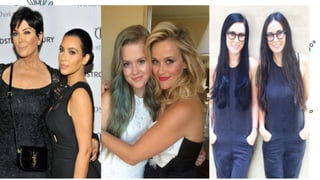
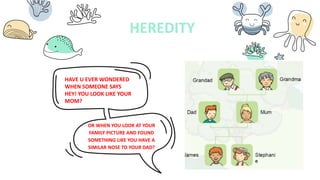
HAVE U EVER WONDERED
WHEN SOMEONE SAYS
HEY! YOU LOOK LIKE YOUR
MOM?
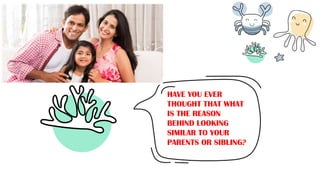
HAVE YOU EVER
THOUGHT THAT WHAT
IS THE REASON
BEHIND LOOKING
SIMILAR TO YOUR
PARENTS OR SIBLING?
SO MANY
QUESTIONS IN MIND?
DON’T WORRY WE GOT YOUR
BACK. IN THE LESSION
HEREDITY AND EVOLUTION WE
WILL BE DISCUSSING ALL
YOUR DOUBTS.
CLASS 10
Welcome to SESSION 1
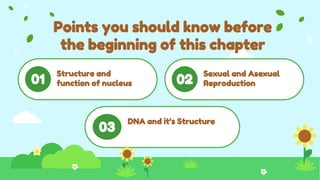
Structure and
function of nucleus
01
Sexual and Asexual
Reproduction
02
DNA and it’s Structure
03
Points you should know before
the beginning of this chapter
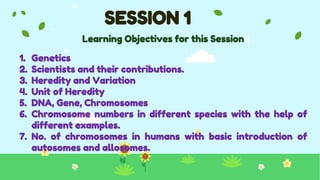
SESSION 1
Learning Objectives for this Session
1. Genetics
2. Scientists and their contributions.
3. Heredity and Variation
4. Unit of Heredity
5. DNA, Gene, Chromosomes
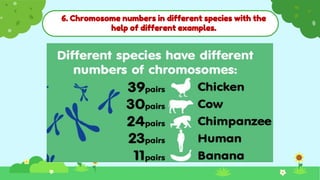
6. Chromosome numbers in different species with the help of
different examples.
7. No. of chromosomes in humans with basic introduction of
autosomes and allosomes.
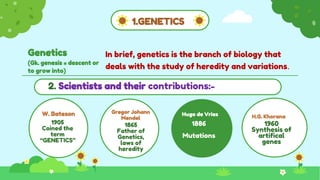
1.GENETICS
Genetics
(Gk. genesis = descent or
to grow into)
In brief, genetics is the branch of biology that
deals with the study of heredity and variations.
Gregor Johann
Mendel
1865
Father of
Genetics,
laws of
heredity
H.G. Khorana
1960
Synthesis of
artifical
genes
W. Bateson
1905
Coined the
term
“GENETICS”
Hugo de Vries
1886
Mutations
2. Scientists and their contributions:-
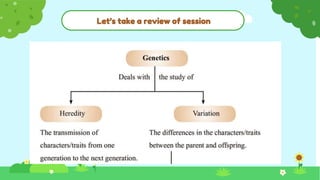
Let’s take a review of session
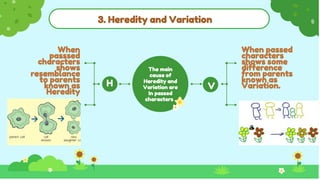
3. Heredity and Variation
When passed
characters
shows some
difference
from parents
known as
Variation.
When
passsed
characters
shows
resemblance
to parents
known as
Heredity
The main
cause of
Heredity and
Variation are
In passed
characters .
H V
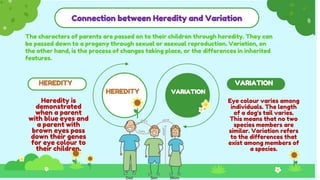
Connection between Heredity and Variation
Heredity is
demonstrated
when a parent
with blue eyes and
a parent with
brown eyes pass
down their genes
for eye colour to
their children.
Eye colour varies among
individuals. The length
of a dog's tail varies.
This means that no two
species members are
similar. Variation refers
to the differences that
exist among members of
a species.
HEREDITY VARIATION
HEREDITY VARIATION
The characters of parents are passed on to their children through heredity. They can
be passed down to a progeny through sexual or asexual reproduction. Variation, on
the other hand, is the process of changes taking place, or the differences in inherited
features.
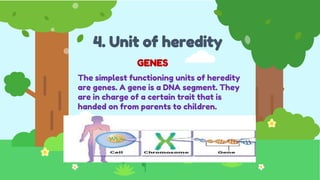
4. Unit of heredity
GENES
The simplest functioning units of heredity
are genes. A gene is a DNA segment. They
are in charge of a certain trait that is
handed on from parents to children.
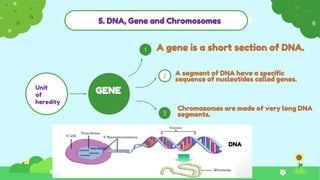
5. DNA, Gene and Chromosomes
1
2
3
A gene is a short section of DNA.
A segment of DNA have a specific
sequence of nucleotides called genes.
Chromosomes are made of very long DNA
segments.
GENE
Unit
of
heredity
DNA
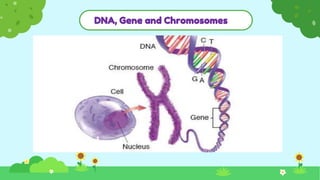
DNA, Gene and Chromosomes
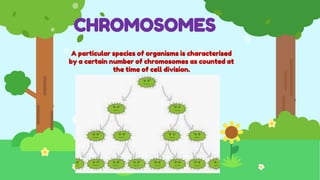
CHROMOSOMES
A particular species of organisms is characterised
by a certain number of chromosomes as counted at
the time of cell division.
6. Chromosome numbers in different species with the
help of different examples.
Why the no. of chromosomes varies in organisms?
Fusion is a typical technique for animal species to have
chromosomal numbers that differ from those of their forefathers.
Fusion is most likely what occurred to humans on their way from
the common ancestor of humans and chimps.
Species (and individuals) are unique because of the content of the
DNA that makes up the chromosomes, not the number of
chromosomes.
7. No. of chromosomes in humans with basic
introduction of autosomes and allosomes.
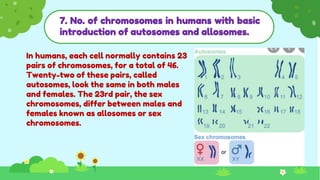
In humans, each cell normally contains 23
pairs of chromosomes, for a total of 46.
Twenty-two of these pairs, called
autosomes, look the same in both males
and females. The 23rd pair, the sex
chromosomes, differ between males and
females known as allosomes or sex
chromosomes.
Why do we have 46 chromosomes?
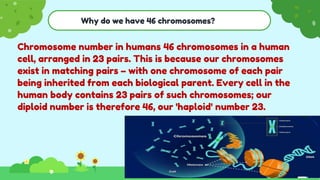
Chromosome number in humans 46 chromosomes in a human
cell, arranged in 23 pairs. This is because our chromosomes
exist in matching pairs – with one chromosome of each pair
being inherited from each biological parent. Every cell in the
human body contains 23 pairs of such chromosomes; our
diploid number is therefore 46, our 'haploid' number 23.
Let’s Practice
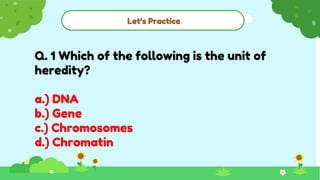
Q. 1 Which of the following is the unit of
heredity?
a.) DNA
b.) Gene
c.) Chromosomes
d.) Chromatin
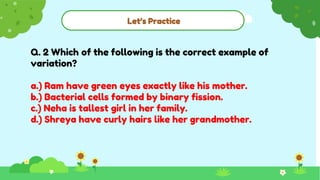
Let’s Practice
Q. 2 Which of the following is the correct example of
variation?
a.) Ram have green eyes exactly like his mother.
b.) Bacterial cells formed by binary fission.
c.) Neha is tallest girl in her family.
d.) Shreya have curly hairs like her grandmother.
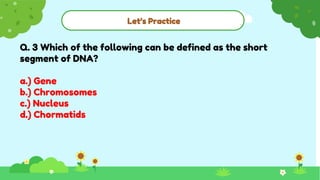
Let’s Practice
Q. 3 Which of the following can be defined as the short
segment of DNA?
a.) Gene
b.) Chromosomes
c.) Nucleus
d.) Chormatids
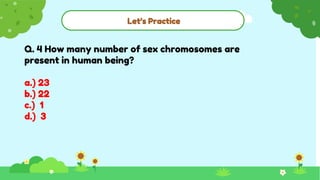
Let’s Practice
Q. 4 How many number of sex chromosomes are
present in human being?
a.) 23
b.) 22
c.) 1
d.) 3
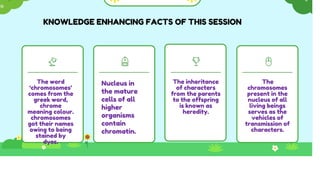
The word
‘chromosomes’
comes from the
greek word,
chrome
meaning colour.
chromosomes
got their names
owing to being
stained by
dyes.
The inheritance
of characters
from the parents
to the offspring
is known as
heredity.
The
chromosomes
present in the
nucleus of all
living beings
serves as the
vehicles of
transmission of
characters.
Nucleus in
the mature
cells of all
higher
organisms
contain
chromatin.
KNOWLEDGE ENHANCING FACTS OF THIS SESSION
References
Pearson biology class 10
Foundation
Google images, research
articles from NCBI,
Wikipedia etc.
Pradeep science
biologyclass 10 biology
Foundation biology class
10
MTG publication
Thanks for watching
MADE BY: SHIVANI SINGH

Heredity and Variation

  • 1.
  • 2.
  • 3.
    HEREDITY HAVE U EVERWONDERED WHEN SOMEONE SAYS HEY! YOU LOOK LIKE YOUR MOM?
  • 4.
    HAVE YOU EVER THOUGHTTHAT WHAT IS THE REASON BEHIND LOOKING SIMILAR TO YOUR PARENTS OR SIBLING?
  • 5.
    SO MANY QUESTIONS INMIND? DON’T WORRY WE GOT YOUR BACK. IN THE LESSION HEREDITY AND EVOLUTION WE WILL BE DISCUSSING ALL YOUR DOUBTS.
  • 6.
  • 7.
    Structure and function ofnucleus 01 Sexual and Asexual Reproduction 02 DNA and it’s Structure 03 Points you should know before the beginning of this chapter
  • 8.
    SESSION 1 Learning Objectivesfor this Session 1. Genetics 2. Scientists and their contributions. 3. Heredity and Variation 4. Unit of Heredity 5. DNA, Gene, Chromosomes 6. Chromosome numbers in different species with the help of different examples. 7. No. of chromosomes in humans with basic introduction of autosomes and allosomes.
  • 9.
    1.GENETICS Genetics (Gk. genesis =descent or to grow into) In brief, genetics is the branch of biology that deals with the study of heredity and variations. Gregor Johann Mendel 1865 Father of Genetics, laws of heredity H.G. Khorana 1960 Synthesis of artifical genes W. Bateson 1905 Coined the term “GENETICS” Hugo de Vries 1886 Mutations 2. Scientists and their contributions:-
  • 10.
    Let’s take areview of session
  • 11.
    3. Heredity andVariation When passed characters shows some difference from parents known as Variation. When passsed characters shows resemblance to parents known as Heredity The main cause of Heredity and Variation are In passed characters . H V
  • 12.
    Connection between Heredityand Variation Heredity is demonstrated when a parent with blue eyes and a parent with brown eyes pass down their genes for eye colour to their children. Eye colour varies among individuals. The length of a dog's tail varies. This means that no two species members are similar. Variation refers to the differences that exist among members of a species. HEREDITY VARIATION HEREDITY VARIATION The characters of parents are passed on to their children through heredity. They can be passed down to a progeny through sexual or asexual reproduction. Variation, on the other hand, is the process of changes taking place, or the differences in inherited features.
  • 13.
    4. Unit ofheredity GENES The simplest functioning units of heredity are genes. A gene is a DNA segment. They are in charge of a certain trait that is handed on from parents to children.
  • 14.
    5. DNA, Geneand Chromosomes 1 2 3 A gene is a short section of DNA. A segment of DNA have a specific sequence of nucleotides called genes. Chromosomes are made of very long DNA segments. GENE Unit of heredity DNA
  • 15.
    DNA, Gene andChromosomes
  • 16.
    CHROMOSOMES A particular speciesof organisms is characterised by a certain number of chromosomes as counted at the time of cell division.
  • 17.
    6. Chromosome numbersin different species with the help of different examples.
  • 18.
    Why the no.of chromosomes varies in organisms? Fusion is a typical technique for animal species to have chromosomal numbers that differ from those of their forefathers. Fusion is most likely what occurred to humans on their way from the common ancestor of humans and chimps. Species (and individuals) are unique because of the content of the DNA that makes up the chromosomes, not the number of chromosomes.
  • 19.
    7. No. ofchromosomes in humans with basic introduction of autosomes and allosomes. In humans, each cell normally contains 23 pairs of chromosomes, for a total of 46. Twenty-two of these pairs, called autosomes, look the same in both males and females. The 23rd pair, the sex chromosomes, differ between males and females known as allosomes or sex chromosomes.
  • 20.
    Why do wehave 46 chromosomes? Chromosome number in humans 46 chromosomes in a human cell, arranged in 23 pairs. This is because our chromosomes exist in matching pairs – with one chromosome of each pair being inherited from each biological parent. Every cell in the human body contains 23 pairs of such chromosomes; our diploid number is therefore 46, our 'haploid' number 23.
  • 21.
    Let’s Practice Q. 1Which of the following is the unit of heredity? a.) DNA b.) Gene c.) Chromosomes d.) Chromatin
  • 22.
    Let’s Practice Q. 2Which of the following is the correct example of variation? a.) Ram have green eyes exactly like his mother. b.) Bacterial cells formed by binary fission. c.) Neha is tallest girl in her family. d.) Shreya have curly hairs like her grandmother.
  • 23.
    Let’s Practice Q. 3Which of the following can be defined as the short segment of DNA? a.) Gene b.) Chromosomes c.) Nucleus d.) Chormatids
  • 24.
    Let’s Practice Q. 4How many number of sex chromosomes are present in human being? a.) 23 b.) 22 c.) 1 d.) 3
  • 25.
    The word ‘chromosomes’ comes fromthe greek word, chrome meaning colour. chromosomes got their names owing to being stained by dyes. The inheritance of characters from the parents to the offspring is known as heredity. The chromosomes present in the nucleus of all living beings serves as the vehicles of transmission of characters. Nucleus in the mature cells of all higher organisms contain chromatin. KNOWLEDGE ENHANCING FACTS OF THIS SESSION
  • 26.
    References Pearson biology class10 Foundation Google images, research articles from NCBI, Wikipedia etc. Pradeep science biologyclass 10 biology Foundation biology class 10 MTG publication
  • 27.
    Thanks for watching MADEBY: SHIVANI SINGH