Haemoglobin
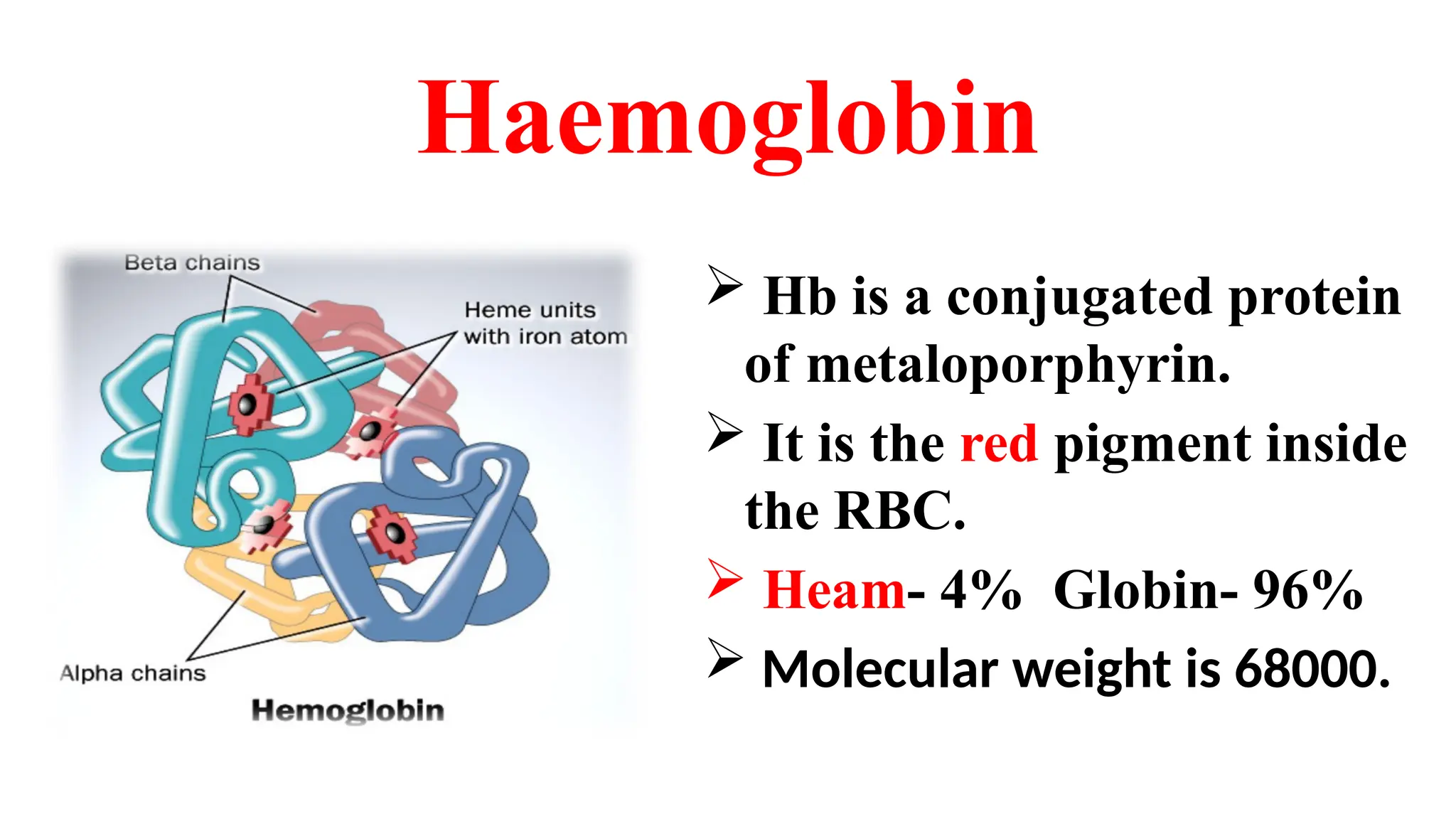
 Hb is a conjugated protein
of metaloporphyrin.
 It is the red pigment inside
the RBC.
 Heam- 4% Globin- 96%
 Molecular weight is 68000.
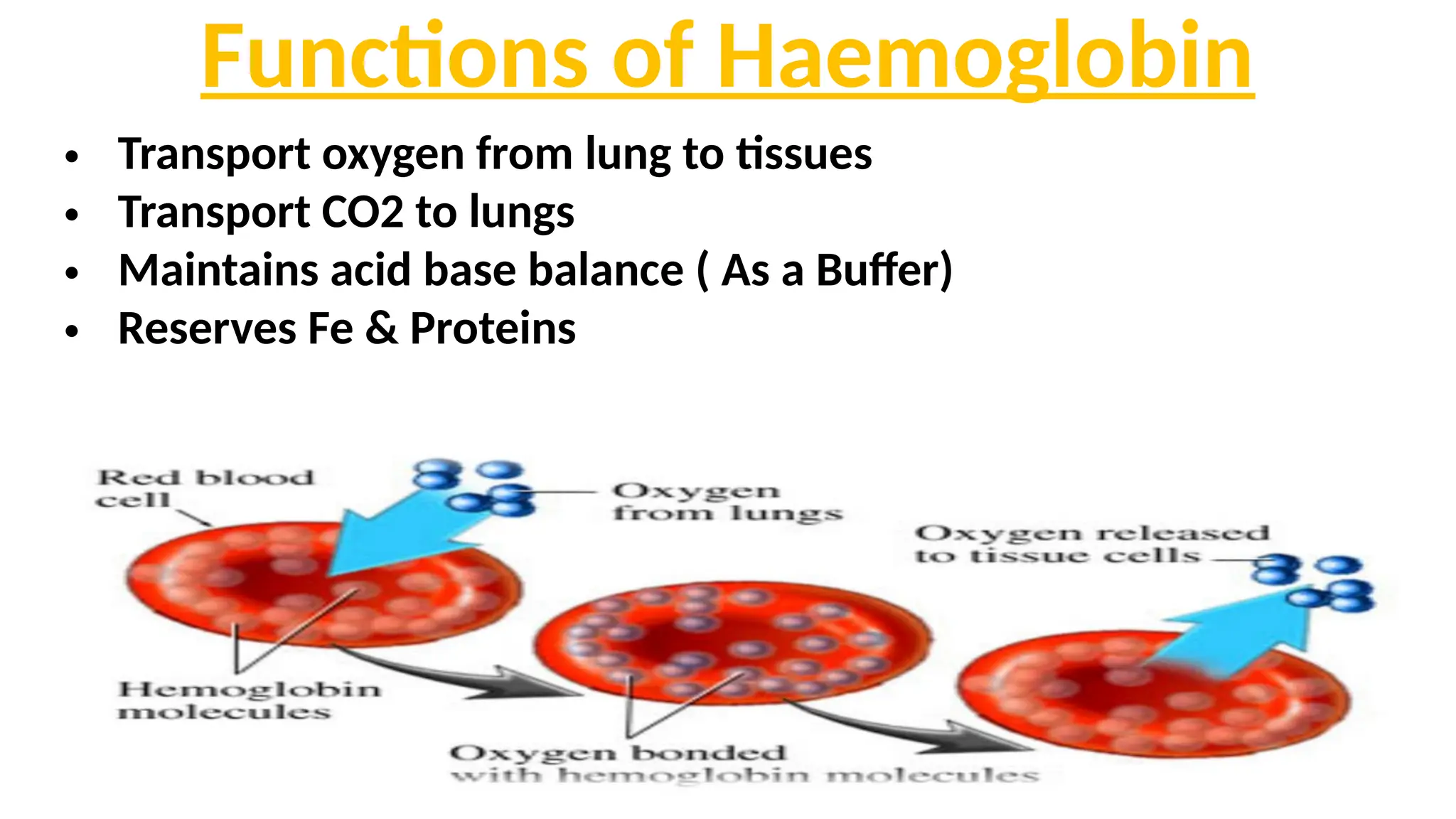
Functions of Haemoglobin
• Transport oxygen from lung to tissues
• Transport CO2 to lungs
• Maintains acid base balance ( As a Buffer)
• Reserves Fe & Proteins
Disadvantages if haemoglobin present in plasma.
Increase viscosity.
Increase osmotic pressure.
Rapid destruction by
reticuloendothelial system.
Haemoglobinuria
( excretion through kidney)
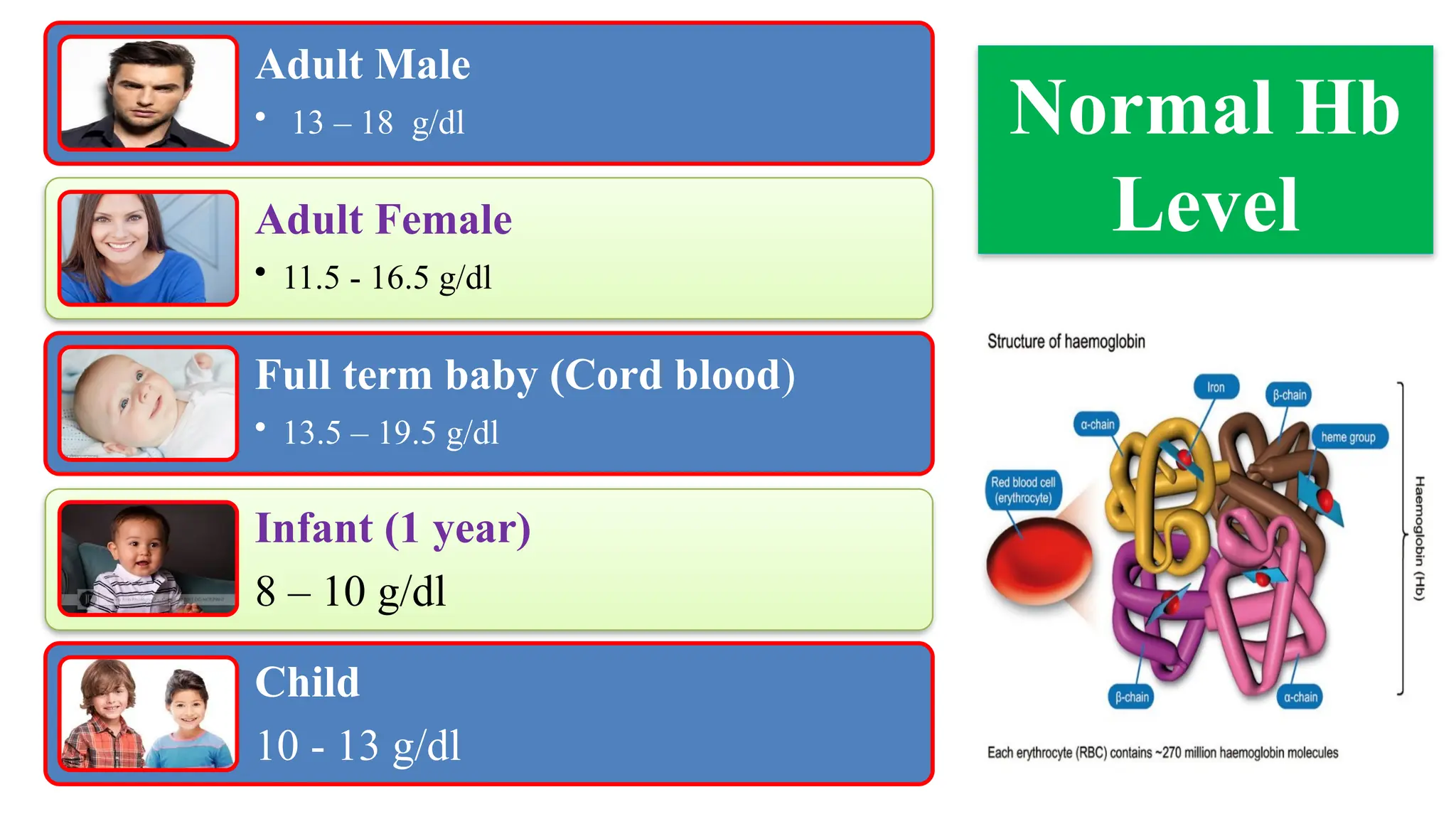
Adult Male
• 13 – 18 g/dl
Adult Female
• 11.5 - 16.5 g/dl
Full term baby (Cord blood)
• 13.5 – 19.5 g/dl
Infant (1 year)
8 – 10 g/dl
Child
10 - 13 g/dl
Normal Hb
Level
 Testosterone stimulate
Erythropoisis, for that Hb
level is higher than female.
1st
day at birth Hb level is
high, then reduce from 3rd
month to 1 year. Then Hb
raise slowly through
childhood to adult.
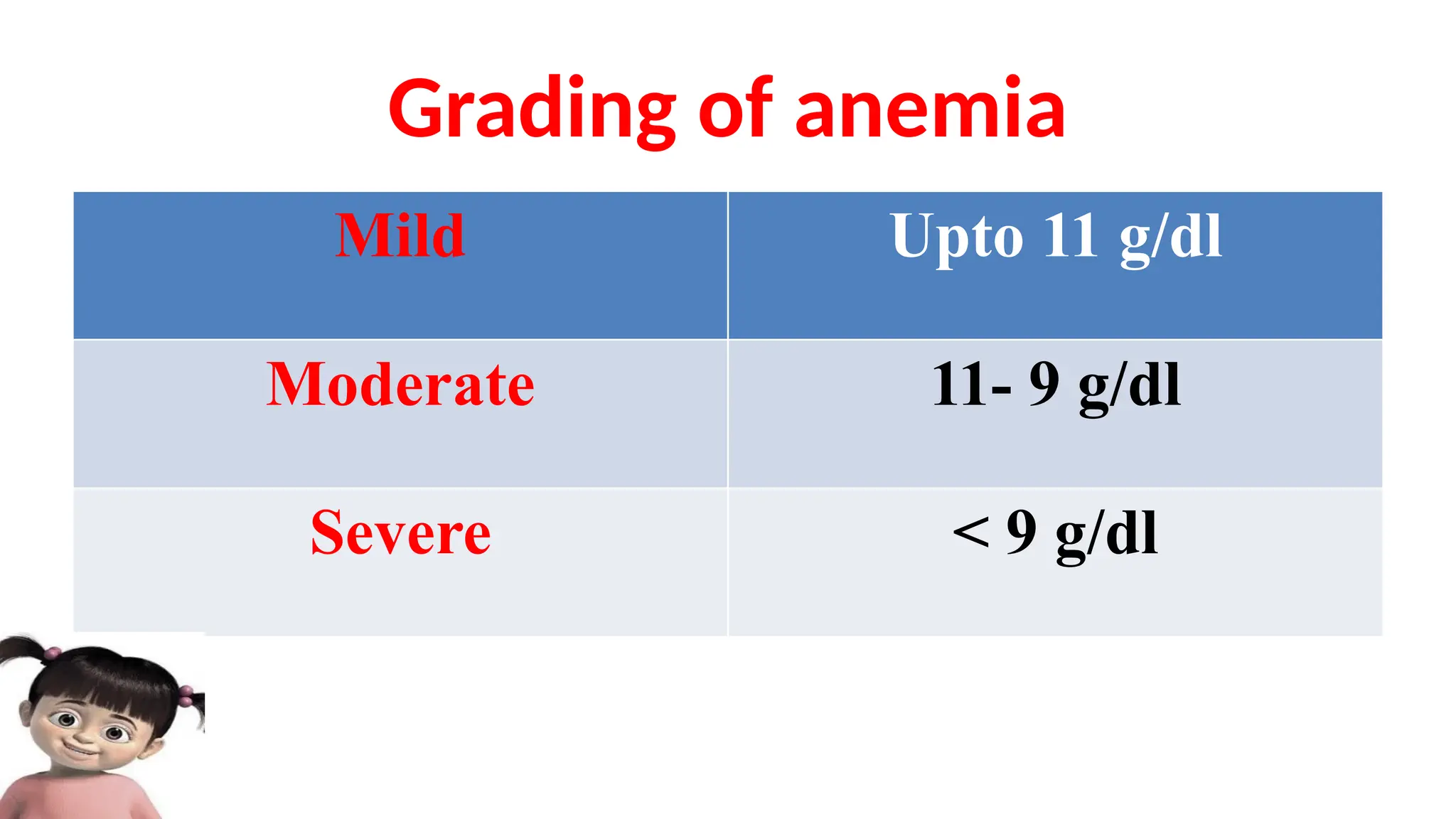
Grading of anemia
Mild Upto 11 g/dl
Moderate 11- 9 g/dl
Severe < 9 g/dl
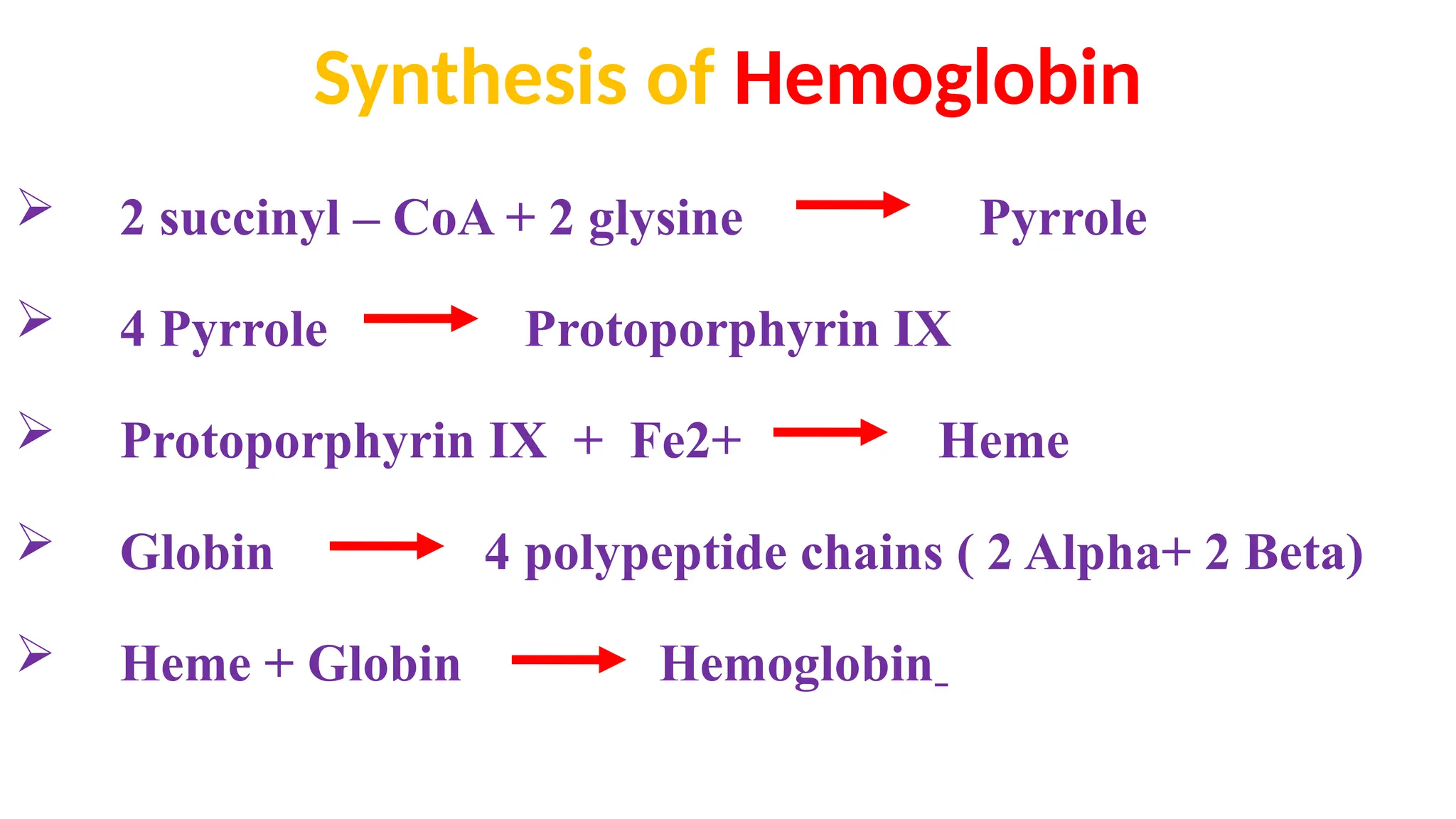
Synthesis of Hemoglobin
 2 succinyl – CoA + 2 glysine Pyrrole
 4 Pyrrole Protoporphyrin IX
 Protoporphyrin IX + Fe2+ Heme
 Globin 4 polypeptide chains ( 2 Alpha+ 2 Beta)
 Heme + Globin Hemoglobin
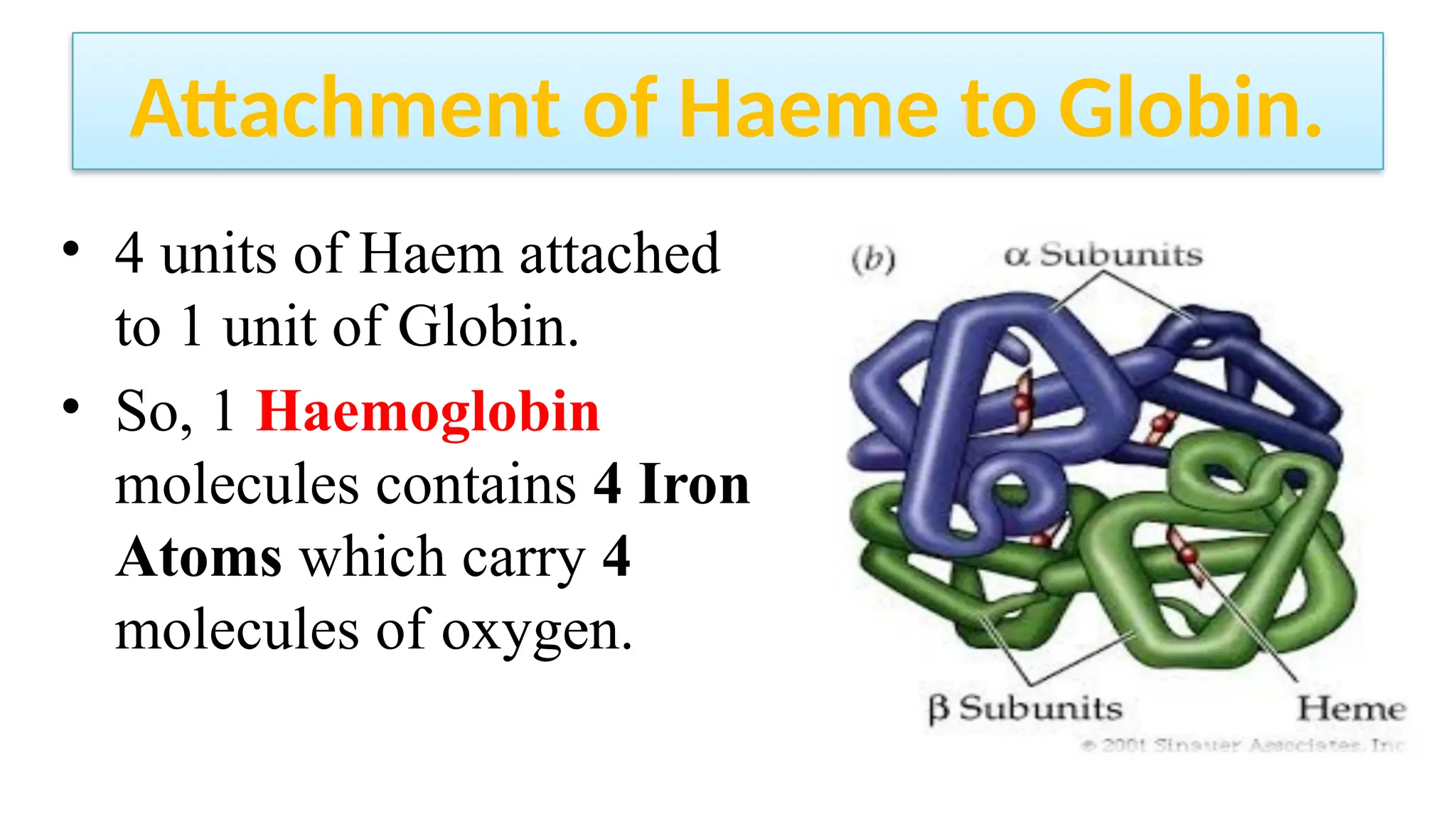
Attachment of Haeme to Globin.
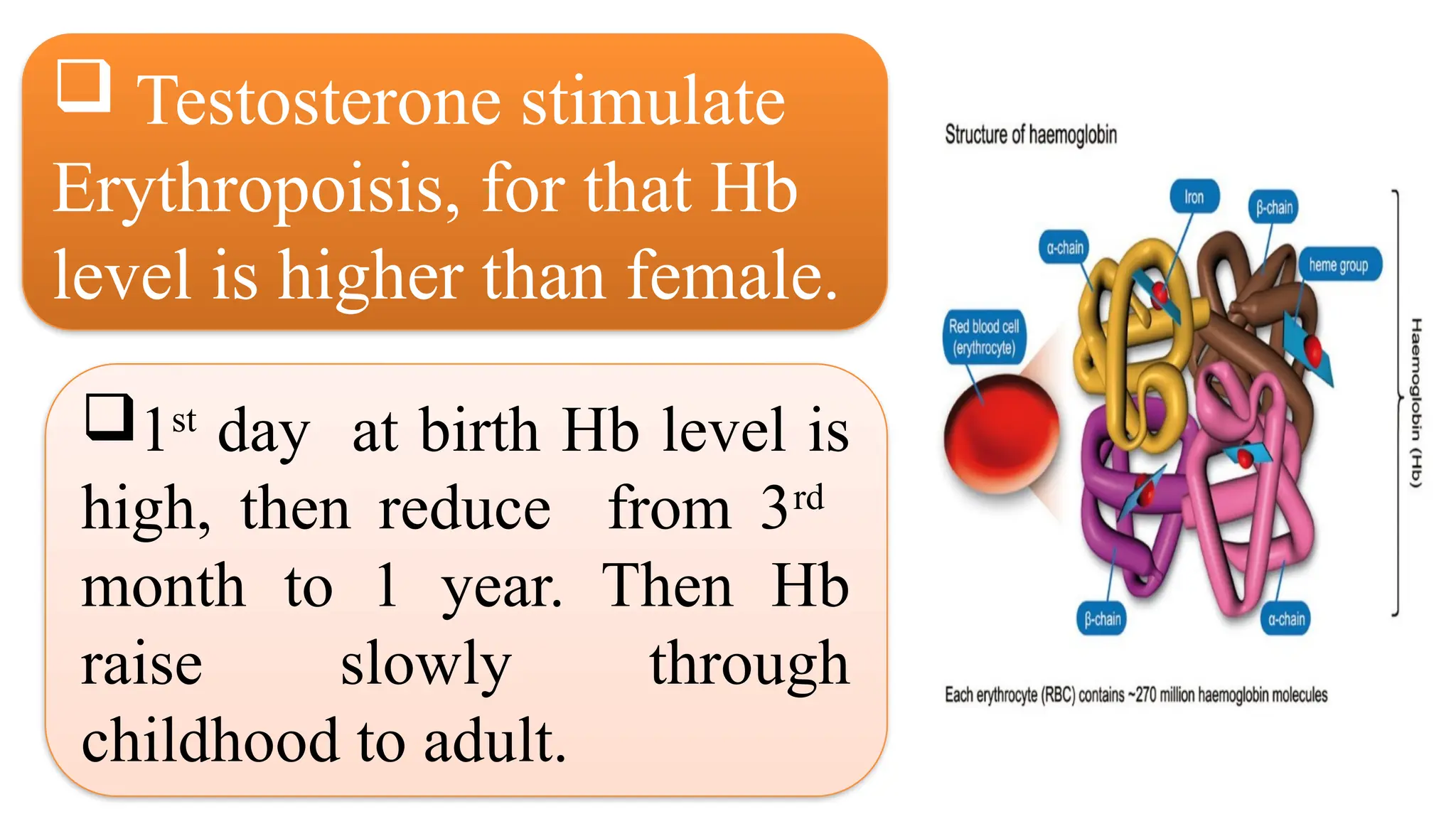
• 4 units of Haem attached
to 1 unit of Globin.
• So, 1 Haemoglobin
molecules contains 4 Iron
Atoms which carry 4
molecules of oxygen.
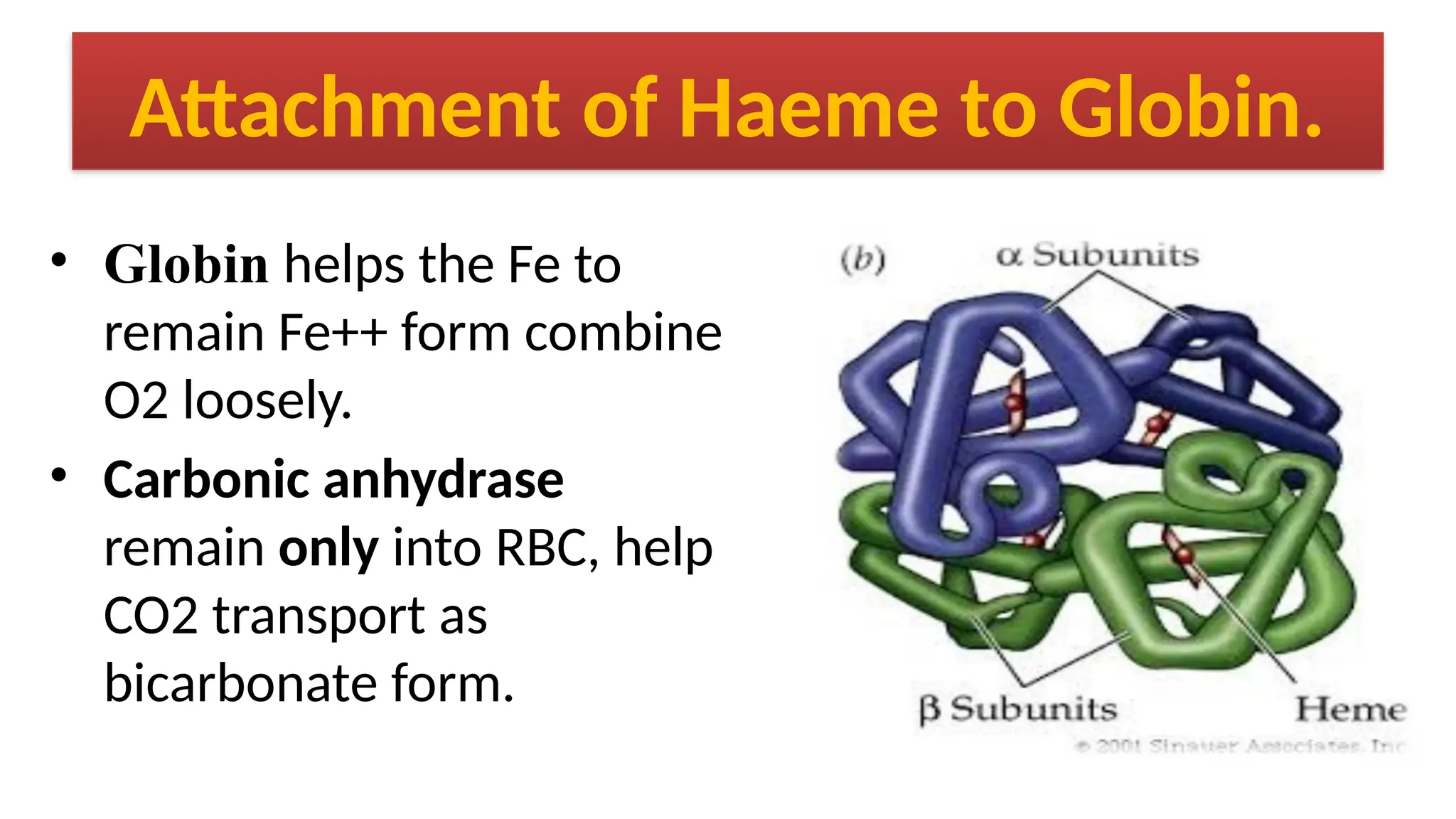
Attachment of Haeme to Globin.
• Globin helps the Fe to
remain Fe++ form combine
O2 loosely.
• Carbonic anhydrase
remain only into RBC, help
CO2 transport as
bicarbonate form.
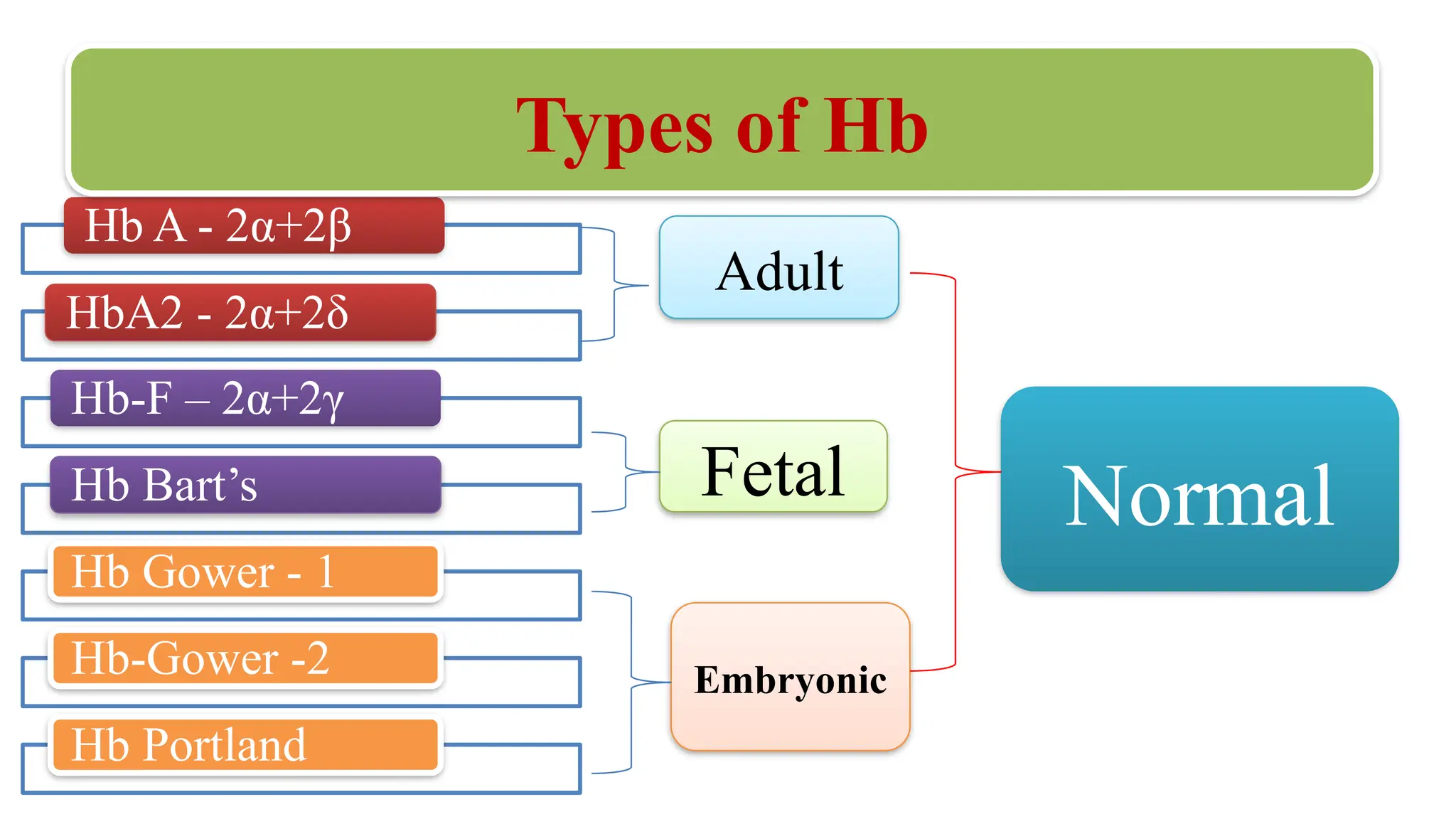
Hb A - 2α+2β
HbA2 - 2α+2δ
Hb-F – 2α+2γ
Hb Bart’s
Hb Gower - 1
Hb-Gower -2
Hb Portland
Types of Hb
Adult
Fetal
Embryonic
Normal
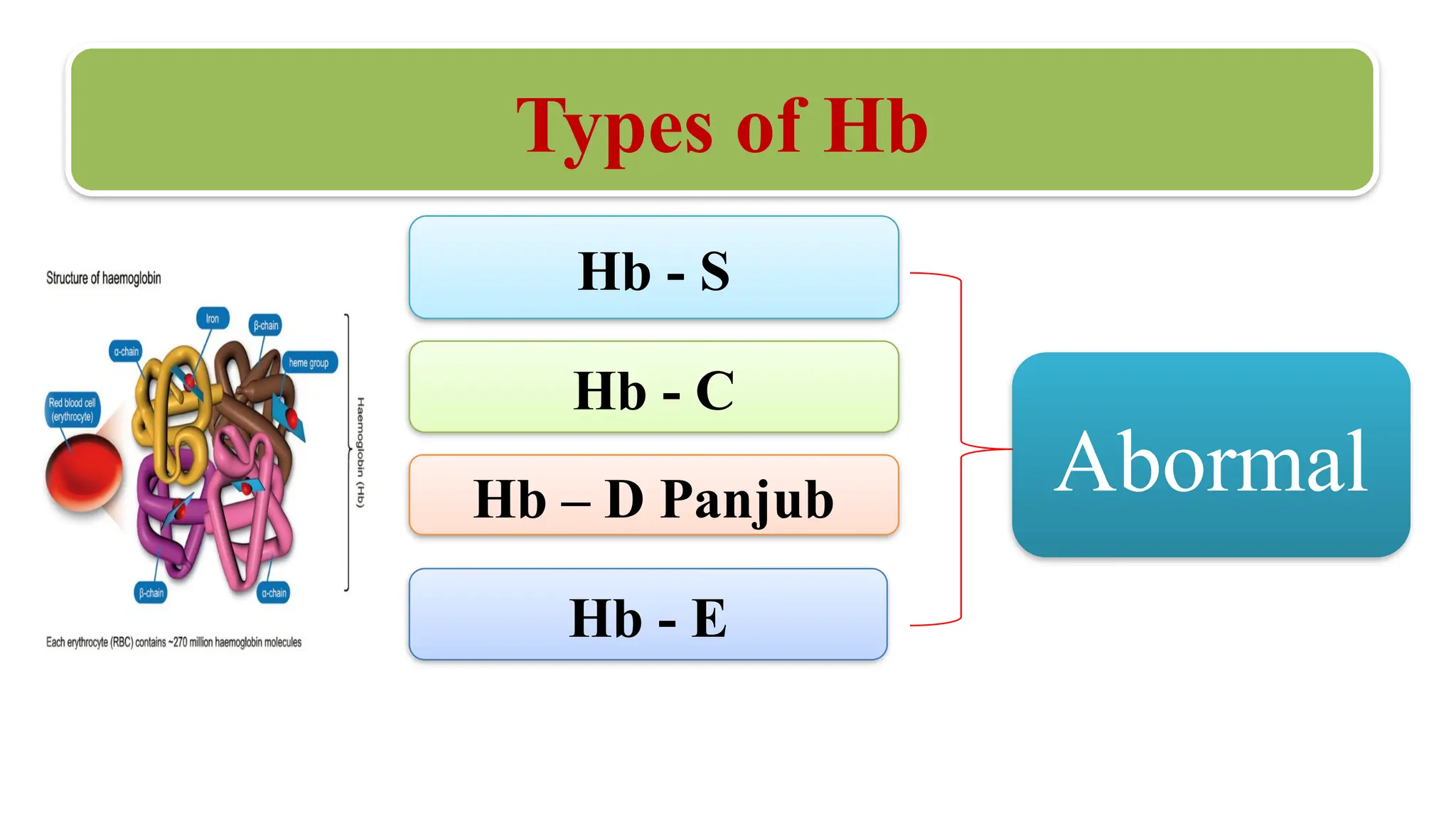
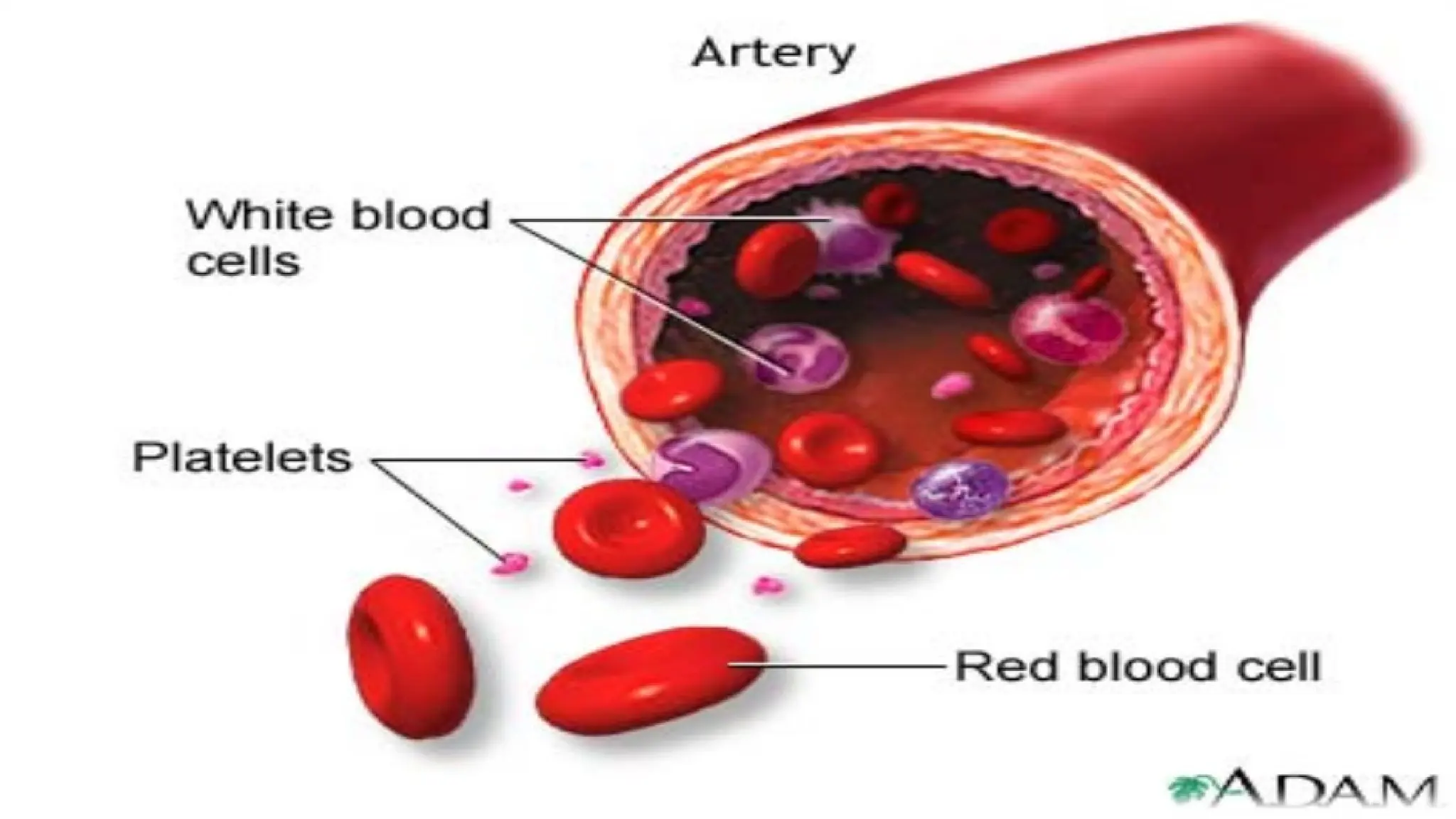
Types of Hb
Hb - S
Hb - C
Hb – D Panjub Abormal
Hb - E
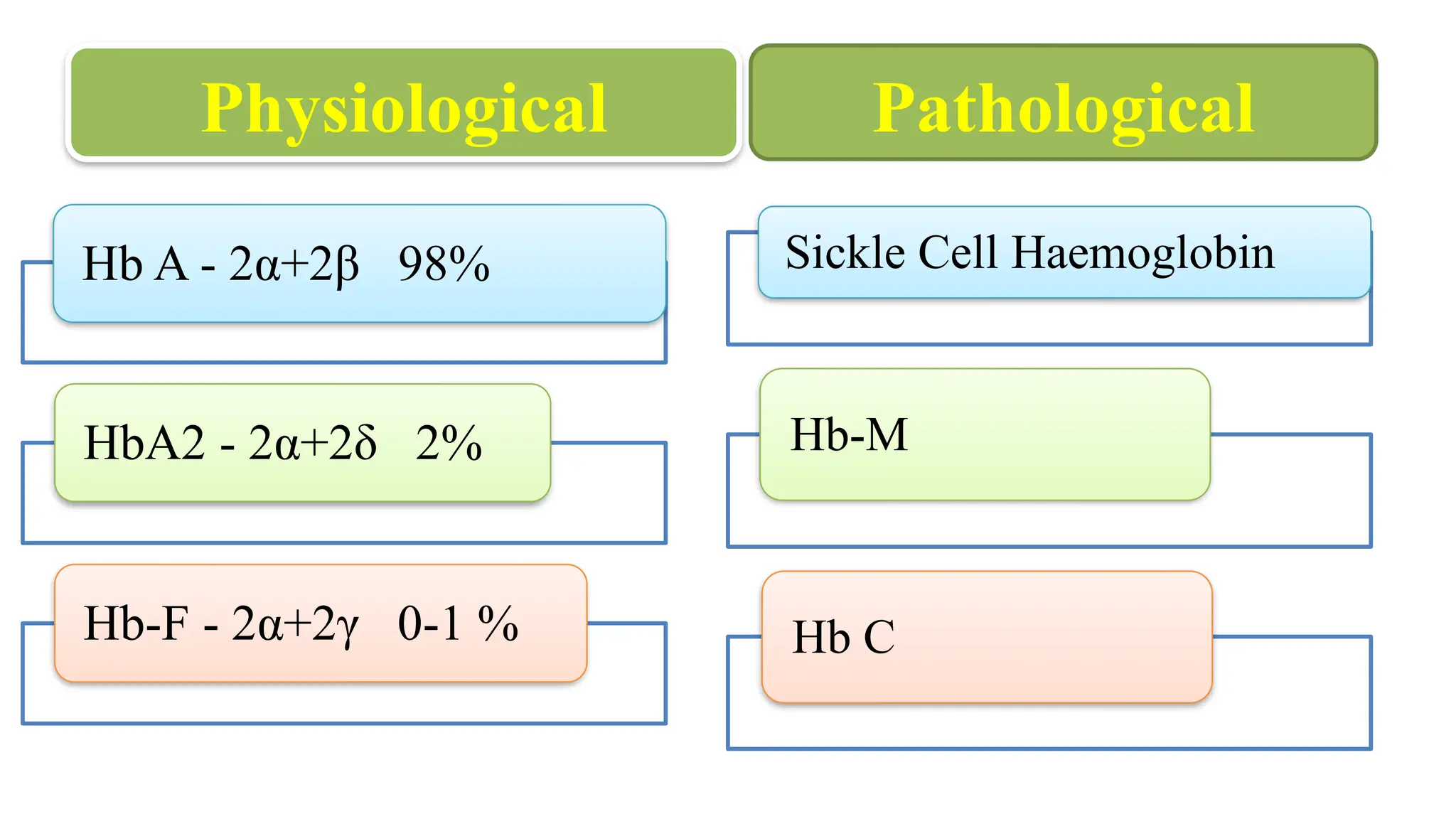
Hb A - 2α+2β 98%
HbA2 - 2α+2δ 2%
Hb-F - 2α+2γ 0-1 %
Sickle Cell Haemoglobin
Hb-M
Hb C
Physiological Pathological
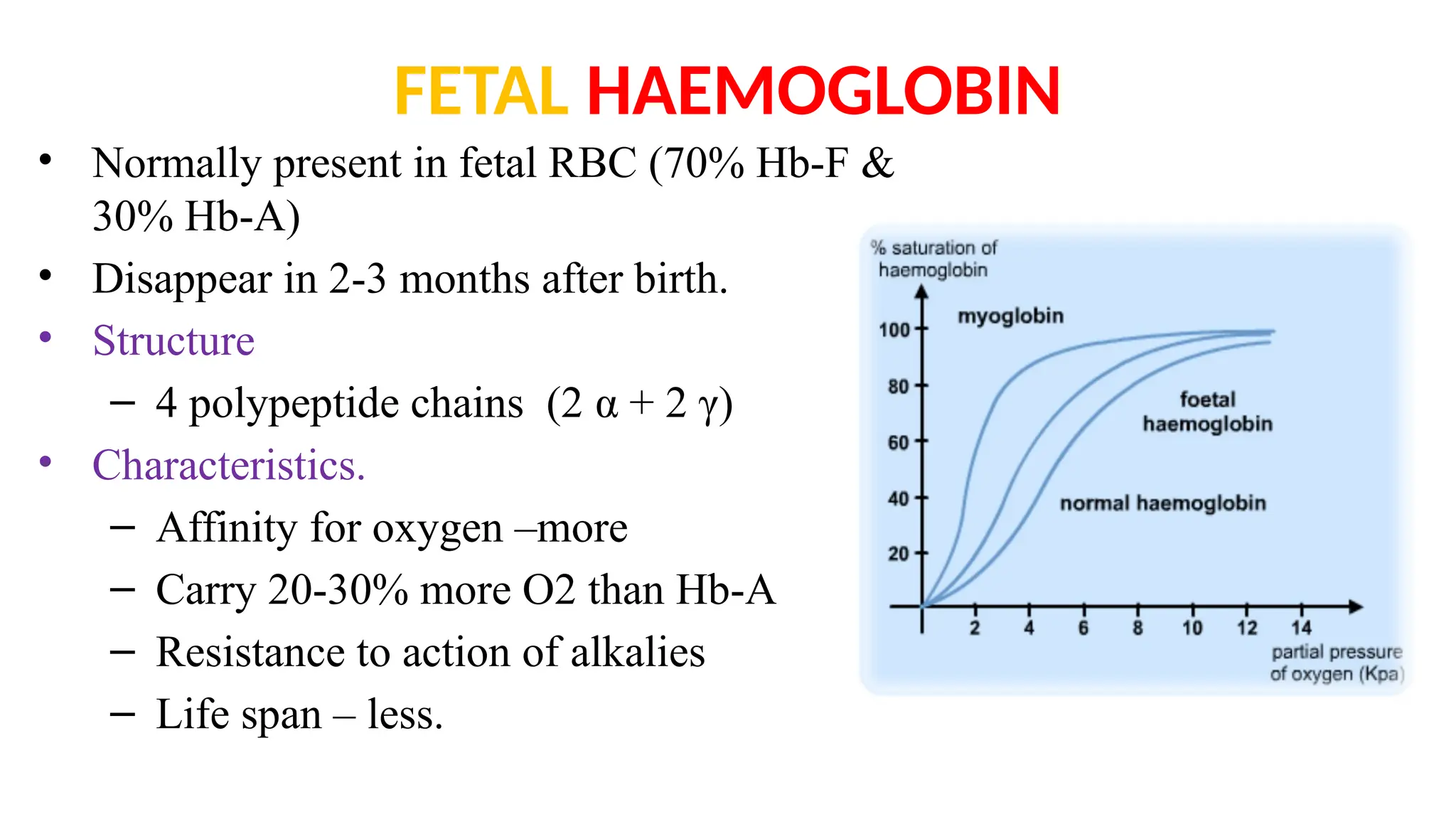
FETAL HAEMOGLOBIN
• Normally present in fetal RBC (70% Hb-F &
30% Hb-A)
• Disappear in 2-3 months after birth.
• Structure
– 4 polypeptide chains (2 α + 2 γ)
• Characteristics.
– Affinity for oxygen –more
– Carry 20-30% more O2 than Hb-A
– Resistance to action of alkalies
– Life span – less.

Hemoglobin Synthesis and types of Hemoglobin.ppt

  • 1.
    Haemoglobin  Hb isa conjugated protein of metaloporphyrin.  It is the red pigment inside the RBC.  Heam- 4% Globin- 96%  Molecular weight is 68000.
  • 3.
    Functions of Haemoglobin •Transport oxygen from lung to tissues • Transport CO2 to lungs • Maintains acid base balance ( As a Buffer) • Reserves Fe & Proteins
  • 4.
    Disadvantages if haemoglobinpresent in plasma. Increase viscosity. Increase osmotic pressure. Rapid destruction by reticuloendothelial system. Haemoglobinuria ( excretion through kidney)
  • 5.
    Adult Male • 13– 18 g/dl Adult Female • 11.5 - 16.5 g/dl Full term baby (Cord blood) • 13.5 – 19.5 g/dl Infant (1 year) 8 – 10 g/dl Child 10 - 13 g/dl Normal Hb Level
  • 6.
     Testosterone stimulate Erythropoisis,for that Hb level is higher than female. 1st day at birth Hb level is high, then reduce from 3rd month to 1 year. Then Hb raise slowly through childhood to adult.
  • 7.
    Grading of anemia MildUpto 11 g/dl Moderate 11- 9 g/dl Severe < 9 g/dl
  • 8.
    Synthesis of Hemoglobin 2 succinyl – CoA + 2 glysine Pyrrole  4 Pyrrole Protoporphyrin IX  Protoporphyrin IX + Fe2+ Heme  Globin 4 polypeptide chains ( 2 Alpha+ 2 Beta)  Heme + Globin Hemoglobin
  • 9.
    Attachment of Haemeto Globin. • 4 units of Haem attached to 1 unit of Globin. • So, 1 Haemoglobin molecules contains 4 Iron Atoms which carry 4 molecules of oxygen.
  • 10.
    Attachment of Haemeto Globin. • Globin helps the Fe to remain Fe++ form combine O2 loosely. • Carbonic anhydrase remain only into RBC, help CO2 transport as bicarbonate form.
  • 11.
    Hb A -2α+2β HbA2 - 2α+2δ Hb-F – 2α+2γ Hb Bart’s Hb Gower - 1 Hb-Gower -2 Hb Portland Types of Hb Adult Fetal Embryonic Normal
  • 12.
    Types of Hb Hb- S Hb - C Hb – D Panjub Abormal Hb - E
  • 13.
    Hb A -2α+2β 98% HbA2 - 2α+2δ 2% Hb-F - 2α+2γ 0-1 % Sickle Cell Haemoglobin Hb-M Hb C Physiological Pathological
  • 14.
    FETAL HAEMOGLOBIN • Normallypresent in fetal RBC (70% Hb-F & 30% Hb-A) • Disappear in 2-3 months after birth. • Structure – 4 polypeptide chains (2 α + 2 γ) • Characteristics. – Affinity for oxygen –more – Carry 20-30% more O2 than Hb-A – Resistance to action of alkalies – Life span – less.