Rheumatoid Factor
Muhammad Hassam
Immunology and Serology
MLT 4th
Semester
Introduction
• Rheumatoid factors are antibodies with specificity for
antigen determinants on the Fc fragment of human or
certain animal IgG.
• They’re associated with IgG, IgM & IgA. IgG & IgM
rheumatoid factors are the most common.
• During some disease of a joint, rheumatoid arthritis,
an IgG antibody is produced following to its
production the antibody become altered for unknown
reason, against this altered antibody a second
antibody (anti antibody) is produced which is known
as antigammaglobulin antibody.
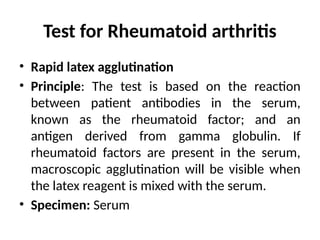
Test for Rheumatoid arthritis
• Rapid latex agglutination
• Principle: The test is based on the reaction
between patient antibodies in the serum,
known as the rheumatoid factor; and an
antigen derived from gamma globulin. If
rheumatoid factors are present in the serum,
macroscopic agglutination will be visible when
the latex reagent is mixed with the serum.
• Specimen: Serum
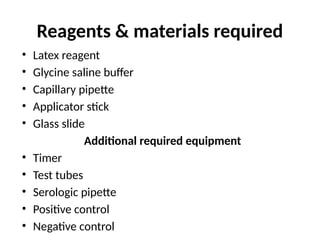
Reagents & materials required
• Latex reagent
• Glycine saline buffer
• Capillary pipette
• Applicator stick
• Glass slide
Additional required equipment
• Timer
• Test tubes
• Serologic pipette
• Positive control
• Negative control
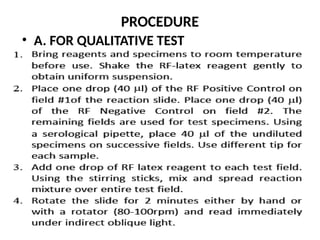
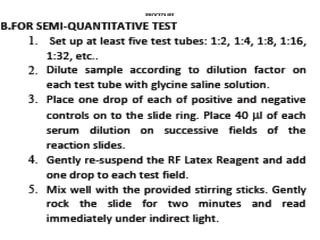
PROCEDURE
• A. FOR QUALITATIVE TEST
PROCEDURE
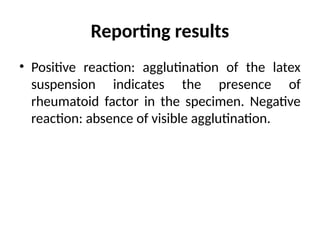
Reporting results
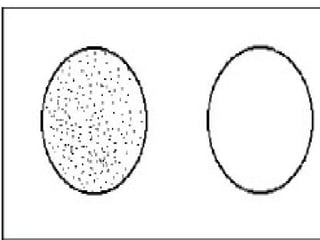
• Positive reaction: agglutination of the latex
suspension indicates the presence of
rheumatoid factor in the specimen. Negative
reaction: absence of visible agglutination.
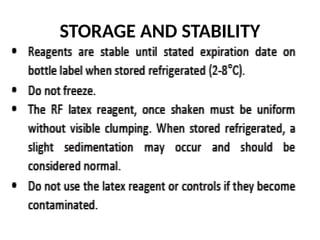
STORAGE AND STABILITY
QUALITY CONTROL
• RF Positive and Negative Control should be
included in each test batch.
• Acceptable performance is indicated when a
uniform milky suspension with no
agglutination is observed with the RF Negative
Control and agglutination with large
aggregates is observed with the RF Positive
Control.
LIMITATIONS
• Reaction time is critical. If reaction time
exceeds 2 minutes, drying of the reaction
mixture may cause false positive result.
• Increased levels of RF may be found in some
diseases other than rheumatoid arthritis such
as infectious mononucleosis.
• Certain patients with rheumatoid arthritis will
not have the RF present in their serum.


Rheumatoid Arthritis and its causing Factor.pptx

  • 1.
    Rheumatoid Factor Muhammad Hassam Immunologyand Serology MLT 4th Semester
  • 2.
    Introduction • Rheumatoid factorsare antibodies with specificity for antigen determinants on the Fc fragment of human or certain animal IgG. • They’re associated with IgG, IgM & IgA. IgG & IgM rheumatoid factors are the most common. • During some disease of a joint, rheumatoid arthritis, an IgG antibody is produced following to its production the antibody become altered for unknown reason, against this altered antibody a second antibody (anti antibody) is produced which is known as antigammaglobulin antibody.
  • 3.
    Test for Rheumatoidarthritis • Rapid latex agglutination • Principle: The test is based on the reaction between patient antibodies in the serum, known as the rheumatoid factor; and an antigen derived from gamma globulin. If rheumatoid factors are present in the serum, macroscopic agglutination will be visible when the latex reagent is mixed with the serum. • Specimen: Serum
  • 4.
    Reagents & materialsrequired • Latex reagent • Glycine saline buffer • Capillary pipette • Applicator stick • Glass slide Additional required equipment • Timer • Test tubes • Serologic pipette • Positive control • Negative control
  • 6.
    PROCEDURE • A. FORQUALITATIVE TEST
  • 8.
  • 9.
    Reporting results • Positivereaction: agglutination of the latex suspension indicates the presence of rheumatoid factor in the specimen. Negative reaction: absence of visible agglutination.
  • 10.
  • 11.
    QUALITY CONTROL • RFPositive and Negative Control should be included in each test batch. • Acceptable performance is indicated when a uniform milky suspension with no agglutination is observed with the RF Negative Control and agglutination with large aggregates is observed with the RF Positive Control.
  • 12.
    LIMITATIONS • Reaction timeis critical. If reaction time exceeds 2 minutes, drying of the reaction mixture may cause false positive result. • Increased levels of RF may be found in some diseases other than rheumatoid arthritis such as infectious mononucleosis. • Certain patients with rheumatoid arthritis will not have the RF present in their serum.