Hegemonic Masculinity and the Psychological
Well-being of Young Sexual Minority Men
Laura Jadwin-Čakmak, MPH
Steven Meanley, MPH
Emily Yeagley, MPH
Emily S. Pingel, MPH
Gary W. Harper, PhD, MPH
José A. Bauermeister, PhD, MPH
Presenter Disclosures
Laura Jadwin-Čakmak
(1)
The following personal financial relationships
with commercial interests relevant to this
presentation existed during the past 12 months:

No relationships to disclose
Agenda
 Background and theoretical rationale
 Sample description and procedures
 Relationship between caregiver-based hegemonic

masculinity and young gay and bisexual men’s
psychological well-being
 Implications for practice and future research
Objectives
 Identify how parental imposition of hegemonic

masculinity impacts the psychological well-being of
young sexual minority men.
 Consider how family-level interventions might use

these findings.
Background
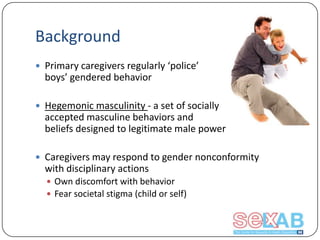
 Primary caregivers regularly ‘police’

boys’ gendered behavior
 Hegemonic masculinity - a set of socially

accepted masculine behaviors and
beliefs designed to legitimate male power
 Caregivers may respond to gender nonconformity

with disciplinary actions
 Own discomfort with behavior
 Fear societal stigma (child or self)
Background
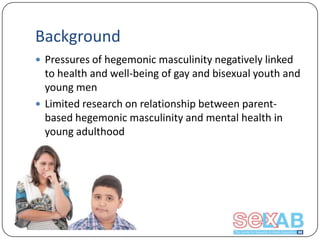
 Pressures of hegemonic masculinity negatively linked

to health and well-being of gay and bisexual youth and
young men
 Limited research on relationship between parentbased hegemonic masculinity and mental health in
young adulthood
Theoretical Rationale
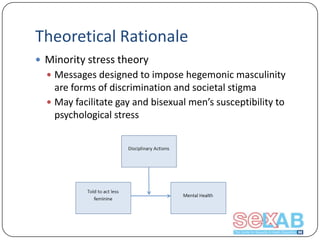
 Minority stress theory
 Messages designed to impose hegemonic masculinity

are forms of discrimination and societal stigma
 May facilitate gay and bisexual men’s susceptibility to
psychological stress
Sample
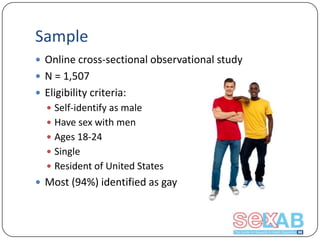
 Online cross-sectional observational study
 N = 1,507
 Eligibility criteria:
 Self-identify as male
 Have sex with men

 Ages 18-24
 Single
 Resident of United States

 Most (94%) identified as gay
Measures
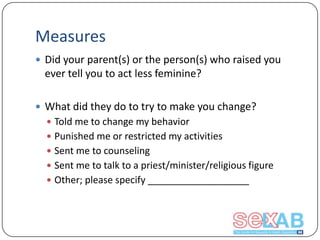
 Did your parent(s) or the person(s) who raised you

ever tell you to act less feminine?
 What did they do to try to make you change?
 Told me to change my behavior

 Punished me or restricted my activities
 Sent me to counseling
 Sent me to talk to a priest/minister/religious figure
 Other; please specify ___________________
Measures
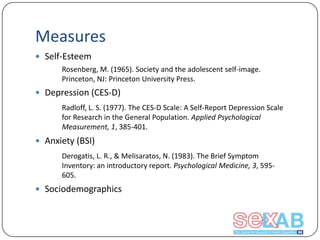
 Self-Esteem
Rosenberg, M. (1965). Society and the adolescent self-image.
Princeton, NJ: Princeton University Press.

 Depression (CES-D)
Radloff, L. S. (1977). The CES-D Scale: A Self-Report Depression Scale
for Research in the General Population. Applied Psychological
Measurement, 1, 385-401.

 Anxiety (BSI)
Derogatis, L. R., & Melisaratos, N. (1983). The Brief Symptom
Inventory: an introductory report. Psychological Medicine, 3, 595605.

 Sociodemographics
Data Analysis
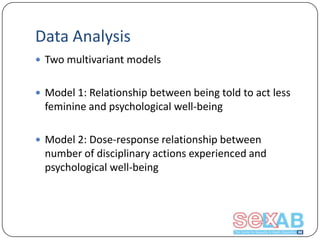
 Two multivariant models
 Model 1: Relationship between being told to act less

feminine and psychological well-being
 Model 2: Dose-response relationship between

number of disciplinary actions experienced and
psychological well-being
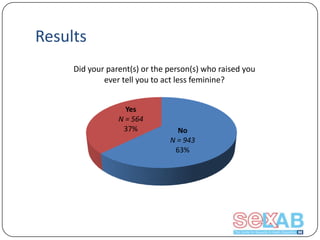
Results
Did your parent(s) or the person(s) who raised you
ever tell you to act less feminine?
Yes
N = 564
37%

No
N = 943
63%
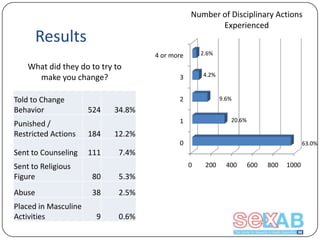
Number of Disciplinary Actions
Experienced

Results

2.6%

4 or more

What did they do to try to
make you change?
Told to Change
Behavior
Punished /
Restricted Actions

4.2%

3

9.6%

2

524

34.8%
20.6%

1

184

12.2%
0

Sent to Counseling

111

7.4%
0

Sent to Religious
Figure

80

5.3%

Abuse

38

2.5%

9

0.6%

Placed in Masculine
Activities

63.0%

200

400

600

800

1000
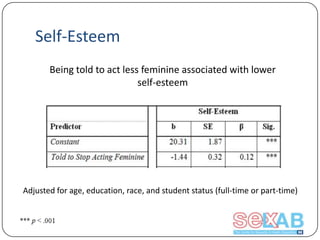
Self-Esteem
Being told to act less feminine associated with lower
self-esteem

Adjusted for age, education, race, and student status (full-time or part-time)
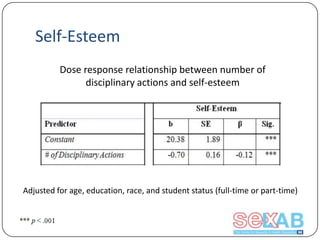
Self-Esteem
Dose response relationship between number of
disciplinary actions and self-esteem

Adjusted for age, education, race, and student status (full-time or part-time)
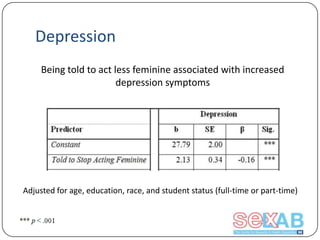
Depression
Being told to act less feminine associated with increased
depression symptoms

Adjusted for age, education, race, and student status (full-time or part-time)
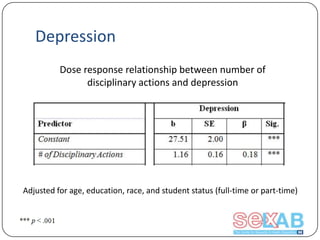
Depression
Dose response relationship between number of
disciplinary actions and depression

Adjusted for age, education, race, and student status (full-time or part-time)
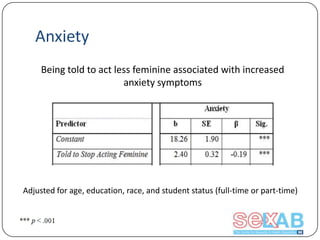
Anxiety
Being told to act less feminine associated with increased
anxiety symptoms

Adjusted for age, education, race, and student status (full-time or part-time)
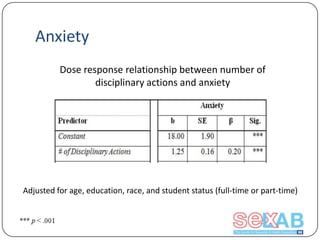
Anxiety
Dose response relationship between number of
disciplinary actions and anxiety

Adjusted for age, education, race, and student status (full-time or part-time)
Implications
 Practice
 Family-based interventions
 Family counseling

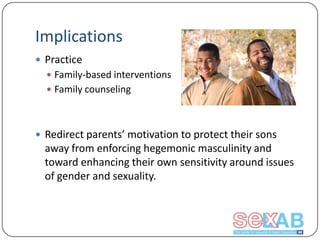
 Redirect parents’ motivation to protect their sons

away from enforcing hegemonic masculinity and
toward enhancing their own sensitivity around issues
of gender and sexuality.
Strengths & Limitations
 Strengths
 Large national sample of young men

 Dosage hypothesis
 Carrying over from one developmental period to another

 Limitations
 Non-representative sample
 Cross-sectional
 Self-report / recall bias
 Measurement of disciplinary actions
 Gender vs. other policing
Thank You
Acknowledgements
National Institutes of Mental Health
Center for Sexuality & Health Disparities (SexLab)
Virtual Love Study Participants

Contact Information
Laura Jadwin-Čakmak
Communications Director
Center for Sexuality & Health Disparities (SexLab)
University of Michigan School of Public Health
ljadwin@umich.edu

Hegemonic Masculinity and the Psychological Well-being of Young Sexual Minority Men

  • 1.
    Hegemonic Masculinity andthe Psychological Well-being of Young Sexual Minority Men Laura Jadwin-Čakmak, MPH Steven Meanley, MPH Emily Yeagley, MPH Emily S. Pingel, MPH Gary W. Harper, PhD, MPH José A. Bauermeister, PhD, MPH
  • 2.
    Presenter Disclosures Laura Jadwin-Čakmak (1) Thefollowing personal financial relationships with commercial interests relevant to this presentation existed during the past 12 months: No relationships to disclose
  • 3.
    Agenda  Background andtheoretical rationale  Sample description and procedures  Relationship between caregiver-based hegemonic masculinity and young gay and bisexual men’s psychological well-being  Implications for practice and future research
  • 4.
    Objectives  Identify howparental imposition of hegemonic masculinity impacts the psychological well-being of young sexual minority men.  Consider how family-level interventions might use these findings.
  • 5.
    Background  Primary caregiversregularly ‘police’ boys’ gendered behavior  Hegemonic masculinity - a set of socially accepted masculine behaviors and beliefs designed to legitimate male power  Caregivers may respond to gender nonconformity with disciplinary actions  Own discomfort with behavior  Fear societal stigma (child or self)
  • 6.
    Background  Pressures ofhegemonic masculinity negatively linked to health and well-being of gay and bisexual youth and young men  Limited research on relationship between parentbased hegemonic masculinity and mental health in young adulthood
  • 7.
    Theoretical Rationale  Minoritystress theory  Messages designed to impose hegemonic masculinity are forms of discrimination and societal stigma  May facilitate gay and bisexual men’s susceptibility to psychological stress
  • 8.
    Sample  Online cross-sectionalobservational study  N = 1,507  Eligibility criteria:  Self-identify as male  Have sex with men  Ages 18-24  Single  Resident of United States  Most (94%) identified as gay
  • 9.
    Measures  Did yourparent(s) or the person(s) who raised you ever tell you to act less feminine?  What did they do to try to make you change?  Told me to change my behavior  Punished me or restricted my activities  Sent me to counseling  Sent me to talk to a priest/minister/religious figure  Other; please specify ___________________
  • 10.
    Measures  Self-Esteem Rosenberg, M.(1965). Society and the adolescent self-image. Princeton, NJ: Princeton University Press.  Depression (CES-D) Radloff, L. S. (1977). The CES-D Scale: A Self-Report Depression Scale for Research in the General Population. Applied Psychological Measurement, 1, 385-401.  Anxiety (BSI) Derogatis, L. R., & Melisaratos, N. (1983). The Brief Symptom Inventory: an introductory report. Psychological Medicine, 3, 595605.  Sociodemographics
  • 11.
    Data Analysis  Twomultivariant models  Model 1: Relationship between being told to act less feminine and psychological well-being  Model 2: Dose-response relationship between number of disciplinary actions experienced and psychological well-being
  • 12.
    Results Did your parent(s)or the person(s) who raised you ever tell you to act less feminine? Yes N = 564 37% No N = 943 63%
  • 13.
    Number of DisciplinaryActions Experienced Results 2.6% 4 or more What did they do to try to make you change? Told to Change Behavior Punished / Restricted Actions 4.2% 3 9.6% 2 524 34.8% 20.6% 1 184 12.2% 0 Sent to Counseling 111 7.4% 0 Sent to Religious Figure 80 5.3% Abuse 38 2.5% 9 0.6% Placed in Masculine Activities 63.0% 200 400 600 800 1000
  • 14.
    Self-Esteem Being told toact less feminine associated with lower self-esteem Adjusted for age, education, race, and student status (full-time or part-time)
  • 15.
    Self-Esteem Dose response relationshipbetween number of disciplinary actions and self-esteem Adjusted for age, education, race, and student status (full-time or part-time)
  • 16.
    Depression Being told toact less feminine associated with increased depression symptoms Adjusted for age, education, race, and student status (full-time or part-time)
  • 17.
    Depression Dose response relationshipbetween number of disciplinary actions and depression Adjusted for age, education, race, and student status (full-time or part-time)
  • 18.
    Anxiety Being told toact less feminine associated with increased anxiety symptoms Adjusted for age, education, race, and student status (full-time or part-time)
  • 19.
    Anxiety Dose response relationshipbetween number of disciplinary actions and anxiety Adjusted for age, education, race, and student status (full-time or part-time)
  • 20.
    Implications  Practice  Family-basedinterventions  Family counseling  Redirect parents’ motivation to protect their sons away from enforcing hegemonic masculinity and toward enhancing their own sensitivity around issues of gender and sexuality.
  • 21.
    Strengths & Limitations Strengths  Large national sample of young men  Dosage hypothesis  Carrying over from one developmental period to another  Limitations  Non-representative sample  Cross-sectional  Self-report / recall bias  Measurement of disciplinary actions  Gender vs. other policing
  • 22.
    Thank You Acknowledgements National Institutesof Mental Health Center for Sexuality & Health Disparities (SexLab) Virtual Love Study Participants Contact Information Laura Jadwin-Čakmak Communications Director Center for Sexuality & Health Disparities (SexLab) University of Michigan School of Public Health ljadwin@umich.edu