AWARENESS PROGRAME BY
In The Memories Of Those
Who Lost Their Lives In
Deadly Heat Waves of 2015
“A National Tragedy”.
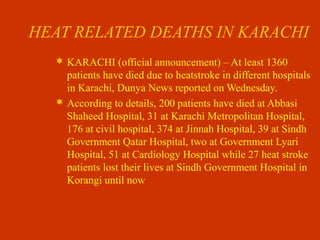
HEAT RELATED DEATHS IN KARACHI
 KARACHI (official announcement) – At least 1360
patients have died due to heatstroke in different hospitals
in Karachi, Dunya News reported on Wednesday.
 According to details, 200 patients have died at Abbasi
Shaheed Hospital, 31 at Karachi Metropolitan Hospital,
176 at civil hospital, 374 at Jinnah Hospital, 39 at Sindh
Government Qatar Hospital, two at Government Lyari
Hospital, 51 at Cardiology Hospital while 27 heat stroke
patients lost their lives at Sindh Government Hospital in
Korangi until now
COMMON FACTORS
Protective clothing
Focus on task at hand
Job security concerns
Desire to succeed
Desire to be accepted
Machismo
Peer pressure
Delayed thirst mechanism
PHYSIOLOGICAL RESPONSES
TO OVERHEATING
Common Translation:
What happens when you get
too dang hot
“TOO DANG HOT RESULTS”
Excessive sweat loss results in dehydration
The body loses its ability to cool
Increased blood flow to skin causes
decrease in organ function
HEAT-RELATED ILLNESSES
HEAT CRAMPS
HEAT EXHAUSTION
HEAT STROKE
HEAT CRAMPS
Caused by excessive loss of electrolytes
Early warning sign of heat stress
Painful cramps usually in legs or abdomen
Stop activity, hydrate, rest in cool place
Get medical attention if condition continues
HEAT EXHAUSTION
The body’s response to excessive water
and electrolyte loss
Stop activity and seek treatment
immediately
HEAT STROKE
The body’s cooling mechanism shuts down
50% that reach the heat stroke stage die
even with medical attention
LIVE OR DIE?
HEAT EXHAUSTION
 Skin is pale
 Excessive sweating
 May faint but usually
conscious
 Headache
 Nausea and vomiting
 Blurred vision
 Dizziness
HEAT STROKE
Skin is red
No sweating
Unconscious or
incoherent
TREATMENT
HEAT EXHAUSTION
Call 911
Rest in cool place
Loosen and remove
unnecessary clothing
Shower or sponge
with cool water
HEAT STROKE
Call 911
Immediate,
aggressive, effective
cooling
DO NOT give
anything by mouth
Transport to hospital
HUMAN RISK FACTORS
Poor nutrition
Poor physical
condition
High and low % body
fat
Previous heat illness
Lack of acclimatization
Over 40
Illness (diabetes, asthma)
Pregnancy
Diet plans
ENVIRONMENTAL RISK
FACTORS
Air temperature
Direct sunlight
Radiant heat
Humidity
Little air movement
JOB RISK FACTORS
Work intensity
Work duration
Location (roof, road, enclosure)
Clothing (weight, impermeability)
Respiratory protection
INDIVIDUAL’S
RESPONSIBILITY
Follow instructions of IH and health care
professionals
Be watchful for symptoms (self and others)
Properly hydrate (before, during, after)
Get adequate rest
Avoid alcohol, unnecessary medication,
and caffeine
MANAGEMENT
RESPONSIBILITY
Ensure that
environmental
conditions are
monitored
Adjust work practices
as necessary
Be watchful for signs
of overexposure
Know workers
medical history
Assure workers are
properly trained
Conduct pre and post
job safety meetings
Assure that affected
workers receive
treatment
MONITORING
Environmental monitoring
– heat index= temp+humidity+radiant
used for guidance in establishing work/rest
ratio
Personnel monitoring
– Oral thermometer
– Ear probe
– Thermometer
– Core Temp
– Pulse rate
– Blood pressure

heat stroke

  • 1.
  • 2.
    In The MemoriesOf Those Who Lost Their Lives In Deadly Heat Waves of 2015 “A National Tragedy”.
  • 3.
    HEAT RELATED DEATHSIN KARACHI  KARACHI (official announcement) – At least 1360 patients have died due to heatstroke in different hospitals in Karachi, Dunya News reported on Wednesday.  According to details, 200 patients have died at Abbasi Shaheed Hospital, 31 at Karachi Metropolitan Hospital, 176 at civil hospital, 374 at Jinnah Hospital, 39 at Sindh Government Qatar Hospital, two at Government Lyari Hospital, 51 at Cardiology Hospital while 27 heat stroke patients lost their lives at Sindh Government Hospital in Korangi until now
  • 4.
    COMMON FACTORS Protective clothing Focuson task at hand Job security concerns Desire to succeed Desire to be accepted Machismo Peer pressure Delayed thirst mechanism
  • 5.
    PHYSIOLOGICAL RESPONSES TO OVERHEATING CommonTranslation: What happens when you get too dang hot
  • 6.
    “TOO DANG HOTRESULTS” Excessive sweat loss results in dehydration The body loses its ability to cool Increased blood flow to skin causes decrease in organ function
  • 7.
  • 8.
    HEAT CRAMPS Caused byexcessive loss of electrolytes Early warning sign of heat stress Painful cramps usually in legs or abdomen Stop activity, hydrate, rest in cool place Get medical attention if condition continues
  • 9.
    HEAT EXHAUSTION The body’sresponse to excessive water and electrolyte loss Stop activity and seek treatment immediately
  • 10.
    HEAT STROKE The body’scooling mechanism shuts down 50% that reach the heat stroke stage die even with medical attention
  • 11.
    LIVE OR DIE? HEATEXHAUSTION  Skin is pale  Excessive sweating  May faint but usually conscious  Headache  Nausea and vomiting  Blurred vision  Dizziness HEAT STROKE Skin is red No sweating Unconscious or incoherent
  • 12.
    TREATMENT HEAT EXHAUSTION Call 911 Restin cool place Loosen and remove unnecessary clothing Shower or sponge with cool water HEAT STROKE Call 911 Immediate, aggressive, effective cooling DO NOT give anything by mouth Transport to hospital
  • 13.
    HUMAN RISK FACTORS Poornutrition Poor physical condition High and low % body fat Previous heat illness Lack of acclimatization Over 40 Illness (diabetes, asthma) Pregnancy Diet plans
  • 14.
    ENVIRONMENTAL RISK FACTORS Air temperature Directsunlight Radiant heat Humidity Little air movement
  • 15.
    JOB RISK FACTORS Workintensity Work duration Location (roof, road, enclosure) Clothing (weight, impermeability) Respiratory protection
  • 16.
    INDIVIDUAL’S RESPONSIBILITY Follow instructions ofIH and health care professionals Be watchful for symptoms (self and others) Properly hydrate (before, during, after) Get adequate rest Avoid alcohol, unnecessary medication, and caffeine
  • 17.
    MANAGEMENT RESPONSIBILITY Ensure that environmental conditions are monitored Adjustwork practices as necessary Be watchful for signs of overexposure Know workers medical history Assure workers are properly trained Conduct pre and post job safety meetings Assure that affected workers receive treatment
  • 18.
    MONITORING Environmental monitoring – heatindex= temp+humidity+radiant used for guidance in establishing work/rest ratio Personnel monitoring – Oral thermometer – Ear probe – Thermometer – Core Temp – Pulse rate – Blood pressure