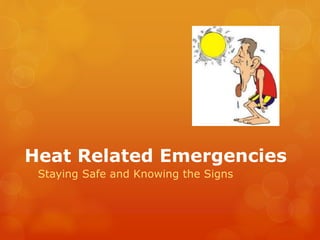
Heat Related Emergencies
Staying Safe and Knowing the Signs
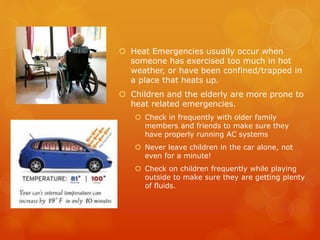
 Heat Emergencies usually occur when
someone has exercised too much in hot
weather, or have been confined/trapped in
a place that heats up.
 Children and the elderly are more prone to
heat related emergencies.
 Check in frequently with older family
members and friends to make sure they
have properly running AC systems
 Never leave children in the car alone, not
even for a minute!
 Check on children frequently while playing
outside to make sure they are getting plenty
of fluids.
What are heat Emergencies?
A Health crises caused by exposure
to high temperatures and the sun.
Occur in 3 stages
Heat Cramps
Heat Exhaustion
Heat Stroke
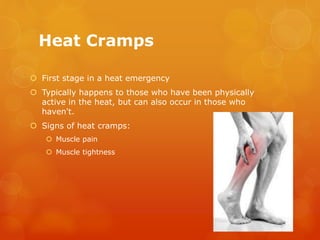
Heat Cramps
 First stage in a heat emergency
 Typically happens to those who have been physically
active in the heat, but can also occur in those who
haven't.
 Signs of heat cramps:
 Muscle pain
 Muscle tightness
First Aid:
 Rest in a shady, cool area, out of direct sunlight
 Drink plenty of cool water – avoid ice cold/cold water as
it may restrict blood flow
 Gently massage the cramping muscle, encourage gently
stretching the muscle.
 Wait a few hours before returning to strenuous activity
 Seek medical attention if cramps do not go away
Heat Exhaustion
 The second stage in a heat emergency
 Symptoms include (but are not limited to):
 Muscle Cramps
 Dizziness
 Headache
 Irritability
 Extreme thirst
 Nausea/vomiting
 Pale Skin
 Heavy Sweating
 Fainting
First Aid:
 Sit or lie down in a cool shady area, out of direct
sunlight
 Loosen clothing
 Apply plenty of cool, wet towels to face, neck, chest and
limbs
 Drink plenty of cool water – be sure not to drink too
fast!
 Do not return to strenuous activity
 Seek emergency care if signs and symptoms persist or
worsen
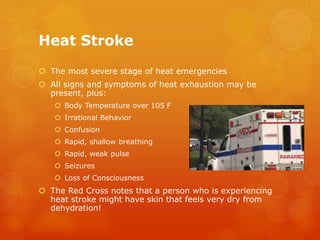
Heat Stroke
 The most severe stage of heat emergencies
 All signs and symptoms of heat exhaustion may be
present, plus:
 Body Temperature over 105 F
 Irrational Behavior
 Confusion
 Rapid, shallow breathing
 Rapid, weak pulse
 Seizures
 Loss of Consciousness
 The Red Cross notes that a person who is experiencing
heat stroke might have skin that feels very dry from
dehydration!
First aid:
 HEAT STROKE IS A LIFE-THREATENING
EMERGENCY! CALL 9-1-1 IMMEDIATELY!
 While waiting for help:
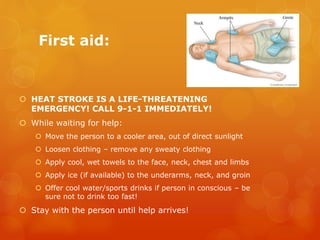
 Move the person to a cooler area, out of direct sunlight
 Loosen clothing – remove any sweaty clothing
 Apply cool, wet towels to the face, neck, chest and limbs
 Apply ice (if available) to the underarms, neck, and groin
 Offer cool water/sports drinks if person in conscious – be
sure not to drink too fast!
 Stay with the person until help arrives!
Preventing Heat Emergencies
 Wear light, loose clothing
 Acclimate to hot conditions slowly, and rest as often as
possible
 Avoid exercise during the hottest part of the day
 Avoid alcohol
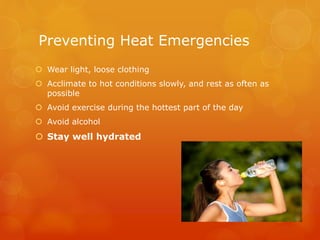
 Stay well hydrated
Please remember!
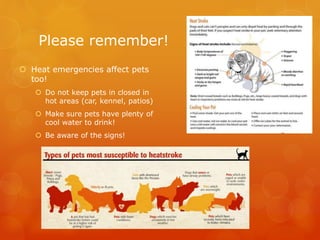
 Heat emergencies affect pets
too!
 Do not keep pets in closed in
hot areas (car, kennel, patios)
 Make sure pets have plenty of
cool water to drink!
 Be aware of the signs!

Heat Related Emergencies

  • 1.
    Heat Related Emergencies StayingSafe and Knowing the Signs
  • 2.
     Heat Emergenciesusually occur when someone has exercised too much in hot weather, or have been confined/trapped in a place that heats up.  Children and the elderly are more prone to heat related emergencies.  Check in frequently with older family members and friends to make sure they have properly running AC systems  Never leave children in the car alone, not even for a minute!  Check on children frequently while playing outside to make sure they are getting plenty of fluids.
  • 3.
    What are heatEmergencies? A Health crises caused by exposure to high temperatures and the sun. Occur in 3 stages Heat Cramps Heat Exhaustion Heat Stroke
  • 4.
    Heat Cramps  Firststage in a heat emergency  Typically happens to those who have been physically active in the heat, but can also occur in those who haven't.  Signs of heat cramps:  Muscle pain  Muscle tightness
  • 5.
    First Aid:  Restin a shady, cool area, out of direct sunlight  Drink plenty of cool water – avoid ice cold/cold water as it may restrict blood flow  Gently massage the cramping muscle, encourage gently stretching the muscle.  Wait a few hours before returning to strenuous activity  Seek medical attention if cramps do not go away
  • 6.
    Heat Exhaustion  Thesecond stage in a heat emergency  Symptoms include (but are not limited to):  Muscle Cramps  Dizziness  Headache  Irritability  Extreme thirst  Nausea/vomiting  Pale Skin  Heavy Sweating  Fainting
  • 7.
    First Aid:  Sitor lie down in a cool shady area, out of direct sunlight  Loosen clothing  Apply plenty of cool, wet towels to face, neck, chest and limbs  Drink plenty of cool water – be sure not to drink too fast!  Do not return to strenuous activity  Seek emergency care if signs and symptoms persist or worsen
  • 8.
    Heat Stroke  Themost severe stage of heat emergencies  All signs and symptoms of heat exhaustion may be present, plus:  Body Temperature over 105 F  Irrational Behavior  Confusion  Rapid, shallow breathing  Rapid, weak pulse  Seizures  Loss of Consciousness  The Red Cross notes that a person who is experiencing heat stroke might have skin that feels very dry from dehydration!
  • 9.
    First aid:  HEATSTROKE IS A LIFE-THREATENING EMERGENCY! CALL 9-1-1 IMMEDIATELY!  While waiting for help:  Move the person to a cooler area, out of direct sunlight  Loosen clothing – remove any sweaty clothing  Apply cool, wet towels to the face, neck, chest and limbs  Apply ice (if available) to the underarms, neck, and groin  Offer cool water/sports drinks if person in conscious – be sure not to drink too fast!  Stay with the person until help arrives!
  • 10.
    Preventing Heat Emergencies Wear light, loose clothing  Acclimate to hot conditions slowly, and rest as often as possible  Avoid exercise during the hottest part of the day  Avoid alcohol  Stay well hydrated
  • 11.
    Please remember!  Heatemergencies affect pets too!  Do not keep pets in closed in hot areas (car, kennel, patios)  Make sure pets have plenty of cool water to drink!  Be aware of the signs!