HEAT
EXHAUSTION
HEAT EXHAUSTION
● It is a condition where the body is
unable to get rid of excess body
heat.
● If left untreated, could lead to more
serious and potentially fatal heat
related condition called heat stroke.
HEAT STROKE
●Heat stroke is a form of hyperthermia in which
the body temperature is elevated dramatically.
●Heat stroke is a medical emergency and can be
fatal if not promptly and properly treated.
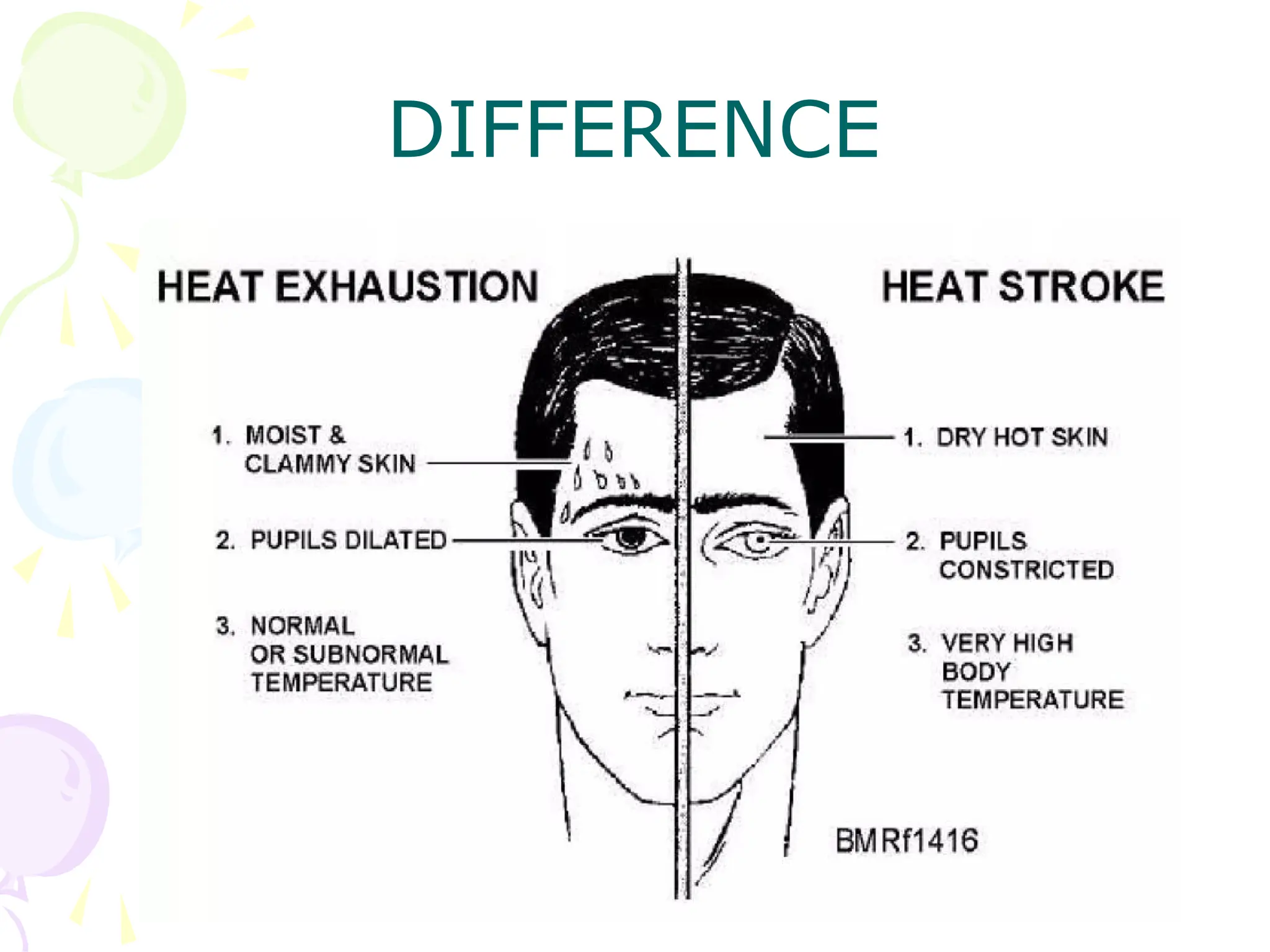
DIFFERENCE
CAUSES
●Extreme heat, high humidity, or
vigorous physical exertion under the
sun
●Dehydration- A dehydrated person
may not be able to sweat fast enough
to dissipate heat, which causes the
body temperature to rise.
Signs and Symptoms
●Sometimes a person experiences symptoms of
heat exhaustion before progressing to heat strokes.
Signs and Symptoms include:
●Nausea
●Vomiting
●Fatigue
●weakness
●Headache
●Muscle cramps
●dizziness
WHO ARE AT RISK?
●Infants
●the elderly (often with associated heart
diseases, lung diseases, kidney diseases, or
who are taking medications that make them
vulnerable to dehydration and heat strokes)
●athletes
●individuals who work outside and physically
exert themselves under the sun.
TREATMENT
Victims of Heat Stroke must receive immediate treatment to avoid
permanent organ damage.
COOL THE PATIENT
●Get the victim to a shady area, remove clothing, apply cool or
tepid water to the skin (for example you may spray the victim
with cool water from a garden hose), fan the victim to
promote sweating and evaporation, and place ice packs under
armpits and groin.
●If the person is able to drink liquids, have them drink
cool water or other cool beverages that do not contain
alcohol or caffeine.
TREATMENT
●Monitor body temperature with a thermometer and continue
cooling efforts until the body temperature drops to 101 to 102
F (38.3 to 38.8 C).
●Always notify emergency services (911) immediately. If their
arrival is delayed, they can give you further instructions for
treatment of the victim.
WHY FATAL?
● Heat stroke can lead to a number of
complications , depending on how long
the body temperature remains high.
● Vital organ damage is the most common.
● Without a quick response to lower the
body temperature, it can cause brain and
other organs to swell, leading to damage.
PREVENTION
●The most important measures to prevent heat
strokes are to avoid becoming dehydrated and to
avoid vigorous physical activities in hot and humid
weather.
●Have adequate rest.
PREVENTION
●If you have to perform physical activities in hot
weather, drink plenty of fluids (such as water and
sports drinks), but avoid alcohol, caffeine (including
soft drinks and tea), and tea which may lead to
dehydration.
●Your body will need replenishment of electrolytes
(such as sodium) as well as fluids if you sweat
excessively or perform vigorous activity in the
sunlight for prolonged periods.

heat stroke also known as sun stroke or Hyperthermia

  • 1.
  • 2.
    HEAT EXHAUSTION ● Itis a condition where the body is unable to get rid of excess body heat. ● If left untreated, could lead to more serious and potentially fatal heat related condition called heat stroke.
  • 3.
    HEAT STROKE ●Heat strokeis a form of hyperthermia in which the body temperature is elevated dramatically. ●Heat stroke is a medical emergency and can be fatal if not promptly and properly treated.
  • 4.
  • 5.
    CAUSES ●Extreme heat, highhumidity, or vigorous physical exertion under the sun ●Dehydration- A dehydrated person may not be able to sweat fast enough to dissipate heat, which causes the body temperature to rise.
  • 6.
  • 7.
    ●Sometimes a personexperiences symptoms of heat exhaustion before progressing to heat strokes. Signs and Symptoms include: ●Nausea ●Vomiting ●Fatigue ●weakness ●Headache ●Muscle cramps ●dizziness
  • 8.
    WHO ARE ATRISK? ●Infants ●the elderly (often with associated heart diseases, lung diseases, kidney diseases, or who are taking medications that make them vulnerable to dehydration and heat strokes) ●athletes ●individuals who work outside and physically exert themselves under the sun.
  • 9.
    TREATMENT Victims of HeatStroke must receive immediate treatment to avoid permanent organ damage. COOL THE PATIENT ●Get the victim to a shady area, remove clothing, apply cool or tepid water to the skin (for example you may spray the victim with cool water from a garden hose), fan the victim to promote sweating and evaporation, and place ice packs under armpits and groin. ●If the person is able to drink liquids, have them drink cool water or other cool beverages that do not contain alcohol or caffeine.
  • 11.
    TREATMENT ●Monitor body temperaturewith a thermometer and continue cooling efforts until the body temperature drops to 101 to 102 F (38.3 to 38.8 C). ●Always notify emergency services (911) immediately. If their arrival is delayed, they can give you further instructions for treatment of the victim.
  • 12.
    WHY FATAL? ● Heatstroke can lead to a number of complications , depending on how long the body temperature remains high. ● Vital organ damage is the most common. ● Without a quick response to lower the body temperature, it can cause brain and other organs to swell, leading to damage.
  • 13.
    PREVENTION ●The most importantmeasures to prevent heat strokes are to avoid becoming dehydrated and to avoid vigorous physical activities in hot and humid weather. ●Have adequate rest.
  • 14.
    PREVENTION ●If you haveto perform physical activities in hot weather, drink plenty of fluids (such as water and sports drinks), but avoid alcohol, caffeine (including soft drinks and tea), and tea which may lead to dehydration. ●Your body will need replenishment of electrolytes (such as sodium) as well as fluids if you sweat excessively or perform vigorous activity in the sunlight for prolonged periods.