

Dr. Teena Gupta
drteena30@gmail.com
Heat stress
or
Heat illness
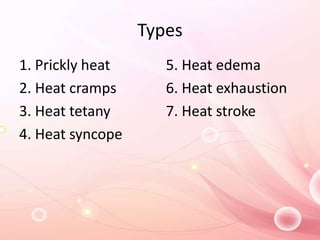
Types
1. Prickly heat
2. Heat cramps
3. Heat tetany
4. Heat syncope
5. Heat edema
6. Heat exhaustion
7. Heat stroke
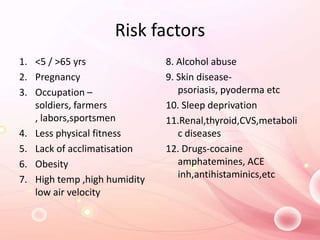
Risk factors
1. <5 / >65 yrs
2. Pregnancy
3. Occupation –
soldiers, farmers
, labors,sportsmen
4. Less physical fitness
5. Lack of acclimatisation
6. Obesity
7. High temp ,high humidity
low air velocity
8. Alcohol abuse
9. Skin disease-
psoriasis, pyoderma etc
10. Sleep deprivation
11.Renal,thyroid,CVS,metaboli
c diseases
12. Drugs-cocaine
amphatemines, ACE
inh,antihistaminics,etc
Diagnosis
• R/O other causes first
• Exposure high temp in immediate past
• Usually pt is not acclimatised to conditions
Prickly heat
• Lichen tropicus
• Miliaria rubra
• obstruction of sweat gland leakage of sweat into the deeper
layers of the epidermislocal inflammatory reaction
• Maculopapular, pruritic, erythematus
May progresses to chronic dermatitis & superinfection if left
untreated
• Prevention – bath with cool water with gentle scrub, loose light
cloths
• Treatment – calamine lotion , chlorhexidine lotion, oral
antihistaminics
• Severe – 1 % salicyic acid & antibiotics
Heat cramps
• Spasm of muscle –
shoulder,arms,adbomen,calves
• Heavy muscular exercises in hot environment
with hypotonic fluid intake electrolyte
imbalance
• Occurs sometime after exposure when pt is
relaxing
• Oral intake of electral powder
• Severe cases – iv normal saline
Heat tetany
• Capropedal spasm & paraesthesiae
• Short exposure to very hot temp
• hyperventilation  resp alkalosislow co2
decreased binding of calcium to albumin 
low ionized calcium
• Management – reduce temp & reduce resp
rate
Heat syncope
• Sudden loss of conciousness
• High temp  peripheral vasodilation
• T/t – recumbent position ,reduce body
temp, rehydration
Heat edema
• Pitting edema of hands & feets or any
dependent part
• Most common in bedridden elderly
• High tempvasodilationdependent edema
• T/t – reassurance, limb elevation, crepe
bandage , avoid high temp , adequate
rehydration
Heat exhaustion
• Excessive working in high temp with loss of fluid
and salts
• Normal thermoregulatory mechanism
• Symptoms --
Excessive
sweating,fatigue,malaise,nausea, giddiness
• Signs --
Pale , low volume pulse, low BP , moderately high
temp < 40 degree
Management –
• Could be precursor of heat stroke – should be
managed promptly and adequately
• rehydration, salt replacement, cool
environment , rest
Heat stroke
• Life threatening condition
• Disturbed thermoregulatory mechanism
• Exaggerated acute phase response – increased
production of inflammatory
cytokines,endothelial derived vasoactive
factors , could be activation of coagulation
process, alteration in expression of heat shock
proteins
• Dehydration very late feature
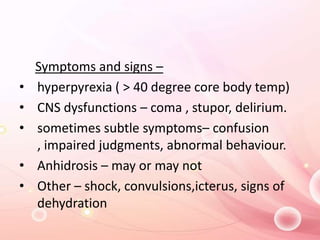
Symptoms and signs –
• hyperpyrexia ( > 40 degree core body temp)
• CNS dysfunctions – coma , stupor, delirium.
• sometimes subtle symptoms– confusion
, impaired judgments, abnormal behaviour.
• Anhidrosis – may or may not
• Other – shock, convulsions,icterus, signs of
dehydration
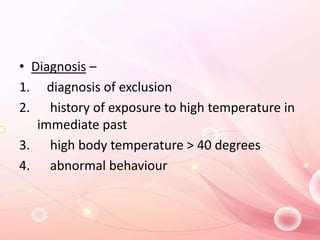
• Diagnosis –
1. diagnosis of exclusion
2. history of exposure to high temperature in
immediate past
3. high body temperature > 40 degrees
4. abnormal behaviour
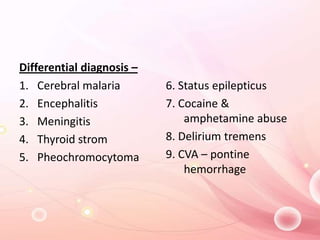
Differential diagnosis –
1. Cerebral malaria
2. Encephalitis
3. Meningitis
4. Thyroid strom
5. Pheochromocytoma
6. Status epilepticus
7. Cocaine &
amphetamine abuse
8. Delirium tremens
9. CVA – pontine
hemorrhage
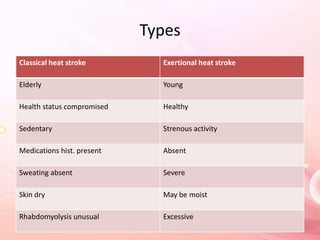
Types
Classical heat stroke Exertional heat stroke
Elderly Young
Health status compromised Healthy
Sedentary Strenous activity
Medications hist. present Absent
Sweating absent Severe
Skin dry May be moist
Rhabdomyolysis unusual Excessive
Complications
• Hepatic failure
• Renal failure
• Cerebral edema & cerebellar demage
• Arrythmias
• Rhabdomyolysis
• DIC
Investigations
• CBC - ↑WBC, ↑HCT, ↓plt
• ↓pro time, hypofibrinogenemia, other
features of DIC
• Hypoglycemia, N/↓Cl, hypokalemia, hypocalc
emia, hypophophetemia
• ↑CPK, ↑BUN, ↑SGOT, ↑SGPT
• Urine –myoglobinuria, proteinuria, hyaline &
granular cast
Management
• To reduce body temp < 39 degree( 0.2 /m )—
1. Emergency - should be managed promptly
2. shift immediately to cool & shaded place
3. Put cold water or wrap soaked sheet around pt
4. Can immerse pt in cold water or put ice pack
around neck, axilla, groin.
5. Cold water gastric lavage
6. Antipyretic not proven to be effective
• Shock, cerebral edema, adrenal
insufficiencies- iv steroids
• Rhabdomyolysis & ARF – iv
fluids, diuretics, mannitol, sodabicarb
• Management of DIC and other complications
• Supportive – iv fluids, BP, electrolyes
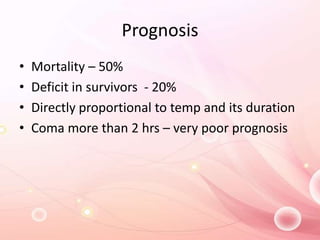
Prognosis
• Mortality – 50%
• Deficit in survivors - 20%
• Directly proportional to temp and its duration
• Coma more than 2 hrs – very poor prognosis
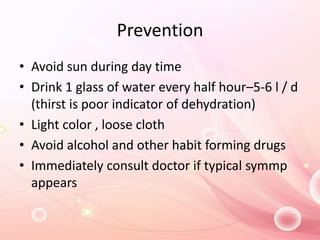
Prevention
• Avoid sun during day time
• Drink 1 glass of water every half hour–5-6 l / d
(thirst is poor indicator of dehydration)
• Light color , loose cloth
• Avoid alcohol and other habit forming drugs
• Immediately consult doctor if typical symmp
appears
Thank You !!

Heat illness

  • 1.
  • 2.
  • 3.
    Types 1. Prickly heat 2.Heat cramps 3. Heat tetany 4. Heat syncope 5. Heat edema 6. Heat exhaustion 7. Heat stroke
  • 4.
    Risk factors 1. <5/ >65 yrs 2. Pregnancy 3. Occupation – soldiers, farmers , labors,sportsmen 4. Less physical fitness 5. Lack of acclimatisation 6. Obesity 7. High temp ,high humidity low air velocity 8. Alcohol abuse 9. Skin disease- psoriasis, pyoderma etc 10. Sleep deprivation 11.Renal,thyroid,CVS,metaboli c diseases 12. Drugs-cocaine amphatemines, ACE inh,antihistaminics,etc
  • 5.
    Diagnosis • R/O othercauses first • Exposure high temp in immediate past • Usually pt is not acclimatised to conditions
  • 6.
    Prickly heat • Lichentropicus • Miliaria rubra • obstruction of sweat gland leakage of sweat into the deeper layers of the epidermislocal inflammatory reaction • Maculopapular, pruritic, erythematus May progresses to chronic dermatitis & superinfection if left untreated • Prevention – bath with cool water with gentle scrub, loose light cloths • Treatment – calamine lotion , chlorhexidine lotion, oral antihistaminics • Severe – 1 % salicyic acid & antibiotics
  • 7.
    Heat cramps • Spasmof muscle – shoulder,arms,adbomen,calves • Heavy muscular exercises in hot environment with hypotonic fluid intake electrolyte imbalance • Occurs sometime after exposure when pt is relaxing • Oral intake of electral powder • Severe cases – iv normal saline
  • 8.
    Heat tetany • Capropedalspasm & paraesthesiae • Short exposure to very hot temp • hyperventilation  resp alkalosislow co2 decreased binding of calcium to albumin  low ionized calcium • Management – reduce temp & reduce resp rate
  • 9.
    Heat syncope • Suddenloss of conciousness • High temp  peripheral vasodilation • T/t – recumbent position ,reduce body temp, rehydration
  • 10.
    Heat edema • Pittingedema of hands & feets or any dependent part • Most common in bedridden elderly • High tempvasodilationdependent edema • T/t – reassurance, limb elevation, crepe bandage , avoid high temp , adequate rehydration
  • 11.
    Heat exhaustion • Excessiveworking in high temp with loss of fluid and salts • Normal thermoregulatory mechanism • Symptoms -- Excessive sweating,fatigue,malaise,nausea, giddiness • Signs -- Pale , low volume pulse, low BP , moderately high temp < 40 degree
  • 12.
    Management – • Couldbe precursor of heat stroke – should be managed promptly and adequately • rehydration, salt replacement, cool environment , rest
  • 13.
    Heat stroke • Lifethreatening condition • Disturbed thermoregulatory mechanism • Exaggerated acute phase response – increased production of inflammatory cytokines,endothelial derived vasoactive factors , could be activation of coagulation process, alteration in expression of heat shock proteins • Dehydration very late feature
  • 14.
    Symptoms and signs– • hyperpyrexia ( > 40 degree core body temp) • CNS dysfunctions – coma , stupor, delirium. • sometimes subtle symptoms– confusion , impaired judgments, abnormal behaviour. • Anhidrosis – may or may not • Other – shock, convulsions,icterus, signs of dehydration
  • 15.
    • Diagnosis – 1.diagnosis of exclusion 2. history of exposure to high temperature in immediate past 3. high body temperature > 40 degrees 4. abnormal behaviour
  • 16.
    Differential diagnosis – 1.Cerebral malaria 2. Encephalitis 3. Meningitis 4. Thyroid strom 5. Pheochromocytoma 6. Status epilepticus 7. Cocaine & amphetamine abuse 8. Delirium tremens 9. CVA – pontine hemorrhage
  • 17.
    Types Classical heat strokeExertional heat stroke Elderly Young Health status compromised Healthy Sedentary Strenous activity Medications hist. present Absent Sweating absent Severe Skin dry May be moist Rhabdomyolysis unusual Excessive
  • 18.
    Complications • Hepatic failure •Renal failure • Cerebral edema & cerebellar demage • Arrythmias • Rhabdomyolysis • DIC
  • 19.
    Investigations • CBC -↑WBC, ↑HCT, ↓plt • ↓pro time, hypofibrinogenemia, other features of DIC • Hypoglycemia, N/↓Cl, hypokalemia, hypocalc emia, hypophophetemia • ↑CPK, ↑BUN, ↑SGOT, ↑SGPT • Urine –myoglobinuria, proteinuria, hyaline & granular cast
  • 20.
    Management • To reducebody temp < 39 degree( 0.2 /m )— 1. Emergency - should be managed promptly 2. shift immediately to cool & shaded place 3. Put cold water or wrap soaked sheet around pt 4. Can immerse pt in cold water or put ice pack around neck, axilla, groin. 5. Cold water gastric lavage 6. Antipyretic not proven to be effective
  • 21.
    • Shock, cerebraledema, adrenal insufficiencies- iv steroids • Rhabdomyolysis & ARF – iv fluids, diuretics, mannitol, sodabicarb • Management of DIC and other complications • Supportive – iv fluids, BP, electrolyes
  • 22.
    Prognosis • Mortality –50% • Deficit in survivors - 20% • Directly proportional to temp and its duration • Coma more than 2 hrs – very poor prognosis
  • 23.
    Prevention • Avoid sunduring day time • Drink 1 glass of water every half hour–5-6 l / d (thirst is poor indicator of dehydration) • Light color , loose cloth • Avoid alcohol and other habit forming drugs • Immediately consult doctor if typical symmp appears
  • 24.