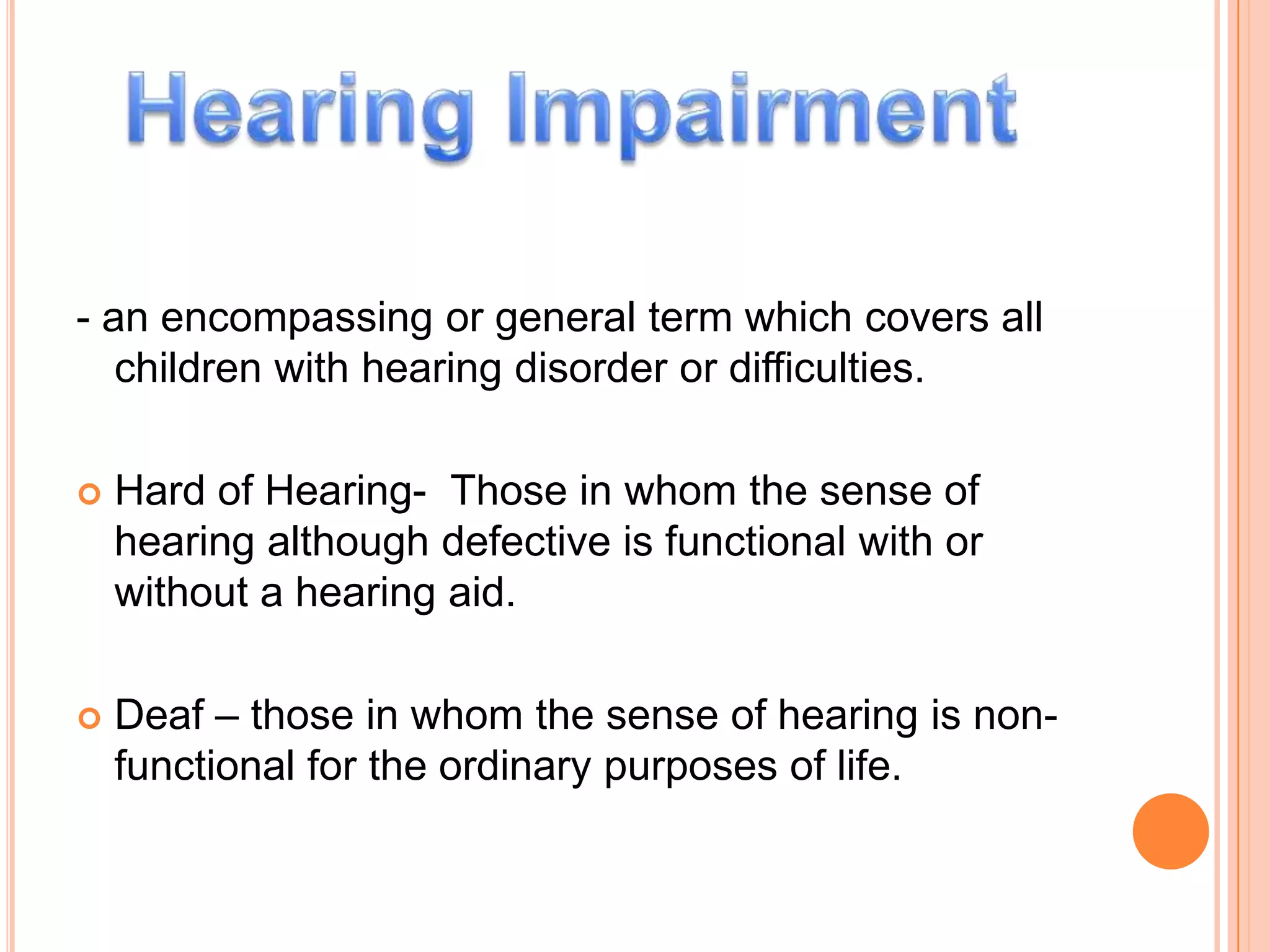

- an encompassing or general term which covers all children with hearing disorder or difficulties.Hard of Hearing-  Those in whom the sense of hearing although defective is functional with or without a hearing aid.Deaf – those in whom the sense of hearing is non-functional for the ordinary purposes of life. Hearing Impairment
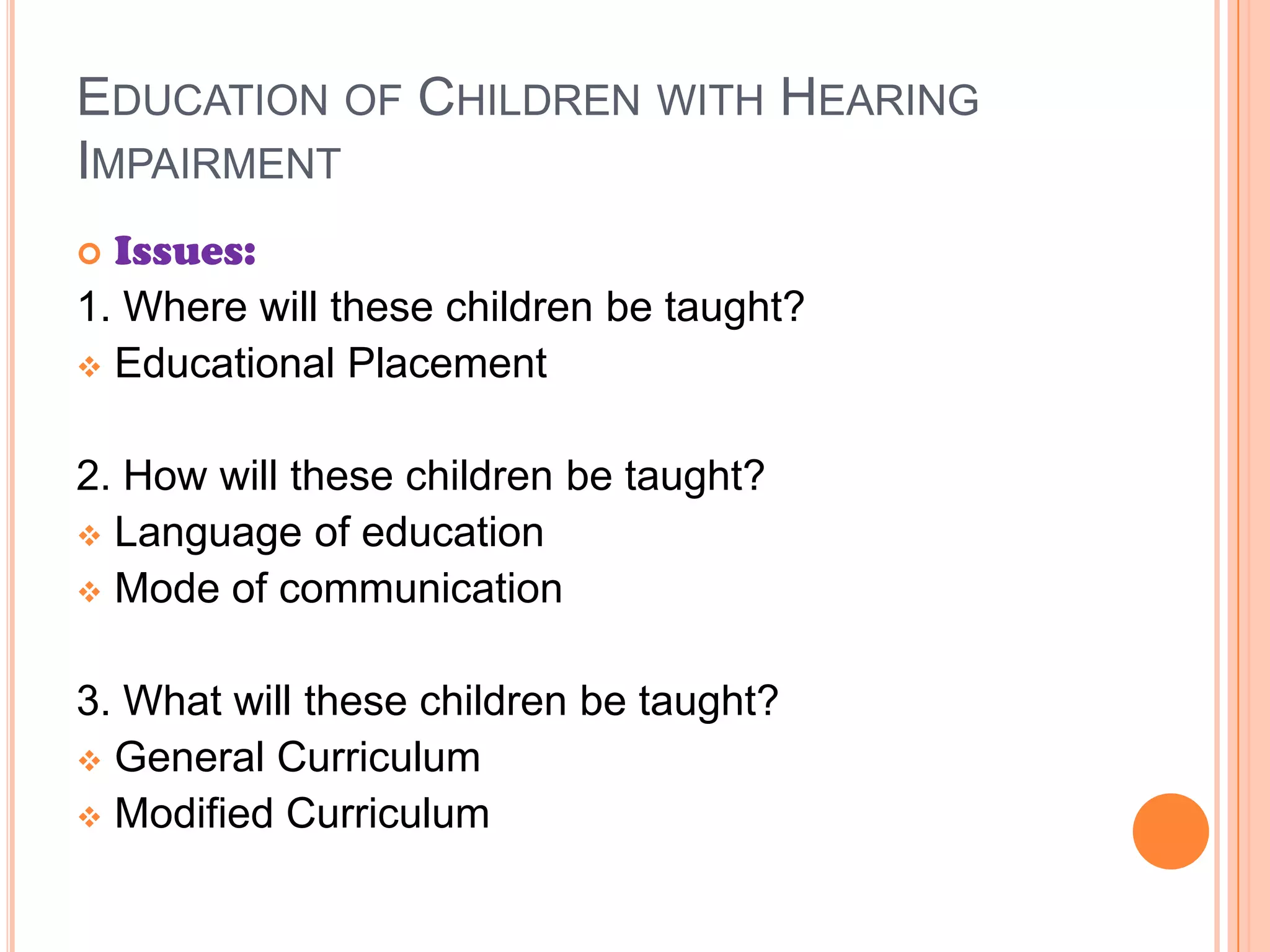
Education of Children with Hearing ImpairmentIssues:1. Where will these children be taught?Educational Placement2. How will these children be taught?Language of education
Mode of communication3. What will these children be taught? General Curriculum
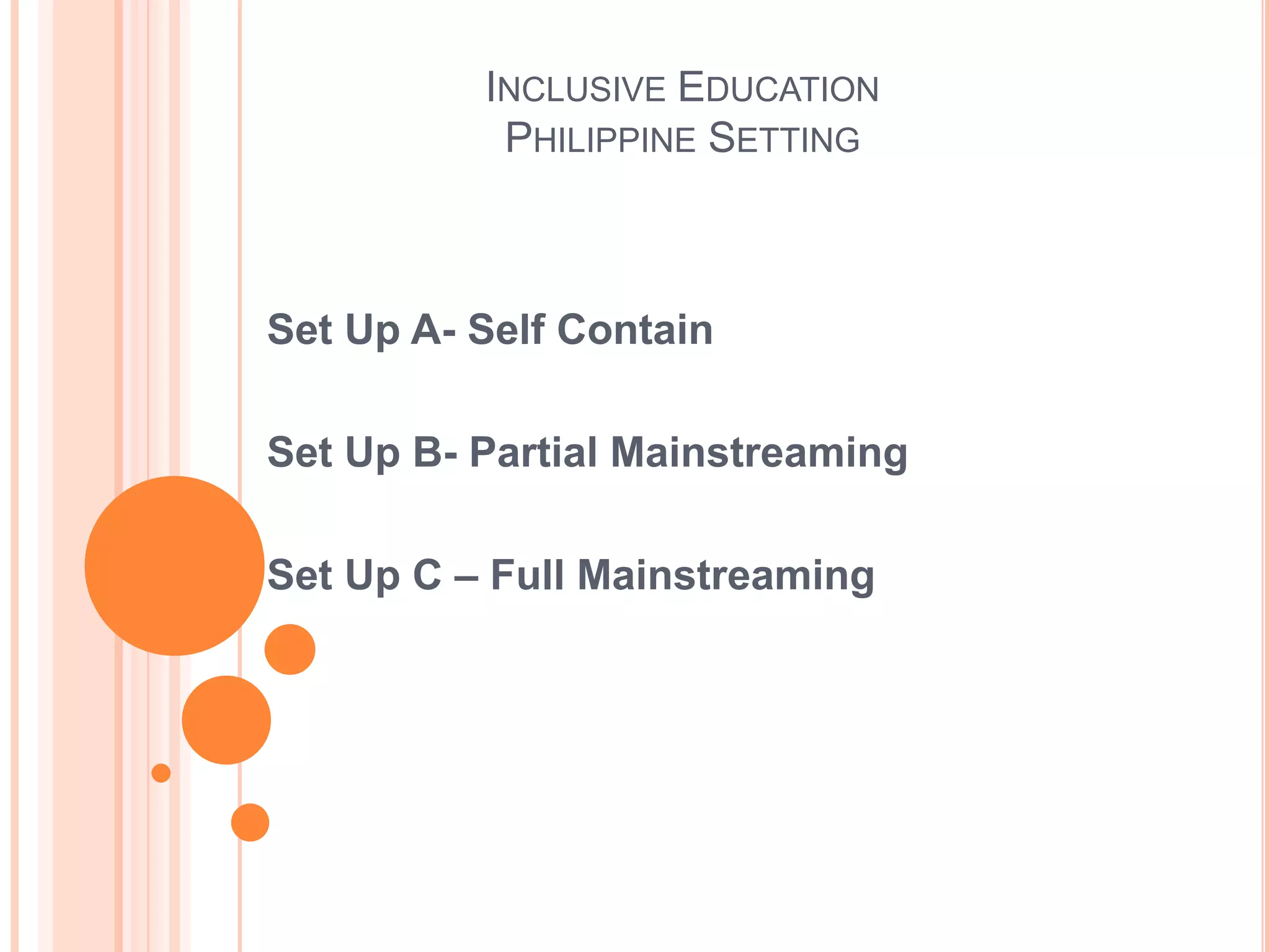
Modified CurriculumInclusive EducationPhilippine Setting Set Up A- Self ContainSet Up B- Partial MainstreamingSet Up C – Full Mainstreaming
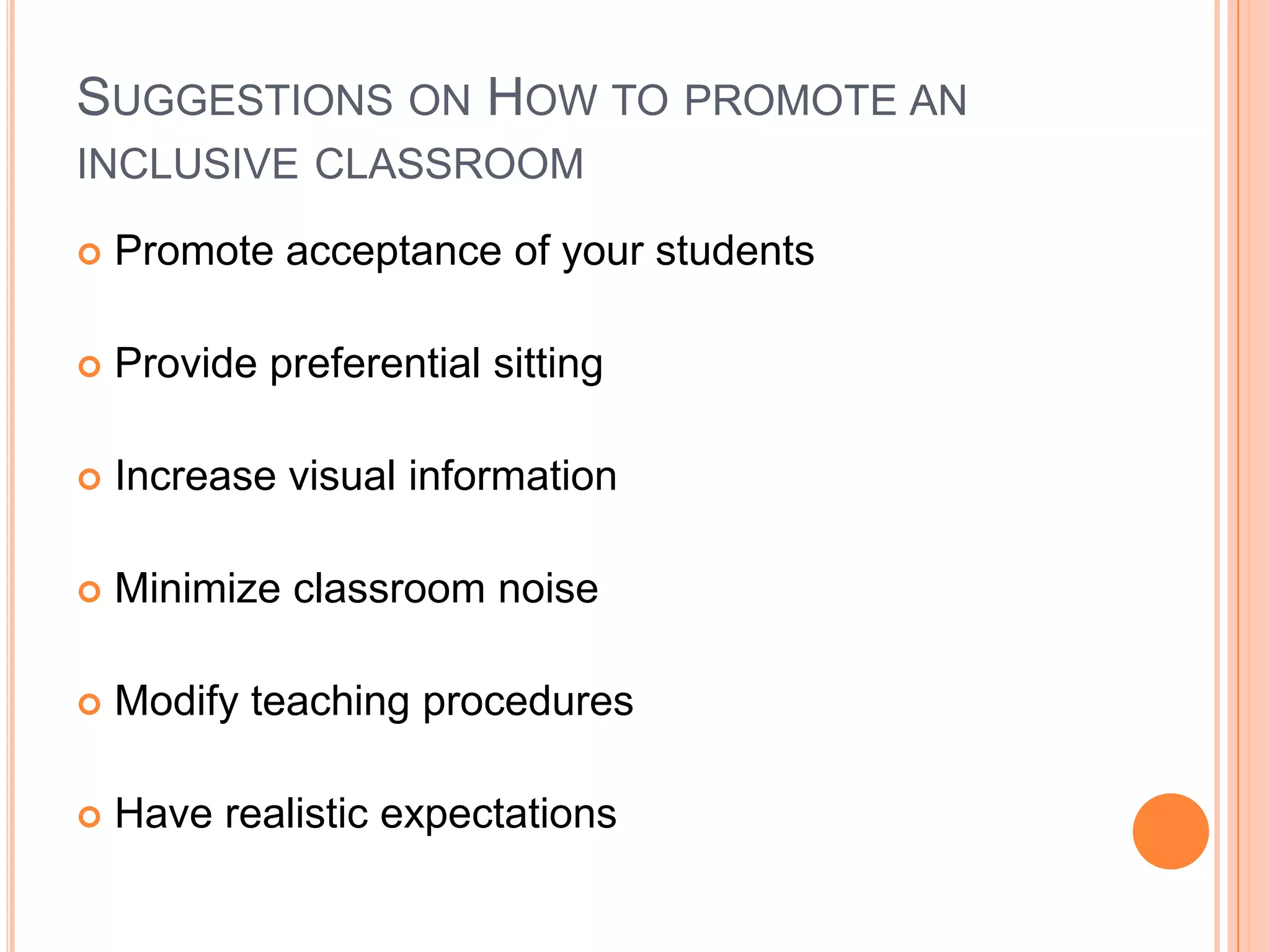
Suggestions on How to promote an inclusive classroomPromote acceptance of your studentsProvide preferential sittingIncrease visual informationMinimize classroom noiseModify teaching proceduresHave realistic expectations
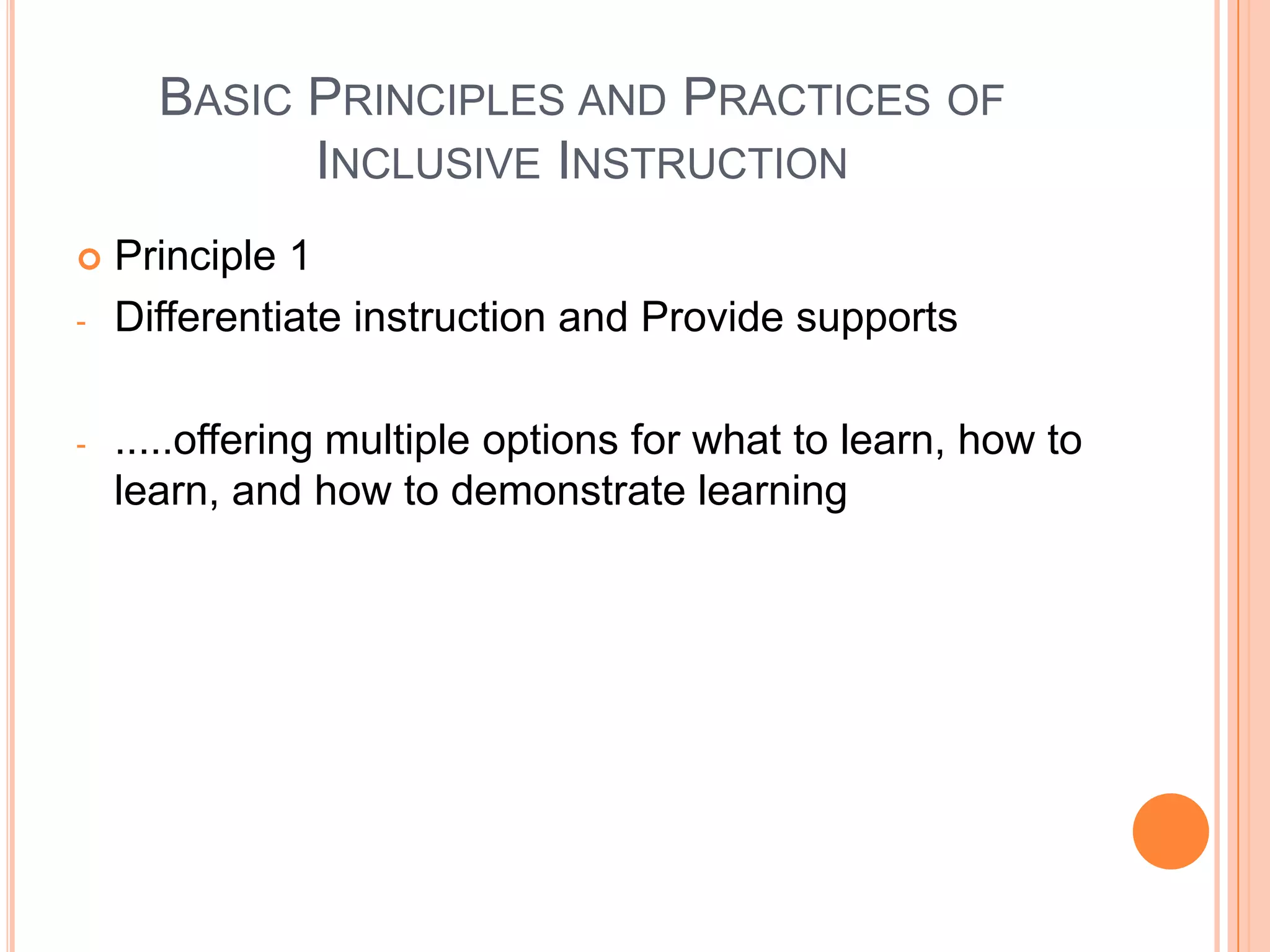
Basic Principles and Practices of Inclusive InstructionPrinciple 1Differentiate instruction and Provide supports
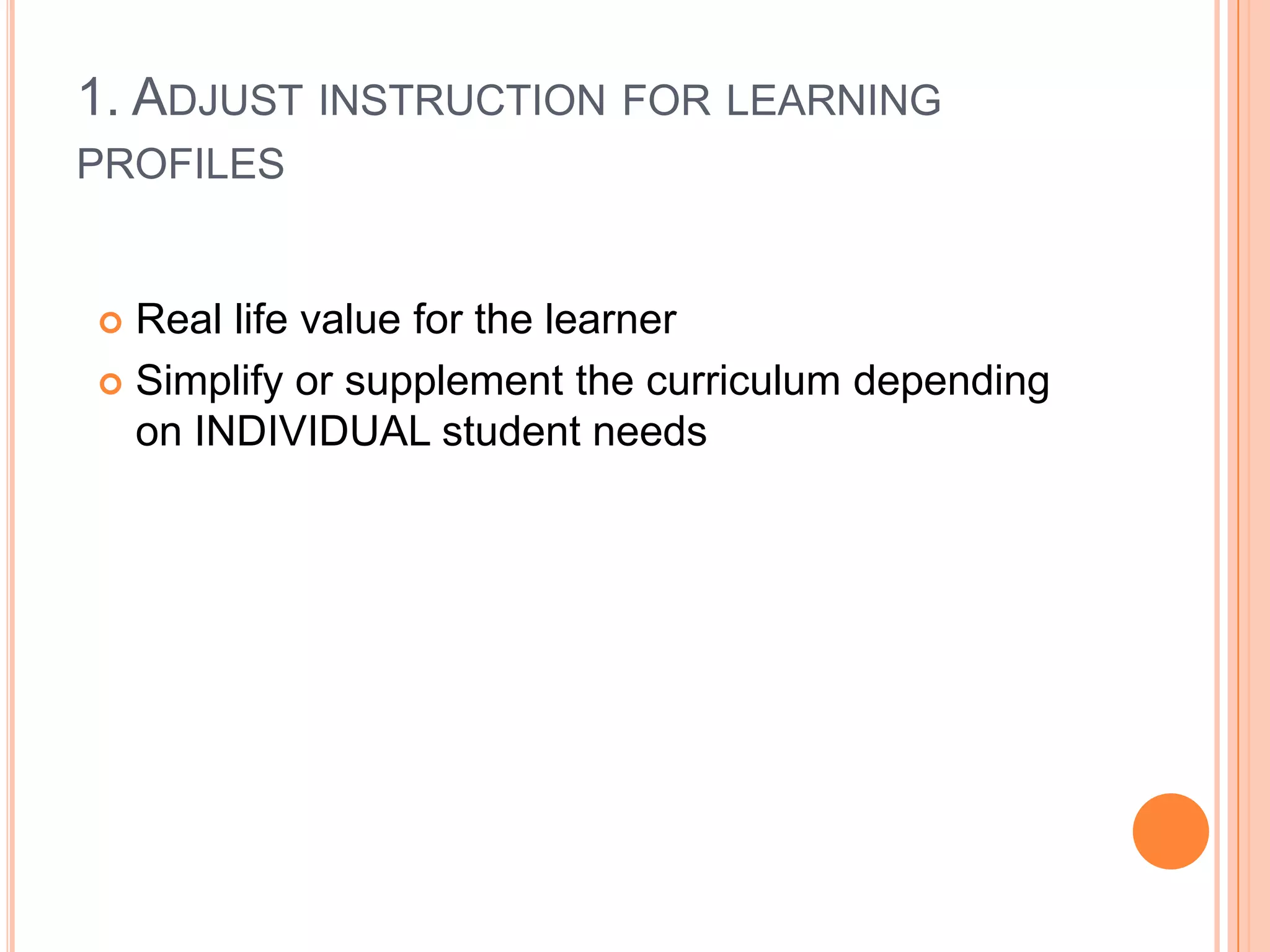
.....offering multiple options for what to learn, how to learn, and how to demonstrate learning 1. Adjust instruction for learning profilesReal life value for the learnerSimplify or supplement the curriculum depending on INDIVIDUAL student needs
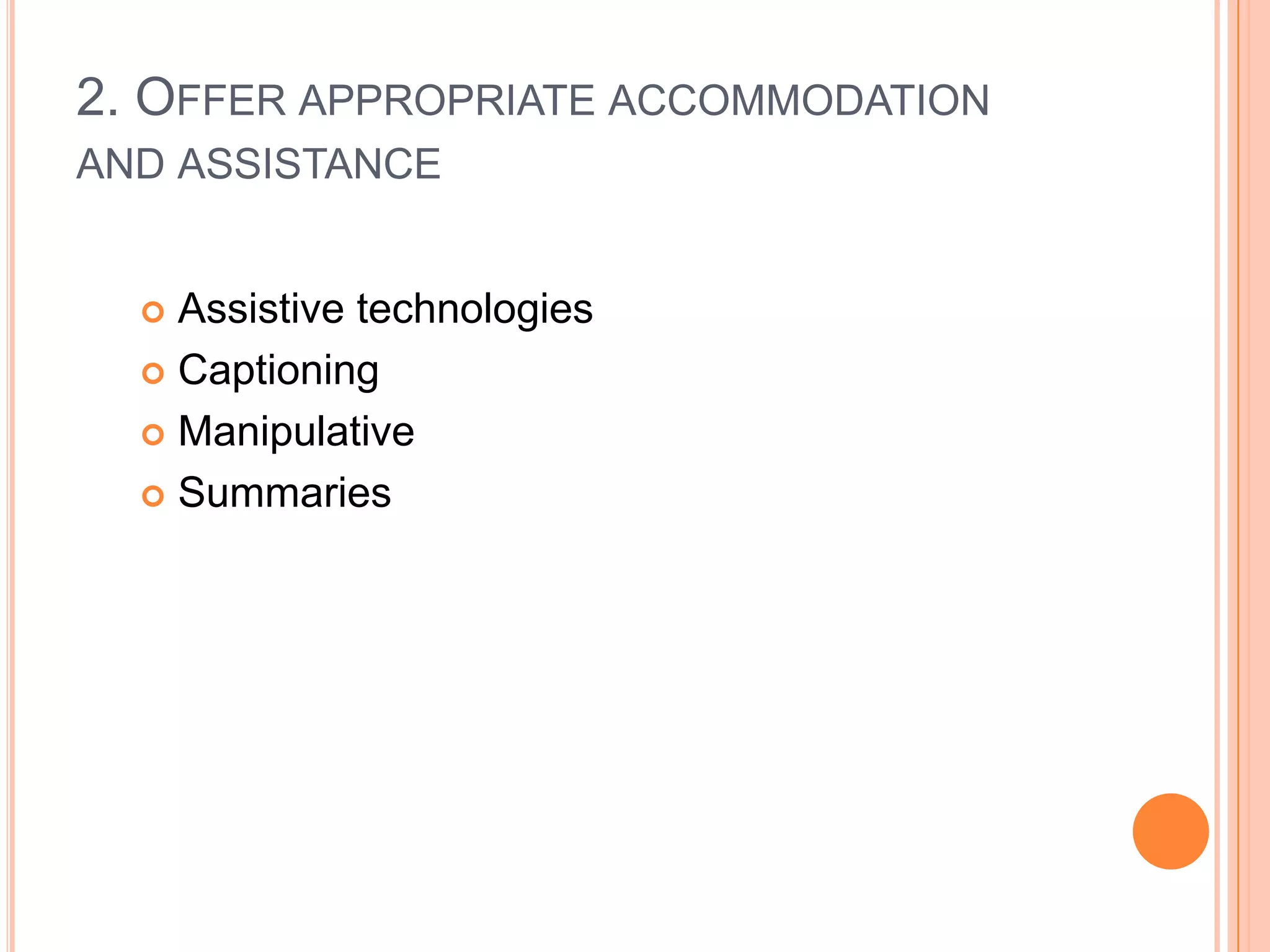
2. Offer appropriate accommodation and assistanceAssistive technologiesCaptioningManipulativeSummaries
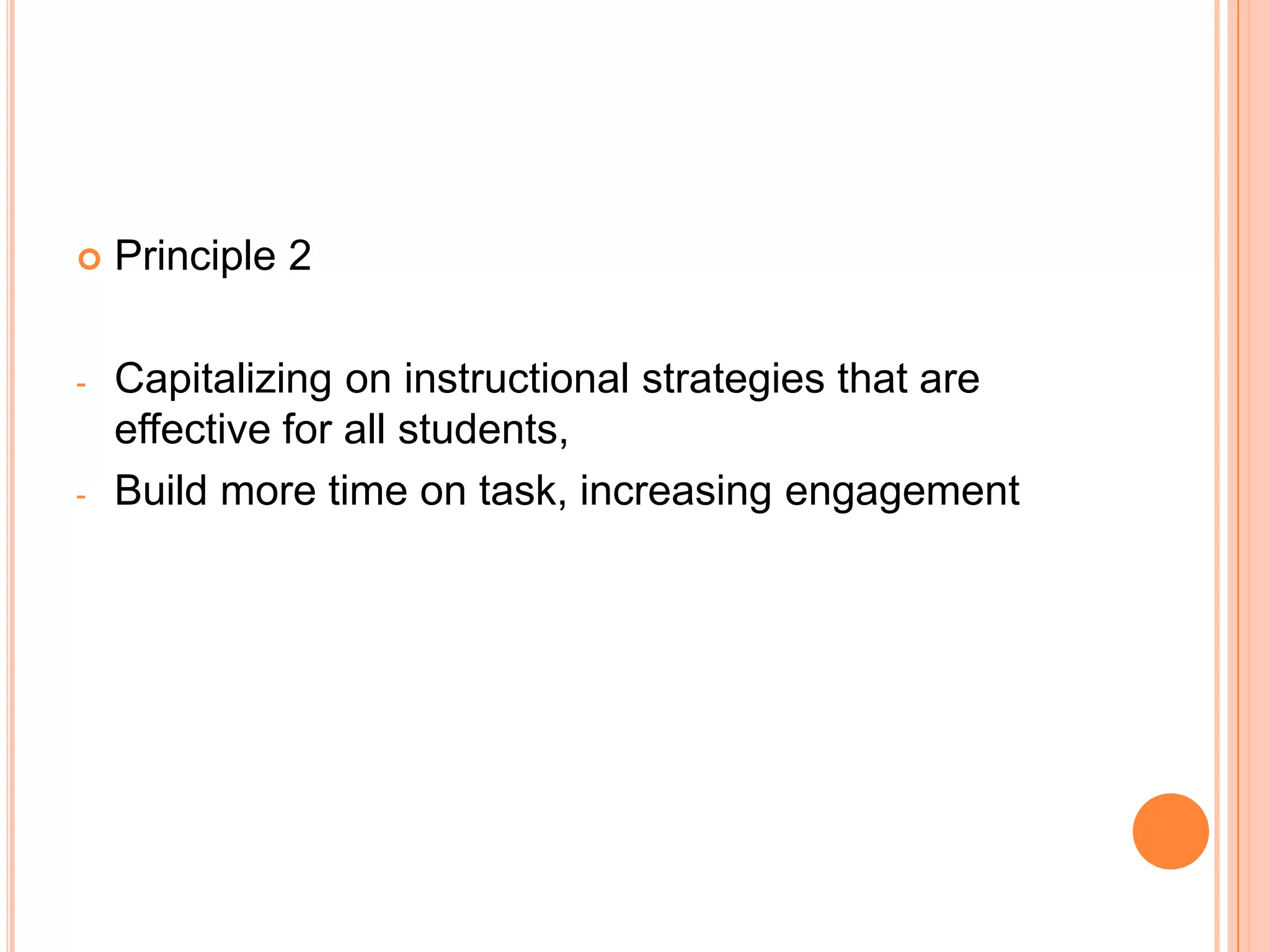
Principle 2Capitalizing on instructional strategies that are effective for all students,
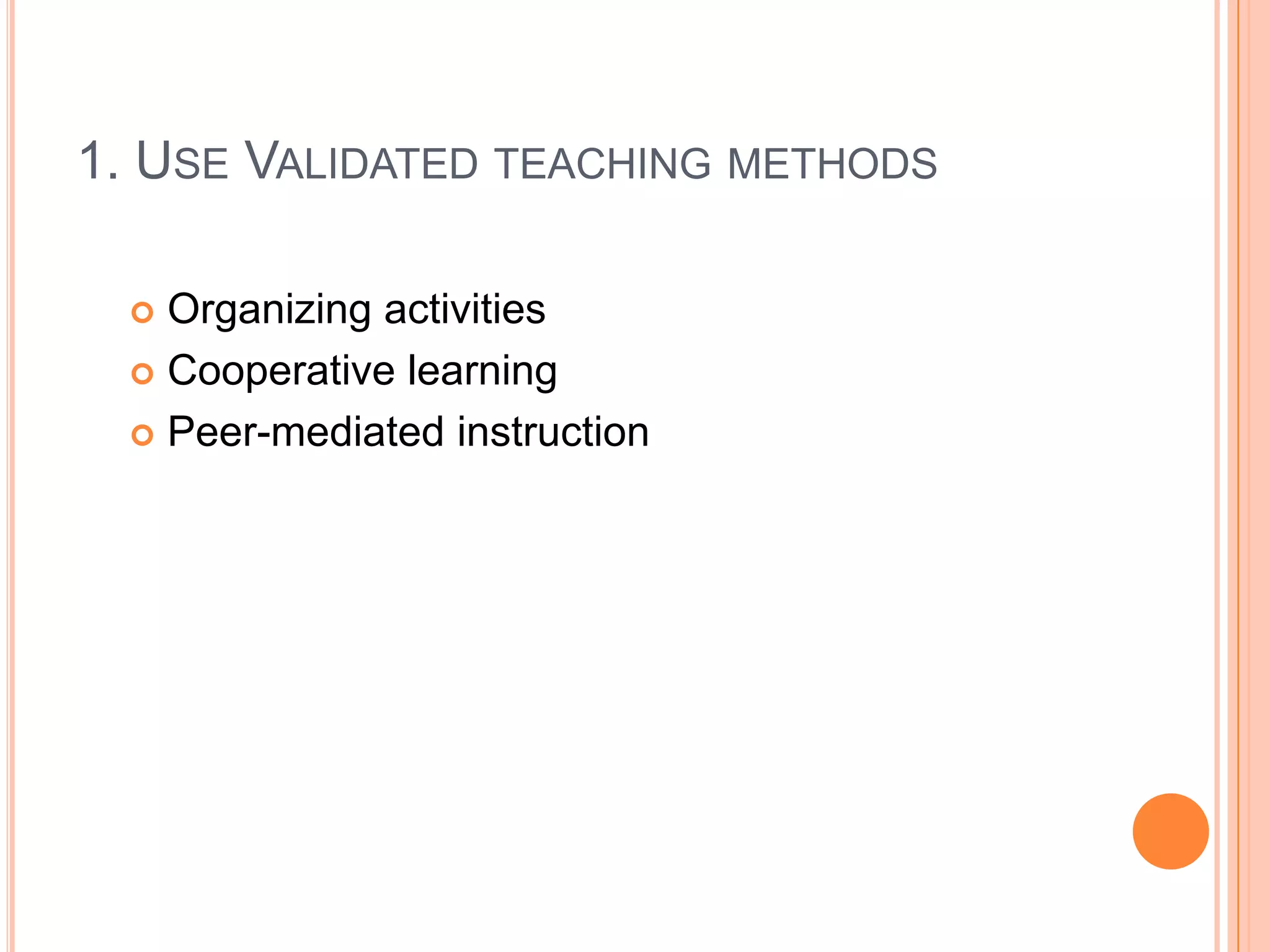
Build more time on task, increasing engagement 1. Use Validated teaching methodsOrganizing activitiesCooperative learningPeer-mediated instruction
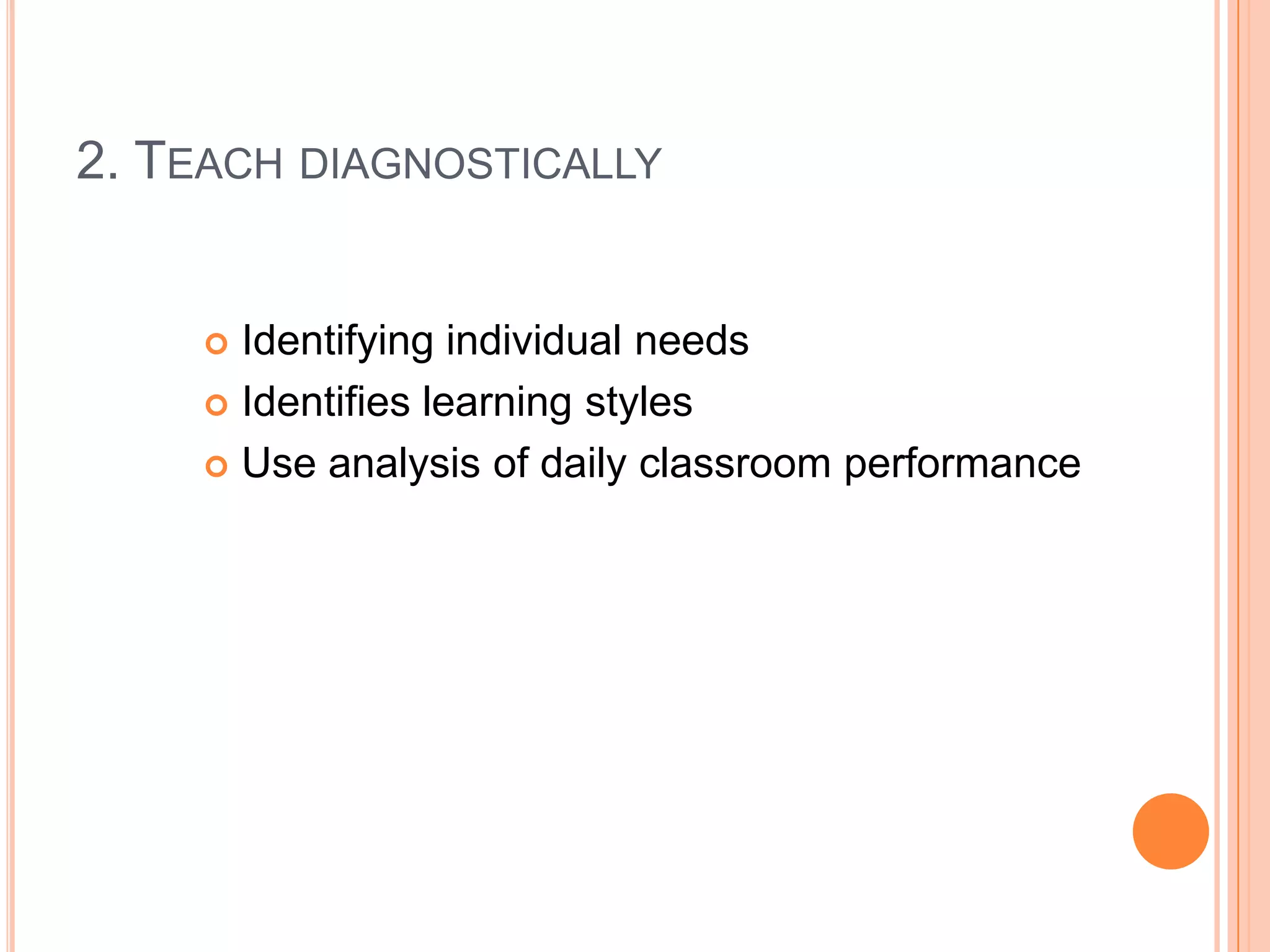
2. Teach diagnosticallyIdentifying individual needsIdentifies learning stylesUse analysis of daily classroom performance
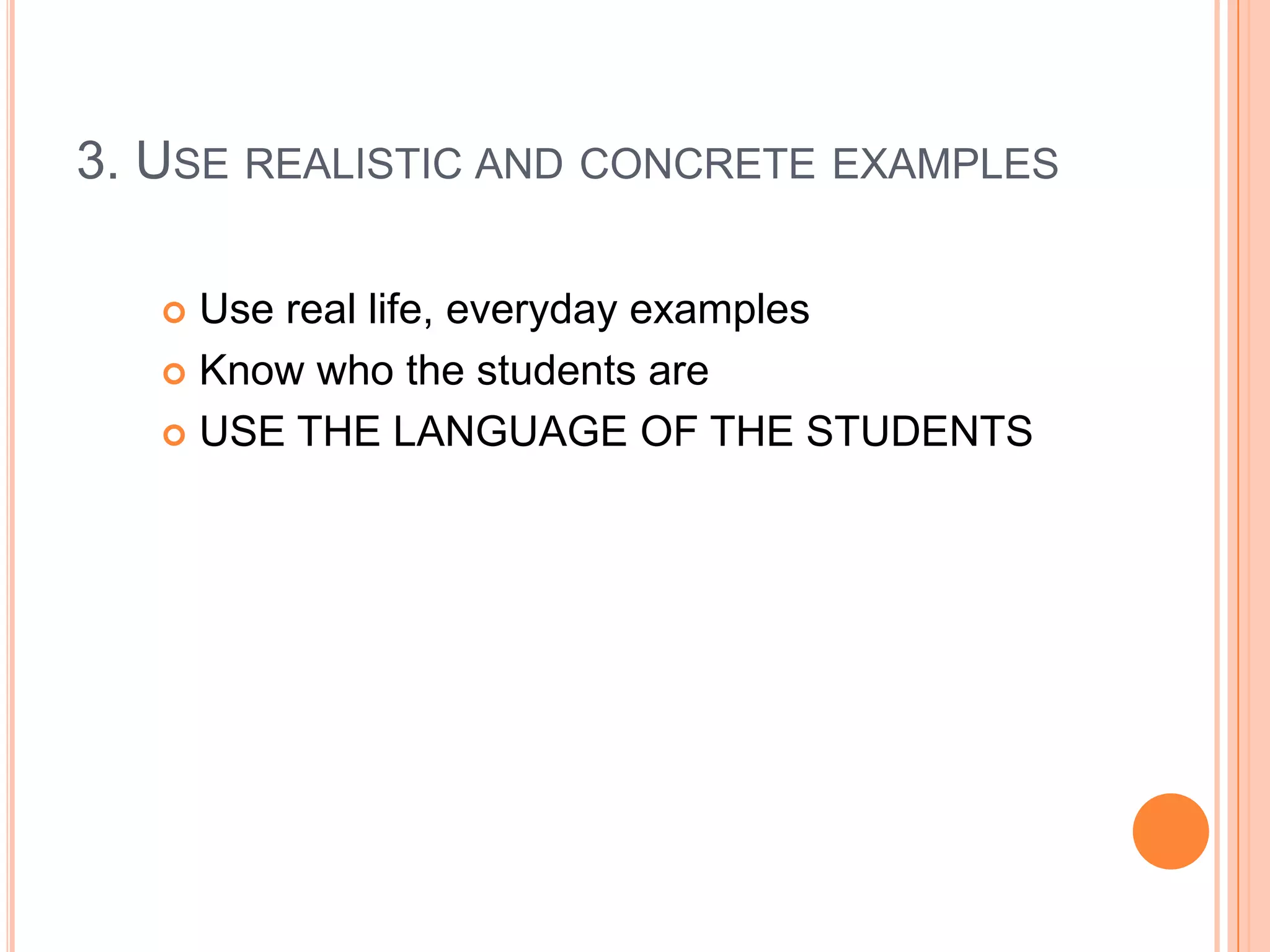
3. Use realistic and concrete examplesUse real life, everyday examplesKnow who the students areUSE THE LANGUAGE OF THE STUDENTS
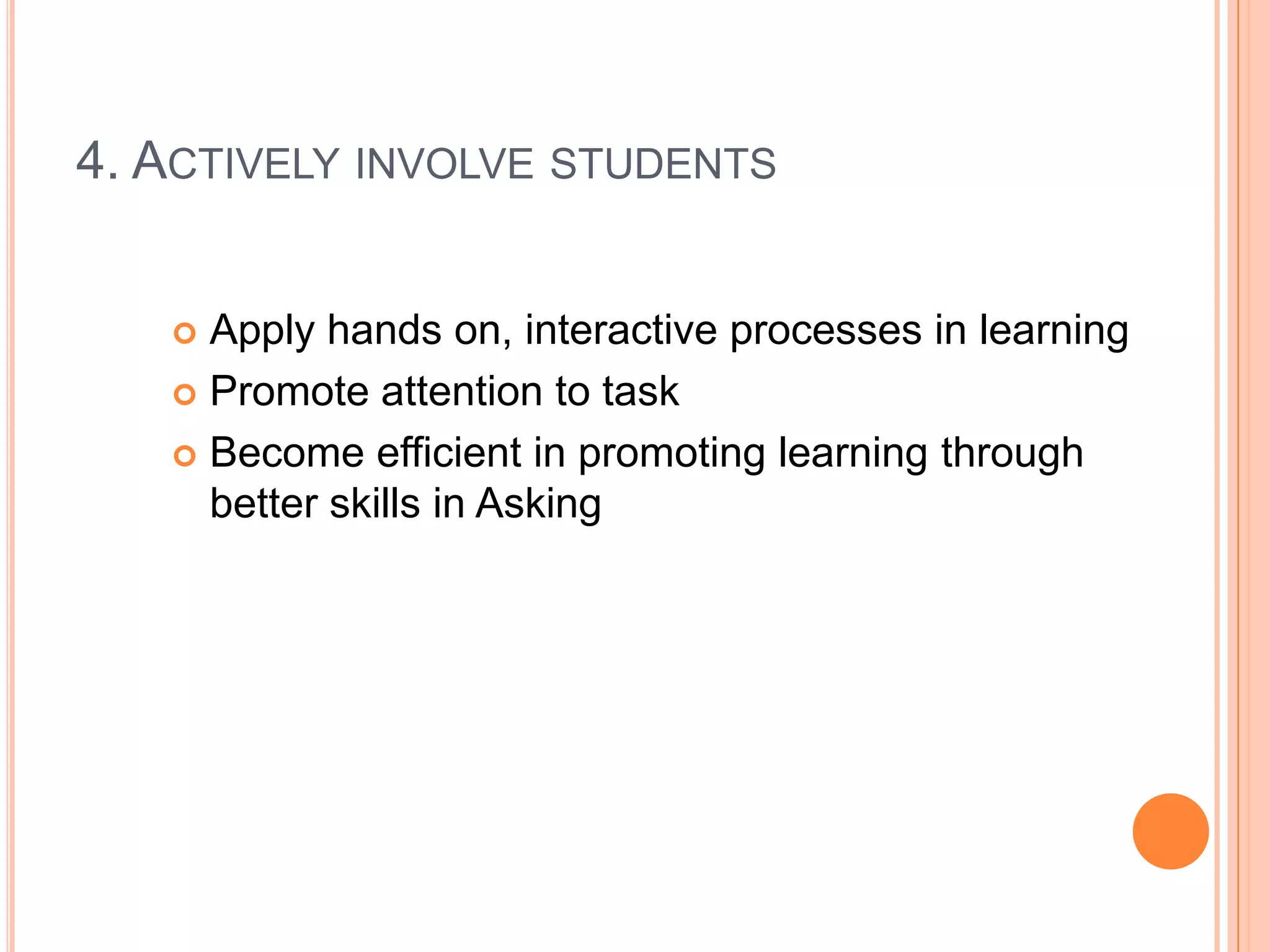
4. Actively involve studentsApply hands on, interactive processes in learningPromote attention to taskBecome efficient in promoting learning through better skills in Asking
Transition EducationUltimate GoalQuality of Life- the extent which he can make choices
Secretary’s Commission  on Achieving Necessary SkillsBasic Skills- reads, writes, performs arithmetic and mathematical operations, listens and speakThinking Skills- thinks creatively, makes decision, solves problemPersonal Qualities – display responsibilities, integrity and honesty
School to work actSchool-based learning- programs and services designed to help all students meet expected academic standards.Work-based learning – work experience, job training, workplace monitoringConnecting activities- provide support to both the school based and work based learning, provide assistance in finding jobs and continuing education and linking them with community services that maybe useful throughout the transition process.

Hearing Impaired

  • 1.
    - an encompassingor general term which covers all children with hearing disorder or difficulties.Hard of Hearing- Those in whom the sense of hearing although defective is functional with or without a hearing aid.Deaf – those in whom the sense of hearing is non-functional for the ordinary purposes of life. Hearing Impairment
  • 2.
    Education of Childrenwith Hearing ImpairmentIssues:1. Where will these children be taught?Educational Placement2. How will these children be taught?Language of education
  • 3.
    Mode of communication3.What will these children be taught? General Curriculum
  • 4.
    Modified CurriculumInclusive EducationPhilippineSetting Set Up A- Self ContainSet Up B- Partial MainstreamingSet Up C – Full Mainstreaming
  • 5.
    Suggestions on Howto promote an inclusive classroomPromote acceptance of your studentsProvide preferential sittingIncrease visual informationMinimize classroom noiseModify teaching proceduresHave realistic expectations
  • 6.
    Basic Principles andPractices of Inclusive InstructionPrinciple 1Differentiate instruction and Provide supports
  • 7.
    .....offering multiple optionsfor what to learn, how to learn, and how to demonstrate learning 1. Adjust instruction for learning profilesReal life value for the learnerSimplify or supplement the curriculum depending on INDIVIDUAL student needs
  • 8.
    2. Offer appropriateaccommodation and assistanceAssistive technologiesCaptioningManipulativeSummaries
  • 9.
    Principle 2Capitalizing oninstructional strategies that are effective for all students,
  • 10.
    Build more timeon task, increasing engagement 1. Use Validated teaching methodsOrganizing activitiesCooperative learningPeer-mediated instruction
  • 11.
    2. Teach diagnosticallyIdentifyingindividual needsIdentifies learning stylesUse analysis of daily classroom performance
  • 12.
    3. Use realisticand concrete examplesUse real life, everyday examplesKnow who the students areUSE THE LANGUAGE OF THE STUDENTS
  • 13.
    4. Actively involvestudentsApply hands on, interactive processes in learningPromote attention to taskBecome efficient in promoting learning through better skills in Asking
  • 14.
    Transition EducationUltimate GoalQualityof Life- the extent which he can make choices
  • 15.
    Secretary’s Commission on Achieving Necessary SkillsBasic Skills- reads, writes, performs arithmetic and mathematical operations, listens and speakThinking Skills- thinks creatively, makes decision, solves problemPersonal Qualities – display responsibilities, integrity and honesty
  • 16.
    School to workactSchool-based learning- programs and services designed to help all students meet expected academic standards.Work-based learning – work experience, job training, workplace monitoringConnecting activities- provide support to both the school based and work based learning, provide assistance in finding jobs and continuing education and linking them with community services that maybe useful throughout the transition process.
  • 17.
    Thank you 