 Wife
 Daughter
 Sister
 Aunt
 Friend
 Coach
 Teacher
 Church member
 Chef
 Babysitter
 Therapist
 Nurse
 Accountant
 Granddaughter
 Daughter-in-law
 Chaperone
 Almost mother
 Sister-in-law
 Role: a part you play in your relationship
 Relationship: the bond or connection you
have with other people
◦ Acquaintances
◦ Friends
◦ Family
 Person #1 is the ONLY person who may talk,
but cannot touch anything!!
 Person #2 CANNOT talk. He/she may only
use ONE hand and can only touch
marshmallows
 Person #3 CANNOT talk. He/she may only
use ONE hand and can only touch toothpicks
 Communication
◦ We will discuss all
about this next class
 Cooperation
◦ Working together for
the good of all
 Compromise
◦ Problem solving
method in which
each participant
gives up something
to reach a solution
that satisfies
everyone
◦ “Cheaper by the
Dozen”
 Respect for Self
◦ When you respect
yourself you are
more likely to seek
relationships where
others will treat you
with respect.
*BIG CONCEPT!!
 Respect for others
◦ Listen
◦ Considerate others
feelings
◦ Mutual trust: being
dependable
◦ Realistic in
expectations: cant
always be top priority
 Bullying:
◦ Deliberately harming
or threatening others
who cannot easily
defend themselves.
 Hazing:
◦ Making others
perform certain tasks
to join a group.
 Prejudice: unfair opinion or judgment of a
particular group of people.
 Stereotype: exaggerated or oversimplified
belief about people who belong to a certain
group.
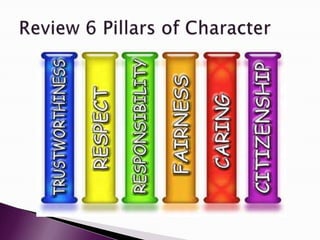
 Trustworthiness:
◦ Do what you say you
will do
 Responsibility:
◦ borrow something, it
breaks, you replace
it.
 Fairness:
◦ take turns, share
 Caring:
◦ Show sympathy
and/or empathy
 Citizenship:
◦ Be a good neighbor,
help by shoveling
walks, etc.
 Respect:
◦ Listen when someone
is talking
1. Make a list of the most important people in
your lives.
2. Write down ways to show these people that
you care about them.
3. Write a list of things that you do that might
make these people feel like you don‟t care
about them.
 A way to gage the strength or weakness of
your relationship.
 Much like a real checking/saving account at a
bank.
◦ As you make “DEPOSITS” the relationship
strengthens.
◦ When you make “WITHDRAWALS” the relationship
weakens
 We have a different “bank account” with
everyone we know.
◦ These relationships can be in the „positive‟ or the
„negative‟
 It requires conscious deposits in order to
maintain the relationship
 Deposits tend to evaporate or be forgotten
about.
 Where withdrawals turn to stone (not
forgotten…harder to forget)
 Too many withdrawals requires even more
deposits to bring the account back into the
positive.
 We must continually make deposits if we want
our RBA to stay positive.
 Breaking promises
 Gossiping about
others
 Not listening
 Being arrogant
 Losing trust
 Not fulfilling
expectations
 Asking for a curfew
extension
 Borrowing the
car…again
 Waiting to be told
to do something
 Understand the
individual
 Small courtesies
and kindness
 Keep our
commitments
 Clarify Expectations
 Show Personal
Integrity
 Use the most
important words
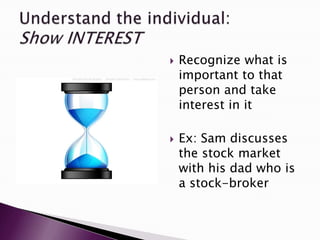
 Recognize what is
important to that
person and take
interest in it
 Ex: Sam discusses
the stock market
with his dad who is
a stock-broker
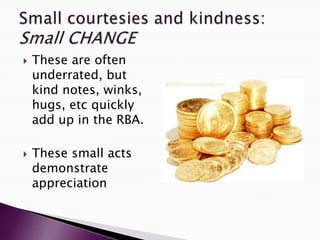
 These are often
underrated, but
kind notes, winks,
hugs, etc quickly
add up in the RBA.
 These small acts
demonstrate
appreciation
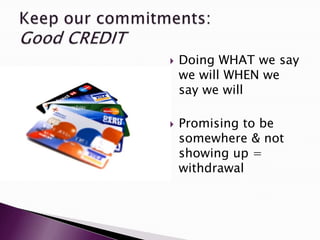
 Doing WHAT we say
we will WHEN we
say we will
 Promising to be
somewhere & not
showing up =
withdrawal
 Critically important in
avoiding contention,
misunderstandings,
& hurt feelings
 Don‟t read minds or
expect others to read
yours.
 Ex: Moms idea of a
clean room might be
different than yours.
 Demonstrate
character in all your
actions &
relationships
 Be trustworthy &
honest. Don‟t
gossip
 Small, but
important words
make all the
difference in a
relationship.
 Ex: Please… Thank
you… I love you…
I‟m sorry… How can
I help…?

Healthy Relationships

  • 2.
     Wife  Daughter Sister  Aunt  Friend  Coach  Teacher  Church member  Chef  Babysitter  Therapist  Nurse  Accountant  Granddaughter  Daughter-in-law  Chaperone  Almost mother  Sister-in-law
  • 3.
     Role: apart you play in your relationship  Relationship: the bond or connection you have with other people ◦ Acquaintances ◦ Friends ◦ Family
  • 5.
     Person #1is the ONLY person who may talk, but cannot touch anything!!  Person #2 CANNOT talk. He/she may only use ONE hand and can only touch marshmallows  Person #3 CANNOT talk. He/she may only use ONE hand and can only touch toothpicks
  • 6.
     Communication ◦ Wewill discuss all about this next class  Cooperation ◦ Working together for the good of all  Compromise ◦ Problem solving method in which each participant gives up something to reach a solution that satisfies everyone ◦ “Cheaper by the Dozen”
  • 7.
     Respect forSelf ◦ When you respect yourself you are more likely to seek relationships where others will treat you with respect. *BIG CONCEPT!!  Respect for others ◦ Listen ◦ Considerate others feelings ◦ Mutual trust: being dependable ◦ Realistic in expectations: cant always be top priority
  • 8.
     Bullying: ◦ Deliberatelyharming or threatening others who cannot easily defend themselves.  Hazing: ◦ Making others perform certain tasks to join a group.
  • 9.
     Prejudice: unfairopinion or judgment of a particular group of people.  Stereotype: exaggerated or oversimplified belief about people who belong to a certain group.
  • 11.
     Trustworthiness: ◦ Dowhat you say you will do  Responsibility: ◦ borrow something, it breaks, you replace it.  Fairness: ◦ take turns, share  Caring: ◦ Show sympathy and/or empathy  Citizenship: ◦ Be a good neighbor, help by shoveling walks, etc.  Respect: ◦ Listen when someone is talking
  • 12.
    1. Make alist of the most important people in your lives. 2. Write down ways to show these people that you care about them. 3. Write a list of things that you do that might make these people feel like you don‟t care about them.
  • 13.
     A wayto gage the strength or weakness of your relationship.  Much like a real checking/saving account at a bank. ◦ As you make “DEPOSITS” the relationship strengthens. ◦ When you make “WITHDRAWALS” the relationship weakens
  • 14.
     We havea different “bank account” with everyone we know. ◦ These relationships can be in the „positive‟ or the „negative‟  It requires conscious deposits in order to maintain the relationship
  • 15.
     Deposits tendto evaporate or be forgotten about.  Where withdrawals turn to stone (not forgotten…harder to forget)  Too many withdrawals requires even more deposits to bring the account back into the positive.  We must continually make deposits if we want our RBA to stay positive.
  • 16.
     Breaking promises Gossiping about others  Not listening  Being arrogant  Losing trust  Not fulfilling expectations  Asking for a curfew extension  Borrowing the car…again  Waiting to be told to do something
  • 17.
     Understand the individual Small courtesies and kindness  Keep our commitments  Clarify Expectations  Show Personal Integrity  Use the most important words
  • 18.
     Recognize whatis important to that person and take interest in it  Ex: Sam discusses the stock market with his dad who is a stock-broker
  • 19.
     These areoften underrated, but kind notes, winks, hugs, etc quickly add up in the RBA.  These small acts demonstrate appreciation
  • 20.
     Doing WHATwe say we will WHEN we say we will  Promising to be somewhere & not showing up = withdrawal
  • 21.
     Critically importantin avoiding contention, misunderstandings, & hurt feelings  Don‟t read minds or expect others to read yours.  Ex: Moms idea of a clean room might be different than yours.
  • 22.
     Demonstrate character inall your actions & relationships  Be trustworthy & honest. Don‟t gossip
  • 23.
     Small, but importantwords make all the difference in a relationship.  Ex: Please… Thank you… I love you… I‟m sorry… How can I help…?