Interpersonal
Relationship and
communication
BY Muhammad Faisal & Nandan Tyagi
Agenda
What is Interpersonal relationship ?
Form of interpersonal relationship
Why is it important to have interpersonal relationships?
 Factors affecting Interpersonal Relationship .
Take care of your tone ,and pitch ,choice of words ,
Communication skills ( speaking ,listening etc. )
Some skills that affect your interpersonal relationship
which are follow ( interact regularly , be polite , try to
understand the other persons point of view as well )
Relationship
When two individuals feel comfortable in
each other’s company and decide to be
with each other, they enter into a
relationship
Interpersonal relationship
A close association between individuals who
share common interests and goals is called
interpersonal relationship.
Individuals who are compatible with each
other enter into an interpersonal
relationship. People must gel well for a
strong and healthy relationship.
Why is it important to have interpersonal
relationships?
Interpersonal relationships that you form
at work serve a critical role in both your work
success and career progress. Positive
interpersonal relationships will allow
effective communication and
understanding among employees. ... Keep
lines of communication open. Maintain
boundaries.
Friendship
Love
Platonic Relationship
Family Relationship
Professional Relationship (Work Relationship)
Form of Interpersonal Relationships
Friendship
Friendship is an unconditional
interpersonal relationship where
individuals enter into by their own
sweet will and choice.
Friendship is a relationship where
there are no formalities and
individuals enjoy each other’s
presence.
Friendship can be between:
Man and a woman
Man and man
Woman and woman
Must have in friendship:
Transparency is the most essential factor for a
stable friendship. Do not hide things from your
friends. Be honest to them.
Guide them whenever required. Never give them
any wrong suggestions or advice.
Feelings like ego, jealousy, hatred, anger do not
exist in friendship.
Love
•An interpersonal relationship
characterized by passion, intimacy,
trust and respect is called love.
•Individuals in a romantic relationship
are deeply attached to each other and
share a special bond.
Must have in a Romantic
relationship
• Two partners must trust each other in
this relationship.
• A sense of respect and mutual
admiration is essential.
• Partners must reciprocate each
other’s feelings for the charm to stay
in the relationship for a longer period
of time.
• Understanding
• Love
• Passion
• Intimacy
• Respect
• Trust
Keys to a successful relation
Platonic Relationship
A relationship between two individuals without
any feelings or love desire for each other is called
a platonic relationship.
In such a relationship, a man and a woman are
just friends and do not mix love with friendship.
Platonic relationships might end in romantic
relationship with both the partners developing
mutual love and falling for each other
Family Relationship
Individuals related by blood or marriage are said to form a family .
Professional Relationship (Work
Relationship)
Individuals working together for the same organization are
said to share a professional relationship.
Individuals sharing a professional relationship are called
colleagues. Colleagues may or may not like each other.
Communication is the KEY
Communication is the lifeline of any
relationship. Without it, the relationship will
starve to its death.
- Elizabeth Bourgeret
You can change your world by changing
your words... Remember, death and life
are in the power of the tongue.
- Joel Osteen
Communication is the KEY
Half the world is composed of people who
have something to say and can't, and the
other half who have nothing to say and
keep on saying it.
- Robert Frost
To say nothing, especially when speaking,
is half the art of diplomacy.
- Will Durant
CommunicationCommunication plays a pivotal role in all types of relationships
whether it is personal or professional. Feelings must be expressed and
reciprocated in relationships. Individuals need to communicate with
each other effectively for better understanding. Do not stay mum as it
leads to problems and misunderstandings. Two people in love must
interact with each other on a regular basis through various modes of
communication such as telephone, emails, letters. Staying in touch is
essential for the love to grow especially in long distance relationships
where individuals can’t meet quite often.
In professional relationships as well, colleagues must communicate
well for a better bonding. Sit with your co workers and discuss issues
face to face to reach to a mutually acceptable solution.
The recipient must understand what the sender intends to
communicate and vice a versa. Clarity of thoughts is essential in
relationships
Modes of communication
Writing
Reading
Listening
Speaking
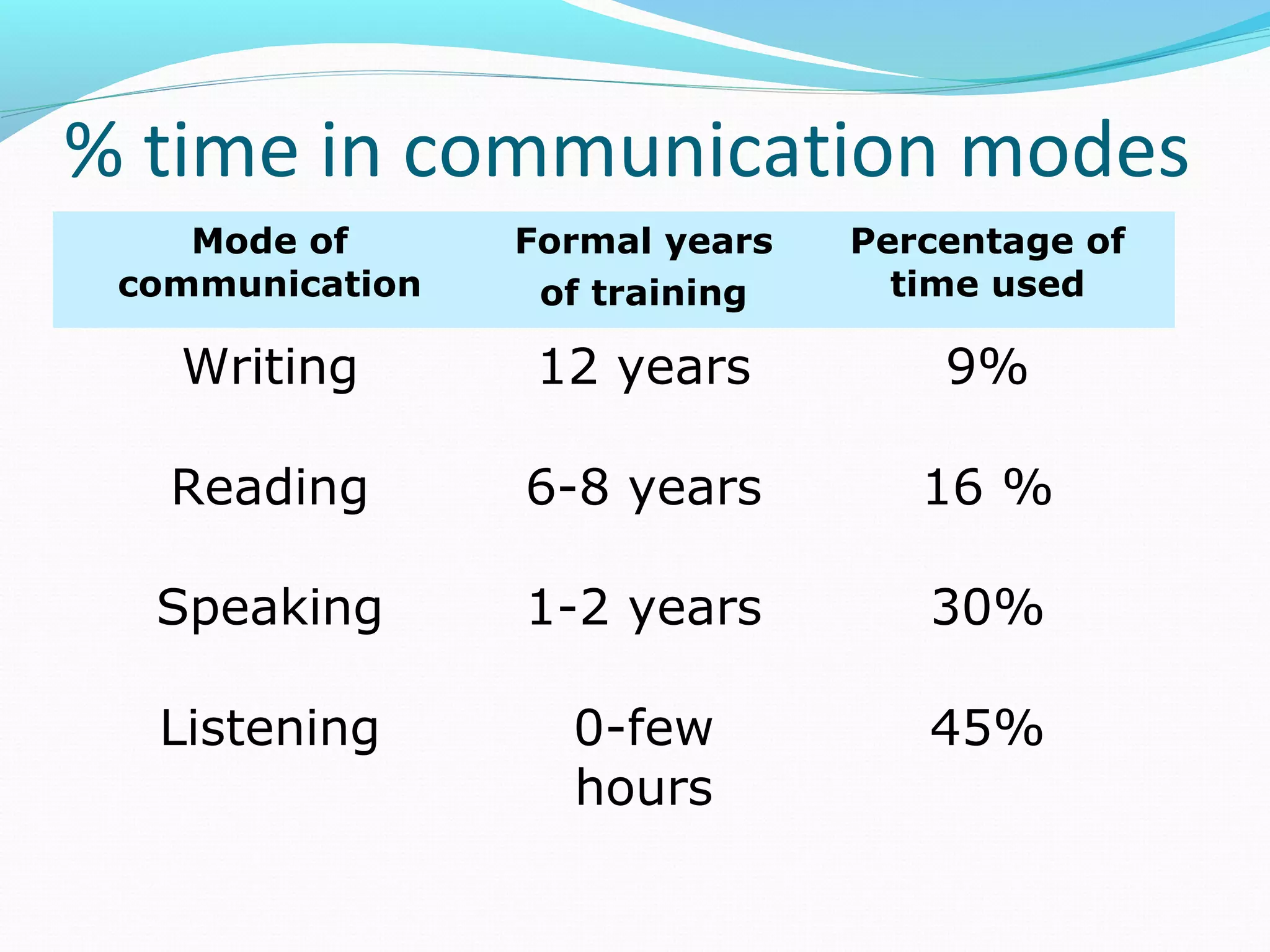
Mode of
communication
Formal years
of training
Percentage of
time used
Writing 12 years 9%
Reading 6-8 years 16 %
Speaking 1-2 years 30%
Listening 0-few
hours
45%
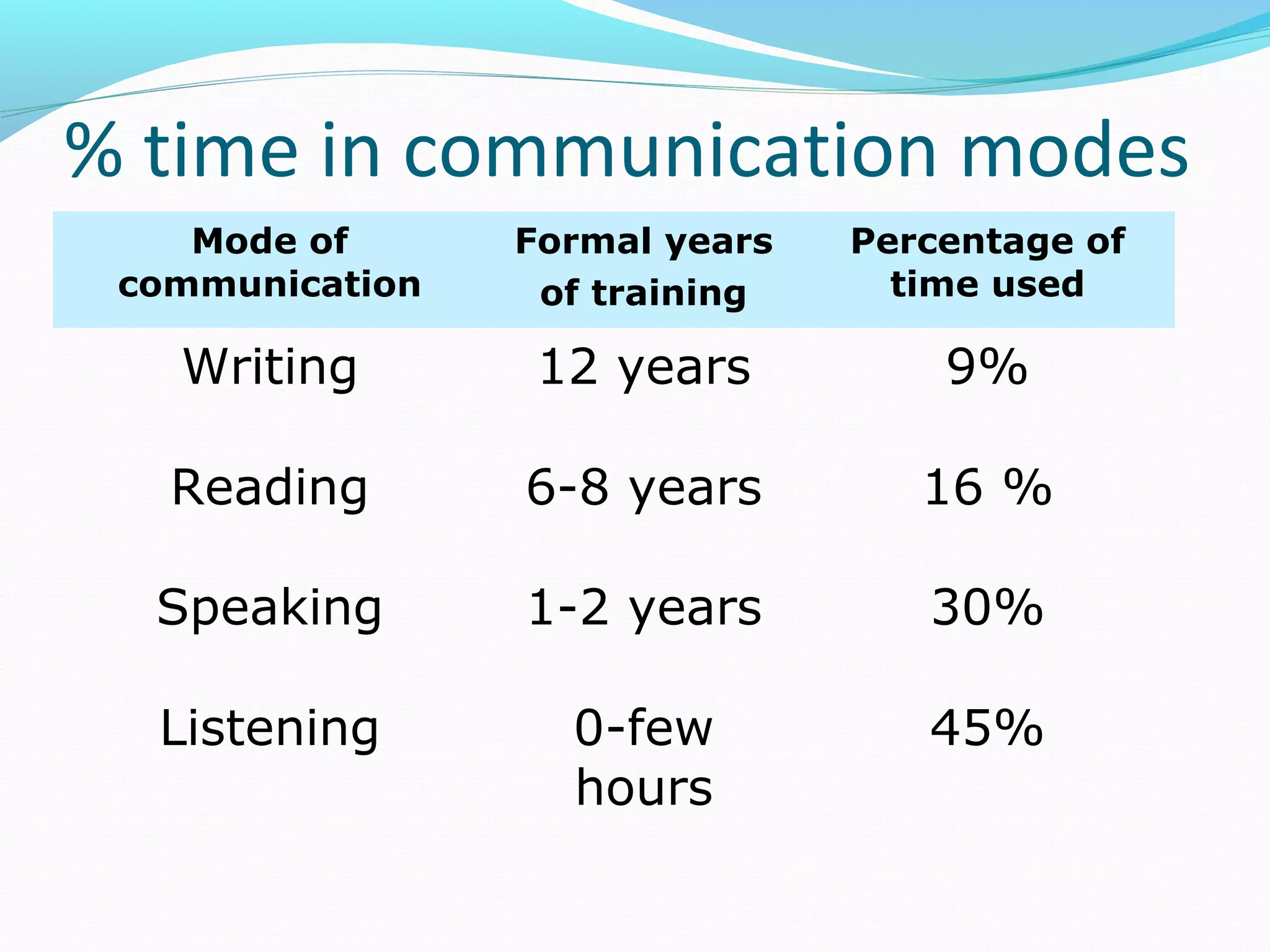
% time in communication modes
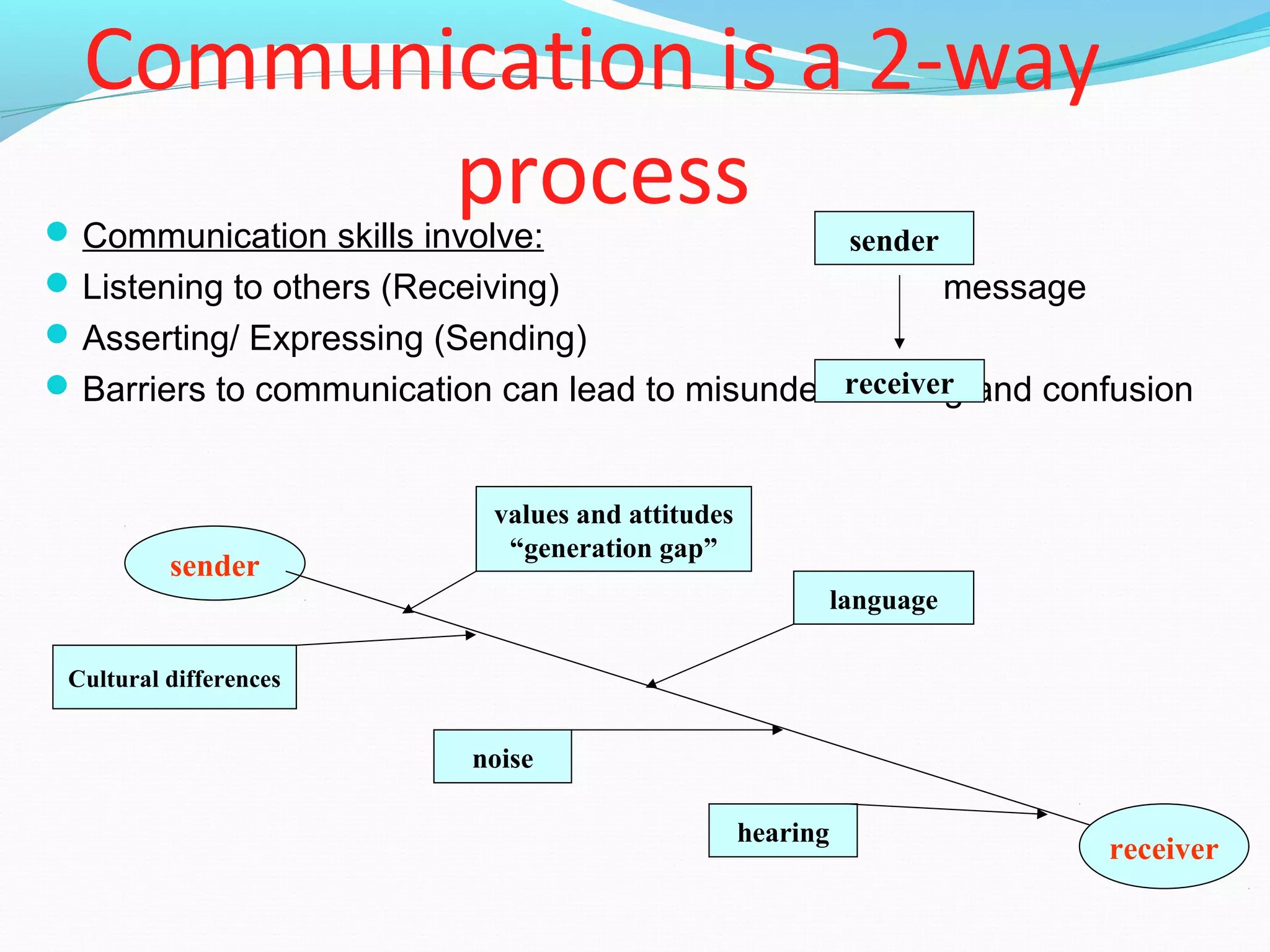
Communication is a 2-way
processCommunication skills involve:
Listening to others (Receiving) message
Asserting/ Expressing (Sending)
Barriers to communication can lead to misunderstanding and confusion
sender
receiver
sender
receiver
values and attitudes
“generation gap”
Cultural differences
language
noise
hearing
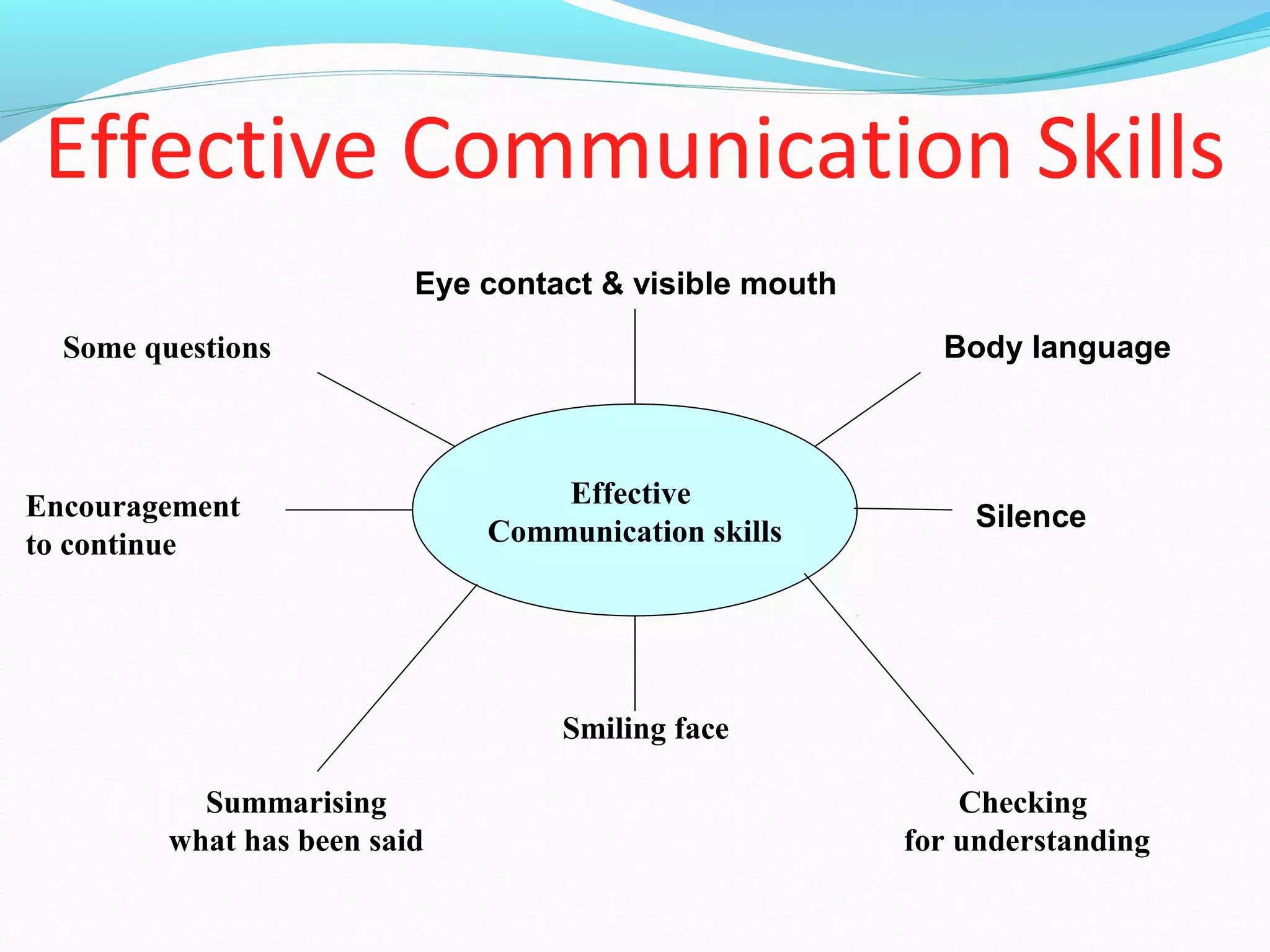
Effective Communication Skills
Effective
Communication skills
Eye contact & visible mouth
Body language
Silence
Checking
for understanding
Smiling face
Summarising
what has been said
Encouragement
to continue
Some questions
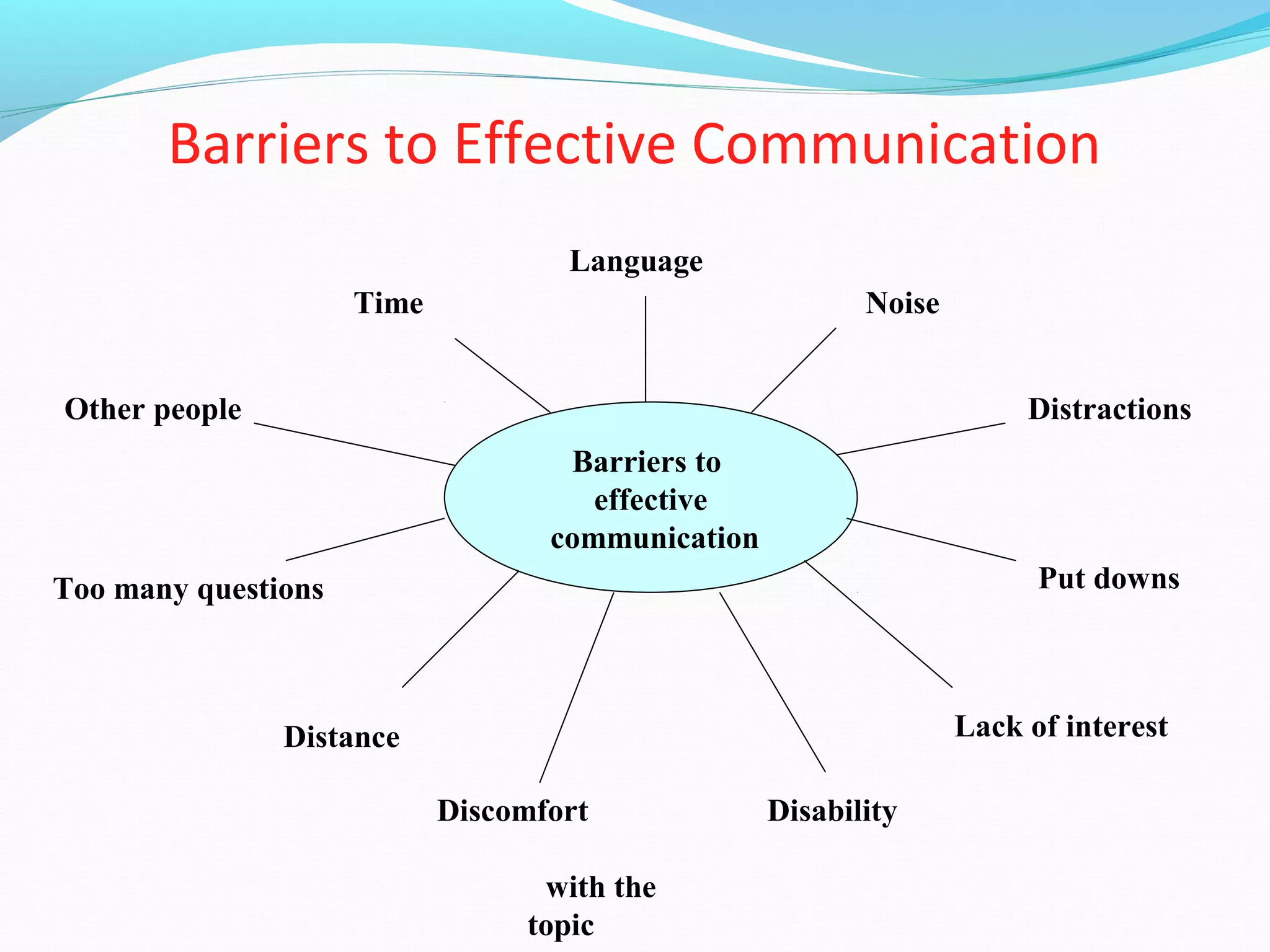
Barriers to Effective Communication
Barriers to
effective
communication
Language
NoiseTime
DistractionsOther people
Put downsToo many questions
Distance
Discomfort
with the
topic
Disability
Lack of interest
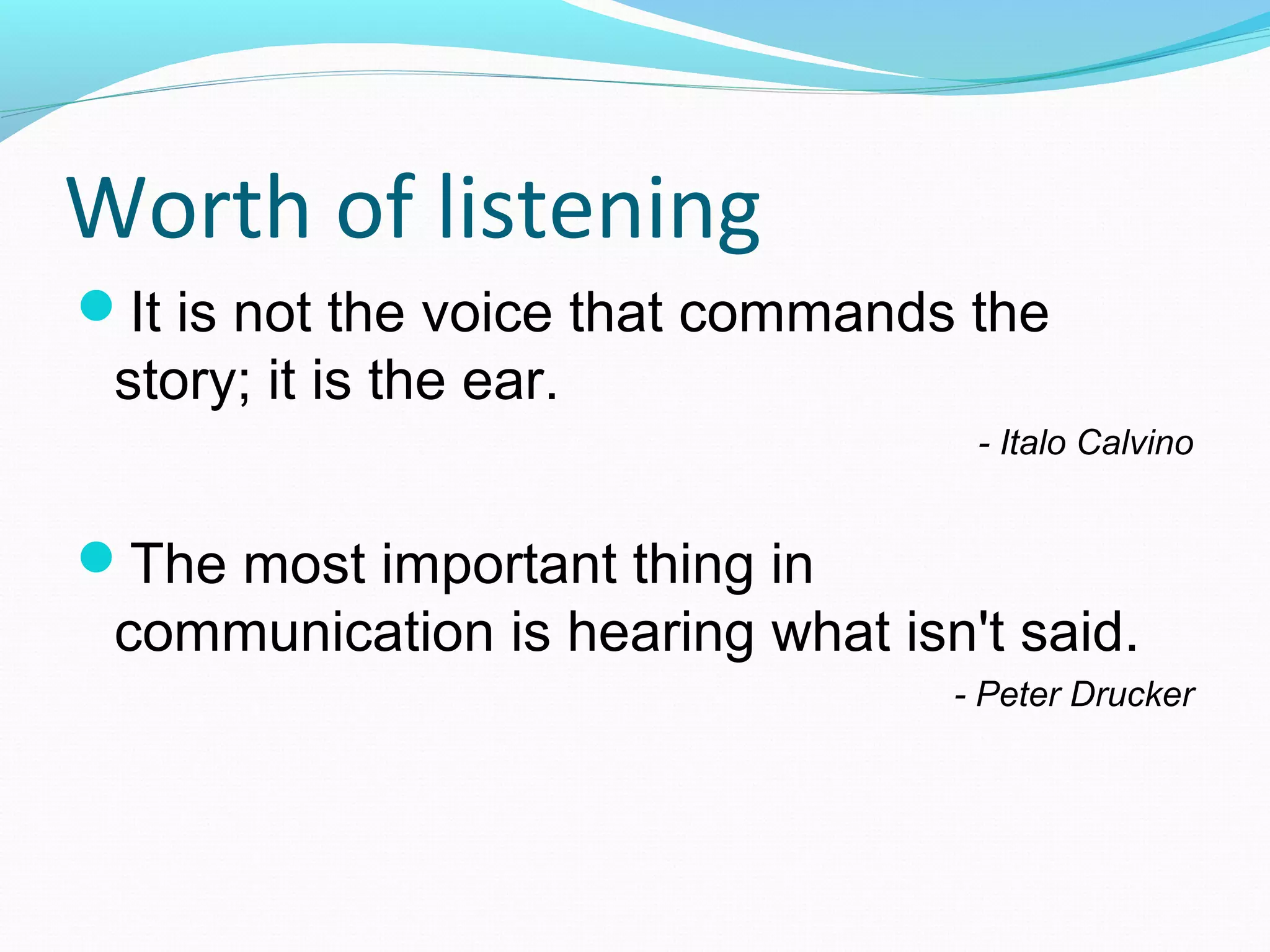
It is not the voice that commands the
story; it is the ear.
- Italo Calvino
The most important thing in
communication is hearing what isn't said.
- Peter Drucker
Worth of listening
Thought of the hour
The biggest communication
problem is we do not listen
to understand.
We listen to reply.
Mode of
communication
Formal years
of training
Percentage of
time used
Writing 12 years 9%
Reading 6-8 years 16 %
Speaking 1-2 years 30%
Listening 0-few
hours
45%
% time in communication modes
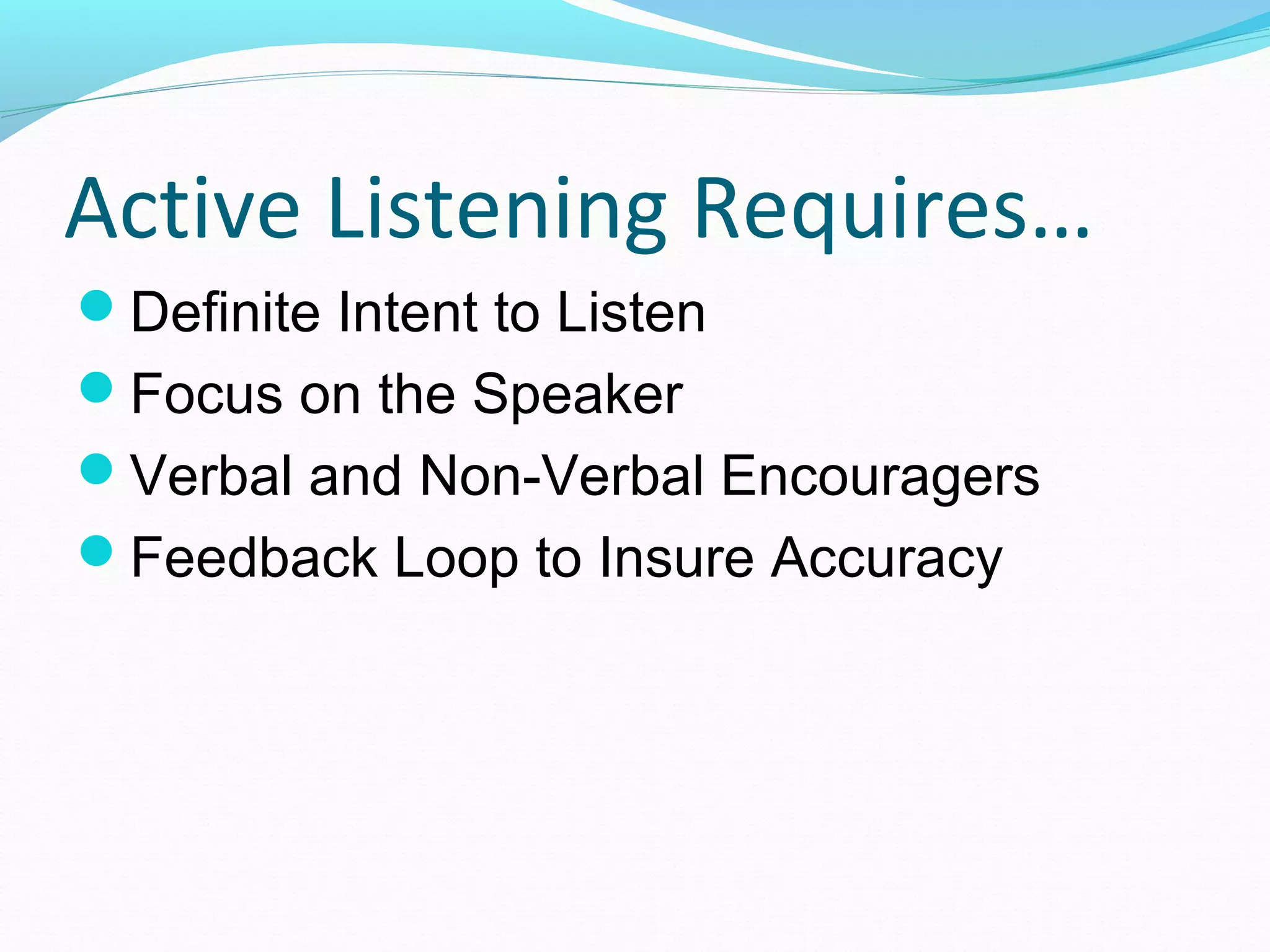
Active Listening Requires…
Definite Intent to Listen
Focus on the Speaker
Verbal and Non-Verbal Encouragers
Feedback Loop to Insure Accuracy
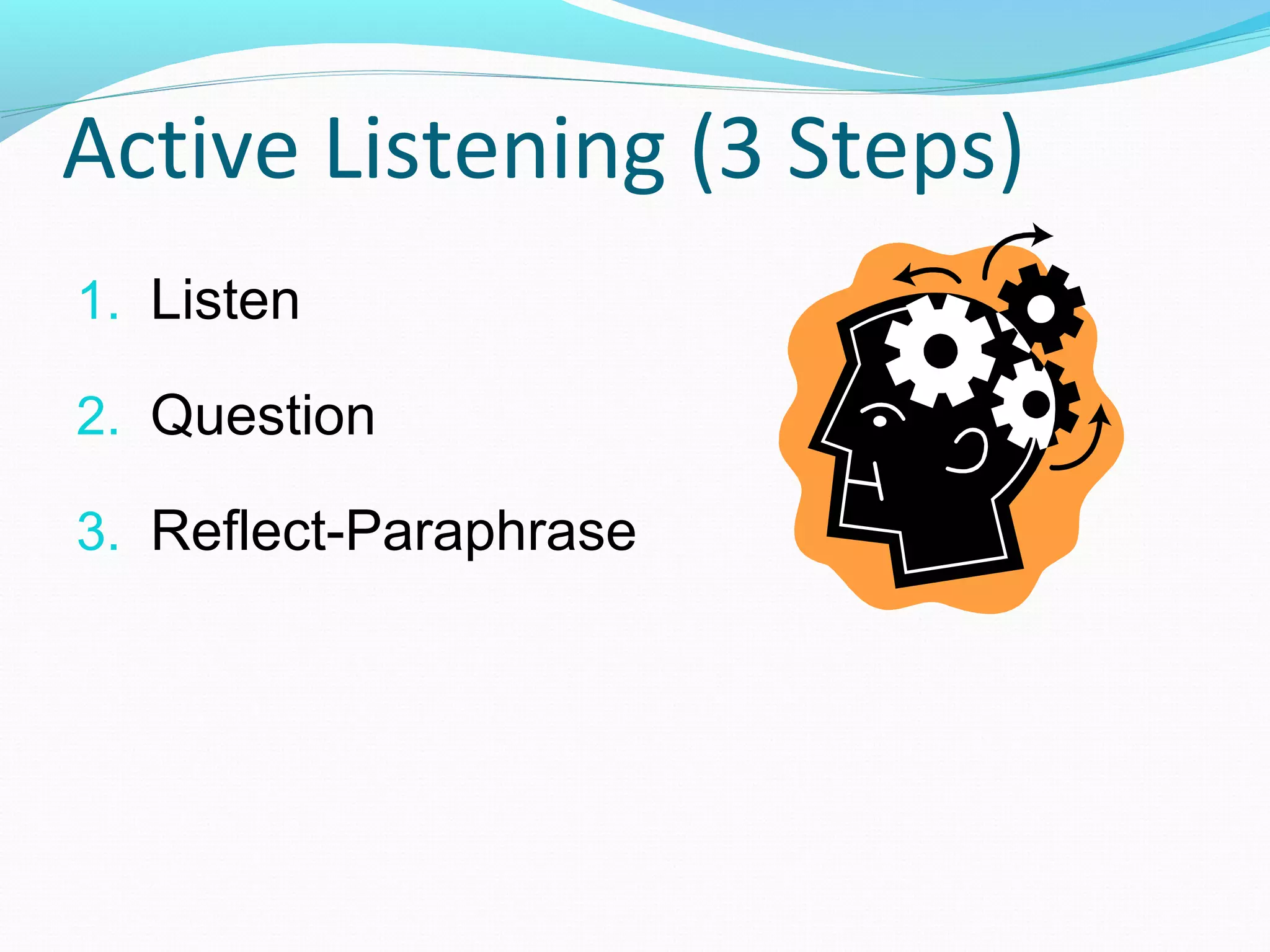
Active Listening (3 Steps)
1. Listen
2. Question
3. Reflect-Paraphrase
Step 1: Listen
To feelings as well as words
Words – emotions - implications
Focus on speaker
Don’t plan, speak, or get distracted
What is speaker talking about?
Topic? Speaker? Listener? Others?
Look at speaker
Use verbal & non-verbal encouragers
Step 2: Question
3 Purposes
Demonstrates you are listening
Gather information
Clarification
Open-ended
Tell me more?
How did you feel?
Then what happened?
Step 3: Reflect-Paraphrase
Reflect what is said (in your words)
Reflect feelings
Reframe
Capture the essence of the
communication
Remove negative framing
Move toward problem solving
Honesty
Be honest in relationships. Do not lie or
hide things from your partner. Remember
every problem has a solution. Think before
you speak. Transparency is important in
relationships.
TIME
Time plays an important role in relationships.
Individuals in love must spend adequate time to
know each other better. Frustrations arise when
people do not have time to meet or interact with
each other. Even in organization, individuals must
spend quality time with their co workers to
strengthen the bond amongst themselves. Married
couples must take time out for each other for the
charm to stay in relationship forever
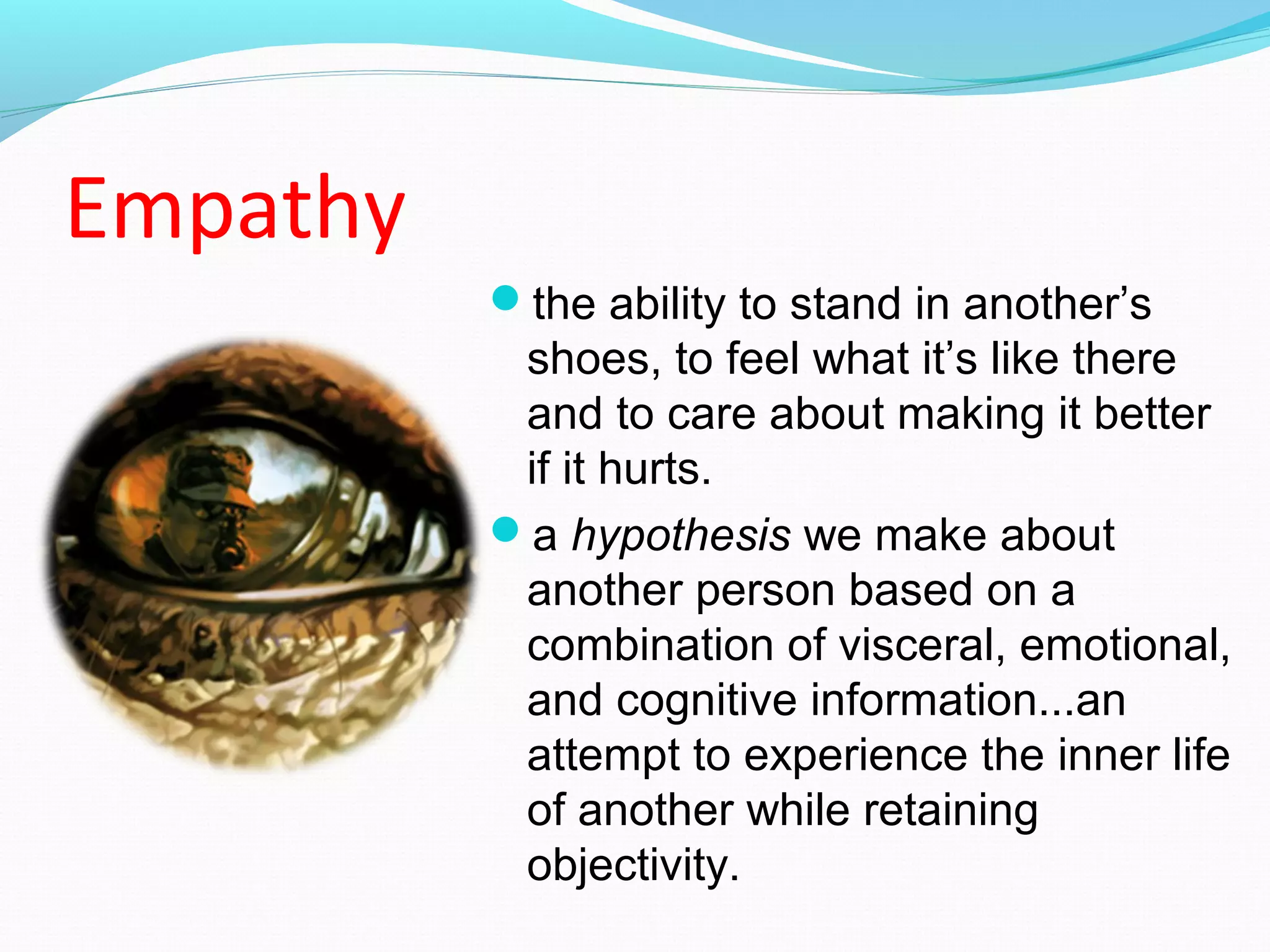
Empathy
the ability to stand in another’s
shoes, to feel what it’s like there
and to care about making it better
if it hurts.
a hypothesis we make about
another person based on a
combination of visceral, emotional,
and cognitive information...an
attempt to experience the inner life
of another while retaining
objectivity.
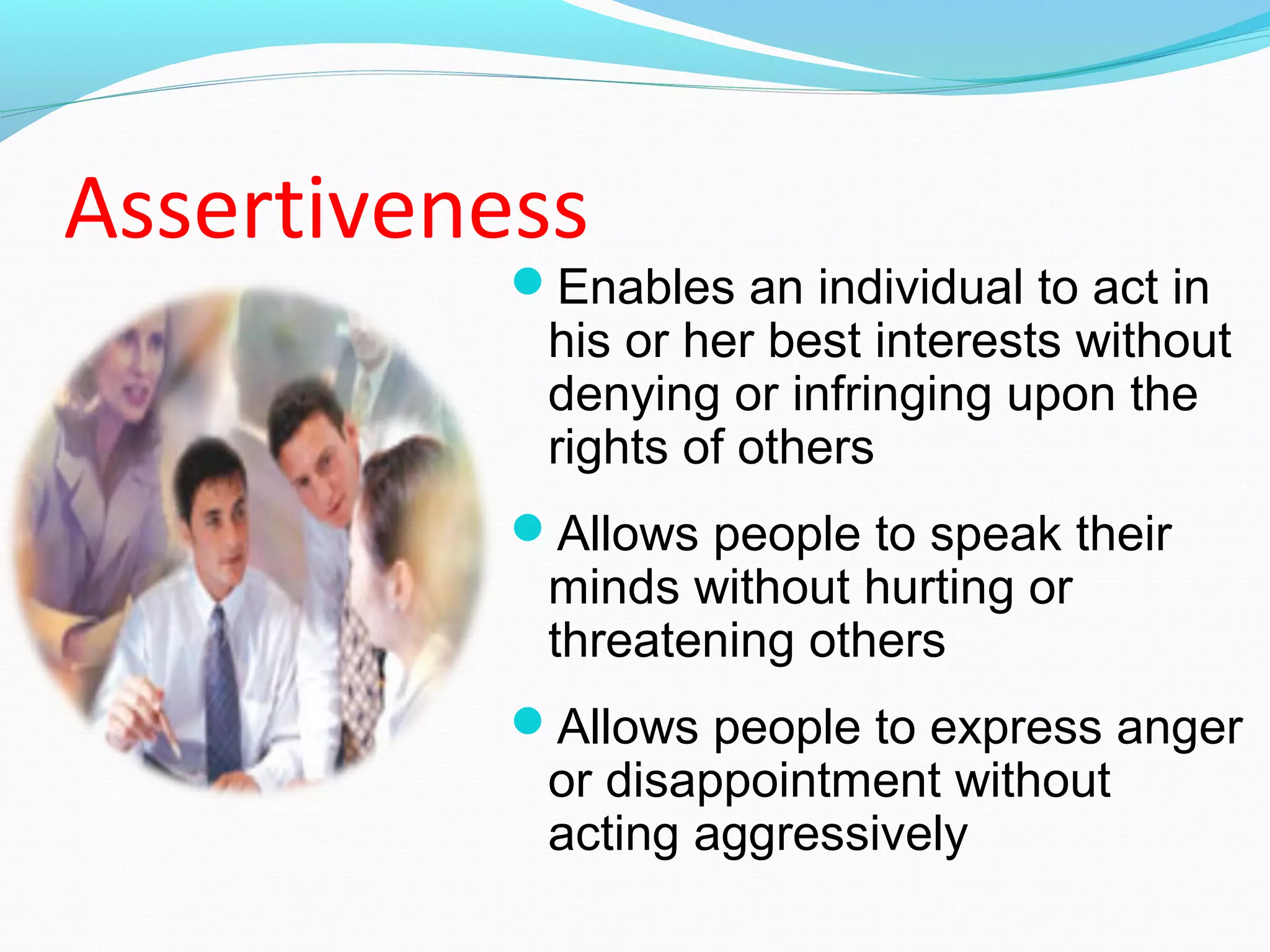
Assertiveness
Enables an individual to act in
his or her best interests without
denying or infringing upon the
rights of others
Allows people to speak their
minds without hurting or
threatening others
Allows people to express anger
or disappointment without
acting aggressively
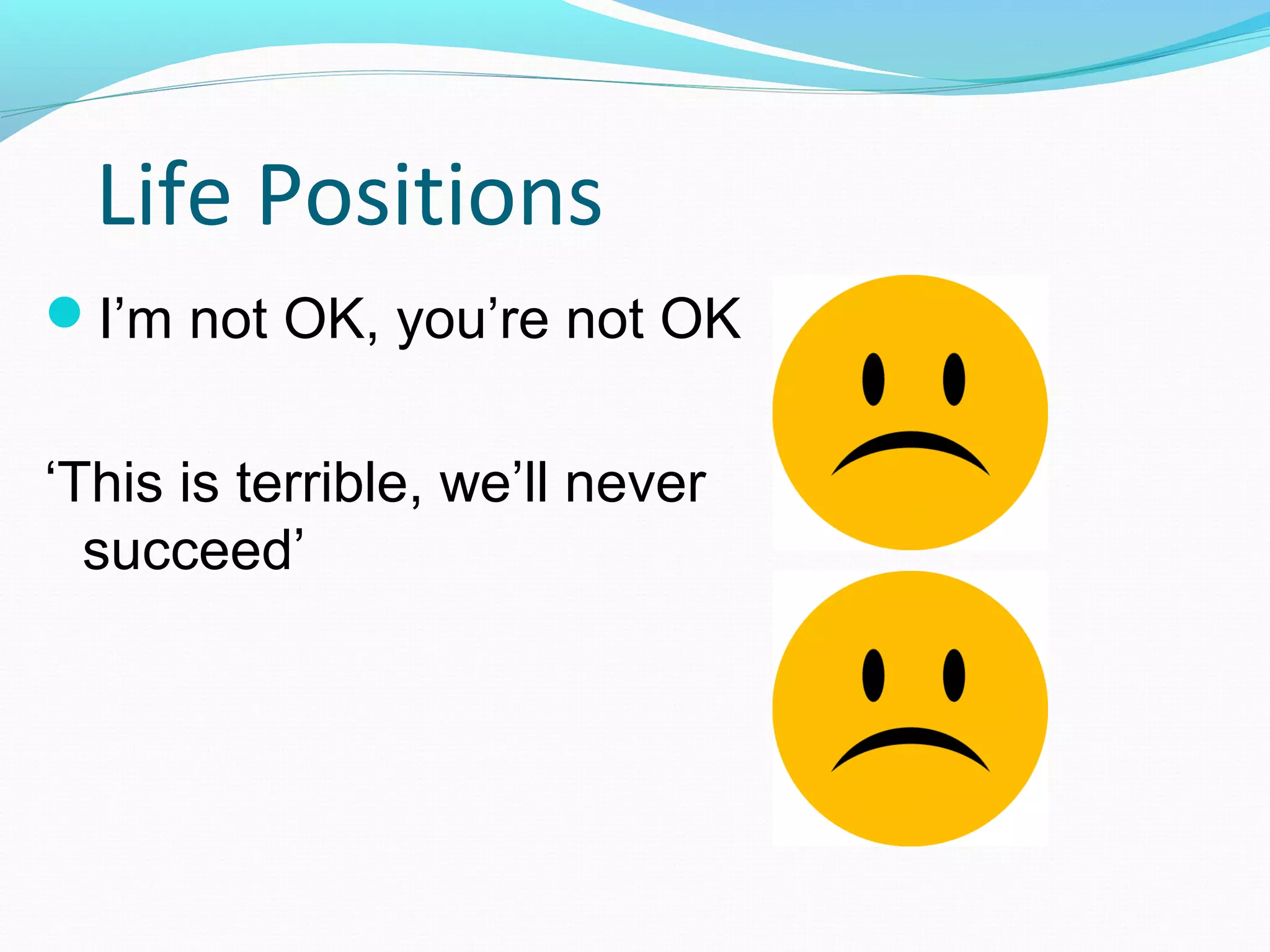
Life Positions
I’m not OK, you’re not OK
‘This is terrible, we’ll never
succeed’
Life Positions
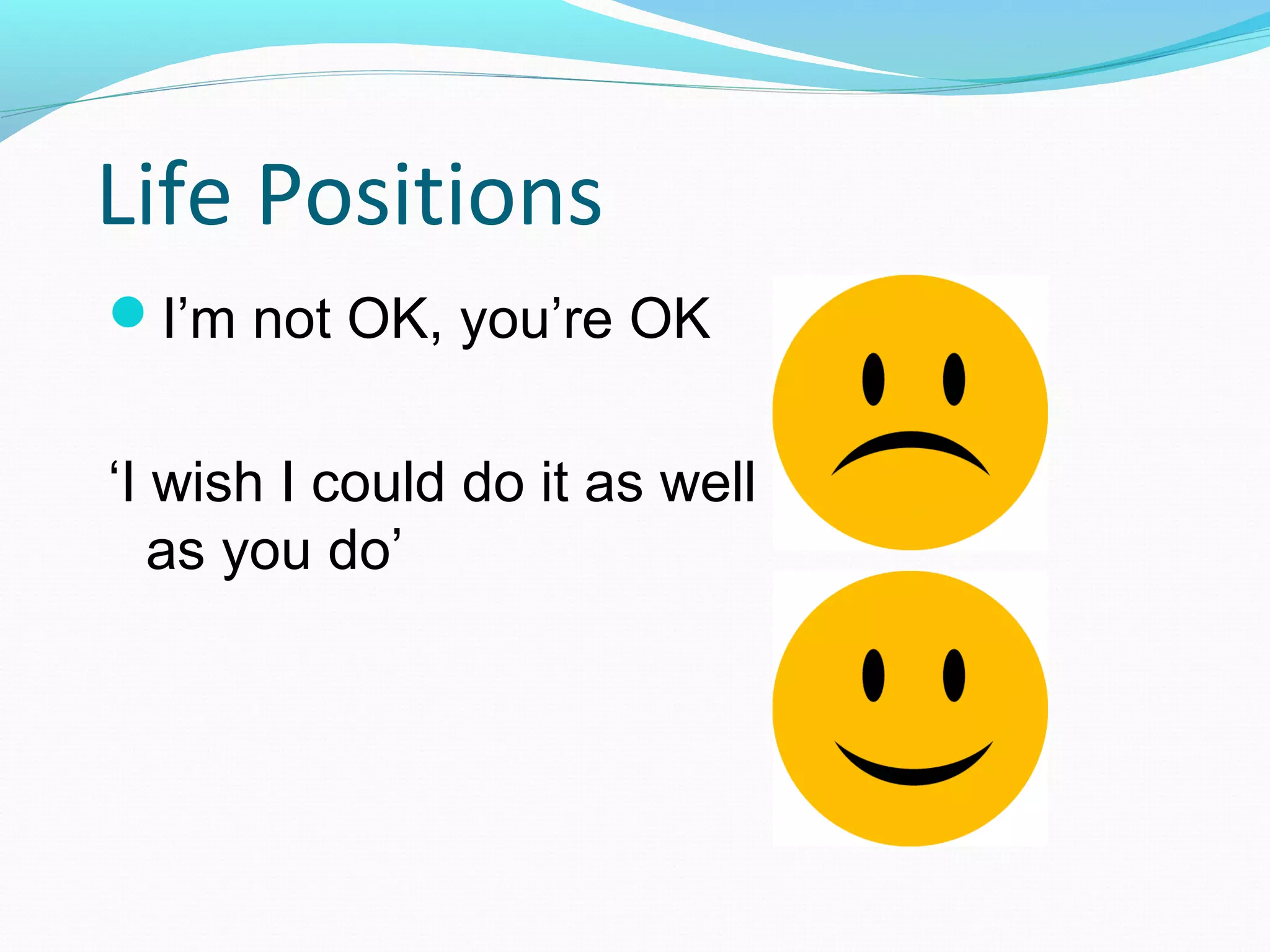
I’m not OK, you’re OK
‘I wish I could do it as well
as you do’
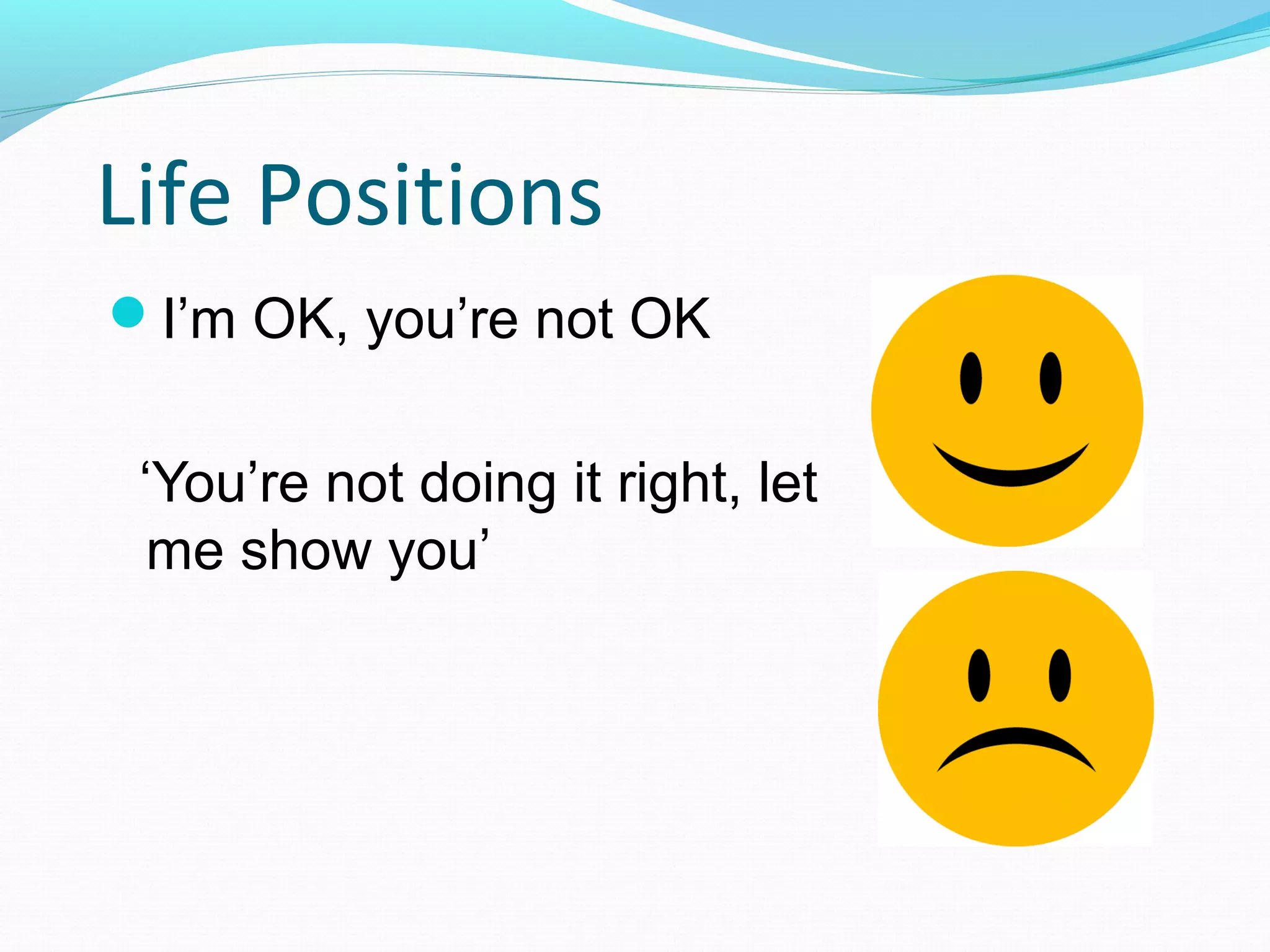
Life Positions
I’m OK, you’re not OK
‘You’re not doing it right, let
me show you’
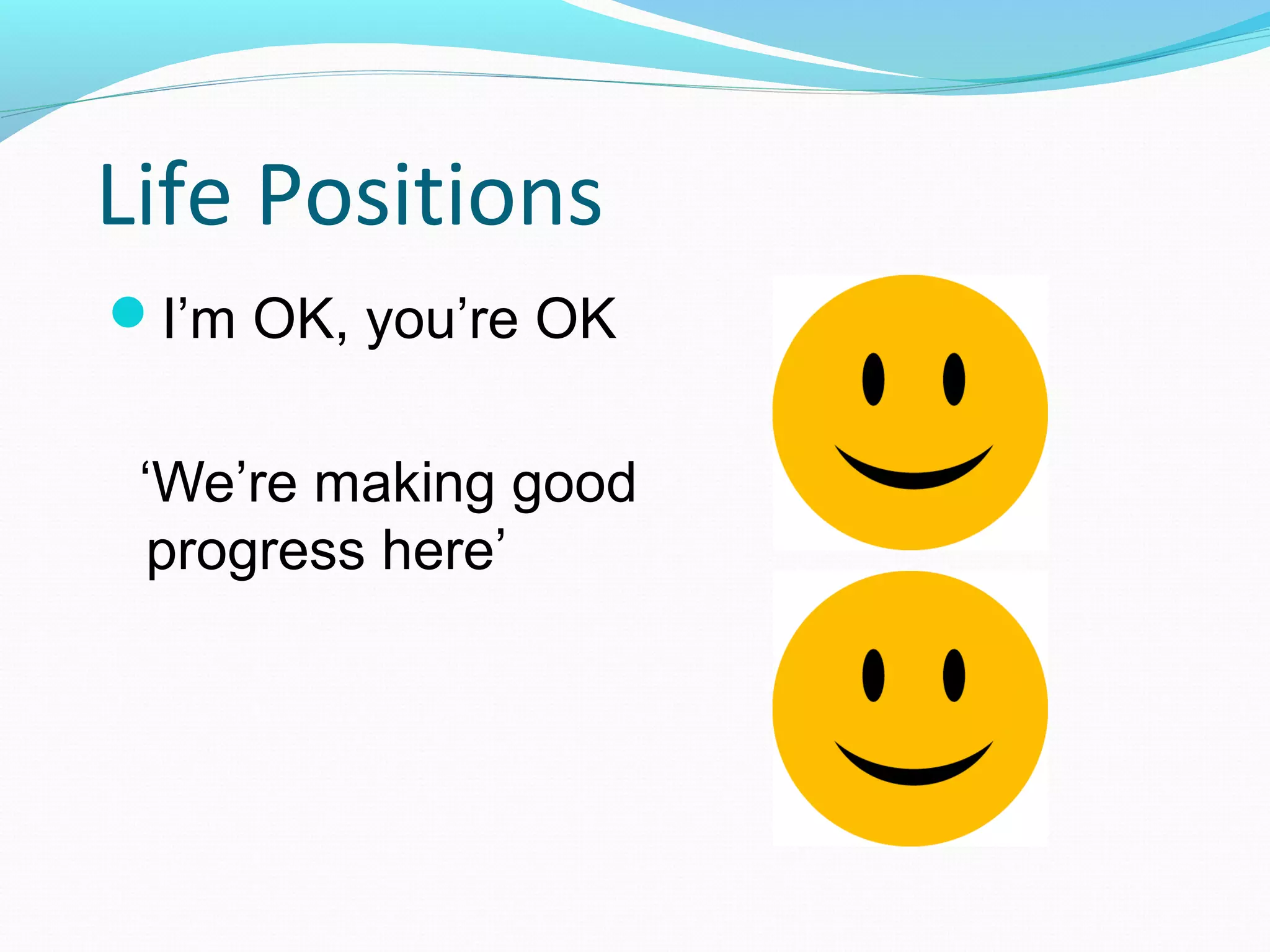
Life Positions
I’m OK, you’re OK
‘We’re making good
progress here’
Stay calm
Do not overreact on petty things in relationships. Stay calm.
Be a little more adjusting. Be the first one to say “Sorry”. It
will solve half of your problems.
Forgiving
An individual needs to be a little more forgiving in
relationships. Do not drag issues unnecessarily. Fighting over
small issues is foolish and makes the situation all the more
worse.
Smile
As they say “Smile is a curve that makes everything
starlight.” Flash your smile more often. It works. Take care
of your facial expressions while interacting with the other
person.
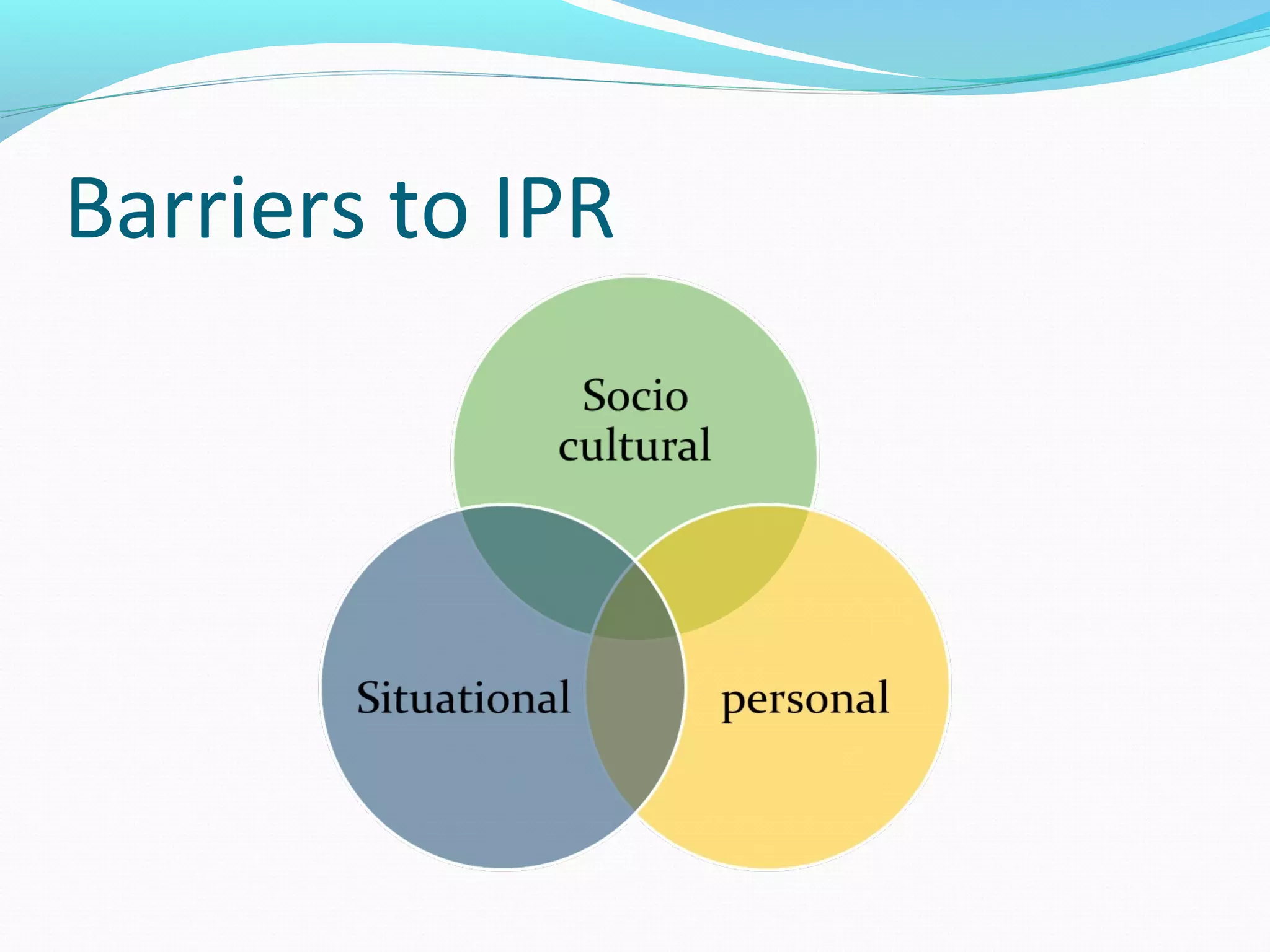
Barriers to IPR
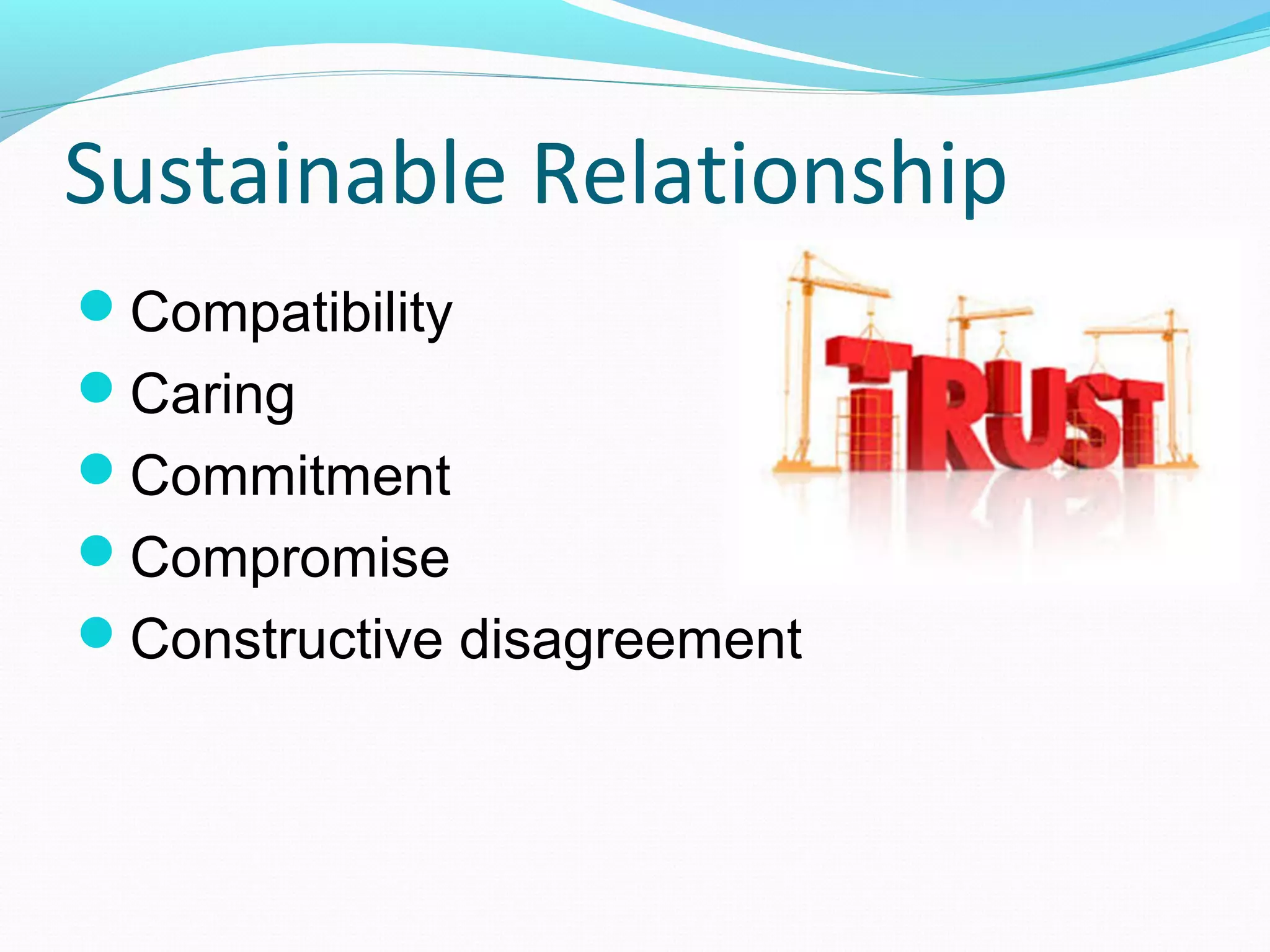
Sustainable Relationship
Compatibility
Caring
Commitment
Compromise
Constructive disagreement

Interpersonal relationship skills muhammad faisal & nandan tyagi

  • 1.
  • 2.
    Agenda What is Interpersonalrelationship ? Form of interpersonal relationship Why is it important to have interpersonal relationships?  Factors affecting Interpersonal Relationship . Take care of your tone ,and pitch ,choice of words , Communication skills ( speaking ,listening etc. ) Some skills that affect your interpersonal relationship which are follow ( interact regularly , be polite , try to understand the other persons point of view as well )
  • 3.
    Relationship When two individualsfeel comfortable in each other’s company and decide to be with each other, they enter into a relationship
  • 4.
    Interpersonal relationship A closeassociation between individuals who share common interests and goals is called interpersonal relationship. Individuals who are compatible with each other enter into an interpersonal relationship. People must gel well for a strong and healthy relationship.
  • 5.
    Why is itimportant to have interpersonal relationships? Interpersonal relationships that you form at work serve a critical role in both your work success and career progress. Positive interpersonal relationships will allow effective communication and understanding among employees. ... Keep lines of communication open. Maintain boundaries.
  • 6.
    Friendship Love Platonic Relationship Family Relationship ProfessionalRelationship (Work Relationship) Form of Interpersonal Relationships
  • 7.
    Friendship Friendship is anunconditional interpersonal relationship where individuals enter into by their own sweet will and choice. Friendship is a relationship where there are no formalities and individuals enjoy each other’s presence.
  • 8.
    Friendship can bebetween: Man and a woman Man and man Woman and woman Must have in friendship: Transparency is the most essential factor for a stable friendship. Do not hide things from your friends. Be honest to them. Guide them whenever required. Never give them any wrong suggestions or advice. Feelings like ego, jealousy, hatred, anger do not exist in friendship.
  • 9.
    Love •An interpersonal relationship characterizedby passion, intimacy, trust and respect is called love. •Individuals in a romantic relationship are deeply attached to each other and share a special bond.
  • 10.
    Must have ina Romantic relationship • Two partners must trust each other in this relationship. • A sense of respect and mutual admiration is essential. • Partners must reciprocate each other’s feelings for the charm to stay in the relationship for a longer period of time.
  • 11.
    • Understanding • Love •Passion • Intimacy • Respect • Trust Keys to a successful relation
  • 12.
    Platonic Relationship A relationshipbetween two individuals without any feelings or love desire for each other is called a platonic relationship. In such a relationship, a man and a woman are just friends and do not mix love with friendship. Platonic relationships might end in romantic relationship with both the partners developing mutual love and falling for each other
  • 13.
    Family Relationship Individuals relatedby blood or marriage are said to form a family . Professional Relationship (Work Relationship) Individuals working together for the same organization are said to share a professional relationship. Individuals sharing a professional relationship are called colleagues. Colleagues may or may not like each other.
  • 15.
    Communication is theKEY Communication is the lifeline of any relationship. Without it, the relationship will starve to its death. - Elizabeth Bourgeret You can change your world by changing your words... Remember, death and life are in the power of the tongue. - Joel Osteen
  • 16.
    Communication is theKEY Half the world is composed of people who have something to say and can't, and the other half who have nothing to say and keep on saying it. - Robert Frost To say nothing, especially when speaking, is half the art of diplomacy. - Will Durant
  • 17.
    CommunicationCommunication plays apivotal role in all types of relationships whether it is personal or professional. Feelings must be expressed and reciprocated in relationships. Individuals need to communicate with each other effectively for better understanding. Do not stay mum as it leads to problems and misunderstandings. Two people in love must interact with each other on a regular basis through various modes of communication such as telephone, emails, letters. Staying in touch is essential for the love to grow especially in long distance relationships where individuals can’t meet quite often. In professional relationships as well, colleagues must communicate well for a better bonding. Sit with your co workers and discuss issues face to face to reach to a mutually acceptable solution. The recipient must understand what the sender intends to communicate and vice a versa. Clarity of thoughts is essential in relationships
  • 18.
  • 19.
    Mode of communication Formal years oftraining Percentage of time used Writing 12 years 9% Reading 6-8 years 16 % Speaking 1-2 years 30% Listening 0-few hours 45% % time in communication modes
  • 20.
    Communication is a2-way processCommunication skills involve: Listening to others (Receiving) message Asserting/ Expressing (Sending) Barriers to communication can lead to misunderstanding and confusion sender receiver sender receiver values and attitudes “generation gap” Cultural differences language noise hearing
  • 21.
    Effective Communication Skills Effective Communicationskills Eye contact & visible mouth Body language Silence Checking for understanding Smiling face Summarising what has been said Encouragement to continue Some questions
  • 22.
    Barriers to EffectiveCommunication Barriers to effective communication Language NoiseTime DistractionsOther people Put downsToo many questions Distance Discomfort with the topic Disability Lack of interest
  • 24.
    It is notthe voice that commands the story; it is the ear. - Italo Calvino The most important thing in communication is hearing what isn't said. - Peter Drucker Worth of listening
  • 25.
    Thought of thehour The biggest communication problem is we do not listen to understand. We listen to reply.
  • 26.
    Mode of communication Formal years oftraining Percentage of time used Writing 12 years 9% Reading 6-8 years 16 % Speaking 1-2 years 30% Listening 0-few hours 45% % time in communication modes
  • 27.
    Active Listening Requires… DefiniteIntent to Listen Focus on the Speaker Verbal and Non-Verbal Encouragers Feedback Loop to Insure Accuracy
  • 28.
    Active Listening (3Steps) 1. Listen 2. Question 3. Reflect-Paraphrase
  • 29.
    Step 1: Listen Tofeelings as well as words Words – emotions - implications Focus on speaker Don’t plan, speak, or get distracted What is speaker talking about? Topic? Speaker? Listener? Others? Look at speaker Use verbal & non-verbal encouragers
  • 30.
    Step 2: Question 3Purposes Demonstrates you are listening Gather information Clarification Open-ended Tell me more? How did you feel? Then what happened?
  • 31.
    Step 3: Reflect-Paraphrase Reflectwhat is said (in your words) Reflect feelings Reframe Capture the essence of the communication Remove negative framing Move toward problem solving
  • 32.
    Honesty Be honest inrelationships. Do not lie or hide things from your partner. Remember every problem has a solution. Think before you speak. Transparency is important in relationships.
  • 33.
    TIME Time plays animportant role in relationships. Individuals in love must spend adequate time to know each other better. Frustrations arise when people do not have time to meet or interact with each other. Even in organization, individuals must spend quality time with their co workers to strengthen the bond amongst themselves. Married couples must take time out for each other for the charm to stay in relationship forever
  • 34.
    Empathy the ability tostand in another’s shoes, to feel what it’s like there and to care about making it better if it hurts. a hypothesis we make about another person based on a combination of visceral, emotional, and cognitive information...an attempt to experience the inner life of another while retaining objectivity.
  • 35.
    Assertiveness Enables an individualto act in his or her best interests without denying or infringing upon the rights of others Allows people to speak their minds without hurting or threatening others Allows people to express anger or disappointment without acting aggressively
  • 36.
    Life Positions I’m notOK, you’re not OK ‘This is terrible, we’ll never succeed’
  • 37.
    Life Positions I’m notOK, you’re OK ‘I wish I could do it as well as you do’
  • 38.
    Life Positions I’m OK,you’re not OK ‘You’re not doing it right, let me show you’
  • 39.
    Life Positions I’m OK,you’re OK ‘We’re making good progress here’
  • 40.
    Stay calm Do notoverreact on petty things in relationships. Stay calm. Be a little more adjusting. Be the first one to say “Sorry”. It will solve half of your problems. Forgiving An individual needs to be a little more forgiving in relationships. Do not drag issues unnecessarily. Fighting over small issues is foolish and makes the situation all the more worse. Smile As they say “Smile is a curve that makes everything starlight.” Flash your smile more often. It works. Take care of your facial expressions while interacting with the other person.
  • 41.
  • 42.

Editor's Notes

  • #22 Encourage participants to think about a situation where they must communicate with someone who is hard of hearing; anxious; has been put down in the past; doesn’t know who you are – what are some of the things you can do to help communication?
  • #23 Show the title of this slide and ask people to see if they can suggest some of the barriers-Then reveal the diagram when there has been 2 to 3 mins of ideas from the group