
HEALH CARE SYSTEM
 Totality of services offered by all health
disciplines.
 Purpose :-
To provide care to the ill or injured.
To achieve optimal levels of health care for a defined
population
TYPES OF HEALTH CARE
SERVICES
 Public health
 Physician’s offices
 Ambulatory care centers
 Occupational health clinic
 Hospitals
TYPES OF HEALTH CARE
SERVICES
 Substance care facilities
 Extended care facilities
 Retirement and assisted living centers
 Rehabilitation centers
 Home health care agencies
TYPES OF HEALTH CARE
SERVICES
 Day care centers
 Rural care
 Hospice services
 Crisis centers
 Mutual support and self help group
PUBLIC HEALTH PHYSICIANS OFFICES
PUBLIC HEALTH PHYSICIAN’S OFFICES
 Established at the local ,
state ,federal levels.
 Funds generally from taxes
are administered by elected
or appointed officials.
 Local department have
responsibility for
developing programes.
 Primary care setting
 Majority have their own
offices
 Can be group practices
 Routine screening illness
diagnosis and treatment.
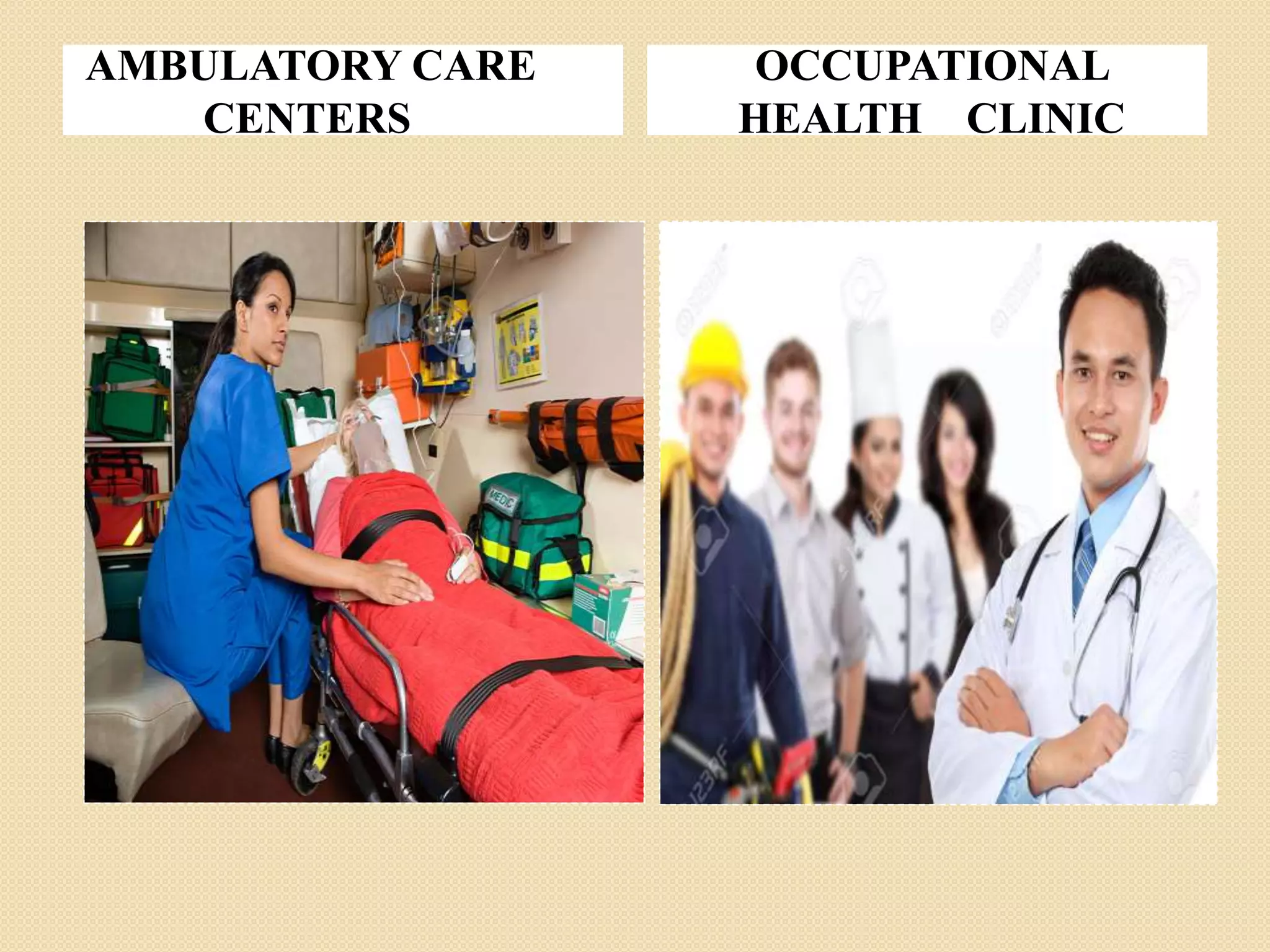
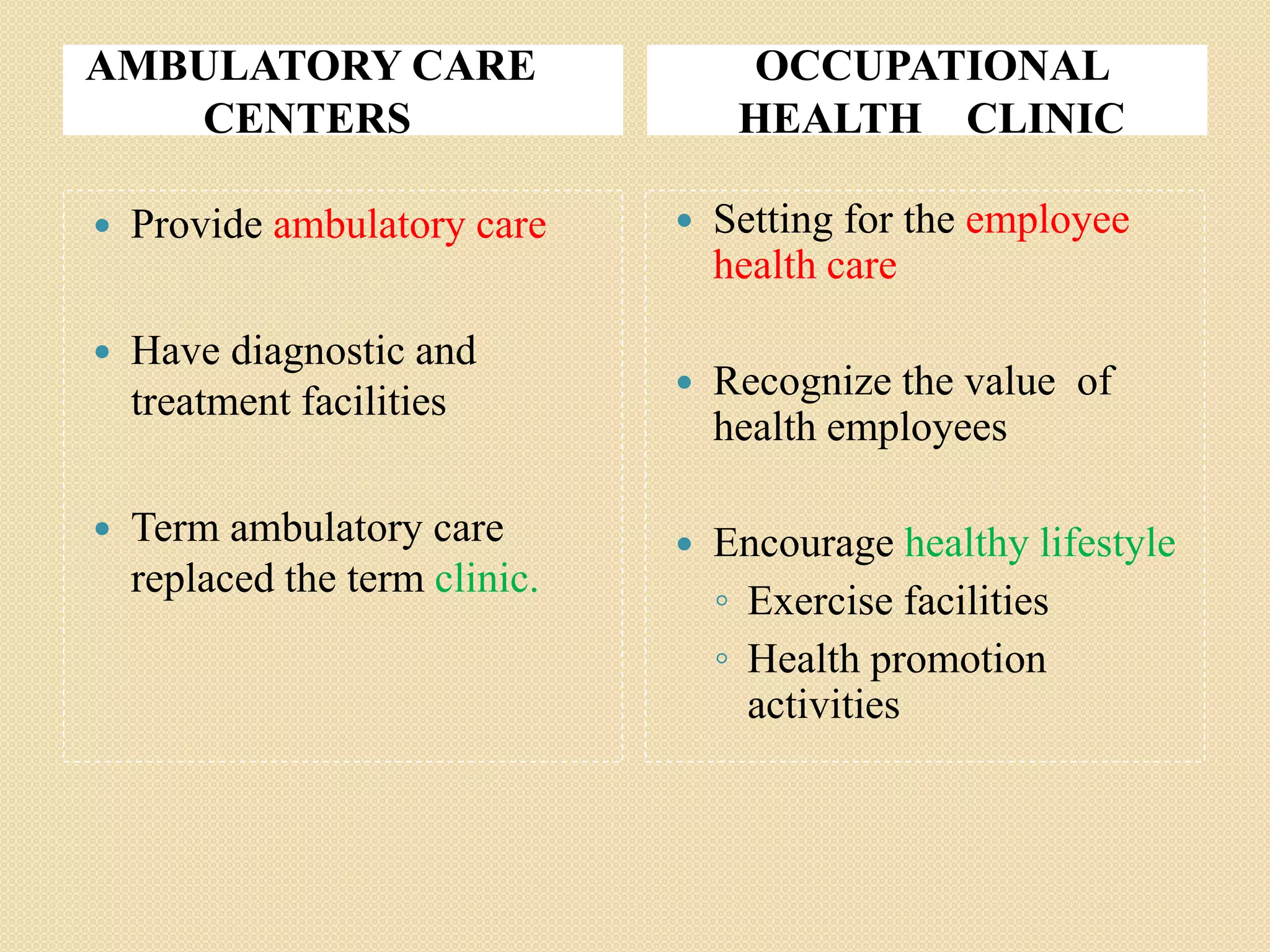
AMBULATORY CARE
CENTERS
OCCUPATIONAL
HEALTH CLINIC
 Provide ambulatory care
 Have diagnostic and
treatment facilities
 Term ambulatory care
replaced the term clinic.
 Setting for the employee
health care
 Recognize the value of
health employees
 Encourage healthy lifestyle
◦ Exercise facilities
◦ Health promotion
activities
AMBULATORY CARE
CENTERS
OCCUPATIONAL
HEALTH CLINIC
HOSPITALS
SUBACUTE CARE
FACILITIES
 Size from 12 bed (rural) to
1500 bed (metropolitan).
 Governmental or non
governmental.
 Variety of health care
services based on their size
and location.
 Designed for patient with
acute illness, injury or
exacerbation of disease
process.
 Generally more intensive
than long term care
HOSPITALS
SUBACUTE CARE
FACILITIES
EXTENDED CARE
FACILITIES
RETIREMENT AND
ASSISTED LIVING
CENTERS
EXTENDED CARE
FACILITIES
RETIREMENT AND
ASSISTED LIVING
CENTERS
 Formerly called nursing
homes.
 Provide personal care those
who are chronically ill.
 Provide care for elderly
clients.
 Consist of separate houses
condominiums, apartments
for residents
 Offer meals , laundry
services , nursing care,
transportation and social
activities.
REHABILITATION
CENTERS
HOME HEALTH CARE
AGENCIES
REHABILITATION
CENTERS
HOME HEALTH CARE
AGENCIES
 Independent community
centers or special units.
 Assist to restore the health
and recuperate.
 Eg:- drug and alcoholic
rehabilitation centers.
 Services offered in the
home.
 Education to the client and
family.
 Provide care to
acute,chronic and
terminally ill client.
DAY CARE CENTERS RURAL CARE
 Provide care for infants and
children while parents
work.
 Elder care centers also
available (socializing,
exercise programes and
simulation)
 Counseling and physical
therapy
 Provide emergency care to
clients in rural areas.
 Nurse in rural setting must
be generalists who are able
to manage a wide variety of
clients and health care
problems
HOSPICE SERVICES CRISIS CENTERS
 Hospice was a place for
travelers to sit.
 Care provided in the home
or other health care setting .
 Services given to the
terminally ill, their families
and support persons.
 Improving and maintaining
the quality of life.
 Provide emergency services
 24 hr service.
 Help people to cope up with
an immediate crisis.
 Provide guidance and
support for long term care.
MUTUAL SUPPORT AND
SELF HELP GROUP
 Deal with life crisis people
experience.
 Alcoholic anonymous
groups
THANK YOU

Health care services

  • 2.
    HEALH CARE SYSTEM Totality of services offered by all health disciplines.  Purpose :- To provide care to the ill or injured. To achieve optimal levels of health care for a defined population
  • 3.
    TYPES OF HEALTHCARE SERVICES  Public health  Physician’s offices  Ambulatory care centers  Occupational health clinic  Hospitals
  • 4.
    TYPES OF HEALTHCARE SERVICES  Substance care facilities  Extended care facilities  Retirement and assisted living centers  Rehabilitation centers  Home health care agencies
  • 5.
    TYPES OF HEALTHCARE SERVICES  Day care centers  Rural care  Hospice services  Crisis centers  Mutual support and self help group
  • 6.
  • 7.
    PUBLIC HEALTH PHYSICIAN’SOFFICES  Established at the local , state ,federal levels.  Funds generally from taxes are administered by elected or appointed officials.  Local department have responsibility for developing programes.  Primary care setting  Majority have their own offices  Can be group practices  Routine screening illness diagnosis and treatment.
  • 8.
  • 9.
     Provide ambulatorycare  Have diagnostic and treatment facilities  Term ambulatory care replaced the term clinic.  Setting for the employee health care  Recognize the value of health employees  Encourage healthy lifestyle ◦ Exercise facilities ◦ Health promotion activities AMBULATORY CARE CENTERS OCCUPATIONAL HEALTH CLINIC
  • 10.
  • 11.
     Size from12 bed (rural) to 1500 bed (metropolitan).  Governmental or non governmental.  Variety of health care services based on their size and location.  Designed for patient with acute illness, injury or exacerbation of disease process.  Generally more intensive than long term care HOSPITALS SUBACUTE CARE FACILITIES
  • 12.
  • 13.
    EXTENDED CARE FACILITIES RETIREMENT AND ASSISTEDLIVING CENTERS  Formerly called nursing homes.  Provide personal care those who are chronically ill.  Provide care for elderly clients.  Consist of separate houses condominiums, apartments for residents  Offer meals , laundry services , nursing care, transportation and social activities.
  • 14.
  • 15.
    REHABILITATION CENTERS HOME HEALTH CARE AGENCIES Independent community centers or special units.  Assist to restore the health and recuperate.  Eg:- drug and alcoholic rehabilitation centers.  Services offered in the home.  Education to the client and family.  Provide care to acute,chronic and terminally ill client.
  • 16.
    DAY CARE CENTERSRURAL CARE
  • 17.
    DAY CARE CENTERSRURAL CARE  Provide care for infants and children while parents work.  Elder care centers also available (socializing, exercise programes and simulation)  Counseling and physical therapy  Provide emergency care to clients in rural areas.  Nurse in rural setting must be generalists who are able to manage a wide variety of clients and health care problems
  • 18.
  • 19.
    HOSPICE SERVICES CRISISCENTERS  Hospice was a place for travelers to sit.  Care provided in the home or other health care setting .  Services given to the terminally ill, their families and support persons.  Improving and maintaining the quality of life.  Provide emergency services  24 hr service.  Help people to cope up with an immediate crisis.  Provide guidance and support for long term care.
  • 20.
    MUTUAL SUPPORT AND SELFHELP GROUP  Deal with life crisis people experience.  Alcoholic anonymous groups
  • 21.