
HEALTH BELIEF MODEL
(HBM)
MRS.PALLAVICHAUHAN
INTRODUCTION
 HBM is a popular model in nursing, especially in
issues focusing on patient compliance and
preventive health care practices.
 The model postulates that health-seeking
behaviour is influenced by a person’s perception
of a threat posed by a health problem and the
value associated with actions aimed at reducing
the threat.
 HBM addresses the relationship between a
person’s beliefs and behaviors.
 It provides a way to understanding and
predicting how clients will behave in relation to
their health and how they will comply with health
care therapies
THE MAJOR CONCEPTS AND
DEFINITIONS OF THE HEALTH
PROMOTION MODEL
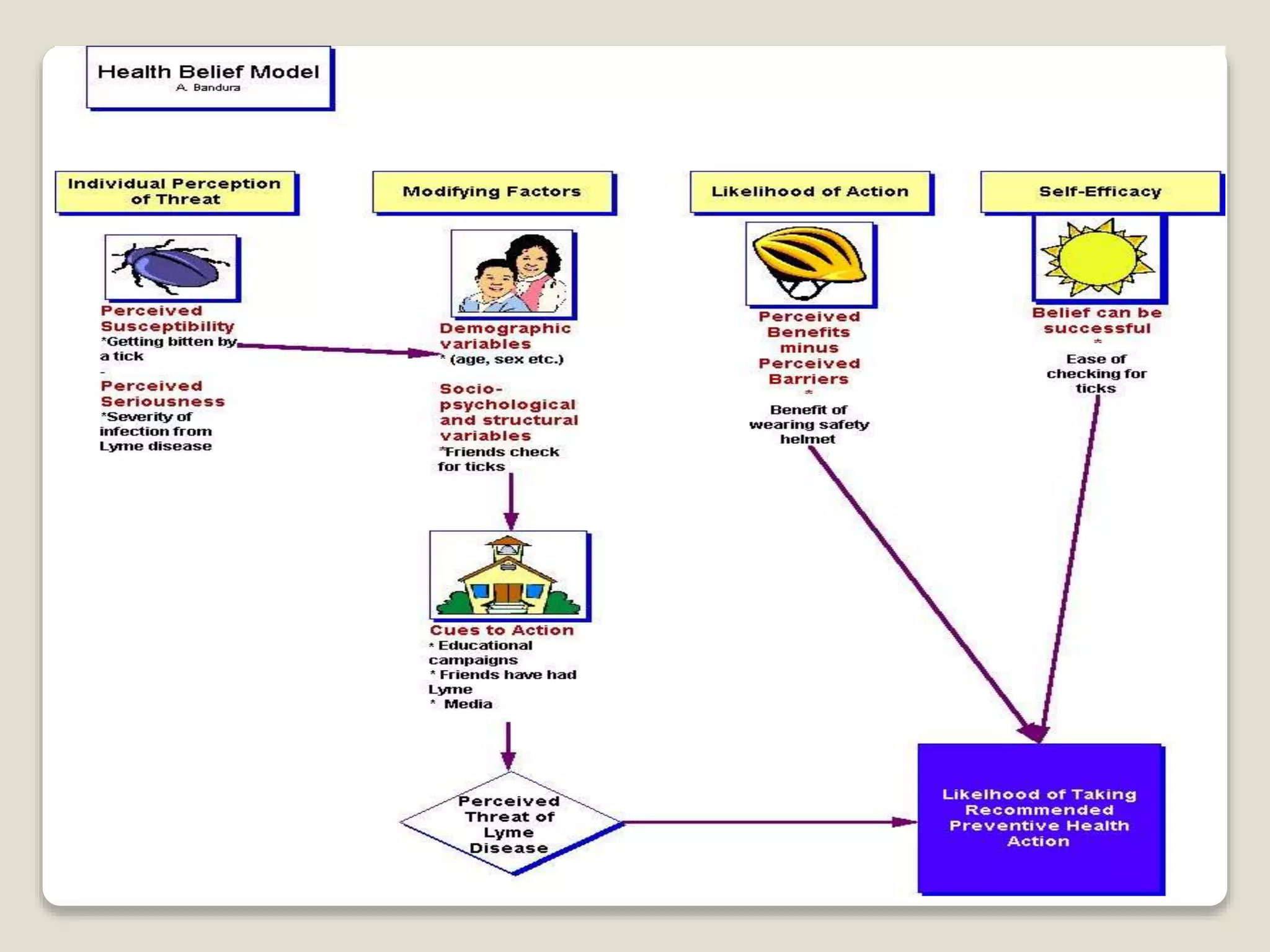
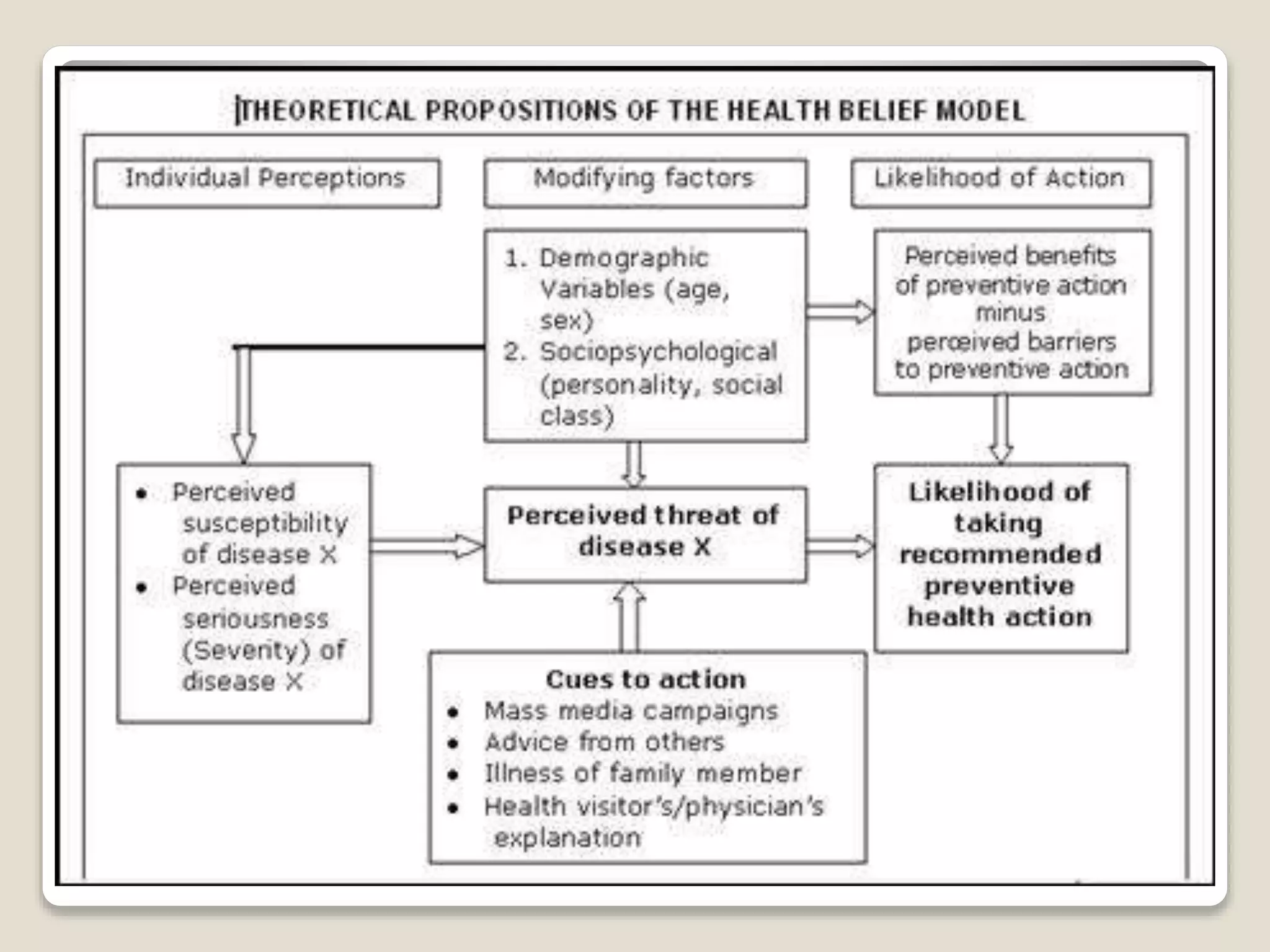
 There are six major concepts in HBM:
 1. Perceived Susceptibility
 2. Perceived severity
 3. Perceived benefits
 4. Perceived costs
 5. Motivation
 6. Enabling or modifying factors
 1. Perceived Susceptibility: refers to a person’s
perception that a health problem is personally relevant or
that a diagnosis of illness is accurate.
 2. Perceived severity: even when one recognizes
personal susceptibility, action will not occur unless the
individual perceives the severity to be high enough to have
serious organic or social complications.
 3. Perceived benefits: refers to the patient’s belief that a
given treatment will cure the illness or help to prevent it.
 4. Perceived Costs: refers to the complexity, duration,
and accessibility and accessibility of the treatment
 5. Motivation: includes the desire to comply with a
treatment and the belief that people should do what
 6. Modifying factors: include personality variables,
patient satisfaction, and socio-demographic factors.
THANK YOU….

Health belief model

  • 1.
  • 2.
    INTRODUCTION  HBM isa popular model in nursing, especially in issues focusing on patient compliance and preventive health care practices.  The model postulates that health-seeking behaviour is influenced by a person’s perception of a threat posed by a health problem and the value associated with actions aimed at reducing the threat.  HBM addresses the relationship between a person’s beliefs and behaviors.  It provides a way to understanding and predicting how clients will behave in relation to their health and how they will comply with health care therapies
  • 5.
    THE MAJOR CONCEPTSAND DEFINITIONS OF THE HEALTH PROMOTION MODEL  There are six major concepts in HBM:  1. Perceived Susceptibility  2. Perceived severity  3. Perceived benefits  4. Perceived costs  5. Motivation  6. Enabling or modifying factors
  • 6.
     1. PerceivedSusceptibility: refers to a person’s perception that a health problem is personally relevant or that a diagnosis of illness is accurate.  2. Perceived severity: even when one recognizes personal susceptibility, action will not occur unless the individual perceives the severity to be high enough to have serious organic or social complications.  3. Perceived benefits: refers to the patient’s belief that a given treatment will cure the illness or help to prevent it.  4. Perceived Costs: refers to the complexity, duration, and accessibility and accessibility of the treatment  5. Motivation: includes the desire to comply with a treatment and the belief that people should do what  6. Modifying factors: include personality variables, patient satisfaction, and socio-demographic factors.
  • 7.